HEDGE 2 PVT EQUITY
===
see main
TWO IN TRUMP CABINET LUTNICK BESSANT
SEE PLUTO OLIGARCH
SEE INEQUALITY
SEE TRUMP GOP FUNDERS DARK MONEY
see tAX DODGE
see kaki- klepto buy election bribe dark money plum trump admin
see sinema carried interest tax dodge
see rent inflation algorithm big data
===
6 22 26 UK BUT GOOD PRIMER
NOVARRA
Premiered Jun 20, 2026
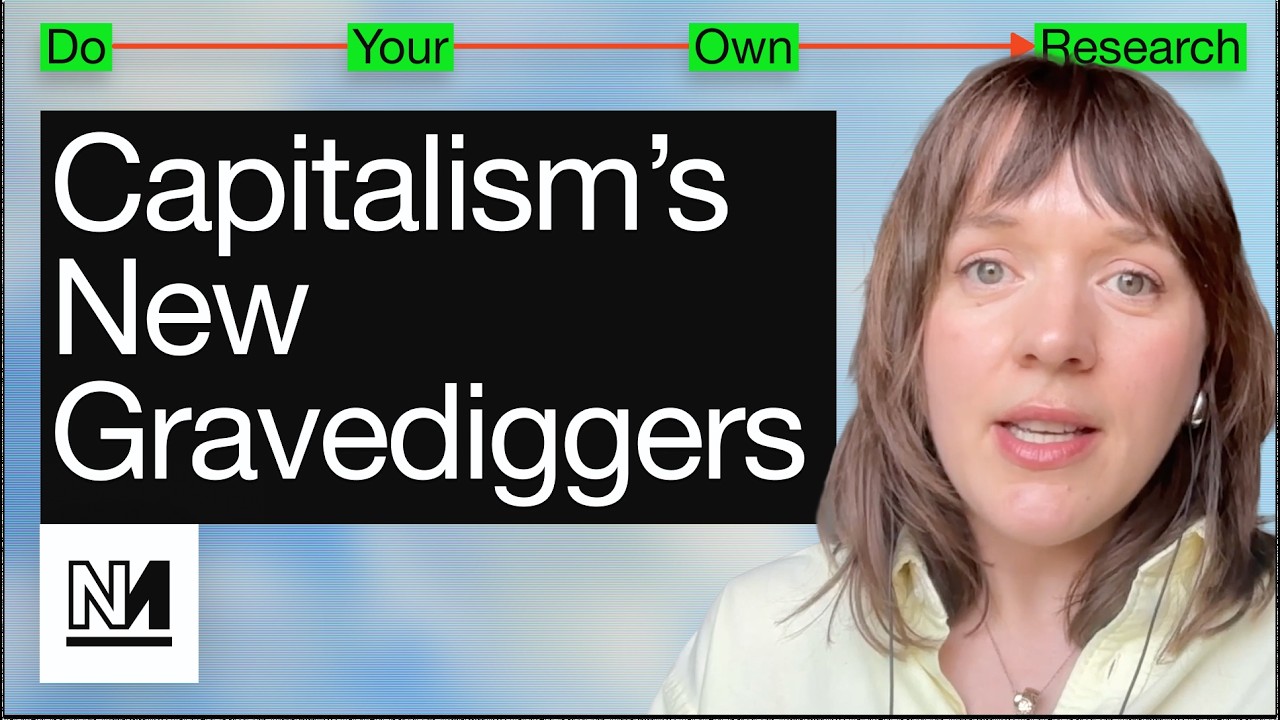
Secret backrooms where deals are done in private: the realm of conspiracy theories? Or an increasingly large part of capitalism? Since the financial crisis, some of the big winners have been private equity firms. They’ve snapped up bargains on everything from high street brands, to care homes and nurseries – and maybe even the house you own. Hettie O’Brien is a journalist for The Guardian and the author of The Asset Class: How Private Equity Turned Capitalism Against Itself. She spoke to Richard Hames about private equity’s secret influence over the ways we are all born, work, and die – and what it all has to do with the rise of the far right.
llc gbs will not pay debts
hobbes corps suck nutrients ...? likes worms in the entrials of a natural man”
lloks for loopholes to exploit
lbo take co by borrow 80%, turn public co pvt, than saddle it w/ debt it just created, which hobbles it from doing good biz
The Ralph Nader Radio Hour - Bad Company | KPFA
4 20 heh
Ralph welcomes journalist and author Megan Greenwell to discuss her book “Bad Company: Private Equity and the Death of the American Dream.” Then, Ralph speaks to James Zogby (co-founder and president of the Arab American Institute) about the recent Israeli attacks on Lebanon.
Megan Greenwell is a journalist who has written or edited for publications including theNew York Times, the Washington Post, New York Magazine, WIRED, and ESPN. She is also the deputy director of the Princeton Summer Journalism Program, a workshop and college-access initiative for students from low-income backgrounds. She is the author of Bad Company: Private Equity and the Death of the American Dream.
AN 9 25
Back in 1987, two of the year's most famous commentaries on the U.S. economy were Donald Trump's book "The Art of the Deal" and the Oliver Stone film "Wall Street" (starring Michael Douglas as ruthless financier Gordon Gekko and Charlie Sheen as the protégé who eventually turns against him). Now, 38 years later, Trump is serving his second term as president, and the Gekko character's famous line "greed is good" is still quoted in critiques of the financial world.
Many economists, including Paul Krugman and Robert Reich, are warning that Trump's steep new tariffs are a recipe for severe inflation — and even stagflation, the painful mixture of inflation, high unemployment, and low growth that plagued the United States in the late 1970s and early 1980s. But The New Republic's Timothy Noah, in an article published on September 25, lays out some reasons why Wall Street could crash the economy even without Trump's help.
"I've written a good bit about the economic wreckage wrought by President Donald Trump's economic policies — tariffs, manipulation of the Federal Reserve, a deficit-doubling tax cut for the rich — and how these might tank the economy," Noah explains. "Today, let's consider how, even if Trump weren't president, the finance sector could tank the economy all by its lonesome through shadow banking, most especially in the private equity industry. The term 'shadow banking' was coined in 2007 by a money manager named Paul McCulley to describe financial institutions that mimic what commercial banks do — money markets, mortgage companies, investment banks, hedge funds, and, yes, private equity — but are not regulated like banks."
Noah adds, "It's called shadow banking because these firms lack banks' transparency."
Noah, author of the 2013 book "The Great Divergence: America's Growing Inequality Crisis and What We Can Do About It," notes that "much of the mischief in the 2008 financial crisis" was "caused by shadow banks" and warns that by 2013, "shadow banks' holdings represented nearly 80 percent of global gross domestic product."
"Today, almost everybody who doesn't work in private equity hates private equity for loading up companies with insurmountable debt and raking in so much money on fees that private equity firms don’t have to care all that much whether this or that company survives," Noah observes. "Another common criticism is that private equity puts the squeeze on certain enterprises — hospitals, retirement homes, even hospice providers — that were never intended to be profit-maximizers, weakening the quality of the vital social services they provide…. Of course, Trump doesn't help matters by urging us all to throw our money into private equity and other risky shadow banks. But barring strict regulation of this sector to a degree that seems politically impossible at the moment, these outlaw financial institutions are fully capable of crashing the economy on their own."
*Timothy Noah's full article for The New Republic is available at this link.
---
omg kaki-
AN 11 24
President-elect Donald Trump’s decision to nominate as the U.S. Secretary of the Navy a financier, art collector, and MAGA megadonor with no military experience is coming under fire.
“It is my great honor to announce John Phelan as our next United States Secretary of the Navy!” declared Trump in a statement, deviating from his usual habit of acknowledging their status as a nominee. “John will be a tremendous force for our Naval Servicemembers, and a steadfast leader in advancing my America First vision. He will put the business of the U.S. Navy above all else.”
Trump claimed, “John has excelled in every endeavor, from founding and leading Rugger Management LLC, to co-founding MSD Capital, LP, the Private Investment Firm for Michael Dell, CEO of Dell Technologies. His Record of Success speaks for itself – A true Champion of American Enterprise and Ingenuity!”
READ MORE: MTG Claims Biden Is ‘Starting a Nuclear War’ Over Debunked Claim of Giving Nukes Back to Ukraine
The Independent noted, “According to the U.S. Code,the secretary of the Navy shall be appointed ‘from among persons most highly qualified for the position by reason of background and experience.'”
Phelan “donated $834,600 to Trump’s joint fundraising committee, Trump 47,” back in April, according to The Hill. In August, at his $38 million Aspen estate, Phelan hosted a “$25,000 to $500,000 a couple” fundraiser that reportedly generated $12 million for Trump.
“The dinner, which Trump reportedly flew in for on a private jet once owned by disgraced financier and convicted pedophile Jeffrey Epstein, was held at the $38 million home of art collectors and investors John and Amy Phelan, with Texas Gov. Greg Abbott, Rep. Lauren Boebert (R-CO), gambling mogul Steve Wynn, and billionaire Thomas Peterffy also in attendance,” The Daily Beast reported. “There were about 100 attendees at the event, which required couples to pony up $500,000 to serve on the host committee or at least $25,000 to attend at all.”
“If confirmed,” The Military Times reports, “Phelan would be the first permanent Navy secretary without military experience since 2009, when Donald Winter finished up his three-year term in the role. Unlike Winter, who previously had worked within the Pentagon and on Navy contracts at major defense firms, Phelan has little public connection to the sea service.”
Winter was nominated by Republican President George W. Bush.
READ MORE: ‘Where Did All the Money Go?’: Trump DNI Pick Tulsi Gabbard Has Multiple PACs, Report Says
“Of the 26 men to be confirmed as Navy secretary over the last 70 years, all but six have been veterans,” The Military Times also noted.
Critics are pointing to Phelan’s lack of relevant experience.
Paul Rieckhoff, the veterans’ activist and founder of Independent Veterans of America, Iraq and Afghanistan Veterans of America (IAVA), and Righteous Media, blasted Trump’s pick.
He warned, “of course, Phelan has not served in the Navy. Or any other branch of military service. But he is a big Trump donor. The least qualified and most overtly political cabinet in American history continues to expand. And #OurEnemiesAreCelebrating.”
Veteran foreign policy journalist Laura Rozen, pointing to Phelan’s bio at the nonprofit Spirit of America and the London School of Economics and Political Science, writes, “Harvard MBA, art collector, manages fund of Michael Dell’s money. dont see anything in his bio that has any national security.”
Kevin Baron, the award-winning military journalist and former executive editor of Defense One, responding to a report on Phelan’s nomination, wrote, “Who?”
READ MORE: ‘Much Like the 11th Century’: Trump Defense Pick Called for American ‘Crusade’
---
---
no lnx
Meet the billionaires backing Republican Dave McCormick’s U.S. Senate run
Deep-pocketed Wall Street donors have lined up to donate to a super PAC backing the Republican Senate candidate
Matt Rourke / Associated Press
By Ryan W. Briggs and Sean Collins Walsh
Published Oct 31, 2024
Insurgent candidates frequently struggle to raise money against entrenched incumbents who already control the levers of power.
But Republican Dave McCormick, who is challenging three-term Democratic incumbent Bob Casey in Pennsylvania’s nationally watched U.S. Senate race, is not your average political newcomer.
A former CEO of the world’s largest hedge fund and a U.S. Treasury official in the George W. Bush administration, McCormick entered the race with a Rolodex of friends and supporters who are among the richest people on Earth. Many of them have stepped up by pouring millions into a super PAC backing the Republican.
Keystone Renewal PAC is the only major super PAC solely dedicated to Pennsylvania’s Senate race. A vast majority of the rest of the spending has come from the candidates’ campaigns or their parties’ Senate leadership funds.
The PAC has spent about $52 million, with three-quarters of its advertising dedicated to attacking Casey and a quarter to boosting McCormick, according to Open Secrets, the government transparency nonprofit.
A Keystone Renewal spokesperson said the PAC is “committed to educating the American public on Bob Casey's radical policy record that is responsible for the record-high inflation and open borders.”
“Dave McCormick is the only candidate that will fix what Bob Casey has done during his tenure in office, and deliver safety and prosperity,” the spokesperson said in a written statement.
At a Tuesday event in Allentown, Casey countered that McCormick was being propped up by “out-of-state billionaires coming into Pennsylvania to lecture us about who's going to be our senator, to lecture us about rights.”
More than $289 million has been spent on the race, and a majority of both candidates’ financial support comes from outside Pennsylvania, which is common in modern Senate contests. McCormick, however, has a greater share of donors from elsewhere.
Both candidates have raised millions through their campaigns and are also benefiting from heavy spending by their respective parties’ leadership. Senate Democrats’ super PAC, for instance, has spent $53 million to help Casey, according to Open Secrets, and it raises money from super-wealthy donors across the country, including some who donated anonymously through a “dark money” nonprofit.
Notably, Keystone Renewal has disclosed almost all of its individual donors and is not structured as a dark money organization.
In addition to members of the Perot, DeVos, and Pritzker families, here are some of the notable donors backing Keystone Renewal PAC:
Donated $15,000,000
Ken C. Griffin
The Harvard-educated billionaire owner of Citadel Securities, a financial services company, was a prominent supporter of Republican Nikki Haley’s insurgent primary bid against Donald Trump. Both Griffin and fellow billionaire Stephen A. Schwarzman (more on the Blackstone CEO later) hosted early fundraisers for McCormick’s failed 2022 Senate primary bid. This year, Griffin became the largest individual donor to Keystone Renewal.
“I proudly support leaders like David McCormick, who have a proven record of service and commitment to our country,” Griffin said on Wednesday. “We need leaders in Washington who are committed to securing our borders, stopping inflation, and ensuring a strong national defense."
Donated $3,300,000
Thomas Peterffy
Thomas Peterffy, Founder, Chairman and CEO of Interactive Brokers.
Associated Press
The Hungarian-born CEO of Interactive Brokers, a Wall Street brokerage firm, owns a mansion along Palm Beach’s “Billionaire’s Row,” near Mar-a-Lago, along with other McCormick donors like Steve Wynn. After offering tepid support in 2020, Peterffy has joined other billionaires in aggressively backing Trump this year, and even used his company to dive into the political betting craze to speculate on the outcome of the election. In 2022, Peterffy supported Mehmet Oz, who beat McCormick in the GOP primary. But this cycle he’s all in for McCormick.
“I think the battle over free enterprise versus a socialist nanny state is going to be decided in Pennsylvania over the next several years,” Peterffy said in an interview. “I like David McCormick. … I know him quite well. He’s been fantastic as a soldier, as an officer, and as a private enterprise person.”
Donated $3,000,000
Richard and Elizabeth Uihlein
A Uline delivery truck
JHVEPhoto
This Wisconsin couple cofounded industrial packing supply company Uline, whose success made both into billionaires. An heir to the Schlitz beer fortune, Richard Uihlein is a reclusive but prolific conservative donor – but has historically favored conservatives disruptors, from Pat Buchannon to the Tea Party movement. Elizabeth is a onetime Clinton voter who later embraced traditional economic conservatism. The middle ground: Dave McCormick.
Donated $2,250,000
Jeffrey Yass
Jeff Yass
Courtesy of the Yass Foundation for Education
As Pennsylvania’s richest man, the Montgomery County-based cofounder of the investment firm Susquehanna International Group has long used his fortune to promote conservative and libertarian goals, particularly private school voucher programs. This year, he has spent millions to support Pennsylvania Republicans through donations to a PAC called the Commonwealth Leaders Fund. He has separately donated to Keystone Renewal to support McCormick.
“I support candidates, such as Dave McCormick, who support school choice,” Yass said in a statement. Casey’s policies, he said, lead to “lower income children trapped in failing, public schools.”
Donated $2,000,000
Paul Singer
:{FILE - In this May 12, 2014, file photo, :{Paul Singer, founder and CEO of hedge fund}:
Elliott Management Corporation, speaks at the Manhattan Institute for Policy Research Alexander Hamilton Award Dinner in New York. Prominent athenahealth investor Elliott Management Corp. is offering about $6.5 billion to take the medical billing software maker private after saying it has grown frustrated with the company's performance. Shares of athenahealth soared early Monday, May 7, 2018, after the shareholder outlined its proposal. (AP Photo/John Minchillo, File)}:
Associated Press
The New Jersey-born founder of Elliott Investment Management earned an immense fortune – and scorn – investing in distressed debt, notably buying up sovereign obligations from nations teetering on financial collapse The self-described libertarian has advanced varied causes, both advocating for government deregulation and promoting gay marriage. Singer initially supported Marco Rubio in the 2016 presidential campaign, only later warming to Trump. He has historically been one of the largest donors to Republican Senate campaigns, and individuals linked to Elliott Management made up the second-largest pool of donors to McCormick’s 2022 campaign, after Goldman Sachs.
Donated $2,000,000
Antonio Gracias
In this sketch former Tesla board member Antonio Gracias testifies in a courtroom in Wilmington, Del., on Wednesday, Nov. 16, 2022.
In this sketch former Tesla board member Antonio Gracias testifies in a courtroom in Wilmington, Del., on Wednesday, Nov. 16, 2022.
Elizabeth Williams via AP
Gracias is the founder of Valor Equity Partners, a $16 billion private equity firm. He is a confidant of Tesla owner Elon Musk, and earned much of his wealth from stock options in the electric car manufacturer, where he worked until 2021. Forbes values his net worth at $1.3 billion. He has donated to Keystone Renewal through a trust.
Donated $1,500,000
Jan Koum
Billionaire Jan Koum
Associated Press
Koum is a Ukranian American billionaire and former CEO of WhatsApp – a popular messaging program widely used internationally – and a fixture in Silicon Valley. Ethnically Jewish, Koum has donated extensively both to Ukranian wartime aid and pro-Israel groups. A major Haley backer, he has more recently donated to Keystone Renewal through an LLC.
Donated $1,500,000
Stephen A. Schwarzman
Stephen A. Schwarzman CEO Blackstone speaks during the session 'Shaping a New Market Architecture' at annual meeting of the World Economic Forum in Davos, Switzerland, Tuesday, Jan. 22, 2019. (AP Photo/Markus Schreiber)
Associated Press
The CEO of the Blackstone Group, a trillion-dollar global private equity firm, is associated through his company with aggressive buyouts of everything from the Hilton hotel chain to railroads and grocery stores. But he is also a Philadelphia-area native and a longtime donor to Republican causes – and among the most prominent Wall Street supporters of Trump’s latest presidential campaign. One of McCormick’s early political supporters, along with Griffin, Schwarzman is back this year. He is also pumping millions into the U.S. Senate candidacy of Republican Tim Sheehy in Montana.
Donated $1,000,000
Howard Lutnick
Howard Lutnick speaks before Republican presidential nominee former President Donald Trump at a campaign rally at Madison Square Garden, Sunday, Oct. 27, 2024, in New York. (AP Photo/Evan Vucci)
Associated Press
A Haverford College graduate who rose to the top of the financial services firm Cantor Fitzgerald, Lutnick stayed under the radar politically in 2016, but began hosting fundraisers for Trump in 2019. He has since been featured as an outspoken Trump surrogate, cochairing his transition team and even speaking at the recent Madison Square Garden rally.
Donated $1,000,000
Stephen Wynn
Stephen Wynn arrives at the State Department for the Kennedy Center Honors State Department Dinner on Saturday, Dec. 7, 2019, in Washington. (AP Photo/Kevin Wolf)
Associated Press
The founder of Wynn Resorts in 2018 stepped down as CEO of his eponymous hotel and casino empire amid sexual misconduct allegations that he has denied. Nonetheless, his donations continue to be welcomed by Republican political campaigns, and he served as a vice chairman of Trump's inauguration committee after the 2016 election and was a major donor in 2020.
The Inquirer attempted to contact all individual donors listed in this article and included comment from those who responded.
Inquirer.com
https://www.inquirer.com › Politics › Philadelphia](
https://www.inquirer.com/politics/philadelphia/inq2/dave-mccormick-super-pac-wall-street-donors-20241031.html
---
---
no lnx 11 24
alternet-
The end of left-leaning news?
'Maximum chaos and upset': Rachel Maddow describes nightmare election scenario
Thom Hartmann
November 23, 2024
Have you heard that Comcast is planning to sell MSNBC? Is Rupert Murdoch planning to buy it? Will America’s media landscape soon resemble those of Hungary and Russia?
Without the rightwing media juggernaut, Donald Trump probably wouldn’t be president next year and wouldn’t have won in 2016. That said, the progressive media landscape looks like it might be about to get a whole lot worse.
Comcast, which owns NBC and its subsidiaries CNBC and MSNBC (among other media outlets) announced this week that they’ll be spinning off MSNBC (among others) next year.
And the consequences are already showing up. It was reported this week that Rachel Maddow just took a substantial annual pay-cut because of the uncertain future of the network.
In part, this probably reflects a belt-tightening at Comcast, but is also an indication of how legacy media — which now includes cable properties — are taking a hit from newer digital media, from social media to podcasts to web-based networks and programs.
The principal analyst and VP of content for the market research company eMarketer, Paul Verna, told the AP that:
“The writing is on the wall that the cable TV business is a dwindling business,” and, the AP noted, is “predicting future consolidation of the networks or acquisitions through private equity.”
Private equity (like Bain Capital) and large media operation acquisitions have a long history of gutting media properties to increase their profitability; often this includes what a study by Stanford University researchers described as a trend to “substitute coverage of local politics for coverage of national politics, and use more conservative framing.”
Air America radio (for which I wrote the original business plan and which carried my program) was on the air in virtually every major market in the United States, having leased over 50 major, high-powered radio stations from Clear Channel.
My program regularly beat Rush Limbaugh in the ratings: When I was invited to the Obama White House following that election, one person associated with the campaign noted to me privately that they believed Air America had played a meaningful role in Obama’s 2008 election.
That same year, Mitt Romney’s private equity company, Bain Capital, acquired Clear Channel and, in 2009, began reclaiming their stations, replacing Air America content with mostly sports. By coincidence, around that same time it appears Romney decided he’d run against Obama in the next election.
As Air America lost station after station, its ability to earn revenue through selling advertising collapsed. By 2010, the entire network was bankrupt just in time for Romney to run for president.
Will the same thing happen to MSNBC? Stay tuned.
Similarly, Republicans in Congress are salivating over Elon Musk’s rhetorical war with NPR after the network stopped using Xitter when Musk labeled the news network as “state-affiliated” media.
As the headline on Fox Business notes:
“Elon Musk renews calls to defund NPR after clip of CEO resurfaces on X: 'Your tax dollars' are paying for this.’”
Musk, of course, will be in charge of identifying those parts of government or institutions funded by government which can be cut to help pay for Trump’s planned $4 trillion in tax cuts for billionaires.
While it won’t fit her proposed new role as UN Ambassador, Congresswoman Elise Stefanik, a top member of Republican House leadership, was unambiguous, posting to Xitter: “I will DEFUND NPR.”
This is nothing new: Republicans in the House voted this past July to remove all federal funding for NPR by 2026; Musk and Ramaswamy, working hand-in-glove with Marjorie Taylor Greene (who was just made chairperson of the new subcommittee charged with implementing their recommendations) could probably speed up that timeline.
While NPR goes to great lengths to avoid political bias in their news (the Corporation for Public Broadcasting even hired last month, “in response to right-wing criticism,” multiple editors specifically to spot and stamp out any progressive perspectives that may creep into their reporting), if they were crippled, it’s safe to assume the roughly 1,500 rightwing hate radio stations in the country stand more than ready and willing to pick up their radio audience.
Rightwing billionaires brought us Fox “News,” Sinclair, two other web- and cable-based rightwing TV channels, nationwide networks of hate radio (now also in Spanish), tens of millions of dollars in subsidies to rightwing podcast hosts, and the destruction of about half the nation’s local newspapers.
Not to mention an entire network of billionaire-funded hard-right phony “pink slime” newspapers that pop up around the country every election year.
There’s no equivalent politically-tilted media systems on the left; Democratic-leaning billionaires have stayed out of the media space ever since Romney’s company took down Air America.
The closest TV and radio counterparts we have are Free Speech TV (available on the web, Dish, Sling, Roku, AppleTV, and DirecTV) and the Progress Channel on SiriusXM (my daily program is carried on both).
In the print media space, Substack is growing (although they also carry hard-right content) and provides a solid community of progressive publications (like HartmannReport.com), but that’s a drop in a much larger ocean; even The Washington Post and The New York Times don’t come close to the strength of editorial bias found in the Murdoch family’s The New York Post or The Wall Street Journal.
Publications like The New Republic, Mother Jones, The Nation, and The Guardian provide solid progressive content, but all have funding bases that are trivial compared to conservative publications supported by rightwing billionaire networks. Ditto for websites like Raw Story, Common Dreams, Alternet, LA Progressive, Democratic Underground, and Daily Kos.
As my old friend and the former CEO/founder of Air America, Jon Sinton, noted on his excellent “reluctant” Substack newsletter:
“The left-wing silo is barren. A couple of old line newspapers and magazines. MSNBC and a handful of smallish digital platforms and shows. Pod Save America stands nearly alone as a left-leaning podcast with a large audience.
“By contrast, the right-wing silo is vast and deep. It houses YouTubians, TikTokkers, broadcasters on Fox, Newsmax, Sinclair TV stations, and talk radio stations; posters on social media; and narrowcasters on myriad podcasts.”
All, I would add, heavily supported by rightwing billionaires. As Politico reported in 2014, the Heritage Foundation used to give $1 million a year to Sean Hannity and $2 million a year to Rush Limbaugh alone.
A close acquaintance who was, for years, a mid-level rightwing talk show host told me how a dozen or more times a year he’d give a speech at a random high school and would receive a check for $20,000-$30,000 by a rightwing foundation as a “speaking fee” each time. It was their way of supporting conservative talk radio.
Again, there is literally nothing like that on the left. Not even close.
I’ve repeatedly called for progressive billionaires to jump into the media space, and perhaps the Musk/Trump assaults that are coming will provoke some to act. It may be wishful thinking, but if it does happen it can’t come too soon.
In the meantime, we all must support (and share with our friends) those outlets where we find useful news and information; if we fail to, America’s media landscape may soon mirror Hungary’s and Russia’s with every station and publication praising Dear Leader 24/7/365.
NOW READ: The America-attacking Trump is coming for our military — and then he's coming for us
---
===
180
an 10 24
for the first time in his career, billionaire investor Ben Horowitz donated to a political campaign earlier this summer when he gave to former President Donald Trump's 2024 campaign. But now he's doing an abrupt one-eighty.
Axios recently reported that Horowitz — one of the two main partners in the firm Andreessen Horowitz — is now throwing his considerable financial resources behind Vice President Kamala Harris' campaign in the final weeks of the election cycle. This comes despite him endorsing Trump in July, when President Joe Biden was still at the top of the Democratic ticket. Horowitz praised Harris and said he and his wife "will be making a significant donation" to the vice president.
...
===
===
an 4 24
nonprofit hospitals created largely to serve the poor are adding concierge physician practices, charging patients annual membership fees of $2,000 or more for easier access to their doctors.
It’s a trend that began decades ago with physician practices. Thousands of doctors have shifted to the concierge model, in which they can increase their income while decreasing their patient load.
Northwestern Medicine in Chicago, Penn Medicine in Philadelphia, University Hospitals in the Cleveland area, and Baptist Health in Miami are among the large hospital systems offering concierge physician services. The fees, which can exceed $4,000 a year, are in addition to copayments, deductibles, and other charges not paid by patients’ insurance plans.
Critics of concierge medicine say the practice exacerbates primary care shortages, ensuring access only for the affluent, while driving up health care costs. But for tax-exempt hospitals, the financial benefits can be twofold. Concierge fees provide new revenue directly and serve as a tool to help recruit and retain physicians. Those doctors then provide lucrative referrals of their well-heeled patients to the hospitals that employ them.
“Hospitals are attracted to physicians that offer concierge services because their patients do not come with bad debts or a need for charity care, and most of them have private insurance which pays the hospital very well,” said Gerard Anderson, a hospital finance expert at Johns Hopkins University.
“They are the ideal patient, from the hospitals’ perspective.”
Concierge physicians typically limit their practices to a few hundred patients, compared with a couple of thousand for a traditional primary care doctor, so they can promise immediate access and longer visits.
“Every time we see these models expand, we are contracting the availability of primary care doctors for the general population,” said Jewel Mullen, associate dean for health equity at the University of Texas-Austin’s Dell Medical School. The former Connecticut health commissioner said concierge doctors join large hospital systems because of the institutions’ reputations, while hospitals sign up concierge physicians to ensure referrals to specialists and inpatient care. “It helps hospitals secure a bigger piece of their market,” she said.
Concierge physicians typically promise same-day or next-day appointments. Many provide patients their mobile phone number.
Aaron Klein, who oversees the concierge physician practices at Baptist Health, said the program was initially intended to serve donors.
“High-end donors wanted to make sure they have doctors to care for them,” he said.
Baptist opened its concierge program in 2019 and now has three practices across South Florida, where patients pay $2,500 a year.
“My philosophy is: It’s better to give world-class care to a few hundred patients rather than provide inadequate care to a few thousand patients,” Klein said.
Concierge physician practices started more than 20 years ago, mainly in upscale areas such as Boca Raton, Florida, and La Jolla, California. They catered mostly to wealthy retirees willing to pay extra for better physician access. Some of the first physician practices to enter the business were backed by private equity firms.
One of the largest, Boca Raton-based MDVIP, has more than 1,100 physicians and more than 390,000 patients. It was started in 2000, and since 2014 private equity firms have owned a majority stake in the company.
Some concierge physicians say their more attentive care means healthier patients. A study published last year by researchers at the University of California-Berkeley and University of Pennsylvania found no impact on mortality rates. What the study did find: higher costs.
Using Medicare claims data, the researchers found that concierge medicine enrollment corresponded with a 30%-50% increase in total health care spending by patients.
For hospitals, “this is an extension of them consolidating the market,” said Adam Leive, a study co-author and an assistant professor of public policy at UC Berkeley. Inova Health Care Services in Fairfax, Virginia, one of the state’s largest tax-exempt hospital chains, employs 18 concierge doctors, who each handle no more than 400 patients. Those patients pay $2,200 a year for the privilege.
George Salem, 70, of McLean, Virginia, has been a patient in Inova’s concierge practice for several years along with his wife. Earlier this year he slammed his finger in a hotel door, he said. As soon as he got home, he called his physician, who saw him immediately and stitched up the wound. He said he sees his doctor about 10 to 12 times a year.
“I loved my internist before, but it was impossible to get to see him,” Salem said. Immediate access to his doctor “very much gives me peace of mind,” he said.
Craig Cheifetz, a vice president at Inova who oversees the concierge program, said the hospital system took interest in the model after MDVIP began moving aggressively into the Washington, D.C., suburbs about a decade ago. Today, Inova’s program has 6,000 patients.
Cheifetz disputes the charge that concierge physician programs exacerbate primary care shortages. The model keeps doctors who were considering retiring early in the business with a lighter caseload, he said. And the fees amount to no more than a few dollars a day — about what some people spend on coffee, he said.
“Inova has an incredible primary care network for those who can’t afford the concierge care,” he said. “We are still providing all that is necessary in primary care for those who need it.”
Some hospitals are starting concierge physician practices far from their home locations. For example, Tampa General Hospital in Florida last year opened a concierge practice in upper-middle-class Palm Beach Gardens, a roughly three-hour drive from Tampa. Mount Sinai Health System in New York runs a concierge physician practice in West Palm Beach.
NCH Healthcare System in Naples, Florida, employs 12 concierge physicians who treat about 3,000 patients total. “We found a need in this community for those who wanted a more personalized health care experience,” said James Brinkert, regional administrator for the system. Members pay an annual fee of at least $3,500.
NCH patients whose doctors convert to concierge and who don’t want to pay the membership fee are referred to other primary care practices or to urgent care, Brinkert said.
*KFF Health News is a national newsroom that produces in-depth journalism about health issues and is one of the core operating programs at KFF—an independent source of health policy research, polling, and journalism. Learn more about KFF.
===
pro pub algo Close oct 2022
on a summer day last year, a group of real estate tech executives gathered at a conference hall in Nashville to boast about one of their company’s signature products: software that uses a mysterious algorithm to help landlords push the highest possible rents on tenants.
“Never before have we seen these numbers,” said Jay Parsons, a vice president of RealPage, as conventiongoers wandered by. Apartment rents had recently shot up by as much as 14.5%, he said in a video touting the company’s services. Turning to his colleague, Parsons asked: What role had the software played?
“I think it’s driving it, quite honestly,” answered Andrew Bowen, another RealPage executive. “As a property manager, very few of us would be willing to actually raise rents double digits within a single month by doing it manually.”
The celebratory remarks were more than swagger. For years, RealPage has sold software that uses data analytics to suggest daily prices for open units. Property managers across the United States have gushed about how the company’s algorithm boosts profits.
“The beauty of YieldStar is that it pushes you to go places that you wouldn’t have gone if you weren’t using it,” said Kortney Balas, director of revenue management at JVM Realty, referring to RealPage’s software in a testimonial video on the company’s website.
The nation’s largest property management firm, Greystar, found that even in one downturn, its buildings using YieldStar “outperformed their markets by 4.8%,” a significant premium above competitors, RealPage said in materials on its website. Greystar uses RealPage’s software to price tens of thousands of apartments.
RealPage became the nation’s dominant provider of such rent-setting software after federal regulators approved a controversial merger in 2017, a ProPublica investigation found, greatly expanding the company’s influence over apartment prices. The move helped the Texas-based company push the client base for its array of real estate tech services past 31,700 customers.
The impact is stark in some markets.
In one neighborhood in Seattle, ProPublica found, 70% of apartments were overseen by just 10 property managers, every single one of which used pricing software sold by RealPage.
To arrive at a recommended rent, the software deploys an algorithm — a set of mathematical rules — to analyze a trove of data RealPage gathers from clients, including private information on what nearby competitors charge.
For tenants, the system upends the practice of negotiating with apartment building staff. RealPage discourages bargaining with renters and has even recommended that landlords in some cases accept a lower occupancy rate in order to raise rents and make more money.
One of the algorithm’s developers told ProPublica that leasing agents had “too much empathy” compared to computer generated pricing.
Apartment managers can reject the software’s suggestions, but as many as 90% are adopted, according to former RealPage employees.
The software’s design and growing reach have raised questions among real estate and legal experts about whether RealPage has birthed a new kind of cartel that allows the nation’s largest landlords to indirectly coordinate pricing, potentially in violation of federal law.
Experts say RealPage and its clients invite scrutiny from antitrust enforcers for several reasons, including their use of private data on what competitors charge in rent. In particular, RealPage’s creation of work groups that meet privately and include landlords who are otherwise rivals could be a red flag of potential collusion, a former federal prosecutor said.
At a minimum, critics said, the software’s algorithm may be artificially inflating rents and stifling competition.
“Machines quickly learn the only way to win is to push prices above competitive levels,” said University of Tennessee law professor Maurice Stucke, a former prosecutor in the Justice Department’s antitrust division.
RealPage acknowledged that it feeds its clients’ internal rent data into its pricing software, giving landlords an aggregated, anonymous look at what their competitors nearby are charging.
A company representative said in an email that RealPage “uses aggregated market data from a variety of sources in a legally compliant manner.”
The company noted that landlords who use employees to manually set prices “typically” conduct phone surveys to check competitors’ rents, which the company says could result in anti-competitive behavior.
“RealPage’s revenue management solutions prioritize a property’s own internal supply/demand dynamics over external factors such as competitors’ rents,” a company statement said, “and therefore help eliminate the risk of collusion that could occur with manual pricing.”
The statement said RealPage’s software also helps prevent rents from reaching unaffordable levels because it detects drops in demand, like those that happen seasonally, and can respond to them by lowering rents.
RealPage did not make Parsons, Bowen or the company’s current CEO, Dana Jones, available for interviews. Balas and a Greystar representative declined to comment on the record about YieldStar. The National Multifamily Housing Council, an industry group, also declined to comment.
Proponents say the software is not distorting the market. RealPage’s CEO told investors five years ago that the company wouldn’t be big enough to harm competition even after the merger. The CEO of one of YieldStar’s earliest users, Ric Campo of Camden Property Trust, told ProPublica that the apartment market in his company’s home city alone is so big and diverse that “it would be hard to argue there was some kind of price fixing.”
What role RealPage’s software has played in soaring rents — which in the decade before the pandemic nearly doubled in some cities — is hard to discern. Inadequate new construction and the tight market for homebuyers have exacerbated an existing housing shortage.
But by RealPage’s own admission, its algorithm is helping drive rents higher.
“Find out how YieldStar can help you outperform the market 3% to 7%,” RealPage urges potential clients on its website.
Few tenants know that such software, owned by a privately held company, has had a hand in rent increases across the country.
In Boston, renter Kaylee Hutchinson said she was puzzled when her landlord — unbeknownst to her, a RealPage client — told her days into the first pandemic lockdowns that her rent was going up. Building staff insisted that the market rate for her apartment was 6.5% higher than she was paying, despite her protests that people were fleeing the city.
Kaylee Hutchinson’s landlord, who uses RealPage’s pricing software, told her rent was going up at the start of the pandemic even as many people were fleeing the city. Credit:Philip Keith, special to ProPublica
A few weeks later, she and her fiancé saw a newly vacant unit in their building advertised online for less. One of their landlord’s policies permitted moving to another unit owned by the company, so they did.
Hutchinson, who is an analyst for the police department, wondered if a computer algorithm was behind building staff’s inflexibility. “It was pretty obvious they should have been dropping prices,” she said. “They were digging their heels in.”
Hutchinson said she watched apartments in her building sit vacant at prices that didn’t make sense to her.
“A normal mom-and-pop landlord, they’re worried about having a good tenant and protecting their interest in the agreement,” Hutchinson said. “These companies, they’ll just replace you.”
The Origins of YieldStar
One of YieldStar’s main architects was a business executive who had personal experience with an antitrust prosecution.
A genial, self-described “numbers nerd,” Jeffrey Roper was Alaska Airlines’ director of revenue management when it and other major airlines began developing price-setting software in the 1980s.
Competing airlines began using common software to share planned routes and prices with each other before they became public. The technology helped head off price wars that would have lowered ticket prices, the Department of Justice said.
The department said the arrangement may have artificially inflated airfares, estimating the cost to consumers at more than a billion dollars between 1988 and 1992. The government eventually reached settlements or consent decrees for price fixing with eight airlines, including Alaska Airlines, all of which agreed to change how they used the technology.
At one point, federal agents removed a computer and documents from Roper’s office at the airline. He said he and other creators of the software weren’t aware of the antitrust implications. “We all got called up before the Department of Justice in the early 1980s because we were colluding,” he said. “We had no idea.”
When Roper returned to the United States in the early 2000s after a stint in central and eastern Europe, he said, he discovered the apartment rental industry was so far behind technologically that it resembled the emerging markets he’d just left.
Apartment managers were “basically pricing their product on a paper napkin,” said Roper, who eventually formed his own company.
Old computers and manual recordkeeping were mainstays of the industry. Leasing agents gauged how their buildings compared by calling up competitors. “This was just a ripe business,” with lots of money and lots of opportunities for technological improvement, Roper said.
RealPage hired Roper as its principal scientist in 2004 to improve software it had bought from Camden Property Trust, a large investor-backed owner and manager of apartment buildings.
Roper quickly realized he required data — a lot of data — to get the algorithm working properly. He began building a “master data warehouse” that pulled in client data from other RealPage applications, such as those for leasing managers.
A proof-of-concept version of the software had performed well in tests at townhouses Camden offered for rent in its home city of Houston.
At the time, the street behind Camden’s townhouses was shut down while a grocery store was being built. Leasing staff wanted to discount rent for the townhouses because of the nuisance, said Kip Zacharias, who worked with Camden as a consultant.
Instead, YieldStar suggested boosting rents. “We were like, ‘Guys, just try it,’” Zacharias said.
The units ended up renting for significantly more than staff had expected, he said. “That was kind of the eureka moment,” Zacharias said. “If you’d listened to your gut, you would have lowered your price.”
The practice of lowering rent to fill a vacancy was a reflex for many in the apartment industry. Letting units sit empty could be costly and nerve-wracking for leasing agents.
Such agents sometimes hesitated to push rents higher. Roper said they were often peers of the people they were renting to. “We said there’s way too much empathy going on here,” he said. “This is one of the reasons we wanted to get pricing off-site.”
Unimpeded by human worries, YieldStar’s price increases sometimes led to more tenants leaving.
Camden’s turnover rates increased about 15 percentage points in 2006 after it implemented YieldStar, Campo, the company’s CEO, told a trade publication a few years later. But that wasn’t a problem for the firm: Despite having to replace more renters, its revenue grew by 7.4%.
“The net effect of driving revenue and pushing people out was $10 million in income,” Campo said. “I think that shows keeping the heads in the beds above all else is not always the best strategy.”
(Reminded of that quote, Campo told ProPublica it “sounds awful” and doesn’t reflect how he or Camden views renters today. “We fundamentally believe our customers are the most important part of our business,” he said. “We’re not about pushing people out.”)
Hiking rents at the same time benefited all landlords, the industry learned. “A rising tide lifts all boats,” one real estate executive and revenue management proponent told the industry publication Yield Pro in 2007.
One of the greatest threats to a landlord’s profit, according to Roper and other executives, was other firms setting rents too low at nearby properties. “If you have idiots undervaluing, it costs the whole system,” Roper said.
Jeffrey Roper helped develop YieldStar, which uses an algorithm to suggest prices for apartments across the country. Credit:Shelby Tauber for ProPublica
Roper wasn’t the only technologist working on an apartment pricing algorithm. Donald Davidoff, the primary developer of rival software called Lease Rent Options, or LRO, said he designed his program differently, to head off any concerns about collusion.
Instead of relying on a digital warehouse that includes competitor data, Davidoff used a complex formula and public market data to steer LRO’s algorithm. The system relied on incremental price shifts to manage demand for apartments, said Davidoff, an MIT-educated former rocket engineer. “That’s not dissimilar to changing a trajectory of a rocket through inflection of a nozzle,” he said — making small changes that can dramatically alter something’s course over time.
Davidoff said he was careful to avoid features that might run counter not only to anti-discrimination laws, such as the Fair Housing Act, but also those that bar competitors from conspiring to set prices.
“I had many conversations with attorneys to understand where the boundaries are,” he said. “Anybody who’s building one of these systems or is involved in these should care a lot about fair housing and should care a lot about price collusion to avoid both.”
Roper told ProPublica that when he was developing the YieldStar software more than a decade ago, he was concerned about avoiding both issues. He also said he didn’t want to misuse private data in pricing.
“I was highly sensitized to: You just don’t do it,” Roper said.
Despite differences in the software’s design, RealPage acquired LRO in 2017 after months of scrutiny by the antitrust division of the justice department. Federal regulators review mergers above a certain size — right now, it is transactions valued at $101 million — and typically allow them to proceed after only a preliminary review. But some are flagged for a more extensive look. The government can challenge a merger in court if it believes it could substantially harm competition.
RealPage’s purchase of LRO received such a second look, but the DOJ allowed it to proceed in late 2017. The department did not respond to requests for comment.
The approval allowed RealPage to acquire its only significant competitor, Roper said, adding, “I was surprised the DOJ let that go through.”
RealPage was pricing 1.5 million units, and the acquisition of LRO would double that, Steve Winn, RealPage’s then-CEO, said at a mid-2017 investor conference. “I don’t think there’s any concentration, enough concentration, of buying or pricing power here” to warrant DOJ concerns, he said. A third company had a substantial footprint in the market, Winn said, but property managers’ own manual pricing processes or proprietary systems were RealPage’s largest competitor.
“We expect our combined platform to drive accelerated, sustained revenue growth,” Winn said in a media release announcing the deal.
RealPage’s influence was burgeoning. That year, the firm’s target market — multifamily buildings with five or more units — made up about 19 million of the nation’s 45 million rental units. A growing share of those buildings were owned by firms backed by Wall Street investors, who were among the most eager adopters of pricing software.
RealPage renamed its combined pricing software AI Revenue Management. By the end of 2020, the firm was reporting in a Securities and Exchange Commission filing that its clients used its services and products to manage 19.7 million rental units of all types, including single-family homes. The private equity firm Thoma Bravo bought the public company a few months later for $10.2 billion.
Winn, whose net worth Forbes estimates at $1.7 billion, stepped aside. He did not respond to requests for comment.
A spokesperson for Thoma Bravo declined to comment.
Who Uses the Software and How It Works
Somewhere around 2016, according to one trade group, the industry’s use of the pricing software began to achieve “critical mass.”
The more property managers who sign on to RealPage services, the more data flows into the company’s repository. That in turn aids its pricing service, which the company says “leverages multifamily’s largest lease transaction database.”
RealPage’s clients include some of the largest property managers in the country. Many favor cities where rent has been rising rapidly, according to a ProPublica analysis of five of the country’s top 10 property managers as of 2020. All five use RealPage pricing software in at least some buildings, and together they control thousands of apartments in metro areas such as Denver, Nashville, Atlanta and Seattle, where rents for a typical two-bedroom apartment rose 30% or more between 2014 and 2019.
Greystar and FPI Management each control hundreds of buildings in metro areas where rents have risen steeply in recent years. And Equity Residential, Lincoln Property Company and Mid-America Apartment Communities each manage dozens of buildings in high-growth markets.
In contrast, these same companies control fewer buildings in metro areas such as Philadelphia, Tampa and Chicago, where rents have increased more slowly, the analysis found.[much more, see bak]
---
12 23 an
america’s prestigious universities play a big role in determining who gets into America’s wealthy elite.
A degree from Harvard, Penn, or M.I.T., to take three examples, is a meal ticket to a lucrative job on Wall Street or a corporate law firm and to the richest and most influential people in the land.
But as America becomes increasingly stratified by wealth, those tickets are easily abused.
Universities that give preference in admissions to the children or grandchildren of major donors serve to widen inequality even further.
Universities that allow major donors to influence what is taught or expressed on campus could be seen to suppress ideas that threaten the wealthy — which could chill freedom of expression and fuel social resentment.

Which brings us to the latest imbroglio.
Last Tuesday, the presidents of the University of Pennsylvania, Harvard, and M.I.T. tried to give precise answers to questions from members of Congress about whether their university cultures had encouraged hostility towards Jews — hostility that has surged since Hamas’s October 7 attack on Israel and Israel’s attack on Gaza in response.
In their opening remarks, all three denied it, and repeatedly condemned antisemitism.
Then Elise Stefanik, a Republican representative from New York (and herself a Harvard graduate) asked a yes or no question: would calls for genocide of Jews on campus violate their codes of conduct or harassment policies?
The presidents hedged. “If the speech turns into conduct, yes, it can be harassment,” Penn’s president, M. Elizabeth Magill, a former dean of Stanford Law School, replied in lawyer-like fashion.
“I’m asking if specifically calling for the genocide of Jews — does that constitute bullying or harassment?” Stefanik pressed her point.
“If it is directed and severe or pervasive, it is harassment,” said Magill.
“So the answer is yes?”
“It is a context-dependent decision, congresswoman,” Magill said.
Faced with the same question, Harvard’s president, Claudine Gay, also temporized. “It can be,” she said, “depending on the context.”
The university presidents should have answered unambiguously and unequivocally that calls for genocide of any group are intolerable.
Their failure to do so has fueled a firestorm.
Ross Stevens, a hedge fund manager, said he would withdraw a $100 million gift to Penn. Other wealthy Penn donors called for Magill to resign.
Even prior to the hearing, a campaign had been launched by some of Wall Street’s most powerful figures to oust all three university presidents for failing to adequately condemn Hamas’s October 7 attack on Israel.
The influential board of advisers of Penn’s Wharton School’s, chaired by Marc Rowan of Apollo Global Management, one of the world’s largest private equity firms, called on alumni to withhold donations to Penn.
The billionaire investor Bill Ackman, Harvard alumnus and head of New York hedge fund Pershing Square Capital Management, called for the three university presidents to be fired.
The day after their testimony, Magill and Gay issued statements in efforts to contain the damage.
But on Saturday evening, after an emergency meeting of Penn’s board of trustees, Magill resigned under pressure.
Over the weekend, calls from donors for Harvard’s Claudine Gay to resign grew louder, as prominent donors demanded her ouster, too.
I can well understand the anger and frustration of these donors. In their congressional testimony, the university presidents should have been clearer that their institutions do not tolerate calls for genocide. Period.
But to use their power as major donors to force or seek the ouster of these presidents is almost as repugnant as the failures of these presidents to unambiguously condemn calls for genocide. It endangers the autonomy of America’s universities.
Who’s kidding whom? Those of us who have spent our lifetimes teaching in prestigious universities are well aware of the influence of big donors. The major job of today’s university presidents is to solicit money, and their largest targets are typically denizens of Wall Street.
For the same reason, boards of trustees are packed with wealthy alumni, often from the Street, who routinely veto candidates for university presidentships harboring views they find offensive.
But not until now have major donors so brazenly used their financial influence to hound presidents out of office for failing to come out as clearly as the donors would like on an issue of campus speech or expression.
As a Jew, I cannot help but worry, too, that the actions of these donors will fuel the very antisemitism they claim to oppose — based on the perilous stereotype of wealthy Jewish bankers controlling the world.
*Robert Reich is a professor at Berkeley and was secretary of labor under Bill Clinton. You can find his writing at https://robertreich.substack.com/.*
---
'I’ve never seen anything like it': Economic analyst breaks down origin of Jared Kushner’s $3 billion profit
Maya BoddieAugust 14, 2023
During Monday's segment of MSNBC's Morning Joe, economic analyst Steve Rattner left panelists astounded after providing an in-depth look into the root of ex-President Donald Trump's son-in-law Jared Kushner's "$3.1 billion cash haul."
Rattner shared a chart displaying a breakdown of the sources of Kushner's money via Twitter Monday, writing, "Jared Kushner spent much of his White House tenure cozying up to MBS [Mortgage-Backed Securities] & Saudi Arabia. Six months after leaving Washington, his private equity firm landed $2 billion in investments from the Saudi sovereign wealth fund."
During the show segment, MSNBC host Jonathan Lemire noted howKushner's "background in real estate" does not exactly qualify him "as a hedge fund magnate or peace broker in the Middle East."
"You're right, Jonathan. Jared Kushner did work in the White House," Rattner said. "He worked very hard. It's becoming less clear what he worked hard at, because after he left the White House, he went out and raised $3.1 billion -- that's billion with a 'b' -- for a private equity fund and he's not a private equity guy, he is a real estate guy. So where does the money come from? Some of it we know from filing. Some from press reports.What we know for a fact is that he raised $3.1 billion and only about $30 million of it actually came from investors in the United States all the rest of it is foreign money. And of that foreign money, $2 billion came from the Saudis."
The analyst emphasized, "I've been in this business 40 years. I've never seen somebody get two-thirds of their money from a single investor. Usually a single investor might be a few percent of the fund, might be 5 percent, occasionally 10 percent — I've never seen this. Another $200 million we believe came from Qatar and another $200 million from the United Arab Emirates and then the $625 million from foreign investors that we don't even know who they are. So what was Jared Kushner doing in the White House? And, by the way as a fun fact, on January 6, the famous January 6, Jared Kushner was in the Middle East."
Morning Joe panelist Elise Jordan then asked Rattner, "There's not much out there on how Jared has actually been able to execute his funding. He has all this money, but his background is not in private equity andI've seen only one news report of a small European investment. He's sitting on all this money. Are the Saudis investing with him just to hedge their bets politically in case Trump comes back into office?"
Rattner emphasized, "We haven't seen him do a lot with this money. He has hired some people, I do know that. I've seen nothing else about what he's actually done with the money. It is normal to invest this money over a period of several years, so I don't think we can draw a firm conclusion yet. But, again, we're going back to a guy who's a real estate guy, and frankly not a particularly good one at that, who's suddenly got $3 billion trying to do private equity deals competing against people who've been in this business for a long time. And I wouldn't, if I were the Saudis, count on making a lot of money from this any time soon."
Rattner concluded, "U.S. private equity firms still raise the vast bulk of their money from U.S. investors. This is extraordinary — unprecedented — I've never seen anything like it."
READ MORE: Bombshell testimony links Jared Kushner to stop-the-steal fundraising cash: legal analyst
Watch the video below or at this link.
READ MORE: 'Gonna end this family grift': Christie hits Trump over Kushner-Saudi relationship
FROM YOUR SITE ARTICLES
Here's why Jared Kushner's plan for widespread COVID-19 testing ‘just went poof into thin air’ ›
Watch: Jared Kushner reveals what Donald Trump tried to omit from his post-insurrection address ›
Ivanka Trump and Jared Kushner no longer affiliated with Donald Trump's political endeavors: report ›
RELATED ARTICLES AROUND THE WEB
Who Is Jared Kushner? | The New Yorker ›
Saudi Crown Prince Boasted That Jared Kushner Was “In His Pocket” ›
Jared Kushner Named Senior White House Adviser to Donald ... ›
icn 11 22
yikes
BY NICHOLAS KUSNETZ
Environmentalists fear the sell-offs could keep those facilities operating for years into the future, worsening climate change...
https://www.exposedbycmd.org**/2022/08**/15/kyrsten-sinema-has-many-friends-in-private-equity/
alex k
Last week, Democrats in the Senate and House managed to pass the Inflation Reduction Act—a significant tax, climate, and health care package—but only after appeasing one senator from Arizona by allowing an ongoing tax loophole for investment executives.
For years, lawmakers have attempted to close the carried interest loophole, an income tax arrangement that favors investment managers at private equity, hedge fund, and venture capital firms by allowing them to pay lower taxes—at a rate based on capital gains as opposed to their actual income from labor.
Once Senate Majority Leader Chuck Schumer (D-N.Y.) worked out a deal with Sen. Joe Manchin (D-W.Va.)—who has repeatedly obstructed Biden’s agenda—it briefly looked like Democrats might succeed in ending the special tax treatment.
But with the need for all 50 Democratic senators to sign on in order for the bill to pass, Sen. Kyrsten Sinema (D-Ariz.) wasn’t about to concede her power. Although the state she represents isn’t home to many private equity firms, she has become the Senate’s leading defender of the industry. This staunch support has puzzled some observers, including *The New York Times*, which acknowledges the campaign contribution connection but questions why the senator doesn’t explicitly explain her support of the carried interest loophole.
A Center for Media and Democracy (CMD) review of federal campaign finance records shows that since the 2018 election cycle, many executives and lobbyists from the nation’s top private equity firms have showered Sinema’s campaign with cash, while also funding industry PACs that donated to her campaign. Many industry donors hail from California, Massachusetts, New York, and Texas, but few, if any, live in Arizona.
Corporate PACs have helped out, too, but these can only give a maximum of $5,000 per election. Together, the many managers who run these firms can give far more—up to $2,900 per election, or $5,800 for the primary and general elections in a given cycle.
With access guaranteed by their contributions, many members of the investment management industry had “numerous in-person meetings” with Sinema and her staff in the weeks leading up to the vote, according to CNBC.
From C-Suite to Sinema
Since running for Senate in 2018, Sinema has raked in nearly $2.5 million from individuals and PACs in the securities and investment industry, according to Federal Election Commission (FEC) data analyzed by the Center for Responsive Politics. And 86% of that support came from individual executives in the industry.
A member of the Senate Banking Committee and its securities, insurance, and investment subcommittee, Sinema has courted private equity titans and received the maximum allowed amount from the PACs of leading private equity firms such as The Carlyle Group, along with the industry’s trade organization, the American Investment Council (AIC). Even though she is not up for reelection until 2024, her campaign has already taken in $63,000 from securities and investment PACs since last year.
Still, the bulk of Sinema’s industry funds comes from executives—the very people who would have been forced to give up their lucrative loophole and pay taxes at a higher rate if she hadn’t blocked the carried interest reform proposal. Among her donors in the 2021–22 election cycle are the following executives from some of the world’s largest private equity firms:
KKR
- Henry R. Kravis, the billionaire cofounder and co-executive chairman of the world’s largest private equity firm ($5,800, the maximum amount of $2,900 for both the primary and general elections). An avid Trump supporter and Republican megadonor, he gave $1 million to the ex-president’s inauguration fund.
- George R. Roberts, Kravis’ cousin and the billionaire cofounder and co-executive chairman of KKR ($5,800 to Sinema’s campaign and another $5,000 to her leadership PAC, Getting Stuff Done)
- Joseph Bae, co-CEO of KKR ($5,800)
- Robert Lewin, a partner and CFO of KKR who appears to have made his first and only federal campaign donations to Sinema last year ($5,800)
- Ken Mehlman, a partner and global head of public affairs at KKR and a former member of the George W. Bush administration ($5,800)
The Carlyle Group
- Peter J. Clare, a director and chief investment officer of corporate private equity at The Carlyle Group, the sixth-largest private equity firm in the world ($5,800 to the Sinema campaign and $4,200 to her leadership PAC)
- Brian Bernasek, a managing director at Carlyle ($5,000)
- Sandra Horbach, a partner and co-head of U.S. buyout and growth at Carlyle ($5,800 to the Sinema campaign and $4,200 to her leadership PAC)
Blackstone
- Jon Gray, president and COO of Blackstone, the second-largest private equity firm in the U.S. ($10,000 to Sinema’s leadership PAC)
- Sean Klimczak, a senior managing director and the global head of infrastructure at Blackstone, as well as a board member of the natural gas giant Cheniere Energy who led Blackstone’s investment in the company ($5,800)
- Eli Nagler, a senior managing director of private equity at Blackstone ($2,800)
- Alex Katz, managing director of government relations at Blackstone, a former senior aide to Senate Majority Leader Schumer, and a member of the 2019–20 Biden for President National Finance Committee ($1,000 to the campaign and $500 to the leadership PAC)
- Giovanni Cutaia, global head of real estate asset management at Blackstone ($2,900)
CVC, General Atlantic, Bain, and More
- Christopher Stadler, a managing partner at CVC Capital Partners, the world’s fourth-largest private equity firm, who leads the company’s private equity investments in North America ($5,800)
- Bill Ford, CEO of General Atlantic, the seventh-largest private equity firm in the world ($5,800)
- Heather Berger, a senior partner at Apollo Global Management ($5,800)
- Josh Bekenstein, co-chair of Bain Capital ($2,800)
- John Connaughton, global head of Bain Capital Private Equity, co-managing partner of Bain Capital, and a GOP megadonor ($5,800)
- David Belluck, a general partner of Riverside Partners ($5,800); three of his relatives who live at the same address each gave $5,800 as well
- [doc]
p 1 of 6
Table with 4 columns and 86 rows. Currently displaying rows 1 to 15.
DONOR EMPLOYER OCCUPATION AMOUNT
AMERICAN INVESTMENT COUNCIL PAC $5,000
APOLLO EDUCATION GROUP PAC $1,000
ARONSON, JEFF CENTERBRIDGE PARTNERS INVESTMENTS $5,800
BACON, LOUIS MOORE CAPITAL MANAGEMENT CHAIRMAN $5,800
BAE, JOSEPH KKR BUSINESSMAN $5,800
BARLE, STANKO RENAISSANCE TECHNOLOGIES LLC FINANCE RESEARCHER $600
BARTH, CARIN LB CAPITAL INC. PRIVATE EQUITY $1,000
BEHBAHANI, ALI NEW ENTERPRISE ASSOCIATES VENTURE CAPITAL $1,000
BEKENSTEIN, JOSHUA BAIN CAPITAL INVESTOR $2,800
BELLUCK, AARON N/A NOT EMPLOYED $5,800
BELLUCK, ALEXANDRA N/A NOT EMPLOYED $5,800
BELLUCK, DAVID RIVERSIDE PARTNERS PRIVATE EQUITY $5,800
BELLUCK, ZOE N/A NOT EMPLOYED $5,800
BERGER, HEATHER APOLLO MANAGEMENT FINANCE $5,800
BERNASEK, BRIAN THE CARLYLE GROUP FINANCE $5,000
DONOR EMPLOYER OCCUPATION AMOUNT
ALSIKAFI, ZAID MADISON DEARBORN PARTNERS MANAGING DIRECTOR $2,000
AMERICAN INVESTMENT COUNCIL $9,707
BAE, JOSEPH KKR CO-PRESIDENT & CO-COO $5,000
BAILEY, BRADLEY AMERICAN INVESTMENT COUNCIL VICE PRESIDENT, GOVERNMENT AFFAIRS $2,500
BARATTA, JOE BLACKSTONE GROUP GLOBAL HEAD OF PRIVATE EQUITY $5,000
BARBER, JEFFREY TA ASSOCIATES, INC. MANAGING DIRECTOR $1,500
BARLOW, JARED KLINE HILL PARTNERS LP MANAGING MEMBER $10,000
BARRETT, BRENDAN MADISON DEARBORN PARTNERS VICE PRESIDENT $750
BECKER, MARC APOLLO GLOBAL MANAGEMENT SENIOR PARTNER $5,000
BEGO, MICHAEL KLINE HILL PARTNERS LP MANAGING DIRECTOR $10,000
BERENSON, BRADFORD TPG PARTNER AND GENERAL COUNSEL $2,000
BERK, MICHAEL TA ASSOCIATES, INC. MANAGING DIRECTOR $2,000
BETTEN, ELIZABETH MADISON DEARBORN PARTNERS MANAGING DIRECTOR $1,500
BORO, SETH THOMA BRAVO MANAGING PARTNER $5,000
BRAVO, ORLANDO THOMA BRAVO MANAGING PARTNER $5,000
sinema is not the only U.S. senator to reap rewards from private equity firms; Schumer, for example, has received even more from the securities and investment industry since 2017. But he represents New York City, where many firms are headquartered, and as the senate majority leader, holds a position of influence that naturally attracts significant campaign contributions.
Private Equity Lobbyists Join In
Lobbyists representing the top private equity firms have also given large amounts to Sinema's campaign.
Subject Matter partner and cofounder Steve Elmendorf, who lobbied Congress directly on carried interest for both Blackstone and the AIC, gave Sinema $2,900, including $1,000 last August just as Democrats were attempting to negotiate passage of the since-failed Build Back Better package. As if in direct response, Sinema opposed closing the carried interest loophole in that proposed legislation, too. Elmendorf’s colleague Barry LaSala, who also lobbied on the same issue, donated $1,000 to Sinema in April.
Langston Emerson of Cypress Advocacy, who lobbied Congress on carried interest on behalf of the AIC, gave the Sinema campaign $4,500 in 2021.
In addition to in-person lobbying, Sinema was faced with public pressure from her allies. Last year the U.S. Chamber of Commerce gave the senator an award after she blocked a $15 minimum wage provision in the American Rescue Plan. This year the Arizona Chamber bought ads in local newspapers slamming the Inflation Reduction Act as a job and infrastructure killer and urging readers to call their senators to tell them to oppose the bill. The year before, the AIC ran its own ads and op-eds targeting Sinema and other senators.
Multiple Handouts to Private Equity
The failed carried interest provision would have effectively prevented investment managers from treating their own compensation as investment income, forcing them to pay a 37% marginal tax on their actual income as opposed to the much lower 20% long-term capital gains tax the loophole allows.
The 2017 Republican tax cut bill required finance executives to hold an investment for at least three years—as opposed to the previous one-year requirement—before realizing the gains at the lower tax rate. Democrats had wanted to extend the holding period to five years this time around, knowing that most firms would not hold an investment for that long before cashing out.
The private equity lobby—and Sinema—have consistently cast the tax loophole as essential for promoting local investments. Since private equity firms invest heavily in small businesses, the argument goes, imposing higher income taxes on managers would disincentivize them from making future investments. The AIC made this claim on Twitter, but it’s a fallacy: a tax on a manager's earnings from the firm's investments is not a tax on “the private capital that is helping local employers survive and grow.” It is simply an income tax on hedge-fund managers and other wealthy finance executives, meaning that it’s about their own money and personal bottom line, not the funds available to the firm for investments. [twt]
In the final stages of negotiating passage of the Inflation Reduction Act, Sinema and six other Democrats joined Republicans to give the private equity industry yet another gift—one with an estimated value of $35 billion. The amendment they passed creates a :{special carveout:(style="box-sizing:inherit"):}: that allows large private equity firms "to avoid tallying the earnings of their subsidiaries and portfolio companies when calculating whether or not they are subject to the new 15 percent corporate minimum tax," according to The Lever.
an 8 22
sinema gets carried interest loophole reform jettisoned;
https://www.alternet.org/2022/08/one-senator-wealthy-essentially-unaffected/
https://www.alternet.org/2022/04/propublica-nobody-actually-knows-rich/
s
eries: The Secret IRS Files
Inside the Tax Records of the .001%
Periodically, we get a glimpse into the financial lives of the ultrarich. A pro athlete signs a huge contract, a tech CEO sells a boatload of shares in their company, or a billionaire heir unloads a Manhattan penthouse. Based on these nuggets of information, the media speculates as to how much income the rich might bring in every year. But nobody actually knows.
Thanks to an analysis of its unprecedented trove of IRS data, ProPublica is revealing the 15 people who reported the most U.S. income on their taxes from 2013 to 2018, along with data for the rest of the top 400.
The analysis also shows how much they paid in federal income taxes — and it demonstrates how the American tax system, which theoretically makes the highest earners pay the highest income tax rates, fails to do so for the people at the very top of the income pyramid. The top 400 earners pay noticeably lower tax rates than the merely rich; and, if you include payroll taxes, a married couple making $200,000 a year could end up paying higher tax rates than a person making $200 million a year. (The full analysis is here; it includes selected names beyond the top 15.)
Names That Won’t Surprise You
Scan the names on the list of the top 15 income earners and you’re certain to recognize several names — or at least the names of the companies they founded. Bill Gates hasn’t been involved in the day-to-day operations of Microsoft for over a decade, yet he still earned the most during the years we studied, reporting an average yearly income of $2.85 billion — and an effective federal income tax rate of 18.4%. Steve Ballmer, his former colleague, is also a well-known public figure, both for his time as Microsoft CEO and his current ownership of the Los Angeles Clippers NBA team. Ballmer’s average annual reported income of $1.05 billion landed him in the 10th spot on the list, and his effective federal income tax rate was 14.1%. The other side of the PC/Mac wars is represented here by Laurene Powell Jobs, widow of Apple founder Steve Jobs. Her average reported income of $1.57 billion ranked fifth-highest; she paid an effective tax rate of 14.8%. (ProPublica sought comment from everyone mentioned in this article. Nobody disputed the numbers cited here. Unless otherwise noted, representatives for people named in this article either declined to comment, declined to comment on the record or did not respond to requests for comment.)
Another well-known billionaire sits just below Gates on the list: Media and tech mogul and former New York City mayor Michael Bloomberg, with an average reported income of just over $2 billion, paid an effective income tax rate of 4.1%, by far the lowest rate among the top 15. (A spokesperson told ProPublica for an earlier article that Bloomberg “pays the maximum tax rate on all federal, state, local and international taxable income as prescribed by law,” and cited Bloomberg’s philanthropic giving.)
The presence of Amazon founder Jeff Bezos — either the first- or second-wealthiest person in America, depending on the day — won’t shock most people, but Bezos’s annual reported income during these years of $832 million put him only at number 15. He paid an effective tax rate of 23.2%; as we’ve previously reported, Bezos had so little income in a couple of recent years that he was able to pay $0 in federal income taxes in those periods.
Who Are These Others and Why Are They Paying Higher Tax Rates?
Tech billionaires dominate the top 15, buthedge fund managers account for a full third of the names on this list, and some of their incomes were just as huge. Most of them paid relatively high effective tax rates, especially compared to most of the tech sector representatives. Hedge fund managers often make their money through short-term trades, which are taxed at a much higher rate than when tech titans cash in on long-term investments.
The highest-earning hedge funder is Ken Griffin, founder of the Chicago-based firm Citadel. From 2013 to 2018, he reported an average income of nearly $1.7 billion, putting him fourth on the list. Griffin paid a tax rate of 29.2% during these years. (A spokesperson for Griffin said the tax rates in the IRS data “significantly understate” what Griffin pays, because they were lowered by charitable contributions and do not reflect local and state taxes. He also said Griffin pays foreign taxes, which aren’t included in IRS calculations of effective tax rate.)
Israel Englander, co-founder of Millennium Management, paid at a 30.8% rate, while the co-founders of Two Sigma Investments, David Siegel and John Overdeck, paid tax rates of 31.6% and 34.2%, respectively.
Some of this variation in rates reflects how people structure their businesses under tax law. Income earned by publicly traded corporations is taxed at the company level. When it’s passed on to big shareholders, such as tech billionaires, it can come in the form of dividends, which are taxed at lower rates than ordinary income. By contrast, the income from some manufacturing companies and hedge funds flows directly to company owners, who pay taxes on it, resulting in higher effective tax rates on average.
Where Are the Heirs?
Lists of the world’s wealthiest individuals are always heavily populated by heirs, ranging from descendents of old money to scions of more recently minted fortunes. Dozens of heirs made ProPublica’s list of 400 biggest income earners. Descendents and relatives of Sam Walton, founder of Walmart, claim 11 spots.
The DeVos family, heirs to the Amway fortune, also have multiple members in the top 400. Perhaps the best known is Betsy DeVos, who served as U.S. secretary of education during the Donald Trump administration. With a reported annual income of $112 million, she was the 389th-highest earner in this period.
Much like the tech titans who top the list, most of these heirs get their income from dividends or long-term investments, which are taxed at a lower rate. Their effective tax rates ranged from as low as 10.6% for Betsy DeVos to a high of 23% paid by Walmart heir Tom Walton.
Don’t Forget the Deductions
Another key way that some top earners reduced their tax liability was to claim significant deductions, often in the form of large charitable contributions. This is particularly true for wealthy investors who are able to make their donations with shares of stock. Thanks to a generous provision of the tax code, they can then deduct the full value of the stock at its current price — without having to first sell it and pay capital gains tax.
Michael Bloomberg achieved a tax rate of 4.1% from 2013 to 2018 by taking annual deductions of more than $1 billion,mostly through charitable contributions. From 2013 to 2017, he also wrote off an average of $400 million each year from what he’d paid in state and local taxes. The 2018 tax overhaul limited that deduction to $10,000 — but also introduced a huge new deduction for pass-through companies that Bloomberg benefited from.
Wait — What About the Celebrities?
The earnings of actors, musicians and sports stars are a subject of nonstop scrutiny in the media, yet few celebrities cracked the list of the top 400 earners, which would have required them to report annual incomes of at least $110 million.
ProPublica’s trove has data on many celebrities. One who came close to the top 400 is basketball superstar LeBron James, who averaged $96 million a year in reported income. Grammy-winning singer Taylor Swift also came within reach of the top 400, averaging $82 million in reported income during these years. Actor George Clooney would have had to double his average income of $55 million to crack the top 400.
THE TOP 15
Here are the details on the top 15 income earners. Read the full analysis of the top 400 here.
For the full list of America’s top 400 income earners and their tax rates, along with our methodology, click here.
**The objections to investing in Kushner’s private equity firm, Affinity Partners,** included “’the inexperience of the Affinity Fund management’; the possibility that the kingdom would be responsible for ‘the bulk of the investment and risk’; due diligence on the fledgling firm’s operations that found them ‘unsatisfactory in all aspects’; a proposed asset management fee that ‘seems excessive’; and ‘public relations risks’ from Mr. Kushner’s prior role as a senior adviser to his father-in-law, former President Donald J. Trump, according to minutes of the panel’s meeting last June 30,”*The New York Times*reports.
The reason given internally was that Kushner was worth the risk despite his inexperience and potential public relations problems, in order to “capitalize on the capabilities of Affinity’s founders’ deep understanding of different government policies and geopolitical systems.” That’s a lot of words when you could just say “buying access and influence.”
As a measure of how much the eventual bin Salman-led decision to hand over $2 billion to Kushner was driven by relationships, Steven Mnuchin, the former Trump treasury secretary, also started aprivate equity firm and went to Saudi Arabia asking for money.He got $1 billion despite having relevant experience in the field. Kushner is also getting a higher asset management fee from the PIF than Mnuchin is.
Few other investors have bought what Kushner was selling. According to public filings, the main fund at Affinity Partners had just $2.5 billion invested. It sounds like he’s basically owned by Saudi Arabia at this point. But then, he did a lot to earn this kind of loyalty when he was in a position to do so.
In a side note on the brokenness of the traditional media, check out this framing: “Ethics experts say that such a deal creates the appearance of potential payback for Mr. Kushner’s actions in the White House — or of a bid for future favor if Mr. Trump seeks and wins another presidential term in 2024.”
Guys. You really don’t need ethics experts to tell you that. Everyone can see it. Nor do you need to include the waffling “the appearance of.” It’s blatantly corrupt, even if we don’t know if it’s more of a thank you for Jared’s help providing cover on the murder and dismemberment of journalist Jamal Khashoggi, or more of a down payment on future services should Trump make it back to the White House. And it’s business as usual for all of Team Trump.
Jessica Corbett, Common Dreams. Originally published on Common Dreams.
A report published Tuesday by a pair of nonprofits shines a light on the “Wall Street heavyweights” at private equity firms who “burnish their reputations through hundreds of millions of dollars in philanthropy, even as their investments help drive climate catastrophe.”
“The private equity industry largely evades public scrutiny, despite investing billions in fossil fuel investments.”
The new analysis from LittleSis and Private Equity Stakeholder Project (PESP) — entitled Private Equity’s Dirty Dozen: 12 Firms Dripping in Oil and the Wealthy Executives Who Run Them — highlights that as asset managers and big banks face rising scrutiny for their climate-wrecking conduct, “private equity firms and the billionaires and multi-millionaires who lead them have largely escaped scrutiny.”
“This needs to change,” the document declares. “Private equity firms are fueling the climate crisis and environmental injustice with investments in fracked gas, oil pipelines, coal plants, and offshore drilling. These damaging investments mirror private equity’s other destructive impacts in other areas of the economy like in retail, restaurants, healthcare, and incarceration.”
Meanwhile, executives at these firms “are some of the most influential people in the world,” the analysis continues. “They are chummy with powerful elected officials, to whom they donate piles of money. They hold prestigious trusteeships at elite universities and cultural institutions. Buildings are named after them. They own professional sports franchises.”
“Between their yachts, mansions, and private jets, these private equity executives live some of the lushest lives of anyone on the planet,” the report adds. “But in many cases, they sustain their wealth and status by steering their firms’ investments into — among other dubious things — dirty energy.”
LittleSis and PESP targeted:
- Stephen A. Schwarzman of the Blackstone Group;
- David M. Rubenstein of the Carlyle Group;
- Henry Kravis of Kohlberg Kravis Roberts & Co. (KKR);
- Daniel R. Revers of ArcLight Capital Partners;
- Marc Rowan and Leon Black of Apollo Global Management;
- Antony “Tony” Ressler of Ares Management;
- Adebayo Ogunlesi of Global Infrastructure Partners;
- Richard “Ric” Kayne of Kayne Anderson;
- Bruce Karsh and Howard Marks of Oaktree Capital;
- Chip Kaye and Timothy Geithner of Warburg Pincus;
- David M. Leuschen of Riverstone Holdings; and
- David B. Miller of EnCap Investments.
While some of the firms didn’t respond to requests for comment from the Guardian — which was granted exclusive access to the report — others pushed back, with spokespeople for Blackstone and KKR pointing to each firm’s investments in the global energy transition.
Blackstone, the world’s largest private equity firm, “has one of the most substantial portfolios of fossil fuel assets across its various funds,” the report says, specifically noting its nearly 7 percent stake in the company that owns the Dakota Access Pipeline, which has provoked years of Indigenous-led protests met with brutal crackdowns by law enforcement and private security. [TWT]
Dubbed “Wall Street’s top political donor,” Schwarzman “is a top ally, donor, and fundraiser” for former President Donald Trump, the analysis says, pointing out that the Blackstone executive reportedly “even defended Trump’s election denialism at a CEO meeting shortly after the 2020 election.”
Schwarzman — the firm’s chairman, CEO, and co-founder — has also “doled out hundreds of millions to get prestigious buildings named after him” and “is a current or past member of some of the most powerful business, policy, and think tank boards,” the report notes.
Report co-author and LittleSis research director Derek Seidman said in a statement that “it’s a serious problem when superrich private equity executives who invest billions in harmful fossil fuels can greenwash their reputations through acquiring coveted board seats at prestigious universities and cultural institutions.”
“This helps these Wall Street billionaires hide the fact that they’re among the world’s biggest oil and gas barons,” Seidman said.
For each executive, the groups put together graphics that illustrate their ties to powerful institutions and people as well as their firm’s investments in the fossil fuel industry. Schwarzman’s chart reveals connections to prestigious universities along with controversial fossil fuel projects.
A screenshot from the report illustrates Blackstone Group CEO, chairman, and co-founder Stephen Schwarzman’s connections to fossil fuels.
The other profiles continue in a similar fashion. The Carlyle Group section states that “no other private equity buyout firm—not Blackstone, not KKR—is currently as bullish on oil and gas as Carlyle,” and “few private equity tycoons have bought as much influence—and are as waist-deep in dirty fossil fuels—as billionaire David Rubenstein,” its co-founder.
In addition to holding positions at various other institutions, KKR co-founder and co-chairman Kravis is a “director of the Palm Beach Civic Association alongside other hedge fund billionaires, and the city’s main performing arts center bears the Kravis family name,” the report says. “He owns a beachside mansion alongside a slew of other Wall Street billionaires like Stephen Schwarzman (Blackstone), Carl Icahn (Icahn Enterprises), Ken Griffin (Citadel), and Nelson Peltz (Trian).”
“Private equity threatens to undermine our hard work to tackle the climate crisis and advance environmental justice.”
“KKR owns dozens of energy companies, with over 80% of its energy holdings in the extraction, transportation, or burning of climate-destroying fossil fuels,” according to the document. “Moreover, from racist and colonial pipelines to toxic oilfield development, KKR is behind some of the dirtiest and most controversial oil and gas projects around.”
Along with pouring money into activities that heat the planet, “Kravis and KKR have no qualms about pillaging companies or investing in unethical products in order to turn a profit,” the analysis adds, noting that “the firm helped oversee the notorious raid of Toys ‘R’ Us that devastated the company’s workers.”
Responding to the report, Sen. Elizabeth Warren (D-MA) — a member of the Senate Committee on Banking, Housing, and Urban Affairs — tied its findings to criticism of the private equity industry’s broader practices.
“By plowing money into dirty coal plants, offshore drilling, and deforestation, private equity threatens to undermine our hard work to tackle the climate crisis and advance environmental justice,” she told The Guardian. “It’s just another page from private equity’s standard playbook: boost short-term profits at the expense of the long-term well-being of communities.”
Reiterating that “the private equity industry largely evades public scrutiny, despite investing billions in fossil fuel investments that have spewed greenhouse gases from pipelines, fracking operations, and power plants across the globe,” report co-author and PESP research director Alyssa Giachino advocated for a swift shift across the industry.
“Private equity should move away from fossil fuels,” she said. “It’s necessary to help mitigate climate change and it’s necessary for environmental justice.”