HMO 2 hosp
719 age of trump 2 years in
(recall Price was one of 1st grifters to resign)
see monopoly
medicare advantage = pvtization
see AI big data
SEE BAD CORP ACTORS
===
SEE JON O UNITED HEALTH 9 26
-=-=
2026 FUCKERY
OFFICIAL TOP FUNDERS. Valid only for December 2025 RESTRICTS POLITICAL SPENDING BY HEALTH CARE UNIONS. INITIATIVE STATUTE. Petition circulation paid for by Californians for Health Care Workers’ Right to Vote, sponsored by California Association of Hospitals and Health Systems Committee major funding from: California Association of Hospitals and Health Systems Latest Official Top Funders: https://www.sos.ca.gov/elections/ballotmeasures/initiative-and-referendum-status/official-top-funders OFFICIAL TITLE AND SUMMARY (SAME AS ON PETITION) The Attorney General of California has prepared the following circulating title and summary of the chief purpose and points of the proposed measure: (25-0021A1.) RESTRICTS POLITICAL SPENDING BY HEALTH CARE UNIONS. INITIATIVE STATUTE. Prohibits certain large health care unions from political spending over specified amounts regarding state or local ballot measures without following certain member consent requirements. Requires these unions to provide members annual notice describing prior-year political spending. Requirements apply only to unions, not employers. Imposes monetary penalties on unions as follows: (1) for violations of member consent requirements, the amount spent in violation of the requirements; and (2) for violations of member notice requirements, $1,000 per member (e.g., a $50,000,000 penalty if union does not provide notice to 50,000 members). Summary of estimate by Legislative Analyst and Director of Finance of fiscal impact on state and local governments: Increased annual state costs, potentially in the range of millions of dollars, with some costs paid for by penalties created by the measure.
---
b3 medicare cuts will hurt/close rural hosp and make healthcare more diFficult and expensive FOR EVERYONE
---
AN 3 26
She owed her health insurance company 5 cents — so they canceled her coverage - Alternet.org
---
August 4, 2025
Trump’s MAGA Inc. SuperPAC Donor List is Littered with Corporate and Billionaire Influence Buyers
WASHINGTON D.C. — President Trump’s MAGA Inc. SuperPAC received $1 million or more from 58 donors since January, according to the SuperPAC’s most recent campaign finance disclosure filed last week.
The million-dollar donor list includes numerous corporate and billionaire donors with interests in influencing the Trump administration, including two crypto companies that were facing SEC investigations that have since been dropped and a seller of “skin substitute” products that benefited from the delay of a Biden-era Medicare rule to limit spending on their products.
“The real question this mega-donor list raises is not ‘how much,’ but ‘who from?’” said Jon Golinger, democracy advocate for Public Citizen. “By taking contributions from wealthy individuals and industries who want something from government, Trump’s SuperPAC has used pay-to-play to raise big money from special interests like a legalized shakedown.”
Public Citizen analyzed the new MAGA Inc. SuperPAC filing with the Federal Election Commission, covering the period of January 1 – June 30, 2025, and found the following:
- Corporations gave $73.2 million
- Billionaires gave $49.2 million
- Cryptocurrency corporations, executives, and investors gave $41.7 million
- Fossil fuel corporations and executives gave $26.8 million
- Healthcare corporations and executives gave $12 million
- Donations of $1 million or more from corporations and billionaires included:
- $25 million (combined) from Energy Transfer LP and CEO Kelcy Warren. Energy Transfer is suing the Pipeline and Hazardous Materials Safety Administration, asking a judge to declare the agency’s in-house enforcement system unconstitutional.
- $16 million from Jeff Yass, a billionaire who owns a stake in TikTok’s parent company. TikTok is facing a Department of Justice lawsuit alleging violations of the Children’s Online Privacy Protection Act.
- $10 million in February 2025 from Foris Dax, Inc., which operates Crypto.com. Crypto.com was under investigation by the SEC over allegations of allegedly trading unregistered securities. The SEC investigation was reportedly dropped in March 2025.
- $5 million from the “skin substitute” company Extremity Care. In April 2025, the Trump Administration postponed implementation of a Biden-era rule that would limit Medicare spending on skin substitute products.
- $1 million (combined) in January 2025 from Gemini Trust Company (DBA Gemini) co-founders Cameron and Tyler Winklevoss. At that time, Gemini was under investigation by the SEC for allegedly trading unregistered securities. The SEC investigation was reportedly dropped in February 2025.
---
an 4 25
A $421 million verdict against Blue Cross exposes how insurers try to control doctors
===
AN 6 25
BRIDGEPORT, W.Va. — By the time Eric Tennant was diagnosed in 2023 with a rare cancer of the bile ducts, the disease had spread to his bones. He weighed 97 pounds and wasn’t expected to survive a year with stage 4 cancer.
Two years later, grueling rounds of chemotherapy have slowed the cancer’s progress, even as it has continued to spread. But chemotherapy has also ravaged Tennant’s body and his quality of life.
Recently, however, the 58-year-old had reason to hope things would improve. Last fall, his wife, Rebecca, learned of a relatively new, noninvasive procedure called histotripsy, which uses targeted ultrasound waves to destroy tumors in the liver. The treatment could extend his life and buy him more downtime between rounds of chemotherapy.
Early this year, Tennant’s oncologist agreed he was a good candidate since the largest tumor in his body is in his liver. But that’s when his family began fighting another adversary: their health insurer, which decided the treatment was “not medically necessary,” according to insurance paperwork.
Health insurers issue millions of denials every year. And like the Tennants, many patients find themselves stuck in a convoluted appeals process marked by long wait times, frustrating customer service encounters, and decisions by medical professionals they’ve never met who may lack relevant training.
Recent federal and state efforts, as well as changes undertaken by insurance companies themselves, have attempted to improve a 50-year-old system that disproportionately burdens some of the sickest patients at the worst times. And yet many doctors complain that insurance denials are worse than ever as the use of prior authorization has ramped up in recent years, reporting by KFF Health News and NBC News found.
When the Tennant family was told histotripsy would cost $50,000 and insurance wouldn’t cover it, they appealed the denial four times.
“It’s a big mess,” said Rebecca Tennant, who described feeling like a pingpong ball, bouncing between the insurer and various health care companies involved in the appeals process.
“There’s literally nothing we can do to get them to change,” she said in an April interview with KFF Health News. “They’re, like, not accountable to anyone.”
While the killing of UnitedHealthcare chief executive Brian Thompson in December incited a fresh wave of public fury about denials, there is almost no hope of meaningful change on the horizon, said Jay Pickern, an assistant professor of health services administration at Auburn University.
“You would think the murder of a major health insurance CEO on the streets of New York in broad daylight would be a major watershed moment,” Pickern said. Yet, once the news cycle died down, “everything went back to the status quo.”
An Unintended Consequence of Health Reform?
Prior authorization varies by plan but often requires patients or their providers to get permission (also called precertification, preauthorization, or preapproval) before filling prescriptions, scheduling imaging, surgery, or an inpatient hospital stay, among other expenses.
The practice isn’t new. Insurers have used prior authorization for decades to limit fraud, prevent patient harm, and control costs. In some cases, it is used to intentionally generate profits for health insurers, according to a 2024 U.S. Senate report. By denying costly care, companies pay less for health care expenses while still collecting premiums.
“At the end of the day, they’re a business and they exist to make money,” said Pickern, who wrote about the negative impacts of prior authorization on patient care for The American Journal of Managed Care.
For most patients, though, the process works seamlessly. Prior authorization mostly happens behind the scenes, almost always electronically, and nearly all requests are quickly, or even instantly, approved.
But the use of prior authorization has also increased in recent years. That’s partly due to the growth of enrollment in Medicare Advantage plans, which rely heavily on prior authorization compared with original Medicare. Some health policy experts also point to the passage of the Affordable Care Act in 2010, which prohibited health insurers from denying coverage to patients with preexisting conditions, prompting companies to find other ways to control costs.
“But we can’t really prove this,” said Kaye Pestaina, director of the Program on Patient and Consumer Protection at KFF, a health information nonprofit that includes KFF Health News. Health insurers haven’t been historically transparent about which services require prior authorization, she said, making it difficult to draw comparisons before and after the passage of the Affordable Care Act.
Meanwhile, many states are looking to overhaul the prior authorization process.
In March, Virginia passed a law that will require health insurers to publicly post a list of health care services and codes for which prior authorization is required. A North Carolina bill would require doctors who review patient appeals to have practiced medicine in the same specialty as the patient’s provider. The West Virginia Legislature passed bills in both 2019 and 2023 requiring insurers to respond to nonurgent authorization requests within five days and more urgent requests within two days, among other mandates.
And in 2014, the South Carolina Department of Health and Human Services temporarily lifted all prior authorization requirements for Medicaid beneficiaries seeking rehabilitative behavioral health services.
Federal rules to modify prior authorization that were introduced by the first Trump administration and finalized by the Biden administration are set to take effect next year, with the aim of streamlining the process, reducing wait times, and improving transparency.
These changes were supported by AHIP, a trade group that represents health insurers.
‘Sick With Little Recourse’....
GGL 6 25 CLARENCE
RV HMO EXEC
- AI: Potential conflict of interest: At the time of the HMO case, Welters was CEO of AmeriChoice, an HMO later acquired by UnitedHealth.
- Participation despite potential conflict: While Thomas reportedly recused himself from other cases involving UnitedHealth, he participated in this specific case.
- Impact of the ruling: The 2004 ruling broadly benefited the health insurance industry by shielding employer-sponsored insurers from liability if they refused to cover certain services and patients were harmed.
- Undisclosed loan: The loan from Welters was not disclosed publicly at the time of the ruling and was only revealed later by the New York Times in 2023.
- Loan forgiveness: Investigations by Senate Democrats suggest that most, or even all, of the loan was ultimately forgiven by Welters, which could have implications for tax reporting and ethics disclosures.
- Questions of impartiality: Critics argue that the circumstances surrounding the RV loan and the Justice's decision to participate in the HMO case raise serious questions about the impartiality of the Supreme Court.
In summary: The connection between Justice Thomas's RV loan from a health insurance executive and his participation in a case affecting the health insurance industry has generated controversy and led to calls for stricter ethics rules for Supreme Court justices.
[### Clarence Thomas's $267230 R.V. and the Friend Who ...

_The New York Times_
https://www.nytimes.com › 2023/08/05 › clarence-tho...](https://www.nytimes.com/2023/08/05/us/clarence-thomas-rv-anthony-welters.html)
Aug 5, 2023 — The vehicle is a key part of the justice's just-folks persona. It's also a luxury motor coach that was funded by someone else's money.
[### Clarence Thomas, a $267000 RV, and Why American ...

Rolling Stone
https://www.rollingstone.com › politics › politics-features](https://www.rollingstone.com/politics/politics-features/clarence-thomas-rv-loan-health-care-1235059440/)
Jul 13, 2024 — The scandal-plagued Supreme Court justice got an RV from a top health insurance executive. Then he protected the industry.
[### Clarence Thomas failed to fully repay $267000 loan for ...

The Guardian
https://www.theguardian.com › us-news › oct › clarenc...](https://www.theguardian.com/us-news/2023/oct/25/clarence-thomas-anthony-welters-luxury-rv-loan-forgiven)
Oct 25, 2023 — Clarence Thomas failed to fully repay $267,000 loan for luxury RV, inquiry finds ... In the case of the luxury RV – a Prevost Marathon Le Mirage ...
---
an 52 5
U.S. Rep. Jim Jordan of Ohio wanted to slip a sweeping measure into a spending bill that would gut the Federal Trade Commission. Critics say it’s no coincidence that the FTC is suing mammoth health care conglomerates and tech giants like Amazon.
Jordan is chairman of the powerful House Judiciary Committee. Last week, it released a version of a bill that included tax cuts, federal spending cuts and more spending at the border.
It also contained provisions that would give Trump sweeping new powers to gut government regulations. It would also transfer funds and personnel currently controlled by the FTC to the Antitrust Division of the Justice Department — without the FTC’s unique enforcement authority going with them.
The measure was abruptly nixed, but it would have effectively killed antitrust powers Congress created more than a century ago.
The FTC history
Amid abuses to consumers by big corporations, the Federal Trade Commission Act was passed in 1914. Antitrust enforcement by the Department of Justice dates back further, to 1903.
But the Justice Department is overseen by the attorney general, a presidential appointee. Attorneys general traditionally have had a high degree of independence, but Trump is said to be politicizing the Justice Department at a breakneck pace.
The FTC was created in part to be more independent. It’s governed by commissioners from both parties who are appointed to fixed terms that can be renewed.
Earlier this year, Trump tried to fire the two Democratic commissioners, but they say the move was illegal, and they’re fighting it in court. Antitrust advocates said Trump was doing that as a favor to his billionaire supporters such as Elon Musk.
The two Democratic commissioners, Alvaro Bedoya and Rebecca Slaughter, acted to block the Kroger-Albertson’s mega-merger, and they voted to sue Amazon, saying it is “illegally maintaining monopoly power.”
Under Jordan’s leadership, the Judiciary Committee in 2023 attacked the FTC on behalf of Musk. He’s the world’s richest man, whom Trump is allowing to make deep cuts to federal programs for the elderly, veterans, the poor, and agencies that promote science and health.
“THE WEAPONIZATION OF THE FEDERAL TRADE COMMISSION: AN AGENCY’S OVERREACH TO HARASS ELON MUSK’S TWITTER,” read the all-caps title of the Jordan-led committee’s report.
A year earlier, the FTC had charged Twitter with using deceptively gathered data from users to target ads at them. If true, it would be added to the fact that an unofficial, Musk-run entity is now collecting much more sensitive government data. It’s raised concerns among several federal judges who said such collections invite abuse and likely violate the law.
“One of Elon Musk’s Department of Government Efficiency lieutenants working in the Social Security Administration has been pushing dubious claims about noncitizens voting, apparently using access to data that court records suggest (the so-called Department of Government Efficiency) isn’t supposed to have,” NPR reported earlier this month.
The proposal from Jordan to gut the FTC could have halted major initiatives to regulate giant health conglomerates that own powerful pharmacy middlemen, said Bedoya, one of the commissioners Trump is trying to fire.
Jordan’s office didn’t respond to a request for comment on this story.
PBMs
Each of the three conglomerates — UnitedHealth Group, CVS Health and Cigna-Express Scripts — is among the 15 largest corporations in the United States. Each owns a top-ten health insurer and each owns a pharmacy middleman known as a pharmacy benefit manager, or PBM.
Combined, the PBMs control nearly 80% of the insured drug transactions in the United States. They decide which drugs are covered and use that power toextractrebates from drugmakers. They also determine varying reimbursements to pharmacies — including ones owned by their parent companies as well as the pharmacies with which they compete. Critics — including four-fifths of state attorneys general — say they have a conflict of interest under the arrangement, and that they abuse it.
Last October, the FTC sued the conglomerates, saying they used their dominance in multiple parts of the marketplace to illegally jack up the price of insulin — a drug millions of diabetics need to survive.
The lawsuit comes after the agency in 2022 undertook a major investigation of the health conglomerates. In January, it released an interim report accusing the PBMs of using their dominance to instigate wild price hikes and possibly steer business to affiliated pharmacies.
Politico recently reported that Jordan said his move to consolidate the FTC into the Justice Department was meant to “address the cost of over-regulation.”
“Part of our jurisdiction in Judiciary deals with regulatory concerns and so we are looking at … spending and costs associated with certain regulations. That’s why that language is written the way it was,” Politico reported him as saying.
Many businesses facing regulation — and their advocates in government — have long focused only on the costs. But government regulation can also protect health, safety, the environment, economic stability and competition. Some researchers have said regulation can always be smarter, but its benefits far outweigh the costs.
In a social media post last week, Bedoya, the FTC commissioner, said Jordan’s proposed changes to the agency served another agenda.
“This will gut the FTC,” Bedoya wrote. “FTC is trying to finish a study that already showed how pharmacy middlemen mark up cancer drugs by up to 4,000%. It’s also suing them for allegedly competing to raise insulin prices. If this passes I have no idea what’ll happen to that study and lawsuit.”
Bedoya added, “Take the lawsuit. The draft bill purports to transfer FTC lawyers and lawsuits to DOJ — but it doesn’t transfer the laws that FTC enforces, or authority to enforce those laws. Look (at) page 98 — employees, assets, funding — but no authorities.”
Bedoya also said that when it created the FTC, Congress meant to augment the government’s antitrust powers. Jordan’s changes would remove the government’s ability to police “unfair methods of competition,” Bedoya said, implying that Jordan was trying to slash the government’s power to police wealthy corporations in an era when the political influence of the mega-rich is exploding and the wealth gap is yawning.
“The purpose behind the FTC’s creation in 1914 was to supplement the existing enforcement mechanism (and enforcement gap created by) the Department of Justice,” Bedoya said on X. “When FTC was created in 1914, it alone was authorized to stop something called ‘unfair methods of competition.’ DOJ did not get this” under Jordan’s proposal.
YOU MAKE OUR WORK POSSIBLE. SUPPORT
Ohio Capital Journal is part of States Newsroom, a nonprofit news network supported by grants and a coalition of donors as a 501c(3) public charity. Ohio Capital Journal maintains editorial independence. Contact Editor David Dewitt for questions: info@ohiocapitaljournal.com.
==
AN 1 25
Insurance companies question the medical necessity of 'life-changing' prosthetic limbs
an 12 243
He fell ill on a cruise — and before he boarded the rescue boat, they handed him the bill
==
an 12 24
some other hmo corp 180 decision day after shooting?
Top health insurance stocks plunge following 'increase in public vitriol' toward industry
---
dr oz?!
an 12 24
Federal officials resolved more than a decade ago to crack down on whopping government overpayments to private Medicare Advantage health insurance plans, which were siphoning off billions of tax dollars every year.
But Centers for Medicare & Medicaid Services officials have yet to demand any refunds — and over the years the private insurance plans have morphed into a politically potent juggernaut that has signed up more than 33 million seniors and is aggressively lobbying to stave off cuts.
Critics have watched with alarm as the industry has managed to deflate or deflect financial penalties and steadily gain clout in Washington through political contributions; television advertising, including a 2023 Super Bowl feature; and other activities, including mobilizing seniors. There’s also a revolving door, in which senior CMS personnel have cycled out of government to take jobs tied to the Medicare Advantage industry and then returned to the agency.
Sen. Chuck Grassley (R-Iowa) said Medicare Advantage fraud “is wasting taxpayer dollars to the tune of billions.”
“The question is, what’s CMS doing about it? The agency must tighten up its controls and work with the Justice Department to prosecute and recover improper payments,” Grassley said in a statement to KFF Health News. “Clearly that’s not happening, at least to the extent it should be.”
David Lipschutz, an attorney with the Center for Medicare Advocacy, a nonprofit public interest law firm, said policymakers have an unsettling history of yielding to industry pressure. “The health plans throw a temper tantrum and then CMS will back off,” he said.
Government spending on Medicare Advantage, which is dominated by big health insurance companies, is expected to hit $462 billion this year.
New details of the government’s failure to rein in Medicare Advantage overcharges are emerging from a Department of Justice civil fraud case filed in 2017 against UnitedHealth Group, the insurer with the most Medicare Advantage enrollees. The case is pending in Los Angeles. The DOJ has accused the giant insurer of cheating Medicare out of more than $2 billion by mining patient records to find additional diagnoses that added revenue while ignoring overcharges that might have reduced bills. The company denies the allegations and has filed a motion for summary judgment.
Records from the court case are surfacing as the Medicare Advantage industry ramps up spending on lobbying and public relations campaigns to counter mounting criticism.
While critics have argued for years that the health plans cost taxpayers too much, the industry also has come under fire more recently for allegedly scrimping on vital health care, even dumping hundreds of thousands of members whose health plans proved unprofitable.
“We recognize this is a critical moment for Medicare Advantage,” said Rebecca Buck, senior vice president of communications for the Better Medicare Alliance, which styles itself as “the leading voice for Medicare Advantage.”
Buck said initiatives aimed at slashing government payments may prompt health plans to cut vital services. “Seniors are saying loud and clear: They can’t afford policies that will make their health care more expensive,” she said. “We want to make sure Washington gets the message.”
AHIP, a trade group for health insurers, also has launched a “seven-figure” campaign to promote its view that Medicare Advantage provides “better care at a lower cost,” spokesperson Chris Bond said.
Revolving Door
CMS, the Baltimore-based agency that oversees Medicare, has long felt the sting of industry pressure to slow or otherwise stymie audits and other steps to reduce and recover overpayments. These issues often attract little public notice, even though they can put billions of tax dollars at risk.
In August, KFF Health News reported how CMS officials backed off a 2014 plan to discourage the health plans from overcharging amid an industry “uproar.” The rule would have required that insurers, when combing patients’ medical records to identify underpayments, also look for overcharges. Health plans have been paid billions of dollars through the data mining, known as “chart reviews,” according to the government.
The CMS press office declined to respond to written questions posed by KFF Health News. But in a statement, it called the agency a “good steward of taxpayer dollars” and said in part: “CMS will continue to ensure that the MA program offers robust and stable options for people with Medicare while strengthening payment accuracy so that taxpayer dollars are appropriately spent.”
Court records from the UnitedHealth case show that CMS efforts to tighten oversight stalled amid years of technical protests from the industry — such as arguing that audits to uncover overpayments were flawed and unfair.
In one case, Jeffrey Grant, a CMS official who had decamped for a job supporting Medicare Advantage plans, protested the audit formula to several of his former colleagues, according to a deposition he gave in 2018.
Grant has since returned to CMS and now is deputy director for operations at the agency’s Center for Consumer Information and Insurance Oversight. He declined to comment.
At least a dozen witnesses in the UnitedHealth case and a similar DOJ civil fraud case pending against Anthem are former ranking CMS officials who departed for jobs tied to the Medicare Advantage industry.
Marilyn Tavenner is one. She led the agency in 2014 when it backed off the overpayment regulation. She left in 2015 to head industry trade group AHIP, where she made more than $4.5 million during three years at the helm, according to Internal Revenue Service filings. Tavenner, who is a witness in the UnitedHealth case, had no comment.
And in October 2015, as CMS department chiefs were batting around ideas to crack down on billing abuses, including reinstating the 2014 regulation on data mining, the agency was led by Andy Slavitt, a former executive vice president of the Optum division of UnitedHealth Group. The DOJ fraud suit focuses on Optum’s data mining program.
In the legal proceedings, Slavitt is identified as a “key custodian regarding final decision making by CMS” on Medicare Advantage.
“I don’t have any awareness of that conversation,” Slavitt told KFF Health News in an email. Slavitt, who now helps run a health care venture capital firm, said that during his CMS tenure he “was recused from all matters related to UHG.”
‘Improper’ Payments
CMS officials first laid plans to curb escalating overpayments to the insurers more than a decade ago, according to documents filed in August in the UnitedHealth case.
In a January 2012 presentation, CMS officials estimated they had made $12.4 billion worth of “improper payments” to Medicare Advantage groups in 2009, mostly because the plans failed to document that patients had the conditions the government paid them to treat, according to the court documents.
As a remedy, CMS came up with an audit program that selected 30 plans annually, taking a sample of 201 patients from each. Medical coders checked to make sure patient files properly documented health conditions for which the plans had billed.
The 2011 audits found that five major Medicare Advantage chains failed to document from 12.3% to 25.8% of diagnoses, most commonly strokes, lung conditions, and heart disease.
UnitedHealth Group, which had the lowest rate of unconfirmed diagnoses, is the only company named in the CMS documents in the case file. The identities of the four other chains are blacked out in the audit records, which are marked as “privileged and confidential.”
In a May 2016 private briefing, CMS indicated that the health plans owed from $98 million to $163 million for 2011 depending on how the overpayment estimate was extrapolated, court records show.
But CMS still hasn’t collected any money. In a surprise action in late January 2023, CMS announced that it would settle for a fraction of the estimated overpayments and not impose major financial penalties until 2018 audits, which have yet to get underway. Exactly how much plans will end up paying back is unclear.
Richard Kronick, a former federal health policy researcher and a professor at the University of California-San Diego, said CMS has largely failed to rein in billions of dollars in Medicare Advantage overpayments.
“It is reasonable to think that pressure from the industry is part of the reason that CMS has not acted more aggressively,” Kronick said.
CMS records show that officials considered strengthening the audits in 2015, including by limiting health plans from conducting “home visits” to patients to capture new diagnosis codes. That didn’t happen, for reasons that aren’t clear from the filings.
In any case, audits for 2011 through 2015 “are not yet final and are subject to change,” CMS official Steven Ferraina stated in a July court affidavit.
“It’s galling to me that they haven’t recovered more than they have,” said Edward Baker, a whistleblower attorney who has studied the issue.
“The government needs to be more aggressive in oversight and enforcement of the industry,” he said.
Senior CMS official Cheri Rice recommended in the October 2015 email thread with key staff that CMS could devote more resources to supporting whistleblowers who report overbilling and fraud.
“We think the whistleblower activity could be as effective – or even more effective – than CMS audits in getting plans to do more to prevent and identify risk adjustment overpayments,” Rice wrote.
But the handful of cases that DOJ could realistically bring against insurers cannot substitute for CMS fiscal oversight, Baker said.
“Unfortunately, that makes it appear that fraud pays,” he said.
Spending Surge
In December, a bipartisan group of four U.S. senators, including Bill Cassidy (R-La.), wrote to CMS to voice their alarm about the overpayments and other problems. “It’s unclear why CMS hasn’t taken stronger action against overpayments, despite this being a longstanding issue,” Cassidy told KFF Health News by email.
In January, Sen. Elizabeth Warren (D-Mass.) and Rep. Pramila Jayapal (D-Wash.) called for CMS to crack down, including by restricting use of chart reviews and home visits, known as health risk assessments, to increase plan revenues.
Cassidy, a physician, said that “upcoding and abuses of chart review and health risk assessments are well-known problems CMS could address immediately.”
Advocates for Medicare Advantage plans, whose more than 33 million members comprise over half of people eligible for Medicare, worry that too much focus on payment issues could harm seniors. Their research shows most seniors are happy with the care they receive and that the plans typically cost them less out-of-pocket than traditional Medicare.
Buck, the spokesperson for the Better Medicare Alliance, said that as the annual open enrollment period starts in mid-October, seniors may see “fewer benefits and fewer plan choices.”
The group has ramped up total spending in recent years to keep that from happening, IRS filings show.
In 2022, the most recent year available, the Better Medicare Alliance reported expenses of $23.1 million, including more than $14 million on advertising and promotion, while in 2023, it paid for a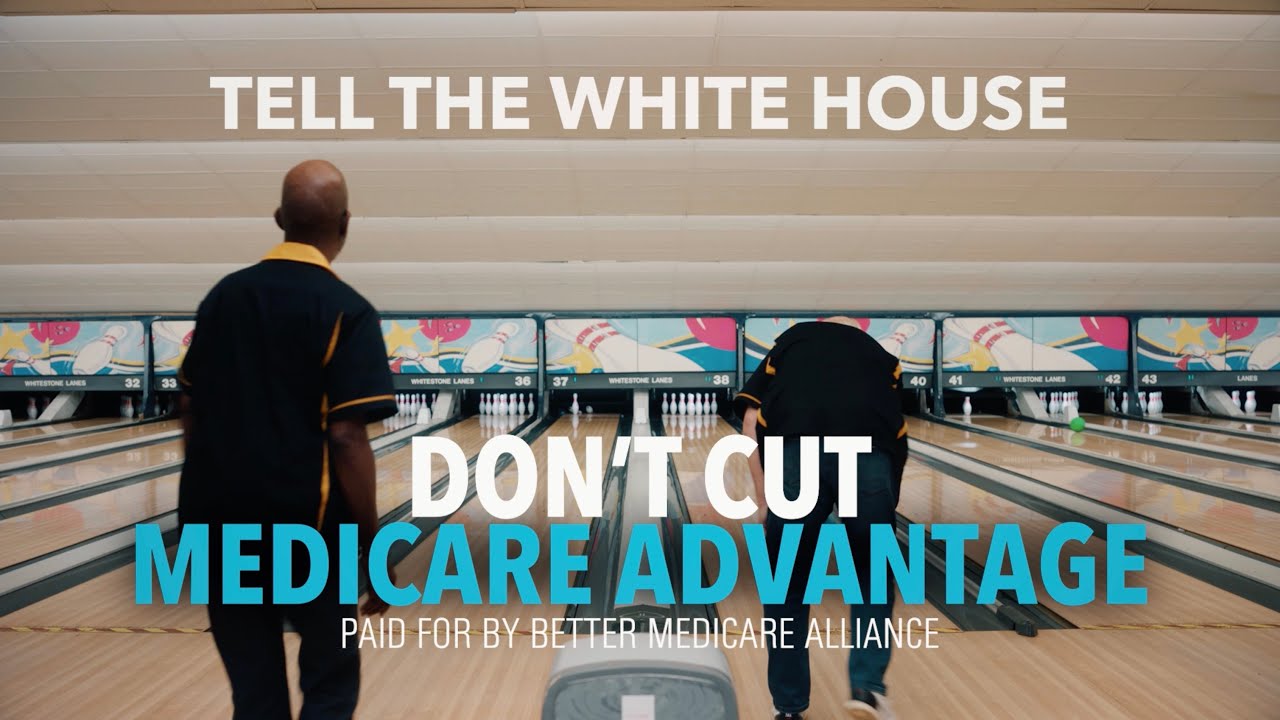 featuring seniors in a bowling alley and left viewers with the message: Cutting Medicare Advantage was “nuts.”
Bruce Vladeck, who ran CMS’ predecessor agency from 1993 through 1997, said that when government officials first turned to Medicare managed care groups in the 1990s, they quickly saw health plans enlist members to help press their agenda.
“That is different from most other health care provider groups that lobby,” Vladeck said. “It’s a political weapon that Medicare Advantage plans have not been at all reluctant to use.”
The Better Medicare Alliance reported lobbying on 18 bills this year and last, according to OpenSecrets. Some are specific to Medicare Advantage, such as one requiring insurers to report more detailed data about treatments and services and another to expand the benefits they can offer, while others more broadly concern health care costs and services.
Proposed reforms aside, CMS appears to believe that getting rid of health plans that allegedly rip off Medicare could leave vulnerable seniors in the lurch.
Testifying on behalf of CMS in a May 2023 deposition in the UnitedHealth Group suit, former agency official Anne Hornsby said some seniors might not “find new providers easily.” Noting UnitedHealth Group is the single biggest Medicare Advantage contractor, she said CMS “is interested in protecting the continuity of care.”
---
12 24
no lnx
Alternet+ Login
When profits kill: The deadly cost of treating healthcare as a business
Thom Hartmann December 10, 2024
The recent assassination of the CEO of UnitedHealthcare — the health insurance company with, reportedly, the highest rate of claims rejections (and thus dead, wounded, and furious customers and their relations) — gives us a perfect window to understand the stupidity and danger of the Musk/Trump/Ramaswamy strategy of “cutting government” to “make it more efficient, run it like a corporation.”
Consider health care, which in almost every other developed country in the world is legally part of the commons — the infrastructure of the nation, like our roads, public schools, parks, police, military, libraries, and fire departments — owned by the people collectively and run for the sole purpose of meeting a basic human need.
The entire idea of government — dating all the way back to Gilgamesh and before — is to fulfill that singular purpose of meeting citizens’ needs and keeping the nation strong and healthy. That’s a very different mandate from that of a corporation, which is solely directed (some argue by law) to generate profits.
The Veterans’ Administration healthcare system, for example, is essentially socialist rather than capitalist. The VA owns the land and buildings, pays the salaries of everybody from the surgeons to the janitors, and makes most all decisions about care. Its primary purpose — just like that of the healthcare systems of every other democracy in the world — is to keep and make veterans healthy. Its operation is nearly identical to that of Britain’s beloved socialist National Health Service.
UnitedHealthcare similarly owns its own land and buildings, and its officers and employees behave in a way that’s aligned with the company’s primary purpose, but that purpose is to make a profit. Sure, it writes checks for healthcare that’s then delivered to people, but that’s just the way UnitedHealthcare makes money; writing checks and, most importantly, refusing to write checks.
Think about it. If UnitedHealthcare’s main goal was to keep people healthy, they wouldn’t be rejecting 32 percent of claims presented to them. Like the VA, when people needed help they’d make sure they got it.
Instead, they make damn sure their executives get millions of dollars every year (and investors get billions) because making a massive profit ($23 billion last year, and nearly every penny arguably came from saying “no” to somebody’s healthcare needs) is their real business.
On the other hand, if the VA’s goal was to make or save money by “being run efficiently like a company,” they’d be refusing service to a lot more veterans (which it appears is on the horizon).
This is the essential difference between government and business, between meeting human needs (social) and reaching capitalism’s goal (profit).
It’s why its deeply idiotic to say, as Republicans have been doing since the Reagan Revolution, that “government should be run like a business.” That’s nearly as crackbrained a suggestion as saying that fire departments should make a profit (a doltish notion promoted by some Libertarians). Government should be run like a government, and companies should be run like companies.
Given how obvious this is with even a little bit of thought, where did this imbecilic idea that government should run like a business come from?
Turns out, it’s been driven for most of the past century by morbidly rich businessmen (almost entirely men) who don’t want to pay their taxes. As Jeff Tiedrich notes:
“The scariest sentence in the English language is: ‘I’m a billionaire, and I’m here to help.’”
Rightwing billionaires who don’t want to pay their fair share of the costs of society set up think tanks, policy centers, and built media operations to promote their idea that the commons are really there for them to plunder under the rubric of privatization and efficiency.
They’ve had considerable success. Slightly more than half of Medicare is now privatized, multiple Republican-controlled states are in the process of privatizing their public school systems, and the billionaire-funded Project 2025 and the incoming Trump administration have big plans for privatizing other essential government services.
The area where their success is most visible, though, is the American healthcare system. Because the desire of rightwing billionaires not to pay taxes have prevailed ever since Harry Truman first proposed single-payer healthcare like most of the rest of the world has, Americans spend significantly more on healthcare than other developed countries.
In 2022, citizens of the United States spent an estimated $12,742 per person on healthcare, the highest among wealthy nations. This is nearly twice the average of $6,850 per person for other wealthy OECD countries.
Over the next decade, it is estimated that America will spend between $55 and $60 trillion on healthcare if nothing changes and we continue to cut giant corporations in for a large slice of our healthcare money.
On the other hand, Senator Bernie Sanders’ single-payer Medicare For All plan would only cost $32 trillion over the next 10 years. And it would cover everybody in America, every man woman and child, in every medical aspect including vision, dental, psychological, and hearing.
Currently 25 million Americans have no health insurance whatsoever.
If we keep our current system, the difference between it and the savings from a single-payer system will end up in the pockets, in large part, of massive insurance giants and their executives and investors. And as campaign contributions for bought off Republicans. This isn’t rocket science.
And you’d think that giving all those extra billions to companies like UnitedHealthcare would result in America having great health outcomes. But, no.
Despite insanely higher spending, the U.S. has a lower life expectancy at birth, higher rates of chronic diseases, higher rates of avoidable or treatable deaths, and higher maternal and infant mortality rates than any of our peer nations.
Compared to single-payer nations like Canada, the U.S. also has a higher incidence of chronic health conditions, Americans see doctors less often and have fewer hospital stays, and the U.S. has fewer hospital beds and physicians per person.
No other country in the world allows a predatory for-profit industry like this to exist as a primary way of providing healthcare. Every other advanced democracy considers healthcare a right of citizenship, rather than an opportunity for a handful of industry executives to hoard a fortune, buy Swiss chalets, and fly around on private jets.
This is one of the most widely shared graphics on social media over the past few days in posts having to do with Thompson’s murder…
Sure, there are lots of health insurance companies in other developed countries, but instead of offering basic healthcare (which is provided by the government) mostly wealthy people subscribe to them to pay for premium services like private hospital rooms, international air ambulance services, and cosmetic surgery.
Essentially, UnitedHealthcare’s CEO Brian Thompson made decisions that killed Americans for a living, in exchange for $10 million a year. He and his peers in the industry are probably paid as much as they are because there is an actual shortage of people with business training who are willing to oversee decisions that cause or allow others to die in exchange for millions in annual compensation.
That Americans are well aware of this obscenity explains the gleeful response to his murder that’s spread across social media, including the refusal of online sleuths to participate in finding his killer.
It shouldn’t need be said that vigilantism is no way to respond to toxic individuals and companies that cause Americans to die unnecessarily. Hopefully, Thompson’s murder will spark a conversation about the role of government and the commons — and the very real need to end the corrupt privatization of our healthcare system (including the Medicare Advantage scam) that has harmed so many of us and killed or injured so many of the people we love.
ALSO READ: CEO shooting suspect’s manifesto claims violence is answer to health care industry: report
===
===
NEWSWEEK
NO LNX?
The fatal shooting of UnitedHealthcare CEO Brian Thompson on Wednesday, which New York City police have described as "brazen" and "targeted," occurred after the insurance provider has faced legal scrutiny over its coverage.
Police have yet to make an arrest in the midtown Manhattan shooting, and a motive remains unclear. The shooting drew an array of reactions, with many critics not entirely sympathetic as they pointed out that the company has denied coverage to some patients. Others, however, slammed those reactions as insensitive, saying that a killing isn't justified and that acts of violence should be denounced.
One criticism of UnitedHealthcare that has garnered attention following the shooting involves a lawsuit alleging the company uses artificial intelligence (AI) to deny coverage to some elderly patients who are on a Medicare Advantage plan, despite allegedly being aware that the algorithm has a 90 percent error rate.
The lawsuit was filed on November 14, 2023. It names UnitedHealth Group, UnitedHealthcare and NaviHealth as the defendants. It was brought by the families of two now-deceased patients who were denied coverage by UnitedHealthcare for stays at nursing homes. The suit is ongoing, and its claims have not been proved in court.
Newsweek reached out via email to UnitedHealthcare for comment.
United Healthcare AI lawsuit
What the UnitedHealthcare AI Lawsuit Alleges
The lawsuit alleges the provider continues using the system because it knows that only about 0.2 percent of policyholders will appeal their denied claims and that the majority will "either pay out-of-pocket costs or forgo the remainder of their prescribed post-acute care."
The suit says that UnitedHealthcare banks "on the patients' impaired conditions, lack of knowledge, and lack of resources to appeal the erroneous AI-powered decisions."
It goes on: "The fraudulent scheme affords Defendants a clear financial windfall in the form of policy premiums without having to pay for promised care, while the elderly are prematurely kicked out of care facilities nationwide or forced to deplete family savings to continue receiving necessary medical care, all because an AI model 'disagrees' with their real live doctors' determinations."
The suit says that an AI model was used to compare a patient's diagnosis, age, living situation and physical function to similar patients to predict the person's needs, estimated length of stay and target discharge date from care facilities.
That model, however, allegedly provided "generic recommendations" that did not "adjust for a patient's individual circumstances and conflict with basic rules on what Medicare Advantage plans must cover," according to the suit.
UnitedHealth Group's Response to Suit
Read more Health Care
Police Find Backpack in Central Park Suspected to Belong to UnitedHealthcare CEO Gunman
UnitedHealthcare CEO May Have Hired His Own Killer—Former Police Commander
Blue Cross Blue Shield's Corporate 'About Us' Page Vanishes From Website
New Unmasked Images Released of Smiling UnitedHealthcare CEO Suspect
In May, UnitedHealth Group's lawyers argued the suit should be dropped because the plaintiffs "failed to exhaust the exclusive administrative appeal process set by the Medicare Act," reported the website Stat. They said the issues raised in the lawsuit are with the federal government, not UnitedHealth or its subsidiaries.
For instance, the lawsuit alleged that patients were "rarely" in a nursing home for more than two weeks before they started to receive payment denials, despite Medicare Advantage plans allowing patients who were in the hospital for three days to get up to 100 days in a nursing home.
The lawsuit also says that more than 90 percent of these denials that are appealed are ultimately reversed.
Some in the health care industry have been raising concerns about the use of AI in insurance. A Newsweek report found that concerns are particularly prevalent for patients on Medicare Advantage plans, which are provided by private insurance companies that have contracts with the federal government.
The AI lawsuit is among the examples of scrutiny UnitedHealthcare is facing following the fatal shooting of its CEO. But as some critics cited the lawsuit after the shooting, or even joked about it, others viewed these reactions as crass.
"Just a reminder that Brian Thompson, the CEO of UnitedHealth who was just shot and killed in NY, was a human being with a family. So many of the comments on his murder are despicable," wrote Julie Nelson, an anchor at Minnesota news station KARE, in a post to X (formerly Twitter).
UHC CEO Shooting: What We Know
The suspect in Thompson's shooting was still at large Thursday afternoon, with police releasing their clearest image yet of him more than 24 hours after the shooting.
"UPDATE: Below are photos of a person of interest wanted for questioning regarding the Midtown Manhattan homicide on Dec. 4. This does not appear to be a random act of violence; all indications are that it was a [premeditated], targeted attack," New York's Police Department (NYPD) wrote in a post to X.
Thompson, 50, was shot dead near the Hilton Hotel in midtown Manhattan at about 6:45 a.m. Wednesday, police said. A masked suspect fled the scene to a nearby alleyway and then rode away on an E-bike toward Central Park.
Thompson was taken to Mount Sinai Hospital, where he was pronounced dead. He was expected to speak at an investor presentation at the Hilton later in the day for UnitedHealthcare, the largest private health insurer in the U.S. He had served as the company's CEO since 2021.
Authorities said Thursday that a bullet found at the shooting scene was emblazoned with the words deny, defend and depose, ABC News reported.
NYPD Commissioner Jessica Tisch told reporters at a Wednesday press conference that the suspect was "lying in wait" for several minutes before the shooting.
"Many people passed the suspect, but he appeared to wait for his intended target. I want to be clear: At this time, every indication is that this was a premeditated, preplanned, targeted attack," she said.
In a statement, UnitedHealth Group said the company is "deeply saddened and shocked" by the shooting.
"Brian was a highly respected colleague and friend to all who worked with him. We are working closely with the New York Police Department and ask for your patience and understanding during this difficult time. Our hearts go out to Brian's family and all who were close to him," the statement reads.
AN 12 24
Fox News hosts Sandra Smith and Jeanine Pirro criticized Republican state Delegate Nino Mangione of Maryland after his cousin, Luigi Mangione, was arrested for the murder of CEO executive Brian Thompson.
"Another twist in this story, this just into our newsroom, the suspect's cousin is a Maryland State Delegate," Smith reported Monday. "So this is now being confirmed, the suspect's cousin is a Maryland State Delegate, Antonio D. Mangione, goes by Nino."
"How was it possible there wasn't anyone, anywhere in the country who was saying, that person's in my family, I know that guy?" she said.
Former FBI investigator Bill Daly said it was "quite surprising that it took a McDonald's employee in Pennsylvania to identify this person."
"How does anybody who is related to this person not say, I know that guy, and call the police?" Smith asked Pirro.
"Well, that is certainly a very relevant question," Pirro agreed. "Once a guy at McDonald's can pick up the phone and a relative and someone who is in a particular job where he's working for the government, essentially, and for the people, can't, you know you've got a problem."
Watch the video below from Fox News.
//
man being held in connection to the Manhattan shooting of a health insurance executive reportedly had a manifesto claiming violence was the answer to problems with the health care industry.
The New York Times reported Monday that Luigi Mangione, 26, was being held in Pennsylvania in connection to the shooting of Brian Thompson.
Mangione was said to have a handwritten manifesto railing against the insurance industry for putting profits above health care.
According to CNN, the document suggested that violence was the answer to health care insurance problems.
A "ghost gun" and a suppressor were also reportedly found in the man's possession.
===
3 24? capc off bs
this weekend at the CPAC conference one of your Hotline editors, Steve Moore, called AARP an “evil organization” for its nefarious relationships with the Biden administration and one of the country’s largest health insurance conglomerates, UnitedHealth.
The Biden campaign lashed out in a social media blast asserting the old chestnut that Repubs want to cut Social Security and Medicare:
Here’s a reality check: AARP doesn’t really represent the interests of seniors anymore – if it ever did. AARP is a functionary of one of the nation’s largest health insurer behemoths – United Health.
AARP now collects $1 BILLION a year (not $1 million) in royalties from UnitedHealth – a gargantuan insurer with a $500 billion market cap.
This sweetheart arrangement with UnitedHealth explains why AARP sold seniors down the river by supporting ObamaCare despite calls from their own members running 14-to-1 against it.
UnitedHealth and AARP also supported the Biden Inflation Acceleration Act, which imposed price controls on drug companies in a way that is not lowering drug prices but is slowing R&D funding for new drugs to combat Alzheimer’s, Parkinson’s, ALS, and cancer. The last time we checked seniors are the strongest advocates for winning the race for the cure.
AARP signed on to this bill even though it raided over $250 billion from Medicare drug spending to pay for supersized Obamacare subsidies and green energy giveaways.
AARP has opposed many of the most modest debt reduction plans to save America’s future while supporting higher taxes on our kids and grandkids.
If you’re a member of AARP, maybe you should reconsider. We urge our members to check out AMAC or 60+, which are organizations that truly support the interests of older Americans.
How the richest democracy in the world abandons Americans - Alternet.org
medical billing an 2 24
demand progress 2 23
It’s not just Amgen and Horizon — America’s biggest corporations are trying to get even bigger. That’s bad for consumers, public health, and innovation.
Amazon is attempting to acquire One Medical for $3.9 billion,4 a move that would help Amazon on its path towards becoming a health care monopoly. Facebook’s parent, Meta, is trying to acquire a prominent VR company.5 Two major railroad companies are trying to merge for $27 billion, continuing consolidation in the railroad industry that the Department of Justice (DOJ) has called seriously concerning.6
This is not an extensive list, just some examples of the attempts by corporate giants to consolidate their power. But we have federal antitrust laws to protect competition and to protect consumers from worse products for higher prices. Our elected leaders and regulatory agencies must do everything in their power to more frequently and forcefully scrutinize and, when necessary, block these mergers.
^ ===^
^an ^2 ^23 ^unitedhealth ^corp
https://www.alternet.org/uhc/
^denied ^cancer ^patient
^===
oh, it's gonna put ACA medicare in gop red states that refused tho have most poor sick ppl?!
https://www.alternet.org/2021/09/corporate-scheme-biden-agenda/
common dr
Corporations threatened by the prospect of paying a slightly higher tax rate and exercising a little less power over working people are spending millions to sabotage a far-reaching Democratic reconciliation bill that would expand the social safety net and bolster climate action.
That's according to Behind the Curtain: The Corporate Plot to Upend Democracy, a new report released Wednesday by People's Action, a nationwide network of groups organizing for social justice, and Dēmos, a progressive think tank.
"While everyday people are calling on Congress to put people first and safeguard their basic rights to housing, healthcare, and a clean environment, corporations are prioritizing profits and working hard to preserve an inequitable status quo," Dēmos senior policy analyst Daniella Zessoules said in a statement. "As we've witnessed throughout the Covid-19 pandemic, this greed hits Black, brown, and low-income people hardest."
The report exposes how corporations are trying to ensure that the United States' wealthiest and most powerful entities "can reap obscene profits year after year at our expense" and "keep our elected officials from taking action to restore communities."
Just 20 corporations or industry groups—keen to preserve nearly $2.3 trillion in tax cuts the GOP passed in 2017and to make permanent billionaires' $1.8 trillion pandemic windfall—have spent more than $201 million in lobbying so far this year, the report finds. Much of that corporate cash has been aimed at derailing progressive provisions in the popular and potentially historic tax reform and spending package that would invest up to $3.5 trillion over a decade to strengthen the welfare state and decarbonize the economy.
Although the reconciliation bill encapsulates the agenda demanded by tens of millions of voters who elected President Joe Biden and put Democratic majorities in the House and Senate, an ongoing "power grab"—led by several corporations and trade associations that represent them, such as the Chamber of Commerce and the National Realtors Asscoaition, and supported by aligned right-wing lawmakers—has put its passage in jeopardy, the report notes.
"We pulled the curtain back on corporate America to find they were trying to put Congress in a headlock," People's Action campaign director Sondra Youdelman said in a statement. "Now, Congress needs to do its job, fight these bullies, and pass a budget package for the people."
While "corporate influence to stop progressive change is nothing new," the report states, "the concentration of wealth and monopoly powers in recent years has added fuel to the flame."
"Corporate America wants to keep profits high and taxes low forever," adds the report. "They simply don't want to pay their fair share. That's why they're throwing millions of dollars into lobbying, campaigns, and political advertising to divide us and get legislators to back their agenda of permanent inequality."
The report highlights anti-democratic corporate spending and opposition to the Build Back Better Act's proposed reforms in the following six key issue areas, all of which are backed by a majority in the U.S.: increasing taxes on corporations and the ultra-rich, lowering drug prices, providing affordable healthcare, investing in public and affordable housing, tackling climate change, and providing a pathway to citizenship for undocumented people.
For each issue area, the report explains measures included in the reconciliation package, shows polling results indicating popular support for the proposed investments and policies, and details what corporations are doing to obstruct the bill's passage.
According to the report:
- Over two-thirds of voters support raising taxes on the wealthy and corporations;
- Nearly 90% of adults want the government to negotiate lower drug prices;
- A majority of voters want the federal government to reduce healthcare costs and expand coverage;
- A majority of voters want the federal government to increase the supply of nonprofit and publicly owned homes;
- Two-thirds of adults think the federal government is not doing enough to mitigate the climate crisis; and
- Almost 70% of voters support a pathway to citizenship for undocumented immigrants.
And yet—even though the Build Back Better Act would take steps toward meeting the needs of millions of Americans who are facing rampant tax injustices, the world's highest prescription drug prices, skyrocketing healthcare costs and lack of insurance, evictions and foreclosures, extreme weather disasters, or the threat of deportation—corporations have vehemently fought against the reconciliation bill.
Leading offenders include Anthem, JPMorgan Chase, FedEx, Walmart, Exxon, Amazon, Pfizer, and Blue Cross Blue Shield, the report finds. Big Pharma and private health insurance companies have spent $171 million so far in 2021 on lobbying, the most of any industry.
As the report notes:
Rich corporations are fighting tooth and nail to prevent the American people from getting what they want: a government that works for everyone, not just a wealthy few. Their massive use of corporate power to frustrate the will of the people on an issue-by-issue basis is part of a larger anti-democracy effort backed by corporate America.
As corporations seek to undermine the Biden plan's much-needed tax provisions, historic investments in drug pricing reform, healthcare, housing, climate, and immigration reform, they are also attacking our freedom to vote. Many of the same companies combating elements of the Build Back Better proposal are also bankrolling voter suppression legislation.
"Now we know who the real villains are behind the curtain, who want to keep our communities from getting what we need and deserve," the report concludes. "Corporations and the wealthy few are undermining our democracy. They are lobbying hard to preserve an unequal status quo, using money to steer government rather than allow a real democracy to bring about what the people overwhelmingly want—a country that works for all of us."
The report's publication coincides with a National Day of Actionduring which People's Action members plan to hold rallies denouncing opponents of the Build Back Better Act for undermining the well-being of the nation's economy and democracy.
Following Tuesday's action against JPMorgan in New York, demonstrations against these organizations are planned for Wednesday:
- Greater Des Moines Partnership in Iowa;
- FedEx in West Virginia;
- Anthem in Indiana;
- Blue Cross Blue Shield Anthem in New Hampshire;
- Blue Cross Blue Shield in Illinois;
- Ajax Pavement Industries: Flint Asphalt Plant in Michigan;
- Amazon in Colorado;
- National Realtors Association in Delaware and New York; and
- PhRMA in Idaho. [vaxxers unite!]
"We can't call the U.S. the greatest democracy in the world if our legislators allow a handful of corporations to derail the critical and wildly popular provisions in the Build Back Better package," Lisa Tyson, director of the Long Island Progressive Coalition, said in a statement (pdf).
"These companies are lining politicians' pockets in hopes of securing a future of extreme inequality and climate catastrophe," Tyson added. "It's time for lawmakers to grow spines and show us who they work for: the people, not massive corporations."
https://www.alternet.org/2021/05/capitol-riot-2653051980/
Corporations have sent $2.6 million to ‘Sedition Caucus’ Republicans who promoted the January 6 sinsurrection': report
ah 521
A common talking point among far-right Trumpistas — from Sen. Josh Hawley of Missouri to Rep. Matt Gaetz of Florida — is that Corporate America, especially big tech, has it in for Republicans and is using "cancel culture" in an effort to bully them into silence. Hawley, in his fundraising e-mails, has claimed that "woke" corporations are "canceling" him for promoting election security. But according to a new report by the watchdog group Citizens for Responsibility and Ethics in Washington, corporate dollars have been flowing, in a big way, to Republican "insurrectionists" in Congress who voted against certifying President Joe Biden's Electoral College victory over former President Donald Trump in the 2020 election.
CREW members Robert Maguire and Caitlin Moniz, in an article published by its website this week, explain, "In just the first few months since the (January 6) insurrection, corporate and industry PACs have contributed more than $2.6 million to campaigns, leadership PACs, and party committees allied with the 147 members of Congress who fed the Big Lie that led to the deadly attack on the Capitol. In all, 170 business PACs — some of which had previously committed to stop giving — have donated to political committees that support and defend the members who voted not to certify the election results."
The many Senate and House Republicans who voted against Biden's Electoral College certification have been slammed as "the Sedition Caucus" by Democrats as well as by some Never Trump conservatives. And Corporate America, according to CREW, has been generous with Republicans who promoted the Big Lie.
"So far, at least 103 of the 147 members of the so-called Sedition Caucus, along with the two main GOP congressional party committees, the (National Republican Senatorial Committee) and (National Republican Congressional Committee), have benefited from corporate giving after January 6," Maguire and Moniz note. "The ten members with the most corporate donations as of the end of March, which is the latest date for which data is available, have nettedmore than $22,000 each from an average of ten business PACs per member."
Maguire and Moniz cite Rep. Glenn Thompson of Pennsylvania as a member of the GOP "Sedition Caucus" who received "$44,000 from 17 corporations and industry groups." Another Republican they mention is Rep. Blaine Luetkemeyer of Missouri.
"The NRCC and NRSC — the two main party committees backing Republicans in the House and Senate — have brought in a combined $1.7 million from PACs tied to more than 57 companies and industry groups," Maguire and Moniz note. "The list includes household names likePfizer, Intel, T-Mobile, and CVS, as well as PACs tied to trade groups that represent industries as varied as real estate, mortgage banking, and insurance agents."
Another company mentioned in CREW's report is Cigna.
According to Maguire and Moniz, "The health insurer Cigna…. released a statement after the insurrection saying that it would "discontinue support of any elected official who encouraged or supported violence, or otherwise hindered a peaceful transition of power." But within a month, its PAC was back to making contributions, starting with a $15,000 contribution to the NRSC — soon followed by another $15,000 to the NRCC."
FROM YOUR SITE ARTICLES
- Inside the Capitol riot: What more than 500 Parler videos reveal ... ›
- Capitol riot suspect from Florida claims he was breaking into the ... ›
- Democrats move to censure GOP House members who downplay ... ›
RELATED ARTICLES AROUND THE WEB
- U.S. House approves Capitol riot probe; many Republicans buck ... ›
- McCarthy Opposes Commission to Investigate Capitol Riot - The ... ›
- What we know about the Capitol riot arrests - CBS News ›
// attempt pvt USPO? what happened to maralago VA scam?
an
https://www.alternet.org/2020/08/trumps-defense-secretary-wants-to-privatize-military-healthcare-using-budget-cuts/
aha covid reveal or ATTACKS [VIRUS PICKS THE LOCK] SYSTEMIC STRUCTUTAL PROLEMS/INEQUALITY:
https://www.alternet.org/2020/05/how-americas-wealthiest-are-profiting-in-the-time-of-the-pandemic/
is understandably tempting to drop all the blame for America’s catastrophic response to COVID-19 on the big desk in the Oval Office. But there’s more to the story than epic incompetence, grift and delusion at the highest levels of government. The stark divide in the level of health care from testing to treatment is divided by wealth and the legacy of systemic racism.
In the words of Ed Yong of the Atlantic: “Chronic underfunding of public health neutered the nation’s ability to prevent the pathogen’s spread. A bloated, inefficient health-care system left hospitals ill-prepared for the ensuing wave of sickness. Racist policies that have endured since the days of colonization and slavery left Indigenous and Black Americans especially vulnerable to COVID-19.” Yong could also add Hispanics to that list, along with virtually any person of limited economic means, regardless of race.
In the land of the free and the home of the brave, income and zip code determine everything. And this is not a new phenomenon. In a recent article in Le Monde Diplomatique, historian Thomas Frank quotes physician Dr. Michael A. Shadid, who was a longtime advocate for cooperative health care from the 1920s onward until his death. In his 1947 book, :{Doctors of Today and Tomorrow:(style="box-sizing:border-box;outline:none;margin:0px;padding:0px"):}:, Shadid made the case for socialized medicine on the grounds that “[p]oor people get sick quicker, stay sick longer, need medical aid most, get it least. Some are poor because they are sick. Others are sick because they are poor.”
Nothing has fundamentally changed since Shadid’s time. The United States continues to have the most expensive health care system in the world, yet a 2019 comparison of health indicators in the United States versus those of Organization for Economic Cooperation and Development member countries’ averagereveals a system that persistently produces inferior outcomes relative to other nations (in spite of higher expenditures) and has done so for decades.
cOVID-19 has both amplified and revealed these long-standing flaws, tragically reflected in its death count, but it is by no means a historical anomaly. Earlier pandemics reveal a similar pattern, suggesting a more widespread systemic problem: namely, that the high death counts relative to the rest of the world are an inescapable consequence of our for-profit, pervasively oligopolistic health care system. The problems of a for-profit health care system are exacerbated by the diversion of resources and skills into militarism, and unequal food distribution systems’ effect on diet and obesity. All of these pre-existing problems contribute to higher mortality rates, as does access to proper medical care, which is heavily circumscribed by income.
In terms of fatalities, COVID-19 now ranks as one of the most severe pandemics in modern history, according to the Centers for Disease Control and Prevention (CDC). The most deadly was the 1918 influenza pandemic: 50 million deaths globally out of a worldwide population of 1.8 billion, or 2.7 percent, while the U.S. recorded 675,000 fatalities, or 0.65 percent on a per capita basis out of a population of 103 million. The only “good” thing that can be said about the 1918 tragedy is that the United States fared relatively better than the rest of the world, by this measure.
By contrast, a notable feature of four major pandemics over the past 63 years* (the 1957-1958 H2N2 influenza virus, the 1968 H3N2 influenza virus, the 2009 H1N1 influenza virus or so-called “swine flu,” and COVID-19 today) is America’s persistent underperformance in terms of fatalities relative to the rest of the world in spite of the vastly higher sums the country devotes to health care expenditures (in both absolute terms and as a percentage of GDP). For all of the talk about American exceptionalism, the only thing “exceptional” about the U.S. health care system is this profound systemic failure.
The 1957 H2N2 flu virus caused 1.1 million deaths globally out of a worldwide population of 2.9 billion, or 0.038 percent on a per capita basis; whereas in the United States, it caused about 116,000 deaths out of a U.S. population of 178 million, or 0.065 percent on a per capita basis. The 1968 H3N2 virus resulted in 1 million fatalities worldwide out of a global population of 3.6 billion, or 0.028 percent on a per capita basis; in the United States, there were 100,000 deaths out of a population of 203 million, or 0.049 percent on a per capita basis. The 2009 H1N1 virus caused far fewer overall deaths both globally and within the U.S., with 284,000 fatalities globally and a mere 12,469 fatalities in the U.S.; per capita fatality rates were the same (.004 percent on a per capita basis). But COVID-19 has reflected the reversion to American underperformance: as of August 13, confirmed global fatalities (out of a worldwide population of 7.8 billion) were 749,776, or 0.0096 percent on a per capita basis, versus 169,488 deaths in the United States out of an existing population of 331 million, or 0.051 percent on a per capita basis.
Even more disturbing is that American fatalities are profoundly impacted by income disparities. Low-income communities and BIPOC (Black, Indigenous, and people of color) are experiencing substantially higher rates of mortality. Examining by zip code the geographic distribution of the segments of the population most likely to die from COVID-19—BIPOC, as well as people over the age of 65, and those of any age who are nursing home residents (other than those in luxury elderly care facilities)—these three overlapping segments account for most deaths. It may be that in the northern states these most vulnerable people are heavily concentrated in densely populated areas and thus are quickly exposed to infection and die relatively soon after COVID-19 starts spreading in their area. The New York experience validates that assessment.
In the southern and western states, these most vulnerable populations are more widely scattered across vast suburban and rural areas, which likely explains why the United States as a whole has experienced rolling hot spots, in which the more diffuse population centers become infected and die relatively later after the initial outbreaks of the virus that were largely experienced in heavily urbanized regions. We see this pattern manifested in a recent Arizona compilation of new cases by zip code, as AZ Family reports using analysis by CBS 5 Investigates. Arizona has been one of areas most badly affected by COVID-19 during the summer months, and the AZ Family report illustrates that the hotspots for new cases are dominated by zip codes with “large minority populations” living in areas that are rural or on the outskirts of urban centers.
Why is this significant? David Dayen of the American Prospect explains: “Rural hospitals… are in total crisis in the U.S., with 19 closures last year and 120 since 2010. As hospital networks consolidate and strive for ever-greater profits, rural hospitals that fail to bring in the necessary revenue fall away.”
In the same piece, Dayen quotes a study from Health Affairs, which reports that “49 percent of the lowest-income communities had no ICU beds… whereas only 3 percent of the highest-income communities had no ICU beds.” He highlights an extreme example of this problem, originally reported by the Houston Chronicle: the Rio Grande Valley, along the Texas-Mexico border, “home to 1.3 million residents… [with] no public hospital. Starr County is one of the only in America to have to resort to triage, choosing who to care for and who to send home to die.”
Dayen’s analysis illustrates the fundamental flaw in the system: Levels of provision are a function of profitability; they do not reflect health care priorities. Hence the lowest-income hospitals are often shut down, which means worse health care outcomes for residents in these poorly serviced areas.
The other problem in Texas is that the state historically has also featured a high concentration of undocumented (largely Hispanic) immigrants (the second-highest “unauthorized immigrant” population in the U.S., behind only California), who are being forced to work even when sick, since they are, by virtue of their undocumented status, largely excluded from any and all virus-relief economic aid and access to primary health care. As ProPublica noted: “Texas is also the largest state in the nation that refused to expand health insurance for low-income residents under the Affordable Care Act… Nearly a third of adults under 65 in Texas lack health insurance, the worst uninsured rate in the country, and more than 60% of those without health insurance in the state are Hispanic.”
Furthermore, living in crowded multigenerational settings, workers infected on the job come home and risk spreading the illness to their parents and grandparents (many of whom may also have problematic immigration status in the country and risk deportation if they seek to address their health issues). Consequently, Hispanics are now suffering some of the worst health outcomes in the U.S.
With this information in context, it’s clear the more we lay blame at Trump’s feet, the further we’re going to be from confronting that COVID-19 fits neatly into a decades-old pattern of pandemic response. American health care can literally impoverish its citizens even as it undermines their physical well-being. Breaking the pattern can only happen if Americans keep putting pressure on institutionalized racism, get serious about inequality, and flip the switch on our employer-based private health care system.
*Franklin “Chuck” Spinney provided research assistance on the compilation and analysis of the pandemic data.
Marshall Auerbackis a market analyst and commentator.
This article was produced by Economy for All, a project of the Independent Media Institute
===
===
420 pro publ
One Thing the Pandemic Hasn’t Stopped: Aggressive Medical-Debt Collection
U.S. hospitals are in the spotlight for being on the frontline of fighting the pandemic. But in the shadows, debt collection operations continue, often by the same institutions treating coronavirus patients, all while unemployment and uncertainty soar.
by Alec MacGillis
| VIEW STORY |
==
==
420 pro publ
Health Insurers to Investors: We’re Good. Health Insurers to Lawmakers: Please Help.
Cigna executives told analysts the pandemic wouldn’t hurt its business, while the health insurance lobby asked Congress for aid.
by Isaac Arnsdorf
===
an 1219
‘People have died as a result’: Residents of rural Missouri are furious with greedy corporation for closing their only hospital
==
==
https://theconversation.com/as-rural-americans-struggle-for-health-care-access-insurers-may-be-making-things-worse-128583
==
How Chicago, a Hospital and Private Companies Make Money Off the Poor
Three stories about debt, bankruptcy and the institutions that perpetuate them.
by Logan Jaffe
July 5, 4 a.m. CDT
Hospital Suspends Debt Collection Lawsuits Amid Furor Over Suing Its Own Employees
Methodist Le Bonheur Healthcare is reevaluating its policy after an MLK50-ProPublica investigation found that it had filed 8,300 lawsuits in the past five years, including against many of its own employees.
by Wendi C. Thomas, MLK50
July 3, 10:01 a.m. EDT
==
==