HEARTLAND2
see prior and tag
ICCC and iccc2
2/17
capt 2/18 619
The Heartland Institute
3939 N Wilke Rd
Arlington Heights, IL 60004
tel: (312) 377-4000
fax: (312) 275-7942
EIN: 36-3309812
| EIN | 36-3309812 |
|---|---|
| Name in IRS Master File | HEARTLAND INSTITUTE |
| NTEE Code | W20 |
| NTEE Classification | Government and Public Administration |
| NTEE Type | Public, Society Benefit - Multipurpose and Other |
| Classification | Charitable Organization |
| Subsection | 501(c)(3) (View the list of codes) |
| Activities | (149) Other instruction and training |
| Foundation Status | Organization which receives a substantial part of its support from a governmental unit or the general public 170(b)(1)(A)(vi) |
| Deductibility | Contributions are deductible |
| Affiliation | Independent - the organization is an independent organization or an independent auxiliary (i.e., not affiliated with a National, Regional, or Geographic grouping of organizations). |
| Group Name | [Not Applicable] |
| Ruling Date | December, 1984 |
| Filing Requirement | 990 (all other) or 990EZ return |
| Fiscal Year End | December |
IRS Forms 990 (provided courtesy of Foundation Center) |
|
https://projects.propublica.org/nonprofits/organizations/363309812
Desmog:
May 16–18, 2010
The New Zealand Climate Science Coalition (NZCSC) was a co-sponsorof the Heartland Institute’s Fourth International Conference on Climate Change (ICCC4) in Chicago, IL. [:{15:(style="box-sizing:border-box"):}::{]:(style="box-sizing:border-box"):}:
DeSmogBlog found that 19 of the 65 sponsors (including Heartland itself) had received a total of over $40 million in funding since 1985 from ExxonMobil(who funded 13 of the organizations), and/orKoch Industries family foundations (funded 10 organizations) and/or the Scaife family foundations (funded 10 organizations). :{ [:(style="box-sizing:border-box"):}::{16:(style="box-sizing:border-box"):}::{]:(style="box-sizing:border-box"):}:
p 156 mashey 2012
Z.2007.02.8 Heartland on Monckton Letter
British Lord Demands End to Climate Science Censorship
“Lord Christopher Monckton, 3rd Viscount of Brenchley and a member of the
Upper House of the British legislature, 763 has sent a letter to Sens. Olympia
Snowe (R-ME) and John D. Rockefeller (D-WV)excoriating them for
attempting to strong-arm ExxonMobil into cutting off support for public interest
groups that question global warming alarmism. …
Monckton, a former science and technology advisor764 to British Prime Minister
Margaret Thatcher, .. Monckton’s open letter, edited for length, appears below.
…”
“You commend Britain’s Royal Society 765
, once a learned body and now a mere
Left-leaning political pressure-group, …
Finally, you may wonder why it is that a member of the Upper House of the
United Kingdom legislature,…”
Heartland edited the original 766 document, deleting the following section
quite relevant to the topics discussed in this report:
“In the circumstances, your comparison of Exxon’s funding of sceptical
scientists and groups with the former antics of the tobacco industry is
unjustifiable and unworthy of any credible elected representatives. Either
withdraw that monstrous comparison forthwith, or resign so as not to pollute the
office you hold.”
Monckton has been discredited numerous times, 767 but Heartland promotes
him as a “global warming expert” to their readership.
This was apparently insufficient as seen in next article.
763 en.wikipedia.org/wiki/Christopher_Monckton,_3rd_Viscount_Monckton_of_Br
enchley Monckton has never been a member of the House of Lords.
764 There is no evidence of this claim, and much otherwise.
765 The RS is the oldest science society in the world. Monckton is a nonscientist.
766 www.ff.org/centers/csspp/pdf/20061212_monckton.pdf p.6
767 scienceblogs.com/deltoid/2011/12/monckton_debunks_monckton.php
www.skepticalscience.com/monckton-tries-to-censor-john-abraham.html
yyy.guardian.co.uk/environment/georgemonbiot/2010/jul/14/monckton-johnabraham
https://thinkprogress.org/trump-international-hotel-will-host-a-climate-denial-conference-5cf2c28b695d/
In late July, climate science deniers will descend upon the Trump International Hotel in Washington, D.C. — located right across the street from the Environmental Protection Agency (EPA) — to attend the Heartland Institute’s annual climate conference. The theme this year is “Best Science, Winning Energy Policies.”
The conference will feature “the courageous men and women who spoke the truth about climate change during the height of the global warming scare,” as the event’s own description puts it. “Now, many of them are advising the new administration or joining it in senior positions.”
Fringe climate science deniers have surrounded and infiltrated the administration since President Donald Trump was elected — from working on Trump’s transition team, to meetings with top EPA officials. Trump himself has said climate change is a Chinese hoax, tweeted repeatedly that winter snowstorms disprove global warming, and said that climate scientists have a political agenda. And many top government officials in this administration deny the science on climate change.
When Trump announced in June 2016 that the United States would withdraw from the Paris climate deal, representatives from longtime anti-climate action groups like Koch-funded think tanks the American Energy Alliance, the Competitive Enterprise Institute, and the Heritage Foundation were all present in the Rose Garden.
Many of these same think tanks will be attending Heartland‘s conference next month, where speakers will offer up policy ideas “to lead a post-alarmist world in climate realism” as well as discussing “the benefits of ending the Democrats’ war on fossil fuels.”
This denialism is in stark contrast to the reality facing the world. Scientists have long established that climate change is real, is the result of burning fossil fuels, and that its impacts are visible here and now — from more intense hurricanes and wildfires to both increased drought and rainfall depending on the region. The very first line of the government’s own National Climate Assessment released last fall states, “The impacts of climate change are already being felt in communities across the country.”
Despite the scientific consensus, the Trump administration has been taking aggressive action to roll back vital environmental protections, often in line with industry demands. Supporting the coal industry, in particular, has been a top priority for the administration.
The Trump International Hotel isn’t just a top choice for climate deniers: Last year, two executives from coal companies close with the administration — Murray Energy and Craft Alliance Partners — were “VIP” guests of the downtown D.C. hotel. Last June, the hotel hosted a reception for industry trade group the American Coalition for Clean Coal Electricity.
The hotel — referred to by one Department of Energy staffer as “Republican Disneyland” — has received hundreds of thousands of dollars from oil, coal, natural gas, and mining interests who come to attend events frequented by administration officials. Last March, the Independent Petroleum Association of America’s (IPAA) annual “Congressional Call-Up” was held at Trump’s hotel.
Oil and gas lobbyists gather at Trump Hotel for annual D.C. meeting
This is at least the third energy industry group to choose the Trump International Hotel.
Meanwhile, Trump has refused to sever ties with the Trump Organization, which holds the lease for the Old Post Office building where the hotel is located. Prosecutors for lawsuits in New York, Maryland, and D.C. argue Trump is illegally profiting off of his presidency; the more guests and events at the hotel, the more the president profits.
But while the fossil fuel industry, and the climate deniers who have received fossil fuel funding over the years, flock to the hotel, lawmakers on both sides of the aisle are increasingly starting to recognize the importance of tackling the climate crisis.
For the first time, climate change is a leading issue in the 2020 presidential campaign, and a growing number of Democratic candidates are offering up climate policy proposals. Meanwhile, Sen. Lindsey Graham (R-SC) recently told reporters that the Republican Party needs its own climate plan.
At the same time, coal continues to be on the decline no matter what the administration does to help the industry. More coal plants shut down during Trump’s first two years than during President Barack Obama’s entire first term.
More coal plants shut down in Trump’s first two years than in Obama’s entire first term
The administration's own data reveal coal isn't coming back.
Heartland’s conference comes as the head of the group, former Republican Kansas Rep. Tim Huelskamp, abruptly stepped down last week, just two years after taking the position, while offering no explanation. The think tank has in recent years faced funding uncertainties, with even ExxonMobil no longer donating to the organization. As head of Heartland, Heulskamp focused on energy policy and promoting coal at the state level as opposed to vocal attacks on climate science as his predecessor Joseph Bast did.
The news of Huelskamp leaving his post comes shortly after another Koch-funded libertarian think tank, the Cato Institute, quietly announced it was disbanding its climate denial program, the Center for the Study of Science. A Cato spokesperson at the time, however, said this didn’t change the organization’s stance on human-caused climate change.
==
https://www.desmogblog.com/2019/01/18/climate-advocates-underestimate-power-fossil-fuel-misinformation-campaign-brulle
Climate Advocates Underestimate Power of Fossil Fueled Misinformation Campaigns, Say Top Researchers
By Graham Readfearn • Friday, January 18, 2019 - 08:51
Myron Ebell at a Heartland Institute conference
Climate action advocates have underestimated the strength and sophistication of decades-long fossil fuel-funded misinformation campaigns and need a coordinated set of strategies to fight back, say leading academics.
Among those strategies, say the three researchers from Yale and Brown University, are promoting financial transparency,suing misinformers and their funders,and researching the vast networks of think tanks and front groups.
Writing in the journal Nature Climate Change, Yale University's Professor Justin Farrell and Kathryn McConnell, together with Brown University’s Professor Robert Brulle, say people working on responses to climate change “cannot afford to underestimate the economic influence, institutional complexity, strategic sophistication, financial motivation, and societal impact of the networks” behind climate misinformation campaigns.
Brulle, who is also an academic at Drexel University, told DeSmog that after conversations with leaders of environment groups and foundations, he had concluded “there is virtually no understanding of the nature or extent of misinformation efforts and organized efforts to stop climate action.”
Misinformation Ignored
He said: “So in my opinion, the efforts to promote climate action are failing to take into account opposition efforts in their strategies. I can assure you that this is not the situation for the organized efforts to stop climate action — which I call the climate countermovement.”
Brulle and Farrell have each produced several major studies in leading academic journals on the funding and influence of the “climate countermovement” and its fossil fuel interests. In 2018, Brulle joined several academics in criticizing the United Nations Intergovernmental Panel on Climate Change (IPCC) for ignoring in a major report swaths of research and evidence on the impact of organized climate science denial.
In this most recent commentary, they lay out the pervasive nature of misinformation campaigns on climate change in the United States and how those campaigns captured Republicans.
Singled out in the paper are groups including the Heartland Institute, companies including oil giant Exxon, individuals like former Trump Environmental Protection Agency (EPA) transition team members Steve Milloy and Myron Ebell, and the vast network of groups funded by billionaire Robert Mercer and the petrochemical businesses controlled by Charles Koch and brother David Koch.
...
https://www.desmogblog.com/2018/10/02/climate-science-deniers-trump-admin-happer-wehrum-rollins-wynn-simmons
readfearn
here are five folks spearheading the United States government who think that when it comes to climate change, they know better than all of the world’s main scientific institutions.
There’s Donald Trump himself, of course, who famously tweeted that climate change was a hoax invented by the Chinese, and said that a cold snap in the weather overturns a century or more of scientific inquiry.
Then there’s energy secretary Rick Perry, whose fuzzy logic on the science sees him unconvinced that CO2 is the key driver of climate change.
Ryan Zinke, Secretary of the Interior, is similarly confused and non-committal about the impacts of burning fossil fuels, as is former coal-lobbyist-turned-EPA head Andrew Wheeler. Secretary of Housing and Urban Development Ben Carson said in 2015 that climate change was “irrelevant,” that temperatures were driven by natural cycles and, since then, hasavoided questions about the role of human activity in climate change.
OK, so there are more than five (with Mike Pence, Mike Pompeo, and Jeff Sessions among those who have denied the science in the past), but these five are well positioned to influence the energy and climate policies of the nation.
Wheeler, for example, is driving through cuts to national efficiency standards for motor vehicles and is relaxing pollution rules on coal power plants. Zinke and Perry are aggresively promoting fossil fuel growth with Trump as the climate-wrecker-in-chief. Carson heads an agency that has a role in promoting (or not) climate change adaptation and resilience for homes and properties, particularly after natural disasters.
Remembering not only do these five reject the advice of the world’s major science academies, but also the expertise of the scientists working in their own government agencies.
But while these five might be relative household names with their views well reported, DeSmog presents five lesser-known climate science deniers inside the administration who are also in positions to gut federal action on climate and promote fossil fuel-friendly policies, backed by their own convictions that climate change just isn't much of a problem.
Will Happer
Will Happer, emeritus professor from Princeton University, was once in the running as Trump’s science advisor but has now been appointed to the National Security Council, specializing in emerging technologies.
After news of Happer’s appointment became public, Science, republishing E&E News, characterized the 79-year-old physicist as a “vocal critic of mainstream climate science.”
But Happer is more than a mere critic — he has acted as an enabler and activist against action on climate change for well over a decade.
For years, Happer was chairman at the George Marshall Institute and then, when that was shuttered, he founded the CO2Coalition with former Exxon director, the late Roger Cohen. Both groups took fringe positions on the science of climate change, with Happer claiming that adding more fossil fuel emissions into the atmosphere will be good for humans.
In 2015, Happer was caught in a sting by Greenpeace when he offered to write a report on the “benefits” of CO2 for a fake oil client and then hide the funding, which would be directed to the CO2 Coalition. Since then, that group has received funding from the foundation of Trump backer and hedge fund billionaire Robert Mercer.
In December 2016, Happer attended a conference organized by conspiracy theorist G. Edward Griffin. Now he’s on the National Security Council.
Late in 2017, the Trump administration nixed climate change from a list of global threats to the U.S. in the National Security Strategy.
It's safe to say Happer won't be leading any pushes to add it back in.
Bill Wehrum
Bill Wehrum is the U.S. government’s most senior official on air pollution, as the assistant administrator in the Office of Air and Radiation at the Environmental Protection Agency (EPA).
Wehrum is a long-serving lawyer for the coal industry, as well as petrochemical and petroleum industry groups (such as Koch Industries).
Wehrum’s office is also tasked with looking at regulations to tackle power plant pollution and climate change and recently proposed the Affordable Clean Energy rule as a replacement for Obama's Clean Power Plan.
But as the New York Times reported, Wehrum has been delivering big time for his former fossil fuel industry clients by proposing the new rule, which EPA's own analysis shows would increase premature deaths from pollution.
One former EPA director, Bruce Buckheit, told the New York Times: “They basically found the most aggressive and knowledgeable fox and said, ‘Here are the keys to the hen-house.'”
Over a decade earlier, Wehrum was in the same position at EPA as he is now and back then argued against granting California a Clean Air Act waiver to set more stringent pollution standards for vehicles.
Back in power at the EPA, he ran the agency's midterm review of auto emissions standards, which this year recommended rolling back the stricter standards proposed by the Obama administration.
Under question during his confirmation hearings, Wehrum claimed that CO2 emissions as a main driver of climate change, which the government’s own scientists confirm, was to him an “open question." [vid]
Brooke Rollins
Rollins was an aide to Texas Governor Rick Perry before spending 15 years leading the Texas Public Policy Foundation (TPPF), which she left in early 2018 to become assistant to the president in the Office of American Innovation (OIA), based in the White House (some wonder what the OIA actually does).
During her time at TPPF, Rollins promoted the work of the organization’s Kathleen Hartnett White, a climate science denier and fossil fuel evangelist whose controversial nomination to lead the White House Council on Environmental Quality was ultimately withdrawn.
In August 2018, Rollins appeared at the Heartland Institute’s energy conference alongside that think tank’s new president Tim Huelskamp.
At the conference, Rollins nodded as Huelskamp suggested American schoolchildren’s heads were being “filled with mush” about the dangers of CO2.
When asked if the inner-workings of the White House were as chaotic as some media had claimed, Rollins replied: “Is there chaos? Yes. But I would say it’s like the chaos of my home — having four children in five years.”
Home life was like a “goat rodeo,” she said, and working in the White House wasn’t “much different.”
While at TPPF, Rollins wrote that Trump should exit the Paris climate agreement.
What she's actually doing in her role with OIA remains unclear, but the fact that she appeared at the America First Energy Conference, hosted by a climate science denying think tank, indicates she isn't likely straying from her previous positions on climate and energy.
Todd Wynn
...
==
wow grafix
https://www.desmogblog.com/2018/08/06/doing-lord-s-work-heartland-institute-gathers-climate-deniers-america-first-energy-conference
One of the world’s most notorious climate science denial groups — the Heartland Institute — will gather its supporters and fellow ideologues this week for a one-day energy conference in Louisiana.
Aside from the conference’s fanatical devotion to fossil fuels, the line-up includes the usual pushers of junk science who are sure that every major science academy in the world is wrong about the dangers of adding CO2 to the atmosphere.
Gathering at the conference will be “hundreds of state and national elected officials, think tank leaders, and policy analysts.”
Front and center in New Orleans will be Fred Palmer, a veteran coal industry lobbyist who was behind what was probably the very first fossil-fuel funded attacks on the science linking coal burning to dangerous climate change.
After more than 30 years with the Western Fuels Association and then coal giant Peabody, Palmer now spends his time as a senior fellow at the Heartland Institute.
Shortly after Donald Trump won the U.S. Presidency, Palmer told DeSmog that he would be “reaching out to the fossil fuel community” for cash to fund the institute. This would be added to the more than $5 million the institute has received from major Trump financial backer Robert Mercer, the hedge fund billionaire whose daughter Rebekah Mercer was a key member of the President’s transition team.
Given the backing of the Mercers, it’s perhaps not surprising that Heartland has borrowed the title of Trump’s energy policy in holding its “America First Energy Conference.”
A favorite talking point from climate science deniers around the world — including those at the Heartland Institute — is that governments and scientists around the world have adopted climate science as a new “green religion” and it’s this fanaticism that is clouding their judgment.
Heartland likes to pitch global warming as “facts vs faith,” as a “green religion,” and to tell its followers that environmentalism is like a church where climate change is the new religion.
This is a curious position to take, when you compare it to the beliefs of Fred Palmer and other speakers at the Heartland conference. Quite literally, they believe that coal was put there by a god for humans to use.
“It’s hard not to concede that coal hasn’t been put on Earth and other fossil fuels as part of a divine plan,” Palmer has told DeSmog.
In July 2018, Palmer gave a speech to the Western Conservative Summit in Colorado. In audio obtained by DeSmog, Palmer says of Heartland’s efforts on climate change: “We are, I know, doing the Lord’s work.”
But this literal religious zeal is not restricted to Palmer at Heartland’s conference this week.
One session — titled Why CO2 Emissions are not a climate crisis — includes panelists Dr. Roy Spencer and Professor David Legates, who are both old hands at pushing back on all that green religion.
In 2015, Legates was featured in a series of videos attacking climate science and environmentalism produced by the Cornwall Alliance for the Stewardship of Creation.
“There has to be a designer — a creator behind this to make something as complex as it is, yet as robust as it is,”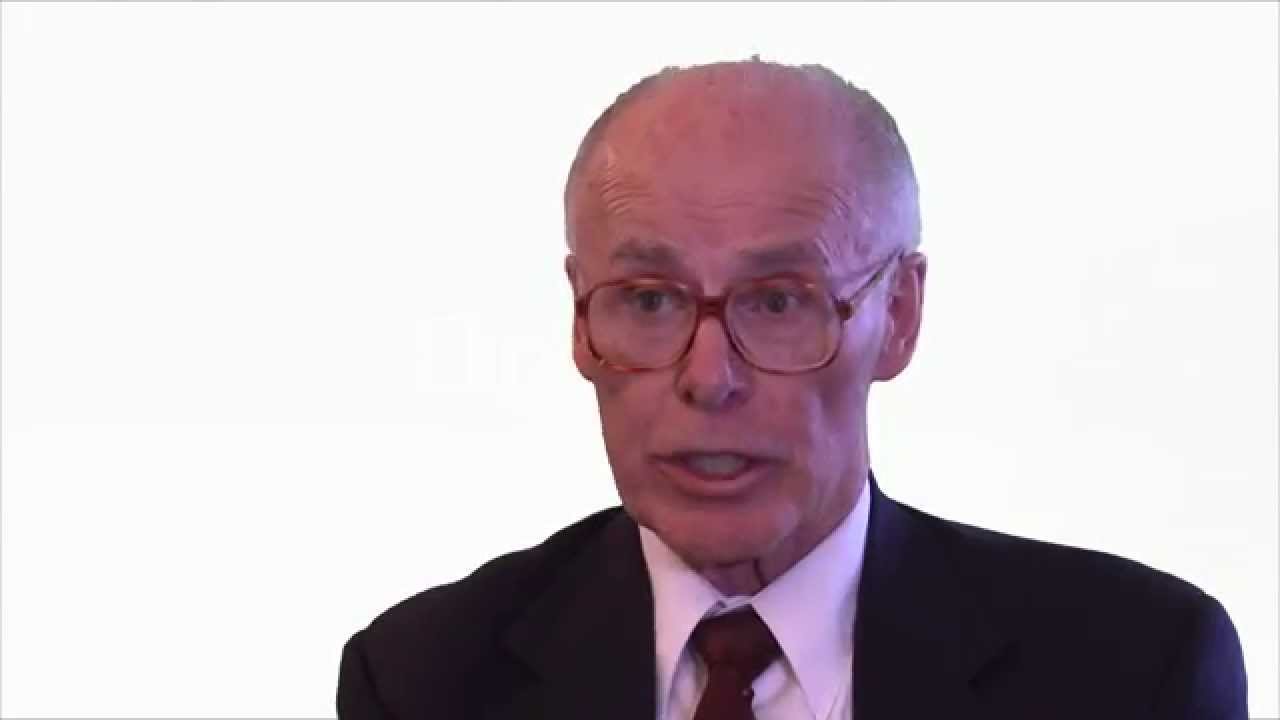 .
“To be a true Christian means you have to believe and understand what we are being taught through the Bible and through God’s word.”
Scheduled beside Legates on the Heartland Institute panel is Dr. Roy Spencer of the University of Alabama in Huntsville.
Spencer once wrote that he had analyzed Biblical claims that “the universe and all life within it had been created by some greater intelligent Being, not by mere chance.”
His conclusion? The “theory of creation actually had a much better scientific basis than the theory of evolution.”
There are many well-credentialed climate scientists who are also people of faith.
But the argument from denialists that climate scientists are blinded by their own faith in a “climate change religion,” belies their own quite literal belief that they are doing the work of god.
As a presumably god-given debating tactic, it’s as flawed as their science.
==
nola 818 why worry?
When climate science deniers and fossil fuel evangelists met Tuesday in New Orleans for the Heartland Institute's second "America First" conference on U.S. energy, they had every reason to celebrate the unprecedented influence they enjoy in the Trump administration.
Instead, they found plenty of reasons for dread.
With carbon tax proposals floating, climate lawsuits advancing, big corporations embracing the need for action and states and cities getting into the act, many of those gathered grappled with the reality that a fossil future was not secure—despite a largely pliant White House and Congress.
Contrarian scientists, policy professionals and lawyers affiliated with conservative interests contemplated the spread of the climate action agenda as if it were a malignancy. While speakers at the live-streamed sessions universally praised President Donald Trump and his regulatory rollbacks, the overwhelming diagnosis was that more aggressive policy surgery was needed.
High on their list of targets was the Environmental Protection Agency's finding that greenhouse gases are a danger to human health and welfare. That determination, affirmed by the Supreme Court, is what empowers the agency to regulate global warming pollution.
But the acting EPA administrator, Andrew Wheeler, has said he considers the endangerment finding "settled law" and does not wish to revisit it.
"Complete nonsense," said Atlanta lawyer Harry Macdougald,who was part of the legal team that unsuccessfully challenged the endangerment finding in court during the Obama administration. "It is a direct threat to the president's energy dominance agenda. And the next Democratic administration—and there will be one—will turn the screws."
Corporations 'Jumping on Climate Change'
Another theme running through the sessions was exasperation with corporations that have decided to take climate action on their own—or at least have refused to challenge the consensus science that human activity is the driver for global warming.
"A number of regulated utilities across the country—no reason to name names, but there are about a dozen of them—have announced they are going to ... reduce greenhouse gas emissions 80 percent by 2050 from their generating fleet, which is the Barack Obama plan and the Hillary Clinton plan," said Frederick Palmer, a senior fellow with the Heartland Institute and a former vice president for the coal company Peabody Energy. "So it's as if Donald Trump wasn't elected president of the United States as far as they are concerned."
Palmer, who sits on the National Coal Council, a federal advisory committee to the U.S. energy secretary, said the council will soon release a study calling for action to bar coastal states from prohibiting coal export terminals, as Washington State has done. "We've got to get the left coast figured out," he said.
Palmer also called for a federal moratorium on the retirement of coal plants, as a national security imperative. He wasn't the only one to suggest that conservatives may have to scrap laissez-faire principles to keep fossil fuel energy flowing.
Joe Leimkuhler, vice president for drilling for LLOG Exploration, a Covington, Louisiana producer focused on the Gulf of Mexico, called for more royalty relief for offshore drilling to help the industry survive in an era of low prices.
Craig Richardson, executive director of E&E Legal, a conservative legal group that repeatedly sued the Obama administration's regulatory agencies, said he now sees his group as "trying to be a supportive arm of this new administration." But he lamented what he and others called "virtue signaling" by corporations "jumping on climate change."
Richardson complained about ExxonMobil leaving the conservative advocacy group, the American Legislative Exchange Council (ALEC), over a clash on climate policy. (Last year, Heartland wanted ALEC to approve a resolution calling on the EPA to withdraw the endangerment finding. Exxon was among several corporations and utilities that convinced ALEC to shelve a vote on the resolution.)
Heartland co-founder Joseph Bast provoked laughter by recounting carmaker GM's response to the Trump administration proposal unveiled last week to freeze fuel economy standards. Quoting the vision statement of GM CEO Mary Barra—that the company is working toward a future of "zero crashes, zero emissions, and zero congestion"—Bast said: "That is impossible, and it's absolutely ludicrous. Zero of each of those things mean zero cars. It means zero respect for people's personal choices of transportation. It would mean a devastating impact on the economy."
"Big companies," Bast said, "are willing to throw their customers under the bus when it comes to appearing to be green or when it comes to appeasing an administration," a reference to carmakers' deal with the Obama administration that led to the fuel economy standards. The auto companies now want the rules weakened, though not as aggressively as Trump has proposed.
Heartland has received funding in the past from Exxon and other fossil fuel interests. The group is not required to disclose its funders. Conservative hedge fund billionaire Robert Mercer, who helped bankroll Trump's campaign, is known to be a donor, according to Mercer Family Foundation tax returns.
Peter Ferrara, Heartland's senior fellow for legal affairs, told the conference that his group opted not to intervene in the climate lawsuit that San Francisco and Oakland filed against Exxon and other oil companies because of the risk that it would be forced to disclose its donors.Instead, Heartland laid out its arguments against mainstream climate science on its website and in an op-ed in The Wall Street Journal.The oil companies' victory in that case would be a "valuable precedent," he said. Others in attendance criticized the oil giants for not opposing, in their legal arguments, the science that global warming is human-caused.
'Hearts and Minds of Americans' OMFG
The highest Trump administration official to appear at the conclave was Brooke Rollins, the former CEO and president of the conservative Texas Public Policy Foundation. Rollins serves in the White House as assistant to the president in the Office of American Innovation. Heartland President Tim Huelskamp, a former Kansas Congress member who chaired the Tea Party caucus, asked her if Trump would take on the endangerment finding and other "golden calves of the left." Rollins offered no answer, but urged the group to keep pushing.
"We know the research of CO2 being a pollutant is just not valid," Rollins said. "And yet it's time to really continue research, and continue making that argument, and continue changing the hearts and minds of Americans."
Jay Lehr, the Heartland Institute's science director, noted the "major role" that Heartland played in urging Trump to withdraw from the Paris climate accord.
Lehr asked Rollins if Trump would stay the course. "People keep thinking he could still back down," he said.
"All of my experience has proven out that when this president says he believes in something, then there is no one more bold or courageous or fearless," Rollins said. "Does that mean I can say today he will never change his mind? No. But it does go to the question of how important organizations like Heartland and Texas Public Policy Foundation are."
PUBLISHED UNDER:
==
oops 2x see below, infl djt
no lnx
https://insideclimatenews.org/news/22122017/big-oil-heartland-climate-science-misinformation-campaign-koch-api-trump-infographic
A Pulitzer Prize-winning, non-profit, non-partisan news organization dedicated to covering climate change, energy and the environment.
How Big Oil Lost Control of Its Climate Misinformation Machine
One of the longest and most consequential campaigns against science in modern history is becoming more extreme-and turning against its originators.
By Neela Banerjee
DEC 22, 2017
The Heartland Institute, a conservative think tank, launched a billboard campaign in 2012 to compare believers in global warming to "murderers and madmen" such as the Unabomber, Charles Manson and Osama bin Laden. The backlash was so severe that Heartland pulled the plug within 24 hours, but it still lost major donors and political allies and faced criticism that its fight against climate science was beyond extreme.
Five years later, on June 1, 2017, the group's chief executive, Joseph Bast, was a guest of Donald Trump in the White House Rose Garden as the president announced the withdrawal of the United States from the Paris climate agreement.
"We are winning in the global warming war," Bast declared later in an email to supporters.
Heartland's rebound is striking. Its ascent into the Trump administration's orbit, where it now advises the Environmental Protection Agency on climate change issues, marks the most dramatic success yet in a decades-long crusade, first funded by fossil fuel money, against the mainstream scientific conclusion that human activity is warming the planet and inviting disastrous consequences.
Choke Hold Series
Hundreds of millions of dollars from corporations such as ExxonMobil and wealthy individuals such as the billionaires Charles and David Koch have supported the development of a sprawling network, which includes Heartland and other think tanks, advocacy groups and political operatives. They have cast doubt on consensus science, confused public opinion and forestalled passage of laws and regulations that would address the global environmental crisis. It is one of the largest, longest and most consequential misinformation efforts mounted against mainstream science by an industry. Climate denial, thanks to the network's influence, has become a core message of the Republican Party, now in control of the White House and Congress.
"This didn't come out of nowhere. Trump was taught to say these things on climate by Heartland, the Competitive Enterprise Institute and other think tanks. They maintained this denial space in public policy dialogue," said Kert Davies, director of the Climate Investigations Center, a watchdog group. "And you can definitely credit Exxon and Koch brothers' money for giving the think tanks the megaphone to keep climate science denial in the world."
But now, just like the Republican upstarts that threaten the party establishment, Heartland is taking climate denial farther than many fossil fuel companies can support. While ExxonMobil today publicly accepts the reality of human-caused climate change and the need to address the problem, Heartland argues for the benefits of a warming world. The group is pushing the EPA to overturn its official conclusion-known as the endangerment finding-that excessive carbon dioxide is a danger to human health and welfare. The finding, affirmed by the Supreme Court, is what empowers the agency to regulate carbon dioxide and other greenhouse gases.
Climate Denial: The Long Campaign of Misinformation
This rift was on display at a recent meeting of the American Legislative Exchange Council, a group that influences state governments to adopt conservative priorities. Heartland wanted ALEC to approve a resolution calling on the EPA to withdraw the endangerment finding. But ExxonMobil, once at the forefront of climate denial, was among several corporations and utilities that convinced ALEC to shelve a vote on the resolution.
ExxonMobil had become just another member of "the discredited and anti-energy global warming movement," complained Heartland's president, Tim Huelskamp, a former Republican congressman from Kansas. "They've put their profits and 'green' virtue signaling above sound science."
ExxonMobil is among an early group of donors that slowed or ended its funding of climate denial. But the misinformation apparatus the corporations helped create is now so independent and robust, it no longer needs-or trusts-them.
Jerry Taylor bio
"Robespierre beheading Danton is pretty apt here," said Jerry Taylor, president of the bipartisan, pro-climate action think tank Niskanen Center, referring to French revolutionaries executing the moderates among them during the Reign of Terror. "There used to be some degree of interest in projecting an image of seriousness, of expertise and evenhandedness on climate, and there isn't anymore."
The new goal is making sure that denial is "part of the ideological catechism of the conservative base," Taylor said. "They are trying to keep the hard Right animated."
Taylor knows this universe from the inside. Once a prominent climate skeptic, he worked at ALEC as staff director for energy and environment issues early in his career. From 1991 to 2014, he was a vice president at the Cato Institute, focusing on energy and climate issues. And, his brother, James Taylor, is a senior environmental fellow at Heartland.
Whatever their differences today, corporations such as ExxonMobil were crucial to getting the denial network up and running.
According to climate watchdogs Greenpeace/ExxonSecrets, ExxonMobil led corporate donations to think tanks, giving nearly $31 million between 1998 and 2014 to 69 groups that spread climate misinformation. The Koch brothers, whose conservative ideology dovetails with their petrochemical business interests, led giving among individual magnates, donating more than $100 million since 1997 to 84 groups.
The Heartland Institute rejects suggestions that it was ever part of any group fostered by corporations. "Heartland has long supported and promoted scientists skeptical of man-caused global warming on principle," Jim Lakely, the organization's spokesman, told InsideClimate News.
Data from Greenpeace/ExxonSecrets shows the organization received $650,000 from ExxonMobil between 1998 and 2006. Heartland points out that it ramped up its work on climate after its Exxon funding ended, and that the only Koch-connected contribution it received in the past 15 years, of $25,000, supported its work on health care issues.
ExxonMobil and Koch Industries did not respond to requests for comment.
As Money Flowed, Strategies Passed Like a Baton
Social scientists are still trying to gauge the full breadth of spending on climate denial because of the large number of players involved, the growth of money from secretive sources, and the wide range of public relations tactics fossil fuel companies use to delay action, according to Robert Brulle, professor of sociology at Drexel University.
Brulle mined IRS and other public filings to show that between 2003 and 2010, 91 groups promulgating climate denial received more than a half-billion dollars from 140 foundations. Corporations such as ExxonMobil pared back their funding in that decade; most of the money came from financial vehicles such as Donors' Trust, which shields funders' identities.
As the money flowed through and nurtured the network over the decades, its misinformation strategies passed like a baton to a shifting array of coalitions and initiatives that protected fossil fuel interests in the climate debate. Some groups produced reports that cast doubt on the accumulating evidence of manmade climate change, and others amplified the alternative findings. Think tanks in the network held conferences, sponsored panels, wrote op-eds and letters, and created an echo chamber loud enough to command equal time in the mainstream media.
U.S. Secretary of State Rex Tillerson was Exxon's CEO from 2006 to 2016, after working his way up in the oil company. Credit: Eric Piermont/AFP/Getty Images
U.S. Secretary of State Rex Tillerson was Exxon's CEO from 2006 to 2016, after working his way up in the oil company. According to climate watchdogs Greenpeace/ExxonSecrets, ExxonMobil gave nearly $31 million between 1998 and 2014 to 69 groups that spread climate misinformation. Credit: Eric Piermont/AFP/Getty Images
Still, in 2007, under pressure from its shareholders, ExxonMobil announced in its Corporate Citizenship report that it would stop funding a number of climate denial groups. The following year, the presidential nominees of both major political parties felt safe promising voters they would address the threat of climate change if elected.
Then in 2010 the equilibrium changed. The Supreme Court's decision in Citizens United vs. FEC removed caps on corporate and nonprofit political donations and opened the floodgates on campaign spending. Billionaires such as the Kochs moved millions of dollars to support the rise of the Tea Party movement and ultra-conservative candidates who saw climate denial as the bedrock of party orthodoxy. Soon, few Republicans running for federal office would admit to accepting the reality of manmade climate change. After conservative populism put Donald Trump in office, the hard-right's social media ecosystem, empowered by a president eager to tweet, has accelerated the spread of false climate narratives, making them more difficult to counter, much less uproot.
"They decided that if they have to choose between an argument that is solid and serious and one that is dodgy but easily understandable by the base, they'll go with the latter," Taylor said. "Anything that moves the needle for the Fox News or Breitbart reader."
The machinery of climate misinformation has gone global and now runs itself. A false story that appeared last February in the Daily Mail, a British tabloid, got pushed by right-wing outlets and social media deep into the halls of Congress. "Exposed: How world leaders were duped into investing billions over manipulated global warming data," its headline said. The story claimed that American government scientists had manipulated climate research to advance the Paris accord.
Ten days later, Texas Republican Lamar Smith, a fossil fuel champion and chair of the powerful House Committee on Science and Technology, pressed the government to release the data the scientists had allegedly misused. The story of scientific deception was fake news. A British media oversight body forced the Daily Mail to retract the story, but that was six months after it was published.
'Delay and Defeat': A Strategy Evolves
Oil companies began developing strategies to sow doubt about science that could lead to regulation long before global warming became an issue.
Caltech scientist Arie Haagen-Smit discovered in the early 1950s that oil was the cause of dangerous smog shrouding Los Angeles. The industry then conducted its own research to try to discredit his findings. Credit: California Institute of Technology
Biochemist Arie Haagen-Smit discovered in the early 1950s that oil was the cause of dangerous smog shrouding Los Angeles. The industry tried to discredit his findings. Credit: California Institute of Technology
Beginning in the 1940s, smog routinely choked Los Angeles, fueling a public health crisis. The city hired Arie Haagen-Smit, a biochemist from the California Institute of Technology, to investigate the cause. He quickly identified oil as the culprit, showing that nitrogen oxide emissions and uncombusted hydrocarbons from car tailpipes and refineries formed smog when exposed to sunlight.
The Smoke and Fumes committee at the American Petroleum Institute (API), the industry's main lobbyist, counter-attacked. It funded scientists who rebutted Haagen-Smit and disparaged him personally. The industry asserted that the science of smog was too uncertain to justify new laws or expensive pollution-control equipment.
By the mid-1950s, industry's own researchers confirmed Haagen-Smit's findings. And the first Clean Air Act, in 1963, soon put industry in the crosshairs of federal regulators. Oil companies began campaigns claiming smog controls would cripple the economy.
Smoggy L.A. day in 1955. Credit: Los Angeles Public Library Photo Collection
A smoggy day in Los Angeles in 1955. Credit: Los Angeles Public Library Photo Collection
API has continued the decades-long fight against stricter smog limits, with new rules delayed along the way by Republican and Democratic administrations alike. The 1970 Clean Air Act, meanwhile, has provided trillions of dollars in health and economic benefits, far exceeding the cost of regulations. One Environmental Protection Agency study calculated that the benefits of the 1990 amendments to the law would amount to $2 trillion a year by 2020.
Louis McCabe, Los Angeles's first smog regulator, summarized in 1949 what would become an enduring industry strategy: "Why have we generally failed in our efforts to control air pollution?" he asked. "We have failed because industry believed that air pollution control cost too much. Smoke and dusts were the wages of a prosperous industrial community...There were 'cooperative' programs with the dual objectives of delay and defeat."
The Corporate Pivot to Uncertainty
As the oil industry bolstered its own research into air pollution in the 1950s, some of its scientists began conducting basic research into carbon dioxide emissions from fossil fuels, following work published by leading academics. In 1968, the industry's main pollution-control consultants warned API that it should pay close attention to carbon dioxide emissions.
By the mid-1970s, Exxon began to take carbon pollution seriously. In July 1977, James Black, a senior scientist at Exxon, told top executives that carbon dioxide emissions from burning fossil fuels would warm the atmosphere and endanger human life. Company leaders knew that if fossil fuel emissions made the planet hotter, politicians would likely take steps to cut pollution. So Exxon launched its own sampling of carbon dioxide in the air and oceans and conducted rigorous climate modeling to better understand how the planet was warming, when temperatures might rise, and the effect on human life. Exxon believed that its own peer-reviewed research would give it a credible voice in policymaking if the government decided to regulate emissions. Other fossil fuel companies followed Exxon's lead.
Exxon scientists measure carbon dioxide in the oceans and atmosphere from aboard the tanker Esso Atlantic. Credit: Richard Werthamer
Exxon scientists led research into carbon dioxide changes in the oceans and atmosphere in the early 1980s, but then the corporate tone shifted. Credit: Richard Werthamer
But the industry's forthright approach started to shift toward denial after landmark events in 1988. NASA's James Hansen, a leading climate expert, raised alarm bells in Congress with his testimony that the warming trend was driven by carbon dioxide emissions. The United Nations that year established the Intergovernmental Panel on Climate Change (IPCC) to provide assessments of evolving climate science. More than 300 scientists and policymakers met at a climate conference in Toronto, declaring, "it is imperative to act now." They called for cutting greenhouse gas emissions 20 percent over two decades. Regulation of carbon pollution went from a distant possibility to an imminent threat to fossil fuel businesses.
In December 1988, API helped sponsor a conference on preparing for climate change. And the oil industry and utility companies began to pivot to a new narrative: There was uncertainty and, thus, no urgency to heed the emerging science. In late 1995, Leonard S. Bernstein, a scientist for Mobil Oil Corp., drafted a primer about climate science for the industry's Global Climate Coalition (GCC). In it, Bernstein wrote: "the potential for human impact on climate is based on well-established scientific fact, and should not be denied." But he later added, "It is still not possible to accurately predict the magnitude (if any), timing or impact of climate change."
Lee Raymond bio
As the international community moved in 1997 to curb emissions with the Kyoto Protocol, Exxon's Chairman and CEO Lee Raymond focused on amplifying scientific doubt.
"Let's agree there's a lot we really don't know about how climate will change in the 21st century and beyond," Raymond said in a 1997 speech. "We need to understand the issue better, and fortunately, we have time."
Doubts about climate change were echoed by think tanks that the corporations nurtured with donations starting in the 1990s. Boosted by a grant from Exxon, the Competitive Enterprise Institute organized the Cooler Heads Coalition in 1998, which over time has brought together more than 30 conservative groups into an influential echo chamber of climate denial. The group still exists.
Halting climate action has been a leading priority of this coalition and its allies, not reluctant to promote questionable information if it supports their cause.
In one instance, the Spanish economist Gabriel Calzada Alvarez published a study in 2009 that said Spain's push to develop renewable energy had hurt employment, costing 2.2 jobs for every clean energy job created. The Spanish government and the U.S. National Renewable Energy Laboratory showed that Calzada's methodology was flawed. But this did not stop deniers from embracing his narrative.
Calzada was a fellow at the Center for the New Europe, a free-market think tank funded in part by ExxonMobil and the Koch brothers. Koch-supported advocacy organizations spread Calzada's findings through blog posts and friendly media. Calzada delivered testimony to the U.S. House of Representatives. Three years later, Kenneth Green of the American Enterprise Institute for Public Policy Research (AEI), another conservative think tank, cited the Spanish study in House testimony against federal support of green jobs. AEI received nearly $5 million from the Kochs and ExxonMobil from 1998 to 2012.
Fossil Fuel Fingerprints on Contrarian Research
Think tanks needed support from science, which proved tricky to get, because 97 percent of peer-reviewed articles published about climate change show that it is driven by human activity. So, industry directly funded the work of contrarians within the climate science community.
Among the best known is Willie Soon, a proponent of the theory that solar cycles drive climate change. His notion has been discredited by mainstream science, which determined that the influence of solar fluctuations has been too small to account for the magnitude of modern warming. Yet deniers and politicians cite his papers as evidence that scientists are divided about what causes climate change.
In 2015, it emerged that Soon's research had received hundreds of thousands of dollars in grants from 2003 to 2015 from API, ExxonMobil, the Charles Koch Foundation and the Southern Company, one of the country's largest coal-burning electric utilities. He called his papers "deliverables" in return for the funding.
"I have a big super-duper paper soon to be accepted on how the sun affects the climate system," Soon wrote in a 2009 email to a research specialist with Southern.
Willie Soon, In His Own Words
Denialist think tanks and politicians convinced many Americans that scientists such as Soon are as numerous as those whose work shows fossil fuel consumption to be the main driver of climate change. A 2016 survey by the Pew Research Center quantified the success of their effort. Fewer than 30 percent of Americans know that the vast majority of climate scientists and the peer-reviewed literature support the conclusion that global warming is manmade.
'The Earth Is Greening'
The Heartland Institute's rise to policy prominence marks a break from previous brokers of climate denial, because it promotes a narrative that was once rejected as too extreme and divorced from accepted climate science.
Kathleen Hartnett White bio
The narrative-that excessive carbon dioxide is beneficial for the Earth-is now backed by some in the EPA and the White House and is deployed as a weapon against the endangerment finding. One of Heartland's policy experts, Kathleen Hartnett White, who has called carbon dioxide "the gas of life," was nominated by the administration to lead the White House Council on Environmental Quality.
The EPA and the White House did not respond to requests for comment.
In his email to supporters, dated Oct. 12, 2017, and leaked to E&E News, Heartland's CEO Bast detailed plans for how to "market" the positive narrative about excessive carbon dioxide. For instance, he suggests convincing the EPA and the courts that doubling atmospheric CO2 would increase crop yields, and suing companies for not increasing emissions.
Surveys show "we are winning the public opinion battle, since most Americans don't believe global warming is a problem that merits the attention being given to it by the media and politicians," Bast wrote. "The best messages are positive: CO2 increases crop yields, the earth is greening."
Heartland rejects claims that it "denies science." Rather, it asserts that the idea of a scientific consensus that climate change is human-caused is without merit. "The scientists we work with have looked at the data and have concluded climate change is not driven by human activity," Lakely told InsideClimate News. "And the consequences of our uncontrollable warming world are not universally bad, but have a lot of positives, according to the scientists and other experts Heartland communicates and work with."
When the Global Climate Coalition disbanded in early 2002, its members said their work was done because they had succeeded in keeping the United States out of the Kyoto Protocol, the first global climate treaty that paved the way for the Paris Agreement. Now, a dozen years later, climate misinformation is emanating directly from the White House. The administration has orchestrated a rollback of regulatory measures on climate change adopted during the Obama years, and the exit from the Paris accord that President Trump announced with much fanfare from the Rose Garden.
"The basic parameters of the long-term threat posed by climate change were well described and known by 1979," Brulle of Drexel said, referring to a major report on climate change issued by the National Academy of Sciences. "But here we are, coming up on nearly 40 years, and there still is confusion and a lack of willingness to act. So I guess in that sense, the effort to stop climate action has won, as if this is a winning position in any sense of the term."
Read more about the Heartland Institute's outreach to educators.
RELATED
Wind turbines near Convoy, Ohio. Credit: Tom Hart/CC-BY-2.0
How Fossil Fuel Allies Are Tearing Apart Ohio's Embrace of Clean Energy
https://www.exposedbycmd.org/2018/07/12/alec-extreme-exxon-long-term-alec-board-member-dumps-alec-climate-denial-policy
armiak mb
ExxonMobil, the largest oil and gas company in the world, will not renew its membership in the American Legislative Exchange Council (ALEC) after a split within the corporate lobbying group over how to address climate change, Bloomberg reported earlier today.
Exxon’s exit follows a disagreement over a resolution introduced in December by the Heartland Institute, a Chicago-based think tank that denies climate change, that would have asked the federal government to reconsider its findings that greenhouse gasses are harmful to human health.
The EPA did its spadework and laid out the scientific foundation of the endangerment findings in over 200 pages of technical documentation in 2009. Former EPA Administrator Scott Pruitt failed to reconsider those findings, much to the disappointment of the Koch crowd.
Although large companies like Ford, Google, Microsoft, Coca-Cola and many others have cut ties with ALEC, few have given and supported ALEC as much as Exxon has. Exxon was listed as a “major contributor” to ALEC as far back as 1981 and has given ALEC millions over the years to promote its corporate agenda. Exxon has also consistently served on ALEC’s Private Enterprise Board.
REACTION TO THE ANNOUNCEMENT
“This is a major loss for ALEC. It’s not just the financial support that Exxon provides, which has been significant over the years. This also represents a growing split between oil and gas majors that are increasingly concerned about their public image, and groups like ALEC that still regularly promote debates about climate science on their agenda,” said Nick Surgey, co-director of Documented.
“Exxon’s departure should send a strong message to ALEC that it’s extreme agenda and undemocratic, secretive operations have no place in American politics,” said Jay Riestenberg, campaigns & media strategist at Common Cause.
“It’s very significant when a giant of the fossil fuels world thinks that ALEC ‘s denial of the existence of climate change is intolerable. I hope that other responsible corporations that are still members of ALEC will follow suit,” said Wisconsin State Rep. Chris Taylor, who has attended ALEC events and written about its climate denial positions.
With regard to ALEC and the Koch brothers’ hostility to renewable energy and public transportation, Taylor said, “Their positions belong in the dinosaur age. We need to be investing in transit and renewables, and they just keep throwing up road block after road block.”
“Other major oil companies, including BP, Royal Dutch Shell and ConocoPhillips, left ALEC years ago. It’s about time ExxonMobil finally did, too,” said Kathy Mulvey, fossil fuel accountability campaign director at the Union of Concerned Scientists, in a formal statement. “But the company has a lot more to do to set things straight.” Exxon continues to fund the U.S. Chamber of Commerce and the National Association of Manufacturers, both of which continue to do battle with groups and regulators attempting to address climate change, Mulvey said.
EXXON USED ALEC TO PROMOTE CLIMATE CHANGE DENIAL FOR DECADES
In October 2016, the Center for Media and Democracy (CMD) and Common Cause filed additional evidence for their 2012 IRS whistleblower complaint against ALEC detailing how Exxon had pumped $1.7 million into the front group “to promote the oil giant’s climate denial policies and legislative agenda, in gross violation of ALEC’s 501(c)(3) charitable status.”
ALEC claims to spend zero dollars on lobbying but the complaint showed that Exxon had deliberately used ALEC over two decades as its lobbying arm to advance its position on cap-and-trade policies, the Keystone Pipeline, the Obama Clean Power Plan, and fracking.
CMD brought this concern to the attention of the Senate Committee on Foreign Relations in January 2017 when ExxonMobil’s former CEO, Rex Tillerson, was nominated to be President Trump’s Secretary of State.
“For years, Exxon used ALEC as a key asset in a fossil fuel industry campaign to sow uncertainty about climate science, undermine international climate treaties and block legislation to reduce emissions,” said Arn Pearson, executive director of the Center for Media and Democracy, who drafted the 2016 IRS complaint. “And New York and other states have been investigating Exxon for its role in hiding evidence of its climate impact from shareholders and the public. So it is ironic that ALEC’s anti-science stance has apparently become too extreme even for Exxon.”
Exxon did not respond to CMD requests for comment.
==
JUMPED THE SHARK
ref
PRESS RELEASE: HEARTLAND INSTITUTE STATEMENT ON ALEC ENDANGERMENT FINDING RESOLUTION
DECEMBER 7, 2017
By Tim Huelskamp, Ph.D.
‘Heartland thanks Rep. Piscopo for taking the lead on this important issue, and thanks ALEC for allowing this debate to take place.’ – Tim Huelskamp, Ph.D.
ALEC logo
Yesterday, a task force of the American Legislative Exchange Council (ALEC) debated a resolution calling for a review of the Environmental Protection Agency’s 2009 “Endangerment Finding.” After a lively debate and straw vote, the sponsor of the resolution, Rep. John Piscopo (R-CT), along with Bette Grande, a research fellow for The Heartland Institute who helped draft the resolution, withdrew it for now, saying “the final decision on this issue will be made by the Trump Administration.”
Background links:
Resolution to review the Endangerment Finding [click here]
Coalition letter in favor of the resolution [click here]
Letter withdrawing the resolution [click here]
Rep. Piscopo and Ms. Grande agreed to withdraw the resolution after corporate members of ALEC, led byExxonMobil and Edison Electric Institute (EEI), packed the meeting room with lobbyists and allies and indicated they would vote against the resolution. Heartland’s discussions with state legislators on the task force, as well as a straw vote of elected officials attending the committee meeting, showed a majority of them supported the resolution.
The following statement from Tim Huelskamp, Ph.D., president of The Heartland Institute – may be used for attribution. For more comments or to book Dr. Huelskamp on your radio or television program, please contact Director of Communications Jim Lakely at jlakely@heartland.org and 312/377-4000 or (cell) 312/731-9364.
[OMFG]
“This result is disappointing, but not surprising. Big corporations like ExxonMobil and trade groups like EEI have long been members of the discredited and anti-energy global warming movement. They’ve put their profits and ‘green’ virtue signaling above sound science and the interests of their customers.
“Heartland thanks Rep. Piscopo for taking the lead on this important issue, and thanks ALEC for allowing this debate to take place. The debate will continue both inside ALEC, where a majority of legislative members and policy advisors agree that the Endangerment Finding ought to be reviewed, as well as outside the organization. We will continue to work with scientists, economists, policy experts, and allies at ALEC to strengthen the case for rescinding the Endangerment Finding.
“This discussion at ALEC changes nothing at the federal level, where action to repeal the Endangerment Finding will take place. President Trump and EPA Administrator Scott Pruitt have rejected unscientific alarmism, embraced sound science, and are implementing pro-energy, pro-America policies. Rescinding the Endangerment Finding is the logical and necessary next step.We are optimistic that the self-serving regulatory capture and green preening of big corporations like ExxonMobil may delay but will not prevent that step.”
The Heartland Institute is a 33-year-old national nonprofit organization headquartered in Arlington Heights, Illinois. Its mission is to discover, develop, and promote free-market solutions to social and economic problems. For more information, visit our website or call 312/377-4000.
==
e-cigs
Conley has also joined the libertarian-leaning Heartland Institute as a research fellow on tobacco and nicotine policy and regulation. He practices law independently in New Jersey, where he earned a Master's of Business Administration and a Juris Doctor ("doctor of laws") degree from Rutgers University. He has testified before the FDA and before a variety of legislative committees, and his writings have been widely published, in outlets such as The National Review Online, The New York Post, the libertarian publication Reason Online, and Convenience Store Decisions, a trade news source for stores that comprise the major e-cigarette and cigarette sales locations. Conley quit smoking when he began vaping, in August, 2010.
https://www.ecowatch.com/epa-sued-correspondence-heartland-institute-2548433710.html
EPA Sued Over Failure to Release Correspondence With Heartland Institute
The U.S. Environmental Protection Agency (EPA) is being sued for its "unlawful and unreasonable delay" in responding to requests for information about the agency's communications with the Heartland Institute, according to a complaint by the Southern Environmental Law Center (SELC) and the Environmental Defense Fund (EDF).
The Heartland Institute is an Illinois-based think tank that rejects the science of man-made climate change and has received funding from the Koch brothers and the fossil fuel industry.
The lawsuit centers around the EDF and SELC's Freedom of Information Act (FOIA) requests for communications between the EPA and the Heartland Institute in August and October of 2017, respectively.
The requests were made after Heartland Institute Communications Director Jim Lakely said last July, "The White House and the Environmental Protection Agency have reached out to the Heartland Institute to help identify scientists who could constitute a red team, and we've been happy to oblige."
EPA Administrator Scott Pruitt, a climate change denier who has close ties to the fossil fuel industry, has long insisted on a nationally publicized "red team-blue team" debate that would pit climate skeptics against scientists who accept the facts about global warming. However, news emerged this week that White House Chief of Staff John F. Kelly has reportedly put a stop to Pruitt's plan.
According to the complaint, filed Thursday in the U.S. District Court for the Western District of Virginia, the EPA acknowledged both requests and asked for some initial clarification, but has subsequently stopped communicating with SELC and provided vague responses to EDF's outreach that do not indicate any expectation of near-term progress on EDF's FOIA request.
There certainly appears to be some—and even extensive—contact between the EPA and the Heartland Institute. As seen below, the complaint states that the EPA's own search for correspondence between agency employees and Heartland yielded between 200 and 600 records.
==
https://insideclimatenews.org/news/22122017/big-oil-heartland-climate-science-misinformation-campaign-koch-api-trump-infographic
How Big Oil Lost Control of Its Climate Misinformation Machine
One of the longest and most consequential campaigns against science in modern history is becoming more extreme—and turning against its originators.
By Neela Banerjee
DEC 22, 2017
The Heartland Institute, a conservative think tank, launched a billboard campaign in 2012 to compare believers in global warming to "murderers and madmen" such as the Unabomber, Charles Manson and Osama bin Laden. The backlash was so severe that Heartland pulled the plug within 24 hours, but it still lost major donors and political allies and faced criticism that its fight against climate science was beyond extreme.
Five years later, on June 1, 2017, the group's chief executive, Joseph Bast, was a guest of Donald Trump in the White House Rose Garden as the president announced the withdrawal of the United States from the Paris climate agreement.
"We are winning in the global warming war," Bast declared later in an email to supporters.
Heartland's rebound is striking. Its ascent into the Trump administration's orbit, where it now advises the Environmental Protection Agency on climate change issues, marks the most dramatic success yet in a decades-long crusade, first funded by fossil fuel money, against the mainstream scientific conclusion that human activity is warming the planet and inviting disastrous consequences.
Choke Hold Series
Hundreds of millions of dollars from corporations such as ExxonMobil and wealthy individuals such as the billionaires Charles and David Koch have supported the development of a sprawling network, which includes Heartland and other think tanks, advocacy groups and political operatives. They have cast doubt on consensus science, confused public opinion and forestalled passage of laws and regulations that would address the global environmental crisis. It is one of the largest, longest and most consequential misinformation efforts mounted against mainstream science by an industry. Climate denial, thanks to the network's influence, has become a core message of the Republican Party, now in control of the White House and Congress.
"This didn't come out of nowhere. Trump was taught to say these things on climate by Heartland, the Competitive Enterprise Institute and other think tanks. They maintained this denial space in public policy dialogue," said Kert Davies, director of the Climate Investigations Center, a watchdog group. "And you can definitely credit Exxon and Koch brothers' money for giving the think tanks the megaphone to keep climate science denial in the world."
But now, just like the Republican upstarts that threaten the party establishment, Heartland is taking climate denial farther than many fossil fuel companies can support. While ExxonMobil today publicly accepts the reality of human-caused climate change and the need to address the problem, Heartland argues for the benefits of a warming world. The group is pushing the EPA to overturn its official conclusion—known as the endangerment finding—that excessive carbon dioxide is a danger to human health and welfare. The finding, affirmed by the Supreme Court, is what empowers the agency to regulate carbon dioxide and other greenhouse gases.
Climate Denial: The Long Campaign of Misinformation
This rift was on display at a recent meeting of the American Legislative Exchange Council, a group that influences state governments to adopt conservative priorities. Heartland wanted ALEC to approve a resolution calling on the EPA to withdraw the endangerment finding. But ExxonMobil, once at the forefront of climate denial, was among several corporations and utilities that convinced ALEC to shelve a vote on the resolution.
ExxonMobil had become just another member of "the discredited and anti-energy global warming movement," complained Heartland's president, Tim Huelskamp, a former Republican congressman from Kansas. "They've put their profits and 'green' virtue signaling above sound science."
ExxonMobil is among an early group of donors that slowed or ended its funding of climate denial. But the misinformation apparatus the corporations helped create is now so independent and robust, it no longer needs—or trusts—them.
Jerry Taylor bio
"Robespierre beheading Danton is pretty apt here," said Jerry Taylor, president of the bipartisan, pro-climate action think tank Niskanen Center, referring to French revolutionaries executing the moderates among them during the Reign of Terror. "There used to be some degree of interest in projecting an image of seriousness, of expertise and evenhandedness on climate, and there isn't anymore."
The new goal is making sure that denial is "part of the ideological catechism of the conservative base," Taylor said. "They are trying to keep the hard Right animated."
Taylor knows this universe from the inside. Once a prominent climate skeptic, he worked at ALEC as staff director for energy and environment issues early in his career. From 1991 to 2014, he was a vice president at the Cato Institute, focusing on energy and climate issues. And, his brother, James Taylor, is a senior environmental fellow at Heartland.
Whatever their differences today, corporations such as ExxonMobil were crucial to getting the denial network up and running.
According to climate watchdogs Greenpeace/ExxonSecrets, ExxonMobil led corporate donations to think tanks, giving nearly $31 million between 1998 and 2014 to 69 groups that spread climate misinformation. The Koch brothers, whose conservative ideology dovetails with their petrochemical business interests, led giving among individual magnates, donating more than $100 million since 1997 to 84 groups.
The Heartland Institute rejects suggestions that it was ever part of any group fostered by corporations. "Heartland has long supported and promoted scientists skeptical of man-caused global warming on principle," Jim Lakely, the organization's spokesman, told InsideClimate News.
Data from Greenpeace/ExxonSecrets shows the organization received $650,000 from ExxonMobil between 1998 and 2006. Heartland points out that it ramped up its work on climate after its Exxon funding ended, and that the only Koch-connected contribution it received in the past 15 years, of $25,000, supported its work on health care issues.
ExxonMobil and Koch Industries did not respond to requests for comment.
As Money Flowed, Strategies Passed Like a Baton
Social scientists are still trying to gauge the full breadth of spending on climate denial because of the large number of players involved, the growth of money from secretive sources, and the wide range of public relations tactics fossil fuel companies use to delay action, according to Robert Brulle, professor of sociology at Drexel University.
Brulle mined IRS and other public filings to show that between 2003 and 2010, 91 groups promulgating climate denial received more than a half-billion dollars from 140 foundations. Corporations such as ExxonMobil pared back their funding in that decade; most of the money came from financial vehicles such as Donors' Trust, which shields funders' identities.
As the money flowed through and nurtured the network over the decades, its misinformation strategies passed like a baton to a shifting array of coalitions and initiatives that protected fossil fuel interests in the climate debate. Some groups produced reports that cast doubt on the accumulating evidence of manmade climate change, and others amplified the alternative findings. Think tanks in the network held conferences, sponsored panels, wrote op-eds and letters, and created an echo chamber loud enough to command equal time in the mainstream media.
U.S. Secretary of State Rex Tillerson was Exxon's CEO from 2006 to 2016, after working his way up in the oil company. Credit: Eric Piermont/AFP/Getty Images
U.S. Secretary of State Rex Tillerson was Exxon's CEO from 2006 to 2016, after working his way up in the oil company. According to climate watchdogs Greenpeace/ExxonSecrets, ExxonMobil gave nearly $31 million between 1998 and 2014 to 69 groups that spread climate misinformation. Credit: Eric Piermont/AFP/Getty Images
Still, in 2007, under pressure from its shareholders, ExxonMobil announced in its Corporate Citizenship report that it would stop funding a number of climate denial groups. The following year, the presidential nominees of both major political parties felt safe promising voters they would address the threat of climate change if elected.
Then in 2010 the equilibrium changed. The Supreme Court's decision in Citizens United vs. FEC removed caps on corporate and nonprofit political donations and opened the floodgates on campaign spending. Billionaires such as the Kochs moved millions of dollars to support the rise of the Tea Party movement and ultra-conservative candidates who saw climate denial as the bedrock of party orthodoxy. Soon, few Republicans running for federal office would admit to accepting the reality of manmade climate change. After conservative populism put Donald Trump in office, the hard-right's social media ecosystem, empowered by a president eager to tweet, has accelerated the spread of false climate narratives, making them more difficult to counter, much less uproot.
"They decided that if they have to choose between an argument that is solid and serious and one that is dodgy but easily understandable by the base, they'll go with the latter," Taylor said. "Anything that moves the needle for the Fox News or Breitbart reader."
The machinery of climate misinformation has gone global and now runs itself. A false story that appeared last February in the Daily Mail, a British tabloid, got pushed by right-wing outlets and social media deep into the halls of Congress. "Exposed: How world leaders were duped into investing billions over manipulated global warming data," its headline said. The story claimed that American government scientists had manipulated climate research to advance the Paris accord.
Ten days later, Texas Republican Lamar Smith, a fossil fuel champion and chair of the powerful House Committee on Science and Technology, pressed the government to release the data the scientists had allegedly misused. The story of scientific deception was fake news. A British media oversight body forced the Daily Mail to retract the story, but that was six months after it was published.
'Delay and Defeat': A Strategy Evolves
Oil companies began developing strategies to sow doubt about science that could lead to regulation long before global warming became an issue.
Caltech scientist Arie Haagen-Smit discovered in the early 1950s that oil was the cause of dangerous smog shrouding Los Angeles. The industry then conducted its own research to try to discredit his findings. Credit: California Institute of Technology
Biochemist Arie Haagen-Smit discovered in the early 1950s that oil was the cause of dangerous smog shrouding Los Angeles. The industry tried to discredit his findings. Credit: California Institute of Technology
Beginning in the 1940s, smog routinely choked Los Angeles, fueling a public health crisis. The city hired Arie Haagen-Smit, a biochemist from the California Institute of Technology, to investigate the cause. He quickly identified oil as the culprit, showing that nitrogen oxide emissions and uncombusted hydrocarbons from car tailpipes and refineries formed smog when exposed to sunlight.
The Smoke and Fumes committee at the American Petroleum Institute (API), the industry's main lobbyist, counter-attacked. It funded scientists who rebutted Haagen-Smit and disparaged him personally. The industry asserted that the science of smog was too uncertain to justify new laws or expensive pollution-control equipment.
By the mid-1950s, industry's own researchers confirmed Haagen-Smit's findings. And the first Clean Air Act, in 1963, soon put industry in the crosshairs of federal regulators. Oil companies began campaigns claiming smog controls would cripple the economy.
Smoggy L.A. day in 1955. Credit: Los Angeles Public Library Photo Collection
A smoggy day in Los Angeles in 1955. Credit: Los Angeles Public Library Photo Collection
API has continued the decades-long fight against stricter smog limits, with new rules delayed along the way by Republican and Democratic administrations alike. The 1970 Clean Air Act, meanwhile, has provided trillions of dollars in health and economic benefits, far exceeding the cost of regulations. One Environmental Protection Agency study calculated that the benefits of the 1990 amendments to the law would amount to $2 trillion a year by 2020.
Louis McCabe, Los Angeles's first smog regulator, summarized in 1949 what would become an enduring industry strategy: "Why have we generally failed in our efforts to control air pollution?" he asked. "We have failed because industry believed that air pollution control cost too much. Smoke and dusts were the wages of a prosperous industrial community...There were 'cooperative' programs with the dual objectives of delay and defeat."
The Corporate Pivot to Uncertainty
As the oil industry bolstered its own research into air pollution in the 1950s, some of its scientists began conducting basic research into carbon dioxide emissions from fossil fuels, following work published by leading academics. In 1968, the industry's main pollution-control consultants warned API that it should pay close attention to carbon dioxide emissions.
By the mid-1970s, Exxon began to take carbon pollution seriously. In July 1977, James Black, a senior scientist at Exxon, told top executives that carbon dioxide emissions from burning fossil fuels would warm the atmosphere and endanger human life. Company leaders knew that if fossil fuel emissions made the planet hotter, politicians would likely take steps to cut pollution. So Exxon launched its own sampling of carbon dioxide in the air and oceans and conducted rigorous climate modeling to better understand how the planet was warming, when temperatures might rise, and the effect on human life. Exxon believed that its own peer-reviewed research would give it a credible voice in policymaking if the government decided to regulate emissions. Other fossil fuel companies followed Exxon's lead.
Exxon scientists measure carbon dioxide in the oceans and atmosphere from aboard the tanker Esso Atlantic. Credit: Richard Werthamer
Exxon scientists led research into carbon dioxide changes in the oceans and atmosphere in the early 1980s, but then the corporate tone shifted. Credit: Richard Werthamer
But the industry's forthright approach started to shift toward denial after landmark events in 1988. NASA's James Hansen, a leading climate expert, raised alarm bells in Congress with his testimony that the warming trend was driven by carbon dioxide emissions. The United Nations that year established the Intergovernmental Panel on Climate Change (IPCC) to provide assessments of evolving climate science. More than 300 scientists and policymakers met at a climate conference in Toronto, declaring, "it is imperative to act now." They called for cutting greenhouse gas emissions 20 percent over two decades. Regulation of carbon pollution went from a distant possibility to an imminent threat to fossil fuel businesses.
In December 1988, API helped sponsor a conference on preparing for climate change. And the oil industry and utility companies began to pivot to a new narrative: There was uncertainty and, thus, no urgency to heed the emerging science. In late 1995, Leonard S. Bernstein, a scientist for Mobil Oil Corp., drafted a primer about climate science for the industry's Global Climate Coalition (GCC). In it, Bernstein wrote: "the potential for human impact on climate is based on well-established scientific fact, and should not be denied." But he later added, "It is still not possible to accurately predict the magnitude (if any), timing or impact of climate change."
Lee Raymond bio
As the international community moved in 1997 to curb emissions with the Kyoto Protocol, Exxon's Chairman and CEO Lee Raymond focused on amplifying scientific doubt.
"Let's agree there's a lot we really don't know about how climate will change in the 21st century and beyond," Raymond said in a 1997 speech. "We need to understand the issue better, and fortunately, we have time."
Doubts about climate change were echoed by think tanks that the corporations nurtured with donations starting in the 1990s. Boosted by a grant from Exxon, the Competitive Enterprise Institute organized the Cooler Heads Coalition in 1998, which over time has brought together more than 30 conservative groups into an influential echo chamber of climate denial. The group still exists.
Halting climate action has been a leading priority of this coalition and its allies, not reluctant to promote questionable information if it supports their cause.
In one instance, the Spanish economist Gabriel Calzada Alvarez published a study in 2009 that said Spain's push to develop renewable energy had hurt employment, costing 2.2 jobs for every clean energy job created. The Spanish government and the U.S. National Renewable Energy Laboratory showed that Calzada's methodology was flawed. But this did not stop deniers from embracing his narrative.
Calzada was a fellow at the Center for the New Europe, a free-market think tank funded in part by ExxonMobil and the Koch brothers. Koch-supported advocacy organizations spread Calzada's findings through blog posts and friendly media. Calzada delivered testimony to the U.S. House of Representatives. Three years later, Kenneth Green of the American Enterprise Institute for Public Policy Research (AEI), another conservative think tank, cited the Spanish study in House testimony against federal support of green jobs. AEI received nearly $5 million from the Kochs and ExxonMobil from 1998 to 2012.
Fossil Fuel Fingerprints on Contrarian Research
Think tanks needed support from science, which proved tricky to get, because 97 percent of peer-reviewed articles published about climate change show that it is driven by human activity. So, industry directly funded the work of contrarians within the climate science community.
Among the best known is Willie Soon, a proponent of the theory that solar cycles drive climate change. His notion has been discredited by mainstream science, which determined that the influence of solar fluctuations has been too small to account for the magnitude of modern warming. Yet deniers and politicians cite his papers as evidence that scientists are divided about what causes climate change.
In 2015, it emerged that Soon's research had received hundreds of thousands of dollars in grants from 2003 to 2015 from API, ExxonMobil, the Charles Koch Foundation and the Southern Company, one of the country's largest coal-burning electric utilities. He called his papers "deliverables" in return for the funding.
"I have a big super-duper paper soon to be accepted on how the sun affects the climate system," Soon wrote in a 2009 email to a research specialist with Southern.
Willie Soon, In His Own Words
Denialist think tanks and politicians convinced many Americans that scientists such as Soon are as numerous as those whose work shows fossil fuel consumption to be the main driver of climate change. A 2016 survey by the Pew Research Center quantified the success of their effort. Fewer than 30 percent of Americans know that the vast majority of climate scientists and the peer-reviewed literature support the conclusion that global warming is manmade.
'The Earth Is Greening'
The Heartland Institute's rise to policy prominence marks a break from previous brokers of climate denial, because it promotes a narrative that was once rejected as too extreme and divorced from accepted climate science.
Kathleen Hartnett White bio
The narrative—that excessive carbon dioxide is beneficial for the Earth—is now backed by some in the EPA and the White House and is deployed as a weapon against the endangerment finding. One of Heartland's policy experts, Kathleen Hartnett White, who has called carbon dioxide "the gas of life," was nominated by the administration to lead the White House Council on Environmental Quality.
The EPA and the White House did not respond to requests for comment.
In his email to supporters, dated Oct. 12, 2017, and leaked to E&E News, Heartland's CEO Bast detailed plans for how to "market" the positive narrative about excessive carbon dioxide. For instance, he suggests convincing the EPA and the courts that doubling atmospheric CO2 would increase crop yields, and suing companies for not increasing emissions.
Surveys show "we are winning the public opinion battle, since most Americans don't believe global warming is a problem that merits the attention being given to it by the media and politicians," Bast wrote. "The best messages are positive: CO2 increases crop yields, the earth is greening."
Heartland rejects claims that it "denies science." Rather, it asserts that the idea of a scientific consensus that climate change is human-caused is without merit. "The scientists we work with have looked at the data and have concluded climate change is not driven by human activity," Lakely told InsideClimate News. "And the consequences of our uncontrollable warming world are not universally bad, but have a lot of positives, according to the scientists and other experts Heartland communicates and work with."
When the Global Climate Coalition disbanded in early 2002, its members said their work was done because they had succeeded in keeping the United States out of the Kyoto Protocol, the first global climate treaty that paved the way for the Paris Agreement. Now, a dozen years later, climate misinformation is emanating directly from the White House. The administration has orchestrated a rollback of regulatory measures on climate change adopted during the Obama years, and the exit from the Paris accord that President Trump announced with much fanfare from the Rose Garden.
"The basic parameters of the long-term threat posed by climate change were well described and known by 1979," Brulle of Drexel said, referring to a major report on climate change issued by the National Academy of Sciences. "But here we are, coming up on nearly 40 years, and there still is confusion and a lack of willingness to act. So I guess in that sense, the effort to stop climate action has won, as if this is a winning position in any sense of the term."
Read more about the Heartland Institute's outreach to educators.
https://www.heartland.org/multimedia/podcasts/marc-morano-climate-alarmists-make-absurd-contradictory-claims-on-cold-and-snow
omg random blog:
ANUARY 25, 2018
California Invests Public Employee Retirement Funds in Sustainable Energy… To Pitiful Results (Guest: Tim Doyle)
JANUARY 24, 2018
A Bullied Child’s Mother Cries out for School Choice (Guest: Karin Hughes)
JANUARY 23, 2018
Fighting Chicago’s Food-Truck Cronyism (Guest: Robert Frommer)
JANUARY 19, 2018
In The Tank (ep123) – Grading Trump's First Year - Education, Health Care, Budget and Tax, Energy and Environment
JANUARY 18, 2018
Why National School Choice Week Is Bigger than Ever
==
OMG
Tim Huelskamp served for three terms in Congress, representing the 1st District of Kansas. During his time in congress, he worked on the Veterans Affairs Committee where, according to his profile at the Heartland Institute, he “was a leader in exposing the corruption and failures at the VA and pushing through a historic health care choice option for veterans.” He also chaired the Elections and Local Government, Information Technology, and Medicaid Reform committees.[2]
He was elected for his first term in November 2010, and subsequently re-elected in 2012 and 2014. Huelskamp was chairman of the the Tea Party Caucus from February 2015. He ran for re-election in 2016 to be defeated in the Republican primary by Roger Marshall. His House term ended January 3, 2017. [3], [4]
“In Congress, Congressman Huelskamp is a leading conservative advocate for life, marriage, cutting spending, reducing taxes, lowering regulatory burdens, and repealing Obamacare,” his archived Congressional biography reads. He also proudly declares “He leading the battle to reduce government regulations, such as the intrusive Waters of the United States rule and the Endangered Species Act.” Among his stances, Huelskamp has alsostrongly supported defunding Planned Parenthood and is against gay marriage. [3], [2], [5], [6]
In June, 2017, theHeartland Instituteannounced that Huelskamp would replace Joe Bast as the Institute's president, beginning his work in July 2017.Huelskamp maintains alifetime score of 5% with the League of Conservation Voters, with a score of 0% in 2016. A full list oflegislation sponsored or cosponsored by Huelskamp is available at Congress.gov. According to his voting record tracked at *OnTheIssues*, Huelskamp has consistently voted against any legislation that would combat fossil fuel emissions or climate change. [7], [8], [9], [10]
==
https://www.exposedbycmd.org/2017/12/07/alec-hires-former-koch-staffer-lead-energy-task-force
The Koch-funded American Legislative Exchange Council (ALEC) has hired Grant Kidwell, a former analyst from two major Koch-backed groups–Americans for Prosperity and the Charles Koch Institute–to lead its Energy, Environment and Agriculture (EEA) task force, a position that has been left vacant since July.
Funded by numerous fossil-fuel companies, ALEC and its EEA task force has a long history of passing “model bills” undermining environmental protections and opposing policies to combat climate change. The task force is made up of numerous corporate lobbyists and their trade groups that stand to benefit from measures weakening environmental protections: including Koch Industries, Exxon Mobil, Peabody Energy, the Edison Electric Institute, American Fuel & Petrochemical Manufacturers (AFPM), the American Gas Association.
Kidwell’s first week at ALEC comes as the group holds its States and Nation Policy Summit, currently taking place in Nashville, Tennessee. Among the measures being discussed is a resolution urging theEPA to scrap the 2009 endangerment finding for greenhouse gases, which formed the legal basis for the federal government to regulate greenhouse gas pollution.According E&E News, the fossil-fuel funded Heartland Institute is rumored to be behind the resolution.
Before Kidwell’s appointment, Kenneth Stein who now works for the Koch-backed Institute for Energy Research, briefly served as the task force director from April to July 2017. John Eick, who now works for AFPM, previously led the task force from 2012-2017. Todd Wynn, who now works at the Department of Interior and previously worked at the Edison Electric Institute, was Director from 2011 to 2013.
This story was originally published in Documented here.
==
12/17 popping up in odd places w/ som freq?
https://www.exposedbycmd.org/research-cited/letter-climate-deniers-electric-vehicles/
aZ ltr to ed
Re: the Aug. 27 pro and con columns "Should California extend its 'Tesla rebates'?
H. Sterling Burnett's response to the question of Tesla rebates was well written but full of what I suspected were really arguments against electric vehicles in general. This led me to research more about the author and the organization that employs him. My suspicions were confirmed when I checked the Center for Media and Democracy's website and found that the Heartland Institute is a right-wing libertarian think tank and and according to The Economist is one of the most active "climate denier" organizations in the U.S. which receives the bulk of its funding from the petroleum industry, the Koch brothers and other climate change denier groups. In essence the arguments put forth by Burnett are just reformatted and regurgitated arguments that argue that climate change isn't real and that we don't need to worry about it.
===
https://www.desmogblog.com/2017/06/13/epa-chief-scott-pruitt-red-team-climate-science-eight-year-old-talking-point-heartland-institute
Like many of his Trump administration colleagues, Environmental Protection Agency (EPA) chief Scott Pruitt has never really been down with the whole climate science thing.
Pruitt has denied that carbon dioxide from fossil fuel burning is the key driver of climate change, instead hedging his bets with an assortment of ifs, buts, and maybes.
Now, Pruitt is suggesting that what the American public really needs is more debate, more false equivalence, and more delay on policies to cut greenhouse gas emissions.
In an interview on a Breitbart online radio segment, Pruitt has backed the idea of pitting climate science deniers up against actual climate scientists in what he called a “Red Team, Blue Team” debate.
Citing an idea from a column in the Wall Street Journal, Pruitt suggested “those scientists get into a room and ask, ‘What do we know? What don’t we know? What risk does it pose to health in the United States and the world, with respect to this issue of CO2?’”
According to Pruitt, this would be a “true, legitimate, peer reviewed, objective, transparent discussion about CO2” — a discussion “the American people deserve.”
On the face of it, the suggestion might seem reasonable. What’s wrong with a good old debate, right?
Before we look at the people who have been pushing this “red team” idea, it’s worth clarifying something.
The Real Red Team
A version of this “red team” process already exists, and it’s called scientific peer review.
Scientists do research, write-up their findings, and submit them to a journal. The journal sends the paper to other qualified scientists who critique the work, sometimes mercilessly. That work may get published; at which point other scientists can build on the findings or find ways to reject them.
This is partly why, after the publication of tens of thousands of research papers going back a century or more, science academies and institutions around the world agree that global warming is real, is caused by humans, and is a serious problem.
So in the blue corner, you have all the credible and reasonable science, and in the red corner, you have something else.
In reality, the climate science denial industry has been touting itself as a viable “red team” for more than a decade.
Media Matters for America (MMFA), a think tank that monitors media outlets for “conservative misinformation,” has traced some of the history of the “red team” talking point back to a 2014 submission to the EPA from Professor John Christy, an atmospheric scientist at the University of Alabama in Huntsville.
After the submission, Christy continued to promote the idea in congressional testimony and to receptive media, says MMFA.
Heartland Institute as the Red Team
But before all this, one of America’s most notorious groups pushing climate science denial — the Heartland Institute — was touting the “red team” concept.
Since 2009, Heartland has been paying contrarian scientists to produce a report that specifically aims to undermine the scientific assessments produced by the United Nations Intergovernmental Panel on Climate Change (IPCC).
Heartland calls its reports the Nongovernmental International Panel on Climate Change (NIPCC). Others call them cherry-picked, selective pseudo-science.
In Heartland’s first NIPCC report in 2009, the group framed their critique as an innocent and disinterested “Team B.”
“It is a time-honored tradition in science to set up a ‘Team B’ which examines the same original evidence but may reach a different conclusion,” the preface mused.
In a follow-up 2011 “interim report,” Heartland again touted its credentials as a “Team B,” explaining its formative roots at a meeting in Milan in 2003 organized by Fred Singer and his Science and Environmental Policy Project (SEPP).
But in the following 2013 report — Climate Change Reconsidered II — the language had been tweaked. What was “Team B” was now a “Red Team.”

Heartland's 2013 NIPCC report used the term “red team.”
Long-serving Heartland scientist and NIPCC coordinator, the late Australian Dr. Bob Carter, wrote about the “red team” in a September 2013 column for the Rupert Murdoch–owned tabloid, the Daily Telegraph, based in Sydney.
Carter wrote: “In classic Green Team: Red Team tactical management style, the NIPCC has the role of providing an alternative Red Team view of the science of global warming, acting as a sort of 'defense counsel' to verify and counter the arguments mounted for climate alarm by the IPCC's Green Team prosecution.”
China Crisis
Later that year, Carter was in California to present the NIPCC report to the Ayn Rand Institute, alongside Singer and Heartland president Joe Bast.
Bast as “the mother of all environmental scare stories” but then suggested the science was actually a sinister cover for something else entirely.
“Groups on the left understand if we can control energy, you can control human beings, and that’s what it was all about,” claimed Bast.
Environmentalists were trying to “shut down the engines of the world,” Bast said, without saying why they might want to do any of those things.
“This was a search for a scientific justification for a political agenda,” Bast added. “The whole idea is to control energy.” (As a group that tirelessly defends the use of fossil fuels while attacking renewable energy, you have to wonder if it’s actually Heartland that wants to “control energy.”)
“We concluded we have to go after the science,” he said, adding Heartland’s “products and programs” would look to reach “all the way down to elementary school classrooms.” In recent weeks, Heartland has been mailing a condensed version of its NIPCC report to tens of thousands of school teachers across the country.
Bast told the room that two NIPCC reports had been “peer reviewed by the authors themselves,” which, by the way, is not how peer review works.
Bast said the NIPCC report had been “translated by the Chinese Academy of Sciences” while his communications director, Jim Lakely, held the Chinese version aloft.
After a round of applause, Bast said he hoped “other academies of science,” including Australia, would follow suit, implying the Chinese Academy of Sciences had somehow endorsed the report.
At the time of the Chinese version being released, Bast had issued a press release claiming a “historic moment” for global warming science. He sent Heartland staff, including Carter, to Beijing for a press opportunity.
But as DeSmog reported, the CAS issued a statement saying: “The claim of the Heartland Institute about CAS’ endorsement of its report is completely false.”
Bast was forced to apologize and had to pull the publication from his website and withdraw the original press release. But once Carter was out of China, Bast re-issued the press release and rejected the criticisms of the CAS.
Oddly, none of this detail made its way into Bast’s opening remarks.
Fake Discussion
Trump’s decision to withdraw from the Paris climate agreement provides no clear benefits to American workers or industries. His announcement on Thursday merely hands a symbolic victory to his political base — nationalists who resent internationalism and global cooperation.
During a 28-minute speech announcing that the U.S. — which has released more climate pollution than any other country — “will withdraw from the Paris climate accord,” or try to renegotiate it, Trump said the move would put America first.
“The Paris Agreement handicaps the United States economy in order to win praise from the very foreign capitals and global activists that have long sought to gain wealth at our country’s expense,” Trump said. “They don’t put America first. I do, and I always will.”
For a president who cherishes victories but has suffered political and legal setbacks in his attempts to build a border wall and ban Muslims from traveling to the U.S., withdrawing from the Paris agreement offered an easy win, and one that’s unlikely to be hampered by lawmakers or the courts.
“It’s one of the few things that he’s able to do,” said Cary Coglianese, a professor of law and political science at Penn Law. “For Trump supporters it looks like he’s delivering on a campaign promise — it looks like he’s standing up for Americans against the rest of the world.”
Trump announced his intended withdrawal to polite applause amid the pageantry of the White House’s rose garden — fitting pomp given that the announcement was largely symbolic.
Under the terms of the Paris agreement, Trump could not pull the U.S. out of it until around the time of the 2020 election. He needs to provide only one year’s formal notice beforehand. A future president could rejoin.
“A lot of the rhetoric in his speech was us against them,” Coglianese said. “There’s an insularity and a shortsightedness of a segment of the American public that’s unable to see that, actually, America can win when we can have expanded global markets and have leadership on vital issues.”
Trump’s announcement came days after he held meetings abroad that raised tensions with European leaders and longtime allies, prompting German Chancellor Angela Merkel to warn her citizens that “the times in which we could rely fully on others — they are somewhat over.”
After it was reported that Trump was preparing to pull out of the pact, Bette Grande, a researcher at the Heartland Institute, which opposes efforts to protect the climate, said in a supportive statement that “globalism would take a big hit” from the move. “Angela Merkel and what is left of the E.U. are not happy (itself a victory).”
Indeed, condemnation from abroad was swift and united on Thursday, with France, Germany and Italy issuing a joint statement rejecting his bid to renegotiate the pact. The European Union and China plan to issue a joint statement supporting climate action.
===
off bs
Bette Grande is a research fellow for energy and pension issues at The Heartland Institute. Prior to coming to Heartland, she served as a North Dakota state representative from 1996–2014, representing the 41st district.
As a North Dakota lawmaker, she served as chairman of the Employee Benefits Programs Committee and as a member of the House Appropriations Committee and the Education and Environment Division.
Grande has also served as chair of the energy division of the American Legislative Exchange Council’s Energy, Environment and Agriculture Task Force, energy committee member of the Council of State Governments, and member of the National Conference of State Legislatures.
Grande spent 12 years studying and reforming the pension system in North Dakota, working to move the state’s use of defined-benefit plans to defined-contribution plans in an effort to remove unfunded liabilities from the state taxpayers. As a result of Grande’s efforts, North Dakota now allows all state employees to opt into a portable defined-contribution plan.
Grande holds a Bachelor of Science degree in education from the University of North Dakota. She has been married to her husband Don for 34 years, and they have three adult children and one grandson. Born and raised in Williston, North Dakota, Grande’s family operates a multiple-generation family business in the Williston Basin, which is located in the heart of the Bakken formation.
RECENT ARTICLES AND PUBLICATIONS view all by this author
JUNE 9, 2017
Heitkamp's Venting and Flaring Mythology
By Bette Grande
Radical environmentalists are once again winning the messaging battle. This time, it's the Bureau of Land Management methane venting and flaring rule, which is supposedly aimed at restricting the amount of methane that is vented or flared in the productio
Tags
Energy
landscape
JUNE 1, 2017
PRESS RELEASE: Heartland Institute Experts React to Trump Withdrawal from Paris Climate Agreement
By Joseph Bast, Frederick D. Palmer, H. Sterling Burnett, Jim Lakely, Tim Benson, Bette Grande, S.T. Karnick, Tom Harris, Craig Idso, Laurence Gould, Thomas Walton, Nick Loris
"It’s been a long time since we had a president who cared as much about real science, energy policy, and the importance of economic growth" - Joseph Bast
Tags
Environment
Climate Change
landscape
MAY 30, 2017
PRESS RELEASE: Heartland Institute Experts React to Reports President Trump Will Pull U.S. Out of Paris Climate Treaty
By Joseph Bast, Frederick D. Palmer, Isaac Orr, Bette Grande, S.T. Karnick, Tom Harris, H. Sterling Burnett
"In the next few days, Donald Trump can show he has what it takes to become one of America’s greatest presidents." - Joseph Bast
Tags
Environment
Climate Change
MAY 25, 2017
Lessons from the Dakota Access Pipeline
By Bette Grande
The Dakota Access Pipeline (DAPL) is expected to begin carrying crude oil from western North Dakota to Illinois by May, but the Standing Rock Sioux Tribe plans to pursue efforts in and out of court to stop it and other energy infrastructure projects.
Tags
Energy
JANUARY 31, 2017
Testimony Before the North Dakota House Education Committee On Education Savings Accounts
By Bette Grande
Testimony Before the North Dakota House Education Committee On Education Savings Accounts
Tags
Education
African American girl in dentist's chair with dental professional
JANUARY 13, 2017
The Case for Licensing Dental Therapists in North Dakota
By Michael Hamilton, Bette Grande, John Davidson
A joint publication of The Heartland Institute and Texas Public Policy Foundation, this Policy Brief makes a case for the licensing of dental therapists in North Dakota to improve access to basic and preventative oral care.
Tags
Health Care
landscape
MAY 11, 2015
Research & Commentary: North Dakota Federal Environmental Law Impact Review Fund
By Bette Grande
The North Dakota House of Representatives has passed a new law to form a committee to review federal legislation and agency regulations that detrimentally impact, or have the potential to detrimentally impact, the state’s agricultural, coal, and/or oil
==
Four Democratic senators are sharply criticizing a conservative think tank’s efforts to bring climate change skepticism into the nation’s public schools as “industry funded” and “possibly fraudulent” and demanding to know whether federal education officials have been in contact with the group.
The Heartland Institute has been sending books, DVDs and pamphlets to science teachers across the country promoting its stance that climate change is caused by natural phenomena rather than human activities — a view :{rejected:(style="box-sizing:border-box"):}: by nearly all climate scientists. Heartland’s campaign to influence how climate science is taught in public schools was first reported by FRONTLINE and The GroundTruth Project :{in March:(style="box-sizing:border-box"):}:.
The Illinois-based non-profit vows to continue its efforts, saying it has already sent more than 300,000 packages to K-12 and college-level science teachers since the launch of the campaign earlier this year. Mailings have wrapped up for the summer break, according to Heartland spokesman Jim Lakely. He added, however, “This is not the end of Heartland’s efforts to bring balance to the climate debate in our schools, but just the beginning.”
In a letter sent to Education Secretary Betsy DeVos on Wednesday, Sens. Sheldon Whitehouse (D-R.I.), Brian Schatz (D-Hawaii), Edward Markey (D-Mass.) and Elizabeth Warren (D-Mass.) — all of whom have been outspoken on climate change issues — described the campaign as an effort “to disseminate fossil-fuel industry talking points as curriculum for science teachers.”
The senators asked DeVos whether any Education Department officials have had contact with individuals associated with the Heartland Institute “on climate, science, or science education issues,” and whether any informational resources put out by the department have been created in collaboration with Heartland.
The senators also asked DeVos whether she was aware of any discussions between the White House staff and Heartland. In March, the group’s president and CEO, Joseph Bast, told FRONTLINE and GroundTruth, “We’re getting a lot of requests for expert opinion from the White House … That’s very new.”
Heartland was founded in 1984 and has a history of promoting causes that align with the interests of industry. In the 1990s, for instance, the organization lobbied against smoking bans, for which it was rewardedwith donations from tobacco company Philip Morris. Today, the group promotes a bevy of libertarian and conservative causes, including oneDeVos has spent years advocating for: The school choice movement, which would allow students to spend public dollars to attend private and religious schools.
But Heartland is perhaps best known for its position as a leader in the movement to reject the scientific consensus on global warming. Among the group’s arguments is that curbing greenhouse gases would damage the economy — the primary reason given by President Donald Trumplast week for pulling out of the Paris climate accord.
DeVos has, until recently, been relatively quiet on her personal view about climate change. During her nomination process in January, she was asked by Whitehouse whether she believed that humans cause climate change. DeVos answered that because the Education Department has no jurisdiction over climate change, “I would respectfully defer to my colleagues in other agencies” on the issue, and noted that the department “is prohibited from dictating curricula in our nation’s schools.” States and school districts, rather than the Education Department, direct curricula and science standards.
However, last week DeVos issued a statement praising President Donald Trump’s decision to withdraw from the Paris climate accord. “The announcement made today by the President is one more example of his commitment to rolling back the unrealistic and overreaching regulatory actions by the previous Administration,” the statement read.
It was that statement that prompted Whitehouse and his colleagues to write the letter, he said. “It raises at least a suggestion that there may be more mischief going on between the fossil fuel industry and its denial front groups and the administration through Secretary DeVos,” the senator said in an interview.
DeVos did not immediately respond to a request for comment.
Heartland declined to comment on whether anyone at the organization has corresponded or met with staff at the Education Department, but in a written statement Bast said that his organization stands by the materials it has sent to teachers, and will continue to send out copies as it sees fit. Bast said the senators’ letter consisted of “purely partisan rhetoric apparently aimed at undermining the presidency of Donald Trump,” and said that Whitehouse is guilty of the very thing Heartland has frequently been accused of: bringing “politics into high school classrooms.”
The senators’ letter isn’t the first Democratic condemnation of the mailing campaign: In April, three ranking Democrats in the House publicly urged Heartland to stop the mailing campaign
Whitehouse also sent letters to a dozen scientific and educational organizations to “alert” them to “factually inaccurate and scientifically unsound materials on climate change.” He said he worries that the Heartland materials will successfully sway some teachers’ opinions of climate change.
“It takes a bit of sincere effort to do the research and find how fraudulent many of their assertions are, and that’s an effort that busy teachers may not undertake,” he said. “So it leaves at least a passing impression in an innocent teacher’s mind that there may actually be something to this.”
Twenty-five thousand science teachers opened their mailboxes this month and found a package from the Heartland Institute, a libertarian think tank that rejects the scientific consensus on climate change.
It contained the organization’s book “Why Scientists Disagree About Global Warming,” as well as a DVD rejecting the human role in climate change and arguing instead that rising temperatures have been caused primarily by natural phenomena. The material will be sent to an additional 25,000 teachers every two weeks until every public-school science teacher in the nation has a copy, Heartland president and CEO Joseph Bast said in an interview last week. If so, the campaign would reach more than 200,000 K-12 science teachers.
Accompanying the materials is a cover letter from Lennie Jarratt, project manager of Heartland’s Center for Transforming Education. He asks teachers to “consider the possibility” that the science is not settled. “If that’s the case, then students would be better served by letting them know a vibrant debate is taking place among scientists,” he writes. The letter also points teachers to an online guide to using the DVD in their classrooms.
The Heartland initiative dismisses multiple studies showing scientists are in near unanimous agreement that humans are changing the climate. Even if human activity is contributing to climate change, the book argues, it “would probably not be harmful, because many areas of the world would benefit from or adjust to climate change.”
The campaign elicited immediate derision from the National Center for Science Education (NCSE), a nonprofit in Oakland, California that monitors climate change education in classrooms.
“It’s not science, but it’s dressed up to look like science,” said NCSE executive director Ann Reid. “It’s clearly intended to confuse teachers.”
It’s too early to know how the materials will be used in schools around the country. There aren’t uniform standards for teaching climate change, and the subject has caused rigorous debate in some states. Even when it is taught, Reid says, “what goes on behind the classroom door is really up to the teacher.”
The campaign comes at a time when Heartland’s influence on national climate policy is at an apex. Myron Ebell, a leading climate change skeptic and a longtime ally of the Heartland Institute, ran President Donald Trump’s transition efforts for the Environmental Protection Agency. That process led to the appointment ofclimate change skeptic Scott Pruitt as administrator of the EPA. Pruitt, a former Oklahoma attorney general, has publicly questioned the scientific consensus around climate change, and has brought in like-minded officials who support dismantling policies that curb fossil fuel emissions.
Trump took a major step toward that goal on Tuesday when he signed an executive order rolling back the Clean Power Plan, an Obama administration initiative that aimed to regulate carbon dioxide emissions from power plants.
“We’re getting a lot of requests for expert opinion from the White House,” said Bast. “That’s very new. We haven’t had those calls for eight years. Even 12 years.”
Last week in Washington, D.C., Heartland held its annual conference challenging the idea that there is a scientific consensus on climate change. The conference focused on the future of energy and climate policy under Trump. Bast opened the meeting by saying, “This is a wonderful time to be a global warming realist,” using the term that those in the movement use to describe themselves.
“Those of us in the room who have been working on this issue for a decade or longer can finally stand up and say hallelujah and welcome to the party,” said Bast. He was met with applause from the 200 or so people in the audience.
This isn’t the first time the movement has targeted teachers. As early as 1998, a group of fossil fuel officials, lobbyists and conservative think tanks planned to distribute climate-change skeptical curricula for classrooms nationwide. In 2012, an internal Heartland document outlined plans to do the same.
Their message has been embraced by some educators. A survey of 1,500 science teachers nationwide, funded by NCSE andpublished in the journal :{Science:(style="box-sizing:border-box"):}: last year, found more than half taught their students that humans are unequivocally causing climate change. But 31 percent of teachers told their students that the cause of climate change is still being debated. About one in 10 teachers teach children that humans had no significant role in climate change, the study showed.
The author of the survey, Eric Plutzer, professor of political science at Pennsylvania State University, said those results reflect the fact that climate change can be challenging to teach: It doesn’t slide neatly into any of the required sciences, comprising some biology, some chemistry and some physics. Science teachers themselves may not have encountered the science of climate change much in their own education.
Bast said he was not shocked that four in 10 teachers mention or advocate contrarian views, though he hesitated to take credit for it.
“Science teachers are smart. Smarter than the average reporter. Smarter than the average environmental activist,” he said.
Heartland’s mailing campaign began in mid-March. Bast declined to disclose the project cost; the book’s suggested retail price is $6.95. He said the group has been actively fundraising around educational initiatives. The organization’s total budget in 2015, the most recent year available through public filings, was $5.3 million.
Bast said the organization has already received several messages from teachers who appreciated the information, or asked for a Heartland speaker to come to class.
But the campaign is not being well received by everyone.
Lori Baker, a sixth-grade science teacher at North Putnam Middle School in Roachdale, Indiana, found the package in her school mailbox and was dismayed by its contents. “I read quite a bit of the book, actually, and it was extremely frustrating. It’s an attempt to sound science literate, but there’s very little actual data,” she said.
Baker pointed to the first paragraph of the foreword, written by Marita Noon, executive director of Citizens’ Alliance for Responsible Energy, a nonprofit and lobbying group that advocates for the use of fossil fuels. In it, Noon writes that Obama’s description of climate change as the greatest threat facing mankind is “laughable” at a time when “ISIS is beheading innocent people.”
“That as a foreword to something claiming to be scientific is pretty shocking,” said Baker.
Plutzer said the Heartland book is likely to be dismissed out of hand by teachers like Baker, who already view climate change denial as a fringe movement. But it may be welcomed by those already skeptical of the scientific consensus. “This could increase polarization within the science teaching profession, though probably not a great deal.”
That polarization could easily be exacerbated at South Whidbey High School in Washington state, where biology and physics teacher Greg Ballog received the material. Ballog said that one of his colleagues is a “borderline climate denier,” which has already caused tensions in the school’s science department.
“I’m not going to show this stuff to him,” he said. “It’s pretty slick. I think he might use it.”
This story was produced as part of a collaboration between FRONTLINE and The GroundTruth Project examining climate change and its impact on women and children.
==
http://www.alternet.org/environment/heartland-institute-peddling-misinformation-teachers-about-climate-change-again
==
https://www.heartland.org/about-us/who-we-are/lennie-jarratt
see book cd blitz dvd
Lennie Jarratt is the project manager for the Center for Transforming Education at The Heartland Institute.
Jarratt is the former managing editor (2013 - 2014) of Champion News, an Illinois based news website focused on reporting on Education and Illinois Politics. Jarratt was the managing editor (2004 - 2011) of Education Matters which researched education in local school districts across Illinois.
Jarratt has presented analysis on Common Core and education choice on Fox News, Breitbart, ABC Chicago and multiple radio outlets and newspapers across the United States. He has been a presenter on panels discussingeducation choice, common core, homeschooling, and Illinois Freedom of Information Laws with groups such as American Majority,Americans for Prosperity (AFP), Illinois Tea Party groups, homeschool conventions, and state legislative hearings.
Jarratt received his bachelor’s degree from Virginia State University where he studied mathematics and computer science.
http://www.pbs.org/wgbh/frontline/article/democrats-condemn-climate-change-skeptics-for-targeting-teachers/
Three top Democrats have urged a libertarian think tank to stop mailing climate change skeptical classroom materials to teachers across America.
The ranking Democrats on the House committees overseeing education, natural resources and science condemned the group’s mass-mailing campaign and counseled teachers to throw away the materials when they arrive.
But the Heartland Institute said it has no intention of desisting: It has continued to send books and DVDs rejecting the human role in global warming to public school science teachers in all 50 states. Heartland project manager Lennie Jarratt said packages are also being distributed to science teachers at private and charter schools and to college professors.
An initial batch of 25,000 books was mailed out in early March, and two additional batches have been sent since, Jarratt said. In total, he said, more than 200,000 packages will be sent, with the goal of getting the materials into the hands of every science teacher in the country.
The packages contain a book titled “Why Scientists Disagree about Climate Change” and a related DVD; both dispute the scientific consensus that climate change is a crisis. Accompanying them is a cover letter from Jarratt, who leads Heartland’s Center for Transforming Education. The letter points teachers to an online guide to using the DVD in classrooms.
The campaign was first reported by FRONTLINE in collaboration with The GroundTruth Project.
“Lying to children about the world we live in to further corporate polluter profits is cruel,” said Rep. Raúl M. Grijalva (D-Ariz.), ranking Democrat on the Committee on Natural Resources in a statement released last week.
Rep. Bobby Scott (D-Va.) of the Committee on Education and the Workforce told educators, “Public school classrooms are no place for anti-science propaganda, and I encourage every teacher to toss these materials in the recycling bin.”
“Is this a belated April Fools’ Day joke?” wrote Heartland executive director and CEO Joe Bast in response to the lawmakers’ statement. “If not, it should be. This is hilarious.”
Distributing materials on matters of public policy is part of Heartland’s mission, he said, “And no, we’re not going to stop because you happen to disagree with us.”
In an interview, Rep. Eddie Bernice Johnson (D-Texas), the ranking Democrat on the House Committee on Science, Space and Technology, said that besides drawing attention to the issue, lawmakers have few options.
“It’s unfortunate that they are willing to skew information and put it in the minds of young people,” she said. “But in a free society, you can spread your information as you see fit, so there’s hardly anything we can do.”
Heartland has spent decades promoting doubt about climate change, and it embraces a variety of arguments to that end. At its 12th annual climate change conference last month in Washington, D.C., some speakers claimed that climate change isn’t happening. Others conceded it is happening, but that humans aren’t at fault. Others still argued that even if humans are the cause, change won’t be so bad for the planet.
The organization has long had allies in the Republican party, but its influence has grown with the election of President Donald Trump, who has called climate change a hoax. Trump chose Myron Ebell, a longtime ally of Heartland, to run his transition efforts for energy and the environment. Trump’s appointed administrator of the Environmental Protection Agency, Scott Pruitt, has also expressed doubts about the human role in climate change, and as attorney general of Oklahoma sued the very agency he now runs 14 times, including over a plan to regulate climate-warming emissions.
Among Heartland’s most influential allies in Congress is Rep. Lamar Smith (R-Texas), chairman of the House science committee and a keynote speaker at Heartland’s climate conference last month.
Asked about the mailing campaign, Smith’s spokeswoman, Kristina Baum, defended Heartland’s right to distribute what it wants.
“The Heartland Institute is welcome to send materials to schools, at no cost to taxpayers, whenever they want, just as environmentalist organizations routinely do,” she said.
The executive director of the National Science Teachers Association (NSTA), David Evans, said he was not aware of any such mailings from environmental groups. And representatives for a number of leading environmental groups, including Greenpeace, the Nature Conservancy, the Sierra Club and Climate Reality, said that while they have created educational materials, they have never blanket-mailed them to schools.
Heartland spokesman Jim Lakely said in an email that the organization’s mass mailing campaign is its “attempt to counter the wholly one-sided, alarmist presentation of climate science ” that is currently “deeply embedded in the curriculum of our public schools.”
Despite the scientific consensus around the human role in rising temperatures, there is no uniform national standard for how to teach global warming — each state sets its own science standards. Some of those guidelines are clear about how to teach climate change to children, while others send mixed messages about it.
To help guide teachers after Heartland’s packages began arriving in schools, Evans sent a memo to all 55,000 NSTA members reinforcing that scientists do not disagree about the causes of climate change, and referring educators to curricula supported by established climate science.
Evans said he first heard about the materials on a discussion board for science teachers. The comments were overwhelmingly negative, he said. “One person’s recommendation was to shred it. ‘I would hate for someone to find it and think it was reputable,’” Evans said, quoting a message on the board.
The discussion continued in the hallways of the NSTA’s annual conference in late March, Evans said, where teachers discussed who had received the Heartland material. He said there were several sessions on teaching climate science, and they were “largely standing room only.”
Bob Farrace, spokesman for the National Association of Secondary School Principals, said principals will tend to advise their staff on how to handle climate change education depending on their political leanings.
“The lines are already drawn on climate change, and frankly, with last fall’s election, those lines are only becoming clearer and firmer,” he said. “For educators who are skeptical of what the climate science is telling us, this package will likely reinforce their views. But for the vast majority of educators who believe in science, it’s the kind of thing they won’t even give a second look.”
This story was produced as part of a collaboration between FRONTLINE and :{The GroundTruth Project:(style="box-sizing:border-box"):}: examining climate change and its impact on women and children.
==
http://www.ecowatch.com/heartland-institute-climate-science-2334892782.html
Koch-Funded Group Tries to Persuade 200,000 Science Teachers That Climate Change Is Debatable
The Heartland Institute is trying to nurture the next generation of climate change deniers.
The conservative and libertarian think tank has sent out 25,000 copies of the organization's book, Why Scientists Disagree About Global Warming,and an accompanying 10-minute DVD to 25,000 science teachers this month, according to a Frontline report. The book argues that climate change is not settled science.
Katie Worth, who authored the Frontline report, called the effort a "massive propaganda campaign by the nation's leading climate change skeptical think tank."
The Heartland Institute, which has received funding from polluting industries such as Exxon and the Koch family, rejectsthe scientific community's widespread consensus that human activity causes climate change.
The organization plans to send the materials to another 25,000 teachers every two weeks until every public-school science teacher in the nation has a copy, Heartland president and CEO Joseph Bast said.
This means the book and DVD could end up in the mailboxes of more than 200,000 K-12 science teachers in the country. The campaign began in mid-March.
Frontline also published a cover letter of the materials from Lennie Jarratt, project manager of Heartland's Center for Transforming Education, who asks that the teacher "consider the possibility" that climate science is not settled.
img
The 2015 book is coauthored by Drs. Craig D. Idso, Robert M. Carter and S. Fred Singer, who have been heavily involved in the "debate" over global warming.
Here are some tidbits about the authors:
- According to DeSmog, Idso believes that "CO2 is not a pollutant" and is the chairman and former resident of the Center for the Study of Carbon Dioxide and Global Change, which has a mission is to "separate reality from rhetoric in the emotionally-charged debate that swirls around the subject of carbon dioxide and global change."
- Carter, who passed away last year, was an Australian marine geologist and a paid climate change denier, SourceWatch noted. He once asserted that the Intergovernmental Panel on Climate Change has not found evidence that global warming was caused by human activity.
- Singer, a former space scientist and government scientific administrator, founded the Science & Environmental Policy Project in 1990, a 501(c)(3) "educational group" focusing on global warming denial, according to DeSmog. Idso and Singer helped develop the Heartland Institute's "Nongovernmental International Panel on Climate Change. Singer said in Jan. 2016 that "the real threat to humanity comes not from any (trivial) greenhouse warming but from cooling periods creating food shortages and famines."
The letter directs teachers to visit Izzit.org to access an online guide to using the DVD. Izzit.org is a "right-wing advocacy organization" that provides free educational videos to U.S. educators and homeschoolers.
The National Center for Science Education, an Oakland, California nonprofit that monitors climate change education in classrooms criticized the mailing campaign.
"It's not science, but it's dressed up to look like science," NCSE executive director Ann Reid told Frontline. "It's clearly intended to confuse teachers."
Climatologist Michael Mann also tweeted that the Heartland Institute is trying to "indoctrinate children with climate denial propaganda."
Bast, Heartland's president, said that some teachers have appreciated the information and even asked for a Heartland speaker to visit a class.
However, many science teachers have not welcomed the campaign.
As Frontline wrote:
Lori Baker, a sixth-grade science teacher at North Putnam Middle School in Roachdale, Indiana, found the package in her school mailbox and was dismayed by its contents. "I read quite a bit of the book, actually, and it was extremely frustrating. It's an attempt to sound science literate, but there's very little actual data," she said.
Baker pointed to the first paragraph of the foreword, written by Marita Noon, executive director of Citizens' Alliance for Responsible Energy, a nonprofit and lobbying group that advocates for the use of fossil fuels. In it, Noon writes that Obama's description of climate change as the greatest threat facing mankind is "laughable" at a time when "ISIS is beheading innocent people."
"That as a foreword to something claiming to be scientific is pretty shocking," said Baker.
==
http://www.alternet.org/right-wing/5-most-deranged-conspiracy-theories-gop-mega-donors-bizarro-climate-conference
monckton
...
==
http://www.ecowatch.com/climate-deniers-trump-mercer-2333225289.html
Despite having fellow deniers at the wheel at both the White House and U.S. Environmental Protection Agency (EPA), reports surfaced this week that climate deniers are unhappy with rhetoric and actions coming from the Trump administration.
Prominent deniers have expressed disappointment that the administration seems to have ignored Myron Ebell's transition plan for the EPA and are outraged at reports that Scott Pruitt successfully argued against draft language in a previous version of today's executive order that took aim at the EPA's 2009 endangerment finding.
Deniers should be soothed that some influential Trump players are still paying close attention: The Washington Post reported Monday thatRobert and Rebekah Mercer, prominent Trump donors who have also bankrolled denier efforts in the past, attended last week's climate-denier-heavy Heartland conference.
According to DeSmogBlog:
The Mercer family were key financial backers of Trump's successful presidential campaign, but were also key influencers in the make-up of Trump's administration.
As key investors in Breitbart, the Mercers worked with that right-wing outlet's former boss Steve Bannon, who is now Trump's chief strategist.
The Mercer Family Foundation, led by Rebekah, has given heavily to climate science denial groups like Heartland.
Their latest $100,000 donation, declared in the Mercer Family Foundation's 2015 tax form, takes their financial backing of Heartland to more than $5million since the first $1million check was written in 2008.
As DeSmog has reported, the Mercers have also donated to several of the Heartland Institute conference sponsors, including the Heritage Foundation and the Media Research Center, which has received more than $13 million from the Mercer Family Foundation.
But as is the custom for Rebekah and Robert, they declined interview requests from journalists and stayed in the background of a conference characterised by no short measure of triumphalism mixed with some frustration that the Trump administration is not pushing even harder to pull apart regulations and rules tied to action on climate change.
For a deeper dive:
Deniers: New Republic, Axios, DeSmogBlog
Mercers:Washington Post, The Hill
Deniers in charge: New York Times
==
==