MURRAY 2 robt
7/18 evil pending
22 TAGS 3 26
see coal co
NO MERRI
NTBCW BLANKENSHIP UPPER BIG BRANCHBLK LUNG CLAIM
EARLY TRUMP FUNDER
SENATE TESTIMONY INHOFE ~ BOXER 2007
prop 23
:{:{:{Ayn Rand Hypocrisy Award:}:
Meanwhile, Murray is well-known for his wish list of policy demands delivered during Trump’s first year in office; current EPA Administrator Andrew Wheeler also used to lobby on behalf of Murray Energy.
desmog: :{ oops :{2017 mtg trump ~ endangerment}:
January 1, 2012}:
In a 2012 interview with *The Intelligencer / Wheeling News-Register*, Murray discussed his fears of federal government regulation of the coal industry. When asked about climate change science, Murray said:40
“The fraudulent individuals around the world who have attempted to capitalize on the promotion of their theory that the Earth is warming are now finding out that it’s just not true. […] They did it for what I call crony capitalism – to make money off global warming. […] Albert Gore has made hundreds of millions of dollars over his hoax, and now they’re finding it’s simply not true.
[…] So it’s changed, and the vast majority of Americans today know now that this was a hoax and it was done to get money from America for other countries for people in America to make money off of it. […] Now some want to create a commodity market in carbon tax credits. So now you’ve got Wall Street and all these commodity brokers in the United States, they want to see the legislation because it creates a market to trade […] carbon credits. So all of these people, for reasons not very pure, not very honorable and certainly not honest, are perpetuating the fraud. People like me, they called me a skeptic. Now I’m right […] and I see America moving beyond that issue.”41
June 28, 2007 boxer? inohfe
In 2007 testimony before the Senate Environment and Public Works Committee, Murray claimed that climate change as an “alleged phenomenon” based on “faulty science” and that “the science is uncertain.”42
“It is time that common sense be introduced into this hysterical, out of control, climate change debate, which alleged phenomenon, to our Nation’s best scientists, is based on faulty science. While the science is uncertain, the Congressional leadership’s proposals and statements to date will definitely result in devastating economic hardship to our families’ lives,” Murray wrote in his testimony.43
In his testimony, Murray also described emissions reductions as “hysterical global goofiness, with no environmental benefit.”44
“It seems to us that the leadership of this Congress, with the support of the Majority of this Committee and some Republicans, are intent in helping Mr. Gore and those of his ilk in achieving his unquestionable legacy, which will be the destruction of American lives and more death as a result of his hysterical global goofiness, with no environmental benefit,” Murray wrote in his testimony.45
---
sob, lobbyist wheeler heads EPA minon
(corp feelings hurt, fu mr nutterbutter eat shit bob
Corporations gain when a coal company sues a public interest group for criticizing it allegedly causing the corporation to suffer mental anguish and emotional distress. People lose because the public interest group must spend big dollars defending itself against bogus claim . Murray Energy v. Public Citizen (2014).
---
DESMOG 3 26 ODD NOT BEFORE?
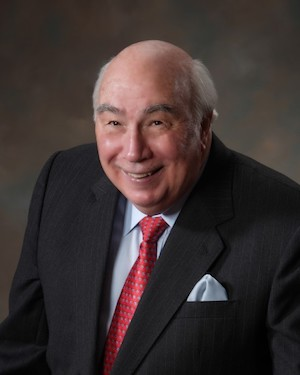
Robert E. Murray (Deceased)
Credentials
- Executive MBA Program at The Ohio State University.1
- Bachelor of Science degree from The Ohio State University in Accounting and Finance.2
- Certified Public Accountant certification from the State of Ohio.3
Background
Robert E. Murray was chairman, president, and chief executive officer of the Murray Energy Corporation, the largest privately-owned coal company in the United States. Murray Energy was forced to file for bankruptcy in October 2019. Bob Murray passed away on October 25, 2020 at 80 years of age. A *New York Times* obituarydescribed Murray as a “brash crusader for the mining industry” given his fight against “government regulations that protected miners’ safety and health and addressed climate change.”4 ^5 ^6 ^7 ^8 ^9 ^10
Murray Energy emerged from federal bankruptcy protectionin September 2020 with a new name, American Consolidated Natural Resources Inc., and a new ownership group. Robert D. Moore, who replaced Robert Murrayas president and CEO of Murray Energy in October 2019, also headed the new company. Murray announced on October 19, 2020that he was retiring as chairman of the board of directors of American Consolidated Natural Resource Holdings Inc.11 ^12
According to anarchived biography at Murray Energy, before founding his own company, Murray worked for 31 years at The North American Coal Corporation (NACC), holding “various supervisory, management, engineering, marketing and operating positions,” After he was fired from NACC without a public explanation in 1987, Murray went on to create his own mining company.13 ^14
Murray held board positions at the National Mining Association, American Coal Foundation, National Coal Council, Ohio Coal Association, and Pennsylvania Coal Association. He was also a former president and trustee of the American Institute of Mining, Metallurgical, and Petroleum Engineers, Inc., the Society of Mining, Metallurgy and Exploration, Inc, and The Rocky Mountain Coal Mining Institute, as well as “other industry and civic organizations.”15
Robert Murray denied climate change science. In 2017, he said “I have 4,000 scientists that tell me global warming is a hoax” and that “The Earth has cooled for 20 years.” Murray once referred to efforts by governments and citizens to counter global warming as “hysterical global goofiness.”16 ^17
Murray Energy received criticism from environmental groups and government agencies for releasing dangerous pollution. Notably, Murray Energy was accused of spilling coal slurry, described by the Ohio EPA as “a thick, viscous, black material that can potentially smother aquatic life and contains numerous organic and metal contaminants,” into the same Belmont Country stream at least seven times.18
Robert Murray campaigned for the election of Donald Trump. He described Trump as the only hope for his industry and blamed the “ongoing destruction” of the coal industry on “President Barack Obama, and his supporters, and the increased utilization of natural gas to generate electricity.” Murray called Trump’s decision to withdraw the U.S. from the Paris climate agreement “courageous.”19 ^20 ^21
Litigation
Robert Murray had a history of filing defamation lawsuits against journalists and activists.22
*The Columbia Journalism Review* noted, “Murray has every right to defend his reputation and to use defamation law to redress real harms—and to the extent he’s trying do to that, good for him. But the company is a major player in local economies, Murray himself is active in politics, and his record of suing journalists or threatening to sue them—whatever his motivations—does stand to chill reporting on business and industry practices that are of public concern.”23
As of that 2014 article, Murray had sued journalists at Chagrin Valley Times,and threatened to sue Steve Fiscor, editor of Coal Age and Engineering & Mining Journal, and R. Larry Grayson, a professor emeritus of energy and mineral engineering at Penn State University. He also sued blogger Wilfred Michael Stark for an article at The Huffington Post, a reporter for The Charleston Gazette, a former reporter of the Akron Beacon Journal, and others.24
In 2001, Murray filed a billion-dollar lawsuit against the corporation that owns Akron Beacon Journal, claiming the paper had defamed him in an article titled “Mine Owner Isn’t the Shy, Quiet Type.”25
In 2017, Murray also sued John Oliver for a segment on his show Last Week Tonight covering Donald Trump, Murray, and the coal industry. Murray later dropped the suit.26 ^27
Political Contributions
In 2016, Murray Energy gave over $1.5 million to political candidates, party committees, and outside groups, including $200,000 to the pro-Trump PAC Rebuilding America Now and $250,000 to the Cleveland Host Committee which helped fund the Republican National Convention. Trump’s campaign also received $103,000 from Murray Energy employees, OpenSecrets reported. Other significant recipients of Murray money included New Day for America, backing Republican Ohio Governor John Kasich; The Independent Voice for Illinois super PAC, backing Senator Mark Kirk (R-Ill.), and Citizen Super PAC which backed candidates such as Sen. Richard Shelby (R-Ala.) and Sen. Ted Cruz (R-Texas).28
In 2012, Murray helped organize a $1.7 million fundraiser for Mitt Romney, whom Murray employees had already given more than $120,000in the 2012 election cycle. Media reports raised questions whether the company had pressured salaried employees to give to Murray’s political action committee (PAC).29 ^30
Murray said he had decided to be more involved in the election because Obama and his appointees threaten the “destruction of an entire segment of American society.”31
According to *New Republic*, two anonymous sources who worked in managerial positions with Murray Energy suggested that there may have been coercion involved in Murray staffers’ financial support for Romney. “There’s a lot of coercion,” said one of them. “I just wanted to work, but you feel this constant pressure that, if you don’t contribute, your job’s at stake. You’re compelled to do this whether you want to or not.” The second said, “They will give you a call if you’re not giving. […] It’s expected you give Mr. Murray what he asks for.”32
Internal documents obtained by New Republic include a March 2012 letter where Murray criticizes employees who had not yet attended fundraisers. “What is so difficult about asking a well-paid, salaried employee to give us three hours of his/her time every two months? We have been insulted by every salaried employee who does not support our efforts.” A 2011 letter from Murray, concerning a fundraiser for two Republican senators, read “Please see that our salaried employees ‘step up,’ for their own sakes and those of their employees.”33
In February 2010, Murray Energy donated nearly $25,000 to GOP Senate candidate Carly Fiorina’s campaign against Barbara Boxer, the incumbent Democrat.34
In May 2010, Murray Energy donated $30,000 to Proposition 23, which would have suspended California’s Global Warming Solutions Act until the state’s unemployment rate dipped to 5.5 percent or lower for four consecutive quarters.35
Below is a summary of the top 50 contributions among federal candidates in the most recent three election cycles by Murray Energy, using data from OpenSecrets.org. As OpenSecrets notes, organizations themselves do not donate to political candidates. Rather, these totals arise from the organizations’ PACs, their individual members or employees or owners, and those individuals’ immediate families and may include organization subsidiaries or affiliates.36
View the attached spreadsheets for more details, including Murray Energy’s political donations going back as far as 1992 via OpenSecrets Data (.xlsx).37
CAND
| View & Recipient | 2016 | 2018 | 2020 | Grand Total |
|---|---|---|---|---|
| Republican | $263,704 | $261,440 | $91,780 | $616,924 |
| Donald Trump | $103,402 | $53,470 | $156,872 | |
| Ted Cruz | $75,869 | $9,200 | $85,069 | |
| Kevin McCarthy | $21,400 | $10 | $21,410 | |
| Jim Renacci | $16,700 | $16,700 | ||
| Martha McSally | $13,850 | $2,000 | $15,850 | |
| Carol Miller | $5,550 | $10,000 | $15,550 | |
| Bill Johnson | $13,390 | $2,000 | $15,390 | |
| Todd Young | $14,375 | $14,375 | ||
| Dean Heller | $14,100 | $14,100 | ||
| Luther Strange | $14,075 | $14,075 | ||
| Keith J Rothfus | $2,700 | $10,500 | $13,200 | |
| Virginia Foxx | $11,250 | $1,500 | $12,750 | |
| John Hoeven | $12,548 | $12,548 | ||
| Mike Braun | $11,850 | $11,850 | ||
| Andy Barr | $9,250 | $2,500 | $11,750 | |
| Rob Portman | $10,734 | $10,734 | ||
| Bob Gibbs | $10,000 | $10,000 | ||
| Josh Mandel | $9,375 | $9,375 | ||
| Marsha Blackburn | $8,850 | $8,850 | ||
| Marco Rubio | $8,400 | $8,400 | ||
| Steve Stivers | $8,200 | $8,200 | ||
| Justin Fareed | $7,700 | $7,700 | ||
| Greg Pence | $7,300 | $7,300 | ||
| Kevin Cramer | $6,900 | $6,900 | ||
| Ron Johnson | $6,875 | $6,875 | ||
| Mark Kirk | $6,325 | $6,325 | ||
| Matt Rosendale | $6,250 | $6,250 | ||
| Lou Barletta | $5,700 | $5,700 | ||
| Rick Scott | $5,700 | $5,700 | ||
| Steve Chabot | $5,550 | $5,550 | ||
| Mike Bost | $5,550 | $5,550 | ||
| Joe Heck | $5,525 | $5,525 | ||
| Rupie Jr Phillips | $5,250 | $5,250 | ||
| Rand Paul | $5,201 | $5,201 | ||
| Troy Balderson | $5,000 | $5,000 | ||
| David P Joyce | $5,000 | $5,000 | ||
| Cory Gardner | $5,000 | $5,000 | ||
| Pat Toomey | $5,000 | $5,000 | ||
| Josh Hawley | $4,100 | $4,100 | ||
| Greg Walden | $2,000 | $2,000 | $4,000 | |
| Liz Cheney | $3,000 | $3,000 | ||
| John Kasich | $2,700 | $2,700 | ||
| Rick Saccone | $2,700 | $2,700 | ||
| Kelly Armstrong | $2,500 | $2,500 | ||
| John Curtis | $2,500 | $2,500 | ||
| Thom Tillis | $2,500 | $2,500 | ||
| Rob Bishop | $2,500 | $2,500 | ||
| Steven Daines | $2,500 | $2,500 | ||
| Patrick Morrisey | $2,400 | $2,400 | ||
| David McKinley | $2,000 | $2,000 | ||
| John Shimkus | $1,000 | $1,000 | ||
| Steve Scalise | $300 | $300 | ||
| Evan Jenkins | $250 | $250 | ||
| Carly Fiorina | $100 | $100 | ||
| Alex Mooney | -$5,000 | -$5,000 | ||
| Democrat | $108 | $126 | $31 | $265 |
| Bernie Sanders | $108 | $108 | ||
| Richard Ojeda | $100 | $100 | ||
| Joe Biden | $30 | $30 | ||
| Bill Nelson | $16 | $16 | ||
| Elizabeth Warren | $10 | $10 | ||
| Tom Steyer | $1 | $1 | ||
| Grand Total | $263,812 | $261,566 | $91,811 | $617,189 |
LEADERSHIP PAC
| View & Recipient | 2012 | 2014 | 2016 | 2018 | Grand Total |
|---|---|---|---|---|---|
| Democrat | $35 | $35 | |||
| Democrats Win Seats PAC | $35 | $35 | |||
| Republican | $135 | $6,000 | $15,000 | $41,800 | $62,935 |
| RickPAC | $10,000 | $10,000 | |||
| Thunderbolt PAC | $5,000 | $5,000 | |||
| WinNovember PAC | $5,000 | $5,000 | |||
| Building America’s Republican Representation | $5,000 | $5,000 | |||
| Support to Ensure Victory Everywhere PAC | $5,000 | $5,000 | |||
| Building Opportunities for a Stronger Tomorrow | $5,000 | $5,000 | |||
| Victory & Freedom PAC | $5,000 | $5,000 | |||
| Majority Cmte PAC | $5,000 | $5,000 | |||
| Belief In Life & Liberty | $5,000 | $5,000 | |||
| Re-Light America PAC | $5,000 | $5,000 | |||
| Wild & Wonderful PAC | $4,000 | $4,000 | |||
| Reinventing a New Direction | $2,000 | $2,000 | |||
| Big Sky Opportunity PAC | $1,500 | $1,500 | |||
| Jobs Freedom & Security PAC | $300 | $300 | |||
| Dakota PAC | $135 | $135 | |||
| Grand Total | $135 | $6,000 | $15,035 | $41,800 | $62,970 |
527
| Recipient | 2016 | 2018 | Grand Total |
|---|---|---|---|
| New Day For America | $300,000 | $300,000 | |
| Our American Revival | $50,000 | $50,000 | |
| Young Conservatives for a Better America | $2,275 | $4,950 | $7,225 |
| Republican Liberty Caucus | $1,810 | $2,355 | $4,165 |
| Young Republican National Federation | $2,425 | $2,425 | |
| Frontiers of Freedom | $1,685 | $1,685 | |
| College Republican National Cmte | $325 | $1,000 | $1,325 |
| Presidential Coalition LLC | $200 | $200 | |
| Grand Total | $354,410 | $12,615 | $367,025 |
OUTSIDE
| Recipient | 2012 | 2014 | 2016 | 2018 | 2020 | Grand Total |
|---|---|---|---|---|---|---|
| America First Action | $1,000,000 | $1,000,000 | ||||
| Kentuckians for Strong Leadership | $330,000 | $330,000 | ||||
| Rebuilding America Now | $200,000 | $200,000 | ||||
| Senate Leadership Fund | $47,000 | $95,000 | $142,000 | |||
| Congressional Leadership Fund | $140,000 | $140,000 | ||||
| Independent Voice For Illinois | $129,000 | $129,000 | ||||
| Prosperity for Pennsylvania | $110,000 | $110,000 | ||||
| New Generation PAC | $100,000 | $100,000 | ||||
| Republican Super PAC | $100,000 | $100,000 | ||||
| American Crossroads | $100,000 | $100,000 | ||||
| Kentucky Tomorrow | $10,000 | $75,000 | $85,000 | |||
| Trusted Leadership PAC | $80,000 | $80,000 | ||||
| Citizen SuperPAC | $70,000 | $70,000 | ||||
| Hardworking Americans Cmte | $70,000 | $70,000 | ||||
| Missouri Rising Action | $60,000 | $60,000 | ||||
| New Day For America | $50,000 | $50,000 | ||||
| Tennesseans for A Better Tomorrow | $50,000 | $50,000 | ||||
| Transparency In Government PAC | $50,000 | $50,000 | ||||
| Liberty 2.0 | $50,000 | $50,000 | ||||
| Keystone Strong | $50,000 | $50,000 | ||||
| Florida First Project | $38,000 | $38,000 | ||||
| Grow NC Strong | $30,000 | $30,000 | ||||
| Let America Work | $24,000 | $24,000 | ||||
| CFG Action Montana | $20,000 | $20,000 | ||||
| Texans Are PAC | $20,000 | $20,000 | ||||
| 1863 PAC | $18,314 | $18,314 | ||||
| Advancing Freedom Fund | $1,100 | $600 | $1,700 | |||
| Grand Total | $100,000 | $470,000 | $1,029,100 | $1,425,600 | $93,314 | $3,118,014 |
TABLE
PARTY
| Recipient | 2012 | 2014 | 2016 | 2018 | 2020 | Grand Total |
|---|---|---|---|---|---|---|
| Democrat | $50 | $600 | $600 | $1,250 | ||
| Democratic Congressional Campaign Cmte | $600 | $600 | $1,200 | |||
| DNC Services Corp | $50 | $50 | ||||
| Republican | $169,944 | $105,339 | $274,745 | $50,853 | $304,520 | $905,401 |
| Republican National Cmte | $38,300 | $15,886 | $7,245 | $750 | $299,255 | $361,436 |
| Cleveland 2016 Host Cmte | $250,000 | $250,000 | ||||
| National Republican Senatorial Cmte | $94,644 | $69,353 | $12,202 | $230 | $176,429 | |
| National Republican Congressional Cmte | $37,000 | $14,600 | $15,151 | $35 | $66,786 | |
| Republican Party of Ohio | $500 | $15,000 | $5,250 | $20,750 | ||
| Republican Party of North Dakota | $7,500 | $7,500 | ||||
| Republican Party of West Virginia | $2,500 | $5,000 | $7,500 | |||
| Republican Party of South Carolina | $5,000 | $5,000 | ||||
| Republican Party of Kentucky | $5,000 | $5,000 | ||||
| Republican Party of Arizona | $5,000 | $5,000 | ||||
| Grand Total | $169,944 | $105,339 | $274,795 | $51,453 | $305,120 | $906,651 |
Stance on Climate Change
2017
Speaking with *The Guardian*, Murray declared:38
“We do not have a climate change or global warming problem, we have an energy cost problem.”39
January 1, 2012
In a 2012 interview with *The Intelligencer / Wheeling News-Register*, Murray discussed his fears of federal government regulation of the coal industry. When asked about climate change science, Murray said:40
“The fraudulent individuals around the world who have attempted to capitalize on the promotion of their theory that the Earth is warming are now finding out that it’s just not true. […] They did it for what I call crony capitalism – to make money off global warming. […] Albert Gore has made hundreds of millions of dollars over his hoax, and now they’re finding it’s simply not true.
[…] So it’s changed, and the vast majority of Americans today know now that this was a hoax and it was done to get money from America for other countries for people in America to make money off of it. […] Now some want to create a commodity market in carbon tax credits. So now you’ve got Wall Street and all these commodity brokers in the United States, they want to see the legislation because it creates a market to trade […] carbon credits. So all of these people, for reasons not very pure, not very honorable and certainly not honest, are perpetuating the fraud. People like me, they called me a skeptic. Now I’m right […] and I see America moving beyond that issue.”41
June 28, 2007 boxer? inohfe
In 2007 testimony before the Senate Environment and Public Works Committee, Murray claimed that climate change as an “alleged phenomenon” based on “faulty science” and that “the science is uncertain.”42
“It is time that common sense be introduced into this hysterical, out of control, climate change debate, which alleged phenomenon, to our Nation’s best scientists, is based on faulty science. While the science is uncertain, the Congressional leadership’s proposals and statements to date will definitely result in devastating economic hardship to our families’ lives,” Murray wrote in his testimony.43
In his testimony, Murray also described emissions reductions as “hysterical global goofiness, with no environmental benefit.”44
“It seems to us that the leadership of this Congress, with the support of the Majority of this Committee and some Republicans, are intent in helping Mr. Gore and those of his ilk in achieving his unquestionable legacy, which will be the destruction of American lives and more death as a result of his hysterical global goofiness, with no environmental benefit,” Murray wrote in his testimony.45
Key Quotes
June 7, 2017
In an interview with *BNN*, Murray applauded President Donald Trump‘s decision to withdraw the United States from the Paris climate agreement, while criticizing Canada’s Prime Minister Justin Trudeau for supporting it:46
“I’m not impressed with Mr. Trudeau at all, I don’t think he’s leading Canadians in the right direction, but again, I’m not a Canadian,” Murray said. He added that “President Donald Trump was absolutely prudent and courageous to withdraw from the Paris climate accord. It’s an integral part of his energy agenda. […] We do not have a global warming problem on this planet, what we have is an energy poverty problem on this planet.”47
February 2017
*The Guardian* reportedthat Robert Murray met with President Donald Trump to discuss a plan to declassify carbon dioxide as a pollutant:48
“Carbon dioxide under the Clean Air Act of 1971 was never a pollutant,” said Murray. “That endangerment finding needs to be overturned. It’s on my list of what needs to be done, because carbon dioxide is not a pollutant.”49
December 12, 2016
In a December interview with the Fox News program“*Fox & Friends,”*Murray declared “Rex Tillerson is one of the best choices [Trump] could ever make as Secretary of State.” Murray claims to have received a personal phone call from Trump, shortly after Trump was made President-elect:50
“He said, ‘tell your coal miners, I’ve got their back.’ Then he said ‘I love you, man,’” Murray told Fox & Friends.51
October 2016
Speaking on CNBC, Murray called Tesla Motors a “fraud”:52
“Tesla is a fraud. [It] has gotten $2 billion from the taxpayer and has not made a penny yet in cash flow. Here again, it’s subsidies.”53
Elon Musk, Tesla’s founder,responded on Twitter, writing that Tesla gets “pennies” on the dollar in subsidies compared with the coal industry, and that climate science denial is the “real fraud.”54
January 1, 2012
In a 2012 interview with *The Intelligencer / Wheeling News-Register*, Murray made a number of claims about President Barack Obama and the coal industry:55
“We need Republican control of the Senate and Mr. Obama sent into unemployment to correct the damage to our industry in America already caused by him and his Democrat followers. The Obama administration has declared war on coal and has been speeding along unrestrained with a series of U.S. EPA regulations.”56
“Congress must enact a number of current proposals that would stop the regulatory rampage of the Obama Administration, particularly of the EPA. In addition, we must put Mr. Obama and all of this appointees into unemployment as quickly as possible.”57
June 28, 2007
In his testimony before the Senate Environment and Public Works Committee, Murray declared:58
“Carbon dioxide is a combustion product vital to how civilization is powered. It cannot be legislated or regulated away. Without drastic technological breakthroughs, it is not possible to stabilize atmospheric carbon dioxide emissions, even if it were necessary, and meet global energy demands.”
Speaking about Rachel Carson, Murray said:59
“She and her environmental followers killed millions of human beings around the World with the ban on DDT, which has since been found by the World Health Organization to be very safe to humans in controlling global epidemics.”60
April 2007
In a 2007 speech at the New York Coal Trade Associationin New York City, Murray voiced what he thought of Al Gore:61
“I will only waste a few words relative to Albert Gore, the shaman of global goofiness and doom and gloom. He has portrayed those of us in coal as bad guys in a cheap ‘good guys / bad guys’ scenario, which has always been his tactic. Mr. Gore has never been able to determine the difference between science and science fiction. He is more dangerous than his ‘global warming.’”62
Key Deeds
March 31, 2020
Robert Murray was included in a list by Rolling Stone in an article titled “Climate Enemies: The Men Who Sold the World.” According to the magazine, “bad actors are not only failing to address the crisis, they’re actively exacerbating it.” The list includes “America’s worst offenders, from fossil-fuel industry magnates, to investment gurus, to the president himself.”63
“Murray’s influence extends beyond his floundering dirty-energy company,” the article states. “For years, he pumped money into a diverse portfolio of conservative groups that continue to push disinformation about the climate crisis. Murray also had an oversize influence on Trump’s climate policy, donating $300,000 to his inaugural committee before handing the president a literal wish list of rollback requests, many of which were dutifully carried out by the administration.”64
December 17, 2019
Murray Energy bankruptcy filings revealed that the energy company, even while undergoing bankruptcy, had continued to fund a wide range of climate change denial groups. That included theInternational Climate Science Coalition (ICSC), a group that has closely guarded its funding sources, which received $60,000. Other groups named included the Heartland Institute ($130,000), the Competitive Enterprise Institute ($200,000), and Government Accountability & Oversight ($300,000). Murray’s company also donated $60,000 to the Center for the Study of Carbon Dioxide and Global Change, making it one of the group’s largest donors. See related reporting from The Intercept, Energy and Environment News*, and *The New York Times.65 ^66 ^67
Other groups funded by Murray Energy include FreedomWorks, the Cato Institute, the Committee for a Constructive Tomorrow, and Judicial Watch. As The New York Times noted, Murray continued to fund climate change denial even as his company was going bankrupt.
May 31, 2018
Based on a draft Department of Energy (DOE) memo obtained by Bloomberg,the Trump administration was making plans to bail out coal and nuclear plants. This followed more than a year of lobbying by Murray for President Donald Trump and Energy Secretary Rick Perry to bail out struggling coal plants. *Bloomberg*was the first to report:68 ^69
“Trump administration officials are making plans to order grid operators to buy electricity from struggling coal and nuclear plants in an effort to extend their life, a move that could represent an unprecedented intervention into U.S. energy markets.
“The Energy Department would exercise emergency authority under a pair of federal laws to direct the operators to purchase electricity or electric generation capacity from at-risk facilities, according to a memo obtained by Bloomberg News. The agency also is making plans to establish a ‘Strategic Electric Generation Reserve’ with the aim of promoting the national defense and maximizing domestic energy supplies.”
In August of 2017, Murray hadsent a letter to the White House requesting assistance from the Trump administration. In particular, he was lobbying on behalf of FirstEnergy, one of Murray Energy’s largest customers and which ultimately filed for bankruptcy in March 2018.70 ^71
“We are desperate for the President to, once again, order Energy Secretary Perry to invoke Section 202(c) of the Federal Power Act for FirstEnergy’s merchant power plants,” Murray wrote in the letter to the White House.
In September, Perry had called on the Federal Energy Regulatory Commission (FERC) to speed up a proposed “grid resiliency” rulethat would prop up coal and nuclear plants with the stated goal of preserving grid reliability. This, despite Perry’s own agency finding that the closure of those coal plants would have little impact on the grid.72 ^73
Murray claimed FirstEnergy’s bankruptcy could have been prevented if FERC had turned down the rule.74
Despite Murray’s claim he “didn’t have any involvement” in the rule DOE proposed to FERC*,In These Times* revealed a March 2017 meeting between Perry and Murray, in which Murray presented his “action plan” for federal agencies to aid the coal industry and in which he hugged Perry.75 ^76
April 2018
*Bloomberg* reported Murray planned to purchase coal-fired power plants in addition to his mining company. The acquisition was expected as early as that year. Murray described his plans at the Bloomberg New Energy Finance Future of Energy Summit in New York.77
“It’d be the culmination of my life’s work,” he said. “It’s a new concept. If you control the fuel supply, you can price it how you want it.”78
Murray was considering the purchase of five different power plants, including the W.H. Sammis plant in Ohio and the Bruce Mansfield plant in Pennsylvania, owned by bankrupt FirstEnergy Solutions. FirstEnergy Corp’s Pleasants Power Station is another under consideration.79
“If you can dig coal out of the ground, you sure as heck can run a power plant,” he said. “We can run power plants better than the utilities can.”80
June 22, 2017
Robert Murrayfiled a defamation lawsuitagainst John Oliver, after Oliver criticized Murray Energy and Robert Murray in a 24-minute segment on the coal industry and President Donald Trump’s promise to revive it. A judge threw out the case in 2018, however Murray appealed to the West Virginia Supreme Court. Murray later dropped the suit entirely, although Oliver commented he fully expected to be sued again.81 ^82
Murray issued a lawsuit which accused Oliver of a “meticulously planned attempt to assassinate [his] character and reputation,” *The Denver Post*reported.83
March 1, 2017
Robert Murray presented President Donald Trump with an “action plan” of environmental rollbacks. *The New York Times*reportedthat, almost a year later, the administration was on track to fulfill most of the 16 requests.84
View the full document at *The New York Times* and below. The memo was obtained by Senator Sheldon Whitehouse and shared with The New York Times. It includes requests to end regulations on greenhouse gas emissions, ozone, and mine safety, as well as cutting staff at the EPA “at least in half.”85
...[doc]
Murray Energy S Action Plan for the Trump (Text)
February 2017
Murray met with Donald Trump and presented a plan that would overturn the classification of carbon dioxide as a pollutant, *The Guardian* reported. The two met when Trump signed the repeal of the Stream Protection Rule, a regulation issued under the Obama Administration that prevented coal companies from dumping in streams. Murray had called the rule an “unlawful and destructive” attempt to “destroy our nation’s underground coalmines and put our nation’s coalminers out of work.”86
“Carbon dioxide under the Clean Air Act of 1971 was never a pollutant,” said Murray. “That endangerment finding needs to be overturned. It’s on my list of what needs to be done, because carbon dioxide is not a pollutant.”87
February 17, 2017
Speaking with*CNBC,* Murray claimed that global warming was a hoax citing “4,000 scientists.”88
“There’s no scientific analysis either,” Murray said. “I have 4,000 scientists that tell me global warming is a hoax. The Earth has cooled for 20 years.”89
When asked for clarification, a spokesperson for Murray Energy sent links to the Manhattan Declaration on Climate Change, which says “human-caused climate change is not a global crisis,” and the infamous Global Warming Petition Project, also known as the Oregon Petition, a debunked list of those who claim humans don’t cause climate change.90
TheManhattan Declaration is a document devised by theInternational Climate Science Coalition (ICSC) and unveiled at thefossil fuel industry-funded Heartland Institute’s 2008 International Conference on Climate Change. ICSC is run by Tom Harris who formerly worked for a PR company called the High Park Group. ICSC also receives funding from the Heartland Institute, which has been at the forefront of climate change denial.91
As Tom DiChristopher noted at CNBC, “Murray’s claim that there is no scientific analysis behind climate change is not true. […] His second claim that Earth is cooling is also false.”92
October 2016
Speaking on CNBC, Murray called Tesla Motors a “Fraud”:93
“Tesla is a fraud. [It] has gotten $2 billion from the taxpayer. Has not made a penny yet in cash flow. Here again, it’s subsidies. […] It has nothing to do with the environment. And by the way, you could close down every coal fired plant in the United States today and you would not affect the temperature of the Earth at all. Not at all.”94
View the video below:95
As outlined by DeSmog,subsidies for electric vehicles are dwarfed by coal subsidies. Murray also criticizes Musk for not earning a profit, while the coal industry itself is going bankrupt (despite billions of dollars their industry receives through special tax preferences). Another distortion is Murray’s claim that America’s coal plants aren’t contributing to global warming.96
Murray disagreed with this, sending the following note to DeSmog’s managing editor:97

The Guardianreported that Elon Musk had responded to Murray and tweeted that the real fraud going on was “denial of climate science”. “As for ‘subsidies’, Tesla gets pennies on dollar vs coal. How about we both go to zero?” he said.98
August 10, 2016
Speaking as a guest on the *MetroNews* show “Talkline,” Murray blamed regulations under President Barack Obama for job losses:99
“I’ve worked night and day for 29 years building this company and creating these jobs only to have them destroyed by Barack Obama and his excessive regulations,” Murray claimed. “Those regulations are coming out against coal, against the utilization of coal as well as the mining of coal faster than we can read them.”100
Murray went on to say that Safety Health Administration inspections are cutting into his production schedules, describing mine inspections as “total harassment”:101
“That means I had to take 89 management people off of inspecting the mines, off of doing safety training. It has nothing to do with safety. It is total harassment. Eighty-nine inspectors for 15 mines,” Murray said.102
May 2016
*Bloomberg* reported that Murray endorsed Donald Trump for president after meeting him in New York. Murray said Trump cares “very much” about coal miners and coal mining jobs. Murray later said that “nobody” worked harder to make Trump president than he did, adding “and we’re not done yet.”103
One of Murray’s goals was for the U.S. to pull out of any global agreements on climate change. Murray said, “so-called global warming is a total hoax.”104
August 2015
According todocuments obtained by the Center for Media and Democracy (CMD), and first reported on by Bloombergin August 2016, a Murray energy attorney and the head of the coal advocacy group American Coalition for Clean Coal Electricity (ACCCE) spoke on a panel titled “The Dangerous Consequences of the Clean Power Plan & Other EPA Rules” during the Republican Attorneys General Association (RAGA) August 2015 Summit.105 ^106 ^107
“Murray Energy Corp. made a $250,000 donation to the Republican Attorneys General Association last year and, in return, the coal mining company’s chief executive got a closed-door meeting with state prosecutors to discuss the Obama administration’s regulation of power plants,” Bloomberg reported, adding that “Eleven days later, the attorneys general went to federal court to fight the rules that Murray Energy says could put the coal industry out of business.”108
~CPP
CMD reported that the panel presentation featured Mike Duncan, president of the American Coalition for Clean Coal Electricity (ACCCE) and Geoffrey Barnes, counsel at Murray Energy, as well as three attorneys general: Scott Pruitt (R-OK), Patrick Morrisey (R-WV), and Ken Paxton (R-TX).109
April 2014
After cutting off promised health benefits for one thousand retired coal miners, Murray blamed the Obama administration and its so-called “war on coal”:110
“Murray Energy’s inability to provide these benefits is, in part, due to the destruction of the coal industry, including our markets, by the Obama Administration and its appointees and supporters, who have eliminated the livelihoods of thousands of coal miners, and their families, by the forced closing of 392 coal-fired electric power plants in America, now and in the immediate future,” Murray said in a statement confirming the cuts. “Due to these action and devastated coal markets, Murray Energy is unable to support these benefits.”111
Affected workers included all non-union retirees at five West Virginia mines that Murray had recently purchased from CONSOL Energy Inc.112
April 23, 2014
Murray Energy sued the the Labor Departmentover the Mine Safety and Health Administration’s (MSHA) new rule limiting coal dust, intended to protect coal miners against black lung disease, The Hillreported.113
“Instead of protecting miners’ health, this rule clearly seeks to destroy the coal industry, and the thousands of jobs that it provides, with absolutely no benefit to the health or safety of miners, whatsoever,” the company said in a statement.114
March 2014
Murray Energy sued the EPA, alleging the agency failed to comply with the Clean Air Act’s requirement to evaluate the impact of its regulations on employment. “The Administrator has no discretion to avoid or limit its obligation to continuously evaluate the employment impacts of EPA’s administration and enforcement of the Clean Air Act,” Murray Energy’s lawsuit stated.115
October 15, 2013
As *DeSmog* reported, and confirmed by a Murray Energy Corp spokesperson, Murray Energy hired climate change denier Steve Milloy as director of external policy and strategy. According to Milloy’s LinkedIn profile, he held that position until May 2015.116 ^117
September 2013
Murray filed a defamation suit against a prominent blogger at The Huffington Post, *DeSmog* reported.118
The complaint accused Mike Stark and The Huffington Post of defamation and invasion of privacy in publishing the September 20, 2013 article titled “Meet the Extremist Coal Baron Bankrolling Ken Cuccinelli’s Campaign.”119
Stark’s article highlights Murray Energy as Cuccinelli’s single largest contributor, pointing to $30,000 that Murray Energy gave Cuccinelli, as well as campaign work by Murray on behalf of Republican Party presidential nominee Mitt Romney in 2012. The article also covers Murray’s call to impeach President Obama, and his firing of over 150 employees after Obama’s 2012 victory.120
The statements that Murray argued constituted defamation were his referring to Murray as an “extremist” and suggesting that the firing of the 150 workers as potential “fulfillment of a promise” after the results of the 2012 election.121
On November 1, Mike Stark’s attorneys responded with a motion to dismiss.122
“Stark’s article contains no false statements of fact, nor is it misleading, nor does it place Murray in a false light,” they wrote. “More importantly, for purposes of this Motion to Dismiss, the statements in the article about which Plaintiffs complain are not assertions of fact. Rather, the Complaint takes issue only with opinions offered by Stark in the article.”123
“[Murray] likely realizes that a lawsuit like this has the effect of diverting resources that a writer or activist like Mike Stark might otherwise use to expose and question the actions of Murray, Murray Energy, and the coal industry,” explained Stark’s lawyers. “This kind of lawsuit could also deter others from engaging in commentary and criticism about Murray and these issues.”124
Murray’s suit waseventually dismissed by a federal judge. However, it was only one of several suits against journalists initiated by Murray.125
November 2012
The day after Barack Obama was re-elected for a second presidential term in 2012, Murray announced he would lay off a total of 156 employees from Murray Energy and subsidiary companies. Murray blamed the so-called “war on coal”of the Obama administration. Before the announcement, Murray read a prayer to a group of staff members:126
“Lord, please forgive me and anyone with me in Murray Energy Corp. for the decisions that we are now forced to make to preserve the very existence of any of the enterprises that you have helped us build.”127
The Washington Post reported that energy analysts blamed the competition of natural gas for the challenges of the coal mining business, as opposed to the “war on coal” argument repeatedly mentioned during the election.128
ViewMurray’s full prayer below:129
“Dear Lord:
“The American people have made their choice. They have decided that America must change its course, away from the principals of our Founders. And, away from the idea of individual freedom and individual responsibility. Away from capitalism, economic responsibility, and personal acceptance.
“We are a Country in favor of redistribution, national weakness and reduced standard of living and lower and lower levels of personal freedom.
“My regret, Lord, is that our young people, including those in my own family, never will know what America was like or might have been. They will pay the price in their reduced standard of living and, most especially, reduced freedom.
“The takers outvoted the producers. In response to this, I have turned to my Bible and in II Peter, Chapter 1, verses 4-9 it says, ‘To faith we are to add goodness; to goodness, knowledge; to knowledge, self control; to self control, perseverance; to perseverance, godliness; to godliness, kindness; to brotherly kindness, love.’
“Lord, please forgive me and anyone with me in Murray Energy Corp. for the decisions that we are now forced to make to preserve the very existence of any of the enterprises that you have helped us build. We ask for your guidance in this drastic time with the drastic decisions that will be made to have any hope of our survival as an American business enterprise.
Amen.”
August 2012
During a 2012 rally to promote coal industry jobs, Mitt Romney visited Murray Energy’s Century Mine. A number ofnews sourcesreported that Murray Energy had compelled employees to attend the Mitt Romney campaign event without pay. Some coal miners sent anonymous letters to a local radio station, criticizing the coal company for making them take the day off, without pay, and attend the event.130
Murray Energy CFO Rob Moore denied that workers were “forced” to go, but rather said that attendance was “mandatory” and confirmed that the workers were not paid:131
“Our managers communicated to our workforce that the attendance at the Romney event was mandatory, but no one was forced to attend,” Moore said.132
Listen to theradio coverage from News Radio 1170 WWVAbelow:
“Just for the record, if we did not go, we knew what would happen,” one miner wrote in an email read on air.133
In another email read on air, a miner said he was frustrated with being “forced” to attend, and described a culture of “intimidation” inside Murray: (emphasis added byThinkProgress)134
“No one likes to be forced to do anything, let alone without pay. I recall hearing a caller claiming that his $100,000 plus Murray salary was grounds for crapping if Murray says crap, or eating broccoli if Murray says to eat it. I say to that man: Many of us, though well educated or hard workers ourselves, do not make half, a third, or sometimes even a quarter of that pay. Had the event not been mandated, most of us probably would have still attended. We are grateful to have the chance to listen to our leaders or potential leaders first hand and to be a part of political history in the making. We do not appreciate being intimidated into exchanging our time for nothing.”135
2012
According to the Heartland Institute’s “2012 fundraising plan,” which was released as part of a set of leaked documents, the Murray Energy Corporation donated $100,000 to Heartland in 2010 and was expected to donate another $40,000 in 2012. The Heartland Institute, which historically opposed the science linking second-hand smoke to health risks, has become one of the strongest voices promoting climate change denial in America.136
May 2010
Murray Energy donated $30,000 to Proposition 23, a proposition that would suspend California’s Global Warming Solutions Act until the state’s unemployment rate dipped to 5.5 percent or lower for four consecutive quarters.137 ^138
August 6, 2007
After the Crandall Canyon Mine collapse, which led to the death of nine miners and rescuers, Murray Energy faced an initial assessment of $1.639 million in fines for alleged “flagrant, reckless and highly negligent violations of mine safety law,” *NPR*reported. The settlement was reduced to $949,351, which still made it the third-largest fine ever levied against a coal company, according to the Mine Safety and Health Administration.139
The settlement included Murray Energy’s acceptance of four violations “contributory” to the two fatal mine collapses at Crandall in August 2007:
- Failure to report a “coal outburst” at the mine four days before the first fatal collapse. “The failure to report this accident,” MSHA inspectors wrote, “denied MSHA an opportunity to investigate it and learn that the mining methods provided inadequate protections.”
- Two failures in March and August of 2007 to revise the mine’s roof control plan after “coal outbursts” and bounces” that “caused substantial damage” showed that the plan “was not adequate or suitable for controlling” the movement and falling of rock.
- Failure to leave pillars of coal long enough and wide enough to meet safety standards and to hold up the roof of the mine as coal was removed. The pillars “did not provide sufficient strength to withstand stresses,” mine inspectors wrote, leading to “sudden and violent failure of the overstressed coal pillars” in the Aug. 6 and Aug. 16 collapses, in which nine miners and rescued [sic] were killed.140
Despite signing the settlement, which left Murray Energy with “acknowledged responsibility for the failures that led to the tragedy,” Murray told NPR that “this settlement is not an admission of any contribution to the August 2007 accidents.”141
From 2000 to 2009, the federal Mine Safety and Health Administration (MSHA)cited Murray Energy for over 7,700 “significant” violations, resulting in $18 million in fines.142
A 2008 MSHA report found that the mine was “destined to fail” because Murray Energy failed to disclose early warning signs.143
After the Crandall mine disaster, Murray claimed that the event had absolutely nothing to do with “retreat mining” and that the term had been invented by “lackeys for the united mine workers.”144
In a statement responding to a previous *Fox News*article, Murray Energy reiterated claims that the tragedy was not due to safety violations but rather to an earthquake. “No one knows for certain what caused the tragic collapse at the Crandall Canyon Mine,” the Murray statement read. The statement responded to another Fox Newsarticle by Don Fair, which claimed that “Despite what the Mine Safety and Health Administration investigators were telling us that – there was indeed a collapse in the mine – Murray insisted that the problem was caused by an earthquake.” Murray’s response described Fair’s article as “blatantly false, biased and demonizing.”145 ^146

“Retreat mining had absolutely nothing to do with the disaster that happened here, nor was there any retreat mining happening at the time of the disaster,” Murray .147
June 28, 2007
Murray testified before the Senate Environment and Public Works Committee, claiming that climate change was based on “faulty science.”148
Murray argued that poor Americans would be impacted by price increases connected to legislation that would curtail greenhouse gas emissions. “We feel very threatened, and frankly afraid, for these people, who only want to work in honor and dignity and have an acceptable quality of life, from what is going on in the Congress,” Murray wrote in his testimony, adding that “Raising energy costs, as this Congress seems intent on accomplishing, will kill American people.”149
“Reducing carbon dioxide emissions will impact our poorest families the hardest,” he reiterated. “The hysterical and out of control climate change or global warming issue, and the legislation that you have proposed, will lead to the deterioration of the American standard of living and the accelerated exportation of more of our jobs to China and other developing countries, which have repeatedly advised, as recent as last week, that they will not limit their carbon dioxide emissions,” he said. “The most ‘inconvenient truth’ is that we do not know how to meet current, much less anticipated future, United States and global energy needs with low- and non-emitting technologies.”150
Murray argued that money should be funneled into research, as opposed to emissions reductions.151
April 2007
Robert Murray delivered a speech on global warming and the coal industry to the New York Coal Trade Association in New York City. In the speech, Murray claimed that the science connecting carbon emissions to global warming is “highly speculative”:152
“While some want us to believe that the science behind so-called ‘global warming’ is certain, to the contrary, the actual environmental risk associated with carbon emissions is highly speculative. It is a fact, however, that every proposal introduced to date will provide a far more certain risk that carbon dioxide emission limits will destroy coal and manufacturing dependent communities and inflict great hardships on America’s families.”153
Murray went on to describe efforts to curb emissions as “global goofiness”:154
“Some wealthy elitists in our Country, who cannot tell fact from fiction, can afford an Olympian detachment from the impacts of draconian climate change policy. For them, the jobs and dreams destroyed as a result will be nothing more than statistics and the cares of other people. These consequences are abstractions to them, but they are not to me, as I can name many of the thousands of the American citizens whose lives will be destroyed by these elitists’ ill-conceived ‘global goofiness’ campaigns.”155
Among those cited for evidence by Murray is prominent climate change denier Richard Lindzen, whom Murray quotes: “Alarm rather than genuine scientific curiosity, it appears, is essential to maintaining funding. And only the most senior scientists today can stand up against this alarmist gale, and defy the iron triangle of climate scientists, advocates, and policy makers.”156
Murray concludes:
“Climate change science is uncertain, and carbon dioxide capture technology has not been proven on a commercial scale. The Congress must not be stampeded into preempting thorough climate research and the development of carbon capture, transfer, and sequestration technologies with emotionally developed or politically motivated legislation in the current hysterical rampage to enact carbon dioxide emission limitation mandates. […] We must oppose any energy-rationing legislation, whether it is a cap-and-trade or a straight tax on carbon energy. Much is at stake here.”157
October 2001
Murray was acquitted of charges he had assaulted an environmental activist who had opposed mining near a 400-year-old-forest, *The Toledo Blade*reported.158
Affiliations
- Murray Energy Corporation (MEC)— Chairman, President, and Chief Executive Officer.159
- North American Coal Corporation (NACC)— Various positions, including Vice President of Operations (1969), President of Western division (1974 – 1983), and President and CEO (1983). Murray was fired without explanation in 1987.160 ^161
- National Mining Association (NMA)— Board Member.162
- American Coal Foundation— Board Member.163
- National Coal Council— Board Member.164
- Ohio Coal Association — Board Member.165
- Pennsylvania Coal Association— Board Member.166
- American Institute of Mining, Metallurgical, and Petroleum Engineers, Inc.— Past President and Trustee.167
- Society of Mining, Metallurgy and Exploration, Inc.— Past President.168
- The Rocky Mountain Coal Mining Institute— Past President.169
- Trump Leadership Council— Member.170
Social Media

- @**MurrayEnergyC on Twitter. Note this account is now suspended.
Other Resources
- “Robert Murray,” Polluterwatch.
- “Robert E. Murray,” Wikipedia.
- “Murray Energy Corporation,” SourceWatch.
- John Funk. “Bob Murray, coal’s flinty leader, has President Donald Trump’s ear,” Cleveland.com.Archived August 29, 2017. Archive.is URL: https://archive.is/0lYzo
- Elliott Negin. “Coal Baron Digs a Deeper Hole,” HuffPost, February 3, 2014.
Resources...
[vids]
---
you can't make this up: https://www.deseret.com/utah/2020/10/1/21497568/former-coal-ceo-robert-murray-files-black-lung-benefits-crandall-canyon-mine-robert-murray-energy
---
WIKI 3 26
Robert Edward Murray (January 13, 1940 – October 25, 2020) was an American mining engineer and businessman. He founded and was the chief executive officer of Murray Energy, a mining corporation based in St. Clairsville, Ohio, until it filed for bankruptcy.[1] Murray was criticized for his denial of climate change,[2] his actions following the Crandall Canyon Mine collapse, and for several large strategic lawsuits against public participation (SLAPPs) he initiated. Multiple allegations of sexual misconduct were brought against him in 2014 and 2016, which were later settled out of court.
Early life
[ ](https://en.wikipedia.org/wiki/File:Robert_E._Murray_1956.png)Murray c. 1956
Murray was born on January 13, 1940, in Martins Ferry, Ohio.[3] He said he lied about his age so he could work in a coal mine at the age of 16 and provide for his family, had experienced multiple mining accidents including a head injury from being struck by a steel beam, had a scar running from his head down his back from a separate accident, and once was trapped in a dark mine for 12 hours before being rescued.[4]
Murray was the valedictorian of the Bethesda High School class of 1957.[5] He received a Bachelor of Engineering in Mining from Ohio State University, and attended a six-week management program at Harvard Business School.[6]
Career
Murray began his mining career at the North American Coal Corporation (NACC). He served in a variety of capacities at NACC, winning election to vice president of operations in 1969. From 1974 to 1983, Murray was president of NACC's Western Division and presided over four of its subsidiaries in North Dakota. In 1974, a strike took place at the Indian Head Mine in Zap, which NACC was attempting to close.[7] In 1983, he became president and CEO of NACC.[8]
Murray was a member of the boards of directors of the National Mining Association, American Coal Foundation, National Coal Council, Ohio Coal Association, and Pennsylvania Coal Association. He was a trustee and former president of the American Institute of Mining, Metallurgical, and Petroleum Engineers, Inc., and the Society for Mining, Metallurgy and Exploration, Inc., and president of The Rocky Mountain Coal Mining Institute.[9]
Murray Energy
Murray founded Murray Energy in 1988 when he bought the Powhatan No. 6 mine from the Ohio Valley Coal Company. Murray focused on high-heat bituminous coal, which he thought would be in demand for power generation. The company later moved towards metallurgical coal used to produce coke for steel production.[10]
Murray told the White House in a letter dated August 4, 2017, that without an emergency order under the Federal Power Act to restart coal-fired electrical generating plants, his company and a major customer, power plant operator FirstEnergy Solutions, would declare bankruptcy. His request was rejected by the White House and the Department of Energy.[11]
Murray Energy Holdings, Co. filed bankruptcy in the United States District Court for the Southern District of Ohio on October 29, 2019. Murray was replaced as CEO the same day, although he remained chairman of the board of the new entity, Murray NewCo, while his nephew Robert D. Moore would be president and CEO.[12][13][14] Employees expressed concern about losing their pensions and/or medical benefits. Murray was the last major coal contributor to the United Mine Workers of America's pension plan.[15]
Crandall Canyon Mine collapse
Main article: Crandall Canyon Mine
In August 2007, six miners were trapped at the Crandall Canyon Mine in Utah, which was co-owned and operated by Murray Energy subsidiary UtahAmerican Energy. Three rescue workers died attempting to reach the miners, and a series of boreholes found that the miners were unlikely to have survived. The miners were declared dead, and their bodies were never recovered. Prior to the collapse, the Crandall Canyon Mine had received 64 violations and was fined $12,000.[16][17][18]
Murray claimed that the Crandall Canyon Mine collapse was triggered by a natural 3.9 magnitude earthquake[19] and that the practice of retreat mining was not responsible.[20] Responding to reports of retreat mining, Murray said: "I wish you would take the word retreat mining out of your vocabulary. Those were words invented by Davitt McAteer, Oppegard, who are lackies for the United Mine Workers, and officials at the United Mine Workers, who would like to organize this coal mine."[21]
Seismologists and government officials disputed this claim, and said the mine collapse was the cause of a coal mine bump[19] that was caused by the mine's use of retreat mining.[20] Richard E. Stickler, the government's top mine safety official, said: "It was not—and I repeat, it was not—a natural occurring earthquake."[22] An analysis by seismologists at the University of California, Berkeley found that the seismic event was "consistent with an underground collapse".[23][24][25][26] Researchers at the University of Utah also stated that the tremor was not triggered by an earthquake.[27]
On July 24, 2008, the U.S. government's Mine Safety and Health Administration (MSHA) announced its highest penalty for coal mine safety violations, $1.85 million, for the collapse. The government fined Genwal Resources $1.34 million "for violations that directly contributed to the deaths of six miners last year", plus nearly $300,000 for other violations. The government also levied a $220,000 fine against a mining consultant, Agapito Associates, "for faulty analysis of the mine's design".[22]
Robert Murray was criticized for his actions during the rescue attempt. The MSHA cited his volatile behavior, especially at daily briefings for family members. MSHA reported that he "frequently became very irate and would start yelling", even making young children cry. He told family members that "the media is telling you lies" and "the union is your enemy."[23]
Political activity
From 2005 to 2007, the Murray Energy PAC donated over $150,000 to Republican candidates, including donations totaling $30,000 to Senate candidates such as George Allen, Sam Brownback, and Katherine Harris.[28] Donations to Republicans surpassed $1 million from 2005 to 2018.[29] The Ohio Valley Coal PAC, another group affiliated with Murray Energy, donated $10,000 for George W. Bush's 2000 Presidential campaign.[28]
In the wake of the 2006 Sago Mine disaster, lawmakers in West Virginia and Ohio proposed legislation requiring mine workers to wear emergency tracking devices. Murray lobbied against the laws, calling them "extremely misguided."[18] He said that politicians were rushing to pass laws and thus "playing politics with the safety of my employees." Murray said that rather than create "knee-jerk" state laws after the disaster, such as in the case of West Virginia, which passed the law in less than one day after it was proposed, the federal government should host a panel which would study the industry and make recommendations for safety measures.[30]
Murray said the federal government should be involved for uniform standards and because tension between unions and companies created difficulty in reaching private agreement on safety standards. He maintained that the personal tracking devices to be mandated in the state laws, called PEDs, did not work under certain common mining conditions (such as below 600 feet (180 m) in depth), and better devices needed to be developed in order to effectively guard miners in case of accident. He said: "The will is there. Unfortunately, the technology isn't."[30]
Murray had stated that he supported federal mandates for drug testing and fire prevention.[30]
On August 14, 2012, Murray hosted Mitt Romney at Murray Energy's Century coal mine in Beallsville, Ohio. Several miners contacted a nearby morning talk radio host, David Blomquist, to complain that they were forced to attend the rally without pay. Murray Energy's chief operating officer Robert Moore said: "Attendance was mandatory but no one was forced to attend the event." Murray closed the mine the day of the rally and suspended pay to workers, arguing that the rally was important to the coal industry and that attending was in the workers' "best interest". Murray and his corporation were a major donor to Romney and other Republicans, and employees reported frequent instances of political pressure from management.[31]
In October 2012, the non-profit group Citizens for Responsibility and Ethics in Washington filed a complaint with the Federal Election Commission against Murray and his company alleging violations of federal campaign law in which employees of Murray Energy were required to give one percent of their salary to the company's political action committee.[32]
On November 9, 2012, three days following the presidential election, Murray laid off 156 workers, citing a supposed "war on coal" by the Obama administration as the reason for his decision.[33]
During the 2016 American presidential election, Murray Energy donated over $300,000 towards candidate Donald Trump's inauguration. A memo from Murray itemized a list of 16 energy actions he desired, including giving subsidies to nuclear and coal plants, reducing mine safety regulations, and reducing environmental oversight. The memo was given to Vice President Mike Pence. A similar memo was given to Department of Energy head Rick Perry, and Murray said he gave the memo to Trump.[34][35]
Murray continued to lobby on energy matters at both the state and national levels until his death.[36][37]
Global warming denial
Murray denied the scientific consensus on climate change. In June 2007, Murray told the United States Senate Committee on Environment and Public Works that "the science of global warming is suspect." He also wrote in a May 2007 MarketWatch editorial: "The actual environmental risk associated with carbon emissions is highly speculative."[18]
In a 2007 speech to the New York Coal Trade Association, Murray called Al Gore "the shaman of global gloom and doom" and added "he is more dangerous than his global warming."[38]
Murray was an opponent of proposed global warming legislation in Congress, saying, "Every one of those global warming bills that have been introduced into Congress today eliminates the coal industry and will increase your electric rates, four to five fold."[39]
Following the presidential election in November 2016, Murray pressed for Donald Trump to withdraw the United States from all international agreements on climate change and stated: "so-called global warming is a total hoax."[40]
Lawsuits
Journalists and the press
Murray filed over a dozen defamation lawsuits against journalists and newspapers, none of which was resolved in his favor.[41] For example, Robert Murray and Murray Energy filed lawsuits against environment reporter Ken Ward Jr. from The Charleston Gazette, philosopher and contributor to The Huffington Post Michael Stark, reporter Margaret Newkirk from the Akron Beacon Journal and the Chagrin Valley Times; he also threatened to sue Steve Fiscor, editor of Coal Age and Engineering & Mining Journal, and R. Larry Grayson, a writer and professor emeritus of energy and mineral engineering at Pennsylvania State University.[42][43][44]
Last Week Tonight
See also: SLAPP Suits
:{:{In June 2017, Murray issued a cease and desist letter to the television show Last Week Tonight following the show's attempt to obtain comment about the coal industry.[45] The show went ahead with the episode (June 18),[46] in which host John Oliver discussed the Crandall Canyon Mine collapse and expressed the opinion that Murray did not do enough to protect his miners' safety. On June 21, Murray and his companies brought suit against Oliver, the show's writers, the show's network, HBO, and HBO's corporate owner, Time Warner.[47] }:
The lawsuit alleged that, in the Last Week Tonight episode, Oliver "incited viewers to do harm to Mr. Murray and his companies."[48][49] The ACLU filed an amicus brief that described "the ridiculous case at hand" as a transparent attempt to use the court system to punish legal speech,[50] and gained notoriety for its snarky tone.[51] The defendants removed the action to federal court, but in August 2017, a federal district court judge ruled that there was no diversity jurisdiction and remanded Murray Energy's suits against The New York Times and HBO to West Virginia state court.[52] The suit against HBO was dismissed with prejudice on February 21, 2018.[53]}:
After Murray dropped an appeal, John Oliver discussed the implications of the lawsuit in his show's November 10, 2019 episode, "SLAPP Suits."[42] Oliver noted that Murray could minimize his personal risk by filing his lawsuit in West Virginia, a jurisdiction where neither Oliver nor Murray lived and that had no legislation to deter SLAPPs (strategic lawsuit against public participation).[42][54] HBO was forced to cover $200,000 in legal fees. Oliver noted that the threat of such lawsuits, and Murray's reputation for litigiousness, may have deterred other media outlets from covering such things as the sexual harassment lawsuits ongoing against Murray.[42][55]
:{"SLAPP Suits" ended with Oliver leading a musical number, "Eat Shit, Bob!" The 2017 episode had featured a cast member in a squirrel costume with a novelty check bearing these words, in reference to a 2015 incident where, in response to a bonus program implemented at one of Murray's mines which union members feared would undermine safety, a miner voided his $3.22 bonus check, wrote "Eat Shit Bob" on the back of it, and returned it to management.[56][57] This was one of the reasons Murray sued the show.[50]
The circuit court judge in the case had noted that the Supreme Court has long upheld "'loose, figurative' language that cannot reasonably be understood to convey facts" as protected speech;[42][58] accordingly, the number leveled a series of intentionally outlandish and obviously false accusations at Murray, including those of murdering Archduke Ferdinand and starting World War I, filling a rocket with puppies and sending it into space, having sexual relations with squirrels per a barbershop quartet, and being the Zodiac Killer. It won the Primetime Emmy Award for Outstanding Picture Editing for Variety Programming and was nominated for Outstanding Original Music and Lyrics.[59]}:
Workplace sexual harassment
In 2014, two lawsuits were filed against Murray for sexual harassment and misconduct against his employees.[60] Murray reached confidential settlement agreements with both parties. In 2016, a third lawsuit was filed against Murray for sexual harassment against an employee.[61]
Personal life
Murray resided in Moreland Hills, Ohio, with his wife, Brenda Lou Moore. They had three children.[16][62]
Murray stated that he suffered from idiopathic pulmonary fibrosis,[63] a scarring of the lung tissue leading to shortness of breath. In September 2020, he filed application for black lung benefits with the U.S. Department of Labor.[64] While running coal mining companies, Murray disputed claims filed by miners for black lung benefits and was an advocate against federal regulations intended to reduce black lung.[64]
...
Murray died on October 25, 2020, at the age of 80, six days after he announced his retirement.[70][71]
"Coal magnate Robert Murray dies; he long fought regulators". The Washington Post. Associated Press. ISSN 0190-8286. Archived from the original on October 30, 2020. Retrieved October 26, 2020.
---
[### environment and public works committee

Senate Committee on Environment and Public Works (.gov)
https://www.epw.senate.gov › _cache › files › BF...](https://www.epw.senate.gov/public/_cache/files/9/5/952d557c-3529-4cab-bbfe-a70f9f73c38d/BF9D594B66EBA773D15F23EC2FEC547786CB6ADB4C2DD1862C0C90B6D44D8B5A.murray.pdf)
Jun 28, 2007 — TESTIMONY BEFORE THE. ENVIRONMENT AND PUBLIC WORKS COMMITTEE. OF THE UNITED STATES SENATE. "The Human Consequences of Climate Change Alarmism ...Read more
CITES LOMBORG
BF9D594B66EBA773D15F23EC2FEC547786CB6ADB4C2DD1862C0C90B6D44D8B5A.murray
6 PP 3 PP NOTES 6 PP X032007=Testimony_Robert_Murray_Murray_Energy
[### TESTIMONY OF ROBERT E

The National Center
https://nationalcenter.org › X032007=Testimony...](https://nationalcenter.org/X032007=Testimony_Robert_Murray_Murray_Energy.pdf)
Mar 20, 2007 — I am Bob Murray, the Chairman, President and Chief Executive Officer of Murray. Energy Corporation ("Murray Energy"), which I founded from a ...Read more
AI Overview
In June 2007, Murray Energy CEO
Robert Murray testified before the U.S. Senate Committee on Environment and Public Works, heavily defending the coal industry against environmental regulations and criticizing climate change science. He often touted coal's importance, challenged emissions controls, and pushed for increased production despite industry safety issues.
 The New York Times +3
Key aspects of his testimony and advocacy regarding coal included:
- Opposition to Climate Action: Murray frequently argued that carbon dioxide emissions from fossil fuels were not causing global warming and were instead beneficial for plant growth, according to E&E News by POLITICO.
- Attacking Regulations: He attributed the decline in the coal business specifically to federal environmental regulations.
- Industry Advocacy: He was known for pushing to keep the coal industry alive and argued against stringent federal environmental oversight.
 The New York Times +3
His 2007 testimony was part of a long history of aggressive lobbying on behalf of Murray Energy, which was the largest underground coal mining company in the U.S..
 NPR +1
GLOBAL ENERGY MONITOR BS
Robert Murray - Global Energy Monitor
Background
A biographical note states that Murray:[1]
"During his 31-year tenure at The North American Coal Corporation, Mr. Murray held various supervisory, management, engineering, marketing and operating positions, culminating his service as Executive Vice President and President and Chief Operations Officer from 1983 to 1987, and President and CEO in 1987. Mr. Murray left North American in late 1987 to create his own independent coal mining companies."
"Mr. Murray, a registered Professional Engineer and private pilot, is a member of the Boards of Directors of the National Mining Association, American Coal Foundation, National Coal Council, Ohio Coal Association, and Pennsylvania Coal Association, and is Past President and a Trustee of the American Institute of Mining, Metallurgical, and Petroleum Engineers, Inc., and the Society of Mining, Metallurgy and Exploration, Inc., as well as Past President of The Rocky Mountain Coal Mining Institute, and other industry and civic organizations."
CEO Murray and political donations
2010 election and climate denial
In February 2010, Murray Energy’s political committee and executives, including CEO Robert Murray, combined to contribute nearly $25,000 to California GOP Senate candidate Carly Fiorina’s campaign against Barbara Boxer, the incumbent Democrat. (At the same Ohio fundraiser, Fiorina obtained an additional $39,000 from Midwestern companies that sell coal mining equipment and supplies.)[2]
In May 2010, Murray Energy donated $30,000 to California’s Proposition 23, which would suspend the state’s AB 32 anti-global warming measure until the state economy rebounds from the recession. Another donor, the American Coalition for Clean Coal Electricity, a Washington, D.C.-lobbying group, gave $5,000. Prop. 23 is sponsored by the energy industry, and its biggest booster is the Valero Energy from San Antonio, Texas.[2]
It is assumed that the company targeted Boxer and the anti-AB 32 proposition because of CEO Murray, who has dismissed global warming as “hysterical global goofiness." Murray and Boxer went head-to-head over the issue at a 2007 Senate hearing on environment and public works. Former Vice President Al Gore and "Silent Spring" author Rachel Carson were also criticized by Murray, who said: "The hysterical and out-of-control climate change or global warming issue, and the legislation that you have proposed, will lead to the deterioration of the American standard of living and the accelerated exportation of more of our jobs to China and other developing countries, which have repeatedly advised, as recent as last week, that they will not limit their carbon dioxide emissions.... Albert Gore touts that his role model has always been Rachel Carson, with her picture on his wall, who led the environmental movement to ban DDT. She and her environmental followers killed millions of human beings around the world with the ban on DDT, which has since been found by the World Health Organization to be very safe to humans in controlling global epidemics."[2]
Employee donations and coercion
In May 2012, Murray hosted a $1.7 million fund-raiser for Presidential candidate Mitt Romney, whom Murray employees had thus far given more than $120,000 for the 102 election cycle. The accounts of two sources who have worked in managerial positions at Murray, and a review of letters and memos to Murray employees, suggest that Murray has for years pressured salaried employees to give to the Murray Energy political action committee (PAC) and to Republican candidates chosen by the company. Internal documents show that company officials track who is and is not giving. The sources say that those who do not give are at risk of being demoted or missing out on bonuses, claims Murray denies. Yet the Murray sources say that, at the time of hiring, supervisors tell employees that they are expected to contribute to the company PAC by automatic payroll deduction – typically 1 percent of their salary, a level confirmed by a 2008 letter to employees from the PAC’s treasurer. Employees are given a form to sign, explaining that the giving is "voluntary."[3]
Mitt Romney visited Murray Energy's Century Mine in August 2012 to promote jobs in the coal industry. Hundreds of coal miners and their families attended. It was later found that Murray's Pepper Pike company told workers that attending the Romney event would be both mandatory and unpaid, a top company official said in a West Virginia radio interview.[4]
Post 2012 election layoffs
The day after Barack Obama was reelected to a second term in 2012, Murry read a prayer to some of his staff and announced layoffs. He said: “Lord, please forgive me and anyone with me in Murray Energy Corp. for the decisions that we are now forced to make to preserve the very existence of any of the enterprises that you have helped us build.” The Washington Post reported that he also laid off 54 people at American Coal, one of his subsidiary companies, and 102 at Utah American Energy, blaming a “war on coal” by the administration of President Barack Obama.[5]
Articles and resources
mofo:
epa coal regs 5/14
The National Mining Association, which represents large coal companies such as Peabody Coal Co, Arch Coal Inc, Alpha Natural Resources and Cloud Peak Energy Inc., “has spent $1 million on a radio and digital campaign in five states depicting shocked consumers opening expensive electricity bills,” Reuters reported. The advertisements claim that electricity bills will jump by 80 percent as a result of the Obama administration’s proposal to limit carbon pollution from new coal and natural gas plants, something the Washington Post’s Fact Checker recently said was “wholly unsupported” and reliant on “bogus, hyped evidence to make its claim.”
The NMA has spoken out against new coal dust regulations aimed at reducing cases of black lung disease in coal miners, claiming the administration’s long-awaited rule is unnecessary and criticizing multiple studies that the Government Accountability Office (GAO) determined were sound. The NMA also intervened in a recent court decision to restore a law overturned by the Bush administration designed to keep toxic coal mining spoil from entering sensitive waterways, saying they found the ruling “obviously very disappointing.”
---
fell broke rib?
A Courtside View of Scott Pruitt’s Cozy Ties With a Billionaire Coal Baron](https://substack.com/redirect/4ef29ed1-401a-4051-b41a-d3757c978a0f?j=eyJ1IjoiMW42ZTYifQ.vyvZ_z0oLghKX6Zag1WJ71bIfqAlxqUD_SD6A_ZPsUM). The New York Times, June 2018.}:
Mr. Pruitt’s attendance at the game … followed a year of regulatory victories for Mr. Craft, who maintains close ties to Mr. Pruitt even as he has lobbied the E.P.A. on issues important to his company, Alliance Resource Partners. And unlike other executives with whom Mr. Pruitt is known to have close ties — like the oilman Harold Hamm or the coal mogul Robert E. Murray — Mr. Craft has stayed relatively under the radar.
---
https://www.climateofdenial.org/track-climate-change-denial/robert-e-murray-2/
founder and former CEO of Murray Energy, Robert E. Murray is a notorious climate change denier and avid supporter of coal. Mr. Murray has risen to fame in part due to his excessive self-paid salaries, support of the Republican Party, and his advocacy for the coal industry. Mr. Murray is on the board of directors at numerous coal associations, including:
- National Mining Association
- American Coal Foundation
- National Coal Council
- Ohio Coal Association
- Pennsylvania Coal Association
Mr. Murray is also a former president and trustee of the American Institute of Mining, Metallurgical, and Petroleum Engineers, Inc., as well as the Society for Mining, Metallurgy and Exploration, Inc., in addition to having been the past president of The Rocky Mountain Coal Mining Institute. Mr. Murray has worked to reduce environmental regulation and bring coal back to the forefront of the energy sector. He notably wrote President Trump a memo outlining an energy ‘Action Plan’ to roll back regulations with 16 requests.
Some particularly heinous examples include withdrawing from the Paris Climate Accord, overhauling mine safety and health regulations, cutting the EPA by half, revising coal mine dust regulation, and eliminating the Clean Power Plan. The level of access Mr. Murray has had to cabinet officials has been alarming, and many of his plans have come to fruition. The New York Times in a published article titled “How a Coal Baron’s Wish List Became President Trump’s To-Do List” states: “I really don’t think it’s at all unusual that Murray would have this wish list or a set of recommendations. What makes it different is that it’s pretty clear that he has a personal relationship with the president,” Mr.Holmstead said. “It seems like given Mr. Murray’s relationship with the president that he had more of an expectation that these things were going to be accepted or implemented.” Mr. Murray is a dangerous and outspoken critic of environmental protection and is a heavy contributor to climate denial. See also: Julie A. Piggot, Roger Nober, Kathryn Farmer, Steven Bobb, and Charles R. Ice.
---
Former coal CEO Robert Murray files for black lung benefits
By Associated PressOct 1, 2020
[Robert Murray, founder, owner, president and CEO of Murray Energy Corp. gives a briefing on efforts to find trapped miners at the Crandall Canyon Mine near Huntington, Utah. Murray stated it would take a minimun of 3 days to get to the miners. A mine collapse trapped 6 miners about 1700 hundred feet below the surface. They believe the collapse was caused by an earthquake about a mile below where the miners were working. Aug. 7, 2007 Photo by Stuart Johnson], Deseret News]
CHARLESTON, W.Va. —Former coal CEO Robert E. Murray, who has fought federal regulations on the industry, has filed an application with the U.S. Department of Labor for black lung benefits, according to a published report.
West Virginia Public Broadcasting and Ohio Valley ReSource report the former head of Murray Energy said on the form that he is still board chairman of the company but can no longer serve as president and CEO due to his health.
Murray has fought federal mine safety regulations for years. His company filed an unsuccessful lawsuit in 2014 over regulations to cut the amount of coal dust in coal mines to reduce the incidence of black lung disease, saying they were overly burdensome and costly to the industry.
Murray owned the Crandall Canyon Mine in Emery County, Utah, where two collapses in 2007 killed nine men — six who were trapped and three trying to rescue them. In one volatile news conference outside the mine, Murray vehemently defended the mining industry, went off on global warming and called out by name reporters and news outlets whose stories on the collapse he deemed nonfactual.
The government later fined Genwal Resources, the operator of the mine at the time, $1.34 million for violations that contributed to the deaths of six miners plus nearly $300,000 for other violations. In 2012, Genwal Resources admitted in federal court to misdemeanor criminal charges of violating federal mine health and safety laws, though the charges weren’t directly related to the fatal collapses. The company was fined $500,000.
In the black lung claim, Murray, 80, says he is heavily dependent on oxygen and is “near death.”
Murray Energy Holdings emerged last month from federal bankruptcy protection under a new name and ownership group.
The new company, St. Clairsville, Ohio-basedAmerican Consolidated Natural Resources Inc., is the largest privately owned U.S. coal operator with active mines in Alabama, Kentucky, Ohio, West Virginia and Utah.
West Virginia Public Broadcasting and Ohio Valley ReSource confirmed the authenticity of Murray’s claim documents by entering his last name, birthdate and a case ID number into an online portal maintained by the Labor Department. If the claim goes before an administrative law judge, some parts would become public.
Murray says in the claim that he worked underground while supervising operations for several years.
“During my 63 years working in underground coal mines, I worked 16 years every day at the mining face underground and went underground every week until I was age 75,” Murray wrote.
Murray declined to speak on the record with the news outlets, but said he has black lung from working in underground mines and is entitled to benefits. He also disputed that he fought regulations to stop black lung and threatened to file a lawsuit if a story was published indicating he fought federal regulations and benefits, the outlets said.
Murray told NPR last year that his lung disease was not caused by working in underground mines.
“It’s idiopathic pulmonary fibrosis. IPF, and it is not related to my work in the industry. They’ve checked for that,” Murray told NPR. “And it’s not — has anything to do with working in the coal mines, which I did for 17 years underground every day. And until I was 76, I went underground twice a week.”
---
---
huffpo 12/11
wASHINGTON -- Having left Congress after an embarrassing 2007 arrest, former Sen. Larry Craig (R-Idaho) has quietly reemerged in Washington as a lobbyist working on behalf of the coal industry. According to his federal filings, Craig has registered to wheedle his former Capitol colleagues on the obscure but critical issue of mine safety.
It's an issue that Craig's new client, Murray Energy, knows all too well. The largest privately held coal company in the nation, Murray Energy owned a subsidiary that ran the Crandall Canyon Mine in Utah, the site of a tragic cave-in incident that took the lives of six miners and later three rescuers. The cave-in occurred in August 2007, just weeks after Craig was arrested for allegedly soliciting sex in an airport bathroom.
the addition of a heavyweight like Craig to the coal lobby serves as a reminder of just how difficult it can be to pass mine safety reform in the face of industry influence, even in the aftermath of the worst mining disaster in 40 years. Since 29 miners died in an explosion at the Upper Big Branch mine in West Virginia in April 2010, a bill that would further empower the Mine Safety and Health Administration to shut down dangerous mines and punish unsafe operators has languished in Congress. Now that more than a year and a half has passed, the window of opportunity may have already closed for meaningful reform, industry observers say.
"We knew at the very beginning that the further you get from the [Upper Big Branch] tragedy, the less likely it is to get something passed," says a senior Democratic aide. "The pay-to-play politics eventually comes into play. And that's exactly what happened."
The status quo may well be what Murray Energy and the coal lobby are hoping for. Since the Crandall Canyon disaster, congressional staffers who work closely on mine safety issues have come to know the firm's tough CEO, Robert Murray, simply as "Mr. Murray," and they consider him and other deep-pocketed coal operators a prime obstacle to stronger mining regulations.A big Republican donor, Murray feuded publicly with safety-minded Democrats who called for criminal prosecutions of Crandall Canyon managers after the tragedy. A spokesperson for the U.S. Attorney's Office in Utah says the Crandall Canyon case is "ongoing," although no charges have been filed in more than four years.
Murray Energy has paid Craig's consultancy and lobby shop, New West Strategies,$200,000 this year to work on legislation surrounding mine safety as well as greenhouse gas emissions.When asked for details about the firm's work, Craig's partner and former chief of staff, Michael Ware, said, "I'm not going to talk to you at all." Murray Energy has so far spent nearly $400,000 on lobbying this year, according to the watchdog group Center for Responsive Politics.
rob Murray, vice president and son to the CEO, declined to talk in detail about Murray Energy'sstance on MSHA and mine safety reform. In an email, he said the company was working to "inform lawmakers of practical solutions to improve the working environment in mines," adding that "the overall health and safety of our employees is our number one priority."
At the time of the tragedy, Robert Murray blamed the mine collapse at Crandall Canyon on an earthquake -- an assertion challenged by MSHA, which levied more than $1 million in penalties against the mine. Similarly, officers at Massey Energy, the owner of Upper Big Branch, have attributed that disaster to a natural explosion, contrary to the findings of both an independent investigative panel and a team of MSHA investigators.
Two exhaustive reports produced on Massey have put the blame squarely on a corporate culture that put profits before workers' well-being. Investigators noted that the company routinely hid safety problems from inspectors and intimidated workers who spoke out about dangerous conditions. Managers went so far as to maintain two sets of safety books -- one that included documented dangers at the mine, and a separate sanitized version for inspectors to see. Alpha Natural Resources, Massey's new owner, has entered into a $210 million settlement over Massey's role in the disaster, though officials have left open the possibility of prosecuting individual Massey officers.
Cynical as it may sound, safety advocates note that the wake of a mining disaster is usually the best opportunity to reform mining law and MSHA, since public attention so rarely turns to such issues. Justin Feldman, worker health and safety advocate at Public Citizen, says he's disappointed but not shocked that nothing legislatively has been done. Feldman says he's actually spoken with congressional aides who wrongly believe a bill was passed after Upper Big Branch.
"We don't see any momentum on this issue," says Feldman. "The industry has survived this, in terms of not being subject to new regulations. ... When I talk to Republicans on this, the first they say is, 'Let's wait for the [next] report to come out.'"
Even piecemeal reforms have proven nearly impossible to get through the GOP-led House. For example, Republicans have twice tried to block a new rule aimed at reducing the number of miners who suffer and die fromblack lung disease. In September House Republicans tried to scuttle the rule, which would lower the amount of allowable coal dust in a mine's atmosphere, in a health-and-labor budget bill. And last week, as lawmakers scrambled to avoid a shutdown, Republicans put a rider in the budget bill that would simply delay implementation of the new rule by eight months, a move that the United Mine Workers of America said could cost lives.
Since Upper Big Branch, MSHA officials have been trying to clear the agency's infamous backlog of safety cases, which hovered around 70,000 as of the end of September. Many mine owners appeal their safety violations simply as a matter of course, allowing them to continue operating as the judicial process drags on. A 2008 congressional report found that Murray Energy, for instance, had enacted a "blanket policy of contesting all MSHA safety violations, regardless of the merits of the contest petition."
Led by Sen. Jay Rockefeller (D-W.Va.) and Reps. George Miller (D-Calif.) and Shelly Moore Capito (R-W.Va.), some lawmakers have sought to expand MSHA's limited subpoena power and boost civil and criminal penalties on operators who break the law. Those reforms have been kept at bay by the coal industry, which has spent at least $13 million on lobbying this year, and industry-friendly Republicans, who seem loath to impose any regulations on Big Coal. Earlier this year, an official with the industry group the National Mining Association (NMA), speaking as a guest of the GOP, went so far as to tell lawmakers at a mine safety hearing that the industry should be allowed to simply police itself.
"We're trying to be open-minded about it," NMA spokesman Luke Popovich tells HuffPost, speaking about MSHA reform. "We don't see the need for additional authority. MSHA has only started to use the authority it has that could improve mine safety."
As Upper Big Branch recedes further, reform advocates say it's doubtful they'll eventually overcome both a powerful lobby and anti-regulatory Republicans. Of course, veterans on the issue aren't exactly surprised to see their efforts fizzle. As Rep. Miller himself said earlier this year, "The sad thing is that nothing will happen until the next major disaster."
---
---
https://www.alternet.org/2020/08/epa-chiefs-former-lobbying-clients-are-getting-a-long-list-of-favors-from-agency
At least three former lobbying clients of Environmental Protection Agency chief Andrew Wheeler have received favorable decisions from the EPA under his leadership.
Wheeler spent years as an energy lobbyist at the law firm Faegre Baker Daniels, where he represented companies like the coal giant Murray Energy, whose owner Robert Murray is a major Trump donor. Wheeler signed a pledge in May 2018 to recuse himself from matters related to former clients after he replaced embattled former EPA administrator Scott Pruitt. But the two-year pledge expired earlier this year and he has been repeatedly accused of violating the agreement by approving rules that he lobbied for as a lobbyist for Murray Energy and others.
At least three of Wheeler’s former clients have pushed for rules that the EPA has proposed or implemented under his leadership.
“Andrew Wheeler is overseeing policies that damage the air we breathe and water we drink while his associates benefit,” Chris Saeger, a spokesperson for the progressive watchdog group Accountable.US, told Salon. “This is a clear abuse of his taxpayer-funded position and ethics agreement."
in April, the EPA weakened regulations on the release of mercury and toxic metals from oil and coal-fired power plants, which experts said was aimed at “potentially constraining or handcuffing future efforts by the EPA to regulate air pollution.”
The New York Times described the change as a “particular victory” for Murray,who pressed for the change in a “wish list” of environmental regulation rollbacks he handed to President Trump just weeks after his inauguration. Murray donated $300,000 to Trump’s inaugural committee.
The Trump administration and federal agencies “have completed or are on track to fulfill most of the 16 detailed requests” in Murray’s wish list, the Times reported in 2018. But Murray had “unsuccessfully pressed the administration in 2017” to roll back the mercury emissions rule, E&E News reported, before it was rescinded under Wheeler.
The government watchdog group Citizens for Ethics and Responsibility in Washington filed an ethics complaint against Wheeler last yearover his involvement in the rule change, noting that he “participated in the matter less than a year” after signing the pledge.
“It is becoming more and more clear why coal and energy companies are happy to have their former lobbyist Andrew Wheeler in charge of the EPA,” CREW Executive Director Noah Bookbinder said at the time. “Administrator Wheeler’s apparent failure to abide by ethics obligations and to avoid the reality or appearance of conflicts continues to undermine the EPA’s integrity and weakens public confidence in our government.”
Earlier this year, the EPA also finalized a rule that would extend deadlines to start closing unlined coal ash ponds. Coal ash from coal plants is dumped into excavated holes in the ground, where it mixes with water to create “coal ash ponds,” which can leak if they are not properly lined. The proposed rule would allow some coal plants five more years before requiring them to close the unlined ash ponds.
One of the major backers of the rule is the Utility Solid Waste Activities Group (USWAG), a secretive trade group whose members include Xcel Energy, a longtime former Wheeler client. Xcel Energy called for the rule change and the USWAG petitioned Pruitt for the rule in 2017. The USWAG praised the EPA for proposing the change under Wheeler last year.
Accountable.US criticized the EPA for rolling back regulations on coal ash at the behest of Wheeler’s former client.
“Administrator Wheeler is part of a corrupt pattern in the Trump administration, putting the interests of his allies above the public he is supposed to serve,” Saeger said last month. “This administration is abusing its power to hand out favors to corporate lobbyists, selling out Americans’ health and the environment in the process.”
In May, the EPA proposed no additional measures to mitigate negative air quality impacts associated with renewable fuel standards as required under the Clean Air Act. The proposed rule has been open for public comment ever since but has only received 16 thus far, including one supporting the rule from Growth Energy. The company has been one of the biggest supporters of the rule.
Growth Energy was one of Wheeler’s clients before he joined the EPA, according to his financial disclosure, which said he provided the company “strategic advice and counseling.” Wheeler had pledged to recuse himself from matters related to Growth Energy until shortly before the proposed rule was published.
The trend has played out in other agencies whose heads were appointed by the president. The Interior Department has made at least 15 policy changes or proposals that benefited Secretary David Bernhardt’s former energy industry clients. Several of acting Homeland Security SecretaryChad Wolf’s former lobbying clients have alsoreceived millions in government contracts while he held senior positions in the department. More than 280 of Trump’s political appointments have been former lobbyists, according to an analysis by ProPublica.
CREW has repeatedly called for the EPA’s inspector general to investigate whether Wheeler violated his ethics pledge in connection to rules that benefited his former clients.
“Administrator Wheeler has repeatedly used his government position at EPA to benefit the former clients that made him rich, and to the detriment of the agency’s critical mission,” CREW Deputy Director Donald Sherman said in a statement to Salon. “Administrator Wheeler’s continued lobbying on behalf of industry from within EPA, is clear evidence that patronage is a feature, not a bug, of the Trump administration.”
---
ref
https://www.energyandpolicy.org/uwag-and-uswag-the-secretive-utility-groups-that-target-epa-rules/
may 2019
==
ref
2x?
https://www.nytimes.com/2018/01/09/climate/coal-murray-trump-memo.html
no lnx pix
How a Coal Baron’s Wish List Became President Trump’s To-Do List
Robert E. Murray, chief executive of the largest coal mining company in the United States, at a Clean Power Plan hearing in Charleston, W.Va., in November.
By Lisa Friedman
Jan. 9, 2018
WASHINGTON — President Trump’s first year in office has been a boon for the coal industry, with the Trump administration rolling back regulations on coal-fired power plants and withdrawing the United States from the Paris climate change agreement.
Environmentalists have expressed alarm at the new direction, and have complained that Mr. Trump was following a blueprint from the coal industry. A confidential memo written by the head of the country’s largest coal mining company suggests they might not be wrong.
The memo was written by Robert E. Murray, a longtime Trump supporter who donated $300,000 to the president’s inauguration. In it, Mr. Murray, the head of Murray Energy, presented Mr. Trump with a wish list of environmental rollbacks just weeks after the inauguration.
Murray Energy’s ‘Action Plan’ for the Trump Administration
Robert E. Murray's wish list of environmental rollbacks reads like a playbook for the Trump administration.
Nearly a year later, the White House and federal agencies have completed or are on track to fulfill most of the 16 detailed requests, even with Monday’s decision by federal regulators to reject a proposal by Energy Secretary Rick Perry to subsidize struggling coal and nuclear plants.
The March 1 memo, which was obtained by Senator Sheldon Whitehouse of Rhode Island and shared with The New York Times, is addressed to Vice President Mike Pence. The sweeping wish list of regulatory overhauls includes ending regulations on greenhouse gas emissions and ozone and mine safety, as well as cutting the staff of the Environmental Protection Agency “at least in half” and overhauling the Labor Department’s office of mine safety.
“I give President Trump and his administration credit for being bold, being passionate and being correct in addressing a lot of these issues that were on my list here,” Mr. Murray said in an interview Tuesday.
Photographs of portions of a different memo, dated March 23 and addressed to Rick Perry, the secretary of the Department of Energy, were obtained by the magazine In These Times last year. They were taken during a meeting Mr. Murray held on March 29 with Mr. Perry and others at the Energy Department, according to the magazine.
Mr. Murray on Tuesday described the memos as very similar.
The March 1 “Action Plan for the Administration of President Donald J. Trump” is aimed, Mr. Murray wrote in the memo, at “getting America’s coal miners back to work.” He also asks the federal government to cut funding for carbon capture and sequestration technology — which Mr. Murray called “a pseudonym for ‘no coal’” — and eliminate a 2009 E.P.A. ruling known as the endangerment finding that was the legal justification for much of the Obama administration’s climate change policy.
“This list was to remain private, a list of things that needed to be done for reliable, low-cost electricity in America. That was my number one goal here, was to give guidance to the administration in an area that I have observed over 60 years,” Mr. Murray said.
Critics say Mr. Murray’s list and the apparent ease with which he was able to get it in front of cabinet officials and others illustrates the open-door access the Trump administration has offered energy and other industries as it moves to redirect and weaken federal regulations.
“The astonishing presumption of this list,” Mr. Whitehouse, a Democrat, said. “It’s an extraordinary arrogance of the fossil fuel industry based on the power they wield in Washington, D.C.” He said even though Mr. Murray had bragged about the action plan on a Frontline documentary last year, the Energy Department had declined his requests to immediately release the memo.
“The power of the fossil fuel industry around here is so great I think the industry feels they can count on simply not complying with requests,” Mr. Whitehouse said.
The Energy Department did not respond to a request to discuss the memos from Mr. Murray.
The Trump administration has had an unusually close relationship with Mr. Murray. He and 10 of his miners were invited to watch the president sign an executive order to rollback President Obama’s climate change regulations. He has met with Mr. Perry to discuss the needs of coal producers. His longtime attorney, Andrew Wheeler, is awaiting Senate confirmation to the No. 2 slot at the E.P.A., and David Zatezalo, the nation’s new top mine safety and health regulator and previously the president of a coal mining company, told his hometown paper that Mr. Murray had encouraged him to put his hat in the ring for the job.
Jeffrey Holmstead, a lawyer with the firm Bracewell and a deputy administrator of the E.P.A. in the George W. Bush administration, called Mr. Murray’s action plan “an ambitious list.” While interest groups always try to influence policy in a new administration, Mr. Holmstead said Mr. Murray’s status with the administration set him apart.
“I really don’t think it’s at all unusual that Murray would have this wish list or a set of recommendations. What makes it different is that it’s pretty clear that he has a personal relationship with the president,” Mr. Holmstead said. “It seems like given Mr. Murray’s relationship with the president that he had more of an expectation that these things were going to be accepted or implemented.”
One item not on the list yet important to Mr. Murray was an order the Federal Energy Regulatory Commission rejected Monday to subsidize struggling coal and nuclear power plants. Mr. Murray railed against that decision saying it would lead to the decommissioning of coal and nuclear power plants.
Environmental groups have accused Mr. Murray of directly asking Mr. Perry for a proposed rule to reward coal and nuclear power plants for providing “grid resiliency.” The March 1 memo does not mention the grid, though photographs of the cover page of the March 23 document to Mr. Perry obtained by In These Times shows its focus is “a plan for achieving reliable and low cost electricity.”
Soon after Mr. Murray’s meeting at D.O.E., Mr. Perry ordered the agency to prepare a study on the country’s electric grid reliability, a precursor to ordering the federal government to subsidize struggling coal and nuclear plants.
Mr. Murray and a spokesman, Gary Broadbent, said the difference between the two memos was that the one provided to Mr. Perry asked the Energy Department to study the security of the nation’s power grid.
“I suggested that the study be made,” Mr. Murray said. “What they did from there, the administration did. I did not have involvement in it.”
One of the items on the 16-point list was an overhaul of FERC regulators, and the Trump administration accomplished that. But those Trump-appointed commissioners voted against the plan to bail out coal and nuclear.
“Obviously they forgot who appointed them right out of the box,” Mr. Murray said.
==
no lnx
https://www.nytimes.com/2017/04/24/opinion/money-talked-loudest-at-trumps-inaugural.html
Money Talked Loudest at Donald Trump’s Inaugural
By The Editorial Board
April 24, 2017
Bob Murray, one of the coal industry’s loudest voices, spent $300,000 on President Trump’s inauguration and got a lot more than good seats.
Mr. Murray — whose Murray Energy is a serial violator of federal health and safety rules — demanded that Mr. Trump gut regulatory oversight and pull the United States out of the Paris climate agreement in his first three months.
“I’m not a patient man,” warned Mr. Murray, who earned infamy when he falsely insisted that the 2007 collapse of his Crandall Canyon mine, which killed six miners, was due to an earthquake, not dodgy mining practices. “I’m going to be watching that things happen as fast as they can.”
They did. After Mr. Trump’s inauguration Mr. Murray, his son Ryan and Kevin Hughes, Murray Energy’s general manager, stood beaming in the White House as Mr. Trump signed a law killing a rule banning coal mining waste from waterways.
Coal, oil, gas and chemical industries, technology and pharmaceutical companies contributed a big chunk of the record $107 million collected to pay for the inauguration, according to numbers released by the inaugural committee last week. That’s more than double the $53 million President Obama raised in 2009, for bigger festivities that drew many more attendees.If Mr. Trump had divided his inauguration cash among the Americans who stood on the National Mall for his swearing-in, each one would have gotten about $699.
The inaugural committee says any money not spent will be given to charity — but Mr. Trump’s record of lying about his philanthropy puts that in doubt.
Two presidents before Mr. Trump tried to limit corporate financing of their inaugurations. George W. Bush capped all gifts at $100,000 in 2001 and $250,000 in 2005. President Obama capped contributions to his first inaugural at $50,000 and banned money from lobbyists; he blew through that precedent at his second inaugural, capping individual gifts at $250,000 but accepting corporate cash of up to $1 million. Mr. Trump’s inaugural committee upped that ante by eliminating limits on individual contributions and retaining the $1 million cap on corporate money.
Mr. Trump, as a real estate mogul campaigning for president, often bragged about buying political influence. In office he has dutifully done the bidding of donors who have been brazen in demands for regulatory favors, while failing to make any progress on the health insurance, jobs and middle-class tax cuts he promised to his working-class base.
AT&T gave more than $2 million in cash, plus in-kind donations; Verizon and Comcast pitched in smaller amounts. They’ve been rewarded with efforts by the Federal Communications Commission to scuttle net neutrality and other rules they don’t like. The pharmaceutical companies Amgen and Pfizer kicked in a total of $1.5 million. After Mr. Trump’s White House meeting with Big Pharma, he backed off his campaign promise that government would negotiate lower drug prices for Americans.
Mr. Murray’s contribution was puny compared with the $1 million apiece from other coal industry giants, including J. Clifford Forrest, who owned Freedom Industries, the company charged with leaking a coal-processing chemical into a river in Charleston, W.Va., poisoning the water supply for thousands of residents.
Days after his inauguration, Mr. Trump named Scott Pruitt, a former Oklahoma attorney general friendly to fossil fuels and skeptical of climate science, to lead the Environmental Protection Agency, and announced plans to gut its budget. He has taken aim at the clean water rule protecting American waterways, and the clean power rule limiting harmful emissions from coal-fired power plants.
Dow Chemical, whose chief executive, Andrew Liveris, is chairman of the president’s panel on manufacturing jobs, gave $1 million. One of Mr. Pruitt’s first moves at E.P.A. was to reject its scientists’ findings that chlorpyrifos, sold by Dow and banned from homes because of its dangers to the brains of children, should be banned from use on farms.
Last week, Thomas Barrack Jr., a financier who chaired the inaugural committee, maintained that the $107 million was given “to commemorate the cornerstone of our American democratic process.” If the cornerstone of our American democratic process is influence-peddling, he’s right.
---
https://slate.com/culture/2018/02/court-finds-john-oliver-has-the-right-to-hire-giant-squirrels-to-insult-coal-barons.html
no lnx vid
Court Finds John Oliver Has the Right to Hire a Giant Squirrel Named “Mr. Nutterbutter” to Insult Coal Barons
BY MATTHEW DESSEM
FEB 24, 2018
West Virginia judge Jeffrey Cramer is dismissing a defamation lawsuit against John Oliver stemming from a segment in which a giant squirrel named “Mr. Nutterbutter” told coal baron Robert Murray to eat shit, according to the Hollywood Reporter. HBO and Partially Important Productions had asked that the suit be dismissed because the facts in Oliver’s segment were based on government reports, and the more insulting statements—like Oliver’s assessment that Murray resembles “a geriatric Dr. Evil”—could not be proven true or false. Judge Cramer agreed, and on Wednesday, informed attorneys by letter that he planned to dismiss the case. The judge’s letter is a lot less funny than the West Virginia ACLU’s amicus brief, but has the advantage of being dispositive.
Lawyers for Murray, whose company lost six miners and three rescue workers in the Crandall Canyon Mine collapse,said in their initial complaint that “nothing has ever stressed him more” than the Last Week Tonight segment, in which a gigantic squirrel named “Mr. Nutterbutter” presented a novelty check for “three acorns and eighteen cents” made out to “Eat Shit, Bob!” (The memo line on the check read “Kiss My Ass,” which does indeed sound stressful, but maybe not “mine collapse with multiple fatalities” stressful.) To be fair, most of the complaint revolved around whether or not Oliver correctly characterized Murray’s handling of the Crandall Canyon Mine collapse, but Mr. Nutterbutter did play a prominent part:
- Instead, Defendants continued their ruthless character assassination andattack on Plaintiffs’ business reputations by describing Mr. Murray as someone who “looks like a geriatric Dr. Evil” and arranging for a staff member to dress up in a squirrel costume and deliver the message, “Eat Shit, Bob!” to Mr. Murray.
- If that were not enough, after the live taping, Defendant Oliver exclaimed to the audience that having someone in a squirrel costume tell Mr. Murray to “Eat Shit” was a “dream come true.”
While the judge’s decision may be a setback for Mr. Murray and Murray Energy, it is also a significant step forward for human-sized squirrels named “Mr. Nutterbutter,” the novelty check industry, Last Week Tonight, and the sacred right of every American to tell coal barons to eat shit.
==
https://www.nytimes.com/2019/12/17/climate/murray-energy-climate-denial-coal.html
A Coal Baron Funded Climate Denial as His Company Spiraled Into Bankruptcy
Robert E. Murray paid himself $14 million for one year as chairman of Murray Energy as the company sank.
By Lisa Friedman
Dec. 17, 2019
WASHINGTON — As his coal mining company hurtled into bankruptcy, Robert E. Murray, the former chief executive, paid himself $14 million, handed his successor a $4 million bonus and earmarked nearly $1 million for casting doubt on man-made climate change, new court filings show.
The company, Murray Energy, filed for bankruptcy protection in October, reporting $2.7 billion in debts and more than $8 billion in obligations, in large part to pension and health care plans for workers. But those debts appear to have done little to scale back the spending habits of Mr. Murray, a prominent supporter of President Trump who helped engineer dozens of climate change and environmental rollbacks over the past three years.
The 79-year-old coal executive has been a vocal denier of the established science that human activities like the burning of coal are causing climate change and once warned that his dying industry must receive subsidies from the federal government “to make sure grandma doesn’t die on the operating table.”
According to filings made public this week, Mr. Murray paid himself $14 million for one year’s wages as chairman of Murray Energy while his then-president, Robert D. Moore, who has since become chairman, earned $9 million annually in addition to his retention bonus.
Mr. Murray’s charitable giving over the past two years included $2 million to the Boy Scouts of America. He also funded an array of conservative political action committees as well as groups that deny the existence of climate change and have worked to revoke former President Barack Obama’s regulations aimed at reducing planet-warming emissions.
The company gave $300,000 to Government Accountability & Oversight, a group focused on countering organizations that oppose Trump administration environmental rollbacks. An additional $200,000 went to the Competitive Enterprise Institute, a free-market think tank that maintains that scientists have not proven that human activity is the main cause of rising emissions. And $130,000 was given to the Heartland Institute, which has sponsored climate-change deniers to speak at United Nations climate change conferences.
Jason Witt, a spokesman for Murray Energy, declined to comment on the company’s spending.
The filing provides a rare window into how such groups are financed. Their funding sources are often cloaked by third-party organizations with nondescript names, which accept money from donors who wish to remain anonymous.
Some environmental campaigners said they had not known for certain that Murray Energy was funding specific climate denial groups, although they had their suspicions, and the breadth of the support took them by surprise.
“I cannot name another single funder of this scale in this time period,” said Kert Davies, the director of the Climate Investigations Center, a group funded by organizations seeking to limit the impacts of climate change.
He and others noted that the bankruptcy filing was the first public disclosure of funding to Government Accountability & Oversight, which has sought emails through the Freedom of Information Act from state attorneys generals who have sued the Trump administration in opposition to environmental rollbacks. The group’s founder, Chris Horner, did not respond to emails seeking comment.
“None of this is transparent,” Mr. Davies said. “It’s a breakthrough in understanding who is keeping the lights on at these major climate denial organizations.”
David Schnare, who served on President Trump’s transition team for the Environmental Protection Agency and once ran a conservative legal group that accepted money from Mr. Murray, lamented the loss of a source of funding for groups pressing for deregulation.
“He didn’t build libraries, but he did give money away to organizations that he was philosophically aligned with,” Mr. Schnare said.
Other groups funded by Murray Energy include the International Climate Science Coalition, a Canadian organization that inaccurately claims that the climate is “always changing in accordance with natural causes and recent changes are not unusual,” and the Center for the Study of Carbon Dioxide and Global Change, an Arizona-based group that concedes that carbon dioxide in the atmosphere is growing but says there is “no compelling reason” to link that to temperature rise.
Murray Energy also has funded FreedomWorks, the national conservative group associated with the Tea Party; the libertarian Cato Institute; the Committee for a Constructive Tomorrow; and Judicial Watch, which has backed Mr. Trump against impeachment
==
https://www.npr.org/2019/11/07/775764520/despite-bankruptcy-and-illness-bob-murray-remains-a-loud-voice-for-coal
11/19
The man most closely linked to President Trump's push to make coal great again — and the head of the country's largest privately owned coal mining company — is now the latest to reckon with the industry's decline.
Bob Murray announced in October that Murray Energy had filed for Chapter 11 bankruptcy. Murray has stepped aside as president and CEO but will remain chairman. He'll give up his ownership stake of the companies involved in the bankruptcy. But the vocal executive, with his close ties to the Trump administration, plans to continue advocating for coal.
Murray will turn 80 years old in January. He's less steady on his feet these days and uses oxygen to help him breathe. He suffers from a lung disease called idiopathic pulmonary fibrosis.
He says it's not related to years of working underground in coal mines, but doctors say it can be difficult to know exactly what causes the disease. Murray says three hospitals have rejected him for a lung transplant because of a history of strokes.
"Not only am I fighting for my own life, but I'm fighting for the life of my employees — my company," says Murray.
After starting as a miner, Murray became an executive in another coal company in his 30s, and then built Murray Energy, which currently has about 7,000 employees.
In recent years, Murray continued to expand even as the U.S. coal market reached its lowest level of consumption in four decades.
"A lot of coal companies had undergone bankruptcy around 2015, 2016," says Natalie Biggs, a coal analyst at Wood Mackenzie. She says Murray Energy made it through that period, "and was able to purchase a lot of assets off the back of that bankruptcy boom."
But as the coal market kept declining, a voluntary reorganization in bankruptcy became the best option.
"My goal is to keep the company together," Murray says. "Keep it together for my employees."
Murray will lose ownership of the companies in bankruptcy. Some of his unionized workers may lose health care and pension benefits. And the filing is a political loss for President Trump, who campaigned on saving the coal industry.
Bob Murray has had the Trump administration's ear. He donated $300,000 to Trump's inauguration and not long after that met with Energy Secretary Rick Perry to present an action plan to help coal. Photos from the meeting show the two men hugging.
While Trump rolled back a number of environmental regulations that Murray requested — including President Obama's Clean Power Plan to regulate coal plant emissions — the administration was not able to deliver the subsidies for coal plants that Murray wanted.
He argues that coal, with fuel stored on site, is more reliable than natural gas that's piped in and renewable energy that depends on the sun and wind. Still, coal is losing market share to these cheaper and cleaner ways of generating electricity. Murray argues that makes the electric grid less reliable.
"People are going to become alarmed, and all of a sudden they're going to forget this nonsense called climate change," says Murray. He predicts that will come during a winter storm and that people will freeze to death.
"Frankly this is just a scare tactic," says Mary Anne Hitt, director of the Sierra Club's Beyond Coal campaign, which seeks to move the country toward cleaner renewable energy.
She says there are smart people running the country's power grids. They take into account every coal plant closing and make sure the grid remains reliable.
"Empty promises about bailing out coal plants, or reviving the fortunes of the coal industry, are just distracting our country from the real work we need to be doing," Hitt says.
Another example of that is from August 2007, when there was a tragic collapse at a Murray Energy mine in Utah. Six workers were trapped, and 10 days later three rescuers died when another section of the mine collapsed.Murray's climate denial and coal booster-ism are evidence of a key element of his personality: Once he's concluded he's right about something, Murray doesn't give in.
"Worst thing of my life. I take it, obviously, to my grave," says Murray.
A government report concluded there were flaws in the mine design. Murray's company was fined more than a million dollars for safety violations, eventually reduced to about $950,000.
Yet even today Murray contends his company did not cause the mine to collapse.
"A lot of blame being pointed. In the end, I was correct, it was an earthquake," Murray tells NPR.
Seismologists at the University of Utah say that's just not true. The earthquake was the result of the mine collapsing.
Even now, as Murray struggles for breath just walking across the room, he's still pushing for what he believes. As his company was preparing for bankruptcy, Murray delivered a speech in West Virginia, calling on federal regulators to subsidize coal and keep his industry alive.
==
refresher course 820: desmog
Andrew R. Wheeler, a lawyer and former coal industry lobbyist, is the 15th Administrator of the United States Environmental Protection Agency (EPA). He wasapproved to head the EPA on February 28, 2019. [2], [55]
Wheeler became Acting Administrator to the EPA following Scott Pruitt'sresignationin July 2018. In February 2019, the Senate Environment and Public Works Committee first approved Wheeler's nomination to be permanent administrator of the EPA. Afinal senate vote of **52** to 47solidified him in the position. Previously, he was a principal at Faegre Baker Daniels Consulting where he was co-leader of the firm's energy and natural resource practice.[2], [40], [48], [54]
In 2017, President Donald Trump first picked Wheeler for deputy chief of the Environmental Protection Agency (EPA). Wheeler wasfully confirmed on April 12, 2018 as the number two official at the Environmental Protection Agency. His confirmation happened amid ethics controversies surrounding former EPA administrator Scott Prutt. [3]
Wheeler was one of several former staffers ofclimate change denier James Inhofe to join the EPA. Prior to joining FaegreBD Consulting, Wheeler worked as majority staff director, minority staff director and chief counsel at the Senate Committee on Environment and Public Works for Inhofe. He worked in a similar vein at the Subcommittee on Clean Air, Climate Change, Wetlands and Nuclear Safety under the chairmanship of Inhofe and also that of George Voinovich. Before that, he worked as Inhofe's chief counsel from 1995 to 1997. [2]
Under Presidents George H.W. Bush and Bill Clinton, Wheeler spent four years as a staffer at the EPA's Office of Pollution Prevention and Toxicsbefore moving on to his position at the Senate Environment and Public Works Committee. [4]
Until mid-2017, Wheeler lobbied on behalf of Murray Energy, the nation's largest privately owned coal company. Run by vocal climate change denier Robert Murray, the energy company has fought against industry regulation and climate change mitigation efforts.According to *EcoWatch*, Wheeler brought in at least $3 million in income for his firm from Murray Energy. [5], [6], [7]
Murray Energy, while Wheeler's client, produced an “Action Plan” for the Trump Administration including complete elimination of the Clean Power Plan, overturning the endangerment finding for greenhouse gases, and eliminating tax credits for wind and solar energy. In his confirmation hearing, Wheeler admitted to having seen the plan. [8]
According to his profile at Faegre Baker Daniels Consulting, Wheeler “worked on every major piece of environmental and energy-related legislation over the last decade, including greenhouse gas emissions legislation, the Energy Policy Act of 2005, the Energy Independence and Security Act of 2007, the Clear Skies Act and the Clean Air Interstate Rule.” The consulting firm also notes that Wheeler has worked on 1998 and 2005 Highway Bill reauthorizations, the Diesel EmissionsReduction SEP Bill, and Renewable Fuel Standards. His regulatory work includes “all major fuel related issues includingRefineryMACT, Gasoline sulfur, and the NSPS program.” [2]
“Andrew Wheeler’s nomination is very much in keeping with the Trump administration’s agenda of fossil fuel exploitation and climate inaction,” Michael Mann, a climatologist at Penn State University told HuffPost. “The environmental community’s celebration of the failed nomination of climate-change denier Kathleen Hartnett-White to lead the White House Council on Environmental Quality may be short-lived.”[9]
Murray Energy's Record
While Wheeler worked as a lobbyist for Murray Energy, the company was faced with a range of controversies. The company paid millions in fines for contaminating water in Ohio, West Virginia, and Pennsylvania with coal slurry. For example, Murray Energy was accused of contaminating the Captina Creek in Ohio four times since 2000, paying more than $1 million in finesthe *Columbus Dispatch* reported. [33]
The Crandall Canyon Mine was owned by a subsidiary of Murray Energy. The mine's collapse in 2007 led to the death of six miners. A Mine Safety and Health Administration (MSHA) report said the mine was “destined to fail.” MSHA itself was also faulted by its parent agency for lax oversight and its handling of the rescue effort. [34]
Murray Energy subsidiary Genwal Resources eventually pleaded guilty to two misdemeanors for wilfully violating safety laws and was fined $500,000. Loved ones of those affected by the disaster felt the damages were not enough, *The Salt Lake* *Tribune* reported. Genwal Resources eventually reached a $1.1 million settlementwith the Federal Mine Safety and Health Administration over the 20078 collapse, while from the begginning Bob Murray insisted that the cave-in had been triggered by a natural earthquake and that the company was not to blame. [36],[37]
Murray Energy has consistently fought against regulations focused on clean air and combatting climate change. In 2017, The New Yorker wrote that Murray Energy partnered with Scott Pruitt, signing as a co-plantiff in 14 of the lawsuits thatPruitt had filed against the EPA including one involving the Clean Power Plan. [36]
“There is little doubt that one of the ‘important partnerships’ Pruitt had in mind was with Murray Energy. His current second-in-command at the E.P.A., Andrew Wheeler, was a lobbyist for the company until mid-August, and when Pruitt was attorney general of Oklahoma, Murray was a top donor to his super PAC. The C.E.O. was also a co-plaintiff in eight of the fourteen lawsuits that Pruitt brought against the E.P.A. before Trump put him in charge of the agency,” *The New Yorker*wrote. [35]
Coal Club VP
While working at Faegre Baker Daniels, Andrew Wheeler served as vice president of the Washington Coal Club. The group's 2016 tax filing 2016 listed Wheeler as the group's president at that time. As of 2017 he was no longer listed. The last available internet archive of his profile at Faegre BD Consulting (April 13, 2018) listed Wheeler as the group's vice president. [42], [43], [2]
According to a LinkedIn summary by the group's president, Rick Axthelm, The Washington Coal Club is a “District of Columbia non-profit corporation, that meets monthly with knowledgeable speakers to discuss coal and industry related topics. The Club's membership consists of over 300 individuals with diverse interests in coal, ranging from coal producers and transporters, associations focused on coal's role in the American economy, academics involved in coal-related research, and policy makers from both the executive and legislative branches of government.” [44]
A 2014 information brochurelisted Faegre BD Consulting as a “Gold Sponsor” of the Washington Coal Club ($1,200 annually). Other sponsors at that level included Arch Coal, the Edison Electric Institute (EEI), and the National Rural Electric Cooperative Association (NRECA). [45]
Lobbying
Wheeler has worked as a lobbyist for FaegreBD Consulting since 2009, where he has worked on behalf of clients including Murray Energy.Public lobbying records show that he worked for Murray from 2009 until 2017. He has lobbied both the House of Representatives and the Senate on “general energy and environmental issues.” [28]
According to asearch of public lobbying disclosures, Wheeler has had the following clients: [10]
- Bear Head LNG Corporation
- Celanese Corporation
- Coalition for Domestic Medical Isotope Supply
- Darling International Inc.
- Domestic Fuel Solutions Group
- *Energy Fuels Resources Inc.
- Enterprises Swanco LLC
- ICOR International
- Insurance Auto Auctions, Inc.
- KAR Holdings
- Murray Energy
- Nuclear Energy Institute shillenberger?
- Sargento Foods Inc.
- South Coast Air Quality Management District
- Underwriters Laboratories
- Whirlpool Corporation
- Xcel Energy
*According to emails obtained in 2019 via Freedom of Information Act lawsuits, Wheeler used his connections to the Trump campaign to arrange a meeting between an executive from uranium mining company Energy Fuels Resources and a senior adviser to then-Secretary of the Interior Ryan Zinke. Shortly thereafter, on Zinke’s recommendation, President Donald Trump reduced the boundaries of Utah’s Bears Ears national monument, freeing up more than 100 uranium claims held by Energy Fuels Resources from potential regulatory obstacles. [56]
In a March 27, 2017 email to a Zinke aid, Wheeler wrote:
“I worked on energy and environmental policy for Mr. Trump during the campaign. I have a client that I would like to get before the Secretary, Energy Fuels. […] They have two uranium facilities bordering each side of Bears Ears national monument in Utah. They can come to DC at any time.” [56]
Wheeler, who was employed by lobbying firm Faegre Baker Daniels at the time, attended the April 5 meeting at Interior with Energy Fuels Resources executive William Goranson, fellow FBD lobbyist Darrin Munoz, and a senior adviser to Secretary Zinke. An Interior spokesperson claimed that Zinke did not attend the meeting himself, although his schedule at the time has him unaccounted for. [56]
Wheeler’s contacts with Interior and his attendance at the meeting were not disclosed under the Lobbying Disclosure Act. [56]
Lobbying Income (For FaegreBD Consulting, on Behalf of Murray Energy)
...
---
ref action plan
https://www.nytimes.com/interactive/2018/01/09/climate/document-Murray-Energy-Action-Plan.html
Murray Energy’s ‘Action Plan’ for the Trump Administration
JAN. 9, 2018
Robert E. Murray, the head of Murray Energy, presented President Trump with a wish list of environmental rollbacks just weeks after the inauguration. Nearly a year later, the White House and federal agencies have completed or are on track to fulfill most of the 16 detailed requests. RELATED ARTICLE
...ACTION PLAN FOR THE ADMINISTRATION OF
PRESIDENT DONALD .- TRUMP
CLEAN PLAN
The socalled Clean Power Plan must be eliminated. Murray Energy
Corporation obtained a stay. of this rule before the Supreme Court ofthe United
States on February 3, 20.16. This illegal. rule will close an additional ?ftyeir
coalw?-red electric generating plants, totaling 53,000 megawatts, on top of
the 101,000 megawatts (411 coal-?red plan-ts) that President Baruch obama
and his Democrat-supporters have already ?closed.
FOR GREENHOUSE GASES
With. the overturning of the Clean Power Plan,_ there must- he a
withdrawal and suspension of the implementation of the so-called
endangerment finding for greenhouse-gases.
?endangerment finding? under the Clean Air Act serves as the
foundation-for the agency's far reaching regulation of the economy in the form.
of emission limitations for greenhouse gases, including carbon dioxide. The
high degree of uncertainty in the range of data relied upon. by EPA combined
with. the. enormous regulatory costs without concomitant bene?ts merit
revisiting the. ?endangerment ?nding?.
According to ?nding, the ?root cause? of re centiy observed climate
change is" ?likely? the increase in anthropogenic greenhouse gas emissions-
EPA relied upon. computer-based climate model simulations and a
of major ?ndings from scientific- assessment reports-with a signi?cant range of
uncertainty related to temperatures over 25 years. The climate model failures
are well documented. in their inability- to emulate real?world climate behavior.
Models-that are unable to simulate hasten climate behavior cannot provide
reliable. projections of future climate behavior. As for the scienti?c
assessments underlying the of ?ndings used by many were
not. peer reviewed, and there are? multiple instances. where portions of peer
reviewed literature. germane to the. ?endangerment ?nding? were omitted,
ignored or unfairly dismissed.
ELIMINATE THE THIRTY PERCENT PRODUCTION TAX
CREDIT-FOR WINDMILLS AND SOLAR PANELS-IN ELECTRICITY
GENERATION I
Electricity generated by windmills and solar panels costs tWenty-six (f2 6)
cents per kilowatt hour'with a four (4) cent per kilowatt hour sub aid}; from the
American taxpayers?. These energysources are unreliable and only available
if the. wind blows or the sun shines. Goal-?red electricity costs only four (4)
cents per-kilowatt hour.- Low cost electricity is a? staple of life, and we must
have a level playing ?eldin electric potter generation without the goVernment
picking Winners and losers hy'subsidizing' wind and-solar power....
```
==
ref
https://www.nytimes.com/2018/01/09/climate/coal-murray-trump-memo.html
nyt
How a Coal Baron’s Wish List Became President Trump’s To-Do List
Robert E. Murray, chief executive of the largest coal mining company in the United States, at a Clean Power Plan hearing in Charleston, W.Va., in November.
By Lisa Friedman
Jan. 9, 2018
WASHINGTON — President Trump’s first year in office has been a boon for the coal industry, with the Trump administration rolling back regulations on coal-fired power plants and withdrawing the United States from the Paris climate change agreement.
Environmentalists have expressed alarm at the new direction, and have complained that Mr. Trump was following a blueprint from the coal industry. A confidential memo written by the head of the country’s largest coal mining company suggests they might not be wrong.
The memo was written by Robert E. Murray, a longtime Trump supporter who donated $300,000 to the president’s inauguration. In it, Mr. Murray, the head of Murray Energy, presented Mr. Trump with a wish list of environmental rollbacks just weeks after the inauguration.
Murray Energy’s ‘Action Plan’ for the Trump Administration
Robert E. Murray's wish list of environmental rollbacks reads like a playbook for the Trump administration.
Nearly a year later, the White House and federal agencies have completed or are on track to fulfill most of the 16 detailed requests, even with Monday’s decision by federal regulators to reject a proposal by Energy Secretary Rick Perry to subsidize struggling coal and nuclear plants.
The March 1 memo, which was obtained by Senator Sheldon Whitehouse of Rhode Island and shared with The New York Times, is addressed to Vice President Mike Pence. The sweeping wish list of regulatory overhauls includes ending regulations on greenhouse gas emissions and ozone and mine safety, as well as cutting the staff of the Environmental Protection Agency “at least in half” and overhauling the Labor Department’s office of mine safety.
[Here’s what you need to know about the latest climate change news this week:
This year is poised to be one of the hottest ever and millions are already feeling the pain, but the agony of extreme heat is profoundly unequal across the globe.
E.P.A. plans to lift controls on methane, a potent greenhouse gas, in the latest move in the Trump administration’s ongoing effort to weaken environmental rules.
The move toward opening the Pebble Mine in Alaska has surfaced a rare dispute between Donald Trump Jr. and his father’s administration.]
“I give President Trump and his administration credit for being bold, being passionate and being correct in addressing a lot of these issues that were on my list here,” Mr. Murray said in an interview Tuesday.
Photographs of portions of a different memo, dated March 23 and addressed to Rick Perry, the secretary of the Department of Energy, were obtained by the magazine In These Times last year. They were taken during a meeting Mr. Murray held on March 29 with Mr. Perry and others at the Energy Department, according to the magazine.
Mr. Murray on Tuesday described the memos as very similar.
The March 1 “Action Plan for the Administration of President Donald J. Trump” is aimed, Mr. Murray wrote in the memo, at “getting America’s coal miners back to work.” He also asks the federal government to cut funding for carbon capture and sequestration technology — which Mr. Murray called “a pseudonym for ‘no coal’” — and eliminate a 2009 E.P.A. ruling known as the endangerment finding that was the legal justification for much of the Obama administration’s climate change policy.
“This list was to remain private, a list of things that needed to be done for reliable, low-cost electricity in America. That was my number one goal here, was to give guidance to the administration in an area that I have observed over 60 years,” Mr. Murray said.
Critics say Mr. Murray’s list and the apparent ease with which he was able to get it in front of cabinet officials and others illustrates the open-door access the Trump administration has offered energy and other industries as it moves to redirect and weaken federal regulations.
“The astonishing presumption of this list,” Mr. Whitehouse, a Democrat, said. “It’s an extraordinary arrogance of the fossil fuel industry based on the power they wield in Washington, D.C.” He said even though Mr. Murray had bragged about the action plan on a Frontline documentary last year, the Energy Department had declined his requests to immediately release the memo.
Image]
“The power of the fossil fuel industry around here is so great I think the industry feels they can count on simply not complying with requests,” Mr. Whitehouse said.
The Energy Department did not respond to a request to discuss the memos from Mr. Murray.
The Trump administration has had an unusually close relationship with Mr. Murray. He and 10 of his miners were invited to watch the president sign an executive order to rollback President Obama’s climate change regulations. He has met with Mr. Perry to discuss the needs of coal producers. His longtime attorney, Andrew Wheeler, is awaiting Senate confirmation to the No. 2 slot at the E.P.A., and David Zatezalo, the nation’s new top mine safety and health regulator and previously the president of a coal mining company, told his hometown paper that Mr. Murray had encouraged him to put his hat in the ring for the job.
Jeffrey Holmstead, a lawyer with the firm Bracewell and a deputy administrator of the E.P.A. in the George W. Bush administration, called Mr. Murray’s action plan “an ambitious list.” While interest groups always try to influence policy in a new administration, Mr. Holmstead said Mr. Murray’s status with the administration set him apart.
“I really don’t think it’s at all unusual that Murray would have this wish list or a set of recommendations. What makes it different is that it’s pretty clear that he has a personal relationship with the president,” Mr. Holmstead said. “It seems like given Mr. Murray’s relationship with the president that he had more of an expectation that these things were going to be accepted or implemented.”
One item not on the list yet important to Mr. Murray was an order the Federal Energy Regulatory Commission rejected Monday to subsidize struggling coal and nuclear power plants. Mr. Murray railed against that decision saying it would lead to the decommissioning of coal and nuclear power plants.
Environmental groups have accused Mr. Murray of directly asking Mr. Perry for a proposed rule to reward coal and nuclear power plants for providing “grid resiliency.” The March 1 memo does not mention the grid, though photographs of the cover page of the March 23 document to Mr. Perry obtained by In These Times shows its focus is “a plan for achieving reliable and low cost electricity.”
Soon after Mr. Murray’s meeting at D.O.E., Mr. Perry ordered the agency to prepare a study on the country’s electric grid reliability, a precursor to ordering the federal government to subsidize struggling coal and nuclear plants.
Mr. Murray and a spokesman, Gary Broadbent, said the difference between the two memos was that the one provided to Mr. Perry asked the Energy Department to study the security of the nation’s power grid.
“I suggested that the study be made,” Mr. Murray said. “What they did from there, the administration did. I did not have involvement in it.”
One of the items on the 16-point list was an overhaul of FERC regulators, and the Trump administration accomplished that. But those Trump-appointed commissioners voted against the plan to bail out coal and nuclear.
“Obviously they forgot who appointed them right out of the box,” Mr. Murray said.
==
---
no lnx many, video
https://www.energyandpolicy.org/ohioans-for-energy-security/
Watchdog exposing the attacks on renewable energy and countering misinformation by fossil fuel interests
Reports
Close
Southern Company CEO Tom Fanning on CNBC
NextSouthern Company’s “Low to No Carbon” Pledge Misleads Investors, Public
Explore Menu
CoalFirstEnergyOhio Clean Energy Jobs Alliance
Who’s behind Ohioans for Energy Security’s ad campaign to scare voters?
Dave Anderson • August 28, 2019
Ohioans for Energy Security, a new entity blanketing Ohio with a wave of television ads defending the bailout of FirstEnergy Solutions, is brought to you by the same people who campaigned for the controversial bailout plan.
The group formed last month in Ohio as a for-profit Limited Liability Corporation. It just launched a $1 million ad campaign designed to scare voters away from signing petitions toplace a referendum on House Bill 6 on the 2020 ballot. The bill in question, passed by the Ohio General Assembly and signed by Governor Mike DeWine in July, will force Ohio consumers to pay to bail out uncompetitive nuclear and coal plants in Ohio. It also rolls back Ohio’s life-and-money saving clean energy standards, which helped to support 112,000 jobs in the Buckeye State.
“In the coming weeks, don’t give your information to the Chinese government,” Ohioans for Energy Security tells visitors to its website. “Don’t sign their petition allowing China control over Ohio.”
Ohioans for Energy Security’s website tells voters to call its hotline to report petition gatherers. Petition signatures for statewide referendums are submitted to the Ohio Secretary of State and Attorney General, not the Chinese government.
Ohioans for Energy Security points to several reports that the Industrial and Commercial Bank of China has been among the banks that financed several new gas projects in Ohio developed by Clean Energy Future, a company that opposed HB 6.
The Columbus Dispatch reviewed those reports and concluded that “the group behind the commercial offered no evidence that such a plot exists.” It didn’t find “any evidence that the Chinese government intends to play a role in the possible repeal of House Bill 6.”
The Cleveland Scene writes that the group’s “bonkers” first ad “continues with even less tenuous grasps on the issues surrounding HB 6.”
Ohioans for Energy Security doesn’t mention that the broad-based opposition to HB 6 includes consumer advocates, environmentalists, free market groups, health experts, and manufacturers, as a quick review of opponent testimony on the bill will show.
The pro-bailout group also doesn’t mention Securities and Exchange Commission filings that show the Industrial and Commercial Bank of China has committed many millions of dollars to FirstEnergy Corp., the parent company that spawned FES.A March 2018 declaration by Charles Moore, FES’s chief restructuring officer, also included the Industrial and Commercial Bank of China on a list of “interest parties and significant creditors” in FES’s bankruptcy case, under the subheading “Banks, Lenders, UCC Lien.”
Ohioans for Energy Security is led by the spokesperson for another pro-bailout group backed by FirstEnergy Solutions
Carlo Loparo is listed as the president of Ohioans for Energy Security on political issue ad disclosures on file with the Federal Communications Commission. Loparo also serves as the group’s public spokesperson.
Loparo is also the spokesperson for the Ohio Clean Energy Jobs Alliance (OCEJA), a coalition “powered by FirstEnergy Solutions” that launched last fall with the help of the utility’s outside lobbyists and public relations consultants, and campaigned in support of HB 6.
Loparo is the president of the Columbus-based Loparo Public Relations, and boasts 25 years of experience in “media relations, strategic message development and crisis communications,” according to his firm’s website.
Amy Natoce, the vice president of Loparo Public Relations, was the political director for Dave Yost’s successful campaign for Ohio Attorney General. Yost will soon decide on whether to approve of revised summary language for the referendum petition, a first step toward getting the referendum on the ballot in 2020. Attorneys representing FES and Generation Now, Inc., a dark money group that spent millions on ads supporting HB 6, have been targeting Yost’s office with letters opposing the effort to put the issue on the ballot.
Ohioans for Energy Security’s first ad uses stock footage, features employees of FirstEnergy Solutions
“Don’t sign your name to a plan that kills Ohio jobs, harms Ohio communities, and endangers our energy independence,” Ohioans for Energy Security’s first ad tells viewers as stoic headshots of several individuals flash on screen.
The ad doesn’t identify those individuals, but at least three of the individuals appear to be recycled from stock footage that had previously been used in a 2017 Ohio ballot initiative ad around prescription drug prices.
Image from 2017 prescription drug ballot initiative ad
Image from 2017 prescription drug ballot initiative ad
Image from 2019 Ohioans for Energy Security ad
Image from 2019 Ohioans for Energy Security ad
Image from 2017 prescription drug ballot initiative ad
Image from 2017 prescription drug ballot initiative ad
Image from 2019 Ohioans for a Secure Energy Future ad
Image from 2019 Ohioans for Energy Security ad
The 2017 ad which used the same stock photos, called “Step Forward,” no longer appears online, though Ballotpedia references it in a database of ads from the 2017 prescription drug initiative campaign. A copy was provided to the Energy and Policy Institute.
That 2017 ad was funded by “Ohio Taxpayers for Lower Drug Prices,” which employedRex Elsass, a Republican operative and the owner of Strategic Group for Media.
Some of Ohioans for Energy Security’s ad contracts on file with the FCC name as the buyer Strategic Media Placement, also owned by Elsass. The same firm made ad buys for Generation Now.
The Ohionans for Energy Security ad also includes several employees of FirstEnergy Solutions who also appeared in earlier ads supporting HB 6, produced by the dark money group Generation Now, Inc. Some also appeared in videos produced by the FES-backed Ohio Clean Energy Jobs Alliance.
A screenshot of a Generation Now Facebook ad featuring Matt Messenger, who the ad did not not disclose is a project manager at FES’s Perry nuclear power plant.
Ohioans for Energy Security first ad features a similar image of Messenger, without disclosing his name or employer
Back in June, the Energy and Policy Institute asked a spokesperson for FES at Sitrick and Company why the utility’s employees were appearing in Generation Now’s ads, and if it was funding the group’s efforts. The spokesperson said he would “be happy to look into this and get back to you,” but then never responded with any further information.
A monthly fee statement filed in FES’s bankruptcy case later revealed that Sitrick & Company staff discussed EPI’s inquiry with “D. Griffing” and the “Dewey Square” team. David Griffing is the vice president of government affairs for FES. The Dewey Square Groupis a lobbying firm that has received nearly $800,000 for its work on FES’s bailout campaigns in Ohio and Pennsylvania, which included work on the launch and operations of the Ohio Clean Energy Jobs Alliance.
Excerpt from Sitrick & Company’s filing in FES’s bankruptcy case discussing EPI’s inquiry regarding FES employees working with Generation Now
Links to Generation Now’s ad firm and a pro-Householder PAC backed by Murray Energy
The server for the group’s website – www.ohioansforenergysecurity.com – also hosts the websites of Elsass’s Strategy Group Company and Front Porch Strategies.
It also hosts a site – LarryHouseholderFightsforus.com – supporting Ohio’s Republican House Speaker Larry Householder, whose rise to the speakership was backed by FirstEnergy and Generation Now. Householder then led the drive to pass HB 6. The pro-Householder site is paid for by the Michigan-based Hardworking Americans Committee, which spent over $450,000 on ads opposing Householder’s Republican primary opponent Kevin Black in 2018.
Federal Elections Commission data shows the Hardworking Americans Committee received $50,000 in 2018 from the PAC of Murray Energy, a coal producer that stands to benefit from HB 6.
The Hardworking Americans also received $50,000 that year from Political Education Patterns, the PAC for the Cleveland-based International Union of Operating Engineers Local 18. IUOE Local 18 doled out $295,000 to Generation Now in 2018 and 2019, according to FEC data. Mark A. Totman, the union’s VP, serves as one of Governor Dewine’s appointees to the Public Utilities Commission of Ohio Nominating Council, where he represents organized labor.
Updated at 7:30 ET on Aug. 28, 2019 to include information about Ohioans for Energy Security’s use of stock footage in its ad.
Posted in: Coal, FirstEnergy, Ohio Clean Energy Jobs Alliance Tagged in: carlo loparo, coal bailout, firstenergy solutions, generation now inc, hb 6, larry householder, loparo public relations, nuclear bailout, ohio clean energy jobs alliance, ohio secretary of state, ohioans for energy security, rex elsass
Posted by Dave Anderson
Dave Anderson is the policy and communications manager for the Energy and Policy Institute. Dave has been working at the nexus of clean energy and public policy since 2008. Prior to joining the Energy and Policy Institute, he was an outreach coordinator for the climate and energy program at the Union of Concerned Scientists. He is also an alumnus of the Sierra Club and the Alliance for Climate Protection (now the Climate Reality Project). Dave’s research has helped to spur public scrutiny of political attacks on clean energy and climate science by powerful special interests, such as ExxonMobil and the American Legislative Exchange Council (ALEC). His work has been cited by major media outlets, such as CBS News and the Wall Street Journal, and he has served as a speaker on panels at national solar industry conferences. Dave holds a MA in Political Science from the University of New Hampshire, where he also received a BA in Humanities.
===
==
see ohio massive subsidy for nukes, coal continues householder spkr graft
---
Two coal companies just became even more influential over the Trump administration.
A new report reveals that Murray Energy and Alliance Resource Partners successfully lobbied to have a conservative nominee to the government’s energy regulator thrown out — simply because he opposed a plan to force taxpayers to bail out money-losing coal plants.
As Politico reported, the two coal companies — owned by two major Republican donors and Trump allies, Bob Murray and Joe Craft — teamed up with Energy Secretary Rick Perry to pressure the White House to drop the nomination of David Hill to the Federal Energy Regulatory Commission (FERC). Hill had served as the Energy Department’s general counsel under President George W. Bush.
What was Hill’s undoing? He had previously said that Perry’s costly plan to raise consumer energy bills in order to subsidize uneconomic coal plants was “absolutely not the solution."
Last January, FERC unanimously rejected the coal bailout proposal.
Rick Perry’s plan to make taxpayers bail out coal and nuclear rejected by federal agency
Since then, Perry and Big Coal have been working overtime to stack FERC, which oversees the U.S. grid and regulates interstate electricity transmission, with cronies who will force Americans to buy costly coal and nuclear power. This vision would amount to a multi-billion dollar taxpayer bailout at the expense of cheaper renewable sources and natural gas.
The revelation also serves to further cement the relationship between the coal industry and the Trump administration. Not only has President Donald Trump tapped Craft’s wife as the next U.N. ambassador but under former Environmental Protection Agency (EPA) Administrator Scott Pruitt, Craft often met with the agency and he even gave Pruitt basketball tickets. Pruitt is reportedly now consulting for Craft’s coal company.
Meanwhile, Murray is well-known for his wish list of policy demands delivered during Trump’s first year in office; current EPA Administrator Andrew Wheeler also used to lobby on behalf of Murray Energy.
All of this is to say that we now have the staggering hypocrisy of a Republican administration seeking to force American ratepayers to pay billions of dollars a year more in energy bills to prop up dirty energy — even as Trump and GOP leaders have been characterizing Democratic efforts to speed up clean energy deployment to save a livable climate as “socialism.”
Wyoming’s coal plants are so unprofitable Republicans turned to a ‘socialist program’ to save them
Indeed, when FERC killed Perry’s plan last year, they explained it would be unduly discriminatory against cheaper renewable energy sources. As Commissioner Cheryl LaFleur explained at the time in a concurring opinion, subsidizing the electricity dinosaurs was not FERC’s job: “I believe the Commission should continue to focus its efforts not on slowing the transition from the past but on easing the transition to the future.”
But in the past year, Big Coal has already succeeded in replacing one anti-bailout FERC commissioner, Robert Powelson, with a pro-coal crony, Bernard McNamee.
Former FERC Chairman Kevin McIntyre’s untimely death in January means Perry and the coal industry will have a second pro-bailout commissioner if they can keep thwarting candidates who are more supportive of the cheap, clean energy of the future rather than the costly, dirty energy sources of the past. Those in favor of forcing taxpayers to prop up the coal industry would need only one more vote on FERC to pass Perry’s plan.
So it still remains possible that the Trump administration will be able to achieve its dream of a centrally-planned economy where consumers are forced to pay billions to keep coal plants running and spewing their toxic and climate-destroying pollution.
---
https://www.propublica.org/article/jobs-alliance-tries-to-block-gas-plants
Three years ago, a group of residents in West Virginia’s northern panhandle formed a new group, the Ohio Valley Jobs Alliance, and declared themselves a “voice for local jobs.”
A few months later, however, the group’s first major action was aimed not at creating jobs, but at blocking them.
In November 2015, the alliance, known as the OVJA, filed a legal appeal to challenge a key permit for construction of the Moundsville Power project, a natural gas-fired plant in Marshall County.
The move was puzzling. Backers of Moundsville Power said the project would be a significant boost for the area, providing 500 jobs annually during a three-year construction period and 30 permanent jobs once it was operational. Supporters said the project was a way for residents to capture more economic gains from West Virginia’s booming natural gas industry.
The legal action, it turns out, was funded by Murray Energy Corp., one of the nation’s largest coal producers, one of the group’s leaders testified in a deposition in the case. Murray Energy’s founder and CEO is Robert E. Murray, who is among the nation’s best-known advocates for reviving the coal industry and cutting regulations related to it.
The OVJA also is seeking to stop two other natural gas power plants proposed for West Virginia, and Murray Energy has acknowledged paying “certain legal fees” for the group. Like the Moundsville plant, the facilities proposed for Harrison and Brooke counties would provide hundreds of construction jobs for several years and then about 30 permanent positions. All told, the three plants would cost more than $2 billion to build.
Power plants need several kinds of government permits, and the jobs alliance has focused its legal attacks on air-pollution permits issued by the West Virginia Department of Environmental Protection and utility “certificates of need” permits handled by the state Public Service Commission.
Testimony in the power plant cases before both agencies doesn’t reveal details about Murray Energy’s funding for the OVJA lawyers, and current financial records for the alliance aren’t publicly available.
In pursuing their cases, the lawyers paid, at least in part, by Murray Energy have relied on the same kinds of government regulations that Robert Murray has railed against. In the Moundsville plant case, those lawyers challenged a permit partly because it allowed an increase in carbon dioxide emissions that cause global warming. Murray global warming is a “hoax.”
Construction has not begun on any of the three projects, at least partly, because of litigation-related delays, developers say.
“It’s been very frustrating,” said Drew Dorn, president of Energy Solutions Consortium, the company that was originally behind the Moundsville plant and continues to promote the Harrison and Brooke projects.
OVJA officials and lawyers did not return calls and emails seeking comment. Robert Murray, through a spokesman, declined a request for an interview. The spokesman would not answer questions, pointing to a prepared statement:
“The Ohio Valley Jobs Alliance is a grassroots organization that seeks to preserve coal jobs in the Ohio Valley,” the statement said. “While we certainly support their mission, we have not provided financial support to the organization, other than assisting them with certain legal fees. OVJA members have the welfare of the people in the Ohio Valley as their first priority, as they work to preserve these jobs and family livelihoods. We are pleased to support their efforts.”
The influence of Murray and his company on the coal industry’s future is far-reaching. He is a funder and confidant of President Donald Trump. Trump has pledged to revive the coal industry, and Murray has praised the administration’s efforts. During an August rally in Charleston, the president — typically a supporter of large energy projects — touted coal as superior to natural gas. He played up the risk of terrorist attacks on gas pipelines and extolled the virtues of coal.
“We love clean, beautiful West Virginia coal,” the president told a crowd sprinkled with miners holding “Trump digs coal” signs. “And you know that it’s indestructible stuff in times of war. You can blow up those pipelines.”
But the OVJA’s approach — fighting against an industry competitor of coal — risks stopping developments that could diversify West Virginia’s economy.
The gas plants the OVJA has been fighting would make up for the closure of numerous coal plants across the region that were old, inefficient and unable to comply with modern air pollution limits.
The OVJA is certainly right about one significant point: The gas-fired power plants would employ far fewer workers than a large coal-fired power plant. Appalachian Power’s Mitchell Plant, a coal-fired facility south of Moundsville, has about 270 full-time employees, according to a company spokeswoman, compared to about 30 when the Moundsville plant is operational.
But Anne Blankenship, executive director of the West Virginia Oil and Natural Gas Association, argued in a recent newspaper commentary that comparisons with coal ignore the broader economic benefits of the gas industry. It was an unusually direct response from one local fossil fuel industry to another.
“This argument fails to consider the hundreds of jobs required once that well is drilled, including: Well servicers, compressor station operators, pipeline inspectors, air permit compliance field specialists, environmental compliance inspectors, maintenance personnel, production technicians, division order analysts, accounting staff, reserve engineers and the list goes on and on,” wrote Blankenship, who is not related to former Massey Energy Co. CEO Don Blankenship.
James Van Nostrand, a West Virginia University law professor who has followed the cases, said Murray Energy’s financial support of the jobs alliance’s legal fight is “very unusual” but is unlikely to save coal from gas in the long run — and will just cost the state major gas investments.
“It’s very unfortunate,” Van Nostrand said. “We’re losing all these economic benefits and being able to diversify our fuel supply.”
Blocking the gas plants might delay the closure of some existing coal plants that are on the margins of profitability “in the very short term,” Van Nostrand said. But “it’s only a matter of time” before efficient new gas plants “finish off” more aging and inefficient coal plants, he said.
To be sure, state environmental groups have a variety of concerns about the growth of the state’s natural gas industry, and a Sierra Club leader spoke against the Harrison County plant at a public hearing, citing growing worry about the release of the powerful greenhouse gas methane all along the gas-production process.
But they have not filed formal appeals of the gas plant permits. They have focused their efforts on stopping two new gas transmission pipelines in the state.
Jim Kotcon, a longtime state Sierra Club leader, said there is more significant public opposition to the pipelines, largely because those projects are using eminent domain to take private property, an issue that resonates even with many conservatives in the state.
“As you may suspect, to have a meaningful chance of opposing fossil fuel plants in West Virginia requires a fairly significant public involvement campaign, and unfortunately, we have a few too many of these projects to take on all of them,” Kotcon said.
Committed to Coal
Robert Murray went to work in the mines when he was 16, to help support his family after a mining accident left his father paralyzed. Later, he studied mining engineering at Ohio State University, then spent many years at North American Coal Corp.
In 1988, he and the company parted ways and he mortgaged “everything he owned” to buy his first coal mine, according to Murray Energy’s website.
Since then, Murray Energy has grown to become the largest producer of underground mined coal in the United States.
Along the way, Murray has clashed with regulators, labor unions, environmentalists and journalists.
In 2007, Murray went on national television to blame the deaths of six miners and three would-be rescuers at his company’s Crandall Canyon Mine in Utah on an earthquake, a conclusion investigators had disputed. He’s also sued journalists and media personalities whose coverage or commentary he hasn’t liked, including HBO host John Oliver, The New York Times, and The Charleston Gazette, which later became part of the Gazette-Mail. (That lawsuit was settled when the newspaper agreed to run a commentary written by Murray.)
A Bloomberg News profile of Murray summed up his position as being that of “America’s pro-coal provocateur-in-chief.”
Read More
The Coal Industry Extracted a Steep Price From West Virginia. Now Natural Gas Is Leading the State Down the Same Path.
“It’s déjà vu for the people who sat here 130 years ago and gave away our coal wealth to big out-of-state companies,” one state senator said. “That’s what we’re about to do again.”
Over the past five years, as coal’s fortunes declined, Murray doubled down on the industry. In 2013, Murray Energy purchased the major coal holdings of Consol Energy Inc., which was largely exiting the coal business in favor of natural gas. Then, in 2015, Murray Energy bought a controlling interest in Foresight Energy, which has major holdings in the coalfields of Southern Illinois.
An early fundraiser for Sen. Ted Cruz’s presidential campaign during the 2016 Republican primary, Murray backed Trump when it became clear he was going to be the GOP nominee, and Murray Energy contributed $1 million to a Trump super PACand donated $300,000 to the inauguration.
“I have personally spent time with Mr. Trump, and I know he will surround himself with the very best people to fix the many problems facing our country,” Murray said the day after the 2016 presidential election. “Indeed, Mr. Trump will finally implement a National Energy Policy whereby all energy sources will compete on a level playing field.”
When the OVJA filed its application for nonprofit status with the Internal Revenue Service, it said the alliance “is a grassroots organization and movement whose mission is to promote and protect the good-paying jobs in the Ohio Valley region.” It estimated that the group’s budget would be $10,000 a year in both 2016 and 2017. The IRS applications didn’t require the source of the money to be disclosed, and the OVJA didn’t do so.
The application did not mention coal, or Murray Energy.
But on May 22, 2015, the same day IRS records show that the OVJA officially formed, Murray Energy did what a lot of coal companies were doing at the time. The company announced plans for anticipated layoffs of hundreds of miners.
Along with “excessive” taxes and “the ongoing destruction” of the coal industry by then-President Barack Obama, a Murray Energy news release blamed “the vastly increased use of natural gas in the OhioValley to generate electricity.”
In a news release four days later, announcing the alliance’s formation, Bruce Whipkey, listed as president of the group, cited Murray Energy’s layoff announcement as a reason local residents needed to focus on protecting jobs. Whipkey said the alliance wasn’t against the gas industry, but that it simply opposed tax breaks that local governments were offering to the Moundsville power plant project.
“The Ohio Valley is blessed to have both coal and natural gas reserves,” Whipkey said in the news release. “These two industries can and should work together for the good of everyone in the Ohio Valley.”
Jim Thomas, a retired Wheeling area coal miner and leader of OVJA, has testified that the organization was probably formed before May 2015, but that it wasn’t made “legal” until then.
According to Thomas’ testimony at a 2016 Air Quality Board hearing about the Moundsville plant, Murray Energy’s involvement started sometime after Thomas visited one of the company’s mine offices to arrange for the company to fix a problem with his home’s water supply. Murray Energy had taken over providing Thomas water when it purchased Consol’s mines, which had damaged the original supply, Thomas testified.
“I had a busted water line where they were shipping water up to my house,” he said. “So I went out to talk to [a company official].”
At the time, Thomas was involved in a group called Marshall County Citizens for Better Government, which he and a few of his friends, along with some retired coal miners, started. Its members met at a local diner to talk politics and local affairs, and they made it a habit of attending school board, city council and other government meetings.
“There was probably 10 or 12 of us [who] would go up there and meet and eat breakfast and talk about stuff going on,” Thomas said. The group “discussed different political stuff or what’s wrong with Marshall County, what can we do to make Marshall County better, how can we get people involved in what’s going on?”
Then, Thomas said, he and his friends heard about the proposal for a gas-fired power plant to be built in Moundsville. They had watched one local coal-fired plant close and were concerned that more gas plants would cost the area more high-paying coal jobs, while not providing as many gas industry positions.
“This coal is important to Marshall County,” Thomas said in his testimony. “We’ve got to have it.”
So when Thomas was at the Murray Energy mine office, he met with a company foreman.
“I went in and talked to him and told him what we were trying to do,” Thomas recalled. “I said we’ve got to try to save these jobs. And I gave him my name and phone number.”
Shortly after that, someone from Murray Energy — Thomas doesn’t remember exactly who it was — called him and asked how the company could help the group.
Thomas said that Robert Murray played no role in forming the organization and never attended any of the group’s meetings.
Thomas said he asked his son, Greg, for help with paperwork for the group and with social media.
Greg Thomas is a longtime Republican operative in West Virginia who has been running the U.S. Senate campaign of Don Blankenship. (The state Supreme Court recently ruled that Blankenship could not appear on the ballot as a third-party candidate after he lost in the Republican primary.)
Jim Thomas did not respond to requests for comment for this report.
Greg Thomas said in an email that he has never had an “official role” with the OVJA and has never been paid by the alliance or by Murray Energy.
“My dad taught me to always stand up for what I believe in, and I am proud of him for being so successful with their efforts,” he said.
“Personally, I support any and all West Virginia energy production.”
Lawyers for the OVJA did not respond to requests for comment. The two law firms that represent OVJA also have done work on behalf of Murray Energy in unrelated cases.
Five months after the OVJA was formed, Murray gave a speech in which he encouraged Northern West Virginia business leaders to get involved in the group.
At an economic conference in Wheeling in October 2015, Murray repeated his frequent refrain against the Obama administration, blasting a “regulatory rampage” that he warned was destroying the region’s mining industry. Murray also targeted the natural gas industry and noted that, just a few months earlier, natural gas had — for the first time — surpassed coal in the amount of electricity generated in the United States.
Read More
Covering West Virginia’s Long History of Broken Promises
In the face of a major decline in the coal industry, families and entire communities that depended on it are hurting. Now that natural gas is booming, I’m reporting on whether we’ve learned anything from the past.
Murray directed his criticism at the gas plant proposed for Moundsville, and he noted that it was only one of several such facilities in the works.
“If this concerns you, or you have a business here, we suggest that you become active in the Ohio Valley Jobs Alliance,” Murray told the crowd of business leaders, according to a copy of his prepared remarks. “We can provide information on it.”
About six weeks later, the OVJA filed its first legal action, an appeal of a state-approved air-pollution permit for the Moundsville gas plant.
OVJA later said it had 400 members. However, the West Virginia Public Service Commission said evidence from a similar case before the Ohio Power Siting Board showed that it had 242 members and that 76 of those were West Virginia residents.
This year,the IRS automatically revoked the the OVJA’s tax-exempt status after the group did not file nonprofit financial forms for three years in a row, according to the IRS website and GuideStar, an organization that monitors nonprofit groups.
“It leaves the IRS and the general public without any basic information about the organization,” said Holly Ivel, GuideStar’s director of data services.
Funding Revealed
In the power plant cases, it hasn’t always been easy to confirm that Murray Energy was funding at least some of the alliance’s legal challenges.
During the Brooke case, a construction union coalition, whose members stand to gain work, wanted records on the challenge filed by the jobs alliance. The Public Service Commission initially refused to force the group to turn over records, saying they weren’t relevant.
But when that case came up for a hearing in October 2017, PSC Chairman Michael Albert asked Jim Thomas where the group’s money came from.
Initially, Thomas responded: “We don’t use much money. I had a couple donations and that was it.”
After another back and forth, Thomas responded: “Murray Energy’s paying for the legal work. But Murray Energy does not give me any money.”
In the utility commission cases, Thomas and his group focused largely on questioning tax breaks being awarded to the developers by local governments. The PSC generally rejected those concerns, saying that the deals still called for the plants to pay more money — in the form of leases for public property and payments in lieu of taxes — than if the plants weren’t built at all.
Thomas and his group also questioned whether the Department of Environmental Protection properly limited air pollution, including, in at least one case, greenhouse emissions — despite Murray having said publicly that the global warming “scare is purely political and not based on any science.”
Despite his stated concerns for the environment, Thomas offered confusing answers when asked about his specific objections to the Moundsville plant’s DEP permit during a deposition taken before the 2016 Air Quality Board appeal hearing.
“One of the issues that’s been raised is concern about greenhouse gases that would come out of the stack of the Moundsville Power project. Do you have a concern about greenhouse gases?” power plant lawyer Dave Yaussy asked.
Thomas responded, “Yes.”
Yaussy followed up, “Are you concerned about global warming?”
Thomas responded, “No.”
Air Quality Board members later wrote in an order that they were “somewhat concerned by the OVJA’s apparent lack of knowledge about the contents of its appeal, lack of cognizable purpose related to the environment, and overall express intent to stop the construction of the plant solely to benefit another industry.”
For the most part, Thomas did not focus on the environmental issues, instead saying his main concern was that natural gas was eating into coal’s market share and that coal provided more jobs — and better-paying jobs — than natural gas ever would.
“West Virginia is coal,” Thomas testified.
The Murray Energy-funded challenges are having some impact on the gas plant proposals. Supporters of the Moundsville plant, for example, say the project is on life support because of litigation-related delays.
Lawyers for the OVJA appealed its air-pollution permit to a state circuit court, where the case was pending for 15 months. Kanawha Circuit Judge Joanna Tabit ruled in November 2017, only after then-state commerce secretary Woody Thrasher — whose agency was not a party — wrote an unusual letter warning that investors were increasingly nervous about delays and asking the judge for an “urgent review” of the case. Tabit, who is now seeking a seat on the state Supreme Court, said she ruled quickly on the case after she was told it was a pressing matter.
Later, legislators passed a bill so that any future cases would bypass county courts and go directly to the West Virginia Supreme Court. The OVJA’s action also prompted legislation to require anyone who appeals such a permit to disclose who is paying their lawyers, but that bill did not pass.
In the most recent case, the jobs alliance’s challenge of the air-pollution permit for the Harrison plant, the state board ruled on Aug. 24 that the group “failed to offer sufficient threshold evidence” to support its objections to emissions limits and air-quality modeling for the project.
The Air Quality Board also ruled, contrary to its findings in the Moundsville plant case, that the OVJA did not have legal standing to bring the appeal.
In its decision, the board noted that Jim Thomas testified that he believed four OVJA members live in Harrison County, but that he could only identify the first name — Steven — of one such member, and that this member had not complained to him about any potential health effects of the plant and was not involved in the appeal.
“The OVJA, as an organization, has no demonstrated interest in protecting the health of the citizenry or the environment of Harrison County,” the board ruled.
And the case about the Brooke County plant is headed for the state Supreme Court, where an oral argument over the alliance’s challenge of the PSC approval is scheduled for early October.
Despite West Virginia’s dramatic growth in natural gas production, the state has only three gas-fired power plants, and they are built to run only when there is high demand. Brooke, Harrison and Moundsville would be larger facilities, meant to run during times of normal electricity demand — the first of their kind for West Virginia.
Just before a hearing in late July on his company’s Harrison plant, Dorn issued a blistering news release characterizing the OVJA cases as “frivolous lawsuits” and alleging that Murray Energy “is trying to kill thousands of jobs on these projects.”
Then, in late August, the Affiliated Construction Trades Foundation, a coalition of construction unions that support the gas plants and whose members would build them, purchased half-page newspaper ads across the state to complain that Murray Energy was supporting a “shadowy front group” that is “holding West Virginia jobs hostage!”
Steve White, director of the ACT Foundation, said his group supports the coal industry but believes that, if the gas plants aren’t built in West Virginia, they likely will go to Ohio or Pennsylvania, instead. For White, the issue comes down to this: Many coal jobs have disappeared, and they seem unlikely to return. So why should West Virginia pass up more jobs related to the gas boom?
“We’re terribly frustrated with the delays on these projects and extremely concerned that we may miss out entirely on these opportunities,” White said. “It’s just a lose-lose situation.”
---
oddly in wa exam, nope actually about murray and tough times for coal
One of the biggest U.S. coal companies donated $100,000 to a super PAC dedicated to electing Republican presidential nominee Donald Trump the day before warning of mass layoffs at the company.
Murray Energy, which is reportedly fighting off bankruptcy, issued 4,400 layoff notices in six states on June 29 in anticipation of workforce reductions in September. On June 28, the PAC associated with the company made a $100,000 donation to the Trump Victory fund, according to a Federal Election Commission filing. Company CEO Bob Murray held a fundraiser for Trump the same day in Wheeling, W.Va.
The donation is among the $225,966 that Murray Energy PAC has donated in the 2016 election cycle, which comes as the coal business deteriorates.
When asked if the contribution was a wise use of resources by the company given the current state of the coal business, Murray Energy declined to comment. However, Murray has endorsed Trump and continues to back him, the company said.
"Mr. Murray fully supports Mr. Trump for president over Hillary Clinton, who has said that, if elected president, she is 'gonna put a lot of coal miners and coal companies outta business,'" the company said in a statement to the Washington Examiner. "Mr. Murray believes that Mr. Trump is totally committed to the survival of the United States coal industry and to the jobs, livelihoods and families in it."
Presumptive Democratic presidential nominee Hillary Clinton has said that she wants to retrain coal workers and move them into other fields, but many in Appalachia see her potential presidency as a continuation of Obama's "war on coal." She was booed by crowds in West Virginia, a major coal state that she lost handily, and can expect to lose many working-class votes in coal country to Trump.
The two biggest coal companies in the country, Arch Coal and Peabody Energy, already have declared bankruptcy this year, and Murray seems to be on the precipice of doing the same.
The twin blows of increased natural gas production, which is a cheaper and cleaner burning fossil fuel, and regulation from President Obama's administration have hit coal mining.
The company blames its reduced budget for political advocacy on these two factors. According to OpenSecrets.org, the company has spent $125,000 on lobbying in 2016, down from a peak of more than $1 million in 2011.
"Murray Energy Corporation has been forced to substantially reduce its lobbying spending, as well as all of our other expenditures, due to the total destruction of the United States coal industry as caused by the Obama administration and by the increased utilization of natural gas to generate electricity," the company said.
"Indeed, the Obama administration is waging a regulatory rampage against the United States coal industry whereby they are issuing regulations faster than we can read them."
https://www.washingtonexaminer.com/coal-company-donated-100-000-to-trump-pac-announced-4-400-layoffs-the-next-day
==
==
https://www.ecowatch.com/new-coal-ash-rule-2589214229.html
Green Groups Worry New Coal Ash Rule Could Harm Human Health
Environmental groups expressed concerns over the health impacts of a recent U.S. Environmental Protection Agency (EPA) decision to relax regulations on coal ash, CNN reported Saturday.
Coal ash contains toxic metals like arsenic, lead and mercury and is often left in ponds where it has been known to contaminate groundwater.
The rule change gives states greater authority over regulating one of the nation's biggest sources of industrial waste and allows companies to forgo annual groundwater tests if they can prove their coal ash is not polluting nearby aquifers.
"These rules will allow yet more tons of coal ash, containing toxics like arsenic and mercury, to be dumped into unlined leaking pits sitting in groundwater and next to rivers, lakes and drinking water reservoirs," Southern Environmental Law Center senior attorney Frank Holleman told CNN.
The new rule was signed July 18 and was the first rule signed by new acting EPA head Andrew Wheeler, Reuters reported.
"Our actions mark a significant departure from the one-size-fits-all policies of the past and save tens of millions of dollars in regulatory costs," Wheeler said, according to Reuters.
Revisions to the Obama-era coal ash regulations put in place in 2015 were sought by coalCEO Bob Murray, who Wheeler used to lobby for.
In March 2017, Wheeler helped organize and was present at a meeting between Murray and Energy Sec. Rick Perry in which Murray presented a plan to "assist in the survival of our Country's coal industry" which included giving states more control over coal ash disposal, CNN reported.
"It is now apparently the goal of EPA to save industry money by allowing them to continue to dump toxic waste into leaking pits, which is exactly what the new rule accomplishes," Earthjustice attorney Lisa Evans told CNN.
The obama-era coal ash regulations were written following two coal ash spills.
In 2008, a dam at the Tennessee Valley Authority's Kingston plant broke and released a billion gallons of coal ash into the Clinch River, covering 300 acres with sludge and contaminating fish with arsenic and selenium for months afterword.
In 2014, a pipe at Duke Energy's Dan River steam station leaked 39,000 tons of coal ash into North Carolina waterways, extending 70 miles and leading to mercury levels in fish so high that authorities still recommend against eating them.
But even in the absence of a single disaster, coal ash can have devastating effects on human health.
Tracey Brown Edwards, who grew up next to Duke Energy's Belews Creek Steam Station in Walnut Cove, North Carolina which had a coal ash pond next to a neighborhood lake, told CNN that in the five homes on her block, four had experienced cancer in the family.
"There's been a lot of young people with cancer, certain kinds of cancers, brain cancer, stomach cancers, breast cancer," she said.
Doctors say they cannot confirm if the cancer is caused by coal ash, but they also cannot exclude it as a possibility, CNN reported.
RELATED ARTICLES AROUND THE WEB
- With EPA rule change, worries linger for those near coal ash ponds ... ›
- Coal Ash Contaminates Our Lives | Earthjustice ›
- Earthjustice: Environmental Law: Because the Earth Needs a Good ... ›
==
---