PROPOSITION initiative 2
includes recalls
two is random see other node
oops see ballot initiative
see heartbeat in red state wins
SEE MISSOURI
SEE MAINE MONTANA PLAN ~ CU
nb lots of koch backed ones to kill mass transit and alternative energy
see progressive history CA vs railroads/octopus
===
5 25 Republican Gov. Ron DeSantis signed law last week that makes it tougher for citizens to get constitutional amendments on the ballot.
-=-=
PROP 4 10 26
The measure was endorsed by California Democratic Party, California Working Families Party, League of Women Voters of California, ACLU of California, California Common Cause, and Represent.Us. Sen. Ben Allen (D-24) said, "The California Fair Elections Act is all about trying to improve our Democracy and elections. Public financing programs serve as a tool to lessen the power of big money, expand opportunities for more people to run for office, and allow candidates to focus more on voter appeal instead of donor appeal."[5][6]^
The California Taxpayers Association opposes the measure. David Kline, Vice President of Communications and Research for California Taxpayers Association said, "People when they pay taxes want to pay for schools, fire departments, libraries, roads, that sort of thing. The last thing they want to pay for is a negative political ad that is going to hit them on the radio or T.V. during election season."[6]^
-=-=
REUTERS
- Ballot measure would slap 5% wealth tax on estimated 200 to 250 billionaires
- Economists debate how much it would add to state's tax revenues
- California known for its citizen initiatives, but only one in three pass
Sept 20 (Reuters) - No state may be a more natural fit for a tax on billionaires than California. The state leans left politically, needs funds for healthcare and is home to as many as 250 billionaires collectively worth upwards of $2 trillion.
But the November 3 ballot initiative Proposition 40, which asks Californians whether to impose a one-time 5% tax on the state's billionaires, is far from certain to pass, political analysts say, amid a debate that has raised questions about income inequality and the state's future business prospects.
The Misinformation Monitor newsletter rounds up international misinformation narratives, with a "Real or Fake?" quiz in every edition. Sign up here.
Whether and how to tax the ultrawealthy are questions that extend well beyond the Hollywood Hills and Silicon Valley. New York City Mayor Zohran Mamdani, a Democrat and democratic socialist, filmed a video in front of billionaire investor Ken Griffin's penthouse as part of an ultimately successful campaign to tax high-end second homes in the city. Even a majority of Republicans see billionaires as creating unfairness and contributing to economic woes, one 2025 poll showed, opens new tab.
A Reuters/Ipsos poll in August found 64% of independent registered voters in the six-day nationwide poll said they support increasing taxes on corporations and billionaires, compared to 15% who oppose the idea.
"Billionaires are no longer very popular," said University of California, Berkeley economics professor Emmanuel Saez, a researcher of wealth inequality who helped write Proposition 40. They have "enormous wealth, enormous power."
Saez describes the proposal as very simply "a tax on billionaires to fund healthcare."
California has more billionaires than any other state, according to a Forbes estimate last year, and is home to some of the country's most valuable companies, including tech giants Google (GOOGL.O), opens new tab, Apple (AAPL.O), opens new tab, Meta (META.O), opens new tab and Nvidia (NVDA.O), opens new tab.
POLLS SHOW IT AHEAD — FOR NOW
A UC Berkeley IGS Poll in August found 48% of likely voters supported Proposition 40, with 41% opposed, while a September Public Policy Institute of California poll showed it leading 52% to 46%.
California ballot measures typically need robust early support to survive Election Day. Undecided voters are more apt to vote "no" when the time comes, political analysts say, and opponents have yet to crank up their advertising campaign.
"California ballot measures tend to lose support over time, and if it's polling below 50% in August, that's not a good sign for its prospects," said John Pitney, a professor of politics at Claremont McKenna College.
Backers say California's measure would generate $100 billion for healthcare, food assistance and education. But skeptics peg the revenue estimate at closer to $40 billion and say it could also drive some billionaires out of state, depriving California of future tax revenue and investment.
Item 1 of 3 Google cofounder Sergey Brin attends a private dinner for technology and business leaders hosted by U.S. President Donald Trump in the State Dining Room at the White House in Washington, D.C., U.S., September 4, 2025. REUTERS/Brian
Opposition has been bolstered by billionaires such as Sergey Brin, the Google co-founder who has spent more than $100 million to defeat Proposition 40 and support countermeasures on the same ballot that would effectively void it.
"I fled socialism with my family in 1979 and know the devastating, oppressive society it created in the Soviet Union. I don’t want California to end up in the same place," Brin, 53, whose family left the Soviet Union when he was a child, told the New York Times.
Governor Gavin Newsom, a Democrat widely believed to be running for president in 2028, also opposes Proposition 40, instead advocating for a nationwide federal wealth tax.
COLORFUL INITIATIVE HISTORY
California ballot initiatives draw unusual attention because the state combines a powerful direct-democracy system with the nation's largest state economy and population. The process allows citizens to propose laws, though most initiatives are drafted by interest groups or lawyers.
Proposition 13 in 1978, which capped and rolled back property taxes, became a national symbol of a tax revolt that shaped US politics.
But California voters have only approved one in three citizen initiatives historically.
In 2022, another California ballot measure aimed at increasing taxes on top earners, Proposition 30, lost 58% to 42%, even though Democrats outnumber Republicans nearly two to one.
"Sixty percent of Californians now reliably vote Democratic for statewide races, but that doesn't mean that they're really liberal on taxing, spending, or even many social issues," said Thad Kousser, a professor of political science at UC San Diego.
European countries including France, Sweden, Finland, Denmark and Germany repealed wealth taxes between 1997 and 2018 amid concerns about capital flight, avoidance and economic competitiveness. The California proposition is retroactive to January 1, limiting billionaires' ability to escape the tax by moving.
Saez said the tax was unlikely to prompt many billionaires or the tech startups that are making people wealthy to move, because of the quality of California's universities, research, infrastructure and talent.
"It's just absurd to think that Silicon Valley is going to come to a standstill because of a billionaire wealth tax," he said.
Reporting by Daniel Trotta in Carlsbad, California, and Ann Saphir in San Francisco; editing by Donna Bryson and Nia Williams
-=-=
---
harvard Law professor Lawrence Lessig discusses the strategy for ongoing Maine campaign finance litigation
By Rin Pastor
Orient Staff
November 7, 2025
Abigail HebertMAINE V. DARK MONEY:Lawrence Lessig speaks in Kresge Auditorium on Wednesday night. Lessig, a Harvard Law professor and founder of the non-profit Equal Citizens, spoke about a novel legal strategy Equal Citizens is using to attempt to uphold Maine’s regulation of super PACs.
Last Wednesday in Kresge Auditorium, professor of law at Harvard Law School Lawrence Lessig discussed ongoing litigation at the Court of Appeals for the First Circuit regarding campaign finance regulations. This litigation pertains to a 2024 Maine ballot initiative limiting campaign contributions that was passed by 75 percent of voters. This law was almost immediately challenged and ruled unconstitutional at the district court level. Lessig and the organization he founded, Equal Citizens, have appealed the decision.
Maia Cook, the executive director of Equal Citizens and one of Lessig’s former research assistants, began the talk by defining super political action committees (super PACs) and outlining their impact on the amount of money involved in political campaigns. Cook explained that the modern super PAC is a product of the Supreme Court case Citizens United v. FEC (2010), which deemed limits on independent expenditures uncoordinated with specific campaigns as unconstitutional, and the D.C. Circuit Court of Appeals case SpeechNow.org v. FEC (2010), which expanded the doctrine from Citizens United and deemed contribution limits to independent expenditure super PACs unconstitutional.
“Together, these decisions created the modern super PAC, a legally distinct type of political action committee that can receive unlimited sums from corporations, individuals and unions and can spend unlimited amounts so long as they are uncoordinated [with campaigns],” Cook said.
Cook stated that while the intersection of democracy and capitalism requires some amount of campaign finance, the modern super PAC has created a vast increase of money—especially anonymous donations, also called dark money—in politics. She also noted that unrestricted super PAC activity has disadvantaged both Democrats and Republicans, leading to both parties being exorbitantly influenced by the richest top one percent of Americans.
“I don’t want the scale here to be lost on anyone, because just in 15 years, dark [money] contributions went from $6.6 million to $1.3 billion, and that is a 197 times increase from its original size,” Cook said.
:{Lessig outlined the legal theory that could reform elections to be less influenced by super PACs and billionaire spending. Citizens United built off of the Supreme Court case Buckley v. Valeo (1976), which stated that if expenditures from independent organizations are not prearranged with those running for office, there is no real or apparent corruption and thus these donations cannot be limited. Under Buckley, if expenditures are coordinated between organizations and candidates, they can be regulated.
Citizens United expanded this principle to corporations and unions. The SpeechNow decision established that contributions to these expenditures also create no corruption or appearance of corruption, a decision that Lessig takes issue with. He explained that while independent expenditures cannot be prearranged or coordinated, contributions can.}:
“It’s totally legal for [a candidate] to coordinate contributions to his super PAC, even though he is regulated not to coordinate expenditures. So the fact that contributions can be coordinated means the whole premise behind equating contributions with expenditures is just false,” Lessig said.
Lessig and Equal Citizens will be using this theory to argue the case for Maine’s ballot initiative in the Court of Appeals. In district court, the judge ruled that even if there is real or apparent corruption, Maine has no right to regulate it.
“The reason that’s a great victory is that that is the most extreme any court has ever been,” Lessig said. “It’s the first court in the history of federal jurisdiction ever to hold that even though there’s a risk of corruption, there’s nothing you can do about it.”
Lessig argued that, because of this extremity, if the Court of Appeals or Supreme Court rules against Equal Citizens, it will be a betrayal of the existing law.
“You only see how bad it would be if they struck the Maine initiative down by seeing how clear it is that the Maine initiative is constitutional.… If the court goes against us now, it is an extraordinary betrayal.… They’re changing the law to protect super PACs, not upholding Citizens United but extending Citizens United for the first time,” Lessig said.
Lessig believes that an extension of Citizens United would present a real political crisis, necessitating a bravery amongst lawyers, universities and the press.
“As we look around at this moment, there’s a certain cowardice that has become contagious. People make a judgment about what they should do, and they do the reasonable thing. And the reasonable thing is an act of cowardice,” Lessig said. “It’s understandable why they do what they do. It’s also wrong.”
Ultimately, Lessig is hopeful that the Supreme Court will agree with Equal Citizens. However, he also argues that should the Court disagree, it will be a sign for a necessary reform to the United States’ political structures.
“I’m optimistic the Court will agree with me. I think we should realize just what’s at stake if the Court goes the other way,” Lessig said in an interview with the Orient. “We need to start thinking seriously about how we bring constitutional reform through this process that involves citizens as opposed to lawyers and politicians.”
Attendee Gigi Ford ’27 admired Lessig’s ability to explain legal issues and theory in a concise and accessible manner.
“The most impactful part of the talk was Lessig explaining the logical fallacies found in the judicial system’s reasoning and practice. Being able to communicate this effectively to someone without a background in law is very important in the fight for ending super PACs,” Ford said.
---
medium
A district court in Maine has enjoined enforcement of an anti-SuperPAC initiative that had been enacted by Maine voters in November with 74.9% of the vote. 600,000 Mainers had said “enough” to SuperPACs — more Mainers voting for the initiative than had ever voted for any initiative or any person in the history of the state — and yet the court has now said, “not yet.”
I’ve written a long essay about the core mistake the district court made in interpreting Citizens United. You can read that here. In this much shorter essay, I want to show just why this district court opinion, in fact, should give us real hope.
Because the district court has conceded that the foundation to the case that gave us SuperPACs — SpeechNow v. FEC—is wrong.
The Error in SpeechNow
In 2010, three months after the Supreme Court decided Citizens United v. FEC, the DC Circuit decided the case that would give us SuperPACs — SpeechNow v. FEC.
Citizens Unitedhad held that independent expenditures could not be limited. SpeechNow held that contributionsto committees that make independent expenditures*could not be limited
The core reasoning in SpeechNowis this:
In light of the [Supreme Court’s] holding [in Citizens United that] as a matter of law [] independent expenditures do not corrupt or create the appearance of quid pro quo corruption, contributions to groups that make only independent expenditures also cannot corrupt or create the appearance of corruption. The Court has effectively held that there is no corrupting “quid” for which a candidate might in exchange offer a corrupt “quo.”
Given this analysis from Citizens United, we must conclude that the government has no anti-corruption interest in limiting contributions to an independent expenditure group such as SpeechNow.
“No anti-corruption interest,” in other words, because — “as a matter of law” — “there is no corrupting ‘quid’ for which a candidate might in exchange offer a corrupt ‘quo.’”
We had argued that premise was false. That indeed, there were plenty of examples where there was a “corrupting ‘quid’ for which a candidate might in exchange offer a corrupt ‘quo’.” The most famous of these cases was the indictment in 2015 of Robert Menendez: Menendez had been indicted for offering government benefits (the “quo”) in exchange for a contribution to Menendez’s SuperPAC (the “quid”) — the very thing the DC Circuit said could not be.
The district court in our case accepted this claim. As it found, “contributions to independent expenditure PACs can serve as the quid in a quid pro quo arrangement.”
But apparently, the court didn’t hear the “bingo” that must have then rung out across the land. Because the opposite finding had been the foundation of SpeechNow.
SpeechNow acknowledged the question it was answering had not been decided in Citizens United.Instead, it reasoned from Citizens Unitedto a premise it believed must be true: that there was “no anti-corruption interest,” because — “as a matter of law” — “there is no corrupting ‘quid’ for which a candidate might in exchange offer a corrupt ‘quo.’” And because there was “no anti-corruption interest,” the DC Circuit found it unnecessary to weigh that non-interest against a free speech interest. “The First Amendment,” the court held, “cannot be encroached upon for naught.”
But the district court in our case has now found that the interest is not a “naught.” That indeed, the core justification for regulating contributions to a political action committee — that they create a risk of quid pro quo corruption — is real. Which is to say, the whole foundation for SpeechNow is gone — leaving SuperPACs in the Wile E. Coyote position described in the gif above.
This is real progress, even if wrapped in a mistake (see my other essay about that mistake). Because though we may live in looney times, as with every Looney Tunes cartoon, eventually, gravity catches up.
You can sign up to follow the case here.
---
---
AN 12 25
Red state GOP goes scorched earth to keep its gerrymandered map off the 2026 ballot - Alternet.org
Missouri Republicans have been doing everything they can to block a referendum to put the state’s gerrymandered congressional map on the 2026 ballot. The latest twist came late last month when Attorney General Catherine Hanaway accused a company hired to collect signatures for the campaign of human trafficking.
You read that right: Human trafficking.
If true, it would be a massive scandal — and a grave tragedy. But so far, the only evidence Hanaway has cited are “reports.”
After she made the initial accusation on social media, we sought clarification from her office on where she heard these allegations, what “reports” she was referring to and what led her to believe they were credible enough to seek assistance from ICE, the federal agency that enforces immigration laws.
Her office didn’t respond.
A few days later, Hanaway issued a statement announcing she had launched a formal investigation into the allegations. So we asked again for any information about the source of these claims. And this time, Hanaway’s office was quick to respond to tell us that because there is now an active investigation, no information can legally be released.
Welp…
Meanwhile, the Republican National Committee seized on the news, using it in a Black Friday–themed text blast to warn Missourians not to sign petitions from a group being investigated for “improper conduct.”
At the center of the accusation is Advanced Micro Targeting — the Dallas-based firm hired by a PAC called People Not Politicians to collect signatures. The allegation is that AMT is bringing undocumented immigrants into the state to assist with the campaign.
To put it another way, at a time when many immigrants — regardless of their legal status — live in fear of being detained and deported, AMT has allegedly been able to convince some to stand outside of government buildings with clipboards.
AMT has strongly denied the accusations. According to the company, all signature gatherers are vetted through the federal E-Verify system. Every petition form lists the name of the signature gatherer, and all forms are reviewed by a notary who checks the signature gatherer’s ID.
Adding to the drama, AMT filed a federal lawsuit alleging four consulting firms are involved in an effort to pay AMT employees to abandon their work, turn over any signatures they gathered and badmouth the company — all to sabotage the petition drive.
Some employees, according to the lawsuit, were offered up to $30,000 to quit and provide “intelligence” to opponents of the referendum.
In a recording provided to The Independent by a supporter of the referendum, an individual who approached signature gatherers in Kansas City is heard identifying himself as an employee of one of the firms named in the lawsuit, Let the Voters Decide.
Let the Voters Decide, which is based in Florida, called AMT’s litigation a “bogus lawsuit” full of “absurd claims.”
And so here we are: an alleged sabotage campaign; an immigration investigation; a federal lawsuit; and a litany of procedural roadblocks.
The GOP is pulling out all the stops to keep the gerrymandered map off the 2026 ballot.
It’s understandable. Of the 27 times a referendum has been placed on the Missouri ballot, voters have rejected the General Assembly’s actions all but twice — including overturning a congressional map in 1922.
The fight over Missouri’s gerrymandered map seems destined to spiral deeper into political intrigue. What began as a dispute over lines on a map has now become a test of the state’s democratic backbone.
:{ //
latest-filings-campaign-finance-court-battle-argue-maine-has-legal-right-regulate-super
10 25 me morn star
The next piece of the puzzle for the group hoping to get the U.S. Supreme Court to establish greater regulations on money in elections was laid on Wednesday.
Two appeals were filed in the First Circuit Court of Appeals in Boston after a federal district court in July ruled that a 2024 Maine law overwhelmingly passed by voters was unconstitutional. The law placed limits on contributions to political action committees that independently spend money to try to support or defeat candidates, commonly referred to as super PACs.
One of the briefs is from Attorney General Aaron Frey on behalf of the state of Maine. The other is from the committee behind the referendum and the non-profit Equal Citizens, spearheaded by legal scholar Lawrence Lessig, who has been attempting to bring this issue to the high court for years.
Both make the case that the 2010 Supreme Court decision Citizens United v. Federal Election Commission actually allows for super PACs to be regulated.
The brief from the interveners incorporates a second originalism argument, which is notable since the party that instigated the lawsuit is made up of conservative political action committees.
Charles Miller of the Institute for Free Speech and Joshua Dunlap of Pierce Atwood (now nominee for the First Circuit) filed the lawsuit in U.S. District Court for the District of Maine in 2024 on behalf of Dinner Table Action, which was founded by state Rep. Laurel Libby (R-Auburn) and activist Alex Titcomb, and For Our Future, which is run by Titcomb. They argue that the law restricts free speech.
These dueling arguments have been known, but in an interview ahead of the filing Wednesday Lessig told Maine Morning Star that the intervener’s brief also argues that a component of the recent district court opinion rejects the reasoning that served as the foundation for super PACs in the first place, aiding their case.
After reviewing the filing on Wednesday, Miller said he doesn’t think that’s novel. He’ll be issuing his full rebuttal on behalf of the plaintiffs next month.
Before then, friend of the court briefs are expected next week and could add additional layers to the argument.
After oral arguments in early 2026, a ruling could come before the summer.
If the court decides in favor of the law, the issue could be in the Supreme Court by the fall of 2026. If the First Circuit rules otherwise, the path to the high court would become more difficult.
How the district court opinion plays in
Since Buckley v. Valeo in 1976, the Supreme Court has allowed contributions to be regulated when there is a risk of “quid pro quo” corruption, essentially a favor for a favor. In the case of elections, if there is a risk someone could be making a donation to a candidate in exchange for a favor, then Congress can regulate that contribution. In 2010, the Supreme Court extended this reasoning to corporations and unions in Citizens United,ruling that those entities can otherwise spend unlimited amounts of money on elections because they have free speech rights under the First Amendment.
Three months later, the D.C. Circuit Court of Appeals ruled in SpeechNow.org v. FEC that contributions to PACs cannot be regulated either, as long as the PAC is “independent” of the campaign.
The state of Maine and interveners argue SpeechNow misinterpreted Citizens United.
The ruling was never reviewed by the Supreme Court, though other lower federal and state courts agreed. In each one of those cases, the courts ruled that contributions to independent political action committees created no risk of “quid pro quo” corruption, so they couldn’t be regulated.
But in U.S. Magistrate Judge Karen Frink Wolf’s opinion in the district court in July, she essentially conceded that there is a risk of corruption. “Contributions to independent expenditure PACs can serve as the quid in a quid pro quo arrangement,” she wrote.
Lessig said that finding makes it “the most extreme opinion of any federal court in the history of this jurisprudence.”
However, Frink Wolf went on to write, “I am not persuaded that the Defendants’ arguments on this point can be squared with Citizens United.”
That’s where she and those backing Maine’s law diverge.
“The district court further erred by adopting the reasoning of out-of-jurisdiction decisions striking down similar contribution limits,” the brief filed by Frey reads. “Those cases did not bind the district court, just as they do not bind this Court.”
Maine sued over new campaign finance law, but that was supporters’ plan all along
What the state of Maine and the interveners are seeking is not to change the limits on expenditures in Citizens United. They think the question the Maine referendum raises — whether contributions to a committee that makes independent expenditures can be limited — is not answered in Citizens United.
“Nothing in Citizens United or in any subsequent Supreme Court case disturbs the longstanding precedent securing to the people the power to prevent quid pro quo corruption or its appearance by limiting the size of contributions,” the brief filed by the interveners reads.
Under the logic of Citizens United, independent expenditures are uncoordinated and create no risk of quid pro quo corruption, but donations to a committee that makes independent expenditures may or may not be coordinated. Therefore, they argue, they create the risk of quid pro quo corruption and can be regulated by Congress.
Further, Frey’s brief adds that “the district court should have recognized that the changed campaign landscape in Maine and the United States unleashed by SpeechNow supports Maine’s important interest in imposing modest limits.”
Republican-turned-independent state Sen. Rick Bennett, who is running for governor in 2026 and was on the ballot question committee, told Maine Morning Star, that the case in Maine “gives the courts a chance to correct a 15-year mistake, return power to the people, and begin restoring trust in our democracy.”
The state of Maine is giving the Supreme Court a gift. You're saying to John Roberts, here's a case where you could decide this case and the whole country will say, ‘Huzzah.’
– Lawrence Lessig
Another member of the ballot committee, Cara McCormick, said in defending Maine’s new law, “we go to court not in anger but in faith that our democracy will listen to its people and grow even stronger through them.”
Miller, the plaintiff’s lead counsel, disagrees with their interpretation.
“They’re trying to focus on the fact that, theoretically, a candidate could solicit a donation for independent expenditure, but the law doesn’t target that,” Miller said. “It targets any contribution for independent expenditure.”
As an example, Miller said someone could corrupt a politican by giving money to his daughter, “but there’s no reporting requirements on donations to daughters of senators.” In that regard, he added, “there are lots of things that can be corrupted, a donation to a presidential library arguably can be corrupted.”
An originalism argument
The overarching point the interveners are making is that the original meaning of the First Amendment would not have blocked state legislatures or the people from limiting the size of contributions to political action committees.
“The Supreme Court has never considered the question of what the original meaning of the First Amendment means in the context of campaign finance jurisprudence,” Lessig said.
The originalist argument they’re making is typically a conservative one, so Lessig believes it would fare well with the current conservative-leaning Supreme Court. He also believes that’s why the plaintiffs want to prevent that argument from advancing beyond the First Circuit.
“That’s what gave us the new Second Amendment, that’s what overturned Roe versus Wade — it’s originalism,” Lessig said. “But here, it goes against their politics.”
Last week, the plaintiffs filed a motion to dismiss the group’s appeal.
Ultimately, Lessig views the issue of regulating super PACs as a nonpartisan one. Both Republicans and Democrats benefited from hundreds of millions of dollars from super PAC spending last election, Democrats more so than Republicans.
“The state of Maine is giving the Supreme Court a gift,” Lessig said. “You’re saying to John Roberts, here’s a case where you could decide this case and the whole country will say, ‘Huzzah.’”
- October 23, 202511:39 amThis story has been updated to include a statement from Cara McCormick and details of the Attorney General's brief.
---
---
AN 7 25
Republican lawmakers’ decision to overturn a voter-approved expansion of paid sick leave means benefits Missouri workers accrued in recent months will disappear on Aug. 28.
They also placed a question on the 2026 ballot rolling back abortion rights that voters enshrined in the state constitution in November.
It’s not the first time the GOP-dominated legislature overturned voter-approved laws in recent years. But this time, the backlash could have long-lasting consequences.
In the short term, proponents of the paid sick leave law are eyeing a new initiative petition to reinstate the benefit in the state constitution, while abortion-rights supporters expect to raise millions to fend off a new ban.
But another coalition hopes to go even further.
Respect Missouri Voters, a bipartisan constellation of organizations, this month submitted 38 versions of a new initiative petition seeking to undermine the legislature’s ability to overturn voter-approved measures.
Most would require 80% of the legislature to agree before a law or constitutional amendment enacted by initiative petition could be revised or repealed. They also would prohibit the legislature from making the initiative and referendum process more difficult.
The group’s PAC reported $200,000 cash on hand on July 1, with another $170,000 in large donations since then. That includes $10,000 from former Republican U.S. Sen. John Danforth.
“This is our one shot,” said Benjamin Singer, CEO of one of the coalition’s members, Show Me Integrity. “If we don’t act now, they’ll succeed in silencing us forever.”
Republicans have taken notice, with some pondering a preemptive strike to change the initiative petition process before any campaign gets off the ground. But others worry it may already be too late and wonder if the GOP overplayed its hand with its recent moves.
“The legislature doesn’t really seem to understand, they’ve kicked the hornet’s nest,” said James Harris, a veteran Republican consultant in Missouri. “We may be about to cross the rubicon… where the legislature loses a lot of its power.”
The showdown is decades in the making.
After Missourians approved a constitutional amendment to limit taxes in the 1980s, the Democratic-led legislature tried to make changes to the initiative petition process that were criticized at the time by GOP Gov. John Ashcroft as an attempt to silence voters. He ultimately vetoed the bill.
In 1999, Missouri voters rejected a ballot measure that would have allowed concealed carry of firearms. Despite the defeat, the legislature revisited the issue after Republicans took the majority and ultimately passed a concealed carry bill in 2003.
Voters passed a ballot measure in 2010 called the “Puppy Mill Cruelty and Prevention Act” that specified appropriate living conditions for breeding operations with at least 10 female breeding dogs. It also capped the number of animals that a business could use for breeding at 50.
Soon after, lawmakers passed a bill that peeled back key parts of the new law, including the cap on the number of breeding dogs.
The puppy mill vote inspired advocates to forgo changes to state law and instead put their focus on putting policy changes in the state constitution — making it much harder for lawmakers to make changes because it would require another statewide vote.
In subsequent years, voters approved constitutional amendments legalizing marijuana, expanding Medicaid eligibility, creating a nonpartisan redistricting plan and repealing a ban on abortion.
But the GOP supermajority wasn’t ready to quit without a fight.
Lawmakers refused to fund Medicaid expansion until the Missouri Supreme Court said they had no choice. They pushed through a ballot measure of their own, approved by voters, that repealed the nonpartisan redistricting plan.
Next year, voters will weigh in on an amendment passed by the legislature putting the state’s abortion ban back in place. The paid sick leave expansion was not a constitutional amendment, allowing lawmakers to repeal it without a new statewide vote.
“I don’t understand the legislature’s strategy at all,” said Sean Nicholson, a progressive strategist who has worked on numerous initiative petition campaigns in Missouri. “A very pro-Trump electorate spoke very clearly on abortion rights and paid sick leave in November. And now we head into a midterm, and we’ve seen in Missouri and other states that shenanigans from politicians become part of the story. The legislature has given voters plenty of motivation to double down on what they’ve already said.”
Missouri Republicans shut down Senate debate to pass abortion ban, repeal sick leave law
Republicans, who held legislative super majorities as these progressive ballot measures have been approved by voters, have long complained that out-of-state money from anonymous sources have largely fueled these initiative petition campaigns.
They’ve vowed for years to make it harder to change the constitution through the initiative petition process, but the push always fizzled amidst GOP infighting or other legislative priorities.
The threat of an initiative petition that would weaken the legislature’s hand in the process has reignited calls for Republicans to take action quickly. The Missouri Freedom Caucus, a group of right-wing legislators who regularly quarrel with GOP leadership, is calling on Gov. Mike Kehoe to convene a special legislative session to change the initiative petition process.
“Missouri’s Constitution should not be up for sale to the highest left-wing bidder,” the group said in a statement last week. “Without immediate reform, left-wing activists will continue to use this loophole to force their unpopular agenda on Missouri citizens with a mere 51% of the vote.”
Whether Missourians will get another chance to vote on paid sick leave is still up in the air.
Missouri’s law allowed employees to earn one hour of paid sick time for every 30 hours worked, starting May 1. By the time it’s officially repealed, 17 weeks will have elapsed. That means someone working 40 hours a week could have earned 22 hours of paid sick leave.
If workers don’t use their paid sick leave before Aug. 28, there’s no legal guarantee they can do so afterward.
The sick leave expansion was a “job killer,” said Kara Corches, president and CEO of the Missouri Chamber of Commerce and Industry, adding that “one-size-fits-all mandates threaten growth.”
Richard Von Glahn, policy director of Missouri Jobs with Justice, which advocated for the paid sick leave ballot measure, noted 58% of voters approved the proposal. It was also upheld unanimously by the Missouri Supreme Court.
“Now workers may again face the reality of having no paid sick time to take care of their families without losing out on a check,” Von Glahn said shortly after the governor signed the paid sick leave repeal earlier this month. “This move by the Missouri legislature sets a dangerous precedent for democratic processes in our state.”
---
an 1 25
desantis fla
"He wants legislators to pass measures on illegal immigration to support Trump's executive orders and mass deportation plans, and to enact sweeping changes that could make ballot initiatives more difficult to pass,"
an 11 24
Despite Trump’s win, school vouchers were again rejected by majorities of voters
===
cmd
When Voters Vote, Vouchers Lose
by David Armiak | November 25th, 2024
On Election Day, voters in Colorado, Kentucky, and Nebraska rejected efforts by right-wing school privateers to support and expand school vouchers in their states.
===
10 24
had that stank on him
UC Berkeley Professor Ken Rosen has a lot to answer for. In a new TV ad paid by the California Apartment Association and corporate landlords, Rosen tries to come off as an independent voice, explaining why voters should not support Proposition 33. In reality, Rosen has long been connected to the most influential real estate executives in California. In fact, they’ve funded his think tank at UC Berkeley for more than 30 years — and many of them have spent millions to kill pro-rent control ballot measures. But the professor isn’t transparent about any of those hard facts. Why is Ken Rosen trying to deceive California voters?
Prop 33 is a November ballot measure that aims to end statewide rent control restrictions and allow cities to expand rent regulations. A broad coalition of housing justice groups, labor unions, social justice organizations, and civic leaders support Prop 33, including the California Democratic Party, U.S. Sen. Bernie Sanders, and labor and civil rights icon Dolores Huerta. Yes on Prop 33 is sponsored by AIDS Healthcare Foundation, the parent division of Housing Is A Human Right.
The leading No on Prop 33 committee is sponsored by the California Apartment Association, the powerful lobbying organization for many of the largest corporate landlords in the country. Corporate landlords actually use a sneaky shell game to fund the No on Prop 33 campaign — they first contribute to the California Apartment Association Issues Committee, and then the California Apartment Association discreetly moves that campaign cash to No on Prop 33. It’s just one example of the CAA and corporate landlords trying to deceive voters.
Now there’s Ken Rosen. In 2018, Rosen tried to come off as an independent voice, telling voters why they should vote “no” on Prop 10 — that statewide measure also tried to end rent control restrictions in California. Rosen, though, never came clean with voters about his long and deep financial connections to the state’s most powerful real estate executives, who wanted to kill Prop 10.
But, in 2018, Housing Is A Human Right exposed Ken Rosen’s ties to Big Real Estate, which has funded his think tank, UC Berkeley Fisher Center for Real Estate and Urban Economics, for decades. The center’s website even offered a long, four-page list of all the real estate executives that paid dues to be members of Rosen’s policy advisory board. Those dues financed the Fisher Center — a key motive for Rosen to do anything for his patrons in Big Real Estate.
“For over 30 years,” the think tank’s website states, “the Center has relied on its Policy Advisory Board of about 230 members for financial support to grow and sustain its education, research, and outreach programs.”
Most importantly, many of the Fisher Center’s policy advisory board members, in 2018, were also top executives at real estate companies that were spending millions to kill Prop 10. Those corporate landlords included Blackstone Group, Essex Property Trust, AvalonBay Communities, UDR, Sares-Regis Group, Prime Administration, and Prometheus Real Estate Group. Ken Rosen never mentioned that.
Curiously, in 2024, the Fisher Center’s website doesn’t list the dozens of real estate executives that continue to deliver cash to Rosen’s think tank. Why?
Ken Rosen carries over that non-transparency to his recent TV ad sponsored by the California Apartment Association. He doesn’t once tell Californians that the Fisher Center is funded by Big Real Estate or that his policy advisory board members want to kill Prop 33. Instead, he tries to come off as an independent voice who’s merely talking common sense. That’s hardly the case. He even mentions a Stanford University study that’s riddled with flaws, including the fact that the researchers controversially released three different versions, changing the mathematical models each time so rent control would look worse.
By the way, Tim McQuade, one of the researchers for that seriously flawed study, is now a faculty member at the Fisher Center.
The whole thing is not surprising. Corporate landlords and the California Apartment Association have misled voters for years, shelling out tens of millions to carry out massive misinformation campaigns to stop Prop 10, in 2018, and Prop 21, in 2020. Ken Rosen’s ad is just the latest example of Big Real Estate trying to trick and confuse voters.
But Californians have a choice. They can stand with greedy corporate landlords who will say and do anything to make more billions off the backs of hard-working tenants. Or they can stand with the activists, advocacy groups, and civic leaders that are trying to stop corporate landlord greed and help solve the housing affordability and homelessness crises. For many people, the decision is simple: vote “yes” on Prop 33.
*Patrick Range McDonald, the author of this article, is the award-winning advocacy journalist for Housing Is A Human Right.
===
see local regs
Noble Energy Gives Millions To Fund Astroturf Campaigns
Noble Energy Funnelled Over $7 Million Into An Astroturf Group To Oppose An Initiated Measure That Would Regulate Fracking On Public Lands In Colorado. “In a last-ditch attempt to defeat one of the mostfar-reaching environmental measures on the 2018 ballot, a fossil-fuel giant is blanketing Colorado television with election-focused political ads that it now claims are outside the purview of all state campaign-finance laws. The maneuver — which pioneers a novel way for corporations to circumvent disclosure statutes and inject money directly into elections — has been blessed by the office ofColorado Secretary of State Wayne Williams, who has led a Republican political group bankrolled by the same fossil-fuel corporation that is airing the ads. At issue is Proposition 112, a landmark measure that would force fossil-fuel companies to set their drilling and fracking operations further away from hospitals, schools, child-care centers and residential neighborhoods. Natural gas colossus Noble Energy and its subsidiaries have been among the most prominent opponents of the initiative, disclosing $7.1 million in contributions to Protect Colorado,:{ the issue committee opposing the initiative.” }::{Westword}::{, }:[:{10/18/18}::{]}:
===
===
an 9 24
Mother Jones' Ari Berman has described ballot measures as the "last line of defense" for "fundamental rights" in states where civil liberties are under attack from far-right MAGA Republicans, and that includes ballot measures for protecting abortion rights.
One such measure is Amendment 4 in Florida, where Gov. Ron DeSantis signed a six-week abortion ban into law.
According to Florida Phoenix reporter Barrington Salmon, DeSantis and his allies are resorting to "brazen" tactics to "game the system" and "combat the referendum" — including "using state agencies and law enforcement."
READ MORE:**Dems 'going on offense' against 'vulnerable' Republicans in FL and TX to save Senate majority**
"State police are showing up at Florida voters' homes to question them about signing the abortion petitions and the Florida Agency for Health Care Administration (AHCA) has launched a website targeting the initiative with politically charged language," Salmon reports in an article published on September 27. "Critics have castigated DeSantis for using these instruments to actively resist the ballot initiative and attempt to subvert the will of the people."
Salmon adds, "By his actions, he may be violating a statute prohibiting the state 'influencing' a person's vote, as the Phoenix has reported."
But Florida Democrats, according to Salmon, are "fighting back against" DeSantis' "assertions and his claims to have found evidence of fraud."
"For example, Florida Democratic Party Chair Nikki Fried and two private citizens filed criminal complaints against the (DeSantis) Administration," Salmon explains. "And a South Florida appellate attorney has asked the Florida Supreme Court to stop DeSantis, AHCA Secretary Jason Weida, and Moody from interfering in the voting on Amendment 4. The state's highest court has agreed to expedite that case."
READ MORE:[McConnell warns GOP 'it’s over' for Republicans if Harris wins and kills Senate filibuster
*Read Barrington Levy's full Florida Phoenix report at this link.
===
===
an 12 22 maya b
Conservative lawmakers across the country are attempting to make the process of initiating new ballot measures harder, NBC reports.
Progressive organizations, according to NBC, say this strategy is a conservative effort to keep voters in right-leaning states from their right to choose important issues on the ballot, such as abortion rights. It’s also backlash from the recent passing of progressive ballot initiatives like expanding Medicaid and raising minimum wage.
Executive Director of the Ballot Initiative Strategy Center Chris Melody Fields Figueredo commented, “There’s just so much opposition — not just against reproductive freedoms, but for the vehicles that reproductive freedom groups are now trying to use to protect those freedoms. We know that many politicians don’t like to be told what to do — and what will be critically important to the success of the reproductive freedom movement, as well many other issues that rely on this process, is whether we will still have this tool.”
READ MORE:'Seismic win': Michigan voters approve constitutional amendment to protect abortion rights
States like Ohio and Missouri currently allow citizen-led ballot measures to pass with a simple majority vote, but GOP leaders in each state are plotting to change that.
Ohio’s Republican officials’ proposed legislation, if passed next year, would require 60 percent approval on ballot measures. And when it comes to Missouri – residents would not have been able to legalize recreational marijuana last month if the GOP had changed the requirement for ballot measures, like they’re planning to do in January.
J.J. Straight, a deputy director at the ACLU told NBC, “After the success we saw in taking reproductive freedom directly to the people, we’ve definitely seen an uptick in these efforts to change the rules to suit their game."
Republican leaders in North and South Dakota failed at expanding the threshold for ballot measures this year, but have said they plan to try again.
READ MORE:'The right thing to do': Voters in deep red South Dakota approve Medicaid expansion
NBC reports that Ohio, Missouri, Oklahoma and North and South Dakota belong to a group of 17 states that currently allow citizen-led ballot measures to amend state constitutions. And as a result, reproductive rights advocates are plotting to submit ballot measures that would preserve abortion rights in the future.
Executive Director of the Fairness Project, Kelly Hall said, “There are so many different ways this process can get disrupted or delayed or basically be terminated altogether. This is one of the most obvious.”
This year, GOP lawmakers in Arizona and Arkansas used their ballot measure processes to prevent voters from amending the constitution. Although two out of three of those attempts failed, the failure doesn’t end their fight.
“They’re trying to use ballot measures — to change ballot measures,” said Figueredo.
In agreement, Straight said, “Ultimately, we believe [citizen-led ballot initiatives] are an accountability tool for people to send a direct message to their government about their expectations and attitudes on big issues.” She continued, “It’s cynical how much these lawmakers want to see that there is less access to them, less of an ability for people to address their government and participate in the policymaking process itself and to lessen how laws might actually reflect the will of the majority of the voters in their states.”
READ MORE:**Alarm grows as Florida GOP advances plan to gut ballot initiative process**
===
==
9 22
2. Third-Party Mobilization
The general public is less likely to be convinced by a narrative that appears only to serve a special
interest, especially one with significant reputational liabilities, such as the oil and gas industry. PR
firms consequently work to make the industry’s positions seem widely supported by a range of
ostensibly unrelated groups, manufacturing the appearance of representing the broader public
interest.32 This tactic can take the form of third-party spokespersons, “generating favorable media
coverage, attributing advertisements to [a] third-party group instead of to the organization, creating
supportive social media, and mobilizing “astroturf” groupsof public supporters.”33 Oil and gas
companies have also created and funded nonprofit entities, which they used to organize opposition
to climate policies.
34 Through these front groups, the industry has funneled tens of millions of
dollars to public relations firms to manage media campaigns.35
A prominent example of such an approach is the successful defeat of a 2016 effort to put on the
Colorado ballot two initiatives that would have altered Colorado’s constitution to (1) give local
municipalities the ability to ban fracking, and (2) prevent oil and gas development within a 2,500-
foot buffer zone from occupied buildings and parks, waterways, playgrounds, and other “areas of
special concern.”36 Seeing an existential threat to its “license to operate,” Noble Energy, a major
natural gas company operating in Colorado (later bought by Chevron), hired PR firm Story
Partners to help it prevent these safeguards from becoming law.
The Committee has obtained documents that reveal, in the PR firm’s own words, howStory
Partners successfully designed and executed its multipronged plan to defeat the initiatives at the
signature-gathering stage (Appendix 5). Story Partnersachieved this through tactics including
astroturfing and careful analysis of which kind of message was most likely to persuade people that
the ballot measure would economically harm not only Noble Energy and “the industry at large,”
but the general public as well.37 This campaign and its techniques are discussed in greater detail in
the final section of this memorandum.
Third-party mobilization can also directly reach policymakers and their staff. Following the
Russian invasion of Ukraine, House Natural Resources Committee staff received a series of seven
...p 11
Staff from “HBW Resources” sent the emails and identified themselves as representatives of CEA,
describing it as “a nationwide grassroots organization that supports energy policies ensuring
abundant, affordable, reliable, and sustainable domestic energy supplies.”CEA claims to have
more than 550,000 individual members and to represent “a broad list of organizations that include
farmers, academia, conservation groups, truck drivers, laborers, trades-people, energy producers,
manufacturers, business owners to so much more.”51
Watchdog organization Energy and Policy Institute calls CEA an industry front group, and its
positions align closely with fossil fuel interests. CEA has been accused of engaging in astroturfing
on behalf of the major extractive energy industries.52 The organization received a score of “E-”
from LobbyMap (on an “A+” to “F” scale) on their climate policy’s alignment with the goals of
the Paris Agreement, reflecting CEA’s work to obstruct climate policy and energy transition at the
state and national level.53
HBW Resources, a self-described “government affairs, advocacy, public relations, and
communications firm,”54 appears to run CEA. The organization is run out of HBW’s Houston-based office.
55 IRS forms indicate that CEA has no paid staff and its chief officers include HBW
employees, such as CEA President and Director—David Holt—and Vice President—Michael
Whatley.
56 Since 2010, HBW Resources has been CEA’s highest paid contract by far. Over this
time, 53% of all of CEA’s expenses were paid to HBW, totaling nearly $17 million.57
Large sums
were also paid to two PR firms currently under investigation by this Committee, FTI Consulting
and Story Partners.58
p 12
The source of CEA’s funding is unclear. Since 2010, CEA has reported revenues of over $34.7 million made up almost entirely of contributions and grants.59 As a registered 501(c)(4) organization, CEA is not required to disclose its donors. 60 However, CEA’s members include major oil corporations such as Chevron, ExxonMobil, and Shell USA.61
3. Delegitimization of OppositionDelegitimizing competing narratives is the final major strategy PR firms use to shore up the fossil fuel industry’s messages.62 PR firms use a range of tactics to undermine other narratives and their messengers, from disputing the facts to attacking individuals and organizations’ “reliability and reputations.”63 The following case study illustrates the extreme and unethical methods some PR firms use. Industry Defeat of Colorado Anti-Fracking Ballot Measures
...
P 14
...reaffirmedNoble Energy as a strong partner in the community.”74 Meanwhile, print and digital
advertisements “creatively told the story of the unintended consequences of the proposed ballot
measures,” and “informed voters of the products and services dependent on oil and natural gas,
both from a funding point of view and from a resources perspective.”75 These narratives position
Noble as a socially responsible member of the community, while eliding the full environmental
and public health burden the fossil fuel industry creates in Colorado.
These advertisements against proposed fracking restrictions ran “under the brand of the South
Metro Denver Chamber of Commerce (SMDC),” and “concurrently under the banner of the
Consumer Energy Alliance (CEA),” creating the illusion of third-party mobilization.
76 Notably,
“guerilla marketing teams attended dozens of Colorado events and engaged hundreds of thousands
of citizens.”77Story Partners’ budget for this campaign is not public information, but CEA’s tax
filings show that the organization paid the PR firm $535,442 in 2016 for “communications,”
presumably for this effort.
78
Story Partners called the campaign a “huge success,” and “an enormous, measurable achievement
for Noble Energy.”79 The PR firm noted that a survey, “after just two months of campaign activity,
indicated that support for the specific ballot measures dropped to its lowest point in our research,
and opposition to the measures had increased. For the first time, support for the measures was
under 51 percent, and it was clear the campaign messages were working and recalled.”80The PR
campaign had successfully stopped climate legislation.
Two years later, there was an effort to revive the buffer zone ballot measure. Proposition 112(aka
initiative 97) was a 2018 Colorado ballot initiative designed to mandate that new oil and gas
development, including fracking, be sited a minimum distance of 2,500 feet from occupied
buildings such as homes, schools, hospitals, and other areas designated as vulnerable. The measure
was brought by grassroots environmental groupColorado Rising.81
Industry pushback was coordinated, sophisticated, and heavily funded. Oil and gas firms funneled
millions of dollars into coordinated PR campaigns to defeat Proposition 112.82 Oil and gas industry
[CRED protect colo]
P18
attempted to end their contract while demanding additional payments.96,97 When Colorado Rising
contracted with another signature-gathering firm, the firm broke the contract several days later. In
a recorded conversation shared with the Committee, a subcontractor admitted to taking a bribe of
“a lot” of money to stop working with Colorado Rising. He also stated the people who paid him
off had asked him to give them the signatures he had gathered for Proposition 112, but he did not
confirm or deny that the request came from Protect Colorado, the Pac/West front group. (Appendix
7(a))
98
Volunteers for Colorado Rising also experienced harassment in their volunteer and personal
capacities. Members of the opposition attempted to infiltrate their campaign trainings, showed up
repeatedly at their press conferences and outside their campaign office to monitor them, and
monitored the campaign’s delivery of signatures to the Secretary of State’s office. In her personal
life, the witness was followed around town by unidentified men – who also showed up to record
Colorado Rising press conferences – and received unsolicited texts from one of the people who
attempted to infiltrate their campaign (Appendix 7(b)).
99 Another lead volunteer received
harassing mail at her home address (Appendix 7(c)).[gun in waistband?]
100
CONCLUSION
For decades, the oil and gas industry denied or downplayed climate change and its role in causing
it. Now that fossil fuel companies and trade groups can no longer get away with outright denial,
they pay millions to PR firms to wage sophisticated and varied campaigns that go far beyond mere
marketing. These efforts include falsely depicting industry as joining the fight against climate
change, engineering astroturf “citizen” groups to advocate for industry interests and defeat
legislative proposals, and using unscrupulous tactics to sabotage genuine policy solutions and
attack community advocates. These modern techniques are arguably far more insidious than the
denialism of the past, thanks to the pivotal involvement of PR firms.[long appendix rich st'd CEA, threat ltr]
===
===
note looks like a prop pro and ~ tax dodge?
https://www.alternet.org/2022/07/billionaire-hedge-fund/
Series: The Secret IRS Files
Inside the Tax Records of the .001%
For billionaire Ken Griffin, it was well worth spending $54 million to ensure he and other rich Illinoisans wouldn’t have to pay more tax.
By the time Illinois voters streamed into voting booths on Election Day in 2020, Griffin, then Illinois’ wealthiest resident, had made sure they’d heard plenty about why they should not vote to raise taxes on him and the state’s other rich people. His tens of millions paid for an unrelenting stream of ads and flyers against an initiative on that year’s ballot, which would have allowed Illinois lawmakers to join 32 other states in setting higher tax rates for the wealthy than for everyone else.
In the end, Griffin spent about $18 for every one of the 3.1 million votes against theinitiative. After initial optimism about its prospects, the measure came up hundreds of thousands of votes short and went down to defeat.
Rarely does the public get a clear view of the payoff for wealthy Americans who put their money down to achieve a political outcome. But in this case, ProPublica’s trove of IRS data can provide crucial context for the ballot fight. For Griffin and many of his fellow ultrawealthy Illinoisans, spending even such a vast amount was well worth it when compared with what a tax hike might have cost them.
According to the data, Griffin averaged an annual income of $1.7 billion from 2013 to 2018. That was the fourth-highest in the country, behind only the likes of Bill Gates.
Using that average income as a guideline, the new state tax increase, which aimed to raise the rate from 5% to 8% on the highest incomes, would have cost Griffin around $51 million every year in extra tax. In especially good years — in 2018, Griffin reported income of almost $2.9 billion — he might have been forced to pay more than $80 million more.
A Citadel spokesperson responding on Griffin’s behalf pointed out that, according to ProPublica’s previously published data, Griffin paid the second-highest amount of taxes of any American from 2013 to 2018. “Over the past decade,” he said in a statement, “it is almost a certainty that Ken has been the largest individual taxpayer in the State of Illinois — a state notorious for profligate spending and rampant corruption.” Griffin has said he’s not against raising taxes; he opposed the measure, he added in his statement, because “Illinois needs to put its fiscal house in order before burdening hard-working families with yet more taxes.”
The state’s current flat tax rate of 5% is far below the top rates in other large states run by Democrats like California and New York and comparable to those in some Republican-led states like Utah. Advocates for raising the rates on the wealthy in Illinois say the state needs additional revenue, pointing to its regular budget deficits and deep pension debts.
Not all Griffin’s political bets pay off. A candidate for Illinois governor he supported with tens of millions of dollars went down to defeat in June’s Republican primary. Meanwhile, even though the income tax initiative was defeated, Griffin announced last month that he was moving Citadel’s headquarters to Miami and relocating there himself.
Though no other donor to the anti-tax fight came close to matching the tens of millions that Griffin gave, others made contributions that were more than what most Illinois households earn in a year. ProPublica analyzed the tax data of nine other ultrawealthy supporters of Griffin’s anti-tax campaign. According to our estimate, this group of heirs and business owners, which includes some of the wealthiest people in Illinois, can expect to see a healthy return on their contributions and save millions in taxes over the coming years.
The math behind our estimate is simple: Wealthy Illinoisans will save about 3% of their income, because that was the size of the proposed tax increase on the wealthy. That’s essentially how Illinois’ state income taxes work for Illinois residents. With some adjustments, a state tax rate is applied to the income listed on their federal returns. ProPublica contacted all 10 of the anti-tax donors mentioned in this article and the accompanying chart. None challenged the methodology used to estimate their tax savings.
Richard Uihlein, who along with Griffin has emerged as a conservative megadonor on the national stage, pitched in $100,000 to the anti-tax campaign — for him a modest amount given his average annual income of $492 million in recent years. Through his family foundation, Uihlein has also given millions of dollars to the Illinois Policy Institute, a small-government group that fought the graduated tax plan. Uihlein’s average income would lead to about $15 million of annual tax savings from the defeat of the ballot initiative.
Sam Zell, the real estate mogul known in Chicago for putting together a leveraged buyout of the Tribune Company that preceded its bankruptcy, gave $1.1 million. Based on his recent income, he would save $1.6 million in taxes each year. A spokesperson for Zell declined to comment.
Patrick Ryan made his billions in insurance, and Northwestern University’s football stadium and basketball arena bear his family’s name, thanks to the hundreds of millions he’s given the school. He gave $1 million. His recent income suggests $2.1 million in annual tax savings.
Richard Colburn, whose billionaire family owns the electrical parts maker CED, gave $500,000 to the anti-tax campaign, which would help save him $5.5 million each year in taxes, according to our estimates. In an email message to ProPublica, Colburn said his reasons for opposing the graduated tax were simple: It would have “eaten substantially” into his investment earnings, some of which he passes on to a nonprofit foundation he manages. Like Griffin, he contended the state would not have used the money well.
“Though I enjoy living in the Chicago area, I could save immensely by moving to a lower-tax state, and therefore I ‘invested’ to limit the temptation on me to relocate,” Colburn wrote. “Another element of my ‘investment’ stems from my desire to limit the mis-spending by the State of Illinois that occurs every time Springfield has extra money.” (His full statement is here.)
Donald Wilson, founder of the trading firm DRW, gave $250,000 to the anti-tax campaign. That donation in particular looks modest when weighed against his potential tax savings: Based on Wilson’s average annual income of $114 million, the proposed tax increase would have cost him $3.5 million more every year.
Some of the contributions to the anti-tax campaign came from trusts, special legal entities often used by the wealthy to hide or protect assets, as well as to avoid the estate tax. Richard Stephenson, founder of a chain of for-profit hospitals called Cancer Treatment Centers of America, contributed $300,000 through his Celebrate Life Trust. Stephenson is a longtime Republican donor and such an enthusiast of Ayn Rand’s message of uncompromising self-interest that he was an executive producer on two movies based on the novel “Atlas Shrugged.”
Uihlein, Ryan, Wilson and Stephenson also did not respond to requests for comment.
One $25,000 contribution came from the Philip M. Friedmann Family Charitable Trust. Friedmann made his fortune by selling the greeting card company he co-founded to a private equity firm.
Friedmann’s trust, unlike Stephenson’s, is a personal foundation. That means Friedmann likely received a tax deduction for donating to his own organization, which then used some of the funds to fight an increase in his taxes.
The contribution to the anti-tax campaign by Friedmann’s foundation appears to have violated federal tax law, three nonprofit tax law experts told ProPublica. Personal foundations are prohibited from spending to try to influence legislation, a category that includes contributions to a ballot initiative committee, said Lloyd Hitoshi Mayer, a law professor at Notre Dame. Organizations that break that law are required to pay a penalty of up to 25% of the expenditure in addition to attempting to retrieve the money.
Although this prohibition is spelled out on the IRS’ online guide for private foundations, “smaller family foundations don’t always know the applicable rules,” said Ellen Aprill, a law professor at Loyola Marymount University.
Friedmann did not respond to requests for comment.
Illinois didn’t have an income tax of any kind until 1969, when a deal between GOP Gov. Richard Ogilvie and Democratic Chicago Mayor Richard J. Daley resulted in a flat statewide tax of 2.5% on individuals and 4% on corporations. Some Democrats said the tax disproportionately punished low-income families, and pushed for higher rates on the wealthy. But Republicans and other critics argued for expiration dates or rate limits, warning that otherwise lawmakers would simply keep hiking and expanding income taxes. The following year, a compromise was encoded in the state’s updated constitution. It clarified that the General Assembly had the power to impose an income tax but only “at a non-graduated rate.”
As the state’s fiscal problems grew in the following decades, governors and legislators repeatedly raised the flat tax rate until it was up to 5% on individuals. In 2014, multimillionaire private equity investor Bruce Rauner, a Republican backed by Griffin, was elected governor after promising to slash taxes, and the rate was lowered to 3.75%. But as Rauner fell into a bitter standoff with the Democratic-controlled General Assembly, the state went without a budget for more than two years, leaving it in an even deeper financial hole.
The General Assembly, including some Republicans, voted in 2017 to raise the income tax again, to 4.95% on individuals.
Democrat JB Pritzker, a billionaire investor whose family founded the Hyatt hotel chain, launched his campaign for governor by casting himself as a wealthy man who would fight for the middle class — and for a graduated tax that was less burdensome for low-income families than the flat-rate system. Rauner vowed to stop him. Their 2018 campaigns spent more than $250 million combined, including $22.5 million that Griffin gave to Rauner, before Pritzker won that November.
With the support of a committed and rich governor, a graduated income tax suddenly seemed possible in Illinois.
“That created a bunch of new momentum,” said Ralph Martire, executive director of the Center for Tax and Budget Accountability, a think tank that argued in favor of a graduated income tax. “That was enough political support to really get the grassroots groups working on it.”
Outside of a special convention, both the Illinois House and Senate must sign off on a state constitutional amendment by three-fifths majorities. Voters then need to approve it, either by a clear majority of all voters casting ballots in a general election or a three-fifths majority of those voting on the measure itself.
In 2019 the Senate and then the House each met that threshold, passing a measure that would eliminate the graduated income tax ban if voters approved an amendment. Companion legislation laid out what the new tax schedule would be: Rates would either drop or remain at 4.95% for people reporting income up to $250,000; they would climb from there, to a rate of 7.99% on individuals earning above $750,000 and couples above $1 million. The top rate was within the range of those in other Midwest states with graduated systems — higher than Missouri’s but lower than Iowa’s.
Supporters and opponents then had more than a year to make their cases.
Illinois election laws set some limits on campaign donations and spending. But the rules are riddled with loopholes, and they impose no limits on political committees formed to advocate for or against ballot initiatives like the income tax proposal.
Opponents of the graduated income tax formed at least five different campaign committees that raised nearly $63 million altogether. The best funded, by far, was the Coalition to Stop the Proposed Tax Hike Amendment, which collected almost $60 million, including the $54 million from Griffin. The coalition received most of its remaining money from other billionaires and millionaires, according to state campaign donation records.
On the other side, Pritzker created the Vote Yes for Fairness committee, plowing $58 million of his own fortune to support the “fair tax” campaign. Apart from Pritzker’s donations, the committee received just one $250 contribution, records show.
Griffin also launched other offensives. In October 2020, the Chicago Tribune reported that Griffin had lambasted Pritzker as “a shameless master of personal tax avoidance” in an email to Citadel’s Chicago staff.
The bulk of Pritzker’s wealth ($3.6 billion, according to Forbes) is in trusts, some domestic and some located offshore. Pritzker has said some were set up by his grandfather. As ProPublica reported last year, it was common for 20th century patriarchs to set up trusts that passed fortunes down through the generations free of estate taxes.
Pritzker has released his personal tax returns, but has not provided detailed information about the trusts. For 2020, Pritzker’s office released returns showing $5.1 million in personal income for the governor and his wife, MK. The domestic trusts benefiting the governor also paid $16.3 million in Illinois taxes and $69.6 million in federal taxes in 2020, according to Pritzker spokesperson Natalie Edelstein.
ProPublica’s IRS data does not shed light on those trusts. When ProPublica requested further detail, Edelstein said the governor is not releasing documents concerning the trusts because he “is not the only beneficiary, so he does not have authority to release all of the information.” She said that the governor had not personally accepted any disbursements from the offshore trusts, instead giving them to charity. She did not address whether the trusts had been set up to avoid estate taxes, only saying they were “established generations ago.”
At the height of the graduated income tax campaign, advertisements for and against the initiative seemed to be everywhere in Illinois — in mailboxes, online, all over the airwaves.
“You couldn’t even watch TV — it was just one ad after another,” recalled David Merriman, a public administration professor at the University of Illinois Chicago.
Merriman’s research had found that Illinois received less revenue from income taxes and placed a higher tax burden on low-income taxpayers than neighboring states with graduated systems, including states led by Republicans. But, perhaps predictably, the ads largely avoided policy discussions in favor of political appeals.
“At the worst possible time, Springfield politicians are pushing a constitutional amendment that would give them new powers to make it easier to raise taxes on all Illinois taxpayers,” a narrator in one anti-tax ad declared. “And if there’s one thing we know about Springfield politicians, it’s that you can’t trust them.”
The fair-tax campaign accused the rich of trying to fool middle-class families and claimed, based on the state Senate bill that had already passed, that as many as 97% of taxpayers would pay the same or less under the governor’s plan.
But voters weren’t convinced. Federal investigations of several Chicago and state politicians were making headlines, and Merriman said the graduated tax advocates failed to persuade voters that they would benefit from the amendment. The initiative failed by a vote of 53% to 47%.
“It showed just how distrustful everyone is of the government,” he said.
The big money battle has continued in the Illinois governor’s race this year. This January, Pritzker deposited $90 million into his own reelection fund — the largest single political contribution in Illinois in decades and probably ever. Under state election law, candidates can lift donation limits in a race by funding their own campaigns.
Several of the anti-tax funders contributed large sums to Republicans aiming to unseat Pritzker this fall. Once again, Griffin led the way, spending $50 million, but his handpicked candidate lost the GOP primary last week to Darren Bailey, a right-wing state senator propelled by more than $17 million Uihlein gave to his campaign and an aligned super PAC. Pritzker and the Democratic Governors Association also went head-to-head with Griffin, paying for ads attacking his candidate, Richard Irvin.
Bailey received an endorsement from Donald Trump the weekend before the election and finished with about 58% of the vote. Irvin faded to third place with 15%. In his election night victory speech, Bailey ripped Pritzker as an “out-of-touch, elitist billionaire.”
“Do you feel overtaxed?” Bailey called out to his supporters. Their response: “Yeah!”
By then, Griffin had made a big announcement that meant his state tax bill would plummet.
In a letter to Citadel employees, Griffin announced that he was moving the company’s headquarters to Miami and that he himself had already moved his family to the area.
Florida does not have a personal income tax. Experts told ProPublica Griffin will still pay some personal income tax in New York and Illinois since Citadel has offices there. But his bill is sure to shrink dramatically, likely saving him tens of millions a year.
In response to ProPublica’s questions, Citadel did not address whether taxes motivated his move. Instead, in its statement the spokesperson cited crime concerns as the prime motivator: “Ken left Illinois for a simple reason: the state is devolving into anarchy. Senseless violence is now part of daily life in Chicago.”
Griffin’s letter to Citadel staff also made no mention of taxes as being a reason for the move. Instead, it rhapsodized about how Miami “embodies the American Dream — embracing the possibilities of what can be achieved by a community working to build a future together.”
===
===
alec energy bills ref chris?
https://www.newyorker.com/news/dispatch/the-battle-for-solar-energy-in-the-countrys-sunniest-state
The Battle for Solar Energy in the Country’s Sunniest State
By Carolyn Kormann
October 24, 2018
Despite the rapid decline in the cost of solar-energy technology and battery storage, Arizona gets only six per cent of its electricity from solar.
In late September, the Heartland Institute, a libertarian think tank that receives donations from fossil-fuel companies, published a blog post titled“California Billionaire’s Renewable Energy Initiative Makes Arizona Ballot.” The billionaire in question was Tom Steyer, whose year-long effort to pass Proposition 127, an amendment to Arizona’s constitution that would require power companies togenerate fifty per cent of their electricity from renewable sources by 2030,has faced aggressive opposition from the state’s largest utility, Arizona Public Service, or A.P.S.
The blog post lamented a failed lawsuit filed by Arizonans for Affordable Energy, a political-action committee funded by A.P.S.’s parent company, to keep Prop 127 off the ballot, and quoted several opponents who believed the measure, now up for a vote in November, would be a costly mistake.
“Prop 127would tie Arizona’s future to technologies that do not deliver baseload electricity,” Mark Finchem, a Republican state representative, said, “and are arguably worse for the environment as a whole than the dependable technologies we already have.” The photograph accompanying the post depicted a wind-turbine farm, and, in the foreground, a dead bald eagle.
Arizona is the sunniest state in the country, with more than three hundred bluebird days per year. It is also projected to endure an additional month of hundred-degree days in the coming decades owing to climate change. Yet, despite the rapid decline in the cost of solar-energy technology and battery storage—to the point that, as an A.P.S. director told me, it now frequently outbids fossil fuels, even natural gas—in 2017, Arizona generated only six per cent of its electricity from solar, according to the ballot initiative’s advocates. The state currently requires utilities to generate eight per cent of their power from sources like solar and wind, scaling up to fifteen per cent by 2025. Natural gas, the largest source of Arizona’s net electricity generation, is imported from out of state. “Our most abundant resource in Arizona is our sunshine,” D. J. Quinlan, a spokesman for Clean Energy for a Healthy Arizona, the Phoenix-based political-action committee that Steyer is funding, said. “We need a nationwide transition to renewables. One of the first places we should be doing it is where it’s most efficient and cost-effective, and that’s here.”
Carolyn Kormann is a staff writer at The New Yorker.
===
bs see alford, usual suspect on props? rentas
for immediate release: Jul. 15, 2020
Contact: Stacey Wells, (866) 450-2648
press@yeson22.com
In Case You Missed It: National Black Chamber of Commerce Endorses Prop 22 – Save App-Based Jobs & Services Act
“(Proposition 22) would maintain access to flexible work opportunities for low income individuals by protecting their right to work as independent contractors”
SACRAMENTO – The National Black Chamber of Commerce (NBCC) has endorsed Proposition 22 on California’s November 3 ballot. NBCC is dedicated to economically empowering and sustaining African American communities.
NBCC joins a broad coalition of more than 75,000 California drivers plus social justice advocates, business and community leaders, and public safety organizations in support of Prop 22. This includes the California-Hawaii State Conference of the NAACP, the California National Action Network and the California Urban Partnership.
In their joint letter dated July 14, co-founders Harry Alford, President and CEO, and Kay DeBow, Executive Vice President, write:
“There is more than just convenience when it comes to rideshare. Rideshare operators are true entrepreneurs.”
“We are being threatened with Assembly Bill 5 (AB5). This threatens to take away the right of Californians to work as independent contractors with flexible schedules with app-based platforms and would force them to become employees with flat wages and set schedules. An employee model would also greatly limit the availability of these services, resulting in lost work opportunities and reduced access to rideshare and delivery services that many minority communities have grown to rely on.
“The solution would be Proposition 22. It would maintain access to flexible work opportunities for low income individuals by protecting their right to work as independent contractors with flexible schedules with app-based rideshare and delivery platforms.”
“By promoting worker flexibility, this ballot measure will protect the availability of rideshare and food and package delivery services that millions of Californians rely on every day.”
“Entrepreneurship is the key to wealth and the above is a shining example of how it can work in today’s economy.”
People of color and disadvantaged communities have been disproportionately ravaged by the double blow of the coronavirus pandemic and resulting economic meltdown. App-based driving has provided opportunities for all Californians, and particularly low-income and minority Californians, to work and earn income quickly and easily. It has been especially important during these troubling times when millions have been furloughed or lost their jobs.
Furthermore, app-based driving provides opportunities to work for thousands of individuals who have trouble finding traditional employment, especially now.
Prop 22 will protect access to this very important work and provide new wage and benefit guarantees.
A study by the Berkeley Research Group confirms an employment model would further eliminate up to 900,000 app-based jobs, a reduction of between 80-90 percent of drivers currently driving today. These job losses will come at the worst possible time when California is facing high unemployment and when app-based work opportunities will provide a lifeline for people to earn income. In addition, by a 4:1 margin app-based drivers want to remain independent contractors, despite efforts by politicians to force them to become employees.
Working with app-based rideshare and delivery platforms, with their high flexibility and low barrier to entry, has proven to be a key form of work for many lower-income families needing access to income during this current pandemic.
===
===
sorta rare loss, but no unpreceented ~ prop
missouri judge sides with GOP governor to block Medicaid expansion and override the will of voters
https://www.alternet.org/2021/06/medicaid-2653529375/
===
===
state scotus cody f
in a brutal loss for direct democracy in Mississippi, the state's supreme court struck down a ballot amendment on Friday that legalized medical marijuana in the state. But the ruling didn't stop there. Invoking a technical flaw in the law, the court invalidated the entire process for amending the state's constitution by popular vote.
"The killing of our ballot initiative process means that Mississippi is, definitively, the state with the least democracy, the most restricted ballot access, and where voters' voices matter least when it comes to the deciding our future," said Ashton Pittman, a reporter at the Mississippi Free Press....
https://www.alternet.org/2021/05/mississippi-supreme-court
===
===
an 1220
Oregon just decriminalized all drugs – here’s why voters passed this groundbreaking reform
Scott Akins, Oregon State University and Clayton Mosher, Washington State University
Oregon became the first state in the United States to decriminalize the possession of all drugs on Nov. 3, 2020...
===
===
massive ad buy
PROP 22
https://www.mediamatters.org/bret-baier/foxs-special-report-airs-biased-segment-shill-californias-prop-22
==
==
note gun to head soda tax, juul fail on local prop b/c of bad PR at inopportune moment? jiu jitsu hijack our anti-corp power
relentless ads on roku "free" tv:
an 1020 also lyft and doordash
Expert: Uber-funded ballot measure in California would create 'permanent underclass of workers'
Those who took high school civics may recall that our democracies lives on fractions. A majority vote — one-half plus one — is what it takes to pass a bill in most legislative bodies....
---
920
https://www.cnet.com/news/uber-lyft-doordash-181-million-campaign-war-chest-goes-heavy-on-ad-blitz/
kerr
https://www.cnet.com/news/uber-lyft-doordash-181-million-campaign-war-chest-goes-heavy-on-ad-blitz/
no lnx pix of ads
jimin Song says working for Instacart saved her life. Two years ago, she was trapped in an emotionally abusive relationship that culminated with her partner pulling a gun on her. She needed to get out quick and make some money while taking care of her two kids. So she signed up to be a shopper for the grocery delivery company and still does the work today.
Song's experience made its way to Instacart's corporate headquarters, and the company asked to feature her in a promotional video on becoming a shopper.
"They liked my story," Song said in a phone interview. "I think that's why they used me as an example, to show that people are in tough situations and they may need this job."
Now, Song has become one of the "paid spokespeople" for the Yes on Proposition 22 campaign funded by Uber, Lyft, Doordash, Instacart and Postmates. In one political ad for the California ballot measure, she sits in the driver's seat of her car with a face mask on. In another, she talks about her hectic schedule being the mom of two kids.
Incorporating workers, like Song, and their stories into ad campaigns is now commonplace in the pitched battle over Proposition 22, which could change the business models of the five gig economy companies in the country's biggest state. At stake is whether gig workers will be reclassified as employees as dictated by California law AB5 or if they'll remain classified as independent contractors.
AB5 requires companies to provide gig workers benefits such as minimum wage, health care and sick leave by making them employees. That could add tens of millions of dollars in costs each year to the gig economy companies' bottom lines, according to analysts.
Proposition 22 is designed to establish a carve-out for the companies. The proposition suggests creating an alternative to the law that maintains workers as independent contractors but adds benefits such as expense reimbursement and a health care subsidy.
The proposition is jointly sponsored by Uber, Lyft, DoorDash, Instacart and Postmates, which have contributed $181 million to the campaign, making it one of the most expensive ballot measure campaigns in US history. The No on Proposition 22 campaign, which is backed by unions and labor groups, has raised $5.6 million.
With the Nov. 3 election less than seven weeks away, both sides are focusing on ads. Facebook, Instagram, Google and local TV channels have been blanketed in messages, including those featuring Song for the Yes campaign.
"Now, politicians are trying to take away our ability to do independent work," Song says in one ad. "It would force me to choose between my job and my children."
The Yes on Proposition 22 campaign paid Song $1,290 for being involved in at least one of these ads, according to public records from the California secretary of state. It also paid at least two other gig workers, Kiesha Broussard and Isaiah Navajo, $590 each for their involvement in advertisements. (CNET couldn't find contact details for either Broussard or Navajo. The Yes campaign didn't respond to a request for contact details for the two workers.) More ads featuring roughly a dozen other drivers have also popped up, but public records for those expenditures haven't yet been posted by the state.
"You have to imagine these companies are going to plow a lot of money into this thing."
Steven Passwaiter, VP of Kantar's Campaign Media Analysis Group]
These people are considered "paid spokespeople" because they've received money for being involved in the ads, according to a spokesman for California's Fair Political Practices Commission. However, the campaign isn't required to disclose this in the ads themselves because the payments are less than $5,000.
"Every driver who appears in our ads is a volunteer," a spokesman for the Yes on Proposition 22 campaign said in an email. "The listed expenditures are reimbursements for travel time, expenses and mileage."
Uber, Lyft, DoorDash and Postmates (which was acquired by Uber in July) didn't respond to requests for comment. Instacart referred CNET to the Yes on Proposition 22 campaign.
The million-dollar ad machine
Uber, Lyft, DoorDash, Instacart and Postmates hired Chris Mottola Consulting to create some of the ads featuring Song and other gig workers, according to public records. The firm was founded in 1985 by Chris Mottola, a former political consultant for the Republican party.
Mottola has created ads for political candidates, including the late Sen. John McCain of Arizona, former US President George W. Bush and former New York City Mayor Rudy Giuliani. On his LinkedIn profile, Mottola says the author and journalist Carl Hiaasen once described him as the Freddy Krueger of politics.
Many of Chris Mottola Consulting's ads appear to be aimed at tugging on the heartstrings of viewers. On its website, the firm says the best commercials "tell the story of victims, villains, heroes and actions in an honest and self-effacing way." The consultancy didn't respond to phone or email requests for comment.[pix]
s of Thursday, the Yes on Proposition 22 campaign had spent more than $1.7 million to feature ads on Facebook, according to Facebook's ad library. It's spent $980,800 to display 183 of its political ads on Google. According to Google's ad analytics, the campaign's spending had remained relatively steady throughout 2020 until it spiked in mid-August, when it rose from an average daily expenditure of about $10,000 to a peak of $162,800 on Aug. 15. The most recent reported daily expenditure, from Sept. 5, was $84,900.
"You have to imagine these companies are going to plow a lot of money into this thing," said Steven Passwaiter, vice president and general manager of Kantar's Campaign Media Analysis Group, which is the research company's nonpartisan political advertising intelligence division. "One would expect that it's just going to get bigger and bigger and bigger until we get to Nov. 3."
It's unclear how much the Yes campaign has spent on TV ads, and the campaign's spokesman declined to answer questions about TV and radio spending. But Passwaiter, who's analyzed Yes on Proposition 22 ad spending for Kantar, said "compared to what they're spending on TV, [digital ad spending is] a small fraction."
The No on Proposition 22 campaign is also raising its ad profile, but it's spending far less. Google's Transparency Report, which tracks political ad spending on its platform,doesn't show any ads from the No campaign.Starting in June, the campaign began featuring ads on Facebook and has spent about $47,000 on the social media site as of Thursday, according to Facebook's ad library. Very few of the No campaign ads feature produced videos but instead have static interfaces that say that "Prop. 22 hurts app-based drivers" and that Democratic presidential hopeful Joe Biden agrees.(Biden urged Californians to vote against the proposition in a May tweet.)
RELATED STORIES
'A totally different ballgame': Inside Uber and Lyft's fight over gig worker status
Uber and Lyft threaten to halt service in California if forced to reclassify drivers
Uber and Lyft drivers could become employees with this law: 10 things to know
Voting during 2020 election: What you need to know about voting by mail, online ballots, polling places
==
==
https://www.vice.com/en/article/qj4q7p/uber-lyft-give-california-gop-millions-while-fighting-driver-reclassification
9/20
the Yes on Proposition 22 campaign—a ballot initiative bankrolled by Uber, Lyft, DoorDash, Instacart, and Postmates to permanently protect themselves from reclassifying California drivers as employees—has donated $2 million to California's Republican Party.
The revelation was posted to Twitter on Monday by KPFA Radio reporter Ariel Boone. The donation was made on Friday, with additional contributions made exclusively toVentura County and Santa Clara County Republican parties for an additional $20,000 and $2,593.15, respectively.
According to campaign finance records, the companies have contributed $184.3 millionto the Yes on Proposition 22 campaign’s war chest as of September 18. In a deep dive into the campaign’s advertising operations, Darak Kerr of CNET found it had already spent millions on digital advertising, but that was likely only "a small fraction" of what would be spent on television advertisements. Here lies another way the campaign’s money is being redirected to the GOP: consulting groups and lobbyists.
:{:{}:
The Chris Mottola Consulting—founded by a former GOP operative and responsible for multiple ad campaigns for prominent GOP politicians—has helped craft multiple ads for the Yes on Prop 22 campaign. According to its website, advertisements that "tell the story of victims, villains, heroes and actions.” Uber and Lyft have also deployed a record number of lobbyists this year, many of whom have worked for prominent Republican lawmakers.
Generally, Democrats have been publicly supportive of California’s Assembly Bill 5, which Proposition 22 seeks to exempt gig companies from complying with, while the GOP has vocally opposed it.
During the Democratic nomination race, prominent candidates including Senators Bernie Sanders, Elizabeth Warren, and Kamala Harris (whose brother-in-law Tony West is Uber's general counsel), expressed support for Assembly Bill 5h. After reluctant support for protesting ride-hail drivers, Democratic presidential nominee Joe Biden came around to supporting AB5.
Assembly Bill 5 has been regarded much more coldly by the GOP, however, especially by prominent figures such as Senator Ted Cruz, who attacked AB5 as part of a "daily war on jobs", and Representative Dan Crenshaw, who pointed at the bill as proof that "Republicans are the party of Uber" while "Democrats are the party of taxi cab unions."
:{:{}:
“It was only a matter of time before they embraced the political party [that] wants what they want,” Edan Alva, a ride-hail driver and organizer with driver advocacy group Gig Workers Rising. “They’ll do anything to protect their wage theft long enough to find a way to profit from it. Donating to the GOP hurts workers and drivers, but that’s what they’ve been doing all along.”
:{:{}:
By comparison, the No on Proposition 22 campaign—financed largely by driver advocacy groups and unions—has raised a comparatively humble $5.6 million. To make up for the fact that they have almost 33 times less money than the gig company campaign, drivers have relied on generating attention through protests, press conferences, and actions meant to raise awareness of driver misclassification, poor working conditions in the industry, and exploitative labor practices.
:{:{}:
“Early on during this crisis, I had to work even when I was sick. Even then, that was not enough and I almost found myself without a roof over my head,” Alva said. “That is what these people are spending millions to defend. Not making sure we are safe, secure, well-paid, or have benefits, but whether we can help them one day make money. They won't stop with our industry. They'll spread this to every industry if they can.”
TAGGED:LABOR LYFT RIDE HAIL AB5 PROPOSITION 22
===
===
1 link?
https://www.alternet.org/2019/10/how-ohios-fascist-pro-nuke-attack-on-democracy-threatens-the-referendum-process-across-the-nation/
no lnx
How Ohio’s fascist pro-nuke attack on democracy threatens the referendum process across the nation
Written by Harvey Wasserman / Common Dreams October 20, 2019
A terrifying series of gestapo-style assaults, petiton buying, bribery, mass media manipulation and systematic intimidation has smacked into the attempt of Ohio citizens to repeal a billion-dollar bailout for two dangerously failing atomic reactors on Lake Erie.
The unprecedented assault threatens the referendum process in Ohio and across the nation.
It also threatens to keep on line two very old, dangerously decayed reactors where melt-downs and explosions could forever contaminate the Great Lakes region and more. (For a full explanation, hear this one-hour discussion).
The story may end Monday, October 21, when signatures are due to qualify an anti-nuclear referendum for the fall 2020 ballot.
It begins with the July passage by the gerrymandered Ohio Legislatureof HB6, a massive bailout scheme designed to subsidize the Perry and Davis-Besse nukes, plus two fifty-year-old coal burners, one of them in Indiana. HB6 does support ten small solar facilities. But it also kills an extremely popular, effective energy efficiency program along with larger subsidies for wind and solar energy in general.
The bailout is vehemently opposed by a large majority of Ohioans, including most of its usually pro-corporate media. Commercial, industrial and environmental groups did mount a massive campaign meant to stop the bill from passing. But with help from Democrats in both houses, the Legislature narrowly approved the bailouts.
Almost immediately, a referendum was filed for repeal. With 265,000 signatures due by October 21, Ohioans Against Corporate Bailouts began hiring canvassers.
Ohio’s GOP Secretary of State delayed the process as long as possible. He waiting a full 20 days before turning down the first petition submission. He then waited another 20 to certify the second.
But as soon as the referendum supporters began gathering signatures, pro-nuke forces attacked with a fascist assault unlike any other in US history.
First they began running an astonishing wave of TV ads claiming thereferendum was a plot by Chinese Communists to take over Ohio’s electrical grid. The ads feature (they are still running!) hordes of goose-stepping Chinese soldiers, sinister footage of China’s dictator, shuttered US factories, and more.
Accompanied by high-gloss mass mailings, the pro-nuke forces are also running saturation radio ads warning Ohioans to shun all signature gatherers lest they be tracked by sinister communists out to ruin their lives and credit. A toll-free number is offered to those willing to call in the location of any repeal supporters.
But the pro-nuke gestapo has also leapt from mere media manipulation to physical intimidation.When the referendum-gatherers hit the streets, they were confronted by industry “blockers” to tangibly prevent them from doing their job. In one case (as filmed on a security camera) a blocker smacked the cell phone out of the hands of a signature gatherer as he tried to photograph her. Gatherers have widely reported close-up verbal assaults. In some cases as many as three paid blockers have surrounded a single signature gatherer to prevent anyone from coming near to signing a petition.
Because many of the signature gatherers are hired employees, they’re required to register contact information with the state. The pro-nuke mob has assaulted them with threatening phone calls. In some cases they’ve reportedly offered substantial cash payments and airline tickets if they leave the state. One signature gatherer reported being offered $2500 (!) for the day’s accumulated sign-up sheets, which would presumably then be shredded.
Under the circumstances, many now wonder if the pro-referendum forces have been able to accumulate the required 265,000 signatures, plus the many more needed for a traditional cushion. The Republican Secretary of State is certain to discard as many signatures as he can, especially with the micro-managed scrutiny of the nuclear industry.
The ramifications of such an outcome are staggering. It could signal the death of the popular referendum, a cornerstone of the democratic process.
It could also mean two old, uncompetitive, uninsured, un-inspected crumbling atomic reactors highly likely to explode will continue to threaten the entire Great Lakes region for years to come.
==
==
In Michigan, for example, Republicans gerrymandered the state so well that the party held nine of 14 congressional seats after 2012, 2014 and 2016, even in years when Democratic candidates won 200,000 more votes. Democrats have also dominated the statewide vote for the state house since 2012, but have not been able to translate a majority of votes into a majority of seats during this entire decade.
In response, the nonpartisan Michigan-based group called Voters Not Politicians successfully led a statewide ballot initiative to end gerrymandering by removing the power to draw state and congressional district maps from politicians. A simultaneous grassroots effort to expand the franchise culminated in another victorious ballot initiative that included automatic and same-day voter registration.
In response, GOP officials filed a lawsuit to prevent the voter-approved independent redistricting commission from going into effect and made it more difficult to run ballot initiative campaigns in the future.
Last year in Florida, the Second Chances campaign won a ballot initiative for a state constitutional amendment that brought together liberals and conservatives with the goal of re-enfranchising those convicted of felonies who have completed the terms of their sentence, excluding murder and sexual abuse perpetators. (Ex-felons meeting those criteria in Florida — approximately 1.4 million of them at this moment — had lost voting rights permanently unless granted clemency due to a Jim Crow-era constitutional provision.)
Republican officials, immediately following this victory, approved a new law restricting enfranchisement to those who paid fines, fees and restitution — a modern-day poll tax. The state legislature, in recent years, has additionally sought to make voter registration drives harder, limit early voting on college campuses and curtail language accessibility. Right now, there is a campaign to make ballot initiatives almost impossible to win.
In Texas, partisan gerrymandering likely cost Democrats five Congressional seats in 2016, according to election expert Stephen Wolf. Equally disturbing, the state GOP has passed strict voter registration hurdles and implemented discriminatory voter ID laws, all of which primarily targeted minorities and communities of color.
==
Expanding direct democracy won’t make Americans feel better about politics
Joshua J. Dyck, Edward Lascher, The Conversation September 17, 2019
Citizens voting directly on policy seems like a good idea. But that led to the Brexit mess in the UK. In the US, two scholars say direct democracy deepens distrust of politics and government.
===
win
August 28, 2019
===
==
Faced with a rising tide of data from the United States and around the world showing that soda taxes work to reduce consumption and improve public health, the soda industry is battling back hard with big-dollar bully tactics geared toward crushing local soda tax campaigns before they even get off the ground.
New tactics being deployed by the soda industry include state bills banning local soda taxes, broad statewide initiatives to ban all grocery taxes or require a supermajority before raising any taxes, and political spending geared toward bending state politicians to their will.
==
https://www.nytimes.com/2018/06/27/upshot/california-banning-soda-taxes-a-new-industry-strategy-is-stunning-some-lawmakers.html
June 27, 2018
:{:{}:
}:
For years, the soda industry had an ironclad strategy when a city wanted to enact a soda tax:
Spend a lot of money, rally local businesses, and shoot it down.
:{:{}:
}:
That strategy worked again and again, until it didn’t. In 2014, Berkeley, Calif., passed the nation’s first tax on sugary drinks, which have been linked to heart disease, obesity and tooth decay. Since then, eight communities, including three more cities in California, enacted similar bills.
Now the beverage industry has a new approach. Instead of fighting the ordinances city by city, it is turning to states, trying to pass laws preventing any local governments from taxing their products.
In California, the legislature passed a bill Thursday that will pre-empt any new local beverage or food taxes for 12 years. Arizona and Michigan have passed similar laws. In Oregon, the state’s grocers have collected enough signatures to bring a ballot initiative barring any taxes on grocery items. And legislators are considering pre-emption bills in other states, including Pennsylvania, New Mexico and Washington.
“It’s a little bit like, instead of playing a game of whack-a-mole, you could just put a sheet of plywood over all the holes,” said Franco Ripple, a spokesman for the Campaign to Defend Local Solutions, a group that was founded last year to oppose state laws that limit local autonomy.
The beverage industry says the statewide measures are an appropriate way to protect local businesses and consumers from higher taxes. “People across the country are taxed enough, and they can’t afford new taxes on what they eat and drink,” said William Dermody, the vice president for media and public affairs at the American Beverage Association, an industry trade group.
In California, the arrival of the bill to pre-empt soda taxes, which was championed by the soda industry and introduced over the weekend, came as a shock to public health advocates and many state lawmakers. The state has passed more soda taxes than any other, shepherded by progressive lawmakers who see them as a source of revenue for schools and public services and a tool to fight obesity and diabetes. Scott Wiener, a state senator who represents San Francisco and parts of San Mateo County, said the beverage industry had successfully held California “hostage.”
Bill Monning, the Senate majority leader, was one of a handful of Democrats who voted against the bill. He called its passage “unprecedented” and said it would stop cities and counties “from being able to take steps to protect the health of their residents.” But he also said that state lawmakers would redouble their efforts to curb consumption of sugary drinks. He pointed out that the Senate health committee had just voted in favor of a bill that would require warning labels on sugary drinks indicating that they contribute to various health problems.
“It’s a sad day for democracy in California,” he said. “But ever the optimist I think that the outrage of Big Soda blackmailing the state legislature and the people of California is going to boomerang.”
##
Beverage companies spent at least $7 million to get an initiative on the ballot this November that would haveprevented local communities from raising taxes without approval from two-thirds of voters or an elected body, rather than a simple majority. Such a change would have made it much more difficult for localities to pay for police, fire, transit and other public services.
According to several state senators, the industry then went to lawmakers in Sacramento with a proposal: Pass a bill banning soda and food taxes, and the industry would drop its November ballot initiative.
“They sent us a ransom notethat they will drop this horrible ballot measure if we put a 12-year moratorium on local soda taxes,” said Mr. Wiener, who has long supported soda taxes and voted against the bill that now bars them. “It’s a classic case of picking your poison. Thesoda industry has gone completely rogue.”
Several top lawmakers said they opposed the measure banning soft drink taxes, known as Senate Bill 872, but many felt obliged to support it because they were so worried about the effects of the broader ballot initiative.
Nancy Skinner, a state senator who represents Richmond, Calif., as well as three cities that passed soda taxes in 2016, voted against the measure but said she recognized that her colleagues who supported it were in a bind. The law will not overturn soda taxes enacted before 2018, but it will prevent any new ones, including a soda tax on the ballot later this year in Richmond. “It is totally wrong to deny the residents of Richmond a vote,” she said.
Gov. Jerry Brown avoided taking a position on the bill until Thursday but has now signed it into law. Critics of the bill pointed to a photo that shows him posing with executives from Coca-Cola, PepsiCo and the American Beverage Association at a recent private dinner at the governor’s mansion. The governor’s spokesman said the meeting was unrelated to the soda tax measure.
The push for the pre-emption law began to materialize this year when an industry-financed group, the California Business Roundtable,started collecting signatures for the ballot initiative making local tax increases harder. The American Beverage Association California PAC contributed heavily to the effort, raising $6 million from Coke and Pepsi, $1 million from Dr Pepper Snapple and $100,000 from Red Bull.
The deal, reported by The Sacramento Bee on Sunday, which called it “a shakedown,” provoked a fierce outcry across the state and the country. The American Heart Association, the American Diabetes Association, the American Cancer Society and more than 20 other groups issued a joint statement on Tuesday calling on Mr. Brown to oppose it and chiding the soda industry for “resorting to backroom deals and underhanded efforts to preserve its profits.”
The beverage association, which supported the California legislation, said its turn to pre-emption simply reflected its view that taxes on drinks represented an unfair burden — not just on them, but on retailers, bottlers, shipping companies and consumers.
Mr. Dermody noted that, in several states, the pre-emption bills are backed by a coalition of business interests, including grocery stores, and, in some cases, labor unions.
The California measure is part of a broader national strategy by the beverage industry to head off local soda taxes, which have passed in eight communities. Berkeley’s passage of a major soda tax paved the way for other cities to act. Philadelphia, San Francisco, Oakland, Calif., and the county that includes Chicago imposed their own such measures in 2016, followed by Seattle in 2017. The soda industry spent at least $38 million fighting the taxesin 2016, which were backed by public health advocates and the billionaires Laura and John Arnold and Michael R. Bloomberg, former mayor of New York, who contributed $20 million to the Bay Area soda tax campaign.
The experience of the places that adopted soda taxes has been mixed. Research in Berkeley, Philadelphia and Mexico, which has a similar tax, shows that the measures appear to increase beverage prices and reduce sugary drink sales.
But there has been backlash. Cook County in Illinois repealed its tax in the face of voter complaints and industry pressure. And Mayor Jim Kenney of Philadelphia has had to back away from his initial claims that beverage tax revenue would provide enough money to pay for a universal prekindergarten program for the city, as revenue has come in below projections. Definitive evidence about public health effects of the bills is still a long way off.
The beverage companies have borrowed a tactic from the tobacco industry, which used state pre-emption laws in the 1980s to ban cigarette taxes and other municipal antismoking ordinances. Republican-controlled state legislatures have also increasingly used state pre-emption laws to prevent cities and towns from adopting a wide range of local measures, including anti-discrimination laws, bans on natural gas fracking, higher minimum wages, and restrictions on the use of plastic bags.
“The irony is that the soda companies screamed very loudly about government overreach when soda taxes began to get passed,” said Kelly Brownell, the dean of the Sanford School of Public Policy at Duke University. “But now they are looking for the ultimate government overreach when it works in their favor.”
Anahad O’Connor is a staff reporter covering health, science, nutrition and other topics. He is also a bestselling author of consumer health books such as “Never Shower in a Thunderstorm” and “The 10 Things You Need to Eat.”
Margot Sanger-Katz is a domestic correspondent and writes about health care for The Upshot. She was previously a reporter at National Journal and...
==
evil b/c corps hijack?
// to ca legis gun to head?
https://www.sfchronicle.com/business/article/Juul-backed-initiative-to-overturn-SF-e-cigarette-14067094.php
The Juul-backed campaign to secure a ballot initiative to overturn San Francisco’s just-passed ban on e-cigarette sales has collected enough signatures to go before voters in the November election, the campaign said Tuesday.
If passed, the initiative would override the ban and allow Juul to continue selling its lucrative vaping devices and nicotine “pods” in the company’s hometown of San Francisco, while enacting some new regulations on brick-and-mortar and online retailers that sell the products.
The campaign, called the Coalition for Reasonable Vaping Regulation, has collected about 20,000 signatures — more than double the 9,485 it needed to qualify for the ballot, said Nate Allbee, a spokesman for the campaign. It is expected to be sufficient to get the proposal on the ballot.
...
==
==
https://www.alternet.org/heres-why-california-kidney-dialysis-clinics-are-spending-111-million-defeat-modest-ballot
... funds raised to support the No on 8 campaign are the most a campaign has spent on one side on a U.S. ballot measure since 2002, according to an Associated Press analysis. Dialysis provider Fresenius Medical Care pushed the total amount of funds for the opposing campaign past the previous record — $109 million, which pharmaceutical companies spent to oppose a measure limiting prescription drug costs — with a $5 million donation last week.
According to the nonpartisan California legislative analyst's office, dialysis companies bring in nearly $3 billion in annual profits from their California operations — yet, according to one dialysis patient Salon spoke to, Lorraine Lewis of Los Angeles, they claimed they couldn’t afford to give her a package of chicken broth after a treatment. She described her experiences at two DaVita centers in Los Angeles as “cold” and like an “assembly line.”
“It was obvious to me they were understaffed and overworked,” the 71-year-old told Salon. “I witnessed a death and that [made me feel] crazy, because I said, ‘the same thing can happen to me.’”
The man whom Lewis saw die during treatment was left unattended, according to her account, seemingly because of staffing issues.
“Two minutes later she [the technician] comes around and she looked at him and she started working on him and she went to call for the nurse and they put the put him on the floor, and gave him CPR but it didn’t work,” she recalled.
The massive sum spent to defeat the measure, and harrowing stories like Lewis's, belie the companies' claims that the measure will have an adverse impact on the dismal conditions in many dialysis clinics. Indeed, given that the proposition requires corporations to return excessive profits that aren't spent on improving patient care, and limit what insurance companies are required to pay for dialysis care, it seems like a minor regulation that would help prevent the kinds of dystopian scenes patients have experienced in said clinics.
Dialysis is a life-saving treatment. It helps patients with kidney failure by removing their blood from their bodies with a machine, cleaning out the toxins and waste, and putting it back in the body, a function patients' kidneys can no longer successfully do. A typical four-hour session can be grueling for patients, however. Moreover, there have been reports of unsterile environments in the California centers — blood stains on the floor among them — and terrible patient care. Yet each patient who has a private insurance provider is charged nearly $150,000 a year — a 350 percent markup of the cost of care, according to those supporting the measure.
Just this last summer, two California families were awarded $253 million in damages in a lawsuit against DaVita for wrongful deaths — verdicts the company said they would appeal.
Opponents claim Proposition 8 will keep clinics from covering all of their costs.
“When you add everything up it will only cover 69 percent of a clinic’s total operating costs,” Fairbanks, from the campaign advocating against the proposition, told Salon. “Prop 8 bans managerial costs and doesn’t allow things that you absolutely must have in order to have business in California, such as insurance, as a healthcare facility you must have medical malpractice insurance.”
Yet patients' experiences reveal that many clinics are already spending barely more than the minimum on their patients and facilities — and indeed, Proposition 8 would raise that minimum. Lewis, who has been a dialysis patient for six years, said one time after leaving her treatment at a Los Angeles DaVita treatment center she felt “weak.” Another patient was nearby when this happened and called the center for help, to which she was told there was nothing they could do because Lewis “had left the premises.” He wheeled her back.
“I asked for chicken broth and was told that they no longer do that because they can’t afford it,” she said. “They make $150,000 a year on me [and] they can’t afford a package of chicken broth soup.”
Sean Wherley, a spokesperson for the Service Employees International Union–United Healthcare Workers, the organization that sponsored the measure, explained to Salon how Proposition 8 ended up on this year’s ballot.
“Two years ago dialysis workers approached the union with concerns about poor patient care,” he said. “They attempted to organize, but they never held a vote because they came under tremendous pressure from these companies,” he said. “Some received threats to be fired, and efforts just flatlined.”
Wherley said industry threats that the centers will close if the proposition passes are merely a “scare tactic.”
“They have the means to keep these clinics open, it just won’t be at the outrageous profit margins they are making today,” he said. “They have chosen not to invest in their patients.”
Fairbanks claimed patient care in California is “very good,” noting there is “always room for improvement.” “They have patients who have seen bugs, and I’m sure they have, but that doesn’t mean all throughout the state of California the situation here is that patient care is suffering,” she said.
Yet Wherley pointed to a report by the California Department of Public Health that found more than 1,400 deficiencies during inspections at dialysis clinics in fiscal year 2016-2017.
“The industry is claiming the clinics in California are the best in the country, [but] the California Department of Public Health found more than 1,400 deficiencies in these clinics after only assessing a quarter of them,” he noted.
==
US states split on allowing citizen ballot initiatives
BY DAVID CRARY
AP National Writer
October 31, 2018 06:55 AM
NEW YORK
Every two years, citizens across the U.S. manage to place some eye-catching measures on state election ballots, posing questions to voters that can be divisive and sometimes historic. But more than half of states offer no such opportunity.
Twenty-four states — mostly in the Western half of the country — have ways for citizens to bypass the Legislature by gathering signatures and taking proposals directly to voters. In one of those states, Illinois, the process is so restrictive that only one citizen initiative has ever passed.
In the other 26 states, there's no option for ballot measures — and no sign that politicians are eager to create one.
According to the National Conference of State Legislatures, the first state to adopt the initiative process was South Dakota in 1898. Since then, 23 other states have followed suit, but none since Mississippi in 1992.
"Overall, the breakdown isn't changing," said Patrick Potyondy, the NCSL's legislative policy specialist. "Whatever state you're from, you think your process is normal."
States with an initiative process include liberal bastions such as California and conservative strongholds such as Idaho. There's similar diversity with non-initiative states, which include Republican-controlled Texas and Democratic-dominated New York.
In the 1970s and '80s, some leading Texas Republicans favored creating an initiative process, and until 1994 that stance was part of the state GOP's platform. With Republicans in full control of state government since then, there's been no serious discussion at the statehouse of allowing citizen initiatives.
"It hasn't been talked about for 20 years," said Republican Jerry Patterson, who served three terms as state land commissioner. "If you're out of government, you're in favor of initiatives. If you're in government, they become not so appealing."
Cal Jillson, a political science professor at Southern Methodist University, said the initiative process became entrenched in many Western states during the progressive area of the early 1900s.
"It was part of the reaction to political party corruption to allow citizens to directly offer initiatives," he said. "Texas has always been more skeptical of citizen involvement. ... The lawmakers and lobbyists think the deals they cut are preferable to any decision the voters might make."
At New York's statehouse, there's been little serious discussion of the initiative process since Republican George Pataki touted the concept during his tenure as governor from 1995 to 2006. With the Legislature and major labor unions opposing any change, it would likely take a constitutional convention to allow it, but 83 percent of voters in 2016 rejected holding such a convention.
Likewise, in the states that allow citizen initiatives, there's been no serious talk of abandoning the process. But political battles have been waged over efforts to restrict it.
In California, Gov. Jerry Brown in 2013 vetoed a bill passed by his fellow Democrats in the Legislature that would have limited the use of paid circulators to collect signatures for proposed ballot measures. Labor unions backed the bill, saying it would "prevent billionaires and wealthy corporations from hijacking the ballot initiative process." Brown said the bill was flawed, but encouraged further efforts to improve the process.
In 2014, Brown signed a bill inviting groups that were promoting initiatives to work with lawmakers in the hopes they could strike a compromise and keep the measure off the ballot.
Because of its size and relatively accommodating initiative process, California has produced some of the most tumultuous and expensive ballot-measure campaigns.
Of the eight initiatives on California's Nov. 6 ballot, the costliest thus far is a measure that would cap profits for dialysis clinics.A health care workers' union has spent about $20 million to support the measure. Major dialysis providers and their allies have contributed about $100 million in opposition, seeking to prevent the measure from becoming a model for other states.
More than $35 million has been contributed by supporters and opponents of a proposal to repeal California's gas tax.
Susan Lerner, executive director of Common Cause New York, previously worked for a good-government advocacy group in California, giving her a clear picture of the states' contrasting policies.
"I've worked in the two extreme examples of how much dysfunction there can be," she said. "In California, there's too much direct democracy and in New York there's none. Neither is the right solution."
"I came out of California feeling its initiatives were out of control — and now I'm nostalgic for them," she added, recalling instances when California lawmakers would tackle difficult issues to defuse a potential initiative campaign.
Lerner expressed interest in a compromise proposal floated unsuccessfully about 20 years ago in Vermont. Called the Citizen Initiative, it would have enabled voters — if they gathered enough signatures — to put a policy proposal before the Legislature and require an up or down vote on it.
Josh Altic, a ballot-measure expert at the online political encyclopedia Ballotpedia, said the high spending on initiatives in California and elsewhere provides ammunition for critics of the process, who see it as vulnerable to powerful out-of-state forces.
"The narrative for those people is that this isn't a grassroots process," he said. "This is a process that's easy to use for large wealthy interest groups and hard to use for the average citizen."
California has placed more than 370 citizen initiatives on its ballot since adopting the process in 1911, with about one-third winning approval. In contrast, Illinois has voted on a policy-making initiative only once, in 1980, when voters reduced the Legislature's size from 177 members to 118.
Initiatives in Illinois can be used only to change the structure and function of the Legislature, said Matt Dietrich, spokesman for the state election board.
Craig Burnett, a political science professor at Hofstra University on Long Island, said powerful politicians in non-initiative states generally don't want to give citizens a means of bypassing lawmakers. But overall, he said, the initiative process is popular wherever it exists.
"It can be misused or manipulated — it can be a little silly at times," he said. "But on the whole, it ends up being a positive avenue for voters to express themselves."
=
jim h
Is it possible to get public policies out of our political system that benefit common people rather than moneyed elites?
Yes! We the people can bypass corporate-purchased lawmakers and write the laws ourselves. In 26 states and numerous cities, grassroots people can put statutes and constitutional amendments on the ballot through a citizens initiative process, that in this era of plutocratic rule, has become a major avenue for achieving progressive change.
For example, on November 6, voters in Albuquerque, Baltimore, and Denver will be offered new forms of small-dollar, public financing of elections to counter secret, unlimited donations by corporations. A South Dakota measure would ban corporate donations to candidates and political parties and bar “gifts” from lobbyists to elected officials. To stop incumbents from hand picking their voters by gerrymandering their districts, people in Colorado, Michigan, Missouri, and Utah will have a chance to turn redistricting over to independent, non-partisan commissions – and other various reforms to democratize voting are proposed in Florida, Michigan, Nevada, Maryland, South Dakota, and Massachusetts.
Ballot measures have proven so successful that corporate front groups have begun proposing deceptively worded initiatives that – get this – would forestall citizens from putting initiatives on the ballot. So far this year, initiatives to stop or restrict initiatives have been filed in Maineand South Dakota to curtail people’s access to this process of direct democracy. Also, ALEC, the secretive, Koch-funded anti-democracy group, has generated bills in six state legislatures essentially to keep citizen initiatives off the ballot.
Corporate elites are so afraid of democracy that they’re actually trying to outlaw it! To help protect direct democracy, go to: ballot.org.
===
http://www.alternet.org/environment/plastic-bag-lobby
When the tiny, picturesque community of Bisbee, Arizona, decided to ban single-use plastic bags in 2014, leaders in the plastics industry worried Bisbee had sparked a trend. Other Arizona cities—Kingman, Flagstaff, Tempe—were considering similar restrictions; soon, the bag makers feared, the whole state would fall. So they did what corporate lobbyists do in a reliably conservative state: They persuaded legislators and the governor to declare bans like Bisbee’s illegal.
Next door in deep blue California, where more than 150 local jurisdictions have already banned the bags, defending the market sector of the single-use plastic bag has proved altogether more complicated. Sixty percent of polled Californians say they support a plastic bag ban; rescinding the existing bans would be impossible. So instead the industry put its muscle into holding off a statewide ban.
For a while, it succeeded. Assemblymember Julia Brownley authored a billin 2010 that would have outlawed single-use carryout bags of any material; it failed in the Senate after the Virginia-based American Chemistry Council worked hard to defeat it. But in 2014, State Senators Alex Padilla, Kevin de León and Ricardo Lara collaborated on a less restrictive law, one that would ban most plastic bags but allow grocery stores to charge 10 cents for each paper replacement. It earned the support of the California Grocers Association, and eventually the United Food and Commercial Workers union. It allows for the continued use of thicker plastic bags that will last for 125 uses or more and directs $2 million in loans to job creation in the recycled and reusable grocery bag industry. In August of that year, the bill made it all the way to the governor’s desk.
So the bag lobby pursued its last available option. Before 2014 was out, the plastics lobby had collected enough signatures to place the plastic-bag ban, Senate Bill 270, on hold and put it to a referendum on the November 8, 2016 ballot.
“Our contention is that it’s a special-interest giveaway to grocers in the state,” says Jon Berrier, spokesman for the American Progressive Bag Alliance, a consortium of mostly out-of-state plastic-bag manufacturers and an offshoot of the American Chemistry Council.“It bans a 100-percent recyclable product produced in America with American labor, that according to the U.S. Environmental Protection Agency accounts for only 0.3 percent of the waste stream.
“The idea that you’re going to reduce waste or litter banning plastic retail bags,” he says, “is simply false. Sacramento special-interest politics threw data and science out the window.”
Berrier is right that plastic bags account for only a small percentage of our garbage. (The vast majority of it is paper, yard trimmings and food.) But single-use plastic retail bags are a singularly pernicious kind of trash. Easily airborne, they float away from conscientious neatnik and litterbug alike, to find their way into mountain streams, storm drain culverts, ocean gyres and, eventually, the gullets of marine animals from cetaceans to sea birds. Sea turtles mistake them for jellyfish and suffer ; pelicans spear through them and strangle. On a recent paddle down the Los Angeles River, I saw white plastic bags clinging to the trees; my fellow kayakers playfully dubbed them “grocery-bag flowers.”
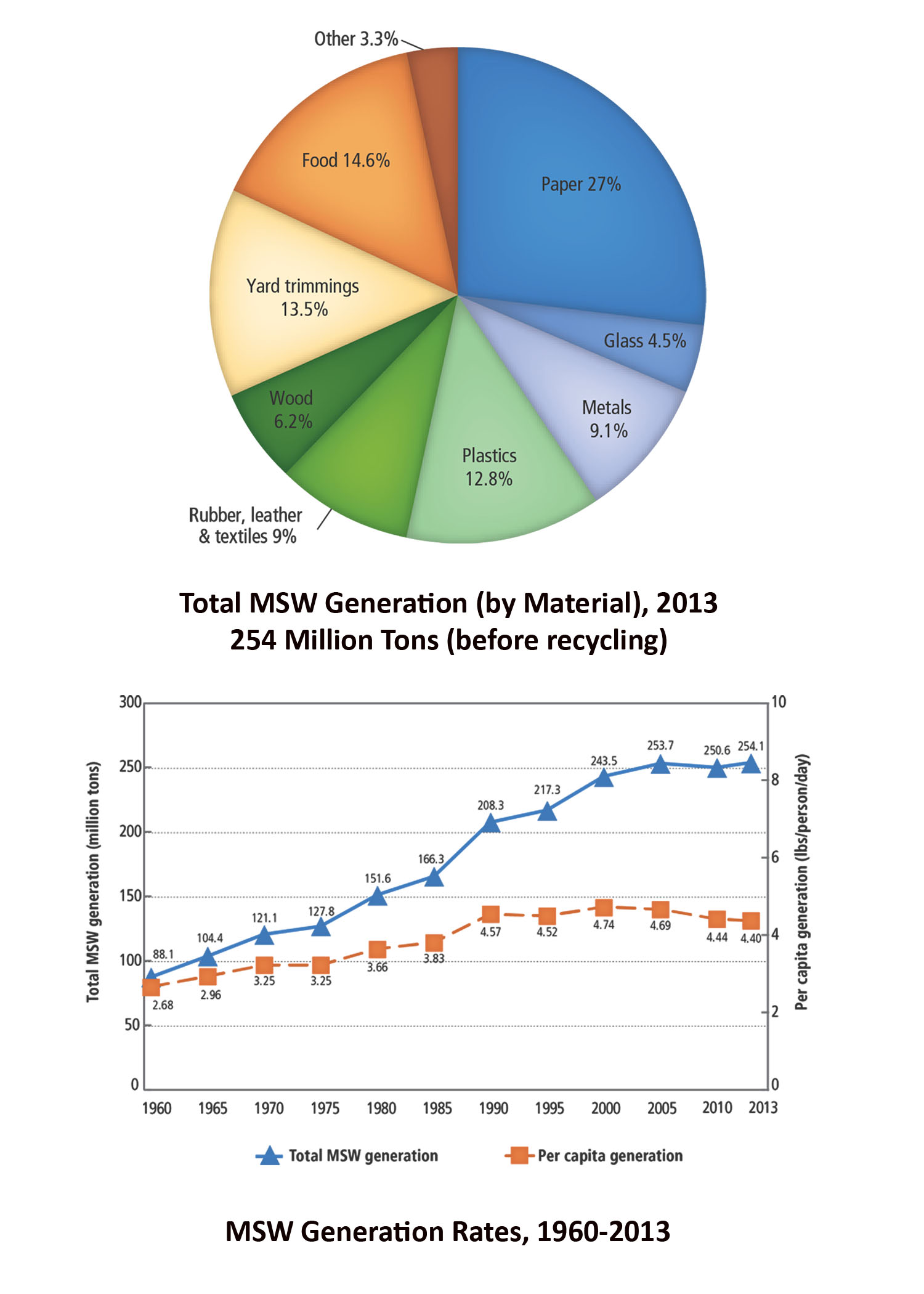
Plastic bags can be recycled at special, dedicated facilities, but you can’t just toss them into a blue bin. Sent to ordinary processing centers, they clog up sorting screens and have to be cut out with hook knives and saws. They don’t degrade, but disintegrate, turning ocean and freshwater into a diluted chemical soup.
But they are also big business, earning their manufacturers $100 million to $150 million every year in California alone. The short list of generous contributors to the No on 67 campaign contains only one in-state individual or company, Durabag of Tustin, California, which contributed a mere $50,000 early on. The rest of the donors list consists of out-of-state companies whose futures depend on the persistence of their industry: Advance Polybag of Sugar Land, Texas ($946,833); Formosa Plastics of Livingston, New Jersey ($1,148,441); Hilex Plastics of Hartsville, South Carolina ($2,783,739); Superbag of Houston, Texas ($1,238,188).
It has already been money well spent, and not just because a victory in the nation’s bellwether state could set a trend, while a loss could spread bag bans like a virus. As the San Francisco Chroniclereported, simply by delaying Padilla’s bill for 18 months, the industry has bagged $15 million in profit.
Steve Maviglio, a spokesperson for the Yes on 67 campaign that supports the ban, says that the plastics lobby’s concern over the predicted job losses rings hollow, considering that almost no single-use plastic bags are made in California. The thicker plastic bags allowed in Padilla’s law will, on the other hand, add to the state’s manufacturing economy, adding several hundred jobs. The plastic industry’s claim of 2,000 jobs lost “is incredible and nonsense,” Maviglio says.
The plastics lobby could, however, win this one—not least because the wording of the referendum on the ballot is confusing. “It’s not intuitive that we need to vote ‘Yes’ for the law to go into effect,” says Diz Swift, a member of the League of Women Voters in Berkeley. “People might say, ‘Oh, no, I don’t want the law vetoed, I want it to go into effect,’ and mistakenly vote ‘No.’” (To be clear, a “No” vote on Proposition 67 will overturn the bag ban; a “Yes” will uphold it.)
Even more confusing is that the plastic bag alliance has put another proposition on the ballot – Proposition 65 – that would direct the 10-cent bag fee toward a special wildlife conservation fund. Berrier says the measure came out of the bag alliance’s research. “Only 25 percent of the people we asked had any idea where that 10 cent bag fee would go,” he says. “A lot of people thought it was going to the environment, or to local government.” When they find out it’s going back to the grocers, he says, “They’re outraged. They want it to go to an environmental purpose.”
To Swift, however, putting Proposition 65 on the ballot above Proposition 67 is a blatant attempt to skew the vote. Only the most sophisticated and well-informed voters will understand what it all means. “The money goes into a fund that sounds really good,” she says. “It’s for drought mitigation, clean drinking water, regional parks, litter removal and habitat restoration. But it requires creating a bureaucracy that doesn’t really help.”
Maviglio is more blunt. “We call 65 the Screw the Grocers Initiative,” he says flatly. “They’re trying to send a message to grocers in other states who would hop aboard a statewide ban.” Single-use bags cost grocers anywhere from six to 16 cents per bag, “and that doesn’t include delivery and stocking,” Maviglio claims. “There’s no windfall there.”
If that’s not persuasive enough, he asks voters to consider the source. Prohibitions against plastic bags have been carried by the most grassroots of efforts—community organizations, moms, local environmental groups. The Arizona ban on plastic-bag bans, he says, comes straight out of the American Legislative Exchange Council, a think tank that assists corporations in state lawmaking, with an emphasis on preempting local control.
“The plastics industry has no regard for the environment,” Maviglio says. “It would be hypocritical of them to put something on the ballot to help wildlife.”
To be fair, Berrier doesn’t argue that helping wildlife is the point: The goal of Prop 65, he says, is only to highlight where the bag-fee money goes after grocers collect it.
“The language is very plain and simple,” he insists, “and it will have its intended effect.”
==
==
Percent margin needed to pass Florida's Amendment 1, a ballot measure that investor-owned utilities are promoting as pro-solar but that opponents say aims to protect the utilities' monopoly and slow the state's transition to solar power: 60
Amount raised by Consumers for Smart Solar, the group promoting Amendment 1: more than $21.5 million
Percent of that amount which came from big utilities and other companies whose bottom lines would be hurt by encouraging consumers to switch to solar power: 80
Amount contributed to the by Duke Energy alone: more than $5.7 million
Amount contributed by Florida Power and Light, which is owned by Florida-based NextEra Energy: almost $5.5 million
Amount contributed by the 60 Plus Association, a conservative political advocacy group that's received tens of millions of dollars from organizations associated with the brothers that run the Koch Industries oil and chemical conglomerate: over $1.4 million
Factor by which the amount raised by Consumers for Smart Solar exceeds total funds raised by the grassroots opposition campaign group, Floridians for Solar Choice, a politically diverse coalition that includes the League of Women Voters, the Sierra Club, the Christian Coalition and various Republican groups: 10
Number of professional signature-gathering firms the utility-backed campaign hired in order to get its measure on this year's ballot: *
Date on which Florida Supreme Court Justice Barbara Pariente, in her dissent from the 4-3 decision allowing Amendment 1 to appear on the ballot, warned that the initiative was a "wolf in sheep's clothing": 3/31/2016
Date on which the Clear Language Institute, a nonprofit that promotes using easy-to-understand language in legislation, bestowed its first "Deceptive Language Award" on the pro-Amendment 1 group for misleading voters: 10/2/2016
Florida's ranking among states for solar energy potential: 3
Its ranking among states for installed solar capacity: 14
Number of electricity customers in Florida: 9 million
Number of rooftop solar systems in the state: fewer than 12,000
Date on which early voting begins in Florida: 10/24/2016
In a recent poll, percent of likely Florida voters who said they planned to vote for Amendment 1: 84