ACTIV SUPPR 3 BAK
FORMAT MESSED UP 619 // THREE
SEE FOUR INDIGENOUS for native
MERRI OK
see BLM 2
see slapp eco-terror econ terror
see student suppression
see criminalization
see cop city domestic terror RICO
see 1st amnd
see also legal suppression
see secret police portland
see critical infra
see surveillance/ privacy malware
YIKES 11 24
===
an 11 24
Revenge—it’s a big part of Trump’s life,” Mother Jones‘ David Corn (10/19/16) wrote just before Trump was elected to the presidency the first time:
In speeches and public talks, Trump has repeatedly expressed his fondness for retribution. In 2011, he addressed the National Achievers Congress in Sydney, Australia, to explain how he had achieved his success. He noted there were a couple of lessons not taught in business school that successful people must know. At the top of the list was this piece of advice: “Get even with people. If they screw you, screw them back 10 times as hard. I really believe it.”
Knowing this about Trump, Democrats and liberals worry that he will use the Department of Justice, especially if Matt Gaetz is confirmed as attorney general, as an unrestrained vehicle to pursue the prosecution of political enemies.
But given Trump’s constant attacks on media—“the opposition party,” as his ally Steve Bannon called the fourth estate (New York Times,1/26/17)—journalists fear that he will use the power of the state to intimidate if not destroy the press.
Defunding public broadcasting
Trump called for defunding NPR (Newsweek, 4/10/24) after a long-time editor accused the radio outlet of liberal bias in the conservative journal Free Press (4/9/24). Rep. Claudia Tenney (R–NY) introduced legislation to defund NPR because “taxpayers should not be forced to fund NPR, which has become a partisan propaganda machine” (Office of Claudia Tenney, 4/19/24). With Republicans also holding both houses of congress, bills like Tenney’s become more viable. Trump has previously supported budget proposals that eliminate funding for the Corporation for Public Broadcasting (Politico, 3/27/19).
The infamous Project 2025, a conservative policy agenda many see as a blueprint for the second Trump term, calls for the end to public broadcasting, because it is viewed as liberal propaganda:
> Every Republican president since Richard Nixon has tried to strip the Corporation for Public Broadcasting (CPB) of taxpayer funding. That is significant not just because it means that for half a century, Republican presidents have failed to accomplish what they set out to do, but also because Nixon was the first president in office when National Public Radio (NPR) and the Public Broadcasting Service (PBS), which the CPB funds, went on air.
In other words, all Republican presidents have recognized that public funding of domestic broadcasts is a mistake. As a 35-year-old lawyer in the Nixon White House, one Antonin Scalia warned that conservatives were being “confronted with a long-range problem of significant social consequences—that is, the development of a government-funded broadcast system similar to the BBC.”
All of which means that the next conservative president must finally get this done, and do it despite opposition from congressional members of his own party if necessary. To stop public funding is good policy and good politics. The reason is simple: President Lyndon Johnson may have pledged in 1967 that public broadcasting would become “a vital public resource to enrich our homes, educate our families and to provide assistance to our classrooms,” but public broadcasting immediately became a liberal forum for public affairs and journalism.
PBS and NPR, as FAIR (10/24/24) has noted, has for decades caved in to right-wing pressures—PBS by adding conservative programming, NPR by trying to rid itself of political commentary altogether. But the right will never let go of its ideological opposition to media outlets not directly owned by the corporate class.
‘Whether criminally or civilly’
Trump also has a well known track record of revoking the credentials of journalists who produce reporting he doesn’t like (Washington Post, 2/24/17, 5/8/19; New Republic, 11/5/24). It is realistic to assume that a lot more reporters will be barred from White House events in the years ahead.
While a bill that would grant the secretary of the treasury broad authority to revoke nonprofit status to any organization the office deems as a “terrorist” organization has so far failed (Al Jazeera, 11/12/24), it is quite possible that it could come up for a vote again. If this bill were to become law, the Treasury Department could use this ax against a great many progressive nonprofit outlets, like Democracy Now! and the American Prospect, as well as investigative outlets like ProPublica and the Center for Investigative Reporting.
The department could even target the Committee to Protect Journalists, which has already said in response to Trump’s victory, “The fundamental right to a free press, guaranteed by the First Amendment of the US Constitution, must not be impaired” (11/6/24).
Margaret Sullivan (Guardian, 10/27/24), an avid media observer, said there is no reason to think Trump will soften his campaign against the free press. She said:
In 2022, he sued the Pulitzer Prize board after they defended their awards to the New York Times and the Washington Post. Both newspapers had won Pulitzer Prizes for investigating Trump’s ties to Russia.
More recently, Trump sued ABC News and George Stephanopoulos for defamation over the way the anchor characterized the verdict in E. Jean Carroll’s sexual misconduct case against him. Each of those cases is wending its way through the courts.
She added:
There is nothing to suggest that Trump would soften his approach in a second term. If anything, we can expect even more aggression.
Consider what one of Trump’s most loyal lieutenants, Kash Patel, has said.
“We’re going to come after the people in the media who lied about American citizens, who helped Joe Biden rig presidential elections,” Patel threatened during a podcast with Steve Bannon. “Whether it’s criminally or civilly, we’ll figure that out.”
Trump has already gone after the New York Times and Penguin Random House since Sullivan wrote this. CJR (11/14/24) said:
The letter, addressed to lawyers at the New York Times and Penguin Random House, arrived a week before the election. Attached was a discursive ten-page legal threat from an attorney for Donald Trump that demanded $10 billion in damages over “false and defamatory statements” contained in articles by Peter Baker, Michael S. Schmidt, Susanne Craig and Russ Buettner.
It singles out two stories coauthored by Buettner and Craig that related to their book on Trump and his financial dealings, Lucky Loser: How Donald Trump Squandered His Father’s Fortune and Created the Illusion of Success, released on September 17. It also highlighted an October 20 story headlined “For Trump, a Lifetime of Scandals Heads Toward a Moment of Judgment” by Baker and an October 22 piece by Schmidt, “As Election Nears, Kelly Warns Trump Would Rule Like a Dictator.”
And just before his victory, Trump sued CBS News, alleging the network’s “deceitful” editing of a recent 60 Minutes interview with Vice President Kamala Harris “misled the public and unfairly disadvantaged him” (CBS News, 10/31/24).
Expect more of this, except this time, Trump will have all the levers of the state on his side. And whatever moves the next Trump administration makes to attack the press will surely have a chilling effect, which will only empower his anti-democratic political agenda.
===
---
#1 cause kid death
https://www.alternet.org/tennessee-gun-laws/
===
7 Things You Need to Know About ETP’s Lawsuit Against Greenpeace - Greenpeace USA
12 2017
Learn how an abusive lawsuit is part of a dangerous trend of companies trying to silence dissent.
Energy Transfer Partners (ETP) – the company behind the Dakota Access Pipeline – has filed a lawsuit against Greenpeace and others, in its latest attempt to silence advocacy work and attack the fundamental right to free speech.
In response to the powerful alliance of Indigenous communities and climate activists who stood in opposition to the Dakota Access pipeline at Standing Rock, ETP has filed this SLAPP lawsuit claiming nearly a billion dollars in damages. on behalf of Energy Transfer. Here’s what you need to know about the suit.
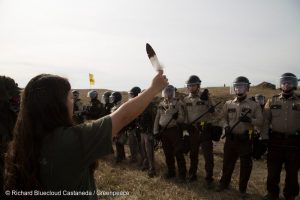
A phalanx of National Guard and police advance toward water protectors in Standing Rock.
1. What is a ‘SLAPP’ suit?
SLAPP stands for “Strategic Lawsuit Against Public Participation.” As the name implies, corporations, using this tactic are trying to shut down public participation. SLAPPs are generally filed without any kind of legal merit. The purpose of a SLAPP is to censor, intimidate, and silence critics by burdening them with legal claims and costs until they’re forced to abandon their criticism or opposition.
2. Why is ETP using a SLAPP?
ETP is SLAPPing its critics in an attempt to shut them up – or even better, to shut them down. ETP is suing Greenpeace for at least USD $900million. The corporation’s hope is that the prospect of having to pay this – or at least of spending a lot of time and legal costs on fighting the lawsuit – will intimidate Greenpeace and others into silence.
The goal of this suit is to silence opposition by misrepresenting what happened on the ground at Standing Rock — making outrageous and racist claims that big environmental organizations like Greenpeace orchestrated the Indigenous-led movement at Standing Rock.
3. This is a worrying trend
In 2016, Canadian company Resolute filed a SLAPP suit against Greenpeace, which was dismissed in full by a US federal judge. But the use of this dirty tactic by corporations is on the rise. As we face an upswing in a new global right-wing agenda, governments and corporations around the world are attempting to chip away at free speech. And it’s not just about environmental groups, either. The SLAPP suit is designed to send a loud message so that any activist or public-interest advocacy group that takes on giant corporations will have to think twice before standing up for what they believe in.
4. Who’s behind this suit
Just like the Resolute case, this one was filed by Michael Bowe. Bowe is also a member of Trump’s personal legal team, and part of the law firm Kasowitz Benson Torres – founded and run by Marc E. Kasowitz, Trump’s personal lawyer. The Times once described Kasowitz as “the Donald Trump of lawyering”. Bowe has publicly stated that he’s in conversations with other corporations considering filing their own SLAPPs against Greenpeace – suggesting this bullying and anti-democratic tactic is being shopped around to the highest bidder.
5. This is not a one-off.
There are many, many examples of SLAPP suits, here are a couple you may have heard of.
Earlier this year, coal magnate Bob Murray sued John Oliver after*Last Week Tonight*ran a segment on Coal – which prominently featured Murray. In the last 15 years, Murray and/or his company have also sued various other journalists.
The ACLU represented individuals in Uniontown, Alabama — a poor town predominantly made up of people of color — who were sued by Green Group Holdings for $30 million for standing up to a coal ash landfill in their town. The company revealed its motives when its lawyers approached the individuals in an attempt to cut a deal – if they agreed to give Green Group access to their electronic devices, access to their future social media postings, and extensive details about their group’s membership, advocacy and communications with other environmental groups.
Due to public outcry and the support of the ACLU, the residents reached a settlement in February and Green Group Holdings agreed to better environmental protections — but they shouldn’t have had to deal with this corporate bullying in the first place. There are hundreds of others across America and beyond who won’t be so lucky.
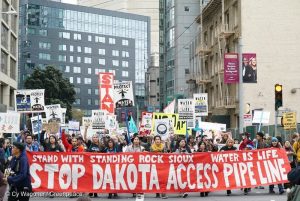
People march in support of the Standing Rock Nation at the Civic Center Plaza of San Francisco. The protest was one of many in a global day of action against the Dakota Access Pipeline (DAPL) calling on the U.S. Army Corps of Engineers to cancel the permit for the project.
6. They’re clutching at straws… [vid]
Just like in the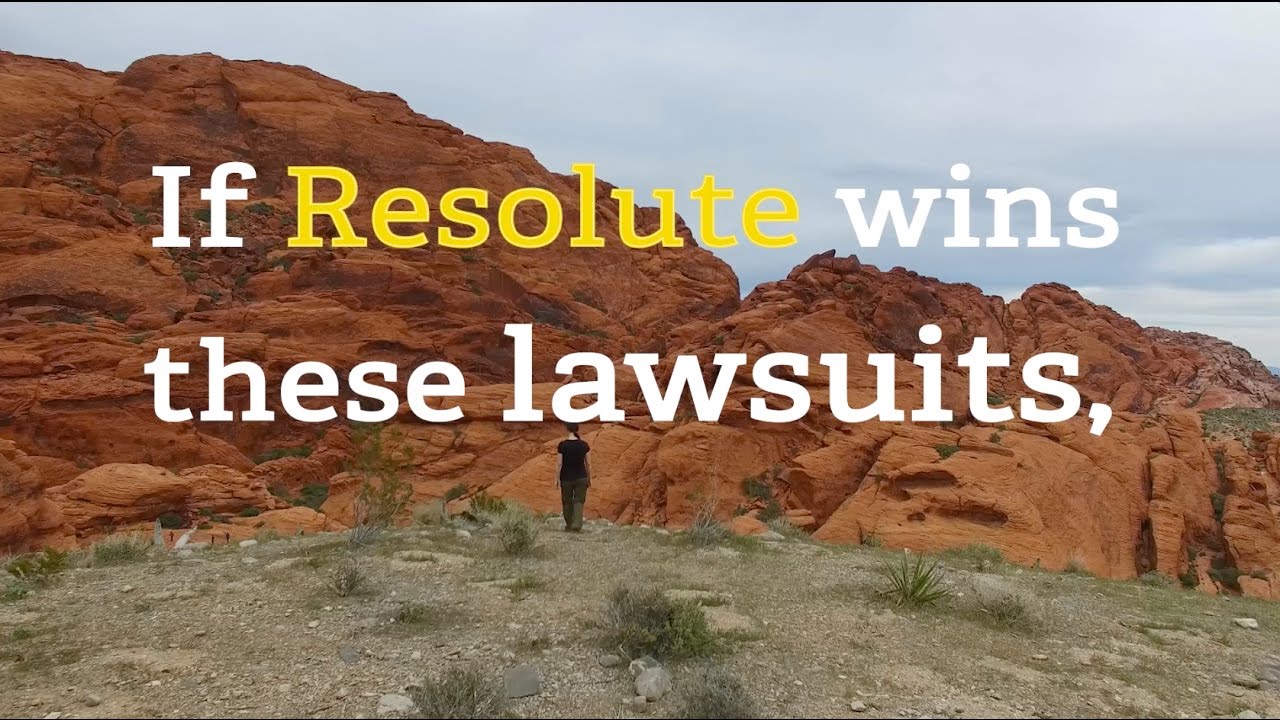 , ETP is using the Racketeering Influenced and Corrupt Organizations Act (RICO) – a law which was originally created to prosecute the mafia – to claim treble damages and inflate the amount of money it is able to demand. In their lawsuit, ETP claims thatGreenpeace led a corrupt environmentalist enterprise that “cynically planted radical, violent eco-terrorists on the ground amongst the protesters, and directly funded their operations” – a baseless attempt to mislabel legal advocacy as criminal conduct through the use of these racketeering laws, and present constitutionally-protected free speech as defamatory. It’s as ridiculous as it sounds…
7. We can fight this
ETP and other corporate bullies are blatantly trying to stifle free speech and our right to peacefully protest. So let’s show them that that’s not going to happen: Refuse to be silent. Defend free speech. And let’s continue standing up for what is right.
You can take action against this SLAPP here and find more information about how you can fight back against SLAPPs generally.
===
---
ymail 6 24
exxonknews
:{big Oil wants to increase federal criminal penalties for pipeline protests
https://substack.com/app-link/post?publication_id=20607&post_id=145728083&utm_source=post-email-title&utm_campaign=email-post-title&isFreemail=true&r=7ymjw&token=eyJ1c2VyX2lkIjoxMzM3Mjg0NCwicG9zdF9pZCI6MTQ1NzI4MDgzLCJpYXQiOjE3MTg2NDM3MDksImV4cCI6MTcyMTIzNTcwOSwiaXNzIjoicHViLTIwNjA3Iiwic3ViIjoicG9zdC1yZWFjdGlvbiJ9.C6F6cpGna7T-ycibrfO161934vAmtCaOa22mHk4zGDo)
Fossil fuel companies and trade groups are using essential pipeline safety legislation to further criminalize pipeline protests.
Emily Sanders is senior reporter for ExxonKnews.
*This story is being co-published with The Lever.
At the urging of their fossil fuel donors, lawmakers are quietly working to massively expand criminal penalties against people who protest pipelines as part of negotiations over essential new federal pipeline safety regulations.
Congress is negotiating the pipeline safety legislation, a reauthorization of the Pipeline Hazardous Materials and Safety Administration program, in the wake of disastrous carbon dioxide pipeline leaks that have endangered nearby communities, stumped emergency responders, and left residents with health issues for years to come. In total, 124 new oil, gas, hydrogen, and carbon dioxide pipelines have been announced or are in the preconstruction or construction phase in the U.S., according to data from fossil fuel infrastructure tracker Oil and Gas Watch.
The federal penalty for damaging or destroying interstate pipelines is already a felony charge mandating up to 20 years in prison. But the industry’s proposed additions, described in executives’ congressional testimony and policy briefs posted online, would widen the definition of and punishment for “attacks” on pipelines using vague language that could implicate a far broader set of activities used to protest fossil fuel infrastructure. Such language has already begun to make its way into the legislative effort to reauthorize the pipeline safety administration as Congress decides the agency’s funding and legislative mandates for the next few years.
According to a policy brief on “2023 Pipeline Safety Reauthorization Legislative Priorities” published last year by the American Petroleum Institute — a major trade group representing oil and gas companies — new pipeline safety legislation should “fill gaps in current law” with “additional measures covering disruption of service and attacks on construction sites.”
The House Energy and Commerce Committee’s draft reauthorization bill, approved in March, would add “impairing the operation of” interstate pipelines, “damaging or destroying such a facility under construction,” and even “attempting or conspiring” to do so as felony activities punishable by up to 20 years in prison.
It’s unclear what “impairing the operation of” a pipeline could entail. If interpreted broadly, climate advocates say such provisions could send activists to prison for exercising their free speech rights.
The Energy and Commerce Committee’s chair, Rep. Cathy McMorris Rodgers (R-Wash..), has received nearly $289,000 from the oil and gas industry for the 2024 election cycle and is currently number 12 on a list of the top 20 recipients from the industry this year. Rep. August Pfluger (R-Texas), who is also on the committee, is the top recipient on that list, having received more than $579,000.
The expanded criminal-penalty language in the pipeline safety agency’s reauthorization bill comes on the heels of another committee’s version of the legislation, which would also increase penalties for pipeline disruptions.
The pipeline safety agency’s reauthorization accompanies new safety rules now being considered as a long-awaited federal agency response to a devastating carbon dioxide pipeline rupture in the village of Satartia, Mississippi, which sent nearly 50 people to the hospital with “zombie-like” conditions in 2020. That disaster, along with a leak at an Exxon-owned carbon dioxide pipeline in Sulphur, Louisiana, this April, has rekindled concerns over the risks that pipelines can pose to public health and safety.
As The Lever and ExxonKnews reported in April, Big Oil is lobbying to limit the scope of those rules in order to expedite the construction of carbon capture and storage infrastructure, since it stands to benefit from the work thanks to incentives passed under the Biden administration.
Now, advocates fear, the industry is trying to capitalize on the effort to increase pipeline safety protections in order to criminalize the actions of those who speak out against its plans to build more pipeline infrastructure.
“What rights do these corporations have to come through our communities and wreak havoc and not be held accountable for anything they do?” said Anne White Hat, a member of the Sicangu Lakota tribe who helped lead Indigenous resistance to the Bayou Bridge oil pipeline in Louisiana. By criminalizing protest, she said, “they are able to work with impunity.”
In written testimony from a January hearing by the committee overseeing the pipeline safety program reauthorization, American Petroleum Institute lobbyists commended the reauthorization bill for “strengthen[ing] protections for pipeline infrastructure by criminalizing activities that impair the operation or construction of facilities, or cause damage that could result in harm to people, the environment and the pipeline itself.”
The American Petroleum Institute donated $7,500 to Rodgers, and thousands more to other Energy and Commerce Committee members including Reps Pfluger, Jeff Duncan (R-S.C.), Marc Veasey (D-Texas), and Richard Hudson (R-N.C.), this year. The lawmakers' offices and the American Petroleum Institute did not respond to requests for comment.
Tim Donaghy, senior research specialist at the environmental activist group Greenpeace, said his organization is concerned that “vague and flawed language that increases criminal penalties could be abused to crack down on peaceful, constitutionally-protected protest,” which has “long been instrumental to climate, environmental justice, and civil rights victories in the United States and globally.”
Pipeline protests can look like sit-ins, banner drops, marches, a Willie Nelson concert, or planting sacred corn in the path of construction.
“Are they talking about people in a region where they don’t want the pipeline coming through their property doing a sit-in or something like that?” Donaghy asked. “Would that be considered an attack on a construction site by a prosecutor who wanted to stretch the definition a little bit?”
“A Game Of Safety Theater”
Advocates say the move is meant to cut off any remaining avenues for dissent. In recent years, fossil fuel companies have pushed for bills to criminalize pipeline protests at the state level; worked with police, private security firms, and the FBI to surveil and crack down on activists; and even filed multimillion-dollar lawsuits against protesters accusing them of defamation and conspiracy.
Mark Hefflinger, communications and digital director at Bold Nebraska, an advocacy group that works with Tribal Nations, farmers, and ranchers to protect land and water rights, said the industry’s response to public outcry about the real safety concerns caused by fossil fuel infrastructure has been to play “a game of safety theater.” That means using “fear tactics” to paint protesters as dangerous criminals, making it easier for them to rush their projects through construction without community consent.
“I think these companies are looking to stack the deck as much as they can,” he said. “Having seen these projects first hand, it’s very distressing and alarming.”
It’s not the first time the fossil fuel industry has tried to pass anti-protest policies through Pipeline Hazardous Materials and Safety Administration reauthorization bills. In 2019, the Association of Oil Pipelines — a lobbying group now known as the Liquid Energy Pipeline Association — provided similar proposed language to legislators that was reportedly considered by members of the House Transportation and Infrastructure Committee.
Those provisions didn’t pass, but the effort has reemerged. Since 2020, oil, gas, and utility trade associations and companies, including the American Gas Association, Black Hills, CMS Energy, and Puget Sound Energy, have disclosed lobbying on both “Attacks and Physical Threats to Pipeline Infrastructure” and the Pipeline Hazardous Materials and Safety Administration reauthorization bills.
In a March 2023 hearing of the Transportation and Infrastructure Committee, the CEO of the Liquid Energy Pipeline Association, Andrew Black, testified that “Congress should close [the] loophole in criminal penalties for pipeline attacks that are dangerous but do not result in damage.” The group gave $2,500 to the committee’s chairman, Rep. Sam Graves (R-Mo.), this year. Graves’ office did not respond to a request for comment.
That committee’s draft bill, approved in December, would add a prison sentence of up to 10 years for “causing a defect in or disrupting operation of pipeline infrastructure” by manipulating valves or otherwise physically damaging the pipeline. The bill would also add “carbon dioxide facilit[ies]” to infrastructure whose damage or destruction could result in a 20-year prison sentence.
“Current federal pipeline safety law does not penalize violent attacks on pipeline construction sites or dangerous but not damaging tampering with operating pipeline equipment, such as valve turning,” said John Stoody, vice president of government and public relations at the Liquid Energy Pipeline Association, in an email. “LEPA supports 1st amendment rights to protest, but opposes dangerous or violent activities that can harm protesters and the surrounding public.”
The House is now working to reconcile reauthorization bills from the two committees before passing draft legislation to the Senate.
“It’s a little frustrating to see the industry focus on this particular issue as a cause of failures when nearly all failures on pipelines are preventable failures under the operators’ control,” said Bill Caram, executive director of advocacy group Pipeline Safety Trust. While he emphasized that his organization does not support any activity that could compromise the integrity of a pipeline and endanger communities, including valve turning, Caram noted that “damaging equipment is already illegal, so I’m not sure what the need is.”
A Larger Strategy To Silence Critics
The industry has backed a legislative push to punish and silence its critics since major resistance to the Keystone XL pipeline from 2011 through 2014 and to the Dakota Access pipeline in 2016 and 2017 united communities across political and cultural divides and spurred an indigenous-led movement of water protectors.
“They moved to pass these bills to basically prevent it from happening again,” Donaghy said.
Since 2017, oil and gas companies including ExxonMobil, Marathon Petroleum Corporation, Koch Industries, and Enbridge have spent millions of dollars on lobbying and campaign donations to state legislators to push laws criminalizing protest of fossil fuel infrastructure. Those laws now apply to about 60 percent of all U.S. oil and gas operations, a report from Greenpeace found. Much of the legislation, primarily based on a model bill crafted by the oil- and gas-funded American Legislative Exchange Council, made it a felony to trespass on the industry’s so-called “critical infrastructure.”
Anne White Hat found herself facing up to 10 years in prison after she was arrested for two counts of felony trespassing in September 2018 under one such law, which had just taken effect in Louisiana following pressure from oil and gas lobbyists.
She was one of four Native women who founded a resistance camp called L’eau Est La Vie, which was organizing nonviolent direct actions in protest of the Bayou Bridge Pipeline — a now-operating 163-mile pipeline owned by Energy Transfer that transports crude oil throughout the state. The protests ranged from a rendition of “Crawfish the Musical” on the construction site to protesters locking themselves to pipeline equipment to tree sits in the centuries-old cypresses the company planned to tear down.
The Bayou Bridge pipeline is the tail end of the Dakota Access route — White Hat had already joined her relatives to participate in the resistance camp at Standing Rock in North Dakota. “I felt like it was a righteous cause, not to let them comfortably continue to threaten the waters of Indigenous First Nations,” she said. “I was inspired from the work up North and just couldn’t let them continue down here unanswered and unchecked.”
White Hat had just finished leading a prayer ceremony when she was arrested at a boat ramp miles from the pipeline construction site. She was hauled into a sheriff deputy’s car with two other women and driven through tall sugar cane fields on the way to jail.
“It was terrifying,” said White Hat. “We’re way out in the middle of nowhere. I was like, ‘Is this the point where I actually disappear?’”
Investigative journalist Karen Savage was arrested that day, too — her second arrest under felony trespass charges as she reported on the Bayou Bridge protests. She was one of the only reporters to travel to the Atchafalaya Basin swamp, where the pipeline was being constructed.
By the time the water protectors got to the swamp, Savage said, they “had done everything — they went to public meetings, they had petitions, they wrote letters, they tried to meet with the governor — they did everything they tell you in school, to participate and use your civil obligation in your community.” Despite their best efforts in one of the most oil- and gas-friendly states in the country, said Savage, “nobody was listening.”
As Savage’s reporting revealed, the off-duty Louisiana law enforcement who began violently arresting protesters after the new law was enforced were working side jobs for the pipeline company.
“I would’ve similarly documented whatever the sheriff’s deputies and Energy Transfer had planned that day — had I not been handcuffed in the back of a deputy’s squad car,” Savage wrote about her arrest.
While Energy Transfer paid local officials to arrest protesters, it was quietly breaking the law itself. Energy Transfer was later found guilty of trespassing on private property by working on land it didn’t have permission to build on, but it was allowed to continue construction with only a $450 fine. The sixteen water protectors who were arrested and charged with felonies under the state’s new law had permission from some landowners to protest — and were even asked to help them defend their land.
In 2021, a local district attorney dropped the water protectors’ charges, along with Savage’s.
Like the proposed measures oil companies are now pushing at the federal level, Louisiana’s state law was “so vaguely written that [officials] have no idea when they should arrest somebody or when someone is trespassing,” Savage said. “With everything so loosely open to individual interpretation, it just really really opens people up to abuses of their First Amendment rights.”
In 2019, Savage, White Hat, other water protectors, and two advocacy groups filed a lawsuit against the sheriff, district attorney, and state attorney general, arguing Louisiana’s critical infrastructure law violates their First Amendment rights. That lawsuit was dismissed by a U.S. district judge in March; litigants who were directly affected by the law, including Savage and White Hat, have appealed the district court’s decision.
White Hat said she never intended to get arrested, and essentially stopped protesting after it happened.
“I have children to take care of,” she said. “I couldn’t risk it.”
“The Writing On the Wall”
According to the International Center for Not-For-Profit Law, more than 300 anti-protest bills have been introduced in 45 states since 2017, and 21 states have passed such bills into law.
Since then, pipeline protests have seen massive waves of arrests; during the construction of Enbridge’s Line 3 pipeline between December 2020 and September 2021, more than a thousand people in Minnesota were arrested for protest. Some were charged with felonies — like a 54-year-old protesterwho blockaded an Enbridge pump station and was convicted with felony obstruction in 2023. Like Energy Transfer, Enbridge paid Minnesota police millions of dollars to respond to the protests.
The resistance to pipeline infrastructure continues nonetheless. Just last week, Indigenous campaigners led a rally outside the White House calling on the President and Army Corps of Engineers to shut down the Dakota Access pipeline, which carries 600,000 barrels of oil per day and still lacks a permit to cross land beneath Lake Oahe, where the Standing Rock Sioux Tribe gets its drinking water.
Protestors are also still fighting construction of the Mountain Valley Pipeline, which is being built from northwest West Virginia to southern Virginia and was greenlit through the passage of Biden’s Inflation Reduction Act. But one of the states it runs through, West Virginia — home base of coal baron Sen. Joe Manchin (D-W.Va.), who has long championed the pipeline — is considering a bill that would classify trespassing on fossil fuel infrastructure as an act of terrorism.
“Over the last several years, a historic level of protest and demonstration has taken place across the country, including protests against pipeline construction,” said Vera Eidelman, Staff Attorney with the ACLU’s Speech, Privacy, and Technology Project, in an email. “Rather than add tools to the government’s tool kit for silencing dissent” that would “only make it harder, costlier, and more dangerous to protest,” she wrote, “legislators should be making an effort to listen to protester’s voices, even if, and perhaps especially when, they disagree with them.”
Now, as the oil and gas industry plans a new influx of carbon dioxide pipelines for carbon capture and storage, a controversial experiment that would allow it to continue burning fossil fuels under the guise of climate solutions, advocates could be silenced when the stakes are at their highest.
“We are scraping together pennies to be able to hold a public meeting, get people to the legislature, or get people into the offices of our elected Congress people,” said Jane Patton, a Louisiana-based campaign manager at nonprofit advocacy group the Center for International Environmental Law who is fighting carbon capture plans in the state. “Yet these industries that have a ton of money are able to get this access and have their questions answered and their request fulfilled.”
Hefflinger, of Bold Nebraska, said the industry is “doing their best to try and make the standards as low as possible for operation and safety — and because of regulatory capture, it becomes a foregone conclusion.”
“You start to lose opportunities to make your voice heard in the ‘proper’ channels,” he said.
In April, the Supreme Court effectively abolished the right to organize a mass protest in Louisiana, Texas, and Mississippi — three states facing a massive influx of new oil and gas infrastructure, including carbon dioxide pipelines. More than 900 miles of Exxon’s newly acquired network of Denbury carbon dioxide pipelines runs through those three states.
Still, the industry will have a steep road to climb as the projects face major resistance in states nationwide — even before construction begins. In October, Texas-based Navigator CO2 Ventures canceled its plans for a 1,300-mile carbon dioxide pipeline that would have run across five midwestern states after coordinated opposition from landowners and environmentalists. The cancellation, said Hefflinger, was a “gigantic wake-up call” for the industry.
Now, said Hefflinger, they’re doubling down to silence dissent because “they’re seeing the writing on the wall.”
---
---
---
an 1 24
in a Sunday article from NBC News, Peter Nicholas, Katherine Doyle, Megan Lebowitz and Courtney Kube report, "a loose-knit network of public interest groups and lawmakers is quietly devising plans to try to foil any efforts to expand presidential power, which could include pressuring the military to cater" to Donald Trump's politics.
Per NBC, "Trump has raised fresh questions about his intentions if he regains power by putting forward a legal theory that a president would be free to do nearly anything with impunity — including assassinate political rivals — so long as Congress can’t muster the votes to impeach him" and remove him from office.
"We're already starting to put together a team to think through the most damaging types of things that he [Trump] might do so that we’re ready to bring lawsuits if we have to," Mary McCord, former US attorney and executive director of the Institution for Constitutional Advocacy and Protection at Georgetown Law, told the news outlet.
Other experts "taking part in the effort told NBC News they are studying Trump’s past actions and 2024 policy positions so that they will be ready if he wins in November," which "involves preparing to take legal action and send letters to Trump appointees spelling out consequences they’d face if they undermine constitutional norms."
NBC notes:
*Among the least-understood tools available to a president is the Insurrection Act. Vaguely worded, it gives a president considerable discretion in deciding what constitutes an uprising and when it is OK to deploy active-duty military in response, experts say.
*Some lawmakers on Capitol Hill worry that Trump might invoke the act to involve the armed forces in the face of domestic protests or if the midterm elections don’t go his way.
"There are an array of horrors that could result from Donald Trump's unrestricted use of the Insurrection Act," US Senator Richard Blumenthal (R-CT) said in an interview, according to NBC. "A malignantly motivated president could use it in a vast variety of dictatorial ways unless at some point the military itself resisted what they deemed to be an unlawful order. But that places a very heavy burden on the military."
Blumenthal, NBC reports, is currently working on legislation "that would clarify the act and give Congress and the courts some say in its use."
READ MORE: 'The end of democracy': Bernie Sanders says 'humiliated' Trump could cause 'collapse'
Democracy Forward President Skye Perryman told NBC, "We are preparing for litigation and preparing to use every tool in the toolbox that our democracy provides to provide the American people an ability to fight back. We believe this is an existential moment for American democracy and it’s incumbent on everybody to do their part."
*NBC News' full report is here.
---
---
mma 12 23
:{:{In 2023, as climate-driven disasters plagued countries around the world and the COP28 climate change conference saw the adoption of a historic (though reportedly “loophole”-ridden) agreement referencing a transition away from fossil fuels for the first time, right-wing media remained committed to hindering progress}:
. Three concerning trends emerged in their strategies, which included facilitating comebacks for long-discredited climate deniers, cheering on violence against climate activists, and attributing deadly climate-driven events to conspiracies or religious calamity.}:
Right-wing media facilitated comebacks for long-discredited climate deniers.
Discredited climate deniers like Judith Curry, Patrick Moore, Anthony Watts, and Gregory Wrightstone, who have been vocal for decades, received renewed attention in 2023 from right-wing media figures, who seemed to be turning to views that stray further and further from established science.
Judith Curry, former chair of the School of Earth and Atmospheric Sciences at Georgia Tech, consulted for oil and gas companies during her time in academia. She resigned from Georgia Tech in 2017 citing climate “craziness” and has been called out by other climate scientists for taking public positions reliant on debunked climate change denialarguments.
Patrick Moore is a former nuclear energy consultant and climate change denier who falsely claims he is a co-founder of Greenpeace. Anthony Watts runs a junk science climate denier blog and is a senior fellow at the fossil fuel-funded Heartland Institute. Gregory Wrightstone is a geologist who worked for the natural gas industry for 20 years, started a consulting firm for energy companies, and is now the executive director of a climate change denial non-profit.
- Climate deniers found a reliable home on Newsmax’s Rob Schmitt Tonight.Media Matters found that Curry and Moore appeared as guests on Newsmax’s Rob Schmitt Tonight combined at least 7 times in 2023 alone.
- In 2023, these climate deniers appeared on cable news for the first time in years. Wrightstone appeared on One America News, seemingly making his first cable news appearance since 2019. Moore and Curry both appeared on Fox News for the first time since 2019, and Watts appeared on Fox News for the first time, according to Media Matters’ records. Moore and Curry were guests on Jesse Watters Primetime and Watts was a guest on The Ingraham Angle. As predicted, Jesse Watters continued Tucker Carlson’s legacy of climate denial on Fox News. Media Matters, [7/17/23]
- On X (formerly Twitter), bad actors found support and saw their audiences grow as climate scientists fled the platform. In the past year, Curry’s account grew by approximately 31,600 followers while Moore’s account grew by more than 32,500. Media Matters previously reported that climate deniers and contrarians have benefited from Elon Musk’s takeover of the platform. “Yes the number of my followers is increasing much more rapidly than over the past year or so,” Curry said in a November 2022 tweet. Moore also expressed contentment with his account growth in April 2022. Social Blade, accessed 12/15/23; Twitter/X, [11/11/22, 4/6/22; Media Matters, 12/8/22; The Guardian, 8/15/23]
Right-wing media attempted to justify violence against climate activists engaging in non-violent direct action.
In 2023, activist groups doubled down on demands for a global transition away from fossil fuels. Their tactics included throwing paint or food on famous works of art and property, infiltrating cultural events, and obstructing busy roads, provoking outrage from right-wing media.
- Right-wing media escalated a yearslong campaign to frame protesters as violent, aggressive, and mentally ill to justify state efforts to criminalize civil disobedience.Right-wing influencers described climate activists as “enemies of humanity” and compared nonviolent direct actions, such as blocking roads, to “firing a gun into the air at random targets” and committing violent crimes. This framing has also been reflected in charges filed in Georgia, where authorities repurposed a state anti-terrorism law to target environmental activists as part of a crackdown on what they claim to be violent extremism. Media Matters, [2/1/23, 11/10/23; Drilled, 12/6/23; Grist; 1/27/23]
- Right-wing pundits have called for disproportionately severe punishments for those who have engaged in controversial and disruptive — but peaceful — acts of protest.The Daily Wire’s Matt Walsh and former Daily Caller writer Greg Price have suggested that activists who have thrown food and paint at famous works of art should be dismembered, “beaten with a bullwhip,” or forced into “labor camps where they spend all day drilling for oil.” Media Matters [8/7/23; Media Matters, 2/1/23]
- When motorists responded to protests with violence, right-wing media repeatedly excused and even condoned the behavior.In November, Matt Walsh and other right-wing influencers blamed two government protesters in Panama for their own deaths after a U.S. citizen allegedly killed them for blocking the road. In Europe and in the U.S., violent motorists were praised and celebrated for beating up protesters who obstruct traffic. Media Matters, [11/10/23, 8/7/23; Media Matters, 2/1/23]
...
---
an 8 23 no lnx vid
'Not what democracy looks like': TN GOP lawmakers order police to oust silent protestor from pro-gun hearing
Two protestors holding up signs during Tennessee GOP lawmakers' pro-guns hearing (August 22, 2023), Image via screengrab/News Channel 5 chief Investigative reporter Phil Williams.
David Badashand The New Civil Rights Movement August 22, 2023
Tennessee House Republicans holding a hearing on legislation to allow guns in schools ordered state troopers to physically remove a woman who was silently protesting by holding a small sign. She was among a group of people in the gallery opposing the bill, a few of them were holding signs. Among them was at least one parent of children who attend Nashville’s Covenant Elementary School, where six people including three children were killed in a mass shooting earlier this year.
“And deny our First Amendment rights? I am not leaving,” the protestor, identified as Allison Polidor, said while still seated before she was removed, according to video (below) posted by NewsChannel 5’s Phil Williams. “We have rights to hold a sign. If you have to drag me out, so be it.
As state troopers grabbed her and removed her from the room she shouted, “This isn’t what democracy looks like.”
The protestors in the House Judiciary Committee’s Civil Justice subcommittee hearing sat quietly holding signs that read, “1 kid > all the guns,” (one kid is greater than all the guns).
READ MORE: Suspect in Killing of Storeowner Over LGBTQ Flag Was Far-Right Conspiracist Who Promoted Christian Nationalism: Report
Lawmakers had convened for a special session on public safety to respond to the March school mass shooting that left three children and three adults dead.
Before Polidor was removed, off-camera a voice could be heard saying if anyone is holding a sign, “we’ll just clear the whole room.” Ultimately, NewsChannel 5 reports, the entire room was cleared.
Later, Polidor told NewsChannel 5, “It’s an attack on First Amendment rights.”
“I mean, I am here for my kids — everyone’s kids. They are making these laws or lack of laws. I am here representing everyone’s kids. No one should worry if their kids are going to come home from school or not. I feel like you can’t sit by. When we’ve come to the point you can’t hold up a sign, it’s not OK.”
Sarah Shoop Neumann, whose bio reads, “Grounded in faith, fierce advocate for the oppressed, proudCovenant School mama,” through tears told reporters, “I don’t think these people get what this means. We’re here for six people who were killed in our school. We’re just trying to do something.”
READ MORE: Fox News Tells Viewers ‘They’ Let Tropical Storm Hilary Into the US ‘Because It’s Biden’s America’
“It’s hard to be here,” she continued, noting the presence of the Proud Boys and the Tennessee Firearms Association, according to WKRN.
“And I’m just trying to sit quiet. I already got told I can’t have my sign that says, ‘I’m a Covenant mom.’ That dignity’s been taken away,” she continued. “This is life or death for people.”
WKRN reports Chairman Lowell Russell made the decision to have state troopers remove the protestors holding signs.
Tennessee House Democratic Minority Leader Karen Camper via social media said, “People are at the TN Capitol in 100 degree heat & paying to park to be thrown out of committee rooms for sitting QUIETLY?! What are we doing?! This is not how it works. This is shameful & an abuse of power! No chanting, no yelling: sitting quietly. Give me a break!”
Tennessee Senate Democrats, also Tuesday afternoon, accused Republicans of blocking 20 gun safety bills, refusing to even allow debate.
Watch the videos above or at this link.
FROM YOUR SITE ARTICLES
'You let the bullies win': Parents confront Tennessee school board after it cancels Mother’s Day event ›
How Tennessee’s justice system allows dangerous people to keep guns — with deadly outcomes ›
Tennessee Republican says taking guns from dangerous people creates more danger ›
RELATED ARTICLES AROUND THE WEB
Tennessee governor schedules special session to address guns ... ›
Tennessee Governor's Gun Law Proposal Is Spurned by GOP Allies ... ›
How Tennessee's Justice System Allows Dangerous People to Keep ... ›
---
---
amy w gmail 6 23
over the past few years requests for respectful speech and factual information have been recast as attacks on free speech just as efforts funded by some of the country's largest corporate interests have begun to genuinely erode citizens' First Amendment rights.
If your book contract gets canceled because you help white supremacists break into the Capitol? That's an attack on free speech. A university decides not to host your talk after receiving thousands of complaints from students? Violation of the First Amendment! But the First Amendment never guaranteed reach, nor did it promise us that Americans can say whatever we like without risk of being embarrassed or mocked, trolled or even canceled. What it did promise was that "Congress shall make no law respecting an establishment of religion, or prohibiting the free exercise thereof; or abridging the freedom of speech, or of the press; or the right of the people peaceably to assemble, and to petition the Government for a redress of grievances."
It seems like a whole lot of conservatives have misplaced their pocket Constitutions, because while they talk about being "forced" (by whom?) to use a person's preferred pronouns as an infringement on free speech, Republican state governments have been rapidly criminalizing protest. While they wring their hands about the chilling of free speech on campus because this or that talk gets canceled, states are passing book bans and universities are getting rid of their entire history departmentslest anyone utter the words "critical race theory." Harassment of those who study disinformation is way up the past year because the word has been recast as censorship. This week, for example, Rep Jim Jordan was demanding emails and meetings with leading disinformation researchers, the latest in a flurry of records requests, subpoenas and lawsuits designed to harass academics who study disinformation. Jordan and his allies are being helped in their crusade by anti-climate-action activists like Michael Shellenberger, who have their own reasons for wanting to muddy the water on what constitutes disinformation, especially as social media platforms fall under increasing pressure to tamp down on the spread of outright falsehoods. In his March testimony to the House Select Committee on the Weaponization of the Federal Government, Shellenberger—who has moved in his career from PR guy for big green groups to "firebrand" co-founder of ecomodernist thinktank the Breakthrough Institute to champion for nuclear energy to climate skeptic, gubernatorial candidate, solver of the homelessness problem (spoiler alert: he didn't solve it) and now, finally, "journalist" who claims to have broken the Twitter Files story—Shellenberger wrote:
:{:{"}::{The censorship-industrial complex pressures social media platforms to}:
censor content relating to climate change and energy. I speak from experience as someone who has been attacked by an ongoing censor-and-discredit campaign that has been waged against me since I wrote a viral article in June 2020 to announce the publication of my book, Apocalypse Never. In response to my article, multiple think tanks quickly and falsely claimed to have “debunked” its contents. Those fake debunkings became the basis for Facebook to censor my posts, even ones that don’t have to do with climate change, to this day."}:
There's a lot to unpack here. First off, it seems pretty clear that Shellenberger's move to rebrand himself as a journalist is not just about trying sit at the cool kids table—he's trying to secure what he perceives to be the greater First Amendment rights of the press. I'm sure he's probably trying to use it to get access to various public records, emails, etc for free as well (anyone can file a Freedom of Information Act request, but if you're not a journalist you might be charged; even if you are a journalist it's likely you'll pay a fee to receive records, but it's generally less). Then, let's talk about how Facebook has always censored ads and sponsored posts related to climate change, for a start, as "political." I don't recall Shellenberger ever having anything to say about that. As for the debunking of his book. I started to make detailed, footnoted corrections of his book and stopped about halfway through because I had more than 50 pages worth of corrections, so it's hard to believe that all of the many debunkings of his work are false. But according to Shellenberger, it is censorship to call something inaccurate. Who's to say what's "information" or "disinformation" after all? The truth is in the eye of the beholder.
Except...we have long-standing systems for coming to collective understandings of truth. The peer-review process, for example, runs academic work through multiple rounds of review before it can be published in an academic journal. And one peer-reviewed study does not a truth make! That study needs to be challenged and replicated. Lots of other studies need to deliver the same or at least very similar results for something to venture into the domain of "fact."
These fragile men perceive any criticism of them as censorship, yet see nothing wrong with coordinated harassment campaigns against academics whose work they don't happen to like. But it's not just ridiculous and hypocritical, it's also dangerous. One of the key steps on the path to authoritarianism is to shake people's faith in experts, to blur the lines around fact, to make reality seem surreal.
The choose-your-own-truth direction that America has taken in recent years shares a lot in common with the beliefs of early colonialists there, who were by and large Calvinists, a particular type of Puritan that scoffed at the need for priests and bishops and embraced instead the idea that each individual should interpret the Bible for themselves.
As the manufactured "culture war" rages on, it provides cover for America's bend toward authoritarianism. Citizens are being jailed for peaceful protest. At Cop City,protestors were arrested—and even killed—and all:(style="background-color:#ffffffff"):}::{ 42 were charged with domestic terrorism for sitting in trees. Organizers who arranged bail funds for the arrested protestors werearrested themselves and charged with money laundering and charity fraud. All those who have been arrested in conjunction with the protest are still waiting to see whether racketeering (RICO)charges will be leveled against them for organizing a protest. Yes, those are the laws created to deal with the mob, being applied to protest.
Meanwhile, the Altanta City Council approved the facility despite countless hours of public comment in opposition to it.
Critical infrastructure laws have now been passed in 20 states, with more proposing them all the time. Domestic terrorism charges, which carry a sentencing enhancement that can land people in jail for a decade or more, have become frighteningly common for peaceful, non-violent protests. Climate protestors who put water soluble finger paint on a display case at the National Gallery were charged last week with conspiring to commit an offense against the United States. It's the most straightforward and flagrant violation of "the right of the people peaceably to assemble." Anyone who's genuinely concerned about free speech as opposed to securing their own right to comfort or to expand their control of others should be very worried about it.
---
---
hate designation has been powerful, thus retaliation, flak get hvy over target xian homophobes really pissed? also dom terror ~ nazi, j6? mass shooter? so rubber glue
https://www.mediamatters.org/fox-news/right-wing-media-figures-attack-fox-news-over-dominion-lawsuit-revelations
mma 3 23
March 5, 23 people, including a legal observer with the National Lawyers Guild, were charged with domestic terrorism after an intense demonstration against a planned police training facility in Atlanta. Tom Jurgens, an employee of the Southern Poverty Law Center who was there as a legal observer with the National Lawyers Guild, has been the target of a right-wing media smear campaign claiming that the SPLC condones violence and has colluded with antifa.
Far-right activist Andy Ngo posted about the SPLC connection to one of those arrested on Twitter on March 6, and prominent right-wing media figures including Tucker Carlson and Jack Posobiec picked it up.
The confrontation with police occurred during a music festival held as part of a week of action in opposition to “Cop City,” a $90 million facility that many say was approved largely absent community input. Atlanta is already a highly policed area, and the facility will uproot parts of a culturally significant forest that is one of Atlanta’s largest remaining green spaces in a predominantly low-income, Black area.
According to police, hundreds of activists broke away from the concert and breached the site of the project. Footage from the construction site appears to show construction equipment on fire while protesters threw rocks and fireworks at police. Music festival attendees and community organizers alleged that arrests were made “indiscriminately” at the festival, which was about a mile away from the training facility and occurred an hour after the action took place. According to an attorney for some of the defendants, there has yet to be a charge for arson or interference with government property and arrest warrants cited evidence such as activists simply having mud on their shoes.
Police initially arrested 35 people. In response to Jurgens' arrest, SPLC President and CEO Margaret Huang said in a statement:
“Tom was performing a public service, documenting potential violations of protesters’ rights. We are outraged that police officers present at the protest refused to acknowledge Tom’s role as a legal observer and instead chose to arrest him.”
Right-wing media are trying to delegitimize SPLC by suggesting it condones hate and violence and falsely claiming the group helped coordinate the event:
- Tony Perkins, president of the anti-LGBTQ hate group Family Research Center, told Newsmax host Chris Salcedo that the SPLC is “in bed with antifa”: “What's so bad about this is that you have the Southern Poverty Law Center that is anti-law enforcement, anti-government, they’re in bed with antifa, but yet they hold themselves out as being the definer of groups that are anti-government. … This isn't the fox guarding the henhouse; this is the fox living in the henhouse, dining on chicken.” Newsmax, The Chris Salcedo Show, [3/7/23]
- Rep. Marjorie Taylor Greene (R-GA) told Fox host Sean Hannity that antifa members are “the ground troops of the Democrat party”:“You wouldn't be surprised to find out that the Southern Poverty Law Center, their own attorney, was one of them. This is who the Democrat party is. They are domestic terrorists, and antifa needs to be held accountable. And the Department of Justice better start doing their job.:{” Fox News, Hannity, :(style="background-color:#ffffffff"):}:[3/7/23:{]}:
- Dinesh D’Souza called the SPLC a hate group: “The SPLC is itself a hate group, but a hate group on the side of the left. And so they promote violence. … Very often when you’ve got these rioters on the streets, you’ve got lawyers with the SPLC and other groups running around with the rioters and their idea is to quote ‘collect evidence’ that can be used to defend these people if and when they are arrested.” Salem Podcast Network, The Dinesh D’Souza Podcast, [3/7/23]
- Former Georgia Rep. Jack Kingston falsely alleged that SPLC coordinated the attack: “The Southern Poverty Law Center was the group that apparently coordinated that. That's who the lawyer worked for. I do think he should be disbarred, but it was actually an orchestrated attack.” Newsmax, Wake Up America, [3/7/23]
- New York Post reporter Jon Levine implied that the Biden administration and SPLC turn a blind eye to domestic terrorism: “Let’s just put the shoe on the other foot here, Maria. Can you imagine if 23 Proud Boys were arrested for attacking a gender reassignment clinic in Atlanta? I mean, we’d already have — President Biden would probably already be down there giving a speech.” Fox Business, Mornings with Maria, [3/7/23]
- :{Former Georgia Rep. Vernon Jones said the FBI should investigate the SPLC:“I would like to see the FBI investigate the Southern Poverty Law Center, because he [Jurgens] cannot be the lone wolf, the lone actor. … And if they were to delve into that organization, who's supposed to be about anti-hate, which this really, they reflect on, this individual reflecting so much hate, I think they'll find where not only has it been funded, but you’ll see others that have been involved in this prior to this incident and other incidents.” :{Newsmax, :(style="background-color:#ffff66ff"):}:John Bachman Now, [3/7/23]}:
- The New York Post wrote that the SPLC “lost its moral standing” by refusing to call antifa a hate group.New York Post, [3/6/23]
- Judicial Watch President Tom Fitton: “So is SPLC officially a domestic terroristgroup?” Twitter, [3/6/23]
- Libs of TikTok:“The Southern Poverty Law Center called me a terrorist for posting a flyer of a publicly available drag show. Turns out one of their attorneys is an Antifa member and was arrested for domestic terrorism. It’s always projection with them.” Twitter, [3/6/23]
- Fox News host Tucker Carlson and anchor Trace Gallagher said SPLC propogates hate and attacks its political opponents: Carlson said SPLC “exists solely to destroy the lives of anyone who stands in the way of the Democratic Party.” Gallagher claimed the center has “long been accused of monitoring hate while propagating hate” and that it defines hate as “anything SPLC disagrees with.” Fox News, Tucker Carlson Tonight, [3/6/23]
- Newsmax host Rob Schmitt said people like Jurgens want to “kill you and destroy your country.”:“These are all a bunch of angry white kids that still live at home at the age of 28 and hate capitalism. … One is allegedly an attorney with the Southern Poverty Law Center, the same organization which the FBI’s Richmond division recently used as a source for equating traditionalist Catholics to violent extremists.” Newsmax, Rob Schmitt Tonight, [3/6/23]
- Human Events editor, neo-Nazi affiliate, and conspiracy theorist Jack Posobiec called the legal observers an “antifa degenerate.”: “Here is a photo of the 23 Antifa degenerates arrested for Domestic Terrorism in GA last night after torching gov’t equipment and throwing rocks at cops. 1 of them is a lawyer for the SPLC. Sponsor? Almost all are from out of state. Proof that Antifa is a nationwide terrorist organization.” Truth Social, [3/6/23]
- Lauren Witzke, a far-right political activist and president of the Stew Peter Network, posted to Gab an image of Jurgen’s LinkedIn profile: “An SPLC staff attorney was arrested and charged with domestic terrorism at last night’s #Antifa ‘Stop Cop City’ riot in Atlanta. Now It’s time to shut down the ENTIRE SPLC terrorist operation.” Gab, [3/6/23]
- Far-right troll Eoin Lenihan:“Highly significant! An SPLC attorney arrested in Atlanta last night for terrorism. The SPLC is currently the biggest ally of Antifa relying on their hacked materials & doxes of individuals for their “hate watch” list. The SPLC actively hires Antifa “researchers” & “journalists”… Twitter, [3/6/23]
Andy Ngo, who has covered the protest extensively on social media and accused legal observers of “helping antifa in the violent conspiracies,” has also acknowledged his disdain for SPLC based on the center’s criticism of him. The center has called out Ngo for trafficking “in politically charged disinformation,” accepting money from a Polish cultural center for giving an anti-antifa speech in Warsaw, and being friendly with the far-right Hungarian government.
Ngo’s fixation on antifa and SPLC has helped spur responses from lawmakers. In 2021, his coverage of clashes between the Proud Boys and left-wing activists in Portland, where he was allegedly attacked by demonstrators, was an impetus for Sen. Ted Cruz’s (R-TX) bill to designate antifa as a terrorist organization. On March 8, Rep. Marjorie Taylor Greene (R-GA) introduced similar legislation to declare antifa a terrorist organization, and Rep. Matt Gaetz (R-FL) said he wanted to open an investigation into the FBI’s reliance on SPLC to identify extremist threats.
This is not the first time right-wing media have come after SPLC
SPLC is a legal advocacy organization that focuses on civil rights and is widely considered to be an authoritative voice on extremism. The center identifies and tracks hate groups and has helped law enforcement and the FBI respond to them.
The center has drawn the ire of right-wing media for calling out hate speech from conservative groups in the past. In 2017, FoxNews.com promoted the false accusation that SPLC added a conservative writer to a “hate list,” when it simply noted that she has been a guest on a radio show produced by the anti-LGBTQ hate group Family Research Council. FRC and other hate groups have united to smear SPLC for accurately labeling them as such. FRC’s official position is that “homosexual conduct is harmful to the persons who engage in it and to society at large” and “is by definition unnatural.”
In 2012, FRC tried to blame SPLC for a shooting that took place at its office because the shooter was allegedly motivated by FRC’s anti-LGBTQ hate group label. At the time, FRC President Tony Perkins doubled down on hateful rhetoric saying SPLC needs “to be held accountable, and they need to be stopped before people are killed because of their reckless labeling and advocacy for homosexuality and their anti-Christian stance.” Perkins also used the Atlanta incident to denounce SPLC for Jurgens’ presence at the protest. [twt fitton]
there’s a good reason why legal observers are necessary at protests
Opposition to Cop City has already proved fatal. In January, Manuel Terán, a young activist who opposed the project, was killed by Atlanta police under suspicious circumstances. Police maintain that Teran was to blame for the confrontation and shot an officer first.
It’s not uncommon to have legal observers at protests, particularly when tensions between law enforcement and demonstrators are high. According to the New York City Bar Association, the “work includes documenting arrests, use of force, intimidating display of force, denial of access to public spaces like parks and sidewalks, and any other behavior on the part of law enforcement that appears to restrict demonstrators’ ability to express their political views.”
Legal observers have helped protect the rights of protesters in the past. For example, according to The Intercept:
Collecting the names of people arrested at protests is the first step toward ensuring that they have legal representation. During the mass arrests at the 2004 Republican National Convention, those names allowed lawyers to secure a habeas corpus writ for hundreds of protesters who were unlawfully detained by the NYPD, sometimes for days, without access to lawyers.
Legal observers have also been punished for their work in the past. In 2021, 12 legal observers from the National Lawyers Guild sued the New York Police Department, alleging the department violated their constitutional rights at a 2020 protest in the Bronx. Even though the NYPD patrol guide says legal observers are entitled to be present, the observers allege they were prohibited from carrying out their function and even met with violence. In fact, New York City just agreed to pay more than $20,000 each to hundreds of individuals who were trapped by police and attacked with batons and pepper spray during that same protest.
---
---
3 23 yahoo greg c also https://www.**opednews**.com/articles/East-Palestine-Train-Derai-Democracy_Democracy-History_Real-Democracy_Train-Crash-230309-199.html
Norfolk Southern Corporation train derailment and subsequent hazardous chemical release in and beyond East Palestine, Ohio are the inevitable result of multiple anti-democratic realities.
Many are interconnected and are the same for the roughly 1000 train derailments per year.
Private ownership of railroads
Norfolk Southern Corporation’s record earnings in 2022 benefited its top managers, speculators and investors. Maximizing profits have been prioritized over necessary investments in technology upgrades and worker safety. The Railroad Workers United in response is calling for public ownership of railroads, as they once were in WWI.
Lack of worker power
Strikes are powerful tactics of workers to exert leverage against management on safety issues and fair treatment. Unions representing rail workers have been virtually unable to strike since passage of the Railway Labor Act in 1926, which gives the government, specifically the President and Congress, vast powers to force workers to accept alternative means of resolving disputes.
No community rights
Communities have little authority to control material coming into or even passing through their jurisdictions by trains or trucks if that material can be defined as “commerce,” based on the Constitution’s Commerce Clause. Ohio state and E. Palestine officials weren’t even notified the Norfolk Southern train that derailed was carrying vinyl chloride, ethylhexyl acrylate and other highly toxic chemicals.
Corporate campaign contributions
The Railroad industry has poured $85 million into federal candidate campaigns, political parties and outside spending groups since 2002. Norfolk Southern’s political investments have been $17 million since 1990.At the state level, the corporation invested $98,000 into Ohio political races since 2018, with Gov. Mike DeWine (who at first didn’t call for federal assistance following the E. Palestine disaster since he didn’t see a problem) being the largest recipient. At the very least, political campaign contributions buy access to public officials; at worst, buys favors.
Corporate lobbying
The railroad industry invested $24.6 million to employ 265 reported lobbyiststo influence the federal government in 2022 – Norfolk Southern’s portion was $1.8 million. Rail lobbyists and $6 million from the rail industry to GOP campaigns in 2017 effectively reversed requirements that rail cars carrying hazardous flammable materials have modern electronic braking systems. Lobbyists have sought for fewer workers on trains, trains to be longer and heavier, and reduced fines for penalties– as well as against installing modern electronic braking systems, paid sick leave for workers and having to define trains carrying hazardous chemicals like the Norfolk Southern that derailed in E. Palestine as “high hazard,” which would increase additional safety requirements, costs and public notification.
Supreme Court decisions
The High Court decided that corporate entities have the constitutional right to contribute to political campaigns. This has permitted corporations like Norfolk Southern to corrupt the political process favorable to their interests, such as the previously mentioned laws and regulations profitable to railroads, Supreme Court-granted corporate Fourth Amendment search and seizure rights prevent surprise inspections of corporate property like trains meant to protect workers and communities.
Ineffective and/or captured regulatory agencies
Public safety inspections are not only limited by constitutional rights, but by regulatory agency funding. The Federal Railroad Administration, the major railroad regulatory agency, has only 400 inspectors. This has forced the FHA to increasingly allow railroad corporations to inspect their own trains, tracks and signals. The EPA recently announced that its requiring Norfolk Southern to directly test for dioxins in East Palestine. Where’s the public accountability when, in effect, an entity guilty of crime gets to be the prosecutor, judge and jury?
Criminalization of protest
Forty-five states have considered 265 “anti-protest” bills, 39 of which have already passed in 20 states since 2017. Penalties of felonies serve as a deterrent to individuals to attend public events and send the message that those who protest must be extremists. This mindset is reflected in the reaction by federal and Ohio “law enforcement” agencies to therecent visit of whistleblower Erin Brockovich to E. Palestine. A report by the agencies "assesses that special interest extremist groups will continue to call for changes in governmental policy, which may lead to protests in/around East Palestine and/or at the Statehouse in Columbus.”
The East Palestine tragedy is sadly just a symptom of current political realities and calls for fundamental systemic change.
Enacting the We the People Amendment, HJR48 that would abolish all corporate constitutional rights and political money defined as free speech, is urgent. But fundamental self-governance goes beyond the amendment.
Independent people's movements led by individuals who’ve been historically treated unjustly is a prerequisite for how to get real democracy on track – for the very first time.
---
ref
ohio law enforcement issued a report late last month warning that events planned in East Palestine by the environmental activist Erin Brockovich could prompt a terrorist threat from violent extremists,according to an intelligence bulletin obtained by Yahoo News.
Dated Feb. 24 and distributed to law enforcement agencies by the Department of Homeland Security (DHS), the Ohio Statewide Terrorism Analysis & Crime Center Terrorism Analysis Unit Situational Awareness [STACC TAU] report obtained by Yahoo News "assesses that special interest extremist groups will continue to call for changes in governmental policy, which may lead to protests in/around East Palestine and/or at the Statehouse in Columbus.”
The report then singles out the reaction by Brockovich, a whistleblower who helped build a successful lawsuit against the California utility company Pacific Gas and Electric in a case involving contaminated groundwater, to the Feb. 3 train derailment and release of toxic chemicals in East Palestine.
"On 24 February, environmental activist Erin BrockovichUSPER [United States person] is scheduled to be in East Palestine to explain residents’ legal rights. Brokovich has urged the community to use common sense and ask questions. Brockovich is also placing blame solely on Norfolk Southern. The STACC TAU assess this event could potentially increase tensions within the community.”
The report assesses the risk posed by Brockovich and other activist groups that have planned events in East Palestine in the wake of the Norfolk Southern train derailment and the controlled burn of vinyl chloride, a carcinogenic ingredient used in the production of plastic products after the derailment.
“According to the FBI, special interest terrorism differs from traditional right-wing and left-wing terrorism in that extremist special interest groups seek to resolve specific issues, rather than effect widespread political change,” the report states. “Such extremists conduct acts of politically motivated violence to force segments of society, including the general public, to change attitudes about issues considered important to the extremists’ cause.”
Drone footage shows the freight train derailment in East Palestine, Ohio, on Feb. 6. (NTSB Gov/Handout via Reuters)]
Brockovich, who was played by the actress Julia Roberts in the 2000 film named after her, was in East Palestine on Thursday afternoon to host an event. She did not immediately respond to Yahoo News’ request for comment.
This situational awareness report is highly problematic, said former FBI agent Mike German, who worked on a recent Brennan Center report about issues with DHS fusion centers.
“Obviously, there is no reason to have included Erin Brockovich's name or a description of her advocacy in a law enforcement intelligence report, much less a ‘situational awareness’ report by a state fusion center's terrorism analysis unit,” German told Yahoo News. “Almost all of the activity described in this report is rightly protected by the First Amendment and poses no threat of harm, and therefore should be of no interest to terrorism intelligence units.”
Contacted by Yahoo News, the Ohio Department of Public Safety denied that it had issued a report identifying Brockovich as a possible terrorist threat.
“Erin Brokovich is listed as an ‘environmental activist’ and the brief mention of her falls under the heading of ‘various individuals or groups have responded to the train derailment,’” the Ohio Department of Public Safety’s Jay Carey told Yahoo News in an email. “The fact that she is an ‘environmental activist’ that has ‘responded to the train derailment’ is factual and has been well documented by media accounts. Any inference otherwise is incorrect.”
DHS posted the report on its intelligence sharing platform on Feb. 28, making it available to its more than 150,000 local, state and federal police and other partners nationwide.
“Fusion Centers are state and locally owned and operated centers that actively share, analyze, and operationalize threat-related information between federal, state, local, tribal, territorial, and private sector partners,” a DHS spokesperson said in an emailed statement to Yahoo News. “DHS supports Fusion Centers through the presence of DHS personnel and information sharing technology, but DHS does not run or operate Fusion Centers.”
The report also referred to the environmental group Earthjustice, which, it stated “called on Governor DeWineUSPER to declare a state of emergency," pointing to the "contaminated waterways" and subsequent deaths of thousands of fish.
[Environmental activist Erin Brockovich, right front, speaks to concerned residents as the host of a town hall meeting at East Palestine High School on Thursday. (Michael Swensen/Getty Images)
“Earthjustice works with communities across the country to protect people’s health,” Debbie Chizewer, managing attorney for Earthjustice’s Midwest Regional office, told Yahoo News.
“In East Palestine, Earthjustice is supporting partners that have been exposed to toxic chemicals as they call for much needed resources, monitoring, cleanup of the contamination, as well as protections to prevent disasters like the explosion of a chemical-carrying cargo train in the future.”
The report obtained by Yahoo News stated that East Palestine police and fire department officials reported having received threats but had determined they were not credible. It was not clear, however, why they were mentioned in the report.
“This report should not have described any noncriminal activity, particularly after it stated that the terrorism analysis unit is ‘unaware of any credible direct threats regarding the East Palestine train derailment,’” German said. “This flawed reporting only clogs our national intelligence networks with inappropriate materials that undermine effective counterterrorism and law enforcement analysis, by overwhelming intelligence analysts with unhelpful misinformation that dulls the response to genuine threat warnings.”
Former DHS Acting Undersecretary John Cohen agreed that the inclusion of Brockovich’s name was, as he put it, “a bit problematic,” and said that law enforcement needed to be more careful in describing what is and is not considered a threat.
“When reporting on online or other activity that may be protected speech, authorities need to be very clear how that speech relates to threat-related activities or other public safety issues,” Cohen told Yahoo News. “It’s fine to catalog what different people are saying, but from a law enforcement perspective, they need to be clear where there is a nexus with the need for an operational response.”
---
---
kinda wimpy?
https://www.huffpost.com/entry/bc-us-police-training-site-protest_n_640666e3e4b079d3eb5d9360
march 6
aTLANTA (AP) — More than 20 people from around the country faced domestic terrorism charges Monday after dozens in black masks attacked the site of a police training center under construction in a wooded area outside Atlanta where one protester was killed in January.
The area has become the flashpoint of ongoing conflict between authorities and left-leaning protesters.
Flaming bottles and rocks were thrown at officers during a protest Sunday at “Cop City,” where 26-year-old environmental activist Manuel Esteban Paez Terán, or “Tortuguita,” was shot to death by officers during a raid at a protest camp in January. Police have said that Tortuguita attacked them, a version that other activists have questioned.
Almost all of the 23 people arrested are from states across the U.S., while one is from Canada and another from France, police said Monday.
Like many protesters, Tortuguita was dedicated to preserving the environment, friends and family said, ideals that clashed with Atlanta’s hopes of building a $90 million Atlanta Public Safety Training Center meant to boost preparedness and morale after George Floyd’s death in 2020.
Now, authorities and young people are embroiled in a clash that appears to have little to do with other high-profile conflicts.
Protesters who oppose what detractors call “Cop City” run the gamut from more traditional environmental environmentalists to young, self-styled anarchists seeking clashes with what they see as an unjust society.
Defend the Atlanta Forest, a social media site used by members of the movement, said Monday on Twitter that those arrested were not violent agitators “but peaceful concert-goers who were nowhere near the demonstration.” A representative of a public-relations firm involved in the group’s events said that it could not immediately comment.
After “Tortuguita” was killed, demonstrations spread to downtown Atlanta. A police cruiser was set ablaze, rocks were thrown and fireworks were launched at a skyscraper that houses the Atlanta Police Foundation. Windows were shattered. The governor declared a state of emergency.
On Sunday, Atlanta Police Chief Darin Schierbaum said at a midnight news conference, pieces of construction equipment were set on fire in what he called “a coordinated attack” at the site for the Atlanta Public Safety Training Center in DeKalb County.
Surveillance video released by police shows a piece of heavy equipment in flames. It was among several destroyed pieces of construction gear, police said.
Protesters also threw rocks, bricks, Molotov cocktails, and fireworks at police, officials said. In addition, demonstrators tried to blind officers by shining green lasers into their eyes, and used tires and debris to block a road, the Georgia Department of Public Safety said Monday.
Officers used nonlethal enforcement methods to disperse the crowd and make arrests, Schierbaum said, causing “some minor discomfort.”
Along with classrooms and administrative buildings, the training center would include a shooting range, a driving course to practice chases and a “burn building” for firefighters to work on putting out fires. A “mock village” featuring a fake home, convenience store and nightclub would also be built for rehearsing raids.
Opponents have said that the site would be to practice “urban warfare,” and the 85-acre (34-hectare) training center would require cutting so many trees that it would be environmentally damaging.
Many activists also oppose spending millions on a police facility that would be surrounded by poor neighborhoods in a city with one of the nation’s highest degrees of inequality.
Atlanta Mayor Andre Dickens has said that the site was cleared decades ago for a former state prison farm. He has said that it is filled with rubble and overgrown with invasive species, not hardwood trees. The mayor also has said that while the facility would be built on 85 acres, about 300 others would be preserved as public green space.
Many of those already accused of violence in connection with the training site protests are being charged with domestic terrorism, a felony that carries up to 35 years in prison.Those charges have prompted criticism from some that the state is being heavy-handed.
Lawmakers are considering classifying domestic terrorism as a serious violent felony. That means anyone convicted must serve their entire sentence, can’t be sentenced to probation as a first offender and can’t be paroled unless they have served at least 30 years in prison.
Meanwhile, more protests are planned in coming days, police said Monday.
---
jan 19 no paste after tortugita shot, 7 charge dom terror
https://www.cnn.com/2023/01/19/us/atlanta-cop-city-shooting-domestic-terrorism-charges/index.html
---
an 2 23
Ron DeSantis is denying any responsibility for new Florida restrictions on the First Amendment that ban protests at the state Capitol unless groups requesting a permit are sponsored by a state official and their protest “aligns” with his administration’s mission. On Wednesday, DeSantis joked about the January 6, 2021 insurrection while downplaying it as he spoke about the new state policy effectively curtailing the right to protest the government.
“I saw a little report that actually was not something that I was involved with. It didn’t necessarily come down from me,” DeSantis told reporters as he stood in front of a small airplane at a podium with a sign that read “Biden’s Border Crisis.”
DeSantis was likely referring to a report in Politico that firmly puts the DeSantis administration behind the new policy that restricts freedoms guaranteed by the U.S. Constitution: “Congress shall make no law … abridging the freedom of speech, or of the press; or the right of the people peaceably to assemble, and to petition the Government for a redress of grievances.”
“The DeSantis administration now requires events held at the Florida state Capitol to ‘align’ with its mission, a recent change that is sparking concerns that the governor’s office is trying to censor events it doesn’t like,” Politico reported Tuesday evening.
“The Department of Management Services, the administration department that oversees state facilities, over the past few months has changed rules for groups or individuals who want to reserve space inside the Capitol.The changes require organizations seeking to reserve areas to make their requests through specific administration officials or legislative leaders and require they line up with the mission of the state.”
That effectively bans all protest against any legislation or policy the DeSantis administration supports. For example, it would have banned any protest at the Capitol against DeSantis’ “Don’t Say Gay” law.
Continuing his remarks to reporters, DeSantis, an attorney, said, “I think I would imagine that it’s just, you go there and you speak your mind. Great, but you’ll have some groups that will try to take over capitals like we’ve seen in other other state capitals, he said. Protesting at state capitols is a hallmark of the right to protest and the right to “peaceably to assemble, and to petition the Government for a redress of grievances.” It is as old as the Magna Carta.
” And you know, it’s interesting,” DeSantis added, “if, if, if they’re, if they’re doing that from the left and the media says, ‘that’s democracy in action.’ They don’t say it’s an insurrection if you take over you know, a capital because of that, but but I think that’s what it’s getting to and so, you know, we’ve been very supportive of people being able to speak their mind, it’s their right.”
:{:{}:
\u201cGov. Ron DeSantis (R-FL) defends an impending rule that would limit opposition protests at the state capitol:\n\n\u201cSome groups will try to take over capitols \u2026 If they\u2019re doing that from the left, then the media says that\u2019s democracy in action. They don\u2019t say it\u2019s an insurrection.\u201d\u201d
— The Recount (@The Recount) 1677169014
}:
Florida Politics, reporting on DeSantis “joking” about insurrection while denying responsibility for the restrictions on the right to protest at the state capitol, notes the “Governor had commented on Jan. 6 previously, including last spring when he said concern about the riots that delayed congressional certification of the 2020 Presidential Election was a ‘dead horse’ and a ‘loser’ with voters.”
READ MORE: Special Counsel Forced to Ask Judge to Compel Mike Pence to Obey Subpoena and Testify
On the one-year anniversary of Trump’s insurrection, Florida Politics also noted, DeSantis said: “This is their Christmas,” referring to the media and Democrats
The January 6, 2021 insurrection was an insurrection because its goal was to stop lawmakers from certifying a free and fair election in order to overturn election results. Insurrectionists and rioters were not peaceably assembling, nor were they protesting a policy or law.
DeSantis has repeatedly mocked concern over the insurrection while attempting to minimize its significance.
In May he called the leak of the Supreme Court’s draft opinion that overturned Roe v. Wade a “judicial insurrection.”
:{:{}:
\u201c\u201cYou wanna talk about an insurrection, that\u2019s a judicial insurrection.\u201d\n\n\u2014 Gov. Ron DeSantis (R-FL) on the leaked Supreme Court draft opinion to overturn Roe v. Wade\u201d
— The Recount (@The Recount) 1651604071
}:
One month later, as the actual decision in that case was about to be handed down, DeSantis likened pro-choice activists protesting at the Supreme Court to insurrectionists trying to shut down government to overturn the election.
:{:{}:
\u201cGov. Ron DeSantis (R-FL) says protests outside a Supreme Court justice\u2019s house \u201cwould be considered an insurrection.\u201d\u201d
— The Recount (@The Recount) 1655129792
}:
Watch videos of DeSantis’ remarks above or at this link.
---
---
slapp
https://www.desmog.com/2022/12/20/environmental-activists-fight-back-as-companies-resort-to-lawfare-to-quash-criticism/
In 1999, when Shpresa Loshaj was 19, she fled her home town of Deçan, Kosovo, as a refugee and moved to Canada. When she returned in 2018, long after the war had ended, a journalist encouraged her to go into the hills and take a look at some new hydropower plants on the river Lumbardhi i Deçanit. The journalist was investigating claims by local people that the plants run by KelKos, a subsidiary of Austrian energy firm Kelag, were operating without permits and potentially damaging the local ecosystem and water infrastructure.
“We are a mountainous town where we depend on the river and the mountain,” Loshaj told DeSmog. “I remember how when we grew up we could not even break a branch because our parents said this is our livelihood. And that became my motivation — to either accept that all my sacrifices for Kosovo are just down the drain, or I have to believe that it was worth something and I can still speak up.”
Having hit a wall trying to obtain responses from public authorities, Loshaj started campaigning to raise awareness of what she believed she had uncovered, including the company allegedly damaging drinking water pipes, putting cement into the river, and drawing too much water leaving the riverbed dry, claims the company has denied.
She also claimed the upper part of the river had been destroyed because it was dug for gravel to build the power plants further downstream. The company does not deny extracting some material but says it was done with permission and that it is working on a plan with local authorities to remediate the damage. The company also blames some of the gravel extraction on local road building.
In 2020, while drafting a letter to the Austrian embassy detailing her allegations, Loshaj received a notice from KelKos’ lawyers. They requested that she issue a public apology for her claims that the plants had been operating without permission and destroying the environment, which the company considered defamatory. Loshaj ignored the warning and sent the letter.
Defamation Case
The company now maintains that “no power plant was in operation without legal permission,” as Josef Stocker, spokesperson for KelKos’ parent company Kelag told DeSmog. However, in a defamation suit the company filed against Loshaj after she sent the letter, KelKos said it had “licenses for electricity generation for all its hydropower plants” but argued that it did not have environmental permits because a lack of legal and administrative capacity at Kosovo’s Ministry of Environment and Spatial Planning meant that no hydropower plant in the country had been provided with one.
In June 2021, Amnesty International criticized KelKos for its “baseless defamation lawsuits” against Loshaj and another activist, Adriatik Gacaferi. The human rights organization characterized the company’s filings as a Strategic Lawsuit Against Public Participation, or SLAPP, to “intimidate and silence activists from speaking out about the possible environmental damage caused by the company’s exploitation of Kosovo’s natural resources.”
SLAPPs arose in the United States in the 1970s and ’80s, where they remain a serious problem. They can take different forms across various jurisdictions and legal contexts, but they are an increasingly popular “lawfare” tactic used by powerful companies and individuals around the world to chill free speech and suppress dissent.
The Business & Human Rights Resource Centre (BHRRC), a London-based nonprofit seeking to advance human rights in business and eradicate abuse, has recorded 418 SLAPPS around the world since the start of 2015, with well over half relating to the environment.
Latin America is a hotspot.Last year, the BHRRC identified that since 2015, at least 149 claims bearing the hallmarks of SLAPPs have been brought against individuals and groups defending human rights and the environment in the region. Honduras, Peru, Mexico, and Guatemala were the most affected countries.
Another 104 cases were recorded across Asia and the Pacific, mostly in Thailand, Cambodia, and the Philippines.
Although there are various reasons why SLAPPs are concentrated in particular places, Lady Nancy Zuluaga Jaramillo, legal researcher at the BHRRC, says there is a “direct connection between the most affected regions and regions heavily dependent on natural resource sectors, such as mining, agriculture and livestock, logging and lumber and palm oil.”
Elsewhere, a 2017 paper in the South African Journal on Human Rights identified SLAPPs as an emerging obstacle to public interest environmental litigation in the country.
Europe is another problem area.According to a 2020 study commissioned by the European Commission, SLAPPS are “increasingly used across EU member states, in an environment that is getting more and more hostile towards journalists, human rights defenders and various NGOs.”
Flutura Kusari, senior legal advisor at the European Centre for Press and Media Freedom, says SLAPPs have become a serious threat to public participation in Europe. “When [people and organizations] are forced to spend money and time in courts, this discourages them from activism,” she says.
Speaking Out
With the lawsuit hanging over her for more than a year, Loshaj was concerned that others would be intimidated by it. “My lawyer, when we submitted our response to the lawsuit, called on the court to immediately review this and try to set a precedent and send a message to the people that this is not something to be scared of.” And in fact, she found herself supported by other activists and human rights, free speech, and environmental groups who did not think KelKos’ suit would succeed.
However, Loshaj concedes that her ability to speak out is partly due to her living in Canada, which shielded her from some of the potential risks facing environmental campaigners in Kosovo – some of whom fear their employers may come under political pressure to dismiss them if their protests garner too much attention. It also gave her a different political frame of reference. “I knew nowhere is perfect,” she says, “but I knew what kind of level of democracy I’m living for.”
Last year, at a joint session by the UN Working Group on Business and Human Rights, the UN special rapporteur on human rights defenders and civil society organizations raised awareness of SLAPPs as a global problem, and concluded that immediate action by states and business actors is needed to stop their use “against people who are bravely and legitimately speaking out against injustice in the context of business operations.”
Jaramillo says these sorts of legal challenges jeopardize a fast and just transition to renewable energy. “Environmental, land rights, climate and labour rights defenders — the very people on the front lines of driving a just transition — are under attack because they are raising concerns about business actions harmful to human rights and the environment.”
Jaramillo adds that there is a concerning lack of understanding by the business community of the crucial role human rights defenders play in driving that just transition. “Many companies and businesses have made public commitments to climate action yet have failed to conduct meaningful engagement with [human rights defenders] and their communities, including Indigenous People, prior to launching operations on their lands.”
According to Kusari, SLAPPs need to be countered at various levels, including via national and international laws, awareness campaigns, and practical support for targets, such as legal and financial aid.
Public Interest
A number of countries outside the United States have implemented laws containing anti-SLAPP provisions over the past 15 years, including Canada and Australia.
Although a global hotspot for SLAPPs, Southeast Asia is also a pioneer for anti-SLAPP legislation. In Indonesia, for example, laws banned the filing of criminal or civil cases against persons “struggling for a right to proper and healthy environment” and against journalists and informants providing information on deforestation. These have not been extensively used, although last year a group of Indonesian villagers protesting local pollution were acquittedof impersonating public officials.
In South Africa, the Constitutional Court recently recognized that a legal defense from SLAPPs exists, in the latest stage of a long-running dispute between a mining company and environmental campaigners. It also limited the damages that companies can claim.
No EU member state has yet enacted targeted rules to provide protection against SLAPPs. But civil society organizations have joined forces through the European Anti-SLAPP Coalition to push for action through European institutions, and a proposed EU directive (an EU-level law that applies to all member states) is now in the works.
Introducing the bill, the EU’s Vice-President for Values and Transparency, Věra Jourová, said it would “help to protect those who take risks and speak up when the public interest is at stake,” including on “environmental and climate matters.”
The European Commission has also adopted a recommendation to encourage member states to align their rules with the proposed EU law for domestic cases and in all proceedings, not just civil matters. And it calls on member states to take a range of other measures, such as training and awareness raising to help legal professionals and potential SLAPP targets to fight these kinds of lawsuits.
Kusari says these are important initial steps. “The recommendation has already entered into force and we expect member states to start implementing it. The proposed directive is undergoing through the legislative process and [we] are optimistic that member states will support it.”
New Powers
Meanwhile the UK government recently announced plans to grant courts in England and Wales new powers to dismiss SLAPPs, following allegations that oligarchs close to Russian president Vladimir Putin are using expensive litigation in UK courts to shut down criticism and deter investigations into their affairs. In November, UK journalists, publishers, and media lawyers sent a letter to Dominic Raab, urging the justice secretary to back a proposed anti-SLAPP law.
A prominent case referenced in the letter is a libel claim against former Financial Times journalist Tom Burgis by Kazakh mining conglomerate Eurasian Natural Resources Corporation. The claim against Burgis was thrown out of court earlier this year. The case was described as a SLAPP last year by 15 civil society organizations, including freedom of expression group PEN International and corporate human rights organization RAID.
Europe is not the only place where environmental activists are finding common ground with free speech advocates to try to stem the tide of SLAPPs.
In South Africa, civil society free speech campaign Asina Loyiko was set up in response to what it described as SLAPP suits brought by Australian mining company Mineral Resources Commodities and its South African subsidiary Mineral Sands Resources against environmental defenders, lawyers, and activists. ...
---
https://www.desmog.com/2022/10/07/slapp-lawsuits-exxon-chemrisk-dapl-climate-change-raskin/
Emily Sanders
In 2018, Krystal Two Bulls received notice that she was being sued for criminal conspiracy.
Two Bulls, who is Oglala Lakota and North Cheyenne, has been organizing for environmental justice for much of her life. She was raised on the North Cheyenne Indian Reservation of Lame Deer, Montana, part of a community that had resisted coal developments for nearly 40 years. In 2016, she helped defeat Arch Coal’s plans to build a massive strip mining operation on the reservation’s border. The project would’ve been one of the largest coal mines in the United States.
Later that same year, Two Bulls received an urgent call for assistance from land and water protectors at Standing Rock, North Dakota, who were working to oppose the construction of the Dakota Access pipeline, which transports crude oil from North Dakota to Illinois.
When Two Bulls arrived, the conflict between protestors and local police was escalating. Her auntie, Dr. Sara Jumping Eagle, had recently been arrested after standing in the path of a bulldozer set to dig up human remains at an ancestral burial site. Two Bulls spent three-and-a-half months supporting and sustaining the camp — handling basic logistics like providing protestors with food, warm clothing, and other necessities — all in the face of violence by state police. She then helped to launch the No DAPL Solidarity Campaign, a global movement to back the Indigenous opposition to the pipeline.
It wasn’t until a year after camp was shut down that Two Bulls, who came to North Dakota on her own dime and left in debt, found out she was being sued for millions of dollars by the pipeline developer, Energy Transfer Partners. The charges were brought under the Racketeering Influenced Corrupt Practices (RICO) Act, a law originally designed to prosecute the mafia. The company claimed that through her “calls to action,” including a statement on Greenpeace’s website asking “all people from around the world to take action” and “come stand with us” against the Dakota Access pipeline, Two Bulls and others had conspired to interfere with Energy Transfer’s business operations and engaged in organized crime. The individuals and groups’ opposition, the company claimed, was defamatory and cost key investments in its pipeline.
In 2017, The Intercept reported on documents leaked from former personnel at an international security firm, TigerSwan, revealing that Energy Transfer had paid the firm to use military-style surveillance and infiltration tactics to gather information that could be deployed in a RICO lawsuit against the anti-pipeline activists.
Two Bulls is just one of many victims of the fossil fuel industry’s use of SLAPPs— strategic lawsuits against public participation — to silence and intimidate its critics. A report released last month by legal advocacy nonprofit EarthRights International identified 152 instances of legal and judicial harassment by fossil fuel corporations to suppress dissent in the United States over the past 10 years, including 93 SLAPP lawsuits.
Just this week, a California oil industry trade association paid nearly $650,000 in fees to the city of Los Angeles and several environmental advocacy groups the company had targeted in court for years following the city’s implementation of new environmental safety requirements for drilling applicants. After declaring bankruptcy, the California Independent Petroleum Association was allowed to pay only a fraction of a judgment initially awarded to the city and groups by a trial court that ruled the lawsuit was a SLAPP.
“With the strengthening of our movements, the revelation of how long the fossil fuel industry has been aware of how their practices impact and contribute to climate change, and the rise of legal cases against oil and gas corporations, these companies are becoming more desperate to silence the voices of their critics,” said Deepa Padmanabha, deputy general counsel at Greenpeace USA.
A wide range of concerned groups, from community organizers to members of Congress, are taking up the fight against SLAPPs. Last month, the House Oversight Subcommittee on Civil Rights and Civil Liberties held a hearing to expose the fossil fuel industry’s use of SLAPPs and its backing of bills to criminalize protest. The committee’s witnesses, including Padmanabha and others, explained that corporations were using these tactics to suppress activists’ ability to freely voice dissent.
The day after the hearing, Rep. Jamie Raskin (D-MD), the subcommittee chairman, introduced the SLAPP Protection Act of 2022 — the first federal legislation that would “establish a procedure to dismiss, punish, and deter strategic lawsuits against public participation.” Advocates say the bill could create a sorely needed protection for individuals and community groups who speak out against fossil fuel infrastructure, and an important safeguard for free speech at large.
According to EarthRights International, the proposed legislation would provide a federal mechanism for SLAPP suits to be quickly identified and dismissed while balancing the rights of plaintiffs and defendants. The bill would also force those bringing SLAPP suits to pay their opponents’ legal fees if the lawsuit is proven to have abusive intent.
Advocacy organizations are also tackling the issue. EarthRights is a member of the Protect the Protest coalition, an initiative created in response to the rise of SLAPP suits. “If a corporation can sue a nonprofit organization out of business for criticizing its activities, then that’s extremely dangerous,” Kirk Herbertson, senior policy advisor at EarthRights International, said.
About a year after Energy Transfer filed its lawsuit against Two Bulls and others, a district court judge in North Dakota dismissed the case, denying the RICO claims with prejudice — meaning the company could not refile those claims.
RICO claims, which can triple the amount of damages sought in a SLAPP suit, can be financially devastating — even for a larger, well-resourced organization like Greenpeace USA, which was named in the original suit. While Energy Transfer’s RICO claims against the organization have been dismissed, the pipeline company filed a second lawsuit in North Dakota state court, which is scheduled for trial in June 2023. In its current case, which also names Two Bulls as a defendant, Energy Transfer argues that Greenpeace USA conspired with others to defame, trespass, and interfere with business relationships, among many other charges.
Energy Transfer did not respond to a request for comment.
“Companies are becoming more desperate to silence
the voices of their critics”
– Deepa Padmanabha
Fighting these lawsuits not only takes vast amounts of money, but also time and energy. Padmanabha said that since mid-2016, her career has been almost entirely dedicated to advocating against corporate lawfare — corporations’ use of the legal system to attack opponents — preventing her from engaging more in the dire work needed to prevent climate catastrophe.
“The next decade is so critical in our fight against climate change. And if we didn’t have to deal with these lawsuits, we would really be putting every penny and every minute we have into fighting the existential threat of climate change,” Padmanabha said, adding that they are also intended to intimidate and deter individuals and lesser-resourced, smaller groups from speaking out.
Karen Savage was working in Massachusetts as a middle-school math teacher when she got hit with a SLAPP suit. In 2013, she and another environmental activist, Cherri Foytlin, wrote an unpaid article for the Huffington Post about a so-called independent study fromscientific consulting firm ChemRisk. The study had claimed that there was no connection between chemicals released during the BP Deepwater Horizon oil spill and the serious health problems reported by cleanup workers and coastal residents in its aftermath.
As their reporting revealed, ChemRisk — a company with a long history of working with polluters, including defendant PG&E in the infamous Erin Brockovich case — produced “science” on behalf of BP that the oil major could use to defend itself from liability in court.
After the article was published, the Huffington Post received an immediate request from the company to retract it, which they forwarded on to Cherri Foytlin. (In a note on her Facebook page, Foytlin told ChemRisk to “kiss my derriere.”)
Foytlin’s Facebook post, along with many other social media posts from the two writers, appeared in a defamation suit filed against them by ChemRisk in New York state. The company claimed their article contained falsehoods — though, according to Savage, ChemRisk couldn’t explain what those falsehoods were — and that as long as it was kept online, the article would “continue to do substantial harm to ChemRisk’s reputation.”
“Basically what they wanted to do was shut us up,” Savage told me. “It was an intimidation tactic.”
With pro-bono representation, Savage and Foytlin were able to get the suit dismissed in New York. Within two weeks, the company refiled in Massachusetts, where Savage lived. At one point, she said, the company’s lawyers even attempted to serve her in her classroom while she was teaching.
Cardno ChemRisk, the parent company of ChemRisk, did not respond to a request for comment.
The case was eventually dismissed under the state’s anti-SLAPP laws, and ChemRisk was forced to pay Savage and Foytlin’s attorney’s fees. Savage said she believes that ChemRisk never sued them in Louisiana, where Foytlin lived, because of the three states, Louisiana’s anti-SLAPP laws were the strongest, and the suit would’ve been dismissed faster and with greater consequences for the company.
That tactic of searching for the most favorable court, called forum shopping, is something Raskin’s anti-SLAPP statute would address by creating a standard applicable across the United States. At present, 32 states and the District of Columbia have anti-SLAPP laws, yet they have varying degrees of efficacy. And while the fate of a federal bill could depend on the outcome of midterm elections, most state anti-SLAPP laws have passed with bipartisan support.
Savage — who has since become a journalist and haswritten for DeSmog about being arrested by pipeline security while reporting — said she hopes Raskin’s bill would help put an end to this tactic. “If you know the truth, and you’ve got factual backup, and someone comes at you, you can’t back down on that,” Savage said. “The whole reason they’re coming at you is because they also know that you have the truth.”
While the fossil fuel industry works to stamp out the speech of environmental advocates on the one hand, it is now arguing that its climate denial is protected speech on the other. At the same time that Raskin held his hearing into the fossil fuel industry’s assault on the First Amendment, the House Natural Resources Oversight and Investigations Subcommittee held a separate hearing to examine how public relations firms market climate disinformation and delay action on behalf of Big Oil. In that hearing, chaired by Rep. Katie Porter (D-CA), Republicans and their witness argued that the committee was attacking the corporations’ right to free speech.
“Taken together, the two [hearings] are a perfect illustration of the industry’s First Amendment strategy: expand free speech for corporations, curb it for citizens,” Amy Westervelt recently wrote in The Intercept. The fossil fuel industry, she explained, has been developing the argument that its public statements on climate policy are protected speech since the late 1960s, all while working to expand the right of corporations to buy influence over politics behind the scenes.
In a paradoxical twist, fossil fuel companies are even attempting to wield existing anti-SLAPP laws to shield themselves from legal accountability. After a Massachusetts court ruled that Attorney General Maura Healey’s climate fraud lawsuit against Exxon could proceed in state court, the oil giant told the state’s supreme court that the case was actually a conspiracy to silence Exxon’s views on climate policy in violation of the state’s anti-SLAPP statute.But so far, the idea that Exxon’s fraud is protected free speech has not gone over well with judges.
“We have seen that the industry is trying to build up this argument around a conspiracy against them, and it’s coming up in things like anti-SLAPP motions in courts. But they have continued to fail in that effort so far,” Herbertson of EarthRights International said. Raskin’s newly proposed federal legislation, he said, is clearly and explicitly designed to be used by real peopleand organizations that have been victim to SLAPP suits,and will be harder for corporations to use in their own defense.
But if you ask Padmanabha of Greenpeace, the industry’s tactics are on thin ice. “There is this recognition and an increasing awareness that speech should not be bought,” she said. “And I think that the [Oversight Civil Rights and Civil Liberties] hearing and the bill that followed it are really just emblematic examples of how these attempts to control the narrative are crumbling.”
Emily Sanders writes ExxonKnews, a newsletter covering climate accountability and the oil and gas industry. She is editorial lead at the Center for Climate Integrity, and is based in New York City. This piece was co-published by DeSmog and ExxonKnews, a project of the Center for Climate Integrity.
---
---
https://www.desmog.com/2022/09/14/house-committee-pr-climate-disinformation/
On September 14, a congressional committee probed the history that PR firms have played in creating and spreading climate disinformation in order to block climate policy and promote fossil fuel interests.
The hearing, held by the U.S. House Natural Resources Committee, Subcommittee Oversight & Investigations, invited several firms, including Singer Associates, Story Partners, and Pac/West Communications. None of them showed up.
Instead, the hearing heard from several witnesses, including experts in the PR industry. One of them was Christine Arena, a former VP at Edelman who now researches and exposes greenwashing and industry obfuscation. Arena laid out three overarching campaign strategies that PR firms use on behalf of their fossil fuel clients, citing a study from Brown University researchers Robert Brulle and Carter Werthman. Those strategies are corporate image promotion, third-party mobilization (astroturf groups), and delegitimization of the opposition.
“The U.S. oil and gas sector has always pushed for policies that allow for new fossil fuel expansion, and against policies that would reduce demand,” Arena said in a prepared testimony. “But what has changed recently is the intensity of the industry’s pursuits, and the vast resources it deploys through public relations and lobbying efforts meant to crush potential regulatory obstacles in its path.”
The oil industry and its hired PR hands continue to deploy these strategies. A recent example Arena cited was the oil industry’s effort to opportunistically seize on Russia’s war in Ukraine to promote long-standing policy wishes, while misleading the public by blaming climate policy for causing higher energy prices.
These tactics are especially aggressive at the state and local level, where “brute financial force” is used to kill off climate initiatives, Arena added.
That power imbalance was on vivid display in Colorado in 2018 when grassroots activists succeeded in getting a ballot initiative put to voters that would have imposed greater setback distances on fracking operations, limiting how close to homes and schools new oil and gas wells could be drilled. A year earlier, two deadly oil and gas infrastructure explosions had rocked Firestone, Colorado.
The industry poured money into that election, outspending community and environmental groups by a factor of more than thirty to one. Noble Energy,a large fracking company (now owned by Chevron), hired DC-based PR firm Story Partners, to help defeat the measure. Story Partners created two astroturf campaigns, based on the firm’s research that showed that support for setback distances declined when voters heard about the “devastating consequences” that it would have on the state’s economy. The campaign ran ads to promote “clean” natural gas, warn of damage to Colorado’s economy, and positioned Noble Energy as a responsible partner. Story Partners still displays its campaign to defeat the ballot initiative on its website as a successful “case study” of how it protected its client’s assets.
The House committee also heard from Anne Lee Foster, who held an unpaid position in 2018 for Colorado Rising, a grassroots group supporting the ballot measure to establish drilling setback distances. She spoke about the multiple instances in which people would harass her and her colleagues as they tried to gather signatures.
Around that time, Colorado Public Radio reported that an internal Anadarko Petroleum document, leaked to Colorado Rising, asked employees to report the locations of signature gatherers via a phone texting system.Once the location was identified, counter-protesters appeared at a moment’s notice, shouting and harassing the signature gatherers and passersby who considered signing on to the ballot initiative effort.
According to a report produced by the House committee, oil companies including Anadarko Petroleum, Noble Energy, and Chevron, had set up two front groups, “Protecting Colorado’s Environment, Economy and Energy Independence” (Protect Colorado), and “Coloradans for Responsible Energy Development” (CRED). Those two groups then funneled most of their proceeds to an Oregon-based PR firm called PAC/West. The two front groups offered a “buffer” between the oil drillers and the PR campaign, the committee report said.
Although it was later deleted from its website, PAC/West described how it was paid by Anadarko Petroleum and Noble Energy to “lead a statewide education campaign” to defeat the ballot measure. Ultimately, the ballot measure was narrowly defeated at the polls in 2018.
“I personally suffered from what I feel is stalking or harassment in a number of other circumstances throughout this campaign,” Anne Lee Foster told the committee on Wednesday in her prepared testimony.
That was one small example of a web of influence between a handful of PR firms and the oil and gas industry. “Let me be clear: There is nothing standard or ethical about these practices. They are deceptive communications practices that mislead our citizenry and undermine our democracy,” Arena said.
The work that PR firms do goes far beyond simply promoting the image of their clients, according to Melissa Aronczyk, an associate professor at Rutgers University’s School of Communications & Information, another witness at the congressional hearing.
“Public relations firms often present themselves and their work in terms of facilitating or amplifying ideas or information. In fact, public relations is not only communicating ideas and information but coming up with those ideas and creating that information,” Aronczyk said in her testimony. PR firms provide long-term strategic planning, set up front groups, manufacture the illusion of support, and monitor and target opponents. She said the work goes back many decades.
PR firms also operate a broad network of influence out of public view, sharing information among multiple clients and trade groups, which allows companies to “minimize the reputational and financial risk of speaking out against climate action,” Aronczyk said.
“Because this coordinated infrastructure of anti-environmental action is operating behind the scenes, members of the public and lawmakers have no way of knowing if the campaigns operating on behalf of fossil fuels are real or manufactured,” she added.
But the growing pressure on the PR industry is having an effect. Clean Creatives, a climate campaign targeting the advertising industry, says that nearly 400 PR firms have signed a pledge to not work with coal, oil, and gas companies.
“We’re seeing the beginning of a transformation of the PR and Advertising industry when it comes to climate,” Duncan Meisel, executive director of the Clean Creatives campaign, said in a statement. “Oil and gas companies used to be seen as prestige clients, now agencies are embarrassed to admit that they work for them. But this dirty work is still going on in the shadows, making the spotlight of this House hearing and investigation all the more important. The future of creativity is clean and it’s time for agencies to step into the light.”
One PR firm was not at Wednesday’s hearing: FTI Consulting. The House committee is investigating FTI, which has refused to turn over documents requested by the congressional investigators.
“We initiated the subpoena process for FTI Consulting, which has one of the worst reputations in the business. The negotiations are ongoing. The trajectory is sadly not good,” Rep. Katie Porter said in her closing comments on Wednesday. “What are they trying to hide? Is it their creation of fake grassroots groups for their clients to hide behind? Was it the creation of fake social media profiles to track plans of activist groups? Or is there something worse? The harder FTI Consulting fights, the more it appears that they have a lot to lose by having their tactics exposed through oversight.”
She added: “We are just getting started.”
---
---
https://www.boulderweekly.com/news/the-intimidation-of-democracy/
[no pix sign don't give addy; don't sign; lotta POC kids in athletic clothes?]]
The intimidation of democracy
People gathering signatures for setback initiative claim harassment
By
-
July 26, 2018
People gathering signatures for Ballot Initiative 97, which would increase the minimum distance between oil and gas development and homes, schools and other vulnerable areas to 2,500 feet, are claiming protesters are being organized to stifle their efforts and deter citizens from signing.
Colorado Rising, a group promoting Initiative 97, has alleged that signature-gatherers are facing targeted protests verging on harassment in Boulder, Denver, Fort Collins and Greeley. They’ve documented on audio and video recordings protesters interrupting conversations, and have engaged police in several situations to determine whether protesters are committing criminal acts of harassment.
Colorado Rising informed the Colorado Secretary of State about volunteer signature-gatherers feeling intimidated, but since the office has no investigative authority, according to Ben Schler, internal operations and legal manager, it refused to look further because it felt the claims would be criminal matters, thus referring Colorado Rising to District Attorney’s offices.
The Boulder County District Attorney’s Office is currently reviewing one such case to determine whether or not charges should be filed. Public Information Officer Catherine Olguin declined to provide further information because the investigation is still active, but said a meeting on the matter was held on July 23.
It’s not definitive who is funding and organizing the protesters, but Boulder Weekly talked with signature-gatherers, protesters, and oil and gas representatives, and reviewed several documents that begin to uncover how and why the signature-gathering effort for Initiative 97 is being disrupted. [pix]
micah Parkin, executive director of 350 Colorado, claims there have been more than 100 incidents of people being harassed and intimidated while gathering signatures.
“We’ve had young women frightened and crying after being followed by these men for hours and all the way back to the office,” Parkin says.
Parkin says petitioners have been advised to cite state law that prohibits people from interfering with elections or “willfully suppress(ing) any initiative or referendum,” when confronted with protesters.
The protests appear to unfold the same way, according to those who’ve come in contact with protesters: First, signature-gatherers set up somewhere and begin to collect signatures. Eventually, protesters in groups of two or three approach the location where signature-gatherers are working, often with poster board rolled up. The protesters unroll their protest signs and stand near the signature-gatherers, attempting to discourage potential signers by saying things like, “Don’t sign,” “Bad for business,” or, “Protect Colorado jobs.” Other protest signs have read, “Would you give this guy your information?” and “Protect Colorado Families.”
The protests appear to be effective in deterring both potential signers and those collecting signatures.
Parkin relayed the story of Gina Hardin, a 62-year-old Denver woman, who, Parkin says, in the act of gathering signatures for Initiative 97 at a Denver farmers’ market, was followed and harassed for hours by two men. In an affidavit, Hardin says that shortly after she arrived at the market, two men in their early 20s approached her, each carrying a poster board, one saying “Keep CO Economy Strong,” and the other saying, “Bad for Business…” According to the affidavit, Hardin says the two were initially polite, “saying they were being paid by the Denver Economic Development [mumble].” But, she said, their physical position became intimidating and subsequently impeded her ability to gather signatures.
The two then allegedly followed Hardin as she crossed streets trying to get away from them. She called 9-1-1 and asked for an officer to come. “The men were humored by this,” Hardin stated in the affidavit. An officer then came and said it was unclear whether the men were violating any law with the exception that they had admitted to him that they were following her. The officer then left, and the two men redoubled their harassment and became more aggressive, according to Hardin’s affidavit.
“They stood between me and whoever I was trying to talk with, speaking loudly over me and putting their posters in front of me and between the person I was attempting to speak with and me,” Hardin said in the affidavit. She said she then fled to her home, calling police again on her way. An officer was waiting for her at her house.
Another similar incident hints at what might be motivating protesters.
Two protesters in front of Boulder Public Library told a Boulder Police Department Officer that they were employed by an organization that supports fracking,according to an incident report filed by Boulder Police Officer K. Williams. The two protesters informed Williams that they were engaged in counter-protest to express their First Amendment rights, according to the report. Williams further reported that the individuals indicated they were tasked with going to various locations in the city, where contact with the public was likely.
Regarding the incident, signature-gatherer Ken Bonetti stated in an affidavit that soon after he began taking signatures for Initiative 97, “Two young males arrived with two large hand-lettered signs, one sign saying something to the effect [of] people should not trust me and another about the need to protect Colorado jobs.” Bonetti said that they stood between one and two feet of him, sometimes directly in front of him, and told a passerby not to trust him or sign the petition.
In the affidavit, Bonetti said that the two men told passersby that if they signed the petition Bonetti was circulating, their information would be made public. “I felt this was a blatant attempt to intimidate voters during a legally sanctioned electoral activity,” he said, according to the affidavit. Bonetti then relocated to the area outside the Boulder Public Library, and 30 minutes later, the same two men arrived and resumed disrupting his petitioning efforts, according to the affidavit. Bonetti, “fed up and quite annoyed by the men,” then reportedly called the police and requested an officer be sent to the scene.
According to Williams’ report, the officer advised Bonetti and the two protesters that given the context of the disagreement, no criminal charges would be pursued at the time. “I explained due to First Amendment considerations the incident would be documented, researched and forwarded to the appropriate legal resources for additional review if and as necessary,” Williams wrote. [pix]
according to internal documents reviewed by Boulder Weekly, the political committee Protect Colorado appears to have requested that individuals, known as “ambassadors,” report the specific location of individuals gathering signatures for Ballot Initiatives 94 (concerning a severance tax increase) and 97, as recently as June 20. There could be as many as 1,800 ambassadors, according to a 2015 presentation given by former Anadarko lobbyist Chris Castilian.
Protect Colorado was co-created by Anadarko and Noble Energy to defeat oil and gas ballot measures in Colorado. Protect Colorado has received nearly $11 million in contributions since the beginning of 2018, with the majority coming from Anadarko, Extraction Oil and Gas, Noble Energy and PDC Energy.
The internal documents reviewed by BW, which are in the form of e-mails, request that ambassadors report signature-gathering activity to Protect Colorado by directing people to send information to an e-mail address or via a text line, using the code word “CANVASS.” (We tested the text line, and got an immediate response: “Where did you see a canvasser in your area?”)
In response to our request to confirm the documents and answer what Protect Colorado does with locations of signature gathering, the group offered this statement via Karen Crummy:
“We are exercising our First Amendment rights,which includes asking people to think about and read what they are signing. We have also asked the public and oil and gas employees to let us know when they see individuals gathering signatures on the 2,500-foot setback measure. This is standard practice in modern campaigns. We get asked about the activities in the field and want to understand what is going on. Monitoring opposition is important. The proponents of these bad measures monitor us as well.”
Advocacy groups funded by and sympathetic to oil and gas interests, such as the Colorado Economic Leadership Fund, have also been running ads on TV urging people not to sign the petitions.
Indeed, the stakes are high for those with financial interests in the oil and gas industry.
Initiative 94 proposes an increase in severance taxes paid by the oil and gas industry for minerals extracted from Colorado, stating, “In Colorado, the oil and gas industry pays an effective severance tax of only 1.5 percent; but, in the neighboring states of Wyoming and New Mexico, the oil and gas industry pays an effective severance tax of 6.5 percent,” according to the initiative. It continues, “It is the intent of the people of this state to require the oil and gas industry to pay its fair share in severance taxes and stop exploiting Colorado’s natural resources and people.”
According to the Colorado Legislative Council Staff’s fiscal impact statement, if passed, Initiative 94 will increase oil and gas severance tax revenue by $148.3 million in FY 2018-19 and $307 million in FY 2019-20, with ongoing increases in future years. The increased revenue would be used to establish all-day kindergarten in Colorado public elementary and secondary schools; and medical care and treatment for people suffering negative health impacts caused by oil and gas production in communities impacted by oil and gas production.
According to the same state research, Initiative 97 constrains well location and “thus potentially reduces future oil and gas development in the state, particularly in heavily populated counties,” adding production in the Julesberg Basin in northern Colorado will be the most affected. Thus, according to the statement, if passed the measure will reduce development and therefore the income of the oil and gas industry and services associated with it, along with any severance-tax-funded programs at the state level. But the statement concludes that since the economic conditions and geographic limitations affecting oil and gas production in Colorado are uncertain, the specific reductions in state revenue cannot be estimated.
Further, according to the statement, increasing the setback distance may preserve property values for homeowners most affected by oil and gas operations and, to the extent less development improves health outcomes for affected residents, may increase productivity and reduce medical costs.
[pix]
the effort to promote oil and gas activity at the ballot box isn’t only about protesting initiatives 94 and 97.Industry supporters have also begun circulating their own petitions.
On June 20, the Committee for Colorado’s Shared Heritage was registered by Shawn Martini, formerly of HBW Resources, an energy and natural resources consulting firm. This political committee’s purpose is to pass initiative 108, which apparently seeks to economically insulate the oil and gas industry via takings claims, from any impacts from Initiative 97, and potentially Initiative 94.
Proponents of 108 include Michelle Smith of Quiat Companies, whom BW readers might remember as the “Front Range organic farmer” who appeared in a 2014 pro-fracking ad produced by Coloradans for Responsible Energy Development (CRED), pointing out the importance of mineral royalties from oil and gas to her “organic-based” farm. As of 2014, Smith and her husband also personally owned minerals — not beneath her farm, but in Garfield County. Chad Vorthmann, executive vice president of the Colorado Farm Bureau and proponent of 108, also serves on the advisory committee of CRED.
The oil and gas industry is also backing initiatives to insulate itself from potential impacts relative to local government regulations, including initiatives 178, 179, 180 and 181. [pix]
the lingering question isn’t who, but what: What impact will protests have on signature-gathering efforts as the deadline of August 6 approaches?
BW asked a citizen, who engaged one of the protesters and then signed the petition, about his experience. Robert Walton of Fort Collins said of the protesters, “Their sign said, ‘Don’t sign,’ and so I asked them, ‘Why not?’ And he said, ‘It’s bad for business.’” Walton says the protester was reading off the back of his sign, adding that he didn’t seem to know what he was talking about.
Walton says he asked the protester, “What businesses?” to which the protester replied, “Business.” Walton says he was never able to get another answer.
Walton asked the protester if he was being paid, and he said he was not, but Walton didn’t find him convincing regardless. “I was hoping to hear the other side of the argument, and I heard nothing of value from them at all,” Walton says, adding the protester seemed to have no knowledge of the topic at all.
If the oil and gas industry or its proponents are indeed going to such lengths in order to prevent Initiatives 94 and 97 from making the ballot in November, then they probably believe there is a strong chance that Coloradans will approve them. But in the meantime, signature-gatherers like Bonetti and Hardin will have to wade through the ruckus to get their petitions signed.
---
---
an 822
the founder of a neo-Nazi terror network comprised of former military service members who sought to create a base in Idaho appears to be talking to federal prosecutors about a potential plea deal.
Posting on Iron March — a now-defunct global online forum for accelerationist neo-Nazis — in 2017, Liam Montgomery Collins wrote, “I live in the Northeast, so I have a tightknit crew of ex-mil and security I train with. We do hikes, gym sessions, live firing exercises, and we eventually plan to buy a lot of land. Can’t really specify the name or details because it’s an inner-circle thing, but it will serve its purpose when the time comes.
“Think of it as a modern-day SS,” Collins added, referencing the elite corps of the Third Reich under Adolf Hitler.
It was through Iron March that Collins met Paul James Kryscuk, an actor who specialized in a subgenre of pornography that is degrading to women of color and helped him build theterror network that they called “BSN.”
Collins entered the Marine Corps in August 2017 and recruited fellow Marine Jordan Duncan and Justin Wade Hermanson while stationed at Camp LeJeune in North Carolina.
In 2020, Kyrscuk relocated from New York City to Boise, Idaho. Members of the network stalked Black Lives Matter members in Boise and held a live-fire training that attracted Joseph Maurino, an enlisted member of the New Jersey Army National Guard. Another member, Joseph Zacharek, joined the Lafayette, Ind. Police Department as a probationary recruit in the summer of 2020, and remained employed there for four months until he was doxed by an antifascist researcher and was fired.
In an Instagram chat on Oct. 1, 2020, Kryscuk and Duncan fantasized about shooting protesters in Boise, according to a federal indictment.
Duncan: “How the BSNs finna be pulling up to chipotle after hitting legs.”
Kryscuk: “Death squad…. Assassins creed hoodies and suppressed 22 pistols.”
Duncan: “People freaking tf out.”
Kryscuck: “About what?”
Duncan: “The end of democracy.”
Kryscuk: “One can hope.”
When the FBI raided Kryscuk’s home in Boise in October 2020, they found a list of assassination targets that included Black Lives Matter founders Alicia Garza and Patrisse Cullors and Oregon Gov. Kate Brown, and a list of intersections that were consistent with power stations. The investigation revealed a plot to attack the power grid to create a blackout before undertaking an assassination campaign. A fourth Marine who joined BSN after serving in the same unit as Collins and Hermanson began cooperating with the authorities in October 2020, along with Zacharek, the former police officer, according to testimony by Naval Criminal Investigative Service Special Agent Chris Little.
Kryscuk and Collins wereinitially charged with conspiracy to illegally manufacture and transport firearmsin October 2020. A superseding indictment the following month added Duncan and Hermanson as defendants. A second superseding indictment filed in June 2021 added Maurino as the fifth defendant. And in August 2021, a third superseding indictment expanded the charges to include conspiracy to destroy an energy facility.
Kryscuk and Hermanson accepted plea deals earlier this year that include agreements to cooperate with the government’s investigation and testify against their codefendants.In return for their cooperation, the two men could receive reductions from expected prison sentences of up to 15 years.
Collins was previously scheduled to be arraigned in the Eastern District of North Carolina on Sept. 6, but last week Chief District Judge Richard E. Myers agreed to push back the date to Nov. 1. The new date gives Collins and the government time to work out a deal.
In a motion filed on July 27, Collins' lawyer, Elliot S. Abrams, wrote, “Undersigned counsel has been in discussions with the government about a potential resolution of this matter. These discussions have been fruitful and undersigned counsel requests this additional time to continue discussions with the government regarding non-trial disposition.”
Duncan and Maurino, the two remaining defendants, are both currently scheduled to be arraigned in Wilmington on Sept. 20.
Kryscuk’s sentencing is scheduled for Sept. 20 in Wilmington, while Hermanson’s sentencing is set for the Sept. 22 term.
---
---
icn 5 21
protesting in front of a private residence in Florida could soon land someone 60 days in jail and a fine of up to $500 under a bill signed into law Monday by Gov. Ron DeSantis.While the new law is in reaction to demonstrations over abortion rights, it reflects a larger effort by Republican lawmakers to limit the ways Americans are allowed to protest, which could have broad and lasting consequences for the climate movement.
The legislation, which takes effect in October, makes it a second-degree misdemeanor to protest with the intention of harassing or disturbing someone in their home. It’s the latest effort to crack down on protesters by DeSantis, who pointed to recent demonstrations outside of the homes of Supreme Court justices living in Virginia as justification for the law.
Those demonstrations came earlier this month after the leak of a draft opinion by Justice Samuel Alito overturning 50 years of abortion rights guaranteed by Roe v. Wade touched off a political firestorm. “Sending unruly mobs to private residences, like we have seen with the angry crowds in front of the homes of Supreme Court justices, is inappropriate,” DeSantis said in a statement Monday. “This bill will provide protection to those living in residential communities and I am glad to sign it into law.”
Florida’s legislation is similar to a growing number of “anti-protest” laws being enacted by Republican legislatures across the country in recent years that impose harsh new penalties on demonstrators, including Indigenous and climate activists who are protesting fossil fuel pipelines and power plants.
Social justice and environmental advocates have increasingly turned to protest and civil disobedience as a way to call for change in response to a spate of high-profile police killings of unarmed Black people and a lack of government action on climate change. Since 2017, at least 38 states have enacted such laws, according to the Informational Center for Not-For-Profit Law. Many impose harsh penalties on protesters, including making it a felony to trespass on property where “critical infrastructure,” such as fossil fuel pipelines and power plants, are operating, ICN’s oil and gas reporter Nicholas Kusnetz reported last year.
Those bills emerged after a pair of stinging losses for the pipeline industry. Activists had used civil disobedience and mass arrests to draw attention to the Keystone XL and Dakota Access projects, and the Obama administration eventually blocked both. States’ critical infrastructure legislation raised the stakes for protesters by increasing penalties for acts like blocking access to a construction site, in many cases converting the offenses from misdemeanors to felonies. Some laws allow prosecutors to seek 10 times the original fines for any groups found to be “conspirators,” prompting concerns from civil liberties advocates and environmental groups, who fear they could be roped into trials and face steep fines for having joined with broader coalitions that include an element of civil disobedience.
Left unchallenged, some legal experts say these laws could jeopardize climate protests in particular, just as more and more environmental advocates grow frustrated by political roadblocks to climate action and turn to public demonstrations and civil disobedience out of desperation. The Biden administration has pledged to enact sweeping climate reforms, but many of those have stalled as Republicans and right-leaning Democrats continue to raise hurdles.
Last fall, demonstrations amassed around the houseboat of West Virginia Sen. Joe Manchin, a conservative Democrat who has impeded much of President Biden’s climate agenda. In October, nearly 50 people were arrested for protesting outside the office of Arizona Sen. Kyrsten Sinema, another centrist Democrat who has blocked much of Biden’s environmental efforts. And last month, more than 1,000 scientists from around the world staged demonstrations to decry a lack of action to address global warming, including several U.S. researchers who were arrested for locking their bodies to private property.
Florida’s new law should be especially concerning for climate activists, considering DeSantis’ popularity in the Republican party and his past attempts to limit free speech on progressive issues.DeSantis, who is seen as a possible contender with Donald Trump in the 2024 presidential election, signed an “anti-riot” protest law in 2021 that granted civil immunity to drivers who hit protesters blocking roadways. That law was later blocked by a federal judge, who said the bill was vague, overbroad and criminalizes “vast swaths of core First Amendment speech.”
“While there may be some Floridians who welcome the chilling effect that this law has on the Plaintiffs in this case,” U.S. District Judge Mark Walker wrote in his ruling, “depending on who is in power, next time it could be their ox being gored.”
Today’s Indicator
421.68 parts per million
That’s the level of daily carbon dioxide concentration that was recently detected at the Mauna Loa Observatory in Hawaii, marking the highest level of atmospheric CO2 researchers have ever observed at the lab since measurements began in 1956.
---
https://www.alternet.org/2022/05/sneaky-way-right-protest-imperiled/
// gov of va and MD
The right to peaceably assemble and protest is dearly held in the American imagination dating back to the Boston Tea Party.
While the response to peaceful protests by non-white people and women was not always embraced at the time, the narratives of suffrage parades and Civil Rights marches have been embraced in American history as the “right” way to protest free of violence or incitement.
Despite the near-universal praise for peaceful protests of the past, when activists take these historical lessons to heart and protest current injustices, those in power must be reminded anew each time that peaceful protest is vital to American history and a thriving democracy.
And so we are once again left to educate Supreme Court justices and senators on the Bill of Rights and assure them that people holding signs outside their homes are not a threat, but simply exercising one of our most treasured freedoms – the freedom to tell a powerful person they’ve royally screwed up.
This past week protests erupted outside Justices Kavanaugh, Roberts and Alito’s homes to protest the likely overturning of Roe v. Wade after Justice Alito’s draft opinion was leaked for Dobbs v. Jackson Women’s Health.
The protests outside the Justices' homes, and theterrifying sidewalk chalk incident outside of Senator Collins’ home, have been peaceful. Yet many are clutching their pearls at the idea that someone could face protests at their private home.
It’s not clear why these protests are so offensive to people or why the private home of people questioning a constitutional right to privacy should be off limits.
Some have claimed these protests aren’t fair to their neighbors but the protests in front of Justice Kavanaugh’s home were organized by a neighbor and protestors felt pretty supported by Justice Alito’s neighbors with some even offering wine and cheese to a reporter covering them.
When asked about these protests, Senator Schumer shrugged them off and said such peaceful protests are “the American way.” He would know since he faces protests at his home in Brooklyn multiple times a week (without calling the police as far as I know).
The right of “freedom of assembly” is held in the First Amendment of the Bill of Rights, which protects freedom of speech and the right to peaceably assemble and petition the government for a redress of grievances.
The Supreme Court has also repeatedly protected this right in the face of government intrusion.
In De Jong v. Oregon in 1937, the Supreme Court said the state could not interfere in De Jong’s right to organize a protest against police brutality. This case was particularly important in that it emphasized a difference between “advocacy” and “incitement” in that advocacy for communist ideas did not necessarily incite violence to overthrow the government.
It struck down Oregon’s “criminal syndicalism” law, which outlawed which prohibited advocacy of “any unlawful acts or methods as a means of accomplishing or effecting industrial or political change or revolution.”
In Edwards v. South Carolina in 1963, the Supreme Court overturned the convictions of students for supposedly “disturbing the peace” when they were protesting segregation. The majority opinion wrote that the students were exercising their First Amendment rights in the “most pristine form.”
Freedom of assembly clearly has limits with one built right into the language of the First Amendment in that the assembly must be “peaceable.”
Violent action, like speech that incites violence, is not protected.
While this is a reasonable limit, it also provides an unfortunate method of delegitimizing protest – those in power can claim protests are inciting violence or lawlessness.
In Justice Clark’s lone dissent in Edwards v. South Carolina, he employed the threat of violence to justify the police’s actions in arresting the peaceful protestors. Clark claimed the protestors were not engaging in a “passive demonstration” and that the police were preventing a possible riot.
The fear of possible violence supported laws passed after the Nat Turner rebellion in 1831 to prohibit the assembly of free Black people all over the south.
The majority of these assemblies were peaceful and often devoted to schooling or religious worship. But the threat of another rebellion was enough to justify outlawing this basic constitutionally protected freedom. Theodore Dwight Weld said these laws were indicative of “‘the right of peaceably assembling’ violently wrested” in 1836.
At the same time in the north, abolitionists, including free Black people and white women, were taking advantage of this constitutional right to hold meetings, conventions and give speeches.
While these abolitionist tactics set the stage for the suffrage movement and the Civil Rights movement, many at the time criticized an assembly of a mixed gender and interracial group.
The behavior of the abolitionists were criticized while mobs disrupted their meetings and speeches. At an 1835 meeting of the Boston Female Anti-Slavery Society, the mayor burst in with his constables to demand the women go home rather than control the mob of people disrupting the meeting.
Racial justice protests in recent years have been delegitimized with claims of violence and looting even though data shows that 93 percent of such protests were completely peaceful.
While there have been no reports of violence as a result of abortion protests this week, even though Susan Collins called the police about sidewalk chalk, the Senate has still decided to pass a bill to increase security for Supreme Court justices.
While not a big deal on its face (who cares if they have security), the need for the bill implies a threat of violence that there is no evidence for.
Once again completely peaceful protests are being maligned with the mere possibility of future violence which would delegitimize their constitutional protection.
The governors of Maryland and Virginia are trying to stop the protests by demanding that the Department of Justice enforce a federal law that prohibits demonstrations intended to influence judges on decisions.
This is a particularly obnoxious attempt to stop the protests considering justices are clearly influenced by politics and conservative justices regularly give speeches at political gatherings. Clarence Thomas won't even recuse himself from January 6 cases despite his wife’s involvement.
It’s ridiculous to think any of these justices would be swayed by public opinion and enforcing this law to stop the current protests could set a dangerous precedent that limits constitutional rights if protesting anything related to a Supreme Court case.
The real history of protesting in the United States is that those in power are always threatened and seek to find ways to suppress protests, but the public imagination forgets those actions and fondly remembers successful protests as deeply American. Senators and justices concerned with their legacy might want to reread how much our history books love a good protest.
---
https://grassrootbeer.substack.com/
Police are Lobbying for State Anti-Protest Bills
Police officers, unions and lobbyists are supporting a trend of political backlash to racial justice advocates in at least 14 states this year.
Connor Gibson
3
“Peaceful does not mean Docile.”
Widespread opposition to Montana's fossil fuel anti-protest bill, HB 481, is being ignored by the state's Republican-controlled legislature.
Connor Gibson Apr 27, 2021
3
2
A Montana Politician Falsely Accused DAPL Opponents of Using "Pipe Bombs"
Rep. Steve Gunderson justified his anti-protest bill using misinformation. Groups representing TransCanada, Enbridge, and ExxonMobil support HB 481.
Connor Gibson Apr 6, 2021
1
A refinery lobbyist told Kansas legislators that his anti-protest bill has "nothing to do with protest."
A recording of his colleagues saying the opposite was published in 2019.
Connor Gibson Mar 18, 2021
2
Felonies Ho! Pipeline Pirates of ARGHkansas have Come for Ye Rights.
HB 1321 could mean six years in prison and $10,000 fines, just for stepping onto fossil fuel property.
Connor Gibson Feb 1, 2021
3
John Stossel is Rolling in Koch Money
The former primetime TV star received $1.5 million in Koch contracts from 2017-2019. He cranks out content that reflects Charles Koch's priorities.
Connor Gibson Dec 22, 2020
4
Grassrootbeer Investigations
Fresh-brewed, with offbeat optimism.
Connor Gibson Dec 13, 2020
4
---
https://www.americanoversight.org/investigation/state-proposals-to-restrict-protests
eg
https://www.americanoversight.org/document/records-request-to-florida-governoros-office-regarding-bill-to-shield-drivers-from-liability-if-they-hit-protesters
---
300 pp bk mention koch network
“Since We Are Greatly Outnumbered”: Why and How the Koch Network Uses Disinformation to Thwart Democracy Nancy MacLean
...The program offers a case study in corporate propaganda. In its bid to convince listeners that the American way of life depends on the free market – and that any move toward social democracy presents a threat – the show dramatizes argumentative and rhetorical procedures that continue to shape American political culture.
Chapter 5 by Nancy MacLean examines an important source of the strategic disinformation now rife in American public life: the Koch network of extreme right donors, allied organizations, and academic grantees. She argues that these architects of the radical transformation of our institutions and legal system have adopted the tactic of disinformation in the knowledge that the hard-core libertarian agenda was extremely unpopular, and therefore required stealth to succeed.
The chapter tells the story of how Charles Koch and his inner circle, having determined in the 1970s that changes significant enough to enable a “constitutional revolution” (in the words of the political economist James McGill Buchanan) would be needed to protect capitalism from democracy, then went about experimenting to make this a reality. In the 1980s, they first incubated ideas for misleading the public to move their agenda forward, as shown by the strategy for Social Security privatization that Buchanan recommended to Koch’s Cato Institute, and by the operations of Citizens for a Sound Economy, the network’s first astroturf – or fake grassroots – organizing effort.
Subsequent practices of active disinformation by this network, for a project that could not succeed by persuasion and organizing alone, become more comprehensible when understood as driven by a mix of messianic dogma and self-interest. Later cases include tobacco “scholarship” for hire by Buchanan’s colleagues at George Mason University to deter the public health campaign against smoking; climate science denial to stop action on global warming; promotion of the myth of mass voter fraud to leverage racism to restrict the electorate; assurances of the benefits of an Article V Constitutional Convention, restricted to a few pre-announced changes; and the use of concocted memes of violent mobs requiring restraint, in order to win passage of new legislation to criminalize protest, particularly against the fossil fuel industry.
---
---
thom h ~ kyle
...A right-wing militia group in New York celebrated in the streets and then put a punctuation mark on their disdain for the law and simple rules of a civil society by entering the NY subway system through the emergency exit, bypassing the toll booths. "Rules don't apply to us!" they seemed to be shouting, along with, "You can't stop us!"
Trump wannabees in public office who are still trying to capture the white supremacist and white nationhood vote have doubled down on his strategy of fear, hate, and vigilantism.
Florida Governor Ron DeSantis, for example, recently signed into law legislation that gives legal protections to people who drive their cars into protesters in the street and defines everybody in any protest as a criminal felon if anybody in that protest breaks a window or engages in other illegal activity.
With DeSantis and other Republican governors pre-exonerating people like the driver who viciously killed Heather Heyer and vigilante protest shooters like Rittenhouse, many are worried that we're entering a new era where vigilante shooters and drivers-into-crowds will become as normalized and accepted as Amy Vanderpool documents how normalized daily mass shootings have become in America.
Laws similar to Florida's have been passed or are pending in numerous Republican-controlled states, presumably in anticipation of citizen protests when those states use their newly passed laws to overturn the will of voters in the 2022 and 2024 elections. Object to your politicians handing an election they lost to themselves? You go straight from the streets to the jail, just like in tinhorn dictatorships.
There's always been a fringe movement of violent white supremacist vigilantes in America, particularly since the end of the Civil War, but they've never before been embraced by or succeeded in capturing a political party. Today, astonishingly, that's the case in our country.
So, what's motivating today's vigilantes and the police who often aid and support them, as in the Rittenhouse case?...
---
---
omfg authorizes RW death squads kyle and pinochet did nothing wrong
parasite = cockroaches = exterminate vermin carry disease dirty
https://www.alternet.org/2021/11/rittenhouse-2655770737/
no lnx pix req
Rittenhouse verdict championed on right-wing social media as green light for killing protesters
[Charlottesville "Unite the Right" Rally. Far-right Oath Keepers patrol Emancipation Park. Credit: Anthony Crider]
David Neiwertand Daily Kos November 21, 2021
The exultation on right-wing social media following Kyle Rittenhouse's acquittal has been sickeningly predictable: Mainstream conservatives loudly valorize Rittenhouse as a "hero," while more extremist voices, applying the same logic, demand that more Americans follow his footsteps—urging the likeminded to take to the street now to begin using guns to "be like Kyle." They have even appropriated his name for their future plans, voiced in numerous celebratory threads: Any leftist protester shot by a right-wing "patriot" henceforth will have been "Rittenhoused."
As we forecasted, the acquittal is now a beacon-like green light granting permission to violent right-wing extremists to openly wage the kind of "civil war" against "the left"—which ranges from liberal Democrats like Joe Biden to the "antifa" bogeyman they have concocted—that they have been fantasizing about for the past decade. In the words of Charlie Kirk's interlocutor, it's the signal that now they "get to use the guns."
The bloodlust has been palpable. Online trolls celebrated that "it's Open Season on pedo-commies" and boasted that the verdict means "there's nothing you can do about it." A neo-Nazi channel on Twitter urged readers to "let this win fuel your rage." A fan of pseudo-journalist Andy Ngo commented in a retweet: "Every one of these anarchist criminal thugs should be shot in the street like the worthless dogs they are."
Far-right maven Ann Coulter posted a meme showing a gantlet of [marvel nazi nerd wet dr] comic-book superheroes bowing to Rittenhouse. On Facebook, Ben Shapiro framed any future violence as being left-wing: "The Left accepting the verdict in a peaceable manner remains the sizable elephant in the room."
The white-nationalist site VDare also extolled Rittenhouse's heroism:
This much is true: Kyle Rittenhouse is the hero we've been waiting for throughout the turbulent summer of 2020, where a Black Lives Matter/Antifa/Bolshevik revolution has our country on the brink of total chaos.
[Coulter-RittenhouseMeme.jpeg]
Matt Walsh of the Daily Wire blamed the media for there even having been a trial:
The verdict is right and just but Kyle Rittenhouse never should have been on trial at all. Now themedia will go to work, like the demonsthey are, to ensure that Kenosha burns because they did not get their blood sacrifice.
Walsh then added:
I hope Rittenhouse bankrupts all of you dirtbags in media who smeared him as a white supremacist. [sue for libel based on verdict? // charlottesville ~ KKK case finished ] I hope he ruins your life. I want you to suffer. It's what you deserve. It's justice.
Idaho legislator Tammy Nichols, a Republican, posted a meme featuring the Gadsden-flag "Don't Tread On Me" design, but with a graphic of Rittenhouse firing from a seated position as he did in Kenosha.
The Gun Owners of America (GOA)—a gun-rights extremist group headed by far-right militia figure Larry Pratt—joined in the celebration by announcing it was giving Rittenhouse a new gun.
Alert: GOA will be awarding Kyle Rittenhouse with an AR-15 for his defense of gun rights in America. Join us in saying THANK YOU to Kyle Rittenhouse for being awarrior for gun rights and self defense rights across the country!
Other "Patriot" Movement extremists saw the verdict as vindication for vigilantism and militia organizing. The "Washougal Moms," a militia-friendly group from eastern Washington state, opined:
Today the jury and legal system has reaffirmed our rights as citizens. The second amendmentin all aspects, to form a well regulated militia, the right to bear arms in self defense, and against enemiesboth foreign and domestic!
Kurt Schlichter, the right-wing troll with over 380,000 followers, taunted MSNBC's Mehdi Hasan, who had expressed concern about the double racial standard that the verdict reflects, on Twitter.
Your pain delights me. Kyle Rittenhouse killed two leftistcatspawsand bisected the bicep of another and there's nothing you can do about it.
A white-nationalist Twitter account called "Based Teutonic" celebrated the verdict by posting a fantasy that Rittenhouse would now embark on an action-hero-like mission—with the help of Judge Bruce Schroeder, who oversaw the trial in markedly biased fashion.
About to exit court room
Judge yells from behind:
Rittenhouse turns around
You forgot this
Tosses him his AR15
Credits roll, Eye of the Tiger plays
"Based Teutonic" wasn't alone in celebrating Schroeder's role in the verdict. On Telegram, a commenter in a Proud Boys channel observed:
Kyle's case shows how important is to have your guys in power on a local level. One vaguely conservative boomer judge made all of the difference in a monumental trial.
Other Proud Boys were more focused on their long-anticipated civil war. "There's still a chance for this country," wrote one. Another wrote: "The left wont stop until their bodies get stacked up like cord wood."
The Institute for Research and Education on Human Rights monitored a number of far-right chat forums (particularly Telegram) following the verdict, and found an outpouring of extremist bile, much of it anticipating the ability to inflict lethal violence on "leftists," as well as Black "parasites" and, of course, Jewish people. A user called The Western Chauvinist commented: "The parasites are planning multiple 'protests' across the United States."
One user calling himself "Proud Boy To Fascist Pipeline" replied to one of these comments mocking Black leaders protesting the verdict as "parasites": "Your 17 year olds are already armed and terrorizing our neighborhoods, n----er."
Fittingly, Charlie Kirk fans—following the example of his Idaho audience member—were focused on the violence: "Arm up and tell them f**cking bring it!" one replied to predictions of leftist protests after the verdict. "Shoot these phukers," commented another.
Nick Fuentes' "Groypers" were also unbridled in their anticipation of gunning down their opponents. "The most American thing you can do is Killing Commies," opined one on the white-nationalist forum Gab.
Another Gab user exulted with a meme showing Joaquin Phoenix as The Joker, dancing: "When you find out it's officially Open Season on pedo-commies." Mocking "wannabe street thugs upset with the verdict," another Gab user replied, "you're gonna get Rittenhouse'd. Bitch."
Gab-OpenSeason.png
"Getting Rittenhoused" became a popular way of threatening leftists. After Ngo posted a handful of tweets from leftists angry about the verdict, hundreds of his fans piled on, making threats of violence against them. "Someone will Rittenhouse them too," one responded. Another replied: "I came here to say that!"
Antisemitism also was a common theme. Right-wing troll Keith Woods, who has 23,500 followers on Twitter, declared after the verdict: "Huge L for the Jews." His followers piled on; one responded with a GIF meme of Gollum and the text, "Curse you goyim." Another replied, "hopefully they take an L in Charlottsville trial too. WHITE BOY WINTER!"
White nationalist Eric Striker was more explicitly antisemitic, as well as strategic, in his commentary:
Beating the Jews to the narrative as incidents unfold is more important than anything that happens in court.
Once you frame a story with the facts (and the facts have to be 100% accurate) and disseminate it with an effective propaganda network, Jews will struggle to challenge it once it's cemented.
Notorious white nationalist and antisemite Mike "Enoch" Peinovich put out a statement through his National Justice Party: "This victory for Kyle Rittenhouse over the cosmopolitan elite forces that plague the nation isn't only a victory for the young man himself, it's a victory for justice and for all White people who take a stand," Peinovich said.
On Telegram, a white nationalist commented: "The victory of Kyle Rittenhouse over thejewish forces that plague the nation isn't just a victory for the man himself, it's a victory for justice, and for the masses of disenfranchised White people which populate the globe.
The neo-Nazi group White Lives Matter had this advice for its white-supremacist followers:
Don't let this one victory lull you back to sleep. That's what they want. They know small "victories" can placate the angry masses more than anything else. Instead let this win fuel your rage.Never forget the simple fact that this clear-cut self-defense should never have gone to trial in the first place. Muslim, Hispanic, and African invaders have raped millions of our women, WHITE women.Their time ofterrorizing our People with 0 consequences is coming to an end. The Rittenhouse verdict is a single tick in the scoreboard on our side. Our enemy doesn't have a scoreboard big enough for their victories. Fight harder, stronger, fiercer, and with the same remorse they have shown us. None. Get going, White man.
"This might be interpreted across the far right as a type of permission slip to do this kind of thing or to seek out altercations in this way, believing that there is a potential that they won't face serious consequences for it," Jared Holt of the Digital Forensic Research Lab at the Atlantic Council told NPR. "I worry that that might end up being interpreted by some people as a proof of concept of this idea that you can actually go out and seek a 'self-defense situation,' and you'll be cheered as a hero for it."
---
---
//dapl PPE covid $?!]
---
intercept 921 eileen brn?
POLICE RESPONSIBLE FOR public safety surrounding the construction of an oil pipeline in Minnesota have repeatedly denied having a close relationship with Enbridge, the company behind the controversial energy project. According to records obtained by The Intercept through public information requests, however, Enbridge has provided repeated trainings for officers designed to cultivate a coordinated response to protests.
By the time construction on Line 3, a tar sands oil pipeline, began last December, a working relationship had been established between Enbridge and police officers. A public safety official even invited the company’s Line 3 security chief to regular intelligence sharing meetings. In one case, the official passed along intelligence to Enbridge’s security chief for Line 3: a list of people who attended an anti-pipeline organizing meeting.
Line 3 opponents have long raised concerns about payments made to law enforcement by Enbridge to cover pipeline-related policing. A special account set up by the state of Minnesota has distributed $2.3 million in Enbridge funds to public safety agencies so far.The records shed new light on the level of close coordination between law enforcement agencies and the Canadian oil company to police the Indigenous-led movement to stop Line 3.
:{:{}:
“Local law enforcement has become the brutal arm of a Canadian corporation.”
}:
“Local law enforcement has become the brutal arm of a Canadian corporation,” said Mara Verheyden-Hilliard, director of the Partnership for Civil Justice Fund’s Center for Protest Law and Litigation and an attorney representing opponents of the pipeline. “It’s highly inappropriate for law enforcement to target people based on First Amendment activity, collect identity information and then deliver that information to their political opponents.”
The effort to halt the Line 3 pipeline is the latest flashpoint in the movement to end development of new fossil fuel infrastructure amid a growing climate crisis. In Minnesota, members of the Indigenous-led resistance, known as water protectors, have turned to tactics that directly disrupt construction, sometimes trespassing on private property, blocking roads, or locking down to pipeline company equipment.
"Community police and sheriff deputies are responsible for public safety,” Enbridge spokesperson Juli Kellner told The Intercept. “Our security call the police when a disturbance occurs. Officers decide when an individual is breaking the law — or putting themselves or others in danger.”
How law enforcement responds to the protest movement is a matter of training and discretion.The documents obtained by The Intercept suggest that Enbridge has stepped in to influence officers’ choices.
Water protectors point to the close working relationship between Enbridge and law enforcement to explain escalating police tactics, with rubber bullets and other “less-lethal” weapons deployed in recent weeks.
Plans to Coordinate
Emails between Enbridge and members of the Northern Lights Task Force — a group consisting of sheriffs and public safety officials coordinating plans for expected protests against Line 3 — describe several joint training exercises and other coordination meetings set up by the energy firm. The largest of the trainings was in Bemidji, Minnesota.
In October 2020, according to emails, Enbridge organized an all-day training at the company’s Bemidji Emergency Operations Center. According to an email sent a day before the event, dozens of Enbridge employees, public safety officials, including local sheriffs along the pipeline route, and an FBI agent were invited to attend. A primary goal for the event: “Coordination between Line 3 project team and L.P.” — an acronym that typically refers to “local police.”
Related
Indigenous Water Protectors Face Off With an Oil Company and Police Over a Minnesota Pipeline
The email sent out ahead of the training included a series of “Incident Briefing Maps” laying out scenarios where Enbridge and law enforcement might need to coordinate a response. The various scenarios had something in common: They all involved protests.
The list of scenarios — which were drawn up by the Response Group, a controversial crisis management firm that works for the energy industry — laid out four possible events: demonstrators blocking traffic, the breach of a construction site, “swarming” of a pipeline hub while streaming on social media, and project opponents locking themselves to the gate of an Enbridge office.
Training participants would be asked to come up with a plan to respond to each of the scenarios, as well as to develop an “Information and Communication Strategy” to keep government agencies, the public, and the media informed of what was happening, according to a list of exercise objectives. Enbridge planned to discuss providing local law enforcement with a project radio, according to an email describing the exercise.
It wasn’t the first conversation of its kind. Inadvance of a smaller version of the exercise, back in April, members of the Northern Lights Task Force filled out a questionnaire for Enbridge. The public safety officials noted that it was a “priority” for law enforcement to obtain access to Enbridge security camera feeds. It also referenced the possibility of placing an Enbridge liaison inside the two law enforcement emergency operations centers, as well as a law enforcement liaison in Enbridge’s emergency operations center.
The Northern Lights Task Force’s communications team did not answer a detailed list of questions. Aitkin County Sheriff Dan Guida, a member of the task force, said his office never received a project radio nor saw other agencies with one. Guida said that the scenarios served to show law enforcement how Enbridge runs its emergency operations center. “It was for Enbridge to learn. We didn’t get trained by Enbridge,” he said, adding that law enforcement might carry out a similar exercise with a bank. “We assisted them and told them this is how we do it, you do your own thing.”
It’s not clear how many officers attended the trainings offered by Enbridge. Clearwater County Sheriff Darin Halverson was copied on the invite and RSVP’d that he would attend an additional Enbridge security exercise as well as a “sensitive security information” meeting. He told The Intercept that he did not attend any of the gatherings.
Sharing Intelligence
By the time construction on Line 3 began, a comfortable working relationship appeared to have been established between Enbridge and some of the public safety agencies invited to the company’s meetings. Public officials repeatedly expressed interest in exchanging information on pipeline opposition with Enbridge.
In December 2020, a St. Louis County sheriff’s deputy distributed language to be used by officers issuing dispersal orders during protests against Line 3 and also sent a list of potential charges that could be applied to pipeline protesters. Another officer responded, noting that it would be legal to arrest water protectors even if they trespassed without a law enforcement officer present. “Hopefully Enbridge security would be videotaping when able,” the officer said. Other documents affirmed that Enbridge security would be wearing body cameras.
The Northern Lights Task Force, the group of public safety officials, occasionally suggested that Enbridge should be excluded from planning, the documents show. In November 2020, Guida, the Aitkin County sheriff, copied Enbridge public information officers on an email about the task force’s public messaging strategy. Another sheriff advised that the corporate representatives did not belong in the group: “It is not a good idea to have Enbridge employees in our group, but they would certainly be good contacts to have to know what info is being put out,” wrote Carlton County Sheriff Kelly Lake. (Guida told The Intercept he copied Enbridge on the email so that law enforcement and the company could avoid mixed or duplicate messages.)
In other cases, public safety officials actively sought out Enbridge security to assist with law enforcement officers’ efforts, inviting an Enbridge representative to share space and attend meetings. St. Louis County Emergency Management Coordinator Duane Johnson copied Enbridge’s security lead for the Line 3 project on an email inviting first responders to work out of the law enforcement emergency operations center as they monitored intelligence on a potential direct action the next day. “There is considerable intel on something brewing tomorrow. Let me know if you’d like to come over and work out of the EOC tomorrow just in case something pops,” the official wrote, referring to the emergency operations center.
In another email, Johnson requested that Enbridge’s Line 3 security lead attend regular intelligence meetings. “We have missed you on our 0900 intel meetings. Is there another time that would work better for you?” asked the emergency management coordinator in a January 2021 email. “It would be nice to have someone from your company on.”
The Enbridge security officer was kept in the loop. The next day, Johnson copied him on another email, forwarding a list of names of water protectors who had attended a “Line 3 Organizing Meeting” the night before.
“It was all I really got from last night,” Bruce Blacketter, emergency management director for the Fond du Lac Band of Lake Superior Chippewa, wrote to Johnson in the forwarded email. “Well, this and a slight ‘back of the head’ headache from the musical performances and guided breathing/stretching exercises.”
St. Louis County did not respond to a request for comment, and the Fond du Lac Band declined to comment.
---
---
drilled
fines boost $150,000 but 10x for orfanizing (not even on site) 1.5 mil$
treas state...front montana
witchita regional CoC = koch
BP, exxon, API, trade groups; koch reg to lobby ark and alabama
https://drillednews.com/another-line-3-battleground-free-speech/
We’ve covered the ongoing, fossil fuel-backed push to criminalize protest before. In 2017, Oklahoma passed the first of these bills, specifically citing the Standing Rock protest of the Dakota Access Pipeline in North Dakota. Then American Fuel and Petrochemicals Manufacturers (AFPM), the trade group for refineries and petrochemical facilities, crafted sample legislation based on the Oklahoma bill, and pushed the American Legal Exchange Council (ALEC) to adopt it. In 2020 , the Covid-19 pandemic slowed things down a bit, but in 2021 things are speeding up. In January, Ohio passed a bill that’s been debated for years, bringing the total number of states with so-called “critical infrastructure laws” in place to 14.
What’s defined as critical infrastructure varies a bit from state to state, but pipelines are always included; penalties range, too, but across the board these laws increase both the criminal and financial penalties of protest, potentially landing protestors in jail for years with fines up to $150,000. It’s worth noting that all of these states have trespassing and property damage laws already, it’s not as though those things have been going unpunished; the new laws merely make the consequences much tougher. They also add penalties for organizers and organizing entities. In Montana, for example, a proposed bill would fine organizations up to a million dollars for being involved in protest.
All of which comes into play in Minnesota, where the fight against Line 3 is underway. There are currently six bills under consideration in the state, packaged into four legislative packages.If any of them pass, not only could protestors be facing stiffer penalties but also the organizations involved, most of them led by Native women, could find themselves slapped with large fines too.
In this interview, researcher Connor Gibson walks us through the origin of these laws, why they’re picking up steam, and what to expect this year.
[audio]
Connor Gibson: There’s only one state this year that really has a high profile pipeline protest going on, that’s Minnesota.
PBS News Hour: 30 years ago this week, the line three pipeline in northern Minnesota ruptured, spilling one point seven million gallons of crude oil into a frozen river near Grand Rapids, Minnesota. If the river had not been frozen, the oil could have seeped into the Mississippi River and contaminated drinking water for millions. Downstream protests have been ongoing to stop construction, rerouting a section of the line three pipeline, which could impact indigenous communities and local waterways.
Amy Westervelt: Hello and welcome to Drilled, I’m Amy Westervelt. You might have heard recently about the Line 3 pipeline project in Minnesota. Some people are calling it the next Standing Rock because it’s been at the center of protests for years, particularly from indigenous tribes in the area. Activist and author Winona LaDuke has been involved in that fight for seven years. Here she is talking to PBS news about it earlier this month.
Winona LaDuke: I’m a grandmother, you know, and we’re standing out there. I have six charges against me for this pipeline. And there’s a bunch of us that are facing charges for, you know, trying to be a water protector.
PBS News Hour: LaDuke and others have been part of this seven year fight opposing the project throughout the state and federal review processes.
Winona LaDuke: It is the largest tar sands pipeline in the world. This pipeline is the equivalent of 50 new coal fired power plants. So, you know, if you’re trying to save the planet, this is not the way to do it.
Amy Westervelt: I couldn’t get to Minnesota myself. I’m not vaccinated yet, so I don’t want to impose myself on the community. Plus I have kids. But also this is one of those stories where I want to hear from local, and particularly Native journalists. I did want to see, though, whether the evolving Line 3 story dovetailed at all with something else I’ve been tracking: fossil fuel-backed anti-protest bills. I’ve written about this a few times. A bunch of other journalists have done some great reporting on it as well. There’s some good stuff in Huff Post and The Intercept. I’ll drop some links in the show notes for those of you who want to read more.
These bills have been passed in 14 states now and proposed in about half the states in the country. They differ a little bit from state to state, but in general they increase the fines and jail time associated with trespassing dramatically. They often bump trespassing up from a misdemeanor to a felony. And they seem to be specifically targeting organizers and the organizations they work with, with steep penalties for organizing or training activists who then trespass. So even if the organizer isn’t there at the protest, they can still be charged.
And it turns out there are six—six—anti-protest bills making their way through the Minnesota state legislature right now. Some of them are bundled together, so it amounts to four different legislative packages. But still, that’s a lot. And it’s important because on top of cracking down on pipeline protests, there’s growing concern that these bills will be used to quell other sorts of protests, too. And remember, Minnesota was ground zero for last summer’s Black Lives Matter protests in the days after police murdered George Floyd.
To talk about Minnesota’s proposals, where these laws came from in general and how they’re moving through the country right now, I asked researcher Connor Gibson to join me. He’s been keeping tabs on these bills really since they started to pick up steam in the wake of the Standing Rock protests. That conversation coming up right after this quick break.
Amy Westervelt: It seems like all of a sudden the pace has picked up again, but I don’t know if that’s just like a feeling or if that’s actually what happened. So I’m curious to see what you’ve seen on that front.
Connor Gibson: Yes, it is the case that the fossil fuel infrastructure, anti protest bills are currently gaining steam in the 2021 legislative sessions of many states. I think the main difference between this year and last year is last year the pandemic really just messed up the strategy. We still saw plenty of bills and laws passed in twenty twenty. But I think it’s it was reduced by the impact of the pandemic, the confusion and cancelations and delays that caused the state legislature. So I suspect what we’re seeing in twenty twenty one is a lot of what companies intended to do last year. They just weren’t able to do as much as quickly as they would have liked. But that said, bills still passed into law during the pandemic in West Virginia and Kentucky. And this year we’re seeing more states continue the trend, including some states that failed to pass bills last year, like Illinois, like Alabama. And there’s only one state this year that really has high profile pipeline protests going on, that’s Minnesota, with the Line 3 revamp being done by Enbridge and being hastened along by many other players in the oil industry, so that makes the situation a little bit more relevant and urgent in Minnesota than in other states. I can’t tell you why Arkansas cares so much; its big pipeline resistance kind of happened a couple of years ago with the Diamond Pipeline, right.
Amy Westervelt: Connor, did that come into play in Oklahoma, too? Is it the same pipeline, the Diamond pipeline?
Connor Gibson: I want to say yes.
Amy Westervelt: Yep, it was. I checked. So in early 2017, local newspapers in Arkansas and Oklahoma were reporting that tribes, mostly in Oklahoma, did not approve of the Diamond Pipeline and that several Indigenous activists plan to protest it. There was a lot of hand-wringing about whether this would be the “next Standing Rock.” I’m noticing a theme here. In February 2017,Oklahoma Representative Scott Biggs proposed the anti protest billthat the rest would be based on. Here’s a bit of tape from that session. The person you’ll hear pushing Biggs for answers is Representative Cory Williams.
Rep Scott Biggs: This issue has definitely risen to the level of concern here in Oklahoma, giving our state status as an oil producer, energy producer and what’s going on in other states. So we took what happened or what bill we passed last year with the critical infrastructure bill regarding flying drones over refineries or Cushing or places like that. And we’ve now expanded that to provide some greater protection for those those critical infrastructures that are necessary for the state to operate. So the proposed committee sub basically lines out. Trespassing helps defines what critical infrastructure is and provides for some enhanced penalties for damage caused by trespassing.
Rep Cory Williams: Thank you, Mr. Chairman. When I was looking through some of the definitions on this, and I am. A lot of them I can see, but a couple of them, I thought, well, that’s pretty open ended if we wanted to prosecute it just as railroad tracks. That’s that’s pretty open ended thing to consider to be critical infrastructure that would have this enhanced penalty along with it. I mean, I understand like a power generation facility and substations and things like that. I guess my question is twofold. Do you think that in a couple of these definitions might be a little bit open ended and allow some abusive prosecution? And then secondly, can you tell can you elaborate more on you said that this has risen to the level of a need. Can you describe the incident that there are incidents that have brought to the forefront?
Rep Scott Biggs: Answer your questions, number one. Absolutely not. I do not believe the prosecutors are abusive in their discretion and their role and their function to protect the state. I know you disagree with me on that. And we have for four years. But no, they’re not abusive in their discretion. No, I do not disagree, you know, agree with you that these definitions are open ended. I believe that if you have an issue with the rail industry, I’m pretty sure the rail industry could demonstrate how they’re vital to Oklahoma. You know, there in Cushing, just south of your district, is extremely vital. The oil gas industry for all the rail pumping in this crude oil, because the pipelines have been protesting, the pipelines have been built. So now they’re using rail to move that oil, to move those products into our state.
Amy Westervelt: The Oklahoma bill was pointed to as the one that all the other bills were modeled after, but not without some help from the fossil fuel industry. In fact, industry reps were there the day Oklahoma’s bill was introduced. Ready to answer questions
Rep Cory Williams: in your last response, I didn’t actually hear you elaborate on the incidents. It was it just the pipeline incident or I don’t think they did damage to property, but obviously There,
I’m pretty sure they did a whole lot of damage to property in North Dakota.
Is that.
Yes, please join if you want to learn more. We actually have a meeting here at four o’clock today with some individuals from North Dakota that are here to talk to us, talk to the industry about what they’re having to deal with, the aftermath of those protesters up there as four o’clock and McBryde as sponsoring that open meeting to the public. But, yes, that is the main reason behind this.
Amy Westervelt: So there’s a bit of background on the origins of these bills. Now back to my conversation with Connor for more.
Amy Westervelt: OK, so actually maybe I’ll have you back up a little bit and give folks a brief sort of history of these bills that, you know, they sort of started to appear with the Oklahoma bill shortly after Standing Rock, and very much were a reaction to that protest.
Connor Gibson: Sure thing. I’m actually going to take us way back in time toSeptember 11th, 2001, terrible day in world history when the World Trade Centers went down and the Pentagon was attacked and the country was in a state of fear and confusion and very much ready to accept some draconian government restrictions in the name of our national security and not having to live through anything like that. Again, there were some industries that were starting to have this kind of conversation and the first more coherent discussion that I saw about critical infrastructure. And upping penalties for people that are trespassing on it or near it or certainly damaging any of the equipment, those conversations, as far as I can tell, were starting to happen in two thousand three, two thousand four. There was a law that was passed in Louisiana, Act one fifty seven, that set in motion the idea that there would be heightened penalties for trespassing on critical infrastructure sites. I don’t think oil pipelines were included efforts in that Louisiana law. They added that in twenty fifteen.
But at that point, some companies, including oil companies, started talking about this. And there is a group that’s similar to ALEC, but not nearly as captured and partizan called the Council of State Governments. It is a bipartisan consortium of state legislators. They do produce some model legislation in a way that’s similar to ALEC. But in addition to working in ways that are much more broad than Alec does a bunch of different kinds of legislative trainings and working groups on various issues, the Council of State Governments produced a a report that was financed by BP and others that embellished upon some of this. And then I couldn’t really tell you what happens between twenty six 2006] and twenty fifteen. As far as my research went, there didn’t seem to be any major events, but twenty fifteen. And this is before standing rock and before the Dakota Access Pipeline was being hotly protested, Louisiana started updating that critical infrastructure law that it had passed in 2004.
Amy Westervelt: Interesting.
Connor Gibson: And. It wasn’t until 2017 the end of the year, December, that the American Legislative Exchange Council ended up creating a model bill, which is just to say that there were some states starting to field test different avenues with which to restrict oil and gas. Protesters specifically including Alabama, including Michigan, including Washington, they just hadn’t taken coherent shape in terms of this play that we’re seeing now where it’s felony level penalties for people who are committing nonviolent acts of trespass, coupled with compounded fines and jail sentences, often for organizations or individuals who are found to be affiliated with those protesters. They don’t have to have trespass themselves. They don’t have to have damaged anything themselves. If they’re affiliated with somebody that did they wind up being charged in the first state to pass both of those things in a pretty clear and coherent way with Oklahoma in 2017. And that’s usually where the story starts in terms of people that are following and talking about the issue.
But I do think it’s important to know that it didn’t just explode randomly or not so randomly, but in reaction to standing rock, there was activity happening in a lot of these states leading up to that point. And in twenty seventeen things really became codified into the strategy that we’ve seen. It was later that year the American Legislative Exchange Council passed its model bill internally within itself at a meeting in December of that year. And there’s really there was some excellent reporting that was done that actually has really helped inform and understand how this trend took off. There was a letter that was written to the legislators who participated in that specific ALEC meeting in December 2017.
They had not yet approved this critical infrastructure felony law template law yet. And the American Chemistry Council, which is chemical manufacturers, lobbyists, and the Edison Electric Institute, which is electric utility lobbyists and theAmerican Fuel and Petrochemical Manufacturers, which is the refinery companies, in addition to Marathon Petroleum and the American Gas Association, which is gas utility companies, they all signed a letter to ALEC’s legislatorsand said, please make a model bill out of this, do it at this meeting, do it in the next few days. And they listed a bunch of reasons justifying why a law was needed. One of the examples used was the valve turners, a nonviolent protest that occurred in order to stop the development of the Keystone XL pipeline and and the the valve turners example was the only example that was used by these lobbyists to justify these laws that didn’t have to do actually with oil industry, ex employees or people suffering from serious incidents of mental illness, committing acts of sabotage against U.S. infrastructure. So much like we’re seeing with the Capitol riots, where George Floyd gets murdered by police, a bunch of time goes by. Republicans theorize about ways to punish the people who are reacting in outrage to the murder of black and brown people in this country by police officers. Then the Capitol riots happen. A bunch of white supremacists stormed the Capitol and now we’re going to be passing riot laws to go after Black people, essentially for the sins committed by white nationalists.
This trend in the oil and gas industry struck me as starkly similar there, justifying going after environmental protesters who are largely nonviolent, committing acts of civil disobedience in order to stop the fossil fuel buildout and blaming them with behavior that actually was had nothing to do with environmental activism.Some of the tribal groups in Montana who protested the bill that is currently making its way through that legislature a terrible, terrible bill, maximum sentence of 30 years in prison, max, fines of one point five million dollars. If you linked to somebody who was arrested under those offenses, it’s an individual protester in Montana would be subject to a max fine of one hundred and fifty thousand dollars, which is atrocious. That is way bigger than most of these states. The penalties in these states, which are draconian enough, tends to cap around like twenty or twenty five thousand dollars. Montana has upping it to one hundred and fifty thousand, but times ten if you are found to be a supporter of a protester arrested. And of course, Keystone XL cuts through at least one of the reservations in Montana. And I believe that’s the Flathead Tribal Reservation, the LAS. The bill was protested in committee by a lot of different indigenous peoples from different tribal nations and different native organizations, non-profits in Montana, and they were all concerned not only about the ongoing fight over Keystone XL, but just once the laws on the books, who knows what it will be used to punish people for in regard to any future infrastructure project that qualified for critical infrastructure.
Amy Westervelt: And it’s quite broad, right? The definition of critical infrastructure.
Connor Gibson: Yes. And I would have to look at Montana’s definitions again, because all of the states are a little bit different. But roughly following the trend that was set forth by the state of Oklahoma and by the American Legislative Exchange Council is model bill.It includes utility infrastructure, electric transmission lines. It includes pipelines of all kinds. That includes water infrastructure. Some of them include dams. The Louisiana levees was attempted to be added to the definitions last year, which failed gas compressor stations, refineries, export terminals. Pretty much everything you can think of that is dirty energy infrastructure qualifies as critical under this bill. Right.
Amy Westervelt: Right. I do wonder how much some of these laws could be used to tamp down on various other types of protests like the Black Lives Matter protests, some new research done, and I’m not sure if it’s out there yet or not around some groups that have been looking at what Gibson Dunn has done in response, both to indigenous tribes in Ecuador suing Chevron and to the standing rock protests against their client energy transfer partners and using RICO. I definitely hear echoes of in these in these anti protest laws, especially the recent ones where they’re going after the quote unquote organizers there.
Connor Gibson: It…the plot thickens, Amy, because in the bill that’s currently being considered in Kansas and it has already passed the Senate in Kansas, it actually has a hearing in the House tomorrow, which is March 17th. That bill includes a RICO provision and what I believe is the first overlap between corporations using racketeering, anti mafia laws to go after their critics or attorneys representing plaintiffs that inconvenience them or whatever it might be, an anti protest, the fossil fuel anti protest laws specifically, I believe RICO is also starting to creep into the broader trend of riot redefinition and protesting laws where you find the lowest common the common denominator way to accuse somebody of rioting and then you get to charge them with very, very serious felonies. And if some of these states succeed, potentially racketeering implication, as well as if civil disobedience is organized crime.
Amy Westervelt: In very simple terms, that is the attempt that’s underway: it’s to redefine civil disobedience as organized crime. And people should know that the RICO laws were created to to deal with the mob.
Connor Gibson: Yeah, I’m sorry. Just like the more extreme. And I don’t even want to use that word because there’s no explosions or violence or threats involved. But like an activist cutting a fence or throwing a carpet over the razor wire and trespassing or even shutting off a pipeline valve, I’m sorry. That’s not like walking into somebody’s store and breaking their kneecaps for not paying their dues that month or even nearly as threatening about that.
Amy Westervelt: Do you have a count of how many states have enacted these laws and then how many are sort of in play right now?
Connor Gibson: I do. OK, there are a total of 14 states that have so far passed the fossil fuel infrastructure, anti protest bills since twenty seventeen. The most recent one was in two thousand twenty one. But the the fight actually started years previous, and that’s Ohio. They just passed a law in January. That bill carried over from the previous year. After that, we’ve seen bills pop up in Minnesota for a grand total of six bills. I don’t know, they’re just really disorganized or what. Some of them are concurrent. So it’s really it’s basically four legislative packages in Minnesota in the form of six bills.
Amy Westervelt: That’s really interesting to me in the context of the Line 3 protests right now. Is there any sense that like the number of proposals or the movement on them recently is connected to some sort of reaction to that protest?
Connor Gibson: That’s a great question. I’m going to say my gut tells me yes, because in 2018 there was only one bill. In 2019 there were two bills. And I believe they were they might have been concurrent. And then 2020 there were also two bills. And then suddenly this year are six. There’s also there’s a little bit of difference between some of them. Some of the bills are more focused on the felonies for the individuals, including the loophole that you’re trespassing on a fossil fuel infrastructure facility with the intent to impede or inhibit or and another bill with the intent to disrupt the operation. I’m going to go ahead and say a aggressive prosecutor would slap me with a felony charge if I was sitting in front of a road because that would impede or inhibit the operation of the facility or disrupt the operation. So that’s like that’s where the loophole is. You’re right. They frame this as if it’s about property damage, as if it’s about violence. Guess what? All of that’s already illegal everywhere it has been. Right. All of this nation’s recent history and all of the state’s recent history. You can’t hurt people. You can’t blow stuff up. You can’t damage property, you can’t trespass. There are laws on the books to deal with those things. So what these bills really aimed to change, then the mills to the Minnesota bills illustrated well is that there is a loophole put in there that if you’re disrupting or interrupting the facility in some minor way, you’re on the hook for the same level felony offense that is normally reserved for somebody who is abusing or hurting another human being.
Amy Westervelt: Yeah, I think that’s a that’s a good way to put it. And an important thing for people to understand that it’s not like in the absence of these bills, there has just been a blanket permissiveness for trespassing and property rights.
Activists protesting you know, the people at Standing Rock in addition to getting blasted by the cops, water cannons and freezing cold temperatures and attacked by dogs and having their arms blown off by concussion grenades and stuff like that, like the people who are arrested, like trespassing in those situations. They do without having to get charged with things. And they do end up having to fight that out in court. And I know that for skeptics of like kind of protest culture and this like perhaps what’s seen as a really self-righteous liberalism to stand up for what’s right, that really irks some people. But I don’t think they think about how the people who engage in acts of civil disobedience really have a lot of shit to deal with after that happens. Or I’ll use myself as an example. Right. Like people are annoyed that somebody like me, this college educated white kid like goes and protest the Keystone XL pipeline in 2011 at the White House, which I did, there was a mass civil disobedience. We all got arrested. We went to jail.
We didn’t have to go to a cell. We just had to pay our hundred dollars and forfeit and we got to leave, you know, but in many of these situations, that is not what happens. You go to jail, you get held, you get out, you have to talk with lawyers. You have to show up for court hearings. Several months to several years of your life is potentially disrupted. Even if you don’t end up going to prison or paying thousands of dollars in fines, you would lose a lot of time and you lose a lot of money in order to take that principled stand. So it’s not just a bunch of spoiled kids that don’t have to deal with any consequence. And they’re really abusing, you know, major loopholes in our legal system. They are accepting those consequences. Right. Or the kind of higher calling and saying no more fossil fuel infrastructure is not OK. More oil spills are not OK, more disruption to the sovereignty of indigenous nations. Treaties we have violated over and over and over again is not OK.
Amy Westervelt: [00:27:22] OK, so you were saying there’s Minnesota, there’s four different legislative packages that are kind of in play in Minnesota.
Connor Gibson: Right. And they’re all aimed in differing ways that felonies for individual violators as well as going after people affiliated with them as well. So you don’t even necessarily have to commit the crimes. And this is so if you’re a Sierra Club or a Greenpeace or any other organization, maybe the American Civil Liberties Union and you’re you’ve been on email threads with these activists, it raises the question, are you liable for the crimes they commit? Like a fool I met could go do something like spray paint, a piece of equipment. And, you know, that just strikes me as exceptionally unfair that I can possibly held be held to account for that thing that I didn’t give permission to be affiliated with and I wouldn’t have recommended and yadda, yadda. So that’s a big problem with in Kansas. There is a similar bill, as I believe I said earlier, that is part. Out of one of the legislative chambers and it has a hearing tomorrow, there are some groups locally opposing it, Kansas Interfaith Action as testified against the bill, the Kansas Sierra Club has testified against the bill and showing up against them, of course, is the American fuel and petrochemical manufacturers, as well as the Wichita Regional Chamber. I’m going to go ahead and guess much means Koch Industries and Cessna. I don’t know who else in Wichita is a particularly large company. And I’m going to go ahead and guess that Cessna doesn’t care about this law. And the lobbyist did mention we’ve heard a lot from our members about this one. And I was like, yeah, I bet I can tell you which one.
Of the other bills, there’s one in Montana. That law is being supported again by trade associations that represent many of the usual suspects, TransCanada, Enbridge, Exxon Mobil. It’s the but it’s being done through groups that are not quite so, obviously. So in Montana, one of the groups that is supporting the anti protest law is called the Treasure State Resource Association of Montana State Resource Association, it turns out, represents oil and gas companies, among among others. I saw the American Chemistry Council is in there. Enbridge and Exxon Mobil are members in Montana Petroleum Association, also supporting the bill in Montana. And I believe it’s pretty much the same oil companies that are the members of the Montana Petroleum Association as well. The other states that are considering bills, Alabama and Arkansas. In Alabama, that bill has not yet moved. Arkansas’s bill has passed in the House and it’s working its way through the Senate. I could not tell you in either of those states who is advocating for it. If those states disclose that information, I haven’t been able to find it. They certainly don’t disclose it. And lobbying registrations, although I can’t say that Coke is registered to lobby in both of those states. I noticed.
And then the the kind of outlier, the state that I’m afraid will take a little too much interest for some of the wrong reasons is Illinois because a Democrat is sponsoring the bill in Illinois, and that has been the situation in Illinois since the beginning. So in Illinois as well as Wisconsin, there has been a. A different strategy than has been used in most other states, and that is the oil industry appeals to local trade unions, to the messaging in their hands. This is exactly what happened in Wisconsin. I’m not sure about Illinois. The American Petroleum Institute put messaging and talking points into the hands of the local trade unions who then lobbied Democrats in the legislature and championed the law that passed in Wisconsin and Illinois.
I suspect the trend is similar because just in the last 36 hours, in addition to Enbridge and the American Petroleum Institute and some Illinois based lobbying organizations, there are a lot of trade unions that have just signed on in support of the bill in Illinois. They’re supposed to be hearing today. And I heard that this bill was taken out of the calendar for discussion. I don’t I don’t know why I don’t have more details, but, yeah, it means I have no idea what direction the bill is heading towards. I don’t know if that indicates some sort of conflict or stall or if it’s just a there was some procedural reason why they delayed. But I would keep my eyes out for Illinois. They tried to pass a law in twenty nineteen. It went through one of the legislative chambers, but not the other. And and I’m sure they’re going to try and fight like hell again this year to get a law on the books, because this is a third year in the row that they’ve they’ve tried pushing bills in Illinois.
Amy Westervelt: Hmm. That’s interesting.
Okay thank you so much for spending spending this time with me.
===
===
https://www.alternet.org/2021/05/louis-dejoy/
spied on blm
===
trump ordered mil force:
https://www.alternet.org/2021/06/trump-george-floyd/
"just shoot them"
===
https://www.alternet.org/2021/06/desantis-2653522421/
Florida man was arrested and charged with multiple felonies last Thursday after intentionally performing a "burnout" with his car over a Pride-themed mural painted on an intersection in Delray Beach, opening him up to become the first person charged under the state's controversial new "anti-riot" bill pushed by Republicans.
Gov. Ron DeSantis, a Republican, signed the bill meant to crack down on protests in the wake of the George Floyd uprisings earlier this year, just as the trial against former Minneapolis police officer Derick Chauvin was wrapping up. The legislation was heavily opposed by first amendment activists and Black lawmakers in the state. Now a young Trump supporter may be the first person entangled by the new law.
Alexander Jerich, 20, is accused of deliberately making skid marks across a mural meant to commemorate the 2016 Pulse Nightclub shooting, in his Chevrolet Silverado PICKUP TRUCK. According to WPBF, Delray Beach Police have since charged Jerich with criminal mischief, reckless driving, and evidence of prejudice. Just prior to the incident, Jerich was allegedly participating in a pro-Trump rally in celebration of the former president's birthday that was put together by the Palm Beach County Republican Executive Committee.
A witness told the police that heard someone holler "tear up that gay intersection" before Jerich shortly defaced the mural with his car. The incident was also caught on video, which allowed the police to identify Jerich, who turned himself in, through a license plate search.
Rand Hoch, founder and president of the Palm Beach Human Rights Council, told WFOR that Jerich carried out "a deliberate act of violenceagainst the LGBTQ community. We've made such progress here in the last 30 years on LGBTQ issues. To see someone do something like this took me by surprise."
"Kudos to the Delray Beach Police Department for swiftly identifying and arresting this hateful criminal," Hoch added.
The city had just unveiled the mural two days before the incident, according to law enforcement, and paid north of $16,000 for its creation.
Jerich could now be subject to heightened penalties imposed by Florida's new GOP-backed "anti-riot" law signed back in April. As WPEC's Sam Kerrigan noted: "When it comes to this case, the key here is that this new anti-riot law also stops someone from damaging historic property or a memorial. And under the law, this new Pride mural in Delray Beach, here, qualifies as a memorial because it's dedicated to the lives lost in the Pulse Nightclub shooting in Orlando."
Hoch, too, suggested that Jerich could be charged under the new GOP measure.
FROM YOUR SITE ARTICLES
- Disney rejects DeSantis mask order for Florida's theme parks ... ›
- How Ron DeSantis has positioned himself as a leading MAGA ... ›
- 'Florida goes full fascist': Ron DeSantis sparks furious backlash with ... ›
RELATED ARTICLES AROUND THE WEB
- Florida gov signs GOP voting law critics call 'un-American' ›
- Opinion | Ron DeSantis is showing Trump-level skill at waging ... ›
- Ron DeSantis is *definitely* getting ready to run for president ... ›
===
===
https://www.alternet.org/2021/05/belarus/
ryan air plane forced down
===
note 3 together suppress
https://www.alternet.org/2021/05/customs-and-border-protection/ lawyer mex
pro pub
Taylor Levy couldn't understand why she'd been held for hours by Customs and Border Protection officials when crossing back into El Paso, Texas, after getting dinner with friends in Ciudad Juarez, Mexico, in January 2019. And she didn't know why she was being questioned by an agent who'd introduced himself as a counterterrorism specialist.
Levy was part of the legal team representing the father of a girl who'd died the previous month in the custody of the Border Patrol, which is part of CBP. “There was so much hate for immigration lawyers at that time," she recalled. “I thought that somebody had put in an anonymous tip that I was a terrorist."
The truth was more troubling. Newly released records show that Levy was swept up as part of a broader than previously known push by the administration of President Donald Trump to use the federal government's expansive powers at the border to stop and question journalists, lawyers and activists.
The records reveal that Levy and attorney Héctor Ruiz were interrogated by members of CBP's secretive Tactical Terrorism Response Team. The lawyers were suspected of “providing assistance" to the migrant caravan that was then the focus of significant attention by the administration and right-wing media. Officials speculated in later reports that immigration lawyers were seeking to profit by moving migrants through Mexico, and that “Antifa" may have been involved.
The records were provided to ProPublica by the Santa Fe Dreamers Project, a public interest law firm and advocacy group that received them after filing a Freedom of Information Act lawsuit about the stops of Levy and Ruiz at the border in El Paso.
Following revelations two years ago by NBC 7 San Diego that some journalists and others were targeted for questioning when crossing from Tijuana, Mexico, the Trump administration maintained that the incidents were limited to San Diego and a handful of U.S. citizens. But the new documents prove the operation went further — and raise questions about how many others were targeted.
While the records are heavily redacted, they provide a window into exactly how the targeting worked. They also show that the push was based in part on claims that were simply wrong — for example, that Levy met with members of the caravan in Mexico while they were traveling towards the border.
“This whole thing is COINTELPRO for dummies," said Mohammad Tajsar, an attorney at the American Civil Liberties Union, referring to a notorious domestic spying program from decades ago. Tajsar is representing some of the San Diego activists who were stopped. An “intel-gathering apparatus was shared and deployed through a number of different agencies and resulted in a dragnet that ensnared a whole bunch of people."
Responding to questions from ProPublica, a CBP spokesperson said in a statement: “In response to incidents in November 2018 and January 2019, which included assaults against Border Patrol Agents, CBP identified individuals who may have information relating to the instigators and/or organizers of these attacks. Efforts to gather this type of information are a standard law enforcement practice." The statement does not address the targeting of Levy and Ruiz or what role investigators suspected two lawyers in El Paso of playing in attacks on federal agents that were in San Diego.
The administration of President Joe Biden is continuing to fight several lawsuits filed against the Trump administration over the operation. The Department of Homeland Security's inspector general promised to investigate the allegations in 2019, as the CBP spokesperson noted to ProPublica, but it has not published its findings. The current head of U.S. Border Patrol is a career agent who was in charge of the San Diego sector when agents there were helping lead the surveillance effort.
Neither Levy nor Ruiz were told why they were being questioned. What they were asked about didn't give them many clues. Both were questioned about their activities in Mexico — specifically, if they had been to Tijuana recently. They were questioned about their jobs and educational backgrounds; Ruiz was asked about the funding of the Santa Fe Dreamers Project, where they work as an attorney.
Both lawyers also recall being asked about their beliefs. Levy remembers an agent asking her why she worked for a Catholic aid organization if she didn't believe in God, while Ruiz told ProPublica they were asked about their opinions of the Trump administration and the economy. Government notes of their interviews provided as part of the suit don't reference those questions, but they do cite comments from both Levy and Ruiz criticizing Trump's border policies.
Ruiz ultimately agreed to a phone search, despite their concerns about agents reading privileged attorney-client communications, which is exactly what the agents did. The records note the use of WhatsApp to communicate with people described as “foreign national" — Ruiz's clients.
Ruiz didn't tell anyone about their late-night interrogation for weeks after it happened. When they learned the same thing had happened to Levy, and when the NBC 7 story appeared two months later showing that similar episodes in San Diego had been part of a deliberate targeting effort, the El Paso lawyers sought to find out if they had been on the same watchlist. So Ruiz's then-colleague Allegra Love filed a Freedom of Information Act request followed by a lawsuit.
This spring, they finally got a complete-enough set of documents to piece the truth together.
In late November 2018, writing up an interview with a migrant who'd traveled with the “caravan," San Diego-area border agents identified Levy and Ruiz as two of “three attorneys/legal assistants that most likely traveled to meet with the caravan." The redacted notes leave it unclear whether the migrant identified the two by name, or whether agents made the connection on their own. Either way, by the time that email was forwarded to San Diego's Border Intelligence Center, the two were identified as “ASSOCIATED TO THE MIGRANT CARAVAN DEC 2018."
In fact, Levy had not only never met with people in the caravan, colleagues recall she'd vocally criticized the caravan at the time. Ruiz had conducted some legal workshops for caravan migrants weeks before their arrival in Tijuana, when they'd been staying in a soccer stadium in Mexico City. Ruiz and Love told ProPublica they had encouraged migrants with tenuous asylum claims not to attempt to come to the U.S. and didn't have any further involvement with the group.
According to emails obtained in the lawsuit, agents were instructed to flag Levy and Ruiz (as well as three others whose information is redacted) in the system for screening people coming through U.S. ports of entry.
When Ruiz came back to El Paso after a night out in Ciudad Juarez in December, and when Levy returned from that January dinner, the port officer checking their passports saw an alert that they should be interrogated by a member of CBP's Tactical Terrorism Response Team.
The team's stated mission is to stop suspected foreign terrorists from entering the country. But the government has expanded powers at the border that allow it to stop and question civilians entering the U.S. Records produced in an ongoing ACLU Freedom of Information Act lawsuit about the unit have shown that its members frequently question American citizens. (CBP did not respond to questions about the role of the terrorism teams.)
What exactly the interrogations of Levy and Ruiz were trying to uncover still isn't clear. Levy and Ruiz both got the impression that they were being accused of “coaching" asylum-seekers to lie to border agents. The newly disclosed records don't include anything about that, at least not in the unredacted text, but they do say that Ruiz “admitted to facilitating the migrant caravan by providing legal guidance free of charge and educate the migrant's with the Asylum process."
The accusation that telling asylum-seekers about how U.S. law works is “facilitating" their entry reflected a broader suspicion that asylum-seekers were trying to subvert U.S. law rather than accessing a legal right. One Border Patrol email from the San Diego side of the targeting operation, obtained in a Freedom of Information Act lawsuit by NBC 7 and the Reporters Committee for Freedom of the Press and shared with ProPublica, referred to crossing the border to claim asylum as exploiting “a loophole."
A Border Patrol intelligence report from El Paso, written several months after Levy and Ruiz were interrogated and included in the newly released documents, cast further aspersions on asylum lawyers. The report states, “Mass migration from South America into the United States is said to be coordinated at some level by non profit organizations who wish to line their pockets with proceeds deriving from migrants transportation feesup to the U.S Mexico border, and ultimately proceeds deriving from the migrants paying for their asylum case lawyers once they have arrived to the United States." It goes on to associate this effort with “other groups such as Antifa."
The report also asserts, inaccurately, that Levy and Ruiz were “seen in Tijuana assisting with the migrant caravan."
Now that the lawyers know more about why they were stopped — and by whom — they are all the more concerned it could happen again. Levy has since moved to California but told ProPublica she fears retaliation for this article.
Ruiz still crosses the border multiple times a week for work. “I'm still super fearful," they told ProPublica. “I don't know if this is the day they're going to detain me again." The caravans and Trump are both gone, but “I'm still doing this work. And I don't know what sort of false accusations they can throw going forward."
FROM YOUR SITE ARTICLES
- US Supreme Court rejects Texas-led lawsuit seeking to protect a ... ›
- Immigrants aren't the real threat in the United States — ICE and the ... ›
- 'Rogue agency': US Border Patrol denounced for using predator ... ›
===
https://www.alternet.org/2021/03/kentucky-senate-advances-bill-to-criminalize-insulting-police-as-critics-warn-it-could-cause-violent-response/
===
===
221 desmog
Meanwhile, an 18-month inquiry led by the province of Alberta into environmental groups opposed to Canadian tar sands is nearing completion — but a Canadian NGO wants the CA$3.5 million inquiry disbanded, alleging that it was improperly established to intimidate opponents of the fossil fuel industry. Read more here.
===
===
GG
https://theintercept.com/2020/10/10/new-documents-reveal-how-the-animal-agriculture-industry-surveils-and-punishes-critics/
ANIMAL AGRICULTURE INDUSTRY GROUPS defending factory farms engage incampaigns of surveillance, reputation destruction, and other forms of retaliation against industry critics and animal rights activists, documents obtained through aFOIA request from the U.S. Department of Agriculture reveal. That the USDA possesses these emails and other documents demonstrates the federal government’s knowledge of, if not participation in, these industry campaigns.
These documents detail ongoing monitoring of the social media of news outlets, including The Intercept,which report critically on factory farms. They reveal private surveillance activities aimed at animal rights groups and their members. They include discussions of how to create a climate of intimidation for activists who work against industry abuses, including by photographing the activists and publishing the photos online. And they describe a coordinated ostracization campaign that specifically targets veterinarians who criticize industry practices, out of concern that veterinarians are uniquely well-positioned to persuasively and powerfully denounce industry abuses.
One of the industry groups central to these activities is the Animal Agriculture Alliance, which represents factory farms and other animal agriculture companies — or, as they playfully put it, they work for corporations “involved in getting food from the farm to our forks!” The groupboasts that one of its prime functions is “Monitoring Activism,” by which they mean: “We identify emerging threats and provide insightful resources on animal rights and other activist groups by attending their events, monitoring traditional and social media and engaging our national network."
[ Agriculture Alliance website]
- Indeed, the Alliance frequently monitors and infiltrates conferences of industry critics and activists, then provides reports to their corporate members on what was discussed. As The Intercept previously noted when reporting on**felony chargesbrought against animal rights activists with Direct Action Everywhere,* or DxE, for peaceful filming and symbolic animal rescues inside one Utah farm that supplies Whole Foods and another owned by Smithfield — an action that showed how wildly at odds with reality is the bucolic branding of those farms — the Animal Agriculture Alliance issued a statement denouncing the activists for (ironically) harming their animals and urging law enforcement and “policymakers” to intervene on behalf of the industry against the activists.*
In the emails obtained by the FOIA request, the Alliance and its allies frequently encourage their members to alert the FBI and Department of Homeland Security regarding actions by activists. In response to a project by DxE to create a map tracking factory farms, Lyle Orwig — chair of the agricultural company Charleston/Orwig, Inc. and a member of the Alliance board — proposed the retaliatory step of “taking photos of every DXE [sic] member” and posting them to the internet while accusing them of being “opposed to feeding the hungry.”...
[pigs suffocate covid surplus, she objected]
What alarmed Dr. Heath most was the emergence online of anonymous flyers which contained a “BEWARE” warning at the top, along with her photo and a string of accusations, some of which were false, that claimedshe harbors “an agenda that doesn’t include anything positive for our profession” and “expresses fondness” for “domestic terrorist organizations.” It warned that even allowing her access to the social media pages of veterinarians could be dangerous, and thus urged that she be blocked from all online forums, personal profiles, and social media groups....
==
===
https://www.alternet.org/2020/10/policing-the-digital-frontiers-is-india-weaponizing-technology-to-silence-civil-society/
on June 15, 2020, Amnesty International andCitizen Lab, an interdisciplinary laboratory based at the Munk School of Global Affairs at the University of Toronto, uncovered a coordinated spyware campaign that targetednine Indian human rights defenders between January to October 2019.
In the world’s largest democracy, these types of incidents are a concern especially when viewed alongside the government’s broader crackdown on dissent. Under the Bharatiya Janata Party (BJP) led government, India has gained global notoriety forsilencing critical voices throughfrivolous defamation suits,arrests and detentions of citizens engaging in peaceful protests, and theimprisonment of journalists.
The activists were sent multiple emails, containing links to malicious software, disguised as important communications. If downloaded, the software would infect a user’s phone or computer withNetWire, a piece of commoditymalware designed to cause extensive damage to data and systems or to gain unauthorized access to a network.
Eight of the individuals targeted had been calling for the release of those indicted in the Bhima Koregaon case dating back to 2018 when, in the wake of violent attacks against Dalit communities in Maharashtra, police arrested several activists known for their advocacy work on behalf of these communities.
Unanswered questions about Pegasus in India
Three of the individuals targeted with Netwire were also targeted earlier in 2019 in the now infamous NSO WhatsApp hack, a spyware attack in which at least two dozen academics, lawyers, Dalit activists and journalists in India were targeted with Pegasus), a spyware that canextract a user’s private data, including passwords, contact lists, calendar events, text messages, and even voice calls. Some variants of it can even turn on a phone’s camera and microphone to capture activity in the phone’s vicinity.
The individuals were informed about this attack by Whatsapp, who contacted and alerted them that their phones had been under state-of-the-art surveillance for a two-week period in May 2019. This hack was part of a wider attack that targeted at least 100 members of civil society around the world and led to Whatsapp suing the NSO group in a US court.
Following the revelation of the Pegasus attacks in November 2019, NSO defended itself saying that it only sells its technology to “licensed government intelligence and law enforcement agencies. Consequently, several of those targeted in India wrote to the Parliamentary Standing Committee on Information Technology asking whether the government had authorized the use of this spyware. Unfortunately, the Indian government’s Ministry of Home Affairs and the Ministry of Information Technology refused to give a straight answer to this question, only claiming that “no unauthorized interception” had taken place. Subsequently, the government sought to shift the blame on Whatsapp, insinuating that the tech platform had allowed the breach to take place and had not informed it about it. Embarrassingly, Whatsapp responded stating that it actually had informed the country’s nodal cyber response agency when the attacks had first taken place.
Illegally intercepting or accessing computer devices is recognized as a criminal act under international law and India’s Information Technology Act. If the hackers were private actors, it is concerning as to why the Indian government has not yet released details of any criminal investigations against them, despite sufficient evidence of a crime having been committed against its own citizens. The alternative scenario, if it happens to be true, is doubly concerning. State surveillance through the use of spyware not only violates India’s own laws around the interception of private communications but also poses a huge threat to free expression, privacy and freedom of thought.
BJP surveillance measures
While less invasive forms of surveillance have been used by different ruling powers through the decades in India, the BJP’s measures are excessive, to say the least. In December 2018, the Ministry of Home Affairsgave ten agencies blanket legal authority “to intercept, monitor or decrypt information generated, transmitted, received or stored in any computer.” This order was challenged in the Supreme Court to which the governmentresponded with a statement that “the veil of privacy can be lifted for legitimate state interest.” The order continues to be enforced, pending a final judgement by the apex court.
In May 2020, the Ministry of Information and Broadcasting floated and closed a bid for a tool to provide “fact verification and disinformation detection on social media platforms.” According tomedia reports, this was the eighth attempt by this government, since it came into power in 2014, to “explicitly and directly monitor social media”. This latest attempt at mass surveillance is currently beingchallengedin court by the Internet Freedom Foundation. Given the Supreme Court’s 2017 ruling on privacy being a fundamental right, there is hope that this attempt too will be thwarted.
It is important to note that these attempts to monitor citizens’ lives are being made in the absence of a personal data protection law, which if enacted in line with international human rights standards, could offer some protection against these repeated attempts at surveillance. Unfortunately, the data protection bill introduced by the BJP-led government in 2019, which is currently undergoing joint parliamentary review, fails to meet such standards. It seeks to give the government unrestricted access to personal data on vaguely worded grounds of sovereignty, violating key legal safeguards around necessity and proportionality, as enshrined in international law and recognized by the Indian Supreme Court as intrinsic to safeguarding the right to privacy. There are further concerns that this is a backdoor attempt to provide legislative backing to the State’s passive surveillance activities online, which are currently conducted outside the remit of the law, merely through executive action, and thus escape meaningful oversight. Understandably, the bill has faced massive pushback from civil society, and even the United Nations Special Rapporteur on Privacy has expressed concern.
A global trend
These attempts to monitor and police digital spaces are not unique to India alone –digital authoritarianism is on the rise around the world, especially in countries where rising nationalism, combined with weaker rule of law has emboldened governments to crackdown on dissent, increasingly with the aid of technology supplied by dubious corporations eager to make a quick buck.
Spyware, one of the most invasive surveillance tools, has managed to evade regulation at the international level so far, largely because surveillance is a topic that governments are not keen to discuss, mostly due to diplomatic, political and national security reasons. Consequently, the lack of an international framework to regulate its production, sale and use coupled with an increasing interest by repressive regimes in the private lives of their critics, has led to an uptick in the use of spyware, as tracked by Citizen Lab. Concerned by this troubling trend, the UN’s Special Rapporteur on Freedom of Expression released a report, calling on governments to “establish an immediate moratorium on the global sale and transfer of private surveillance technology until rigorous human rights safeguards are put in place to regulate such practices and guarantee that governments and non-State actors use the tools in legitimate ways”. The US State Department has also released guidance to “assist U.S. companies seeking to prevent their products or services with surveillance capabilities from being misused by foreign government end-users to commit human rights abuses.”
These are steps in the right direction, which have taken effect largely due to the tireless advocacy done by civil society organizations who are bravely calling out human rights abuses, pushing for rights-respecting legislation and engaging in strategic litigation. Countries seeking to prevent the decline of democracy must support these groups, in India and elsewhere, by engaging them as trusted partners in the fight to keep the internet equal, open and free.
Written by Ayesha Khan
This postoriginally appeared on Global Voices
===
===
https://www.alternet.org/2020/09/bill-barr-goes-full-on-right-wing-nutjob/
Are you kidding me? Sedition? From 1798?
Just in case someone is not persuaded that this Trump Administration is falling off its rocker, the advice from Atty. Gen. William P. Barr to federal prosecutors to use a two-century-old law to stop people – no, specifically “violent” leftist protests outside federal courthouses – from seeking to overthrow the government should make us stop and scratch our collective heads.
For openers, protesting disproportionate police brutality against Black citizens is not calling for the overthrow of the government.
Secondly, there is actual evidence that groups other than Black Lives Matter or the oft-cited, if unorganized “antifa” are not the only ones in street. You heard nothing from Barr about using sedition laws against actual, organized, gun-toting, right-wing, white supremacist nationals who seem actually to want to overthrow the government – as well as to mix it up with lefties in the streets. Thirdly, sedition laws have not been used over two centuries for good reason: Their Constitutionality runs very close to the edge of First Amendment rights to free speech and assembly that have protected leftists, neo-Nazis, right-wingers, flag-burners and vocal bayers-at-the-moon.
Looking for a definitive reason to deny the Trump team four more years? How about using the law to declare a virtual shutdown of civil liberties and free speech. Barr’s remarks this week were so outrageous that comparing state orders mandating masks and shutdowns for public health to slavery were not even the top line head-slap.
Aggressive Tactics
This has nothing to do with people who break rules about trespass or fire-setting or bottle-throwing,
No, this is the baring of raw power to shut down dissent. And it is a blatant attempt to use the Justice Department to underscore a Donald Trump campaign promise for Law & Order prompted by several localized protests that turn violent only in the middle of the night – a continuation of absolute reinterpretations of law and procedure to promote Trump’s politics.
The wording of the federal sedition statute says it is a crime for two or more people to conspire to use force to oppose federal authority, hinder the government’s ability to enforce any federal law or unlawfully seize any federal property — elements that might conceivably be made to fit a plot to, say, break into and set fire to a federal courthouse, despite evidence that more than 93% of nearly 8,000 Black Lives Matter protests between May and August this year have been peaceful.
Maybe Barr should be looking at those organized Western ranchers, right-wingers all, when they held off enforcement of federal water law enforcement at gunpoint. Or at organized, armed Trump supporters who entered statehouses to threaten the lives of legislators considering laws to require coronavirus masks.
Or he could be looking at Trump administration officials and Republican supporters calling on people to arm themselves for insurrection in the event that Joe Biden wins the election. Or maybe even at the continued use of federal law enforcement and the Justice Department itself as political instruments to advance the partisan cause of a single sitting president seeking reelection, clearly throwing out any separations of power as constitutionally required to get his way in a wide variety of cases ranging from the misuse of U.S. intelligence to the matters of impeachment.
Just who here is seeking the overthrow of government as we have known it for 200 years? FBI Director Christopher Wray told a House committee it is right-wing white militias. Where’s Barr?
I get that Barr wants prosecutors to be aggressive in the case of Portland’s protests, which have involved the setting of small fires at the federal courthouse. Pursue shooters who have emerged aggressively, please. But moving to sedition and its 20-year sentences in the name of liberty and Law & Order?Are we Belarus or Hong Kong?
Overkill
Actually, coincidental to the disclosures about using sedition laws, came news that federal officials had been stockpiling ammunition and devices that could emit deafening sounds or singe anyone within range feel like their skin is on fire to clear Lafayette Squarein Washington for that Donald Trump Bible photo op. The disclosures came in The Washington Post from D.C. National Guard Maj. Adam D. DeMarco, who led the brigade there, and filed them as a whistleblower.
Are we nuts all of a sudden as a nation or can we see this as the excess of a bad political campaign? Does Barr think we are idiots? He actually compared his own prosecutors to pre-schoolers and asserted that he and Trump are in charge, not those career prosecutors who make daily decisions in individual cases.
Barr was wrong in citing “a dozen cases” each year in which Black citizens are mistreated; there are 250 deaths at the hands of police this last year. He and Trump are wrong to deny that there are systemic elements to racism in this country and to our policing practices.
The federal sedition law is rarely invoked, and something that does not seem to fit the circumstances of the unrest in places like Portland in response to police killings of Black men. So, too, would be ordering the arrest of the Seattle mayor for allowing a protest to cool itself in that city.
Promoting sedition laws to stop protests is an extremist Justice Department policy. Barr has no business being attorney general.
===
===
Tyrannical and un-American’: ACLU slams Barr for urging sedition charges against protesters
Brett Wilkins / Common Dreams September 17, 2020
Attorney General William Barr drew stinging rebuke from legal experts and civil liberties advocates including the ACLU Wednesday after he told federal prosecutors to more aggressively charge some protesters with…
===
fox News analyst destroys Barr’s ‘absurd’ desire to charge rioters with sedition: ‘A bridge too far’
David Edwards / Raw Story September 17, 2020
Fox News judicial analyst Andrew Napolitano, a former judge, on Thursday pushed back against Attorney General William Barr’s call to charge violent protesters with sedition. According to The Wall Street Journal,…
==
===
https://www.alternet.org/2020/09/its-about-intimidation-trump-allies-suggest-using-federal-racketeering-laws-to-bully-anti-racism-activists/
no lnx
President Donald Trump and his supporters have been consistently disingenuous and misleading in their attacks on protesters, describing antifa as “terrorists” and glossing over the fact that thousands of Black Lives Matter activists all over the United States have been totally peaceful.Amplifying Trump’s message, Chad Wolf — acting secretary of the U.S. Department of Homeland Security — has suggested possibly using anti-racketeering laws to go after left-wing protesters. And reporter Kelly Weill examines that suggestion from a legal/civil rights standpoint in a Daily Beast article published on September 3.
“Can the United States government really use the Racketeer Influenced and Corrupt Organizations (RICO) Act, mostly known as a weapon the feds use to target mob bosses, to successfully prosecute protesters, as Wolf implied?,” Weill writes. “It wouldn’t be easy, legal experts say. But the chatter signals a potent new effort — bolstered by extra-deranged conspiracy theories — to crack down on protesters, and may already be having its desired effect: freaking people out.”
When Wolf was interviewed by Fox News’Tucker Carlson on Monday night, August 31, the far-right Carlson asked him, “Why haven’t we seen the leaders of antifa and BLM arrested and charged with conspiracy under, say, RICO, like the heads of mafia families were?” — to which the acting DHS secretary responded, “Well, this is something that I have talked to (Attorney General William Barr) personally about. I know that they are working on it.” And Wolf told Carlson that the U.S. Department of Justice was investigating “the heads of those organizations.”
Weill notes that in July, Sen. Ted Cruz of Texas wrote a letter to Barr and the FBI calling for an investigation of antifa “under the RICO Act.” But attorney Ken White, a former federal prosecutor, is dismissive of politicians who throw the word “RICO” around casually.
White told the Daily Beast that the RICO Act “was useful, and still is sometimes, at taking down genuine organized crime. The problem is that (RICO) sounds badass so people want to use it on everything. People basically use it like an angry emoji…. I think 98% of the time it’s invoked, it’s more emotional or performative than it is substantive.”
Chip Gibbons, policy director of Defending Rights And Dissent, stressed that antifa is not an actual organization. Gibbons told the Beast, “When (Wolf) says they’re looking at the leaders of Black Lives Matter for RICO charges, who do they mean? Do they mean the board of trustees on the actual 501(c)(3) (nonprofit) organization? Do they mean the three individuals who are credited with coming up with the hashtag? These are pretty decentralized movements…. How are we going to subpoena the hotel records of antifa? It’s a nonsensical proposition, like if I said I’m going to subpoena the hotel records of feminism.”
However, Faiza Patel, co-director of the Liberty and National Security Program at the Brennan Center for Justice, argued that even if RICO charges didn’t hold up in the courts, they could still have a chilling effect on protesters. Patel told the Beast, “One of the things this administration has tried to do is label protesters as part of some criminal organization, because once you have the idea of an organization, then that makes it a lot easier to go after people who are related. You might not necessarily have to get the individual person who might have committed a crime; you can actually treat the entire group as being dangerous or criminal. And that gives you a lot more leverage in going after its members.”
Gibbons said of threats to use the RICO Act against demonstrators, “It’s about intimidation. If you’re a normal person and you’re disgusted by police racism but you think, ‘If I go out and protest, is the FBI going to open a file on me?,’ you might think twice about doing so.”
===
===
820
border Patrol Launches Militarized Raid of Borderlands Humanitarian Aid Camp
Ryan Devereaux
For the second time in two years, Border Patrol launched a raid against No More Deaths within days of the group releasing embarrassing information about the agency.
===
===
https://www.alternet.org/2020/07/portland-protesters-are-no-longer-being-banned-from-demonstrations-after-arrests/
no lnx
ProPublica is a Pulitzer Prize-winning investigative newsroom.
Federal defenders and prosecutors in Portland, Oregon, have teamed up to try to end a court practice of releasing arrested protesters only after they have agreed not to attend protests — a restriction that legal experts called a clear violation of the constitutional right to free assembly.
There are early signs that the effort is working. After the joint request, a federal magistrate judge released two protesters without including restrictions on their attendance at protests or other mass events — or imposing a blanket curfew on them during evening hours. The same magistrate, Jolie A. Russo, had signed some of the release orders since July 23 that included protest bans.
ProPublica reported Tuesday that at least 12 protesters who had been held on federal charges in recent days had been instructed not to attend “protests, rallies, assemblies, or public gathering” (in the words of one order) between their release from jail and their trials. While the Trump administration has repeatedly said its involvement in Portland is targeted at violence and property destruction rather than peaceful protest, many of the affected defendants were being charged with petty offenses, such as “failure to obey a lawful order.”
A spokesperson for the U.S. attorney’s office in Oregon, Kevin Sonoff, notified ProPublica on Wednesday evening about the joint request.
Before ProPublica’s article, defendants had often been barred from going within five blocks of the Mark O. Hatfield U.S. Courthouse at any hour of the day and from leaving their homes at night. However, the orders signed Wednesday allow defendants to move freely in the city at night, although they are prohibited from going near the courthouse between 10 p.m. and 6 a.m.
The new restrictions are consistent with standard conditions of release before trials, according to experts, which often include “stay-away orders” preventing defendants from returning to the scene of the alleged crime.
The 12 defendants who were barred from protests between July 23 and July 27 will need to have modified release orders issued by the U.S. Pretrial Services, the office of the U.S. Courts that recommends release conditions.
Those modified orders are supposed to come out in the coming days, but ProPublica is not yet aware of any previously released protesters being told they are now free to protest.
The federal government deployed more than 100 agents of the Department of Homeland Security to Portland in early July to protect the federal courthouse from ongoing protests that had included some violence and property damage. State and local officials accused the federal government of overreach and blamed it for escalating tensions in the city.
On Wednesday, Oregon and DHS came to an agreement that cleared the path for federal officials to withdraw from the city in exchange for stepped-up enforcement by the state police.
Filed under:
Criminal Justice
Civil Rights
==
==
What’s behind the extreme charges for 3 nonviolent protesters in Salt Lake City?
Salt Lake City is a world apart from the rest of Utah culturally and politically, and its choice of district attorney shows that—at least on a surface level. Sim Gill,…
===
Pentagon is now training the military to view protestors and journalists as a ‘threat’: report
David Badash / The New Civil Rights Movement
Former Pentagon press secretary and CIA spokesperson George Little calls it “appalling and dangerous.”
---
an 720
https://www.alternet.org/2020/07/here-are-7-disturbing-revelations-from-a-national-guard-officer-about-trumps-lafayette-square-disaster/
==
===
https://theintercept.com/2020/07/09/twitter-dataminr-police-spy-surveillance-black-lives-matter-protests
==
==
OANN broadcast a segment on Tuesday filled with conspiracy theories about Gugino supposedly trying to “scan police communications” with his phone.
“Newly released videos appear to show Gugino using a police tracker on his phone, trying to scan police communications during the protest,” OANN insisted on Tuesday. “The tactic, known as skimming, is an old trick used by Antifa to locate police officers and plan violent activities, bypassing the police response.”
Why would Gugino be trying to “locate” police when they’re standing right in front of him? That obvious question goes unanswered in the report. And it gets even dumber from there.
“In addition, the 75-year-old, who’s been referred to as an agitator, was supposedly using the technology to black out police communications. That, however, didn’t quite work,” OANN said. “And many police officers support their police colleagues.”
===
==
no lnx
https://hightowerlowdown.org/article/new-corporate-protection-laws-are-stomping-on-our-most-basic-rights/
New corporate-protection laws are stomping on our most basic rights
as British playwright and political agitator George Bernard Shaw noted, “You don’t make progress by standing on guard, but by attacking, and getting well-hammered yourself.”
That certainly has been true of US progressives. We never could advance our people’s “small-d” democratic goals by idly hoping the established powers will do it for us. After all, they’re the ones doing it to us–imposing plutocratic rule to increase their fortunes at our expense. Rather, it is audacious American rebels who’ve incrementally advanced our democratic possibilities by defying the repressive laws of the authoritarian order.
In fact, Protest is us! And it ain’t beanbag. The history of US democracy is the story of fed-up, gutsy people engaged in wave after wave of confrontation with haughty corporate, political, and social powers that forcibly suppress our democratic will. Because of that suppression, effective public protest is not for the meek. By its nature, it is disobedient, passionate, aggressive, disruptive, and sometimes bloody. That’s the price of progress.
Indeed, there would be no USA if outraged colonials had merely sent missives to King George saying, Please stop doing these bad things to us. Consider a historic protest we now celebrate as a glorious, seminal moment in our opposition to British autocracy: the Boston Tea Party. In 1773, Sam Adams and an audacious band of Massachusetts rebels clambered aboard three British East India Company trading ships moored in Boston Harbor. Rebelling against an English decree giving that corporation monopoly power over tea imports to America, Adams and other “Sons of Liberty” illegally trespassed on the corporate property, seized its cargo of 342 chests of tea, and hurled them into the harbor.
It was an act of constructive destruction and iconic defiance of plutocratic authority, which rallied public support and helped spark the American Revolution. Most significantly, it set an ethical standard for legitimate protest in our country that for generations since has guided abolitionists, suffragists, unionists, populists, immigrants, feminists, environmentalists, and other democracy activists. Protest is fully ingrained in the American character.
Suspending the right to protest
["Two wrongs don't make a right, but three left turns do." --Jim Hightower]
Add to America’s panorama of momentous protests another dramatic action: On September 12, 2019, a team of bold environmental advocates literally put their lives on the line to confront the global crisis of industrially induced climate change. You might not have heard about it, for their protest was barely noticed by the purveyors of mass media, who were busy chasing the latest nonsensical tweets of the artful dodger in the White House. Yet it certainly ranks as a captivating, and still unfolding, story of principled dissent.
:{:{}:
}:
The action involved 22 Greenpeace USA activists from 13 states and the District of Columbia. Using static lines attached to a huge bridge, 11 of the activists suspended themselves 150 feet above the Houston Ship Channel and shut down Big Oil’s largest US outlet for climate-destroying petrochemicals. The dangling protesters closed the channel, halting oil tankers owned by the likes of the Exxon and Shell et al. that move 700,000 barrels of oil every day from the second-largest refinery complex in the US. Some 18 hours passed before, as reported by KHOU-TV news, an over-the-top cluster of police power–including riot-clad sheriff officers, FBI agents, members of the Coast Guard, local fire departments, and the Texas Department of Transportation–was able to arrest the activists.
There is an even deeper story, however, for the action brought to light an especially devious effort by establishment autocrats to repress our people’s fundamental freedom to dissent against corporate abuse. Soon after their arrests, the intrepid climate defenders found themselves suspended in an even more precarious way: Their First Amendment freedoms of speech and assembly were subverted by a new, little-known law passed at the behest of the very same corporate powers they had dared to protest.
ALEC attacks
Unbeknownst to the general public (and still largely undiscovered by national media), oil giants and other multinational corporations have quietly colluded with the legislators and governors they’ve purchased. Together, they’ve rammed through a series of autocratic state laws criminalizing our right to protest at sites they imperiously designated “critical infrastructure.” Encompassed in the sweeping lockdown inherent in this often-specious designation are public demonstrations that the sneaky new laws defined as “criminal interference.” In fact, the thing they interfere with is the hallowed pursuit of profits by myriad corporate scoundrels including frackers, mine operators, pipeline builders, chemical plants, refineries, electrical utilities, TV facilities, and factory farms. (Yes, a corporate hog factory is now designated “critical infrastructure”!)
Legalized thuggery
It’s bad enough that corporate giants can buy laws that suppress our democratic rights, but now they’re doubling down on their assertion of autocratic authority by literally renting public police forces to rough up and arrest protesters.
You could’ve seen corporatized policein action last fall in Louisiana. Earlier that year, Texas-based Energy Transfer Partners (ETP) had pushed Pelican State lawmakers to enact ALEC’s corporate infrastructure protections scheme. Turning protest into a felony crime was of urgent interest to ETP, for it had planned to ram a huge crude-oil pipeline through the fragile ecosystem of Atchafalaya Basin, over objections by environmentalists and residents.
Sure enough, when protest happened, St. Martin Parish sheriff’s officers moved in to attack, pepper spray, and choke the demonstrators. But, in fact, they weren’t actually functioning as public authorities. Yes, they came from the sheriff’s office, but they were among 58 deputies who’d been leased out to Energy Transfer Partners to enforce corporate law.They wore official law-enforcement uniforms, used taxpayer-issued weapons and tech equipment, presented themselves as public officers of the law, and arrested and jailed legitimate protestors in the name of the state. But, far from serving as agents of The People, these corrupted officers (a fourth of the sheriff’s entire force of deputies) were paid and directed by the corporation. They were taking ETP payments and perverting their public responsibilities into the private enforcement interests of the pipeline profiteer.
As rebels showed at the founding of our nation, when corporate powers autocratically twist the law to subvert the people’s basic rights, they can expect righteous revolution from the majorities they oppress.
The new laws punish such protest harshly. The Greenpeace activists, along with 20 others also arrested, now face felony charges, years in prison, and a permanent criminal record for violating Texas law by “interrupting” Big Oil’s operations–peacefully, for a few hours. So rather than protecting our fragile environment and Constitutional rights, America’s power elites are fabricating “property right” laws to protect corporate profiteers … from us!
These protest prohibitions have already been enacted by corporate-hugging politicos in Indiana, Iowa, Louisiana, Missouri, North Dakota, Oklahoma, South Dakota, Tennessee, and Texas–and they’re presently being pushed in Colorado, Minnesota, Pennsylvania, and Wisconsin, with more expected in state legislatures during the 2020 sessions.When did We The People–in those states or anywhere else–vote to outlaw peaceful public protest against corporate excesses? When did we demand that lawmakers make it a felony crime for you and me to assemble at corporate sites to object boisterously, creatively, and effectively against profiteers who’re running roughshod over our values, livelihoods, environment, and … well, our lives? Of course, the answer is: Never. This is lawmaking by sneak attack, with craven, for-sale governors and legislators repressing The People’s rights without informing us, much less seeking our consent. King George III would be proud.
Who initiated these anti-democratic laws? Corporate lobbyists, that’s who.They’ve been working through ALEC, the secretive American Legislative Exchange Council that convenes closed-door tete-a-tete sessions conjoining its corporate members in a nationwide network of whorish state lawmakers willing to turn tricks for them. In January 2018, one of ALEC’s mating sessions produced a model bill called the “Critical Infrastructure Protection Act,” which would effectively sledgehammer peaceful protestors accused of corporate wrongdoing as though they were terrorists. Suddenly, virtually identical versions of ALEC’s pre-fab bill were introduced by its bawdy house legislators across the country.
To give cover to this self-serving repression, the corporate crowd has cooked up a public safety hoax. Colluding with the Trump regime, the FBI, unscrupulous media players like Sean Hannity, and ALEC itself, they’ve been running a fear-mongering campaign, claiming with hyperbolic fervor that hordes of eco-radicals are roving the land, intent on destroying America’s corporate infrastructure. This alliance cites–as a prime example of “destructive trespassers” interfering with corporate operations–the Standing Rock Sioux tribe’s courageous standoff last year against the Dakota Access Pipeline that was being shoved through their sacred lands. Never mind that the pipeline corporation was the actual trespasser, the plutocratic screechers insist the poor profiteers must be protected by extraordinary anti-protest measures.
The Koch brothers even wrapped themselves in the cynical claim that they are concerned about “the safety of those exercising their right to demonstrate.” Because the protesters could get hurt, clucked a Koch lobbyist, criminal laws are needed to keep them from protesting. And, as ALEC was shopping its bill from state to state, it issued a bogeyman letter from fossil fuel giants urging lawmakers around the country to curtail the “growing and disturbing trend” of enviro-extremists attacking infrastructure. To buff its case, ALEC listed five such assaults. One involved a mild-mannered guy who merely cranked shut a pipeline valve in North Dakota, temporarily stopping the flow of toxic tar sands oil through the Keystone Pipeline. The other four cases were simply examples of incompetent vandalism by individuals who had mental health issues or were company insiders with workplace grievances.
["The issue isn't just jobs. Even slaves had jobs. The issue is wages." --Jim Hightower]
These corporate protection laws are nothing but fraudulent scare tactics. Their backers say they’re necessary to prevent violence and vandalism. But wait! Stiff laws are already on the books against those crimes. And wait again! Those arrested in September’s Greenpeace protest committed no violence or vandalism.
The Texas hustle
In the last 25 years, the Lone Star State has become a protracted experiment in bad government, with top officials routinely kowtowing to corporate money–the people be damned. Thus, for a clear example of how today’s swarm of anti-democratic “critical infrastructure” laws came to infest our nation, look to Texas.
Note that no gubernatorial or legislative candidates in Texas have run on, or even mentioned, the absurd notion that We The People should be forced to surrender any of our Constitutional rights in deference to corporate supremacy. Nonetheless, shortly after the 2019 legislative session convened–BAM!–two ALEC acolytes, a GOP state senator named Brian Birdwell and a state rep named Chris Paddie, dropped that group’s corporate-written anti-protest bomb on both houses of the Texas Lege.
[?? DO SOMETHING ??
As right-wing state legislatures attempt to shred our Constitutional right to peacefully protest, we citizens have a duty to resist. For more about these anti-democratic trends and how to fight back, check out:
Greenpeace is a leader in the global struggle to reverse climate insanity. One of its projects, Polluter Watch, monitors the latest egregious actions of the fossil fuel industry.
The Justice Collaborative works to “reform the components of our criminal justice system that are costly, counterproductive, and cruel.” Sign up for its info-packed email newsletter at theappeal.org.
The good folks at The Center for Media and Democracy do us all a great service by tracking the insidious corporate dirty work of the American Legislative Exchange Council. CMD’s website, ALEC Exposed, reveals the “model bills” pushed by ALEC to advance corporate interests at the expense of the common good.]
Then came Greg Abbott, the notorious corporate-coddling governor, pushing the bill with a vengeance. And why not? Greg’s top donors are–surprise!–oil and gas corporations that pumped more than $10 million into his 2018 election bid. His 2019 legislative push was made in cahoots with Chevron, Exxon Mobil, Koch Industries, Shell, Valero, and other petro-powers that unleashed a lobbying barrage on legislators, successfully pressuring them (and effectively bribing many with the implied promise of future donations) to put corporate interest over the public interest.
The repressive Texas law took effect on September 1, 2019. Just 11 days later it was used to slap harsh felony charges on the Greenpeace protesters and others arrested for “interfering” with the movement of oil tankers. One politician who’s already getting grief from constituents for her despicable rush to lash the petrochemical protesters with severe felony charges is Houston district attorney, Kim Ogg. Elected in 2016 as a “bold” criminal justice reformer, she promised to reduce harsh, unfair sentencing and stop excessive bail for minor offenders.
In this case, Ogg violated both pledges. She grabbed Abbott’s brand-spanking-new “Save Big Oil” law to brand the participants as dangerous criminals. The DA is now demanding that all 31protesters be punished by lengthy state imprisonment for what clearly was a non-violent, peaceful exercise of their rights. She also asked that the court set bail for at least one of the defendants at the unconscionable level of “no lower than $100,000,” citing unsubstantiated “millions of dollars” in losses to the oil economy. Her claim of economic impact is wholly inappropriate to the bail process–intended simply to make sure defendants show up for trial. Rather, it is an outrageous attempt to impose punishment without a trial.
And here’s yet another twist: Early this year, following several oil refinery fires and spills of industry waste into the ship channel, DA Ogg was granted county funding to hire four new prosecutors and four support staffers specifically to handle crimes of environmental pollution. Now she’s prosecuting people who protest the polluters. What might be behind Ogg’s prosecutorial zealotry? Call me cynical, but I’m guessing that $70,000 in campaign cash from major oil industry donors–and her reasonable expectation of more to come for her re-election bid next year–could be persuasive motivators.
This story, however, is far bigger than one wayward DA and one bunch of right-wing state officials cracking down on public dissent. The lesson here is that repressive laws don’t just sit there on the books, they metastasize. Bad actors disseminate and use them to perpetrate enormous harm to good people and to democracy itself. This bad new law–written in the dark by self-serving, destructive corporate elites and hastily enacted by corrupt officials funded by those elites–is rapidly spreading across the country, with little public awareness. Overly ambitious and/or unscrupulous lawmakers and prosecutors everywhere are seizing it to imprison legitimate protesters and chill everyone’s willingness to assert our First Amendment rights. It is a direct assault on democracy by a voracious corporate plutocracy.
Going all in
And yet, I’m betting on democracy–because of the American people’s innate, Sam-Adams-style rebelliousness. I think of champions like Cherri Foytlin down in southwest Louisiana’s Atchafalaya Basin swamp, along the final leg of the Dakota Access Pipeline that carries oil fracked in North Dakota to a Louisiana refinery and then shipment, primarily, to China. Last year, Foytlin and others tried to stop Energy Transfer Partners–a notorious, out-of-state profiteer–from crisscrossing this beautiful and life-sustaining wetland with the polluting pipeline. She and other activists spent weeks in “sky pod” platforms they had built 35 feet in the air, tied to native cypress trees. Even though the private landowner had OKed the pods, authorities arrested the protesters in August and September for “trespassing.”
It was the first use in the nation of ALEC’s democracy-repressing ban on interfering with “critical infrastructure.” A Dine (Navajo) and Latinx who is part of the Indigenous Women’s Council of L’eau Est La Vie, Foytlin, a could face five years in prison. But don’t think that’s going to intimidate her. As she says, “They think that by upping the punishment they’re going to keep people from protesting. But what will happen is we’re going to do things that are more worth getting the felony [charge]. Because now, if we’re going to jail, then damn it, we’re going to go all in.”
==
DN 3/4/20
markey clearview FB scrape sell to saudi china?
3 doz college ~
===
==
Case Against Venezuela Embassy Protectors Ends in Mistrial
also water in desert US border]
==
https://www.ecowatch.com/climate-activists-valve-turners-extremists-2644830392.html
Internal documents from the Department of Homeland Security reveal that non-violent demonstrators targeting the oil industry were classified as "extremists," with some organization members listed alongside known white supremacists, as The Guardian yyy reported.
Five members of Climate Direct Action — Michael Foster, Ken Ward, Emily Johnston, Annette Klapstein, and Leonard Higgins — have been dubbed the Valve Turnersafter a coordinated effort on Oct. 11, 2016 tocut through fencing and turn off valves on a pipeline in four states. The pipeline carried crude oil from Canada's tar sands to refineries.
The activists alerted the oil companies of their actions, filmed it and waited patiently for authorities to arrive and arrest them, as The Guardian reported. For a few hours, the oil stopped flowing. Those pipelines carried 15 percent of the daily U.S. oil consumption in 2016.
Chargers for three of them were dropped, but Michael Foster, who turned a valve in North Dakota, spent six months in jail and is now on probation. During his trial, prosecutors compared him to the 9/11 terrorists and the Unabomber, according to Common Dreams.
More recently, the Department of Homeland Security described the Valve Turners as "suspected environmental rights extremists." The Guardian reported that the document, which evaluated domestic terrorism threats from 2018 to 2020, also categorized the group alongside Dylan Roof, the white supremacists who murdered nine people in a church in Charleston, South Carolina and James Fields, who plowed his car into a group of people protesting a white supremacist rally in Charlottesville, Virginia. Fields killed Heather Heyer and injured 19 others.
"Equating mass murder by white supremacists with what Michael and I did is totally obscene," said Sam Jessup, one of the activists named in the documents, in an email to The Guardian. "This whole infrastructure of so-called security has done little more than secure the future of the fossil fuel industry by terrorizing people into silence."
Jessup, 34, was the driver and videographer live-streaming the action in North Dakota while Michael Foster, a former family therapist who lives in Seattle, turned the valve. Foster is the defendant who spent six months in jail.
Mike German, a former FBI agent and a fellow at the Brennan Center for Justice, wrote an email to The Guardian stating that Homeland Security's framing was "highly misleading because white supremacists are responsible for the bulk of this violence and almost all of the fatalities that result. There is little that environmentalists have engaged in the types of deadly violence that would meet the statutory definition of domestic terrorism, as codified by Congress."
[pix]
The labeling of environmental groups with extremists is mirrored in Britain as well where the activist group Extinction Rebellion was labeled in a document by Counter Terrorism Policing South East alongside banned far-right organizations like National Action and Islamic terrorist organizations, according to the Telegraph.
Extinction Rebellion, which uses non-violent disruptions to business as usual to call attention to the urgency of the climate crisis had a similar reaction as the Valve Turners. They were shocked and appalled.
"How dare they," said climate change group Extinction Rebellion, as the BBC reported.
A spokesperson for Extinction Rebellion said, "Teachers, grandparents, nurses have been trying their best with loving non-violence to get politicians and big business to do something about the dire state of our planet. And this is how the establishment responds," according to the BBC.
Speaking about the Homeland Security document, Carl Williams, executive director of the Water Protector Legal Collective, which has defended Dakota Access Pipeline protestors said to The Guardian, "I think there is a strategy that rightwing forces are using to criminalize dissent. This bulletin shows that dirty hand."
:{*:{}:
- Climate Activists Outraged as Siemens Backs Adani Coal Mining ... ›
- A Climate Action for Every Type of Activist - EcoWatch ›
- 'I'm Just More Afraid of Climate Change Than I Am of Prison' - The ... ›
- 19 youth climate activists you should be following on social media ... ›
- Counter-terrorism police list Extinction Rebellion as extremist group ... ›
tar sands pipelines activism activists climate action valve turners oil
---
---
intercept 120
factory Farm Industry Quietly Lobbies California Officials to Criminalize Animal Rescue Activism
Lee Fang
Records show that the California Farm Bureau has been working behind closed doors to limit legal exemptions for Direct Action Everywhere’s open rescues.
---
---
120 ew
Amazon employees who speak out about the climate crisis say they have been threatened with firing.
==
---
An act of mass surveillance’: India’s use of facial recognition tech against protesters angers privacy advocatesEoin Higgins / Common Dreams
---
==
https://www.alternet.org/2019/12/indias-government-is-going-to-war-against-its-own-people/
4 shot live ammo? islamophobe
---
---
https://yyy.theguardian.com/environment/2019/nov/25/keystone-xl-protests-pipeline-activism-environment
11/19 no lnx guk
Keystone XL: police discussed stopping anti-pipeline activists 'by any means'
Revealed: records show law enforcement has called demonstrators possible ‘domestic terrorism’ threats
Sam Levin and Will Parrish
Mon 25 Nov 2019 06.00 ESTLast modified on Mon 25 Nov 2019 06.02 EST
Demonstrators against the Keystone XL pipeline walking to a federal courthouse in in Rapid City, South Dakota, in June.
US law enforcement officials preparing for fresh Keystone XL pipeline protests have privately discussed tactics to stop activists “by any means” and have labeled demonstrators potential “domestic terrorism” threats, records reveal.
Internal government documents seen by the Guardian show that police and local authorities in Montana and the surrounding region have been preparing a coordinated response in the event of a new wave of protests opposing the controversial Keystone XL tar sands pipeline, which would carry crude oil from Canada to Montana, South Dakota and Nebraska.
Civil rights organizations say the documents raise concerns that law enforcement is preparing to launch an even more brutal and aggressive response than the police tactics utilized during the 2016 Standing Rock movement, which drew thousands of indigenous and environmental activists opposed to the construction of the Dakota Access pipeline (DAPL) to North Dakota.
At Standing Rock, law enforcement organized repeated rounds of mass arrests and filed a wide array of serious charges in local and federal courts against activists. Police also deployed water cannons, teargas grenades, bean bag rounds and other weapons, causing serious injuries to protesters.
The documents are mostly emails from 2017 and 2018 between local and federal authorities discussing possible Keystone protests. They show that police officials are anticipating construction will spark a sustained resistance campaign akin to the one at Standing Rock and that police are considering closing public lands near the pipeline project.
The new records have come to light as the Keystone pipeline project has overcome numerous legal hurdles with help from the Trump administration, and as the project’s owner, TC Energy (formerly TransCanada), is moving forward with initial construction efforts.
Among the major revelations in the documents:
Officials at a 2017 law enforcement briefing on potential Keystone XL protests said one key tactic would be to “initially deny access to the property by protestors and keep them as far away [from] the contested locations as possible by any means”, according to an email summary from a US army corps of engineers security manager in Nebraska in July 2017.
Officials with the Bureau of Land Management (BLM) said in 2017 that the bureau had 10 armed officers in Montana and was prepared to “work with local [law enforcement] to deny access to federal property”. In 2018, army corps officials were also in discussions with the Montana disaster and emergency services department to discuss ways to “close access” to lands near the pipeline route, including areas typically open for hunting and other activities.
A “joint terrorism task force” involving the US attorney’s office and other agencies, along with federal “counterterrorism” officials, said it was prepared to assist in the response to protests and a “critical incident response team” would be available for “domestic terrorism or threats to critical infrastructure”. Authorities have also pre-emptively discussed specific potential felony charges that protesters could face, noting that a “civil disorder” statute was used to prosecute activists at Standing Rock.
Authorities have been preparing for possible protests in the Fort Peck area, home to a Native American reservation and indigenous people opposing the project.
“There is a lot of muscle behind this effort to make sure that Keystone is constructed,” said Alex Rate, legal director of the American Civil Liberties Union of Montana, which obtained the documents through records act requests and shared them with the Guardian. “There are historically marginalized communities, primarily indigenous folks, who have grave concerns about the impact of this pipeline on their sovereignty, their resources, their religion and culture. They have a first amendment right to assemble and make their viewpoints heard.”
[Revealed: how the FBI targeted environmental activists in domestic terror investigations
Read more]
Remi Bald Eagle, intergovernmental affairs coordinator of the Cheyenne River Sioux tribe, which is located along the pipeline route, said the police buildup was part of a long history of armed subjugation of native people in the region.
“This is an experience of the tide of Manifest Destiny still coming at us,” Bald Eagle said, referring to the 19th-century belief that US settlers had the right to expand across the continent.
The files follow repeated revelations that the FBI and other law enforcement agencies have investigated environmental groups and leftwing activists as possible “terrorists”.
Keystone XL was rejected by the Obama administration and then revived by Donald Trump shortly after his inauguration in 2017. The $8bn project has been subject to multiple legal challenges, including over the environmental review process, but pre-construction efforts are now under way.
Opponents of Keystone XL have warned about the environmental and cultural impact of the project for a decade – concerns that came into sharper focus last month after the existing Keystone pipeline, which follows a similar route, leaked 383,000 gallons of tar sands into a swath of North Dakota wetlands.
The new Keystone records, which come from a number of government agencies and were released after a protracted legal battle, also show that officials have specifically met with police involved in the Standing Rock response to discuss “lessons learned”. North Dakota police officials told law enforcement prepping for Keystone that one of their biggest mistakes was their failure to keep activists far away and shut down access to nearby lands.
In one 2018 BLM document, labeled “KEYSTONE XL PIPELINE PUBLIC SAFETY ISSUES”, officials discussed the “available resources” to respond to protests in Montana.
“The FBI will have primary investigative authority for all national security investigations, including but not limited to international terrorism, domestic terrorism, and weapons of mass destruction,” BLM wrote.
US border patrol would also be available to assist law enforcement around the border and has access to “drone assets”, the document continued. Border patrol also provided a surveillance drone that police used to track Standing Rock protesters.
BLM also discussed purchasing “riot batons”, helmets and gas masks in advance of possible protests.
Mike Glasch, an army corps spokesman, said that the “by any means” comment came from the agency’s security chief, who was “relaying talking points” from police officials in Mandan and Morton County in North Dakota, adding: “Any method that we would employ to protect the safety of our employees and the public, as well as property and equipment, would be within the limits of the law and be the least invasive possible, while still protecting the public’s first amendment rights.”
A spokesperson for the Morton county sheriff, Kyle Kirchmeier, said he advises law enforcement that “may be involved with potential pipeline protests to make it their goal to keep protesters off of private property and any areas that may be considered a public hazard, such as ditches or highways”, adding that he “is supportive of people’s right to protest, but they need to do so in a lawful manner”. Kirchmeier said he did not recall the 2017 briefing.
A Mandan police spokesperson declined to comment.
Glasch said the army corps had not closed access to its land around the project, but added: “Since a construction site comes with inherent hazards, options are being analyzed for methods to keep any non-essential personnel away from potential construction sites, while at the same time considering constitutional rights.” He said it was too early to speculate about specific potential closure plans.
A spokesperson for the US attorney’s office did not respond to questions about the “terrorism” references but said the office’s “goal is to provide coordinated assistance to local, tribal and state law enforcement to protect public safety and civil rights, and to protect federal lands, while enforcing federal law”.
The FBI declined to comment.
A border patrol spokesperson said the agency would “assist, upon request, with any law enforcement activities within the border area near the pipeline”.
Spokespeople for BLM and TC Energy did not respond to questions.
“Law enforcement are getting ready. They’ve been having meetings behind closed doors,” said Angeline Cheek, an indigenous organizer from the Fort Peck reservation. “We know that they’re preparing … We’ve been preparing for the last three years.”
Rate, from the ACLU, said there was no legal justification for the government to pre-emptively shut down lands in an effort to stop protests. He said it was also troubling for law enforcement to prepare a “militarized” response and suggest that activists could pose terrorist or criminal threats before any actions had even begun.
“They are thinking of them as potential ‘domestic terrorists’. There is simply no support for adopting that paradigm,” said Rate. “The public justifiably thinks of BLM as a land management agency and not necessarily in the business of arming themselves and going out and squelching protesters.”
Candi Brings Plenty, an Oglala Lakota Sioux activist working with the ACLU of Montana, said they were not surprised to learn that law enforcement was talking about stopping indigenous activists “by any means”.
“That is the type of language that has been spoken to us our whole lives,” they said, adding: “We live these injustices on a daily basis. This is finally being unveiled for what it is.”
Brings Plenty, who led a two-spirit camp at Standing Rock, said they would not be intimidated by law enforcement and hoped people would still support the fight against Keystone – instead of just accepting the pipeline.
“It’s almost become the norm for folks to look the other way, feeling like there isn’t something they can do, that it’s beyond their grasp,” they said. “I want folks to see these pipelines the way they do the glaciers in the arctic. This is happening right here in their own front yard.”
Topics
Keystone XL pipeline
Oil
Activism
Protest
Energy
Fossil fuels
---
---
https://yyy.theguardian.com/us-news/2019/sep/23/revealed-how-the-fbi-targeted-environmental-activists-in-domestic-terror-investigations
no link guk
Revealed: how the FBI targeted environmental activists in domestic terror investigations
US news
Protesters were characterized as a threat to national security in what one calls an attempt to criminalize their actions
Adam Federman
Tue 24 Sep 2019 01.00 EDTLast modified on Wed 25 Sep 2019 14.11 EDT
Helen Yost, a 62-year-old environmental educator, has been a committed activist for nearly a decade. She says she spends 60 to 80 hours a week as a community organizer for Wild Idaho Rising Tide. She’s been arrested twice for engaging in non-violent civil disobedience.
Yost may not fit the profile of a domestic terrorist, but in 2014 the FBI classified her as a potential threat to national security. According to hundreds of pages of FBI files obtained by the Guardian through a Freedom of Information Act (Foia) lawsuit, and interviews with activists, Yost and more than a dozen other people campaigning against fossil fuel extraction in North America have been identified in domestic terrorism-related investigations.
The investigations, which targeted individual activists and some environmental organizations, were opened in 2013-2014, at the height of opposition to the Keystone XL Pipeline and the expansion of fossil fuel production in North America.
From an FBI communication on Helen Yost, dated 24 July 2014.
From an FBI communication on Helen Yost, dated 24 July 2014.
The new Foia documents reveal the bureau’s motivation for investigating a broad cross-section of the environmental movement and its characterization of non-violent protesters as a potential threat to national security.
In 2010, the DoJ’s inspector general criticized the FBI for using non-violent civil disobedience as grounds to open domestic terrorism investigations. US citizens swept up in such investigations can be placed on terrorism watchlists and subjected to surveillance and restrictions on international travel. The designation can also lead local law enforcement to take a more confrontational approach when engaging with non-violent activists.
The Resistance Now: Sign up for weekly news updates about the movement
Read more
The FBI’s 2013-2014 investigation of Keystone XL activists in Houston violated internal agency guidelines designed to prevent the bureau from infringing on constitutionally protected activities. The investigations opened in 2013-2014 were closed after the FBI concluded that the individuals and organizations had not engaged in criminal activity and did not a pose a threat to national security.
In 2015, the Obama administration rejected the Keystone XL pipeline project, which required state department approval because it would cross international borders, handing the environmental movement a major victory. More large-scale protests followed, including the standoff over the Dakota Access pipeline, which temporarily delayed the project.
But those decisions have been reversed in recent years. Donald Trump has approved construction of the Keystone XL and Dakota Access pipelines, and his administration has also advocated for stiffer penalties against activists who engage in non-violent direct action targeting fossil fuel infrastructure. Meanwhile, in the wake of the Standing Rock protests, seven states have passed legislation making it a crime to trespass on property containing critical infrastructure.
In its July 2014 file on Yost, the FBI cited federal anti-terrorism legislation prohibiting “attacks and other violence against railroad carriers” as the primary justification for opening the investigation. Violation of the law can lead to up to 20 years in prison. Activists who engage in non-violent civil disobedience and are charged with minor offenses such as trespassing are typically released within 48 hours.
The FBI characterized Yost as being driven by a “desire to stop fossil fuels which, in her political view, are destroying parts of the US, specifically Montana, Idaho and Washington”. In addition, the FBI discussed the case with the US attorney’s office in Idaho, local law enforcement, and BNSF Railway, which operates the main rail line delivering coal and oil to export terminals in the Pacific north-west.
FBI communication on Helen Yost
From an FBI communication on Helen Yost, dated 24 July 2014.
According to the FBI file, the bureau opened the investigation based on information that Yost “was organizing and planning on conducting illegal activities against railroad companies from Montana into Idaho and Washington”.
Yost said Wild Idaho Rising Tide (WIRT) never organized direct action protests to disrupt oil train traffic passing in the region. The heavily redacted Yost investigation concludes that “no potential criminal violations or priority threats to national security warranting further investigation were identified”.
WIRT did participate in a series of community-led events and workshops in July and August 2014 opposing the transport of oil and coal by rail. “Investigators may have conflated several community events to assume such fictitious allegations,” Yost said in an email.
For several years, WIRT, founded in 2011, had been publicizing its actions on the organization’s Facebook page. Much of its activity had focused on stopping the passage of huge trucks known as megaloads, which transport processing equipment to tar sands oil fields in Canada and weigh hundreds of thousands of pounds, along one of Idaho’s scenic byways.
The campaign involved posting public records on the megaload routes, tracking their progress, and at times blockading their movement.
Yost was also active in protesting against the shipment of coal and oil by rail to export terminals in Seattle. In the summer of 2014, WIRT, along with several other environmental organizations and native groups across the Pacific north-west, sponsored a series of rallies and workshops in the region.
Those protests were peaceful – a handful of activists in Montana including the environmental writer Rick Bass were arrested for trespassing – and in the end the FBI concluded that Yost did not pose a threat to national security. Several months later the investigation was closed.
However, in the file closing the case, it appears that Yost has been watchlisted, which is standard for named subjects of FBI domestic terrorism investigations, according to Mike German, a former FBI agent who is now a fellow with the Brennan Center for Justice. Being watchlisted can lead to heightened scrutiny from law enforcement and delays or additional screenings when traveling. Yost said she had not traveled overseas since the FBI investigation.
Yost, who was contacted by an FBI agent when the case was still active, said she was not surprised by the agency’s actions. Surveillance was a form of suppression, she said, and this was another attempt to criminalize the actions of “normal people” working to protect natural resources. But she remains undeterred.
“Assume they know the color of your underwear every morning and get up and resist anyway,” Yost said.
Herb Goodwin, a 70-year-old activist, has a similar philosophy. “We’re all under surveillance,” Goodwin said. “If they want to look at your stuff, they’re going to.”
==
intercept 1119
Meet the Tucson 12: Under Trump, Protesters Are Being Hit With Felony Riot Charges
Natasha Lennard
In another crackdown on dissent in the Trump era, protesters against a prison in Arizona were hit with severe charges.
==
Attempt to ‘criminalize basic human kindness’ fails as activist Scott Warren found not guilty on all charges
==
DEM!
Wisconsin Governor Signs Bill Criminalizing Pipeline Protesters
Wisconsin’s Democratic Governor Tony Evers has signed a bill making it a felony to trespass on the grounds of an oil or gas pipeline. Critics say the bill was inspired by ALEC — the American Legislative Exchange Council — and pushed through the Wisconsin legislature by the American Petroleum Institute. Opponents of the law include members of the Bad River Band of Lake Superior Chippewa, whose reservation is crossed by the Enbridge Line 5 tar sands oil pipeline. The tribe’s chair, Mike Wiggins, said, “Over and over, we’ve seen peaceful, nonviolent protests met with militarization, threats of violence and actual violence from some of these corporate mechanisms.”
TOPICS:
---
---
UK conserv MP back off/down on frack; what method used for XR?
desmog
Police have been criticised for repeatedly delaying a review of official guidance for policing fracking protests after a cache of leaked correspondence highlighted ongoing problems with the...
==
---
South Dakota, officials are effectively nullifying parts of a state law targeting anti-oil-and-gas-pipeline protesters, reports InsideClimate News. In a legal settlement (prompted by a federal court injunction) with Native American and environmental activists, South Dakota agreed to “never enforce portions of the recently passed laws that criminalize ‘riot boosting’— which it applied, not just to protesters, but to supporters who encourage but never take part in acts of ‘force or violence’ themselves.” Since Trump took office, several states have criminalized protests near fossil fuel pipelines.
==
1 link?
https://www.alternet.org/2019/10/how-ohios-fascist-pro-nuke-attack-on-democracy-threatens-the-referendum-process-across-the-nation/
no lnx
How Ohio’s fascist pro-nuke attack on democracy threatens the referendum process across the nation
Written by Harvey Wasserman / Common Dreams October 20, 2019
A terrifying series of gestapo-style assaults, petiton buying, bribery, mass media manipulation and systematic intimidation has smacked into the attempt of Ohio citizens to repeal a billion-dollar bailout for two dangerously failing atomic reactors on Lake Erie.
The unprecedented assault threatens the referendum process in Ohio and across the nation.
It also threatens to keep on line two very old, dangerously decayed reactors where melt-downs and explosions could forever contaminate the Great Lakes region and more. (For a full explanation, hear this one-hour discussion).
The story may end Monday, October 21, when signatures are due to qualify an anti-nuclear referendum for the fall 2020 ballot.
It begins with the July passage by the gerrymandered Ohio Legislatureof HB6, a massive bailout scheme designed to subsidize the Perry and Davis-Besse nukes, plus two fifty-year-old coal burners, one of them in Indiana. HB6 does support ten small solar facilities. But it also kills an extremely popular, effective energy efficiency program along with larger subsidies for wind and solar energy in general.
The bailout is vehemently opposed by a large majority of Ohioans, including most of its usually pro-corporate media. Commercial, industrial and environmental groups did mount a massive campaign meant to stop the bill from passing. But with help from Democrats in both houses, the Legislature narrowly approved the bailouts.
Almost immediately, a referendum was filed for repeal. With 265,000 signatures due by October 21, Ohioans Against Corporate Bailouts began hiring canvassers.
Ohio’s GOP Secretary of State delayed the process as long as possible. He waiting a full 20 days before turning down the first petition submission. He then waited another 20 to certify the second.
But as soon as the referendum supporters began gathering signatures, pro-nuke forces attacked with a fascist assault unlike any other in US history.
First they began running an astonishing wave of TV ads claiming thereferendum was a plot by Chinese Communists to take over Ohio’s electrical grid. The ads feature (they are still running!) hordes of goose-stepping Chinese soldiers, sinister footage of China’s dictator, shuttered US factories, and more.
Accompanied by high-gloss mass mailings, the pro-nuke forces are also running saturation radio ads warning Ohioans to shun all signature gatherers lest they be tracked by sinister communists out to ruin their lives and credit. A toll-free number is offered to those willing to call in the location of any repeal supporters.
But the pro-nuke gestapo has also leapt from mere media manipulation to physical intimidation.When the referendum-gatherers hit the streets, they were confronted by industry “blockers” to tangibly prevent them from doing their job. In one case (as filmed on a security camera) a blocker smacked the cell phone out of the hands of a signature gatherer as he tried to photograph her. Gatherers have widely reported close-up verbal assaults. In some cases as many as three paid blockers have surrounded a single signature gatherer to prevent anyone from coming near to signing a petition.
Because many of the signature gatherers are hired employees, they’re required to register contact information with the state. The pro-nuke mob has assaulted them with threatening phone calls. In some cases they’ve reportedly offered substantial cash payments and airline tickets if they leave the state. One signature gatherer reported being offered $2500 (!) for the day’s accumulated sign-up sheets, which would presumably then be shredded.
Under the circumstances, many now wonder if the pro-referendum forces have been able to accumulate the required 265,000 signatures, plus the many more needed for a traditional cushion. The Republican Secretary of State is certain to discard as many signatures as he can, especially with the micro-managed scrutiny of the nuclear industry.
The ramifications of such an outcome are staggering. It could signal the death of the popular referendum, a cornerstone of the democratic process.
It could also mean two old, uncompetitive, uninsured, un-inspected crumbling atomic reactors highly likely to explode will continue to threaten the entire Great Lakes region for years to come.
==
==
an 1019
Former top State Department official arrested protesting Trump’s refugee cuts
---
https://theintercept.com/2019/09/27/pipeline-safety-legislation/
no lnx docs
oil lOBBYISTS ATTEMPT TO INFLUENCE PIPELINE SAFETY LEGISLATION TO FURTHER CRIMINALIZE PIPELINE PROTESTS
Lee Fang, Nick Surgey
September 27 2019
THE OIL AND GAS industry is seeking to harness must-pass federal safety legislation to enact sweeping provisions that would criminalize activism against pipelines. The measures would make it a felony for individuals to tamper with pipeline facilities or obstruct pipeline construction, documents obtained by The Intercept and Documented show.
The provisions expand the scope of criminal liability for those found to be “interfering with the operation” of any pipeline facility, including infrastructure that is under construction, according to a copy of proposed language offered to legislators by industry officials. If passed, those convicted of interfering with pipeline operations could face up to 20 years in prison.
The draft language was provided to legislators by the Association of Oil Pipelines, a lobbying group in Washington, D.C., that represents Koch Industries, Kinder Morgan, TransCanada, Phillips 66, Energy Transfer Partners, Enbridge, Plains All American, and other major oil and gas pipeline interests.
A number of legislators, including Reps. Mike Bost, R-Ill., and Dan Lipinski, D-Ill., have been receptive to AOPL’s efforts to attempt to tuck criminal penalty provisions into the federal pipeline safety reauthorization legislation, which Congress is seeking to pass before the current authorization expires on September 30.
AOPL Proposed Legislative Text
1 page
The legislative gambit is the latest in a two-year effort by oil and gas companies to use enhanced police powers to prevent another wave of protests akin to the demonstrations around the Dakota Access and Keystone XL pipelines. In the industry’s view, the strengthened criminal penalties are necessary to prevent potentially dangerous tampering with the operation of pipeline infrastructure, including manipulation of valves or other forms of physical destruction.
In states across the country, similar laws, also crafted directly by oil and gas interests, have been enacted to increase penalties for obstructing pipeline construction or, in some cases, to even create new criminal penalties for those “conspiring” with perpetrators.
Last month, The Intercept obtained a leaked recording revealing a prominent oil and gas lobbyist touting his role in crafting a template version of the criminalization bill used as the basis for nearly every new state-level law designed to penalize pipelines protests.
Now, those efforts appear to be targeting Capitol Hill to amend federal law. In early June, the Trump administration’s Department of Transportation released its own federal pipeline safety legislation, introduced in the Senate, that mirrored industry demands to create criminal penalties of up to 20 years in prison for “inhibiting the operation” of an oil or gas pipeline.
Newly obtained documents show that AOPL has pushed aggressively to also shape two pipeline safety bills moving through Congress in the House of Representatives.
In June, Republicans on the House Energy and Commerce Committee, including Rep. Bill Flores, R-Texas, attempted to push forward with criminalization provisions on its pipeline safety bill, H.R. 3432, but were rebuffed by Democrats.
An update on legislation, sent in August to oil and gas lobbyists, notes that the H.R. 3432, failed to include the oil pipeline lobbyist demand for criminalization provisions, in part due to opposition from Rep. Bobby Rush, D-Ill., a senior lawmaker on the committee, along with Rep. Alexandria Ocasio-Cortez, D-N.Y.
AOPL
1 page
The House Transportation and Infrastructure Committee, meanwhile, has been more receptive to industry concerns. Over the summer, committee leaders circulated a draft of another pipeline safety bill in discussion among lawmakers. AOPL lobbyists noted that Lipinski, a senior lawmaker on the Transportation Committee who is generally regarded as one of the most conservative members of the Democratic caucus, has been “open to legislative action to deter attacks on pipeline facilities and workers.”
AOPL has rallied its corporate members to exert pressure on Lipinski as its key champion for House Democrats to include the criminalization provisions. In an alert sent to other lobbyists, AOPL encouraged direct outreach to Lipinski and Alex Beckmann, the Lipinski staffer working primarily on pipeline issues, to remind his office about the importance of including the criminal penalty provisions. Bost, a senior GOP member of the Transportation Committee, is referred to as the industry’s “House champion” on the push to include new criminal penalties.
Lipinski, a member of the business-friendly Blue Dog caucus member, is facing a rematch in the primary next year against Marie Newman, a progressive challenger. The Illinois incumbent has fundraised heavily from the oil and gas sector over the course of his career, including corporate PAC donations this cycle from AOPL member companies Plains All American and Phillips 66.
“Congressman Lipinski would never support legislation that takes away the First Amendment rights of protesters,” Phil Davidson, a spokesperson for Lipinski, told The Intercept in a statement. “Labor and industry have approached the congressman on the issue of safety in light of some incidents that have occurred. The congressman has made clear that while maintaining safety is critical, he would not be supportive of anything that takes away the legitimate right to protest.”
In an email, John Stoody, AOPL vice president for government and public relations, underscored his belief that the criminalization provisions sought by industry are “narrowly targeted to specific dangerous activities threatening working and public safety” and include “specific First Amendment reference protecting free speech and right of assembly.”
Stoody noted that the industry still hopes that “Reps. Rush and Ocasio-Cortezwould join pipeline operators in opposing the shooting, torching or potentially blowing up of pipeline facilities” and confirmed that Bost and Flores are the industry’s champions in advancing their interests. The pipeline industry also shared its legislative proposal with Lipinski, Stoody added.
Meanwhile, advocates are fighting to resist the measures, which they say are part of a larger strategy to intimidate and imprison activists seeking to prevent the spread of oil and gas infrastructure. Earlier this month, the American Civil Liberties Union won a major victory, securing a federal court injunction against the industry-crafted law in South Dakota that criminalized “riot-boosting” protests of pipeline infrastructure. The Center for Constitutional Rights has challenged a similar industry-backed law in Louisiana.
“It is deeply troubling to learn that the House of Representatives may be engaged in a bipartisan effort to include language like this in federal law,” said Kathleen Ruane, senior legislative counsel with the ACLU, citing recent legislation designed to counter the demonstrations at Standing Rock.
“Proponents of these anti-protest measures claim that they are intended to ensure safety,” Ruane added. “However, there are already laws on the books for that. These measures are clearly intended to chill the speech of environmental activists, Native American tribes, and their allies in the fight to protect their lands and water.”
Greenpeace, too, has tracked the spread of similar industry-authored proposals as they have been introduced in more than two dozen state capitols. Connor Gibson, a research specialist with Greenpeace, echoed Ruane’s concerns.
“Oil companies are blatantly attempting to ghostwrite federal law, and they are making sure that peaceful protest activity would be punished in the same manner that acts of violence or sabotage would be,” Gibson said.
===
==
kpfa voice of ME 9/27/19
facebook ~ activists/ democ trollbots? "electronic flies" report adult content etc barrage of vulgar insults, FB takes good site down
demic activist has 2 mil followers, but shut down by botswarm; gov't? can get ID of 2 mil?!
---
==
no lnx
Jim Hightower explains who’s behind the increasing suppression of your right to protest
Surfsupusa
Written by Jim Hightower September 27, 2019
25
As British playwright and political rabble-rouser George Bernard Shaw noted, “You don’t learn to hold your own in the world by standing on guard, but by attacking, and getting well hammered yourself.”
That certainly has been true of progressives in our country. We’ve never been able to advance our people’s little-D democratic goals by idly hoping the established powers will do it for us; they’re the ones doing it to us, imposing plutocratic rule to increase their fortunes at our expense. Rather, it has been audacious American rebels who’ve incrementally advanced our democratic possibilities by defying the repressive laws of the authoritarian order. That’s what the revolutionaries of 1776 did, and so have subsequent generations of abolitionists, suffragists, unionists, populists, feminists, integrationists, anti-corporatists and other grassroots activists.
Now add to them a team of bold environmental advocates who, on Sept. 12, literally put their lives on the line to confront the looming global crisis of industrially induced climate change. Eleven members of Greenpeace were suspended on static lines a couple of hundred feet above the water from a huge bridge that spans the Houston Ship Channel, temporarily shutting down Big Oil’s largest U.S. outlet for climate-destroying petrochemicals.
Unfortunately, these intrepid climate defenders quickly found themselves suspended even more precariously. They had their fundamental First Amendment freedoms of speech and assembly suspended by a new, little-known law passed at the behest of the very same corporate powers they had dared to protest. Unbeknownst to the general public, oil giants and other multinational corporations have been quietly colluding with legislators and governors that they’ve purchased to ram through a series of autocratic state laws criminalizing our right to protest at the sites of what they have imperiously designated to be “critical infrastructure.” Encompassed in their sweeping lockdown are public demonstrations that they deem interrupting or interfering with their hallowed pursuit of profits.
Each of the 11 Greenpeace activists involved in the ship channel protest, along with the 20 others who were also arrested, now face years in prison and a permanent criminal record for “interrupting”Big Oil’s operations for 18 hours. So rather than protecting our fragile environment and constitutional rights, America’s power elites are defending corporate profits — from us!
When did We the People vote to outlaw peaceful public protest against corporate excesses? When did we demand that lawmakers in Indiana, Iowa, Louisiana, Missouri, North Dakota, Oklahoma, South Dakota, Tennessee and Texas make it a felony for us to assemble and speak out at corporate sites to protest profiteers who’re running roughshod over our values, livelihoods, environment and … well, our lives?
Answer: Never. Yet, behind our backs, for-sale lawmakers in those states and many others are taking big bucks from oil giants, utilities, industrial ag outfits and other for-profit entities to pass corporate-written laws that criminalize protest actions against their greed. The laws assess inordinate jail time and exorbitant fines for the vague offense of “interrupting” or “interfering with” the operations and infrastructure of corporations that despoil, contaminate, violate and otherwise abuse us, the planet and everything else that gets in the way of another dime in profit.
Where did these anti-democratic, corporate-coddling laws come from? ALEC, the secretive American Legislative Exchange Council, which convenes closed-door tete-a-tete sessions to link its corporate members with a nationwide network of whorish state lawmakers willing to do tricks for them. In January 2018, ALEC produced a model bill called the Critical Infrastructure Protection Act, which would effectively sledgehammer peaceful protestors of corporate wrongdoing as though the demonstrators were terrorists. Suddenly, virtually identical versions of ALEC’s plutocratic/autocratic bill were introduced in 22 state legislatures. Nine have already been enacted, usually with little public notice or participation.
The Texas version, which took effect Sept. 1, was used just 11 days later to slap harsh felony charges on the Greenpeace protestors and the 20 others who were also arrested during the nonviolent symbolic shutdown of the Houston Ship Channel.
The two primary sponsors of the Texas anti-democracy legislation are ALEC adherents. The corporate powers that formally lobbied it through the legislature included Chevron, Dow, Exxon, Koch Industries, Shell and various industry consortiums, ranging from pipeline builders to poultry factories. And the legislation was forcefully backed by Texas Gov. Greg Abbott, whose top industrial donor group is — surprise! — oil and gas, which pumped more than $10 million into his 2018 election campaign.
Of course, the autocrats say their crackdown is necessary to stop violence and vandalism at corporate facilities, but such destructive acts are already against the law. And, besides, the Greenpeace activists did neither. The real reason that corporations are getting their political hirelings to apply such egregious punishment is to penalize (SET ITAL)legitimate(END ITAL) protest, hoping to scare the American people out of even trying to exercise our basic democratic rights.
To help fight this blatant suppression, go to PolluterWatch at PolluterWatch.org.
Populist author, public speaker and radio commentator Jim Hightower writes “The Hightower Lowdown,” a monthly newsletter chronicling the ongoing fights by America’s ordinary people against rule by plutocratic elites. Sign up at HightowerLowdown.org.
see pvt intel/ security
---
---
omfg
no lnx vid
https://www.indianz.com/News/2019/04/04/native-sun-news-today-trump-once-again-p.asp
Native Sun News Today: Trump once again pushes Keystone XL Pipeline on Indian Country
Thursday, April 4, 2019
Holding on tight as Trump boosts KXL Pipeline
By Talli Nauman
Native Sun News Today Health & Environment Editor
nativesunnews.today
MISSION - As the Rosebud Sioux Tribe celebrated the fifth anniversary March 29 of founding its spirit camp to protect nature from the proposed Keystone XL Pipeline, U.S. President Donald Trump advanced the Canadian tar-sands crude-oil slurry project by revoking its stalled State Department permit and issuing a fast-track executive proclamation.
“Today we celebrate the day now recognized as a Rosebud Sioux Tribe Official Holiday and we continue the original prayer as we remain steadfast, Shielding the People - Oyate Wahancanka Woecun,” the Rosebud Spirit Camp announced, inviting the public here to a feast and dance “to give thanks for the continued success of the original prayer.”
Just hours later, Trump signed a memorandum declaring: “By virtue of the authority vested in me as President of the United States of America, I hereby grant permission … to TransCanada Keystone Pipeline, L.P. to construct, connect, operate, and maintain pipeline facilities at the international border of the United States and Canada at Phillips County, Montana, for the import of oil from Canada to the United States.”
If unopposed, the order would allow construction to go forward despite a federal court suspension of the State Department Presidential Permit, requiring further study before approval.
indianz.com
@indianz
President Trump is attempting to circumvent the judiciary by approving the Keystone XL Pipeline without a full environmental review of concerns raised by Indian Country. #NoKXL statement from the Indigenous Environmental Network:
The Indigenous Environmental Network responded by calling the order “an attempt by the President to bypass federal environmental laws.
“In defense of the sacred and the protection of indigenous peoples, we will continue to fight this pipeline, even if that means further legal action against the office of the President of the United States,” the Bemidji-based non-profit alliance said in a written statement.
Trump’s document professes to be an instrument that “supersedes” the State Department’s Presidential Permit issued March 23, 2017. However, the earlier permit applied to the full length of the segment of the pipeline that remains to be built through unceded 1868 Ft. Laramie Treaty territory in Montana, South Dakota, and Nebraska.
If completed, the Keystone XL Pipeline would carry diluted bitumen, or dilbit, from the tar-sands mines of the Athabascan homelands in Alberta to the Texas Gulf Coast refineries and export terminals.
The memorandum only covers construction at “border facilities,” consisting of a 36-inch diameter pipeline extending from Canada “to and including the first mainline shut-off valve in the United States,” located approximately 1.2 miles from the international boundary.
Oyate Wahacanka Woecun: #NoKXL #NoDAPL #WeAreProtectors
The announcement came as tribal governments and ranchers along the route were struggling to survive monumental spring storm runoff that is creating mud plains and stranding residents for weeks.
“In the face of historic flooding in Nebraska and South Dakota, the Trump Administration issues another proclamation attempting to shove a risky tar-sands pipeline down the throats of farmers and ranchers currently facing devastation,” said Jane Kleeb, Bold Nebraska founder.
The past Administration had denied the Presidential Permit to build into the United States and Trump overturned that with the flourish of a pen during his first week in office, as promised on the campaign trail.
“Instead of helping the heartland, Trump is driving a stake through the hearts of family farmers and ranchers and tribal nations who are trying to protect the land and water from a foreign oil pipeline,” she said in a written statement.
The White House action followed the announcement one day earlier of a lawsuit against the state of South Dakota for Gov. Kristi Noem’s recently approved Riot Busting Act, so-called after she coined the phrase “riot busting” in drafting the measure she said was aimed at avoiding costs to the government for conflicts the Keystone XL project is anticipated to engender.
The act says that “anyone that contributes to a protest, whether through monetary donations, donations of supplies, or even through organizing a page on social media, can be held liable, and have civil and criminal penalties for supporting a protest that the state deems violent,” plaintiffs claimed.
“Individuals or organizations that support a protest don’t even need to be on the ground or physically present at the protest to be held liable,” plaintiffs added. Also under the law, TransCanada Corp. could use money obtained from protesters and organizations to promote pipeline construction,” they alleged.
“Gov. Kristi Noem's legislation is yet another way to promote Big Oil interests and prevent dissent by making protesters subject to legal action,” said Kim Pate, vice-president of NDN Collective. Cherokee and Choctaw, Pate is an attorney with 25 years of experience in civil rights litigation.
“Protests and other forms of dissent are protected speech under the First Amendment of the Constitution. If we don't fight this now, what's next? Silencing all speech to placate and enable corporate interests at all costs?” she asked. “Not on our watch.”
Joining her organization in the lawsuit prepared by the ACLU are the Indigenous Environmental Network, the Sierra Club, and Dakota Rural Action, as well as Oglala Lakota’sDallas Goldtooth of the Indigenous Environmental Network, and Nick Tilsen, president and CEO of the NDN Collective.
==
==
https://www.alternet.org/2019/09/revealed-the-fbi-is-targeting-immigration-activists
no lnx
Revealed: The FBI is targeting immigration activists
Written by Igor Derysh September 6, 2019
An FBI document obtained by Yahoo News shows that the bureau is monitoring groups that protest the Trump administration immigration policies as “extremists.”
An FBI “external intelligence note” that was sent to law enforcement and government agencies by the bureau’s Phoenix field office in May warns that immigration activists are “increasingly arming themselves and using lethal force to further their goals,” although it offered no evidence of violence.
The memo alleges that “anarchist extremists” are “very likely” increasing the “targeting” of immigration enforcement officers and detention facilities and pose the “risk of armed conflict.” The memo acknowledges that the claims were made with “medium” and “low confidence.”
Even though nearly all evidence cited in the memo refers to nonviolent protests and statements, the document alleges that the “threat” to Arizona “likely will grow” and may be “emboldened” if given an “opportunity for an escalation to violence.”
The memo further claims that some of the groups it described as “anarchist extremists” have “banned firearms or [are] carrying loaded weapons.” No specific evidence that this had actually happened was cited.
“These indicators, if found to be accurate, could cause a change in the confidence levels or in the assessments in general,” the document says.
The evidence cited for the FBI’s claims largely refers to activist websites and social media accounts calling for “disruptions” near ICE facilities.
The allegation that immigration activists are arming themselves appears to refer to comments from “antifa” groups about training members to use firearms. There have been no instances of shootings linked to antifa members. The document also cites a single human source to claim a group planned to provide “armed support of the migrant caravans” in December 2018. There has been no evidence that any group or any individuals actually did so.
Despite this general lack of hard evidence, the memo states that agents assessed that it was “likely” that immigration activists planned to use firearms against the government and right-wing groups, rather than arming themselves for self-defense, even though sources had told the FBI that these groups have “summarily banned the use of firearms.”
The memo was produced by the FBI Phoenix field office and distributed to other agencies. A bureau spokesperson told Yahoo News that the contents of the document offered only the perspective of the Phoenix field office and included nuanced qualifiers.
“These products are intended to be informative in nature,” the spokesperson said, “and as such, they contain appropriate caveats to describe the confidence in the sourcing of information and the likelihood of the assessment. Additionally, when written at a local level, these products will note that the perspective offered may be limited to the field office’s area of responsibility.”
Mike German, a former FBI special agent, told Yahoo News that the memo is evidence of the bureau’s post-9/11 “overreach” in classifying protest groups as terror threats.
“It’s been a feature of the post-9/11 counterterrorism effort by the FBI to focus on nonviolent civil disobedience and to prioritize it,” German said. “For several years after 9/11, the FBI called environmental activists the No. 1 domestic terror threat, even though there’s not a single homicide related to environmental ‘terrorists’ in the United States.”
A 2010 FBI inspector general report criticized the bureau for targeting groups like PETA and Greenpeace, noting that some investigations were “factually weak,” and showed no indication of federal criminal activity.
“In some cases, the FBI extended the duration of investigations involving advocacy groups or their members without adequate basis, and in a few instances the FBI improperly retained information about the groups in its files,” the report said. “The FBI also classified some investigations relating to nonviolent civil disobedience under its ‘Acts of Terrorism’ classification, which resulted in the watchlisting of subjects during the investigation.”
German told Yahoo News that even groups like antifa, which have been involved in violent street clashes with far-right groups, would not qualify as terror threats.
“Congress passed a definition of domestic terrorism. It requires illegal activities harmful to human life,” German said. “I’m not aware of any fatal attacks committed by somebody associated with an antifascist movement.”
Nate Snyder, a former Homeland Security and Justice Department official, told Yahoo News that the FBI also erred in linking antifa to anarchist groups and immigration activists.
“Those are three very different groups,” he said.
This federal scrutiny is apparently not limited to activist groups. An NBC San Diego investigation earlier this year found that government authorities are tracking journalists who have covered migrant caravans at the border.
Snyder called the memo a “head scratcher.” In July, FBI Director Christopher Wray testified to Congress that domestic terror cases are on the rise, but that most of them involve “white supremacist violence.”
Despite Wray’s testimony, Yahoo News reported last month that the Justice Department had suppressed a report showing that white supremacists were responsible for all race-based domestic terror incidents last year. The Trump administration has also shifted resources and staff away from investigating white supremacist violence, while increasing DHS investigations that have targeted Muslims and other minority groups.
“There are people out there actually harming other people, and that’s where the counterterrorism resources should be devoted,” German told Yahoo News, “not toward people who are simply challenging government policy,”
==
Brazil's right-wing President Jair Bolsonaro is giving President Trump a run for his money in the alternative facts department.
Responding to international outrage following the news that there are record numbers of wildfires burning in the Amazon rainforest, Bolsonaro tried to shift the blame away from his pro-business administration and onto an unlikely culprit: non-governmental organizations.
"Everything indicates" that NGOs were planning to set fires to the forest, Bolsonaro said on Facebook Live Wednesday, as Reuters reported. When asked if he had proof, he could not provide any, answering that he had "no written plan."
Later the same day, he repeated the claims at a steel industry congress in Brasilia, The Guardian reported.
"On the question of burning in the Amazon, which in my opinion may have been initiated by NGOs because they lost money, what is the intention? To bring problems to Brazil," he said.
Environmental groups, however, say that the fires are a result of deforestation encouraged by Bolsonaro's policies. He has promised to open the Amazon to mining and agriculture, and that has encouraged farmers to start illegal fires in order to clear land. Local papers report that farmers emboldened by weaker enforcement are even organizing "fire days" in some regions, according to The Guardian.
"This is a sick statement, a pitiful statement," Greenpeace Brazil Public Policy Coordinator Marcio Astrini told Reuters of Bolsonaro's remarks. "Increased deforestation and burning are the result of his anti-environmental policy."
The fires came to global attention this week when Brazil's space agency announced that the number of fires burning in the year since Bolsonaro took office were up more than 80 percent when compared with the year before. On Wednesday, the hashtag #PrayforAmazonas was the No. 1 trending topic on Twitter worldwide.
Experts attribute the fires to deforestation because this year has not been particularly dry.
"In the previous years [wildfires] were very much related to the lack of rain, but it has been quite moist this year," ecologist Adriane Muelbert told National Geographic. "That leads us to think that this is deforestation-driven fire."
Farmers and ranchers start fires to clear forest for soy or grazing land, but the fires then catch and spread. If this continues, ecologist and National Geographic Explorer-at-Large Thomas Lovejoy explained to the nature magazine that it could have devastating consequences for the rainforest, and for the world:
Lovejoy describes a cyclical system in which deforestation fuels forest loss, making the region drier, spurring even more deforestation. Much of the rain in the Amazon is generated by the rainforest itself, but as trees disappear, rainfall declines. Experts worry that this downward spiral could increasingly dry out the forest and push it to a point of no return, where it more resembles savannah than rainforest.
"The Amazon has this tipping point because it makes half of its own rainfall," says Lovejoy. That's why, he says, "the Amazon has to be managed as a system."
Not only would such a change endanger the 40,000 species of plants, 1,300 species of birds, 430 mammals and 400 to 500 indigenous communities that call the Amazon home, it would also make it harder to fight the climate crisis. The world's largest tropical rainforest is an important store of carbon, absorbing millions of tons of emissions per year.
Given the global stakes, it's no wonder that Bolsonaro has come under international scrutiny for his policies, as The Guardian explained. Both Germany and Norway recently suspended donations to the Amazon Fund, and there is pressure for the EU to block a trade agreement with Brazil and other countries in South America.
==
https://www.alternet.org/2019/08/leaked-audio-shows-oil-lobbyist-bragging-about-success-in-criminalizing-pipeline-protests/
no lnx
Leaked audio shows oil lobbyist bragging about success in criminalizing pipeline protests
Written by Jake Johnson / Common Dreams August 20, 2019
As a growing number of states move to pass laws that would criminalize pipeline protests and hit demonstrators with years in prison, an audio recording obtained by The Intercept showed a representative of a powerful oil and gas lobbying group bragging about the industry’s success in crafting anti-protest legislation behind closed doors.
Speaking during a conference in Washington, D.C. in June, Derrick Morgan, senior vice president for federal and regulatory affairs at the American Fuel & Petrochemical Manufacturers (AFPM), touted “model legislation” that states across the nation have passed in recent months.
AFPM represents a number of major fossil fuel giants, including Chevron, Koch Industries, and ExxonMobil.
“We’ve seen a lot of success at the state level, particularly starting with Oklahoma in 2017,” said Morgan, citing Dakota Access Pipeline protests as the motivation behind the aggressive lobbying effort. “We’re up to nine states that have passed laws that are substantially close to the model policy that you have in your packet.”
Friends of the Earth
Big Oil is now using its political power to try and criminalize protests of oil & gas infrastructure.
"This legislation has potential to punish public participation and mischaracterize advocacy protected by the First Amendment."https://theintercept.com/2019/08/19/oil-lobby-pipeline-protests/ …
Oil Lobbyist Touts Success in Effort to Criminalize Pipeline Protests, Leaked Recording Shows
In leaked audio obtained by The Intercept, AFPM conceded its behind-the-scenes role in crafting state laws to criminalize oil and gas pipeline protests.
theintercept.com
The audio recording comes just months after Texas Gov. Greg Abbott signed into law legislation that would punish anti-pipeline demonstrators with up to 10 years in prison,a move environmentalists condemned as a flagrant attack on free expression.
“Big Oil is hijacking our legislative system,” Dallas Goldtooth of the Indigenous Environmental Network said after the Texas Senate passed the bill in May.
As The Intercept‘s Lee Fang reported Monday, the model legislation Morgan cited in his remarks “has been introduced in various forms in 22 states and passed in… Texas, Louisiana, Oklahoma, Tennessee, Missouri, Indiana, Iowa, South Dakota, and North Dakota.”
“The AFPM lobbyist also boasted that the template legislation has enjoyedbipartisan support,” according to Fang. “In Louisiana, Democratic Gov. John Bel Edwards signed the version of the bill there, which is being challenged by the Center for Constitutional Rights. Even in Illinois, Morgan noted, ‘We almost got that across the finish line in a very Democratic-dominated legislature.’ The bill did not pass as it got pushed aside over time constraints at the end of the legislative session.”
---
==
some of the key findings from the report:
- ALEC has been influential on a wide range of legislation in Texas including:
- The “Critical Infrastructure Protection” law enacted this year to criminalize protest;
- Expansion of the state’s preemption of local gun safety regulations;
- A 2019 attempt to preempt local paid sick-leave ordinances;
- Controversial “Stand your Ground” and Voter ID laws; and
- A law establishing a system of “high-risk insurance pools.”
- BNSFRailway, Energy Future Holdings, McLane Company, and VISTRA Energy are some of the known Texas-based funders of ALEC.
- Both Common Cause and the Center for Media and Democracy have filed complaints with the IRS against ALEC for claiming501(c)(3) charity status despite extensive lobbying for the benefit of its corporate backers.
- The Texas Public Policy Foundation (TPPF), a right-wing “think tank” and a member of ALEC’s sister organization the State Policy Network, is ALEC’s closest partner in the state. TPPF is a funder and member of ALEC, serving on several of ALEC’s task forces.
==
819
The leader of a large right-wing militia group told followers to skip a planned rally in Portland, Oregon, on Saturday, saying that organizers hadn’t properly kept white nationalists away from the event and that attendees could face legal consequences.
In a statement on his group’s website, Oath Keepers founder Stewart Rhodes said he owed it to his membership to disavow the so-called “End Domestic Terrorism” rally, where attendees will demand that anti-fascists, or “antifa,” be labeled a terrorist group.
“We do not believe the organizers are taking the steps necessary to ensure that white nationalist and suspected white nationalist groups and individuals will be excluded,” he wrote.
Rhodes expressed concern that threats of violence from the right could put attendees at legal risk.
Citing the work of anarchist news website It’s Going Down, Rhodes pointed to the archived posts the site has collected that show prominent far-right figures, including the event’s organizers, seemingly threatening violence.
Rhodes said that statements that can be “construed as expressing an intent to come to Portland to seek out Antifa and engage them in street fights” or “worse” could “potentially expose all attendees to possible prosecution using both an Oregon state ‘rioting’ statute and a federal rioting statute.”
Joe Biggs, an event organizer and former InfoWars host who frequently posts threatening messages and memes online, claimed in a recent Facebook post flagged by The Oregonian that the FBI had asked him to “tone down” the rhetoric about the event.
“Everyone in law enforcement is on edge after these last two shootings,” he wrote, presumably referring to the shooting massacres in El Paso, Texas, and Dayton, Ohio, recently.
The Portland Police Bureau said in a statement earlier this month, “Based on publicly-available information, the Bureau is concerned events on August 17 may involve persons interested in participating in criminal activity.”
Messaging for Saturday’s rally has focused on the assault of right-wing commentator Andy Ngo in Portland in late June. Video from the last time the right-wing “Proud Boys” gang rallied in Portland appeared to show counterprotesters — clad in black with their faces covered, a uniform of some — attacking Ngo and pouring milkshakes on him. The footage spread like wildfire on the right and was touted by conservatives as supposed evidence of the left’s terrorism problem, and used as fodder for Sens. Ted Cruz (R-TX) and Bill Cassidy’s (R-LA) resolution calling antifascists a domestic terrorist organization.
But Portland has seen multiple violent confrontations in recent years between extreme right-wing groups, including outright hate groups, and anti-fascists.
Rhodes’ note to Oath Keepers membership came on the same day the leader of the ultranationalist group Patriot Prayer, Joey Gibson, was reportedly charged with felony rioting over a brawl at a Portland cidery on May Day. (Gibson’s attorney denied wrongdoing.) The group’s leader is one of several people charged recently in relation to the incident.
---
---
https://www.alternet.org/2019/08/documents-reveal-monsanto-surveilled-journalists-activists-even-musician-neil-young/
cf DN
Explosive new documents reveal the U.S. agribusiness giant Monsanto ran a “fusion center” to surveil and discredit journalists and activists who criticized or wrote damning reports about Monsanto, as well as legendary singer-songwriter Neil Young, who released an album in 2015 called “The Monsanto Years.” Monsanto monitored Young’s Twitter activity and even analyzed the lyrics of his album. The fusion center also surveilled journalist Carey Gillam, who has done extensive research and writing about Monsanto and its popular pesticide Roundup, which has been linked to cancer. The corporation also targeted the nonprofit research group U.S. Right to Know, which submitted Freedom of Information Act requests about the company. From Kansas City, Missouri, we speak toCarey Gillam, a veteran investigative journalist and author of “Whitewash: The Story of a Weed Killer, Cancer, and the Corruption of Science,” and from Berkeley, California, Gary Ruskin, co-founder of U.S. Right to Know
==
==
2x?
'Protesters as terrorists': growing number of states turn anti-pipeline activism into a crime
Conservative lawmakers have put forward laws criminalizing protests in at least 18 states since 2017 that civil liberties advocates say are unconstitutional
https://yyy.theguardian.com/environment/2019/jul/08/wave-of-new-laws-aim-to-stifle-anti-pipeline-protests-activists-say
==
https://yyy.theguardian.com/us-news/2019/aug/08/fbi-oregon-anti-pipeline-jordan-cove-activists
no lnx
Law enforcement groups, including the FBI, have been monitoring opponents of a natural gas infrastructure project in Oregon and circulated intelligence to an email list that included a Republican-aligned anti-environmental PR operative, emails obtained by the Guardian show.
The South Western Oregon Joint Task Force (SWOJTF) and its members were monitoring opponents of the Jordan Cove energy project, a proposal by the Canadian energy company Pembina to build the first-ever liquefied natural gas export terminal on the US west coast, as well as a new 232-mile pipeline that would carry fracked natural gas to the port of Coos Bay.
The Trump administration has named Jordan Cove as one of its highest-priority infrastructure projects. Jordan Cove opponents have raised concerns about the project’s significant environmental impacts, impacts on public lands, indigenous rights and climate change.
The emails, obtained via open records requests, reflect the increased scrutiny and surveillance to which law enforcement agencies are often subjecting indigenous and environmental groups, activists say.
'Protesters as terrorists': growing number of states turn anti-pipeline activism into a crime
Read more
It also comes amid an uptick in civil disobedience and direct actions challenging fossil fuel infrastructure projects – particularly in the wake of the Native American-led struggle against the Dakota Access Pipeline in 2016 and 2017. They also reflect a nationwide tendency for rightwing partisans, law enforcement agencies and the fossil fuel industry to ally with one another in the suppression of such activities.
An email distribution list associated with the taskforce included addressees in the FBI, the Bureau of Land Management, the Department of Justice (DoJ), the National Forest Service (NFS), Oregon state police (OSP), and various Oregon municipal police and sheriffs departments. But some of its recipients are outside any government agency, most notably Mark Pfeifle, the CEO of the political consultancy Off The Record Strategies.
Pfeifle was previously a Bush administration PR adviser on national security. More recently, Pfeifle worked with law enforcement on a counter-information operation against the Dakota Access Pipeline protesters.
When contacted by telephone about the Jordan Cove project, Mr Pfeifle said “I just don’t have anything for you, I’m not up on it,” before ending the conversation.
Emails circulated on the SWOJTF email list include activists’ social media posts, emails and rally announcements.
Pfeifle appeared on the distribution list of a November 2018 email from the list’s apparent keeper, theCoos county deputy sheriff, Bryan Valencia, which described a recent protest action by Southern Oregon Rising Tide, a direct action climate justice group.
“These are thetactics that are currently being used to forcibly insert their narrative into the conversation,”Valencia wrote. He noted: “There has long been a call for a ‘Standing Rock’ action by the Klamath Tribe in Klamath county.”
Don Gentry, the chairman of the Klamath Tribes, said Valencia’s characterization is false – his tribe has never put out such a call. “We’re working through the readily available channels to get this project stopped,” Gentry said.
In January 2019, Valencia circulated information on Facebook event attendance to a smaller group of SWOJTF officers, related to an upcoming Oregon department of state lands hearing, to some members of the taskforce, despite stating there was a “lack of a criminal nexus”.
The Coos county sheriffs office (CCSO) public information officer, Gabriel Fabrizio, wrote in response to emailed questions that SWOJTF had been set up to “ensure a multi-agency approach to any and all contingencies”.
Fabrizio added: “As potential dangers to the safety of the citizens and businesses of the county are identified, we monitor groups as long as necessary to determine if they will become a danger to others. Once it’s determined a group has not or likely will not conduct criminal activity, we discontinue monitoring.”
He also wrote that “Mr Pfiefle has no relationship with the Coos county sheriff’s office or with the SWOJTF. He was involved with training that was presented by the National Sheriffs Association to emergency responders in Coos county.”
He also denied that SWOJTF had been engaged in surveillance. “Surveillance implies an active gathering of data and images, and any monitoring we have conducted has been passive, simply watching for information,” he said.
The records reveal the existence of other law enforcement intelligence activities related to monitoring the work of environmental groups.
In a November 2018 email to Valencia, a BLM law enforcement analyst noted her role in the “Forest Intelligence Group (FIG)” that is also tracking activists. “I appreciate anything you find, and I am glad to share likewise,” the analyst wrote.
Fabrizio said in an email response to questions that FIG “began its life as a timber investigators meeting in the mid eighties … It has been sharing information about activity including criminal activity in our regions forests since that time. The intent of the group is to identify activities that may require sharing of resources or have an impact across traditional jurisdictional lines.”
In a telephone interview, a spokesman for the US attorney in Oregon also confirmed the existence of another body mentioned in the emails: a “domestic terrorism working group”led by the assistant US attorney, Craig Gabriel, that meets “roughly quarterly” in Portland. He said that the group was mostly made up of federal agencies but included some local law enforcement.
“It’s really just to discuss any current issues in the domestic terrorism arena. This could be local issues, all the way up to international issues,” the spokesman said. He said protest movements would be “within the scope” of its discussions even if no criminal activity had occurred.
In another email exchange, an FBI agent, Michael Frost, offered “open source and social media training” to the Coos county sheriffs, writing to Valencia that “with the significant social media presence of the anti-pipeline individuals, I figured your office would be a good place to start”.
The flyer for the training promises law enforcement officers information on tracking individuals online while minimizing their “digital footprint”, and indicates that it would be hosted by yet another law enforcement “task force”: the FBI’s Joint Terrorism Task Force (JTTF) in Portland.
A spokesperson for the FBI’s Portland field office said in an email: “The FBI does not comment on what may or may not be an ongoing investigation. However, it is important to note that the FBI can never initiate an investigation based solely on first amendment-protected activity.”
On the training session, the spokesperson said: “The FBI’s Portland field office regularly provides training to local law enforcement agencies. This training covers a wide range of law enforcement topics, includingappropriate and legal use of open source material in investigations.”
Fabrizio said that the offer of training had not been taken up.
Although Coos Bay is located more than 200 miles away from Portland, the Portland police bureau (PPB) officer Andrew Hearst is also part of the SWOJTF email list. Hearst told Valencia in January 2019: “As always if we hear anything about our people heading down to your area we will alert asap.”
Jordan Cove opponents expressed alarm upon learning about the level of scrutiny they are receiving from so many different law enforcement entities.
“It is outrageous that our Oregon public agencies are actually working to plan how to stifle the very southern Oregonians whose drinking water, property and communities are threatened by this project,” said Sylvia Mangan, a retired public health nurse who lives on one of the proposed pipeline routes.
Asked why Pfeifle was included in the distribution of intelligence on protest groups, Fabrizio wrote: “Open source information is posted on public forums and not considered sensitive.”
He added: “Anyone who may be affected by potential actions are involved as an effort in community outreach and according to the tenets of community policing.”
Pfeifle previously described his work with law enforcement at Standing Rock during a 2017 presentation to oil, gas and banking executives during a pipeline conference in Houston. “A lot of things that we were doing were being done to put a marker down for the protesters. And, ‘OK, if you’re going to go protest somewhere? There’s going to be consequences from it.’”
In an email comment, the ACLU of Oregon questioned the legality of the activities revealed in the emails.
“Monitoring and compiling information about Oregonians’ political or social views, activities, or associations violates Oregon law,” said the spokeswoman Sarah Armstrong.
Lauren Regan, the executive director of the Oregon-based Civil Liberties Defense Center, says the SWOJTF’s activities reflect a nationwide trend. “Police and corporations are working together to suppress movements against fossil fuels,” she said.
Holly Mills of Southern Oregon Rising Tide, a group regularly subjected to scrutiny in the records obtained by the Guardian, said: “We know that the state, police and corporations have often tried to stop movements like this one by using fear as a tactic and repressing dissent. We have prepared ourselves with this in mind, and we communicate on social media and over email with the assumption that cops might be reading.”
==
==
https://www.ecowatch.com/environmental-activists-killed-2639511189.html
3x/wk
Taking a stand for environmental justice and protecting natural resources is a dangerous pursuit. A new report from the UK-based NGO Global Witness showed that 164 environmentalists worldwide were killed for their activism in 2018. That averages to just over three murders per week. And that's an underestimation.
Global Witness said the true number was likely "much higher, because cases are often not documented and rarely investigated. Reliable evidence is hard to find or verify," according to US News and World Report.
Also, murder is not the only way to quash dissent. Global Witness said, although killings are at a disturbing level, companies and governments were increasingly using other tactics like criminalization, non-lethal violence, harassment and threats, as_{ the Guardian}_ reported. One common tactic is for governments to label activists as terrorists.
"Deaths were down last year, but violence and widespread criminalization of people defending their land and our environment were still rife around the world," said Alice Harrison, a senior campaigner at Global Witness, as the HuffPost reported.
"The drop in killings masks another gruesome reality, " said Harrison. "Our partners in Brazil and many other countries have noted a spike in other forms of non-lethal attacks against defenders — often attacks so brutal they're just shy of murder."
The bulk of the murders took place in Asia or Central and South America. In fact, more than half were in Latin America and most of the victims were indigenous or rural campaigners standing up for their communities against mining, hydrocarbon development, damming and agribusiness. The mining sector was responsible for one-fourth of the murders.
The Philippines replaced Brazil as the most murderous country, with 30 victims, followed by Colombia with 24, India with 23 and then Brazil with 20. It's the first time since the annual list began in 2012 that Brazil did not top the list, according to the Guardian. guk The number of reported murders there dropped from 57 the year before to 20 in 2018.

Brazil's drop from the top spot is largely due to improved reporting mechanisms for indigenous people, a growing body of media stories highlighting the peril of protecting the Amazon, and a UN conference in Rio de Janeiro that called for international recognition of the human right to a healthy environment.
That decline in murders may be short-lived since right-wing president Jair Bolsonaro has made a concerted effort to weaken indigenous territorial rights and protections for nature reserves. In a troubling sign of what may lie ahead, Emyra Waiãpi, an indigenous leader, was murdered in an indigenous reserve ahead of an invasion by dozens of illegal miners, as the Guardian reported.
Guatemala had one of the highest numbers per capita and the sharpest increase with a five-fold increase, bringing the total number to 16 deaths in 2018, which Global Witness attributed to new investments in plantations, mining and energy projects, according to US News and World Report.
"In general, the surge in killings is because Guatemala is witnessing a major setback with regard to democracy and human rights," said Jorge Santos, executive director of the non-profit Unit for the Protection of Human Rights Defenders in Guatemala, to Al Jazeera.
His group has documented machete attacks and armed militias opening fire on indigenous people campaigning for land rights in areas that are home to mining operations, oil palm plantations and displacement of the Maya Q'eqchi' community.
Santos said that corruption and impunity have thrived under current president, Jimmy Morales, who has allowed a boom for industries that plunder natural resources, according to Al Jazeera.
"So far," the report from Global Witness reads, "governments have largely failed to listen or react, while big businesses are generally holding to the model that created the problem in the first place."
"Growing awareness of environmental issues must now be translated into concrete actions to protect the planet and the people who defend it," Harrison said to the HuffPost.
RELATED ARTICLES AROUND THE WEB
- 164 Environmental Activists Were Killed Last Year: Watchdog | Time ›
- More Than 3 Environmental Activists Killed Each Week in 2018 ... ›
---
Brazil’s far-right President Jair Bolsonaro threatened journalist Glenn Greenwald with possible imprisonment Saturday, following recent reporting by Greenwald’s news website The Intercept implicating Justice Minister Sérgio Moro in a possible plot to smear and convict former Brazilian President Luiz Inácio Lula da Silva. Speaking to a reporter, Bolsonaro said Greenwald could not be deported because he was married to a Brazilian, but that he might be imprisoned instead. Journalists and press freedom activists blasted Bolsonaro’s threats, and Greenwald responded via Twitter: “Contrary to what the president says, he is not (yet) a dictator. He doesn’t have the power to order people to stop. To detain someone, you need to present evidence to a court showing that a crime was committed. That evidence does not exist.” Click here to see our interview with the Pulitzer Prize-winning Glenn Greenwald on The Intercept’s exposé of Sérgio Moro and the Operation Car Wash scandal.
---
In northern Brazil, residents of a remote indigenous village say at least 10 heavily armed gold miners in military uniforms raided their community last week, stabbing a leader to death. The assault on the Wajãpi village came as new government data show that deforestation in the Amazon has dramatically increased since President Bolsonaro took office in January, losing more than 1,300 square miles of forest cover—a 39% increase over the same period last year. The drastic change is due to Bolsonaro’s rolling back of regulations and punitive measures on illegal logging. In May, a group of former Brazilian environment ministers warned, “We’re facing the risk of runaway deforestation in the Amazon.” One former minister said that Brazil was becoming an “exterminator of the future.”
---
==
https://www.democracynow.org/2019/7/29/colombia_protests_against_social_leader_assassinations
Tens of thousands of demonstrators took to the streets on Friday in more than 50 cities and towns across Colombia to protest a surge of lethal attacks on indigenous, Afro-Colombian and environmental leaders in recent years. Solidarity marches were held in dozens of cities around the world, from Mexico City to Athens. In 2016, the Colombian government and FARC rebels signed a historic peace accord to move the country forward after a half-century of armed conflict.But since then, nearly 500 human rights activists, many from the Afro-Colombian community, have been killed, targeted for their work combating illegal mining, drug trafficking, and land restitution and environmental causes.Friday’s protests came after a heartbreaking video went viral showing the child of renowned community activist, María del Pilar Hurtado, screaming and crying after witnessing a gunman shoot down his mother. We speak with Luis Gilberto Murillo, former governor of the Colombian department of Chocó and former Colombian minister of environment and sustainable development.
==
---
draws on intercept
line 3 enbridge
https://truthout.org/articles/police-are-using-private-security-firms-to-target-anti-pipeline-organizers/
Concerned about massive anti-pipeline protests like those seen in North Dakota in 2016, Minnesota law enforcement is keeping tabs on opponents of the Line 3 tar sands project.
Minnesota police, according to records obtained by The Intercept, have spent more than a year gearing up for a militarized standoff with those opposed to Enbridge’s Line 3 tar sands pipeline, even borrowing from the playbook of North Dakota law enforcement, which launched a brutal response to the Indigenous-led demonstrations against the Dakota Access pipeline in 2016.
The documents detail preparations for what Minnesota police expect could compare to the massive anti-pipeline mobilization at Standing Rock Sioux reservation in North Dakota, where law enforcement unleashed concussion grenades, rubber bullets, tear gas, and water cannons on protesters.
The Line 3 project, which Calgary-based Enbridge says is its largest ever, would replace a cracked and corroded crude oil pipeline installed in the 1960s with a 1,031-mile pipeline that would run from Canada’s Alberta tar sands to a Wisconsin shipping hub. If constructed, it would cut through Native American reservations and treaty lands in Northern Minnesota, jeopardizing fresh water resources and wild rice beds that local Indigenous peoples consider their “primary economic, nutritional, and cultural resource.”
As The Intercept outlines,
In 2017, Enbridge began construction on the tiny portion of Line 3 that cuts into Wisconsin. Local police reports describe two security firms, Raven Executive and Security Services and Securitas, keeping tabs on protesters and reporting their activities to law enforcement. It was the protests in Wisconsin that sparked the multi-state coordination led by Minnesota. The state’s fusion center developed a reputation as “the keepers of information for the Enbridge protests,” as one sheriff’s analyst put it, receiving information on Line 3 opponents from police departments in at least three states. While fusion centers were originally established to facilitate counterterrorism intelligence-sharing, they have increasingly played a role in monitoring, interpreting, and criminalizing political activity.
State officials claim the fusion center monitors protesters to prevent crime and violence, but SUNY Cortland sociology professor Brendan McQuade, who is writing a book on fusion centers, described the activities revealed in the records as part of a broader, alarming trend.
“What the police aren’t mentioning is that people will likely be living lives of terror and privation by the end of the century due to climate change, and it’s these battles right now that will decide whether that happens,” he noted. “Instead, they are casting even entirely nonviolent actions as threats to so-called critical infrastructure.”
One Line 3 opponent, Honor the Earth executive director Winona LaDuke, was reported to the fusion center because she was suspected of owning property that may be used to house protesters. “I don’t understand why I’m being looked at as a criminal when a corporation is proposing to destroy my water,” she said. “I am not a criminal, I am a water protector.”
Attorney Tara Houska, a member of the Ojibwe from the Couchiching First Nation and the national campaigns director of Honor the Earth, is another key organizer against Line 3.
“It’s clear that Enbridge is doing everything they can to have a very highly skilled force of security and law enforcement at their fingertips to do what they can to stop any resistance to Line 3,” Houska, who also took part in the struggle at Standing Rock, told The Intercept. “And if anything, it seems like what they’re doing is much more coordinated than what we saw in North Dakota.”
Houska was among the Line 3 opponents who recently met with Sen. Bernie Sanders (I-Vt.) in Washington, DC to discuss the serious threats the project poses to treaty territories.
==
---
trump faLLOUT: fail doom tip pt
https://www.ecowatch.com/amazon-deforestation-unrecoverable-tipping-point-2639358982.html
The Amazon rainforest in Brazil is being clear cut so rapidly — a rate of three football fields per minute — that it is approaching a "tipping point" from which it will not recover,according to the Guardian.lnx]
As trees are lost, researchers said there is a risk that large areas could transition from rainforest to savannah as they lose the ability to make their own rainfall from evaporation and from plants giving off watervapor, according to Newsweek.
A transition on that scale could have significant implications for global warming since the rainforest absorbs vast amounts of atmospheric carbon. Recent research has shown the potential for massive tree plantings to remove excess carbon from the atmosphere.
"It's very important to keep repeating these concerns. There are a number of tipping points which are not far away," said Philip Fearnside, a professor at Brazil's National Institute of Amazonian Research, as the Guardian reported. "We can't see exactly where they are, but we know they are very close. It means we have to do things right away. Unfortunately that is not what is happening. There are people denying we even have a problem."
The alarming rate of deforestation and its acceleration confirms suspicions that new president Jair Bolsonaro has allowed illegal land invasion, logging and burning. Bolsonaro has called his own government's satellite data lies.The president's comments followed preliminary satellite data that showed more than 400 square miles of the rainforest had been cleared in the first half of July — an increase of 68 percent from the entire month of July last year, according to the BBC.
Bolsonaro, the far right politician who has said he is fulfilling a mission from God, dismissed concerns expressed by European Union members and called it hypocritical since so many European forests have been wiped out.
"You have to understand that the Amazon is Brazil's, not yours," Bolsonaro said, as the Guardianreported. "If all this devastation you accuse us of doing was done in the past the Amazon would have stopped existing, it would be a big desert."
The DETER-B satellite system that the Brazilian government started to use in 2015 to track deforestation has shown that the record setting July deforestation is on pace to clear enough forest to fit New York City twice by the end of the month.
The DETER satellite data is considered preliminary. Detailed figures are released at the end of the year when data from other satellites and observatories is also collected, according to Newsweek.
"Unfortunately, it is absurd, but it should not catch anyone by surprise. President Jair Bolsonaro and minister Ricardo Salles are dismantling our socio-environmental policies," said Carlos Rittl, the executive secretary of the Climate Observatory, an NGO formed by a coalition of environmental groups, as the Guardian reported.
After years of conservation, Brazil's environmental track record has nose-dived in the first seven months of Bolsonaro's administration. He has given environmental oversight to the agriculture minister, who is the leader of a farming lobby. His foreign minister called climate science a part of a global Marxist plot. The government has invited businesses to register land counter-claims in areas that are protected nature reserves, indigenous territories and areas dedicated to sustainable production by native forest people, according to the Guardian.
- Brazilian President Jair Bolsonaro Will No Longer Be Honored at ... ›
- Brazil's Bolsonaro Green-Lights 150+ Pesticides This Year - EcoWatch ›
- Palm Oil Importers Won't Meet Zero Deforestation Goals by 2020 ... ›
RELATED ARTICLES AROUND THE WEB
---
==
aha: dereg (damages protection of forest, thus buffer and resilience) and corruption is lack of info on effects so we can avert disaster --> AGW:
ref
https://yyy.theguardian.com/world/2019/jul/25/amazonian-rainforest-near-unrecoverable-tipping-point
guk no lnx
Amazon deforestation accelerating towards unrecoverable 'tipping point'
Data confirms fears that Jair Bolsonaro’s policy encourages illegal logging in Brazil
Jonathan Watts in Altamira
@jonathanwatts
Thu 25 Jul 2019 17.40 BST Last modified on Thu 25 Jul 2019 21.37 BST
Amazon rainforest turned into farmland. An area the size of Greater London has been lost this month. Photograph: Nacho Doce/Reuters
Deforestation of the Brazilian Amazon has surged above three football fields a minute, according to the latest government data, pushing the world’s biggest rainforest closer to a tipping point beyond which it cannot recover.
The sharp rise – following year-on-year increases in May and June – confirms fears that president Jair Bolsonaro has given a green light to illegal land invasion, logging and burning.
Clearance so far in July has hit 1,345 sq km, a third higher than the previous monthly record under the current monitoring system by the Deter B satellite system, which started in 2015.
With five days remaining, this is on course to be the first month for several years in which Brazil loses an area of forest bigger than Greater London.
The steady erosion of tree cover weakens the role of the rainforest in stabilising the global climate. Scientists warn that the forest is in growing danger of degrading into a savannah, after which its capacity to absorb carbon will be severely diminished, with consequences for the rest of the planet.
“It’s very important to keep repeating these concerns. There are a number of tipping points which are not far away,” said Philip Fearnside, a professor at Brazil’s National Institute of Amazonian Research. “We can’t see exactly where they are, but we know they are very close. It means we have to do things right away. Unfortunately that is not what is happening. There are people denying we even have a problem.”
It may also complicate ratification of Brazil’s biggest ever trade deal with the European Union if EU legislators decide the South American nation is not keeping its side of the bargain, which includes a commitment to slow deforestation in line with the Paris climate agreement.
The official numbers from the National Institute for Space Research are a growing embarrassment to Bolsonaro, who has tried to fob them off as lies and criticised the head of the institute.Earlier this week, the president insisted the numbers should be screened by the ministry of science and technology and shown to him before being made public so that he did not get “caught with his pants down”.
This has raised fears that the data could be vetted in future rather than automatically updated online each day as is currently the case.
In his first seven months in power, Bolsonaro, who was elected with strong support from agribusiness and mining interests, has moved rapidly to erode government agencies responsible for forest protection.
He has weakened the environment agency and effectively put it under the supervision of the agricultural ministry, which is headed by the leader of the farming lobby. His foreign minister has dismissed climate science as part of a global Marxist plot. The president and other ministers have criticised the forest monitoring agency, Ibama, for imposing fines on illegal land grabbers and loggers. The government has also moved to weaken protections for nature reserves, indigenous territories and zones of sustainable production by forest peoples and invited businesspeople to register land counter-claims within those areas.
This has emboldened those who want to invade the forest, clear it and claim it for commercial purposes, mostly in the speculative expectation it will rise in value, but also partly for cattle pastures, soya fields and mines.
Earlier this month, it was reported that thousands of gold miners illegally invaded Yanomami indigenous territory near the border with Venezuela. Elsewhere, illegal loggers have mounted at least two attacks in response to Ibama enforcement operations, according to the Folha newspaper. On 4 July, they reportedly burned an Ibama truck in Espigão d’Oeste, Rondônia state and last week they were said to have burned bridges in Placas, Pará state.
Rather than defend his officials, the environment minister Ricardo Salles appeared to side with the loggers when he gave a speech to a group of them in Rondônia soon afterwards, in which he reportedly told them: “The timber industry deserves to be respected … What happens today in Brazil, unfortunately, is the result of years and years and years of a public policy of producing laws, rules, regulations that are not always related to the real world. What we are doing now is precisely bringing the legal part of the real world that happens in every country from north to south.”
During a recent G20 meeting, Bolsonaro told the German chancellor Angela Merkel that she had no right to criticise because Brazil’s conservation record was superior to that of Europe’s. This is a dubious claim, according to Climate Observatory, which cites World Bank data that shows Germany has given protected status to a bigger share of its land than Brazil.
Brazil is also going backwards fast. After an 80% reduction in the rate of deforestation between 2006 and 2012, successive governments have relaxed protections. Clearance has been creeping up. Last year, deforestation rose 13% to the highest level in a decade. This year is on course to be far worse and the trend is back towards the dark days of the early 2000s.
“Unfortunately, it is absurd, but it should not catch anyone by surprise. President Jair Bolsonaro and minister Ricardo Salles are dismantling our socio-environmental policies,” said Carlos Rittl, the executive secretary of the Climate Observatory, an NGO formed by a coalition of environmental groups.
He said Salles had eradicated the department responsible for policies to combat deforestation, that no leaders have been appointed in eight of the nine Ibama regional offices, and that operations to combat environmental crimes declined 70% between January and April 2019 compared with the same period last year.
The Deter satellite data is considered preliminary, but it is usually a guide to the longer-term trends. More detailed annual figures are usually released towards the end of the year, after the National Institute for Space Research has calculated data from the more powerful Prodes satellite system.
Trees are considered essential to climate stability. Earlier this month, a study indicated that planting a trillion trees could remove two-thirds of all the emissions that have been pumped into the atmosphere by human activities. But scientists say maintaining existing forests, particularly in the tropics, is far more important.
==
---
https://www.alternet.org/2019/07/dangerous-republican-resolution-suggests-that-all-forms-of-political-dissent-could-soon-be-considered-terrorism/
no lnx
Dangerous Republican resolution suggests that all forms of political dissent could soon be considered terrorism
Written by Urie Dvorozniak / Salon July 23, 2019
Last week, Republican Sens. Bill Cassidy of Louisiana and Ted Cruz of Texas introduced a resolution to designate “antifa,” which the Anti-Defamation League defines as “a loose collection of groups, networks, and individuals who believe in active, aggressive opposition to far right-wing movements,” as a “domestic terrorist organization.”
In fact, antifa is a constellation of many different activist groupings, with no official leader or clear hierarchy. As the New York Times has noted, its membership count is “impossible to know.” That didn’t stop the two Republican senators from claiming that “Antifa are terrorists, violent masked bullies who ‘fight fascism’ with actual fascism, protected by Liberal privilege.”
Senator Ted Cruz
?
@SenTedCruz
Antifa is a terrorist organization composed of hateful, intolerant radicals who pursue their extreme agenda through aggressive violence. Time and time again their actions have demonstrated that their central purpose is to inflict harm on those who oppose their views.
26.2K
1:02 PM - Jul 18, 2019
Twitter Ads info and privacy
23.5K people are talking about this
Antifa, short for “anti-fascist,” traces its ideological roots to 1920s and 1930s Germany and supposes that if people had opposed the Nazi Party more aggressively, Adolf Hitler might never have come to power. The ADL reports that many people who act within antifa are anarchist or very left-wing, but that “since Trump’s election, some people with more mainstream political backgrounds have also joined their ranks.”
:{:{}:
}:
In their resolution, Cruz and Cassidy reference the “violent demonstrations” on June 29 in Portland, Oregon, where writer right-wing Alex Ngo was assaulted while covering an antifa protest against the “far-right nationalist” group known as the Proud Boys.
:{:{}:
}:
After the incident, Cruz called for a federal criminal investigation of Portland Mayor Ted Wheeler, a Democrat who is also the police commissioner of the city.
Ted Cruz
?
@tedcruz
To federal law enforcement: investigate & bring legal action against a Mayor who has, for political reasons, ordered his police officers to let citizens be attacked by domestic terrorists. https://tinyurl.com/y2udrv5d https://twitter.com/tedcruz/status/1145212511966441473 …
Portland Mayor Ted Wheeler Under Fire for Not Stopping Antifa Protests
Wheeler's hands-off policy when it comes to Antifa came under scrutiny on Saturday after journalist Ngo was assaulted by masked assailants.
breitbart.com
Ted Cruz
?
@tedcruz
To law enforcement: find & prosecute these violent felons. https://twitter.com/tedcruz/status/1145212299914952704 …
39.4K
11:10 PM - Jun 29, 2019
Twitter Ads info and privacy
19K people are talking about this
Cruz and Cassidy also point to antifa activists occupying the areas outside of Immigration and Customs Enforcement offices, as well as posting the personal information of ICE officials online.
But the Republican senators’ resolution is little more than a political stunt.
Cruz and Cassidy’s resolution, which is entirely non-binding, won’t actually change U.S. law — because there is no existing law to change. The Patriot Act defines domestic terrorism as criminal activity that appears intended to “intimidate or coerce” civilians or influence government policy using violent methods. But, domestic terrorism is not a specific crime under U.S. law. Labeling a group as domestic terrorists give federal law enforcement broader powers to conduct investigations of other crimes, but does not itself define any criminal activities. criminal make. Furthermore, since antifa isn’t a singular group, as mentioned above, its definition under this resolution is unclear.
The designation of what “groups” are called terrorist, domestic terrorist or hate groups is extremely loose. For instance, the Pulse Nightclub shooter was charged with terrorism, while the Ku Klux Klan is legally considered a “hate group,” not a domestic terror organization. And while the federal government keeps a list of foreign terrorist groups, there is no public list of domestic terrorist groups.
Some outlets have thought it worthy to equate the confrontational tactics of antifa to political violence on the far-right. But as the ADL has pointed out, “To date, there have been no Antifa related murders,” yet “right-wing extremists” have “ murdered hundreds of people in this country over the last ten years alone.”
Just last week, James Alex Fields Jr., an avowed neo-Nazi, was sentenced to life in prison plus 419 years for the violent assault he committed during the 2017 Unite the Right rally in Charlottesville, Virginia. Fields deliberately drove his car into a crowd of counter-protesters, killing Heather Heyerand injuring several others.
Free speech activists have expressed concerns that the Cruz-Cassidy resolution could set a precedent for more groups to be labeled domestic terrorist organizations. As National Observer reporter Caroline Orr noted, Cruz’s resolution uses the terms “antifa” and “left-wing activists” interchangeably. Most dangerously, it suggests that all manner of dissent could be considered terrorism.
Cruz’s move looks to be a transparent attempt to saddle congressional Democrats with a divisive political debate, declaring themselves either against antifa or in support of it, invariably alienating some of the party’s supporters ahead of a critical presidential election.
---
==
7/22/16 kpfa news, student read poem at fresno city cncl deported (DUI) beo sp
---
Amnesty International Condemns U.S. Attacks on Border Journalists and Human Rights Defenders
Ryan Devereaux
A new Amnesty International report details a two-yearlong attack on human rights defenders, attorneys, and journalists working along the U.S.-Mexico border.
==
https://www.motherjones.com/politics/2019/06/the-trump-administration-is-trying-to-use-the-scott-warren-case-to-scare-activists-its-not-working/
border water guy
==
519
Saudi Arabia May Execute Teenager for His Protests — Including When He Was 10
IN 2011, as Arab Spring protests swept across the Middle East, demonstrations also kicked off in Saudi Arabia’s oil-rich Eastern Province. Members of the kingdom’s repressed Shiite minority took to the streets, calling for equal rights and a fairer distribution of oil revenues. The protesters included a group of around 30 kids on bicycles. As a videoreleased last week by CNN shows, those children were led by a smiling 10-year-old in flip-flops named Murtaja Qureiris.
“The people demand human rights!” the young boy can be seen shouting through a megaphone.
Here’s the problem: Demanding human rights in Saudi Arabia lands you in prison. Even if you’re a kid.
Three years later, in September 2014, 13-year-old Murtaja was arrested while on his way to neighboring Bahrain with his family.
“At the time,” reports CNN, “he was considered by lawyers and activists to be the youngest known political prisoner in Saudi Arabia.
Over the past four years, say human rights groups, this teenager has been subjected to torture and intimidation, as well as a spell in solitary confinement. He has been denied access to a lawyer while interrogators try to get him to confess to the trumped-up charges against him. These include “participating in anti-government protests, attending the funeral of his brother Ali Qureiris who was killed in a protest in 2011, joining a ‘terrorist organization,’ throwing Molotov cocktails at a police station, and firing at security forces,” according to Amnesty International.
Last week, we learned that Saudi prosecutors are seeking the death penalty for 18-year-old Murtaja, who is being tried in an anti-terror court. CNN reports that the prosecutors want to “impose the harshest form of the death penalty, which may include crucifixion or dismemberment after execution.”
Got that? The unelected government of a close ally of the United States is planning on brutally executing an 18-year-old member of a minority group, for crimes allegedly committed when he was 10 years old.
Let me repeat: Ten. Years. Old.
We shouldn’t forget the person who is primarily responsible for this outrage: Crown Prince Mohammed bin Salman, or MBS. Since his father installed him in power, the violent crushing of political dissent has escalated. According to the CIA, MBS ordered the horrific murder of Washington Post columnist Jamal Khashoggi inside the Saudi consulate in Istanbul. He is also behind the targeting of three Arab activists in Norway, Canada, and the United States.
Much has (rightly) been made of the crown prince’s shocking record on extrajudicial killings. But what of the growing number of judicially sanctioned killings inside of Saudi Arabia on his watch? The planned execution of Murtaja Qureiris may be the most horrendous act yet.
“There should be no doubt that the Saudi Arabian authorities are ready to go to any length to crack down on dissent against their own citizens, including by resorting to the death penalty for men who were merely boys at the time of their arrest,” says Lynn Maalouf, Middle East research director at Amnesty International.
The Gulf kingdom is one of the world’s top executioners and, according to Maalouf, Saudi authorities have “a chilling track record of using the death penalty as a weapon to crush political dissent and punish anti-government protesters — including children — from the country’s persecuted Shi’a minority.”
The majority of the country, and the ruling family, are from a strict school of Sunni Islam called Salafism. In April, 37 people were executed in a single day — the biggest mass execution in the kingdom since 2016 — and the vast majority of them were believed to be Shiites. Three of them, according to human rights group Reprieve, were “minors at the time of their alleged offences.” Such executions, as both Reprieve and Amnesty International have noted, are a brazen violation of international human rights law.
Another three Saudi Shiites — Ali al-Nimr, Dawood al-Marhoon, and Abdullah al-Zaher — who were also below the age of 18 at the time of their alleged crimes, are still on death row and could be executed at anytime.
It isn’t just Shiites, either. MBS has also targeted Sunni clerics who have failed to fall into line. There have been reports that the belligerent and thin-skinned crown prince plans on executing three high-profile Saudi religious scholars — Salman al-Odah, Awad al-Qarni, and Ali al-Omari — all of whom have been held on multiple charges of “terrorism.” 62-year-old Odah is famous in the Arab world for his relatively progressive views on Islam and homosexuality and his 2007 denunciation of Osama bin Laden. His actual “crime”? Tweeting a prayer for reconciliation between Saudi Arabia and its Gulf rival, the Emirate of Qatar. (Full disclosure: I host two TV shows for Qatar-funded Al Jazeera English.)
Supporters of MBS often try and argue that these executions are the product of decisions made in court, not in the royal palace. This is a laughable defense. The kingdom of Saudi Arabia is an absolute monarchy. There is no independent judiciary. As CNN reports, “The death penalty can only be enforced by order of King Salman or his authorized representative. Crown Prince Mohammed bin Salman is frequently characterized as the King’s deputy.”
Forget MBS the reformer; meet MBS the executioner. The fact that he has been embraced closely by everyone from Donald Trump to Emmanuel Macron to Theresa May should be a source of shame for those of us living in the West. To quote former Obama-era National Security Council spokesperson Tommy Vietor, MBS is “Kim Jong Un with oil money.”
==
https://www.ecowatch.com/pipeline-protestors-20-years-prison-2638679696.html
by Jake Johnson
Building on efforts by multiple states to crack down on those fighting the construction of climate-destroying fossil fuel infrastructure, the Trump administration unveiled a proposal on Monday that would criminalize pipeline protests at the federal level and hit demonstrators with up to 20 years in prison.
The new proposal, released by Transportation Department's Pipeline and Hazardous Materials Safety Administration, was immediately denounced by environmentalists as a serious threat to the First Amendment.
"This dangerous proposal threatens to undermine Americans' right to peaceful assembly and free speech," Kelly Martin, director of the Sierra Club's Beyond Dirty Fossil Fuels campaign, said in a statement. "It is a blatant attempt to intimidate those who would exercise their First Amendment rights to speak out against pipeline projects that put our clean water, communities, and climate at risk."
"Rather than focusing on shielding corporate polluters from public protest," Martin said, "the administration should be working to ensure that communities are protected from dirty, dangerous fossil fuel projects."
As Politico reported Monday, the Transportation Department's proposal would "treat some pipeline protests as a federal crime, mirroring state legislative efforts that have spread in the wake of high-profile demonstrations around the country."
The Trump administration, according to Politico, is "calling for Congress to expand a law that threatens fines and up to 20 years' prison time for 'damaging or destroying' pipelines currently in operation. The expanded version would add 'vandalism, tampering with, or impeding, disrupting, or inhibiting the operation of' either existing pipelines or those 'under construction.'"
Elly Page, attorney for International Center for Not-For-Profit Law — an organization that has tracked anti-protest efforts by individual states — told Politico that the Trump administration's "proposed penalty is far and away more extreme than what we've seen at the state level." "When you combine provisions that vague to penalties that extreme," Page said, "that creates uncertainty about what is and isn't legal."
House Democrats signaled that they would oppose the measure, which comes just two weeks after the Texas state Senate passed a bill that would hit pipeline protesters with up to 10 years in prison.
A spokesperson for House Energy and Commerce chairman Frank Pallone (D-N.J.) told Politico that the congressman "has no intention of allowing a pipeline safety bill to be used as a vehicle for stifling legitimate dissent and protest." On Twitter, the Natural Resources Defense Council warned that as "we grapple with the mounting climate catastrophe, the fossil fuel industry is holding nothing back in its attempt to silence its critics and those who assemble to protest their destruction of our shared climate."
Reposted with permission from our media associate Common Dreams.
RELATED ARTICLES AROUND THE WEB
Trump pushes up to 20 years in prison for pipeline protesters ... ›
Trump administration seeks criminal crackdown on pipeline protests ... ›
pipelines activism trump administration energy
==
omfg
https://www.thedailybeast.com/national-guard-deploys-missile-launchers-to-dakota-access-pipeline-to-observe-protestors
---
daily b
North Dakota Army National Guard has deployed two surface-to-air missile-launchers near a critical work site for the controversial Dakota Access Pipeline, or DAPL.
Protestors spotted one of the Avenger missile systems on Jan. 16 and posted photos and videos on Facebook. “Anti-drone missile system confirmed on top of a hill guarding the DAPL drill pad,” Jon Ziegler, a self-described “citizen journalist,” wrote on Facebook.
North Dakota Guard spokesman William Prokopyk told The Daily Beast that the Avenger’s missile tubes aren’t loaded. “These systems have observation capabilities and are used strictly in the observation role to protect private property and public safety,” Prokopyk said.
“There’s no authority to arm them,” he stressed, adding that the two Avengers have been in Morton County—site of the drill pad—for more than a month without incident.
The drill pad the Avenger is “protecting” belongs to Dakota Access, LLC, the company building the nearly 1,200-mile-long pipeline meant to transport oil from North Dakota’s Bakken oil field to a storage facility in Illinois.
Dakota Access had hoped to extend the pipe underneath Lake Oahe, which lies on federal land in southern North Dakota. A protest movement originating with the Standing Rock Indian Reservation, which lies on Oahe’s western shore, successfully pressured the Obama administration to deny Dakota Access the easement it needed to drill underneath the lake.
But Dakota Access has vowed to complete the $4-billion pipeline, apparently via an alternate route. Work continues on private land. And it’s on this land that the Guard has stationed its missile launcher.
The Morton County Sheriff’s Department commented on the Avenger deployment on Facebook shortly after The Daily Beast began making inquiries. “MYTH: Law enforcement has [an] anti-drone missile system on the top of a hill to guard the DAPL drill pad and shoot down drones,” the department wrote.
“FACT: The N.D. National Guard does have an Avenger system employed in support of the Dakota Access Pipeline Protest,” the department continued. “These systems are used strictly for observation of ungoverned encampments to help protect private property and maintain public safety.”
Still, the presence of a missile launcher—even an unloaded one—will likely increase tensions between the Standing Rock protestors and authorities. Police in North Dakota have come under scrutiny for using violent, military-style tactics against peaceful, unarmed protestors.
The Avenger is foremost a weapon of war. It combines a Humvee truck chassis with a rotating turret that can be armed with eight Stinger missiles and a .50-caliber machine gun. The North Dakota Army National Guard’s 1st battalion, 188th Air Defense Regiment—which has companies in Bismark, Fargo and Grand Forks—operates Avengers.
When fully armed, the Avenger can engage airplanes, helicopters—and, yes, drones. On Oct. 23, 2016, the Morton County Sheriff’s Department announced it had shot down a protestor’s drone after it had approached a police helicopter “in a threatening manner.”
The drone’s operator denied endangering any aircraft. Nevertheless, the FAA subsequently established a no-fly-zone over the pipeline work site.
Prokopyk said the Guard sent the Avenger because it possesses night-vision equipment that many North Dakota Guard units lack, and because the Avenger has an enclosed, heated crew compartment. “With wind chill here, it’s been negative 45 degrees,” Prokopyk said. “I’m not kidding.”
Prokopyk declined to say whether the Avenger crew at the drill pad is using the vehicle’s night-vision equipment specifically to detect activists’ drones.
Around 200 “water-protectors” from the main Standing Rock protest camp reportedly cut through a fence and attempted to reach the drill pad on Jan. 16. Police and National Guardsmen stopped the protesters from reaching the pad. But the activists got close enough to spot an Avenger.
“Many water protectors made it further around the bend to the east closer to the drill site and were met with police and reports of mace used,” Ziegler wrote on Facebook. “We climbed up the hill on the west side right up next to the launcher.”
The Morton County Sheriff’s Office said three people were arrested during the Jan. 16 protest.
==
Pipeline Opponents Strike Back Against Anti-Protest Laws
Alleen Brown
Two lawsuits in Louisiana and South Dakota are the first signs of resistance to efforts by the fossil fuel industry to criminalize pipeline protests.
READ MORE ?
==
https://www.alternet.org/2019/05/texas-bill-would-make-protesting-pipelines-a-felony-on-par-with-attempted-murder/
A bill making its way through the Texas legislature would make protesting pipelines a third-degree felony, the same as attempted murder.
“It’s an anti-protest bill, favoring the fossil fuel industry, favoring corporations over people.” — Frankie Orona, executive director of the Society of Native Nations
H.B. 3557, which is under consideration in the state Senate after passing the state House earlier this month, ups penalties for interfering in energy infrastructure construction by making the protests a felony. Sentences would range from two to 10 years.
The legislation was authored by Republican state Rep. Chris Paddie. It passed the state House May 7 on a 99 to 45 vote, with two abstentions. The bill is being cosponsored in the state Senate by Republican state Sen. Pat Fallon.
In remarks on the state House floor during the bill’s passage, Paddie sought to assuage the fears of those who believe the legislation will target non-violent protest.
“This bill does not affect those who choose to peacefully protest for any reason,” said Paddie. “It attaches liability to those who potentially damage or destroy critical infrastructure facilities.”
But opponents of the measure don’t agree, pointing to the bill’s language.
“It’s an anti-protest bill, favoring the fossil fuel industry, favoring corporations over people,” Frankie Orona, executive director of the Society of Native Nations, told The Austin American-Statesman.
The legislation is “is criminalizing conscientious, caring people who are the canaries for their communities,” activist Lori Glover told The Texas Observer.
A hearing on the law in the state Senate Committee on Natural Resources and Economic Development on Wednesday drew opponents of the measure to speak out against the law, but it’s unclear if their testimony will make a difference.
The Texas bill is just the latest piece of legislation at the state level to target pipeline protests. In the wake of a spike in anti-pipeline actions over the past few years, Grist reported Tuesday, a number of states have come down on environmental activists.
The effort to punish pipeline protestors has spread across states with ample oil and gas reserves in the last two years and, in some cases, has garnered bipartisan support. Besides Louisiana, four other states — Oklahoma, North Dakota, South Dakota and Iowa — have enacted similar laws after protests against the Dakota Access Pipeline generated national attention and inspired a wave of civil disobedience.
The bill is drawing national attention as well.
“Texas aims to make pipeline protest a third-degree felony, same as attempted murder,” climate activist Bill McKibben tweeted on Friday.
In a tweet, the advocacy group Public Citizen described the legislation as “an oil and gas backed effort to squash environmental protest.”
“This needs to be a nation-wide story,” the group said.
---
---
act suppr 2 bakEdit
see main for older 2/17
==
related to privacy
---
new
https://slate.com/news-and-politics/2019/03/trump-government-tracked-targeted-database-american-citizen-journalists-activists-migrant-caravan.html
Days before the Nov. 2018 midterm elections, President Trump cooked up pre-election hysteria over the so-called “caravan” of migrants a thousand miles away in southern Mexico, who were slowly making their way on foot towards the U.S. border. The president’s anti-immigrant chauvinism couldn’t stop his party from losing the House in a blue wave of Democratic victories, and afterward Trump largely dropped the issue until it became politically useful again months later during the government shutdown. The American government, however, sharpened its focus after the furor died down, according to a chilling report from NBC 7, NBC News’ local affiliate in San Diego. Documents leaked to NBC 7 show that the Trump administration went about gathering names of journalists, activists, and attorneys who had covered or worked with the fleeing migrants, and created a database that included dossiers on 57 people, including 10 journalists.
Those swept up in the government database where then targets for surveillance and harassment with at least 21 individuals subsequently questioned or arrested by Customs and Border Protection. The U.S. government, in some cases, placed alerts on the targeted individuals’ passports who were listed in the database titled: “San Diego Sector Foreign Operations Branch: Migrant Caravan FY-2019, Suspected Organizers, Coordinators, Instigators and Media.” The documents dated Jan. 9, 2019 included files on some 39 American citizens, including seven who were tracked by the U.S. government. The documents are part of an interagency “SharePoint” application accessible to a myriad of agencies, including agents from Customs and Border Protection, Immigration and Customs Enforcement (ICE), the U.S.
Border Patrol, Homeland Security Investigations, and the San Diego office of the FBI.
Some of the individuals who were there for the ultimate caravan standoff with border patrol suspected they were being targeted in the aftermath and the leaked documents showed the extent to which they were being singled out, including journalists being harassed at the U.S.-Mexican border, taken into secondary screening on the grounds it was a national security matter, and in one case denied entry to Mexico altogether. Here’s more on what was compiled from NBC 7:
For each person, the documents show their photo, often from their passport but in some cases from their social media accounts, along with their personal information. That information includes the person’s date of birth, their “country of commencement,” and their alleged role tied to the migrant caravan. The information also includes whether officials placed an alert on the person’s passport.
One dossier, shared with NBC 7, was on Nicole Ramos, the Refugee Director and attorney for Al Otro Lado, a law center for migrants and refugees in Tijuana, Mexico. The dossier included personal details on Ramos, including specific details about the car she drives, her mother’s name, and her work and travel history.
Trump’s America.
---
lest we forget:
http://www.alternet.org/environment/environmental-and-land-activist-killings-hit-all-time-high
Last year was the deadliest on record for environmental activists, according to new figures released by the UK NGO Global Witness.
The organization’s latest report documents a “crisis” spreading globally as the number of countries in which killings were recorded countries shot up from 16 to 24. 60% of deaths occurred in Latin America, which means that the region remains the most dangerous one in the world in which to oppose environmental degradation.
Yet again, Brazil, which has witnessed particularly bloody land conflicts in recent months, ranks first with 49 murders. Nicaragua has the highest rate of killings per capita: 11. And in Colombia, figures hit an all-time high: 37.
“This report tells a very grim story. The battle to protect the planet is rapidly intensifying and the cost can be counted in human lives”, says Ben Leather, a campaigner at Global Witness.
In Asia, resistance to big mining projects in such countries as India and the Philippines has been met with state-sanctioned repression and violence. India has witnessed a three-fold increase in killings and the Philippines, where 28 activists were killed last year, stands out as the most lethal country in the region.
Logging and agriculture, including extensive cattle ranching, are two other main drivers of conflict, the report says.
Peace is dangerous for Colombia
Last year, as the Revolutionary Armed Forces of Colombia (FARC) gave up control of swathes of rural territory as part of a historic peace process, deforestation and environmental degradation increased.
Deforestation rose 44 percent in 2016, encompassing an area of 690 square miles, as criminal groups moved into areas vacated by the FARC and engaged in illegal logging and mining, according to figures released by the Colombian government’s Institute of Hydrology, Meteorology and Environmental Studies (IDEAM). The Amazonian regions of Putumayo, Caquetá, Meta and Guaviare, in the south, were the worst affected.
“They [the FARC] weren’t environmentalists, but they did regulate activity, and—since they had the guns—people complied”, activist Susana Muhamad recently told The Guardian. Under their watch, they limited deforestation by civilians to 2 hectares per year, so as to maintain forest cover which helped their protection from government forces.
Along with rising deforestation, killings of those defending land and the environment have also increased. “The peace process in Colombia has paradoxically fueled more violence against those who defend their land and the environment against destructive industries”, says Billy Kyte, leader of Global Witness’ land and environmental defenders campaign.
Kyte explains that communities returning to reclaim lands lost during the armed conflict are now facing paramilitary groups, large landowners and criminal gangs eager to profit from Colombia’s rich natural resources.
It is the Colombian government’s responsibility to promote the rule of law in rural Colombia and make areas safe for communities, Kyte adds, before promoting environmentally degrading development projects.
Earlier this year, at least one expert questioned Global Witness’ methodology in a special report profiling the situation in Honduras. He argued that it conflated killings of environmentalists and victims of agrarian conflict.
Methodology questioned
“Global Witness’ report doesn’t stand up to scientific scrutiny,” said José Herrero, vice-president of the conservation foundation FUCSA, arguing that the “confusion” of the categories of victims in the report inflated the figures.
Kyte, who was intimidated and threatened with arrest for promoting the report in Tegucigalpa, the Honduran capital, defends Global Witness’ data collection methods: “We compile data on land and environmental defenders – people who defend land or environmental rights. Our definition and criteria for inclusion is and always has been very clear – we don’t just record killings on environmentalists,” he says.
---
---
https://www.democracynow.org/2017/7/10/headlines/nyt_mexican_govt_surveilled_international_investigators_probing_ayotzinapa_case
The New York Times is reporting that the Mexican government used an Israeli-made spy software to surveil a team of international investigators who had been dispatched to Mexico to investigate the high-profile disappearance of 43 students at the Ayotzinapa teachers’ college in Guerrero in 2014. The international investigators included some of Latin America’s most prominent lawyers, who had been granted a form of diplomatic immunity to carry out their investigation. The Times has also reported the Mexican government also used the spying software called Pegasus to spy on Mexican human rights activists and journalists.
---
---
activist suppress
On June 19, Louisiana’s Democratic Governor John Bel Edwards signed a bill into law which will enter his state into the Emergency Management Assistance Compact (EMAC).
EMAC is the compact which last year gave out-of-state cops the legal authority to flood into North Dakota during the protests against the Dakota Access pipeline, owned byEnergy Transfer Partners. The Louisiana bill, SB 151, was signed as Energy Transfer Partners has another pipeline proposed to run through Louisiana, the Bayou Bridge pipeline. Bayou Bridge is an extension of Dakota Access, set to run from Nederland, Texas, to refinery markets and export terminals in Louisiana.
The compact, signed into existence by President Bill Clinton in 1996, was created in the aftermath of Hurricane Andrew with the intent of expediting and bolstering natural disaster response efforts. But the federal legislation creating the compact also has language allowing for a governor of a state to issue an emergency order in the case of the rise of an “insurgency or enemy attack.”
Read more
==
....
==
*}: