HORNER 3
2 22
e&e tag villain
see main and two}:
SEE FOUR CEI BS REPORT FOR RENT
see climate lawsuits target AG DCI exxon hacker
SEE LEGAL SUPPRESSION CITY CLIMATE LAWSUITS IMPERIAL BEACH
see legis suppression, not-the GAO EPA
SEE CRC CAP RES CTR
see wash times
---
---
DESMOG 2 2025
...
Key Actions
January 2023
Horner, described as representing Energy Policy Advocates, reportedly obtained records about an event hosted by environmental groups advocating to move from gas stoves to electric.22
“The agenda we have seen unfolding at the local level is laid out in the notes,” Horner toldThe Washington Times, who reported that “A web of environmental groups is stepping up the campaign to persuade states and local communities to switch to all-electric energy.”23
*DeSmog* has reported on the air pollution problems of gas stoves, and how industry has known and tried to discredit research on the health impacts, even while knowing about the concerns over five decades before.24
May 25, 2022
Horner and Matthew D. Hardin represented the Institute for Energy Research in a freedom of information case against the Federal Energy Regulatory Commission seeking information on natural gas project certifications.25
September 24, 2020
Appearing in Marc Morano’s 2020 film Climate Hustle 2: Rise of the Climate Monarchy, produced by the Committee for a Constructive Tomorrow (CFACT), Horner characterised the climate crisis as a pretext for an authoritarian political agenda, stating:26
“so if you wonder how these things come about, it isn’t because of catastrophic, manmade global warming. Catastrophic man made global warming is a vehicle. The issue isn’t the issue.”
December 11, 2018
Speaking on behalf of the Competitive Enterprise Institute, Horner called out the Department of Energy for failing to respond to CEI’s request for information relating to carbon capture and sequestration tax credits.27
CEI sued the Department of Energy on December 11 to compel disclosure of information relating to lobbying efforts to expand and make permanent the tax credits. The credit program, known as 45Q, entered into effect in 2008 to provide rebates per ton of carbon reused or sequestered permanently.28
CEI claims that large banks and investment firms have lobbied DOE to expand the program to boost their profit margins.29
In a statement, Horner said:
“After revealing specifics of the records it was processing and when it would comply, the [DOE] suddenly slammed on the brakes, and has refused to release any of the records it had identified as responsive. The program is a consequential one, the campaign to expand it is disturbing, and DOE’s behavior is remarkable.”30
September 11, 2018
Horner published a paper on the Heartland Institute’s website critical of the collaboration between state officials and environmental organizations and donors in advancing climate change-related initiatives. Written under the auspices of the Competitive Enterprise Institute, the paper is titled “Government For Rent: How Special Interests Finance Governors To Pursue Their Climate Policy Agenda.”31
Alleging improper utilization of off-the-books staff members paid for by climate-conscious donors, Horner calls for state investigations of Governors Brown (CA), Cuomo (NY), and Inslee (WA) for accepting assistance from outside organizations.32
Horner notes that all of the paper’s cited works are held by Climate Litigation Watch, an arm of the law firm Government Accountability & Oversight.33
March 5, 2018
Horner posed for a photo with Marc Morano,Steve Milloy ofJunk Science, and Steven Goddard/Tony Hellerat what appeared to be an event promoting Morano’s new book,The Politically Incorrect Guide to Climate Change, by Regnery Publishing. Horner had written the first version of the book in 2007.34
Heller described them as the “The Washington DC global warming scam demolition team.” He also tweeted the image:35
The front four of Team Climate Denier pic.twitter.com/cN7ZwJ3Cxs
— Steve Goddard (@SteveSGoddard) March 5, 2018
August 14, 2017
Writing at*USA Today,Horner criticized theNew York Times’*reporting on a draft of the federal national assessment climate report contradicting President Trump and other members of his cabinet who have claimed that the affects of climate change are uncertain.36 ^37
“Evidence for a changing climate abounds, from the top of the atmosphere to the depths of the oceans,” a draft of the report stated.38
Horner notes that he and the CEI were quick to file litigation against the report” “It seems that the bureaucracy took the wrong lesson from this episode, hyping drafts instead of perfecting final products to survive challenge,” Horner wrote.39
July 20, 2017
Horner was on a podcast with James Delingpole According to Delingpole, reporting on the interview at *Breitbart*, Horner “has the perfect insider perspective to explain what’s going on in the White House” due to his position on Trump’s EPA transition team. “No other GOP presidential candidate – not Rubio, not Cruz – would have delivered on climate change in the same way as Trump has. They would, quite simply, have been overwhelmed by the swamp,” Delingpole declared.40
“Here’s what I firmly believe,” Horner said. “I’m convinced that the penny dropped for others, as it did me, when Donald Trump gave his editorial board interview to theWashington Post. It’s often mocked – where he said: ‘I’m not a big believer in global warming. Not a big believer.’ And then he continued in a very important way. And if you follow the way Donald Trump speaks it’s perfectly clear what he’s saying. He said, ‘You know, a lot of people are making a lot of money off of this.’
“He was not saying this as a politician says it. (‘And if we use spoons not shovels we can create even more jobs…’ That sort of playground thinking is very common among politicians.) And whatever anybody thinks about Donald Trump you can be confident of this. At 21, at Le Cirque, somewhere at some point, somebody who is making a killing off the rents of the global warming industry laughed it up a little too loudly or once too many times around Donald Trump. Because what he said to the Washington Post was ‘You’re robbing Peter to pay Paul. Goldmans is making a killing out of this.’ That’s what I heard him say. Politicians normally fall for this. But not Donald. Instead – what I heard him say ‘They’re making a lot of money out of this’ – he said: ‘You’re propping up, sometimes even standing up industries, to transfer taxpayer money to them. And he didn’t go into Energy Poverty or the Economic Drag or the inefficiency or the opportunity cost or the 2.2 jobs. He just said: ‘You’re robbing Peter to pay Paul. A lot of people are making a lot of money off this.’ And to me he was saying ‘This is something of a scam.’ You can take his Chinese hoax comments, you can take hoax in any context but the fact is the way they’re playing out the global warming industry there are many scams involved and I think he was aware of this. I do think at one point somebody laughed a little too loudly…”41
May 2017
*The Washington Times* reported that Horner worked to get documents released from the Obama Administration regarding the previous administration’s efforts to enter into the Paris climate agreement.42
“State focuses on what’s best for State. Will their lives be enriched or made more difficult by having to advance and defend the new administration’s stated policy? Less money, no massive expansion of a climate diplomatic corps? Then undermine adoption of the policy,” Horner said.
“State is largely populated by those whose worldview embraces such gestures advancing an agenda in the name of global salvationism,” he said. “President Trump should view State’s input here with great suspicion, taking note of its record on this matter.”43
December 12, 2016
Chris Horner was an attendee at a private meeting also attended by Trump’s EPA Transition team lead Myron Ebell on Capitol Hill. E&E News reported that the event was not open to the public or to the press and Ebell refused to give any details. The event was hosted by the Competitive Enterprise Institute (CEI)and held in the hearing room of the Senate Environment and Public Works (EPW) Committee. The EPW committee is chaired by SenatorJames Inhofe who, like Trump, has described human-caused climate change as a hoax.44
*DeSmog* reportedthat the event featured the “Who’s Who of Climate Science Deniers.” Australian Senator Malcolm Roberts, who spoke at the event, also wrote that the meeting was a gathering of the Cooler Heads Coalition and listed some of the participants on Facebook:45 ^46
TWIT]
LIST 3 OF WHICH ON 1998 SMOKING GUN MEMO
Names mentioned above included:
- Tony Heller
- Tim Ball
- Fred Singer
- Ken Haapala
- Craig Rucker
- Randy Randall
- Steve Milloy
- Marc Morano
- James Delingpole
- Chris Horner
- Myron Ebell
- Tom de Weise
- James Taylor
- Pat Michaels
- Austin Smithson
- Brandon Middleton
- Marlo Lewis
DeSmog also noted that three of the attendees—Myron Ebell, Randy Randol, and Steve Milloy—had all been part of theGlobal Climate Science Communications Team in the late 1990s, a group organized by the American Petroleum Institute. According to an early memo, the group said “victory will be achieved when […] Average citizens ‘understand’ (recognize) uncertainties in climate science; recognition of uncertainties becomes part of the ‘conventional wisdom’.”47
---
Chris Horner, FOIA watchdog, demands transparency from government’s global warming advocates
Posted on
Chris Horner is deeply serious about his role as a climate-truth watchdog, but his sense of humor about his detractors is deliciously dark.
Take the story that broke just after New Year's of a Russian ship stranded in Antarctic ice, an incident seized by proponents as a certain sign that global warming was for real as polar sea ice continues to morph and melt.
The Chinese icebreaker sent in to rescue the trapped ship and its 73 passengers ended up getting caught in the ice, too, prompting one of the boat's scientific researchers to quip that his global warming-proving team was "stuck in our own experiment." Continue>>> WA EXMR?
---
Tagged global warming, transparency
Post navigation
Privacy and access laws across Canada
National Press Club to Host D.C. Open Government Coalition Forum
Search for:
Search …
NFOIC
NFOIC works nationally and with its state organization members to promote laws, policies and practices that ensure expeditious access to state and local public records, proceedings and officials.
Copyright © 2017-2026 National Freedom of Information Coalition. All rights reserved
---
---
WAPO SAME DAY NO LNX
The oil industry takes its critics to court
The oil and gas industry is ramping up its attacks on climate Superfund laws.
March 27, 2025
Jodi Kelly and her husband, Dan Kelly, use a canoe to remove surgical supplies from a flooded area in Montpelier, Vermont, on July 11, 2023. (Steven Senne/AP)
By Maxine Joselow and Anna Phillips
At the White House last week, the nation’s top oil executives asked President Donald Trump for help fighting state laws that seek billions of dollars from fossil fuel companies.
In Michigan, a group with ties to the fossil fuel industry is suing to obtain the emails of a professor who supports these laws.
And in North Dakota, the oil company that operates the Dakota Access pipeline last week won a $667 million defamation judgment in its lawsuit against an environmental group.
Across the country, fossil fuel firms are ramping up a decades-long fight against policymakers, academics and activists who have sought to make them pay for their role in causing climate change. They are taking particular aim at “climate Superfund laws,” which seek billions of dollars from oil companies to help cover the costs of coping with stronger storms, rising seas and other weather disasters fueled by rising global temperatures.
“I’m seeing a tectonic shift in the way the fossil fuel industry is now going on the offense,” said Pat Parenteau, an emeritus professor and senior fellow for climate policy at Vermont Law School.
Follow Trump’s second term
New York and Vermont have each enacted climate Superfund laws modeled after the 1980 federal Superfund law, which requires polluting companies to pay for cleaning up hazardous waste sites. At least seven other Democratic-led states are considering similar bills, according to the Federalist Society, a conservative legal group.
Vermont became the first state to pass a climate Superfund law in June — nearly a year after catastrophic flooding caused millions of dollars in damage to roads, bridges, homes and businesses. Scientists have said global warming increased the likelihood of the extreme rainfall that triggered the flooding, since a warmer atmosphere holds more moisture.
Vermont’s measure, which Republican Gov. Phil Scott allowed to become law without his signature, charges fossil fuel firms for the greenhouse gas emissions they produced between 1995 and 2024. It doesn’t specify how much money should be paid. Instead, it tasks the state treasurer with calculating the costs of responding to past climate damage and preparing for future climate disasters. The final tally is expected to be comprehensive, factoring in possible expenses such as lower worker productivity amid extreme heat.
In contrast, the climate Superfund law signed by New York Gov. Kathy Hochul (D) in December would fine the largest greenhouse gas emitters $3 billion annually for the next 25 years. The charges would be based on the companies’ contributions to overall emissions between 2000 and 2018.
Seeking Trump’s support
As Trump sat with the nation’s top oil and gas executives at the White House last week, he asked what was on their minds.
In response, the executives asked for help battling climate Superfund laws, according to two oil industry representatives who spoke on the condition of anonymity to describe a private conversation. The Wall Street Journal first reported this request.
Executives also complained about dozens of climate lawsuits brought by state and local governments against oil companies, the two industry representatives said. The lawsuits accuse the companies of deceiving the public for decades about the harms they knew their petroleum products would cause — an allegation the industry rejects.
Interior Secretary Doug Burgum, left, and Energy Secretary Chris Wright deliver remarks outside the White House after meeting with oil executives on March 19. (Kevin Dietsch/Getty Images)
After listening to the executives’ concerns, Trump told a White House staffer to look for ways the administration could help, the two industry representatives said. The president did not commit to taking any specific actions, they said.
Some industry executives want the Justice Department to sue New York and Vermont over their climate Superfund laws. The American Petroleum Institute (API), the U.S. oil and gas industry’s top lobbying arm, has already sued over Vermont’s law, alleging that it encroaches on the federal government’s power to regulate greenhouse gas emissions.
The U.S. Chamber of Commerce, the nation’s biggest business lobby, joined the lawsuit filed in December. The two groups argued that Vermont lacked the authority to impose penalties on greenhouse gas emissions beyond its borders — an authority, they said, that the Clean Air Act reserves for the federal government.
“This partisan legislation illegally and retroactively penalizes U.S. oil and natural gas producers for delivering the energy consumers need, and that should be a concern for our leaders in Washington,” Justin Prendergast, an API spokesman, said in an email. “We are exploring all options to correct this overreach by certain states.”
Representatives for several executives who attended last week’s meeting — including the CEOs of Chevron, ConocoPhillips, ExxonMobil and Phillips 66 — declined to comment or did not return requests for comment. A White House official said the meeting focused on boosting oil production on federal lands in red states.
:Republican-led states are also coming to the industry’s defense. A coalition of 22 red states, led by West Virginia, sued New York over its climate Superfund law in February, arguing that it would put coal and oil producers out of business.
Critics of climate Superfund laws also argue that they unfairly punish oil companies instead of consumers who use fossil fuels, whether to drive their cars or heat their homes.
“It’s actually not the companies’ production of fossil fuels that created the emissions — it’s the use of the fuels,” said Jeff Holmstead, a partner at the law and lobbying firm Bracewell LLP, which represents energy industry clients. “You can’t have one without the other.”
Proponents of these laws counter that they would raise funds desperately needed for withstanding the worsening effects of warming. They argue this money is already coming out of the pockets of taxpayers, who might not be able to afford it — and who have produced far fewer emissions than fossil fuel firms.
“The idea that the companies who bear responsibility are now scheming with the president in order to avoid being held accountable is sickening,” said Paul Burns, executive director of the Vermont Public Interest Research Group, an advocacy group that supported Vermont’s law. “For those whose homes were washed away, whose farms were destroyed, it’s the worst kind of insult to injury.”
Targeting an academic
The industry’s allies have targeted climate Superfund laws, as well as an academic who has advocated for them.
In May, the nonprofit Government Accountability and Oversight sued the University of Michigan in an effort to obtain emails between Rachel Rothschild, an assistant law professor, and a collection of environmental advocacy groups in 2023. The group accused the university, which is subject to state public records requests, of refusing to search for the emails before ultimately denying its request.
While Government Accountability and Oversight does not disclose its funding sources, bankruptcy filings show that it received $300,000 from Murray Energy, a coal company now operating under the name American Consolidated Natural Resources. When the group was incorporated in D.C. in 2018, business filings also listed its CEO as Chris Horner, a lawyer who previously worked for the coal company Alpha Natural Resources.
The group later followed up with a second public records request, this time for correspondence related to a “Climate Superfund Act Memorandum” that Rothschild had written. Zach Larsen, a lawyer for Government Accountability and Oversight, said the group should be able to view such correspondence because Rothschild is a public employee.
“This suit seeks to enforce the Legislature’s promise of transparency by sorting out whether Professor Rothschild’s work on Climate Superfund Acts, about which she regularly speaks, advocates, and publishes scholarship all using her University title … is related to her official duties as a public employee such that the public has a right to know about it,” Larsen said in an email.
Rothschild has testified in support of climate Superfund legislation in several states, including Vermont. In her work, she has examined potential flaws in the oil industry’s legal arguments against these measures. She has raised doubts about the industry’s claim that, under the Constitution, federal law preempts states from passing statutes that seek to hold fossil fuel companies accountable for damage linked to climate change.
“Part of the reason that I think these companies are going to President Trump with their concerns is because the preemption argument right now is fairly weak,” Rothschild said in an interview.
Rothschild declined to comment on the lawsuit, which is pending in state court. Horner and a lawyer for the University of Michigan did not respond to requests for comment.
Ann Carlson, an environmental law professor at the UCLA School of Law, said the same group had previously targeted her, her colleagues and law school donors with more than a dozen public records requests seeking emails related to climate lawsuits against fossil fuel companies. After the university released the records, Carlson said a conservative dark-money group used them to attack her nomination to lead the National Highway Traffic Safety Administration. In the end, with her Senate confirmation in doubt, President Joe Biden named her acting administrator of the agency.
Carlson said the campaign against her had a chilling effect.
“It absolutely gives people pause about what they’re willing to work on,” she said. “It may chill outside groups, like nonprofits, and their willingness to work with academics at public institutions.”
---
---
NYT
NO LNX
She Inspired Laws to Hold the Fossil Fuel Industry Accountable. Now She’s a Target.
A conservative group is suing for emails of a law professor who helped create legislation to force oil, gas and coal companies to pay for climate damage.
By Coral Davenport
March 27, 2025
Fresh out of law school in 2022, Rachel Rothschild wrote a memo laying out the legal justification for a new strategy to fight climate change: States could force oil and gas companies to pay for the damage caused by extreme floods and wildfires that are made worse by the use of their products.
Ms. Rothschild’s work was foundational. It provided the basis for the nation’s first “climate superfund” laws, which were passed in New York and Vermont last year and could be adopted by as many as six more states as soon as this year. If implemented, they could cost oil companies billions of dollars.
Her work made Ms. Rothschild a target. She is one of a number of lawyers, law professors and judges who have been the focus of a campaign to discredit them led by a conservative group with ties to the fossil fuel industry and the Trump administration.
Shortly after the passage of the Vermont law last June, the group sued the University of Michigan, where Ms. Rothschild now teaches, after the university refused its request for Ms. Rothschild’s emails related to “climate superfunds.” As a public institution, the university is subject to the state’s public records law. The group, called Government Accountability and Oversight, has also sought to have Ms. Rothschild undergo a deposition.
The university, which has filed a motion to dismiss the lawsuit, maintains Ms. Rothschild’s communications are not subject to public records requests because they were written on her private email account. Still, the university told Ms. Rothschild that she must comply with the request for a deposition.
Experts said the actions against Ms. Rothschild seemed designed to discourage her or others from similar work.
“Legal actions and public records requests may be used in a manner that can intimidate or silence scholars, and when that happens, it threatens not only the targeted individuals but also the progress of knowledge and informed debate,” Kyle Logue, the interim dean of the University of Michigan Law School, said in a statement.
The actions regarding Ms. Rothschild appear to be part of a campaign by the fossil fuel industry to quash new legal tools for holding companies accountable for climate pollution. As President Trump moves to end federal efforts to fight climate change, the new state-level “polluter-pays” laws and lawsuits are seen as the next frontier in the battle over global warming.
Image
Protesters unfurl a banner sign outside an office building that shows the Statue of Liberty partially submerged in rising waters. The sign says, "Gov. Hochul: Sign or Sink! Make Polluters Pay!"
Climate activists held a rally outside New York Gov. Kathy Hochul’s office in Manhattan to deliver thousands of petitions asking her to sign the Climate Change Superfund Act last year.Credit...Erik McGregor/Sipa USA, via Reuters Connect
Executives from nearly two dozen oil and gas companies raised their concerns about the climate superfund laws at a meeting last week with President Trump at the White House. They want the Justice Department to file briefs in support of their litigation against the state laws, said two people familiar with the matter who spoke on the condition of anonymity because they were not authorized to publicly discuss the private meeting.
The campaign is being waged by a group that has largely been funded by the foundation created by Joseph Craft III, chief executive of the nation’s third largest coal company and an ally of and campaign donor to President Trump.
Ms. Rothschild’s initial memo — now making its way through statehouses — laid out the case for states to use the model of the 1980 Superfund law, which requires polluters to pay to clean abandoned toxic waste sites, and apply it to the climate damage caused by emissions from the burning of oil, gas and coal. Lawmakers in California, Maryland, Massachusetts, New Jersey, Oregon, Rhode Island and Connecticut are now considering climate superfund legislation.
In addition, more than 30 lawsuits have been filed by states and municipalities aimed at forcing oil and gas companies to pay for repairs or adaptations linked to damage from climate change. Many of those cases, some of which could end up before the Supreme Court, argue that the companies knew for years about the dangers of climate change linked to their products but concealed that information.
The approach is similar to those of past lawsuits that led to landmark settlements with the tobacco industry and opioid manufacturers.
The fossil fuel industry counters that climate change is a global problem and that individual state laws are an unconstitutional attempt to assert control over the nation’s energy system.
“These extraordinary, unprecedented laws impose massive retroactive penalties going back decades for lawful, out-of-state conduct that was regulated by Congress,” said Daryl Joseffer, executive vice president and chief counsel for the litigation arm of the United States Chamber of Commerce, which has sued both New York and Vermont to overturn the climate superfund laws.
Twenty-two other states, led by their Republican attorneys general, are challenging the New York law in federal court.
Ryan Meyers, senior vice president and general counsel at the American Petroleum Institute, an industry group that is also fighting to overturn the climate superfund laws in New York and Vermont, said they were part of “a coordinated campaign against an industry that is vital to everyday life and serves as the engine of America’s economy.”
A key player in the campaign to stop the effort to hold fossil fuel companies financially accountable for damages is Christopher Horner, a lawyer and conservative activist who served on the transition team for the Environmental Protection Agency during Mr. Trump’s first term.
For years, Mr. Horner has used public records laws to unearth emails of climate scientists and disseminate them in ways that aim to undermine their work.
“Chris Horner is the nation’s most prolific user of FOIA and its state equivalents to go after anyone fighting climate change who works for a public entity,” said Michael Gerrard, an expert in climate law at Columbia University.
In 2011, the board of the American Association for the Advancement of Science complained that Mr. Horner was making “unreasonable, excessive Freedom of Information Act requests for personal information and voluminous data that are then used to harass and intimidate scientists.”
When President Barack Obama tried to pass a climate law, allies of Mr. Horner worked to spread the emails of climate scientists, gathered by Mr. Horner, to Republicans in Congress.
In a 2017 interview with The New York Times, Mr. Horner said that had helped kill the bill.
Now, Mr. Horner and his allies are focused on the architects behind the “polluter pays” laws.
Mr. Horner did not respond to several requests for comment.
From 2018 to 2021, Mr. Horner served as a board member for Government Accountability and Oversight, the group that filed suit against Ms. Rothschild. As recently as January, Mr. Horner wrote an article for The Washington Reporter, a conservative media website, in which he said he represented the Government Accountability and Oversight group in federal and state open records matters.
According to public records, a major donor to the group is a nonprofit foundation formed by Mr. Craft, the chief executive of Alliance Resource Partners, the country’s third largest coal company. The Joseph Craft III Foundation contributed $300,000 a year to the Government Accountability and Oversight group from 2020 to 2023, for a total of $1.2 million, according to its public tax filings. That appears to make it a major funder of the group’s activities: During those years, G.A.O.’s total annual revenue averaged $576,172.
Mr. Craft and his wife, Kelly, who served as ambassador to the United Nations in the first Trump administration, have given nearly $3 million to Mr. Trump’s presidential campaigns, the Republican Party and a Republican super PAC.
Image
Joseph Craft III, dressed in a dark sports jacket, white shirt, dark pants and sunglasses, walks on a brick sidewalk next to Kelly Craft, who is wearing a white blouse, a black and white polka-dot skirt and pointy shoes.
Joseph Craft III with his wife, Kelly, in Washington in 2018.Credit...Brendan Smialowski/Agence France-Presse — Getty Images
The Craft foundation and Alliance Resource Partners did not respond to requests for comment.
Matthew Hardin, who serves on the board of Government Accountability and Oversight, wrote in a statement, “Like all nonprofits, G.A.O. relies on contributions from donors to fulfill its independent, charitable mission of seeking transparency in public institutions and educating the public.”
The group’s interest in Ms. Rothschild appears focused on her communications with Lee Wasserman, the director of the Rockefeller Family Fund, a philanthropy that has supported efforts to sue oil companies over what it calls climate deception.
It was Mr. Wasserman who first wondered if lawmakers could combine the old Superfund law with new penalties for climate polluters.
Mr. Wasserman brought the idea to the Institute for Policy Integrity, a nonprofit research organization that is housed in New York University’s law school, where Ms. Rothschild was then working as a fellow. She researched whether the idea could stand up legally. The Rockefeller Family Fund donated $50,000 to the Institute for Policy Integrity to fund her research, which led New York and Vermont lawmakers to propose legislation.
When it comes to climate and environmental matters, states often rely on academics for legal advice because many private law firms represent fossil fuel companies, which can create a conflict of interest.
After writing her memo, Ms. Rothschild joined the faculty at the University of Michigan, where she continued to work on climate superfund legislation in her free time, briefing lawmakers and testifying before legislative committees.
“I’m proud of the fact that I do a lot of pro bono work in areas where I have particular expertise, and I was glad I could help states like Vermont and New York draft these laws,” she said in a statement.
Ms. Rothschild’s pro bono work was “critical” to passage of the law in New York, said Justin Flagg, director of environmental policy for Liz Krueger, a Democratic New York state senator who sponsored the legislation. “This was something that had not yet been tested in court,” he added. “So we really hung our hat on her analysis.”
Environmental law professors at other public universities have been targets of similar campaigns. During the Biden administration, Mr. Horner used the state public records law to obtain the emails of Ann Carlson, who teaches at the University of California, Los Angeles.
Ms. Carlson, who had consulted on climate damage lawsuits, was nominated by President Joseph R. Biden Jr. to run a federal agency that writes rules aimed at reducing climate-warming tailpipe pollution — a position requiring Senate confirmation.
Government Accountability and Oversight gave Ms. Carlson’s emails to Fox News, which published stories about her on its website including one titled, “Biden nominee coordinated dark money climate nuisance lawsuits involving Leonardo DiCaprio.”
Image
Ann Carlson, who has shoulder-length wavy brown hair and large glasses, looks into the distance.
Professor Ann Carlson at the University of California, Los Angeles.Credit...Joyce Kim for The New York Times
Senator Ted Cruz, Republican of Texas, used the emails to fight Ms. Carlson’s confirmation, at one point calling her an “ethically challenged, environmental zealot.” He introduced an amendment on the Senate floor to strip the salary from her position.
While the amendment failed, she ultimately withdrew her nomination, although she did end up serving in the role in an acting capacity.
“It was ruthless, relentless and baseless,” Ms. Carlson said of the experience of having her emails used against her. “This is a tactic designed to dissuade people from working on important climate policies.”
The campaign has extended to at least one judge. In 2023, Mark Recktenwald, the chief justice of the Hawaii Supreme Court, wrote a unanimous decision that the local government in Honolulu could move forward with a climate liability lawsuit against major oil companies.
Justice Recktenwald gave a remote presentation to the Environmental Law Institute, a Washington, D.C.-based nonprofit group that runs seminars on environmental litigation.
Conservative media outlets including as The Daily Caller and Fox News ran stories noting that a member of the institute’s board had worked at a law firm that defended the climate law in the Honolulu case. The stories did not mention that oil executives also serve on the institute’s board. Justice Recktenwald had also asked both parties in the Honolulu lawsuit for any concerns about his plans to speak at the seminar, and neither side had objected.
But in virtually every story, a group called Energy Policy Advocates, which has named Mr. Horner as its lawyer, charged that Justice Recktenwald’s participation showed improper bias.
Justice Recktenwald declined to comment. The effort to devalue the legal scholars involved in the climate cases reflects the potential impact of the new laws and litigation, experts said.
“These new state laws and this avalanche of lawsuits are threatening the survival of these fossil fuel companies,” said Patrick Parenteau, an emeritus professor at the Vermont Law and Graduate School.
Karen Zraick contributed reporting.
Coral Davenport covers energy and environment policy, with a focus on climate change, for The Times.
A version of this article appears in print on March 29, 2025, Section A, Page 11 of the New York edition with the headline: Her Work Inspired Climate Superfund Laws. Now She’s a Target..
GGL NEWS 2 26
[Chris Horner Horner is a lawyer by training and regularly appears on television as a commentator on the issue of climate change.
.
Apr 17, 2021](https://www.desmog.com/chris-horner/)
[

The New York Times
She Inspired Laws to Hold the Fossil Fuel Industry Accountable. Now She’s a Target.
Fresh out of law school in 2022, Rachel Rothschild wrote a memo laying out the legal justification for a new strategy to fight climate...
.
Mar 27, 2025](https://www.nytimes.com/2025/03/27/climate/she-inspired-laws-to-hold-the-fossil-fuel-industry-accountable-now-shes-a-target.html)
[

The Washington Post
The oil industry takes its critics to court
The oil and gas industry is ramping up its attacks on climate Superfund laws that seek billions of dollars from major polluters.
.
Mar 27, 2025](https://www.washingtonpost.com/climate-environment/2025/03/27/climate-superfund-oil-executives-trump/)
[

Grist
Shocking: Prominent climate denier gets money from Big Coal
Christopher Horner has made his career fighting climate change, but not in the way you're thinking: He's been fighting the notion that it...
.
Aug 26, 2015](https://grist.org/climate-energy/shocking-prominent-climate-denier-gets-money-from-big-coal/)
[

The Intercept
Attorney Hounding Climate Scientists Is Covertly Funded By Coal Industry
Christopher Horner, an attorney who claims that the earth is cooling, is known within the scientific community for hounding climate change...
.
Aug 25, 2015](https://theintercept.com/2015/08/25/chris-horner-coal/)
[

USA Today
Don’t hype draft climate studies
Another week of the Trump presidency, another bout of fevered reporting on claims promoted by the career (and holdover) federal employee...
.
Aug 14, 2017](https://www.usatoday.com/story/opinion/2017/08/14/hyping-draft-climate-studies-editorials-debates/104607052/)
[

E&E News by POLITICO
Agency’s FOIA adversary now on the inside
Christopher Horner, a senior fellow at the Competitive Enterprise Institute, will have access to EPA facilities and records that he's always prized.
.
Dec 12, 2016](https://www.eenews.net/articles/agencys-foia-adversary-now-on-the-inside/)
[

The Wall Street Journal
Alpha Natural Discloses Payments to Climate Change Skeptic Chris Horner
Bankrupt coal company Alpha Natural Resources Inc. paid lawyer Chris Horner $18,600 before it filed for chapter 11 this summer.
.
Oct 15, 2015](https://blogs.wsj.com/bankruptcy/2015/10/15/alpha-natural-discloses-payments-to-climate-change-skeptic-chris-horner/?gaa_at=eafs&gaa_n=AWEtsqdn_W9hUd_sLMMvIdXHLufLg2UdjwyyuAnftPVErbtiPpCliubRtQY3emGwKSY%3D&gaa_ts=699e2e61&gaa_sig=ibQfzKnZKpbFB8MS_6oWJ20b1l_yCgERx934U3CCkng9NmL6qEc7JSYHhG17vfjUHUzu5kcWpZPg5a-rghd95w%3D%3D)
[

Mother Jones
Some Like It Hot
Forty public policy groups have this in common: They seek to undermine the scientific consensus that humans are causing the earth to overheat.
.
Jun 17, 2017](https://www.motherjones.com/environment/2005/05/some-it-hot/)
[

Facing South
Attorney with group targeting climate scientists' emails featured at Koch-funded conference
Christopher Horner, director of litigation for the global-warming denier group the American Tradition Institute, is one of the featured...
.
Nov 4, 2011](https://www.facingsouth.org/2011/11/attorney-with-group-targeting-climate-scientists-e.html)
---
ARCHIVE OF BS
?author-field=61801&posts_per_page=100
---
2009 2013 EPA FOIA
---
2 25
Christopher C. Horner | Speaking Fee | Booking Agent All American Speakers Bureau
https://www.allamericanspeakers.com › Speakers](https://www.allamericanspeakers.com/speakers/441932/Christopher-C.-Horner)
Horner is a former senior fellow at the Competitive Enterprise Institute*. An attorney in Washington, D.C., Horner has represented CEI, scientists, and members ...
---
---
desmog
An Israeli private investigator wanted by U.S. authorities for allegedly carrying out a hack-and-leak operation commissioned on behalf of ExxonMobil is fighting against his extradition to a Brooklyn, NY, detention center.
During a packed hearing last week at London’s Westminster Magistrates’ Court attended by DeSmog, lawyers for Amit Forlit used a legal strategy that one climate accountability advocate is referring to as “bizarre.”
The defense is arguing that Forlit, who is accused of being hired by the Washington D.C.-based public relations and lobbying firm DCI Group to illegally hack into the emails of environmental activists and others involved with climate change litigation against Exxon, shouldn’t be extradited on the grounds that the charges against him are politically motivated.
Last Wednesday was the first time Exxon and DCI were officially named in connection with the allegations – part of the defense’s claim that Forlit is “a form of collateral damage” in the legal pursuit of ExxonMobil.
To support his case, Forlit’s lawyers sought to present evidence from “expert” witness Scott Walter, president of a conservative U.S. think tank called the Capital Research Center (CRC) that for years publicly argued that the science of climate change is faulty and uncertain – including publishing a post last year disputing that “climate change” is “settled science.”
In his affidavit, Walter claimed that current efforts to hold ExxonMobil accountable in court for lying to the public about the dangers of climate change are at their core a political project connected to the U.S. Democratic Party.
Forlit is facing up to 45 years in prison for allegedly carrying out cyberattacks and hacking against groups and individuals involved with efforts to file lawsuits against ExxonMobil for misleading the public over the impact of burning fossil fuels on the earth’s climate, and spearheading public communications efforts to undermine the science.
Drawing on Walter’s affidavit, Forlit’s UK-based lawyer Rachel Scott stated in court, “we submit that these lawsuits are politically motivated.”
“It’s a bizarre strategy,” said Kert Davies, director of special investigations at the nonprofit Center of Climate Integrity, which has been involved with climate litigation. “Trying to claim that this guy is facing political persecution when, in fact, he was allegedly paid large sums of money to execute a massive hacking operation aimed at hundreds of employees at environmental nonprofit organizations and even those people’s spouses and kids.” Davies was one of the 128 individuals targeted by the hackers.
‘Opinion presented as fact’
On a grey January day, journalists packed into the London courtroom gallery where prosecutors representing the U.S. Department of Justice argued that Forlit should be extradited to New York. Upon his extradition, Forlit faces a federal indictment charging him “with three offences consisting of conspiracy to commit computer hacking, conspiracy to commit wire fraud, and wire fraud,” according to prosecution documents. “The maximum sentences are five, 20, and 20 years’ imprisonment, respectively.” The indictment has not been made public.
Wearing casual trousers and a blue shirt, Forlit watched from the side of the courtroom as lawyers argued about the political implications of his case. Acting on behalf of U.S. authorities, lawyer Adam Payter, with the firm 6KBW, took aim at the affidavit from CRC’s Walter, calling it “opinion presented as fact” and arguing that it was “inadmissible” as evidence.
Payter presented written material from the CRC’s website claiming that “environmentalist groups” and others are attempting to “undermine Americans’ freedoms.” The lawyer pointed out that CRC has on multiple occasions professed skepticism about human-caused climate change and advocated against solutions to the crisis by publishing a newsletter titled “Green Watch,” which outlines these positions. Payter then informed the court that, according to publicly available filings, Walter’s group has previously received funding from ExxonMobil – a conflict of interest Walter did not disclose in his affidavit.
In a blow to Forlit’s defense, District Judge John McGarva ruled that Walter’s affidavit could not be admitted as evidence.
Contrary to the defense’s claims that the charges against Forlit are politically motivated, Forlit “has been sought to be prosecuted for straight-forward criminal allegations that he orchestrated the hacking of persons for money,” the prosecution argued in a legal document submitted to the court.
“That Forlit, as the alleged orchestrator of a hacking scheme designed to politicise Climate Change Litigation,” should claim that he cannot be extradited and prosecuted because this Climate Change Litigation is politicised, “may be thought ironic,” stated Payter in a written submission to the court.
While the judge dismissed Walter’s statement, he agreed to consider supplementary reports and other material provided by Walter. This supplementary material included a report by Christopher Horner a former senior fellow with the Competitive Enterprise Institute (CEI), another group whose representatives have historically expressed climate skeptic viewpoints. According to publicly available data, CEI received at least $2.1 million in funding from ExxonMobil between 1997 and 2006. In 2018, when CEI published Horner’s report, five of CEI’s eleven board members had links to groups funded by present or historic players in the fossil fuel industry.
In court, Payter stated that he would like to add further context on CEI on the final day of the hearing scheduled next month.
Paid $16 million
The allegations against Forlit come from a Department of Justice investigation started in 2018. According to federal investigators, Forlit was the leader of several Israeli-based intelligence-gathering firms that specialized in “offensive and defensive cyber capabilities, including computer intrusions.”
In a court filing, Payter alleged that Forlit’s firms were paid $16 million between 2013 and 2018 by a Washington, D.C. lobbying firm, which, in turn, was acting on behalf of one of the world’s biggest oil companies, a company based in Irving, Texas, that wanted to undermine groups connected to climate litigation.
Scott, the lawyer representing Forlit, filed papers that named the names that Payter, the U.S.government’s lawyer, did not; she wrote that the hacking effort “is alleged to have been commissioned by DCI Group, a lobbying firm representing ExxonMobil…”
Some of the specific hacking initiatives were led by another Israeli private investigator named Aviram Azari, who oversaw hackers in India who in turn illegally accessed the electronic accounts of environmental campaigners. Azari was arrested in 2019, and sentencedto 80 months’ imprisonment after pleading guilty to computer hacking, identity theft, and wire fraud. (Azari’s sentence incorporated lengthy time in pre-sentence custody, and on January 3, he was released from prison and briefly transferred to the custody of U.S. Immigration and Customs Enforcement, after which he was sent to Israel.)
Prosecutors contend that DCI provided the hacked documents to Exxon and selected media outlets, including the Wall Street Journal. Exxon has used the allegedly stolen materials – which include a proposed legal strategy against the company – in its defense against ongoing climate litigation in Hawaii.
Both ExxonMobil and DCI have previously stated that they were not involved in the hacking operation.
Forlit was arrested in April 2024 under an Interpol Red Notice at London’s Heathrow Airport as he was attempting to board a flight to Israel. He was released on bail, forced to surrender his passport and make a security payment of £200,000 ($257,370).
The allegations in this case suggest oil and gas producers are willing to go to extreme lengths to discredit their environmental opponents, explained Robert Brulle,visiting research professor of environment and society at Brown University.
“The climate change countermovement is a sophisticated effort, involving multiple organizations engaging in a wide variety of strategies to obstruct climate mitigation efforts and to maintain business as usual,” he wrote in an email to DeSmog. “Climate litigation represents a threat to the business model of fossil fuel corporations, and so opposition to it is a core part of their efforts.”
The hearing will continue in early February.
*Rebecca John is a research fellow at the Climate Investigations Center founded by Kert Davies, who is mentioned in this story.
---
MIA for a while? 8 22
interesting update /case study/ cross section ~ BBB?
coastal elite = hollywood celeb eco-hypocite gore pvt jet
coastal US elite --> davos global elite pvt jets?
:{:{---}:
dl pdf }:
file:///C:/Users/patmc/OneDrive/Documents/BOOK/Horner102723%20(1).pdf
legal suppression city lawsuits imperial Beach with MAP NAM
27 pp ted cruz
sher edling
james comer
Jean-Paul P. Cart Antonia I. Stabile Venable LLP 101 California Street, Suite 3800 San Francisco, CA 94111 Email: JPCart@Venable.com AIStabile@Venable.com Attys for Respondent, The Regents of the University of California
city climate lawsuits
horner cruz comer?:
Jean-Paul P. Cart Antonia I. Stabile Venable LLP 101 California Street, Suite 3800 San Francisco, CA 94111 Email: JPCart@Venable.com AIStabile@Venable.com Attys for Respondent, The Regents of the University of California
HORNER DECLARATION IN SUPPORT OF PETITION DOCS_LA:351773.1 38333/008 1 James K.T. Hunter (State Bar No. 73369) 10100 Santa Monica Boulevard, 13th Floor Los Angeles, California 90067 Telephone: (310) 277-6910 Facsimile: (310) 201-0760 E-mail: jhunter@pszjlaw.com Attorney for Petitioner Energy Policy Advocates SUPERIOR COURT OF THE STATE OF CALIFORNIA FOR THE COUNTY OF LOS ANGELES – CENTRAL DISTRICT ENERGY POLICY ADVOCATES, Petitioner, v. THE REGENTS OF THE UNIVERSITY OF CALIFORNIA, Respondent.
Case No. 22STCP03214 DECLARATION OF CHRISTOPHER HORNER IN SUPPORT OF PETITION FOR WRIT Trial Date: December 14, 2023 (Reserved) Time: 9:30 a.m. Place: Dept. 85 Petition filed: August 30, 2022 I, Christopher Horner, declare: INTRODUCTION 1. I make this declaration in support of the Petition for Writ filed by Petitioner Energy Policy Advocates (“EPA”) in the above-captioned proceeding against Respondent The Regents of the University of California (“Regents”). In this Declaration, I address the Regents’ response to the California Public Records Act (“CPRA”) request at issue in this matter dated August 2, 2021 (the “8/2/21 CPRA Request”)1 , and also set forth my opinions based on my experience with open records requests in California and nationwide, particularly as they relate to energy, environmental policy, and the global warming debate
...
...
h requests to federal agencies, state executive and
attorneys general offices and other agencies, and over two dozen academic institutions.
- I came to this work after learning, relatively and somewhat embarrassingly late in life but at least first-hand, about the business of leveraging pressure campaigns to influence public
institutions. Specifically, I began using open records laws to explore public-private interplay after,
and in great part inspired by, an eye-opening stint with a Houston-based energy company in 1997, after having left my law firm to become the company’s director of federal government relations (in a
:{:{non-attorney capacity). I was gone from the company’s ranks within weeks, about four years before it found itself in the news and its very name, Enron, became a cultural metaphor in 2001.}:
After arriving at Enron I helped create an uncomfortable work environment for myself by indelicately voicing concerns over the company’s leading role in what was becoming a “global warming” industry. I was particularly struck by a meeting I had attended on the company’s behalf, in a large national law firm’s Washington, D.C. conference room among a Who’s Who of environmentalist}:
pressure groups as well as senior representatives of individual companies and trade associations representing several industry sectors, discussing how to ensure U.S. participation, despite public and congressional opposition, in what several months later would be called the Kyoto Protocol, a “global warming” treaty. As Lawrence Solomon of Canada’s Financial Post wrote as part of a series
p 3
exposing industry’s driving role behind this pact and related policies, Enron was the early ringleader of the global warming industry:
Enron Chairman Kenneth Lay...saw his opportunity when Bill Clinton and Al Gore were
inaugurated as president and vice-president in 1993. To capitalize on Al Gore’s interest in global warming, Enron immediately embarked on a massive lobbying effort to develop a
trading system for carbon dioxide, working both the Clinton administration and Congress.
Political contributions and Enron-funded analyses flowed freely, all geared to demonstrating
a looming global catastrophe if carbon dioxide emissions weren’t curbed. An Enron-funded
study that dismissed the notion that calamity could come of global warming, meanwhile, was
quietly buried.2
To magnify the leverage of their political lobbying, Enron also worked the environmental groups. Between 1994 and 1996, the Enron Foundation donated $1-million to the Nature Conservancy and its Climate Change Project, a leading force for global warming reform,
while Lay and other individuals associated with Enron donated $1.5-million to environmental
groups seeking international controls on carbon dioxide.3
In December 1997, immediately on the heels of the 1997 Kyoto negotiation, CEO Ken Lay received
a memo titled “Implications of the Climate Change Agreement in Kyoto & What Transpired” from
Enron’s point-man on the issue (“You know that I am responsible for developing "climate change"
polices that promote our products and services”
4
), one who urged a (different) opponent of this form
of corporate “rent-seeking” (infra) to come around in an email, Subject line: “Climate Change/work with me to make Enron rich.”5 The memo noted, inter alia, “this treaty is exactly what I have been
lobbying for,” “This agreement will be good for Enron stock!!,” “if implemented, this agreement
will do more to promote Enron’s business than will almost any other regulatory initiative outside of restructuring of the energy and natural gas industries in Europe and the United States,” “Enron has
2 Sadly, no donors at the time or since have had the vision to organize an “Enron Knew” campaign.
3 Lawrence Solomon, "Enron's Other Secret", Financial Post (Canada), May 30, 2009, available at
https://ep.probeinternational.org/2009/05/30/enrons-other-secret/. This was “real money” at the time.
4 Memo from John Palmisano to Steve Kean, Cynthia Sandherr, February 28, 1997, available at
https://climatelitigationwatch.org/wp-content/uploads/2021/09/Principal-Enron-docs-11.11.15.pdf.
5 https://climatelitigationwatch.org/wp-content/uploads/2021/09/Work-with-me-to-make-Enronrich.pdf. ...
...
:{:{immediate business opportunities which derive directly from this agreement,” “Enron now has excellent credentials with many ‘green’ interests including Greenpeace, [World Wildlife Fund], [Natural Resources Defense Council], German Watch, the U.S. Climate Action Network, the European Climate Action Network, Ozone Action, WRI, and Worldwatch, “ and therefore that “This position should be increasingly cultivated and capitalized on (monitized).” (sic)6 4.}:
Monetizing a (at the time) “global warming” industry was Enron’s Big Idea. It planned on making money trading ration coupons, or “carbon credits”, and from government policies juicing revenues to the then-world’s largest windmill company which Enron had recently purchased (Zond Wind, which became Enron Wind). This required the system to be designed according to or as close as possible to Enron’s and its peers’ specifications.
This was revelatory to me, though I came to learn just how widespread are these “Baptist-and-Bootlegger coalitions,”}:
:{w:{hich is the term coined by then-Professor and now Dean Emeritus at Clemson University, Bruce Yandle.7}:
The Enron, et al., group of industry lobbies planned to use the “global warming” issue to obtain from government policy what economists call “rents”.8 Again quoting Lawrence Solomon, “We all know that the financial stakes are enormous in the global warming debate—many oil, coal and power companies are at risk should carbon dioxide and other greenhouse gases get regulated in a 6 Memo from John Palmisano, “Implications of the Climate Change Agreement in Kyoto & What Transpired” (1997).}:
https://web.archive.org/web/20110820070144/}:
http://www.politicalcapitalism.org/enron/121297.pdf 7 See, e.g., Testimony before the United States Senate Committee on Environment and Public Works Honorable Barbara Boxer, Chairman On the U.S. Climate Action Partnership Report, Fred L. Smith, Jr., President, Competitive Enterprise Institute, February 13, 2007, available at https://govoversight.org/wp-content/uploads/2021/09/fred.writtentestimony.senate.pdf. 8 “Cap-and-trade” legislation was for a time the approach selected by the political class, including Enron.
See, e.g., Jim Tankersley, “Industry Leaders join Obama on emissions limits,” Los Angeles Times, May 18, 2009, discussing the passage, at long last (in one legislative house, only), of the Waxman-Markey “cap-and-trade” legislation.
:{:{See also President Obama’s serial use of language in support of these policies, that he would “finally make clean energy the profitable kind of energy in America” (emphasis added)(in, e.g., 2010 State of the Union address, https://obamawhitehouse.archives.gov/the-press-office/remarks-president-state-union-address)..}:
...
manner that harms their bottom line. The potential losses of an Exxon or a Shell are chump change, however, compared to the fortunes to be made from those very same regulations.”9 5. Industry participants, like Enron, which had bought uneconomic assets or otherwise made financial arrangements (“bets”) in anticipation of getting this agenda in place — which assets would then be rewarded by government policies — joined with, e.g., the Union of Concerned Scientists (see, infra) to (at the time) rather quietly lobby for policies in the name of the threat of catastrophic man-made global warming, soon to be re-branded as “climate change” and “clean energy economy.”10 Later that year, as affirmed by certain internal Enron documents which emerged and were reported in a Robert Novak column in, inter alia, the Washington Post, the public
learned of an August 1997 Oval Office meeting between Enron’s Ken Lay and BP’s John Brown with both President Clinton and Vice President Al Gore.11 There, according to a memo reported in the Novak column, Ken Lay was to advise the President to disregard the unanimous Senate instruction under the Constitution’s “advise and consent” clause just over a week prior, on July 25, 1997, and agree to the Kyoto Protocol, and also ensure that the agreement include “cap-and-trade” which, of course, Enron would help design. Unanimous Senate instruction under Article II, Sec. 2 of the U.S. Constitution notwithstanding, President Clinton did in fact enter Kyoto by the signature, on November 12, 1998, of Acting Ambassador to the United Nations Peter Burleigh. 9 Lawrence Solomon, "Enron's Other Secret", Financial Post (Canada), May 30, 2009. 10 After the November 2009 “Climategate” email scandal as well as poll-testing of the issue led “global warming” to be been rebranded “the climate crisis” and the focus shifting to a line that somewhat nods to the actual genesis of the agenda, “the clean energy economy.”
See, e.g., Edward Felker and Stephen Dinan, “Democrats urged to play down ‘global warming’”, Washington Times, June 19, 2009 https://www.washingtontimes.com/news/2009/jun/19/party-memo-urges-democratsto-fix-pitch-on-climate/; to the displeasure of some advocates, see, e.g., “When did ‘climate change’ become ‘clean energy’?” (print and syndication title (see, e.g., https://madison.com/ct/news/opinion/column/maxwell-t-boykoff-when-did-climate-change-becomeclean-energy/article_78e0aaec-6a34-5439-b721-31085e6041a8.html), Washington Post, February 5, 2012, https://www.washingtonpost.com/opinions/a-dangerous-shift-in-obamas-climate-changerhetoric/2012/01/26/gIQAYnwzVQ_story.html; speaking of re-branding, the Post has elected for the more ominous and lecturing on-line title, “A dangerous shift in Obama’s ‘climate change’ rhetoric”. 11 See, e.g., “Enron's Secret Energy Plan,” Chicago Sun-Times, January 17, 2002
...
At the time, a mere six years out of law school, these coalitions and the cavalier approach to, e.g., “advice and consent” in pursuit of an agenda rather shocked my naïve, younger self. I had not yet learned the terrible economic and social costs of these “global warming” policies, particularly on seniors and the poor and most notably from death of the alone from hypothermia, but instead this experience prompted my early forays into the freedom of information realm by probing further into the role of Enron and others in advancing this agenda in the federal government, from correspondence to rosters of participation in trade junkets. I inquired after records discussing the scientific, economic, and political angles, moving to a range of issues as they emerged or developed and seeking the deliberations in agencies throughout government about the relationships, the costs, and the agendas of those in government. In the two-and-a-half decades since and particularly the most recent, I have maintained a strong emphasis in my work on open records requests, litigation,
and advice. I made and have continued pursuing the request at issue in this matter on behalf of several public policy and governmental transparency groups including Petitioner Energy Policy Advocates.
- My efforts are often successful in obtaining and broadly disseminating public information, through publication and/or coverage in, e.g., the Wall Street Journal news, editorial and opinion pages, Washington Times news and opinion pages as well as numerous on-line outlets. Recipients of information requests and their allies also target my work for criticism, often on the grounds that these requests reflect the wrong kind of people seeking access to public information, for example in the Washington Post editorial page (infra). Politico wrote in its June 2013 article “Master of FOIA” that my work is that of “a determined digger” who “bedevils the White House” with Freedom of Information requests. This alludes to my having discovered then-U.S. Environmental
[richard windsor BS]....
8 7
FOIA productions seeking Ms. Jackson’s public-record correspondence as EPA Administrator
would not be properly located or released. Politico noted, inter alia, “Horner’s far from a pioneer in
using FOIA, of course. Environmental groups file most FOIA requests with EPA, and businesses
often use the law to acquire information on competitors.” In 2014 The Hill named me one of its “100
People to Watch” for these efforts12, and the Washington Examiner wrote that “Horner has been
busy busting what he sees as absurd global warming claims and the federal government's deepening
lack of transparency”13
. I have given addresses on the topic of my open records work in numerous
places throughout the United States, and also, e.g., to policy-attuned audiences in London and
Munich some of whom, I am heartened to see, have picked up the mantle. The public record reflects
some of what I also have been otherwise informed of, that I have also been the subject of numerous
open records requests made to state and federal agencies by other parties, including pressure-group
activists and journalists, seeking to learn and disseminate information about how public institutions
are used and with whom, which I understand to be part of the package of dealing with public entities.
- I have written four books, three of them on energy and environmental policy and
politics, two of which were national best-sellers. The fourth book was on federal and state open
records laws and how to use them. Three of these books included a focus on information obtained
through public record requests as well as on efforts to fight the release of such information. One of
these books addressed in detail the “Climategate” affair. That involved the anonymous release of
thousands of pages of correspondence opening a window onto the taxpayer-financed climate-science
industry, many of which records were subject to numerous open records laws — state and federal,
and non-U.S. — but whose custodians, according to correspondence among themselves, were not
interested in complying with or otherwise responding to requests for data (even, expressly, because
12 http://thehill.com/business-a-lobbying/315837-100-people-to-watch-this-fall-?start=7.
13 http://washingtonexaminer.com/chris-horner-foia-watchdog-demands-transparency-fromgovernments-global-warming-advocates/article/2544632
---
that could assist the requesters in possibly finding fault with the scientists’ claims, previously
deemed an elementary component of science). This reluctance led to one principal having, according
to correspondence, “conveniently lost many emails,”14
“moved all their emails from all the named
people off their PCs and they are all on a memory stick,”15 suggested to colleagues “to delete all
emails at the end of the process” just in case it turns out the records are subject to open records
laws,16 admitting in an email to colleagues that he “deleted loads of emails” despite at first claiming,
publicly, “We’ve not deleted any emails or data here at [his institution]”17 while also instructing a
colleague “delete after reading - please!,”18 and, “With the earlier FOI requests re David Holland, I
wasted a part of a day deleting numerous emails and exchanges with almost all the skeptics. So I
have virtually nothing. I even deleted the email that I inadvertently sent. There might be some bits of
pieces of paper, but I’m not wasting my time going through these”.19
- Other behavior obstructing public access to public records, which I have personally
experienced in my work involves facts similar to those present in the matter at issue here, when
institutions tasked individuals who are also the principals in the records sought with conducting the
initial canvass for potentially responsive records to be turned over for review and possible release.
As noted, infra, this situation has resulted in officials, including faculty, deciding they do not
appreciate the records request and, e.g., for one reason or another concluding that some or all
14 https://tomnelson.blogspot.com/search?q=conveniently+lost+many+emails.
15 Id.
16 https://tomnelson.blogspot.com/2012/01/email-4778-may-2009-phil-jones-to.html.
17 Leo Hickman, “Climate scientist at centre of leaked email row dismisses conspiracy claims,” The
Guardian, November 24, 2009, https://www.theguardian.com/environment/2009/nov/24/climateprofessor-leaked-emails-uea.
18 http://tomnelson.blogspot.com/2011/11/climategate-2_8905.html.
19 Id. See also, https://climateaudit.org/2011/02/23/new-light-on-delete-any-emails/, and Department
of Commerce Inspector General’s report available at Department of Commerce, Office of Inspector
General, “Response to Sen. James Inhofe’s Request to OIG to Examine Issues Related to Internet
Posting of Email Exchanges Taken from the Climatic Research Unit of the University of East
Anglia, UK,” February 18, 2011, pp. 12–16, available at
https://www.oig.doc.gov/OIGPublications/2011.02.18-IG-to-Inhofe.pdf
---
potentially responsive records are not “records” under the law in question, or anyway would be exempt if they were, and so the individual does not turn them over for further processing. 9. It is my experience that, with exceedingly rare exception, universities are the institutions most reluctant to cooperate with public records requests, and have even profligately offered false “no records” responses, typically after administrations ask the faculty whose correspondence or other records is sought to make the initial determination whether they possess any responsive records.
- Consistent with this reluctance and attitude, it is my opinion that — despite substantial public financing in the scores of billions of dollars nationally per year — academic institution officials and their faculties often hold the view that lawmakers were mistaken to include public schools in open records statutes, or anyway that universities shouldn’t be forced to comply with these laws. Whether derived from this seemingly widespread attitude or not, it is my experience that requests to universities disproportionately result in the employment of ad hominem in support of the idea of selective application of open records laws (the “bad person” (non-)defense). This is sometimes — as in a prior case involving Regents in which I was involved — express, though more typically is the work of supporters or surrogates likely, in my opinion, because it is widely known among any party tasked with processing open records laws that these considerations are inherently irrelevant. Of course, demands that these laws be applied unevenly so as to afford unequal rights of access to public information inherently require irrelevant if extended argumentum ad hominem.
11. It is my experience that Respondent’s practices in responding to CPRA requests for records that illuminate the Climate Change Agenda (“Climate Change Agenda Records”) includes both (a) the unjustified delay of responses to, and the unjustifiably delayed production of documents demanded in, requests for Climate Change Agenda Records, and (b) the assertion of unwarranted
---
---
principal non-governmental benefactor Dan Emmett, this entails “going after climate denialism—
along with a bunch of state and local prosecutors nationwide”20
. Law school clinics have been
described as a “secret weapon” in the climate litigation campaign.21 “Climate denialism” is nowhere
an offense, but shorthand for pursuing (with “prosecutors nationwide”) those viewed as standing in
the way of certain desired “progress”. That campaign has led to attorney general investigations of
private parties22, and targeted more than 100 research and advocacy groups, scientists and other
private parties and entities.23
One of these is the Competitive Enterprise Institute (CEI) with which I
was affiliated for twenty years, including at the time it was subpoenaed in 201624
.
- This campaign flowed from a 2012 legal strategies meeting in La Jolla, California
convened to contemplate the general failure of legislative efforts to impose the “climate” agenda and
the use of courts to overcome that failure, to which end Co-Executive Director Horowitz asserts the
Emmett Institute is dedicated (FN 20, supra). The summary of the La Jolla meeting stated, inter alia,
“State attorneys general can also subpoena documents, raising the possibility that a single
20 “Hi Dan, Thought you would like to hear that Harvard’s enviro clinic, UCLA Emmett Institute,
and the Union of Concerned Scientists are talking together today about going after climate denialism
[sic]—along with a bunch of state and local prosecutors nationwide. Good discussion.” April 25,
2016 email from UCLA Law School’s Cara Horowitz to Dan Emmett, namesake and funder of the
Harvard and UCLA centers, Subject: See, e.g., https://climatelitigationwatch.org/on-the-subject-ofrecruiting-law-enforcement-email-affirms-origin-of-prosecutorial-abuses/.
21 “Yale’s civil litigation clinic aims to train law students and make a difference,” Stephanie Francis
Ward, ABA Journal, April 1, 2018,
https://www.abajournal.com/magazine/article/san_francisco_yale_civil_litigation_clinic.
22 People of the State of New York v PricewaterhouseCoopers and Exxon Mobil Corporation, New
York State Supreme Court, New York County, No. 451962/2016, and 1:17-cv-2301 in U.S. District
Court, Southern District of New York; People of the State of New York v. Exxon Mobil Corporation,
Supreme Court of New York Index No. 452044/2018; Commonwealth of Massachusetts v. Exxon
Mobil Corporation, Suffolk County Superior Court, 19-3333.
23 See, e.g., Valerie Richardson, “Exxon climate change dissent subpoena sweeps up more than 100
U.S. institutions”, Washington Times, May 3, 2016,
https://www.washingtontimes.com/news/2016/may/3/virgin-islands-ag-subpoenas-exxoncommunications/; Walter Olson, “Massachusetts AG to Exxon: hand over your communications
with think tanks”, June 16, 2016, https://www.overlawyered.com/2016/06/+setts-ag-exxon-handcommunications-think-tanks/.
24 See https://cei.org/publication/first-amendment-fight-ceis-climate-change-subpoena/
---
- Please describe the nature of UCLA’s Environmental Law Clinic’s work for Sher Edling,
the years during which that assistance was provided, and the specific cases that members of
that clinic worked on. Please also identify any expenses for that work that Sher Edling
reimbursed and any donations the firm or its partners have made to UCLA School of Law
since 2017.
- Please provide a list of every person and entity, excluding clients and vendors, that
provided Sher Edling with any amount of money. For each person or entity listed, please
include the following information: (a) the amount of the money provided; (b) the date the
money was provided; (c) the purpose for which the money was directed to be used; and (d)
the manner in which that money was provided, i.e., through a grant, litigation funding
agreement, or some other contract or agreement. If the funding was provided pursuant to a
written agreement, please provide a copy of that agreement.
Sincerely,
---
Ted Cruz James Comer
Ranking Member Chairman
Committee on Commerce, Science, Committee on Oversight and
and Transportation Accountability
---
...Dear Messrs. Sher and Edling,
As the Ranking Member of the U.S. Senate Committee on Commerce, Science and
Transportation, I write seeking information concerning the role that Ann Carlson, President Biden’s
nominee to be Administrator of the National Highway Traffic Safety Administration (“NHTSA”),
and third-party donations played in your firm’s global warming agenda through litigation in federal
and state courts.
As you know, Sher Edling is a for-profit law firm that touts itself as a leader in climate change
litigation. According to its website, the firm’s forty-person “climate practice” seeks to hold the fossil
fuel industry “accountable” for climate change through lawsuits.1 Sher Edling has filed over twenty
“climate cases” against traditional energy companies throughout the country since 2017.2 The firm
reportedly shopped these lawsuits around to Democrat-controlled states, counties, and cities, offering
its legal services at no cost unless it obtained a “settlement against the industry.”3 There is no
indication, however, that a single one of the climate change lawsuits has succeeded.
Sher Edling’s continued operation without any fee-generating wins raises questions about
how it is funding these climate change lawsuits. Investigations have revealed that the answer may be
left-wing pass-through funds, including the Resources Legacy Fund and New Venture Fund.4 These
funds are purportedly the “fiscal sponsors,” meaning the managers, of climate funds established by...
---
OFF BS
...
7 24
As the General Manager at EPRI, from 2000 to 2003, Tanton was responsible for the overall management and direction of collaborative research and development programs in electric generation technologies, integrating technology, market infrastructure, and public policy. From 2003 through 2007, Tanton was Senior Fellow and Vice President of the Houston based Institute for Energy Research. He was also a Senior Fellow in Energy Studies with the Pacific Research Institute until 2010.
Search Our News by Category
Search Our News by CategorySelect Category“Climate Change”“Scare Pollution”111d2015 Paris TalksAcquisitionsAG CollusionAIAmicus BriefAnimas RiverAnnouncementANWRArizonaBad ScienceBillionaire ScammersBinzBlack RockBloombergBurn More CoalCAFECaliforniaCalifornia WaiverCap & TradeCarbon TaxCASACCCSCensorshipChesapeake Bay CleanupChinaChina JoeChinese InfluenceClean Power PlanClimate Justice TribunalClimategateCoalitionsColoradoCommentsCommon Interest AgreementCommunismCommunist ChinaComptrollersConferences & SeminarsConflict of InterestCookeCOPCoronavirusCorporate GreenwashingCorrupt and Fake NewsDakota PipelineDamsDead whalesDeep StateDepopulationDOEDOIE&E ActionE&E Legal LettersE&E Legal v. COE&E Legal v. EPAE&E Legal v. NASAE&E Legal v. UofAE&E Legal vs. UVAE.V.ElectrificationEndangerment FindingEnergyEnergy DominanceEnergy PovertyEnvironmentEPAEPA 2.5 Human Experimentation SuitEPA CollusionEPA Gassing KidsEPA Mandate: CCSESAESGEventsExecutive BranchExxonMobilFake NewsFalse FlagFERCFinancialFiresFME LawFME Law v. FERCFood shortageForest ManagementForest ServiceForest ServiceFrackingFree MarketsGas PricesGas Stove BanGas StovesGeorgia TechGHG RuleGlider TrucksGlyphosateGoreGovernmentsGovernor’s Climate RacketGreen Climate FundGreen GroupsGreen New DealGreen-Energy Caused OutagesGreenwashingGrimesHardinHardin v. UVAHHSHidden Cost of WindHornerICYMIInflationInfrastructureInquisitionInternationalIRS Tax ViolationIssuesJunkscience.comKeystone XLKids LawsuitKigaliLand useLegalLegislative BranchLouisianaMade in AmericaMaderMandelbaumManipulationMartisMarxismMcLaughlinMcLaughlinMedia CoverageMilloyNEPANet MeteringNet ZeroNew EPA CO2 Emission RegulationsNew YorkNIEHSNIHNomineesNSAOregonOzonePalmerParis Climate TreatyPennsylvaniaPersecutionPersonnelPetitionPetition LitigationPG&EPlastic straw banPM2.5PolicyPope EncyclicalPopulation ControlPresident’s Commission on Climate SecurityPress ReleasesPropagandaProperty RightsPublic LandsRare Earth MineralsRegulatory ReformRenewable EnergyRenewable SubsidiesReorganization PlanReportRGGIRhode IslandRichardsonRICORINORockefeller’sRussian MoneyScandalSchnareSCOTUSSECSecret ScienceSeleniumShakedownShakedownShareholder ProposalShareholder ProposalSierra ClubSierra Club UnearthedSilencing DissentersSkyrocketing Gas PricesSlave LaborSmithSmoking Them OutSocialismSolarSolarSorosSquish GOPStanbackStateState LegislatureStatesStewardshipSteyerStonewallingSubsidiesSue & SettleSuitsTantonTaxationTaxesTaylorTemperature PauseTestimonyTexasTransitionTransparencyTransparent ScienceTreasonTrump 2024Trump TransitionTyrannyU.S. CongressU.S. Supreme CourtUNUncategorizedUNICEFUniversity of ArizonaUniversity of ColoradoUniversity of DelawareUniversity of DelawareUniversity of IllinoisUnreliability of WindVermontVideoWalcherWar on CoalWashington StateWaterWe’re Still InWindmillsWOTUSWyomingYoung v. EPAYoung v. EPA
---
Category
“Climate Change”
“Scare Pollution”111d
2015 Paris Talks
Acquisitions
AG Collusion
AI
Amicus Brief
Animas River
Announcement
ANWR
Arizona
Bad Science
Billionaire Scammers
Binz
Black Rock
Bloomberg
Burn More Coal
CAFE
California
California Waiver
Cap & Trade
Carbon Tax
CASA
CCCS
Censorship
Chesapeake Bay Cleanup
China
China Joe
Chinese Influence
Clean Power Plan
Climate Justice Tribunal
Climategate
Coalitions
Colorado
Comments
Common Interest Agreement
Communism
Communist China
Comptrollers
Conferences & Seminars
Conflict of Interest
CookeCOP
Coronavirus
Corporate Greenwashing
Corrupt and Fake News
Dakota Pipeline
Dams
Dead whales
Deep State
DEEP STATE CAT
The Washington Independent: UN Chief Warns Of Climate Crisis As World Leaders Convenes For Climate Summit
September 21st, 2023|"Climate Change", "Scare Pollution", Communism, Deep State, Socialism, Tyranny, UN
by Kenzo Norman The Washington Independent New York City. During these meetings, they issued warnings about the dangers posed to humanity by fossil fuels. The United Nations organized the Sustainable Development Goals Summit on Monday and Tuesday, serving as a halfway point review of its 2030 sustainable agenda. The following day, Wednesday, saw the hosting [...]
Read More
Milloy: Don’t fall for the ploy: BlackRock is still working to undermine American energy Gallery
Milloy: Don’t fall for the ploy: BlackRock is still working to undermine American energy
11
08, 2023
Milloy: Don’t fall for the ploy: BlackRock is still working to undermine American energy
August 11th, 2023|Billionaire Scammers, Black Rock, Conflict of Interest, Deep State, Media Coverage, Milloy
by Steve Milloy, E&E Legal Senior Policy Fellow and Junkscience.com Founder As appearing in the Washington Examiner Wall Street giant BlackRock just added the CEO of Saudi Arabia ’s national oil company, Saudi Aramco, to its board of directors. The New York Times headline announcing the move read, “BlackRock Forges New Ties With Big Oil [...]
Read More
The Daily Wire: Biden Raid On Critical Strategic Petroleum Reserve Leaves Lowest Level In 35 Years Gallery
The Daily Wire: Biden Raid On Critical Strategic Petroleum Reserve Leaves Lowest Level In 35 Years
18
05, 2022
The Daily Wire: Biden Raid On Critical Strategic Petroleum Reserve Leaves Lowest Level In 35 Years
May 18th, 2022|"Climate Change", China Joe, Deep State, Media Coverage, Milloy, Skyrocketing Gas Prices, Tyranny
by Hank Berrien The Daily Caller Now that President Biden has attempted to palliate the American public during the gas price crisis by raiding the critical Strategic Petroleum Reserve (SPR), it has reached the lowest level in 35 years. At the end of March, the Biden administration announced it would release one million barrels of [...]
Read More
Milloy: Biden’s America-Wrecking Climate Agenda Gallery
Milloy: Biden’s America-Wrecking Climate Agenda
12
03, 2022
Milloy: Biden’s America-Wrecking Climate Agenda
March 12th, 2022|"Climate Change", "Scare Pollution", Deep State, Media Coverage, Milloy
by Steve Milloy, E&E Legal Senior Policy Fellow and Junkscience.com Founder As Appearing on RealClearPolitics.com President Biden is driving fossil fuel-powered America into a wall so that he can replace it with a “green energy”-powered America. The Biden administration euphemizes this as a “transition.” It is not. It’s just a collision that will result in [...]
Read More
Daily Caller: WaPo Publishes Cartoon Depicting Republican Lawmakers As Rats Who Tried To ‘Subvert The Constitution’ Gallery
Daily Caller: WaPo Publishes Cartoon Depicting Republican Lawmakers As Rats Who Tried To ‘Subvert The Constitution’
20
12, 2020
Daily Caller: WaPo Publishes Cartoon Depicting Republican Lawmakers As Rats Who Tried To ‘Subvert The Constitution’
December 20th, 2020|Communism, Deep State, Fake News, Media Coverage, Milloy
by Shelby Talcott Daily Caller The Washington Post printed a cartoon on Sunday depicting various Republicans as rats. The cartoon, drawn by The Post’s editorial cartoonist Ann Telnaes and titled “All the Republican rats,” includes well over 100 named “state attorneys general and U.S. Congress members” accused of allowing President Donald Trump to attempt to [...]
Read More
Milloy: WSJ Op-ed: How to Stop the Paris Climate Accord Gallery
Milloy: WSJ Op-ed: How to Stop the Paris Climate Accord
29
11, 2020
Milloy: WSJ Op-ed: How to Stop the Paris Climate Accord
November 29th, 2020|"Climate Change", "Scare Pollution", 2015 Paris Talks, Conflict of Interest, Deep State, Media Coverage, Milloy
by Steve Milloy, E&E Legal Senior Policy Fellow and Junkscience.com Founder As Appearing in the Wall Street Journal Trump should submit it for the Senate to ratify, or rather reject Joe Biden has promised to rejoin the Paris Climate Accord on day one, but President Trump could stop it from having any binding legal power. [...]
Read More
Milloy: JunkScience.com statement on Biden selection of John Kerry as Climate Envoy Gallery
Milloy: JunkScience.com statement on Biden selection of John Kerry as Climate Envoy
23
11, 2020
Milloy: JunkScience.com statement on Biden selection of John Kerry as Climate Envoy
November 23rd, 2020|"Climate Change", "Scare Pollution", 2015 Paris Talks, Conflict of Interest, Deep State, Milloy, Press Releases
by Steve Milloy, E&E Legal Senior Policy Fellow and Junkscience.com Founder As Appearing on Junkscience.com It appears that John Kerry will continue his 50-year career of subverting America as Climate Envoy in the Biden administration. Since his days of slandering US combat troops in Vietnam to Congress, to his days as Obama Secretary of State [...]
Read More
Heartland: EPA Backs Off Plan For Science Transparency Rules Gallery
Heartland: EPA Backs Off Plan For Science Transparency Rules
22
11, 2019
Heartland: EPA Backs Off Plan For Science Transparency Rules
November 22nd, 2019|"Scare Pollution", Conflict of Interest, Deep State, EPA, Media Coverage, Milloy
by Kenneth Artz Heartland Institute The Environmental Protection Agency repealed a proposed regulatory reform to limit the agency’s use of studies for which the underlying data is not available for “independent validation to craft major new regulations. The U.S Environmental Protection Agency (EPA) withdrew a regulatory reform it proposed in April 2018 to limit the [...]
Read More
Milloy: You’ll Be Surprised Who Is Trying to Empower the Deep State at EPA Gallery
Milloy: You’ll Be Surprised Who Is Trying to Empower the Deep State at EPA
15
11, 2019
Milloy: You’ll Be Surprised Who Is Trying to Empower the Deep State at EPA
November 15th, 2019|"Scare Pollution", Conflict of Interest, Deep State, Media Coverage, Milloy
by Steve Milloy, E&E Legal Senior Policy Fellow and Junkscience.com Founder As appearing in The Daily Signal Some key House Republicans have chosen to support a Democratic bill called the Scientific Integrity Act. That nearly every House Democrat is a co-sponsor of the bill was apparently insufficient warning. Recently passed out of the House Science, [...]
Depopulation
DOE
DOI
E&E Action
E&E Legal Letters
E&E Legal v. CO
E&E Legal v. EPA
E&E Legal v. NASA
E&E Legal v. UofA
E&E Legal vs. UVAE.V.
Electrification
Endangerment Finding
Energy
Energy Dominance
Energy Poverty
Environment
EPA
EPA 2.5
Human Experimentation Suit
EPA Collusion
EPA Gassing Kids
EPA Mandate: CCSESAESG
Events
Executive Branch
ExxonMobil
Fake News
False Flag
FERC
Financial
Fires
FME Law
FME Law v. FERC
Food shortage
Forest Management
Forest Service
Forest Service
Fracking
Free Markets
Gas Prices
Gas Stove
BanGas Stoves
Georgia Tech
GHG Rule
Glider Trucks
GlyphosatE
Gore
Governments
Governor’s Climate Racket
Green Climate Fund
Green Groups
Green New Deal
Green-Energy Caused Outages
Greenwashing
Grimes
Hardin
Hardin v. UVAHHS
Hidden Cost of Wind
Horner
ICYMI
Inflation
Infrastructure
Inquisition
International
IRS Tax Violation
Issues
Junkscience.com
Keystone XL
Kids Lawsuit
Kigali
Land use
Legal
Legislative Branch
Louisiana
Made in America
Mader
Mandelbaum
Manipulation
Martis
Marxism
McLaughlin
McLaughlinMedia Coverage
Milloy
NEPA
Net Metering
Net Zero
New EPA CO2 Emission Regulations
New York
NIEHSNIH
Nominees
NSA
Oregon
Ozone
Palmer
Paris Climate Treaty
Pennsylvania
Persecution
Personnel
Petition
Petition Litigation
PG&E
Plastic straw ban
PM2.5
Policy
Pope Encyclical
Population Control
President’s Commission on Climate Security
Press Releases
Propaganda
Property Rights
Public Lands
Rare Earth Minerals
Regulatory Reform
Renewable Energy
Renewable Subsidies
Reorganization Plan
Report
RGGI
Rhode Island
Richardson
RICORINO
Rockefeller’s Russian Money Scandal
Schnare
SCOTUS
SEC
Secret Science
Selenium
Shakedown
Shakedown
Shareholder Proposal
Shareholder Proposal
Sierra ClubSierra Club
Unearthed
Silencing Dissenters
Skyrocketing Gas Prices
Slave Labor
Smith
Smoking Them Out
Socialism
Solar
Solar
Soros
Squish GOP
Stanback
State
State Legislature
States
Stewardship
Steyer
Stonewalling
Subsidies
Sue & Settle Suits
Tanton
Taxation
Taxes
Taylor
Temperature Pause
Testimony
Texas
Transition
Transparency
Transparent Science
Treason
Trump 2024
Trump Transition
Tyranny
U.S. Congress
U.S. Supreme Court
UN
Uncategorized
UNICEF
University of Arizona
University of Colorado
University of Delaware
University of Delaware
University of Illinois
Unreliability of Wind
Vermont
Video
Walcher
War on Coal
Washington State
Water
We’re Still In
Windmills
WOTUS
Wyoming
Young v. EPA
Young v. EPA
---
Join our E-mail list!

April 15th, 2016

December 9th, 2015
E&E Legal Letters
E&E Legal publishes a quarterly newsletter, E&E Legal Letters. Click here to view the latest and archived additions.
1350 Beverly Rd., #115-445, McLean, VA 22101
Phone: 202-810-2001
Email: Info@eelegal.org
---
exxon-fights-mass-ags-probe-climate-dissent
Valerie Richardson - The Washington Times - Wednesday, June 15, 2016
Alex Epstein had a three-word response after learning this week that Massachusetts Attorney General Maura Healey had included him in her investigation into climate change “fraud”: Buzz off, fascist.
Only he didn’t say “buzz.”
Mr. Epstein is a proud fossil fuel advocate, a believer that the benefits from cheap, reliable energy are more than offset by any still-under-debate problems from rising carbon dioxide in the atmosphere. His views are laid out in his 2014 book “The Moral Case for Fossil Fuels” (Penguin Random House).
For this, he finds himself on the prosecutor’s radar. His advocacy group, the Center for Industrial Progress, was named in an April 19 subpoena issued by Ms. Healey’s office demanding 40 years of communications between ExxonMobil and a dozen free market groups and universities.
ExxonMobil released a copy of the subpoena Wednesday as part of its motion for an injunction filed in U.S. District Court for the Northern District of Texas, in which the fossil fuel giant accused Ms. Healey of waging a politically motivated fishing expedition aimed at muzzling her ideological foes.
“Attorney General Healey is abusing the power of government to silence a speaker she disfavors,” said the motion.
Her office swung back Wednesday by accusing Exxon of engaging in “an unprecedented effort to limit the ability of state attorneys general to investigate fraud and unfair business practices and to protect Massachusetts consumers, investors and the public.”
The investigation centers on whether Exxon committed consumer and securities fraud stemming from the company’s challenging of the catastrophic climate change narrative.
“Our investigation is based, not on speculation, but on inconsistencies about climate change in Exxon documents which have been made public,” Healey spokeswoman Cyndi Roy Gonzalez said in the statement. “The First Amendment does not protect false and misleading statements in the marketplace.”
Ms. Gonzalez also called the point made by Exxon that it does not even do business in Massachusetts “completely preposterous” and “a clear attempt to delay and distract from the real issues.”
In its motion, Exxon said the Democrat Ms. Healey had made a “preordained determination” of the company’s guilt. Certainly, she has made no secret of her feelings about Exxon.
She was one of 17 attorneys general — 16 Democrats and one independent — who vowed at a March 29 press conference to use the system to pursue “fraud” allegations against fossil fuel companies and their supporters engaged in climate “denial.”
Ms. Healey said at the press event that “there’s nothing we need to worry about more than climate change.”
“Fossil fuel companies that deceived investors and consumers about the dangers of climate change should be, must be held accountable,” Ms. Healey said. “That’s why I too have joined in investigating the practices of ExxonMobil. We can all see today the troubling disconnect between what Exxon knew, what industry folks knew and what the company and industry chose to share with investors and with the American public.”
At least two other attorneys general at the press conference — New York’s Eric T. Schneiderman and the Virgin Islands’ Claude E. Walker — also have launched Exxon probes.
Exxon has moved to quash the Virgin Islands subpoena, which calls for documents and communications between the company going back 30 years with more than 100 think tanks, universities and academics.
Mr. Walker wound up dropping a subpoena in May against the Competitive Enterprise Institute, which is pursuing sanctions against the prosecutor. The institute is one of the dozen groups named in the Massachusetts subpoena against Exxon.
Institute President Kent Lassman said the latest subpoena “demonstrates the growing threat to the civil liberties posed by a multistate coalition of attorneys general who choose politics over the Constitution.”
“The fight to defend free speech and the ability of all Americans to pursue the issues they believe in is essential,” Mr. Lassman said.
Exxon, which announced in 2007 that it had stopped funding free market nonprofits, issued a statement Wednesday taking issue with the assertion that it has engaged in climate “denial.”
“The great irony here is that we’ve acknowledged the risks of climate change for more than a decade, have supported a carbon tax as the better policy option and spent more than $7 billion on research and technologies to reduce emissions,” said Exxon spokesman Alan Jeffers. “It should make people question what this is really all about.”
Critics of AGs United for Clean Power have accused the attorneys general of turning up the heat on Exxon in order to finagle a windfall along the lines of the 1998 Tobacco Master Settlement Agreement reached with the states, which guaranteed a payout of $206 billion over 25 years.
“What makes this even more ridiculous to my mind is that ExxonMobil has not denied that somehow climate change is not taking place,” said John Malcolm, director of the Edwin Meese III Center for Legal and Judicial Studies at The Heritage Foundation, which also was named in the subpoena.
“There is, however, a robust debate about what the cause of that is, how severe it is and what ought to be done about it,” Mr. Malcolm said. “It seems to me that the AGs here are going after a deep pocket and also going after, indirectly, those people who disagree with what is the politically correct view with respect to climate change.”
The other organizations named in the Massachusetts subpoena are the Acton Institute for the Study of Religion and Liberty, the American Enterprise Institute, Americans for Prosperity, the American Legislative Exchange Council, the American Petroleum Institute, the Beacon Hill Institute at Suffolk University, the George C. Marshall Institute, The Heartland Institute and the Mercatus Center at George Mason University.
The subpoena demands what Exxon described as millions of documents dating back to Jan. 1, 1976, although the company argued in its motion that the four-year statute of limitations on potential fraud charges would exclude the vast majority of the documents.
In its motion, Exxon also cited the coalition’s involvement with climate change advocates, who prepped the attorneys general in the hours before the New York press conference. Documents show climate change groups have been advocating for state legal action against climate “deniers” as far back as a 2012 conference in La Jolla, California.
According to Exxon, the collusion between the Democratic attorneys general and climate change advocates “unmask the investigation launched by the Massachusetts Attorney General for what it is: a pretextual use of law enforcement power to deter ExxonMobil from participating in ongoing public deliberations about climate change and to fish through decades of ExxonMobil’s documents in the hope of finding some ammunition to enhance the Massachusetts Attorney General’s position in the policy debate concerning how to respond to climate change.”
Some Republicans, including attorneys general and members of Congress, have blasted the Democrat-led coalition’s pursuit of climate “fraud” as an abuse of prosecutorial power.
LAMAR?
Republicans on the House Science, Space and Technology Committee asked for information last month on the “coordinated efforts” against fossil fuel companies and climate skeptics by the attorneys general and climate groups. They have refused to comply with the request.
Meanwhile, Mr. Malcolm rejected the implication that Heritage Foundation scholars have challenged climate disaster scenarios in exchange for funding from fossil fuel companies.
“I don’t have any idea whether we receive a dime [from them],” said Mr. Malcolm. “But I can say this: Even if we did get money from them, the opinion of Heritage scholars are not bought and paid for. We would issue whatever opinions we would issue regardless of whether they gave us any money.”
Valerie Richardson can be reached at vrichardson@washingtontimes.com.
exxon-texas-courts-critics-climate-crimes
guard uk
exxonMobil is attempting to use an unusual Texas law to target and intimidate its critics, claiming that lawsuits against the company over its long history of downplaying and denying the climate crisis violate the US constitution’s guarantees of free speech.
The US’s largest oil firm is asking the Texas supreme court to allow it to use the law, known as rule 202, to pursue legal action against more than a dozen California municipal officials. Exxon claims that in filing lawsuits against the company over its role in the climate crisis, the officials are orchestrating a conspiracy against the firm’s first amendment rights.
A US small-town mayor sued the oil industry. Then Exxon went after him
Read more](https://www.theguardian.com/environment/2021/oct/16/imperial-beach-california-exxon-mobil-climate-crisis)
The oil giant also makes the curious claim that legal action in the California courts is an infringement of the sovereignty of Texas, where the company is headquartered.
Eight California cities and counties have accused Exxon and other oil firms of breaking state laws by misrepresenting and burying evidence, including from its own scientists, of the threat posed by rising temperatures. The municipalities are seeking billions of dollars in compensation for damage caused by wildfires, flooding and other extreme weather events, and to meet the cost of building new infrastructure to prepare for the consequences of rising global temperatures.
Rule 202 in effect allows corporations to go on a fishing expedition for incriminating evidence. They are able to question individuals under oath and demand access to documents even before any legal action is filed against them.
Exxon wants to use the provision to force the California officials to travel to Texas to be questioned by the firm’s lawyers about what the company describes as “lawfare” – the misuse of the legal system for political ends.
Exxon claims in a petition to the Texas supreme court that it is entitled to question the officials in order to collect evidence of “potential violations of ExxonMobil’s rights in Texas to exercise its first amendment privileges” to say what it likes about climate science.
“The potential defendants’ lawfare is aimed at chilling the speech of not just ExxonMobil, but of other prominent members of the Texas energy sector on issues of public debate, in this case, climate change,” the company claims in its petition.
The oil giant’s critics say Exxon’s attempt to use claims of free speech to curtail the first amendment rights of others follows a pattern of harassment toward those who challenge the company’s claims about the climate crisis.
Patrick Parenteau, a law professor and former director of the Environmental Law Center at Vermont law school, has described the company’s move as “intimidation” intended to make “it cost a lot and be painful to take on Exxon” whether or not the company wins its case.
Greg Abbott made the unusual move of writing to the state supreme court to advocate on the behalf of Exxon. Photograph: Bob Daemmrich/Zuma Wire/Rex/Shutterstock
In a highly unusual move, Texas’s governor, Greg Abbott, has written to the all-Republican court – half of whose members he appointed – in support of Exxon. He accused the California litigants of attempting “to suppress the speech of eighteen Texas-based energy companies on the subject of climate and energy policies”.
“When out-of-state officials try to project their power across our border, as respondents have done by broadly targeting the speech of an industry crucial to Texas, they cannot use personal jurisdiction to scamper out of our courts and retreat across state lines,” Abbott wrote.
In backing its claim, Exxon’s petition to the Texas supreme court gives the example of the Oakland city attorney, Barbara Parker, who in 2017 “issued a press release seeking to stifle the speech of the Texas energy sector or, as she likes to refer to it, ‘BIG OIL’”.
The press release said: “It is past time to debate or question the reality of global warming … Just like BIG TOBACCO, BIG OIL knew the truth long ago and peddled misinformation to con their customers and the American public.”
Big oil and gas kept a dirty secret for decades. Now they may pay the price
Read more](https://www.theguardian.com/environment/2021/jun/30/climate-crimes-oil-and-gas-environment)
The company also names the then San Francisco city attorney, Dennis Herrera, because he accused fossil fuel companies of launching a “disinformation campaign to deny and discredit” the reality of global heating, and pledged to hold the companies responsible “to account”.
Exxon has, in addition, targeted an environmental lawyer in Boston, Matthew Pawa, who represents some of the California municipalities. The firm describes him as “an outspoken advocate of misusing government power to limit free speech” and alleges that Pawa “recruited” the California cities and counties to sue Exxon.
“Those lawsuits are an affront to the first amendment,” the company claims.
Naomi Oreskes, a Harvard professor and co-author of Merchants of Doubt: How a Handful of Scientists Obscured the Truth on Issues from Tobacco Smoke to Global Warming, said Exxon had a long history of attempting to bully its critics into silence.
“Now that the arguments have moved into the legal sphere, this feels to me like an extension of the sort of harassment, bullying and intimidation that we’ve seen in the scientific sphere for the last two decades,” she said.
Oreskes said that the legal strategy is also part of a broader public relations campaign to paint the company as a victim of radical environmentalists and opportunistic politicians when Exxon argues that it should be heralded for its efforts to combat the climate crisis.
“Exxon Mobil has for a long time now tried to make themselves out to be the victim, as if somehow they’re the innocent party here,” she said.
The Texas supreme court is considering the case after a lower court backed Exxon’s attempts to use rule 202 against the California officials. The ruling was later overturned on appeal.
The appeal court sympathised with Exxon by acknowledging “an impulse to safeguard an industry that is vital to Texas’s economic well-being” and saying that “lawfare is an ugly tool by which to seek the environmental policy changes” pursued by California municipalities. But the appeal court said the defendants did not have sufficient direct connection to Texas for the case to be heard in the state.
Exxon has ‘a track record of promoting half truths, misrepresentations and in some cases outright lies’
Naomi Oreskes
Exxon has tried to head off climate litigation before with lawsuits claiming that the attorney generals of Massachusetts and New York were violating the company’s rights by investigating it. Those moves were blocked by the Massachusetts supreme court and by a federal court.
If the Texas supreme court allows its rule 202 bid to proceed, Exxon might expect a more sympathetic hearing for its claims in a state court system that has shown deference to big oil.
Exxon is facing a barrage of other lawsuits across the US. A number accuse the company and other fossil fuel firms of breaching consumer protection laws by propagating misinformation about climate science.
Oreskes said Exxon went further than most other oil companies in seeking to hide the evidence of its own scientists collected about global heating and in running a disinformation campaign.
“They’re pushing their freedom of speech as an issue because more than any other company, it’s been proven by people like me and others that they have a track record of promoting half truths, misrepresentations and in some cases outright lies in the public sphere,” she said.
“This is so well documented that unless they can come up with some strategy to defend it, they’re in potentially pretty serious trouble.”
This story is published as part of Covering Climate Now, a global collaboration of news outlets strengthening coverage of the climate story
ref
a US small-town mayor sued the oil industry. Then Exxon went after him
This article is more than 2 years old
The mayor of Imperial Beach, California, says big oil wants him to drop the lawsuit demanding the industry pay for the climate crisis
Chris McGreal in Imperial Beach, California
Sat 16 Oct 2021
Serge Dedina is a surfer, environmentalist and mayor of Imperial Beach, a small working-class city on the California coast.
He is also, if the fossil fuel industry is to be believed, at the heart of a conspiracy to shake down big oil for hundreds of millions of dollars.
ExxonMobil and its allies have accused Dedina of colluding with other public officials across California to extort money from the fossil-fuel industry. Lawyers even searched his phone and computer for evidence he plotted with officials from Santa Cruz, a city located nearly 500 miles north of Imperial Beach.
The problem is, Dedina had never heard of a Santa Cruz conspiracy. Few people had.
“The only thing from Santa Cruz on my phone was videos of my kids surfing there,” Dedina said. “I love the fact that some lawyer in a really expensive suit, sitting in some horrible office trying to find evidence that we were in some kind of conspiracy with Santa Cruz, had to look at videos of my kids surfing.”
That’s where the laughter stopped.
The lawyers found no evidence to back up their claim. But that did not stop the industry from continuing to use its legal muscle to try to intimidate Dedina, who leads one of the poorest small cities in the region.
The mayor became a target after Imperial Beach filed a lawsuit against ExxonMobil, Chevron, BP and more than 30 other fossil-fuel companies demanding they pay the huge costs of defending the city from rising seas caused by the climate crisis.
Homes along the final stretch of Imperial Beach coast before reaching the border with Mexico. Photograph: John Francis Peters/The Guardian
Imperial Beach’s lawsuit alleges the oil giants committed fraud by covering up research showing that burning fossil fuels destroys the environment. The industry then lied about the evidence for climate change for decades, deliberately delaying efforts to curb carbon emissions.
The city’s lawsuit was among the first of a wave of litigation filed by two dozen municipalities and states across the US that could cost the fossil-fuel industry billions of dollars in compensation for the environmental devastation and the deception.
Dedina says his minority majority community of about 27,000 cannot begin to afford the tens of millions of dollars it will cost to keep at bay the waters bordering three sides of his financially strapped city. Th.. have turned Imperial Beach into an island.
One assessment calculated that, without expensive mitigation measures, rising sea levels will eventually swamp some of the city’s neighbourhoods, routinely flood its two schools and overwhelm its drainage system.
Imperial Beach’s annual budget is $20m. Exxon’s chief executive, Darren Woods, was paid more than $15m last year.
“We don’t have a pot to piss in in this city. So why not go after the oil companies?” he said. “The lawsuit is a pragmatic approach to making the people that caused sea level rise pay for the impacts it has on our city.”
That’s not how Exxon, the US’s largest oil company, saw it. Its lawyers noted that Imperial Beach filed its case in July 2017, at the same time as two California counties, Marin and San Mateo. The county and city of Santa Cruz followed six months later with similar suits seeking compensation to cope with increasing wildfires and drought caused by global heating.
Exxon alleged that the sudden burst of litigation, and the fact that the municipalities shared a law firm specialising in environmental cases, Sher Edling, was evidence of collusion.
Exxon filed lawsuits claiming the municipalities conspired to extort money from the company by following a strategy developed during an environmental conference at the Scripps Institution of Oceanography in La Jolla, 25 miles north of Imperial Beach, nine years ago.
The meeting, organised by the Climate Accountability Institute and the Union of Concerned Scientists, produceda report outlining how legal strategies used by US states against the tobacco industry in the 1990s could be applied to cases against fossil fuel companies.
Dedina was also targeted by one of the US’s biggest business groups at the forefront of industry resistance to increased regulation to reduce greenhouse gases, the National Association of Manufacturers, and a rightwing thinktank, the Energy & Environment Legal Institute.

Mayor Dedina looks out to sea. Photograph: John Francis Peters/The Guardian
The manufacturing trade group was behind the efforts to obtain data from Dedina’s phone and documents in 2018. In its public disclosure request to the mayor’s office, NAM called Imperial Beach’s lawsuit “litigation based on political or ideological objections more appropriately addressed through the political process”.
Exxon is attempting to use a Texas law that allows corporations to go on a fishing expedition for incriminating evidence by questioning individuals under oath even before any legal action is filed against them. The company is trying to force Dedina, two other members of Imperial Beach’s government, and officials from other jurisdictions, to submit to questioning on the grounds they were joined in a conspiracy against the oil industry.
“A collection of special interests and opportunistic politicians are abusing law enforcement authority and legal process to impose their viewpoint on climate change,”the oil firm claimed. “ExxonMobil finds itself directly in that conspiracy’s crosshairs.”
NOTE DOC DELETED Rule-202-Petition-Re-CA
JOSH ROSNER I DL FAIL
[
How cities and states could finally hold fossil fuel companies accountable
Read more](https://www.theguardian.com/environment/ng-interactive/2021/jun/30/climate-crimes-fossil-fuels-cities-states-interactive)
A Texas district judge approved the request to depose Dedina, but then a court of appeals overturned the decision last year. The state supreme court is considering whether to take up the case.
The target on Dedina is part of a wider pattern of retaliation against those suing Exxon and other oil companies.
In an unusual move in 2016, Exxon persuaded a Texas judge to order the attorney general of Massachusetts, Maura Healey, to travel to Dallas to be deposed about her motives for investigating the company for alleged fraud for suppressing evidence on climate change. The judge also ordered that New York’s attorney general, Eric Schneiderman, be “available” in Dallas on the same day in case Exxon wanted to question him about a similar investigation.
Healey accused Exxon of trying to “squash the prerogative of state attorneys general to do their jobs”. The judge reversed the deposition order a month later and Healey filed a lawsuit against the company in 2019, which is still awaiting trial.
But similar tactics persuaded the US Virgin Islands attorney general to shut down his investigation of the oil giant.
Patrick Parenteau, a law professor and former director of the Environmental Law Center at Vermont law school, said the attempt to question Dedina and other officials is part of a broader strategy by the oil industry to counter lawsuits with its own litigation.
“These cases are frivolous and vexatious. Intimidation is the goal. Just making it cost a lot and be painful to take on Exxon. They think that if they make the case painful enough, Imperial Beach will quit,” he said.
The city’s lawsuit claims it faces a ‘significant and dangerous sea-level rise’. Photograph: John Francis Peters/The Guardian
If the intent is to kill off the litigation against the oil industry, it’s not working. Officials from other municipalities have called Exxon’s move “repugnant”, “a sham” and “outrageous”, and have vowed to press on with their lawsuits.
Dedina described the action as a “bullying tactic” by the oil industry to avoid accountability.
“The only conspiracy is [that] a bunch of suits and fossil-fuel companies decided to pollute the earth and make climate change worse, and then lie about it,” he said. “They make more money than our entire city has in a year.”
The city’s lawsuit claims it faces a “significant and dangerous sea-level rise” through the rest of this century that threatens its existence. Imperial Beachcommissioned an analysis of its vulnerability to rising sea levels which concluded that nearly 700 homes and businesses were threatened at a cost of more than $100m. It said that flooding will hit about 40% of the city’s roads, including some that will be under water for long periods. Two elementary schools will have to be moved. The city’s beach, regarded as one of the best sites for surfing on the California coast, is being eroded by about a foot a year.
Imperial Beach sits at the southern end of San Diego bay. Under one worst-case scenario, the bay could merge with the Tijuana River estuary to the south and permanently submerge much of the city’s housing and roads.
A view of the Tijuana River estuary. Photograph: John Francis Peters/The Guardian
The city has received some help with creating natural climate barriers. The Fish and Wildlife Service restored 400 acres of wetland next to the city as a national wildlife refuge which also acts as a barrier to flooding, and is expected to restore other wetlands together with the Port of San Diego. A grant is paying for improved equipment to warn of floods.
But that still leaves the huge costs of building new schools and drainage systems, and adapting other infrastructure. Dedina said that without the oil companies stumping up, it won’t happen.
“People ask, how did you go against the world’s largest fossil fuel companies? Isn’t that scary? No. What’s scary is coastal flooding and the idea that whole cities would be under water,” said the mayor.
“Honestly, bring it on. I can’t wait to make our case. I can’t wait to take the fight to them because we have nothing to lose.”
===
===
7 24
LI
3rd degree connection3rd
Energy & Environment Policy

Christopher C. Horner

Washington University in St. Louis School of Law
Washington, District of Columbia, United States Contact info
- 500+ connections
Activity
1,139 followers1,139 followers
PostsComments
Loaded 2 Posts posts
- Chris Horner** posted this • 2mo2moThe WSJ ran my piece on EPA’s back door imposition of a never-enacted agenda, Opinion | EPA’s Deceptive Climate Regulations Won’t Stand in Court, wsj.com
The WSJ ran my piece on EPA’s back door imposition of a never-enacted agenda
 **Opinion | EPA’s Deceptive Climate Regulations Won’t Stand in Court** wsj.com
- 21
- 2 comments
- Chris Horner** posted this • 1yr1yrmy piece in tomorrow’s WSJ, Opinion | The EPA Defies the Supreme Court, wsj.com
 **Opinion | The EPA Defies the Supreme Court** wsj.com
- 20
- 6 comments
ExperienceExperience
- Attorney at LawAttorney at Law
Christopher C. HornerChristopher C. Horner1991 - Present · 33 yrs 7 mos1991 to Present · 33 yrs 7 mos
- PrincipalPrincipal
Christopher Horner AttorneyChristopher Horner AttorneyJun 1997 - Present · 27 yrs 2 mosJun 1997 to Present · 27 yrs 2 mosWashington, DCWashington, DC
- Counsel and Member of the BoardCounsel and Member of the Board
Government Accountability & Oversight, P.C.Government Accountability & Oversight, P.C.Jan 2018 - Dec 2021 · 4 yrsJan 2018 to Dec 2021 · 4 yrs
- [
- [
Home - Government Accountability & Oversight, P.C.Home - Government Accountability & Oversight, P.C.
Law Enforcement for RentDownload the Paper Today! DOWNLOAD THE PAPER: HERE New Publications, Posts, and Cases About Government Accountability & Oversight At the...Sign Up For Our Newsletter Today Be the first to receive our breaking news! Sign Up Law Enforcement for RentDownload the Paper Today! DOWNLOAD THE PAPER: HERE New Publications, Posts, and Cases About Government Accountability & Oversight At the...](https://www.linkedin.com/in/chris-horner-1410357/overlay/1556464500929/single-media-viewer?type=LINK&profileId=ACoAAAFABYEBXpDDIqAFZ-02dolNc5asP_2QG_0)
- Senior FellowSenior Fellow
Competitive Enterprise InstituteCompetitive Enterprise Institute1999 - 2019 · 20 yrs1999 to 2019 · 20 yrsWashington, DCWashington, DC
Education

Washington University in St. Louis School of LawWashington University in St. Louis School of Law Juris Doctorate, LawJuris Doctorate, Law1988 - 19911988 - 1991

Washington University in St. LouisWashington University in St. Louis Juris DoctorJuris Doctor1988 - 19911988 - 1991
Skills
- [-

Endorsed by Doug Bandow and 5 others who are highly skilled at thisEndorsed by Doug Bandow and 5 others who are highly skilled at this](https://www.linkedin.com/in/chris-horner-1410357/overlay/urn:li:fsd_skill:%28ACoAAAFABYEBXpDDIqAFZ-02dolNc5asP_2QG_0,1%29/endorsers?profileUrn=urn%3Ali%3Afsd_profile%3AACoAAAFABYEBXpDDIqAFZ-02dolNc5asP_2QG_0&tabIndex=1&modalTabIndex=1)
- [-

- [-
Endorsed by 3 colleagues at Competitive Enterprise InstituteEndorsed by 3 colleagues at Competitive Enterprise Institute](https://www.linkedin.com/in/chris-horner-1410357/overlay/urn:li:fsd_skill:%28ACoAAAFABYEBXpDDIqAFZ-02dolNc5asP_2QG_0,1%29/endorsers?profileUrn=urn%3Ali%3Afsd_profile%3AACoAAAFABYEBXpDDIqAFZ-02dolNc5asP_2QG_0&tabIndex=2&modalTabIndex=2)
- [-

Endorsed by 2 colleagues at Competitive Enterprise InstituteEndorsed by 2 colleagues at Competitive Enterprise Institute](https://www.linkedin.com/in/chris-horner-1410357/overlay/urn:li:fsd_skill:%28ACoAAAFABYEBXpDDIqAFZ-02dolNc5asP_2QG_0,2%29/endorsers?profileUrn=urn%3Ali%3Afsd_profile%3AACoAAAFABYEBXpDDIqAFZ-02dolNc5asP_2QG_0&tabIndex=1&modalTabIndex=1)
posts
All activity
Posts
Comments
Reactions
Loaded 6 Posts posts
Feed post number 1
Chris HornerChris Horner
• 3rd+ • 3rd+
Energy & Environment PolicyEnergy & Environment Policy
2mo • 2 months ago
Follow
The WSJ ran my piece on EPA’s back door imposition of a never-enacted agenda
Opinion | EPA’s Deceptive Climate Regulations Won’t Stand in Court
wsj.com
likeinsightful
21
2 comments
2 reposts
Like
Comment
Repost
Send
Feed post number 2
Chris HornerChris Horner
• 3rd+ • 3rd+
Energy & Environment PolicyEnergy & Environment Policy
11mo • 1 year ago
Follow
my piece in tomorrow’s WSJ
Opinion | The EPA Defies the Supreme Court
wsj.com
likeinsightful
20
6 comments
2 reposts
Like
Comment
Repost
Send
Feed post number 3
Chris HornerChris Horner
• 3rd+ • 3rd+
Energy & Environment PolicyEnergy & Environment Policy
2yr • 2 years ago
Follow
https://lnkd.in/dzQgYQae
like
2
4 comments
Like
Comment
Repost
Send
Feed post number 4
Chris HornerChris Horner
• 3rd+ • 3rd+
Energy & Environment PolicyEnergy & Environment Policy
3yr • 3 years ago
Follow
My piece in the Washington Times last week https://lnkd.in/dtB2A3P
When Obama made the Paris climate agreement end run
washingtontimes.com
like
4
2 comments
Like
Comment
Repost
Send
Feed post number 5
Chris HornerChris Horner
• 3rd+ • 3rd+
Energy & Environment PolicyEnergy & Environment Policy
3yr • 3 years ago
Follow
My most recent piece in the Washington Times
Despite denials, count on Biden-Harris to direct AG to do their scandalous bidding
washingtontimes.com
like
2
3 reposts
Like
Comment
Repost
Send
Feed post number 6
Chris HornerChris Horner
• 3rd+ • 3rd+
Energy & Environment PolicyEnergy & Environment Policy
5yr • 5 years ago
Follow
WSJ gives our work, and this week's suit in MA, a shout out https://lnkd.in/eEqqBaB
Opinion | State AGs’ Climate Cover-up
wsj.com
endorse
john Fitchjohn Fitch
· 3rd· 3rd
Experienced Government Relations and Association Management ProfessionalExperienced Government Relations and Association Management Professional
Scott Nerlino profile picture
Scott NerlinoScott Nerlino
· 3rd· 3rd
Assistant General Counsel - AI / Hyperscaler Contracts and Technology Policy AdvisorAssistant General Counsel - AI / Hyperscaler Contracts and Technology Policy Advisor
Ken Y. profile picture
Ken Y.Ken Y.
· 3rd· 3rd
Healthcare Executive, Clinician, Attorney, Data ScientistHealthcare Executive, Clinician, Attorney, Data Scientist
Doug Bandow profile picture
Doug BandowDoug Bandow
· 3rd· 3rd
Senior Fellow Cato Institute; Columnist, Antiwar.Com, American Conservative, American Spectator; Contributor, National Interest, Foreign PolicySenior Fellow Cato Institute; Columnist, Antiwar.Com, American Conservative, American Spectator; Contributor, National Interest, Foreign Policy
Eric Cloudt profile picture
Eric CloudtEric Cloudt
· 3rd· 3rd
Senior Director - Safety & Environmental Health at San Antonio Water SystemSenior Director - Safety & Environmental Health at San Antonio Water System
Ellen Hathaway profile picture
Ellen HathawayEllen Hathaway
· 3rd· 3rd
ArtistArtist
Susan B. Cimini profile picture
Susan B. CiminiSusan B. Cimini
· 3rd· 3rd
CEO at Hancock Brokerage, LLC - A Simplicity Group PartnerCEO at Hancock Brokerage, LLC - A Simplicity Group Partner
Robert Pipkin profile picture
Robert PipkinRobert Pipkin
· 3rd· 3rd
Public Affairs & Media Relations Expert | Energy Policy Geek l Senior Level Policy Advisor | Experienced Crisis Manager I Award Winning SpeechwriterPublic Affairs & Media Relations Expert | Energy Policy Geek l Senior Level Policy Advisor | Experienced Crisis Manager I Award Winning Speechwriter
Scott Vanatter profile picture
Scott VanatterScott Vanatter
· 3rd· 3rd
Director of Capture Management at Delviom LLCDirector of Capture Management at Delviom LLC
Roger Tattersall profile picture
Roger TattersallRoger Tattersall
Regional Organiser at The Reclaim PartyRegional Organiser at The Reclaim Party
John L. profile picture
John L.John L.
· 3rd· 3rd
Associate Professor at University of VirginiaAssociate Professor at University of Virginia
Michael Hubert profile picture
Michael HubertMichael Hubert
· 3rd· 3rd
Senior VP, Chief Communication, Government Relations and Business Development Officer at MercySenior VP, Chief Communication, Government Relations and Business Development Officer at Mercy
Kristen Helfrecht Murray profile picture
Kristen Helfrecht MurrayKristen Helfrecht Murray
· 3rd· 3rd
Development CoordinatorDevelopment Coordinator
Ric Frost, MS profile picture
Ric Frost, MSRic Frost, MS
· 3rd· 3rd
Manager/Co Owner & Chile Master at Reno Chili LLCManager/Co Owner & Chile Master at Reno Chili LLC
Nathan Mehrens profile picture
Nathan MehrensNathan Mehrens
· 3rd· 3rd
Vice President, Workforce Policy at American Trucking Association - Former Associate Deputy Secretary at U.S. Department of LaborVice President, Workforce Policy at American Trucking Association - Former Associate Deputy Secretary at U.S. Department of Labor
Barbara Hollingsworth profile picture
Barbara HollingsworthBarbara Hollingsworth
· 3rd· 3rd
Editorial Page Editor Editorial Page Editor
Jack W. Daly, Esq. profile picture
Jack W. Daly, Esq.Jack W. Daly, Esq.
· 3rd· 3rd
Attorney, Army Veteran, and former Congressional Chief of Staff, Senate Judiciary Committee Counsel, Bush 43 AppointeeAttorney, Army Veteran, and former Congressional Chief of Staff, Senate Judiciary Committee Counsel, Bush 43 Appointee
Lamia Rezgui profile picture
Lamia RezguiLamia Rezgui
· 3rd· 3rd
News writer, News Broadcaster/ War correspondent, at Middle East Brodacasting NetworkNews writer, News Broadcaster/ War correspondent, at Middle East Brodacasting Network
Michael Dean profile picture
Michael DeanMichael Dean
retired at Exxon Mobilretired at Exxon Mobil
Jane Silk profile picture
Jane SilkJane Silk
· 3rd· 3rd
President/Partner at Main Street Radio NetworkPresident/Partner at Main Street Radio Network
Carol LaGrasse profile picture
Carol LaGrasseCarol LaGrasse
· 3rd· 3rd
president at property rights foundation of america, inc.president at property rights foundation of america, inc.
Michael Bauer profile picture
Michael BauerMichael Bauer
· 3rd· 3rd
Associate Editor, Research Writer and Tech. Support - Discoverthenetworks.org at David Horowitz Freedom CenterAssociate Editor, Research Writer and Tech. Support - Discoverthenetworks.org at David Horowitz Freedom Center
Paul Driessen profile picture
Paul DriessenPaul Driessen
· 3rd· 3rd
senior policy analyst at Committee For A Constructive Tomorrow and Public Policy Consultantsenior policy analyst at Committee For A Constructive Tomorrow and Public Policy Consultant
Mitch Beckett profile picture
Mitch BeckettMitch Beckett
· 3rd· 3rd
Director Government Sales at SVT Fleet SolutionsDirector Government Sales at SVT Fleet Solutions
Charles (Charlie) Martin profile picture
Charles (Charlie) MartinCharles (Charlie) Martin
· 3rd· 3rd
Consultant at Flint Hills Group, AuthorConsultant at Flint Hills Group, Author
Norman MacLeod profile picture
Norman MacLeodNorman MacLeod
· 3rd· 3rd
President at Gaelic Wolf ConsultingPresident at Gaelic Wolf Consulting
Michelle M. profile picture
Michelle M.Michelle M.
· 3rd· 3rd
Senior Policy Analyst at Reason FoundationSenior Policy Analyst at Reason Foundation
David Kreutzer profile picture
David KreutzerDavid Kreutzer
· 3rd· 3rd
Retired EconomistRetired Economist
Lene Johansen profile picture
Lene JohansenLene Johansen
· 3rd· 3rd
Experienced consultant and journalist, currently writing an MA-thesis on the governing technologies and knowledge requirements in the EU Sustainable Finance Initiative.Experienced consultant and journalist, currently writing an MA-thesis on the governing technologies and knowledge requirements in the EU Sustainable Finance Initiative.
Robert McArver profile picture
Robert McArverRobert McArver
· 3rd· 3rd
Vice President, Government & Regulatory AffairsVice President, Government & Regulatory Affairs
Edgar Gärtner profile picture
Edgar GärtnerEdgar Gärtner
· 3rd· 3rd
Independent Online Media ProfessionalIndependent Online Media Professional
Craig Rucker profile picture
Craig RuckerCraig Rucker
· 3rd· 3rd
President at CFACTPresident at CFACT
Nancy Morgan profile picture
Nancy MorganNancy Morgan
· 3rd· 3rd
Columnist, news editor for RightBias.comColumnist, news editor for RightBias.com
Spencer A. Isom, Ph.D., M.P.A. profile picture
Spencer A. Isom, Ph.D., M.P.A.Spencer A. Isom, Ph.D., M.P.A.
· 3rd· 3rd
Public Sector LeadershipPublic Sector Leadership
Ian Bexton profile picture
Ian BextonIan Bexton
· 3rd· 3rd
Ian BextonIan Bexton
Paul Festian profile picture
Paul FestianPaul Festian
· 3rd· 3rd
President at Wizardnethosting.comPresident at Wizardnethosting.com
Richard Pollock profile picture
Richard PollockRichard Pollock
· 3rd· 3rd
Retired! Retired!
Dick Patten profile picture
Dick PattenDick Patten
· 3rd· 3rd
Partner, Member of the Board of Directors, Lobbyist at California Fresh Water InitiativePartner, Member of the Board of Directors, Lobbyist at California Fresh Water Initiative
Daniel Epstein, J.D., Ph.D. profile picture
Daniel Epstein, J.D., Ph.D.Daniel Epstein, J.D., Ph.D.
· 3rd· 3rd
Regulatory Law and PolicyRegulatory Law and Policy
Will McCulloch profile picture
Will McCullochWill McCulloch
· 3rd· 3rd
Quality Engineer Quality Engineer
Mike Worley profile picture
Mike WorleyMike Worley
· 3rd· 3rd
PHILANTHROPY EXECUTIVE committed to delivering results for universities, healthcare, organizations, and non-profits. Experience managing boards; developing successful strategies; and expanding donor relationships.PHILANTHROPY EXECUTIVE committed to delivering results for universities, healthcare, organizations, and non-profits. Experience managing boards; developing successful strategies; and expanding donor relationships.
Johnny Rice profile picture
Johnny RiceJohnny Rice
· 3rd· 3rd
Drones. Seaplanes. Code. Orthomoseic straightshooter. #MadeInAlaska I am the NRA.Drones. Seaplanes. Code. Orthomoseic straightshooter. #MadeInAlaska I am the NRA.
Fred Lucas profile picture
Fred LucasFred Lucas
· 3rd· 3rd
Chief News Correspondent and Manager of the Investigative Reporting Project for The Daily SignalChief News Correspondent and Manager of the Investigative Reporting Project for The Daily Signal
Jim Lakely profile picture
Jim LakelyJim Lakely
· 3rd· 3rd
Vice President at The Heartland InstituteVice President at The Heartland Institute
Howard Berman profile picture
Howard BermanHoward Berman
· 3rd· 3rd
President at E4 Strategic Solutions, IncPresident at E4 Strategic Solutions, Inc
Henrik F. Rasmussen profile picture
Henrik F. RasmussenHenrik F. Rasmussen
· 3rd· 3rd
Executive Director, Institute for Science and International SecurityExecutive Director, Institute for Science and International Security
George Landrith profile picture
George LandrithGeorge Landrith
· 3rd· 3rd
President at Frontiers of Freedom FoundationPresident at Frontiers of Freedom Foundation
Tom Sheahen profile picture
Tom SheahenTom Sheahen
· 3rd· 3rd
Director Emeritus at Institute for Theological Encounter with Science & Technology (ITEST)Director Emeritus at Institute for Theological Encounter with Science & Technology (ITEST)
Mark Sofman profile picture
Mark SofmanMark Sofman
· 3rd· 3rd
Retired business communicator and manager of outreach, advocacy and issues management programs. Active volunteer leader with Project Healing Waters Fly Fishing.Retired business communicator and manager of outreach, advocacy and issues management programs. Active volunteer leader with Project Healing Waters Fly Fishing.
John Droz profile picture
John DrozJohn Droz
· 3rd· 3rd
PhysicistPhysicist
James Lucier profile picture
James LucierJames Lucier
· 3rd· 3rd
Owner, self employedOwner, self employed
Kenneth Chilton profile picture
Kenneth ChiltonKenneth Chilton
· 3rd· 3rd
Senior Environmental Fellow, CEE (Center for Economics and the Environment) at Lindenwood UniversitySenior Environmental Fellow, CEE (Center for Economics and the Environment) at Lindenwood University
Aloysius H. profile picture
Aloysius H.Aloysius H.
· 2nd· 2nd
Director, Legislative Affairs and Program Planni
----
scrape
Michael Quinn profile picture
Michael QuinnMichael Quinn
· 3rdThird degree connection
Partner at Bryan & Jordan Consulting, LLCPartner at Bryan & Jordan Consulting, LLC
View profile
Dr. Bijay Kumar Paikaray profile picture
Dr. Bijay Kumar PaikarayDr. Bijay Kumar Paikaray
· 3rd+Out of network connection
Research ProfessorResearch Professor
Message
Mark Kington, Sr. profile picture
Mark Kington, Sr.Mark Kington, Sr.
· 3rdThird degree connection
Managing Director at Kington Management Managing Director at Kington Management
View profile
Beth Brewer profile picture
Beth BrewerBeth Brewer
· 3rd+Out of network connection
Passionate Food Safety InstructorPassionate Food Safety Instructor
Message
Cary Oshins profile picture
Cary OshinsCary Oshins
· 2ndSecond degree connection
Retired Associate Director for US Composting Council, Education Director for Compost Council Research and Education FoundationRetired Associate Director for US Composting Council, Education Director for Compost Council Research and Education Foundation
Connect
Maria Gorgo-Simcox profile picture
Maria Gorgo-SimcoxMaria Gorgo-Simcox
· 3rdThird degree connection
Food Safety, IPM and Water Quality Extension Educator at Penn State UniversityFood Safety, IPM and Water Quality Extension Educator at Penn State University
View profile
John Reeve profile picture
John ReeveJohn Reeve
· 3rdThird degree connection
Chief Oysterman and Owner, Mill Creek Oyster Company LLCChief Oysterman and Owner, Mill Creek Oyster Company LLC
View profile
Edward McCallum profile picture
Edward McCallumEdward McCallum
· 3rdThird degree connection
CEO at McCallum Associates, International SecurityCEO at McCallum Associates, International Security
View profile
Brian Smith profile picture
Brian SmithBrian Smith
· 3rd+Out of network connection
Pilot | Author | Songwriter | Soldier for life *Retiring from Army in 2025Pilot | Author | Songwriter | Soldier for life *Retiring from Army in 2025
Message
Marie Ward profile picture
Marie WardMarie Ward
· 3rdThird degree connection
ServSafe Instructor/ ProctorServSafe Instructor/ Proctor
View profile
Krishna Maya Rizal profile picture
Krishna Maya RizalKrishna Maya Rizal
· 3rdThird degree connection
Statistician at USDAStatistician at USDA
View profile
Robert Hoag profile picture
Robert HoagRobert Hoag
· 3rdThird degree connection
ARA Insurance ProducerARA Insurance Producer
View profile
Dennis Lockhart profile picture
Dennis LockhartDennis Lockhart
· 3rd+Out of network connection
----
Message
Robert Hoag profile picture
Robert HoagRobert Hoag
· 3rdThird degree connection
Director at ARAMARK Higher EducationDirector at ARAMARK Higher Education
View profile
Jack Hart profile picture
Jack HartJack Hart
· 3rdThird degree connection
Sr. Manager, Marketing Strategy at Comcast Sr. Manager, Marketing Strategy at Comcast
View profile
Katie Baildon profile picture
Katie BaildonKatie Baildon
· 3rdThird degree connection
Policy Manager at NOFA-NYPolicy Manager at NOFA-NY
View profile
Bibi and Bichu Tesfamariam profile picture
Bibi and Bichu TesfamariamBibi and Bichu Tesfamariam
· 3rd+Out of network connection
JugglersJugglers
Message
Justin Cavanaugh, MBA profile picture
Justin Cavanaugh, MBAJustin Cavanaugh, MBA
· 3rdThird degree connection
Community focused leader trying to make a difference.Community focused leader trying to make a difference.
View profile
Mark Pattenden profile picture
Mark PattendenMark Pattenden
· 3rdThird degree connection
Business Information Architect at RocheBusiness Information Architect at Roche
View profile
John Zadrozny profile picture
John ZadroznyJohn Zadrozny
· 3rd+Out of network connection
Legislative Counsel at Federation for American Immigration ReformLegislative Counsel at Federation for American Immigration Reform
===
CEI BS 7 24
?author-field=61801&posts_per_page=50
News Release
Court Rules VA Attorney General Must Turn Over Emails Related to “Law Enforcement for Rent” Scheme
Christopher C. Horner
04/20/2022
A Circuit Court in Richmond, VA on Tuesday ordered the Office of the Attorney General (OAG) of Virginia to conduct a proper search for…
A Circuit Court in Richmond, VA on Tuesday ordered the Office of the Attorney General (OAG) of Virginia to conduct a proper search for emails and other records requested by the Competitive Enterprise Institute (CEI) and attorney Christopher Horner three and a half years ago under the state’s Freedom of Information Act (FOIA).
The court ruled that CEI and Horner presented evidence that the OAG failed to properly search for official documents responsive to FOIA requests made in September and October of 2018, when former VA Attorney General Mark Herring was in office. CEI and Horner requested the documents while investigating a legally and ethically suspect agreement between Herring’s OAG and a nonprofit housed at the New York University (NYU) Law School to place donor-funded attorneys on Herring’s staff to prosecute cases related to climate change.
Much of the evidence prompting the court’s ruling was obtained when, following threads exposed during discovery in this litigation, Horner made other requests, yielding other emails from the same Office showing that it indeed improperly withheld documents, as a result of its conducting a curiously limited search of email accounts.
Horner revealed the nation-wide scheme to place donor-funded NYU law school attorneys in OAGs including Virginia, Massachusetts, Oregon, California and other states in an August 2018 report for CEI titled Law Enforcement for Rent: How Special Interests Fund Climate Policy through State Attorneys General. In 2019 and 2021, the Virginia legislature restricted funds appropriated to OAG, precluding the attempt by NYU Law School and Herring’s OAG to hire donor-funded attorneys to pursue a partisan agenda.
“Virginians should be grateful to the court for holding the Office of the Attorney General accountable for its obligations under the Freedom of Information Act and we look forward to receiving and reviewing the documents. We hope Attorney General Jason Miyares will ensure Virginians know the extent to which his predecessor empowered partisan interests to use OAG to further a political agenda,” said Horner. “Virginians and all Americans should expect their prosecutors to uphold and comply with the law and former AG Herring and other attorneys general were wrong to bring partisan politics into prosecutors’ offices.”
Related:
- Richmond Court Sides with CEI on VA Attorney General’s Improper Motion to Dismiss Freedom of Information Lawsuit
- Virginia Legislature Restricts Privately-Funded State Legal Staff
- CEI Report Details Campaign to Privately Fund State Attorney General Offices to Advance Climate Change Legal Positions
LEGAL STUDIES
What's Up With That
What’s Richard Windsor Up To Now?
06/15/2020
What’s Up With That cites Senior Fellow Chris Horner on CEI v. EPA – Complaint RE: Secret Accounts Jackson, while heading the EPA, was scrutinized…
ENERGY AND ENVIRONMENT
The Daily Caller
Pelosi’s New Climate Bill Seeks to Make Paris Deal Legally Binding While China Takes a Pass
By: Christopher C. Horner
04/16/2019
The Daily Caller cited Senior Fellow Christopher C. Horner on Nancy Oelosi’s new climate bill. If the California Democrat wants to legally force…
ENERGY AND ENVIRONMENT
The Washington Times
D.C. Attorney General Seeks to Kickstart Exxon Climate-Fraud Probe
By: Christopher C. Horner
04/16/2019
The Washington Times cited Senior Fellow Christopher C. Horner on on District of Columbia Attorney General Karl Racine and Exxonmobil. Chris Horner, senior fellow…
CEI LITIGATION
Washington Free Beacon
Virginia Legislature Thwarts Bloomberg’s Environmental Attorney Scheme
By: Christopher C. Horner
03/15/2019
The Washington Free Beacon cites Senior Fellow Christopher C. Horner on the state attorney general climate scheme. The inner workings of Bloomberg’s multi-state…
ENERGY AND ENVIRONMENT
Legal Newsline
Virginia Doesn’t Want One of Bloomberg’s Environmental Prosecutors Sent to its AG’s Office
By: Christopher C. Horner
03/15/2019
Legal Newsline cited Senior Fellow Christopher C. Horner on the AG climate scheme: Chris Horner, a senior fellow at the Competitive Enterprise…
CLIMATE
The Washington Times
Motivated or Manipulated? Rise of Youth Climate Activism Fuels Alarm over Exploitation
By: Christopher C. Horner
03/14/2019
The Washington Times cited Senior Fellow Christopher C. Horner on youth climate activism. Competitive Enterprise Institute senior fellow Christopher C. Horner, who obtained…
CLIMATE
Blog
Virginia Legislature Restricts Privately-Funded State Legal Staff
By: Christopher C. Horner
02/27/2019
As revealed in detail in “Law Enforcement for Rent: How Special Interests Fund Climate Policy through State Attorneys General,” former New York City mayor Michael Bloomberg…
CLIMATE
Fox Business
VIDEO: Christopher Horner Discusses the “Green New Deal” on Hannity
By: Christopher C. Horner
02/13/2019
Competitive Enterprise Institute Senior Fellow Chris Horner joined Hannity to discuss the “Green New Deal” on Fox News.
ENERGY AND ENVIRONMENT
The Daily Caller
Court Deals Virginia’s Anti-Exxon AG a Major Blow After Prolonged Legal Battle
By: Christopher C. Horner
01/30/2019
The Daily Caller cited Senior Fellow Christopher C. Horner on the case, Chris Horner and CEI v. Mark Herring: A Virginia court ruled Monday…
CEI LITIGATION
News Release
Richmond Court Sides with CEI on VA Attorney General’s Improper Motion to Dismiss Freedom of Information Lawsuit
Christopher C. Horner
01/29/2019
On Monday, the Circuit Court for the City of Richmond ruled in favor of the Competitive Enterprise Institute (CEI) after a hearing in Chris Horner…
CEI LITIGATION
The Washington Free Beacon
Bloomberg-funded Law School Coordinating PR with ‘Progressive’ AG Offices
By: Christopher C. Horner
01/23/2019
The Washington Free Beacon cited Senior Fellow Christopher C. Horner on Law Enforcement for Rent: The SEEIC’s methods generated some controversy after the Competitive…
ENERGY AND ENVIRONMENT
The Epoch Times
DC Think Tank Sues for Records on Bloomberg-Linked Climate Change Campaign
By: Christopher C. Horner
12/28/2018
The Epoch Times cited CEI and Senior Fellow Christopher C. Horner on the suing of D.C. and the D.C. Attorney General’s Office for failing to produce…
CEI LITIGATION
The Wall Street Journal
The Senate Cedes Its Authority on Climate
By: Christopher C. Horner
12/27/2018
Washington’s environmental establishment determined that no future agreement would be acknowledged as a treaty.
CLIMATE
Daily Caller
Former Clinton Operative Will Lobby for Dc Scooters
By: Christopher C. Horner
12/19/2018
The Daily Caller cited Senior Fellow Christopher C. Horner on his book, “The Liberal War on Transparency.” While…
ENERGY AND ENVIRONMENT
News Release
CEI Sues the District of Columbia for Failing to Produce Records Under Freedom of Information Act
Christopher C. Horner
12/19/2018
The Competitive Enterprise Institute (CEI) today sued the District of Columbia (DC) and the DC Office of the Attorney General (OAG) in DC Superior Court…
ENERGY AND ENVIRONMENT
Daily Caller
Energy Department Hit with FOIA Lawsuit Over Green Tax Credit Lobbying Campaign
By: Christopher C. Horner
12/11/2018
The Daily Caller cited CEI’s Christopher C. Horner on CEI’s suing of the Department of Energy. The Competitive Enterprise Institute (CEI) filed the…
CEI LITIGATION
News Release
CEI Sues U.S. Department of Energy for Failing to Comply with Freedom of Information Request
Christopher C. Horner, Marlo Lewis, Jr.
12/11/2018
The Competitive Enterprise Institute (CEI) today sued the U.S. Department of Energy (DOE) in the U.S. District Court for the District of Columbia for failing…
CEI LITIGATION
Watts Up With That?
Environmental Collusion
By: Christopher C. Horner
11/26/2018
Wattsm Up With That? cited CEI’s Senior Fellow Chris Horner’s Law Enforcement for Rent report. Chris Horner of the Competitive Enterprise Institute (CEI)…
CLIMATE
Rapid City Journal
Theirs: State AGs Should Eschew Privately Funded Litigators
By: Christopher C. Horner
11/26/2018
Rapid City Journal cited CEI’s Senior Fellow Chris Horner on privately funded Attorney Generals. With the courts and Trump Administration rolling back federal…
CLIMATE
Inside Sources
Virginia AG Sued For Records About Bloomberg Funded Attorney Promoting Green Agenda
By: Christopher C. Horner
11/16/2018
Inside Sources cited CEI’s Senior Fellow Chris Horner’s lawsuit against Virginia Attorney General Mark Herring. Michael Bloomberg’s plan to use an environmental law…
CEI LITIGATION
LifeZette
Virginia Attorney General Faces Lawsuit For Hiring Privately Funded Environmental Activists
By: Christopher C. Horner
11/15/2018
LifeZette cited CEI’s Senior Fellow Chris Horner’s lawsuit against Virginia Attorney General Mark Herring Virginia Attorney General Mark Herring (shown above right) was…
CEI LITIGATION
The Washington Times
Virginia AG Hit With Lawsuit For Efforts To Bring Aboard Bloomberg-Funded Climate Prosecutors
By: Christopher C. Horner
11/15/2018
The Washington Times cited CEI’s Senior Fellow Chris Horner’s lawsuit against Virginia Attorney General Mark Herring. Virginia Attorney General Mark Herring was hit with…
CEI LITIGATION
The Daily Caller
Think Tank Sues Virginia For Docs Showing Extent Of Bloomberg’s Climate Crusade
By: Christopher C. Horner
11/15/2018
The Daily Caller cited CEI’s Senior Fellow Chris Horner’s lawsuit against Virginia Attorney General Mark Herring. A Washington, D.C.-based think tank filed a…
CEI LITIGATION
The American Spectator
Blaming An Evil Corporation For Conspiring With Mother Nature
By: Christopher C. Horner
11/15/2018
The American Spectator cited CEI’s Senior Fellow Chris Horner’s Law Enforcement for Rent report. George Soros-funded government attorney in Texas has been leading…
CLIMATE
News Release
CEI Sues Virginia Attorney General Seeking Information on Privately-Funded Prosecutor
Christopher C. Horner
11/14/2018
Virginia citizen Christopher Horner and the free-market public policy group Competitive Enterprise Institute (CEI) today sued Virginia Attorney General Mark Herring under Virginia’s Freedom of…
CEI LITIGATION
Reflector
Funding From Green Activists Raises Ethical Questions
By: Christopher C. Horner
11/14/2018
Reflector cited CEI’s Senior Fellow Chris Horner on 2017 draft agreement between the Center and the New York AG. In August 2017 the…
CLIMATE
Long Room
University Of California Sued Over Stonewalling Of ‘Climate Litigation’ Documents
By: Christopher C. Horner
11/09/2018
Long Room cited CEI’s Senior Fellow Chris Horner in relation to the California Board of Regents climate litigation suit. The University of California…
CEI LITIGATION
News Release
CEI Sues University of California for Information on UCLA Law School Involvement with Climate Litigation Industry
Christopher C. Horner
11/08/2018
The free-market public policy group Competitive Enterprise Institute (CEI) today sued the Board of Regents of the University of California under California’s Public Records Act…
ENERGY AND ENVIRONMENT
The Wall Street Journal
State AGs for Rent
By: Christopher C. Horner
11/07/2018
The Wall Street Journal cited the work of Senior Fellow Christopher C. Horner.
ENERGY AND ENVIRONMENT
Northern California Record
California, Other States Grapple Over Climate Change Litigation
By: Christopher C. Horner
10/31/2018
Northern California Record cited CEI’s Senior Fellow Chris Horner on climate change litigation. Into this charged debate comes Chris Horner, a senior fellow…
CLIMATE
Washington Examiner
The Russians Are Meddling In Our Politics – And Michael Bloomberg Is Helping Them
By: Christopher C. Horner
10/29/2018
Washington Examiner cited CEI’s Senior Fellow Chris Horner on environmental SAAG scheam. Then there is the work of Michael Bloomberg. Money from Bloomberg…
CLIMATE
One News Now
Climate Change Activists Making Energy The New Tobacco?
By: Christopher C. Horner
10/29/2018
One News Now cited CEI’s Senior Fellow Chris Horner on Attorney General lawsuit against Exxon. Chris Horner of the …
CLIMATE
Daily Caller
Bloomberg-Funded Fellow Signed NY AG’s Climate Lawsuit Against Exxon
By: Christopher C. Horner
10/25/2018
The Daily Caller cited CEI’s report by Christopher C. Horner, Law Enforcement for Rent. Matthew Eisenson, a special assistant in the New York…
ENERGY AND ENVIRONMENT
Overlawyered
State AGs For Hire On Environmental Activism
By: Christopher C. Horner
10/22/2018
Overlawyered cited CEI’s Senior Fellow Chris Horner’s “Government for Rent” report. My new Cato post looks at a low-profile program in which a…
CLIMATE
Cato Institute
Bloomberg/NYU Center Embeds Lawyers In AG Offices To Pursue Green Causes
By: Christopher C. Horner
10/22/2018
Cato Institute cited CEI’s Senior Fellow Chris Horner’s “Law Enforcement for Rent” report. The spotlight on backstage doings at state AG offices arises…
CLIMATE
The Daily Caller
Exclusive: Court Memos Shed Light On Michael Bloomberg’s Role In NYC’s Climate Crusade
By: Christopher C. Horner
10/15/2018
The Daily Caller cited CEI’s Senior Fellow Chris Horner’s “Law Enforcement for Rent” report. “Are we sure it is correct to refer to him…
CLIMATE
Investor's Business Daily
Billionaire Bloomberg’s Radical Green ‘Fellows’ Use States To Sue Corporations
By: Christopher C. Horner
10/15/2018
Investor’s Business Daily cited CEI’s Senior Fellow Chris Horner’s “Law Enforcement For Rent” report. The Competitive Enterprise Institute (CEI) first revealed this scheme…
CLIMATE
Real Clear Investigations
How Bloomberg Embeds Green Warriors in Blue-State Governments
By: Christopher C. Horner
10/10/2018
Real Clear Investigations cited CEI’s Senior Fellow Christopher Horner’s “Law Enforcement for Rent” report. Although many government agencies have employees funded by outside…
CLIMATE
Legal News Line
Report Details How Bloomberg, NYU Influence Environmental Policy At State Level
By: Christopher C. Horner
09/26/2018
Legal News Line cited CEI’s Senior Fellow Christopher Horner’s “Law Enforcement for Rent” report. A recent Competitive Enterprise Institute report says special interests, like…
CLIMATE
Inside Sources
Pay To Pay Or Pay To Sue: Liberal Donors Planting Environmentalist Attorneys In State AG Offices
By: Christopher C. Horner
09/26/2018
Inside Sources cited CEI’s Senior Fellow Christopher Horner on “Law-Enforcement for Rent” report. “It represents private interests commandeering the state’s police powers to…
CLIMATE
Conservative Tribune
As Bloomberg Eyes 2020 Run, Report Names Him Kingpin In National AG Scandal
By: Christopher C. Horner
09/24/2018
Conservative Tribune cited CEI’s Senior Fellow Christopher Horner on “Law Enforcement for Rent” report. Citing “an analysis by the office of…
CLIMATE
The Washington Free Beacon
Oregon Legislature’s Counsel: Bloomberg-Funded Lawyer In DOJ Not Entirely Legal
By: Christopher C. Horner
09/24/2018
The Washington Free Beacon cited Senior Fellow Christopher Horner on “Law Enforcement For Rent” report. A “special assistant attorney general” who has been…
CLIMATE
Inside Sources
“Donor-Based Government”: Foreign Money Tied To Climate Lawsuits
By: Christopher C. Horner
09/24/2018
Inside Sources cited CEI’s Senior Fellow Christopher Horner on “Law Enforcement for Rent” report. According to records obtained by the Competitive Enterprise Institute…
CLIMATE
Washington Examiner
Foreign Money Bankrolls Climate Change Lawsuits Against US Oil Companies
By: Christopher C. Horner
09/21/2018
Washington Examiner cited CEI’s Senior Fellow Chris Horner’s study “Government for Rent.” Chris Horner, an attorney with the Competitive Enterprise Institute based in…
CLIMATE
The Federalist
7 Attorney General Offices are Running Private Investigations for a Billionaire
By: Christopher C. Horner
09/18/2018
This is the second scheme we have found of donors and elected officials using nonprofits as ‘cutouts’ to provide staff, consultant, PR and legal support…
CLIMATE
The Patriot Post
The Stealth Agenda of Climate Cronyism
By: Christopher C. Horner
09/17/2018
The Patriot Post cited CEI’s Senior Fellow Christopher Horner on “Government for Rent” report. A paper written by Christopher C. Horner and published by…
CLIMATE
Energy In Depth: Climate & Environment
Meet the Wealthy Green Foundation Behind Governor Brown’s Global Climate Action Summit
By: Christopher C. Horner
09/17/2018
Energy In Depth: Climate & Environment cited CEI’s Senior Fellow Christopher Horner on “Government for Rent”. A new report entitled, “Government for…
CLIMATE
Washington Examiner
Green Activists Miss Key Point In Their Climate Change Lawsuit Against Exxon Mobil
By: Christopher C. Horner
09/17/2018
The Washington Examiner cited CEI’s Senior Fellow Christopher Horner on “Government for Rent” report. Green activists who have been working with their allies…
CLIMATE
Watts Up With That
Government for Rent – How Special Interests Finance Governors to Pursue Their Climate Policy Agenda
By: Christopher C. Horner
09/14/2018
Watts Up With That? cited CEI Senior Fellow Christopher C. Horner on “Law Enforcement for Rent.” This paper is based on documents obtained by CEI and other…
CLIMATE
===
---
LI 1 24
Chris Horner
3rd degree connection3rd
Energy & Environment Policy
Christopher C. Horner
Washington University in St. Louis School of Law
Washington, District of Columbia, United States Contact info
500+ connections
Message
Follow
More
ActivityActivity
1,134 followers1,134 followers
Posts
Comments
Loaded 1 Posts post
Chris Horner posted this • 5mo5mo
my piece in tomorrow’s WSJ
Opinion | The EPA Defies the Supreme Court
wsj.com • Subscription may be required
likeinsightful
20
6 comments
Show all posts
Experience
Attorney at LawAttorney at Law
Christopher C. HornerChristopher C. Horner
1991 - Present · 33 yrs 1 mo1991 - Present · 33 yrs 1 mo
PrincipalPrincipal
Christopher Horner AttorneyChristopher Horner Attorney
Jun 1997 - Present · 26 yrs 8 mosJun 1997 - Present · 26 yrs 8 mos
Washington, DCWashington, DC
Counsel and Member of the BoardCounsel and Member of the Board
Government Accountability & Oversight, P.C.Government Accountability & Oversight, P.C.
Jan 2018 - Dec 2021 · 4 yrsJan 2018 - Dec 2021 · 4 yrs
Home - Government Accountability & Oversight, P.C.Home - Government Accountability & Oversight, P.C.
Sign Up For Our Newsletter Today Be the first to receive our breaking news! Sign Up Law Enforcement for RentDownload the Paper Today! DOWNLOAD THE PAPER: HERE New Publications, Posts, and Cases About Government Accountability & Oversight At the...Sign Up For Our Newsletter Today Be the first to receive our breaking news! Sign Up Law Enforcement for RentDownload the Paper Today! DOWNLOAD THE PAPER: HERE New Publications, Posts, and Cases About Government Accountability & Oversight At the...
Senior FellowSenior Fellow
Competitive Enterprise InstituteCompetitive Enterprise Institute
1999 - 2019 · 20 yrs1999 - 2019 · 20 yrs
Washington, DCWashington, DC
EducationEducation
Washington University in St. Louis School of Law logo
Washington University in St. Louis School of LawWashington University in St. Louis School of Law
Juris Doctorate, LawJuris Doctorate, Law
1988 - 19911988 - 1991
Washington University in St. Louis logo
Washington University in St. LouisWashington University in St. Louis
Juris DoctorJuris Doctor
1988 - 19911988 - 1991
Show all 4 educations
Skills
---
ENDORSE 56
Scott Nerlino profile picture
Scott NerlinoScott Nerlino
· 3rd· 3rd
Assistant General Counsel - AI / Hyperscaler Contracts and Technology Policy AdvisorAssistant General Counsel - AI / Hyperscaler Contracts and Technology Policy Advisor
Ken Y. profile picture
Ken Y.Ken Y.
· 3rd· 3rd
Healthcare Executive, Clinician, Attorney, Data ScientistHealthcare Executive, Clinician, Attorney, Data Scientist
Doug Bandow profile picture
Doug BandowDoug Bandow
· 3rd· 3rd
Senior Fellow Cato Institute; Columnist, Antiwar.Com, American Conservative, American Spectator; Contributor, National Interest, Foreign PolicySenior Fellow Cato Institute; Columnist, Antiwar.Com, American Conservative, American Spectator; Contributor, National Interest, Foreign Policy
Eric Cloudt profile picture
Eric CloudtEric Cloudt
· 3rd· 3rd
Senior Director - Safety & Environmental Health at San Antonio Water SystemSenior Director - Safety & Environmental Health at San Antonio Water System
Ellen Hathaway profile picture
Ellen HathawayEllen Hathaway
· 3rd· 3rd
ArtistArtist
Susan B. Cimini profile picture
Susan B. CiminiSusan B. Cimini
· 3rd· 3rd
CEO at Hancock Brokerage, LLC - A Simplicity Group PartnerCEO at Hancock Brokerage, LLC - A Simplicity Group Partner
Robert Pipkin profile picture
Robert PipkinRobert Pipkin
· 3rd· 3rd
Public Affairs & Media Relations Expert | Senior Level Policy Advisor | Experienced Crisis Manager I Award Winning SpeechwriterPublic Affairs & Media Relations Expert | Senior Level Policy Advisor | Experienced Crisis Manager I Award Winning Speechwriter
Scott Vanatter profile picture
Scott VanatterScott Vanatter
· 3rd· 3rd
Director of Capture Management at Delviom LLCDirector of Capture Management at Delviom LLC
Roger Tattersall profile picture
Roger TattersallRoger Tattersall
Regional Organiser at The Reclaim PartyRegional Organiser at The Reclaim Party
John L. profile picture
John L.John L.
· 3rd· 3rd
Associate Professor at University of VirginiaAssociate Professor at University of Virginia
Michael Hubert profile picture
Michael HubertMichael Hubert
· 3rd· 3rd
Senior VP, Chief Communication and Government Relations Officer at MercySenior VP, Chief Communication and Government Relations Officer at Mercy
Kristen Helfrecht Murray profile picture
Kristen Helfrecht MurrayKristen Helfrecht Murray
· 3rd· 3rd
Learned So Much So FastLearned So Much So Fast
Ric Frost, MS profile picture
Ric Frost, MSRic Frost, MS
· 3rd· 3rd
Manager/Co Owner & Chile Master at Reno Chili LLCManager/Co Owner & Chile Master at Reno Chili LLC
Nathan Mehrens profile picture
Nathan MehrensNathan Mehrens
· 3rd· 3rd
Vice President, Workforce Policy at American Trucking Association - Former Associate Deputy Secretary at U.S. Department of LaborVice President, Workforce Policy at American Trucking Association - Former Associate Deputy Secretary at U.S. Department of Labor
Barbara Hollingsworth profile picture
Barbara HollingsworthBarbara Hollingsworth
· 3rd· 3rd
Editorial Page Editor Editorial Page Editor
Lamia Rezgui profile picture
Lamia RezguiLamia Rezgui
· 3rd· 3rd
News writer, News Broadcaster/ War correspondent, at Middle East Brodacasting NetworkNews writer, News Broadcaster/ War correspondent, at Middle East Brodacasting Network
Michael Dean profile picture
Michael DeanMichael Dean
retired at Exxon Mobilretired at Exxon Mobil
Jane Silk profile picture
Jane SilkJane Silk
· 3rd· 3rd
President/Partner at Main Street Radio NetworkPresident/Partner at Main Street Radio Network
Carol LaGrasse profile picture
Carol LaGrasseCarol LaGrasse
· 3rd· 3rd
president at property rights foundation of america, inc.president at property rights foundation of america, inc.
Michael Bauer profile picture
Michael BauerMichael Bauer
· 3rd· 3rd
Associate Editor, Research Writer and Tech. Support - Discoverthenetworks.org at David Horowitz Freedom CenterAssociate Editor, Research Writer and Tech. Support - Discoverthenetworks.org at David Horowitz Freedom Center
Paul Driessen profile picture
Paul DriessenPaul Driessen
· 3rd· 3rd
senior policy analyst at Committee For A Constructive Tomorrow and Public Policy Consultantsenior policy analyst at Committee For A Constructive Tomorrow and Public Policy Consultant
Mitch Beckett profile picture
Mitch BeckettMitch Beckett
· 3rd· 3rd
Director Government Sales at SVT Fleet SolutionsDirector Government Sales at SVT Fleet Solutions
Charles (Charlie) Martin profile picture
Charles (Charlie) MartinCharles (Charlie) Martin
· 3rd· 3rd
Consultant at Flint Hills Group, AuthorConsultant at Flint Hills Group, Author
Norman MacLeod profile picture
Norman MacLeodNorman MacLeod
· 3rd· 3rd
President at Gaelic Wolf ConsultingPresident at Gaelic Wolf Consulting
Michelle M. profile picture
Michelle M.Michelle M.
· 3rd· 3rd
Senior Policy Analyst at Reason FoundationSenior Policy Analyst at Reason Foundation
David Kreutzer profile picture
David KreutzerDavid Kreutzer
· 3rd· 3rd
Retired EconomistRetired Economist
Lene Johansen profile picture
Lene JohansenLene Johansen
· 3rd· 3rd
Experienced consultant and journalist, currently writing an MA-thesis on the governing technologies and knowledge requirements in the EU Sustainable Finance Initiative.Experienced consultant and journalist, currently writing an MA-thesis on the governing technologies and knowledge requirements in the EU Sustainable Finance Initiative.
Robert McArver profile picture
Robert McArverRobert McArver
· 3rd· 3rd
Global Vice President, Government & Regulatory AffairsGlobal Vice President, Government & Regulatory Affairs
Edgar Gärtner profile picture
Edgar GärtnerEdgar Gärtner
· 3rd· 3rd
Independent Online Media ProfessionalIndependent Online Media Professional
Craig Rucker profile picture
Craig RuckerCraig Rucker
· 3rd· 3rd
President at CFACTPresident at CFACT
Nancy Morgan profile picture
Nancy MorganNancy Morgan
· 3rd· 3rd
Columnist, news editor for RightBias.comColumnist, news editor for RightBias.com
Spencer A. Isom, Ph.D., M.P.A. profile picture
Spencer A. Isom, Ph.D., M.P.A.Spencer A. Isom, Ph.D., M.P.A.
· 3rd· 3rd
Organizational LeadershipOrganizational Leadership
Ian Bexton profile picture
Ian BextonIan Bexton
· 3rd· 3rd
Ian BextonIan Bexton
Paul Festian profile picture
Paul FestianPaul Festian
· 3rd· 3rd
President at Wizardnethosting.comPresident at Wizardnethosting.com
Richard Pollock profile picture
Richard PollockRichard Pollock
· 3rd· 3rd
Retired! Retired!
Dick Patten profile picture
Dick PattenDick Patten
· 3rd· 3rd
Partner, Member of the Board of Directors, Lobbyist at California Fresh Water InitiativePartner, Member of the Board of Directors, Lobbyist at California Fresh Water Initiative
Daniel Epstein, J.D., Ph.D. profile picture
Daniel Epstein, J.D., Ph.D.Daniel Epstein, J.D., Ph.D.
· 3rd· 3rd
Regulatory Law and PolicyRegulatory Law and Policy
Will McCulloch profile picture
Will McCullochWill McCulloch
· 3rd· 3rd
Quality Engineer Quality Engineer
Mike Worley profile picture
Mike WorleyMike Worley
· 3rd· 3rd
PhilanthropyPhilanthropy
Johnny Rice profile picture
Johnny RiceJohnny Rice
· 3rd· 3rd
Drones. Seaplanes. Code. Orthomoseic straightshooter. #MadeInAlaska I am the NRA.Drones. Seaplanes. Code. Orthomoseic straightshooter. #MadeInAlaska I am the NRA.
Fred Lucas profile picture
Fred LucasFred Lucas
· 3rd· 3rd
Chief News Correspondent and Manager of the Investigative Reporting Project for The Daily SignalChief News Correspondent and Manager of the Investigative Reporting Project for The Daily Signal
---
Jim Lakely profile picture
Jim LakelyJim Lakely
· 3rd· 3rd
Vice President at The Heartland InstituteVice President at The Heartland Institute
Howard Berman profile picture
Howard BermanHoward Berman
· 3rd· 3rd
President at E4 Strategic Solutions, IncPresident at E4 Strategic Solutions, Inc
DUTKO
Howard's practice experience includes regulatory, legislative and compliance advocacy/consulting in the areas of air quality (including market-based programs), climate change, endangered species, energy, green building, green chemistry and hazardous waste, Superfund, toxics, wetlands and water quality. He has negotiated numerous rule-makings and compliance issues with federal, state and local environmental regulatory agencies. Berman also has expertise dealing with the California EPA and air quality districts in the state. He is a member of the New York State Bar.
Howard helped start the U.S. EPA’s Criminal Enforcement program and served as the Agency’s Deputy Director of the Criminal Enforcement Counsel Division.
Specialties: Environmental government affairs advocacy.
---
Henrik F. Rasmussen profile picture
Henrik F. RasmussenHenrik F. Rasmussen
· 3rd· 3rd
Executive Director, Institute for Science and International SecurityExecutive Director, Institute for Science and International Security
George Landrith profile picture
George LandrithGeorge Landrith
· 3rd· 3rd
President at Frontiers of Freedom FoundationPresident at Frontiers of Freedom Foundation
Tom Sheahen profile picture
Tom SheahenTom Sheahen
· 3rd· 3rd
Director Emeritus at Institute for Theological Encounter with Science & Technology (ITEST)Director Emeritus at Institute for Theological Encounter with Science & Technology (ITEST)
Mark Sofman profile picture
Mark SofmanMark Sofman
· 3rd· 3rd
Accomplished business communicator and manager of outreach, advocacy and issues management programs.Accomplished business communicator and manager of outreach, advocacy and issues management programs.
John Droz profile picture
John DrozJohn Droz
· 3rd· 3rd
PhysicistPhysicist
James Lucier profile picture
James LucierJames Lucier
· 3rd· 3rd
Owner, self employedOwner, self employed
Kenneth Chilton profile picture
Kenneth ChiltonKenneth Chilton
· 3rd· 3rd
Senior Environmental Fellow, CEE (Center for Economics and the Environment) at Lindenwood UniversitySenior Environmental Fellow, CEE (Center for Economics and the Environment) at Lindenwood University
Aloysius H. profile picture
Aloysius H.Aloysius H.
· 2nd· 2nd
Director, Legislative Affairs and Program Planning
---
PPL ALSO VIEW
Michelle Li-Kuehne, DBA, CPA profile picture
Michelle Li-Kuehne, DBA, CPAMichelle Li-Kuehne, DBA, CPA
· 3rd+Out of network connection
Assistant Professor, Whitworth University Assistant Professor, Whitworth University
Message
Bijay Paikaray profile picture
Bijay PaikarayBijay Paikaray
· 3rd+Out of network connection
Research ProfessorResearch Professor
Message
Charles Peterson profile picture
Charles PetersonCharles Peterson
· 3rdThird degree connection
Charles Peterson supports power plant construction in shipyards..Charles Peterson supports power plant construction in shipyards..
View profile
Beth Brewer profile picture
Beth BrewerBeth Brewer
· 3rd+Out of network connection
Passionate Food Safety InstructorPassionate Food Safety Instructor
Message
Bob Hoag profile picture
Bob HoagBob Hoag
· 3rd+Out of network connection
Director of Engineering at Montgomery County Transportation Improvement DistrictDirector of Engineering at Montgomery County Transportation Improvement District
Connect
Ariel Vee profile picture
Ariel VeeAriel Vee
· 3rdThird degree connection
Records and evidence manager at Bend Police DepartmentRecords and evidence manager at Bend Police Department
Connect
Frederick Lowther profile picture
Frederick LowtherFrederick Lowther
· 3rd+Out of network connection
Senior Partner at Blank Rome LLPSenior Partner at Blank Rome LLP
Message
Justin Cavanagh profile picture
Justin CavanaghJustin Cavanagh
· 3rd+Out of network connection
You promote what you permitYou promote what you permit
Message
Norman Bailey profile picture
Norman BaileyNorman Bailey
· 3rdThird degree connection
Professor at National Seculrity Studies Center, University of HaifaProfessor at National Seculrity Studies Center, University of Haifa
View profile
Hannah Horner, MBA profile picture
Hannah Horner, MBAHannah Horner, MBA
· 3rdThird degree connection
Data Manager at MCRAData Manager at MCRA
View profile
Michael Quinn profile picture
Michael QuinnMichael Quinn
· 3rdThird degree connection
Partner at Bryan & Jordan Consulting, LLCPartner at Bryan & Jordan Consulting, LLC
View profile
Marie Ward profile picture
Marie WardMarie Ward
· 3rdThird degree connection
ServSafe Instructor/ ProctorServSafe Instructor/ Proctor
View profile
Molly Cogswell-Kelley profile picture
Molly Cogswell-KelleyMolly Cogswell-Kelley
· 3rd+Out of network connection
Financial Development and Events Director at Mt. Bachelor Sports Education FoundationFinancial Development and Events Director at Mt. Bachelor Sports Education Foundation
Connect
Cynthia J. Burton profile picture
Cynthia J. BurtonCynthia J. Burton
· 3rd+Out of network connection
Certified Serv-Safe Trainer & Proctor Certified Serv-Safe Trainer & Proctor
Message
Robert Hoag profile picture
Robert HoagRobert Hoag
· 3rdThird degree connection
Director at ARAMARK Higher EducationDirector at ARAMARK Higher Education
View profile
Brian Smith profile picture
Brian SmithBrian Smith
· 3rd+Out of network connection
Soldier | Pilot | Author | SingerSongwriter Retiring from Army in 2025Soldier | Pilot | Author | SingerSongwriter Retiring from Army in 2025
Connect
Justin Cavanaugh, MBA profile picture
Justin Cavanaugh, MBAJustin Cavanaugh, MBA
· 3rdThird degree connection
Community focused leader trying to make a difference.Community focused leader trying to make a difference.
View profile
Charlie Snyder profile picture
Charlie SnyderCharlie Snyder
· 3rdThird degree connection
Professor of African Studies at Institute for World Politics Consultant on Africa for various DOD related entities.Professor of African Studies at Institute for World Politics Consultant on Africa for various DOD related entities.
View profile
Robert Hoag profile picture
Robert HoagRobert Hoag
· 3rdThird degree connection
ARA Insurance ProducerARA Insurance Producer
View profile
John Reeve profile picture
John ReeveJohn Reeve
· 3rdThird degree connection
Chief Oysterman and Owner, Mill Creek Oyster Company LLCChief Oysterman and Owner, Mill Creek Oyster Company LLC
View profile
---
SPKR BUR 5-10k$
Christopher C. Horner | Speaking Fee | Booking Agent
MAY 2017 FOX PARIS
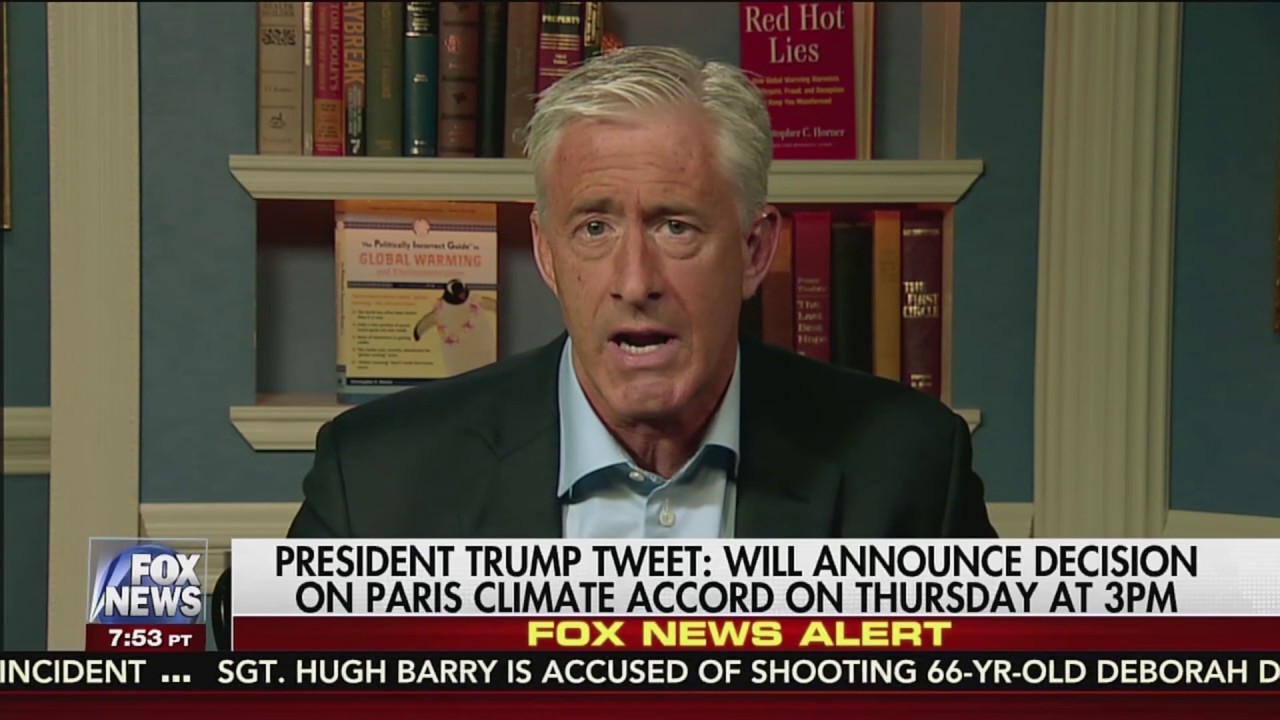
---
[ DeSmog
Chris Horner
Christopher C. Horner is a former senior legal fellow for the Energy and Environment Legal Institute (E&E Legal) (formerly American Tradition Institute),...
.
Apr 17, 2021](https://www.desmog.com/chris-horner/)
---
[
 Competitive Enterprise Institute
Government for Rent: Exposing Climate Politics in Governors' Offices
Today the Competitive Enterprise Institute has released my colleague Chris Horner's new study on how special interests have been buying...
.
Sep 11, 2018](https://cei.org/blog/government-for-rent-exposing-climate-politics-in-governors-offices/)
government-for-rent-exposing-climate-politics-in-governors-offices
Today the Competitive Enterprise Institute has released my colleague Chris Horner’s new study on how special interests have been buying influence in governors’ offices, “Government for Rent.” The shady arrangements he details between activist groups, major environmental donors, and government officials constitute an inappropriate contratcing out of government authority and deserve greater investigation by state legislators, many of whom are only just now finding out about the details.
Over the last few years, elected officials in states across the country have been secretly accepting funds from private donors to promote specific policies related to energy use and climate change. Led by a cadre of activist governors (and state attorneys general), these secret donations have funded employees working inside governors’ offices on projects dictated by these same undisclosed donors—rather than ones approved by voters or state legislatures.
Public records obtained via state freedom of information laws reveal the existence of a major climate litigation industry that funnels donor money to staff up, off the books, the offices of certain Democratic elected officials. These donations are coordinated by politically connected nonprofit organizations, which then keep a sizeable percentage of the cash for serving as middlemen.
This billion-dollar per year enterprise passes money through tax-exempt organizations to underwrite “support functions” for politicians like Gov. Jerry Brown (D-CA), Gov. Andrew Cuomo (D-NY), and Gov. Jay Inslee (D-WA), who then use their offices to advocate for a particular policy agenda. Donations have underwritten event management and public relations firms, and senior, full-time staff members.
This approach raises serious questions about restrictions on and transparency regarding gifts to elected officials under various state laws. While the legality of this particular kind of funding has not yet been litigated in most states, it would likely have been inappropriate on the national level under the federal Antideficiency Act and similar statutes. Moreover, donors going to such lengths to avoid taking credit for these gifts suggest that they may themselves be skeptical of the legality—and at the very least the appearance and propriety—of these arrangements.
Horner has previously exposed similar arrangements with state law-enforcement officials in the study “Law Enforcement for Rent: How Special Interests Fund Climate Policy through State Attorneys General.” Privately funded projects run out of state attorney general offices include aggressive litigation to drive U.S. energy companies out of business and silencing dissent from advocacy groups who disagree with their goals.
Read the full study, “Government for Rent: How Special Interests Finance Governors to Pursue Their Climate Policy Agenda.”
---
 Competitive Enterprise Institute
Law Enforcement for Rent
View Full Document as PDF · View Full Appendix. Author's Note. This paper is based on documents obtained over two and a half years from open...
.
Aug 28, 2018](https://cei.org/studies/law-enforcement-for-rent/)
Author’s Note
This paper is based on documents obtained over two and a half years from open records requests and, in some cases, subsequent litigation. Due to the volume of records, not all cited records are included in the body of this paper. Key documents are provided in the paper’s appendix, which can be accessed at CEI.org. The complete collection of documents cited in this paper is available at ClimateLitigationWatch.org, a project of the nonprofit public interest law firm Government Accountability & Oversight.
Executive Summary
This paper details an extensive and elaborate campaign using elective law enforcement offices, in coordination with major donors and activist pressure groups, to attain a policy agenda that failed through the democratic process. The plan is revealed in emails and other public records obtained during two and a half years of requests under state open records laws. Most are being released now for the first time. Many were obtained only by court order in the face of a determined and coordinated resistance that one deputy attorney general foresaw, expressing early concerns over “an affirmative obligation to always litigate” requests looking into the effort. The paper details how donor-financed governance has expanded into dangerous and likely unconstitutional territory: state attorney general (AG) offices.
The plan traces back to 2012 when activists agreed to seek “a single sympathetic attorney general” to assist their cause. AGs began subpoenaing private parties’ records in service of a campaign of litigation against opponents of their climate policy agenda. The public records date to a July 2015 email in which Peter Frumhoff of the Union of Concerned Scientists confided the group’s involvement with AGs.
Those public records reveal the following: (a) donors introduced plaintiffs’ lawyers to AG offices (OAGs), (b) a slideshow tour by plaintiffs’ lawyers recruiting OAGs to the effort, and (c) senior attorneys from OAGs flying in—some at taxpayer expense and others on the donors’ tab, which had been run through a pressure group— for a briefing with “prospective funders” about “potential state causes of action against major carbon producers.” One presenter described this briefing as a“secret meeting.”It was secret enough that one AG litigated to withhold the agenda— under implausible claims of privilege—for a year and a half before being compelled by a court to release the lineup for what turned out to have been an AG-assisted fundraiser.
Those public records reveal the anatomy of what began as an “informal coalition” of AGs to use the legal system in pursuit of an overtly political agenda in coordination with activists and plaintiffs’ lawyers. That coalition disbanded under open records and media scrutiny, but it has now reconstituted through a program by which donorsfund, privately hire, andplace investigators and prosecutors in AG offices. It uses a nonprofit organization to pass the funding through and to provide the OAGs with a network of “pro bono” attorneys and public relations services. In return, OAGs provide office space to the privately hired prosecutors; agree they are there to “advanc[e] progressive clean energy, climate change, and environmental legal positions”; and provide regular reports about their work.
Led and funded by former New York Mayor Michael Bloomberg, this scheme hires “Research Fellows,” which it then places as activist “Special Assistant Attorneys General.” All of the participating OAGs had to promise that this work would not get done but for this private funding. All OAGs also certified they are not violating the law by accepting privately funded prosecutors. At best, as several OAGs tacitly admit, this unprecedented arrangement operates in a gray area with neither prohibition nor authority. One state where the scheme is arguably illegal is New York, where disgraced former Attorney General Eric Schneiderman had a leading and organizing role at every stage of the campaign this paper describes.
The New York OAG openly boasted to a donor that its “need” for privately funded prosecutors was driven in part by the “significant strain on staff resources” that had been caused by its “non- litigation advocacy”—that described as its having “led” the resistance to the Trump administration. Importantly, the NYOAG also cited its campaign “building models for two different types of common law cases to seek compensation” from industries for supposedly having caused global warming; moreover, it “needs additional attorney resources to assist with this project.”On these bases and with a claim to having statutory authority to enter the unprecedented arrangement—a claim which on its face appears to be an invention—the NYOAG was awarded not one but two privately underwritten prosecutors.
This is the most dangerous example of a modus operandi we have found: it uses nonprofit organizations as pass-through entities by which donors can support elected officials to, in turn, use their offices to advance a specific set of policies favored by said donors. It also uses resources that legislatures will not provide and that donors cannot legally provide directly. The budget for climate policy work alone is in the tens of millions of dollars per year.
Across various levels of government—including mayors and governors—the bulk of this money is budgeted for pass-through nongovernmental organizations (NGOs) and off-the-books consultants, report writers, and public relations (PR) firms that are hired through an NGO. The NGO takes a percentage as its fee (up to 24 percent in some cases). Another component involves privately hiring and then placing in-house, non- official personnel as advisors when they are actually employed by a donor’s group.
The extension of this billion-dollar per year climate industry to privately fund AG investigations sets a dangerous precedent. It represents private interests commandeering the state’s police powers to target opponents of their policy agenda and to hijack the justice system as a way to overturn the democratic process’s rejection of a political agenda.
As a subsequent report will affirm, this model of using nonprofit groups as cutouts for donors to finance elected officials’ activism is, in fact, widely adopted generally by the axis of donors, elected officials, and NGOs and by the climate litigation industry specifically. The de facto law enforcement for hire by private interests raises concerns beyond mere political opportunism, obvious appearances of impropriety, or even compliant 501(c)3s that seemingly rent out their tax-exempt status on behalf of activist donors.
The use of this approach by AGs carries legal, ethical, and constitutional implications, as well as for the integrity of law enforcement and the constitutional policy process. The public–private partnership of law enforcement for hire revealed in this report, in which the partnership uses public office to expend resources not appropriated or approved by their legislatures, raises significant constitutional and other legal issues—as well as ethics concerns—and should be the subject of prompt and serious legislative oversight.
Introduction
BEFORE YOU GASP, PLEASE NOTE that foundations are currently spending over $1 billion a year on climate work.”1 So wrote Dan Carol, a senior aide to California Governor Jerry Brown (D), on October 3, 2017, to his colleagues and staff members for New York Governor Andrew Cuomo (D) and Washington Governor Jay Inslee (D) regarding charitable foundation spending that promotes their climate policy agenda (see Figure 1). This figure dwarfs spending in opposition to that agenda—efforts to portray matters otherwise notwithstanding.2
Carol offered this sum to make his case that $50 million per year is reasonable to ask so donors can privately underwrite an off-the-books network of “support functions” for a handful of governors’ climate policy advocacy.
In further support of his position, Carol attached a “draft agenda, presentation slides, and budget worksheet.”Those items are among a large cache of public records that were obtained by the Competitive Enterprise Institute (CEI), along with other public policy groups, and that detail and propose the exploitation of a “plethora of funder interest” in secretly bankrolling the public office holders’ use of their positions to take a more aggressive role concerning climate politics and policy.
This years-long campaign by substantial, left-leaning donors revealed in Carol’s email correspondence and in other emails produced under state open records laws has now expanded into dangerous and likely unconstitutional territory. Led and funded by former New York Mayor Michael Bloomberg, this scheme centers
Figure 1

on paying to place activist attorneys—dubbed State Assistant Attorneys General (SAAGs)—in offices of the attorney general (OAGs) to play an agreed, predetermined, and activist role.
The intent is for those attorneys to advance the donors’ and large environmental advocacy groups’ “progressive clean energy, climate change, and environmental” policy agenda3 and—according to at least one OAG application—expressly to assist in pursuing the same agenda’s political opponents. In practice, this is a case of law enforcement for hire.
The roadmap for this campaign was laid out by activists and donors in 2012.4 Then in 2016, several state attorneys general (AGs) joined the campaign, which accelerated after that year’s elections. Public record requests looking into how such sensitive offices came to be used this way revealed that, since at least mid-2015, this use of law enforcement underwritten by private donors had secretly involved activist pressure groups, which are working in close coordination with donors and serving as the state AGs’ backroom strategists and partners.
After collapse of an early “informal coalition” of AGs—formed in the spring of 2016 to make desired climate policies become “reality”—in late 2017, another major donor, Bloomberg, announced his plan to use AG offices by privately funding the special AGs program. This expansion extends the model of off-the-books governance detailed by Carol and company from executive offices (such as mayors and governors) to AGs with law enforcement powers.
This approach represents an elaborate, deliberate plan to politicize state law enforcement offices in the service of an ideological, left-wing, climate policy agenda that has been frustrated by the democratic process. Under this scheme and deviating from standard government contracting procedures, private parties with an express policy advocacy agenda can pay to place activist investigators and lawyers in state AG offices to pursue that agenda.
Finally, as if to leave no doubt about the extent of this capture of law enforcement by activist donors, some of those chief law enforcement offices sent attorneys—some at taxpayer expense and others accepting payment of their travel expenses from a green advocacy group—to participate in a briefing on “Potential State Causes of Action against Major Carbon Producers” for prospective funders of the same environmentalist group.
Privately Funded Government and Investigations, an Overview
THE MODUS OPERANDI THAT WE have found entails using nonprofit organizations as pass-through entities by which donors support elected officials to use their offices to advance a specific set of policies favored by said donors, with resources that legislatures will not provide and which donors cannot legally provide directly. This model is being employed by activist elected prosecutors as part of this billion dollar-plus annual climate activism industry.
Across various levels of government— including mayors and governors—the bulk of the money apparently goes to pass-through nongovernmental organizations (NGOs) and off-the-books consultants, report writers, and public relations firms hired through an NGO, which takes a percentage as its fee (up to 24 percent in some cases).5 Another component involves privately hiring and then placing in-house, non-official personnel as advisors when they are actually employed by a donor’s group—again as a cutout.
Extending this scheme to law enforcement seeds sympathetic state AG offices with additional lawyers to pursue“progressive clean energy, climate change, and environmental legal positions”—in other words, to use their offices to compensate for a political agenda’s failure through the political process.6 Even more troubling, this effort involves investigating opponents, of the climate policy agenda while using law enforcement to intimidate political opponents, seeking to silence the opposition.
The New York AG office’s successful application to the donors’ pass-through for two privately funded attorneys also shows that one objective is to provide personnel to its effort to extract financial settlements from those opponents. Recent practice suggests that the settlements will be distributed in part among political constituencies.
For its part, the group of donors offered inducements to entice AG offices to allow them to place attorneys and investigators in the law enforcement operation, including these:
- Supplemental donor-funded lawyers housed at the pass-through, a 501(c)3 nonprofit organization;
- An outside “pro bono” network of privately funded lawyers; and
- A public relations aide to serve those AGs; emails suggest that this approach also involves providing a media firm based in California to promote the AGs’ efforts.
This model of donors using non-profit groups as pass-throughs to make specific hires and to perform specific jobs, which now extends to the de facto contracting out of law enforcement to private interests, raises concerns beyond mere political opportunism, obvious appearances of impropriety, or even compliant 501(c)3s seemingly renting out their tax-exempt status on behalf of activist donors.7 The use of this approach by AGs carries legal, ethical, and constitutional implications for the integrity of law enforcement and the constitutional policy process. The scheme that gives rise to such concerns is the subject of this paper.
The Central Role of Eric Schneiderman
DISGRACED FORMER NEW YORK Attorney General Eric Schneiderman played a central—indeed the leading—DISGRACED FORMER NEW YORK
role among AGs in developing the schemes laid out in this paper. In fact, Schneiderman led the precursor “informal coalition”8 of state AGs who presented, along with former Vice President Al Gore, ata March 2016 pressconferencetopublicly launch what proved to be the first attempt at using AG offices to assist the climate litigation industry in going after “Exxon specifically, and the fossil fuel industry generally.”9 That effort also resulted in a subsequently withdrawn subpoena to CEI for 10 years’ worth of records going back 20 years.
Key facts and events in the development of the scheme follow:
- Emails obtained in open records litigation show the environmental pressure group Union of Concerned Scientists (UCS) admitting, in July 2015, that it was working on OAG investigations of opponents of the climate agenda well before the AGs went public with their efforts in November of that year.
- In November 2015, months after this first admission of the collaboration, Schneiderman issued his first subpoena in pursuit of that agenda.
- Privilege logs filed by Schneiderman’s office in two Freedom of Information Law (FOIL) suits admit to withholding, as “law enforcement” materials, extensive correspondence regarding—in the AG office’s description— “company specific climate change information” with the office of environmentalist mega- donor Tom Steyer and Rockefeller Family Fund Director Lee Wasserman. This correspondence dated back at least nine months prior to Schneiderman’s issuing the first subpoena.10
- In March 2016, Schneiderman recruited a coalition of 16 Democratic state AGs to investigate opponents of their climate political agenda, under the name “Attorneys General United for Clean Power.”11 The coalition quickly dispersed a few months later when confronted with open records law requests and negative media attention.
- Schneiderman arranged for plaintiffs’ lawyer Matt Pawa and the Union of Concerned Scientists’ Peter Frumhoff to brief the AGs and Gore before their AGs United 2016 press conference—where the AGs announced their plans to pursue the investigations sought by UCS, plaintiffs’ lawyers, their partners, and their donors. Both Frumhoff and Pawa were involved early on in the campaign to find “a single sympathetic attorney general” to assist their cause by subpoenaing private parties’ records.
- Wendy Abrams, a major Democratic party and environmentalist group donor and recent member of UCS’ board of directors, provided Pawa entrée to at least one other law enforcement office. When arranging an April 2016 meeting for her and Pawa, as well as other attorneys who would figure prominently in the climate change litigation, to brief the office of Illinois AG Lisa Madigan, Abrams informed the office that she believed Pawa had brought the idea of the climate investigation to Schneiderman.12
- Schneiderman’s office provided UCS an invitation list of OAG contacts to participate in a briefing of outside parties on this collaborative climate litigation strategy, but specifically “Potential State Causes of Action” (discussing investigations and litigation the AGs might bring). The briefing included senior attorneys from AG offices in the Schneiderman-led coalition, UCS, plaintiffs’ lawyers, and their academic and activist partners.
- One presenter at the briefing described it to at least two correspondents as a“secret meeting.”
- There may be a good explanation for the secrecy. Recently obtained emails show that this “secret” briefing on litigation strategy, which Schneiderman’s office co-organized to ensure OAG attorneys flew in from around the country—some at taxpayer expense, others accepting UCS’s offer to pay their travel expenses—was, in fact, for “prospective funders.”
Several of the AG offices involved in this campaign have responded to requests for release of those public records by stonewalling, often forcing costly litigation. This litigation penalty has been paid for by nonprofit groups that the AGs have forced to sue to obtain public records. With two OAGs having been ordered to pay substantial costs and fees, this means an even greater price price has been paid by the taxpayers—not the climate activists’“prospective funders.”
Activist Government without Limits and Donor-Funded Law Enforcement
PUBLIC RECORDS CONFIRM THAT state AGs have willingly agreed to—and following very specific instructions have pleaded for—privately funded investigators and attorneys to use AG offices in pursuit of the “progressive clean energy, climate change, and environment” policy agenda.
This personnel benefit and other inducements were offered to the AGs through a program set up by former New York Mayor Michael Bloomberg, a billionaire donor who has ramped up his funding of climate policy activism in recent years. Bloomberg’s ideological campaign to impose specific policies includes openly vowing to run politically disfavored energy sources out of existence.13
Frustrated by failure through the democratic process, this campaign now includes the use of law enforcement for political ends. To attain his goals, Bloomberg established the State Energy and Environmental Impact Center at the New York University (NYU) School of Law, announcing that creation on August 15, 2017.14 The name itself is telling of his intent—to obtain his desired policy effects at the state level, after activists lost certain levers of power at the federal level.
Under the unusual arrangement offered by Bloomberg’s Center:
- A state attorney general’s office“hires” the NYU Impact Center as its attorney.
- The client pays nothing. Its consideration to NYU is in receiving the NYU Impact Center’s prosecutors (see Figure 2), who promise they will work on specified issues expressly of NYU’s interest and report back to NYU according to a specified schedule.15
- NYU also affords the AG ’s office a “pro bono” network of lawyers and a communications staffer who is dedicated to the work that the office agrees to perform.
- The contract is for an attorney–client (NYU– OAG) relationship. much more see horner 4
---
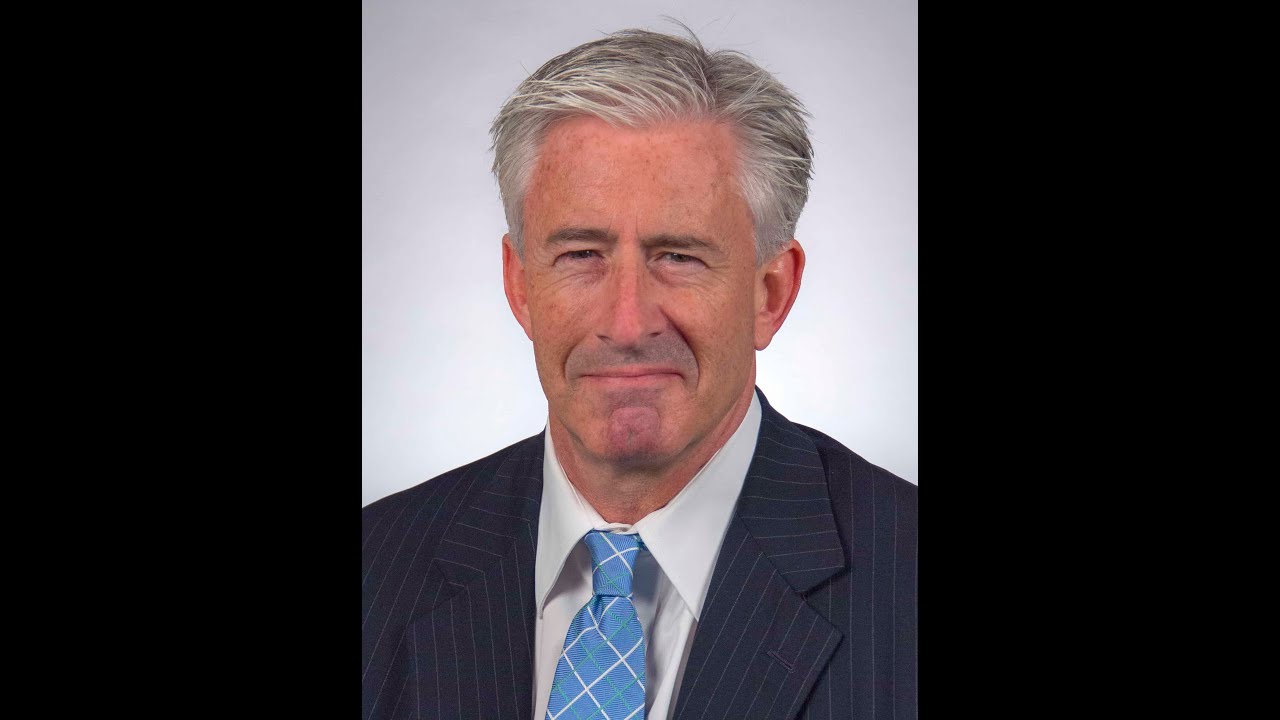
tj SAID CLIMATE CHANGE, CLI ALWAYS CHANGES BUT DID NOT BLAME PPL, BURN WITCHES
SKY IS FALLING
MORAL CSE FOR ff RICH PPL DO BETTER, SAFER
Climate change
United Nations
Climate change refers to long-term shifts in temperatures and weather patterns, mainly caused by human activities, especially the burning of fossil fuels.
#2 - “Master of FOIA” Chris Horner talks about his long-time fight against global warming extremism.
Tom Nelson
12K subscribers
1,043 views Aug 1, 2022 Tom Nelson Podcast
Christopher C. Horner is a former senior fellow at the Competitive Enterprise Institute. An attorney in Washington, D.C., Horner has represented CEI, scientists, and members of the U.S. House of Representatives and U.S. Senate on matters of environmental policy at the federal court level and before the U.S. Supreme Court.
Horner is the author of four books including two best-sellers: “Red Hot Lies: How Global Warming Alarmists Use Threats, Fraud and Deception to Keep You Misinformed” (2008); and “The Politically Incorrect Guide to Global Warming and Environmentalism” (2007), which spent six months on The New York Times best sellers list.
Chris on Twitter:
/ chris_c_horner
Government Accountability & Oversight: https://govoversight.org/
Climate Litigation Watch: https://climatelitigationwatch.org/
Chris Horner’s books:
The Politically Incorrect Guide to Global Warming (and Environmentalism) (2007) https://www.amazon.com/Politically-In...
Red Hot Lies: How Global Warming Alarmists Use Threats, Fraud, and Deception to Keep You Misinformed (2008) https://www.amazon.com/Red-Hot-Lies-C...
Power Grab: How Obama's Green Policies Will Steal Your Freedom and Bankrupt America (2010) https://www.amazon.com/Power-Grab-Chr...
The Liberal War on Transparency: Confessions of a Freedom of Information "Criminal" (2012) https://www.amazon.com/Liberal-War-Tr...
Tom Nelson's Twitter:
/ tan123
About Tom (includes other podcast appearances): https://tomnelson.blogspot.com/2022/0...
Substack: https://tomn.substack.com/
Notes for climate skeptics:
https://tomnelson.blogspot.com/2019/0...
ClimateGate emails:
https://tomnelson.blogspot.com/p/clim...
---
Karl Racine restarts 'Exxon knew' climate-fraud probe}:

Washington Times
https://www.washingtontimes.com › news › mar › ka...](https://www.washingtontimes.com/news/2019/mar/28/karl-racine-restarts-exxon-knew-climate-fraud-prob/)
Valerie Richardson - The Washington Times - Thursday, March 28, 2019
For three years, former New York Attorney General Eric Schneiderman’s dream of nailing ExxonMobil for “climate fraud” has been stuck in neutral, but now the District is preparing to step on the gas.
D.C. Attorney General Karl A. Racine has solicited private legal counsel to work on an investigation — and potential litigation — against the world’s largest oil company on a contingency-fee basis. The request for bids ends Friday.
Despite its research, “Exxon has failed to inform consumers about the effects of its fossil fuel products on climate change,” said the solicitation. “Exxon has also engaged or funded efforts to mislead DC consumers and others about the potential impacts of climate change.”
Mr. Racine’s decision to pursue the climate-fraud strategy caught industry onlookers by surprise, given the decline of the coalition of 17 liberal attorneys general known as AGs United for Clean Power, unveiled amid much fanfare at a March 2016 event with former Vice President Al Gore.
So far only one state — New York — has filed a lawsuit. Massachusetts has been mired for years in a legal fight with Exxon over documents. The Virgin Islands attorney general retreated early on from his attempt to subpoena documents from the Competitive Enterprise Institute.
Mr. Schneiderman himself no longer leads the coalition after resigning his office abruptly last year over allegations of physically abusing four women. If other states investigated Exxon behind the scenes, they have yet to result in legal action.
“The timing is bizarre,” said Spencer Walrath, research director of Energy in Depth, a project of the Independent Petroleum Association of America.
Why now? So far Mr. Racine has offered no public insight into his decision-making, but as one of the AGs United for Clean Power — made up of 16 Democrats and one independent — he has supported the Massachusetts and New York investigations.
In 2016, he joined an amicus brief in support of Massachusetts Attorney General Maura Healey’s investigation. He also signed a 2017 letter objecting to congressional subpoenas against the New York and Massachusetts prosecutors.
“Passionate about protecting our environment? Join our team!” Mr. Racine wrote in a March 15 tweet. “Our office is seeking outside legal counsel to support OAG’s climate change work.”
Passionate about protecting our environment? Join our team!
Our office is seeking outside legal counsel to support OAG’s climate change work: https://t.co/ZMZpEdcEuk
— AG Karl A. Racine (@AGKarlRacine) March 15, 2019
Chris Horner, senior fellow at the Competitive Enterprise Institute, pointed out that the District’s Attorney General’s Office hired Sarah Kogel-Smucker last year as a “special assistant attorney general” paid for by the Bloomberg-funded State Energy & Environmental Impact Center at New York University, which places lawyers with state prosecutors to assist in “promoting clean energy.”
“A year later, one of the big reasons for bringing her on bears fruit: [the] DC OAG decides to hire an outside, plaintiffs’ firm to escalate the shakedown,” said Mr. Horner in an email.
A spokesman for the District’s Attorney General’s Office had no comment about a timetable. Under the solicitation, two lawyers and one paralegal would be contracted on a contingency basis, meaning they would be paid only if their work resulted in a monetary award, which Mr. Horner described as “unusual.”
Also drawing attention is a clause in the solicitation that says the contractor “may assign to a bank, trust company, or other financing institution funds due or to become due as a result of the performance of this contract.”
“In other words, a third party — like a hedge fund — can finance the contractor’s work in this investigation, allowing that entity rights to any winnings from the case,” said Mr. Walrath in a March 20 post. “The arrangement raises the possibility that wealthy entities or individuals supportive of the investigations against ExxonMobil, including the Rockefeller family, could directly fund and even profit from any eventual litigation.”
He cited comments by the Cato Institute’s Andrew Grossman in the Daily Caller, who said the arrangement “gives a whole new meaning to ‘policing for profit.’”
As climate litigation goes, the focus has shifted in the last year to lawsuits filed by municipalities and one state — Rhode Island — against major oil-and-gas companies seeking billions for climate-related mitigation efforts to infrastructure.
“Those costs involve building sea walls, implementing public-health programs, and taking other resiliency measures to protect the public and municipal property from rising sea levels, increased heat and precipitation, more frequent extreme weather, and other threats,” said the New York City appeal.
That legal avenue has its own potholes. Last year, federal judges threw out the public-nuisance lawsuits filed by New York City, San Francisco and Oakland, ruling that the climate-change debate should be resolved by the legislative and not judicial branch.
Both Oakland and San Francisco filed an appeal earlier this month with the 9th U.S. Circuit Court of Appeals, while New York City has filed an appeal in the 2nd Circuit.
Also gaining support from activists is litigation filed by children against federal and state governments demanding action on climate change. So far nine children’s lawsuits have been filed, and three of the state-level cases have been dismissed, according to InsideClimate News.
Valerie Richardson can be reached at vrichardson@washingtontimes.com.*}:
---
---
mma 8 22
on August 16, Joe Biden signed the Inflation Reduction Act, the single biggest climate package in history, into law. With its historic investments in clean energy, the IRA is widely considered a surprise win for Democrats ahead of November’s midterm elections, despite major fossil fuel concessions in the bill that will expand drilling and ultimately harm vulnerable communities.
While some oil and gas companies went so far as to publicly celebrate the legislation, Republicans and right-wing media mobilized against it.Now, in an attempt to distract from the realization of one of President Joe Biden’s key campaign promises, right-wing media are capitalizing on a tried and true tactic — trying to discredit the climate movement, and government climate action as a whole, by vilifying certain wealthy advocates for their personal consumption habits.
On August 15, FoxNews.com published emails suggesting that theLeonardo DiCaprio Foundation may have helped fund state and local lawsuits against oil and gas companies that seek to hold them accountable for climate change impacts, which occurred as a result of the industry lying about the consequences of burning fossil fuels. This should come as no surprise, given that DiCaprio has long been an advocate for climate action and a donor to climate-related causes.
In 2017, his foundation awarded $20 million in grants to 100 environmental organizations, a small fraction of which went to the Collective Action Fund for Accountability, Resilience and Adaptation. The fund “supports precedent-setting legal actions to hold major corporations accountable for costs associated with the effects on climate of their pollutants,” and was associated with the Resource Legacy Fund, an environmental conservation and grant-making 501(c)(3) organization. Fox alleges that the emails prove the money went through the fund to support Sher Edling, the law firm representing the cities and local governments suing big oil. It’s unclear how much DiCaprio donated to Resource Legacy Fund, but Fox labeled it a “dark money” group in the August 15 piece, suggesting that both DiCaprio and the law firm were unethically forcing taxpayers to cover lawsuits, which would force an industry Fox constantly champions to pay up for decades of deception. The Washington Examiner, Daily Caller, and New York Post all picked up the story.
Fox attempts to tie big oil lawsuits to liberal elitism
Fox News picked up the story, contrasting DiCaprio’s activism, which they framed as deceptive, with his carbon-intensive lifestyle. On Hannity, host Sean Hannity claimed the lawsuits further justified right-wing media’s fixation on DiCaprio: “The climate litigation and Dicaprio's arrangements specifically raises a whole host of legal and ethical concerns, but hypocrisy and bad optics are nothing new for this climate activist.”
On Outnumbered, co-host Kayleigh McEnany recalled DiCaprio’s “apocalyptic quote” from his 2016 Oscars speech on the urgency of climate action while discussing the lawsuits. "He doesn't act” as if climate change is an existential threat, McEnany said, “It has not kept him from traveling across the world ongas-guzzling private jets.”
Jesse Watters Primetime featured Brian Claypool, a lawyer and frequent guest, who told correspondent Christina Coleman that it was “ironic that Leonardo DiCaprio and his foundation is funding a law firm to sue big oil companies for alleged deception when he him very self is deceiving the public on where these charitable contributions are going.”
During the August 16 episode of The Five, co-host Dana Perino even suggested DiCaprio's donation was “behind the collusion and price gouging of increasing gas prices on Americans,” because oil companies pass on the costs of hiring a legal team to consumers. (Meanwhile, these companies have seen record-breaking profits.)
In general, climate activists on the left have not been shy to criticize the use of private jets by the rich. After the release of DiCaprio’s climate change-themed movie Don’t Look Up, climate journalist Molly Taft wrote in Earther:
"Whenever DiCaprio is in the news for his climate charity work, a right-wing outlet always smugly runs a piece about his private jet use. While these critiques are in bad faith, they do point out their own inconvenient truth that DiCaprio is part of the sliver of rich people who could actually make a real carbon dent if they changed up their lifestyles or gave away more of their money … The actions DiCaprio is promoting as part of Don’t Look Up fail to properly confront power. Celebrity activism is inherently a strange, slippery slope."
Right-wing media appoints climate spokespeople and projects fossil fuel corruption onto the climate movement
It is naive to think that those elevating the story are really concerned about taxpayers, especially when extreme weather driven by climate change costs taxpayers billions every year. Similar lawsuits against oil companies have been moving through courts for years now, and many are currently pending, embroiled in disagreements over whether there is state or federal jurisdiction. According to PBS, “some recent federal court decisions show support for state jurisdiction” in similar climate suits. On August 17, a federal appeals court panel said that two of these two lawsuits belong in state courts, which is considered a win for plaintiffs. One of the plaintiffs is being represented by the law firm Sher Edling.
The same people attacking the Leonardo DiCaprio Foundation have brazenly supported fossil fuel industry corruption. According to Daily Kos, Chris Horner, the person who gave FoxNews.com the emails, “is better known forgetting paid by fossil fuel companies to target climate scientists with baseless or frivolous and harassing or vexatious FOIA lawsuits demanding they release their emails in an attempt to rerun the Climategate disinfo playbook.”
Michael Krauss, a George Mason University law professor who Fox quoted extensively in the piece on DiCaprio, has previously gone after Steven Donziger, a human rights lawyer who was confined to one thousand days of house arrest after winning a $9.5 billion lawsuit against Chevron after the company deliberately contaminated the Ecuadorian Amazon rainforest and poisoned the Indigenous communities that live there. Krauss called Chevron, which spilled 16 billion gallons of toxic wastewater and 17 million gallons of crude oil into open, unlined pits, “courageous” for its “persistence” in “defending itself against Donziger,” after it launched a massive smear campaign against him. Notably, George Mason University accepted an estimated $50 million from Koch foundations between 2005 and 2015.
Leonardo DiCaprio is not and has never been an accurate representation of who is the most concerned about climate change, and it is deeply misleading to portray him as such. Nonetheless, Fox keeps attempting to appoint politicians like John Kerry and wealthy celebrities like Prince Harry, Thom Yorke, and Arnold Schwarzenegger, as the face of the climate movement, obscuring the role of the activists on the ground who have worked tirelessly to pass legislation like the IRA and the millions of people around the world harmed by climate change and environmental injustice.
According to an Associated Press-NORC Center for Public Affairs Research poll from June, Black and Hispanic Americans and women are among the groups most likely to be “strongly concerned about the impact of climate change on them personally and about how their personal choices affect the climate.”
When things don’t go your way, blame far-left infiltration or a teenager
Right-wing media’s fixation on “dark money” and celebrity activism is not new. When Republicans face scrutiny, they try to paint Democrats as beholden to radical, hypocritical elites who are out of touch with real Americans. On August 16, FoxNews.com also published an article attempting to frame Special Presidential Envoy for Climate (SPEC) John Kerry's office as radical because some officials who work there have previously worked for other large environmental organizations.
Additionally, the article quotes Myron Ebell, who calls large green groups and those affiliated with them the “climate aristocracy.” Ebell, a noted climate denier who led Trump’s EPA transition team, is the director of the Competitive Enterprise Institute’s (CEI) Center for Energy and Environment. Chris Horner was also a CEI fellow, and the organization has filed briefs and launched campaigns defending the oil companies being targeted by the lawsuits discussed above, and has also received funding from the industry.
related
Fox's attacks on John Kerry shows how specious the network’s argument against climate action really is
02/05/21
In 160 days after Russia invaded Ukraine, Fox networks mentioned the Green New Deal 564 times
08/08/22
As Russia’s invasion of Ukraine unfolds, right-wing media is pinning the blame on Greta Thunberg and climate activists
03/08/22
---
fox
no lnx docs
Leonardo DiCaprio's non-profit foundation awarded grants to a dark money group which, in turn, funneled money to a law firm spearheading climate nuisance lawsuits nationwide, according to emails reviewed by Fox News Digital.
Correspondence between Dan Emmett, a major philanthropist, and Ann Carlson — a University of California, Los Angeles (UCLA) climate professor — in 2017 revealed that the two worked with law firm Sher Edling to raise money for its efforts to sue oil companies over alleged climate change deception on behalf of state and local governments, according to the emails obtained by watchdog group Government Accountability & Oversight (GAO) and shared with Fox News Digital.
In their emails, Emmett and Carlson discuss how Chuck Savitt, Sher Edling's director of strategic client relationships, had sought Emmett's support and had already received support from Terry Tamminen in his role as the Leonardo DiCaprio Foundation's CEO, a title he held between 2016 and 2019. When the emails were exchanged, Carlson, who is now a senior Biden administration official, served as co-director of the UCLA Emmett Institute on Climate Change & the Environment, the advisory board which Emmett still chairs.
"Chuck Savitt who is heading this new organization behind the lawsuits has been seeking our support," Emmett wrote to Carlson on July 22, 2017. "Terry Tamminen in his new role with the DiCaprio Foundation has been a key supporter."
[CLIMATE ACTIVISTS EMBRACE EXTREME TACTICS, VIOLENCE AS DEADLINE TO 'SAVE THE PLANET' DRAWS NEAR
doc.
Emmett mentions to Carlson that the Leonardo DiCaprio Foundation has been a "key supporter" of Sher Edling's litigation. (Government Accountability & Oversight)
Emmett also forwarded a message Savitt sent him three days earlier on July 19, 2022 asking for his support, according to the records. Savitt mentioned in that email that Sher Edling's first lawsuits were filed with the support of the Collective Action Fund for Accountability, Resilience and Adaptation, a fund managed at the time by dark money group Resources Legacy Fund (RLF).
"Wanted to let you know that we filed the first three lawsuits supported by the Collective Action Fund on Monday," Savitt had told Emmett. "These precedent setting cases call on 37 of the world's leading fossil fuel companies to take responsibility for the devastating damage sea level rise - caused by their greenhouse gas emissions - is having on coastal communities."
Savitt also offered to set up a meeting between Emmett and Vic Sher, a partner at Sher Edling.
The email correspondence took place two months before the Leonardo DiCaprio Foundation publicly announced it would contribute $20 million in grants to various climate and conservation causes. The group's announcement, which has since been deleted but remains archived, included a grant to the RLF "to support precedent-setting legal actions to hold major corporations in the fossil fuel industry liable," closely mirroring Savitt's language.
[ENVIRONMENTAL GROUPS KEEP PUSHING EXTREME MEASURES AMID GLOBAL ENERGY CRISIS
"These grantees are active on the ground, protecting our oceans, forests and endangered species for future generations – and tackling the urgent, existential challenges of climate change," DiCaprio said at the time.
Tamminen added that the organization believed it needed "to do as much as we can now, before it is too late." The announcement didn't mention Sher Edling.
[Vic Sher, a partner at law firm Sher Edling, speaks about the climate litigation he is involved in during a virtual panel in December. (American Museum of Tort Law/YouTube)
In February 2018, months after the initial email exchange, Emmett told Carlson that she could mention to other prospective donors that he and the Leonardo DiCaprio Foundation were now "serious supporters" of Sher Edling's ongoing litigation. The suggestion came after Carlson asked whether she should ask New York philanthropist Andy Sabin to support the effort.
"You can tell him Terry's organization and I are both serious supporters, that you are an advisor, that the science is there, that it could do more for the environment than just about anything going on if it succeeds," Emmett said in the email Carlson.
In addition to the Leonardo DiCaprio Foundation and the Emmett Foundation, the MacArthur Foundation, William and Flora Hewlett Foundation, Rockefeller Brothers Fund and JPB Foundation have contributed to the Collective Action Fund since 2017.
[TRIAL LAWYERS BENEFITING FROM LUCRATIVE PUBLIC CONTRACTS MAKE 99% OF DONATIONS TO DEMOCRATS, REPORT FINDS
Sher Edling's website states that the firm is specifically dedicated to representing "states, cities, public agencies, and businesses in high-impact, high-value environmental cases." Since its initial cases in July 2017 — filed on behalf of a city and two counties in California — Sher Edling has sued major oil companies on behalf of Delaware, Minnesota, Rhode Island, New York City, Washington D.C., San Francisco, Baltimore, Honolulu and several local governments across the country, alleging the companies have deceived the public about climate change.
Most of the cases are ongoing with two, involving San Francisco and Oakland, Calfornia, on appeal before a federal panel.
doc:
Dan Emmett emails Ann Carlson, saying she can mention to prospective donors that he and the Leonardo DiCaprio Foundation, at the time led by CEO Terry Tamminen, are "serious supporters" of Sher Edling's litigation. (Government Accountability & Oversight)
"Obviously, the donors created — including DiCaprio — several purported arms' lengths,"Chris Horner, a lawyer who represented GAO in the case involving the emails, told Fox News Digital in an interview.
"This model used a couple of pass-throughs, by which DiCaprio and, it appears, Dan Emmett and others could run things, including DiCaprio's foundation and Resources Legacy Fund, and they're not seen as financing the assault," Horner added.
Overall, the RLF contributed more than $5.2 million to Sher Edling between 2017 and 2020, according to the group's tax filings during that period.The organization doesn't disclose its donors and declined to confirm who it previously received money from to fund Sher Edling's litigation.
[KAMALA HARRIS NEVER 'SUED EXXON MOBIL,' DESPITE HER CLAIM ON CNN: REPORTS
"From 2017 to 2020, Sher Edling received grants from RLF to pursue charitable activities to hold fossil fuel companies accountable for the accuracy of information they had disseminated to consumers and the public about the role their products played in causing climate change," an RLF spokesperson Mark Kleinman told Fox News Digital in an email.
"RLF receives support from many funding entities, and its board of directors and staff make all decisions as to where the funding goes," the spokesperson continued.
Sher Edling declined to comment.
Leonardo DiCaprio is pictured during a film premiere on July 22, 2019. (Jordan Strauss/Invision/AP)
Experts have previously raised concerns regarding the source of Sher Edling's funding for its climate litigation.
Michael Krauss, a law professor emeritus at George Mason University,noted in a 2020 Forbes article the arrangement in which Sher Edling receives a payout from localities it represents if its cases are successful while, at the same time, it receives funding from tax-exempt groups, thereby removing some risk involved with taking on such cases.
"Can a non-profit funnel donations to a for-profit law firm that has already determined a different form of compensation?" Kraus wrote. "May a law firm, which could be fabulously enriched on a contingent basis, ethically accept funding that is paid whether or not the client prevails?"
"If legislation through litigation is bad, what to make of legislation through litigation subsidized by taxpayers through charitable donations? We don’t have all the answers to these questions yet," he continued. "I think we deserve them."
[CLICK HERE TO GET THE FOX NEWS APP
Emmett, Tamminen, Sabin and the Earth Alliance, an organization that subsumed the Leonardo DiCaprio Foundation in 2019, didn't respond to requests for comment.
Thomas Catenacci is a politics writer at Fox News Digital
---
ref 2 lnx docs
https://www.foxnews.com/politics/leonardo-dicaprio-funneled-grants-dark-money-group-fund-climate-nuisance-lawsuits-emails-show
leonardo DiCaprio's non-profit foundation awarded grants to a dark money group which, in turn, funneled money to a law firm spearheading climate nuisance lawsuits nationwide, according to emails reviewed by Fox News Digital.
Correspondence between Dan Emmett, a major philanthropist, and Ann Carlson — a University of California, Los Angeles (UCLA) climate professor — in 2017 revealed that the two worked with law firm Sher Edling to raise money for its efforts to sue oil companies over alleged climate change deception on behalf of state and local governments, according to the emails obtained by watchdog group Government Accountability & Oversight (GAO) and shared with Fox News Digital.
In their emails, Emmett and Carlson discuss how Chuck Savitt, Sher Edling's director of strategic client relationships, had sought Emmett's support and had already received support from Terry Tamminen in his role as the Leonardo DiCaprio Foundation's CEO, a title he held between 2016 and 2019. When the emails were exchanged, Carlson, who is now a senior Biden administration official, served as co-director of the UCLA Emmett Institute on Climate Change & the Environment, the advisory board which Emmett still chairs
"Chuck Savitt who is heading this new organization behind the lawsuits has been seeking our support," Emmett wrote to Carlson on July 22, 2017. "Terry Tamminen in his new role with the DiCaprio Foundation has been a key supporter."
CLIMATE ACTIVISTS EMBRACE EXTREME TACTICS, VIOLENCE AS DEADLINE TO 'SAVE THE PLANET' DRAWS NEAR

Emmett mentions to Carlson that the Leonardo DiCaprio Foundation has been a "key supporter" of Sher Edling's litigation. (Government Accountability & Oversight)
Emmett also forwarded a message Savitt sent him three days earlier on July 19, 2022 asking for his support, according to the records. Savitt mentioned in that email that Sher Edling's first lawsuits were filed with the support of the Collective Action Fund for Accountability, Resilience and Adaptation, a fund managed at the time by dark money group Resources Legacy Fund (RLF).
"Wanted to let you know that we filed the first three lawsuits supported by the Collective Action Fund on Monday," Savitt had told Emmett. "These precedent setting cases call on 37 of the world's leading fossil fuel companies to take responsibility for the devastating damage sea level rise - caused by their greenhouse gas emissions - is having on coastal communities."
Savitt also offered to set up a meeting between Emmett and Vic Sher, a partner at Sher Edling.
The email correspondence took place two months before the Leonardo DiCaprio Foundation publicly announced it would contribute $20 million in grants to various climate and conservation causes. The group's announcement, which has since been deleted but remains archived, included a grant to the RLF "to support precedent-setting legal actions to hold major corporations in the fossil fuel industry liable," closely mirroring Savitt's language.
ENVIRONMENTAL GROUPS KEEP PUSHING EXTREME MEASURES AMID GLOBAL ENERGY CRISIS
"These grantees are active on the ground, protecting our oceans, forests and endangered species for future generations – and tackling the urgent, existential challenges of climate change," DiCaprio said at the time.
Tamminen added that the organization believed it needed "to do as much as we can now, before it is too late." The announcement didn't mention Sher Edling.
Vic Sher, a partner at law firm Sher Edling, speaks about the climate litigation he is involved in during a virtual panel in December. (American Museum of Tort Law/YouTube)
In February 2018, months after the initial email exchange, Emmett told Carlson that she could mention to other prospective donors that he and the Leonardo DiCaprio Foundation were now "serious supporters" of Sher Edling's ongoing litigation. The suggestion came after Carlson asked whether she should ask New York philanthropist Andy Sabin to support the effort.
"You can tell him Terry's organization and I are both serious supporters, that you are an advisor, that the science is there, that it could do more for the environment than just about anything going on if it succeeds," Emmett said in the email Carlson.
In addition to the Leonardo DiCaprio Foundation and the Emmett Foundation, the MacArthur Foundation, William and Flora Hewlett Foundation, Rockefeller Brothers Fund and JPB Foundation have contributed to the Collective Action Fund since 2017.
Sher Edling's website states that the firm is specifically dedicated to representing "states, cities, public agencies, and businesses in high-impact, high-value environmental cases." Since its initial cases in July 2017 — filed on behalf of a city and two counties in California — Sher Edling has sued major oil companies on behalf of Delaware, Minnesota, Rhode Island, New York City, Washington D.C., San Francisco, Baltimore, Honolulu and several local governments across the country, alleging the companies have deceived the public about climate change.
Most of the cases are ongoing with two, involving San Francisco and Oakland, Calfornia, on appeal before a federal panel.

Dan Emmett emails Ann Carlson, saying she can mention to prospective donors that he and the Leonardo DiCaprio Foundation, at the time led by CEO Terry Tamminen, are "serious supporters" of Sher Edling's litigation. (Government Accountability & Oversight)
"Obviously, the donors created — including DiCaprio — several purported arms' lengths," Chris Horner, a lawyer who represented GAO in the case involving the emails, told Fox News Digital in an interview.
"This model used a couple of pass-throughs, by which DiCaprio and, it appears, Dan Emmett and others could run things, including DiCaprio's foundation and Resources Legacy Fund, and they're not seen as financing the assault," Horner added.
Overall, the RLF contributed more than $5.2 million to Sher Edling between 2017 and 2020, according to the group's tax filings during that period. The organization doesn't disclose its donors and declined to confirm who it previously received money from to fund Sher Edling's litigation.
KAMALA HARRIS NEVER 'SUED EXXON MOBIL,' DESPITE HER CLAIM ON CNN: REPORTS
"From 2017 to 2020, Sher Edling received grants from RLF to pursue charitable activities to hold fossil fuel companies accountable for the accuracy of information they had disseminated to consumers and the public about the role their products played in causing climate change," an RLF spokesperson Mark Kleinman told Fox News Digital in an email.
"RLF receives support from many funding entities, and its board of directors and staff make all decisions as to where the funding goes," the spokesperson continued.
Sher Edling declined to comment.

Leonardo DiCaprio is pictured during a film premiere on July 22, 2019. (Jordan Strauss/Invision/AP)
Experts have previously raised concerns regarding the source of Sher Edling's funding for its climate litigation.
Michael Krauss, a law professor emeritus at George Mason University, noted in a 2020 Forbes article the arrangement in which Sher Edling receives a payout from localities it represents if its cases are successful while, at the same time, it receives funding from tax-exempt groups, thereby removing some risk involved with taking on such cases.
"Can a non-profit funnel donations to a for-profit law firm that has already determined a different form of compensation?" Kraus wrote. "May a law firm, which could be fabulously enriched on a contingent basis, ethically accept funding that is paid whether or not the client prevails?"
"If legislation through litigation is bad, what to make of legislation through litigation subsidized by taxpayers through charitable donations? We don’t have all the answers to these questions yet," he continued. "I think we deserve them."
CLICK HERE TO GET THE FOX NEWS APP
Emmett, Tamminen, Sabin and the Earth Alliance, an organization that subsumed the Leonardo DiCaprio Foundation in 2019, didn't respond to requests for comment.
Thomas Catenacci is a politics writer at Fox News Digital
---
ref 1 kos (ref 2 old aLpha bankrupt 2015?]
IN the US legal system, a "nuisance" isn't just an annoyance, it's a term of art used to describe either the use of one's own property in a manner that interferes with another's use of theirs ("private nuisance"), or doing something that hurts the community writ large ("public nuisance").
For example, a private nuisance might be like a neighbor's dog that barks 24/7 or cigarette smoke that drifts up into your child's bedroom, while a public nuisance would be if a company dumps toxic waste into a river. The dozens of lawsuits against fossil fuel companies on the grounds that the carbon pollution from their product represents a public nuisance that's raising sea levels, worsening extreme weather and otherwise hurting public health, are known as "climate nuisance" suits. The climate is the subject of the public nuisance lawsuits. If you're talking to someone who knows all about it, you'd refer to them as "climate nuisance" lawsuits.
...?
we say all this, because a story that Fox News ran this week (by dedicated climate disinfo guy Thomas Catenacci) accuses Leonardo DiCaprio of funding climate nuisance lawsuits. The Catenacci story, republished at the NY Post and picked up by the Washington Examiner tries real hard to turn some emails to and from academics talking about climate lawsuits into a scandal by calling a funding recipient a "dark money group," (despite the story coming from a dark money group and former tobacco lawyer now funded by the fossil fuel industry). But the person who apparently replaced Catenacci at the Daily Caller clearly needs an explainer.
Kay Smythe, "news and commentary writer" at the Daily Caller, headlined her copy+paste version of Catenacci's story as: "REPORT: Leo DiCaprio Used Dark Money To Annoy People With Climate Lawsuits."
The Caller's staff apparently either itself thinks, or wants its readers to think, that the point of these lawsuits isn't to hold companies accountable to clean up and repay the public for the damage caused by their pollution, but is instead just annoying them with "nuisance climate-related lawsuits," using the term in the colloquial sense instead of the accurate legal sense it's being used in the FOIA'd academic emails that form the basis of the attempted hatchet job.
In their zeal to look clever, the Daily Caller confused the term "nuisance" for "vexatious" or "frivolous". For Smythe and any non-legalese-speakers in the audience, here's a sentence using the terms accurately: Chris Horner, who fed this story to Catenacci about the emails referencing the DiCaprio foundation support climate nuisance lawsuits holding fossil fuel companies accountable, is better known for getting paid by fossil fuel companies to target climate scientists with baseless or frivolous and harassing or vexatiousFOIA lawsuits demanding they release their emails in an attempt to rerun the Climategate disinfo playbook.
Given that the Daily Caller is less known for hiring smart reporters than it is for repeatedly hiring racist white nationalists, we can't say we're surprised.
But since they were just copying the work of Catenacci without actually adding anything of value, it is impressive that they nonetheless found a way to make the sad little story of DiCaprio actually doing something decent with his money even more asinine!
---
no lnx
GOVERNORS PAPER
Chris Horner Government Rent Append...
It can’t always be us staff
HILITED Climate Alliance Secretaria...
FN 142-143 on Summit
FN 139 CBS High Trust Network and I...
FN 139 CBS High Trust Network and I...
FN 137 Croissant-conspiracy@googleg...
FN 136 description of the KitchenCa...
FN 133, 135 NY fury and calming the...
FN 133, 135 NY fury and calming the...
FN 132 NC being weird about public ...
FN 130-131 NC has asked its partici...
FN 129 Nexus wants to tout NC as Tr...
FN 128 Schuler thinks should tout N...
FN 127b CO Gov aide says we need to...
FN 127 NC aide wants funding to com...
FN 126 Steyer sat down quietly w Go...
FN 125 PA Gov _Political Meeting_ w...
FN 124 PA Gov hides Steyer mtg
FN 123 PA Gov won’t produce s...
FN 122 timing of dysfunctional AP s...
FN 120-121 invitation for public em...
FN 119 re America’s Pledge Sa...
FN 118 whether private Inslee dinne...
FN 115-117 on wisdom of Inslee mtg ...
FN 114 Inslee office asking NextGen...
FN 113c NextGen adds Elan Strait as...
FN 113b NextGen Conf Call Participa...
FN 113 NextGen Summary Gmail –...
FN 112b NextGen NGASideEventforGovR...
FN 111 re wisdom of working too clo...
FN 110, 112 forwarding groups’...
FN 109 Steyer aide introduces self ...
FN 108 Knoxville aide urges stop wi...
FN 106-107, 134 on staff divisions ...
FN 105 Govs having signing fatigue
FN 104 commitment fatigue
FN 100 Bloomberg funds many initiat...
FN 99 Summit Steering Committee and...
FN 98 Kleysteuber asks for PPT sent...
FN 93 job postings for positions to...
FN 91b Schuler makes edits to budge...
FN 91 Welsh suspects USCA budget ma...
FN 91 Welsh suspects USCA budget ma...
FN 90 Rhodium says Hewlett is prett...
FN 89 USCA budget docs sent to Hewl...
FN 87-88 Rhodium says they are ghos...
FN 85 here’s your paper remem...
FN 81-83 re Hewlett contracting for...
FN 80 Erin Rogers puts govs aides i...
FN 79 – 80 RE_ Comms for NY
FN 75 DRAFT USCA Budget Summary 10-...
FN 72 outside former Obama staff we...
FN 71 Davis prefers GCC to run USCA
FN 69, 74 DRAFT USCA Budget 9-14Hew...
FN 69, 74 DRAFT USCA Budget 9-14 US...
FN 69, 74 DRAFT USCA Budget 9-14 Tr...
FN 69, 74 DRAFT USCA Budget 9-14 SU...
FN 69, 74 DRAFT USCA Budget 9-14 Su...
FN 69, 74 DRAFT USCA Budget 9-14 St...
FN 69, 74 DRAFT USCA Budget 9-14 St...
FN 69, 74 DRAFT USCA Budget 9-14 Sa...
FN 69, 74 DRAFT USCA Budget 9-14 Ot...
FN 69, 74 DRAFT USCA Budget 9-14 Ke...
FN 69, 74 DRAFT USCA Budget 9-14 Ja...
FN 69, 74 DRAFT USCA Budget 9-14 IK...
FN 69, 74 DRAFT USCA Budget 9-14 He...
FN 69, 74 DRAFT USCA Budget 9-14 Do...
FN 69, 74 DRAFT USCA Budget 9-14 De...
FN 69, 74 DRAFT USCA Budget 9-14 De...
FN 69, 74 DRAFT USCA Budget 9-14
FN 69, 74 DRAFT USCA Budget 9-14 Co...
FN 69, 74 DRAFT USCA Budget 9-14 BS...
FN 69 Davis concerned group chosen ...
FN 68 Schuler concerned about brand...
FN 68 HILITED Climate Alliance Secr...
FN 67 Davis leans to GCC to run USC...
FN 65b more on GCC Arroyo having ch...
FN 66 Ricketts explains GCC role to...
FN 66 Ricketts explains GCC role to...
FN 65 issues re hiring GCC to run U...
FN 64 the mystery of Jay InsleeR...
FN 63b what COPs did TCR pay for In...
FN 63 Inslee staff says TCR paid th...
FN 61 Gov Brown office hoping to ha...
FN 60 UNF will hire USCA ED
FN 58 Climate Alliance Secretariat ...
FN 57 how would a non existent enti...
FN 56 Schuler MOU edits
FN 54-55 ensuring winning group kno...
FN 53 Hewlett very nervous about _p...
FN 52 discussing managing USCA out ...
FN 52 discussing managing USCA out ...
FN 51 Georgetown IT department to d...
FN 49-50 Arroyo wants to bring in c...
FN 48 Gov Brown office managed USCA...
FN 47 Gov Brown office managed USCA...
FN 44 Dan Carol sends Strawdog Stru...
FN 40 CA interest in NY idea of USC...
FN 38 – 39 Cochran suggests i...
FN 37 Under2 run out of Gov Brown o...
FN 36 re Climate Group is a license...
FN 33 Schuler tells Inslee aide WRI...
FN 32 Keith Phillips knew Schuler p...
FN 29 Inslee aide tells HewlettR...
FN 27 Inslee aide tells TNC Hewlett...
FN 24-26b Jonathan paying Schuler t...
FN 24-26 re Hewlett funding staffer...
FN 19 re putting together some coll...
FN 18 re Oppo for Schuler to resume...
FN 17, 23 DC refugees and Hewlett s...
FN 16 Ted White refers to which of ...
FN 13-15, 42-43, 45-46 USCA slides ...
FN 12 Dan Carol sends USCA slides a...
FN 11 How we pay for it is issue co...
FN 9-10, 20, 22, 59, 62, 73 Plethor...
FN 3 Mission 2020 PPT provided to S...
FN 2, 96-97 Concept note and transm...
---
https://climatelitigationwatch.org/attorney-general-paper/
horner vs GMU? shukla maibach
eliz woodley
Maibach RICO docs II finally produc...
GMU ‘Puerto Rico’ docs
Horner v GMU hearing transcript
Horner et al v GMU
GMU Bates Stamps 103 – 133
GMU Bates Stamps 134 – 178
GMU Bates Stamps 60 – 102
GMU Bates Stamps 1 – 59
---
---
$300K murray coal
see horner e&E
For a group apparently hooked on transparency, the latest organization to spring from the loins of the fossil fuel–funded climate science denial industry certainly manages to obscure one or two pertinent facts.
Government Accountability and Oversight (GAO) — the name of the group given public charity status on March 20, 2018 by the Internal Revenue Service — is promising to publish documents about the people and groups behind ongoing court cases against the energy industry and its impact on the global climate.
“We’re not going to get into the science debate and other arguments. We’ll just show the public the documents, so you can decide,” lawyer Chris Horner told a sympatheticDaily Caller about GAO’s Climate Litigation Watch (CLW) project.
Behind the group are three lawyers — one a Republican-elected district attorney, another a former radio host and “longtime friend” of Vice President Mike Pence, and Horner, who has been paid by coal companies and works at the fossil fuel–funded Competitive Enterprise Institute.
While apparently not wanting to “get into the science debate,” Climate Litigation Watch says the science linking fossil fuel producers to climate change is “dubious” — a position at odds with every major scientific academy on the planet.
So, who are these characters behind the GAO and its sole project, Climate Litigation Watch?
Christopher Horner's Coal Cash
According to Horner’s profile on the GAO and Climate Litigation Watch sites, he has been a lawyer for 25 years and his clients “have included policy groups, scientists, and members of the U.S. House of Representatives and U.S. Senate on matters of environmental policy, in addition to providing regulatory counsel to effected parties.”
Let’s fill in some gaps there, becuase there are some very large ones.
In the mid-1990s, Horner’s clients included cigarette maker R.J. Reynolds, which he suggested should back his idea to “construct explicit procedural hurdles” within the Environmental Protection Agency (EPA) that would make it harder for the agency to use scientific findings as justification for new rules that would inconvenience certain industries.
According to official lobbying disclosures, in the late 1990s and early 2000s Horner also lobbied for the Chemical Manufacturers Association, paint company Dunn Edwards, infamous energy company Enron, and others.
Horner is a long-standing climate science denier, who has regularly appeared on conservative media including Fox News to talk about climate change policy and energy. He is known for his pursuit of climate scientists and their emails.
In 2015, it was revealed that Horner had been paid $18,600 that year by coal company Alpha Natural Resources. Months later, it emerged that Horner’s Energy & Environment Legal Institute (E&E Legal) also had a financial relationship with Arch Coal. When coal giant Peabody filed for bankruptcy in 2016, E&E Legal and the Free Market Environmental Law Clinic(FMELC), where Horner has also worked, appeared on the list of creditors.E&E Legal has received funding from FMELC.
Horner evaded questions about his coal funding during the premiere of a climate science denial film in Paris in 2015.
Horner, who was part of President Donald Trump’s EPA transition team, established FMELC with lawyer David Schnare. Schnare, an EPA veteran and transition team member, and Horner are currently at each other’s throats over accusations of financial malpractice at FMELC.
Commonwealth Attorney
Horner’s new GAO venture includes on its board of directors lawyer and Republican Matthew Hardin, the elected district attorney for Greene County, Virginia, a role known in Virginia as the Commonwealth Attorney.
The GAO (which perhaps intentionally has the same initials as the Government Accountability Office, which is a federal oversight agency) is registered to a residential address in Stanardsville, Greene County, Virginia, which public records show is owned by Hardin.
In 2015, Hardin represented FMELC and E&E Legal in a joint court filing as it tried to pursue the EPA for emails between staff and several environment groups in relation to discussions about the upcoming Paris climate change talks.
Mike Pence's Longtime Friend
A third director listed at GAO is Greg Garrison, a lawyer and recently retired :{radio host. Garrison is best known as the prosecutor who in 1992 successfully gained the conviction of boxer Mike Tyson for rape charges.}:
Garrison says he is a “longtime friend” of Vice President Mike Pence. In 2000, Garrison took over WIBC radio hosting duties from Pence, who was elected to Congress that year. Pence regularly appeared on Garrison's show.
In March 2018, Garrison described the science of human-caused climate change. He said: “The whole thing has been ahoax,a snare, and a delusion always.”
---
https://www.desmogblog.com/government-accountability-and-oversight
government Accountability and Oversight (GAO)
Background
Government Accountability and Oversight (GAO)is a 501(c)(3) nonprofit launched in the beginning of 2018by “experienced attorneys from the litigation, prosecutorial and classical liberal think tank worlds.” [1]
According to its website, “GAO will engage in litigation to protect public interests in economic liberty where taxing or permitting activities, property right restrictions and other extant or proposed regulatoryor other policy impediments threaten to limit those interests.” [1]
GAO launchedClimate Litigation Watch in May 2018, a project to target those investigating ExxonMobiland other oil companies’ knowledge about climate change. Climate Litigation Watch describes GAO as follows:[3]
“Government Accountability & Oversight (GAO) is anon-profit public interest law firmcreated by, among others, individuals who have been most instrumental in bringing the public records exposing these AGs’ abuses to light. As this audacious legal assault ramps up still further, entering its third year, GAO through its project Climate Litigation Watch will shine a light on the campaign’s origins, its leadership and its tactics.
“Documents will serve as the antidote to the climate campaigners’ ad hominem attacks, time-worn talking points and half-baked scientific analysis. How did this effort come about, with whose impetus, when? Public records show the answers to these questions, and Climate Litigation Watch is now organizing them for easy search and education, a function that has been sorely lacing [sic] to date as a way to allow the public to learn for themselves. If you want to understand the campaign behind these investigations and lawsuits, these are the organic documents, providing the background information, and news stories and analyses you might have missed in the legacy media’s enthusiastic promotion of the campaign.”
One of the key figures behindGAO and Climate Litigation Watch is Chris Horner, a lawyer with a history of working for the coal industrywho has claimed global temperatures haven’t been increasing for at least 25 years. According to The Daily Caller,Horner is “one of the key figures spearheading the ClimateLitigationWatch project.” [4], [5]
Horner works as a Senior Legal Fellow for the Energy and Environment Legal Institute (E&E Legal), formerly the American Tradition Institute,where he “provides strategic and legal counsel on cases involving Freedom of Information Act (FOIA) filings and government transparency.” He is also a senior fellow at the Competitive Enterprise Institute (CEI). In 2016, E&E Legal issued a complaint to Vermont Attorney General William Sorrell, requesting a turn over of documents discussing climate change deniers. An answer to that complaint is posted on the Climate Litigation Watch website. [6], [7]
J. Gregory Garrison, a member of GAO‘s Board of Directors, has described climate change as “a hoax, a snare, and a delusion always.” Garrison is a partner at the Garrison Law Firm, LLC and a former legal analyst for CBS News. He also worked as a radio host at Indianapolis’s WIBC, where he replaced “longtime friend” Mike Pence.[8]
Matthew D. Hardinalso sits on GAO‘s Board of Directors. GAO‘s address listed at GuideStar is, according to public records, also registered to a house Hardin purchased in late 2017. Hardinwas electedGreene County’s next Commonwealth’s Attorney in 2018. He proudly lists among his accomplishments open records requests related to the Paris Accord under the Obama administration. “I believe in the Constitution and your rights to be free from overbearing government,”Hardin writes. “:{I’ve been a strong supporter of the Second Amendment, even teaching free concealed carry classes since 2014.”[:(style="background-color:#ffff66ff"):}:9]:{, }:[10]:{,}:[17]
Separately from the nonprofit GAO with a listed Virginia address, business filings at the Department of Consumer and Regulatory Affairs indicate a “Government Accountability and Oversight” was also incorporated in Washington, D.C., on April 10, 2018 with Chris Horner listed as CEO. The address on record is ashared office space in Minnesota. [18]
Chris Horner has said that he worked closely with Matt Hardin “on various legal issues for the past three years” with various groups Horner is involved with. Horner
Climate Litigation Watch
The Climate Litigation Watch website claims “Its sole purpose is to ensure the public record about this explosion of litigation, in the name of ‘climate accountability,’ is complete so as to allow a more honest, fact-driven and well-informed debate.” To achieve this, it would post “commentaries and analysis, posting and placing in context important information gleaned from Freedom of information Act (FOIA) requests.” [2]
“Burning witches was an absurd response then, and today’s modern equivalent will be viewed in future years as an equally misguided response,” Climate Litigation Watch writes of the investigation into oil companies.
It describes the investigations as “a perversion of the justice system and particularly of chief law enforcement offices, state attorneys general” with the supposed goal to “to conjure a history of illegal conduct in order to advance an extremist policy agenda and fulfill a vision of an energy-starved world.” [2]
Stance on Climate Change
Climate Litigation Watch refers to a “climate that is always changing,” downplaying the impact of humans on climate change and subtly suggest increasing wealth and adapting to climate change as a strategy: [2]
“Misuse of the judicial system in the face of their agenda having failed through the proper, democratic process will not yield the practical responses the world needs as it faces a climate that is always changing, which change the wealthiest societies have always adapted to best.”
Funding
GAO does not publicly list its funding sources.Chris Horner, one of the key individuals working with both GAO and its Climate Litigation Watch Project, was named in Alpha Natural Resources’ bankruptcy documents. A January 11, 2016 document listed Horner as Regulatory Counsel for the coal company. The Wall Street Journal reported Horner was paid at least $18,600 before the group declared bankruptcy. The Free Market Environmental Law Clinic, also an Alpha creditor, paid Horner $110,000 in 2014, $115,865 in 2013, and $60,449 in 2012, according to the clinic’s tax filings.[12], [13], [14]
Murray Energy Funding
Murray Energy bankruptcy filings in 2019 revealed GAO received $300,000 from the energy company owned by climate change denier Robert Murray. The filings revealed a wide range of creditors with deep ties to climate change denial including the Heartland Institute, the Competitive Enterprise Institute, and the International Climate Science Coalition. Robert Murray was known for being a major Trump donor, and giving officials a wish list of proposed actions to help the coal industry. See related reporting from The Intercept, Energy and Environment News, and The New York Times. [19], [20], [21]
Other groups funded by Murray Energy include FreedomWorks, the Cato Institute, the Committee for a Constructive Tomorrow, and Judicial Watch. As The New York Times noted, Murray continued to fund climate change denial even as his company was going bankrupt.
990 Forms
[doc cloud]
key People
Board of Directors
- J. Gregory Garrison [15]
- Matthew D. Hardin [15]
- Chris Horner [15]
Professionals (also listed at Climate Litigation Watch) [16]
- Chris Horner
- Jason Miller
Actions
May 2018
GAO launched Climate Litigation Watch, The Daily Caller reported.[5]
“We’re not going to get into the science debate and other arguments. We’ll just show the public the documents, so you can decide,” Horner told The Daily Caller. “Let people see what this campaign looks like. There is a constantly shifting narrative. This site lays out the progression — the players and their roles to put all of that into perspective.” [5]
The Daily Caller noted that Attorneys General Maura Healey of Massachusetts and Eric Schneiderman “will almost certainly be included in the profiles” compiled by Climate Litigation Watch. [5]
Climate Litigation Watch’s launch occurred while several cities have filed lawsuits against oil companies including Exxon and Chevron. ExxonMobil itself has sued those attempting to investigate and sue the company over global warming, contending that the company is victim to a politically-motivated conspiracy. [5]
Related Organizations
- Climate Litigation Watch — Project of GAO.
- Energy and Environment Legal Institute (E&E Legal) — Also employs Chris Horner, and has sent similar records requests against those investigating ExxonMobil and other oil companies.
---
---
TWO
many bak?
SEE RULE 23 LEGAL/LEGISLATIVE SUPPRESSION
congrats evil feck on using foia, capt 719
---
https://dailycaller.com/2020/07/08/keith-ellison-minnesota-bloomberg-climate-lawsuit/
no lnx many
ENERGY
AG Keith Ellison Faces Lawsuit Accusing Him Of Coordinating With Bloomberg On Anti-Exxon Crusade
[pixRep. Keith Ellison (D-MN), a candidate for Democratic National Committee Chairman, speaks during a Democratic National Committee forum in Baltimore, Maryland, U.S., February 11, 2017. ]
Daily Caller News Foundation
CHRIS WHITE
TECH REPORTER
July 08, 2020
A Virginia-based law firm is suing Minnesota Attorney General Keith Ellison for access to records revealing his use of attorneys financed by former New York City Mayor Michael Bloomberg to engage in a climate crusade targeting oil companies.
The nonprofit Government Accountability & Oversight (GAO) filed a lawsuit Wednesday for records detailing how the Democratic attorney general is allegedly deploying Bloomberg-financed lawyers to advance a lawsuit his office leveled against the fossil fuel industry. The firm’s complaint was filed on behalf of the nonprofit group Energy Policy Advocates.
This is the second lawsuit that GAO, a 501(c)(3) nonprofit launched in 2018, has filed against Ellison in the last two years. (RELATED: Emails Reveal Role Michael Bloomberg’s Climate Crusaders Are Playing In Maryland’s AG Office)
The law firm’s complaint also reveals that the Minnesota attorney general entered into confidentiality agreements and so-called common interest agreements requiring his office to obtain the consent of the private attorneys before releasing public information about such climate lawsuits.
[pix NEW YORK, NEW YORK - MARCH 04: Former Democratic presidential candidate Mike Bloomberg addresses his staff and the media after announcing that he will be ending his campaign on March 04, 2020 in New York City. Bloomberg, who has endorsed Joe Biden, spent millions of dollars in his short lived campaign for president.]
GAO attorney Chris Horner believes such contracts undermine open records laws and violate obligations of attorneys general to taxpayers.
“They likely are void as against public policy including that underlining open records laws, and probably violate obligations of state attorney generals to the people of their states by purporting to contract away the public’s right to access to public information such as is embodied in the MGDPA,” Horner staid in a statement Wednesday.
The agreements cover records related to lawsuits two Special Assistant Attorneys General (SAAGs) inside Ellison’s office leveled against ExxonMobil. Ellison announced lawsuits targeting Exxon, Koch Industries, and the American Petroleum Institute over what he calls “a campaign of deception” on climate change.
SAAGs are placed in attorney general offices around the country by New York University’s State Energy and Environmental Impact Center (SEEIC), which received $6 million from Bloomberg Philanthropies in 2018.
The NYU School of Law launched the group in 2017 to “identify and hire NYU Law Fellows who serve as special assistant attorneys general in state attorney general offices, focusing on clean energy, climate and environmental matters,” according to the NYU Law website.
Ellison submitted an application for SAAGs in March 2019, according to the GAO lawsuit.
He expressed in the application a willingness to do more in certain areas of “known public interest to Bloomberg and his SEEIC,” the complaint stated. Ellison’s application also suggested the attorney general intends on focusing on “multistate initiatives…including…supporting state-led efforts to investigate Exxon Mobil [sic].”
Neither Bloomberg nor Ellison’s office have responded to the Daily Caller News Foundation’s requestS for comment about the lawsuit.
Content created by The Daily Caller News Foundation is available without charge to any eligible news publisher that can provide a large audience. For licensing opportunities of our original content, please contact licensing@dailycallernewsfoundation.org.
Tags : energy keith ellison michael bloomberg minnesota
---
ref https://dailycaller.com/2019/09/09/michael-bloomberg-global-warming/
no lnx many
emails Reveal Role Michael Bloomberg’s Climate Crusaders Are Playing In Maryland’s AG Office
Former New York City Mayor Michael R. Bloomberg speaks during the Presidential Gun Sense Forum in Des Moines]
Daily Caller News Foundation l
CHRIS WHITE
TECH REPORTER
September 09, 2019
Former New York City Mayor Michael Bloomberg’s legal fellows are likely too closely connected to the billionaire’s climate change crusading group, new emails show.
Analyst Chris Horner tells the Daily Caller News Foundation that the emails reveal how Maryland is “outsourcing” law enforcement activities to “activist donors.”
The emails apparently contradict what the Bloomberg-financed climate group has said in the past about the legal fellows it places in state attorneys general offices.
A climate attorney inside Maryland’s attorney general’s office appears to be working at the direction of a group connected to former New York City Mayor Michael Bloomberg, according to documents published recently by a watchdog group.
The special assistant attorney move to seek guidance contracts claims from the billionaire-financed group that such attorneys are loyal only to the states where they are placed. The so-called SAAGs are being placed in state AG offices around the country by a group that received $6 million from Bloomberg in 2018.
“I’m considering moving from my current environmental-focused position to the energy position that the Maryland AG’s Office has open, ” SAAG John Howard said in an email to David Haynes, director of the State Environmental and Energy Impact Center, which works to plant attorneys in various AG offices.
The memo was published Sept. 3 by Energy Policy Advocates (EPA), a non-profit group founded in Washington state. (RELATED: One Of The Lawyers Targeting Oil Companies Worked In Bloomberg’s Office)
“Would you have a few minutes this afternoon to call me? I want to get a better sense than I currently have about what the Center envisions for these positions,” Howard added in the email, which is dated March, 13 2019. Haynes responded: “I’d be happy to chat with you about this. Could we talk tomorrow.”
Howard has been working at Maryland’s AG office since March 2018.
Massachusetts Attorney General Maura Healey (C) speaks at a news conference with New York Attorney General Eric Schneiderman (R) and other U.S. State Attorney's General to announce a state-based effort to combat climate change in the Manhattan borough of New York City, March 29, 2016. ]
Bloomberg’s grant went to the SEEI, which is designed to escalate attacks against President Donald Trump’s regulatory rollbacks. The Daily Caller News Foundation reported in February that Illinois, Maryland, and other states involved in the program hired attorneys with ties to the billionaire.
The exchange between Howard and Haynes appears to contradict SEEIC’s past claims that such fellows receive orders exclusively from their respective attorney general. The SEEIC operates out of the New York University of Law, media reports show.
The group’s website states: “NYU pays the salaries of the law fellows, but the fellows’ sole duty of loyalty is to the attorney general in whose office he or she serves. All work performed by the fellows is entirely identified and managed by their respective AG offices.”
Analysts argue Howard knew what was expected of him before he reached out.
“This scheme represents a dangerous outsourcing of law enforcement to an activist donor — and further undermines the AGs’ and Bloomberg Center’s insistence that these are simply more bodies,” Chris Horner, a senior fellow at the Competitive Enterprise Institute, told the DCNF.
Horner is on the board of directors at the Government Accountability & Oversight, which played a role in releasing the emails.
Howard, Haynes, and Maryland AG Brian Frosh have not responded to the DCNF’s request for comment about the nature of the program. Media reports have also raised questions about SEEI’s role in financing state attorneys general attempts to sue oil companies for supposedly contributing to climate change.
Gavin McCabe, a lawyer connected to Bloomberg Philanthropies, for instance, signed an amicus brief in 2018 supporting New York City’s yearlong climate lawsuit against Exxon and Chevron. Bloomberg founded Bloomberg Philanthropies in 2017 to provide AG offices with attorneys to help push green energy.
McCabe is one of at least eight attorneys hired by attorneys general across the country to work on environmental litigation.
McCabe’s involvement suggests Bloomberg’s money is playing a role in the anti-Exxon campaign. He made himself a part of the lawsuit demanding energy companies compensate the city for the alleged damages from global warming. U.S. District Judge John Keenan dismissed the case in July after months of arguments.
Bloomberg’s office did not respond to a request for comment.
Content created by The Daily Caller News Foundation is available without charge to any eligible news publisher that can provide a large audience. For licensing opportunities of our original content, please contact licensing@dailycallernewsfoundation.org.
Tags : donald trump energy michael bloomberg
---
Horner, “Government for Rent,” Competitive Enterprise Institute, September 2018,
https://cei.org/sites/default/files/Christopher%20Horner%20-%20Government%20for%20Rent_0.pdf.
2 https://climatelitigationwatch.org/wp-content/uploads/2018/09/FN-9-10-20-22-59-62-73-Plethora-ofactivist-and-funder-interest-in-govs-doing-this-copy.pdf
See also, Horner, “Government for Rent”.
3 https://climatelitigationwatch.org/wp-content/uploads/2018/09/FN-13-15-42-43-45-46-USCA-slidesand-initial-budget-with-pass-throughs-copy.pdf
.See also, Horner, “Government for Rent”.
---
~ Brown CA gov climate summit, subnational
"off the books" experts? refugees from Obama admin?
https://cei.org/governorsclimatescheme
---
apr 2015
The American Petroleum Institute has added the Herald Group’s Cornelia Horner as a senior associate for media and issue management; From API, Brooke Sammon, former media and public relations manager, recently joined Firehouse Strategies as a senior vice president
---
this past Monday, the Virginia Tech Young Americans for Freedom (YAF) hosted Christopher Horner, a Washington, D.C. attorney and notable global warming critic. Virginia Tech’s chapter of the YAF gained notoriety last fall, when it hosted former treasury secretary Bay Buchanan with a talk about the negative effects of illegal immigration on America.
The group prides itself in using controversial and attention-grabbing headlines to draw numbers to events, such as this event's title, "Noble Lies and Cheap Virtue: The Realities of the 'Climate' Agenda." With a topic as universally agreed upon by the college community as climate change, a title declaring the phenomenon an agenda relying on lies full of “cheap virtue” was sure to pique interest.
Horner began his talk with a statement that sounded somewhat relieving to a climate change/global warming theory supporter like myself. He first stated that he believed in climate change and global warming, as the computer-generated models support it.
He proceeded to display graphs that showed that global temperature averages are, in fact, rising and other graphs that showed that human carbon emission— the leading cause of climate change, according to most — are also rising. Without denying its existence, he made the claim that climate change is not caused by human action, and there is nothing that we can do to solve this inevitable phenomenon of nature.
Horner took an odd turn when he superimposed two graphs showing rising temperatures and carbon emissions and accompanied them with the statement, “Look, there is no correlation between carbon emissions and global temperature increase.”
Looking at the graph though, it was easy to see that the two were correlated to such an extent that in most places, the lines were on top of one another. What does this mean? Horner used a graphing technique that entirely contradicts his beliefs and made a statement that is completely disproven by the graph itself.
Perhaps this is why he spent less than 15 seconds on this part of his presentation, knowing his statement contradicts his evidence. It was as if he planned the presentation thinking, “If I use big words and put up a lot of graphs, college students will believe anything I say.”
In another part of his presentation, Horner used “historical” evidence to show that temperatures have been fluctuating over the course of history, citing a medieval population boom due to growth in food production as the last "warm period." He used excerpts from research conducted by his wife to show that in Elizabethan England, witches were burned at astonishing rates — from which the conclusion was drawn that this had to have been because they were blamed for failed crops and freezing temperatures. He used the famous painting of George Washington crossing the Delaware (painted in dramatic fashion seven decades later in 1851) to show that temperatures had obviously risen again, as the ice in the river was broken and melting, rather than creating a solid sheet. How could Washington have crossed if the river was completely frozen?
These “historical” sources show that temperatures have always been fluctuating — or so Horner believes. For this reason, he claims that there is nothing we can do to have an impact on the environment and climate, and there is no reason that we should try.
Shifting to an economic standpoint, Horner cited a study conducted on the economy of Spain (a country focused heavily on creating "green jobs"), claiming that for every green job created, 2.2 regular jobs are lost. Spain’s economy has been suffering heavily for years, and a study like this shows little correlation between the creation of green jobs and the loss of, for the lack of a better term, regular jobs.
Of course, the United States’s green sector economy has grown every year since 2010 and focuses heavily on manufacturing and exports — a sector that we have fallen behind in worldwide. Green jobs also pay nearly 15 percent higher on average than other jobs, putting more money in the pockets of those who specialize in environmental fields.
Horner is the epitome of a conservative, climate change denier, in spite of his claimed belief in climate change. He refuses to cite countless scientific studies that show with the incredible spike in carbon emissions since 1900 and exponential rise in population, the Earth’s ozone layer has thinned, etching away at the very protective atmosphere that makes life possible. He uses unreliable historical sources and contradictory studies to prove his point that climate change is a phenomenon that has been occurring for the history of Earth, and in turn we should take no action.
Those in Christopher Horner’s camp are those who refuse to act now at the expense of our lavish, first-world lifestyles. What they refuse to accept is the very truth proven by countless studies: if we do not act now, our posterity will never live such lifestyles.
==
desmog mercer fam fdn
The Energy & Environment Legal Institute $200,000 $200,000
---
built fdn to dereg
https://theintercept.com/2020/01/12/cancer-trump-administration-epa-carcinogens-regulations/
the war on the war on cancer
no pix no lnx many no graf
Sharon Lerner
January 12 2020,
WHEN ANGELA RAMIREZ was 38, she felt a slight pain in her chest. At first she thought she had pulled a muscle, but when it didn’t go away, Ramirez went to her doctor, who diagnosed her with stage 2 breast cancer. A mother of three and a parent educator in a local public school in Lake County, Illinois, Ramirez had to undergo a double mastectomy, chemotherapy, radiation, and five follow-up surgeries.
Eight years since the diagnosis, her family is still recovering. Because of complications, Ramirez is awaiting several more reconstructive surgeries. Her daughter Ada, now 15, was recently diagnosed with PTSD, in part, Ramirez thinks, because she spent much of her childhood worrying that her mother wouldn’t survive. And her husband is working 80 hours a week to cover medical expenses and lost income. “Cancer changes your whole life,” she said recently.
Ramirez used to think of her ordeal as random bad luck — an inexplicable series of genetic mutations that just happened to derail her life. But that changed in 2018, after she learned that she both lived and worked near two facilities that were emitting a cancer-causing chemical called ethylene oxide.
Two years earlier, the Environmental Protection Agency released an assessment of ethylene oxide performed by a small division of the agency known as IRIS, which crunched numbers showing that exposure to ethylene oxide caused elevated rates of tumors in the brain, lungs, uterus, and lymph systems. The technical report from IRIS, which stands for the Integrated Risk Information System, changed the classification of ethylene oxide, an odorless gas used to make other chemicals and sterilize medical equipment, from probably carcinogenic to plainly carcinogenic to humans. Based in part on several studies showing that female workers exposed to ethylene oxide had higher breast cancer rates, the report calculated a safety threshold that was 30 times more sensitive than previous estimates. Combined with agency data about local emissions, the new threshold allowed the EPA Office of Air and Radiation to identify the census tracts where residents were at increased risk of cancer from breathing ethylene oxide.
As Ramirez could plainly see on the EPA’s interactive map, the cancer risk was elevated both where she lived and, even more extremely, at the office where she worked for several years before her diagnosis, which was less than a mile from one factory that emitted the carcinogenic gas and less than three miles from another. The news was like a missing puzzle piece. “I had always found it kind of strange that I was the only one in my family who ever had cancer,” said Ramirez, who had moved to the suburbs from Chicago in 2005 in part because she wanted to be closer to nature.
Ramirez still suffers from chronic back pain and weakness. But the realization that her cancer may have resulted from emissions from the local factories has caused a different kind of suffering. “Every time I open the windows I think about it now,” she said. “I’m so angry. My kids at 2nd and 3rd grade shouldn’t have had to wonder whether their mother was going to die.”
Angela Ramirez's neighborhood is seen in this photo. The neighborhood in Waukegan, Ill., is located in a census tract that is at high risk for cancer. Jan. 2, 2020. Pat Nabong for The Intercept.Construction at Medline's facility in Waukegan, Ill. is underway on Jan. 2, 2020. In May 2019, Medline submitted a proposal to build new equipment that would control air pollution, after they came under fire for emitting ethylene oxide, a gas linked to cancer. Pat Nabong for The Intercept.]
Left/Top: The Ramirez's neighborhood in Waukegan, Ill., is part of a census tract that is at high risk for cancer. Right/Bottom: Construction at Medline's facility in Waukegan, Ill. is underway on Jan. 2, 2020. In May 2019, Medline submitted a proposal to build new equipment that would control air pollution, after they came under fire for emitting ethylene oxide.Photos: Pat Nabong for The Intercept]
The chemical industry also reacted strongly to the reports on ethylene oxide. In September 2018, after the National Air Toxics Assessment pinpointed the areas affected by the chemical, the American Chemistry Council, or ACC, a trade group that represents U.S. chemical manufacturers, asked IRIS to change its assessment of ethylene oxide. Dow Chemical, the biggest producer of ethylene oxide in the country and the second biggest in the world, also disputed the EPA’s assessment.
Now, political appointees at the EPA are engaged in what appears to be an end-run around the agency’s own science. While IRIS, which is staffed by career scientists, hasn’t officially backed away from its 2016 report, the Trump EPA recently announced that it would not be calling for the level of pollution reductions IRIS laid out during the previous administration, leaving people around the country more vulnerable to the known carcinogen. And that’s only one of the changes made under the Trump administration that promise to weaken protections for Americans’ health, many of which were intended specifically to stave off cancers.
Virtually no sector of the EPA’s work has escaped reversals that will cause disease and death among the U.S. population. The agency scrapped the Clean Power Plan and a rule to improve fuel efficiency standards for cars, depriving the public of not just the climate benefits but also the improvements to air quality and health both would have brought. The EPA rejected its own science in deciding not to ban chlorpyrifos, a pesticide linked to autism and other neurodevelopmental problems in children. Dozens of other EPA rollbacks — including the gutting of the Clean Water Act, the undermining of guidelines on emissions of methane from landfills, the loosening of restrictions on toxic air pollution from industrial facilities, the disbanding of a panel on air pollution — will have dire health consequences, as will the dramatic reduction in the enforcement of environmental laws.
The erosion of these protections may leave Americans at greater risk of all kinds of health effects, including fertility issues, birth defects, and neurodevelopmental problems — all of which have been linked to chemical exposure. But among the most devastating of Trump’s legacies will be an increase in cancers.
Trump’s Cancer Gang
With the election of Donald Trump, a small and previously marginalized group of toxics apologists suddenly and unexpectedly took control over health and environmental regulations in the United States. Considered too fringe, too craven, and too fact-averse for mainstream politics, this closely connected group had long been dismissed for taking the idea of environmental deregulation well past the point of absurdity. Under Trump, the EPA has begun executing some of these extremists’ schemes to undercut the federal government’s ability to protect the public from life-threatening toxic chemicals.
Way back in 1996, a lawyer named Christopher Horner working for R.J. Reynolds Tobacco Company came up with an ambitious plan to fight back against scientific studies linking cancer to secondhand smoke. Such studies, he realized, were based on the private health data of thousands of individuals. And without that data, scientists would be unable to prove a connection between cigarette smoke and cancer. Imagine if the government required that the data used for regulations be public. If that were the case, none of the crucial private health information used by scientists would be usable. Problem solved!
Horner, who worked at the firm then called Bracewell & Giuliani, recognized that the approach had “global applicability to industry” beyond tobacco and could make it nearly impossible to regulate a wide variety of cancer-causing chemicals and pollution. Within a few years, a group funded by the Koch brothers tried to use the strategy to undermine the Clean Air Act, demanding that researchers produce their data so a pivotal study could be repeated.
That attempt to destroy air pollution protections ultimately failed, and the idea hovered on the sidelines until 2014, when a few Republican House members introduced the “Secret Science Act.” Because most members of Congress recognized the gambit as a bald attempt to subvert science — then-Sen. Barbara Boxer called it “insane,” Sen. Bernie Sanders dismissed it as “laughable” — the bill didn’t come close to becoming law that year or the next, when it was introduced again. Even in mid-2016, the only support for the idea came from the fringe.
But with the election of Donald Trump later that year, the prospects of the “secret science” scheme — and others hatched over the years to help free industry of what it saw as profit-hampering regulations — suddenly became deadly serious. Trump, who had already been dismissive of science, named Horner and others interested in undermining environmental protections to his EPA transition team and then staffed the agency with political appointees who used to work for the industries they would be regulating. In April 2018, then-EPA administrator Scott Pruitt proposed a rule based on the “secret science” plan, and Horner’s wildest dreams of dismantling environmental and health regulations were set to become reality.
[Andrew Wheeler, administrator of the U.S. Environmental Protection Agency (EPA), speaks to members of the media after signing the Affordable Clean Energy Rule at EPA headquarters in Washington, D.C., U.S., on Wednesday, June 19, 2019. President Donald Trump is scaling back sweeping Obama-era curbs on greenhouse gas emissions from power plants burning coal, his biggest step yet to fulfill his campaign promise to stop a "war" on the fossil fuel. Photographer: Al Drago/Bloomberg via Getty ImagesEPA administrator Andrew Wheeler, center, speaks to members of the media at EPA headquarters in Washington, D.C., on June 19, 2019. Photo: Al Drago/Bloomberg via Getty Images]
The war on cancer was meant to help banish a disease that by 1970 had become the second-leading cause of death in the United States. The Environmental Protection Agency, created that year, was part of the government’s assault on the rising tide of cancer cases. For some contaminants, such as asbestos and chemicals used in dye-making, the link to cancer was already clear. Scientists were beginning to understand that even tiny amounts of certain chemicals could alter cells, setting off a series of mutations that grow into cancerous tumors. The hope was that the agency could counter increasing cancer rates by limiting environmental exposures.
Yet 50 years after the federal government took up arms against cancer, the disease is still the second-leading cause of death. Even though cigarette smoking, the leading cause of cancer in the 1970s, has declined sharply, the American cancer rate has actually gone up over the past 40 years. Among children, who are particularly vulnerable to environmental exposures, the cancer rate has risen dramatically, increasing nearly 50 percent since 1975.
During that time, environmental exposures have been mounting. More than 140,000 chemicals and pesticides have been introduced since 1950. Even though the vast majority have not been evaluated for safety, 5,000 of them are made in such great quantities practically everyone is exposed to them. Yet most of the government spending on cancer has remained focused on treating the disease rather than preventing cancer by limiting exposure to carcinogens, such as pesticides and other environmental contaminants.
graf:
Left/Top: Federal political contributions by members of the American Chemistry Council, including parent companies and individual employees, 2008 - 2019. Compiled for The Intercept by MapLight. Right/Bottom: Federal political lobbying expenditures by members of the American Chemistry Council, including parent companies and individual employees, 2008 - 2019. Compiled for The Intercept by MapLight.Graphics: Soohee Cho/The Intercept
Since the first major law that attempted to regulate toxic chemicals passed in 1976, chemical companies have spent billions of dollars on lobbying. The member companies of the American Chemistry Council have spent more than $1.4 billion on lobbying and $77.8 million on political contributions since 2008, according to an analysis by MapLight for this story. The ACC by itself has spent $103 million on lobbying. Though staggering, these numbers are a small fraction of the trillions generated by chemical sales over that same period.
Throughout its 50-year existence, the EPA has faced the daunting task of regulating industries that are far better resourced than the agency. But the effort to rein in powerful companies, which has been met with varying degrees of success under previous administrations, has been largely abandoned under Trump. The EPA, now headed by a former coal lobbyist and run by other former lobbyists, executives, and lawyers from polluting industries, has set about undoing health protections, some of which were specifically designed to prevent cancer.
Trump, who recently tried to take credit for a 2017 dip in cancer mortality rates and announced that he would be “curing childhood cancer very shortly,” at a rally in Cincinnati last August, presumably isn’t interested in actively causing disease and death. But his eagerness to please the polluting chemical and fossil fuel industries that support him comes at the expense of American lives.
A Mess in Texas
For ethylene oxide, the chemical that Ramirez was exposed to, the road to deregulation passes through Texas. It was there, in the summer of 2018, that regulators led by state toxicologist Michael Honeycutt began working with the producers of ethylene oxide on their own standard for the chemical.
Honeycutt, who has overseen chemical assessment for the Texas Commission on Environmental Quality since 1996, is known for his extremely industry-friendly approach to chemicals. Until this administration, Honeycutt made his name fighting the EPA, challenging the limits the agency tried to place on emissions of chemicals, particularly those released by the oil and gas industry. He has argued that particulate air pollution, which causes lung cancer and other diseases, can help people live longer. And working with his longtime colleague and fellow toxicologist Michael Dourson, Honeycutt loosened state protections on dozens of chemicals — rollbacks that were encouraged and welcomed by chemical manufacturers. Now, under Trump, Honeycutt’s Texas agency has essentially become a shadow EPA and he has assumed a national role in cancer policy.
The assessment of ethylene oxide that Honeycutt oversaw and the TCEQ released last year no doubt pleased the companies that make the chemical — not least because it appears to have been written by them. In June 2018, before issuing a new safety limit for ethylene oxide, Honeycutt and members of the TCEQ’s toxicology staff met in Austin with Joanna Klapacz, a toxicologist from Dow; Bill Gulledge, a senior director at the American Chemistry Council; and three scientists from Exponent, a consulting company paid by the ACC to help fend off regulation of the chemical, among them two toxicologists named Abby Li and M. Jane Teta. Representatives of Shell, BASF, and Balchem, which together with Dow released more than 200,000 pounds of ethylene oxide over the previous six years, joined the conversation by phone, according to emails of TCEQ staff released in response to a FOIA from the Sierra Club.
Dr. Mike Honeycutt is an Air Toxicologist for the Texas Commission on Environmental Quality, the world's second largest environmental agency. RALPH BARRERA/ AMERICAN-STATESMANTexas state toxicologist Michael Honeycutt. Photo: Ralph Barrera/Austin American-Statesman]
At the meeting, a presentation from the American Chemistry Council recommended adopting estimates of safety thresholds from a paper written by Ciriaco Valdez-Flores, a Texas-based consultant who received funding from both the ACC and the Ethylene Oxide Sterilization Association. The TCEQ had considered — and rejected — the paper in an assessment of ethylene oxide it released less than two years earlier because, it said, Valdez-Flores hadn’t captured all the cancer risk from ethylene oxide. Although an EPA summary of the 2016 IRIS report on ethylene oxide characterized its confidence in the breast cancer data as “particularly high,” and noted that the breast cancer component “is based on over 200 incident cases for which the investigators also had information on other potential breast cancer risk factors,” the Valdez-Flores paper didn’t include the breast cancer studies in its evaluation. And in a presentation to the group, Teta also argued against the inclusion of the breast cancer data.
Gulledge, who manages the ACC’s panel on ethylene oxide, emailed TCEQ toxicologist Jessica Myers after the meeting and offered to draft the assessment of the chemical for the state agency. “Thank you for hosting us this week,” Gulledge wrote. “We are working on several ‘white papers’ on the risk assessment modeling and our alternative approach that should be ready in the next month or so with the goal to have a draft risk assessment manuscript ready shortly thereafter.”
Asked about the email, Tom Flanagin, director of product communications for the American Chemistry Council, denied that the group drafted the risk assessment for the TCEQ. “Mr. Gulledge is referring to a separate, independent effort … for publication in a peer reviewed journal. TCEQ acted independently in preparing their risk assessment.” Flanagin did not explain why Gulledge would be communicating with TCEQ about a purportedly separate, independent effort. Ryan Vise, director of external relations for the TCEQ, also denied that the ACC drafted or edited the state agency’s assessment. Exponent did not respond to requests for comment.
Yet the proposed ethylene oxide standard that TCEQ released this summer included many of the elements that the ACC and its scientific consultants recommended at the Texas meeting. The state agency omitted the breast cancer studies and adopted the paper by Valdez-Flores as its key study, just as the industry scientists had recommended.
And minutes from a meeting of the Ethylene Oxide Sterilization Association held the next month also indicate that the chemical industry, led by Teta and Li, who were both at the Texas meeting, drafted the state’s assessment of the chemical. According to the minutes, first reported by the Chicago Tribune, the assessment, which would provide an alternative to the IRIS ethylene oxide value, was funded and led by the industry groups. “Jane Teta and Abby Li (Exponent) will be leading” the recasting of the assessment to the industry’s liking, the minutes explained, and “TCEQ has indicated its receptiveness to considering an alternative to the IRIS value.”
The result of this collaboration between the ethylene oxide industry and Texas was a proposed standard that was 3,500 times weaker than the IRIS threshold. The Texas number was also 50 times less protective than the standard the state had released only two years earlier. While Texas offered no scientific reason for weakening its 2017 standard, regulatory developments can help explain the oddly timed reassessment: the EPA’s recognition of ethylene oxide as a carcinogen in 2018 had led to public pressure on companies that emit the gas, which had in turn led to the industry group to ask the TCEQ to issue an alternate standard.
Just as the ACC has done, the Texas agency also attempted to justify its new number by arguing that IRIS’s calculations couldn’t be correct because the body produces some ethylene oxide on its own — an idea dismissed by scientists who are not supported by the ethylene oxide industry.
“They make a big deal of endogenous exposure and say that’s why EPA numbers can’t be meaningful,” said Jennifer Jinot, a toxicologist who worked for EPA for 26 years, 12 of which she spent working on the IRIS assessment of ethylene oxide. Jinot described the TCEQ’s focus on purportedly natural levels of the chemical as “disingenuous” and said it was just one of several tricks the state agency used to make the chemical appear safer than it actually is.
“Texas has done something completely unreasonable,” said Jinot. “They’re just low-balling the whole thing.”
In an emailed response to questions, Dow spokesperson Ashley Mendoza acknowledged that Joanna Klapacz attended the 2018 meeting at TCEQ, but noted that “she was not part of the technical presentation.” The email also said that “Dow has continued to improve our [ethylene oxide] emission reduction as part of our own sustainability goals. As science advances, our ongoing collaboration with other manufacturers and multiple agencies continues to ensure maximum human safety while delivering products consumers want and need.”
The TCEQ responded to questions for this piece with an email saying that its assessment of ethylene oxide was “on the side of the best available science.” The email also said that the more protective ethylene oxide standard, which the state agency issued in March 2017, was never intended to be permanent, but instead was “to be used until a thorough multi-year systematic review and dose-response assessment could be conducted under the extensive TCEQ toxicity factor guidelines.”
The proposed safety level could have a dramatic effect on people in Texas, where at least 27 facilities emit more than 48 tons of ethylene oxide every year. At one of these facilities, a Huntsman Petrochemical Plant in Conroe Texas, the EPA estimated the cancer risk due to the release of ethylene oxide and other chemicals to be 3,000 in a million, according to a risk assessment report the agency released in December. Nationwide, the average risk of cancer from air pollution is 32 in a million.
The Texas standard could also weaken protections for people far beyond Texas, since states often consider one another’s regulations when issuing their own. “It could mess with the legal landscape globally,” said Tracey Woodruff, a professor of obstetrics and gynecology at the University of California, San Francisco school of medicine who studies how chemical exposures affect health. “Even if other states don’t adopt Texas’ levels, they tend to average them.”
Scenes from Freeport, Texas on Wednesday, December 18th, 2019. Todd Spoth for The Intercept.Dow Chemical’s plant can be seen just beyond homes in Freeport, Texas, on Dec. 18, 2019. Photo: Todd Spoth for The Intercept]
While Honeycutt was once one of EPA’s main opponents, the Trump administration is now relying on his agency’s industry-biased assessment of ethylene oxide to guide the federal government’s approach to the carcinogen. IRIS spent years calculating its safety threshold for ethylene oxide and noted in its 2016 report that scientists have been studying the chemical’s “DNA-damaging properties” since the 1940s. Yet in early November, the EPA indicated it would not be calling for the reduction of emissions as much as the IRIS report would suggest is necessary. Instead, the EPA’s proposed rule, which it is required to finalize by March, calculated risk levels that were six to nine times weaker than those issued in 2016. An explanatory document released by EPA cited the Texas estimate as well as the request for correction from the American Chemistry Council and attributed its decision to change its safety level to “uncertainties” in the science.
The people who will be affected by the weakening of ethylene oxide protections are disproportionately poor and nonwhite, as the EPA’s own analysis shows. While the U.S. population overall is 12 percent African American, the areas with elevated cancer risks due to ethylene oxide are 21 percent African American, according to the document the agency released in November. Latinos are also at greater risk of exposure, making up 18 percent of the U.S. population and 31 percent of those living in areas with elevated cancer risk due to the chemical.
Those demographics aren’t unusual. While black and Latino people produce less pollution, people of color have a higher burden of pollution and are more likely to live near industrial facilities. Penny Dryden, who grew up near several polluting plants in the Rosegate section of Wilmington, Delaware, was for years unaware of the disparity. Dryden, 62, has had cancer three times. The first, breast cancer, was diagnosed when she was just 19. But this seemed to be a fact of life in her mostly African American neighborhood. Many of her friends and relatives as well as both of her parents had cancer.
In 2018, a facility near Dryden’s home that makes chemicals used in antifreeze and some processed foods released so much ethylene oxide into the air that the nearby Delaware Bridge had to be temporarily shut down. That was a temporary inconvenience to commuters, but for people who live within a three-mile radius of the plant — 52 percent of whom are people of color, and 31 percent of whom are below the poverty level — the chemical poses an ongoing health threat.
Although the cancers have taken a toll, Dryden still considers herself lucky. “Lots of people here have died of it, whole families, so many of my friends,” said Dryden, who has come to recognize and fight against the extra burden of both pollution and disease that are clustered in several communities of color in Delaware. And while she has no experience living in a pollution-free area, she feels certain the people making decisions that affect pollution levels around the country have no idea how it feels to live with polluted air. “The people in D.C. don’t go into communities like ours,” said Dryden. “They probably have never heard of Rosegate.”
For people like Dryden and Ramirez, who live near the facilities around the country — more than 100 — that emit the carcinogenic gas, the weakening of the ethylene oxide standard will result in even greater risks of cancer. “By undermining the way risk assessments are done, Texas has allowed these plants to put out more pollution because it’ll look like it’s safe when it’s not,” said Woodruff, the reproductive health professor. “They’re resetting the bar to allow more pollution going out into the world.”
Children will also disproportionately bear the burden of this additional pollution. As the EPA has pointed out, children may also be especially vulnerable to the mutagenic effects of ethylene oxide — as they are for other carcinogens. Simon Strong came to recognize kids’ particular vulnerability after his son, Oliver, died suddenly in June 2015. An exuberant 12-year-old who played saxophone and tended goal for his soccer team, Oliver was diagnosed with leukemia a week after he complained of his first symptom: a headache. He died just 36 hours later, leaving his parents bereft and filled with questions.
Oliver-1578521871Oliver Strong. Photo: Courtesy of Simon Strong]
“We were there with his oncologist in floods of tears, and I said, ‘What caused this?’ and she just burst out, ‘It’s the environment,’” Strong remembered recently. He had no idea what she meant and had never thought much about cancer before Oliver’s illness. But after his son’s death, Strong, a reporter turned investigator, began researching the causes of pediatric cancer. He read with dismay about the alarming numbers of soccer players, particularly goalies, who have developed cancer; about the connection between cancer and Roundup, a weed killer he had used liberally in the family’s backyard in Florida; and about several pediatric cancer clusters in his home state.
The problem, as he learned, was also worsening. While pediatric cancer rates were increasing overall, there had been a particularly large jump in the number of cases in infants and children under 5. Yet the government seemed to be doing little to understand what was causing these cancers or to prevent them.
So Strong launched a project along with the Baylor College of Medicine to collect information about the environmental exposures of children with cancer from their families. It’s work he wishes the federal government was doing. But as Strong’s urgency about the problem was growing, the Trump administration was going in the opposite direction, unraveling the little work that was being done on the issue.
Indeed, in May, the EPA decided to pull its funding for a network of centers that had researched the effects of various substances, including chemicals, on children. One of those research hubs, the Center for Integrative Research on Childhood Leukemia and the Environment at Berkeley, had found that exposure to pesticides, traffic emissions, tobacco smoke, and solvents are associated with childhood leukemia, the most common children’s cancer. Staff there were continuing to research the environmental causes of the disease and to educate parents and physicians, according to the physician and epidemiologist who directs the center, Catherine Metayer. “There is still so much work to do,” said Metayer. But the center lost the $1.5 million per year it had been receiving from the EPA and the National Institute of Environmental Health Sciences. Barring intervention from Congress, the last of its federal money will be spent by this summer. “After that, our work will have to stop,” she said.
Known Killers
The closure of the pediatric environmental health centers is only one of many backward steps we’ve taken in our decades-long battle against cancer and cancer-causing exposures. The first major one came after the EPA attempted to use the Toxic Substances Control Act to ban asbestos in 1989. The ban was exactly what the EPA and the chemicals law were created to do: protect Americans from a substance that had been known for decades to cause cancer. But after the agency began the process, asbestos mining and manufacturing companies sued. A court struck down most of the government’s ban in 1991 and, since then, the agency has been wary of taking on regulatory battles it might not win. As a result, the EPA has not regulated a single chemical under the law in the almost 30 years after the 1991 ruling.
So, while 67 countries have already banned asbestos, we’re still importing it. And last year, the Trump EPA decided — against the advice of its own scientists — to continue to allow its use.
In a statement, an EPA spokesperson wrote that the agency “along with our state partners, is covering ALL bases under our legal authority to protect people’s health from asbestos exposure.” The spokesperson went on to explain an April 2019 rule that allows the agency to restrict or prohibit the use of products containing asbestos. But she declined to say why the EPA had chosen not to ban the substance altogether, as its own scientists and attorneys had recommended.
While the continued use of asbestos has deadly consequences, causing an estimated 39,000 deaths in the U.S. each year, it is just one of the chemicals the Trump administration is now in a position to greenlight. In 2016, Congress tried to improve our abysmal record on chemicals by fixing the broken Toxic Substances Control Act. The update of the law aimed to bring about greater protections by requiring the EPA to identify and restrict the most dangerous substances. But under Trump, the opposite is happening — and the opportunity to fix chemical regulation, 40 years in the making, has instead turned into another massive step backward. The assessment process, begun in the Obama era, is being carried out by an administration that is friendlier to the chemical industry than any other administration in history.
“There is no daylight between this EPA and what the big chemical companies want,” said Daniel Rosenberg, director of the federal toxics program for the Natural Resources Defense Council, or NRDC. “Whatever the term is for government by corporation, that’s what we’ve been living under for three years.” Lots of small decisions are involved in implementing the new law, including the choice of which chemicals to assess, what sources of information about them to use, and how to quantify the risks they pose. “And these details are all essentially being worked out by companies like Dow and DuPont and Chemours,” said Rosenberg. “It’s the worst-case scenario.”
Asbestos is now one of 10 compounds the EPA began assessing in 2016 under the new law. In August, the EPA announced that it was considering assessing an additional 20 chemicals and added another five in September. How these chemicals are assessed will affect Americans’ exposure levels and ultimately their risks for a range of health outcomes.
Scenes from Freeport, Texas on Wednesday, December 18th, 2019.Todd Spoth for The Intercept.Dow Chemical’s Freeport plant is the largest chemical production facility in the western hemisphere. Photo: Todd Spoth for The Intercept]
Having the Trump administration at the helm during a once-in-a-generation reassessment of toxic pollutants is especially disastrous for the effort to protect Americans from cancer. Of the 35 chemicals the EPA is now scrutinizing under the updated TSCA, 19 are widely considered by researchers to be carcinogenic. While only a tiny exposure can set off disease, more than 135 million pounds of these carcinogens were released in this country between 2014 and 2018, according to the most recent data from the EPA. And how dangerous they are found to be may ultimately impact federal and state limits on their use.
Obama administration officials were scrupulous when they began the assessment process back in 2016. “They clearly said we have to look at all the ways people are exposed because if we ignore even a single pathway, that can result in the difference between acceptable and unacceptable risk,” said Eve Gartner, an attorney who directs the toxics program at Earthjustice. But when Trump appointees came in to replace them at the EPA, that changed. Nancy Beck, who had been trying to convince the EPA to narrow the range of exposures it considered in chemical assessments when she was director of regulatory policy for the American Chemistry Council, joined the EPA in April 2017 and remade the rule exactly as industry wanted it.
Just as the environmental advocates feared, the first of the assessments under Beck’s rule, which were released over the past several months and will likely be finalized within the coming year, have minimized the risks posed by chemicals. “We’re seeing massive exclusions of known pathways for exposure,” said Gartner. “EPA is finding that chemicals that are universally understood to present massive risk are fine.”
Environmental groups, including Earthjustice, NRDC, and the Environmental Defense Fund, sued the EPA, arguing that the agency was wrong to rule out certain pathways of chemical exposures. In November, a federal appeals court agreed with them. If the ruling stands, EPA will be forced to consider exposures to chemicals through uses that have been phased out, which will affect the assessment of asbestos, for example, and PFOA, an industrial contaminant found in drinking water, even though the chemical is no longer used in the U.S.
Excluding consideration of certain exposures is just one of the ways industry insiders at the EPA appear to be underestimating the harms of toxic substances. “The specifics vary from one chemical to another, but by ignoring certain evidence, EPA uses the risk assessment process to put its thumb on the scales and come out with a result that is weaker and less health protective than it would otherwise be,” said Richard Denison, lead senior scientist at the Environmental Defense Fund. “Each time we see one of these assessments, there are ways in which the science has been played with.”
Denison pointed to the EPA’s recent handling of a likely carcinogen called 1,4-dioxane, which is used to make other chemicals and forms spontaneously in some shampoos, cosmetics, and cleaning products. In 2013, IRIS set a safety threshold for the chemical based, in part, on studies showing that female mice exposed to it developed cancerous tumors in their livers. Yet when the EPA released its draft risk assessment of 1,4-dioxane under the new TSCA law in June, “they conveniently omitted those tumors,” said Denison. “They removed the most sensitive endpoint and as a result came up with five-fold less protective risk value.”
Another dishonest technique the EPA has used to deem chemicals safe is to change safety thresholds when chemicals don’t meet them. Although the 1963 Clean Air Act mandated that the lifetime cancer risk to an average individual should be no greater than 1 in a million, since 2008 the agency has used a much less protective risk standard for carcinogens in the air: 1 in 10,000. NRDC sued in an effort to get the EPA under George W. Bush to stick with the more protective number, but a three-judge panel that included Brett Kavanaugh ruled against the environmental group in 2008. “They gutted the law and set the course for the next two decades,” said John Walke, the NRDC attorney who argued the case. When testifying before the Senate Judiciary Committee in 2018, Kavanaugh lied about the case, describing it as one in which he’d ruled for environmentalists.
Although previous administrations have used the 1-in-a-million standard when evaluating the safety of toxic chemicals, the Trump administration recently began using the 1-in-10,000 standard, Denison said. In several recent reports issued under the updated chemicals law, including a draft assessment of the deadly paint stripper methylene chloride, the EPA inexplicably used this lower bar for determining when a cancer rate for workers is unacceptable. “It looks to me like some scientists were doing the number-crunching, and somebody came up and said, ‘Yikes, look at all this risk. How do we make it go away?’” said Denison.
The EPA insists that it “is following the legal process in TSCA, which ensures that our risk evaluations are transparent and include a robust review of the available science,” according to an emailed statement from an EPA spokesperson. The statement also said, “The draft risk evaluations released so far represent the agency’s preliminary conclusions on these chemicals. EPA goes beyond what TSCA requires by peer reviewing the risk evaluations it releases in order to increase public transparency in the risk evaluation process and receive expert feedback on the science that underlies the risk determinations. If EPA’s final risk evaluations find there are unreasonable risks associated with these chemicals, the agency will propose actions to address those risks within the timeframe required by TSCA.”
Scenes from Freeport, Texas on Wednesday, December 18th, 2019.Todd Spoth for The Intercept.Dow’s Freeport facility released more than 200 air pollutants in 2017 and has violated its permits in every quarter of the past three years, making it a high-priority violator of the Clean Air Act. Photo: Todd Spoth for The Intercept]
A Polluter’s Paradise
There may be no better place to see the consequences of the unraveling of chemical regulation than in Texas. Home to roughly two-thirds of the nation’s petrochemical industry and a fast-growing number of factories that make plastic and its feedstocks, Texas is a hub for the production of carcinogenic compounds as well as a leader in the movement to weaken regulations of them. For years, Texas has been a polluter’s paradise. As the oil, gas, and petrochemical industries have exploded throughout the state, the TCEQ’s Honeycutt has presided over an easing of restrictions on their emissions even as his staff has been reduced.
With 1.7 million new cases estimated for 2019 in the United States, cancer is a particular problem in Freeport, Texas. Rates of Hodgkin lymphoma are elevated in this small town on the Gulf Coast, as are cancers of the liver and bile duct, lung, stomach, and nasal cavity and middle ear, according to a report that the Texas Department of State Health Services quietly released in 2018.
The report makes no mention of pollution as a possible cause of the elevated number of cancer cases, yet Freeport is home to the largest chemical production facility in the western hemisphere: 12,800 acres of holding tanks, machinery, canals, deep-water ports, and pipelines, owned by Dow. Alongside it are chemical production facilities owned by other companies, including BASF, Shintech, Huntsman, and the Olin Corporation, the largest chlor-alkali producer in the world, which bought part of its Freeport manufacturing site from Dow in 2015.
Dow’s Freeport plant produces more than 40 billion pounds of chemicals and other products, including the components of much of the world’s plastics. In the process, the plant emits hundreds of toxic chemicals. The facility released more than 200 air pollutants in 2017 and has violated its permits in every quarter of the past three years, making it a high-priority violator of the Clean Air Act. Between 2015 and 2018, the complex emitted more than 3 million pounds of unpermitted air pollution on top of what it was allowed to release, according to a report by the Environmental Integrity Project.
Cancer-2-08-1578686568On-site manufacturing releases of 18 of the 19 carcinogens currently being reviewed by the EPA under the revised 2016 Toxic Substances Control Act. All data drawn from the EPA’s Toxics Release Inventory, 2014 – 2018, as reported by manufacturers. Locations include facilities within 50 miles. Data does not include releases at waste disposal/recycling facilities or on-site underground injection wells. Graphic: Soohee Cho/The Intercept]
Among the pollutants being released by Dow in Freeport are 11 carcinogens that are now being assessed or considered for assessment by the EPA under the new toxic chemicals law, according to EPA data. Of those chemicals, five have been shown to increase levels of the very cancers that are elevated in Freeport. Over the past five years, the Dow plant released more than 221,000 pounds of these five chemicals, including 1,2-dichloropropane, which causes bile duct cancer and is a probable cause of cancer of the nasal cavity and inner ear; 1,3-butadiene, which has been shown to increase rates of stomach cancers (and was recently released in an explosion at another chemical plant on the Texas coast); 1,1,2-trichloroethane and 1,1-dichloroethane, both of which have been linked to liver cancer in mice; and 1,2-dichloroethane, a probable carcinogen that has been linked to stomach, liver, and lung cancers.
But initial reports that the EPA recently released on the chemicals it’s investigating omit information that the agency has in its own databases about where and in what quantities these chemicals are produced, which companies make them, and how they’re used. As a result, most people in Freeport — and other polluted communities — do not realize that the industrial facilities near them are releasing dangerous amounts of these carcinogens. Also, because they omit this critical information, the assessments themselves may not reflect the true dangers posed by these substances.
Dow has done little to address the prevalence of cancer in the area, though the company did sponsor a “Sparkles and Spurs” fundraiser in 2018 to help buy a CT scanner for the CHI St. Luke’s Health cancer center in Brazosport, Texas, which is just a 15-minute drive from the Dow Chemical plant. Some residents call it the “Dow Cancer Center” because it was built on land donated by the giant chemical company. The evening of food, fun, and “foot stompin’” country music helped the center purchase the CT scanner, which the hospital is still using to diagnose new cancer cases.
Although they are more likely to get certain cancers, residents of Freeport — where the median household income is less than $37,000 a year — may have a difficult time getting care at the local hospital. “The Dow cancer center won’t take indigent patients,” said Melanie Oldham, a Freeport resident and physical therapist who said that she has worked with hundreds of clients in the area who have had cancer. “People who don’t have good insurance end up having to drive back and forth to either Galveston or to MD Anderson, which is an hour away.” Many of them are workers at the Dow plant, according to Oldham. “These are great jobs until you’re 50 or so,” she said. “That’s when a lot of my patients develop cancer.”
Physical therapist, Melanie Oldham, in her Freeport, Texas home, Wednesday, December 18th, 2019.Todd Spoth for The Intercept.Physical therapist Melanie Oldham at her home in Freeport, Texas, on Dec. 18, 2019. Photo: Todd Spoth for The Intercept]
Oldham pushed for years to get the state to conduct the cancer incidence study it released in 2018. The results confirmed her hunch that cancer rates in Freeport continued to exceed state and national rates. But the vindication brought no relief. “Dow could prevent a lot of these cancers,” said Oldham, “but instead it’s ‘Let’s put money into the local cancer center.’ It’s all about PR for them.”
The CHI St. Luke’s Health-Brazosport Hospital emailed a statement in response to inquiries from The Intercept saying, “CHI St. Luke’s Health is committed to serving all in our community including the poor and vulnerable. We have a consistent stewardship policy across our division that outlines our process for caring for underserved and vulnerable patients who can’t afford healthcare services.”
The Texas Department of State Health Services said it has not investigated the environmental causes of the increased number of cancer cases in Freeport. “Our protocol is to continue to monitor the situation and re-evaluate as more data becomes available,” department spokesperson Chris Van Deusen wrote in an email to The Intercept. In a separate email, Van Deusen wrote that the health department could not provide any earlier reports on cancer rates in Freeport because it doesn’t retain them after four years.
For Clarence Thompson, cancer came as no surprise. Many of the people he worked with at the Dow plant in Freeport have already died of the disease. Thompson, who was employed by a company that contracted with Dow, did pipe-fitting, welding, and machine operation at the Texas plant for more than 25 years and worked there when a cluster of brain cancer cases was identified among workers. Back then Thompson was in near constant motion, according to Eve Thompson, his wife of 43 years. “Even when he’d come in from work, he’d keep working, mow the yard, or tinker with something,” she recently recalled. “I did not marry a lazy man.”
Clarence Thompson stands outside of his Brazoria, Texas home assisted by a walking stick, on Wednesday, December 18th, 2019.Todd Spoth for The Intercept.Clarence Thompson stands outside of his home in Brazoria, Texas, assisted by a walking stick, on Dec. 18, 2019. Photo: Todd Spoth for The Intercept]
The front yard of Clarence Thompson’s home in Brazoria, Texas, Wednesday, December 18th, 2019.Todd Spoth for The Intercept.Willie Leona Willow applies lotion to her father, Clarence Thompson’s face prior to going outside, at Clarence’s home in Brazoria, Texas, Wednesday, December 18th, 2019.Todd Spoth for The Intercept.
Left/Top: The front yard of the Thompson’s home in Brazoria. Right/Bottom: Thompson's daughter, Willie Leona Willow, applies lotion to her father's face prior to going outside.Photos: Todd Spoth for The Intercept]
At 68, Thompson still wants to work, but these days he can barely walk. He has trouble remembering things and difficulty eating, and suffers from near constant pain in his lower back. At first Thompson thought his symptoms were just part of growing older. But Eve suspected that something was wrong. And when she took him to a doctor in June, he was diagnosed with multiple myeloma, a cancer of the white blood cells. In the months since, Thompson, who is almost 6 feet tall, has lost 50 pounds and has been hospitalized with several life-threatening infections. Thompson said he was exposed to several carcinogens while working at the Dow plant, including ethylene oxide and asbestos, both of which have been linked to multiple myeloma.
Yet even as his vitality is draining away, Thompson worries about the dangers that chemicals from the plant may pose both to other workers and neighbors.
Residents of Freeport are not the only people living dangerously near facilities that emit the carcinogenic chemicals now under scrutiny from the EPA. An analysis performed for this story by Material Research, an environmental data analysis company, shows that the chemicals are being released in particularly large quantities in eight hubs for the production and disposal of plastic. Among the most polluted hotspots are industrial areas in Lake Charles and Baton Rouge, Louisiana; Port Arthur and Houston, Texas; El Dorado, Arkansas; and Louisville and Calvert City, Kentucky.
Many people living in these highly polluted communities don’t know what chemicals they’re breathing, let alone the dangers they present, according to Wilma Subra, an environmental consultant who has worked in all of these hotspots. “But when you go there and say these are the chemicals and these are their known human health impacts, people start saying Oh, I have that, I have that, and I have that,” said Subra. “Most of those facilities have been there two or three generations and people are able to tell you not just what cancers they have but what cancers their parents and aunts and uncles had.”
More Leukemia, Please
While some carcinogenic chemicals that have already gone through the IRIS process are getting a more forgiving assessment through TSCA, the EPA is also refusing to release one IRIS report — on formaldehyde — even as it performs a new assessment of the chemical. Formaldehyde, used in building materials, glue insulation, and fabric, has been widely recognized as a cause of leukemia. In 2018, IRIS’s assessment of the chemical, which was expected to confirm the link to the blood cancer, was ready for “imminent release,” as then-EPA administrator Scott Pruitt told the Senate.
Formaldehyde already accounts for more than half the nationwide cancer risk from air pollution. Because it’s so widespread — more than 93 million pounds have been released in the U.S. since 2014 — and because its safety threshold is now 30 years old and evidence of its carcinogenicity has mounted during that time, updating the number IRIS calculated would likely increase the official cancer risk in many places around the country and drive up the number of census tracts where the cancer rate is officially problematic. But in April, EPA administrator Andrew Wheeler announced that the agency would not be releasing the IRIS report on the chemical, which had been in the works for more than a decade.
The IRIS assessment was one of 11 the agency withheld from publication, according to a March report from the Government Accountability Office. (In its statement, the EPA described these reports as “reduced from the IRIS workflow.”) Wheeler said that the EPA would instead assess formaldehyde through the new toxic chemicals law, thus indefinitely delaying the bad news about formaldehyde and cancer.
It’s worth noting that the Trump appointee who now heads the EPA’s Office of Research Development where IRIS assessments are produced, David Dunlap, used to work for Koch Industries. Georgia-Pacific Chemicals, a subsidiary of Koch, is one of the country’s largest producers of formaldehyde. Before working for Koch, Dunlap handled regulation for the Chlorine Institute, a trade group to which Dow and Olin belong. Dunlap also served on the ACC’s formaldehyde panel, which has disputed the link between the chemical and leukemia. Nancy Beck, the political appointee at the EPA who rewrote the rule determining how the agency would assess chemicals, also worked for the ACC. And David Fischer, the person who replaced her at the agency after she left this summer, is an ACC alum as well, having spent a decade working there on the TSCA.
Honeycutt, who gave the keynote address at the ACC’s “premier” regulatory conference in 2018, also has strong ties to the trade group. Even though he remains in Texas, Honeycutt has had an outsized impact on chemical policy beyond the state and is in close touch with EPA staff. Before the TCEQ publicly released its ethylene oxide assessment, Honeycutt sent it to Anne Idsal, a former TCEQ employee who is now running the EPA’s Air Office, which is steering the agency’s policy on ethylene oxide. A Texan with close ties to the oil and gas industry, Idsal’s father owned the ranch where Dick Cheney shot a Texas attorney while hunting quail.
Honeycutt also emailed an explanation of the assessment to Erin Chancellor, another former TCEQ employee who now heads the EPA’s regional office in Texas, telling her to “hold it close.” Texas’s top toxicologist may have written about ethylene oxide to other EPA staff and industry representatives, but the Texas agency has refused to provide some documents in response to a Sierra Club public records request specifically asking for communications between TCEQ staff and a long list of interested parties, including the American Petroleum Institute, the American Fuel & Petrochemical Manufacturers, Chevron Phillips, Exxon Mobil, Formosa, Georgia-Pacific, and Dow/DuPont. In September, after the Sierra Club pushed to get the documents the TCEQ had withheld, the attorney general of Texas ruled in its favor. In response, the TCEQ took the unusual step of suing the attorney general rather than complying with the decision. That case is now pending.
Asked about Honeycutt’s emails to Idsal and Chancellor, the TCEQ’s spokesperson wrote in an email that “TCEQ routinely interacts and share information with EPA.” His email also said that the state attorney general didn’t rule on whether certain documents “fall within exceptions to disclosure under the Texas Public Information Act” and that the only way to get him to address the question was to sue.
Meanwhile, Honeycutt is also making changes that will affect how all cancer-causing chemicals are treated throughout the country. In 2017, then-EPA administrator Scott Pruitt named Honeycutt chair of the agency’s influential Science Advisory Board. The group is supposed to provide scientific advice to the administrator, but under Trump it has been stacked with industry apologists. This summer, Honeycutt, along with fellow advisory board members from Dow Chemical, Exxon Mobil, and the American Chemistry Council, quietly began proposing profound and lasting changes to the EPA’s cancer guidelines.
Throughout the EPA’s almost 50-year history, the agency has held that there is no safe level of a carcinogen. But Honeycutt and his colleagues on the advisory board have proposed reversing that assumption. “They want to flip it so there can be safe levels of cancer-causing chemicals,” said Jen Sass, a senior scientist at NRDC, who sees the move as a ruse for allowing companies to freely release pollutants. “Their presumption is that low levels of carcinogens aren’t harmful and might even be good for you. And industry wants to define low level as whatever level you’re exposed to.”
In an emailed response to questions about the cancer guidelines, a spokesperson for the agency wrote, “The EPA is currently considering the SAB member’s individual comments as well as those provided by the public as they consider next steps for this project.”
Because the nation’s cancer guidelines are rewritten very infrequently — the most recent version was published in 2005 — Sass fears that the new ones will have an enduring impact. “Guidances like this last for decades,” she said. “I don’t know how this could be undone later.”
[A white substance resembling steam billows out of Vantage's factory in Gurnee, Ill. on Jan. 2, 2020. Vantage is one of the factories in Lake County that emits ethylene oxide, a gas known to cause cancer. Pat Nabong for The Intercept.Steam billows out of Vantage’s factory in Gurnee, Ill., on Jan. 2, 2020. Vantage is one of the factories in Lake County that emits ethylene oxide. Photo: Pat Nabong for The Intercept]
Making America Sick Again
Other hard-to-reverse plans that could result in increased cancers rates throughout the country are also quietly moving ahead. On December 31, the deregulatory dream of tobacco industry attorney Christopher Horner took another step closer to becoming national policy. While Trump was preparing to ring in the new year at Mar-a-Lago with Rudy Giuliani, Honeycutt released an analysis of the proposed secret science rule — now rebranded “Strengthening Transparency in Regulatory Science” — on behalf of the EPA’s science advisory board. The EPA now has to answer several questions the board posed in that document. Once it is finalized, the rule will have to undergo a 60-day comment period. But after that, the once pie-in-the-sky scheme is likely to become the law of the land.
If and when it does get finalized and survives the legal challenges it will certainly face, the secret science rule will be even more crippling to health-based regulations than Horner first envisioned. His original idea was to require that studies used to make regulatory decisions be reproducible — which sounds fine in theory until you understand that they are often based on confidential private health data of thousands of individuals. And an earlier version of the EPA’s proposed rule called for placing these restrictions only on certain studies. But the EPA amended the proposal last year to require that all raw data and models underlying regulatory decisions be made available for reanalysis, with exceptions possible only on the administrator’s whim.
The requirement would mean that even science that was used to guide past regulations may be up for grabs. The EPA’s 2016 ethylene oxide assessment was partially based on breast cancer incidence data that contained confidential personal information, so under the proposed secret science rule that data could be ruled illegitimate. The rule could also undercut the utility of all the data that Simon Strong is collecting in honor of his son. Because that information will be collected in accordance with standard privacy protocols, it wouldn’t be considered in regulatory decision-making.
And the EPA could be prevented from basing any regulation on studies of cancer clusters like the one near the Dow plant in Freeport, Texas. “The way you show a cluster is to go to a community and enter their confidential health information and compare that to other areas,” said Andrew Rosenberg, director of the Center for Science and Democracy at the Union of Concerned Scientists, one of dozens of groups that oppose the proposed rule. “But you wouldn’t be able to release that raw data because it’s confidential.”
The rule could render other groundbreaking science useless for protecting public health, too, such as studies showing the link between air pollution and lung cancer, between smoking and various cancers, or between the industrial contaminant PFOA and testicular and kidney cancer. The change would mark a profound shift both for the U.S. government and for the American people. “It’s saying what’s important is no longer the public interest but the industrial interest,” said Rosenberg. “Cancer is the most obvious and feared sign of ignoring public interest. And this will lead to more cancer.”
---
horner 46 PP AGENDA 21 ~ UN BS?
~ Brown CA gov climate summit, subnational
"off the books" experts? refugees from Obama admin?
https://cei.org/governorsclimatescheme
Government for Rent
How Special Interests Finance Governors to Pursue Their Climate Policy Agenda
Christopher C. Horner • September 11, 2018
Executive Summary
FROM SEPTEMBER 12 TO 14, 2018, California Governor Jerry Brown (D) will host a “Global Climate Action Summit,” an official state event using public positions and taxpayer resources to make climate change an issue of greater political concern before the 2018 elections.1 This three-day event is budgeted at $10 million, provided by “strong support from individuals, foundations, governments and businesses. Supporters will be able to engage Summit leaders”—e.g., elected office holders—“and shape an event that will catalyze [government] climate action worldwide.”
Open record productions reveal that this summit is part of an enormous climate industry that funnels donor money through nonprofit organizations to staff up politicians’ offices. This is done off the books, and the nonprofits take a handsome percentage for serving as middlemen. The September event is just one component of a sprawling enterprise that underwrites “support functions” for politicians to advocate the parties’ aligned policy agenda...
Implementation of the Paris agenda requires domestic policies, and implementing those policies is the principal objective of the campaign detailed in this paper. The Competitive Enterprise Institute (CEI) recently revealed a similar model in the report, “Law Enforcement for Rent,” that is used to provide off-books staff members for state attorneys general to investigate opponents of the climate agenda.6 This approach raises serious questions about transparency of and restrictions on gifts to elected officials under various state laws:7 Is this provision of outside consultants on a donor’s tab a gift? Does it violate gift limits? Are the gifts properly reported? Is this private provision of government services unlawful in that jurisdiction? It would be at the federal level under the Antideficiency Act, which was enacted to prevent a variety of abuses, including bestowing private benefits and having officials avoid incurring obligation to private parties.8...
The objective of all this effort is to advance a narrative through supportive media coverage of campaigns such as a governors’ U.S. Climate Alliance (USCA) and events such as Governor Brown’s San Francisco Summit, which is supposedly the product of public officials’ work, if courtesy of consultants and public relations agents provided by donors and through activist groups underwritten by donors using a nonprofit as the pass-through.
Privately Funded Government
The modus operandi revealed in the documents excerpted in this report entails seeding local and statewide elected offices with privately funded in-house staff members (governors’ staffs called them “refugees” from the Obama administration).17 The objective is to house former National Security Council and State Department appointees to, as one email put it, “resume shaping the U.S. position on” the energy and climate change agenda.18
Those emails lay out the inducements of an outside network of privately funded consultants and public relations assistance for elected officials who agree to lend their offices to a donor-funded advocacy campaign for the donors’ climate agenda.
Documents suggest politicians are now using nonprofits and consultants as pass-throughs for donors to support politicians with resources that the relevant legislatures will not provide and that donors cannot legally provide directly. Emails such as Dan Carol’s pitch and others obtained under state open records laws reveal a campaign initiated immediately after the 2016 elections. The campaign assembled “some collection of former Obama staffers” teaming with nonprofit, 501(c)3 policy, and grant-making groups to put some portion of that annual billion dollars to work directly at the disposal of elected officials.19
Those officials’ staff members took the lead in designing, proposing, obtaining off-the-books funding for the plan, and initially executing it. Their rationale was “[I]t can’t always be us staff” performing the work of government.20 Any public or legal expectations to the contrary took a back seat to their bosses’ and donors’ expectations.
The program involves not just running the money through “pass-through” charities. Given the pass-throughs’ often exorbitant fees for performing this service (up to 24 percent, depending on what function they are serving), donors also directly pay for still more consultants, including media promoters. Among the work that the PR firm promotes are reports produced for the officials by outside consultants. The donor’s cost for those can be $100,000 per report, a report plainly given to elected officeholders to tout their leadership and to advance an aligned policy agenda.
I. MODEL A—DONOR-FUNDED IN-HOUSE STAFF...
II. MODEL B—PRIVATELY FUNDED OUTSIDE “SUPPORT FUNCTIONS” Public records reveal another component of private funding of elected officials who are pursuing an activist agenda. That is the “Secretariat” function, as named in the USCA contract. Secretariats in this context are typically nonprofit groups paid by donors to run a politician’s climate-policy campaign. The Secretariat function can, e.g., afford public employees electronic “platforms” outside of public email servers. Still, turning to private sources to fund government functions does not free those...
The focus of this paper is the whiteboard’s right column, “Shared Services” (“Tap Existing NGO + Other Expertise”), discussed among staff as what the pass-throughs would provide. The relationship with their obviously close—if nonprofit—passthrough allies or preferred activist groups is particularly concerning. For example, Carol’s “USCA Initial Budget Worksheet” lists the American Lung Association among its intended plus-ups and pass-throughs (see Figure 6). Also listed are the World Resources Institute, Rocky
Mountain Institute, Georgetown Climate Center, and groups representing professional regulators, such as the Environmental Council of the States. The only specific figure provided in this version is $2.5 million for the National Association of State Energy Officials. Carol’s PowerPoint presentation, which is titled “Climate & Energy Outcomes for 2017– 2021: U.S. Climate Alliance,” cites “2018: $15 million ramps up work ($10 million passed through to consortium partners)” and “2019: $30 million as we engage new governors, share deployment learnings, and drive a new national priorities debate ($25 passed through to consortium partners).”45 In this document, the governors’ aides articulate their request for a ramp-up of their donors’ funding for outside“support functions” to $50 million per year (“2020–2021: $50 million to drive state leadership activity in a critical year and develop new federalism funding models to leverage investments in mid-term targets and carbon pricing moving forward.”). Carol’s assertion that this figure to supplement governors’ staff members is reasonable is based on his estimate of how much of the $1 billion per year of foundation “climate” money is going to “groups in the deployment business.” 46 It appears that the authors of this campaign both wrote and transmitted the proposal to donors to fund a 501(c)3 for the governors’ policy advocacy use while using public offices...
The “Secretariat”—Good “Parking” if You Can Get It
THE SECRETARIAT RUNS THESE nominal groups “created” by politicians.52 More precisely, in the view of donors and politicians’ staff members, the Secretariat provides a nonprofit to “park” the effort of adding staff and consultants for the politicians. For a healthy fee, as discussed in detail below. “Parking it” is, in fact, how the staff described the USCA. For example, “[E]rin [Rogers] of Hewlett preferred GTown and was really nervous about parking this at UNF.”53 (See Figure 7.) To get the job, groups make proposals to the politicians’ offices while offering to run the issue-advocacy campaign, to leave decisions to the elected officials, and to assign execution to the officials’ staff members,54 who were supplemented by the non-profit as “a back office/support role.”55 For example, the Memorandum of Understanding (MOU) sent by Governor
...
The Secretariat’s Beauty Contest
CANDIDATE ORGANIZATIONS VYING for the up to 24 percent premium for staff hires (and 15 percent for other overhead) include private universities that are not subject to state open records laws, as well as more traditional advocacy groups. Draft contracts obtained by CEI explicitly state that the politicians will make hiring decisions that will be formally executed by the nonprofit— which will then hire and house the “support functions” that are to be at the politicians’ disposal and direction. This arrangement was made possible by the “plethora of advocate and funder interest.”59 (See Figure 8
...
DONOR-FUNDED OUTSIDE CONSULTANTS FOR GOVERNORS
Staffing Up the Summit
THE ADDITIONAL FULL-TIME STAFF members that UNF also hired for Brown to help pull off his September Global Climate Summit were to “be employed by the United Nations Foundation and seconded to the office of the Governor of California.”92 A November 27, 2017, email on one of the listservs used by public employees to coordinate with other activists (these are both Google Groups and private services financed by donors) and from which several emails were obtained by CEI under open records laws shows that UNF advertised for at least four senior staff members to run it.93 This email announcing the openings stated that they were for “The Global Climate Action Summit, which is being hosted by California [Governor] Jerry Brown in September in San Regarding the outside consultants for whom the Secretariat exists, in part, to hire, consider another high-profile announcement by Govs. Brown, Cuomo, and Inslee, who were on a junket to New York City for another media event about climate advocacy, “Climate Week.” Climate Week is a week in mid-September every year of dining with donors, underwritten by donors, discussing the pursuit of aligned interests with donors. (It is a project of The Climate Group, Secretariat for Brown’s Under2 Coalition, which also is being run, at least in part, out of his office and by a state employee). Emails show several governors and Tom Steyer were scheduled to attend a politicians/donors dinner and at least one worked to arrange a private meeting during Climate Week 2017. (See page 37.) Then, the governors unveiled a glossy report that was branded prominently “[U.S.] Climate Alliance, 2017 Annual Report, Alliance States Take the Lead,”77 presented with an opening “Message from the Co-Chairs” and was written in the first person “we” (as in, e.g., “What We Are Doing”). It was actually written and delivered by high-priced consultants. Where do governors get money for such a venture? How would that be...
[BROWN SUMMIT BOASTS WHO'S WHO OF ..]
BLOOMBERG Philanthropies, the Bloomberg group Global Covenant of Mayors, Rockefeller Brothers Foundation (Michael Northrop), Turner’s UN Foundation, Steyer’s NextGen America and NextGen Policy, The Climate Group, Climate Network (the vehicle for former UNFCCC Chair Christiana Figures “Mission 2020”), the consultancy Converge Strategies, the business lobby BSR, and the pressure groups Ceres and World Wildlife Fund.99 (See Figure 15.) What is, in fact, a private donor–financed production will be preceded by a major public affairs blitz, which the public should view in the context of the knowledge obtained by public records requests and set forth in this paper: this is what activist government for hire looks like, and how it is brought about. ...
Money, Ego, and Influence: Too Much Donor Cash?
USCA IS JUST ONE OF MANY vehicles created in response to President Trump’s stated intention to withdraw from the Paris climate treaty. Others include Michael Bloomberg’s America’s Pledge (this “[f]under of many initiatives” is also funding the “Global Covenant of Mayors for Climate & Energy”100) and We Are Still In (WASI).101 Other largely dormant groups began making noise again, such as the Mayors National Climate ...
The America’s Pledge meeting Burgess references was called as an “expert dialogue in San Francisco on the America’s Pledge project.”119 Organized by Bloomberg Philanthropies and headquartered in New York City, America’s Pledge was strategized in the San Francisco offices of Michael Bloomberg’s business interests, Bloomberg LP.120 The emails suggest that donors paid for Inslee’s aide/WRI employee Schuler and three employees of the office of Governor Jerry Brown to attend and to advise Bloomberg’s group. Attachments to several emails show that WRI’s role included reimbursing participants for travel expenses.121 In addition to Hewlett’s Pershing and Bloomberg Philanthropies’ Daniel Firger, participants included representatives from the following:
• America’s Pledge contractor Rocky Mountain Institute, • World Wildlife Fund, • Rhodium Group, • Climate Nexus, • Sierra Club, • World Wildlife Fund, • Natural Resources Defense Council, • Environmental Defense Fund, • Steyer’s Advanced Energy Economy, and Energy Foundation (EF), and
• EF contractor Synapse.122
Also invited was former Obama EPA chief Gina McCarthy, who was unavailable. Other participants or invitees included Governor Inslee’s aide Reed Schuler, Governor Brown’s aide Aimee Barnes, California EPA’s Alexa Kleystauber, and California Air Resources Board’s Edie Chang and Rajinder Sahota. Public employees who participated seemingly traveled and appeared at this weekday strategy conference on taxpayer time. Because California exercises one of the most expansive executive privilege claims in the country, keeping whatever it considers to be governors’ office correspondence from public inspection, further details remain—at this time—unavailable. Other governors whom Team Steyer and others worked to persuade include Pennsylvania’s Governor Tom Wolf. When asked for his schedule, Governor Wolf’s staff declined to provide it under the state’s Right to Know Law: “Please note that the Governor’s schedule may be found at www.governor.pa.gov/schedule/.”123 This statement is only partly true. That meeting, as far as the publicly available schedule was concerned, was simply a “political meeting.”124 Yet, according to emails released under Pennsylvania’s Right to Know Law (RTKL), it was, in fact, “Tom Steyer meeting.”125 ...
Further “Support Functions”— Activist-Run Listserv “Safehouses”
THE JOB POSTINGS BY UNITED Nations Foundation (UNF) for positions with Governor Brown’s Summit, as obtained by CEI and discussed earlier, were circulated on the listserv kitchencab@ googlegroups.com. This group is described by one activist in an email obtained from the city of Houston as a “Kitchen Cabinet” of national and global NGOs focused on “(participants pasted below)[sic].” This group is described by one activist in an email obtained from the City of Houston as having been “convened by the Union of Concerned Scientists, OxFam International, National Resources Defense Council, and WRI to coordinate around short-and medium-term strategies in advance or [sic]/reaction to Trump administration and Congressional actions on international climate policy.”135 [Parenthetical in original.] Several such listservs appear on occasion in public record productions.136 This is ...
Conclusion
GOVERNOR JERRY BROWN’S September Summit turns up in planning documents obtained through public records requests as a milestone event for nearly every Secretariat-run activist group, whether it’s USCA, Michael Bloomberg’s “America’s Pledge,” “We Are Still In,” or others. Reasons for this include the desire—made clear in the Climate Briefing Service memo—to finally make climate a major election issue in the United States, courtesy of activist donors, if through the use of public office. The annual Conference of the Parties to the UNFCCC—the climate treaty that yielded the Kyoto and Paris climate deals—is being held in Katowice, Poland, after elections in the United States. The absence of a glamour venue for a media circus promoting the climate agenda creates an acute need for an earlier event in a location attractive to U.S. media. Something had to be done. Governor Brown’s Summit is a big part of that response—thanks to the plethora of funder interest underwriting the larger politician/donor/NGO axis of which this Summit is merely a symptom.
...donors desire, on the claim that “it can’t always be us staff”? It is startling to consider that a legislature would have to even consider the need to expressly forbid an elected officeholder from complementing the resources provided by the legislature, with millions of dollars in in-house “staff” and consultant services from donors with avowed activist, policy objectives. Open record productions, as revealed in this paper, uncover enough about these two models of off-the-books governance to demand immediate legislative oversight—at the state and federal levels—to determine the propriety and legality of this use, and the means of funding the use, of public offices. Legislatures and inspectors general should promptly inquire whether the perceived gaps in the laws are real and, if so, remedy that immediately. If the supposed authority to engage in this practice is imagined, and this violates state law then that, too, calls for remedy. ENDIT]
==
919 e&e art'ls (more and more recent than schnare) split at FMLE]
horner E&e posts:
Horner's wsj Letter Re: “Corporate Social Responsibility” (CSR) Funds
January 29th, 2018|"Climate Change", Billionaire Scammers, Horner, Media Coverage, Rockefeller's
“Social investing” campaigns include not only promotion of preferred investments but a determined effort to disable these investments’ competition. That darker flip side involves a “climate risk disclosure” industry. Players in this “CRD” movement include state attorneys general, comptrollers and treasurers, and lawmakers combining with public pension funds, interest groups and, of course, contingency-fee lawyers. [...]
Read More
Horner: Don’t hype draft climate studies
August 14th, 2017|"Climate Change", Bad Science, Conflict of Interest, Horner, Media Coverage
by Chris Horner, E&E Legal Senior Legal Fellow As Appearing in USA Today Another week of the Trump presidency, another bout of fevered reporting on claims promoted by the career (and holdover) federal employee “resistance.” But particularly when it comes to climate change, it seems the ordinary way of doing things is simply too much [...]
Read More
Horner: Obama’s Paris climate scheme revelation. Emails show ‘disturbing contempt’ for the Senate’s treaty role
July 25th, 2017|2015 Paris Talks, Conflict of Interest, Horner, Media Coverage, Paris Climate Treaty
by Chris Horner, E&E Legal Senior Legal Fellow As Appearing in the Washington Times The New York Times on Aug. 24, 2014, broke a major news story: “Obama pushing Climate Accord in Lieu of Treaty.” It’s a clumsy headline — no one dared claim the Kyoto Protocol was anything other than a treaty requiring Senate ratification, [...]
Read More
Horner Briefs House of Lords on President Trump’s Decision to Withdraw from the Paris Climate Treaty
July 20th, 2017|"Climate Change", 2015 Paris Talks, Horner, Paris Climate Treaty
London, England -- On July 10, E&E Legal Senior Legal Fellow Chris Horner gave a talk in the UK House of Lords, hosted by Lord Lawson of Blaby and Dr. Benny Peiser of the Global Warming Policy Foundation. Attended by several members of the House and other interested parties, Horner's talk and the discussion afterward centered [...]
Read More
Horner on Delingpole’s Podcast
July 19th, 2017|"Climate Change", 2015 Paris Talks, Conflict of Interest, Horner, Media Coverage, War on Coal
On July 19, 2017, Breitbart's James Delingpole released a podcast of an interview he conducted with E&E Legal Senior Legal Fellow Chris Horner. Horner was in the United Kingdom in early July, and his trip included a briefing to the House of Lords regarding President Trump's decision to withdraw the U.S. from the Paris Climate [...]
Read More
Horner: Signaling political virtue via the Paris accord
July 4th, 2017|2015 Paris Talks, Conflict of Interest, Horner, Media Coverage, Paris Climate Treaty
by Chris Horner, E&E Legal Senior Legal Fellow As Appearing in the Washington Times The latest in political virtue signaling is the “We Are Still In” movement, a self-described group of “mayors, governors, college and university leaders, businesses, and investors” who claim they plan to comply with the Paris Climate Agreement independently of United States [...]
Read More
Horner: Energy Week Is About America’s Energy Future Gallery
Horner: Energy Week Is About America’s Energy Future
Horner: Energy Week Is About America’s Energy Future
June 29th, 2017|Energy, Horner, Media Coverage, Trump Transition
by Chris Horner, E&E Legal Senior Legal Fellow As Appearing in the Daily Caller The Trump Administration has proclaimed this week as “Energy Week” – a time to focus on pro-energy initiatives that can actually boost our economy, promote a message of U.S. “energy dominance” and highlight many disastrous Obama-era energy policies that helped stall [...]
Read More
Horner: Breaking Trump’s vow amounts to a costly betrayal
Horner: Breaking Trump’s vow amounts to a costly betrayal
Horner: Breaking Trump’s vow amounts to a costly betrayal
April 19th, 2017|2015 Paris Talks, Horner, International, Media Coverage, Paris Climate Treaty
by Chris Horner, E&E Legal Senior Legal Fellow As Appearing in USA Today President Trump’s advisers are debating recommendations on the Paris climate treaty. Reported arguments for staying in it appear to be no more than rationalizations to break Trump’s campaign promise to leave. Consider the line that it is not a treaty because it’s [...]
Read More
Horner & Lewis: White House Floats Excuses to Break Trump’s Promise to Cancel Paris Climate Treaty
Horner & Lewis: White House Floats Excuses to Break Trump’s Promise to Cancel Paris Climate Treaty
Horner & Lewis: White House Floats Excuses to Break Trump’s Promise to Cancel Paris Climate Treaty
April 17th, 2017|2015 Paris Talks, Conflict of Interest, Horner, Paris Climate Treaty
by Chris Horner & Marlo Lewis, Jr. Competitive Enterprise Institute This week, White House senior advisers will meet to discuss the future of U.S. involvement in the Paris Climate Treaty. During campaign speeches, President Trump repeatedly promised the American public that if elected, he would cancel U.S. participation in the Paris Climate Agreement and stop [...]
Read More
Horner: The Strange Case of Eric Schneiderman and the Hidden Emails Gallery
Horner: The Strange Case of Eric Schneiderman and the Hidden Emails
Horner: The Strange Case of Eric Schneiderman and the Hidden Emails
March 30th, 2017|AG Collusion, Conflict of Interest, Horner, RICO, Silencing Dissenters, Stonewalling
by Chris Horner, Senior Legal Fellow This week marks the one-year anniversary of nearly two dozen state attorneys general, alongside “green” investor and former vice president Al Gore, announcing a coalition to investigate, as fraud, opposition to the climate change political agenda. Since that blustery event, however, all signs are that ringleader New York Attorney [...]
==
horner climate lawsuits (see horner AG hit report node)
https://www.desmogblog.com/2019/01/26/competitive-enterprise-institute-climate-denial-target-nbc-cities-liability-suits
---
mofo
---
sci mag 2015
https://www.sciencemag.org/news/2015/10/climate-scientist-requesting-federal-investigation-feels-heat-house-republicans
Climate scientist requesting federal investigation feels heat from House Republicans
By Warren Cornwall Oct. 5, 2015
A scientist who helped organize a call for a federal investigation of the fossil fuel industry—for allegedly orchestrating a cover-up of climate change dangers—has himself become the target of a congressional probe.
Last week, Representative Lamar Smith (R–TX), the chairman of the science panel of the House of Representatives, announced plans to investigate a nonprofit research group led by climate scientist Jagadish Shukla of George Mason University in Fairfax, Virginia. He is the lead signer of a letter to White House officials that urges the use of an antiracketeering law to crack down on energy firms that have funded efforts to raise doubts about climate science.
In a 1 October letter, Smith asked Shukla, who is director of the independent Institute of Global Environment and Society (IGES) in Rockville, Maryland, to preserve all of the “email, electronic documents, and data” that the institute has created since 2009. Smith’s panel soon may be asking for those documents, the letter suggests.
The flap has its origins in calls from some climate advocates for the federal government to investigate industry-funded groups that have challenged climate science. Senator Sheldon Whitehouse (D–RI) discussed the idea this past May in an opinion piece for The Washington Post. He noted that federal prosecutors had used the federal Racketeer Influenced and Corrupt Organizations Act (RICO)—originally developed to combat organized crime and corrupt unions—to sue the tobacco industry for covering up the health effects of smoking. And he suggested they could do the same to investigate fossil fuel firms that he charged were “funding a massive and sophisticated campaign to mislead the American people about the environmental harm caused by carbon pollution.”
Last month, 20 climate scientists, led by Shukla, picked up on the idea of using RICO. In a 1 September letter to President Barack Obama, Attorney General Loretta Lynch, and White House science adviser John Holdren, they wrote that “if corporations in the fossil fuel industry and their supporters are guilty of the misdeeds that have been documented in book and journal articles, it is imperative that these misdeeds be stopped as soon as possible.”
Other signers of the RICO letter include climate researchers from George Mason as well as the University of Washington, Seattle; Rutgers University in New Jersey; the University of Maryland, College Park; and Columbia University.
Shukla, a professor at George Mason, is an expert in the seasonal variability of climate, as well as how land surfaces influence climate. He helped found IGES, which has housed research projects funded with grants from the National Science Foundation, the National Oceanic and Atmospheric Administration, and NASA, according to the group’s website.
The RICO letter was “inadvertently” posted on the IGES website, according to a statement posted on the institute’s domain (which also notes that “[a]ll projects by IGES were completed in July 2015, and the IGES web site is in the process of being decommissioned”). The letter eventually came to the attention of outsiders, including science policy specialist Roger Pielke, Jr., of the University of Colorado, Boulder. Pielke, an active voice in debates over climate science and policy, called attention to the letter on Twitter, and also raised questions about IGES’s finances. Soon, journalists, including several associated with conservative news outlets, were writing about the letter and IGES. The Daily Caller, for example, noted that “climate scientists asking Obama to prosecute skeptics got millions from U.S. taxpayers,” in a 21 September story.
Smith cites that story and others in his letter, which notes that “IGES appears to be almost fully funded by taxpayer money while simultaneously participating in partisan political activity by requesting a RICO investigation of companies and organizations that disagree with the Obama administration on climate change.” Smith notes his letter was prompted, in part, by the removal of the RICO letter from IGES’s website. Smith gives Shukla until 8 October to confirm that he is conforming to the letter’s request, as well as provide his committee with a list of IGES’s current and former employees.
Shukla could not be reached for an interview, but in an email to ScienceInsider expressed surprise at the storm the RICO letter has caused. “We can not believe the viciousness of attacks because we signed a letter as our civic duty with the ultimate goal of repairing our planet,” he wrote.
It’s not clear what exactly Smith’s committee will be investigating. A committee spokeswoman, Laura Crist, declined to say whether the panel was looking at whether public funds were misused for political purposes, or whether IGES might have violated its nonprofit status with political activity. [OMFG vs c4's?!]
The committee’s ranking Democrat, Representative Eddie Bernice Johnson (D–TX), said in a statement to ScienceInsider that, “since the letter contains no specific allegations, I am puzzled as to the Chairman’s intent in writing it. To be clear about my own position, I would resist any attempt to stifle the constitutionally protected right of any citizen, including the nation’s scientists, to engage in free speech without interference.”
The RICO letter has also drawn the attention of Christopher Horner, an attorney and senior fellow at the Competitive Enterprise Institute, a Washington, D.C.–based libertarian think tank that has criticized climate change research. Horner recently filed public records requests with several public universities that employ authors of the RICO letter. In a letter to the University of Texas, Austin, Horner asks for any emails over a roughly 4-month period from or to Robert Dickinson, one of the letter’s signers, containing the words “‘RICO’, racketeer, racketeering, DOJ, prosecute or prosecution.”
Horner has previously tangled with scientists over records requests for their emails. He was at the center of an unsuccessful effort several years ago to obtain the correspondence of climate scientist Michael Mann during his time at the University of Virginia in Charlottesville.
Horner says he filed the requests to see how the scientists, as employees at public universities, were involved. “If they believe this is part of their job, we will not dispute that, but instead would like to see how the institutions were used in this innovative application of public education resources,” he wrote in an email.
Dickinson, a climate modeler who studies how land surfaces interact with climate, says the RICO letter isn’t seeking to squelch individuals who question the science of climate change. His intended target is corporations.
“I heard energy industry scientists talking about global warming 30 years ago. And they disappeared and the lobbyists popped up,” Dickinson says. “I don’t know if anything can be done. But it seemed to me that there's been an obvious cover-up.”
The Department of Justice did not respond to a request for comment. The RICO letter scientists did get a letter back from Holdren, who wrote that although such legal matters were up to the Justice Department, “the Administration shares the concern expressed in the letter about the seriousness of the threat posed by climate change.”
---
horner climate lawsuits
https://www.desmogblog.com/2019/01/26/competitive-enterprise-institute-climate-denial-target-nbc-cities-liability-suits
Competitive Enterprise Institute's Climate Denial Efforts Target Media, Cities Filing Liability Suits
By Guest • Saturday, January 26, 2019
Karen Savage, Climate Liability News. Crossposted from Climate Liability News.
The conservative think tank Competitive Enterprise Institute has been busily pressing forward with its mission to promote climate denial, using high-profile tactics like full-page ads in major newspapers. But it is also working behind the scenes, filing records requests to dig for information from cities filing climate liability suits and academics studying the topic.
As the science has grown definitive in tying global warming to the burning of fossil fuels, even oil companies have been forced to acknowledge the overwhelming scientific consensus and back away publicly from climate denial efforts. But CEI continues to double down on their mission to claim the science is not settled.
CEI made a splash this week by purchasing full-page ads in the Washington Post and Wall Street Journal taking issue with Meet the Press host Chuck Todd and NBC for refusing to give airtime to denialists during his Dec. 30 show about climate change.
The think tank has deep ties to the fossil fuel industry and has long worked to promote climate denial. And as municipalities have begun to sue fossil fuel companies, including Exxon, CEI has filed briefs and launched other campaigns defending them.
According to Kert Davies, founder and director of the Climate Investigations Center, CEI’s most recent push is likely motivated by the increasing number of those lawsuits and investigations of the fossil fuel industry.
“CEI has a personal interest in how these lawsuits proceed because they had a contract with ExxonMobil Foundation from the 1990s — they got over $2 million through 2007 when Exxon abruptly dropped them,” said Davies, adding that he expects lawyers pressing suits against the company would want to see the contracts between CEI and Exxon during that period.
CEI’s tactics go beyond its attempts to sway public opinion.
Last year, CEI sued UCLA to obtain emails the organization said were exchanged between two UCLA climate law professors and state attorneys general offices involved in investigations of the oil giant.
An ethics complaint filed by another fossil fuel industry-backed group in December against then-New York Attorney General Barbara Underwood echoes a report written by CEI legal fellow Chris Horner. The report relied on public records requests to allege that attorneys general are involved in a coordinated scheme by private interests to hold oil giants responsible for climate change. That alleged conspiracy includes Massachusetts Attorney General Maura Healey, who is also investigating Exxon for possible fraud.
Horner has also filed information requests with municipalities filing suit against the oil and gas industry, including Richmond and San Francisco. In those requests, he is seeking records related to a climate litigation-related briefing he said took place at Harvard in 2016 between activists, private attorneys and public employees of various states’ attorney general’s offices.
In July, he requested communication belonging to staff members in the Rhode Island attorney general’s office, after it became the first U.S. state to attempt to hold the fossil fuel industry accountable for climate change by filing suit against 21 oil and gas companies. Horner’s request was for communication between special assistant attorney general Greg Schult, senior policy advisor Matthew Lenz and legal experts involved in climate litigation in other municipalities, including attorneyMatthew Pawa, Niskanen Center chief counsel David Bookbinder and director of climate policy Joseph Majkut.
Horner is also on the board of directors of the non-profit Government Accountability and Oversight, the organization behind Climate Litigation Watch, which posts public records obtained in an attempt to “expose the network of influence involving the litigation surrounding climate change.”
CEI has used full-page ads in major newspapers in previous campaigns to try to discredit climate action.
In one ad that appeared in The New York Times in 2016, CEI — along with more than 40 signatories — claimed that attorneys general across the country were abusing their power by attempting to silence the “debate” on climate science.
Between 1997 and 2014, those signatories and the organizations they represent received more than $10 million from Exxon and the ExxonMobil Foundation and they received more than $21 million from the Koch brothers, who have long funded climate denial efforts in support of their fossil fuel businesses.
Today, full-page ads in the Washington Post can cost $100,000 and more. Ads in the Wall Street Journal can top $325,000.
In a press release, CEI said the ads push back on Todd and NBC’s decision to “exclude guests who disagree with alarmists and calls for a real and open debate about the impacts of climate alarmist policies.”
“Sometimes, journalists like Chuck Todd are persuaded to join the activists in shutting down legitimate debate about policy issues and in those cases, we feel a duty to push back in defense of our rights and our policy positions,” a CEI spokesperson said in an email, adding that the organization’s requests for public records are made on their own initiative, and as part of this body of work defending their principles.
“Americans of all political stripes tune into NBC’s Meet the Press with the expectation that the great political issues of the day will be debated vigorously by guests representing a full range of viewpoints,” said CEI President Kent Lassman.
Because CEI does not disclose its donors, it’s unclear who is funding the current ads, but it has previously received funding directly from David Koch, as well as coal giants Massey Energy Company and Murray Energy Corporation.
ExxonMobil was a publicly-acknowledged contributor to CEI for a number of years.
“In 2006, however, ExxonMobil publicly announced that it would cease its support for CEI and a number of other groups,” a CEI spokesperson said in an email.
NBC did not respond to a request for comment.
The ads fit into a long-running strategy to cloud the issue of climate science to the public.
CEI was named in a 1998 email to the American Petroleum Institute’s global climate science communications team as a possible funding recipient in a campaign to implement a “Climate Action Plan.”
Text from the American Petroleum Institute memo on sowing doubt about climate change.
According to that plan, “victory will be achieved” when people and the media are convinced there is significant uncertainty in climate science and “media coverage reflects balance on climate science and recognizes the validity of viewpoints that challenge the current ‘conventional wisdom.'”
Davies said in addition to potentially having to face an examination of its relationship with Exxon in the course of climate litigation, CEI has other concerns.
Davies pointed to a study published this week showing Greenland’s ice is melting faster than previously thought and a recent Yale poll showing that 73 percent of people in the U.S. understand climate change is occurring and 62 percent understand it is mostly human-caused.
“The evidence is in front of people, the weather‘s messed up, the climate’s messed up, the public opinion is moving away from CEI, and then they strike out at a national news broadcast for not including this extreme minority opinion that there’s nothing to worry about,” Davies said.
==
horner climate lawsuits (see horner AG hit report node)
ref
https://cei.org/AGclimatescheme
Law Enforcement for Rent (note series, gov't etc)
How Special Interests Fund Climate Policy through State Attorneys General
Christopher C. Horner • August 28, 2018
Author’s Note
This paper is based on documents obtained over two and a half years from open records requests and, in some cases, subsequent litigation. Due to the volume of records, not all cited records are included in the body of this paper. Key documents are provided in the paper’s appendix, which can be accessed at CEI.org. The complete collection of documents cited in this paper is available at ClimateLitigationWatch.org, a project of the nonprofit public interest law firm Government Accountability & Oversight.
Executive Summary
This paper details an extensive and elaborate campaign using elective law enforcement offices, in coordination with major donors and activist pressure groups, to attain a policy agenda that failed through the democratic process. The plan is revealed in emails and other public records obtained during two and a half years of requests under state open records laws. Most are being released now for the first time. Many were obtained only by court order in the face of a determined and coordinated resistance that one deputy attorney general foresaw, expressing early concerns over “an affirmative obligation to always litigate” requests looking into the effort. The paper details how donor-financed governance has expanded into dangerous and likely unconstitutional territory: state attorney general (AG) offices.
The plan traces back to 2012 when activists agreed to seek “a single sympathetic attorney general” to assist their cause. AGs began subpoenaing private parties’ records in service of a campaign of litigation against opponents of their climate policy agenda. The public records date to a July 2015 email in which Peter Frumhoff of the Union of Concerned Scientists confided the group’s involvement with AGs.
Those public records reveal the following: (a) donors introduced plaintiffs’ lawyers to AG offices (OAGs),
(b) a slideshow tour by plaintiffs’ lawyers recruiting OAGs to the effort, and
(c) senior attorneys from OAGs flying in—some at taxpayer expense and others on the donors’ tab, which had been run through a pressure group— for a briefing with “prospective funders” about “potential state causes of action against major carbon producers.” One presenter described this briefing as a“secret meeting.”It was secret enough that one AG litigated to withhold the agenda— under implausible claims of privilege—for a year and a half before being compelled by a court to release the lineup for what turned out to have been an AG-assisted fundraiser.
Those public records reveal the anatomy of what began as an “informal coalition” of AGs to use the legal system in pursuit of an overtly political agenda in coordination with activists and plaintiffs’ lawyers. That coalition disbanded under open records and media scrutiny, but it has now reconstituted through a program by which donors fund, privately hire, and place investigators and prosecutors in AG offices. It uses a nonprofit organization to pass the funding through and to provide the OAGs with a network of “pro bono” attorneys and public relations services. In return, OAGs provide office space to the privately hired prosecutors; agree they are there to “advanc[e] progressive clean energy, climate change, and environmental legal positions”; and provide regular reports about their work.
Led and funded by former New York Mayor Michael Bloomberg, this scheme hires “Research Fellows,” which it then places as activist “Special Assistant Attorneys General.” All of the participating OAGs had to promise that this work would not get done but for this private funding. All OAGs also certified they are not violating the law by accepting privately funded prosecutors. At best, as several OAGs tacitly admit, this unprecedented arrangement operates in a gray area with neither prohibition nor authority. One state where the scheme is arguably illegal is New York, where disgraced former Attorney General Eric Schneiderman had a leading and organizing role at every stage of the campaign this paper describes.
The New York OAG openly boasted to a donor that its “need” for privately funded prosecutors was driven in part by the “significant strain on staff resources” that had been caused by its “non- litigation advocacy”—that described as its having “led” the resistance to the Trump administration. Importantly, the NYOAG also cited its campaign “building models for two different types of common law cases to seek compensation” from industries for supposedly having caused global warming; moreover, it “needs additional attorney resources to assist with this project.”On these bases and with a claim to having statutory authority to enter the unprecedented arrangement—a claim which on its face appears to be an invention—the NYOAG was awarded not one but two privately underwritten prosecutors.
This is the most dangerous example of a modus operandi we have found: it uses nonprofit organizations as pass-through entities by which donors can support elected officials to, in turn, use their offices to advance a specific set of policies favored by said donors. It also uses resources that legislatures will not provide and that donors cannot legally provide directly. The budget for climate policy work alone is in the tens of millions of dollars per year.
Across various levels of government—including mayors and governors—the bulk of this money is budgeted for pass-through nongovernmental organizations (NGOs) and off-the-books consultants, report writers, and public relations (PR) firms that are hired through an NGO. The NGO takes a percentage as its fee (up to 24 percent in some cases). Another component involves privately hiring and then placing in-house, non- official personnel as advisors when they are actually employed by a donor’s group.
The extension of this billion-dollar per year climate industry to privately fund AG investigations sets a dangerous precedent. It represents private interests commandeering the state’s police powers to target opponents of their policy agenda and to hijack the justice system as a way to overturn the democratic process’s rejection of a political agenda.
As a subsequent report will affirm, this model of using nonprofit groups as cutouts for donors to finance elected officials’ activism is, in fact, widely adopted generally by the axis of donors, elected officials, and NGOs and by the climate litigation industry specifically. The de facto law enforcement for hire by private interests raises concerns beyond mere political opportunism, obvious appearances of impropriety, or even compliant 501(c)3s that seemingly rent out their tax-exempt status on behalf of activist donors.
The use of this approach by AGs carries legal, ethical, and constitutional implications, as well as for the integrity of law enforcement and the constitutional policy process. The public–private partnership of law enforcement for hire revealed in this report, in which the partnership uses public office to expend resources not appropriated or approved by their legislatures, raises significant constitutional and other legal issues—as well as ethics concerns—and should be the subject of prompt and serious legislative oversight.
Introduction
BEFORE YOU GASP, PLEASE NOTE that foundations are currently spending over $1 billion a year on climate work.”1 So wrote Dan Carol, a senior aide to California Governor Jerry Brown (D), on October 3, 2017, to his colleagues and staff members for New York Governor Andrew Cuomo (D) and Washington Governor Jay Inslee (D) regarding charitable foundation spending that promotes their climate policy agenda (see Figure 1). This figure dwarfs spending in opposition to that agenda—efforts to portray matters otherwise notwithstanding.2
Carol offered this sum to make his case that $50 million per year is reasonable to ask so donors can privately underwrite an off-the-books network of “support functions” for a handful of governors’ climate policy advocacy.
In further support of his position, Carol attached a “draft agenda, presentation slides, and budget worksheet.”Those items are among a large cache of public records that were obtained by the Competitive Enterprise Institute (CEI), along with other public policy groups, and that detail and propose the exploitation of a “plethora of funder interest” in secretly bankrolling the public office holders’ use of their positions to take a more aggressive role concerning climate politics and policy.
This years-long campaign by substantial, left-leaning donors revealed in Carol’s email correspondence and in other emails produced under state open records laws has now expanded into dangerous and likely unconstitutional territory. Led and funded by former New York Mayor Michael Bloomberg, this scheme centers
..[long]
==
ref2
https://www.climateliabilitynews.org/2018/12/12/ucla-law-professor-ann-carlson-cara-horowitz-cei/
Marco Poggio
A conservative think tank with deep ties to the fossil fuel industry has sued UCLA to obtain email correspondence between two UCLA climate law professors and pro-environment individuals involved in climate change litigation.
The lawsuit was filed last month in California Superior Court by the Competitive Enterprise Institute (CEI), a libertarian group that lobbies against limits on greenhouse gas emissions and claims that CO2 is good for the environment. CEI argued the university hasn’t complied with two public record requests made in February and May under the California Public Records Act.
According to the lawsuit, Competitive Enterprise Institute v. Regents of the University of California, the emails show environmental law professors Cara Horowitz and Ann E. Carlson discussed future meetings with others, including staffers from several attorney general offices, to discuss new legal actions against major carbon producers.
The lawsuit mimics the ones filed to obtain email correspondence by several climate scientists, including prominent climatologist Michael Mann of Penn State, which was ended by the Virginia Supreme Court in 2012. Another continues to embroil University of Arizona scientists Jonathan Overpeck and Malcolm Hughes, who were recently ordered to release 13 years of emails demanded by another fossil fuel ally.
“This appears to be yet another effort by hired guns funded by polluting interests to badger, intimidate, and silence scientists whose findings prove inconvenient to those who continue to profit from our dependence on fossil fuels,” Mann said of the suit against UCLA.
Among the emails Horowitz and Carlson have been asked to release are those exchanged with litigators in direct contact with offices of pro-environment attorneys general around the country. That includes former New York Attorney General Eric Schneiderman, who in 2015 began investigating Exxon for possible climate change-related fraud.
Carlson told Climate Liability News that UCLA is working on complying with CEI’s record request, sorting through hundreds of emails.
“I don’t feel intimidated. I don’t have anything to hide,” Carlson said, “I don’t have a problem, so far, with what I’ve been required to turn over.
“I do worry that these tactics, more broadly, are designed to discourage public discourse about important topics, like climate change and who should pay for climate damages.”
Specifically, CEI has asked for correspondence between the two UCLA scholars and Shaun Goho, a Harvard lecturer and environmental lawyer with a record of environmental litigation in state and federal court.
Goho said the lawsuit is just an harassment tactic meant to divert the energy and resources of people fighting climate change away from their work.
“I don’t see how academics speaking with government officials about matters of public concern is a conspiracy. It doesn’t seem to make sense to me,” Goho said.
“This lawsuit doesn’t stand alone. It’s really part of a broader campaign by fossil fuels companies and their allies to harass people who are taking action trying to try to address climate change in various ways, whether it’s climate scientists, lawyers or others who are researching legal issues related to climate change and the relationship between climate change and the fossil fuel industry.”
CEI has deep ties to the fossil fuel industry. Exxon was its biggest funder until 2006, when public criticism pushed the company to distance itself from CEI’s climate denial campaigns.
CEI has also sought emails containing the names of other pro-environment lawyers and climate scientists, including Peter Frumhoff, the director of science and policy at the Union of Concerned Scientists, and Sharon Eubanks, one of the attorneys involved in the federal tobacco litigation against Philip Morris.
Additionally, CEI demanded emails regarding two separate events—one held at Harvard and one at UCLA—attended by Carlson and Horowitz and employees of various state attorney general offices, private lawyers, academics and environmental activists, who were set to discuss causes of action against major carbon producers.
“Public records show that Professors Horowitz and Carlson are using their positions at your public university to coordinate with certain activists groups in organizing andpursuing law enforcement and civil investigations and litigation against private opponents of a particular political agenda. We seek correspondence and other records illuminating this use of a public university faculty position and resources,” the request’s text reads.
Frumhoff declined to comment for this story.
Central to the lawsuit are the UCLA and Harvard meetings, in which Carlson, Horowitz and other parties discussed legal actions against polluters.
The “secret meetings” as they were described in some of the emails, were attended by Frumhoff and Matthew Pawa, a lawyer with Hagens Berman, which is involved in several climate liability suits filed by communities against the fossil fuel industry. Those meetings also included staffers from attorney general offices around the country, including those of New York and California.
A CEI representative declined to comment, citing pending litigation, but referred to the organization’s website for a statement concerning the lawsuit.
“This ‘secret meeting’ agenda shows UCLA faculty briefed the attorneys general and prospective donors on potential legal actions they could pursue. Attorneys general are now pursuing the types of investigations urged by UCLA faculty,” Chris Horner, a senior fellow at CEI who signed the petition, wrote in the statement.
“This donor-funded scheme of using law enforcement to pursue a failed political agenda, raises significant constitutional and other legal issues, as well as ethics concerns. With the revelation that this involves the use of public institutions in this mercenary campaign, the public has a right to know what their employees are doingin their name, and on their dime,” Horner’s statement said the statement continues.
In its lawsuit, CEI claimed the subject matter contained in the emails is of “great public interest” and that the university has violated the California Constitution because delays in handing over the records practically meant a refusal to comply with the request.
The lawsuit presents new challenges to law practitioners in the field of environmental litigation, paving the way for an aggressive use of public record access law that some fear would stymie the process of accountability of carbon producers.
“I don’t know exactly where this is all leading. I do think it’s part of a broader campaign to try to divert attention away from oil industry’s own activities and own efforts to try to dissuade the public about the legitimacy and validity of climate science, and I worry about that,” Carlson said.
The use of public record access laws as a tool to hit back critics in the academic world is a fairly recent practice embraced by trade groups of several industries, not just oil and gas, to target opponents.
“Requests can be burdensome on government agencies,” said David Snyder, an expert in California public record access law who directs the First Amendment Coalition, a nonprofit nonpartisan advocacy group that promotes free speech and public access to government information.
The law effectively puts academics in the same position as public officials that might have strong interests in not having their communications disclosed to the public.
“It seems like an odd fit, I acknowledge, for a college professor to sit in the same category as officials at city hall or at the governor’s office,” Snyder said. “Nonetheless, UCLA is a public agency, and employees of that public agency are subject to the public records act.”
A study compiled by the Climate Science Legal Defense Fund, a nonprofit providing legal assistance to researchers, ranked each of the 50 states based on the level of protection from open records laws they grant to scientists working at publicly-funded institutions.
Only three states, Delaware, Maine, and Pennsylvania, exclude some forms of scientific and academic research from their open records laws. Laws in four other states, including Arkansas, Montana, New Mexico and North Carolina, contain no protection for researchers whatsoever. The remaining states guarantee different types of statutory exemption, deliberative process exemption and balancing tests that offer different degrees of protection.
“The breadth and strength of state open records laws and the federal equivalent Freedom of Information Act (FOIA) have made them powerful tools, but have also made them vulnerable to misuse and abuse by groups who try to harass researchers and stifle scientific research they dislike,” the study reads.
The right to exemption from having to turn over documents is often hard to balance with the right to access public records, which is critical to ensure transparency in institutions, Snyder said.
“It’s tricky,” Snyder said. “Under the public records act, by design, government agencies are not allowed to single out the requesters based on the reasons for which they want the records.”
“They can’t say, ‘we’re not gonna give you the records because we know that you espouse these views, because you want to use the records for this purpose,’ that’s expressly forbidden,” Snyder said. “You don’t want the government picking sides.”
==
e&e implodes, splits
cf GW rico and our children, also cities, team blue
this is new content 6/15 and i think archive of older
capt917
==
just tag? e&e tag
==
https://www.eenews.net/stories/1060084931
no lnx
Back to E&E News index page.
EPA
Pruitt science plan may block use of major Harvard study
Corbin Hiar, E&E News reporter
Greenwire: Monday, June 18, 2018
Joseph Allen and green building study. Photo credit: @WorldGBC/Twitter]
Harvard University researcher Joseph Allen speaks about the results of a green building study in 2016. @WorldGBC/Twitter
This story was updated June 19 at 2:38 p.m. EDT.
Harvard University is working on an international survey that researchers believe could revolutionize the world's understanding of how buildings affect public health.
There's just one problem: Because of a change to scientific standards proposed by Administrator Scott Pruitt, EPA regulators likely won't be able to use the study's findings to better protect Americans.
"This speaks to the central issue with that regulation," Harvard's Joseph Allen, the principal investigator of the global buildings study said of EPA's regulatory science transparency proposal.
"All of our work, of course, is peer reviewed in top academic journals and has gone through that process that we've all used for many decades now," said Allen, who is also co-director of Harvard's new Center for Climate, Health and the Global Environment, or C-CHANGE. "But it has the same limitations as all of our research in this domain."
The three-year-long global buildings study — like almost all public health research — is based on sensitive personal data that Allen's team has promised will remain confidential.
Harvard and SUNY Upstate Medical University, which is also working on the project, have begun collecting information on the health and cognitive function of a group of people that will eventually include thousands of workers in 100 buildings across the globe.
But EPA's transparency proposal, which mirrors a plan from a former tobacco industry lawyer who served on the agency's transition team, would make it very difficult for EPA staffers to take into account the global buildings study and other public health research when crafting major regulations.
That's because "the proposed regulation provides that, for the science pivotal to its significant regulatory actions, EPA will ensure that the data and models underlying the science is publicly available in a manner sufficient for validation and analysis," the draft rule says.
Significant regulatory actions are ones that the regulators determine could have an annual effect on the economy of at least $100 million, could materially affect certain states or economic sectors, or raise legal or federal budgetary issues. New building ventilation standards, for instance, would likely be considered significant.
EPA says "nothing in the proposed rule compels the disclosure of any confidential or private information in a manner that violates applicable legal and ethical protections."
But Andrew Rosenberg, a former federal scientist who is now at the Union of Concerned Scientists advocacy group, believes it would be virtually impossible to anonymize all of the personal information Allen and his team are collecting. Even if the names of participants were redacted, he argued, their identities could be deduced based on the building they work in.
"There's absolutely no reason that anyone needs to see the raw data to decide whether the science is credible and legitimate," said Rosenberg, who was deputy director of the NOAA Fisheries during the Clinton administration.
"I review many, many papers for top-tier journals every year," he said. "I don't review the raw data. I look at the methodology and the summary statistics and the results and so on. That's the general process that all reviewers follow."
The proposal also allows Pruitt to exempt certain studies from the transparency requirements on a case-by-case basis, which Rosenberg says would give a pass to research conducted by politically favored industry players.
Big tobacco ties
Using data requirements to exclude important public health research from EPA consideration may very well be the point of Pruitt's transparency proposal, according to Rosenberg, Allen and other critics in the scientific community (Climatewire, April 25).
"This administration long ago signaled its intent to dismantle important environmental protections at the expense of our collective health, and they are acting on that promise," the Harvard researcher said.
Christopher Horner, who helped shape EPA in the early days of the Trump administration, urged the tobacco industry in 1996 to push for similar "sound science" criteria in the federal rulemaking process.
At the time, Horner was a lawyer at the firm Bracewell & Patterson LLP, and his client, the R.J. Reynolds Tobacco Co., was worried about growing scientific evidence of the dangers posed by secondhand tobacco smoke. To prevent agencies from using health studies to support curbs on smoking, Horner suggested "addressing process as opposed to scientific substance."
Specifically, he wrote that one of the criteria for "sound science" should be "can the answer be reproduced from the record?"
The laborious requirement would help provide "a new mechanism to control EPA and other regulatory bodies," he wrote. The end goal is to avoid "to the extent possible specific scientific issues, contaminants, or industries."
The memo, first reported by The Intercept, was produced during litigation between state attorneys general and the tobacco industry and collected by the University of San Francisco.
Rosenberg sees a direct connection between Horner's "secret science" plan for the tobacco industry and the science transparency proposal pushed by Pruitt, whose political career has been bankrolled by fossil fuel companies concerned about climate science.
"They use the same tactics" to prevent the adoption of cutting-edge public health research, he said. "All it does is delay. It has no function. It doesn't improve the scientific evidence, it doesn't make people healthier, it doesn't do anything."
Horner, who is now a senior fellow at the libertarian Competitive Enterprise Institute think tank, defended his memo to E&E News as "a set of simple rules of good scientific conduct that judges can easily follow without attempting to step into the shoes of scientists." He added, "Codification of such transparency requirements would protect against regulatory excess across industry lines by promoting accountability, transparency, and checks and balances in rulemaking."
CEI has also come out strongly in favor of Pruitt's science overhaul.
"If the government is going to make policy based on research, we need transparency so that the scientific community at large can validate it," senior fellow Angela Logomasini said in a statement. "And furthermore, researchers should want their work to be transparent—that makes their work more policy relevant and their research stronger and better. It should be rare when data has to be kept private, but today failure and even refusal to release data is all too common."
Yet the transparency proposal is already prompting confusion within EPA. For instance, the top career official responsible for safeguarding the nation's drinking water supply last month couldn't say how the rule would affect its efforts to protect the public from toxic nonstick chemicals (em>Greenwire, May 24).
EPA didn't respond to requests for comment on the Harvard study and the science proposal. The agency is accepting public comments on the proposal through mid-August (Greenwire, May 24).
Regardless of what happens at EPA, Allen is hopeful that the results of his study can still help improve the lives of Americans, nearly all of whom either live or work in buildings.
"By working with good companies, on a market-based approach, using sound science, we can continue to advance both the planet and the economy," he said, pointing to a collaboration between C-CHANGE and Google to reduce the use of dangerous chemicals in home and office furnishings (Greenwire, May 31).
"So everyone wins in our vision of public health," Allen said.
Twitter: @corbinhiar Email: chiar@eenews.net
==
https://thehill.com/opinion/energy-environment/390638-big-tobaccos-smoke-and-mirrors-revived-by-pruitts-science
It turns out that the tobacco wars never ended.
It has been nearly 25 years since the first state lawsuits were filed against the tobacco industry, revealing that big tobacco had been deliberately seeking to cast unwarranted doubt on the science linking smoking with cancer. The tobacco companies lost that battle, but it is now clear that the war did not end but simply shifted arenas.
The same shady tactics are being used today by many of the same characters to try to create false uncertainty about the science demonstrating the public health risks of pollution. And their newest recruit is the administrator of the Environmental Protection Agency.
EPA Administrator Scott Pruitt recently proposed a new rule that will prevent the EPA from considering any scientific study unless all of its underlying data are made publicly available. Pruitt’s EPA claims this change in policy would improve the transparency and reproducibility of the science guiding agency actions.
In reality, it would preclude EPA from considering many important scientific studies that examine the effects of chemicals and pollutants on human health because they often rely on research whose underlying data cannot be made public because it contains confidential personal medical information.
Using the false mantle of transparency to cast doubt on public health science and create barriers to regulations is not a new idea. It is a decades-old industry trope pioneered by tobacco companies concerned about the increasing number of studies linking tobacco smoke with health problems. Big Tobacco realized the best chance of avoiding regulation lay not in attempting to combat each study as it came out, but rather in changing the standards to which those studies were held. To do this, they sought to use transparency and reproducibility as rhetorical cover to raise questions about the reliability of the science on secondhand smoke.
In a memo written for R.J. Reynolds in 1996, lawyer Chris Horner explained that the goal of this so-called “secret science” strategy is to create “explicit procedural hurdles” that will hinder EPA and other agencies’ review of unfavorable scientific studies. The game-plan described by Horner was famously carried out by a lawyer named Steve Milloy, who for years headed an industry-funded PR group for Phillip Morris called The Advancement of Sound Science Coalition (TASCC),and who has by his own account made a career of advocating for the secret science agenda.
This tactic of using the banner of “transparency” and “sound science” as a guise to prevent regulation has been enthusiastically adopted and adapted by others seeking to prevent regulation of air pollution, including greenhouse gases. In fact, Horner and Milloy have both gone on to work with an organization called the Energy & Environment Legal Institute (E&E Legal), a coal-funded climate denial group. Following the “secret science” playbook, E&E Legal has weaponized transparency laws in hopes that it can uncover emails it can use to discredit and embarrass climate scientists.
While the strategy behind the rule Pruitt proposed in April is not new, what is new is that it now has strong supporters among EPA leadership, and its proponents have significant, direct influence on EPA policy. To illustrate: EPA developed the proposed rule after consultation with staff for House Science Committee Chairman Rep. Lamar Smith (R-Texas) who’s tried, and failed, to pass similar legislation. And remember former tobacco lobbyists Chris Horner and Steve Milloy? They were both members of the Trump EPA transition team. Though some members of the press were not allowed at the announcement of this “transparency” initiative, Smith and Milloy were both in attendance.
This coordinated assault on science in the name of transparency will ultimately harm not only the health of the American people, but the scientific endeavor as a whole. If regulators arbitrarily deny important findings from scientific studies simply because they rely on confidential health information, subsequent policies won’t adequately protect us from pollution or accurately account its public health costs.
Good scientists may understandably hesitate to pursue important lines of scientific inquiry if doing so will make them targets for regulators, interest groups and legislators who seek to impugn their credibility and troll through their emails looking for ways to publicly embarrass them. When sound science is disparaged and ignored, we all lose.
Transparency in scientific research and policy making is critically important, and real improvements could be made. In the case of EPA, the agency could respond to legitimate FOIA requests and inquiries from Congress in a complete and timely manner. It could restore the ability of scientists who are EPA grant recipients to serve on advisory committees. It could put back the information about climate change it has removed from its websites. It could ensure that EPA scientists and grantees are allowed to conduct their research without interference, and to discuss it with the public and at professional conferences with their peers.
But restricting the EPA’s ability to consider significant amounts of relevant scientific evidence bearing directly on its core mission is not transparency. It’s smoke and mirrors.
Augusta Wilson is an attorney for the Climate Science Legal Defense Fund
==
3/19 watnow checkin, schnare just popped up
https://www.lexisnexis.com/legalnewsroom/climate-change/b/climate-change-blog/posts/litigation-seeking-climate-scientists-emails-for-transparency-has-been-secretly-paid-for-by-the-coal-industry
columbia law
March 2015, an Arizona trial court validated the University of Arizona’s denial of massive records requests by Energy & Environment Legal (“E&E Legal”), which sought 13 years of climate scientists’ emails under Arizona open records laws.[1] E&E Legal, formerly named the American Tradition Institute, claimed it wanted these emails for its “transparency project.”[2] The group has been described as having “a core mission of discrediting climate science and dismantling environmental regulations,”[3] and E&E Legal openly admitted its litigation was seeking documents it could use to embarrass researchers.[4] Many in the scientific community applauded the court’s ruling,[5] but E&E Legal was less pleased and it recently appealed the decision.
In its appeal, E&E Legal claims that the trial court misinterpreted Arizona’s open records laws, which balance duties of government transparency with protections deemed in “the best interests of the state.”[6] In particular, E&E Legal claims that the trial court erred by giving deference to the University’s determination, and the court improperly considered whether the University had “abuse[d] its discretion or act[ed] arbitrarily or capriciously” in withholding the emails.[7] Instead, E&E Legal claims, the trial court should have considered both sides’ arguments equally and analyzed them de novo.[8] E&E Legal has asked for a remand to the trial court for reanalysis or, in the alternative, a new analysis by the appellate court.[9]
E&E Legal has been called “a free-market think tank that wants the public to believe human-caused global warming is a scientific fraud,”[10] and its tactics include “filing nuisance suits to disrupt important academic research.”[11] The group also “has connections with the Koch brothers, Art Pope and other conservative donors seeking to expand their political influence.”[12]
Recent bankruptcy filings by coal producer Alpha Natural Resources (“ANR”), analyzed by The Intercept, also reveal that E&E Legal’s work has been funded by the coal industry.[13] These bankruptcy filings list line item descriptions of ANR contractors and grant recipients, which includes distributions to E&E Legal attorney Christopher Horner, as well the Free Market Environmental Law Clinic (“FMELC”), which operates as litigation counsel for E&E Legal.[14] (FMELC’s business address is also the home of David Schnare, the general counsel for E&E Legal, and FMELC is staffed solely by attorneys who also work for E&E Legal.[15]) A representative from the Union of Concerned Scientists described the ANR money to FMELC and Horner as essentially “funding the harassment of scientists.”[16] Chris Horner was also a featured speaker at the 2015 Coal and Investment Leadership Forum, an invitation-only retreat that brings together coal industry executives, Republican donors, and other “stakeholders.”[17]
Despite the groups’ transparency directives, FEMC director and E&E Legal general counsel David Schnare declined to give reporters additional details on ANR funding, and sent an email “neither confirming nor denying that Horner or his organizations have received funding from the coal giant.”[18] Horner has previously declined to comment on his relationship with coal companies.[19] Schnare told reporters that “nearly all” of their donors “request that we not disclose their names,” and noted that IRS regulations do not require disclosure.[20]
Lauren Kurtz is the Executive Director of the Climate Science Legal Defense Fund, which seeks to protect the scientific endeavor. For more information, please visit climatesciencedefensefund.org
[1] https://s3.amazonaws.com/ucs-documents/science-and-democracy/19966054.pdf#sthash.a52aOaNb.dpuf
[2] http://blogs.law.columbia.edu/climatechange/2015/03/31/arizona-court-upholds-protections-for-scientific-research-and-correspondence/
[3] http://www.theguardian.com/environment/2012/may/09/climate-change-american-tradition-insitute#sthash.HW6Cox63.dpuf
[4] http://blogs.law.columbia.edu/climatechange/2015/03/31/arizona-court-upholds-protections-for-scientific-research-and-correspondence/
[5] http://blog.ucsusa.org/arizona-superior-court-protects-academic-freedom-in-climate-email-disclosure-case-682; http://www.aaup.org/brief/energy-environment-legal-institute-v-arizona-board-regents-no-c2013-4963-arizona-superior; https://twitter.com/TucsonPeck/status/582608218872012800
[6] At the trial level, the University of Arizona successfully argued that academic free thought and expression should be protected because it was in the best interests of the state, an established protection under Arizona law. For more on the trial court decision, see here: http://blogs.law.columbia.edu/climatechange/2015/03/31/arizona-court-upholds-protections-for-scientific-research-and-correspondence/
[7] Energy & Environment Legal Institute v. Arizona Board of Regents, Arizona Court of Appeals Division II, Appellant’s Opening Brief dated July 24, 2015.
[8] E&E Legal’s claim for a different standard of review is predicated on their claim that, because it sought to force the University to produce thousands of emails, E&E Legal was effectively making a petition for mandamus, and writs of mandamus are accorded de novo review. In its opening brief, E&E Legal acknowledges this argument is supported “by example rather than through direct statement.”
[9] Energy & Environment Legal Institute v. Arizona Board of Regents, Arizona Court of Appeals Division II, Appellant’s Opening Brief dated July 24, 2015.
[10] http://www.southernstudies.org/2011/10/special-investigation-whos-behind-the-information-attacks-on-climate-scientists.html
[11] http://www.theguardian.com/environment/2012/may/09/climate-change-american-tradition-insitute
[12] http://www.southernstudies.org/2011/10/special-investigation-whos-behind-the-information-attacks-on-climate-scientists.html
[13] https://firstlook.org/theintercept/2015/08/25/chris-horner-coal
[14] http://pdfs.citizenaudit.org/2013_06_EO/45-1602963_990EZ_201212.pdf
[15] http://pdfs.citizenaudit.org/2014_08_EO/45-1602963_990_201312.pdf
[16] https://firstlook.org/theintercept/2015/08/25/chris-horner-coal/
[17] http://www.theguardian.com/us-news/2015/may/29/jeb-bush-closed-door-meeting-coal-industry-barons
[18] https://firstlook.org/theintercept/2015/08/25/chris-horner-coal/
[19] http://www.theguardian.com/us-news/2015/may/29/jeb-bush-closed-door-meeting-coal-industry-barons
[20] https://firstlook.org/theintercept/2015/08/25/chris-horner-coal/
---
5/18
https://www.desmogblog.com/2018/05/15/pence-coal-funded-lawyer-chris-horner-climate-litigation-watch-attack
2x
==
no lnx
https://www.eenews.net/stories/1060047057
Back to E&E News index page.
EPA
Agency's FOIA adversary now on the inside
Kevin Bogardus, E&E News reporter
Greenwire: Monday, December 12, 2016
Christopher Horner
Christopher Horner, a senior fellow at the Competitive Enterprise Institute, has hounded U.S. EPA records relentlessly for years. He is now a member of President-elect Donald Trump's transition team for the agency. Photo courtesy of C-SPAN.
Christopher Horner, a relentless hunter of U.S. EPA documents, is now allowed inside the agency's walls.
Horner, a senior fellow at the Competitive Enterprise Institute, is a member of President-elect Donald Trump's agency landing team for EPA, the transition team announced Friday. As part of the landing team, Horner can have access to EPA facilities and records — including non-public information, with some restrictions — under a memorandum of understanding signed between the outgoing and incoming administrations.
Access to EPA documents is something Horner has always prized. He has hounded EPA for years on all matter of records — emails, text messages and smartphone bills, often from its top brass — first through Freedom of Information Act requests and then frequently by litigation. His biggest discovery was an alternative government email address used by former EPA Administrator Lisa Jackson under the alias "Richard Windsor," named after Jackson's dog and the town where she grew up.
The fact that Horner is on Trump's transition team for EPA worries some former agency officials.
"I think it's deeply troubling that a guy who has relentlessly pursued the EPA administrator over the legitimate and accepted practice of using an alias for email management purposes would be on the Trump transition team," said Bob Sussman, once a senior policy adviser to Jackson and EPA deputy administrator during the Clinton administration.
Horner referred questions from E&E News to the Trump transition team. A transition team spokeswoman said Horner was not available for interviews at this time.
Horner's selection for the transition effort was cheered by conservatives active in energy and environmental policy.
On Friday, Phil Kerpen, president of free-market group American Commitment, wrote on Twitter, "I would love to see the faces of the rank-and-file when @Chris_C_Horner lands at the EPA."
Chris Warren, vice president of communications at the American Energy Alliance, said, "Chris Horner is a great pick."
Warren added, "He's worked relentlessly to try to make the EPA more transparent and to uncover misdeeds by the agency. What does the national environmental lobby have against government transparency?"
Horner's pursuit of EPA documents also found that Jackson had used a personal email address for official agency business. That led to allegations from Horner and Republican lawmakers that the EPA chief had used the other email accounts to duck FOIA and record-keeping regulations.
Nevertheless, EPA's inspector general in September 2013 cleared Jackson and other senior agency officials, saying they didn't use personal email to skirt federal rules (E&E News PM, Sept. 30, 2013).
Other findings by the agency watchdog have angered Horner in the past.
In July 2014, the IG found that there was no bias against conservative groups regarding who was being assessed FOIA fees by the agency. That finding "strains credulity," Horner said at the time. He was acting as counsel to CEI as well as the Energy & Environment Legal Institute, another conservative-leaning group (Greenwire, July 16, 2014).
Sussman said Horner being part of the transition was a bad omen for the agency under Trump.
"Horner's record is one of deep hostility to EPA as an institution, and his involvement seems to reflect an inquisitional mindset and not a respectful handoff from one administration to another," Sussman said.
Horner's status as a vocal EPA critic stems from his disbelief in climate change science.
He has authored books including "Red Hot Lies: How Global Warming Alarmists Use Threats, Fraud and Deception to Keep You Misinformed" and "The Politically Incorrect Guide to Global Warming and Environmentalism." He also has tangled with climate scientists, such as Michael Mann, filing public records requests and then suing for their emails.
Horner has testified before Congress, and his EPA records finds have served as fodder for Republicans critical of the agency.
Horner earned his law degree from Washington University in St. Louis and is also a senior legal fellow at E&E Legal, which is not affiliated with E&E News. He has never been far from the airwaves or print, having been quoted in several newspapers and even appearing on "The Daily Show with Jon Stewart" back in 2007.
Horner has been linked to funding from the coal industry.
Bankrupt coal company Alpha Natural Resources Inc. paid him $18,600 between May and July last year. Horner said he was acting as a lawyer for Alpha, adding that "any attempt to draw financial connection between my practice of law and my public policy work is misplaced" (Climatewire, Oct. 19, 2015).
Lauren Kurtz, executive director of the Climate Science Legal Defense Fund, has battled Horner in court in the past over climate change scientists' records. She said Horner's spot on Trump's transition team was disturbing.
"It is horrifying," Kurtz said. "He is someone who doesn't believe in environmental protections, nor does he accept climate change."
But asked about Horner now having access to EPA records, Warren at AEA said, "It's great news for transparency and for good government."
Trump has picked several other EPA critics for his agency landing team, including David Schnare, general counsel for E&E Legal. Like Horner, Schnare has used FOIA to embarrass EPA in the past.
Kurtz disagreed with Warren's assessment that Horner and others like him being picked for the transition team was a win for transparency.
"They put it under this umbrella of being a pro-transparency group and doing it in the public interest. Once they're inside the government, I feel they will continue their bad acts of attacking scientists and dismantling regulations but not continuing their transparency initiatives," Kurtz said.
Twitter: @KevinBogardus Email: kbogardus@eenews.net
==
https://www.csldf.org/wp-content/uploads/2018/07/CSLDF-Amicus-Brief-Arizona-July-2018.pdf
Egregious attacks on science are escalating. So we spent July fighting for researchers, evidence, and facts. Here's what we've been up to.
Arizona Case Update: We filed our fourth legal brief in support of the University of Arizona and its ongoing effort to keep scientists’ private files out of the hands of a conservative group that seeks to inhibit, discredit, and distort established climate science. This case has bounced around Arizona state courts since 2013 and is now before the Arizona Supreme Court in a special action.
Our brief, filed in partnership with the American Meteorological Society and Pfizer, Inc., argues that scientists must be protected from invasive attempts—like the ones in this case—to misuse open records laws to obtain their confidential correspondence and research materials. Forcing the release of such documents will set a dangerous precedent and be extremely damaging to the scientific endeavor....
Conservative Legal Group in Limbo: David Schnare is a leader in the effort to discredit climate scientists through invasive legal attacks, including the Arizona case discussed above. Now Schnare’s former colleagues are suing him for alleged financial mismanagement, attempted extortion, and faking documents. Lauren Kurtz, our director, recently discussed the case with The New York Times.
---
fight: WT BS ben
GOP in control of the White House and Congress, conservatives are finally poised to mount a coordinated attack on federal environmental regulations — but some of their strength is being sapped by a nasty fight inside one of the movement’s key advocates.
The Free Market Environmental Law Clinic, which gained notoriety for challenging a host of Obama-era rules, was founded in 2011 and has been home for several pro-Trump figures.
But they’re now feuding amid allegations of extortion, lying to the IRS, harassment and other mismanagement that threatens to shutter the law clinic just as it should be providing muscle for President Trump’s push to free the economy of burdensome regulations.
One side of the fight is led by Chris Horner, a conservative attorney perhaps best known for exposing former Environmental Protection Agency chief Lisa Jackson’s use of secret non-government email addresses. He also served on the Trump administration’s EPA transition team.
On the other side is David Schnare, a veteran EPA employee who led the law clinic until early last year, when he again accepted an appointment at the agency. His second stint at the EPA lasted just two months amid widespread reports of deep disagreements with EPA Administrator Scott Pruitt.
After he left the law clinic, his former colleagues said they discovered a list of improprieties. In court papers they say Mr. Schnare abused the organization’s tax-exempt status, misappropriated funds and tried to use the organization’s assets as his own, and later tried to extort the group, demanding a huge cash payout to hide his actions.
==
https://www.desmogblog.com/2018/05/15/pence-coal-funded-lawyer-chris-horner-climate-litigation-watch-attack
....[NOT FULL BAK]