WIND 3
5/17 age of trump, maybe premature, but see main many tags
formerly 2a
oops see other 2
TARGET. FIRST BIRDS THEN WHALES
see offshore wind
---
---
---
MTA GMAIL 8 26
The Trump regime is paying German energy giant RWE $1.22 billion not to build offshore wind farms. It is the fifth such deal this year, pushing the public cost of dismantling clean-power projects toward $4 billion.
This is not an isolated decision. This administration has attacked pollution limits for power plants, sought exemptions allowing industrial facilities to release more toxic chemicals, weakened methane controls, and moved to erase the scientific foundation for regulating greenhouse gases. Trump officials proudly call this the largest deregulatory campaign in American history.
They're not stopping there, the 2027 fiscal budget proposal, is signaling a catastrophic shift that would reduce National Park Service funding by over 25% percent. The proposal slashes $736 million from national park operations while simultaneously allocating $10 billion for “Presidential Capital Stewardship Program” focused on vanity projects in Washington, D.C. Compounding these cuts, Secretary of the Interior Doug Burgum has introduced another deferred resignation program and voluntary early retirement to further decimate the workforce on our public lands.
The beneficiaries are no mystery: oil, gas, coal, and other corporate polluters and extractors. Neither is the political bargain. During his campaign, Trump reportedly told oil executives that if they raised $1 billion to return him to the White House, they would receive a lucrative policy payoff. Now our tax payer dollars are paying companies to abandon clean energy while major polluters receive weaker rules and fewer consequences.
...
-=-=
AN 7 26 // RR?
Over the weekend, President Donald Trump was hit with a CNN fact check that did not go in his favor. While Trump is known for making grandiose, exaggerated claims, according to CNN, a series of stories he’d just told were “completely made up.”
Trump was delivering remarks at the headquarters of the Environmental Protection Agency when he veered off-topic to delve into one of his oft-discussed obsessions: his hatred of wind turbines. He began by denouncing “the Green New Scam, where we were scammed,” before saying, “The whole country was – I wasn’t scammed. I got it right from the beginning; I got it from the first minute when I heard this crap. You know? They were saying wind was so wonderful, so wonderful, except you couldn’t watch your television. They wanted to watch the debate, Donald Trump against Sleepy Joe Biden. Nobody could watch it because the wind wasn’t blowing. Remember that? ‘Darling, we’d like to watch the debate tonight.’ ‘I’m sorry, the wind isn’t blowing.’”
The story, however, was entirely imaginary, and its underlying premise nonsensical, said CNN reporter Daniel Dale. In reality, a massive 51 million people watched the debate on television alone — including in Texas, the nation’s top producer of wind power.
“The president is making stuff up again,” Dale said. And as wind comes from a mix of power sources, with batteries storing wind-generated power for periods when the wind isn’t blowing, Dale noted that not only was the story itself “completely made up,” but the concept undergirding it was “completely made up by the President of the United States.”
According to the Daily Beast, “The president has harbored an irrational hatred of wind turbines ever since the Scottish government approved a wind project off the coast of Aberdeen within sight of his golf course more than a decade ago. For years, he has pushed bizarre theories about how wind turbines kill whales, cause cancer, and destroy property values, and has tried throughout his second term in office to block offshore wind projects.”
Trump made a number of other completely made-up claims at the event, asserting that “brownouts and blackouts every weekend,” which CNN described as “simply not true.” He also whined more than once that he gets “no credit” for the “$19.2 trillion” in investments the U.S. received during his first year back in office. According to CNN, “He doesn’t get such credit because the US hasn’t actually received anywhere close to $19.2 trillion in investment during this presidential term, let alone take in that much during the first year of the term; as we’ve repeatedly explained, Trump’s figure is a fabrication even the White House can’t substantiate.”
-=--=-=
---
OMFG AN GRIST 3 26
On Monday, President Trump’s Department of the Interior announced that it will refund almost $1 billion to a French multinational oil company.
*This story was originally published by Grist. Sign up for Grist's weekly newsletter here.
The company, TotalEnergies, had spent that amount during the Biden administration to secure two leases allowing it to build offshore wind farms in the Atlantic Ocean. The Trump administration, which has taken every step possible to block offshore wind development, is so opposed to this possibility that it’s paying Total to give up those leases — which the company wasn’t even using — in exchange for a promise that Total will invest the money in oil and gas projects off the U.S. Gulf Coast — which it was already doing.
“This is a backdoor deal done with zero transparency, no public process, and no consideration of the impacts to ratepayers in states that had been planning on that offshore wind to meet their energy needs,” said Elizabeth Klein, who led the federal Interior Department’s Bureau of Ocean Energy Management under former President Joe Biden.
The administration may have been trying to buy Total off to avoid litigation, according to Hannes Pfeifenberger, principal at the economic consulting firm the Brattle Group. The French company purchased its offshore wind lease in the coastal area known as the New York-New Jersey Bight for a historically high amount, paying around four times the typical per-acre rate for such leases. Were the administration to attempt to block development, Total might have sued to avoid losing its entire investment.
“[Trump’s Interior Department] might have been responsible for damages if the offshore wind developers sued the government for selling them leases and then basically making permitting impossible,” said Pfeifenberger, adding that other developers who purchased leases in the same auction might now look to take the same path out.
But Klein and other industry experts also noted that the settlement does not deal a permanent blow to offshore wind development, beyond moves the Trump administration had already taken: Trump has already frozen all offshore wind lease auctions and vowed to oppose any new wind farm construction. At worst, the settlement will just set the timeline on new offshore wind development back by a few more years. Though Total’s ocean rights will return to the government for now, a future president could lease them out to another energy company.
“Obviously no one expects this administration to be conducting any offshore wind lease sales, but future administrations will,” said Klein.
There are other ways that the settlement may be less significant than it seems. Industry experts say most companies that hold ocean leases are looking to offload them or let them sit undeveloped until Trump is out of office. Even before this payoff, most experts believed that wind companies would not return to the Atlantic without legislative reform to protect approved permits from executive interference.
The oil side of the settlement is even more confusing. The Interior Department’s announcement says that TotalEnergies will “invest approximately $1 billion — the value of its renounced offshore wind leases — in oil and natural gas,” including offshore oil platforms in the Gulf of Mexico and a liquefied natural gas, or LNG, facility in Texas. But the company is already plowing billions of dollars into new offshore platforms, and it made a “final investment decision” on an expansion of its Texas LNG facility last year. The lease refund would only go to offset these existing investments, not to generate new infrastructure the company hadn’t already planned.
A statement from TotalEnergies CEO Patrick Pouyanné announcing the deal contained multiple grammatical errors, and it ended on a humdrum note, with the executive saying “we believe this is a more efficient use of capital.”
As for the debate in the U.S. Senate around so-called permitting reform legislation to secure energy projects from cancellation, the settlement with Total has done nothing to disrupt negotiations. That’s a stark contrast to what happened after the administration’s previous stop-work order on five under-construction wind farms in December, which caused bipartisan Congressional negotiations to collapse. Speaking to reporters last Friday, Senate Democrat Sheldon Whitehouse said that permitting reform talks are proceeding apace despite the new settlement.
“So far, so good, with respect to addressing substantive issues,” said Whitehouse, who represents Rhode Island and is known for his leadership on climate and energy issues. He noted that the Trump administration has declined to appeal any of the court injunctions against its actions targeting the five active wind farms.
“At the moment, I think they’re getting a strong signal from Republicans and Democrats in the Senate: Knock it off, cut out the nonsense,” he said.
This article originally appeared in Grist at https://grist.org/politics/trump-interior-offshore-wind-total/.
YT MSNBC 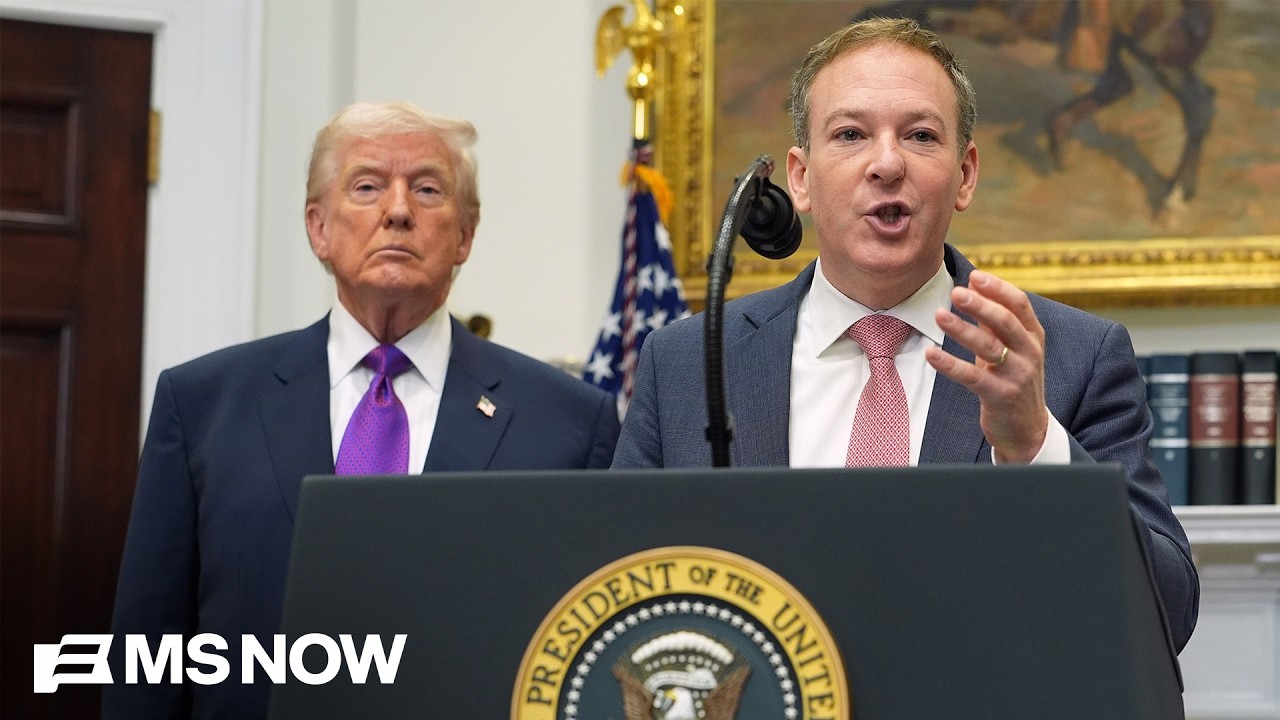
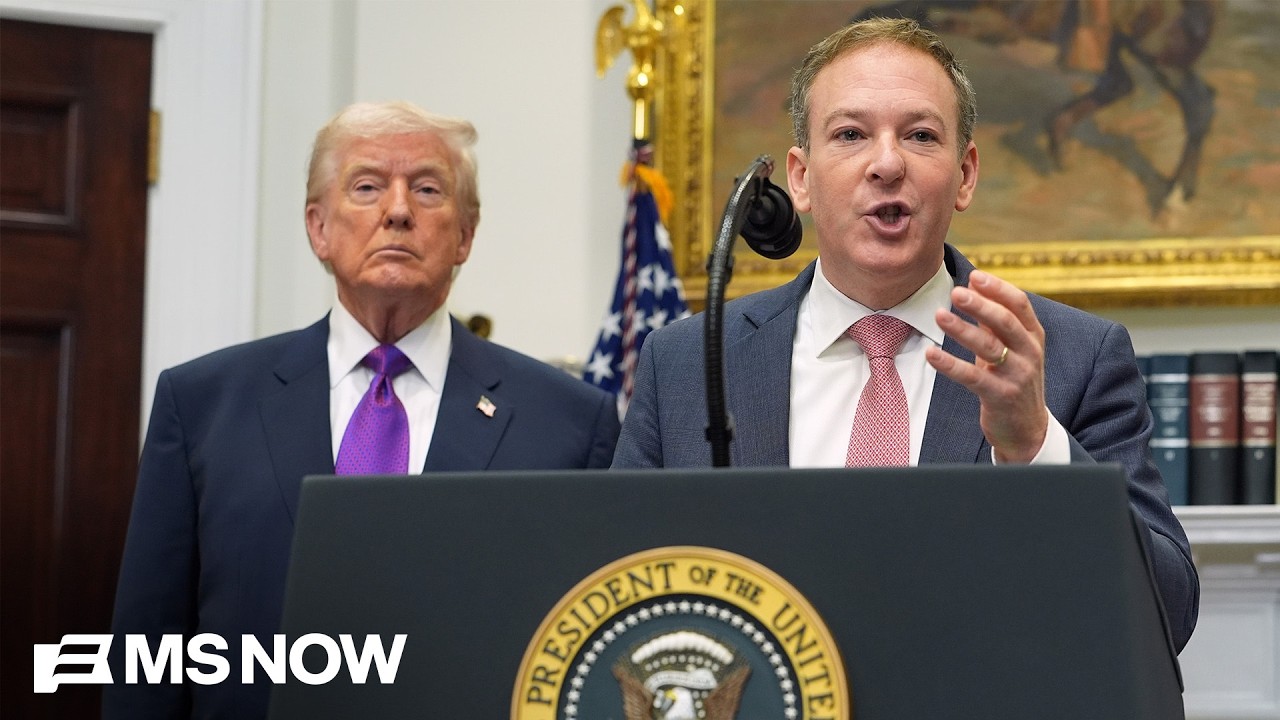
“BIGGEST DEREG IN AM HIST BY FAR”
SO CALLED END FINDING OBAMA ERA; PRICES WENT UP FOR WORSE PRODUCT; NO BASIS IN FACT OR LAW; FF SAVE LIVES; WIND INTERMITTENt MOST COSTLY; DIE NO AC HEATING; RADICal rule --> green new scam mebbe worse than rissia; jobs decimated but coming back bc tariffs; harmed car indist; ford plant wd be closed;
hated start sop feature; ev mandate; had to pay 5 trill$ for pwr stations for ev
car price up 22% biden fo gnscam
#$
CAR START EZIER... DOW
Z HOLY GRAIL OVERREACH; SAVE 1/3 TRILL$; 2400 ON CAR; IDEOL CRUSADE REGU PWR GRAB MOST; TRILLIONS $ STRANGLED, LIMIT CHOICE; LEFTWING WISHLIST EV MANDATE ; abuse? go to church; target am dr; red tape; forced trans to ev; climate partic triphy = startstop; bureaucrats demand; delivers wins cafe duffy ca; jobs;
restores the rule of law?!
...
TIRED OF PLAYING GAMES; EV NO ONE BOUGHT; WE HEARD YOU AND ACTED; COMMITED TO CLEAN AIR LAND AND WATER FOR ALL HARNESS AM GREATNESS? FREEDOM ABD CHOICE, RULE OF LAW VONGR NEVER MADE LAW; NEVER WAVER ON MISSION, GOLDEN AGE OF AM
SPK ONLY OF CAR EMISSION NOT PWR PLANTS?
NO THER PREZ WD DO THIS; 1.3 TRILL SAVINGS
VOUGHT
LEE FARM EQUIP JOHN DEER; SMOG NO NEED TO GO TO FINEST SCHOOL TO WORK LAWN MOWER TRMP
WINDMILL ALL MADE IN CHINA GERMANY KILL BIRDS, EYESORE; EUROPE NOT RECOG W/ WIND AND MIGRANTS; MOST EXPENSIVE ENERGY; HOPE NOT 1 BUILT; ENDNGERMENT FOR MILITARY AND AIRLINES
NO ONE DOES MORE FOR HEALTH CARE THAN GOP; DRUG PRICES, BIGGEST EVER
CARS EV NO WORK MULT COMPUTER TO SAVE TINY AMT OF GAS
---
---
MMA
February 12, 2026, edition of Newsmax's Chris Plante: The Right Squad
ALEX SWOYER (GUEST): So, Chris, I'm going to go to you first. We know President Trump hates those windmills. He thinks they look terrible. And I will say driving through Iowa, my dad's home state, you see them everywhere. And they are kind of, you know -- they kind of don't look well with the landscape. They don't look like they quite fit. So is this was this a push to try to eliminate some of those windmills?
PLANTE: Well, it's windmills — have you know, they're an embarrassment invented in Persia and 700 A.D. And the Democrats think that they're the latest in energy. They're not the latest in energy. They're Cuisinarts in the sky. They turn eagles and hawks into, you know, into shredded former birds. They don't give us a lot of energy. They are a blight. And they're not economically viable either.
Look, we've got all kinds of sources of energy. And we don't have to go to Persia from the eighth century to adopt new forms of energy in the United States of America. But the Democrats oppose all known forms of energy in the 21st century. They don't like hydroelectric dams because of the fish. They don't like coal burning plants because they're afraid of smoke in the sky or something.
We need more smoke in the sky, it'll block the sun out. It'll cool the Earth and they'll feel better. They don't like nuclear energy, of course, which is clean, efficient, inexpensive, and, you know, hasn't killed anybody. You know, it's the old more people died in Ted Kennedy's car than died at Three Mile Island.
SWOYER: I guess they're not worried about the birds. Although I will say windmills do freeze, that's an issue there.
---
---
MMA
Right-wing media’s cynicism about climate leaves out ongoing global success of renewables
Special ProgramsClimate & Energy
Written by Ilana Berger
Published 02/02/26
Right-wing media are suggesting that the energy transition has permanently fallen out of favor as a global priority, evidenced by business leaders’ and governments’ rapid shift in focus toward artificial intelligence. But other recent milestones and ambitious projects signal that long-term interest in climate action is still very much alive.
At the World Economic Forum’s annual convening of elites in Davos, for instance, which has championed corporate climate ambitions for the past several years, right-wing media claimed the message this year was that renewable energy “literally cannot be used.”
Although it’s true that U.S. financial companies such as BlackRock — whose CEO, Larry Fink, headed this year’s conference — have largely abandoned net zero goals, and the Trump administration, which has encouraged fossil fuel expansion abroad, brought thatattitude to the conference, conversations about the clean energy transition continued to take place at Davos.
And reporting from The Wall Street Journal and CNBC demonstrate that business leaders are still talking about renewables, and the European Union just hit “‘a major tipping point’ of the clean energy era” according to The Guardian, with renewables generating “30% of the EU’s electricity in 2025” compared to just 29% from coal, oil, and gas.
The Trump administration pushed its fossil fuel agenda at Davos
- In a “free wheeling special address” to the World Economic Forum, Trump said that “windmills” are “losers” and “the more windmills a country has, the more money that country loses and the worse that country is doing.”Trump has spread misinformation about wind energy for years. He also falsely claimed during the Davos speech that he has not “been able to find any wind farms in China.” According to PolitiFact, “China has about 44% of the world’s wind farm capacity, ranking No. 1 globally and almost triple what the U.S. has.” CNBC, [1/23/26; PolitiFact, 1/21/26; Media Matters, 10/2/23]
- The Financial Times wrote that during a speech at a private dinner hosted by BlackRock CEO Larry Fink, U.S. Secretary of Commerce Howard Lutnick “told his audience that the world should focus on coal as an energy source rather than renewables.” Financial Times, [1/21/26]
- According to The New York Times, at Davos, “the focus on climate and stopping biodiversity loss has taken a backseat” where it was once “a center for the corporate climate movement.” The shift can largely be attributed to “pushback from Republicans, the fallout from the war in Ukraine and the return of President Trump to the White House,” David Gelles wrote for The New York Times. Instead, “Panels on AI, the energy transition, and industrial reinvention were packed. Private discussions focused on expansion, deployment, and long-term prospects,” wrote CNBC. The New York Times, [1/22/26; CNBC, 1/24/26]
- While the conference has historically touted a focus on corporate sustainability, it has been rife with greenwashing and false climate solutions for years.The New Republic noted of Davos in recent years: “Oil companies were formal partners for the event, which was marketed as being carbon-neutral while it involved a bunch of corporate and governmental executives flying via private jet to an Alpine town whose signature sport climate change is currently decimating. The confab hyped ‘solutions’ like carbon credits and carbon capture that would allow corporations to keep polluting as usual—even as rigorous reporting showed a lot of carbon credits weren’t backed by real reductions and carbon capture wasn’t yet feasible at scale.” The New Republic, [1/23/26]
Right-wing media suggest climate solutions are no longer relevant, often citing Davos
- On Fox Business, climate skeptic Marc Morano said that Davos was a sign that Trump has “completely obliterated the entire climate agenda.” “This just goes to show you that the entire climate agenda, within one year of Donald Trump getting to work, … has just decimated it,” Morano said. Fox Business, *The Bottom Line*, [1/23/26; Fox News Primetime, 8/9/21]
- On One America News, Morano told host Dan Ball, “Even the billionaire class is departing from the climate agenda, including Michael Bloomberg. Washington Post editorial [board] has been doing anti-Green New Deal-type editorials.” One America News, *Real America with Dan Ball*, [1/27/26]
- On Newsmax, Morano and host Carl Higbie discussed how climate change is “nowhere to be found” at Davos and has “dropped down off the list” of priorities. Higbie said Morano “laid out that the global elites have dropped the doom and gloom of [the] climate agenda, largely because it doesn't fit with their billionaire agenda when they fly in on their private jets. … This was like the center of their agenda and now it's nowhere to be found.” Morano claimed, “They did a survey of World Economic Forum members before this conference started, and climate has just dropped down off the list. It's so bad.” Newsmax, *Carl Higbie Frontline*, [1/22/26]
- Fox host Greg Gutfeld said that Trump made the climate agenda “irrelevant.”On The Five, Gutfeld said, “Wherever Trump goes, wherever that place is is kind of rendered permanently different. Sometimes even irrelevant. … Look at the climate agenda, look at the trans movement. Davos falls into the same pattern. It looks like another small town leveled by the orange tornado.” Fox News, *The Five*, [1/22/26]
- RedState headline: “Davos Ditches Climate: Elites Now Eyeing Economy Instead.”The right-wing outlet wrote that “this year in Davos … interest in all things climate seemed to be nearing an all-time low,” claiming that “the general run of citizens - you know, the people who elect a lot of the ‘elites’ at Davos - are a lot more worried about the price of eggs than their carbon footprints.” RedState, [1/22/26]
- Fox host Rachel Campos-Duffy said that while the network typically mocks “all the private planes that come into Davos,” 2026 “feels very different from other years” because “nothing starts until President Trump arrives — until daddy's home, as so many people say.” Campos-Duffy noted that Fox News usually mocks “all the private planes that come into Davos because, of course, this is the elite globalist crowd that will tell you you can't travel in your car, you shouldn't take a plane, and actually wants to limit your ability to take long-haul flights as they fly in privately.” She added, “Here you have this global conference where President Trump is about to blow it up in terms of his negotiations and stands, and yet nothing starts until he arrives. … President Trump is the leader that everyone is — that everything hinges on.” Fox News, *Fox & Friends*, [1/21/26]
- On Infowars,War Roomhost Harrison Smith said, “It’s kind of weird how the World Economic Forum and the Davos meeting used to be so into climate change. Remember how they would talk about nothing but climate change for a long time, and now this year it’s like not even a concern?”Infowars, *War Room*, [1/20/26]
- Fox News headline: “Conservative groups declare 2025 a tipping point on ‘climate hysteria’ as Trump unleashes energy agenda.”The report highlighted several fossil-fuel advocacy groups that outlined “2025 as a pivotal year in trading climate activism for energy production and economic realism.” It also quoted American Energy Institute CEO Jason Isaac’s claim that “governments, investors, and even climate activists are abandoning the hysteria and choosing energy security, affordability, reliability, and common sense. President Trump led this shift by putting America’s energy strength first.” Fox News Digital, [12/19/25; E&E News, 2/28/25; Energy & Policy Institute, 8/5/24; Daily Kos, 11/2/22]
- Right-wing media celebrated a November 2025 memo from Bill Gates, claiming that he flipped on climate change and no longer thinks it is important.In the memo, Gates wrote that climate change will have “serious consequences” but that he does not think it will “lead to humanity’s demise.” Right-wing media presented Gates’ comments to argue that climate change is not a concern and never has been. Media Matters, [11/14/25]
Recent reporting shows continued global interest in renewable energy expansion
- In 2025, wind and solar generation exceeded fossil fuel generation in the European Union, according to a report from the U.K. think tank Ember Energy.“Wind and solar generated a record 30% of EU electricity, higher than fossil power for the first time on record,” which generated 29%, the report said. Ember Energy, [1/22/26]
- The U.K. and nine other European countries just announced plans to build 100 gigawatts of offshore wind power in the North Sea, enough to power 143 million homes. The governments signed a declaration that promises “to collectively build 5GW of offshore wind capacity every year between 2031 and 2040 by helping to support private sector investments.” The Guardian, [1/26/26]
- The CEO of German insurance and asset manager company Allianz, Oliver Bäte, told CNBC that “he disagreed with the suggestion that it may just be a matter of time before net zero is dismissed in Europe, saying short-term thinking on this issue is ‘bulls---.’” “Asked about political leaders backtracking on their much-vaunted European Green New Deal and Norway’s oil fund reportedly defending a push from companies to water down their climate goals, Bäte said anyone who has children ‘will have to worry’ about the planet’s future.” CNBC, [1/22/26]
- In a Davos interview with The Wall Street Journal, Fortescue Metals Group CEO Andrew Forrest, said he was surprised that green energy and sustainability have been dropped from the agenda because renewable energy has allowed him to “compete with the rest of the world” and “deliver … the lowest cost product.” He also told the Journal, “I’m saying to all of my fellow leaders in business and politics, to say, Hey, you are your values. … If you drop your values just because there’s pressure on them or people don’t agree with them or you get political pushback, then, well, who actually are you?” The Wall Street Journal, [1/21/26]
- The CEO of one of the world’s largest iron ore mining companies, Forrest has been vocal about keeping climate goals relevant and “convened three private meetings with between 20 and 50 CEOs” on the topic at Davos, according to Axios. Forrest acknowledged that other leaders “fear retribution” from Trump, but told Axios, “Everyone cares what the economics are, and the economics are going straight to green energy.” Axios, [1/27/26]
- Recapping the event, The World Economic Forum wrote, “Davos in 2026 will be remembered as a week when geopolitics owned the stage – yet the climate and nature crisis persisted in the wings.” Ester Baiget, co-chair of WEF’s Alliance of CEO Climate Leaders and CEO of Novonesis, a Danish biotech company, said during the convening, “Business-smart is climate-smart – they are two sides of the same coin.” Leaders spoke about the plummeting price of renewable energy and energy storage, the global electric vehicle transition, and the importance of getting ahead of climate change tipping points that will “self-amplify warming and undermine the basis for stable economies.” World Economic Forum, [1/30/26; Climate Home News, 1/21/26]
---
MMA
---
NO LNX
America elected a simpleton and the wreck he leaves behind could be permanent
U.S. President Donald Trump attends a ceremony marking the 24th anniversary of the September 11, 2001, attacks on the United States at the Pentagon, in Washington D.C., U.S., September 11, 2025. REUTERS Evelyn Hockstein
Sabrina Haake, Raw StoryNovember 25, 2025
Since Donald Trump has been back in office, energy prices have increased at more than double the rate of inflation. The Consumer Price Index from the end of October reported an “all items price index” increase for food, shelter, and transportation of 3.0 percent over a 12-month period, while energy services for the same period rose by 6.4 percent.
After promising to slash energy prices, Trump has done the opposite. His energy policies reflect the same ethos driving everything else in his retribution playbook: reward donors and inflict pain on Democrats, even when the economic consequences are nationwide.
Lust for retribution
In early October, Trump announced the claw-back of billions of dollars in federal funding for utilities, money that had been appropriated to reinforce power grids and reduce electricity prices.
Targeting blue states exclusively, Budget Director Russ Vought announced the cancellation of “nearly $8 billion in Green New Scam funding to fuel the Left’s climate agenda.” In all, 321 Congressionally set awards supporting 223 wind, solar, and transmission projects were trashed.
Trump’s aversion to clean energy isn’t the only factor driving costs. His refusal to upgrade the grid, his half-baked export and tariff initiatives, and his blind support for energy-sucking AI data centers are all contributing to surging energy prices with no relief in sight.
As Canary Media framed it, “Trump slapped tariffs on certain wind turbine materials and opened a sham “national security” probe to pave the way for even more. He halted construction on a nearly completed offshore wind farm and moved to revoke permits for two more. He canceled hundreds of millions in port funding critical to offshore wind development and imposed new directives to stifle renewable projects on federal lands.”
Trump’s dedication is showing: after only ten months of Trump 2.0, US household electric bills have increased by 10 percent, and are expected to continue climbing.
UN Climate Summit
Trump is doing more than reversing US climate successes, he’s also undermining progress in other parts of the world. Last month, when the International Maritime Organization agreed on the world’s first carbon tax on global shipping to encourage the transition to cleaner fuels, Trump released a childish Truth Social rant threatening to retaliate.
This month, he ignored the UN Climate Summit in Brazil. Thankfully, California Governor Gavin Newsom attended, representing the world’s fourth-largest economy. Newsom highlighted California's efforts to step up on climate where Trump has stepped out.
Facing down the embarrassment of an antiquated, know-nothing, pro-fossil fuel regime, Newsom didn’t hold back. When asked about the US retreat from global climate action, he called Trump “an invasive species … He’s a wrecking ball president trying to roll back progress of the last century … he’s doubling down on stupid.”
Newsom did more than talk. While he was at the summit, he signed new Memoranda of Understanding (MOUs) with Brazil, Colombia, and Chile to advance clean energy, wildfire prevention, and other climate-related initiatives. He also expanded California’s existing partnerships with China and Mexico on clean energy development and zero-emission freight corridors.
Newsom managed to bolster California's profile as a stable international business and climate partner despite the optics of a US president ruled by ego and impulse.
Our loss, China’s gain
In September, addressing the UN, Trump called climate change a “con job” and urged other world leaders to abandon their climate efforts despite the Earth’s rising temperatures. Trump claimed falsely that China sells wind turbines to the world without using them at home, and told assembled leaders, “If you don’t get away from the green energy scam, your country is going to fail.”
The next day, China pledged the reverse. Xi Jinping announced China’s plan to increase electric vehicle sales and dramatically increase wind and solar power, targeting a 600 percent increase over 2020 levels.
Despite Trump’s claim, China has vastly expanded wind power developments at home, adding 46 gigawatts of new wind energy this year alone, enough to power than 30 million homes. Meanwhile, our Cro-Magnon regime froze permits for wind farms and issued stop work orders, ending tens of thousands of wind energy jobs in the process.
Critics agree that Trump’s withdrawal from climate efforts ceded valuable ground to China, which is now rapidly expanding its renewable and EV industries. China’s Ming Yang Smart Energy just unveiled OceanX, a two-headed offshore wind turbine. OceanX is expected to cut offshore energy costs to one-fifth of Europe’s costs while allowing wind farms to operate with fewer, more powerful turbines.
“China gets it,” Newsom said at the UN Climate Summit, “America is toast competitively, if we don’t wake up to what the hell they’re doing in this space, on supply chains, how they’re dominating manufacturing, how they’re flooding the zone.”
:{Newsom is right. Americans are suffering the tragedy of an uninformed and unstable president who rejects science, a president
---
YMAIL 8 25 LeeAnn Hall, National Campaign for Justice
info@juststrategy.org
Donald Trump just canceled the Lava Ridge Wind Project in Idaho. This project would have generated 1 gigawatt of clean wind power, enough electricity to power more than 750,000 homes for a full year. After years of planning, environmental review, and community engagement, the project had been approved and scaled back to avoid cultural and environmental impacts.
Now, with the stroke of a pen, Interior Secretary Doug Burgum has reversed that approval. He cited so-called "legal deficiencies" and announced that no new wind or solar project on federal land can proceed without his personal sign-off. This is part of a sweeping campaign to stall renewable energy development across the United States.
Trump is delivering for his Big Oil donors by gutting projects that threaten their profits. Lava Ridge was a direct investment in America’s future with homegrown clean energy, reduced dependence on foreign oil from countries like Saudi Arabia, and a major step toward slowing climate change. Trump killed it to keep his fossil fuel backers happy.
The consequences of this decision go far beyond Idaho. Every clean energy project on federal land is now at risk. Every step toward energy independence is in jeopardy. Every ton of greenhouse gas emissions we could be cutting will now remain in the atmosphere, heating our planet and fueling climate disasters.
trump xo via morano 2 25
Marc Morano: Climate activists should be 'embracing' Trump - YouTube
YouTube
ClimateDepot.com executive editor Marc Morano examines President Donald Trump's executive order on wind energy projects on 'Fox & Friends Weekend.
---
11 23
WASHINGTON— The Biden-Harris administration today announced its approval of the Empire Wind offshore wind project – the sixth approval of a commercial-scale offshore wind energy project under President Biden’s leadership. Today’s announcement supports the Administration’s goal of deploying 30 gigawatts of offshore wind energy capacity by 2030.
Empire Wind US LLC proposes to develop two offshore wind facilities, known as Empire Wind 1 and Empire Wind 2. The lease area is located about 12 nautical miles (nm) south of Long Island, N.Y., and about 16.9 nm east of Long Branch, N.J. Together these projects would have up to 147 wind turbines with a total capacity of 2,076 megawatts of clean, renewable energy that the Bureau of Ocean Energy Management (BOEM) estimates could power more than 700,000 homes each year. The projects would support over 830 jobs each year during the construction phase and about 300 jobs annually during the operations phase.
“Under President Biden’s leadership, the American offshore wind industry is continuing to expand rapidly — creating good-paying union jobs across the manufacturing, shipbuilding and construction sectors," saidSecretary Deb Haaland. “Today’s approval of the sixth offshore wind project adds to the significant progress towards our Administration’s clean energy goals. Together with the labor community, industry, Tribes, and partners from coast to coast, we will continue to expand clean energy development in a manner that will benefit communities, strengthen our nation’s energy security, and address climate change.”
“BOEM and our partners have already achieved so much in pursuit of the Administration’s goal of reaching 30 gigawatts of offshore wind energy capacity by 2030,” saidBOEM Director Elizabeth Klein.“Extensive engagement with Tribes, other government partners, ocean users, concerned citizens, and more has helped us to avoid or reduce user conflicts while facilitating the responsible development of offshore wind projects. We look forward to continuing our work with them as we move this industry forward.”
Bidenomics and the President’s Investing in America agenda are growing the American economy from the middle out and bottom up – from rebuilding our nation’s infrastructure, to driving over half a trillion dollars in new private sector manufacturing and clean energy investments in the United States, to creating good-paying jobs and building a clean energy economy that will combat the climate crisis and make our communities more resilient.
Since the start of the Biden-Harris administration, the Department of the Interior has approved the nation's first six commercial-scale offshore wind energy projects. BOEM has held four offshore wind lease auctions, which have brought in almost $5.5 billion in high bids, including a record-breaking sale offshore New York and New Jersey and the first-ever sales offshore the Pacific and Gulf of Mexico coasts. BOEM has also advanced the process to explore additional opportunities for offshore wind energy development in the U.S., including in the Gulf of Maine and offshore Oregon and the U.S. Central Atlantic coast. The Department has also taken steps to evolve its approach to offshore wind to drive towards union-built projects and a domestic-based supply chain.
Invaluable feedback was gathered through nation-to-nation consultations with Tribes, input from federal, state and local agencies, and from public meetings and comments in analyzing the project’s potential environmental impacts and developing possible alternatives and mitigation measures.
The Record of Decision includes measures aimed at avoiding, minimizing, and mitigating the potential impacts that may result from the construction and operation of the project. Among those measures, Empire Wind, LLC has committed to establishing fishery mitigation funds to compensate commercial and for-hire recreational fishers for any losses directly arising from the project.
The Record of Decision will be published in the Federal Registerin the coming days and can be found on the BOEM website.
---
===
together at last: IER AEA:
---
an 1123
...right-wing media figures and climate deniers have used the cancellation of two major wind projects that were set to be built off the coast of New Jersey to make misleading claims about renewable energy as a whole. In addition to falsely claiming that there is evidence offshore wind projects are killing whales, they are using the project challenges to misleadingly attack the Biden administration’s climate agenda and argue against renewable energy subsidies.
On October 31, Danish global offshore wind developer Orsted announced (https://orsted.com/en/company-announcement-list/2023/10/oersted-ceases-development-of-its-us-offshore-wind-73751) it would be canceling Ocean Wind 1 and 2, citing high inflation, rising interest rates, and a choked supply chain.
Some right-wing media are calling the scrapped projects a “tremendous win (https://x.com/BillSpadea/status/1719628942716350762?s=20)for all New Jerseyans,” even though they would have provided 15,000 jobs (https://www.app.com/story/news/local/2023/11/02/rsted-promised-jobs-but-canceled-wind-projects-whats-next/71407832007/). Ocean Wind 1 and 2 would have also provided2.2 gigawatts (https://renewablesnow.com/news/rsted-stops-22-gw-of-us-offshore-wind-projects-books-large-charges-838502/)of electricity to 1 million homes to help meet the Biden administration’s goal (https://www.whitehouse.gov/briefing-room/statements-releases/2021/03/29/fact-sheet-biden-administration-jumpstarts-offshore-wind-energy-projects-to-create-jobs/) of deploying 30 gigawatts of offshore wind energy by 2030. It would have also helped New Jersey meet its goal (https://nj.gov/emp/)of reaching 100% clean energy by 2035.
Below are some examples of how bad actors spun the setback to deride renewable energy and omitted important facts and context:
FALSE CLAIM: The project cancellation is proof that offshore wind energy is not economically viable, which some said shows that Biden's clean energy plan is failing.
OnFox & Friends Weekend, frequent guest and climate change denier Marc Morano insisted that the cancellation shows that “the Green New Deal agenda isn’t … sustainable” and “Biden is failing on this green agenda.” “The story isn't as simple as you are hearing from Orsted, the windmill maker. It's not about supply chains — OK, it is a little bit about that. But this is a larger issue. This proves that the Green New Deal agenda isn't even sustainable with hundreds of billions of dollars of federal money this round, with Obama’s round. And what’s happened here is the local politics along the East Coast has had an impact as well. … Biden is failing on this green agenda, and it’s not just the wind. It’s happening in the EV world; it’s happening throughout the entire green agenda. Fox News, Fox & Friends Weekend, [11/4/23 (https://www.mediamatters.org/media/4013318)]
On Fox Business’ The Evening Edit, Forbes Editor-in-Chief Steve Forbes insisted that roadblocks facing offshore wind were due to “subsidizing things that don’t work” rather than inflation.Forbes contended that from the beginning, the offshore wind projects “weren't viable at all,” and said that instead of blaming setbacks on inflation, people should blame them on “the incompetence of doing something that makes no financial sense. We have plenty of energy in this country. Get what we have here instead of subsidizing things that don’t work.” Fox Business, The Evening Edit, [11/2/23 (https://www.mediamatters.org/media/4013315)]
In a New York Post op-ed, James E. Hanley, who is affiliated with a Koch-connected think tank, wrote of cancelled wind projects that “the renewable-power fantasy is being blown apart.” “If offshore wind had to compete on the free market, we wouldn’t even be talking about it," he wrote. Hanley once wrote an article titled “Green Jobs Are a Cost, Not a Benefit.” New York Post, \11/2/23 (https://nypost.com/2023/11/02/opinion/collapse-of-projects-shows-again-that-wind-power-is-not-affordable/); American Institute for Economic Research, 11/1/21 (https://www.aier.org/article/green-jobs-are-a-cost-not-a-benefit/); DeSmog, accessed [11/6/23 (https://www.desmog.com/american-institute-economic-research/)]
Anti-renewable energy activist Michael Shellenberger disputed wind energy isn’t “good for the environment and the economy.”He said: “Experts said wind energy was good for the environment and the economy, but it wasn't. And now, with the cost of wind energy rising, along with industry demands for subsidies, @Orsted (https://twitter.com/Orsted) has abandoned the projects it had planned to build off the coast of New Jersey. Victory!!!” Twitter/X, [11/1/23 (https://x.com/shellenberger/status/1719849041729671438?s=20)]
Fox Digital quoted Daniel Turner of energy group Power The Future, who called offshore wind projects “green dreams.” FoxNews.com wrote: “‘When green dreams run into hard reality, the results are never pretty,’ Daniel Turner, founder and executive director of energy group Power The Future, said in a statement. ‘Wind power receives billions in taxpayer support, yet we see project after project failing.’ ‘In this case, it’s the people of New Jersey left holding the bag,’ Turner said.” FoxNews.com, [11/1/23 (https://www.foxnews.com/politics/developer-axes-two-major-offshore-wind-projects-blow-bidens-green-energy-goals?intcmp=tw_fnc)]
FACT: Experts see long-term growth for offshore wind energy despite setbacks, and renewable energy is booming thanks in part to Biden’s climate policy.
The industry is facing a perfect storm of challenges, some of which are being fueled by the post-pandemic economy and have held up other energy projects as well. Developers first signed fixed-price contracts pre-pandemic and didn’t sufficiently hedge for inflation in costs of steel and other essential materials, as well as rising financing costs due to increased interest rates. Canary Media, \11/2/23 (https://www.canarymedia.com/articles/wind/the-us-offshore-wind-industry-faces-a-moment-of-reckoning); E&E News, [5/31/23 (https://www.eenews.net/articles/boom-or-bust-what-inflation-means-for-oil-and-gas)]
Offshore wind is still a nascent technology in the U.S. and is experiencing growing pains, but that doesn’t mean it’s failing.Experts say federal regulators have been slow to approve offshore permits, particularly during the Trump administration, which was accused of slow-walking projects. Investment in domestic manufacturing of components, specialized ships needed to install turbines, and the labor force will likely drive down costs in the long term. E&E News, \11/2/23 (https://www.eenews.net/articles/offshore-wind-is-stumbling-can-biden-save-the-industry/); Inside Climate News, 8/19/19 (https://insideclimatenews.org/news/19082019/vineyard-wind-offshore-renewable-energy-delay-boem-environmental-cumulative-review-nepa-massachusetts/); Climate Nexus, accessed 11/13/23 (https://climatenexus.org/climate-issues/offshore-wind-costs/); Spectrum News, 4/3/23 (https://spectrumlocalnews.com/nc/charlotte/news/2023/04/03/the-jones-act--how-a-100-year-old-law-complicates-offshore-wind-projects); Utility Dive, [3/6/23 (https://www.utilitydive.com/news/wind-workers-labor-shortage-skilled-labor-apprentices/644174/)]
The price of offshore wind fell by 60% between 2010 and 2022, even with price spikes. According to the International Energy Agency, “Although there has been a rise in costs in recent years … which has created difficulties in particular for wind power in some advanced economies, these cost reductions have largely followed anticipated learning rates linked to the scaling up of deployment and technology innovation.” International Energy Agency, [10/10/23 (https://iea.blob.core.windows.net/assets/66b8f989-971c-4a8d-82b0-4735834de594/WorldEnergyOutlook2023.pdf)]
A recent report found that with more ambitious targets, offshore wind could supply 25% of U.S. electricity while creating nearly 400,000 new jobs. The report was put out by GridLab; the University of California, Berkeley’s Goldman School of Public Policy; and Energy Innovation. A GridLab program manager wrote that “the long-term prospects for offshore wind remain promising as a result of improving technology and falling costs," adding: “Today’s prices spikes are like the early days of land-based solar and wind, which after reaching maturity are now America’s cheapest forms of electricity. Establishing a robust domestic offshore wind supply chain now will drive down prices as more turbines are built, and technological advancements will set the industry up for success.” Utility Dive, [8/3/23 (https://www.utilitydive.com/news/us-offshore-wind-inflation-supply-chain-jobs-clean-energy-investment-heat-wave-decarbonization/689810/)]
Other offshore wind projects are still moving forward, including the largest one yet. The Interior Department recently approved the Coastal Virginia Offshore Wind project, which would power over 900,000 homes and support 1,100 jobs annually once operation begins. The New York Times, [10/31/23 (https://www.nytimes.com/2023/10/31/climate/biden-wind-farm-virginia.html)]
Biden’s Inflation Reduction Act has jump-started investments in clean energy technology. Over a year since the IRA was signed into law, companies have invested more than $350 billion in U.S.-based clean energy projects. In that time, there have also been over 100 new clean-technology manufacturing announcements and nearly $80 billion in private investment. Canary Media, \8/16/23 (https://www.canarymedia.com/articles/clean-energy-manufacturing/the-us-climate-law-is-fueling-a-factory-frenzy-heres-the-latest-tally); American Clean Power Association; accessed [11/6/23 (https://cleanpower.org/investing-in-america/)]
FALSE CLAIM: Surveying for offshore wind projects led to a significant spike in whale deaths
Right-wing media have been amplifying (https://www.mediamatters.org/fox-news/fox-news-touting-dubious-new-documentary-repeating-misleading-claims-about-offshore-wind) and echoing renewable energy opponents who are falsely claiming that offshore wind projects are causing a slew of whale deaths off of the East Coast.Specifically, they have claimed, without evidence, that high-resolution geophysical surveying using sonar to map the ocean floor can be directly linked to the spike in whale deaths. Media Matters, \8/29/23 (https://www.mediamatters.org/fox-news/fox-news-touting-dubious-new-documentary-repeating-misleading-claims-about-offshore-wind), [10/2/23 (https://www.mediamatters.org/fox-news/fox-anchor-and-climate-contrarian-defend-trumps-unhinged-comments-about-whales-and)]
Right-wing media have been dishonestly pitting conservationists against clean energy advocates on this issue. In some cases, right-wing media have been amplifying offshore wind opponents with direct ties to the fossil fuel industry, framing them as environmentalists. Politico, \7/19/23 (https://www.politico.com/news/2023/07/19/whales-offshore-wind-farms-00100396); Media Matters, [2/3/23 (https://www.mediamatters.org/fox-news/fox-news-rapidly-escalating-its-anti-offshore-wind-campaign)]
Fox Business host Maria Bartiromo: “I thought the Democrats were interested in environmental issues. You’ve got the whales dead and people are blaming these wind farms.”Fox Business, Mornings With Maria Bartiromo, [11/2/23 (https://www.mediamatters.org/media/4013316)]
Fox host Jesse Watters claimed his show saved the whales from Orsted. Watters said, “Primetime has just scored another big victory. The whales have received a stay of execution along with my beach views. We have been telling you for months how Biden's offshore wind projects are destroying the Jersey shore. … Despite billions in giveaways, the windmill still won't work.” Fox News, Jesse Watters Primetime, [11/1/23 (https://www.mediamatters.org/media/4013317)]
Just The News claimed that “conservation groups believe that offshore wind development is driving an increase in whale deaths (https://justthenews.com/politics-policy/energy/conservationists-claim-recent-increase-whale-deaths-driven-offshore-wind) along the East Coast.”Just The News, [11/1/23 (https://justthenews.com/politics-policy/energy/cancellation-nj-offshore-wind-project-great-day-whales-says-county?utm_source=mux&utm_medium=social&utm_campaign=tw#article)]
Ryan Maue, a White House scientist under then-President Donald Trump who was fired after promoting climate skepticism, said the cancellation was “excellent news to every sea creature.” Twitter/X, \10/31/23 (https://x.com/RyanMaue/status/1719517990822068236?s=20); The Hill, [1/12/21 (https://thehill.com/policy/energy-environment/533913-officials-ousted-from-white-house-after-papers-casting-doubt-on/?rl=1)]
FACT: There is no evidence that offshore wind activities are contributing to the spike in whale deaths on the East Coast.
Scientists say there is no evidence that offshore wind is contributing to whale deaths, but fishing gear entanglement, vessel collisions, and the changing migration patterns of whale prey could be contributing. “Scientists who study whale behavior in general say it is impossible to definitively link the strandings to a single cause given the complexity of the ocean, the dramatic changes the North Atlantic has experienced in recent decades, and how much is still unknown about how these changes might be affecting baleen whales,” reports Yale Environment 360. Yale Environment 360, \3/8/23 (https://e360.yale.edu/features/humpback-whale-strandings-u.s.-east-coast); Factcheck.org, [3/31/23 (https://www.factcheck.org/2023/03/no-evidence-offshore-wind-development-killing-whales/)]
Some types of sonar can harm marine life – but those technologies are not used for offshore wind surveying.While military sonar and seismic blasting used for oil and gas exploration can harm whales, the National Oceanic and Atmospheric Administration has said that sound produced by high-resolution geophysical surveys used by offshore wind energy companies “produce much smaller impact zones because, in general, they have lower noise, higher frequency, and narrower beam-width.” The Guardian, \7/16/16 (https://www.theguardian.com/us-news/2016/jul/16/us-navy-banned-from-using-sonar-that-harms-dolphins-and-walruses); The Texas Tribune, 1/17/23 (https://www.texastribune.org/2023/01/17/texas-gulf-of-mexico-rices-whale/); NOAA, [accessed 11/10/23 (https://www.fisheries.noaa.gov/new-england-mid-atlantic/marine-life-distress/frequent-questions-offshore-wind-and-whales)]
Scientists say climate change is harming whale populations. Scientists say that rapidly rising ocean temperatures are pushing whales’ prey, such as zooplankton and menhaden, closer to shore, putting whales in closer proximity to major shipping channels and pushing them into areas with fewer regulatory protections. Politico, \7/19/23 (https://www.politico.com/news/2023/07/19/whales-offshore-wind-farms-00100396); The New York Times, [10/25/22 (https://www.washingtonpost.com/climate-environment/2022/10/25/north-atlantic-right-whale-population-climate-change/)]
---
---
mma 1 24 no pix
Fox host Jesse Watters and climate contrarian Michael Shellenberger attempted to delegitimize the trusted news wire service AP News, seemingly in response to a recent story from the outlet countering disinformation that Fox regularly pushes about offshore wind projects.
Video
CitationFrom the January 2, 2024, edition of Fox News' Jesse Watters Primetime
On the January 2 edition of Jesse Watters Primetime, Watters claimed that “liberal money is literally getting global warming stories planted on the front page of America's papers.” AP News has received grants from various foundations with a broad array of focuses and philanthropic leanings, which AP has used to hire more journalists and produce better climate change coverage.
But the expansion, during which the news agency hired about 20 climate journalists, was announced in February 2022. Though Watters and Shellenberger targeted the news service’s climate coverage as a whole, they also zeroed in on one December story titled “Contrary to politicians’ claims, offshore wind farms don’t kill whales. Here’s what to know.”
During the segment, Shellenberger, who authors a right-wing Substack called Public, refuted the article by repeating myths about offshore wind turbines killing whales, despite a lack of evidence to support those claims.
Shellenberger alleged AP News is accepting “millions of dollars … to basically do propaganda” on behalf of foundations that have “direct investments in things like those whale-killing wind farms,” presumably because the climate reporting grant came in part from foundations that also support renewable energy development. Shellenberger also called the article “disinformation,” even though the information it presents has been widely confirmed by experts who work with marine mammals and reiterated by several fact checks from a variety of sources.
Despite having produced a documentary attempting to vilify offshore wind projects in 2023, Shellenberger has failed to offer concrete evidence that this development is responsible for the unusual mortality even**t that is affecting whales on the Atlantic coast. Scientists say that while it’s nearly impossible to link the event to a single cause, fishing gear entanglement, vessel collisions, and the changing migration patterns of whale prey due to warming waters could all be contributing to an increase in whale deaths.
Far from indicating a genuine concern about biased reporting, the segment advanced a longstanding and concerted campaign led by Fox News to spread panic about offshore wind energy and hinder the transition away from fossil fuels.
Throughout 2023, Watters helped spearhead the right’s dubious obsession with whale conservation through his early coverage of wind projects in New York and New Jersey.
In reality, the story Shellenberger and Watters are attacking is far from “propaganda.” Not only does it quote both scientists and think tanks that are opposed to offshore wind development, but it also fails to mention that these think tanks have deep ties to the fossil fuel industry, as do smaller activist groups involved in the supposed whale conservation effort in the Mid-Atlantic region. When it comes to climate change, Fox won’t settle for anything less than science denial.
related
- ### Fox anchor and climate contrarian defend Trump's unhinged comments about whales and offshore wind
10/02/23 5:07 PM EDT
11/14/23 2:47 PM EST
08/29/23
---
===
https://www.cbsnews.com/news/esi-energy-pleads-guilty-150-eagles-killed-wind-farms/
CRIME
Wind energy company pleads guilty after at least 150 eagles killed in U.S.
APRIL 7, 2022 / CBS/AP
A subsidiary of one of the largest U.S. providers of renewable energy pleaded guilty to criminal charges and was ordered to pay over $8 million in fines and restitution after at least 150 eagles were killed at its wind farms in eight states, federal prosecutors said Wednesday.
NextEra Energy subsidiary ESI Energy was also sentenced to five years probation after being charged with three counts of violating the Migratory Bird Treaty Act during a court appearance in Cheyenne, Wyoming. The charges arose from the deaths of nine eagles at three wind farms in Wyoming and New Mexico.
In addition to those deaths, the company acknowledged the deaths of golden and bald eagles at 50 wind farms affiliated with ESI and NextEra since 2012, prosecutors said. Birds were killed in eight states: Wyoming, New Mexico, North Dakota, Colorado, Michigan, Arizona, Illinois and California.
Eagles Killed Wind Turbines
This Jan. 5, 2020, photo shows a bald eagle in Philadelphia.
CHRIS SZAGOLA / AP
"This prosecution and the restitution it secures will protect the ecologically vital and majestic natural resources of our bald eagle and golden eagle populations," U.S. Attorney Phillip A. Talbert for the Eastern District of California said in a statement.
NextEra, based in Juno Beach, Florida, bills itself as the world's largest utility company by market value. It has more than 100 wind farms in the U.S. and Canada and also generates natural gas, nuclear and solar power
Almost all of the eagles killed at the NextEra subsidiary's facilities were struck by the blades of wind turbines, prosecutors said. Some turbines killed multiple eagles and because the carcasses are not always found, officials said the number killed was likely higher than the 150 birds cited in court documents.
Prosecutors said the company's failure to take steps to protect eagles or to obtain permits to kill the birds gave it an advantage over competitors that did take such steps - even as ESI and other NextEra affiliates received hundreds of millions of dollars in federal tax credits from the wind power they produced.
NextEra spokesperson Steven Stengel said the company didn't seek permits because it believes the law didn't require them for unintentional bird deaths. The company said its guilty plea will resolve all allegations over past fatalities and allow it to move forward without a continued threat of prosecution.
The criminal case comes amid a push by President Joe Biden for more renewable energy from wind, solar and other sources to help reduce climate changing emissions. It also follows a renewed commitment by federal wildlife officials under Biden to enforce protections for eagles and other birds under the Migratory Bird Treaty Act.Criminal prosecutions had been halted under former President Donald Trump for birds killed inadvertently by industry.
It's illegal to kill or harm eagles under the migratory bird act. However, a wide range of industries - from energy firms to manufacturing companies - have lobbiedfor years against enforcing the law for accidental bird deaths.
The bald eagle - the U.S. national symbol since the 1700s - saw its populations widely decimated last century due to harmful pesticides such as DDT and other problems. Following a dramatic recovery, it was removed from protection under the Endangered Species Act in 2007. Biologists say more than 300,000 bald eagles now occupy the U.S., not including Alaska.
In the 1970s, there were believed to be just two bald eagles left in the entire state of New York City. Now, there are close to 1,000, and they're no longer considered endangered. They've been spotted in all five boroughs of New York City.
Golden eagles have not fared as well, with populations considered stable but under pressure from wind farms, collisions with vehicles, illegal shootings and poisoning from lead ammunition.
Most of the eagles killed at the ESI and NextEra wind farms were golden eagles, according to court documents.
There are an estimated 31,800 golden eagles in the Western U.S. with an estimated 2,200 killed annually due to human causes, or about 60% of all deaths, according to a study released last week by leading eagle researchers from the U.S. Fish and Wildlife Service and other entities.
The study concluded that golden eagle deaths "will likely increase in the future" because of wind energy development and other human activities.
Companies historically have been able to avoid prosecution under the century-old Migratory Bird Treaty law if they take steps to avoid deaths and seek permits for those that occur.
Charging documents said company representatives, including ESI's president, were warned that eagles would be killed if the company built two wind farms in central and southeastern Wyoming, and also knew about a risk to eagles when they authorized the repowering of a New Mexico wind farm, about 170 miles (274 kilometers) from Albuquerque.
The company proceeded anyway and at times ignored further advice from federal wildlife officials about how to minimize the deaths, according to court documents.
"For more than a decade, ESI has violated (wildlife) laws, taking eagles without obtaining or even seeking the necessary permit," said Assistant Attorney General Todd Kim of the Justice Department's Environment and Natural Resources Division in a statement.
ESI agreed under a plea deal to spend up to $27 million during its five-year probationary period on measures to prevent future eagle deaths. That includes shutting down turbines at times when eagles are more likely to be present.
Despite those measures, wildlife officials anticipate that some eagles still could die. When that happens, the company will pay $29,623 per dead eagle under the plea deal.
NextEra President Rebecca Kujawa said collisions of birds with wind turbines are unavoidable accidents that should not be criminalized. She said the company is committed to reducing damage to wildlife from its projects.
"We disagree with the government's underlying enforcement activity," Kujawa said in a statement. "Building any structure, driving any vehicle, or flying any airplane carries with it a possibility that accidental eagle and other bird collisions may occur."
===
===
renewable energy has significant downsides
By**:{CFACT:(style="background-color:#ff9966;"):}:** Ed, Peter Murphy|January 5th, 2020| Comments Off on Renewable energy has significant downsides
Wind and solar power will not replace fossil fuels—oil, coal and natural gas—any time soon; not in twelve or 30 years, and likely not in anyone’s lifetime who is alive today. The pursuit of solar and wind power also comes with a steep price, not just in higher utility bills and taxpayer-financed subsidies, but to people, wildlife and the balance of nature itself.
The proposed Gemini solar farm in southern Nevada, near Las Vegas, is the latest example of the environmental tension resulting from this renewable energy.
Solar “farms” take up a lot of land. In Gemini’s case, more than 7,000 acres, which would be the largest in the country and equivalent in size to a small city (e.g., larger than Schenectady, New York).
The U.S. Bureau of Land Management is poised to approve Gemini, which would provide enough solar energy to power 130,000 homes. Anyone traversing through Las Vegas at night surely knows it will take a lot more power than a large solar farm to keep the lights on, but it’s a start.
The BLM’s own environmental impact statement documents that the solar farm also will impact endangered species and plants, including the desert tortoise, kit fox and a rare plant I never heard of called the threecorner milkvetch.
Conservation and wildlife organizations are not pleased about this project, including the Defenders of Wildlife, even as it supports renewable energy in the abstract.Instead of disturbing endangered species and plants in vast desert lands, some organizations advocate the unrealistic alternative of having solar energy placed on every home.
Solar and wind energy projects also face a not-in-my-back-yard (“NIMBY”) problem. While the western half of the United States has more open desert space, the NIMBY issue has surfaced in the east, such as in rural Spotsylvania County, Virginia and elsewhere.
Last April, the County Board of Supervisors approved, over stiff local opposition, a solar farm project comprising more than 3,000 acres. As states like Virginia, Nevada, New York and others impose renewable energy quotas,the Spotsylvania NIMBY battle portends ongoing struggles to fulfill renewable mandates throughout the country, as CFACT has discussed.
Perhaps the most famous NIMBY example of opposition to renewable energy occurred off the coast of Cape Cod, Massachusetts where wealthy residents, including the late Sen. Ted Kennedy, opposed the Cape Wind offshore wind farm. After years of litigation, Energy Management, the company behind the project, pulled the plug in 2017.
Still, wind power is expanding throughout the U.S. as it produces more than six percent of the nation’s electricity. It is expected to grow exponentially worldwide in the next twenty years, according to the International Energy Agency. Like solar power, wind energy raises similar alarms about the amount of land-use and harm to wildlife.
Wind turbines are killing hundreds of thousands of bats and birds on an annual basis. More wind turbines mean millions more winged creatures dying every year. Wind turbines also are harming other animals, including dogs and other pets. The turbines themselves require considerable energy to produce and are not easily disposed of, bringing still more environmental concerns.
Wind power also may be causing increased temperatures, NOT YET AGAIN NO EVIDENCE which would be a facetious irony absent the seriousness of the issue. The big reason for this forced transition from fossil fuels to renewables is to supposedly reverse “man-made” global warming, yet wind power is expanding to the point where it could be contributing to warming. Go figure.
Then there is the environmental concern about batteries used to complement renewable energy sources when it is not windy or sunny. Batteries, of course, come from mining the ingredients necessary, such as cobalt and lithium. Moreover, the cost and quantity necessary for batteries to make wind and solar power viable are enormous and downplayed as politicians continue to force-feed renewable energy mandates on the public.
The environmental downside of wind and solar energy development alone is not a reason for abandoning these sources of energy. Rather, it is an argument for lowered expectations and realism. Renewable energy is not going to bring us a carbon-free world any time soon, absent corresponding harm in a variety of ways. Accordingly, scientists and policymakers should slow down the wind and solar freight train to balance more carefully the costs and benefits to people, wildlife and nature writ larg
===
===
https://www.mediamatters.org/facebook/misinformation-about-recent-whale-deaths-dominated-discussions-offshore-wind-energy
no lnx twt
:{:{after a slew of whale deaths along the east coast of the U.S., right-wing media have been promoting false fossil fuel industry talking points about offshore wind projects on Facebook.}:
Media Matters found that in the first two months of 2023, from January 1 - March 1:
Of the 288 posts that mention wind energy, nearly 84% specifically mentioned the unsubstantiated claim that offshore wind farms impact whale populations. These posts received 73,457 (73%) out of 101,277 interactions on posts about wind energy.
22 out of the top 50 most-interacted with posts about offshore wind energy contained misinformation claiming that they may be responsible for whale deaths on the East Coast.
None of the posts with misinformation had fact-checks from Facebook moderators, and nearly all of them were from right-leaning pages.}:
Right-leaning pages earned 90% of interactions on posts about wind energy.
Many posts that did not contain misinformation still promoted a misleading narrative about offshore wind projects.
According to NOAA and other experts, there is no evidence that proposed offshore projects have contributed to what the agency is calling an “unusual mortality event.”
:{:{Ramping up offshore wind development has been a focus of Biden’s energy agenda. In 2021, the administration set a goal of deploying 30 Gigawatts of offshore wind by 2030. More recently, the Inflation Reduction Act granted $100 million for offshore wind projects and reopened additional areas for lease in the eastern Gulf of Mexico and the Atlantic for wind development. }:
This effort, along with concerns over what is causing whale mortality, has mobilized clean energy opponents and sparked extensive coverage and discussion on Facebook, driven almost entirely by right-leaning pages.}:
84% of Facebook posts about wind energy also mentioned whale populations
Out of the 288 posts on the topic of wind energy from the study period, 241, or 84%, specifically mentioned whale populations. From December 1 to March 1, 16 humpback whales have been stranded on or near beaches in states along the Atlantic coast, mostly in New Jersey and New York. North Atlantic Right Whales have also been experiencing an unusual mortality event along the Atlantic Coast since 2017; 6 have been found dead so far in 2023.
Currently, there are only two functional wind farms in the U.S., with about 20 proposed offshore wind projects in various stages of development in 11 states along the East Coast. This has become the perfect opportunity for anti-renewable activists and fossil fuels industry shills posing as environmentalists sympathetic to the plight of whales to launch a public relations and legal campaign in opposition to these offshore wind projects.
Right-wing media, and particularly Fox News,have propelled these efforts in response to Biden’s push for offshore wind. One of the top posts with the most interactions, about 1,600, featured a FoxNews.com article with a headline that read, “SOMETHING FISHY: Congressman says green energy projects may be to blame for animal deaths.” That Congressman isRep. Chris Smith (R-NJ), who introduced legislation that would mandate a federal investigation into the role wind energy development may have played in the recent uptick in whale deaths.
Fox News article with image of beached whale
Smith isn’t the only lawmaker that spoke out after extensive right-wing media coverage. Reps. Jeff Van Drew (R-NJ), Rep. Andy Harris (R-MD), as well as a dozen New Jersey mayors have all called for a moratorium on offshore wind construction.
Another popular post was a screenshot of a tweet from Monica Crowley, a right-wing podcaster, former Trump official, and former Fox News contributor. The post suggests environmentalists do not care about whales dying because, in this instance, it does not fit their political agenda. It was shared by several pages affiliated with The Western Journal, including the Tea Party Community and Conservative Tribune. The February 13 tweet itself had over 100,000 likes, shares, and comments.
screenshot of a tweet from Monica Crowley
22 out of the top 50 posts with the most interactions about offshore wind and whales contained misinformation on the topic.
Nearly half of the top 50 posts examined by Media Matters incorrectly linked whale deaths to offshore wind projects.
The most popular post from our study, which had nearly 19,500 interactions, was a clip from the January 11 edition of Fox News’ Jesse Watters Primetime where Watters claimed that surveying for wind projects is killing whales. On January 11, Watters did a segment on his prime time show where he attempted to misleadingly portray Protect Our Coasts NJ as a grassroots oceans advocacy organization.
Jesse Watters plays video of beached whale
The second most popular post, which had almost 15,500 interactions came from Power the Future, whose founder, Daniel Turner, is an alumnus of the Charles Koch Institute. The post links to an opinion piece by Turner claiming that “radical environmentalists” are blaming whale deaths on fishing communities when they should, without evidence, be blaming wind farms.
Power The Future posts an article about "radical wind farm activists" from the Daily Caller
None of the posts were labeled as misleading by Facebook fact-checkers
None of the posts which contained blatant misinformation were labeled as such by Facebook through its fact-checking partnerships. In general, these posts failed to note NOAA’s statement on the topic or statements from any experts that have pointed out the improbability of a connection between the mortality event and offshore wind, especially given that whales face many other risks such as vessel strikes and entanglement. Some posts also accused environmentalists, Democrats and the Biden administration of being dismissive about the plight of whales. In reality, Biden’s massive investments in renewable energy may actually be key to helping save marine life; burning fossil fuels is impacting the species by limiting the availability of their food and changing marine migration patterns.
Other social media posts that were not included in this study and contain similar misinformation on the topic have been repeatedly fact-checked by other sites.
:{:{Many posts that did not contain misinformation still promoted a misleading narrative about offshore wind projects}:
Several posts Media Matters looked at featured articles and reports from USA Today, NPR, POLITICO, and Greenpeace that called out this misinformation campaign around offshore wind.
However, these debunks were outnumbered by content that, even if it acknowledged the lack of evidence to support anti-wind talking points, still gave them credence by repeating them over and over again without an immediate debunk and framing the issue as a real debate when very few groups actually disagree with NOAA, and those that do have no evidence to support their claims. Some coverage is also omitting or muddling key details about how far along the wind projects are to make them seem more directly correlated with whale deaths. }:
Even left-leaning pages were complicit in this. For example, a NowThis video asked: “Could Offshore Wind Developments be Causing Whales to Die?” The answer is no, but that isn’t evident until the end of the video.
All in all, the fact that content about all of the benefits offshore wind could bring to coastal communities paled in comparison to perceived harms reveals the success of fossil fuel industry propaganda online.
Is offshore wind killing whales?
Conservative New Jersey activist jumps into anti-wind crusade
Out of all of the posts about whales and offshore wind, 31 posts (13%) came from the page of a conservative activist Joseph Rudy Rullo, who unsuccessfully ran for New Jersey governor in 2017. So far, in 2023, Rullo has dedicated his Facebook page which has 384,000 followers, to spreading misinformation about offshore wind development and bashing New Jersey Gov. Phil Murphy for opting to not implement a moratorium on offshore wind development off of the New Jersey coast. He has also been used as a source on the topic for local New Jersey news.
Rullo has directed his followers to take steps to actively oppose offshore wind projects, such as attending New Jersey EPA meetings as well as the February 19 rally to “save the whales.” At the rally, “organizers” with the fossil fuel industry front group Protect Our Oceans NJ addressed the crowd along with lawmakers.
Right-leaning pages posted the most about wind energy compared to left-leaning and ideologically nonaligned pages
Right-leaning pages that post about news and politics have almost completely dominated the Facebook conversation about wind energy in general, not just offshore wind. Right-leaning pages posted more often, and earned more total interactions than either nonaligned or left-leaning pages. Right-leaning pages earned over 91,300 interactions on posts about wind energy, or 90% of all interactions on posts about wind energy, while nonaligned pages earned over 5,800 interactions (6%), and left-leaning pages earned 4,077 interactions (4%).
Right-leaning Facebook pages made 192 posts about wind energy issues, over twice the volume of nonaligned pages, which had 81 posts. Left-leaning pages made just 15 posts. All in all, right-leaning pages made up 67%, or nearly three-quarters of Facebook posts about wind energy.
These posts mainly focused on offshore wind projects and marine life, but also pushed misinformation about the functionality of wind turbines on land and their environmental impact, in addition to making exaggerated statements about how often they experience structural issues.
For example, one Newsmax headline suggested that green energy is flawed while in the same video a Newsmax correspondent admitted that according to the Department of Energy, the “reliability rate of a wind turbine is about 98% so these collapses and failures are quite rare by industry standards.”
Jon Glasgow on wind turbines on American Agenda
The threat that wind turbines pose to birds, which has long been exaggerated and pale in comparison to other threats to avian life such as climate change, buildings, pesticides, and domestic cats was also a theme. The idea has been a staple of climate change deniers with deep ties to the fossil fuel industry, such as Robert Bryce and more recently resurrected by renewable energy skeptics on Twitter.
Methodology
Using CrowdTangle, Media Matters compiled a list of 1,773 Facebook pages that frequently posted about U.S. politics from January 1 to August 25, 2020.
For an explanation of how we compiled pages and identified them as right-leaning, left-leaning, or ideologically nonaligned, see the methodology here.
The resulting list consisted of 771 right-leaning pages, 497 ideologically nonaligned pages, and 505 left-leaning pages.
Using CrowdTangle, Media Matters compiled all posts for the pages on this list that were related to wind energy or whales deaths that contained the keywords: “wind energy,” “wind turbines,” “wind turbine,” “wind farm,” “wind farms,” “offshore wind,” “wind projects,” “wind project,” “wind development," “dead whale,” “whale death,” or “whale deaths” in the post itself or in the headline or description of any included link from January 1, 2023, through March 1, 2023.
Two Media Matters researchers then reviewed the posts to determine which ones were relevant to the topic of wind energy, and which were relevant to the topic of offshore wind and whales specifically.
Finally, researchers coded 50 posts with the most interactions to determine whether they contained misinformation about offshore wind and whale mortality. Misinformation in this case was defined as the suggestion that there is evidence that offshore wind development, most frequently the sonar used in undersea surveys, has been or may be contributing to whale deaths. If coding differed, posts were reviewed and discussed to reach a consensus.
THE LATEST
Trump to return to Fox as they rekindle their mutually beneficial relationship
03/23/23 11:27 AM EDT
YouTube has done nothing to stem the tide of COVID-19 misinformation from Outkick’s Clay Travis
03/23/23 11:21 AM EDT
Several January 6 defense teams have cited Fox News as a reason for storming the Capitol
03/23/23 10:40 AM EDT
Misinformation about recent whale deaths dominated discussions of offshore wind energy on Facebook
03/23/23 10:39 AM EDT
A Florida-based right-wing media site endorsed by Gov. Ron DeSantis is supported by puppy mill money
03/23/23 10:32 AM EDT
Pagination
Current page1
…
Next page
IN THIS ARTICLE
Climate deniers
Related
Fox News is rapidly escalating its anti-offshore wind campaign
02/03/23
Fox News' Jesse Watters fails to disguise oil-industry funded group as a grassroots “ocean advocate” organization
01/12/23
Newsweek Falsely Blames Wind Turbines For Whale Beachings
04/04/1
===
HISTORY
timeline:
https://yyy.theguardian.com/environment/2008/oct/17/wind-power-renewable-energy
...July 1887, Glasgow, Scotland
The first windmill for electricity production is built by Professor James Blyth of Anderson's College, Glasgow (now Strathclyde University). The professor experiments with three different turbine designs, the last of which is said to have powered his Scottish home for 25 years.
Winter 1887 – Ohio, US
Professor Charles F. Brush builds a 12kW wind turbine to charge 408 batteries stored in the cellar of his mansion. The turbine, which ran for 20 years, had a rotor diameter of 50m and 144 rotor blades.
1890s – Askov, Denmark
Scientist Poul la Cour begins his wind turbine tests in a bid to bring electricity to the rural population of Denmark. In 1903, Poul la Cour founded the Society of Wind Electricians and in 1904 the society held the first course in wind electricity. La Cour was the first to discover that fast rotating wind turbines with fewer rotor blades were most efficient in generating electricity production.
1927 – Minneapolis, US
Joe and Marcellus Jacobs open the Jacobs Wind factory, producing wind turbine generators. The generators are used on farms to charge batteries and power lighting.
1920s
The first vertical axis wind turbine, the Darrieus turbine, is invented by Frenchman George Darrieus who in 1931 has it patented in the US. The design, often referred to as the "eggbeater windmill", due to the appearance of its two or three blades, is still used today.
1931 – Yalta, former USSR
A precursor to the modern horizontal wind generator is used in Yalta, generating 100kW. The turbine has a 30m tower and a 32% load factor, meaning it provides 32% of its potential energy output, pretty good even by today's standards.
1941 – Vermont, US
The world's first megawatt wind turbine is built and connected to the power grid in Castleton, Vermont. The turbine has 75-foot blades and weighs 240 tons.
1956 – Gedser, Denmark
The Gedser wind turbine is built by Johannes Juul, a former student of Poul la Cour. The 200kW, three-bladed turbine inspired many later turbine designs, and Juul's invention - emergency aerodynamic tip breaks – is still used in turbines today. The turbine operated until 1967 and was refurbished in the mid 1970s at the request of Nasa.
1970s – Ohio, US
The United States government, led by Nasa, begins research into large commercial wind turbines. Thirteen experimental turbines are put into operation and the research paves the way for many of the multi-megawatt technologies used today.
1980 – New Hampshire, US
The world's first windfarm consisting of 20 turbines is built in New Hampshire. The windfarm however, is a failure as the turbines break down and the developers overestimate the wind resource.
1981 – Washington and Hawaii, US
In 1981 the 7.5mW Mod-2 is build by Nasa, followed in 1987 by the 3.2mW, two-blade wind turbine Mod-5B. Both turbines break records for diameter and energy output.
1991 – Vindeby, Denmark
The first offshore windfarm is created in Vindeby, in the southern part of Denmark. The windfarm consists of 11 450kW turbines.
---
https://www.marinetechnologynews.com/news/offshore-brief-history-590397
...To set a timeline within a modern context this review draws on a fascinating wind energy history developed by the US Department of Energy. On the landside, DOE’s history starts in 1850 when the US Wind Engine Company was established by Daniel Halladay and John Burnham.
In 1890, steel windmill blades were invented, leading to the development of an iconic western symbol.
Important lesson: technological developments, then as now, are critical across all energy advancements.
In 1893, fifteen windmill companies showcased wind power at the Chicago World’s Fair. Different models, wood, steel and iron, were adaptable to specific localities and conditions.
After 1893, DOE’s timeline jumps 48 years to 1941, recording that the largest wind turbine of the time delivered 1.25 megawatts to a Vermont utility. But there’s a lesson in that almost half-century gap. America’s electric utilities had developed rapidly, but without wind. Electrical systems, and new demands placed on systems, needed constant, steady power – think coal and hydro. Intermittent wind was fine for remote, singular places, but insufficient for new electrified urban railways, for example.
Then the timeline jumps another 29 years to 1970. It records: “The price of oil skyrockets and so does interest and research in wind turbines and the power they generate.”
Then, events quicken:
-- 1978 – President Carter signed the Public Utility Regulatory Act, requiring companies to buy a certain amount of electricity from renewable energy sources, including wind.
-- 1980 – The first utility-scale wind farms are installed in California.
-- 1981 – NASA scientists Larry Viterna and Bob Corrigan develop “The Viterna Method,” which becomes the most common method used for predicting wind turbine performance, increasing the efficiency of turbine output to this day.
-- 1991 – Denmark – Dong Energy (now Orsted) commissioned Windby, the first offshore wind farm, constructed in water between two and five meters deep. Windby’s 11 turbines provided power for almost 2200 households. It lasted for 25 years, longer than expected, dismantled in 2017. Windby was invaluable as a working laboratory, helping Danish companies to gain expertise, both technically and learning how to export this new offshore business. Perhaps the most important lesson: Windby served as a power station, adding to and complementing an overall electrical system.
-- 1992 – President Bush signed the Energy Policy Act, authorizing a production tax credit of 1.5 cents per kilowatt hour of wind-power-generated electricity and re-establishing a focus on renewable energy use.
-- 1993 – The National Wind Technology Center is established.
-- 2011 – A critical document: DOE’s National Offshore Wind Strategy, a partnership project with the Department of the Interior. The goal: to reduce the cost of energy through technology development and reducing deployment timelines.
===
https://news.cornell.edu/stories/2020/11/policy-not-tech-spurred-danish-dominance-wind-energy
In emerging renewable energy industries, are producers’ decisions to shut down or upgrade aging equipment influenced more by technology improvements or government policies?
It’s an important long-term question for policymakers seeking to increase renewable electricity production, cost-effectiveness and efficiency with limited budgets, says C.-Y. Cynthia Lin Lawell, associate professor in the Charles H. Dyson School of Applied Economics and Management.
In a new study focused on Denmark, a global leader in wind energy – a relatively mature and low-cost renewable technology – Lin Lawell found that government policies have been the primary driver of that industry’s growth and development.
“Technological progress alone wouldn’t have led to that widespread development of wind energy in Denmark,” said Lin Lawell, the Robert Dyson Sesquicentennial Chair in Environmental, Energy and Resource Economics. “Well-designed policy may be an important contributor for nascent industries like renewables, which need to develop technology and which have broader societal benefits in terms of the environment.”
Lin Lawell is the co-author with Jonathan Cook, an associate in her DEEP-GREEN-RADAR research group, of “Wind Turbine Shutdowns and Upgrades in Denmark: Timing Decisions and the Impact of Government Policy,” published in a recent issue of The Energy Journal.
Wind turbines in many countries are approaching the end of their useful lives of roughly 20 years, Cook and Lin Lawell note, making decisions about whether to scrap or upgrade them increasingly relevant.
Denmark is ahead of that curve, having promoted wind energy since the oil crisis in the late 1970s. The country produces over 40% of its electricity from wind power and dominates other countries, the authors said, in wind deployment per capita and per gross domestic product. The Danish wind industry is highly decentralized, with 88% of the nearly 3,000 producers included in the 32-year study period from 1980-2011 operating no more than two turbines....
===
gmail 11 22
After years of lagging behind other countries, the United States is on the cusp of developing a real offshore wind industry. This is good news for the climate, as offshore wind is critical to effectively tackling dangerous warming.
What’s good for the climate, however, is usually bad for fossil fuels. So it’s no surprise that a fossil fuel industry-funded group is leading a combined legal and public relations effort to stop offshore wind development in its tracks.
More surprising may be the argument the group is using. In a lawsuit seeking to stop all ongoing U.S. offshore wind development, The Texas Public Policy Foundation (TPPF)–which has long advocated against climate and environmental policy–says the renewable energy projects should be stopped because they harm the environment.
TPPF has also launched a public relations effort to promote the lawsuit’s claims, including a dramatic three and a half minute “mini-documentary” on “the environmental impact of offshore wind
[vid]
there are, of course, legitimate ongoing conversations about the environmental impacts of offshore wind and how to mitigate them. But these aren’t the conversations TPPF is promoting.
With this effort, TPPF is attempting to trick environmentally-conscious voters into supporting a pro-fossil fuel agenda by co-opting the language of the progressive climate movement. The effort disguises anti-climate extremism as pro-environmentalism, using a common climate disinformation tactic called “woke-washing,” which experts say is on the rise.
TPPF’s long anti-environment history
tPPF is part of the State Policy Network (SPN), a group of conservative nonprofits that fight climate policies across the country. Its primary goal in the climate space is shifting public opinion to reject mainstream climate science and be more supportive of fossil fuels.
Fossil fuels, in turn, give TPPF a lot of support. Like many SPN affiliates, TPPF’s largest known donor is Charles Koch. The fossil fuel billionaire has given at least $7.6 million to TPPF, including a $1.3 million donation in 2020 and a $1.5 million donation in 2019. TPPF has also received money from ExxonMobil, Chevron, ConocoPhillips, Luminant, and other smaller fossil fuel companies.
These donors likely only scratch the surface of TPPF’s fossil fuel funding. In 2021, researchers at Brown University published a paper showing that between 2003 and 2018, 75 percent of donations to anti-climate nonprofits like TPPF came from undisclosed grants. “We literally know nothing about where that money came from. It's completely dark,” said Galen Hall, one of the authors of the paper.
Still, the group’s long history of extreme anti-climate rhetoric speaks for itself. TPPF has called the fight against climate change “deluded and illegitimate;” has decried climate science as “alarmism,” and likened decarbonization to a “crusade.” Last year, the group released an op-ed titled “Why Nobody’s Kids Need to be Scared of Climate Change,” which dismissed the dangers of warming while also arguing that nothing can be done to stop it. Many of former President Trump’s environmental appointees came from TPPF; according to E&E News, those officials “overwhelmingly reject climate science, promote more fossil fuel consumption and have run campaigns downplaying the value of renewable energy subsidies.”
TPPF has also long been critical of environmental laws, including the Endangered Species Act. In 2018, TPPF attacked "far-left environmental groups" over efforts to protect the Dunes Sagebrush Lizard in the Permian basin. "That this humble lizard could jeopardize what may be the greatest energy enrichment in human history is absurdly chilling,” TPPF’s Kathleen Hartnett White wrote.
In 2017, TPPF attorney Robert Henneke wrote an op-ed for The Hill titled, "The Endangered Species Act is an ineffective regulatory burden." In that article, he quoted a biologist who said, "'We don’t need to save endangered species' because'extinction is part of evolution.'”
Now, however, that same lawyer is using the Endangered Species Act to argue that all U.S. offshore wind development should be killed.
A disingenuous “pro-environment” lawsuit
Filed in December of last year, TPPF’s lawsuit targets the Vineyard Wind project, an 800-megawatt wind farm currently under construction off the coast of southern New England, which could cut 1.6 million tons of carbon dioxide emissions per year. It uses allegations against that project to call for pausing all wind farm construction currently happening under the federal “Smart From The Start” program–which is essentially all ongoing wind development in the U.S..
Though it was filed on behalf of commercial fishing groups who argue the project would harm their businesses, TPPF’s lawsuit largely focuses on claims of environmental harm and inadequate environmental review. It asserts violations of the Endangered Species Act, the Clean Water Act, the Marine Mammal Protection Act, and the National Environmental Policy Act.
TPPF’s lawsuit says the Vineyard Wind project would “likely kill, displace, or disturb local species,” would “likely result in massive devastation of the marine environment,” In particular, TPPF’s lawyers seem concerned about one endangered species: the North Atlantic right whale.
On the surface, these are legitimate concerns. According to the World Wildlife Foundation Fund (WWF), right whales are “one of the most endangered of all large whales,” largely due to commercial whaling operations that pushed them to the brink of extinction in the 19th century. Today, the remaining 350 North Atlantic right whales are mostly threatened by rope entanglements and vessel strikes, which could increase during offshore wind construction and operation.
Environmental groups like the NRDC and the Conservation Law Foundation warn that offshore wind energy, if not developed carefully, could harm or kill the few remaining right whales. But unlike TPPF, they believe it’s possible to build offshore wind turbines and protect endangered species at the same time.
In June 2022, National Wildlife Federation, the Natural Resources Defense Council and the Conservation Law Foundation signed a deal to support an offshore wind project off the coast of New York, so long as the developers engage in protective measures for the whales. The groups did this because climate change threatens whales and other endangered marine species, too.
“Development of renewable energy resources is vitally important to the health of the planet, and it's vitally important to addressing climate change,” said the Conservation Law Center’s Priscilla Brooks, who signed the agreement. “We can do this and we can do it responsibly in the ocean.”
TPPF’s real goal: turning public opinion against clean energy
TPPF doesn’t actually care about protecting endangered species. It cares about protecting the oil and gas industry–which is also a massive threat to many species, including humans.
By disguising their motive as pro-environment, the group is engaging in a form of disinformation called “woke-washing,” said Jennie King, a climate disinformation tracker at the Institute for Strategic Dialogue.
Woke-washing occurs when individuals or organizations use progressive or “woke” language to trick people into supporting fundamentally conservative outcomes. To do this, conservative woke-washers weaponize legitimate progressive concerns to discredit progressive solutions.
“The co-option of progressive language by those who oppose climate action is a big problem for the climate sector,” said King, who is part of a global coalition tracking climate disinformation online. That group recently found that woke-washing is on the rise–particularly from pro-fossil fuel groups trying to discredit clean energy solutions as anti-environment.
“We had case studies where we saw that posts from progressive green groups looked almost identical to dedicated anti-climate groups,” she said. “The only difference would be at the end, where the progressive group’s would say ‘And this is why we need to hold the sector to higher account,’ and the anti-climate group’s would say, ‘And this is why it’s a joke to pretend we can use anything but fossil fuels.’”
Woke-washing may not be a winning legal strategy, at least in TPPF’s case. “Winning any National Environmental Policy Act lawsuit is difficult,”said Michael Burger, the executive director of Columbia Law School’s Sabin Center. “I don't think that this is a strong lawsuit.”
But winning the lawsuit against offshore wind may not be TPPF’s ultimate goal.
“It's possible that a lawsuit that doesn't have a high likelihood of success on the merits might be brought in order to have indirect effects,'' Burger said. “If a think tank or an organization has as part of its mission to support the continued development of fossil fuels, then simply throwing monkey wrenches into the works of a large scale renewable energy project is a worthwhile project.”
===
===
8 22 tx weekly
"Why the Texas grid causes the High Plains to turn off its wind turbines" was first published by The Texas Tribune, a nonprofit, nonpartisan media organization that informs Texans — and engages with them — about public policy, politics, government and statewide issues.
LUBBOCK — The state’s High Plains region, which covers 41 counties in the Texas Panhandle and West Texas, is home to more than 11,000 wind turbines — the most in any area of the state.
The region could generate enough wind energy to power at least 9 million homes. Experts say the additional energy could help provide much-needed stability to the electric grid during high energy-demand summers like this one, and even lower the power bills of Texans in other parts of the state.
But a significant portion of the electricity produced in the High Plains stays there for a simple reason: It can’t be moved elsewhere. Despite the growing development of wind energy production in Texas, the state’s transmission network would need significant infrastructure upgrades to ship out the energy produced in the region.
“We’re at a moment when wind is at its peak production profile, but we see a lot of wind energy being curtailed or congested and not able to flow through to some of the higher-population areas,” said John Hensley, vice president for research and analytics at the American Clean Power Association. “Which is a loss for ratepayers and a loss for those energy consumers that now have to either face conserving energy or paying more for the energy they do use because they don’t have access to that lower-cost wind resource.”
And when the rest of the state is asked to conserve energy to help stabilize the grid, the High Plains has to turn off turbines to limit wind production it doesn’t need.
“Because there’s not enough transmission to move it where it’s needed, ERCOT has to throttle back the [wind] generators,” energy lawyer Michael Jewell said. “They actually tell the wind generators to stop generating electricity. It gets to the point where [wind farm operators] literally have to disengage the generators entirely and stop them from doing anything.”
Texans have already had a few energy scares this year amid scorching temperatures and high energy demand to keep homes cool. The Electric Reliability Council of Texas, which operates the state’s electrical grid, warned about drops in energy production twice last month and asked people across the state to lower their consumption to avoid an electricity emergency.
The energy supply issues have hit Texans’ wallets as well. Nearly half of Texas’ electricity is generated at power plants that run on the state’s most dominant energy source, natural gas, and its price has increased more than 200% since late February, causing elevated home utility bills.
Meanwhile, wind farms across the state account for nearly 21% of the state’s power generation. Combined with wind production near the Gulf of Mexico, Texas produced more than one-fourth of the nation’s wind-powered electric generation last year.
Wind energy is one of the lowest-priced energy sources because it is sold at fixed prices, turbines do not need fuel to run and the federal government provides subsidies. Texans who get their energy from wind farms in the High Plains region usually pay less for electricity than people in other areas of the state. But with the price of natural gas increasing from inflation, Jewell said areas where wind energy is not accessible have to depend on electricity that costs more.
“Other generation resources are more expensive than what [customers] would have gotten from the wind generators if they could move it,” Jewell said. “That is the definition of transmission congestion. Because you can’t move the cheaper electricity through the grid.”
A 2021 ERCOT report shows there have been increases in stability constraints for wind energy in recent years in both West and South Texas that have limited the long-distance transfer of power.
“The transmission constraints are such that energy can’t make it to the load centers. [High Plains wind power] might be able to make it to Lubbock, but it may not be able to make it to Dallas, Fort Worth, Houston or Austin,” Jewell said. “This is not an insignificant problem — it is costing Texans a lot of money.”
Some wind farms in the High Plains foresaw there would be a need for transmission. The Trent Wind Farm was one of the first in the region. Beginning operations in 2001, the wind farm is between Abilene and Sweetwater in West Texas and has about 100 wind turbines, which can supply power to 35,000 homes. Energy company American Electric Power built the site near a power transmission network and built a short transmission line, so the power generated there does go into the ERCOT system.
But Jewell said high energy demand and costs this summer show there’s a need to build additional transmission lines to move more wind energy produced in the High Plains to other areas of the state.
Jewell said the Public Utility Commission, which oversees the grid, is conducting tests to determine the economic benefits of adding transmission lines from the High Plains to the more than 52,000 miles of lines that already connect to the grid across the state. As of now, however, there is no official proposal to build new lines.
“It does take a lot of time to figure it out — you’re talking about a transmission line that’s going to be in service for 40 or 50 years, and it’s going to cost hundreds of millions of dollars,” Jewell said. “You want to be sure that the savings outweigh the costs, so it is a longer process. But we need more transmission in order to be able to move more energy. This state is growing by leaps and bounds.”
A report by the American Society of Civil Engineers released after the February 2021 winter storm stated that Texas has substantial and growing reliability and resilience problems with its electric system.
The report concluded that “the failures that caused overwhelming human and economic suffering during February will increase in frequency and duration due to legacy market design shortcomings, growing infrastructure interdependence, economic and population growth drivers, and aging equipment even if the frequency and severity of weather events remains unchanged.”
The report also stated that while transmission upgrades across the state have generally been made in a timely manner, it’s been challenging to add infrastructure where there has been rapid growth, like in the High Plains.
Despite some Texas lawmakers’ vocal opposition against wind and other forms of renewable energy, the state has prime real estate for harnessing wind power because of its open plains, and farmers can put turbines on their land for financial relief.
This has led to a boom in wind farms, even with transmission issues. Since 2010, wind energy generation in Texas has increased by 15%. This month, the Biden administration announced the Gulf of Mexico’s first offshore wind farms will be developed off the coasts of Texas and Louisiana and will produce enough energy to power around 3 million homes.
“Texas really does sort of stand head and shoulders above all other states when it comes to the actual amount of wind, solar and battery storage projects that are on the system,” Hensley said.
One of the issues often brought up with wind and solar farms is that they may not be able to produce as much energy as the state needs all of the time. Earlier this month, when ERCOT asked consumers to conserve electricity, the agency listed low wind generation and cloud coverage in West Texas as factors contributing to a tight energy supply.
Hensley said this is where battery storage stations can help. According to the U.S. Energy Information Administration, utility-scale batteries tripled in capacity in 2021 and can now store up to 4.6 gigawatts of energy. Texas has been quickly developing storage projects. In 2011, Texas had only 5 megawatts of battery storage capacity; by 2020, that had ballooned to 323.1 megawatts.
“Storage is the real game-changer because it can really help to mediate and control a lot of the intermittency issues that a lot of folks worry about when they think about wind and solar technology,” Hensley said. “So being able to capture a lot of that solar that comes right around noon to [1 p.m.] and move it to those evening periods when demand is at its highest, or even move strong wind resources from overnight to the early morning or afternoon hours.”
Storage technology can help, but Hensley said transmission is still the big factor to consider.
Solar is another resource that could help stabilize the grid.According to the Solar Energy Industries Association, Texas has about 13,947 megawatts of solar installed and more than 161,000 installations. That’s enough to power more than 1.6 million homes.
This month, the PUC formed a task force to develop a pilot program next year that would create a pathway for solar panels and batteries on small-scale systems, like homes and businesses, to add that energy to the grid. The program would make solar and batteries more accessible and affordable for customers, and it would pay customers to share their stored energy to the grid as well.
Hensley said Texas has the most clean-energy projects in the works that will likely continue to put the region above the rest when it comes to wind generation.
“So they’re already ahead, and it looks like they’re going to be even farther ahead six months or a year down the road,” he said.
===
https://www.huffpost.com/entry/the-koch-brothers-are-sti_b_4396033
THE BLOG
The Koch Brothers Are Still Trying to Break Wind
The Koch brothers have turned loose their network of advocacy groups, think tanks and Capitol Hill friends to kill a key federal tax break for the wind industry, despite the fact that the oil and gas industry has been getting four times more in tax breaks and subsidies annually since 1918.
Elliott Negin, Contributor
Senior Writer, Union of Concerned Scientists
Dec. 9, 2013, 09:01 AM EST | Updated Dec. 6, 2017
This post was published on the now-closed HuffPost Contributor platform. Contributors control their own work and posted freely to our site. If you need to flag this entry as abusive, send us an email.
As Congress dithers for the umpteenth time over extending a key subsidy for wind energy, the industry once again is up in the air. Called the production tax credit (PTC), the subsidy helps level the playing field between wind and fossil fuels and has proven to be critical for financing new projects, helping to make wind one of the fastest growing electricity sources in the country. Given the planet needs to transition as quickly as possible away from coal and natural gas to carbon-free energy to avoid the worst consequences of climate change, who would be against renewing wind's tax credit.
The Koch brothers, that's who.
Charles G. and David H. Koch -- the billionaire owners of the coal, oil and gas Koch Industries conglomerate -- have enlisted their extensive network of think tanks, advocacy groups and friends on Capitol Hill to spearhead a campaign to pull the plug on the PTC. Never mind the fact that the oil and gas industry has averaged four times what the wind tax credit is worth in federal tax breaks and subsidies annually for the last 95 years.
The Koch network is fighting the wind industry on a number of fronts. Last month, Koch-funded Congressman Mike Pompeo (R-Kansas) sent a letter signed by 52 House members to the chairman of the House Ways and Means Committee, urging him to let the PTC expire. Meanwhile, a coalition of some 100 national and local groups organized by the Koch-founded Americans for Prosperity sent a letter to each member of Congress asking them to do the same. And earlier this month, the Koch-funded Institute for Energy Research launched an anti-PTC ad campaign and released a report claiming that only a handful of states actually benefit from the subsidy.
Malcolm Gladwell didn't include this battle in his new book David and Goliath because, given the odds, it's more like Bambi versus Godzilla.
The Kochs' Man in Congress
The fact that Kansas Rep. Mike Pompeo is the Kochs' point man to scuttle the PTC in the House is a bit ironic given his state is a wind energy leader. Kansas has the second highest wind potential in the country, it has already attracted more than $5 billion in wind industry investment, and last year wind generated 11.4 percent of its electricity. With stats like that, the industry has broad bipartisan support. Kansas Gov. Sam Brownback and Sens. Jerry Moran and Pat Roberts -- all Republicans -- are big fans.
Pompeo, who has been in Congress since only 2011, would argue that he's against all energy tax credits. For the second year in a row, he has introduced a bill that would eliminate tax breaks that benefit oil, natural gas, coal, nuclear, electric vehicles, alternative fuels, solar and wind, including the PTC, which gives wind developers a tax credit of 2.3 cents for each kilowatt-hour of electricity they produce.
But there's a catch. Although it appears evenhanded, Pompeo's bill would severely hamper wind and solar but preserve a number of oil, gas and coal subsidies, including the percentage depletion allowance, the ability to expense the costs of exploration, and the accelerated depreciation of certain kinds of "geologic property." These and other tax breaks he left out of his bill would be worth about $12.5 billion to the oil and gas industry from 2011 through 2015, according to a March 2012 Congressional Research Service report.
Why is Pompeo so down on wind? Perhaps it's because Koch Industries is headquartered in Wichita, smack-dab in the middle of his district -- and the fact that the company is by far and away his biggest campaign contributor. Since 2010, Koch Industries has given him $200,000, more than four times what his second highest contributor kicked in. Besides Koch Industries, three other oil companies are among Pompeo's top five contributors -- McCoy Petroleum, Mull Drilling and Richie Exploration -- and they're also based in Wichita.
What about the other 51 House members who signed Pompeo's letter? As it turns out, 65 percent of them received contributions from Koch Industries during the last two or three campaign cycles, according to Federal Election Commission data compiled by the nonpartisan Center for Responsive Politics. A quarter of them, meanwhile, cashed checks from ExxonMobil. And except for two congressmen who didn't take any energy industry money, the signatories received sizable contributions from a number of other corporations that compete with wind, including coal barons Arch Coal and Alpha Natural Resources; oil and gas giants Chesapeake Energy, Chevron, ConocoPhillips and Valero Energy; and Exelon, which owns the most nuclear reactors in the country.
Americans for (Koch) Prosperity Weighs In
Pompeo's letter came on the heels of a letter from the Kochs' flagship advocacy group, Americans for Prosperity, calling for Congress to kill the PTC. AFP's letter, which was signed by 102 organizations, claims that "the wind industry has very little to show after 20 years of preferential tax treatment" and declares that "Americans deserve energy solutions that can make it on their own in the marketplace -- not ones that need to be propped up by government indefinitely."
Is that right? Little to show? Preferential tax treatment?
In fact, until Congress left the wind industry hanging late last year, it had been doing quite well. Even with a deep recession and slow recovery, over the previous five years -- with the help of the PTC, stimulus spending and state renewable electricity standards -- the industry doubled its electricity output, employment and private investment. In 2012, domestic manufacturers produced roughly 72 percent of the wind turbine equipment erected across the country -- nearly triple the percentage in 2006 -- and more than 13,000 megawatts of new wind generation capacity was installed. By the end of last year, there were enough wind turbines to power 15 million typical American homes -- without toxic pollutants or carbon emissions.
But AFP's complaint that the wind industry has been on the dole far too long is even more galling. What about the oil and gas industry? It's been feeding at the federal trough since 1918! On average, the industry has benefited from $4.86 billion in tax breaks and subsidies in today's dollars every year since then, according to a 2011 study by DBL Investors, a venture capital firm. Renewable energy technologies, meanwhile, averaged only $370 million a year in subsidies between 1994 and 2009. The 2009 stimulus package did provide $21 billion for wind, solar and other renewables, but that support barely begins to balance the scales that have tilted toward nuclear power for more than 50 years, oil and gas for 95 years, and coal for more than two centuries.
So who signed the AFP letter? About half of the signatories are local tea party affiliates and anti-wind NIMBY groups of indeterminate size and funding. The other half are, for the most part, relatively obscure national groups, but there are a few that have attracted attention over the years for their contrarian views on climate science and renewable energy. Like AFP, those groups are awash in petrodollars. The American Energy Alliance (and its parent, the Institute for Energy Research), Competitive Enterprise Institute, Freedom Works, Frontiers of Freedom and Heritage Action (and its parent, the Heritage Foundation) collectively have received millions of dollars from Koch family foundations, ExxonMobil and the American Petroleum Institute, the oil and gas industry's premier trade association.
The Institute for Energy Research's Questionable Research
On December 3, the Institute for Energy Research and its political arm, the American Energy Alliance, sponsored what they dubbed the "wind welfare" summit in Washington, D.C., featuring IER founder and CEO Robert Bradley Jr., a Koch network veteran. AEA announced it would spend $40,000 on print and digital ads calling for an end to the PTC and is flying in anti-PTC advocates for meetings on Capitol Hill.
Bradley presumably highlighted the findings of a report IER released the day before claiming that a small number of states with wind resources -- Iowa, North Dakota, Oklahoma and Texas -- are reaping the benefits of the PTC while 30 states and the District of Columbia are "losing millions" to fund it.
The report's findings, however, don't hold up to scrutiny.Mike Jacobs, a senior energy analyst at the Union of Concerned Scientists, pointed out in a recent blog that IER ignored the fact that a number of the states it identified as "net payers" are home to wind industry manufacturing facilities. There are 62 companies in Ohio making turbine components, for example, 40 in Michigan and 21 in California. Jacobs also discovered that IER downplayed the fact that "the PTC benefits consumers where wind-generated electricity adds to the supply and lowers the price of electricity, landowners who receive lease payments from the wind turbines, and local communities that collect tax payments on installed wind farms."
Jeff Spross, blogging on the Center for American Progress' ThinkProgress website, also chided IER, pointing out that most industries are not equally distributed across the country. "The oil and gas industries, for instance, benefit from a wealth of federal tax carve-outs," he wrote, "but the economic activity they generate is concentrated in just a few key states."
In other words, it's disingenuous to single out the wind industry.
Twisting in the Wind
While Congress has generously provided the fossil-fuel and nuclear-energy industries a number of permanent subsidies, it has typically granted the wind industry the PTC on a short-term basis and then wavered over renewing it. Last year the PTC expired on December 31, but as part of the "fiscal cliff" budget deal the next day, Congress extended it for the seventh time since it debuted in 1992 -- for only one year.
This uncertainty over the PTC's status has put wind developers at a distinct disadvantage, making it difficult to attract investors and plan ahead. Last year's cliffhanger, for example, definitely did a number on the industry. Wind farm construction has fallen off dramatically compared with 2012: Only one utility-scale wind turbine was installed in the first six months of this year. Business picked up somewhat in the third quarter, with 68.3 megawatts installed, according to the American Wind Energy Association, but that's far below the average of more than 1,000 megawatts that the industry constructed in most quarters in recent years.
Given that it takes years to plan, finance and construct a wind farm, Congress is again undermining the industry's potential by slow-walking the PTC extension this year. And that potential is tremendous. Wind currently generates about 4 percent of U.S. electricity, but by 2030 it could produce more than 20 percent, according to the U.S. Department of Energy. The DOE's National Renewable Energy Laboratory also is bullish on wind and renewables writ large. Last year, it published a report that concluded today's commercially available renewable technologies could easily generate 80 percent of U.S. electricity by 2050, with nearly half coming from wind. If the Koch brothers and their allies have their way, however, it likely will take a lot longer to get there -- and it will cost a hell of a lot more.
Elliott Negin is the director of news and commentary at the Union of Concerned Scientists.
===
https://www.huffpost.com/entry/can-trumps-koch-funded-appointees-stall-clean-energy
huffpo no lnx
pOLITICS
DONALD TRUMP
SUSTAINABILITY
Can Trump’s Koch-Funded Appointees Stall Clean Energy Momentum?
By
Elliott Negin, Contributor
Senior Writer, Union of Concerned Scientists
May. 19, 2017, 09:02 AM EDT | Updated May. 19, 2017
This post was published on the now-closed HuffPost Contributor platform. Contributors control their own work and posted freely to our site. If you need to flag this entry as abusive, send us an email.
Energy Secretary Rick Perry and other Koch-funded appointees in his agency plan to put the squeeze on renewable energy.
When The Washington Post reported earlier this month that President Trump appointed Daniel Simmons to run the Office of Energy Efficiency and Renewable Energy at the U.S. Department of Energy (DOE), the paper called him a “conservative scholar.”
Conservative scholar? “Fossil fuel industry propagandist” would have been more accurate.
A veteran of Charles and David Koch’s climate science denier network, Simmons has spent much of his career disparaging clean energy.His most recent job was at the Institute for Energy Research (IER), where he served as the think tank’s vice president for policy. Prior to joining IER, he was the Natural Resources Task Force director for the American Legislative Exchange Council, a corporation-funded lobby group that, like IER, has been trying to repeal state standards that require electric utilities to use more renewable energy.
And before that, he was a research fellow at the libertarian Mercatus Center at George Mason University.All three organizations have received substantial funding from the Koch brothers, owners of the coal, oil and gas conglomerate Koch Industries, who have spent more than $100 million over the last two decades on dozens of think tanks and advocacy groups to spread climate disinformation.
IER and its advocacy arm, the American Energy Alliance (AEA), are particularly indebted to the Kochs for both funding and staffing. Between 2010 and 2014, they received more than $5 million from Koch-controlled funds. And, like Simmons, top IER-AEA officials are well-entrenched members of the Koch network. IER founder andCEO Robert L. Bradley, Jr., for example, is an adjunct scholar at the Koch-founded and -funded Cato Institute and the Koch-funded Competitive Enterprise Institute. He also has been a featured speaker at the Koch-funded Heartland Institute’s annual climate science-bashing conference. IER-AEA President Thomas Pyle, meanwhile, is a former lobbyist for Koch Industriesand the National Petrochemical and Refiners Association. Pyle oversaw the Trump Energy Department transition team, which included Simmons and Travis Fisher, an IER economist who also is now on the DOE staff.
Given Simmons’ résumé, it’s no surprise that he belittles efforts to address global warming, disingenuously asserting that the “economic damages” of curbing carbon emissions “would be greater than the damage caused by a warming world.” Never mind that if we continue to burn carbon at the same rate, U.S. property losses by 2050 from sea level rise alone would be astronomical, ranging from $66 billion to $106 billion.
Predictably, Simmons also is a staunch opponent of federal support for wind and solar power. He argues that the “government should get out of the business of betting taxpayer dollars on energy projects,” conveniently ignoring the fact that fossil fuels themselves are heavily subsidized.
According to a new analysis by Management Information Services for the Nuclear Energy Institute,fossil fuels have received $666 billion (in 2015 dollars) in federal incentives since 1950, four times what renewable energy sources, including wind, solar, biofuels and biomass, have received. More than 80 percent of that fossil fuel support went to the oil and gas industry, which, according to a 2011 study by DBL Investors, has been receiving an average of $4.86 billion (in 2010 dollars) in federal subsidies every year since 1918.
Perry’s Anti-Renewables Study
Simmons will serve as acting assistant secretary for the Office of Energy Efficiency and Renewable Energy until the Senate confirms someone for the post. He will then settle in as the office’s principal deputy assistant secretary. While it’s too early to find his fingerprints on anything, his former IER colleague, Travis Fisher, has already raised some concerns. Energy Secretary Rick Perry, who also has received generous contributions from the Kochs over the years, tapped Fisher to conduct a study to assess if federal support for renewable energy threatens baseload power generators — nuclear and coal plants — and undermines electricity grid reliability.
Seven members of the Senate Energy and Natural Resources Committee have questioned the rationale for the study. In a letter to Perry, they complained that the “study, as you have framed it, appears to be intended to blame wind and solar power for the financial difficulties facing coal and nuclear electric generators” and criticized the fact that Fisher, who is clearly biased against renewables, was tasked with leading the study. Historically low natural gas prices are largely responsible for recent nuclear and coal plant closures, the senators pointed out, and several recent studies have found that wind and solar power facilities strengthen grid reliability.
The irony here, of course, is Texas — where Perry served as governor from 2000 until 2015 — is the nation’s leading state for wind energy. Lone Star wind turbines generate enough electricity to power 7 million average U.S. households and provide more than 24,000 jobs. On top of that, 10,000 Texans work in the solar industry and another 70,000 work in the energy efficiency field. By comparison, the coal industry employs only 50,000 workers nationwide.
Regardless, Perry likely plans to use Fisher’s grid reliability study as a pretext for rolling back incentives for wind and solar and boosting coal, one of President Trump’s campaign promises. Likewise, the study could give the Trump administration ammunition to attack state standards requiring utilities to increase their use of renewables.
Clean Energy Progress at the State Level
States are where the action is — and likely will continue to be — given the Trump administration’s aversion to renewable energy and years of gridlock on Capitol Hill.
“There’s a lot of clean energy momentum across the country, including in states where you might not expect it,” said John Rogers, a senior energy analyst at the Union of Concerned Scientists (UCS) and lead author of a recent report rating state-by-state progress. “The federal government has been playing an important role in encouraging renewable energy, efficiency and vehicle electrification—at least until recently—but we found that the states that have shown leadership are already reaping economic and environmental benefits, including new jobs, cleaner air and lower public health risks.”
Indeed, the growth of clean energy across the country has been nothing short of stupendous. Wind power generation, for example, increased more than tenfold over the past decade, according to the UCS report, while its cost dropped by two-thirds over the last six years. Wind farms in 41 states now provide enough electricity to power more than 20 million average U.S. households. Solar power capacity, meanwhile, has jumped more than 900 percent since 2011, while the cost of residential solar electric power fell by more than 50 percent since 2009 and large-scale solar costs declined even more.
The public is, by and large, on board. A new Pew Research Center poll found that 83 percent of Americans say expanding the use of renewable energy is a “top” or “important” national priority. Further, 54 percent of the survey respondents agree that “government regulations are necessary to encourage businesses and consumers to rely more on renewable energy sources.”
Renewable energy’s remarkable track record has encouraged a number of states to up the ante. Just a few years ago, ambitious states set a goal of generating 25 percent to 30 percent of their electricity from renewable energy. Today, six of the 29 states with renewable energy standards are aiming to generate 50 percent or more of their electricity from wind, solar and other clean sources.
That’s the good news. The bad news is Koch surrogates have been targeting these state standards for years, and now two former IER staff members — not to mention their new boss — are in a position to do something about them. Certainly it would be the height of hypocrisy for an administration that extols states’ rights to try to scuttle state renewable energy standards, but for the Trump administration, hypocrisy is the norm. With so much clean energy momentum in blue and red states alike, the open question is just how much damage Trump’s DOE appointees will be able to do.
Elliott Negin is a senior writer at the Union of Concerned Scientists.
===
===
API Bill Koetzle staffer rev dr hastert
Vice President
Federal Affairs
bill Koetzle serves as senior vice president of Government Affairs, leading advocacy efforts in Congress, the Administration and federal agencies on industry priority issues.
Before joining API, Koetzle spent a decade at Chevron, managing the company’s legislative, regulatory and political affairs, including the development of the company’s policy positions and advocacy strategy to achieve top priorities. While at Chevron, Koetzle spent time in Asia leading advocacy on Chevron’s tax and environmental priorities, managing government relations, internal and external communications, and community engagement activities in support of the company’s investments in six countries, including China and Thailand.
Prior to his time at Chevron, Koetzle spent a decade working in leadership and policy development roles in the House of Representatives, including as Deputy Republican Staff Director for the Committee on Energy and Commerce, Assistant to theSpeaker for Policy and Illinois Director, and Legislative Director for Representative Dennis Hastert (R–Ill.) beginning in 1998. During his time in Congress, Koetzle managed the congressional and district offices for the Representative-turned-Speaker of the House, as well as constituent services and appropriations and was the primary advisor to Speaker Hastert on energy, environment, telecommunications, natural resources and agricultural issues. Koetzle later served as the Senior Vice President for Public Policy at the Institute for Energy Research, a non-profit organization that conducts research and analysis on impacts to global energy markets.
Koetzle graduated summa cum laude from the University of California at Irvine. He went on to earn his master’s and Ph.D. in political science, also from the University of California at Irvine. Koetzle and his family reside in northern Virginia.
==
===
https://thinkprogress.org/obscure-think-tank-gains-influence-1644feb0b813/
This is how the Kochs’ anti-renewable agenda becomes White House policy
Koch-tied officials “got their wish” with Trump’s attacks on climate action, environment.
MARK HANDJUL 17, 2017
President-elect Donald Trump raised eyebrows late last year when he named the head of an obscure right-wing think tank, with close ties to petrochemical billionaires Charles and David Koch, to lead his energy transition team. Since then, officials from the Institute for Energy Research (IER) have been appointed to high-level positions at the Department of Energy where they are playing major roles in implementing pro-fossil fuel, anti-renewable energy policies.
Thomas Pyle, who serves as president of IER and its advocacy arm, the American Energy Alliance (AEA), set the tone by drafting a priority list for the new administration; at the top of the list was withdrawal from the Paris climate agreement.
Soon after Trump took office, newly appointed officials across the federal government started a push to prop up the fossil fuel sector, particularly the coal industry. In the spring, Energy Secretary Rick Perry directed his staff to conduct a study of the U.S. electric grid to determine if renewables were harming traditional baseload generation sources, like coal and nuclear. A former IER official, Travis Fisher, was selected to oversee the study.
A draft of the study leaked last week concluded that renewables pose no threat to the grid. The leaked draft was completed by DOE career staff, and thus is subject to change by Perry and his team of Trump appointees. A DOE spokeswoman told Bloomberg that “those statements as written are not in the current draft.” The report clarifies that the spokeswoman “wouldn’t say they are incorrect, just the draft is ‘constantly evolving.’”
In an April memo, Perry wrote that pro-renewable energy regulations issued by past U.S. administrations “threaten to undercut the performance of the grid” and have caused “the erosion of critical baseload resources” derived from coal and nuclear energy. Since Perry ordered the study, numerous analyses and reports have been published rejecting that notion.
[Rick Perry called out for ‘thinly disguised’ attempt to undermine renewable energy
Former Koch-funded think tank official selected to lead DOE study.]
“From the beginning, all signs pointed to Perry’s so-called study as a piece of coal power propoganda,” Jim Marston, vice president of clean energy for the Environmental Defense Fund, wrote in a blog post.
Fisher has been clear about his disdain for policies that encourage the growth of renewable energy: In 2015, he wrote a report on the nation’s power grid in which he recommended that policymakers eliminate the EPA’s Clean Power Plan and Mercury and Air Toxics Standards; the federal production tax credit for wind energy; state renewable energy standards; and net metering incentives for rooftop solar.
“It’s no coincidence that, now that Donald Trump is in the White House, some of the same clean energy policies that Fisher targeted for attack in his 2015 grid study for IER are now being rolled back,” Dave Anderson, the Energy and Policy Institute’s policy and communications manager wrote in a report.
IER receives funding specifically to produce research papers that attack renewable energy and promote fossil fuels, according to Jesse Coleman, a researcher with Greenpeace USA’s investigations team. Other right-wing think tanks like the Heritage Foundation and the American Enterprise Institute have a wide array of financial backers; IER’s funding circle appears to be much smaller.
With Koch brothers-linked groups serving as its major funders, IER “can get away with more extreme views, especially on renewable energy, than either Heritage or the American Enterprise Institute does,” Coleman explained.
IER plays “a very valuable and preconceived function within this greater Koch network.”
In May, Trump appointed Daniel Simmons, IER’s former vice president for policy who has questioned the value of promoting renewable energy sources, to oversee the Department of Energy’s Office of Energy Efficiency and Renewable Energy.Simmons also held a top position at AEA, which advocated for the office he now oversees at DOE to be eliminated.
Simmons is the highest-profile former IER employee to land a job in the Trump administration. Prior to joining IER, he served as director of the natural resources task force at the American Legislative Exchange Council (ALEC), a right-wing group that drafts industry-friendly model legislation for policymakers.
Another former AEA staff member, Alex Fitzsimmons, is now a senior adviser in the Office of Energy Efficiency and Renewable Energy, E&E News reported earlier this month. While at AEA, Fitzsimmons served as manager of policy and public affairs where he wrote blog posts on “green energy cronyism” and spotlighting Jay Leno’s criticisms of ethanol.
With the financial backing of tax-exempt organizations linked to the Kochs and other right-wing donor groups, IER has been promoting its pro-coal, anti-renewable energy agenda for years. Founded in 1989, IER is a small think tank, but its tentacles spread far and wide among other right-wing groups. AEA was formed in 2008. Between 2010 and 2014, IER and AEA received more than $5 million from Koch-tied funds.
[This Koch-backed group invites you to celebrate fossil fuels on Earth Day
The contest is designed to “showcase the awesomeness of fossil fuels.”]
IER plays “a very valuable and preconceived function within this greater Koch network, which is to provide academic ammunition for the other groups that fight for the Koch brothers and the oil and gas agenda writ large,” Coleman said in an interview.
“While they seem small, they’re part of the much larger Koch network that has always given them an echo chamber and increased their reach,” he continued. “And that’s the reason we see them with such seemingly outsized influence now.”
IER founder and CEO Robert Bradley, Jr. is an adjunct scholar at the Koch-founded and funded Cato Institute and the Koch-funded Competitive Enterprise Institute. Bradley previously served as director of policy analysis at Enron, where he wrote speeches for company founder Ken Lay. The company collapsed into bankruptcy in late 2001 with several officials, including CEO Jeff Skilling, serving prison sentences.
A ThinkProgress review of IER and AEA’s funders (according to data provided by Conservative Transparency, Guidestar, and CitizenAudit) revealed that since 2008, its donations included at least:
Institute for Energy Research
- $1,550,000 from the Marshall Heritage Foundation, a Louisiana-based nonprofit organization formed with a portion of the fortune of oil tycoon J. Howard Marshall II, who owned a huge stake in Koch Industries.
- $744,000 from DonorsTrust, an affiliated donor-advised fund that sends donations from supporters to non-governmental organizations that promote limited government and free enterprise. According to the Center for Media and Democracy, the Koch brothers and “other ultra-wealthy industrial ideologues appear to be cloaking an untold amount of their donations to conservative political outlets” by using the Donors Capital Fund and DonorsTrust as pass-throughs. A 2015 investigation by the Guardian revealed that the two secretive organizations had directed about $125 million over three years to spread disinformation about climate science and fight the Obama administration’s Clean Power Plan.
- $250,000 from the PacifiCorp Foundation, the philanthropic arm of Pacific Power, an electric utility that provides power to almost 750,000 customers in Oregon, Washington, and California.
- $200,000 from The Searle Freedom Trust, which consists of wealth inherited from G.D. Searle & Company, a company that created the artificial sweetener aspartame marketed as NutraSweet. The foundation also has funded Americans for Prosperity, the American Enterprise Institute, the American Legislative Exchange Council, the Heartland Institute, and many other right-wing groups.
- $160,000 from the American Petroleum Institute, the influential lobbying group for the oil and gas industry.
- $151,000 from the Bachman Foundation, the foundation for Nate Bachman — a venture capitalist with a history in synthetic fuels — that funds many conservative groups.
- $67,000 from the Carleton Speed Family Foundation, a Houston-based organization that gives primarily to animal welfare groups and groups that provide assistance to women who are victims of domestic violence.
- $60,000 from The Challenge Foundation, an organization that is principally focused on charter schools and school choice. John Bryan, a retired executive and board member of Georgia Gulf who has close ties to David and Charles Koch, reportedly has given $30 million to the Challenge Foundation.
- $50,000 from the Chase Foundation of Virginia, a private foundation of investor Derwood Chase, who gives to many other right-wing groups, including the Heartland Institute, FreedomWorks, and the Koch-funded Americans for Prosperity.
- $50,000 from The Randolph Foundation, a foundation that gives to many other right-wing groups, including the American Enterprise Institute and the Koch-funded Americans for Prosperity.
- $43,091 from the Charles Koch Institute, a Charles Koch’s anti-government “educational” arm created from the Charles G. Koch Charitable Foundation in September 2011.
American Energy Alliance
- $3,867,500 from Freedom Partners Chamber of Commerce, a group now known as the Freedom Partners that describes itself as a chamber of commerce that promotes the benefits of free markets and a free society. Koch Industries issued a press release stating that Freedom Partners is legally separate from the corporation but serves as “the Koch brothers’ secret bank,” according to Politico.
- $1,345,000 from American Fuel and Petrochemical Manufacturers for consulting work conducted by AEA.
- $1,114,960 from American Encore (formerly known as the Center to Protect Patient Rights), a non-profit group that funneled more than $182 million in undisclosed donations to right-wing advocacy groups from 2009 to 2012, including the Koch-funded Americans for Prosperity.
- $604,000 from Wellspring Committee Inc., a Virginia group founded in 2008 “with the help of conservative donors in the network led by billionaire brothers Charles and David Koch,” according to a report by the Center for Responsive Politics.
Prior to joining IER, Pyle worked as a registered lobbyist for Koch Industries and served as director of federal affairs for Koch Industries from 2001 through 2005. Pyle also worked as policy analyst for then-House Majority Whip Tom DeLay (R-TX), who ranked among the top recipients of oil and gas industry funds during his time in Congress.
The Republican Party’s move further to the right, especially on energy and environmental issues, has political observers confused about how to describe its major players. Elliott Negin, a senior writer at the Union of Concerned Scientists, pointed out that the Washington Post called Simmons a “conservative scholar” when reporting his DOE appointment. As a veteran of the Koch brothers’ “climate science denier network,” the more accurate description of Simmons would be “fossil fuel industry propagandist,” Negin wrote.
Given its small size — it lists just nine current scholars and staff members on its website — IER cannot provide the Trump administration with an endless supply of anti-regulation energy officials. Industry trade groups and other right-leaning research organization are helping to fill the ranks of Trump’s energy and environmental team.
For energy and environment policy, though, IER is playing an important role in the Trump administration. “IER adheres to a very extreme brand of ‘free market’ ideology. As usually happens with other groups in the Koch network, they will specifically attack the enemies of Koch Industries’ profit centers. So… they attack solar and wind,” Coleman said.
During the presidential transition, the IER-AEA memo written by Pyle predicted that the Clean Power Plan would be withdrawn by the Trump administration. “Pyle, IER, and AEA soon got their wish,” Anderson wrote. “Trump signed an executive order that began the process of reviewing the Clean Power Plan during his first 100 days in the White House.”
With Pyle serving as Trump’s energy transition team chief, IER laid the groundwork for the energy policies that are now being amplified by the administration, Coleman said. Blaming renewable energy for a decline in the coal and nuclear industries, for instance, was a talking point that clearly came from IER.
“It’s such a crazy place that [other Republicans] don’t want to be a part of it.”
John Coequyt, global climate policy director for the Sierra Club, contends that the Trump administration is having trouble finding qualified people to fill appointed positions at DOE, which has created a vacuum for a small organization like IER.
“It’s such a crazy place that [other Republicans] don’t want to be a part of it,” Coequyt said. “We don’t know what’s going to happen with these [IER] guys or whether they are ultimately going to be successful. It’s hurting them that they’re such zealots.”
Release of the grid study ordered by Rick Perry has been delayed from its original late-June deadline. According to the leaked version of the study released last week, wind and solar power do not pose a significant threat to the reliability of the U.S. power grid, contradicting statements by Perry. The conclusions in the final study, after DOE’s political appointees get a chance to review it, will represent the key first test for IER’s influence on policies related to promoting fossil fuels and undercutting renewable energy sources.
Josh Israel contributed to this piece.
#CLIMATE, #DEPARTMENT OF ENERGY, #ENVIRONMENT, #EPA, #KOCH BROTHERS
==
==
https://www.ecowatch.com/wind-production-tax-credit-2517400737.html
Who’s Behind a Letter Asking Congress to End the Wind Production Tax Credit?
By Dave Anderson
A new letter asking Congress to end the wind production tax credit has ties to the Institute for Energy Research, a group that has received funding from the fossil fuel and utility industry and is a close ally of the Trumpadministration.
The Energy and Policy Institute downloaded a pdf of the letter from WindAction.org, an anti-wind website run by the New Hampshire-based Lisa Linowes. A look at the "Document Properties" seemed to identify "Chris Warren" as the "Author" of the file:
[img]
An individual named "Chris Warren" worked as the director of communications for the Institute for Energy Research (IER) from June of 2012 to May of 2017, according to Warren's LinkedIn profile. While at IER, Warren worked to oppose the wind PTC.
The Energy and Policy Institute attempted to contact Warren via his LinkedIn account about this new anti-wind letter to Congress, but has not received a response yet.
Robert Bradley, the CEO and founder of IER, promoted the new letter, which he dubbed the "Linowes Letter," in a post on his group's blog MasterResource.org. IER has received funding from fossil fuel and utility interests, including the Koch network,coal producer Peabody Energy, and the Edison Electric Institute. The group also has strong ties to the Trump administration.
"I'm not sure I know who Chris Warren is?" Linowes said in response to an email from the Energy and Policy Institute.
"In any event, a Chris Warren had nothing to do with the letter," she said.
Linowes claimed that she wrote the letter, and that no one helped to draft it.
Shortly after the Energy and Policy Institute emailed Linowes for comment, the pdf of the letter found on WindAction.org was replaced with a new version with "Chris Warren" removed from the "Author" section of the "Document Properties":
img]
Robert Bradley of IER also linked to a related petition posted by Janna Swanson, an Iowa-based anti-wind activist, that's so far been signed by more than 1,100 people.
"The letter that will be sent with this petition to the U.S. Congress on Tuesday Dec.12, 2017 can be seen through this link," according to Swanson's petition, which then provided a link back to the Linowes letter on WindAction.org.
Like an earlier letter from Tom Pyle, the president of IER and its affiliated organization the American Energy Alliance (AEA), the "Linowes Letter" goes beyond attacking the wind PTC, and also opposes a "carve-out" that would save the wind and solar power industry from the harmful Base Erosion Anti-Abuse Tax, or BEAT, provision found in the Senate version of the tax bill.
AEA/IER have a long history of teaming up with anti-wind activists against the wind PTC.
Chris Warren now works as a speechwriter for Texans for Greg Abbott, according to his LinkedIn profile. Warren's new job began around the time that Governor Abbott signed a bill that made wind farms located near military facilities ineligible for property tax exemptions.
IER has promoted overblown claims about the impacts of wind turbines on military radar operations made by Linowes on MasterResource.org.
Linowes is one of the "Principals" who writes regularly for IER's blog MasterResource.org, and her relationship with IER calls into question claims of independence found in the FAQ section of WindAction.org:
"WindAction is not funded in any way by others in the energy industry including coal, natural gas, nuclear power, or other renewable energy resources; nor are we affiliated with large political activists groups. Support for our efforts is entirely grass roots, coming from diversified environmentalists, energy experts, and ordinary citizens who share our concerns about industrial wind energy development."
IER disclosed a total of $151,625 in expenses for "CONSULTING—RESEARCH AND WRITING" on its IRS 990 for 2016, andanother $227,417 for 2015, but did not disclose to whom that money was being paid.
Asked if she has received funding from IER or AEA, Linowes responded, "No."
Members of Congress who receive the "Linowes letter" should know about Linowes' ties to the Institute for Energy Research, and the fossil fuel and utility interests that this group represents.
Dave Anderson is the policy and communications manager for the Energy and Policy Institute.
===
===
several inside the wire at DOE, swamp things
===
| Dan | Simmons | Department of Energy | Assistant to the Secretary | Institute for Energy Research; American Energy Alliance; Heartland Institute; ALEC | Simmons was Vice President for Policy at the Institute for Energy Research and affilated with the Heartland Institute and the American Energy Alliance, which receive funding from the Kochs and Exxon and deny climate change. | Koch; Exxon; oil and gas; fossil fuel |
Koch brothers have landed yet another of their trusted fossil fuel think tank veterans in the Trump administration’s Department of Energy (DOE). Alex Fitzsimmons was Manager of Policy and Public Affairs at the Institute for Energy Research (IER) and its advocacy arm, the American Energy Alliance (AEA), while also working as a “spokesman” and communications director for Fueling US Forward (FUSF), the Koch-funded campaign to bolster public opinion of fossil fuels.
Fitzsimmons will be joining former IER colleagues Daniel Simmons and Travis Fisher at the DOE.
Simmons now serves as the head of the Office of Energy Efficiency and Renewable Energy (EERE), an office that AEA called for eliminating in 2015, under Simmons’ guidance, as then-Vice President of Policy. Fisher is currently working on the controversial grid study ordered by DOE Secretary Rick Perry. While at IER, Fisher wrote a similar report in 2015, which called clean energy policies “the single greatest emerging threat” to the nation’s electric power grid, and a greater threat to electric reliability than cyber attacks, terrorism, or extreme weather.
While there have been many IER veterans to land in the Trump administration (and even more known Koch affiliates), the arrival of Fitzsimmons at the DOE marks the first time that someone directly involved with Fueling U.S. Forward has taken a job at one of the agencies or in the White House.
The Koch network reportedly had big plans for the Fueling U.S. Forward campaign when it first launched in late summer of 2016, when Charles Drevna announced that it would make the “pro-human” case for fossil fuels, highlighting the “positives” of oil and gas to American consumers.
As the head of communications for Fueling U.S. Forward, Fitzsimmons wrote a handful of blog posts singing the praises of fossil fuels, work that echoes his contributions to the IER and AEA sites.
The Obama White House, the Environmental Protection Agency (EPA), and the DOE were all frequent targets in his articles for IER and AEA. On display in one such post, which contrasts DOE and Energy Information Administration (EIA) projections of wind power penetration in the U.S. energy system, is a casual dismissal of the department’s energy modeling and a blatant misunderstanding of how the EIA forecasts actually work.
(Basically, Fitzsimmons claims that the EIA’s numbers are model-based projections, but in reality they are forecasts based on current levels of deployment and “business-as-usual” trends. The EIA has also been rightly criticized for underestimating renewable energy growth year after year, a tradition that had become so absurd that the agency had to publicly address it and make plans to correct it.)
Fitzsimmons will doubtlessly bring his pro-fossil fuel talking points to the DOE, though it is unclear what the communications specialist will be tasked with as a “senior adviser.”
At the Red State Gathering in August 2016, during which Charles Drevna announced the launch of Fueling U.S. Forward, Fitzsimmons interviewed Drevna. On top of his archives of IER and AEA posts, the interview provides a good a sense of Fitzsimmons’ perspective on energy:
[vid]
Fitzsimmons liked to write about “green energy cronyism” repeatedly over his years at the Institute for Energy Research and Fueling U.S. Forward. And he did so with no apparent sense of irony that the two organizations he received checks from were funded (all or in part) by the Koch brothers and their donor networks, nor that the organizations were led by two long-time Koch confidants: Tom Pyle and Charles Drevna. Fitzsimmons’ appointment is proof again that fossil fuel cronyism is alive and well in the Department of Energy and throughout Trump’s White House.
===
===
http://www.alternet.org/environment/trumps-energy-secretary-rick-perry-orders-dubious-study-against-wind-and-solar
Secretary Rick Perry is cooking up a case to stifle further federal support of renewable wind and solar energy. He’s ordered a dubiously sourced staff study that is aimed to paint renewables as an unreliable source for the nation’s electric grid.
The study, due June 23, seeks to determine whether federal tax and subsidy policies favoring renewable energy have burdened “baseload” coal-fired generation, putting power grid reliability at risk. It is being spearheaded by Energy Department political appointee Travis Fisher, who’s associated with a Washington policy group that opposes almost any government aid for renewable energy.
Fisher wrote a 2015 report for the Institute for Energy Research that called clean energy policies “the single greatest emerging threat”to the nation’s electric power grid, and a greater threat to electric reliability than cyber attacks, terrorism or extreme weather.
The Institute for Energy Research and its advocacy arm, the American Energy Alliance, has been the “influential force in shaping Donald Trump’s plans to dismantle Obama administration climate initiatives,’’ according to Bloomberg News.
Headed by Thomas Pyle, a former director of federal affairs for Koch Industries, IER has already delivered its fossil fuel industry wish list to the Trump administration. It’s part of the “America First Energy Plan” that was posted on the White House website on Jan. 20.
As a blueprint for quashing renewable energy research and development, Perry’s call for the study immediately signaled alarm. Chuck Grassley (R-Iowa) slammed the study as “anti-wind.” University of Texas’ Energy Institute experts called the question of whether renewables are killing coal “would be similar to asking in the late 1990s whether email was killing fax machines and snail mail.’’
A letter from Advanced Energy Economy, American Wind Energy Association and Solar Energy Industries Association disputed the administration’s premise: “Policies supporting the deployment of these technologies are not playing an important role in the decline of coal and nuclear plants. Numerous studies have conclusively demonstrated that low natural gas prices and stagnant load growth are the principal factors behind the retirements in coal and nuclear plants.’’
Energy Department officials last week sought to reassure members of its electricity policy advisory panel that a grid reliability study “is gathering a range of viewpoints from experts at DOE’s national laboratories,” reported E&E News, a Washington new organization that covers energy issues.
===
==
http://www.alternet.org/environment/key-hires-energy-department-raise-concerns
Most people who know anything about Rick Perry know he’s a friend to the fossil fuel industry. For 14 years, he was the Republican governor of Texas, a state that contains one-third of the nation’s oil reserves and is home to oil giants ConocoPhillips, ExxonMobil and Valero Energy. As a political candidate, Perry received millions in donations from oil and gas companies and their executives. Until recently, he was a board member of Energy Transfer Partners, the co-owner of the dirty tar sands oil transport mechanism, Dakota Access Pipeline, which was approved by Donald Trump in January and runs through Native American lands in North Dakota.
Perry supported new coal plants in Texas as well, but he also allowed a major expansion of wind energy and signed a renewable portfolio standard that aided growth in that industry. He appears to favor an all-of-the-above approach to energy production, as opposed to the severely anti-clean energy agenda Trump projects and which the conservative Heritage Foundation hoped he would adhere to. In the past, however, Perry called the science of climate change a "contrived phony mess.”
Now, as head of the Department of Energy—an agency he wanted to eliminate during his 2012 presidential bid (and the name of which he famously forgot in a televised debate)—Perry seems to be welcoming climate-change deniers into his fold while at the same time sticking up for the department’s energy efficiency and renewables programs.
The Department of Energy made headlines when disaster was narrowly averted after a tunnel collapsed at a nuclear site in Washington state and when Perry refused to join the other G7 nations in a joint climate accord at a summit in Italy.
Here’s what’s been going on behind the scenes at the Department of Energy in its first three months under Perry.
Clean Energy Enemies Join the Department
At least three staffers from conservative, anti-clean energy think tanks now have roles in the Energy Department. This comes after Thomas Pyle, a former Koch Industries lobbyist, ran Trump’s transition team for the department. Pyle is president of the Institute for Energy Research (IER), a think tank co-founded and partially funded by fossil fuel industrialist Charles Koch, as well as its advocacy arm, the American Energy Alliance. A leaked Pyle memo obtained by the Center for Media and Democracy from December revealed Trump’s energy plan, a “fossil fuel industry wish list.”
Travis Fisher, an economist and current Energy staffer, most recently worked for IER, where he wrote columns opposing renewable energy and defending fossil fuels. Big funders of IER have included ExxonMobil, the American Petroleum Institute, several Koch-backed nonprofits and two Koch family foundations.
Fisher was once an intern at the John Locke Foundation, one of several North Carolina-based think tanks founded and funded by close Koch ally Art Pope.
On April 14, Perry issued a memo requesting a study, to be overseen by Fisher, on whether clean energy programs are hindering coal and nuclear programs. The study has caught fire from the left, with a group of Democratic senators writing to Perry with serious concerns, calling it “a thinly disguised attempt to promote less economic electric generation technologies, such as coal and nuclear, at the expense of cost-competitive wind and solar power.”
They wrote, “The notion that a 60-day review conducted by ideologues associated with a Koch brothers-affiliated think tank should supplant research and analysis conducted by the world’s foremost scientists and engineers would be a grave disservice to American taxpayers.”
Chief of staff to Perry is Brian McCormack, former vice president of political and external affairs at the Edison Electric Institute, an influential trade group for investor-owned electric utilities that has attacked residential solar access and opposed renewable energy targets and the 2007 Clean Water Restoration Act, according to SourceWatch. While there, McCormack was a key player in the institute’s campaign to take down rooftop solar energy. EEI’s PAC, funded mostly by employees in the fossil fuel industry, gives the majority of its campaign donations to Republican candidates and PACs, and the group funds independent super PACs and political nonprofits as well. At DOE, McCormack will likely help shape the future of several of the departments’ solar programs.
On May 3, the Department of Energy hired another Institute for Energy Research alum, Dan Simmons, to head the Office of Efficiency and Renewable Energy, which Trump wants to cut by 70 percent and the Heritage Foundation wants to eliminate entirely. As vice president of policy at IER, he attacked subsidies for rooftop solar and called for increased fossil fuel exploration on federal lands.
Simmons also directed the Natural Resources Task Force of the American Legislative Exchange Council, a conservative “bill mill” where politicians and big-business representatives, many from fossil fuel companies, work together to craft model legislation that will boost corporate profits. Finally, Simmons was a research fellow at the heavily Koch-funded Mercatus Center at George Mason University.
Now he’ll oversee a major DOE office in charge of grants, competitions and initiatives including solar funding program SolarShot and efficiency program Energy Star, which is operated by both the DOE and the Environmental Protection Association (which, in turn, is led by fossil fuel shill Scott Pruitt, who has wanted to shutter the agency for some time).
Who else will carry out the Energy Department’s agenda is largely unknown, as most top department officials are only temporary appointees. Trump has yet to nominate anyone for 20 out of 22 top Energy positions, in keeping with his slow nomination process: Out of 557 key positions requiring Senate confirmation, Trump has put forth a mere 49 nominees, according to the Washington Post.
Aside from ordering the study on coal and nuclear energy, Perry has done other things that were surely hailed by fossil fuel companies.For instance, the new Energy secretary refused to join the six other nations at the April G7 summit in signing joint declaration reaffirming commitments to the 2015 Paris Agreement on climate. Perry found out there that opposing the agreement will have significant diplomatic and political consequences; he was met with foreign diplomats who voiced concerns that the U.S. will slow down its renewable energy production, thus hampering international efforts at combatting climate change.
A Perry Push for Energy Efficiency?
Trump’s 2018 budget blueprint called for steep cuts to the Energy Department’s efficiency and renewables programs, but Congress passed only modest cuts through the end of this year: The low-carbon transportation programs will get a 3.6 percent cut, and renewables program will see a 5.6 percent cut. However, its energy efficiency programs will have a 12.7 percent increase. Fossil energy research programs will get a 5.7 percent boost.
While the signs are not very good for clean energy expansion or significant reduction of greenhouse gas emissions any time soon, it seems, at least for now, that a sliver of the Energy budget will still go toward efficiency and clean energy efforts.
According to Clean Technica, Perry has been “trolling his deputy” by aggressively promoting its energy efficiency programs. Although Trump wanted to kill Energy Star, which sets efficiency standards for appliances and buildings, the DOE has been regularly posting blogs about energy efficiency jobs and touting renewables on social media, including from Perry’s own Twitter account. If the EPA and the Department of Education crumble as planned, perhaps vestiges of the Department of Energy will remain.
Over in the State Department, Rex Tillerson, who worked for 40 years at Exxon, the oil company that dangerously misled the world on climate change, recently signed an international declaration recognizing climate change, despite the many powerful climate change deniers in the White House.
Don’t expect Perry to be a warrior for clean energy, but look for instances where he may do things that are out of step with the goals of Trump, Pruitt and other members of the opposed-to-any-form-of-green-energy cohort.
==
---