ISIS-L daish
==
see drought, arab spring 1
syria, ASSSAD FALLS 11 24
NOLA NEW YR ATTACK BY SELF RADIC CITIZEN VET DIVORCE, BIZ FAIL
LONE WOLF, HAD FLAG
mma
01/06/25
https://theconversation.com/who-really-defeated-the-islamic-state-obama-or-trump-148066
an 220
https://www.alternet.org/2020/02/bombshell-report-finds-iraqi-officials-doubt-trumps-basis-for-escalating-to-the-brink-of-war/
no lnx
‘Bombshell’ report finds Iraqi officials doubt Trump’s basis for escalating to the brink of war
President Donald J. Trump, joined by Vice President Mike Pence, senior White House advisors and senior military personnel, delivers remarks during a national televised address Wednesday, Jan. 8, 2020, from the Cross Hall of the White House, responding to the retaliatory missile strikes against U.S. military and coalition forces in Iraq on Tuesday by the Islamic Republic of Iran. (Official White House Photo by Shealah Craighead)
Written by Jake Johnson / Common Dreams February 7, 2020
In a “bombshell” revelation that calls into question one of the Trump administration’s stated justifications for assassinating Iranian Gen. Qasem Soleimani—a move that nearly sparked a region-wide military conflict—Iraqi intelligence officials told the New York Times that they believe ISIS, not an Iran-linked militia, was likely responsible for the Dec. 27 rocket attack that killed an American contractor at an airbase near Kirkuk, Iraq.
The Times reported Thursday that “Iraqi military and intelligence officials have raised doubts about who fired the rockets… saying they believe it is unlikely that the militia the United States blamed for the attack” was responsible.
“All the indications are that it was Daesh,” Brigadier General Ahmed Adnan, the Iraqi chief of intelligence for the federal police at the K-1 air base, told the Times, using the Arabic acronym for ISIS. “We know Daesh’s movements.”
The Trump administration has not released a single piece of evidence showing that the Iraqi militia Khataib Hezbollah, which has ties to Iran, was responsible for the attack on K-1. The group has denied carrying out the attack.
The U.S. responded to the rocket attack days later with deadly airstrikes on Khataib Hezbollah targets in Iraq and Syria, setting off a dangerous escalatory spiral that brought Iran and the U.S. to the brink of war.
On Jan. 2, the U.S. assassinated Soleimani with a drone strike in Baghdad ordered by President Donald Trump. Following the assassination, which was widely condemned as an act of war, the U.S. Department of Defense issued a statement claiming without evidence that Soleimani “orchestrated attacks on coalition bases in Iraq over the last several months—including the attack on December 27th—culminating in the death and wounding of additional American and Iraqi personnel.”
But Iraqi officials told the Times that “based on circumstantial evidence and long experience in the area where the attack took place,” there is good reason to be skeptical about U.S. claims that Khataib Hezbollah was behind it.
As the Times reported:
The rockets were launched from a Sunni Muslim part of Kirkuk Province notorious for attacks by the Islamic State, a Sunni terrorist group, which would have made the area hostile territory for a Shiite militia like Khataib Hezbollah.
Khataib Hezbollah has not had a presence in Kirkuk Province since 2014.
The Islamic State, however, had carried out three attacks relatively close to the base in the 10 days before the attack on K-1. Iraqi intelligence officials sent reports to the Americans in November and December warning that ISIS intended to target K-1, an Iraqi air base in Kirkuk Province that is also used by American forces…
These facts all point to the Islamic State, Iraqi officials say.
“We as Iraqi forces cannot even come to this area unless we have a large force because it is not secure,” Brig. Gen. Adnan said of the area from which the rocket attack was launched. “How could it be that someone who doesn’t know the area could come here and find that firing position and launch an attack?”
In response to the Times report, Jamal Abdi, president of the National Iranian American Council, tweeted: “Al-Qaeda attacked the U.S. on 9/11 and we went to war with Iraq. If this report is true, ISIS attacked the U.S. and we nearly went to war with Iran.”
Sina Toossi
@SinaToossi
This is huge: Iraqi military & intelligence officials say it’s highly unlikely that a rocket attack that killed an Iraqi-American contractor in early January—& led to an escalation cycle that almost started a war—was carried out by an Iran-allied militia.https://www.nytimes.com/2020/02/06/world/middleeast/iraq-iran-hezbollah-evidence.html …
Iraqi soldiers at the K-1 base, which was struck by rockets on Dec. 27.
Was U.S. Wrong About Attack That Nearly Started a War With Iran?
Iraqi military and intelligence officials have raised doubts about who fired the rockets that started a dangerous spiral of events.
nytimes.com
184
3:57 PM - Feb 6, 2020
Twitter Ads info and privacy
119 people are talking about this
CODEPINK
@codepink
The US almost started WWIII based on questionable evidence.
After all of the violence in the Middle East following the attack on US bases, #Iraqi officials are now questioning the US's claim that the #Iran-backed militia Khataib Hezbollah are to blame. https://buff.ly/31CpWqT
Iraqi soldiers at the K-1 base, which was struck by rockets on Dec. 27.
Was U.S. Wrong About Attack That Nearly Started a War With Iran?
Iraqi military and intelligence officials have raised doubts about who fired the rockets that started a dangerous spiral of events.
nytimes.com
47
1:15 PM - Feb 6, 2020
Twitter Ads info and privacy
44 people are talking about this
U.S. officials insisted to the Times that they have “solid evidence” showing that Khataib Hezbollah carried out the attack, but they have not released any of this evidence to the public or to Iraqi officials.
“We have requested the American side to share with us any information, any evidence, but they have not sent us any information,” Lt. Gen. Muhammad al-Bayati, chief of staff for former Prime Minister Adel Abdul Mahdi, told the Times.
Ilan Goldenberg, Middle East security director at the Center for a New American Security think tank, tweeted that the U.S. Congress “must ask questions about this and get the intel.”
Responsible Statecraft managing editor Benjamin Armbruster agreed.
“Congress needs to investigate ASAP,” Armbruster tweeted.
==
==
https://theconversation.com/despite-defeats-the-islamic-state-remains-unbroken-and-defiant-around-the-world-128971
mosul; bagdadi
quite LOT of history isis, al-q; syrian civil war isis metasticize, gain ground, grabbed mechanized column rolled into ramadi
https://kpfa.org/episode/letters-and-politics-november-25-2019/
james verini sp they will have to die now
jonah to whale b/c would not go to ninevah; appeal orig not relig but political: promiosed order, malawi? gov't seen as pro shi/iran?
did not at 1st make men grow beards etc, but later clamped down eg on cigs; 1st cell phone war; app with map that showed progress realtime; off the shelf drones dripped grenades in turret on humvee before freq jam
==
mirror BS
https://www.alternet.org/2019/10/reckless-and-dishonest-senior-white-house-official-shoots-down-trumps-claim-that-kurds-released-isis-prisoners/
==
10/14/19
...
The annex of Ain Issa camp from which the relatives of ISIS fled was home to 249 women and 700 children, according to the organization Save the Children.
“Once again, we urgently call on foreign governments to repatriate their nationals while they can. The opportunity is quickly slipping away,” Save the Children Syria response director Sonia Khush said Sunday. “We heard reports that the authorities on the ground took some of the foreign women to another location, but many have fled and some are unaccounted for.”
Prior to the Turkish incursion, the SDF guarded about 11,000 ISIS detainees in facilities throughout northern Syria. As the Times pointed out, “Kurdish authorities had repeatedly warned that, while they were confronted by the Turkish invasion, they would not have the resources to secure the prisons and camps containing ISIS fighters and their relatives.”
In a separate report, the Times revealed Sunday that “the American military was unable to transfer about five dozen ‘high value’ Islamic State detainees out of Kurdish-run wartime prisons before the Pentagon decided to move its forces out of northern Syria and pave the way for a Turkish-led invasion, according to two American officials.”
The above is mainbar. Here is updated explainer about the Kurds’ prisons for 11,000 ISIS fighters, incl five dozen highest value terrorists the Trump admin was going to take custody of so they won’t escape in the chaos — except it didn’t. https://t.co/S1FBuhgibC
—Charlie Savage (@charlie_savage) October 13, 2019
Jon Rainwater, executive director of the U.S.-based group Peace Action, argued in an op-ed for Common Dreams Sunday that rather than ending seemingly endless wars in the Middle East, Trump is making them worse.
...
http://theconversation.com/how-saddam-husseins-old-ideology-may-have-contributed-to-the-modern-islamic-state-84937
In an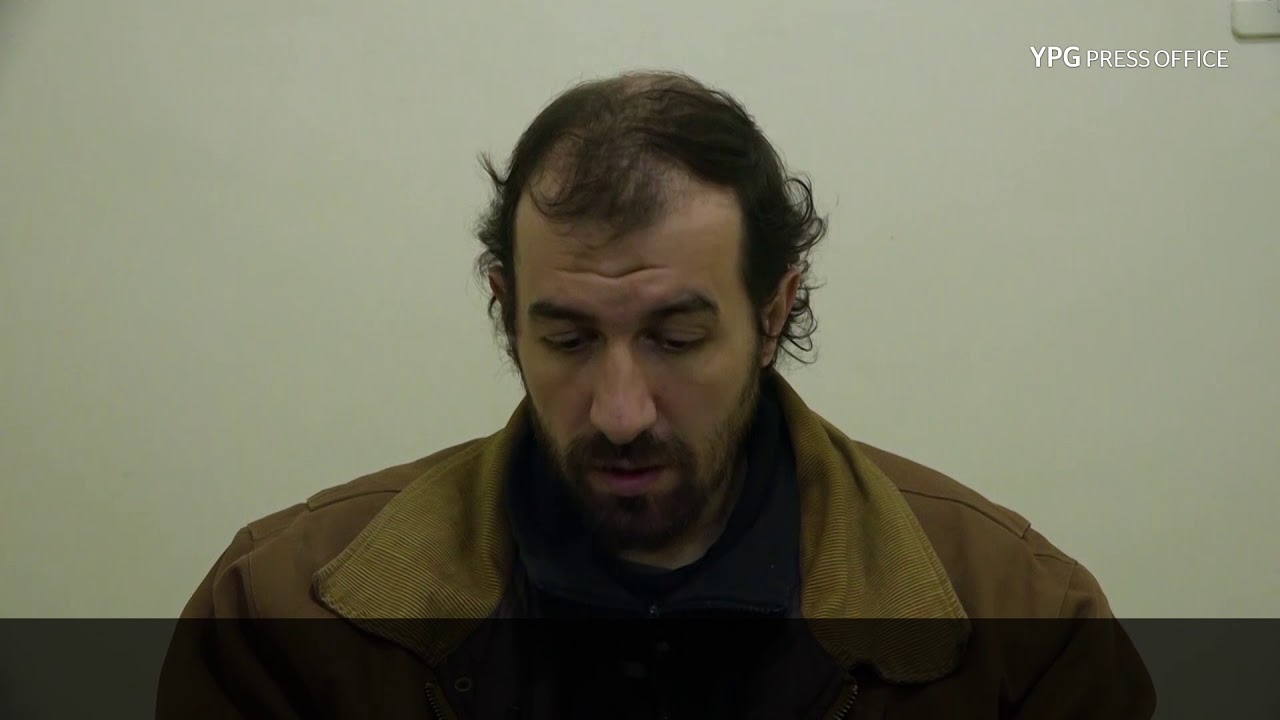 broadcast by the Syrian Democratic Forces (SDF) on January 10, 2018, French jihadist Thomas Barnouin accused the Islamic State (IS) or Daesh, which he had previously joined, of being the criminal creation of former Baath party members, aided by Western intelligence services.
While his allegations sounded like a familiar conspiracy account and were noticeably the result of manipulation by his Kurdish jailers, they once again revived the old controversy of the ties between Iraq’s former Baathist regime and IS, under scrutiny since at least 2015.
On April 18 that year, German journalist Christoph Reuter published in Der Spiegel an investigation dissecting the life of the so-called Haji Bakr, Samir Abd Muhammad al-Khlifawi.
A former colonel in the Iraqi forces who maintained an association with the intelligence, al-Khlifawi was presented by Reuter as the agent of a cynical attempt, through his IS allegiance, to recast the past dictatorship. Meanwhile, a number of IS fighters were killed by the Iraqi government. The coalition often presented them as secret agents of the defunct Iraqi regime.
Aflaq (front row, first from right) with the leaders of the July 14, 1958, revolution in Iraq, including Khaled al-Naqshabendi (front row, left), Abd as-Salam Arif (back row, second from left), Abd al-Karim Qasim (back row, third from left) and Muhammad Najib ar-Ruba'i (back row, fifth from left). Wikimedia
Baathism was originally a revolutionary secular ideology theorised by Syrian nationalists Zaki al-Arsuzi and Michel Aflaq in the early 1940s. It promoted the establishment of a unified Arab state, just like IS and other jihadist movements have advocated its “Islamic” version.
Old ties, new rumours
The thesis of a Baath–Islamic State connection has gathered a large audience since Reuter’s publication, many considering IS as the manifestation of the former tyrant’s party. However, the confusion generated by this debate has contributed to projecting a deeply flawed historical and sociological image of IS.
A heated discussion continues, as some scholars refute any such influence of Saddam Hussein’s late order, claiming that IS is primarily the consequence of a decade-long foreign occupation and its dramatic effects. Others, often on ideological grounds, bring forward the opposite view: They claim that even before the US entered the war there was a possible connection between Saddam Hussein’s regime and the newly forming organisation later known as IS. Indeed, many in the late 1990s felt that the Baathist system was coming to an end and were hungry for a new political project.
In 2003, Iraqi officers and soldiers were sacked by the US-led “debaathification” measure. It dissolved the Iraqi regime’s political structures and was so poorly designed and executed that it contributed to the collapse of the state and the rise of radical armed violence.
Concomitantly, the Iraqi army’s dismantlement – at least 250,000 soldiers were dismissed – pushed many to join insurgent cells in the country. However, insofar as these circumstances help shed light on one specific sequence of the Iraqi conflict, they do not prove that Baathist loyalists had colluded with jihadist factions before the war.
Saddam Hussein during his trial in 2004.DR/Wikimedia
Even though Saddam Hussein constantly referred to jihad himself – against “external aggression” and “traitors” – no real evidence ever emerged that had planned an uprising before 2003 or initiated contact with transnational jihadist movements. Besides, his relationship with Sunni Islamism had essentially been hostile throughout his reign.
This did not deter hundreds of Iraqi Sunni Arabs – former personnel of the regime and also more ordinary citizens – from joining the insurgency after Hussein’s fall, at a time when the occupation was becoming an everyday fact for the population. These men all headed toward nationalist groups, Salafist factions as well as IS, which was the only one truly promising a political revolution through the establishment of a “caliphate”. By then, only a handful of loyalists were left to save Saddam’s failed order.
In sum, was the early conception of IS an offspring of the old Baath party? Or was it completely separate, with no connection at all? Reality is probably a bit of a mix of both. IS has been influenced by ex-Baath party members but embraced a new ideology, Salafism-Jihadism.
A legacy of violence
All this considered, has IS’s “religiosity” been somewhat overstated by some commentators, leading to downplay its quest for political power aided by former Baathists? Even though the spread of Salafism among Sunni communities in Iraq favoured its hegemonic enterprise, the so-called “religious” propaganda of IS must be considered with caution. One can argue, indeed, that the group’s ostentatious religiosity is not what attracted Baath party members and nationalists. One can also assume that the group’s leaders used an “Islamist cover” to serve their political goals, separately (or not) from their old Baathist belonging.
The propagation of Salafism in Iraq was prior to the embargo of the 1990s and took root in Sunni circles – including the regime’s own military and security personnel – during the war against Iran (1980-1988). At the time, piety gave hope to those who no longer believed in Arab and Iraqi nationalism as a vehicle for restoring the country’s dignity.
Moreover, a deliquescent Baathist ideology – originally secular – paved the way for the expansion of the rigorist Sunni doctrine. If proof were needed, in 1993 Saddam Hussein launched his notorious “national faith campaign” (al-hamla al-wataniyya al-imaniyya) to make Islam a political resource and regain standing and legitimacy in the eyes of his people. This campaign favoured the development of puritan Islam among the Sunni community, its Salafist version in particular.
Eid celebration, September 1, 2017, in Basrah (south of Iraq). Haidar Mohammed Ali/AFP
To date, the former regime has also survived through a legacy of violence and tyranny that IS embodied in its most accomplished form between 2014 and 2017. Thousands of young Iraqi Sunnis – some of whom later turned jihadists – grew up in a world extreme brutalityand inherited a totalitarian conception of society.
Like the Baathist ideology in its time, IS’s takfirist discourse, excommunicating Muslims on the basis of their supposed apostasy and promoted by Jordanian jihadist Abu Musab al-Zarqawi and his Iraqi followers, is inseparable from the cycles of civil conflict that have plagued Iraq. It may re-erupt as IS has not been entirely defeated on the ground.
This article was originally published in French
:{
- History
- United States
- Middle East
- Syria
- Islam
- War
- Iraq
- ISIS
- Radicalisation
- Jihadism
- Saddam Hussein
- The Conversation France
- Daesh
- Baath Party
}:
==
medit refugee
ISIL
In February 2017, British newspaper The Guardian reported that ISIL was paying the smugglers fees of up to $2,000 USD to recruit people from refugee camps in Jordan and Lebanon child migrants in a desperate attempt to radicalize children for the group. The reports by counter-extremism thinktank Quilliam indicate that an estimated 88,300 unaccompanied children—who are reported as missing—were at risk of radicalization by ISIL.[90]In 2016, according to the Italian daily newspaper La Stampa, officials from Europol conducted an investigation into the trafficking of fake documents for ISIL. They identified fake Syrian passports in the refugee campsin Greece that were destined to supposed members of ISIL, in order to avoid Greek government controls and make their way to other parts of Europe. Also, the chief of Europol said that a new task force of 200 counter-terrorism officers would be deployed to the Greek islands alongside Greek border guards in order to help Greece stop a "strategic" level campaign by ISIL to infiltrate terrorists into Europe.
==
adam hochshield DN 11/11/18
isis started in prison camps after gulf 2 ?
==
https://bracingviews.com/2015/01/23/fewer-american-snipers-more-american-workers-and-builders/
Astore
Former Army Ranger Rory Fanning has a thoughtful article at TomDispatch.com on why young men should not join the Army to fight the war on terror in distant lands.
Here’s an excerpt:
Believe me, it [the Afghan War] was ugly. We were often enough targeting innocent people based on bad intelligence and in some cases even seizing Afghans who had actually pledged allegiance to the U.S. mission… I know now that if our country’s leadership had truly had peace on its mind, it could have all been over in Afghanistan in early 2002.
If you are shipped off to Iraq for our latest war there, remember that the Sunni population you will be targeting is reacting to a U.S.-backed Shia regime in Baghdad that’s done them dirty for years. ISIS exists to a significant degree because the largely secular members of Saddam Hussein’s Ba’ath party were labeled the enemy as they tried to surrender after the U.S. invasion of 2003 … Given the reign of terror that followed, it’s hardly surprising to find former Baathist army officers in key positions in ISIS and the Sunnis choosing that grim outfit as the lesser of the two evils in its world. Again, the enemy you are being shipped off to fight is, at least in part, a product of your chain-of-command’s meddling in a sovereign country. And remember that, whatever its grim acts, this enemy presents no existential threat to American security, at least so says Vice President Joe Biden. Let that sink in for a while and then ask yourself whether you really can take your marching orders seriously.
Fanning makes persuasive points here: How the U.S. military bungled its wars of choice in Iraq and Afghanistan; how often Iraqi and Afghan innocents were killed due to bad intelligence and the usual deadly mistakes associated with war; how the wars fed, and continue to feed, a cycle of violence that is perpetuated by new U.S. troop deployments and weapons sales (with respect to weapons sales, see this excellent article by Peter Van Buren, which details how the U.S. is hawking M1 Abrams main battle tanks to the Iraqis).
...
==
https://YYY.theguardian.com/world/2018/aug/17/us-cancels-funding-syria-stablization
==
rfk 2 war for pipeline:
...But then in 2014, our Sunni proxies horrified the American people by severing heads and driving a million refugees toward Europe. “Strategies based upon the idea that the enemy of my enemy is my friend can be kind of blinding," says Tim Clemente, who chaired the FBI's Joint Terrorism Task Force between 2004 and 2008 and served as liaison in Iraq between the FBI, the Iraqi National Police and the U.S. Military. “We made the same mistake when we trained the Mujahedeen in Afghanistan. The moment the Russians left, our supposed friends started smashing antiquities, enslaving women, severing body parts and shooting at us."
When ISIS' “Jihadi John" began murdering prisoners on TV, the White House pivoted, talking less about deposing Assad and more about regional stability. The Obama Administration began putting daylight between itself and the insurgency we had funded. The White House pointed accusing fingers at our allies. On Oct. 3, 2014, Vice President Joe Biden told students at the John F. Kennedy, Jr. forum at the Institute of Politics at Harvard that “Our allies in the region are our biggest problem in Syria." He explained that Turkey, Saudi Arabia and the UAE were “so determined to take down Assad" that they had launched a “proxy Sunni-Shia war" funneling “hundreds of millions of dollars and tens of thousands of tons of weapons to Jihadists of the al-Nusra front and al-Qaeda"—the two groups that merged in 2014 to form ISIS.
Biden seemed angered that our trusted “friends" could not be trusted to follow the American agenda. “ISI[S] is a direct outgrowth of al-Qaeda in Iraq that grew out of our invasion," declared Obama, disassociating himself from the Sunni rebellion, “which is an example of unintended consequences which is why we should generally aim before we shoot." As if to demonstrate their contempt for America's new found restraint, our putative allies, the Turks responded to the U.S. rebukes by shooting down a plane belonging to our other putative ally, the Russians—probably to spoil a potential deal between Russia and the U.S. that would leave Assad in power.
Across the Mid-East, Arab leaders routinely accuse the U.S. of having created ISIS. To most Americans immersed in U.S. media perspective, such accusations seem insane. However, to many Arabs, the evidence of U.S. involvement is so abundant that they conclude that our role in fostering ISIS must have been deliberate. On Sept. 22, 2014, according to the New York Times, Iraqi leader, Shiite Cleric Muqtada al-Sadr, told Baghdad demonstrators that “the CIA created ISIS." Iraq's Deputy Prime Minister, Bahaa Al-Araji, echoed al-Sadr's accusation. “We know who made Daesh," Iraq's Treasury Secretary, Haidar al-Assadi, told the Digital News Aggregate, “The Islamic State is a clear creation of the United States, and the United States is trying to intervene again using the excuse of the Islamic State."
In fact, many of the ISIS fighters and their commanders are ideological and organizational successors to the Jihadists that the CIA has been nurturing for 30 years. The CIA began arming and training the Mujahedeen in Afghanistan in 1979 to fight the Soviets. Following the Soviet withdrawal, the CIA's Afghan Mujahedeen became the Taliban while its foreign fighters, including Osama bin Laden, formed Al-Qaeda. In 2004, then British Foreign Secretary Robin Cook told the House of Commons that Al-Qaeda took its name—meaning “database" in Arabic—from the voluminous CIA database of Jihadists—Mujahedeen foreign fighters and arms smugglers trained and equipped by the CIA during the Afghan conflict.
Prior to the American invasion, there was no Al-Qaeda in Saddam Hussein's Iraq. Bush destroyed Saddam's secularist government and his viceroy, Paul Bremer, in a monumental act of mismanagement, effectively created the Sunni Army, now named ISIS. Bremer elevated the Shiites to power and banned Saddam's ruling Ba'ath Party laying off some 700,000, mostly Sunni, government and party officials from ministers to school teachers. He then disbanded the 380,000 man army, which was 80 percent Sunni.
Bremer's actions stripped a million of Iraq's Sunnis of rank, property, wealth and power; leaving a desperate underclass of angry, educated, capable, trained and heavily armed Sunnis with little left to lose. General Petraeus' decision to import dirty war tactics, including torture and death squads, from the CIA's El Salvador conflict in order to shock and awe the Sunni resistance, instead ignited a shockingly bloody spiral of sectarian violence that devolved quickly into escalating atrocities topped finally by the Sunni Army signature head cutting.The Sunni insurgency named itself Al-Qaeda Iraq (AQI).
Beginning in 2011, our allies funded the invasion by AQI fighters into Syria. In June 2014 having entered Syria, AQI changed its name to ISIS. According to the New Yorker, “ISIS is run by a council of former Iraqi Generals ... many are members of Saddam Hussein's secular Ba'ath Party, who converted to radical Islam in American prisons." The $500 million in U.S. military aid that Obama did send to Syria almost certainly ended up benefiting these militant Jihadists. On Sept. 16, 2015, incredulous senators from the Armed Services Committee listened to U.S. General Lloyd Austin, Commander of the U.S. Central Command, explain that the Pentagon had spent $500 million to train and arm “moderate" insurgents in Syria and had only “four or five reliable moderate fighters" to show instead of the promised 5,000. The remainder apparently deserted or defected to ISIS.
Tim Clemente told me that the incomprehensible difference between the Iraq and Syria conflicts are the millions of military aged men who are fleeing the battlefield for Europe rather than staying to fight for their communities. “You have this formidable fighting force and they are all running away. I don't understand how you can have millions of military aged men running away from the battlefield. In Iraq, the bravery was heartbreaking—I had friends who refused to leave the country even though they knew they would die. They'd just tell you it's my country, I need to stay and fight," Clemente said.
The obvious explanation is that the nation's moderates are fleeing a war that is not their war. They simply want to escape being crushed between the anvil of Assad's Russian backed tyranny and the vicious Jihadi Sunni hammer that we had a hand in wielding in a global battle over competing pipelines. You can't blame the Syrian people for not widely embracing a blueprint for their nation minted in either Washington or Moscow. The super powers have left no options for an idealistic future that moderate Syrians might consider fighting for. And no one wants to die for a pipeline.
What is the answer? If our objective is long-term peace in the Mid-East, self-government by the Arab nations and national security at home, we must undertake any new intervention in the region with an eye on history and an intense desire to learn its lessons. Only when we Americans understand the historical and political context of this conflict will we apply appropriate scrutiny to the decisions of our leaders.
Using the same imagery and language that supported our 2003 war against Saddam Hussein, our political leaders led Americans to believe that our Syrian intervention is an idealistic war against tyranny, terrorism and religious fanaticism. We tend to dismiss, as mere cynicism, the views of those Arabs who see the current crisis as a rerun of the same old plots about pipelines and geopolitics. But, if we are to have an effective foreign policy, we must recognize the Syrian conflict is a war over control of resources indistinguishable from the myriad clandestine and undeclared oil wars we have been fighting in the Mid-East for 65 years. And only when we see this conflict as a proxy war over a pipeline do events become comprehensible.
It's the only paradigm that explains why the GOP on Capitol Hill and the Obama administration are still fixated on regime change rather than regional stability, why the Obama administration can find no Syrian moderates to fight the war, why ISIS blew up a Russian passenger plane, why the Saudi's just executed a powerful Shia cleric only to have their embassy burned in Tehran, why Russia is bombing non-ISIS fighters and why Turkey went out of its way to down a Russian jet. The million refugees now flooding into Europe are refugees of a pipeline war and CIA blundering.
Clemente compares ISIS to Colombia's FARC—a drug cartel with a revolutionary ideology to inspire its foot soldiers. “You have to think of ISIS as an oil cartel," Clemente said. “In the end, money is the governing rationale. The religious ideology is a tool that inspires its soldiers to give their lives for an oil cartel."
Once we strip this conflict of its humanitarian patina and recognize the Syrian conflict as an oil war, our foreign policy strategy becomes clear. Instead, our first priority should be the one no one ever mentions—we need to kick our Mid-East oil jones, an increasingly feasible objective, as the U.S. becomes more energy independent. Next, we need to dramatically reduce our military profile in the Middle East and let the Arabs run Arabia. Other than humanitarian assistance and guaranteeing the security of Israel's borders, the U.S. has no legitimate role in this conflict. While the facts prove that we played a role in creating the crisis, history shows that we have little power to resolve it.
As we contemplate history, it's breathtaking to consider the astonishing consistency with which virtually every violent intervention in the Middle East since World War II by our country has resulted in miserable failure. The long list of CIA and military adventures has each cost us dearly in national treasure, in liberty at home, in our moral authority abroad and in our national security. Without any memorable exception, every violent intervention has resulted in a catastrophic blowback far more costly to our country than any problems the authors meddling intended to solve. Our mischief has neither improved life in the Middle East nor has it made America safer.
A 1997 U.S. Department of Defense report found that “the data show a strong correlation between U.S. involvement abroad and an increase in terrorist attacks against the U.S." Let's face it, what we call the “war on terror" is really just another oil war. We've squandered $6 trillion on three wars abroad and on constructing a national security warfare state at home since oilman Cheney declared the “Long War" in 2001. The only winners have been the military contractors and oil companies who have pocketed historic profits. We have compromised our values, butchered our own youth, killed hundreds of thousands of innocent people, subverted our idealism and squandered our national treasures in fruitless and costly adventures abroad. In the process, we have turned America, once the world's beacon of freedom, into a national security surveillance state and an international moral pariah.
America's founding fathers warned Americans against standing armies, foreign entanglements and, in John Adams' words, “going abroad in search of monsters to destroy." Those wise men understood that imperialism abroad is incompatible with democracy and civil rights at home. They wanted America to be a “city on a hill"—a model of democracy for the rest of the world.
The Atlantic Charter echoed their seminal American ideal that each nation should have the right to self-determination. Over the past seven decades, the Dulles brothers, the Cheney Gang, the neocons and their ilk have hijacked that fundamental principle of American idealism and deployed our military and intelligence apparatus to serve the mercantile interests of large corporations and particularly, the petroleum companies and military contractors who have literally made a killing from these conflicts. It's time for Americans to turn America away from this new imperialism and back to the path of idealism and democracy. We should let the Arabs govern Arabia and turn our energies to the great endeavor of nation building at home. We need to begin this process, not by invading Syria, but by ending our ruinous addiction to oil.
==
John Venners, a Washington D.C. based public relations man who aided an influence effort to ease international economic sanctions against the Iraqi regime of Saddam Hussein, made $40,000 in campaign contributions since 2004 to the Republican House and Senate Campaign Committees, according to public records.
Venners was a partner in the influence venture on behalf of Saddam Hussein's regime with William Timmons, a Washington lobbyist who was tapped by John McCain to play a leading role in his presidential transition team, according to federal court records and pubic investigative reports by the United Nations.
huff post
truthdig
Fittingly, U.S. officials appeared in this spectacle as hapless Keystone Kops, morally implicated by their tepid support of a lynch mob. It perfectly mirrors decades of U.S. meddling in the history of Iraq, beginning with U.S. support for Saddam’s Baath Party when it overthrew Iraqi nationalist Abdul Karim Qassem because we feared he was tilting ever so slightly to the Soviets.In fact, Saddam, like Osama bin Laden and the other Islamist fanatics our CIA recruited and helped to wage holy war against the Soviets, was a monster at least partially of our creation.
==
...Foreign Policy Expert William Polk: Climate Impacts Led To "Extreme Poverty" That Sparked Syrian Civil War. William Polk, a veteran foreign policy consultant, wrote in The Atlantic:
Syria has been convulsed by civil war since climate change came to Syria with a vengeance. Drought devastated the country from 2006 to 2011. Rainfall in most of the country fell below eight inches (20 cm) a year, the absolute minimum needed to sustain un-irrigated farming. Desperate for water, farmers began to tap aquifers with tens of thousands of new well. But, as
they did, the water table quickly dropped to a level below which their pumps could lift it.
[USDA Foreign Agricultural Service, Commodity Intelligence Report, May 9, 2008]
In some areas, all agriculture ceased. In others crop failures reached 75%. And generally as much as 85% of livestock died of thirst or hunger. Hundreds of thousands of Syria's farmers gave up, abandoned their farms and fled to the cities and towns in search of almost non-existent jobs and severely short food supplies. Outside observers including UN experts estimated that between 2 and 3 million of Syria's 10 million rural inhabitants were reduced to "extreme poverty."
So tens of thousands of frightened, angry, hungry and impoverished former farmers ... constituted a "tinder" that was ready to catch fire. The spark was struck on March 15, 2011 when a relatively small group gathered in the town of Daraa to protest against government failure to help them. Instead of meeting with the protestors and at least hearing their complaints, the government cracked down on them as subversives. The Assads, who had ruled the country since 1971, were not known for political openness or popular sensitivity. And their action backfired. Riots broke out all over the country, As they did, the Assads attempted to quell them with military force. They failed to do so and, as outside help -- money from the Gulf states and Muslim "freedom fighters" from the rest of the world -- poured into the country, the government lost control over 30% of the country's rural areas and perhaps half of its population. By the spring of 2013, according to the United Nations High Commission for Refugees (UNHCR), upwards of 100,000 people had been killed in the fighting, perhaps 2 million have lost their homes and upwards of 2 million have fled abroad. Additionally, vast amounts of infrastructure, virtually whole cities like Aleppo, have been destroyed. *The Atlantic*, [**9/2/13**]


Experts And Authorities State That Syrian Civil War Led To Rise Of ISIL
President Obama: ISIL Gained Prominence In Syria By Taking Advantage Of Civil War.In a statement about the United States' response to ISIL, President Obama said that ISIL, which was "formerly al Qaeda's affiliate in Iraq," has "taken advantage of sectarian strife and Syria's civil war to gain territory on both sides of the Iraq-Syrian border." Whitehouse.gov, [**9/10/14**]
Council on Foreign Relations: "Syria's 2011 Uprising Helped In The Islamic State's Expansion."In a backgrounder on the Islamic State, yet another name for ISIL/ISIS, the Council on Foreign Relations stated:
==
see nairn DN
http://www.alternet.org/news-amp-politics/shocking-expose-reveals-trump-associates-isis-linked-vigilantes-are-attempting
==
vox
conflict between Iraqi Sunnis and Shias sustains ISIS
One of the single most important factors in ISIS's resurgence is the conflict between Iraq's largest two Arab religious groups: Shias and Sunnis. ISIS fighters themselves are Sunnis, and the tension between the two groups is a powerful recruiting tool for ISIS.
In the most basic theological terms, the Sunni-Shia split in Islam originated with a controversy over who would take power after the Prophet Mohammed's death. Today, of course, Iraq's sectarian problems aren't about relitigating seventh-century disputes; they're about modern political power and grievances. But those do tend to fall along Sunni-Shia lines.
A majority of Iraqi Arabs are Shias, but Sunnis ran the show when Saddam Hussein, himself Sunni, ruled Iraq. Saddam spread a false belief, still surprisingly persistent in the country today, that Sunnis were the real majority in Iraq. Thus, Sunnis felt, and still feel, entitled to larger shares of political power than might perhaps be warranted by their size.
Meanwhile, the Iraqi civil war sparked after the 2003 US-led invasion had a brutally sectarian cast to it, and the pseudo-democracy that emerged afterward empowered the Shia majority (with some heavy-handed help from Washington) at the expense of the Sunni minority. Today the two groups don't trust one another and so far have competed in what they see as a zero-sum game for control over Iraqi political institutions. In 2013, Shias used control over the police force to arbitrarily detain Sunni protestors demanding more representation in government.
So long as Shias control the government, and Sunnis don't feel that they're fairly represented, ISIS has an audience for its radical Sunni message. That's an important part of how the group built up support in Iraq's heavily Sunni northwest.
==
Trump's Indonesian Allies In Bed With ISIS-Backed Militia Seeking to ...
https://theintercept.com/.../trumps-indonesian-allies-in-bed-with-isis-backed-militia-se...
1.
Shocking Exposé Reveals Trump Associates & ISIS-Linked Vigilantes ...
https://www.democracynow.org/.../4/.../shocking_expose_reveals_trump_associates_is...
1.
Trump's Indonesian Allies in Bed with ISIS-Backed FPI Militia: They ...
www.globalresearch.ca/trumps-indonesian-allies-in-bed-with-isis...to.../5588694
May 5, 2017 - The following important essay, by the respected and reliable journalist Allan Nairn, reports what Indonesian generals and others have told him ...
==
This piece first appeared at TomDispatch.
Honestly, I don’t know whether to rant or weep, neither of which are usual impulses for me. In the wake of the slaughter in Paris, I have the urge to write one of two sentences here: Paris changed everything; Paris changes nothing. Each is, in its own way, undoubtedly true. And here’s a third sentence I know to be true: This can’t end well.
Other than my hometown, New York, Paris is perhaps the city where I’ve felt most at ease. I’ve never been to Baghdad (where Paris-style Islamic State terror events are relatively commonplace); or Beirut, where they just began; or Syria’s ravaged Aleppo (thank you, Bashar al-Assad of barrel-bomb terror fame); or Mumbai (which experienced an early version of such a terror attack); or Sana’a, the capital of Yemen, now partly destroyed by the U.S.-backed Saudi air force; or Kabul, where Taliban attacks on restaurants have become the norm; or Turkey’s capital, Ankara, where Islamic State suicide bombers recently killed 97 demonstrators at a peace rally. But I have spent time in Paris. And so, as with my own burning, acrid city on September 11, 2001, I find myself particularly repulsed by the barbaric acts of civilian slaughter carried out by three well-trained, well-organized, well-armed suicide teams evidently organized as a first strike force from the hell of the Islamic State (IS) in Syria and Iraq.
The Paris attacks should not, however, be seen primarily as acts of revenge from a distinctly twisted crew, even though one of the murderers reportedly shouted, “You killed our brothers in Syria and now we are here.” Instead, they were clearly acts of calculated provocation meant to reshape our world in grim ways. Worse yet, their effectiveness was pre-guaranteed because, as has been true since 9/11, the leaders of such terror groups, starting with Osama bin Laden, have grasped the dynamics of our world, of what makes us tick and especially what provokes us into our own barbarous acts, so much better than our leaders, our militaries, or our national security states have understood them (or, for that matter, themselves).
Here in a nutshell is what bin Laden grasped before 9/11: with modest millions of dollars and a relatively small number of followers, he and his movement couldn’t hope to create the world of their fervid dreams. If, however, he could lure the planet’s “sole superpower” into stepping into his universe, military first, it would change everything and so do his work for him. And indeed (see: invasion of Afghanistan, invasion of Iraq), an operation mounted for an estimated $400,000 to $500,000, using 19 dedicated (mostly Saudi) followers armed only with paper cutters, did just that.
And it’s never stopped since because, just as bin Laden dreamed, Washington helped loose al-Qaeda and its successor outfits from the constraints of a more organized, controlled world. In these last 14 years of failed wars and conflicts of every sort, American military power, aided and abetted by the Saudis, the British, the French, and other countries on a case-by-case basis, essentially fractured the Greater Middle East. It helped create five failed states (Afghanistan, Iraq, Libya, Syria, and Yemen), worlds in which terror groups could thrive and in the chaos of which they could attract ever more recruits.
Wiping Out the Gray Zones
Think of the Islamic State and various al-Qaeda crews as having developed (to steal a term from commentator John Feffer) “splinterlands” strategies. To continue to grow, they need the U.S. and its allies to lend them an eternally destructive hand to further smash the worlds around them. So in response to the Paris attacks, French President Francois Hollande’s statement that “we will lead a war which will be pitiless” was just what the terror doctor ordered, as was the growing pressure in Washington for a “big military response” to Paris. The first French reprisal air strikes against IS’s Syrian “capital,” Raqqa, were indeed launched within two days.
All of this is like manna from heaven for the Islamic State, the more “pitiless” the better. After all, that group’s goal, as they write in their magazine and online, is “the extinction of the gray zone” in our world. In other words, they seek the sharpening of distinctions everywhere, which means the opening of abysses where complexity and interaction once existed. Their dream is to live in a black-and-white world of utter religious and political clarity (and calamity), while engaging in what American pundits like to term a “clash of civilizations.” And—what a joy for the Islamic State!—Republican presidential candidates are already responding to the Paris attacks, as Marco Rubio did, by calling for just such “a civilizational conflict with radical Islam.” As he put it, “This is not a grievance-based conflict. This is a clash of civilizations… And either they win, or we win.” Jeb Bush similarly responded: “This is an organized effort to destroy Western civilization and we need to lead in this regard.” The answer, of course, is “war.” Various Republican candidates are also now calling for only accepting Syrian Christians as refugees here. You can’t be more black and white than that.
In the European context and with the destruction of those “gray zones” in mind, the Paris attacks should also be considered the Islamic State’s first foray into the politics of the 2017 French presidential campaign. Think of those mass killings as a wholehearted endorsement of the extremist candidate Marine le Pen, whose poll numbers were already on the rise even before the attacks, and her anti-Muslim, anti-immigrant National Front Party. She is now, in effect, IS’s chosen candidate, the one most likely to go after gray zones. In the process, of course, pressure on France’s large, increasingly isolated Muslim population will only increase.
Such attacks are guaranteed to put wind in the already billowing sails of far right-wing parties all across Europe. It should, for instance, have come as no surprise that, in the wake of the Paris attacks, Konrad Szymanski, the European affairs minister for Poland’s new far-right government, almost instantly declared his country unlikely to abide by recently negotiated European Union (EU) quotas on accepting refugees from the Greater Middle East. And we’re only going to see more of this in the post-Paris world. With the assistance of IS and other jihadist groups, the elimination of such gray areas in Europe could, in the end, help crack the EU open, while pushing France’s Muslims into an even worse situation, which would, of course, mean more potential recruits for groups like the Islamic State.
In other words, from IS’s point of view, the Paris attacks and other acts like them represent a potential horn of plenty. Sadly, it’s not the only organization that will reap such benefits—and I’m not just referring to other jihadist outfits either. Such acts are, after a fashion, similarly useful in the Western world. Think of it as a kind of unspoken bargain between two “civilizations” from hell.
Take the United States, a place where, in the years since 9/11, the danger of being attacked by an Islamic terrorist could be slotted in somewhere between being “shot” by your dog and being shot by a toddler who has found a loaded, unlocked gun in your house, purse, or car. Among the many perils of American life from car crashes to suicide, E. coli illnesses to floods, injuries from crumbling infrastructure to mass killings by non-Islamic lone wolves, Islamic terrorism remains at the bottom of the barrel in the company of other frightening but rare events like shark attacks. Yet the American national security state has essentially been built and funded to protect you from that danger alone.
Put another way, the officials of that security state have bet the farm on the preeminence of the terrorist “threat,” which has, not so surprisingly, left them eerily reliant on the Islamic State and other such organizations for the perpetuation of their way of life, their career opportunities, their growing powers, and their relative freedom to infringe on basic rights, as well as for that comfortably all-embracing blanket of secrecy that envelops their activities. Note that, as with so many developments in our world which have caught them by surprise, the officials who run our vast surveillance network and its staggering ranks of intelligence operatives and analysts seemingly hadn’t a clue about the IS plot against Paris (even though intelligence officials in at least one other country evidently did). Nonetheless, whether they see actual threats coming or not, they need Paris-style alarms and nightmares, just as they need local “plots,” even ones semi-engineered by FBI informers or created online by lone idiots, not lone wolves. Otherwise, why would the media keep prattling on about terrorism or presidential candidates keep humming the terror tune, and how, then, would publicpanic levels remain reasonably high on the subject when so many other dangers are more pressing in American life?
Advertisement
The lack of obvious threats is, of course, beside the point when American “safety” is at stake! In the meantime, the road toward a more locked-down, secretive, governmentally intrusive, less democratic world is being well paved.
A Dance of Death
Think of this as a kind of global danse macabre in which ISIS attacks—eight committed guys, some possibly trained in combat in Syria or Iraq, with AK-47s, suicide vests, and rental cars—spread death, chaos, panic, and alarm in our world at next to no cost at all. In response, Washington and its allies engage in a big-budget version of the same, including intensified air campaigns which will, of course, end up taking out civilian targets and infrastructure.
Think of what the U.S. military does when it heads out to destroy those gray zones as the Kobane or Sinjar Strategy. Kobane was a largely Kurdish town on the Turkish border that IS militants besieged and partially took in 2014. They were driven back early this year by the same combination of forces that recently retook the town of Sinjar in northern Iraq: Kurdish fighters and American warplanes. By the time both were retaken, American bombs and Islamic State IEDs and booby-trapped houses had insured that those towns would be largely uninhabitable wrecks, littered with corpses and the skeletons of buildings.
:{
}:
Similarly, plans by the U.S. to intensify the bombing of those Syrian oilfields under the control of the Islamic state (to cut into its supply of funds) reflect a strategy that, whatever its immediate successes, is guaranteed to further wreck the infrastructure of the region. This will help ensure that, no matter what happens to the Islamic State, “Syria” or any state structure like it will be no more. Such acts of destruction, largely from the air, have been taking place across the Greater Middle East since 2001. From Libya to Syria, Iraq to Yemen, the Sinjar Strategy has demonstrably done little to bring success to the U.S. and its allies in their various wars. It has, however, helped create a zone of failed and increasingly fragile states. It has left uprooted populations leading skeletal lives in haunted lands that are also hunting grounds for extremists of every sort. Consider this the dream world of Osama bin Laden and Abu Bakr al-Baghdadi, as well as the perfect breeding ground for yet more extreme nightmares of our age. A dance of death indeed.
As it happens, I’ve barely ranted and not yet wept. If anything, on reaching the end of this piece, I find myself depressed. The future shouldn’t be so easy to see or so repetitively predictable. And it’s a terrible thing to know that, as the gray zones of our planet continue to disappear and wrecked worlds spread, the tempo of that dance of mutual death and destruction stands every chance of speeding up as the “music” only grows louder.
Tom Engelhardt is a co-founder of the*American Empire Project*and the author ofThe United States of Fearas well as a history of the Cold War,The End of Victory Culture. He is a fellow of the Nation Institute and runsTomDispatch.com. His latest book isShadow Government: Surveillance, Secret Wars, and a Global Security State in a Single-Superpower World.
FollowTomDispatchon Twitter and join us on Facebook. Check out the newest Dispatch Book, Nick Turse’sTomorrow’s Battlefield: U.S. Proxy Wars and Secret Ops in Africa, and Tom Engelhardt’s latest book,Shadow Government: Surveillance, Secret Wars, and a Global Security State in a Single-Superpower World.
:{
}:
The relationship between that ever-more powerful shadow government in Washington and the Islamic terrorists of our planet is both mutually reinforcing and unnervingly incestuous. Both, of course, emerge as winners when the gray zones begin to disappear. When Paris is hit, after all, law enforcement agencies in the U.S. instantly increase their “alert levels”; the CIA director pushes back hard against “hand-wringing over intrusive government spying” and the minimalist restrictions on electronic surveillance put in place in recent years; the FBI heightens “its surveillance of Americans under investigation for apparent ties to the Islamic State”; and, among other things, more police patrols are sent out in major cities, while local law enforcement “vigilance” rises even in places like Niagara Falls, New York. In Los Angeles, post-Paris, extra patrols were typically sent “to ‘critical sites’ and [the city’s police department was] monitoring the ongoing situation, even though it said there were no known threats.”
prince chls //
Right-wing media mocked Democratic presidential candidate Bernie Sanders for linking climate change to terrorism during the November 14 CBS Democratic presidential debate. Sanders explained that if climate change continues to go largely unaddressed, "you're going to see all kinds of international conflict." Right-wing media called Sanders "insane" and "someone who doesn't understand what the real subject is." However, major studies and reports from foreign policy and defense experts support Sanders' assessment that climate change was a significant factor contributing to the rise of ISIL (or ISIS).
During Debate, Bernie Sanders States That Climate Change Is Linked To Terrorism.
Bernie Sanders: Climate Change "Related To The Growth Of Terrorism," And Not Acting Will Lead To "All Kinds Of International Conflict."During the November 14 CBS Democratic presidential debate, moderator John Dickerson asked Sanders about a previous statement that "the greatest threat to national security was climate change." Sanders reaffirmed his position, stating: "Absolutely. In fact, climate change is directly related to the growth of terrorism. And if we do not get our act together and listen to what the scientists say, you're going to see countries all over the world -- this is what the CIA says -- they're going to be struggling over limited amounts of water, limited amounts of land to grow their crops and you're going to see all kinds of international conflict. CBS, CBS Democratic Presidential Debate, [11/14/15]
Sanders Expanded On The Link Between Climate Change And Instability: "People All Over The World Are Going To Be Fighting Over Limited Natural Resources."On the November 15 edition of CBS' Face The Nation, Sanders expanded on the link between climate change and terrorism, as The Washington Post reported:
On Sunday, Dickerson followed up with Sanders as the senator made an appearance on CBS's "Face the Nation," which Dickerson hosts. Sanders said the CIA and the Defense Department back up the notion that climate change can lead to terrorism.
"If we are going to see an increase in drought, flood and extreme weather disturbances as a result of climate change, what that means is that people all over the world are going to be fighting over limited natural resources," Sanders said. "If there is not enough water, if there is not enough land to grow your crops, then you're going to see migrations of people fighting over land that will sustain them, and that will lead to international conflicts."
"But how does drought connect with attacks by [the Islamic State] in the middle of Paris?" Dickerson asked.
"When you have drought, when people can't grow their crops, they're going to migrate into cities, and when people migrate into cities and they don't have jobs, there's going to be a lot more instability, a lot more unemployment and people will be subject to the types of propaganda that al-Qaeda and ISIS are using right now," Sanders said, using an alternative name for the Islamic State. "So where you have discontent, where you have instability, that's where problems arise, and certainly, without a doubt, climate change will lead to that." *The Washington Post*, [**11/15/15**]
Right-Wing Media MockSanders AndCallHis Assessment "Crazy"
Mark Steyn: Sanders' Comments About Climate Change Are "Insane" And Show A Level Of "Delusion And Denial."During the November 16 edition of Fox Business' Varney & Company Mark Steyn mocked Sanders' statements on climate change stating, "al-Baghdadi would be sawing Bernie Sanders' head off, and he'll be saying as his neck is being sliced, "If only we'd had an emissions trading scheme.'" Stein continued by calling Sanders' position "insane" and claiming it shows a level of "delusion and denial":
STUART VARNEY: Here's one for you. Bernie Sanders, well he's doubling down on his claim that there is a link between climate change and terrorism.
[...]
VARNEY: Alright Mark, climate change?
MARK STEYN: Yeah, he's brilliant that guy. I mean, al-Baghdadi will be sawing Bernie Sanders' head off, and he'll be saying as his neck is being sliced, 'If only we'd had an emissions trading scheme.' This is insane and it shows the level of delusion and denial among the Western political leadership.
VARNEY: Okay. Fox Business, *Varney & Company*, [11/16/15]
Wall Street Journal'sPeggy Noonan: Sanders Sounded "Slightly Daffy, Like Someone Who Doesn't Understand What The Real Subject Is."On the November 15 edition of CBS' Face The Nation, Noonansaid that Sanders linking climate change to terrorism sounded "slightly daffy," as if he "doesn't understand what the real subject is":
PEGGY NOONAN: Working against him was, I believe, the fact that last night -- and more strikingly today on your show -- Bernie Sanders essentially said a major problem with all of this ISIS stuff and terrorism and what's going in the West is climate change and global warming. Which makes him -- to many people -- look slightly daffy, like someone who doesn't understand what the real subject is, and is leaning outside to sort of leftist or progressive nostrums that he can talk about. This is about terrorism. It isn't about climate change and deserts and people migrating 'cause it's hot. CBS, *Face The Nation*, [11/15/15]
Fox's Allen West: Sanders "Should Be Completely Discounted" Because Of His Climate Change Comments.On the November 16 edition of Fox News' Fox & Friends, contributor Allen West derided Sanders for saying "that he still believes that climate change is the greatest threat that we have out there," citing it as a reason why he and the other two Democratic presidential candidates "should be completely discounted. They're not ready for leadership of this country at this time." Fox News, *Fox & Friends*, [11/16/15]
Fox's Todd Starnes: "Icebergs Aren't Blowing People Up, Sir." Fox News radio host Todd Starnes swiftly dismissed Sanders' argument, writing in a tweet that "[i]cebergs aren't blowing people up, sir":
Ben Shapiro Calls Sanders "Insane." In a series of tweets during the CBS debate, Breitbart News editor Ben Shapiro called Sanders "insane," dismissing his position by joking, "it's not like the f***ing desert has been hot for hundreds of thousands of years":
Twitter.com, [**11/14/15**;Twitter.com, **11/14/15**]
PJ Media Equates The Link Between Climate Change AndTerrorism To A "Piece Of Magic." After the CBS Democratic debate, PJ Media mocked Sanders in a November 15 blog post equating the link between climate change and terrorism to a "piece of magic":
- Bernie Sanders thinks climate change causes terrorism.
How this piece of magic works, he didn't get to explain, so we can only imagine. Maybe it 's a hot desert wind making normal people go to extremes, as in the famous opening of Raymond Chandler's "Red Wind":
There was a desert wind blowing that night. It was one of those hot dry Santa Ana's that come down through the mountain passes and curl your hair and make your nerves jump and your skin itch. On nights like that every booze party ends in a fight. Meek little wives feel the edge of the carving knife and study their husbands' necks. Anything can happen. You can even get a full glass of beer at a cocktail lounge.
That global warming -- it will get you every time. ISIS-shmicis. Forget Islam having anything to do with it. Bernie doesn't even want to pronounce the word. But neither, it seems, do any Democrats. I have a suggestion for them. When talking about World War II, don't, under any circumstances, refer to our enemies as Nazis. It's terribly un-PC. Call them National Socialists... oh, wait. PJ Media, **[11/15/15]
The Weekly Standard's Michael Golfarb: No GOP Candidate "Said Anything As Crazy As 'Climate Change To Blame For Terrorism.'" In response to Sanders' answer about ISIL and climate change, The Weekly Standard's Michael Golfarb wrote on twitter that Sanders' argument was "crazy" beyond anything said during the GOP debate:
The Federalist's Brandon Morse: "Who Is Voting For These Nut Jobs" Who Believe Climate Change Causes Terrorism. The Federalist's Brandon Morse mocked Sanders in a tweet, asking, "Who is voting for these nut jobs?":
TIME ReportsThat "Many Academics And National Security Experts Agree" With Sanders
TIME: "Experts Agree That Climate Change Contributes To An Uncertain World Where Terrorism Can Thrive." Following the CBS debate, TIMEreported that although Sanders' comments "attracted ridicule across the political spectrum, many academics and national security experts agree that climate change contributes to an uncertain world where terrorism can thrive":
Democratic presidential candidate Bernie Sanders used the terrorist attacks in Paris to call for action to address climate change at a primary debate Saturday. But, while the plea attracted ridicule across the political spectrum, many academics and national security experts agree that climate change contributes to an uncertain world where terrorism can thrive.
U.S. military officials refer to climate change as a "threat multiplier" that takes issues like terrorism that would pose a threat to national security and exacerbates the damage they can cause. A 2014 Department of Defense report identifies climate change as the root of government instability that leads to widespread migration, damages infrastructure and leads to the spread of disease. "These gaps in governance can create an avenue for extremist ideologies and conditions that foster terrorism," the report says.
The parallels between the situation described in the government report and the situation on the ground in Syria are striking. The worst drought on record in the Middle Eastern country has created instability for farmers and threatened the food supply. At the same time, the government has struggled to hold on to power across the country in the face of militant groups and millions of Syrians have fled their homeland. *TIME*, [**11/15/15**]
Major Research StudiesAnd Experts Back Up Sanders'Assessment That Climate Change Played Direct Role In Syrian Crisis
Study In National Academy Of Sciences Journal: Climate Change Likely Worsened Syrian Drought, Which Helped Cause Civil War. A study from scientists at the University of California, Santa Barbara and Columbia University published in the scientific journal, Proceedings of the National Academy of Sciences(PNAS), detailed the likely role climate change played in catalyzing civil unrest in Syria. The authors determined that climate change significantly increased the likelihood of a severe drought like the one that afflicted the region from 2007 to 2010, which was "the worst drought in the instrumental record, causing widespread crop failure and a mass migration of farming families to urban centers." The study found that human-induced climate change made a drought of such severity and persistence "2 to 3 times more likely than by natural variability alone," and concluded that "human influences on the climate system are implicated in the current Syrian conflict." From the study's abstract:
There is evidence that the 2007−2010 drought contributed to the conflict in Syria. It was the worst drought in the instrumental record, causing widespread crop failure and a mass migration of farming families to urban centers. Century-long observed trends in precipitation, temperature, and sea-level pressure, supported by climate model results, strongly suggest that anthropogenic forcing has increased the probability of severe and persistent droughts in this region, and made the occurrence of a 3-year drought as severe as that of 2007−2010 2 to 3 times more likely than by natural variability alone. We conclude that human influences on the climate system are implicated in the current Syrian conflict. *Proceedings of the National Academy of Sciences*, [1/30/15]
Pacific Institute Study: "Climate Variability And Change" Played A Role In Causing Syria's Civil War. A 2014 study published in the American Meteorological Society journal Weather, Climate and Society by Pacific Institute President Peter Gleick found that climate change played a role -- among other interrelated factors -- in sparking Syria's civil war. From the study's abstract:
The devastating civil war that began in Syria in March 2011 is the result of complex interrelated factors. The focus of the conflict is regime change, but the triggers include a broad set of religious and sociopolitical factors, the erosion of the economic health of the country, a wave of political reform sweeping over the Middle East and North Africa (MENA) and Levant region, and challenges associated with climate variability and change and the availability and use of freshwater. As described here, water and climatic conditions have played a direct role in the deterioration of Syria's economic conditions. Weather, Climate and Society, [**July 2014**]
Foreign Policy Expert William Polk: Climate Impacts Led To "Extreme Poverty" That Sparked Syrian Civil War. William Polk, a veteran foreign policy consultant, wrote in The Atlantic:
Syria has been convulsed by civil war since climate change came to Syria with a vengeance. Drought devastated the country from 2006 to 2011. Rainfall in most of the country fell below eight inches (20 cm) a year, the absolute minimum needed to sustain un-irrigated farming. Desperate for water, farmers began to tap aquifers with tens of thousands of new well. But, as
they did, the water table quickly dropped to a level below which their pumps could lift it.
[USDA Foreign Agricultural Service, Commodity Intelligence Report, May 9, 2008]
In some areas, all agriculture ceased. In others crop failures reached 75%. And generally as much as 85% of livestock died of thirst or hunger. Hundreds of thousands of Syria's farmers gave up, abandoned their farms and fled to the cities and towns in search of almost non-existent jobs and severely short food supplies. Outside observers including UN experts estimated that between 2 and 3 million of Syria's 10 million rural inhabitants were reduced to "extreme poverty."
So tens of thousands of frightened, angry, hungry and impoverished former farmers ... constituted a "tinder" that was ready to catch fire. The spark was struck on March 15, 2011 when a relatively small group gathered in the town of Daraa to protest against government failure to help them. Instead of meeting with the protestors and at least hearing their complaints, the government cracked down on them as subversives. The Assads, who had ruled the country since 1971, were not known for political openness or popular sensitivity. And their action backfired. Riots broke out all over the country, As they did, the Assads attempted to quell them with military force. They failed to do so and, as outside help -- money from the Gulf states and Muslim "freedom fighters" from the rest of the world -- poured into the country, the government lost control over 30% of the country's rural areas and perhaps half of its population. By the spring of 2013, according to the United Nations High Commission for Refugees (UNHCR), upwards of 100,000 people had been killed in the fighting, perhaps 2 million have lost their homes and upwards of 2 million have fled abroad. Additionally, vast amounts of infrastructure, virtually whole cities like Aleppo, have been destroyed. *The Atlantic*, [**9/2/13**]
Experts And Authorities State That Syrian Civil War Led To Rise Of ISIL
President Obama: ISIL Gained Prominence In Syria By Taking Advantage Of Civil War.In a statement about the United States' response to ISIL, President Obama said that ISIL, which was "formerly al Qaeda's affiliate in Iraq," has "taken advantage of sectarian strife and Syria's civil war to gain territory on both sides of the Iraq-Syrian border." Whitehouse.gov, [**9/10/14**]
Council on Foreign Relations: "Syria's 2011 Uprising Helped In The Islamic State's Expansion."In a backgrounder on the Islamic State, yet another name for ISIL/ISIS, the Council on Foreign Relations stated:
Sunni disenfranchisement in both Iraq and Syria created a vacuum that the Islamic State has exploited ... In Syria, a civil war erupted in 2011 pitting the ruling minority Alawis, a Shia offshoot, against the primarily Sunni opposition, spawning sectarian violence.
[...]
Syria's 2011 uprising helped in the Islamic State's expansion. Council on Foreign Relations, updated [**5/18/15**]
Foreign Affairs: ISIS "Took Advantage" Of Chaos In Syria To Seize Territory, Establish Base Of Operations, And Rebrand Itself As ISIS.An article published in international relations journal Foreign Affairs explained how ISIS "took advantage" of the chaos as Syria devolved into a civil war:
In 2011, as a revolt against the Assad regime in Syria expanded into a full-blown civil war, the group took advantage of the chaos, seizing territory in Syria's northeast, establishing a base of operations, and rebranding itself as ISIS. *Foreign Affairs*, [**March/April 2015**]
Vox: Syrian Civil War "Benefited ISIS Tremendously." A Vox explainer noted that "ISIS predated the Syrian Civil War," but that while "ISIS did not grow out of the Syrian rebellion: it took advantage of it." The explainer continued:
Now, it's true the war in Syria benefited ISIS tremendously. It allowed ISIS to get battlefield experience, attracted a ton of financial support from Gulf states and private donors looking to oust Assad, and gave it a crucial safe haven in eastern Syria. ISIS also absorbed a lot of recruits from Syrian rebel groups -- illustrating, incidentally, why arming the "good" Syrian rebels probably wouldn't have destroyed ISIS. Vox, accessed [**7/21/15**]
Major Military Reports Broadly Connect Climate Change To National Security
DOD Quadrennial Defense Review Considers Climate Change A "Threat Multiplier."The Department of Defense's 2014 Quadrennial Defense Review, which analyzes military threats, highlighted how extreme weather, increased food prices, and water scarcity -- all impacts of climate change -- aggravate existing social stressors that can "enable terrorist activity and other forms of violence":
Climate change poses another significant challenge for the United States and the world at large. As greenhouse gas emissions increase, sea levels are rising, average global temperatures are increasing, and severe weather patterns are accelerating. These changes, coupled with other global dynamics, including growing, urbanizing, more affluent populations, and substantial economic growth in India, China, Brazil, and other nations, will devastate homes, land, and infrastructure. Climate change may exacerbate water scarcity and lead to sharp increases in food costs. The pressures caused by climate change will influence resource competition while placing additional burdens on economies, societies, and governance institutions around the world. These effects are threat multipliers that will aggravate stressors abroad such as poverty, environmental degradation, political instability, and social tensions -- conditions that can enable terrorist activity and other forms of violence. Department of Defense, Quadrennial Defense Review, [**March 2014**]
Center for Naval Analyses: Climate Change Serves As "Catalyst For Conflict."The Center for Naval Analyses (CNA) -- a government-funded military research organization -- published a report in May 2014 on how the accelerating risks of climate change will impact national security. The New York Times summarized the report's findings:
The CNA Corporation Military Advisory Board found that climate change-induced drought in the Middle East and Africa is leading to conflicts over food and water and escalating longstanding regional and ethnic tensions into violent clashes. The report also found that rising sea levels are putting people and food supplies in vulnerable coastal regions like eastern India, Bangladesh and the Mekong Delta in Vietnam at risk and could lead to a new wave of refugees. In addition, the report predicted that an increase in catastrophic weather events around the world will create more demand for American troops, even as flooding and extreme weather events at home could damage naval ports and military bases. Center for Naval Analyses: National Security and the Accelerating Risks of Climate Change, [**May 2014**; The New York Times, **5/13/14**]