Lombroso
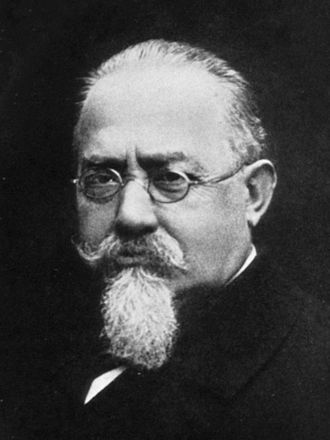
Name: Cesare Lombroso
Achievements: Helped establish the subject of criminology
Born: November 6, 1835; Verona, Italy
Died: October 19, 1909; Turin, Italy (Aged 76)
Field & Discipline: Criminology
Language: Italian
Father: Father: Aron Lombroso
Mother: Zefira Levi
Siblings: 4
Spouse: Name Unknown
Children: Daughters: Names unknown
Education: High School, Verona; Padua University; Vienna University; Paris University
Major Work:
"The Criminal Man" (1876)
"Crime, Its Causes and Remedies" (1899)
Life & Times:
At university Lombroso read the work of the German pathologist [read work of] Virchow* for the first time and from then on was a convinced anti-vitalist (he rejected the old idea that disease is due to an imbalance of vital fluids in the body).
He graduated from Vienna with a medical degree in 1856. In 1859 he began a study of cretinism in Upper Italy, following the methods of observation he had learned through contact with German science at university. He then moved on to an anthropometric investigation of the population of Upper Italy.
In 1862 he became Professor of Psychiatry at Pavia University, where he began to study criminals and the criminally insane. Assisted by [assisted by] Golgi*, one of his pupils, he investigated criminals’ anatomy as well as their sensory impressions and their anthropological characteristics, in particular any peculiarities of the skull.
Lombroso believed, like [shared belief of] Lavater*, who had founded physiognomics, that an individual's facial characteristics were indicative of their character. In contrast to Lavater, who looked for indications of spirituality, Lombroso investigated a possible link between the physiognomy of criminals and their psychology. He also hoped to find a difference in skull measurement between sane and insane criminals, and between lunatics and epileptics.
In 1871 he was appointed medical director of a mental asylum at Pesaro. He measured the inmates of the penitentiary at Pesaro and discovered a case of theromorphism (a term coined by Virchow: “the presence of animal characteristics in a human”). This chance discovery led to his theory that there was a class of criminals who were biologically related to a more primitive stage of human evolution.
From this discovery, Lombroso concluded that there are born criminals who will always be incapable of observing the normal social conventions and rule of law.
At Pavia, Lombroso did many post-mortem investigations on the bodies of criminals. In 1876 he published "Criminal Man" in which he stated his belief that criminals have more unusual physical and mental features than non-criminals. He used the term 'stigmata' to describe these features, among which were unusual skull sizes and asymmetry of the facial bones.
In 1876 Lombroso left Pavia and went to Turin as professor of forensic medicine. He was also physician to the large remand prison in Turin. Over the next two decades, he examined around two hundred prisoners each year as part of his research on criminal anthropology, and began to classify criminals into habitual and occasional offenders, those who committed crimes of passion, criminal lunatics, epileptics and alcoholics. All Italian prisons were opened to him and his pupils and fellow-workers, and his department became the centre of a mass of material sent from other countries.
For a time his theory of the hereditary nature of criminality was fashionable in Europe. Lombroso also examined the psychology of prisoners, recording information from them about their religion, literary likes and dislikes, they way they dressed and rituals they adopted, such as tattooing.
In 1884 he went to an exhibition in Turin which showed portraits of the rebels and freedom fighters who fought with Mazzini, Garibaldi and Cavour. This led Lombroso to draw a distinction, based on physiognomy among other factors, between rioters and idealistic revolutionaries. He became increasingly convinced that many criminal activities were caused by social factors such as malnutrition, overwork, overcrowding, unemployment, venereal disease.
Although he saw the first priority as the protection of society from criminals, he also pressed for the improvement of conditions for criminals, believing that many contemporary barbaric punishments were pointless, as the “born criminal” could not be rehabilitated. He began to press for penal reform in Italy.
As part of his research into the influence of external influences on criminals, Lombroso investigated the “animal magnetism” theories of [investigated] Mesmer*. In 1888 he published an account of experiments from which he (wrongly) concluded that magnets affect perception of color. He also experimented with the use of hypnotism which was then becoming known through the work of [influenced by] Charcot* in Paris.
In 1896 Lombroso became Professor of Psychiatry at Turin and in 1899 he published the results of his researches in "Crime, Its Causes and Remedies.” He was made Professor of Anthropology at Turin in 1906.
Spiritualism
Later in his life Lombroso began investigating mediumship. Although originally sceptical, he later became a believer in spiritualism.[28] As an atheist[29] Lombroso discusses his views on the paranormal and spiritualism in his book After Death – What? (1909) which he believed the existence of spirits and claimed the medium Eusapia Palladino was genuine. The article "Exit Eusapia!" was published in the British Medical Journal on 9 November 1895. The article questioned the scientific legitimacy of the Society for Psychical Research for investigating Palladino a medium who had a reputation of being a fraud and imposter and was surprised that Lombroso had been deceived by Palladino.[30]
The anthropologist Edward Clodd wrote "[Lombroso] swallowed the lot at a gulp, from table raps to materialisation of the departed, spirit photographs and spirit voices; every story, old or new, alike from savage and civilised sources, confirming his will to believe".[31] Lombroso's daughter Gina Ferrero wrote that during the later years of his life, Lombroso suffered from arteriosclerosis and his mental and physical health was wrecked. The sceptic Joseph McCabe wrote that because of this it was not surprising that Palladino managed to fool Lombroso into believing spiritualism by her tricks.[32]
Literary impact
Historian Daniel Pick argues that Lombroso serves "as a curious footnote to late-nineteenth-century literary studies", due to his referencing in famous books of the time. Jacques in Émile Zola's The Beast Within is described as having a jaw that juts forward on the bottom. It is emphasized especially at the end of the book when he is overwhelmed by the desire to kill.
The anarchist Karl Yundt in Joseph Conrad's The Secret Agent, delivers a speech denouncing Lombroso. The assistant prosecutor in Leo Tolstoy's Resurrection uses Lombroso's theories to accuse Maslova of being a congenital criminal. In Bram Stoker's Dracula, Count Dracula is described as having a physical appearance Lombroso would describe as criminal.[33][34]
Extra Connections: Influenced poet [influenced] Robert Browning*.
Rival of Beccaria.
His work stereotyping degenerates can even be seen as an influence behind Benito Mussolini's movement to clean the streets of Italy.
In addition to influencing criminal atavism, Lombroso wrote a book called Genio e Follia, in which he discussed the link between genius and insanity.[18] He believed that genius was an evolutionarily beneficial form of insanity, stemming from the same root as other mental illnesses.[18] This hypothesis led to his request to examine Leo Tolstoy for degenerate qualities during his attendance at the 12th International Medical Congress in Moscow in 1897. The meeting went poorly, and Tolstoy's novel Resurrection shows great disdain for Lombroso's methodology....
Lombroso's The Man of Genius provided inspiration for Max Nordau's work, as evidenced by his dedication of Degeneration to Lombroso, whom he considered to be his "dear and honored master".[23] In his exploration of geniuses descending into madness, Lombroso stated that he could only find six men who did not exhibit symptoms of "degeneration" or madness: Galileo, Da Vinci, Voltaire, Machiavelli, Michelangelo and Darwin.[23]
By contrast, Lombroso cited that men such as Shakespeare, Plato, Aristotle, Mozart and Dante all displayed "degenerate symptoms".[23] In order to classify geniuses as "degenerate," or insane, Lombroso judged each genius by whether they exhibited "degenerate symptoms," such as precocity, longevity, versatility and inspiration.[23] Lombroso supplemented these psychological observations with skeletal and cranial measurements, including facial angles, "abnormalities" in bone structure, and volumes of brain fluid.[23][24] Measurements of skulls taken included those from Immanuel Kant, Alessandro Volta, Ugo Foscolo, and Ambrogio Fusinieri.[24] Lombroso's reference to skull measurements was inspired by the phrenological work and research of German doctor Franz Joseph Gall.[25] ...
Assessment: Lombroso's conclusions have been rejected but his research and writings on criminality influenced penal reform and helped to pave the way for the scientific study of crime and criminals.
Oneliner: Cesare Lombroso, founder of criminology
Bibliography:
- Kurella, Hans, trans. Paul, M Eden, Cesare Lombroso, A Modern Man of Science, Rebman Ltd., London, 1911.