Thenard
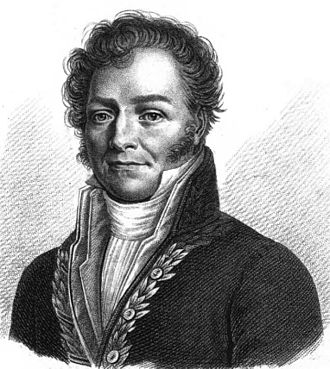
NAME: Louis Jacques Thenard
NICKNAME/ALIAS: Baron Thenard
DATE OF BIRTH: 4 May 1777
PLACE OF BIRTH: La Louptiere (now Louptiere-Thenard), Aube, France
DATE OF DEATH: 21 June 1857
PLACE OF DEATH: Paris, France. Aged 80.
DISCIPLINE: Chemist
FIELD: Chemistry
ASSESSMENT: Prominent analytical chemist and university official in early 19th-century France
LANGUAGE: French
EDUCATION: Secondary school, Sens; Ecole Polytechnique, Paris
ACHIEVEMENTS: Early contributions to organic chemistry; described the compounds of cobalt, including a new heat-resistant pigment ('Thenard's blue'); studied dimorphism in crystalline compounds (with Biot); isolated a new element, boron (with Gay-Lussac); discovered hydrogen peroxide; investigated catalysis (with Dulong)
MAJOR WORK: 'Treatise on Elementary Chemistry, Theoretical and Practical,' 4 volumes, 1813-1816, with five subsequent editions
PARENTS: Father, Etienne Amable Thenard; mother, Cecile Savourat
SPOUSE: Mlle. Humblot-Conte
SIBLINGS: Six
CHILDREN: Not known
LIFE AND TIMES:
Thenard was born to peasants living in a farming region east of Paris. Demonstrating his academic ability early, Thenard was sent to secondary school in Sens.
At the age of seventeen he left for Paris with the intention of studying pharmacy but was soon swayed by the popular public lectures in chemistry by <influenced by> Fourcroy* and his assistant Vaquelin at the newly formed Ecole Polytechnique. Fourcroy was a former associate of <influenced by> Lavoisier*, the instigator of the recent chemical revolution and who had been executed in the French Revolution.
The lectures by Fourcroy and Vauquelin exposed Thenard to the fundamentals of the new chemistry: thirty-three experimentally determined elements to replace the traditional four; new nomenclature based on the elemental composition and function of chemical compounds; conservation of mass during chemical reactions; and the essential role of oxygen in combustion, respiration, and calcination.
Thenard became Vauquelin's laboratory assistant and was soon lecturing in his mentor's place. In 1798 Thenard was named demonstrator at the Ecole Polytechnique and later full professor. Multiple academic positions were commonplace in post-revolutionary France, and Thenard was no exception.
In 1804 he succeeded Vauquelin at the College de France and in 1809 was named professor of chemistry at the new Paris Faculty of Sciences. (Thenard was appointed dean of the Paris Faculty in 1822). In addition he was a member of numerous learned societies (at one of which he saw <saw demo by> Stensen* demonstrate his brain work, notably the Academy of Sciences, and was named a baron in 1825.
Later in his career Thenard was also involved in educational planning at the national level, first as a member of the Royal Council of Public Instruction (beginning in 1830) and then as chancellor of the University of France (1845-1852).
Thenard belonged to the first generation of French chemists who fully embraced the new chemical philosophy of Lavoisier and flourished as professional scientists in the relatively stable, reconstructed institutions of post-revolutionary France.
As a measure of how chemistry changed during Thenard's career, by the 1830's the new table of thirty-three elements had grown to fifty-four, and a decade after Thenard's death it stood at seventy. Thenard himself would eventually add to the list, but his first chemical research around the turn of the century concerned organic chemistry, in which he made significant advances in the understanding of esters.
Thenard also investigated the compounds of various metals, including nickel and cobalt, and gained a measure of fame in 1804 for describing a new blue pigment composed of cobalt and aluminum oxides. Known as 'Thenard's blue,' this pigment was suitable for high-temperature applications such as porcelain.
As his reputation grew Thenard collaborated with a number of prominent French chemists, including <collaborated with> Biot* (1809) and <collaborated with> Gay-Lussac* (1808-1811), and Pierre Louis Dulong (1823).
With Biot, he investigated dimorphism in crystalline compounds, specifically the two forms of calcium carbonate known as calcite and aragonite. With Gay-Lussac, Thenard developed a method for producing large quantities of metallic sodium and potassium, which had been isolated previously in much smaller quantities by <furthered work of> Davy*.
Gay-Lussac and Thenard also discovered a new element, boron, by decomposing boric acid. With Dulong, he investigated the catalytic action of several metals, including platinum, palladium, rhodium, and iridium (although the term 'catalyst' would be introduced more than a decade later by <anticipated> Berzelius*).
Thenard is perhaps best known for discovering hydrogen peroxide in 1818. In Lavoisier's new chemistry, oxygen held a special place not only in combustion, respiration, and calcination but also in the formation of acids. Lavoisier had even coined the term 'oxygene' from the Greek meaning 'acid-former', in his mistaken belief that this gas was an essential component of all acids.
Against this theoretical backdrop, Thenard began investigating the salt-forming reactions between acids and metals or metallic oxides. When Thenard used sulfuric acid and barium peroxide in these experiments, he discovered that the products of the reaction included barium sulfate, a precipitate, and 'oxygenated' water. With further experimentation he was able to concentrate this 'oxygenated' water until it contained more than 400 times its own volume of oxygen, creating a powerful bleaching agent he called hydrogen peroxide.
As an educator Thenard was particularly concerned with the physical sciences curriculum at the university level. He wrote an influential, four-volume textbook of chemistry, 'Traite de chimie elementaire, theorique et pratique' ('Treatise on Elementary Chemistry, Theoretical and Practical,' 1813-1816), which went through six editions (the last in 1834-1836) and was translated into several languages.
Thenard kept this standard text current through each successive edition, although he never fully embraced the atomic theory of <met> Dalton* (whom he met on the latter's Paris visit of 1822)..
EXTRA CONNECTIONS:
Soon after his appointment as répétiteur at the École Polytechnique he began a lifelong friendship with Joseph Louis Gay-Lussac, and the two carried out many research projects together. For their research, Gay-Lussac and Thénard would receive 30,000 francs from Napoleon in the third and last installment of the Galvanism Prize.
Thenard met <met> Charles [Macintosh](https://app.thebrain.com/brain/f3e16344-7cd9-4fa3-ae1d-59876e128474/b70f4420-af62-59c1-9cae-908090531ef3)* in Paris in 1815.
His name is one of the 72 names inscribed on the Eiffel Tower
His lectures were attended by <lectures attended by> Schönbein*.
Thenard also studied metals and the means to purify them. His quest to attain highly refine nickel led him to focus on cobalt. By understanding the properties of cobalt, Thenard heated alumina with cobalt arsenate or cobalt phosphate and created a blue pigment. This work to produce a blue pigment was motivated by the French government’s call to develop a substitute for lapis lazuli, the natural compound that is the basis of ultramarine blue.
Thenard even did light fastness testing of his blue pigment to assure himself and others that it had the same permanence as natural ultramarine. In other experiments related to finding oxides of metals he tested both realgar and orpiment, two ancient pigment to prove they lacked the ability to form oxides. In 1812 Thenard studied oxygen and sulfur to create one of his best-known discoveries, hydrogen peroxide. Interestingly, the modern method for making hydrogen peroxide involves the use of anthraquinone. Anthraquinone come in a variety of molecular formations.
One of them is used in the paper making process and another is the pigment Anthraquinone Blue, also known as Indanthrone Blue. These are wonderful examples of how materials form a complex web of relationships with each other. Further, Thenard would likely never imagine that his discovery of hydrogen peroxide would one day be refined to be the oxidation component in a formulation of rocket fuel.
the-discovery-of-thenard-blue-cobalt-blue
ONELINER: LJ Thenard, major 19th-century French chemist
BIBLIOGRAPHY:
Bensaude-Vincent, B. & I. Stengers, A History of Chemistry, Harvard University Press, Cambridge, MA, 1996.
Cobb, C & H. Goldwhite Creations of Fire, Plenum Press, New York, 1995.
Dictionary of Scientific Biography.