Ross, James
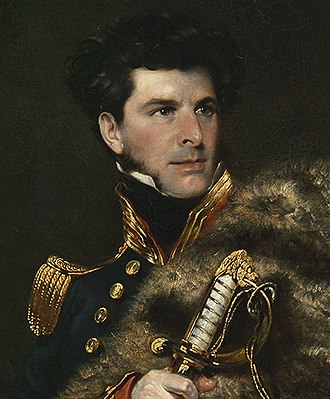
ACHIEVEMENTS: Magnetic surveys and geographical discoveries in the polar regions
NICKNAME/ALIAS: None
DATE AND PLACE OF BIRTH: 15 April 1800, London, England
DATE AND PLACE OF DEATH AND AGE AT DEATH:
3 April 1862, Aylesbury, Buckinghamshire, England. Aged 62.
DISCIPLINE: Explorer
FIELD: Exploration
EDUCATION: ?
MAJOR WORK:
“A Voyage of Discovery and Research in the Southern and Antarctic Regions” (1847)
LIFE AND TIMES:
Ross was the nephew of Rear Admiral <nephew of> John Ross* and he joined his uncle’s ship, the “Briseis”, when he entered the navy ten days before his twelfth birthday in 1812. He remained under his uncle’s wing for the next seven years, and saw active service in the Baltic and the English Channel during the war against France.
In May 1818, he accompanied the expedition led by Sir John to search for the elusive North West Passage (from the Davis Strait along the north coast of America, and through Behring’s Strait into the Pacific). When the expedition returned in October of that year, Sir John reported that Lancaster Sound (thought to have been a strait leading westward out of Baffin’s Bay) offered no westward passage, a conclusion which was disputed by some of his officers.
The following year Ross joined an expedition led by one of Sir John’s officers, William Parry, which did sail through the Lancaster Sound in “HMS Hecla”. It was the longest voyage in the Arctic to date made under sail and gave Ross experience of the dark polar winter. Ross accompanied Parry on two further polar voyages, in 1821-23 and 1824-26. In 1822 Ross was promoted to lieutenant and he was elected as a Fellow of the Linnaean Society in recognition of his botanical work.
Parry and his officers were using their experience to good effect, learning what clothes to wear and experimenting with <used invention of> Charles Mackintosh’s* waterproof canvas. They attributed a long period without scurvy to the canned meat they had obtained from the firm of <supplied by> Donkin* and <supplied by> John Hall* - who supplied all the early Arctic expeditions - not realizing that it was the lemon juice they took which did the trick. Thereafter, Ross always insisted on supplies from Donkin and Hall.
In 1825 the ship Ross was travelling in was wrecked by sea ice; they landed their stores at a beach they named Fury Beach after their wrecked ship and travelled home with Parry. At the end of the second expedition, Ross wrote a zoological appendix for the ship’s report.
In 1827 he joined Parry as second in command on an expedition to Spitzbergen in two boats fitted with runners so that they could be transported across ice. Their attempt failed because the boats were too heavy and the ice continually drifted. At the end of 1827 Ross was promoted to commander and in 1828 he was elected a Fellow of the <member of> Royal Society.
The following year he was back in the Arctic, on a private expedition to search for the North West Passage financed by the gin manufacturer <financed by> Felix Booth* and led by Sir John Ross. They sailed in May 1829 and did not return to England until 1833, by which time they had long been presumed to have perished. They had abandoned ship in 1832 but had been kept alive by travelling on foot to Fury beach where they could use the stores cached there earlier by Ross.
He made three sledging expeditions and on l June 1831 discovered the North Magnetic pole. He and his fellowmen built a cairn and flew the British flag. In 1834 Ross was promoted to Captain. He sailed to Baffin’s Bay to rescue whalers trapped in the ice to the Arctic in 1836.
In 1838 he took part in the first magnetic survey of England. In the same year, at a meeting of the British Association for the Advancement of Science, the astronomer <worked for> JWF Herschel* was appointed chairman of a committee to lobby the government about further magnetic surveys – in particular in the southern hemisphere. According to the theory of <proved theory of> Gauss*, a South Magnetic Pole, similar to that found in the North by Ross, would be found at about latitude 66 degrees S, longitude 146 degrees E.
In September 1839 Ross, in command of the “Erebus” and the “Terror”, set out to find the South Magnetic Pole. He sailed on the “Erebus”, among whose complement of officers was the naturalist <crew-member was> Joseph Hooker*. On the way, they called in at Hobart where <visited> John Franklin*, an old friend and fellow Arctic explorer, was governor-general.
On his first Antarctic voyage, Ross set up observatories on the Auckland Islands, crossed the Antarctic Circle on l January 1841 and four days later, after observing the wind, the currents and the appearance of the ice for some days, made the daring decision to enter the pack ice in order to sail on south to the Pole.
The Norwegian explorer Roald Amundsen, who in the twentieth century reached the South Pole just before the ill-fated British expedition led by <work related to> RF Scott*, later wrote that Ross had performed a “heroic deed” which gave “brilliant proof of human courage and energy”.
They discovered a long range of high land which Ross named Victoria Land and on the 28th they discovered an active volcano which Ross named Mount Erebus. On 31 January they were the first to see an Emperor Penguin which they did not immediately recognize as a different species.
They were only 160 miles away from proposed site of the Magnetic Pole but could not get any nearer and were already risking being trapped in ice over the winter. Ross named the nearest cape after Gauss. They wintered at Hobart and in November 1841 Ross set out on his second Antarctic voyage. This time, it took forty-seven days to get through the ice into the Ross Sea (as compared to five days on their first voyage) and the ships took some heavy damage during a gale.
On his second and third voyages, Ross charted a stretch of the coast of Graham Land and sailed around the Weddell Sea ice but were unable to penetrate it. He was again stopped from continuing south by the barrier of ice cliffs. The magnetic observations taken did not completely validate Gauss’s theory but Ross had proved that satisfactory observations could be taken at sea. The “Erebus” and the “Terror” anchored off the English coast on 4 September 1843.
In his account, Ross did not conclude that there was an Antarctic continent, despite his own land discoveries and his strong presumption that a mass of land lay behind the ice barrier. His last service was to command the “Enterprise” on an expedition which set out in 1848 to search for an Arctic expedition led by Franklin which had not been heard of since three months after its departure in 1845. Ross returned without success in 1849.
ASSESSMENT: Ross discovered the Ross Sea and the Victoria Land region of Antarctica.
EXTRA CONNECTIONS: <aided by> Ehrenberg* helped with preparations for his Arctic trip.
1839 trip support for the expedition had been arranged by Francis Beaufort, hydrographer of the Navy and a member of several scientific societies. On the expedition was gunner Thomas Abernethy and ship's surgeon Robert McCormick, as well as Joseph Dalton Hooker, who had been invited along as assistant ship's surgeon. Erebus and Terror were bomb vessels—an unusual type of warship named after the mortar bombs they were designed to fire and constructed with extremely strong hulls, to withstand the recoil of the heavy weapons. The ships were selected for the Antarctic mission as being able to resist thick ice, as proved true in practice
ONELINER: James Clark Ross, Polar explorer
BIBLIOGRAPHY:
Ross, M. J., Ross in the Antarctic, Caedmon of Whitby, Publishers, Yorkshire, 1892
LANGUAGE: English
PARENTS:
Father: George Ross (brother of polar explorer John)
Mother: ?
SIBLINGS: 2 brothers and ?
SPOUSE: Anne Coulman
CHILDREN: 3 sons. 1 daughter