Galvani, Luigi
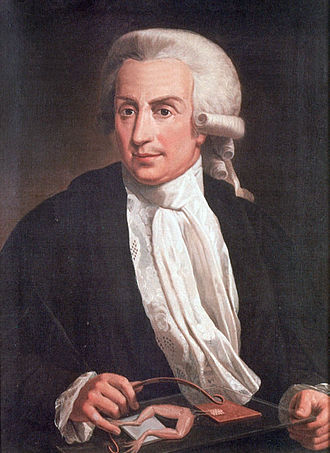
Name: Luigi Galvani
Achievements: His discoveries led to the invention of the battery
Born: September 9, 1737; Bologna, Papal States (Italy)
Died: December 4, 1798; Bologna, Cisalpine Republic (Italy) (Aged 61)
Field & Discipline: Science: Physics; Biology
Language: Italian
Father: Unknown
Mother: Unknown
Siblings: Unknown
Spouse: Lucia Galeazzi
Children: None
Education: University of Bologna
Major Work:
"De viribus electricitatis in motu musculari commentaries” (“On the Effects of Electricity on Muscular Motion")
Life & Times:
In 1773, Galvani, recently made president of the Bologna Academy of Sciences, presented papers to the Institute of Arts and Sciences on muscle movement in frogs, the effects of opiates on frog nerves, and the effects of electrical stimulation on frog nerves and muscles.
By 1780, Galvani was working on the responses of dead frogs to static electricity. His aim was to confirm his theory that animal nerve and muscle tissue contained an electric fluid.
Having read scientist [influenced by] Hales’* work on electricity and knowing [influenced by] Franklin*'s "one fluid" theory, which distinguished between positive and negative electricity, Galvani acquired an electrostatic machine (for making sparks) and a Leyden jar (a condenser to store static electricity invented by Dutch physicist [used equipment by] Pieter van Musschenbroek* in 1746.)
His frog preparations consisted of the spinal cords, crural nerves, and lower limbs all dissected as a single unit. He touched the conductor of the static electrical machine directly to the spinal cord -- kept on a pane of glass -- and watched the convulsive contractions of the muscles in the lower limbs, which rested on so-called "magic squares," a flat plate condenser made by attaching a sheet of metal foil to both sides of a single pane of glass.
But despite repetitions and some variations, Galvani kept coming up with one result he did not foresee: even when the frog was completely insulated from the machine and removed some distance from it, the lower limbs still contracted. As long as the crural nerves were touched by a grounded conductor, the muscles contracted whenever a spark was drawn from the electrical machine, even though a spark did not directly strike the frog parts.
Assuming that some analogy existed between the convulsions induced by distant electrical machines and those sometimes induced by static discharge in the atmosphere, Galvani began a series of experiments to explore the effects of atmospheric electricity on dead frogs.
Having discovered that he could induce a muscular contraction just by touching the nerves with a pair of scissors during an electrical storm, Galvani reckoned that lightning, which Franklin had shown to be electrical in nature, would produce electric charges in the air, and that the frogs could be used as a detector of electricity.
Taking his experiments further, Galvani hung some dead frogs by brass hooks on iron railings outside his home during a thunderstorm and noticed that the muscles contracted, as he now had come to expect. He then found that by pressing the hooks in the spinal cord to the iron railing, he could intensify these effects and that the muscles of the frogs continued to twitch, even when the storm had ceased.
He repeated the experiment inside and found that contractions occurred when a metal rod was touched to the frog and to a hook of another metal inserted into the frog. He noted that the contractions were stronger when certain metals were used, and that no contractions resulted when glass was used.
In later investigations, Galvani experimented with metallic arcs, and tried various bent mental conductors, touching one end to the hook in the spinal cord and the other to the muscles in the frog's leg. The intensity of the contractions depended on the metal used for the hook and the arc.
Galvani first announced the results of his experiments in "De viribus electricitatis in motu musculari commentarius (On the Effects of Electricity on Muscular Motion)", a paper published in 1791. Galvani had hit upon the central phenomenon of "galvanism": that electrical current will be produced on contact between two different metals in a moist environment. But he interpreted his discovery wrongly, believing that he had proved the existence of a special "animal electricity".
[theory disproved by] Volta*, the outstanding physicist at the University of Pavia, took up the new theory of "animal electricity", but over time became skeptical, and by the end of 1793 had entirely discarded Galvani's theory in favor of his own theory of "contact": that a flow of electricity occurred when two metals touched in the presence of moisture, and that it had nothing to do with frogs or any other animal.
Galvani was not prepared to admit defeat, and he and his nephew, Giovanni Aldini, mounted an unsuccessful campaign in the mid-1790s to establish beyond doubt the existence of an animal electricity.
Extra Connections: Galvani's work related to the work of [work related to] Schelling*, [work related to] Mesmer*, [work related to] Alexander von Humboldt* and [work related to] Berzelius*, [work related to] Descartes(https://app.thebrain.com/brain/f3e16344-7cd9-4fa3-ae1d-59876e128474/6faace3d-1d40-55f6-aee0-a36136decccc).
Assessment: Galvani's pile provided the major stimulus for Volta to discover a source of constant current electricity
Oneliner: Luigi Galvani, early electricity researcher
Bibliography:
- Collier's Encyclopedia.
- Dictionary of Scientific Biography.
- Encyclopedia Britannica.
Multimedia:
Connections II #5 "Something for Nothing"
Connections 4 Limitless Energy