Nicholson, William
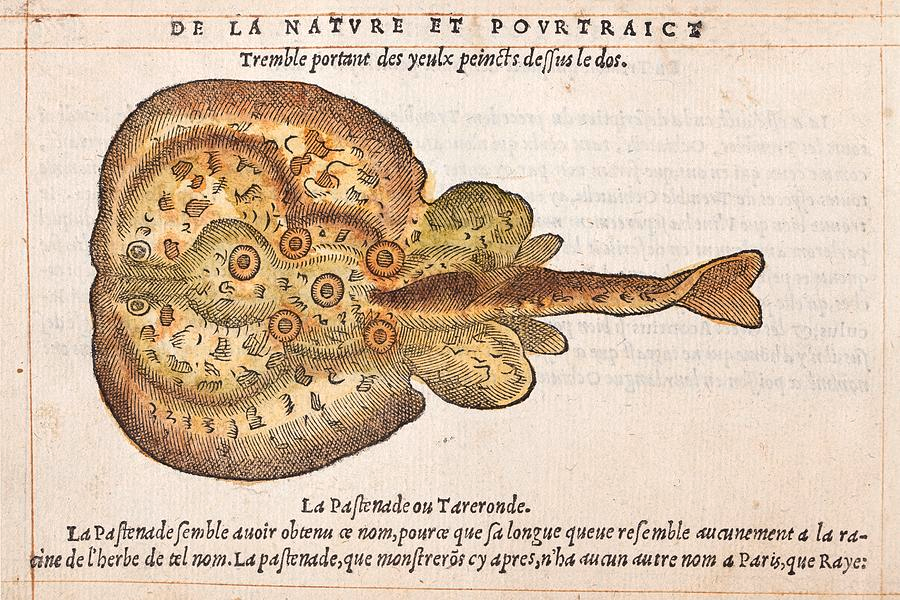
William Nicholson (13 December 1753 – 21 May 1815) was an English writer, translator, publisher, scientist, inventor, patent agent and civil engineer. He launched the first monthly scientific journal in Britain, Journal of Natural Philosophy, Chemistry, and the Arts, in 1797, and remained its editor until 1814. In 1800, he and Anthony Carlisle were the first to achieve electrolysis, the splitting of water into hydrogen and oxygen, using a voltaic pile. Nicholson also wrote extensively on natural philosophy and chemistry. With Galvani, was interested in how fish can generate electric shocks.
Early Life
Nicholson was educated in Yorkshire, and after leaving school, he made two voyages as a midshipman in the service of the British East India Company.[1] His first voyage was to India and the second voyage was to China on board the Gatton, (1772-1773).
Subsequently, having become acquainted with Josiah Wedgwood in 1775, he moved to Amsterdam, where he made a living for a few years as Wedgwood's agent.
On his return to England he was persuaded by Thomas Holcroft to apply his writing talents to the composition of light literature for periodicals, while also assisting Holcroft with some of his plays and novels - Alwyn[2] and Duplicity.[3]
Meanwhile, he devoted himself to the preparation of An Introduction to Natural Philosophy, which was published in 1782 by Joseph Johnson and was at once successful. Translations for Joseph Johnson included Voltaire's Elements of the Philosophy of Newton as well as M. Maistre de La Tour’s History of Hyder Shah in 1784. He then published The Navigator’s Assistant[4] based on his time with the East India Company .
In 1784 he was proposed by Josiah Wedgwood (the current chairman) and appointed as secretary to the General Chamber of Manufacturers of Great Britain, and he was also connected with the Society for the Encouragement of Naval Architecture, established in 1791.
Scientific Work
On 12 December 1783, Nicholson was elected to the "Chapter Coffee House Philosophical Society". He was proposed by Jean-Hyacinthe Magellan and seconded by horologist John Whitehurst.[5]
Nicholson communicated to the Royal Society in 1789 two papers on electrical subjects. In the same year he reviewed the controversy which had arisen over Richard Kirwan's essay on phlogiston, and published a translation of the adverse commentaries by the French academicians (Lavoisier, Monge, Berthollet, and Guyton de Morveau) as 'An Essay on Phlogiston, to which are added Notes.'[6]
[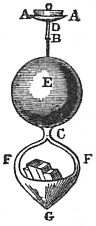
Nicholson's Hydrometer
In 1784 he invented the Nicholson hydrometer, a constant volume hydrometer to measure specific gravity of liguids or solids, with a pan for small weights on top and a small container ("basket") on the bottom into which a sample can be placed.[7]
in 1790, William Nicholson obtained a patent for a cylindrical printing machine[8] - a design which was copied in the USA[9] and Barcelona, before Friedrich Konig developed and commercialised the concept in 1814.
In 1797 he founded, published, and wrote part of the Journal of Natural Philosophy, Chemistry and the Arts, generally known as Nicholson's Journal, the earliest monthly scientific work of its kind in Great Britain. The journal published the first known aerodynamic analysis of gliders and heavier-than-air fixed-wing flying machines designs, by George Cayley in 1809–1810.[10] The publication continued until 1814.
In 1799 he established a school in London's Soho Square, where he taught natural philosophy and chemistry, with the aid of a grant of £1,500 from Thomas Pitt.
In May 1800 he with Anthony Carlisle discovered electrolysis, the decomposition of water into hydrogen and oxygen by voltaic current. The two were then appointed to a chemical investigation committee of the new Royal Institution. But his own interests shortly turned elsewhere.[11][12] In 1809 he became a first class corresponding member, living abroad, of the Royal Institute of the Netherlands.[13]
Besides considerable contributions to the Philosophical Transactions, Nicholson wrote translations of Fourcroy's Chemistry (1787) and Chaptal's Chemistry (1788), First Principles of Chemistry (1788) and a Chemical Dictionary (1795); he also edited the British Encyclopedia, or Dictionary of Arts and Sciences (6 vols., London, 1809).
Later Life
During the later years of his life, Nicholson's attention was chiefly directed to water supply engineering at Portsmouth, at Gosport and in Hammersmith. William Nicholson died in Bloomsbury at the age of 61 on 21 May 1815, attended by Sir Anthony Carlisle.
See also
References...
[Wikipedia](https://en.wikipedia.org/wiki/William_Nicholson_(chemist)
https://onlinelibrary.wiley.com/doi/full/10.1111/1600-0498.122831.Nicholson
(1753-1815)
Twice to China for EI Co before 1733.
Written to (Yorks) by Priestley. 74
Amsterdam: 77 trouble shooter for Wedgwood. (had est an agent there 63)
John Du Burk 69.Problems and incompetence. Cooper sent to help. No good. Aug 74 W complained.
N audited the books. Refused offer to take over co. (2000 too much) 77 arranged txf to Lambertus Van Veldhuysen. Did all the dealing and set up. London again late 1777. Full report etc 78.
1782 Intro t Natural Philosophy) became text book 5 eds. 1805.
Translated Benyowsky 2-vols travels (con man, see elsewhere). 1789.
1788 in RS Philo Trans. Described an electrical induction apparatus. Designed new hydrometer. Did Koenig cylinder printing press before he did. Other inventions.
1800 + Anthony Carlisle, ‘discovered electrolysis’used voltaic cell current to decompose water<hydrogen and oxygen.
Ran Nicholson’s journal reposts txls of science papers.
Waterworks engineer.
MAINLY A SCIENTIFIC JOURNALIST
Big pal of Godwin (M Shelley pa), Woolstonecraft.
1797 in his Journal write about torpedo fish, theorised it make charges within the fish pellicules. (inspired Volta??)The common torpedo fish can deliver a shock of up to 200 volts. The charge is generated by muscle tissue ***comprising hundreds of columns, each of which is made up of around 400 jelly-filled disks, ***acting together like the modern battery we recognise today.
It appears to me … that a machine might be constructed also capable of giving numberless shocks at pleasure, and of retaining its power for months, years or to an extent of time of which the limits can be determined only be experiment. I will not here describe the mechanical combinations which have occurred to me in meditating on this subject …
Sue Durrell (editor). 2018. The Life of William Nicholson, by his Son. Published by Peter Owen.
https://www.nicholsonsjournal.co.uk/
(from Volta: Science and Culture,,,J: V read N’s article about imitating the toredo fish by enas of an electrical device (similar in soe respects to the battery***
V’s details in London: Banks<Carlisle<Nich. C+N expt 17 half crowns (silver) 17 Zinc, pasteboard in salt water soak.Later used abigger pile. < decomposutino of water (electrolysis)
N’s journal many articles in tests of pile etc, post V announcement May 1800. )
(from Pancaldi:
Till spring 1799 V not even trying to make a battery. (Galvani all about frog providingthe electric fluid proper to all animals that caused the leg contraction).That autumn V read Nich. article about imitating the torpedo fish shocks and anatomy.
In 1796 V keen to repro VERY weak electric from frog legs. Asked Re in Pavia to build Nicholson’s ‘doubler’ for him (desrc. In N’s Phil. Trans. 1788)
The doubler:
Three brass discs, two fixed (AC) one mobile (B) and rotating brass ball (revlving same axis as B) B faced other two discs not touching. Wires connected various parts. Crank and gears. AApproach and separate plates (V’s 1782 condensatore)
Up t0 96 V had only got electric charge from frog legs and man tongue. Doubler: metal plates.
Change V attitude. Started talking ’metallic electricity.’(Galv had said you needed animal)
96-7 expts using doubler. Cranking it made electricity (approaching and separating of plates to build up a detectable levels of e;ectricity in the fixed discs?) !!! Started using various metals to repace N’s brass discs. (i.e. different conductors). V saw the contact electrcitywas achieved where before only by frog leg or tongue.N’s doubler made even th weakest electricity strong enugh to detect. NOW V said not need humid leg, just two metals.
Prior to N, V had used arcs or rods of metal. NOW metal discs.
PROBLEMS FOR V. If you cranked 50<100 times, the doubler MADE its own electricity!!! Even when none had been communicated to it!!! Was this from the discs??? V started with various metals. (N= brass).
A visitor to pavia in Feb 1797 saw V demo metallic electr. with N’s doubler.(All this time he and Galvani going at the diea of brain<nerves electricity. Animal electicity.)
1798 V gets electricity rubbing tin and slver discs
Autumn 1799: article by Nich. In his Journal Noc 1797, a mechanical and electric machine could be constructed to make electricity like a torpedo fish. (which had columns)
constructed as that the plates might touch each other by pairs only, naturally in opposite states, and coated on the outside; if morevover, there were one common conductor communicat ing with the upper plate of every pair, and another in the same manner with the lower; then a separation of all the pairs at the distance of only 1/18,750 inch would produce the torpedinal intensity;
N saying (BIG deal for V) pairs of discs at opposite electrical states connected by two cmmon conductors. = electricity. V looked for how to connect many couples of discs (This he sais wwas when he conceived of the battery!!!!!****) added wet conductor (like N!!)
N’s idea precipitated V invention.
Volta’s electroforo perpetuo (the perpetual electric bearer)consisted of a flat ‘cake’ of resinous stuff like wax or pitch (the dialectric plate) plus a metal plate with insulating handle. Rubbing cake surface with fur (think he used catskin), charged up the cake. Place metal plate against it.
The electrostatic field surrounding the charged cake causes the emtal field to be charged.Now it can be used as a source of charge for experiments. The cake retains its charge for several days and can be repeatedly used as an electric source.When finally its charge depletes, catskin rubbing restores, and you can use it again.
We want no authors': William Nicholson and the contested role of the scientific journal in Britain, 1797-1813
IAIN P. WATTS
The British Journal for the History of Science
Vol. 47, No. 3 (September 2014), pp. 397-419 (23 pages)
While Nicholson took no steps to commercialise this discovery, he profited as the reputation of the Journal of Natural Philosophy, Chemistry and the Artsincreased significantly.Perhaps more to his personal satisfaction, he was content to facilitate the sharing of this knowledge in his role as publisher of the Journal,and took great pleasure in promoting debate and watching the many developments that occurred over the following years as a result.
Lilley’s analysis of the Journal revealed how ‘Before 1800 none of the really great had written papers specifically for Nicholson’s Journal.The galvanic discoveries of that year seem to have enormously enhanced its prestige, and thereafter we find contributions from many of the leading British scientists of the times, Dalton[1], Davy, Wollaston[2], Young, Brewster[3], Brande[4], Kater[5] and many others’.
Atlantic torpedo ray may reach 90 kg (200 lbs.) Depending on the species, electric rays may eat fishes, worms, and crustaceans. Adult Atlantic rays consume eels, flounders, and small sharks.
Electric organs are masses of flattened cells, called electrocytes, which are stacked in regular rows along the sides of certain fishes, e.g., the electric eel of South America. The posterior surface of each electrocyte is supplied with a motor neuron; the anterior surface is not.
The electric currents produced by some species of fishes, such as the Numbfish and torpedo rays are generated in cells called electrocytes. When an electrocyte is stimulated, a movement of ions (electrically charged atoms) across the cell membrane results in an electric discharge.
An electric ray (Torpediniformes) showing location of electric organ and electrocytes stacked within it
In biology, the electric organ is an organ common to all electric fish used for the purposes of creating an electric field. The electric organ is derived from modified nerve or muscle tissue.[1]^(https://en.wikipedia.org/wiki/Electric_organ_%28biology%29#cite_note-Kramer1996-1) The electric discharge from this organ is used for navigation, communication, mating, defense and also sometimes for the incapacitation of prey.[2]^(https://en.wikipedia.org/wiki/Electric_organ_%28biology%29#cite_note-2)[3]^(https://en.wikipedia.org/wiki/Electric_organ_%28biology%29#cite_note-Feulner,_P._G.,_M._Plath,_J._Engelmann,_F._Kirschbaum,_R._Tiedemann_2009_225%E2%80%93228-3)
Contents
·
·
·
·
·
·
·
Research history
In the 1770s the electric organs of the torpedo and electric eel were the subject of Royal Society papers by Hunter, Walsh and Williamson. They appear to have influenced the thinking of Luigi Galvani and Alessandro Volta - the founders of electrophysiology and electrochemistry.[4]^(https://en.wikipedia.org/wiki/Electric_organ_%28biology%29#cite_note-ReferenceA-4)
In the 19th century, Charles Darwin discussed the electric organ in his *Origin of Species* as a likely example of convergent evolution: "But if the electric organs had been inherited from one ancient progenitor thus provided, we might have expected that all electric fishes would have been specially related to each other…I am inclined to believe that in nearly the same way as two men have sometimes independently hit on the very same invention, so natural selection, working for the good of each being and taking advantage of analogous variations, has sometimes modified in very nearly the same manner two parts in two organic beings".[5]^(https://en.wikipedia.org/wiki/Electric_organ_%28biology%29#cite_note-5)
Since the 20th Century, electric organs have received extensive study, for example Hans Lissmann's pioneering 1951 paper[6] and his review of their function and evolution in 1958.[7]^(https://en.wikipedia.org/wiki/Electric_organ_%28biology%29#cite_note-7) More recently, *Torpedo californica* electrocytes were used in the first sequencing of the acetylcholine receptor by Noda and colleagues in 1982, while *Electrophorus* electrocytes served in the first sequencing of the voltage-gated sodium channel by Noda and colleagues in 1984.[8]^(https://en.wikipedia.org/wiki/Electric_organ_%28biology%29#cite_note-Markham2013-8)
Evolution
Electric organs have evolved at least six times in various teleost and elasmobranch fish.[9]^(https://en.wikipedia.org/wiki/Electric_organ_%28biology%29#cite_note-9)[10]^(https://en.wikipedia.org/wiki/Electric_organ_%28biology%29#cite_note-10)[11]^(https://en.wikipedia.org/wiki/Electric_organ_%28biology%29#cite_note-11)[12]^(https://en.wikipedia.org/wiki/Electric_organ_%28biology%29#cite_note-12) Notably, they have convergently evolved in the African Mormyridae and South American Gymnotidae groups of electric fish. The two groups are distantly related, as they shared a common ancestor before the supercontinent Gondwana split into the American and African continents, leading to the divergence of the two groups. A whole-genome duplication event in the teleost lineage allowed for the neofunctionalization of the voltage-gated sodium channel gene Scn4aa which produces electric discharges.[13]^(https://en.wikipedia.org/wiki/Electric_organ_%28biology%29#cite_note-13)[14]^(https://en.wikipedia.org/wiki/Electric_organ_%28biology%29#cite_note-14)
In all clades except Apteronotus (Latin America), where the cells are derived from neural tissue, the electrocytes are derived from skeletal muscle.[8]^(https://en.wikipedia.org/wiki/Electric_organ_%28biology%29#cite_note-Markham2013-8)
Electrocytes
Electrocytes discharging
Electrocytes, electroplaques or electroplaxes are cells used by electric eels, rays, and other fish for electrogenesis.[8]^(https://en.wikipedia.org/wiki/Electric_organ_%28biology%29#cite_note-Markham2013-8) In some species they are cigar-shaped; in others, they are flat disk-like cells.[8]^(https://en.wikipedia.org/wiki/Electric_organ_%28biology%29#cite_note-Markham2013-8) Electric eels have several thousand of these cells stacked, each producing 0.15 V. The cells function by pumping positive sodium and potassium ions out of the cell via transport proteins powered by adenosine triphosphate (ATP). Postsynaptically, electrocytes work much like muscle cells. They have nicotinic acetylcholine receptors.
The stack of electrocytes has long been compared to avoltaic pile, and may even have inspired the invention of the battery, since the analogy was already noted by Alessandro Volta.[4]^(https://en.wikipedia.org/wiki/Electric_organ_%28biology%29#cite_note-ReferenceA-4) While the electric organ is structurally similar to a battery, its cycle of operation is more like a Marx generator, in that the individual elements are slowly charged in parallel, then suddenly and nearly simultaneously discharged in series to produce a high voltage pulse.
Firing
To discharge the electrocytes at the correct time, the electric eel uses its pacemaker nucleus, a nucleus of pacemaker neurons. When an electric eel spots its prey, the pacemaker neurons fire and acetylcholine is subsequently released from electromotor neurons to the electrocytes. The electrocytes fire an action potential using the voltage-gated sodium channels on one or both sides of the electrocyte, depending on the complexity of the electric organ in that species. If the electrocyte has sodium channels on both sides, the depolarization caused by firing action potentials on one side of the electrocyte can cause the sodium channels on the other side of the electrocyte to fire as well.[15]^(https://en.wikipedia.org/wiki/Electric_organ_%28biology%29#cite_note-15)
Location
In most fishes, electric organs are oriented to fire along the length of the body, usually lying along the length of the tail and within the fish's musculature, with smaller accessory electric organs in the head. However, there are some exceptions; in stargazers and in rays the electric organs are oriented along the dorso-ventral (up-down) axis. In the electric torpedo ray, the organ is near the pectoral muscles and the gills (see the image). The stargazer's electric organs lie between the mouth and the eye. In the electric catfish, the organs are located just below the skin and encase most of the body like a sheath.
Electric organ discharge
Electric organ discharge is the electric field generated by the organs of animals including electric fish. In some cases the electric discharge is strong and is used for protection from predators; in other cases it is weak and it is used for navigation and communication.[16]^(https://en.wikipedia.org/wiki/Electric_organ_%28biology%29#cite_note-16) Communicating through electric organ discharges occurs when a fish uses its own electroreceptors to sense the electric signals of a nearby fish.[17]^(https://en.wikipedia.org/wiki/Electric_organ_%28biology%29#cite_note-17) Electric fish navigate by detecting distortions in their electrical field by using their cutaneous electroreceptors.[18]^(https://en.wikipedia.org/wiki/Electric_organ_%28biology%29#cite_note-18)[19]^(https://en.wikipedia.org/wiki/Electric_organ_%28biology%29#cite_note-19)[20]^(https://en.wikipedia.org/wiki/Electric_organ_%28biology%29#cite_note-20) Electric organ discharges influence mate choice in weakly electric fish, as females have been shown to be attracted to electric discharge characteristics of conspecific males.[3]^(https://en.wikipedia.org/wiki/Electric_organ_%28biology%29#cite_note-Feulner,_P._G.,_M._Plath,_J._Engelmann,_F._Kirschbaum,_R._Tiedemann_2009_225%E2%80%93228-3)
See also
·
References
1.
^ Kramer, Bernd (1996). *"Electroreception and communication in fishes"* (PDF). Progress in Zoology. 42.
2.
^ Castello, M. E., A. Rodriguez-Cattaneo, P. A. Aguilera, L. Iribarne, A. C. Pereira, and A. A. Caputi (2009). "Waveform generation in the weakly electric fish Gymnotus coropinae (Hoedeman): the electric organ and the electric organ discharge". Journal of Experimental Biology. 212 (9): 1351–1364. *doi*:*10.1242/jeb.022566*. *PMID* *19376956*.
3.
^ Jump up to:*^a* *^b* Feulner, P. G., M. Plath, J. Engelmann, F. Kirschbaum, R. Tiedemann (2009). *"Electrifying love: electric fish use species-specific discharge for mate recognition"*. Biology Letters. 5: 225–228. *doi*:*10.1098/rsbl.2008.0566*. *PMC* *2665802*.
4.
^ Jump up to:*^a* *^b* Alexander Mauro, "The role of the voltaic pile in the Galvani-Volta controversy concerning animal vs. metallic electricity" in Journal of the History of Medicine and Allied Sciences, volume XXIV, number 2, April, 1969 available online at jhmas.oxfordjournals.org/cgi/reprint/XXIV/2/140.pdf
5.
^ *Darwin, Charles* (1859). On the origin of species by means of natural selection, or the preservation of favoured races in the struggle for life. London: John Murray. *ISBN* *978-1-4353-9386-8*.
6.
^ Lissmann, Hans W. (1951). "CONTINUOUS ELECTRICAL SIGNALS FROM THE TAIL OF A FISH, GYMNARCHUS-NILOTICUS CUV". Nature. 167 (4240): 201–202. *doi*:*10.1038/167201a0*. *PMID* *14806425*.
7.
^ Lissmann, Hans W. (1958). "ON THE FUNCTION AND EVOLUTION OF ELECTRIC ORGANS IN FISH". Journal of Experimental Biology. 35: 156ff.
8.
^ Jump up to:*^a* *^b* *^c* *^d* Markham, M. R. (2013). "Electrocyte physiology: 50 years later". Journal of Experimental Biology. 216 (13): 2451–2458. *doi*:*10.1242/jeb.082628*. *ISSN* *0022-0949*.
9.
^ Zakon, H. H., D. J. Zwickl, Y. Lu, and D. M. Hillis (2008). "Molecular evolution of communication signals in electric fish". Journal of Experimental Biology. 211 (11): 1814–1818. *doi*:*10.1242/jeb.015982*. *PMID* *18490397*.
10.
^ Lavoue, S., R. Bigorne, G. Lecointre, and J. F. Agnese (2000). "Phylogenetic relationships of mormyrid electric fishes (Mormyridae; Teleostei) inferred from cytochrome b sequences". Molecular Phylogenetics and Evolution. 14 (1): 1–10. *doi*:*10.1006/mpev.1999.0687*. *PMID* *10631038*.
11.
^ Lavoué S., Miya M., Arnegard M. E., Sullivan J. P., Hopkins C. D., Nishida M. (2012). *"Comparable ages for the independent origins of electrogenesis in African and South American weakly electric fishes"*. PLoS ONE. 7 (5): e36287. *doi*:*10.1371/journal.pone.0036287*. *PMC* *3351409*. *PMID* *22606250*.
12.
^ Kawasaki, M. (2009). "Evolution of Time-Coding Systems in Weakly Electric Fishes". Zoological Science. 26 (9): 587–599. *doi*:*10.2108/zsj.26.587*. *PMID* *19799509*.
13.
^ Gallant, J. R., L. L. Traeger, J. D. Volkening, H. Moffett, P. H. Chen, C. D. Novina, G. N. Phillips; et al. (2014). *"Genomic basis for the convergent evolution of electric organs"*. Science. 344: 1522–1525. *doi*:*10.1126/science.1254432*. *PMC* *5541775*. *PMID* *24970089*.
14.
^ Arnegard, M. E., D. J. Zwickl, Y. Lu, H. H. Zakon (2010). "Old gene duplication facilitates origin and diversification of an innovative communication system-twice". Proceedings of the National Academy of Sciences. 107.
15.
^ Salazar, V. L., R. Krahe, J. E. Lewis (2013). "The energetics of electric organ discharge generation in gymnotiform weakly electric fish". Journal of Experimental Biology. 216: 2459–2468. *doi*:*10.1242/jeb.082735*.
16.
^ Caputi, A. A., B. A. Carlson, and O. Macadar. 2005. Electric organs and their control. Pages 410-451 in T. H. Bullock, C. D. Hopkins, A. N. Popper, and R. R. Fay, eds. Electroreception. New York.
17.
^ Crampton W. G. R., Davis J. K., Lovejoy N. R., Pensky M. (2008). "Multivariate classification of animal communication signals: A simulation-based comparison of alternative signal processing procedures using electric fishes". Journal of Physiology-Paris. 102 (4–6): 304–321. *doi*:*10.1016/j.jphysparis.2008.10.001*. *PMID* *18984042*.
18.
^ Bastian J. 1986. Electrolocation: behavior, anatomy, and physiology. Pages 577-612 in T. H. Bullock and W. Heiligenberg, eds. Electroreception. New York.
19.
^ Aguilera P. A., Caputi A. A. (2003). "Electroreception in G. carapo: detection of changes in waveform of the electrosensory signals". Journal of Experimental Biology. 206 (6): 989–998. *doi*:*10.1242/jeb.00198*.
20.
^ Pereira, A. C.; A. A. Caputi (2010). "Imaging in Electrosensory Systems". Interdisciplinary Sciences-Computational Life Sciences. 2: 291–307. *doi*:*10.1007/s12539-010-0049-2*.
The voltaic pile, invented by Alessandro Volta in 1800, was the first electric battery. Its invention can be traced back to an argument between Volta and Luigi Galvani, Volta’s fellow Italian scientist who had gained notoriety for his experiments on frog legs.
An early voltaic pile. A. Volta. On the electricity excited by the mere contact of conducting substances of different kinds, 1800
Galvani found that the legs of a frog would contract when forming a circuit with two different kinds of metal. Galvani contended that this phenomenon resulted from an inherent “animal electricity,” an electrical fluid present in the animal itself. Volta disagreed. His own experiments proved that this electric stimulation was ultimately the result of the different metals in the circuit and the electrolyte – that is, the frog legs – between them.
A later voltaic pile. L. Ferrari. Gli impianti domestici di luce elettrica, 1893
Removing this experiment from the theater of twitching legs, Volta created a circuit with two different metals separated by a piece of cloth or cardboard soaked in brine (an electrolyte). The completed circuit produced an electric current. By stacking this element – a pair of copper and zinc discs with an electrolyte between them – one atop the other, Volta could adjust the amount of electricity produced to his desired level. The result was what came to be called the voltaic pile, one of the first devices to provide a reliable source of electricity.