FF FOSSIL FUEL
MUCH BELATED GENERIC TERM OIL GAS COAL 10 25
merri ok
SEE SUBSIDY FOSSIL FUEL
see BALLROOM CORRUPT HAMM
SEE BIG 4 FF CHEVRON EXXON SHELL
SEE KOCK IND
SEE PIPELINE ETP METHANE
SEE BUY ELECTION ETP TRUMP FUNDER SUPERPAC Mga inc dark money corrupt
---
-=-=
HEATED GMAIL 11 26
 |
An activist dressed as a fossil fuel executive pours fake gas over fake money outside Shell’s headquarters in May 2026. During the 2026 midterm elections, the U.S. fossil fuel industry lit actual money on fire trying to elect Republicans. Photo by James Willoughby/SOPA Images/LightRocket via Getty Images.
The U.S. oil and gas industry spent at least $182 million trying to elect Republicans in last night’s midterm elections¹.
It didn’t buy them very much.
Voters rejected fossil fuel allies and priorities across the country, not only stripping Republicans of control of both the House and Senate, but delivering stunning defeats in fossil-fueled governors’ races, state legislatures, regulatory commissions, and ballot measures.
Here are some notable examples.
- Republicans lost control of the House and Senate despite large oil industry donations. Chevron gave $8.2 million, Koch Inc. gave $6.8 million, and Energy Transfer gave $2 million to the Senate Leadership Fund and Congressional Leadership Fund, according to a Public Citizen analysis. The American Petroleum Institute gave at least another $8 million to the two super PACs, which work to elect Republican majorities in Congress. Republicans still lost both chambers.
- A Texas oil billionaire’s attempt to buy Michigan’s Senate race failed. Texas oil billionaire Tim Dunn gave $5 million to a super PAC backing Republican Mike Rogers in Michigan’s Senate race. It didn’t matter. Voters still elected Democrat Abdul El-Sayed, whose platform includes shutting down the Line 5 pipeline and transitioning to 100 percent renewable energy.
- In fact, pretty much everything Tim Dunn tried to do failed. The ultra-Christian oil billionaire gave more than $11 million to Texas Republican PACs, with almost all of it going to Texans United for a Conservative Majority. And what happened in Texas was the polar opposite of a conservative majority. Speaking of which:
- Chevron and fracking money couldn’t make Texans like Ken Paxton. Lone Star Liberty PAC, the group backing Republican Ken Paxton’s bid for U.S. Senate, received at least $2 million from oil and gas interests, including $200,000 from the Chevron Employees PAC and $250,000 from oil executive Russell Gordy. Fracking billionaire Farris Wilks gave another $250,000 to Paxton Victory. Voters still elected James Talarico, who campaigned on restoring federal support for renewable energy and strengthening clean air and water protections.
- Chevron couldn’t save Susan Collins, either. The oil company gave $200,000 to Pine Tree Results PAC, the super PAC backing Maine’s Republican senator. Voters still elected Democrat Troy Jackson, ending Collins’s nearly three decades in the Senate.
HEATED
- Two oil executives poured ~$6 million down the drain trying to save Greg Abbott. Midland Energy founder Javaid Anwar contributed about $4.37 million to the Texas Republican governor’s re-election campaign, and Energy Transfer’s Kelcy Warren also gave at least $1.5 million. Texans still elected Democrat Gina Hinojosa, who campaigned on making the energy industry pay its fair share and accused Abbott of letting gas companies profit at Texans’ expense during the deadly 2021 blackouts.
- Fossil fuel money couldn’t even save Texas’s fossil fuel regulator. In perhaps the most stunning blue flip in Texas, Democrat Jon Rosenthal won the race to oversee the Texas Railroad Commission, the agency that oversees the state’s massive oil and gas industry—and his did it despite his Republican opponent receiving $1.8 million from oil-linked donors. While Rosenthal hardly portrays himself as a climate champion, he’s campaigned on ending routine flaring and venting, requiring modern leak detection, and enforcing pollution rules.
- An oil heir wasted $18 million trying to buy the Texas attorney general’s office. Republican Mayes Middleton, president of his family’s Middleton Oil Company, contributed $18 million to his own campaign, but ultimately wound up losing to Nathan Johnson, who will become the first elected Democrat attorney general in Texas since 1994. This could have major implications for climate accountability, as state attorneys general have the power to investigate corporate deception and sue fossil fuel companies for misleading the public about climate change. (Middleton also received $100,000 donations from Energy Transfer vice chairman Kelcy Warren and Double Eagle co-founder Cody Campbell, to no avail.)
- Utility and coal money couldn’t keep Georgia’s energy regulators in Republican hands. For the first time in decades, Democrats gained control of Georgia Public Service Commission, which helps decide how much people pay for electricity and which power plants Georgia Power builds. They did this despite fossil fuel money flowing into the race: Republican candidate Fitz Johnson received nearly $200,000 from donors connected to companies the commission regulates, while Republican candidate Josh Tolbert received $63,200 from trusts linked to Alabama’s coal-rich Drummond family.
- Colorado voters will likely reject a Constitutional amendment establishing the right to buy methane gas. Amendment 82’s financial backers were largely unknown, but the ballot measure’s express purpose was to undermine state and local efforts to move buildings to electric appliances—so I’m just assuming it was a fossil fuel-backed measure. Nevertheless, it looks destined for defeat: With counting continuing, Amendment 82 had only about 46 percent support, well short of the 55 percent needed to pass.
- Bonus: Elon Musk flushed $445 million down the toilet. “But Elon Musk isn’t a fossil fuel billionaire,” you say. And sure, perhaps that’s technically true—but it’s getting less true by the day. Earlier this year, his company SpaceX acquired a literal fossil fuel company called APR Energy, in a deal valued at roughly $1 billion. APR operates mobile gas and diesel turbines to power AI data centers. Speaking of which, by June, Musk’s AI company xAI had installed at least 57 methane gas turbines at its Mississippi power plant, according to the NAACP and environmental groups—with enough generating capacity to power an estimated 738,000 to 950,000 homes. If that’s not a man in the fossil fuel business, please tell me what is.
Now, none of this is to say that oil money was entirely defeated in the 2026 midterms. Many fossil fuel-backed Republicans, including Texas Senator August Pfluger and U.S House Majority Leader Steve Scalise, handily won reelection.
Nor is it to say that the oil industry’s priorities will suddenly disappear from U.S. politics. Donald Trump is still the president, and *many* elected Democrats are out and proud champions of methane gas, one of the most climate-polluting fuels on the planet. (Perhaps now this is a good time to remind everyone that James Talarico championed ExxonMobil on the campaign trail).
But last night demonstrated something worth remembering, particularly for people who care about climate change but often doubt whether meaningful progress is possible, and as we head into two more difficult years of trying to achieve some kind of climate action under Donald Trump.
Fossil fuel money is one of the most powerful forces in American politics. It is the biggest obstacle we face in preserving a livable climate for everyone on Earth.
But it is not invincible.
Not even close.
-=-=
-=-=-
AN 11 26
The biggest donors to President Donald Trump have seen "mind-blowing" returns for their investments, according to a new report shared exclusively with The Daily Beast, which found that these backers had received "supercharged" paydays since his return to the White House.
In a piece published Monday morning, The Center for American Progress revealed to the outlet that it had tracked over 75 entities that had donated a total of nearly $1.7 billion to Trump's "political groups, inauguration fund, pet projects such as his ballroom and family businesses since 2023." Based on the center's "conservative estimates," these entities have since received "more than $182 billion in government-related benefits" since the start of Trump's second term.
While stopping short of accusing Trump or these entities of any "criminal quid pro quo," the center noted that these kickbacks included things like "federal contracts, advantageous government policy and tariff and trade exemptions."
"We’re documenting money and timing and benefits received, but we can’t read minds. We can only follow the data,” CAP senior director of research Ryan Koronowski told The Daily Beast, adding that the scale of this dynamic was "mind-blowing."
"Among the report’s biggest winners are defense titan Lockheed Martin, which is reported to have donated $16 million to Trump-related causes, including $5 million from its subsidiary Sikorsky for the new White House helipad," The Daily Beast explained. "Lockheed has secured $44.8 billion in new or expanded contracts since Trump returned to the White House, the report states. Donors from the fossil fuel industry have injected $65.7 million into Trump’s political groups, his inauguration committee, and funding for his ballroom, according to CAP. Its report says the industry will benefit by $31.2 billion from the administration’s policies and tax benefits. Other major firms named in the report include tech titans Apple, MAGA bro Elon Musk and his various companies, and AI firm Palantir and its executives."
Apple, The Daily Beast detailed, donated $25 million to Trump's ballroom, as many other corporate donors did to curry his favor, while former CEO Tim Cook also personally donated $1 million to his inauguration fund. The company later received tariff exemptions that CAP estimated saved it around $21 billion.
After pouring hundreds of millions of dollars into pro-Trump causes, CAP estimated that Elon Musk's companies have raked in $14 billion in benefits from the Trump government. A DOJ investigation into alleged discrimination at SpaceX was also dropped.
“Money gains you influence, which gives you more money, which gives you more influence, which gives you more money. And it’s very circular,” Devon Ombres, a CAP senior director and co-author of the report, told The Daily Beast, adding that the existing dynamics between corporate spending and the federal government has been “supercharged to a degree that we’ve never seen before" under Trump.
-=-=
-=-=
heated gmail 9 26
some blame where it’s due.
Fossil fuel companies, obviously. (Truly, no clue how those executives sleep at night.) And I gave you my two cents on big ag.
Also:
Big banks: Since the Paris Agreement was signed in 2015, 60 banks have provided $7.9 trillion in financing to fossil fuel companies, with the top four banks alone—JPMorgan Chase, Citi, Wells Fargo, and Bank of America—providing more than $1.64 trillion...
-=-=
AN HAAKE 9 26
AN 9 26
In the last weeks of August, a valley in the Himalayas and a post-industrial city in the U.S. Midwest found tragic commonality. In Gary, Indiana, a powerful “derecho,” a fast-moving band of damaging thunderstorms, tore across Lake Michigan producing straight-line winds as high as 110 mph. The widespread destruction left tens of thousands of peoplewithout electricity for over two weeks, bringing global relief organizations like World Central Kitchen to the area for the first time. In Nepal, an enormous 2,000 foot wide chunk of glacier ice sheared off a mountain and plunged to the river 7,000 feet below, tearing everyone off the mountainside with it, killing over 1,000 people.
Scientists agree that both catastrophes were caused by the rise in global temperatures.
Eight thousand miles apart, as historically and culturally distinct as two areas can be, both Nepal and Gary emerged as pawns in the same oligarchs’ game of chicken: Can big oil squeeze another decade of ROI on their sunk equipment costsbefore the earth’s post-industrial temperature increases by 3.6°F (2°C)? Scientists have warned since the 1970s that an increase of 2°C will be the tipping point beyond which life on earth will change irreversibly, yet the same game of chicken persists. Fossil fuel profits have continued to soar despite the warnings— now tipping $3,000 a second— with the costs of climate change projected to hit $38 ***T***rillion annually.
...
---
msnbc
:{:{Jan. 15, 2026,}:
By Lisa Rubin and Soorin Kim
As the 2026 midterm election year begins, MAGA Inc., a PAC aligned with President Donald Trump, boasts a war chest of almost $300 million built principally through deep-pocketed donors during the first year of Trump’s second term.
While public reporting on MAGA Inc.’s megadonors has focused on well-known tech and cryptocurrency figures, buried in the long list of the PAC’s 2025 contributors are two names that are lesser known in the usual Trump donor sphere — a New York-based oil heir and former executive who now sits on the board of directors of Chevron, the sole U.S. company currently operating in Venezuela, and his wife.
Federal campaign finance filings show that John Hess and his wife, Susan Hess, each contributed $1 million to MAGA Inc. on Dec. 12, 2025, just weeks before the U.S. took military action to capture Venezuelan President Nicolás Maduro.
On that same day, Trump raised eyebrows after a reporter asked if he intended to seize more oil assets from Venezuela after the U.S. seized an oil tanker off the Venezuelan coast earlier that week. “I mean, it wouldn’t be very smart for me to tell you that,” he started. But in continuing to talk about attacks on boats, he added, “[And] now we’re starting by land, and by land is a lot easier, and that’s going to start happening.”
By that point, the president for days had repeatedly said “we’re going to start doing those strikes on land too” as he spoke extensively about strikes on boats near the Venezuelan coast and in the Caribbean — a statement some interpreted to mean land strikes were imminent.
There is no indication that those comments factored into the sizable Hess donations on Dec. 12.
Although the couple have long been donors to various political causes and candidates, including occasionally to Democrats, their 2025 contributions to MAGA Inc. were rare seven-figure contributions from them. The Hesses’ $2 million contribution is dwarfed by other massive eight-figure dollar donations from tech giants and crypto companies to MAGA Inc. from the past year, but it’s nonetheless notable after their yearslong hiatus from contributions in support of Trump in the last few years.
John Hess’ last contribution to a Trump-affiliated fundraising vehicle was a $100,000 donation to the Trump campaign and the Republican National Committee’s joint fundraising committee in late 2017. Earlier that year, he gave $1 million to Trump’s first inaugural committee — his only other seven-figure donation at the federal level. And during the 2016 election, Susan Hess gave $170,000 in support of Hillary Clinton’s presidential campaign and the Democratic National Committee.
Prior to his recent seven-figure donation to MAGA Inc., John Hess’ federal political contributions have mostly gone to congressional campaigns and groups, including $500,000 to a Senate GOP-aligned super PAC in 2020.
Hess is perhaps best known as an heir to and a longtime executive of the former Hess Corp., which was acquired by Chevron last year in a transaction worth an estimated $53 billion. As a result of the merger, Hess was also appointed to Chevron’s board of directors.
Since 2007, when then-Venezuelan President Hugo Chávez seized assets from three major North American oil companies — Chevron, ConocoPhillips and Exxon Mobil — Chevron has been the only U.S. oil company involved in production within Venezuela through a joint venture with the country’s state-owned oil company. And MS NOW’s sister network CNBC has reported that Chevron exported approximately 140,000 barrels per day from Venezuela in the last quarter of last year.
Last week, in an interview with CNBC, Energy Secretary Chris Wright said he spoke with the CEOs of all three companies on Jan. 3, when the U.S. military struck Venezuela and removed Maduro from the country, to encourage their investment in Venezuela long-term.
But while he said Exxon and ConocoPhillips would need “normal, commercial business conditions, rule of law and some security to go back in” to Venezuela, he noted that Chevron is well-versed in this regime.
“Chevron has been there for over 100 years,” Wright told CNBC’s Brian Sullivan. “So with them, [the question for the administration is] how can we provide incremental tweaks or changes to allow their model to grow even more?”
In a response to questions from MS NOW about a possible connection between the Hesses’ MAGA Inc. contributions and Venezuela, White House spokesperson Taylor Rogers said after the U.S. took control there, “President Trump brokered a historic energy deal with Venezuela that will benefit both the American and Venezuelan people.”
“President Trump has called on all oil companies to make unprecedented investments and take advantage of this generational opportunity to restore Venezuela’s oil infrastructure,” Rogers said in a statement. “That’s why 20 different oil companies came to the White House last week to discuss this with President Trump.”
A spokesperson for MAGA Inc. declined to comment. Neither John Hess nor representatives for Chevron responded to MS NOW’s requests for comment.
---
---
AN 1 26
Politico reports giant energy companies are worried about President Donald Trump pressuring them to invest resources in Venezuela and are quietly planning to ignore him.
Trump is reportedly now pressing American oil giants to spend “billions of dollars reopening Venezuela,” after he sent troops to arrest Venezuelan leader Nicolás Maduro. However, Politico reported Thursday that the companies with the most resources and experience to drill in the South American nation are on the fence about the project, according to six anonymous oil company executives and industry lobbyists.
According to Politico, Trump is planning a White House meeting Friday that may include executives from companies with experience in Venezuela, including U.S.-based Exxon Mobil, Chevron and ConocoPhillips. But executives tell Politico that the assembly could turn into an arm-twisting session.
“Some of the CEOs fear that Trump will use the meeting — and invite television cameras — to pressure them to make public commitments sooner than they would like,” Politico reports.
Executives want to know who will guarantee their companies’ security and property in a country still run by the same corrupt politicians who stole millions of dollars’ worth of their oil exploration and drilling equipment two decades ago. In addition to who will pay company bills and in what currency, Politico reports there remains the question of how much information the White House is sharing with acting President Delcy Rodriguez’s interim government. Industry insiders are still unsure whether the White House has even told Venezuelan officials that the it has given some companies licenses to sell 50 million barrels of oil that Trump claims the nation was “turning over” to U.S invading forces.
In addition to questions of safety, companies are wondering why they should invest in hard-to-process heavy Venezuelan crude oil given the nation’s busted infrastructure and uncertain political environment, only to dump more oil on a global market and hurt their bottom line with the resulting cheaper oil prices.
With so many reasons not to invest, Politico reports oil executives may simply string Trump along with big promises while delivering nothing.
“Companies may follow the playbook of promising the White House they are interested in investing in Venezuela just to stay on Trump’s good side but ultimately not following through,” one business lobbyist told Politico. This tactic — called “Everyone Makes Promises And Never Actually Does Anything” — is so common for dealing with the distracted president that it’s got its own acronym.
“My impression is it’s EMPANADA all over again,” an anonymous executive told Politico.
Read the Politico report at this link.
---
---
AN 11 25
A Trump administration order to keep an aging and unneeded Michigan coal-fired power plant open and online reportedly is costing taxpayers about $615,000 per day, or $113 million to date. Closing the plant would save taxpayers about $640 million by 2040.
“The Trump administration in May ordered utility giant Consumers Energy to keep the 63-year-old JH Campbell coal plant in western Michigan, about 100 miles north-east of Chicago, online just as it was being retired,” according to The Guardian.
“The costs of unnecessarily running this jalopy coal plant just continue to mount,” Michael Lenoff, an attorney with Earthjustice, which is suing over the order, told The Guardian.v
President Donald Trump signed a national energy emergency order on his first day in office this year, rolling back regulations.
In court documents, Michigan Attorney General Dana Nessel said that the administration’s latest order is “arbitrary and illegal.”
Consumers Energy, the operator of the plant, did not ask the Trump administration for the order to keep the coal plant running, and the Trump administration did not consult local regulators, a spokesperson for the Michigan public service commission (MPSC), told the Guardian in May.
“The unnecessary recent order … will increase the cost of power for homes and businesses in Michigan and across the midwest,” the chair of the MPSC, Dan Scripps, said in a statement at the time.
Reporting on what it called Trump’s “pro-fossil fuel agenda,” The Guardian in January quoted the president:
“We have something that no other manufacturing nation will ever have, the largest amount of oil and gas of any country on Earth, and we are going to use it – let me use it,” Trump said in his inaugural address. “We will be a rich nation again, and it is that liquid gold under our feet that will help to do it.”
===
---
Fox Business hosts question West Virginia Gov. Patrick Morrisey about necessity of government handouts for coal
Electric bills in the state, which gets 86% of energy from coal, are rising faster than the national average
Special ProgramsClimate & Energy
Written by Ilana Berger
Published 10/03/25 MMA
Leaders in West Virginia are cheering on Trump’s recently announced effort to aggressively invest in coal, but residents have been feeling the consequences of being forced to rely on energy that is no longer economically viable.
In the September 30 edition of Fox Business’ The Bottom Line, host Dagen McDowell and guest host Guy Benson asked West Virginia Gov. Patrick Morrisey if it was really necessary for the administration to pour $625 million into coal-fired plants, and whether this would ultimately benefit his state.
Benson said, “Some conservatives would say, great, unleash that industry, take off the shackles, but why give taxpayer money?”
McDowell later followed up by asking, “Do you need this money from the federal government? What does the coal industry need it for?”
Morrisey’s familiar answers to these questions parroted those of some right-wing media figures and other Trump officials who have tried to use AI to bolster the fossil fuel industry.
“We’re looking to make sure that we can increase coal production. And so there’s going to be an important use to get the mines to be able to last for another 20- 25 years, the power plants to last another 20-25 years. You have to have that base load power, otherwise you’re not going to compete with China,” he said. “China is producing one coal fire power plant after another. And they’re doing it in order to gain supremacy for AI and for data and technology. America must view this as a national security fight.”
Video
Citation
From the September 30, 2025, edition of Fox Business' The Bottom Line
Data center construction to power AI will indeed require massive amounts of energy. OpenAI recently announced a plan to build a series of new data centers with Nvidia, which would use “close to the total electricity demand of Switzerland and Portugal combined,” according to Fortune.
The demand is contributing to rising electric costs across the nation, which right-wing media inaccurately have blamed on Democrat-led decarbonization efforts. Ignoring tech companies’ lobbying efforts to keep renewable energy tax credits specifically for powering data centers, the Trump administration canceled $7.56 billion in funding for “projects aimed at research and deployment of clean energy and other climate-friendly technology” on October 1. This figure does not include the other $14 billion in clean energy projects that were scrapped or downsized as of May.
Even some on Fox News have pointed out that this strategy could conflict with Trump’s stated goals for energy production. The administration's massive effort to hinder renewable energy and revive coal is similarly confounding if the goal is to compete with China, whose solar and wind installations in May alone “could generate as much electricity as Poland, Sweden or the United Arab Emirates.”
During the Fox Business interview, Morrissey claimed that “taxpayers were really getting hurt tremendously in recent years with a lot of these green new deal scams” and that more coal is necessary “for the ability of the country to survive long-term to meet the energy demands of tomorrow.”
Taxpayers in West Virginia are hurting in part because the state gets about 86% of its electricity from coal. On the same day that Trump announced his plan for coal, The New York Times reported that “the state’s electricity costs have risen much faster than the national average.” Though the average cost for electricity is still below average, West Virginians tend to earn less overall than elsewhere, with a 2024 average salary about $23,000 less than the national average.
The Times explained that on top of COVID-19 and the war in Ukraine squeezing energy prices, regulators are pushing utilities in West Virginia into long-term contracts with coal plants, even as some plants shut down because of “failing demand for their products nationally.” For example, the electric utility Appalachian Power is “locked into contracts that require it to buy coal at relatively high prices.”
The very policies that Morrisey and Trump denounce have actually helped spur major economic growth in West Virginia. In Weirton, Form Energy's battery production plant created hundreds of jobs, hiring former steelworkers. When the project broke ground in 2023, the Senate Committee on Energy and Natural Resources put out a press release on then-Sen. Joe Manchin’s (D-WV) attendance of the ceremony in Weirton, West Virginia, saying, “Form Energy’s investment in West Virginia is a result of the Inflation Reduction Act.”
In December 2024, the think tank Rocky Mountain Institute predicted that West Virginia’s funding potential from the IRA could have been $17 billion, 60% of which could have gone toward the electricity sector.
---
Krugman’s ‘Fossilized’ Climate Mind Doesn’t Have a Clue About the Coal Industry
bless Paul Krugman’s little birdbrain. The disgruntled propagandist disguising himself as an economist is once again departing from his normal economic mudslinging schtick to kvetch over the climate change boondoogle.
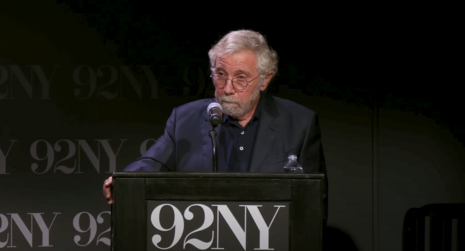 Krugman’s latest move was to sling sludge at those who dared defend the utility of fossil fuels in an economy that’s being jawboned into an eco-friendly future.
“Fossil Fuels and Fossilized Minds,” read Krugman’s hilarious September 30 Substack headline, ironic given that this is the same personwho told President Joe Biden before his term in office, “Don’t worry about inflation.” Who exactly has a “fossilized” mind again, Krugman?
After cringeworthy praises of “Wind power” and how he “likes” the eyesore “sight of wind turbines,” Krugman proceeded to attack President Donald Trump because he “hates wind power and loves coal. Both passions are deeply irrational. Yet they are shaping policy.”
Krugman’s new beef was that Trump was trying to revive a dying coal industry that he argued was just phased out by typical market shifts towards natural gas and renewables. “The truth, however, is that coal is a dying industry for very good reasons, and anti-wokeism is unlikely to revive it. Coal stopped being a significant source of jobs decades ago.”
But as Climate Depot founder Marc Morano told MRC Business: “Krugman needs to examine how energy is produced to understand why coal is a crucial component in reviving American energy dominance.”
It's unclear why he considers himself any kind of authority on this matter when he had just finished nuking his own credibility on economics during the Biden administration, but whatever. Then again, this is the same Krugman who stupidly advocated that Americans should “politicize the weather.”
Firstly, said Morano, “a healthy coal industry is crucial for any nation's national security. Domestic coal production is a strategic asset that does not depend on importation. Coal helps achieve economic stability and supply chain resilience.” But in Krugman’s ignorant world, trying to maintain a thriving coal sector is just about a “culture war. Trying to bring back coal is all about owning the libs. And if it damages the environment, well, from MAGA’s point of view that’s a plus.” Morano slammed Krugman’s take as completely false.
One of the biggest boo-boos Krugman made was when he asserted that “Wind power is, in fact, far cleaner and safer than burning fossil fuels.” Morano took that narrative to the cleaners:
Not even close: the documentary Juice explained: ‘Just to produce one turbine, we have to extract 900 tons of steel, 2,500 tons of concrete, and 45 tons of non-renewable plastic. Then we’ve got to transport that and burn fuel, getting it all carried across the world and put up. And none of these things that go into a turbine are renewable.’
Krugman also bleated that it was supposedly a “simple fact that coal is no longer cost-competitive, while wind and solar are…Trying to keep coal alive will make energy more expensive, not less.” But Morano pointed out that Krugman’s argument hinges on a red herring:
The goal of America’s energy sector isn’t to create as many jobs as possible (as Krugman would apparently have us believe), especially the politically-favored and heavily-subsidized renewable energy jobs. Instead, the goal is to produce as much electric power as possible at the lowest possible cost, and that means we want to choose the most productive energy like coal, which requires fewer energy workers.
If that wasn’t clear enough, economist Mark Perry concluded in a 2017 analysis for the American Enterprise Institute that it takes 79 solar workers to produce the same amount of electric power as one coal worker. See the issue with Krugman’s argument yet?
While natural gas and technological advances in fracking have certainly contributed to the market shift away from fossil fuels, Morano argued that “there was also a deadly effective ‘war on coal’ unleashed by the Obama administration and continued by the Biden administration.”
Last year, energy journalist Robert Bryce also undercut the “Western conceit” of a phony energy transition that Krugman made the centerpiece of his thesis: “[D]espite massive federal subsidies and numerous mandates at the local and state levels, wind and solar energy aren’t keeping pace with the growth in natural gas.”
Bryce further wrote that “The U.S. and Western European countries are spending hundreds of billions of dollars on programs like the Inflation Reduction Act and the [German] Energiewende to fund buildouts of solar, wind, batteries, and tutti-fruity-colored hydrogen, but that doesn’t mean the rest of the world will do the same.”
Kind of hard to argue that it was just market forces phasing out coal when one sector was getting pumped with hundreds of billions of dollars in subsidies while another was being stymied by intentional overregulation, eh Krugman?
GMAIL
Marc Morano
Weekly update ⋅ October 3, 2025
The Climate Realist President — The Climate Realism Show #175 - The Heartland Institute
The Heartland Institute
Join Anthony Watts, Sterling Burnett, Linnea Lueken, Jim Lakely, and special guest Marc Morano of CFACT for this live broadcast. Tune in LIVE ...
LOOK IN MIRROR: Krugman Accusing Right of Having 'Fossilized Minds' Is Pretty Hilarious
Newsbusters
But as Climate Depot founder Marc Morano told MRC Business: “Krugman needs to examine how energy is produced to understand why coal is a crucial ...
---
---
MMA 10 25
Frequent Fox appearances are central to the Trump administration's climate and energy misinformation strategy
Special ProgramsClimate & Energy
Written by Evlondo Cooper
Research contributions from Harrison Ray
Published 09/29/25
Fox News and Fox Business have not simply covered President Donald Trump’s destructive climate and environmental agenda — they have served as the administration’s preferred vehicles for selling it to the public.
Since late July, Environmental Protection Agency Administrator Lee Zeldin, Energy Secretary Chris Wright, and Interior Secretary Doug Burgum have made dozens of appearances across Fox News and Fox Business programs to defend the proposed repeal of the EPA’s endangerment finding, shift blame for soaring electricity bills away from fossil fuel volatility, and portray offshore wind projects as both unreliable and dangerous.
By turning to Fox networks, senior Trump officials gain a platform where destructive environmental deregulation is framed as common sense and basic policy questions are never asked. What emerges from these appearances is not legitimate debate or accountability journalism, but a symbiotic relationship that allows the Trump administration to launder harmful misinformation through Fox’s news and opinion programming — leaving viewers with a distorted picture of climate science, energy policy, and the real stakes of the administration’s environmental rollbacks.
Topline findings
- Doug Burgum, Chris Wright, and Lee Zeldin have appeared a combined 36 times on Fox networks from July 29 through September 21. Zeldin and Burgum are tied for the most appearances during this period, with 13 apiece, followed by Wright with 10.
- Fox Business’Mornings with Maria Bartiromofeatured the three Trump administration officials the most, with 8 total appearances, followed by the network’sVarney & Co.(7 combined appearances) and Fox News’America Reports(5 appearances). Kudlow, The Ingraham Angle, and Fox & Friends each hosted the Trump officials twice during the studied period.
- ## Trump officials used Fox appearances to push misinformation after the administration proposed repealing the EPA’s landmark endangerment finding
- While Fox networks have spread misleading claims about climate and energy for years, the appearances by administration officials in the weeks following the proposed repeal of the endangerment finding released on July 29 offer a snapshot of how they work hand-in-hand with the Trump White House to downplay the scientific basis for greenhouse gas regulation, distort the causes of rising electricity prices, and attack renewable energy.
EPA Administrator Lee Zeldin
Zeldin has leaned on Fox’s coverage to launder claims that climate regulations are illegitimate and that reliance on renewable energy is driving economic pain.
During the August 13 episode of Fox Business’ Kudlow, Zeldin argued that the endangerment finding — a 2009 scientific determination that provided the legal framework for the EPA to regulate greenhouse gas emissions — rested on “a lot of mental leaps” and claimed that “the Clean Air Act doesn’t make any reference to the greenhouse gases.” (In reality, the Supreme Court’s Massachusetts v. EPA ruling explicitly found that greenhouse gases qualify as air pollutants under the Act.) He paired that dismissal with charges that Obama-era scientific findings were exaggerated and “pessimistic,” and closed the segment by promoting natural gas pipelines as the only path to affordable energy and job growth.
- Video file
Video
Citation
From the August 13, 2025, episode of Fox Business' Kudlow
- During the September 1 episode of Fox News’ One Nation with Brian Kilmeade, Zeldin presented Trump’s deregulatory agenda as the backbone of U.S. “energy dominance,” dismissing offshore wind projects as inefficient and unreliable for consumers. In contrast, he again portrayed fossil fuel expansion — particularly natural gas — as both environmentally superior and essential for national security.
Energy Secretary Chris Wright
Wright has similarly leaned on Fox to attack renewable energy as too costly, unreliable, and an obstacle to America’s economic and technological ambitions. He also used his appearances to make sweeping claims that fossil fuel expansion is the only realistic path forward and to blame renewable energy for electricity price increases.
During a segment about the “importance of unleashing U.S. energy” to meet growing demand from artificial intelligence on the September 4 episode of Fox & Friends, Wright told viewers that artificial intelligence represents “perhaps the highest use of electricity.” Later that day on Fox News’ The Ingraham Angle, Wright described offshore wind projects as a “guaranteed” driver of higher electricity costs, telling host Laura Ingraham that wind and solar are “variable, parasitic sources” that make the power grid less reliable and more expensive. He also claimed that by adopting offshore wind, the United States would be “competing for the most expensive electricity in the world.” Ingraham did raise the issue of higher electricity costs during the Trump administration but allowed Wright to spin, evade, and double down on falsely blaming renewable energy.
- Video file
Video
Citation
From the September 4, 2025, edition of Fox News’ The Ingraham Angle
- On the September 19 episode of Fox Business’ Mornings with Maria Bartiromo, Wright labeled global investment and uptake of renewables such as wind and solar as a “complete trainwreck” and insisted that climate change is a “slow-moving, gradual phenomenon, nowhere near a crisis or a disaster.”
Interior Secretary Doug Burgum
Burgum has also used Fox appearances to promote the administration’s fossil fuel expansion agenda while attacking renewables as unreliable and costly.
During the August 2 episode of Fox Business' Maria Bartiromo’s Wall Street, Burgum defended the administration’s proposed rollback of the endangerment finding, agreeing with Zeldin and Wright that the EPA had overstepped its authority. He also blamed increased energy costs on Obama- and Biden-era climate regulations, pushed deregulation as a way to unleash economic growth, and attacked offshore wind.
- Video file
Video
Citation
From the August 2, 2025, episode of Fox Business' Maria Bartiromo’s Wall Street
- On the August 20 episode of Mornings with Maria Bartiromo, Burgum announced a sweeping offshore oil and gas leasing plan while continuing to attack offshore wind. He tied fossil fuel production to U.S. dominance in the race for artificial intelligence, claiming that only coal and gas could deliver the electricity needed for growth, and contrasted this with “blue state” reliance on renewables, which he described as intermittent, subsidized, and responsible for high electricity costs.
- ## The climate and energy realities Fox keeps from its audience
- Fox networks have repeatedly provided Zeldin, Wright, and Burgum with a platform to repeat administration talking points and propaganda without pressing them on the evidence that undercuts their claims. As a result, Fox viewers have been left with a curated narrative that omits the most important facts.
For example, on Kudlow, after Zeldin dismissed the endangerment finding as “a lot of mental leaps,” Fox host and former Trump economic adviser Larry Kudlow never pointed out that it was grounded in the Supreme Court’s 2007 Massachusetts v. EPA decision and decades of scientific consensus. Nor did viewers hear that it has prevented hundreds of thousands of premature deaths and delivered billions in net economic benefits.
And when Wright insisted that renewables drive up electricity prices on The Ingraham Angle, the Fox host did not mention that analysts instead point to fossil fuel volatility, surging demand from AI data centers, and Trump’s own decision to roll back and cancel renewable energy projects as the primary drivers of increased electricity costs.
On Mornings with Maria Bartiromo, as Burgum railed against offshore wind energy and celebrated coal and gas as the foundation of energy dominance, Bartiromo never noted that solar energy combined with battery storage is now the cheapest and fastest-to-build source of new power, or that clinging to coal plants saddles consumers with higher bills while increasing pollution. Instead, the segment cast fossil fuels as the only reliable option, ignoring the economic and health benefits of renewables.
The Trump administration’s reliance on Fox News and Fox Business is not incidental; it is a core communications strategy. By prioritizing their appearances on Fox networks, officials like Zeldin, Wright, and Burgum gain access to a powerful megaphone while shielding themselves from scrutiny or accountability. Fox’s “straight news” programs give their talking points the appearance of neutrality, and its opinion hosts repeat and amplify those same claims until they harden into conventional wisdom.
The result is the laundering of misleading talking points: Administration officials feed misinformation into Fox, the network recycles and legitimizes it, and audiences are left with a propagandistic narrative that obscures the public health costs of climate change and environmental deregulation and dismisses the economic benefits of clean energy.
- ## Methodology...
---
---