AFRICA
see madagascar famine
both china and russia making plays
TRUMP DOGE CUTS AID EBOLA DRC
TRUMP BOMBS SOMALIA 6 26
ONLY REFUGEE AFRIKAANERS
EBOLA SURGE DRC 1400 KIA 7 26 POST DOGE CUT USAID MUSK SAYS ZERO
-=-=-=
State Department takes 'full responsibility' after map mislabels every country in Africa
AN 7 26
-=-=--
---
icn 12 25
How China Silences Environmental Reporters Beyond Its Borders
BY KATIE SURMA
Journalists who report on the harms caused by China’s overseas infrastructure buildout in Africa face intimidation, surveillance and police pressure.
---
===
mma
Right-wing media resume misleading attacks on hurricane recovery efforts after Biden announces humanitarian assistance for Africa
Special ProgramsClimate & Energy
Written by Ilana Berger
Published 12/13/24 9
Right-wing media ramped up attacks on the Biden administration’s hurricane recovery efforts in southern Appalachia after President Joe Biden announced $1 billion in humanitarian aid for Africa.
On December 3, Biden became the first president to visit the African country of Angola, where he announced new aid “to address food insecurity and other urgent needs of refugees, internally displaced persons, and affected communities in 31 African countries,” according to the United States Agency of International Development.
According to Oxfam, a federation of international nongovernmental organizations addressing global poverty, “more than 24 million people in southern Africa face hunger, malnutrition and water scarcity due to drought and floods.” Oxfam also described southern Africa as a “climate disaster hotspot.”
Earlier this year, FEMA was the subject of right-wing attacks falsely accusing the agency of squandering disaster relief money on immigrants, preventingvictims of Hurricane Helene from accessing aid, and even seizing the land of people whose homes had been destroyed. Conspiracy theories about government weather manipulation also circulated online.
Right-wing media falsely accused the Biden administration of favoring Africa over hurricane-stricken communities in the U.S., reviving harmful FEMA misinformation
- Hurricane relief funding requires congressional approval and is separate from foreign aid and immigration spending, but Fox News has continually suggested otherwise.Top-rated hosts like Jesse Watters and Sean Hannity led the charge in repeating false claims that money allocated for disaster relief went to helping immigrants, but the Federal Emergency Management Agency maintains separate funds for those two purposes. In October, senior congressional correspondent Chad Pergram posted on X (formerly Twitter) that Fox News had obtained a GOP memo saying there is “no funding connection between” the migrant shelter program and the Disaster Relief Fund. Similarly, none of the humanitarian aid for Africa is coming from FEMA. Foreign disaster aid — like that being directed to Africa — typically comes from USAID and the State Department. Media Matters, [10/11/24, 10/10/24, 10/9/24, 10/9/24; Council on Foreign Relations, 10/23/24; usaid.gov, 12/3/24]
- Right-wing media misinformation about FEMA’s actions in southern Appalachia was followed by violent threats against FEMA personnel on the ground.Misinformation about the responses to hurricanes Helene and Milton — ranging from accusations that FEMA is actively keeping aid and donations from hurricane victims to conspiracy theories that the government used weather manipulation to target certain populations — surged across social media platforms in the weeks after the hurricanes. In October, FEMA workers in both Rutherford County, North Carolina, and Carter County, Tennessee, faced threats of violence from armed civilians. Media Matters, [10/18/24, 10/9/24, 10/10/24]
- While there is still work to be done helping victims in southern Appalachia, the federal response has been more robust than right-wing media claim. According to NC.gov, “over $244 million in FEMA Individual Assistance funds have been paid so far” in western North Carolina. According to FEMA, “The National Flood Insurance Program (NFIP), administered by FEMA, has paid policyholders over $1.4 billion for flood losses stemming from Hurricane Helene recovery” across affected states. NC.gov, [11/20/24, fema.gov, 11/27/24]
- In reporting on Biden's trip to Africa, right-wing media ignored Biden’s recent request from Congress for billions more in recovery funding for impacted states. In November, Biden asked Congress for roughly $100 billion in emergency disaster aid to help North Carolina and other impacted states, including $40 billion for FEMA’s Disaster Relief Fund. CNN, [11/18/24]
- One America News Network host Dan Ball called the assistance “wasteful” and “frivolous,” saying, “There are Americans still right now, as I sit here, who are in need. And it's our money. It's their money. They'd like some more to rebuild from flooding. Like the residents of North Carolina who are still dealing with the devastating aftermath of hurricane Helene.” He later added: “FEMA is nowhere to be found. It’s like they don’t even want the people to rebuild.” OANN, *Real America with Dan Ball*, [12/6/24]
- On Infowars, host Harrison Smith ranted that the government should have built four high tech “schools per state” with the $1 billion aid pledged to Africa or “rebuilt hurricane-ravaged Appalachia,” but instead “people pay taxes to their government and the government just skedaddles with it to some third world nation and hands it over to a dictator.” He later added: “I wonder where all that money went because it certainly didn't go into fixing the infrastructure in the places that were damaged,” referring to FEMA aid that has already been allocated to impacted states. Infowars, *The American Journal*, [12/4/24]
- On Fox Business, host Elizabeth MacDonald and right-wing radio host Jason Rantz attacked FEMA and the Biden administration, saying that aid for Africa is “the ultimate slap in the face” for Americans recovering from Hurricane Helene.MacDonald said that Biden “wants to spend more than 1 billion bucks of your money in Africa and on Ukraine but not on the victims of Hurricane Helene in North Carolina. They are literally freezing to death living in tents and RVs, no heat, no electricity, little food.” MacDonald also misleadingly said that the government “burned through a billion bucks in FEMA money on illegal aliens.” Fox Business, *The Evening Edit*, [12/4/24; Media Matters, 10/11/24]
- On Fox Business, host Maria Bartiromo complained that Biden is “shelling out” money in Africa and called it “incredible” that he is “giving all that money to Ukraine, another billion to Africa. Meanwhile, what about these people that are still trying to recover from these hurricanes?” Guest and former Bloomberg host Adam Johnson added, “FEMA got criticized during the campaign, as you recall, from the politicization of some of the surveys that they were doing, but also saying, how much money are we spending on the migrant crisis but we’re not spending in terms of FEMA response? And then he goes to Africa and gives this money away. What is the strategy as he exits the door here?” Fox Business, *Mornings with Maria*, [12/4/24]
- OnFox & Friends First, co-host Todd Piro called the aid “a double-edged sword” because “we want to be in Africa to counteract China” but “there are people in North Carolina that just got destroyed by a hurricane and they’re getting measly $750 checks.”
Fox News, *Fox & Friends First*, [12/4/24]
- On Newsmax,Wake Up Americaco-host Alex Kraemer called the aid and humanitarian assistance part of Biden's “Americans last policy” while co-host Sharla McBride attacked FEMA. Kraemer called it “mean” for Biden to give a “blank check to other countries” and said he has a “sitting back, let them eat cake” attitude toward North Carolina. McBride said: “Still people are out of their homes. A lot of people dealing with the effects of the flooding they went through, and many of them still struggling to get money from FEMA, from the money they deserve as being an American citizen.” Newsmax, *Wake Up America*, [12/4/24]
- Fox News headline: “Biden pledges $1B in aid to Africa as North Carolina residents continue to struggle after Helene.” The article’s subheadline read: “Social media users fumed over Biden's decision to help foreign countries before his own.”Fox News, [12/3/24]
- On Infowars’War Room, host Owen Shoyer said that “Joe Biden just gave you another middle finger,” calling the aid “obviously absurd” because “Americans can't even get assistance with FEMA or other emergencies.” He continued: “We're paying for refugees if they come here. We're paying for refugees if they stay there.” He also said that people in North Carolina are “basically living in huts” because “they won’t sell their land. They won’t give up everything to the government in this land grab.” Infowars, *War Room*, [12/3/24]
- Daily Wire reporter Ryan Saavedra: “Biden announces $1 billion in disaster relief for Africa while there are people still living in tents in North Carolina after their homes were destroyed by Hurricane Helene.”He added: “It's now winter in North Carolina and people there are facing freezing temperatures.” Twitter/X, [12/3/24]
- Fox News host Laura Ingraham said that Biden’s Tuesday speech announcing aid for Angola “sounded more like ‘Angola First.’ Countries with their hands out love having a weak American president like Biden in office.”Fox News, *The Ingraham Angle*, [12/3/24]
- Fox host Sean Hannity said, “That billion dollars in federal aid? No, that’s not going to rebuild homes in North Carolina. Instead, Joe is sending your hard-earned tax dollars to Africa.” He also called the move “a fitting end to a historically bad presidency marked by weakness, incompetence, utter dishonesty, corruption, and putting the interests of foreign nationals well before the needs of his fellow Americans.” Fox News,*Hannity*, [12/3/24]
- Shroyer: “Biden just announced $1 Billion for Africa. People in North Carolina are still homeless after Hurricane Helene as winter hits and Christmas is approaching. We were told there's no money for Hurricane victims, yet another country gets billions from Biden on his way out.”Twitter/X, [12/3/24]
- Conspiracy theorist Lara Logan linked to an article about the aid Biden pledged to Africa, writing, “Is anyone else still in shock & disbelief over the treatment of people in North Carolina?" She continued: “How is this happening? They’ve been abandoned & where is most of the media?”Twitter/X, [12/4/24]
- Right-wing influencer Gunther Eagleman: “Joe Biden just announced a $1B aid package for AFRICAN nations that are rebuilding from natural disasters. What about North Carolina? This is DISGUSTING.”[Twitter/X, 12/3/24]
- Former Fox host and current Newsmax host Todd Starnes claimed Biden “abandoned” people in Western North Carolina because it’s “Trump Country” and is instead sending disaster relief to Africa.“It is snowing in the Western North Carolina mountains,” he said. “Many people are living in tents. Others have no home. FEMA has abandoned the people there. So has Biden. Instead, the president is sending $1 billion in disaster relief aid to Africa. That's because Western North Carolina is Trump Country. And the Marxists within the administration want the citizens there to suffer. It's really that simple and it's really that appalling.” Twitter/X, [12/3/24]
related
:{10/04/24
:{10/11/24
10/18/24
---
https://usrtk.org/bill-gates/radical-menu/
no lnx many
Bill Gates’ radical menu for food systems: ultra-processed foods, patents, monocrops
Posted: May 26, 2021 by Stacy Malkan
If Bill Gates has his way, the food in our future will little resemble what’s on our plates today. Gates and his agribusiness industry partners are proposing to transform our food and how it is produced.
To the techno-food industrialists, hunger and climate change are problems to be solved with data and engineering. The core ingredients of their revolutionary plan: genetic engineering — and patenting — of everything from seeds and food animals, to microbes in the soil, to the processes we use to make food. Local food cultures and traditional diets could fade away as food production moves indoors to labs that cultivate fake meat and ultra-processed foods.
Gates says rich countries should shift entirely to synthetic beef.And he has the intellectual property rights to sell them. As a food that can help fix the climate, Gates touts the Impossible Burger, a plant-based patty made from genetically engineered soy and textured with engineered yeast. Its manufacturer, the Gates-funded Impossible Foods, has two dozen patents and more than 100 patents pending to artificially replicate cheese, beef and chicken and permeate these products with manufactured flavors, scents and textures.
Ginkgo Bioworks, a Gates-backed start-up that makes “custom organisms,” just went public in a $17.5 billion deal. The company uses its “cell programming” technology to genetically engineer flavors and scents into commercial strains of engineered yeast and bacteria to create “natural” ingredients, including vitamins, amino acids, enzymes and flavors for ultra-processed foods. According to its investor presentation, Ginkgo plans to create up to 20,000 engineered “cell programs” (it now has five) for food products and many other uses. Axios reports that the company plans to charge customers to use its “biological platform” like Amazon charges for its data center, and will take royalties like apps in the Apple Store. Ginkgo’s customers, the investor pitch makes clear, are not consumers or farmers, but rather the world’s largest chemical, food and pharmaceutical companies.
If techno-food products are not high on most consumers’ shopping lists, this is a menu investors can get behind. The market for genetically engineered products has the potential to reach $2-4 trillion in the next 20 years. And Bill and Melinda Gates are positioned to reap the rewards. The Gates back “a multitude of agrifood tech startups,” reports AgFunder News, either through private investment vehicles or through the Gates Foundation Trust, which funds the foundation’s charitable activities.
Gates and the tech start-ups pitch their products as solutions for our most challenging environmental and social issues. But are they really?
Doubling down on monocultures
Gates’ “winning strategy for food and farming,” according to a Fortune magazine article by Shawn Tully, “is finding ways for farmers to produce more corn and soybeans on every acre … while substantially lowering carbon emissions.” Gates believes that “genetically modified seeds and chemical herbicides, in the right doses – and not land-intensive organic farming – are crucial to curbing carbon emissions.”
Since 2006, the Bill & Melinda Gates Foundation has spent over $5 billion on efforts to transform African agriculture; its flagship program, the Alliance for a Green Revolution in Africa, works totransition farmers to high-input industrial agriculture and scale up markets for commercial seeds and agrichemicals. Gates says these methods can boost production and lift farmers out of poverty.
Many critics, including African faith leaders and hundreds of civil society groups around the world, say the foundation’s agricultural development strategies are failing to deliver on promises and benefitting multinational corporations over small farmers and communities in Africa. The foundation did not respond to our requests for comment.
“Gates has influenced the direction of agriculture to benefit the corporates,” said Million Belay, coordinator of Alliance for Food Sovereignty in Africa (AFSA), a coalition of 50 Africa-based groups. “His foundation has contributed hugely in weakening our seed, biosafety and agrochemical related regulations … it will take years to undo what they have done.”
Gates also influences how governments and academic institutions think about the future of agriculture in Africa, Belay said. “The narrative now is you need to use agrichemicals, high-yield varieties, GMOs and a host of other farm management techniques to feed yourself,” he said. “It will also take years to convince our elites the future is agroecology. As one of the most rich and powerful people on the planet, the doors of our governments are open (to Gates) while it is ajar for African citizens. He has to be called out and has to change direction.”
Leading experts in food security and nutrition are calling for a paradigm shift away from green revolution-style industrial agriculture and toward agroecology, which promotes biodiversity instead of monocultures, integrates animals to rebuild soils, and advocates for political and economic reforms to address inequities and social divisions. Diversified agroecological systems are more resilient, they say, and have a greater capacity to recover from disturbances including extreme weather events, pests and disease.
Recent science suggests that chemical-intensive industrial agriculture is a key driver of climate change, soil erosion and the worldwide decline of insects.Corn and soy monocultures are especially problematic; they deplete the soil and rely on synthetic fertilizers that emit nitrous oxide, a greenhouse gas 300 times more powerful than carbon dioxide at warming the atmosphere. These are problems Bill Gates is hoping technology can fix.
A climate solution?
Fortune describes Gates’ plans to intensify corn and soy production as a “pivotal campaign in the war against global warming.” How so? Syngenta, the world’s second largest agrichemical company, is “deploying big data, gene editing, DNA analysis, and other groundbreaking technologies in pursuit of growing bumper harvests while lowering CO2.”Bayer, the leading chemical and seed firm, is making a similar pitch, and claims its new sustainability technologies will “empower 100 million smallholder farmers around the world.”
For 30 years, agrichemical companies promised GMOs could feed the poor and help small farmers, but it hasn’t yet worked out that way.Most GMO crops in the ground today areengineered to survive weed-killing chemicals or kill insects. While these crops provided short-term benefits to farmers, they provided no benefits to consumers, nor did they deliver on promises to boost yields, but they did increase herbicide use. Evidence now indicates the crops are failing as weeds and bugs evolve around the technology.
As a solution to meet the climate crisis, and enable “sustainable intensification” of industrial agriculture, Gates and Bayer point to experimental projects to genetically engineer microbes to fix nitrogen to plants. “If these approaches work,” Gates writes in his climate book, “they’ll dramatically reduce the need for fertilizer and all the emissions it’s responsible for.” In 2017, Ginkgo Bioworks teamed up with Bayer to launch JoynBio, a microbe company that is working to create self-fertilizing plants.
This, too, is a promise Bayer has made before.As far back as 1897, Bayer promoted a product that could reportedly assimilate atmospheric nitrogen, according to Mark Finlay, a history professor at Armstrong Atlantic State University. Bayer said its product could “conceivably make all agricultural lands permanently fertile,” Finlay wrote in a 2015 book about the history of agriculture. “Although early results were disappointing, many popular press writers hailed the potential of this discovery.”
GMO 2.0: genome-editing
Gates is an evangelist for genetically engineered foods. He predicts that “GMOs will end starvation in Africa” and GMOs can “end world hunger by 2030.” If the first generation of GMO crops failed to deliver on these hopes, Gates believes new genetic engineering methods will get us there.
With CRISPR-Cas9 and other “genome-editing” techniques, scientists can nowadd or delete strands of DNA, or turn genes on or off, to produce specific traits in plants or animals — as if writing computer code. Examples include mushrooms that are “edited” to resist browning, “terminator cattle” bred to father only male offspring, or harmless strains of E Coli converted to antioxidant factories.
Gene-editing techniques, and especially CRISPR, are efficient but unpredictable. Studies show the CRISPR process can create unexpected mutations including DNA damage and other off-target effects.In 2019, a plan to release CRISPR-edited “hornless cows” to Brazil was scrapped after a U.S. government researcher discovered the cattle had two antibiotic-resistance genes that weren’t supposed to be there. The Recombinetics, Inc. cows were the “poster animals of the gene-editing revolution,” according to MIT Technology Review, until the “major screw-up in their DNA” came to light.The company’s researchers missed the extra DNA in their own studies; they reported, incorrectly, that the animals were “free of off-target effects.”
Genetic engineering, including genome-editing, “has unpredictable outcomes,” says Michael Antoniou, a molecular geneticist at King’s College in London. “You don’t know in advance what the consequences are of the GM transformation process … and because you don’t know, the only way to evaluate safety is generically,” Antoiniou said. “You basically need to conduct a long term feeding trial in animals and see what happens … and that’s just not going on anywhere in the world for regulatory purposes, at all.”
Nevertheless, experiments continue on important crops and food animals. Gates Foundation has spent over $40 million on projects to genetically engineer dairy cows, with hopes of creating the “perfect” cow. Acceligen (a division of Recombinetics) is working with a Gates Foundation grant to engineer multiple traits into dairy cows to maximize productivity and durability in hot climates.
The foundation is also a leading funder of gene drive experiments that can force an engineered trait through a species. This month in the Florida Keys, the Gates Foundation-backed company Oxitec released 144,000 mosquitos engineered to eliminate females in a disease-carrying species (while not technically a gene drive this is seen as a precursor experiment). Proposed agricultural uses for gene drives include reversing herbicide tolerance in plants, suppressing weeds and eradicating agricultural pests.What could possibly go wrong?
Systemic risk
One of the world’s foremost experts on probability and uncertainty, Nassim Taleb, considered that question — What could go wrong with GMOs? — for a 2014 paper he wrote with colleagues at the New York University School of Engineering. The authors analyzed GMOs in the context of what they called a “non-naive” view of the Precautionary Principle. They concluded: “GMOs represent a public risk of global harm” and should be subject to “severe limits.”
The Precautionary Principle states that if an action has a suspected risk of causing severe harm to the public domain, the action should not be taken in the absence of scientific near-certainty about its safety. The authors believe it “should be evoked only in extreme situations” when the potential harm is systemic and the consequences widespread and irreversible; they said GMOs “fall squarely” within this criteria.
Among the systemic risks they cited:GMOs have the propensity to spread uncontrollably, with irreversible system-wide effects and unknown downsides. The ecological impacts are not tested empirically — and therefore not understood — before the technologies are released. The researchers noted two factors that contribute to systemic risk: the engineered genetic modifications and the monocultures in which they grow.
“Instead of a long history of evolutionary selection, these modifications rely not just on naive engineering strategies that do not appropriately consider risk in complex environments, but also explicitly reductionist approaches that ignore unintended consequences,” the researchers said.”Labeling the GMO approach “scientific” betrays a verypoor—indeed warped—understanding of probabilisticpayoffs and risk management.”
Taleb summed up their conclusions in a 2015 New York Times op-ed: “The GMO experiment, carried out in real time and with our entire food and ecological system as its laboratory, is perhaps the greatest case of human hubris ever. It creates yet another systemic, ‘too big too fail’ enterprise — but one for which no bailouts will be possible when it fails.”
Ginkgo Bioworks investor pitch
Monopoly Bill
If Gates’ plans for the food system make little sense from an equity or ecological perspective, they are logical from the point of view of an economic monopolist.
“As the former CEO and largest shareholder of Microsoft, you might think that Bill Gates is a capitalist, but that’s not exactly the case,” Megan Tompkins-Stange, a scholar of philanthropy at University of Michigan, told The Ink. “Gates’ version of capitalism would better be called monopolistic. He has consistently sought to distort free markets in order to advance his own corporation’s accumulation of wealth, power, and preeminence.”
These ideologies led to the recent controversy over Covid-19 vaccines, in which Gates’ insistence on patents may have impeded vaccine access for the world’s poor. The incident raised concerns about the powerful influence Gates wields over vital issues involving public health. As Timothy Schwab wrote in The Nation, “It is increasingly urgent to ask if Gates’s multiple roles in the pandemic — as a charity, a business, an investor, and a lobbyist — are about philanthropy and giving away money, or about taking control and exercising power — monopoly power.”
Gates is playing all the same roles in our food system. “Gates has placed his investment bets in many of the key places in this emerging corporate narrative about what the food system needs: gene drives, geoengineering, fake meat, digital agriculture, carbon sequestration,” says Jim Thomas from the ETC Group, which investigates corporate concentration in the food industry. “Clearly he is set to benefit from these changes, plus his Foundation funding supports all this.”
Agribusiness companies are deploying digital apps on farms around the world to gather data on all aspects of farming: soil health, product inputs, weather, cropping patterns and more, including genetic information on the world’s most important seeds and livestock and knowledge indigenous farmers have developed over thousands of years. All this data tobe owned and controlled by corporations, run through AI algorithms, and sold back to farmers with “prescriptions” for how to farm and which corporate products to buy, with little transparency or explanation.
Thehyper-consolidated food and agriculture system has already brought numerous negative consequences to farmers and consumers. A 2019 report by the International Panel of Experts on Sustainable Food Systems documents how corporate concentration has squeezed farmer incomes, eroded their choices, narrowed the scope of innovation and escalated public health and environmental risks. The corporate drive to control Big Data, IPES said, “stands to exacerbate existing power imbalances, dependencies, and barriers to entry across the agri-food sector.”
Gates Ag One
Impatient with the creeping progress of the techno-food revolution, the Gates Foundation last year launched a new tax-exempt nonprofit that “seeks to accelerate the development of innovations supported by the foundation’s Agricultural Development team” in two of the fastest-growing regions in the world: sub-Saharan Africa and South Asia.
The new “ag tech startup” will “work with partners from the public and private sector to commercialize resilient, yield-enhancing seeds and traits.” It is located in St. Louis, Missouri, former home of Monsanto and current hub of leading chemical and seed firms, and headed up by Joe Cornelius, the former managing director of Agriculture, Food and Nutrition at Bayer CropSciences.As if to underscore that uniformity and centralized control are core goals of the effort, the new nonprofit is called “Gates Ag One.”
Farm of the future?
In 2019, Cargill (a partner of Ginkgo Bioworks) opened a $50 million factory in Lincoln, Nebraska. The plant manufactures EverSweet, a substance that tastes like the sweetener stevia. To produce it, Cargill combines genetically engineered yeast with sugar molecules to mimic the taste of stevia.
Consumers would not know this by reading the website or looking at the package; the company artfully describes the process as a “centuries-old technique” involving “fermentation.” It markets EverSweet as “non-artificial.”
Cargill also pitches the product as “sustainably produced,” presumably because it moves stevia production off the land, in places like Paraguay where small farmers have been cultivating stevia for generations. But the feedstock for engineered foods made in Cargill’s new plant has to come from somewhere. Cargill would not tell us what it uses for feedstock, but the factory’s’ location in Nebraska offers a clue: it is surrounded by monocrops of GMO corn and soy.
Read more at USRTK:
What’s the controversy over the 2021 UN Food Systems Summit?
The Gates Foundation’s “failing” green revolution in Africa
Is Cargill’s new GMO stevia plant the “farm” of the future?
Why is the Gates Foundation funding propaganda campaign at Cornell?
More info:
The Long Food Movement: Transforming Food Systems by 2045, report by International Panel of Experts on Sustainable Food Systems and ETC Group (3.30.21)
Tagged Bayer Bill Gates Bill Gates menu climate Gates Foundation gene drives genome editing Ginkgo Bioworks GMO JoynBio monopoly systemic risk
an 8 22
In Mwanza, Tanzania, Nairukoki Leyian-Naisinyai tells me that here, “Corporations come with papers from the government claiming that they have the right to our land.” She points to the large corporations that have entered the lands of the Maasai people to mine rubies and tanzanite. The Maasai can neither assert their rights to the land nor benefit from the mining of these precious resources.
This article was produced by Globetrotter.
The Maasai are a semi-nomadic pastoralist community that proudly practice an Indigenous way of life closely tied to their land and cattle. Their ancestral lands border the East African Rift Valley, the Serengeti National Park and the Ngorongoro Conservation Area. The government aims to expand the Ngorongoro Conservation Area in northern Tanzania and plans to turn it into a game reserve.
“Every activity depends on the land,” says Rosa Olokwani-Mundarara, who—along with Leyian-Naisinyai—fights for the rights of the Maasai people to have greater control over their lives. The Maasai community, like other pastoralists, find themselves being marginalized by the capture of their lands for mining, tourism and conservation. According to the Legal Resources Centre and Oxfam, the globally recognized principle of Free, Prior and Informed Consent (FPIC) can be extended to African human rights law and customary law, providing a legal basis to resist displacement. Joyce Ndakaru, who works at the nonprofit HakiMadini (or Right to Minerals), tells me that while FPIC offers important legal protection, the precarious situation of the Maasai land tenure—in particular women’s land tenure—rights poses challenges for women like Olokwani-Mundarara and Leyian-Naisinyai.
Conservation or Displacement?
Pastoralists, such as the Maasai community, have lost their land to mining, tourism and conservation as a result of unjust practices that are rooted in colonial processes. Desperate to provide water to their declining livestock herds (62,000 have been lost between December 2021 and January 2022 due to the drought in Tanzania), the Maasai have been excluded from areas reserved for tourism, trophy hunting and conservation.
For three decades, the Maasai of Loliondo have been resisting displacement by a game reserve that will be managed by Otterlo Business Corporation based in the United Arab Emirates, which has alleged ties to Dubai’s royal family. An attempt in June to demarcate 540 square miles of this land for the game reserve was met with protests. Many Maasai were injured by police. Twenty-four are currently facing charges for the murder of a police officer; their lawyer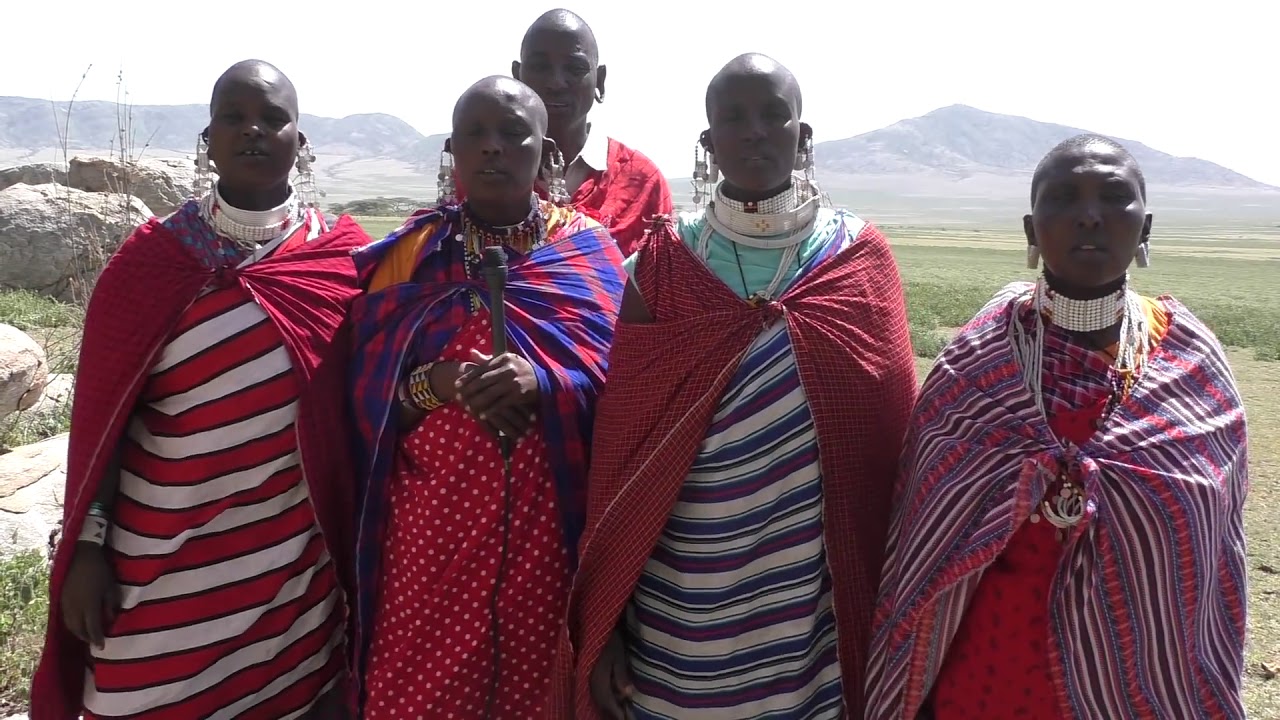 that this is a “politically motivated” trial. More than 2,000 Maasai, mostly women and children, have fled into Kenya, seeking medical care and protection. In a statement to the UN Convention on Biological Diversity, the Maasai of Loliondo denounced the land grab as an existential threat.
Soon after Tanzania won its independence in 1961, Prime Minister Julius Nyerere argued that African socialism would be rooted within African traditional society (although traditions that marginalized women would still have to be overcome). Nyerere implemented village collectivization projects to restructure rural production systems. In Define and Rule (2012), Mahmood Mamdani explains that this restructure of the production systems was done to dismantle the legal and administrative arms of the colonial state to ensure that these structures served a different political vision of forging unity by overcoming differences under one legal regime. As the global economic crises in the late 1980s led to a shift toward neoliberal globalization, Nyerere’s approach was considered outmoded. Challenges with collectivization programs had devastating economic outcomes in Tanzania. The World Bank criticized Nyerere’s economic policies as overemphasizing equity rather than productivity.
Privatization under structural adjustment in the 1980s expanded mining, agriculture and tourism sectors. Land tenure reforms a decade later became a focus of contestation, with women’s groups aiming for statutory property rights, while pastoralist groups sought to protect customary rights. The former raised the threat of integration into markets on detrimental terms through titling, while the latter offered to protect communal rights (and remained steeped in patriarchal practices). Women pastoralists have remained locked into this harsh situation.
Struggles of the Maasai Women
“The challenge that women are facing is that we do not have the capital to engage in mining, and do not own livestock,” Olokwani-Mundarara tells me. We are talking about how women’s economic activity, particularly in Olokwani-Mundarara’s Maasai community, is controlled by men. “Men want women to go to the market and to provide food. Failure to do so results in beating,” Olokwani-Mundarara says. Any attempt by a woman to explore a livelihood strategy that cannot be controlled by men is also met with violence. Leyian-Naisinyai says, “Women are expected to do housework and care for the livestock… [owned by] men.” Meanwhile, climate change is only adding to the issues faced by women. A journal article published in Environmental Policy and Law (2021) highlights how the climate crisis is “exacerbating sexual and gender-based violence against women.”
When Olokwani-Mundarara decided to speak publicly about the need to resist corporations that are threatening to take their ancestral lands, the elders, who are all men, verbally humiliated her as “seeking [the] attention of men.”...
2022 6 22 an
international delegates left Germany Friday following the Bonn Climate Change Conference, climate campaigners called the talks, which lasted 10 days this month, an "utter failure" for neglecting to establish plans to support the Global South in adapting to the planetary crisis—months after developing countries demanded aid at the United Nations Climate Change Conference in Scotland.
"It is unconscionable that developed countries continue to kick the issue of financing for loss and damage down the road—first COP26, now Bonn," saidJeni Miller, executive director of the Global Climate and Health Alliance, referring to the impacts of the climate crisis which developing nations have already suffered and demanding that the issue get badly-needed attention at upcoming talks.
"Such financing would enable countries to deal with the impacts on their people’s lives and livelihoods, homes and health systems, and must be a core component of the COP27 agenda," Miller added.
deepening campaigners' anger was the fact that European countries present at the Bonn conference are currently boosting fossil fuel imports to replace the gas shipments they previously received from Russia, which were largely discontinued after Russian President Vladimir Putin invaded Ukraine earlier this year.
"The E.U. completely misses the point of what it is to be a climate leader," said Chiara Martinelli, director of Climate Action Network Europe. "European countries also urgently need to massively ramp up their climate and energy targets, rather than displace oil and gas from Russia with those from developing countries, further locking them into fossil fuels. That's what climate leaders should do."
Focusing on sourcing new fossil fuels from overseas while "consistently" blocking discussions about loss and damage financing in Bonn "exposed [the E.U.'s] hypocritical stance," saidHarjeet Singh, the group's senior climate impacts advisor.
Patricia Espinosa, the outgoing executive secretary of the United Nations Framework Convention on Climate Change (UNFCCC), claimed the talks in Bonn took steps "in several technical areas" including a "global stocktake" mechanism, which will allow officials to assess international progress toward the target of limiting planetary heating to 1.5°C above pre-industrial levels.
That view,said Aurore Mathieu, international policy coordinator for Climate Action Network France, highlights "the huge disconnect between the urgency of the climate crisis and the inability to progress on concrete outcomes to respond to it."
"Climate impacts are worsening throughout the world, hitting the most marginalized communities, and rich countries are still refusing to acknowledge their climate debt by providing finance for loss and damage," said Mathieu.
Wealthy countries, added Sara Shaw of Friends of the Earth International, are "sleepwalking us all into catastrophe," noting that the Intergovernmental Panel on Climate Change (IPCC) has warned that the world only has three years at most to reach peak carbon emissions before they must begin reducing them.
"The disconnect between the accelerating climate crisisoutside the conference halls and the lack of concrete action inside is palpable," saidShaw. "Developed countries refuse to even discuss long owed and vital loss and damage finance. Instead of taking action, rich countries are trying to shift responsibility for action to developing countries, while expanding their own plans to extract fossil fuels and chasing unproven technofixes."
"We know the solution is a rapid and equitable phase out of fossil fuels and a shift to people-centered renewables," she added.
The climate talks took place as Delhi, India faced a severe heatwavein which meteorologists have recorded temperatures of 107°F and above for 25 days since the summer began.
Indian delegates were among those who demanded in Bonn that wealthy countries help provide "massive funding so the government can prepare for extreme weather events by building early warning systems."
The climate emergency has also pushed Madagascar toward the planet's first climate-fueled famine and is expected by 2050 to internally displace 86 million people in Sub-Saharan Africa, 40 million in South Asia, 19 million in North Africa, and 17 million in Latin America.
"One out of five people in Africa are suffering from hunger, and this is just one of countless ways the climate crisis is spurring devastation that is ripping through our communities," said Hellen Neima, Africa climate director for Corporate Accountability International. "We have had enough of rich, polluting countries silencing those trying to fight for justice."
"We have had enough of you offering crumbs with one hand while you starve the world with the other," Neima added. "We have had enough of our lives being valued as less worthy than Big Polluters' profits... Your empty words cannot fill our stomachs or protect our homelands. People in Africa are rising up and will continue to rise up, until the justice that is owed is delivered at COP27."
==
hmn no lnx grfx
https://astutenews.com/2018/06/mapping-erik-princes-private-mercenary-empire/
OPINION
Mapping Erik Prince’s Private Mercenary Empire
June 3, 2018
Erik Prince, the brain behind the infamous private military firm Blackwater, is now in China training security forces.
Prince is partially responsible for modernizing the private army for the post 9/11 world, outsourcing militaries to cheap, specialized labor pools and skirting traditional regulations meant to ensure accountability for armed forces.
His journey from hiring mercenaries to help bolster the U.S. occupation in Iraq to China is long, dizzying and includes stops around the world to train Colombian mercenaries to help make a private army for the U.A.E.and outfitting crop duster planes with missiles to be fired at Armenians.
He has become a global figure, roaming between conflicts zones to sell various governments his expertise on private armies.
To document his journey thus far, Al Bawaba has compiled a partial list of countries/regions in or for which he has done business.
United States
Prince’s trip around the world starts in the United States.
Born in an affluent Michigan family, his family maintained deep ties to the Republican establishment and several conservative, religious organizations like American Values. His sister, Betsy DeVos, married into one of the most influence political families in the Midwest, the DeVos’s, and began helping to run the Republican party machine in Michigan.
That marriage, which tied the Prince and DeVos family together, has given Erik unprecedented political access into the federal government. His list of close allies including Steve Bannon, U.S. President Donald Trump’s former chief strategist. His sister gives him a direct line of access to Trump himself.
Erik became a Navy SEAL and then established his own private military firm in 1997, Blackwater.
Once the U.S. invaded Iraq in 2003, Blackwater received billions in contracts from the U.S. government to help supplement the official mission with private boots on the ground, relatively free from accountability or laws from any particular government.
Iraq
Blackwater’s activities in Iraq are infamous and account for Prince’s self-imposed exile from the United States.
Apart from harassing Iraqi civilians and running them off of roads with their armored personnel carriers, they also indiscriminately gunned down 14 innocent people in Baghdad in 2007, drawing an investigation and heavy criticism from media outlets around the world.
The incident stands as a cautionary tale for when mercenary groups such as Blackwater are able to operate without sufficient legal or logistical oversight. Facing a wave of scrutiny, Prince left Blackwater and the firm changed its name twice (to Xe and then Academi) to escape the heat.
Many thought they had seen the end of Erik Prince, but he resurfaced later at the helm of a different private military company.
U.A.E.
pasted image 1 nyt
A satellite image of the camp in the U.A.E. built to train Prince’s 800-member mercenary battalion ]
In 2011, Erik Prince was appointed by the crown prince of Abu Dhabi to make a secret, private army. For this, he was paid $529 million.
In documents obtained by the New York Times, the mission of this privately commissioned battalion included “intelligence gathering, urban combat, the securing of nuclear and radioactive materials, humanitarian missions and special operations ‘to destroy enemy personnel and equipment,’ and crown-control.
Prince hired Colombians and nationals of other countries thousands of miles away to fill his ranks from two reasons. First, Prince was looking to pay them as little as possible. Second, they weren’t Muslims. Prince surmised that Muslims could not be trusted to kill other Muslims.
A few years later in 2015, Saudi Arabia began its military intervention in Yemen and recruited a host of other Arab nations to join its coalition. Abu Dhabi’s crown prince, business partner to Erik Prince, Sheik Mohamed bin Zayed al-Nahyan, signed up for the cause in order to destroy any creeping Iranian influence in the war-torn nation.
Yemen
Erik Prince and his U.A.E. private military firm helped recruit and train over 1,000 soldiers from Latin American countries. Then, their bodies started appearing on battlefields in Yemen.
A single missile reportedly killed 45 mercenaries from the U.A.E.
Prince’s initial battalion of 800 soldiers had blossomed into almost 2,000 specialized troops hired mostly from Latin America to do the U.A.E.’s business.
Although officials say Erik Prince’s formal business role with the U.A.E. had ended several years before the intervention into Yemen, his corporate blueprint to partially outsource the U.A.E.’s military is doubtlessly still in use.
The U.A.E. keeping and even expanding Prince’s blueprint for a private, outsourced army demonstrates just how influencial he and his mercenary business model has become.
Azerbaijan
pasted image 2
A militarily-modified crop duster, called the T-Bird (LASA Engineering)]
After his stint in the U.A.E., Prince began doing more business with Chinese executives at the Frontier Services Group (FSG), which he heads.
On this new enterprise, Prince said it “is not a patriotic endeavor,” rather, it is intended “to build a great business and make some money doing it.”
Interestingly enough, Prince’s business with FSG took him to Azerbaijan, where he was paid by the government to help it deal with its Armenian problem. Armenians are concentrated into Azerbaijan’s Nagorno-Karabakh region, which seceded from Azerbaijan and formed a semi-recognized, de facto state.
Azerbaijan called on Erik Prince and FSG to help it keep watch on the Nagorno-Karabakh region, also called the Republic of Artsakh. In response. Prince wanted to show the government two crop duster planes meant for agricultural use but refitted for military purposes. The planes were meant to be outfitted with state-of-the-art surveillance technology and were supposedly able to fire missiles.
They never made it to Azerbaijan after an investigation shut the sale down.
This is because the deal may have broken several laws. The Washington Post found that “executives were concerned that the company might be skirting U.S. law — known as International Traffic in Arms Regulations (ITAR) — requiring Americans to obtain special permits before defense-related technology can be transferred to foreign countries.”
In response to this controversial arms trade, all but two Americans on the FSG executive board quit due to concerns that he was not serving U.S. interests. This has freed Prince to deal more closely with the Chinese.
:{
}:
Eastern Africa
FSG’s ‘focus region’ (Frontier Services Group)]
FSG’s public focus is on providing security and logistical help to eastern African countries such as South Sudan, Kenya, Somalia and the DRC.
“When you want logistics done in Africa, you call DHL,” said Sean McFate, a former military contractor in Africa and current expert on mercenaries at the Atlantic Council. “When you want muscle, you call Erik Prince.”
One of FSG’s ventures appears to help oust the extremist militant group, Al Shabaab, from southwest Somalia—an area it has largely controlled for years. “We have brought together strong international business leaders to team-up with talented Somali entrepreneurs to make development in South West Somalia a reality,” an FSG statement reads.
“The project will include an integrated solution of air-land-sea logistics capabilities and advanced security management.”
China
FSG’s headquarters is in Hong Kong, and though it publicly states that its focus is on eastern Africa, FSG is now reported to be doing domestic work on behalf of the Chinese government.
FSG is partially owned by CITIC, a Chinese-government own investment firm. CITIC is slowly taking more and more control of FSG and is reportedly already the dominant shareholder, meaning it has greater power than Prince to determine the company’s vision and business deals.
“The Chinese are gradually taking more control” of the company. CITIC is now playing a larger role as Frontier’s dominant shareholder, said Xin who heads the International Security Defense College that trains security personnel and is overseen by FSG.
“Prince’s share is decreasing. The Chinese are in charge, so it won’t matter.”
One of FSG’s most recent missions has been to train thousands of security personnel in China’s northwest Xinjiang province, where millions of ethnically Turkic Muslims called Uyghurs live.
Uyghurs are routinely targeted by the state due to continuous attempts by some to break away from China and form an independent state.
Thousands of Uyghurs are part of an extremist group called the Turkistan Islamic Party (TIP), whose leaders are hiding in Pakistan and whose members have a heavy presence in Syria fighting against the Syrian regime.
Human Rights Watch accused the Chinese government of “deploying a predictive policing program,” using massive surveillance technology and a web of high-tech surveillance cameras and compulsory data collection.
They’ve also reportedly sent thousands of Uyghurs to Chinese ‘re-education’ camps.
The Mercenary Prince
This list only details a few of Erik Prince’s ventures, and does not include an attempt by Prince to send thousands of mercenaries into Afghanistan and reform the political structure of the entire country to essentially be a colony for the United States.
However, Prince has transformed battlefields everywhere and fundamentally altered the way governments construct security apparatuses.
Iran is heavily reliant on outsourced Afghani mercenaries to be cannon fodder in the war in Syria. Russia is supplementing its own intervention into Syria with mercenaries hired by the state-backed Wagner Group who also sends troops to Ukraine. To beat back the nascent extremist group Boko Haram, Nigeria hired private, Apartheid-era security forces from South Africa to do the job.
Thanks to Erik Prince, outsourcing military and intelligence labor is now the norm.
Currently Prince appears to be under investigation by Special Counsel Robert Mueller, thanks to meetings he had arranged with a close aide to Russia’s President Vladimir Putin, Kirill Dmitriev in the Seychelles Islands, a place its own government explains is “the kind of place where you can have a good time away from the media.” The meeting was allegedley to set up a backchannel between Trump and Russia in order to facilitate clandestine communications.
McFate told Al Bawaba that Prince’s use of mercenaries allows countries to enter into and escalate conflicts without having to report it to their citizens; his tactic gives governments “plausible deniability” to anything that the mercenaries do.
According to Dr. P.J. Brendese, a professor at Johns Hopkins University and expert on democratic accountability, private military firms “have greater independence to exercise their own prerogatives and ‘we the people’ don’t get a say. That’s the most dangerous thing, because they’re profiting–their motivation it not God and country; their motive is money.”
By Ty Joplin
Source: Al Bawaba
https://theintercept.com/2016/04/11/blackwater-founder-erik-prince-drive-to-build-private-air-force
see 2020 update below
==
ECHO PAPA EXPOSED
Inside Erik Prince’s Treacherous Drive to Build a Private Air Force
Jeremy Scahill, Matthew ColeJeremy Scahill, Matthew Cole
April 11 2016,
1% vax while US moves to 3rd booster
821
https://www.unicef.org/press-releases/one-billion-children-extremely-high-risk-impacts-climate-crisis-unicef
One billion children at ‘extremely high risk’ of the impacts of the climate crisis - UNICEF
Children in the Central African Republic, Chad, and Nigeria are among the most at risk of climate change, according to UNICEF’s first child-focused climate risk index.
https://www.motherjones.com/politics/2022/06/how-american-influencers-built-a-world-wide-web-of-vaccine-disinformation/
no lnx
How American Influencers Built a World Wide Web of Vaccine Disinformation
“You get the distinct feeling that there is a massive sea change occurring.”
KIERA BUTLER AND NEHA WADEKAR JUNE 2, 2022
Last year, Saphinah Kenyando was struggling to decide whether to get vaccinated against Covid. Kenyando, who is 38 and teaches chemistry and biology at a high school in Kenya, had read about horrifying side effects—blood clots, long-term disabilities—that sounded worse than the virus itself. She watched a (possibly doctored) clip from former US President Donald Trump saying that the effects included gruesome facial deformities that develop as a person ages. And she wondered whether the rumors circulating on Facebook, WhatsApp, and YouTube were true—that a person could take the jab and drop dead shortly thereafter.
In addition to her academic role, Kenyando also serves as the school chess coach, a duty she takes very seriously. She believes the game imparts valuable lessons to students: Make the right move, and you’ll reap the benefits. Make the wrong one, and you’ll be forced to deal with the fallout. “Chess is life,” she says. “Every decision we make in life is about the game of chess.” That’s how Kenyando framed her own decision on whether to get herself and her children vaccinated against Covid. She decided to hold off until she had more information.
Saphinah enjoys a game of chess with her son Adrian at the Camel Park Hotel, Kisii County. She is Chess Kenya’s Nyanza coordinator. Lameck Orina
The misleading posts Kenyando had seen were just a small portion of the avalanche of disinformation that flowed through social media in Kenya as the pandemic intensified and the virus infiltrated the households of everyday Kenyans. Wanja Kimani, a house cleaner in Nairobi, read that the vaccine could cause mental illness. Lucy Wambui, a human rights activist in Nairobi, heard that Covid doesn’t exist in the slum where she lives and concluded that the vaccine is a way to control populations in neighborhoods like hers. She warned her own elderly father that he shouldn’t get vaccinated.
In the United States, the proliferation of disinformation about Covid vaccines and treatments has been widely publicized, and most of these myths come from a few powerful influencers. Last year, the anti-extremism group Center for Countering Digital Hate found that 65 percent of vaccine disinformation on Facebook and Twitter came from just 12 people, including the activist Robert F. Kennedy Jr. and the natural lifestyle influencer Dr. Joseph Mercola. The target audience, the media reports, is in bastions of American conservatism—in rural communities, among evangelical Christians, and among Trump voters.
But there is increasing evidence that American vaccine disinformation campaigns don’t stop at the borders. Over the last year, global public health experts have documented rising rates of vaccine hesitancy in other parts of the world, from Africa to South Asia, from Eastern Europe to South America. While some disinformation is locally sourced, these experts have traced many of the myths to American anti-vaccine activists who create an onslaught of social media content at virtually no cost, says Imran Ahmed, CEO of the Center for Countering Digital Hate, based in Washington, DC, and the United Kingdom. They can afford to “flood the zone and see what sticks.” In the United States, it might be a patriotic meme about how vaccine mandates are a form of government overreach; in other parts of the world, a post that plays up historical distrust of Western interference into local communities might gain more traction. Each piece of disinformation has a way of finding “the right audience,” Ahmed says, “like a homing missile.”
Covid didn’t create vaccine skepticism. The health experts we spoke to described how anti-vaccine groups began sowing the seeds of distrust in the developing world long before the pandemic. But much as in the United States, what started as a fringe phenomenon in many countries has been gaining momentum. The biggest worry is that this rising tide of vaccine hesitancy could undo 100 years of progress in combating the spread of infectious disease, bringing back polio, measles, and many other easily preventable deadly illnesses. Angus Thomson, who studies vaccine disinformation as a senior social scientist with UNICEF, is alarmed by reports worldwide. “It’s painting a global picture, and it feels like we’re climate scientists in the early days,” he said. “You get the distinct feeling that there is a massive sea change occurring.”
In 2019, Steven Lloyd Wilson, an assistant professor of politics at Brandeis University who studies disinformation, was invited by a colleague to participate in a World Health Organization conference about vaccine hesitancy. At the time, he was only vaguely aware of the anti-vaccine movement, and what he knew of it was mostly based in the United States. “I’m a political scientist. I’m looking at political issues,” he said. “It just wasn’t on my radar—anti-vaccination is a public health thing. This isn’t political.”
“It feels like we’re climate scientists in the early days. You get the distinct feeling that there is a massive sea change occurring.”
Nevertheless, one of his colleagues persuaded him to launch a study about the influence of foreign disinformation on vaccine acceptance around the world. In February 2020, he teamed up with a doctor in South Africa to collect and analyze negative social media posts about vaccines and compare that data with vaccination rates and attitudes.
Wilson wasn’t anticipating much to come out of the analysis. “I expected there to be some little statistically significant effect,” he recalled. So he was floored when the study ultimately found that negative vaccine posts were highly correlated with both skepticism of vaccines and declining vaccination rates all over the world. “We were very happy that our research design really worked,” he said. “And simultaneously very disappointed in the state of the world, that this was something real and worldwide.”
In part, the breathtaking success of worldwide anti-vaccination campaigns is due to the fact that there is an entire, incredibly lucrative cottage industry devoted to pumping out vaccine disinformation. Many of the most successful anti-vaccine activists rake in advertising money from their popular YouTube channels; some further enrich themselves through sales of supplements, detox regimens, and other wellness products, the Center for Countering Digital Hate has found. Social media makes it cheap and easy to reach international customers—and international versions of popular social media platforms lack even the basic disinformation censors found in American versions. Children’s Health Defense, the prominent and influential anti-vaccine group led by Robert F. Kennedy Jr., recently launched a European version of its site. Joseph Mercola, the influential anti-vaccine osteopath, offers Spanish and French editions of his site; his videos have been translated into many languages, according to the New York Times. In a 2017 affidavit, Mercola reported his net worth to be in excess of $100 million.
American influencers’ messages often resonate with communities that seem to have little in common with the United States, says Joe Smyser, CEO of Public Good Projects, a nonprofit in Washington, DC, that collaborates with UNICEF on studying vaccine hesitancy. Recently, his team followed the path of an American op-ed criticizing pandemic restrictions from its origin in the United States all the way to East Timor, where it took off on local social media. And when Kentucky Republican Sen. Rand Paul said he opposed government vaccine mandates, “that got a lot of traction in social networks across Vietnam,” Smyser says. “It was used to push back against the Vietnamese government and Vietnamese public health officials.”
But there is another reason that anti-vaccine content finds its way around the world, with consequences even more dangerous and pervasive than those from anti-vaccine activists. In his study, Wilson’s team found that foreign governments—particularly Russia—were amplifying all kinds of messages both in support of and against vaccines. This is a well-established destabilization tactic that leverages social media to polarize an entire population around a particularly contentious issue—Russia used it to undermine the 2016 US presidential election, for example. The point isn’t to promote any single viewpoint; it’s to sow chaos. “A lot of the time, you’ll have bots pushing six completely contradictory, mutually exclusive stories,” Wilson says. “But what unifies all of them is trying to get people to throw up their hands and say, ‘I guess it’s impossible to know what the truth is.’”
Just as Wilson was wrapping up his study, the pandemic began—and suddenly, his research took on new meaning and urgency. Around the world, social media channels were flooded with wild claims about the new disease and the tools to fight it. He watched in horror as powerful people—even heads of state—amplified the “disinformation campaigns online that have managed to blow it vastly out of the original proportion of a few individuals who were hardcore believers.”
Public Good Project/Nimbus Capture]
Which narrative takes off in any given country depends on the culture and history of the place. In May 2020, Kenyan evangelical pastor Fred Akama posted a rant on Facebook, which began “THE GATES OF BILL SHALL NOT PREVAIL.” Bill Gates “predicted that a viral pandemic would hit the world,” the post continued, with the clear implication that the philanthropist was somehow complicit in and profiting from the creation and spread of Covid. Akama also accused Gates of having unethically close ties with the World Health Organization and vaccine producers and called him an enemy of the Christian faith. He has more than 15,000 followers on Facebook.
Akama wasn’t the only social media influencer in Kenya warning about Bill Gates’ motives. “If you look at the kind of stuff that is circulating in East Africa…you find that the content seems to be very similar,” says Eric Mugendi, who works at Meedan, a San Francisco–based technology nonprofit supporting fact-checking and verification of organizations. “The kind of language that was being used and the types of people who were spreading it—a lot of times it was religious leaders,” Mugendi says, arguing that anti-vaxxers often link their arguments to Gates and liberal philanthropist George Soros. They accuse them of wanting to test vaccines’ efficacy on Africans, profit from vaccine sales, control the human population through microchipping, and prevent the growth of the African population.
“The unifying factor is encouraging distrust of elites and experts and Westerners on any level.”
Disinformation campaigns that play up nefarious motives of powerful people are common worldwide. In the United States, a widely shared video called Plandemic popularized the conspiracy theory about Gates early in the pandemic. This strain of disinformation is particularly effective in Africa because of deep-seated anxiety that Western governments want to slow population growth in the developing world, notes Wilson of Brandeis University. “The unifying factor is encouraging distrust of elites and experts and Westerners on any level,” he says.
Ultraconservative groups in Africa have a long history of spinning a variety of Gates conspiracy theories. The anti-abortion movement in Africa has employed this tactic for at least a decade. In a 2017 article in Pacific Standard, Kathryn Joyce reported on a prominent Nigerian anti-abortion activist Obianuju Ekeocha, who in 2012 spoke out against a Gates Foundation contraceptives campaign. American anti-choice groups helped Ekeocha create a new group, Culture of Life Africa. This complemented an ongoing campaign by Human Life International, a hardline US anti-abortion group operating around the world. Its mission? To spread the message that “Western governments and NGOs are using great sums of money and influence to destroy the traditionally life-loving African culture.”
There’s a convergence these days between seemingly unrelated public health issues, as many of the same US-sponsored organizations that oppose abortion have pivoted their messaging to address Covid vaccinations. One such group is CitizenGO, an ultraconservative petition mill with outposts worldwide. CitizenGO Africa, whose anti-abortion work Mother Jones covered here, is led by a Kenyan woman named Ann Kioko, who was trained in workshops by the American Leadership Institute, a conservative organization that counts former Vice President Mike Pence, Sen. Mitch McConnell (R-Ky.), and Karl Rove among its distinguished alumni.
In 2020, CitizenGo posted an online petition titled “Bill Gates and WHO: Hands Off Africa” intended to send a “firm message to the Bill Gates Foundation and the World Health Organization that Africa is not a test lab, Africans are people with human dignity and Africans will not be used to try vaccines whose purpose is not known.” The petition accuses Gates of having Covid vaccines “tested on Africa as he stages them [vaccines] as the only solution to the pandemic.” It also accuses Bill and Melinda Gates of attempting to control the African population via contraception and abortion. “Melinda Gates told the Washington Post she is frustrated with the Trump administration’s decision to cut funding for international ‘reproductive-rights projects,’ (READ ABORTION) calling it ‘incredibly disappointing,’” the petition read.
In some ways, the extreme paranoia about birth control efforts could be understandable, given the legacy of the staggering violence of colonialism in Africa—and that history of exploitation continually undermines public health campaigns. But it was a specific strain of disinformation about a tetanus vaccine that allowed rumors about secret forced sterilization to flourish. Alphonce Shiundu, the Kenya editor of Africa Check, a fact-checking nonprofit that promotes accuracy in public debates and the media, says his organization has traced the origins of this myth to an event in 1994. Researchers in India were “developing a contraceptive vaccine to help women prevent unplanned pregnancy.” Its active ingredient was part of a hormone called human chorionic gonadotropin, known as hCG, which is produced during pregnancy. To make the vaccine, researchers “coupled hCG to a protein similar to the tetanus toxin.” When a woman was jabbed, her immune system would fight both the protein and the hCG hormone, an Africa Check report recounted.
Although this contraceptive vaccine was completely unrelated to the tetanus vaccine, the American anti-abortion group Human Life International leveraged the research from India and used it to mount a disinformation campaign in Mexico, the Philippines, and Nicaragua, claiming that the tetanus vaccine alone would reduce a woman’s fertility without her knowledge.
The World Health Organization tried to quash the rumors and followed up with extensive independent testing and found that, “without exception, when interpreted by independent laboratory staff, including those in the Philippines that conducted the original tests which started the rumor, all samples of tetanus toxoid vaccine have proved negative for hCG.”
“If tetanus toxoid vaccines given to millions of women in many countries were capable of causing infertility there would by now be ample demographic data to confirm this. We know of no such data.”
Even MaterCare International, a group of Catholic obstetricians and gynecologists, issued a statement saying, “If tetanus toxoid vaccines given to millions of women in many countries were capable of causing infertility there would by now be ample demographic data to confirm this. We know of no such data.”
But the damage was done.
Fast-forward two decades: In 2014, the Kenya Catholic Bishops Association fought vigorously against a tetanus vaccination campaign in the country. Perhaps the most prominent anti-vaxxer was Dr. Stephen Karanja, previously the chair of the Kenya Catholic Doctors Association. (In addition to his assault on the tetanus vaccine, Karanja opposed schoolgirls being vaccinated against cervical cancer, arguing that the human papillomavirus (HPV) vaccine was unnecessary because it affected those “whose lifestyle involves irresponsible sexual behaviors.”) And in 2019, a Facebook post by a Kenyan user that was made to look like a news article made the rounds in Kenya, announcing: “Abortion drugs discovered in Bill Gates’ vaccines. UNICEF, the World Health Organization, and the Bill and Melinda Gates Foundation have been accused of secretly sterilizing millions of women in Africa by doctors in Kenya after abortion drugs were discovered in tetanus [vaccines].”
Unsurprisingly, when Covid vaccines became available in Kenya in 2021, Karanja came out vehemently against them,recommending hydroxychloroquine tablets instead. He died of complications from Covid last year. Karanja’s death didn’t stop other Kenyan influencers from running with his infertility narrative. Public health experts are trying hard to counter it, but they have found time and again that the distrust of the West has staying power, says Shiundu. “The anti-vaccination movement just keeps harping on it and just keeps redirecting it every time.”
Now, in Kenya and other parts of the developing world, public health experts worry that anti-vaccine activists will leverage fear and uncertainty around Covid vaccines to undermine long-standing and highly effective vaccination programs in the developing world. There are signs of this happening already, even as global nonprofits are fighting the disinformation at its source. UNICEF and the Public Good Projects have teamed up to monitor and report new strains of vaccine disinformation as they emerge with a surveillance tool called the Vaccination Demand Observatory. On their public dashboard, which is updated weekly, anyone can see examples of social media posts making false claims about vaccines. In April, the VDO dashboard reported upticks in disinformation around the vaccines for cholera in Bangladesh, rotavirus in Egypt, and typhoid in Nepal. That trend is particularly worrying in the context of pandemic-related disruptions in routine vaccination programs. According to the World Health Organization, as of May 2022, vaccination campaigns in 43 countries are still postponed. In April, WHO warned of a “perfect storm” of conditions for a measles outbreak, noting that in many countries an uptick in cases had already begun.
In Kenya, vaccine denial and rejection also fosters a dangerous economy of charlatans “selling health misinformation,” says Mugendi of Meedan. The Kenyan health system is biased toward the rich. Those who can afford good treatment buy it. Those who can’t, take shortcuts. People try dangerous treatments to find a silver-bullet cure at low cost, which creates an underground market of false cures and false hope. It also “makes people question genuine actors in the space,” Mugendi says.
“I was told that when you’re injected, exactly after four months you will die.”
Disinformation thrives even in rural places with limited access to social media. Hayi Hassan, 62, and Hussein Ali, 75, are Somali animal herders living in Northeast Kenya who didn’t get the vaccine because they’d heard it could cause blood clots or death. “I was told that when you’re injected, exactly after four months you will die,” Ali says. Neither of them believes Covid is serious. “I haven’t seen any people dying in Garissa town, so I’m probably safe,” he says. What’s more, as elders, they figure they’ll likely die soon anyway. At their age, the idea of walking 37 miles in the blazing sun to get to the nearest hospital for a jab they think they don’t need sounds ludicrous.
Through word of mouth, says Public Good Project’s Smyser, anti-vaccine messages take on a life of their own. In one case study in Papua New Guinea, the team looked at the spread of vaccine disinformation in a remote village. “Nobody had a phone, except for one guy who used to climb up to the top of the hill, and climb a tree, and hold the phone up, and download a bunch of stuff,” Smyser recalled. “And then he’d bring it back down and the whole village would read it.”
Public Good Project/Nimbus Capture
The very ubiquity of these rumors makes combating them a challenge. Yet some fact-checking agencies report that they have made modest progress. On a recent day, the Vaccine Demand Observatory’s tool reviewing social media posts included one on false claims about Covid vaccines for children in Vietnam, another about rumors about vaccine dangers promoted by Bangladeshi politicians, and another on disinformation about the safety of Covid vaccines for older adults in East Timor. This kind of surveillance isn’t for the general public as much as for researchers, who can learn a lot from tracking the paths of disinformation in real time.
The global development nonprofit IREX has developed media literacy curricula that it tailors to individual countries. “It’s going to look different depending on the content and the context, geography, culture,” says Katya Vogt, the director of the project. “You can’t just create one multi-use tool.” In Ukraine, for instance, the group worked within the school system, weaving lessons on how to identify disinformation tactics into the literature, social studies, and history lessons. In Tunisia and Jordan, the program administrators determined that it would be more effective to train youth leaders to teach groups of their peers and create their own social media content about spotting disinformation.
In Kenya, nonprofits are working to improve media and digital literacy. Africa Check has hired a slew of Fact Ambassadors to promote accurate information through Kenya’s social media and other channels. Those ambassadors “will come back to us with anecdotes about how they sent something to one of their relatives in a WhatsApp group who kept on sending all these conspiracy theories and treatment regimens for Covid-19,” says Shiundu of Africa Check. “And these people, after they reluctantly read, they were exposed to accurate information, and they slowly updated their beliefs.”
Last year, Kenyando, the school teacher who wavered on the Covid vaccine, was virtually introduced to Peter Ongera, a Fact Ambassador, who helped correct some of the misinformation and disinformation she’d absorbed over the past two years. Kenyando had another compelling reason to get the jab: One of her students had qualified for the African Individual School chess championship, and Kenyando needed to be vaccinated to travel to Ghana, where the tournament would be held.
Kenyando got the shot. Then she took her children to get vaccinated. “I took them having done my own analysis,” she says. She listed her reasoning as wanting to “protect myself and family because of the nature of [my] work. As a teacher and sports lady I interact with so many people,” and because it “was a requirement from the employer to have all teachers vaccinated.”
But she worries that the same myths she saw are still circulating. “The falsehoods about the Covid vaccine, much of it was online,” she says. “There is power in information. Irrespective of how it comes, the first moment that somebody gets the information, they take it as the true Gospel.”
...
The current outbreak is just the latest example of viruses jumping from animals to humans. HIV is perhaps the most infamous example: It originated from chimps in central Africa and still kills hundreds of thousands of people annually. It likely jumped to humans through consumption of bushmeat, or meat from wildlife, which is also the likely origin of several Ebola oubreaks. PREDICT, a U.S.-funded nonprofit, suggests there are thousands of viral species circulating in birds and mammals that pose a direct risk to humans.
Decimating wildlife and humans
Trade in wildlife has decimated populations and species for millennia and is one of the five key drivers of wildlife declines. People hunt and deal in animals and animal parts for food, medicine and other uses. This commerce has an estimated value of US$18 billion annually just in China, which is believed to be the largest market globally for such products.
My own work focuses on African and Asian elephants, which are severely threatened by the wildlife trade. Demand for elephant ivory has caused the deaths of more than 100,000 elephants in the last 15 years.
Conservationists have been working for years to end the wildlife trade or enforce strict regulations to ensure that it is conducted in ways that do not threaten species’ survival. Initially, the focus was on stemming the decline of threatened species. But today it is evident that this trade also harms humans.
For example, conservation organizations estimate that more than 100 rangers are killed protecting wildlife every year, often by poachers and armed militias targeting high-value species such as rhinos and elephants. Violence associated with the wildlife trade affects local communities, which typically are poor and rural.
The wildlife trade’s disease implications have received less popular attention over the past decade. This may be because bushmeat trade and consumption targets less-charismatic species, provides a key protein source in some communities and is a driver of economic activity in some remote rural areas.
==
Why so many epidemics originate in Asia and Africa – and why we can expect more
Suresh V Kuchipudi, Pennsylvania State University
COVID-19 is not the first – nor likely the last – to emerge from the two continents.
==
michael klare: all hell breaking loose etc bks
military DoD
https://kpfa.org/episode/talkies-january-2-2020/
[talkies 1/2/20 2010 drought russia lost 1/3 wht crop --> arab spring?! food scarce africa and ME, food #1 expense in poor ppl budget --> anger at elites, libya, syria WAR, threat multiplier] desertification push nomadic into sub-s different ethnic and religion, jihadis exploit; nigeria boko; mali niger
ctr for naval CNA report 2007
migrants tend to be rural ppl: carrib, centr am ...got to city for jobs (gangs)
==
==
1219 uganda floods, drought, hunger, DN, guk child brides
==
1219 famine?
https://theintercept.com/2019/12/01/us-asylum-seekers-cameroon/
1219
:{:(style="box-sizing:border-box;outline-color:inherit;text-decoration-line:none;margin:0px;padding-top:20px;position:relative;border-top:#eeeeee;;display:inline !important"):}:War on Immigrants
Joe Penney
omg pvt military?! pmc wagner?
https://www.bloomberg.com/news/features/2018-11-20/putin-chef-yevgeny-prigozhin-is-now-meddling-in-africa
libya?
Putin’s Notorious ‘Chef’ Is Now Meddling Across Africa
The man indicted in the U.S. for interfering in the 2016 election is spreading Russia’s reach across the continent.
undefined
Businessman Yevgeny Prigozhin, known as Putin’s “chef” because of his catering company and ties to the Kremlin, and Vladimir Putin.
By , , and
The secretive businessman known as Vladimir Putin’s “chef” for his Kremlin catering work is alleged to have helped Russia seize parts of Ukraine, turn the tide in the Syrian war and meddle in U.S. elections.Now he’s reaching deep into Africa with an army of mercenaries and spin doctors in tow to cash in on his newfound expertise.
Yevgeny Prigozhin, a restaurateur from Putin’s native St. Petersburg, has emerged as an unlikely point man in Russia’s belated push to bolster its geopolitical might by rekindling Cold War ties across a largely underdeveloped region laden with untapped mineral wealth. Lacking the financial muscle of its main rivals, the U.S., Europe and China, Russia is carving out aniche by shoring up strongmen in unstable but potentially rich states who have a taste for Russian weaponry.
Prigozhin and his hodgepodge of contract soldiers and political operatives are offering security, arms training and electioneering services in exchange for mining rights and other opportunities, two people familiar with the matter said. He’s already active in or moving into 10 countries that Russia’s military already has relationships with: the Democratic Republic of Congo, Sudan, Libya, Madagascar, Angola, Guinea, Guinea-Bissau, Mozambique, Zimbabwe and the Central African Republic.
Presidents of Russia and Turkey meet for talks in St Petersburg]
This spurt of activity comes as Putin prepares to host more than 50 leaders for the first Russia-Africa summit in 2019. It’s an event that will cement “Russia’s active presence in the region,” Foreign Minister Sergei Lavrov said before a sweep through the continent earlier this year.
The low-profile nature of Prigozhin’s businesses ensures some deniability for the Kremlin. Putin, who gave Prigozhin an award for his service to the state in 2014, this year compared his old ally’s international work to that of George Soros, the American billionaire financier who’s long been accused by the Kremlin of subverting governments at Washington’s behest.
“The Russians want influence with governments, they want economic access and they’re much more flexible—that’s their advantage,” said Peter Pham, head of the Washington-based Atlantic Council’s Africa Center. “It doesn’t cost very much to send a couple of hundred guys to shore up a president.”
Prigozhin, 57, didn’t respond to email and phone requests for comment via his Concord Catering company, and officials in the countries he’s targeting had no comment on his activities.
Prigozhin and Concord were among the three Russian businesses and 13 people Special Counsel Robert Mueller indicted in February for allegedly interfering in the 2016 U.S. presidential election. A U.S. judge on Nov. 15 rejected a bid to dismiss the charges by another of Prigozhin’s indicted companies.
Africa has been largely an afterthought for Putin, who came to power almost two decades ago focused on regaining Russia’s lost superpower status. After the Soviet Union’s 1991 collapse, Russia’s presence in Africa dwindled dramatically; now the region is a focus for Kremlin efforts to reassert its geopolitical prowess and open new markets for domestic companies hamstrung by Western sanctions.
Russian Influence
Moscow has been ramping up military and political ties with African nations
As relations with the West continue to plumb new lows, Putin is finally pursuing a comprehensive strategy for developing commercial and security ties with the continent as a whole, according to Polina Slyusarchuk, who runs Intexpertise, an Africa-focused research group in St. Petersburg.
Russia has suffered setbacks, particularly in South Africa. President Cyril Ramaphosa froze his predecessor’s multibillion-dollar nuclear power project with Russia after he took office in February. But Putin is increasingly putting money behind the courtships, writing off some $20 billion of debt held by African countries last year.
More recently, Egypt won a $25 billion Russian loan to build its first nuclear power plant. And Russia is in talks with Eritrea to establish its first logistics hub on the Red Sea, not far from the Pentagon’s only permanent base in Africa and China’s first military facility abroad, both in Djibouti.
In March, Lavrov, Putin’s long-serving foreign minister, made a five-nation swing through Africa that included a stop in Zimbabwe, where Russian companies are involved in a $3 billion platinum-mining venture, the country’s biggest investment project. Prigozhin wasn’t far behind.
Prigozhin’s political consultants advised Emmerson Mnangagwa on his disputed victory in the July election to succeed Robert Mugabe, who turned Zimbabwe into an international pariah during his four-decade rule, according to one of the people familiar with the matter. Mnangagwa’s main opponent accused “Russians” of helping his rival manipulate the polls. The ruling Zanu-PF party has denied any Russian involvement in the election.
Putin gained a military toehold in the heart of the continent early this year, after the UN issued a waiver for Russia to arm and defend the government of the Central African Republic. The CAR, which is mired in civil conflict, appealed for help after France, its former colonial master, suddenly ended a three-year peacekeeping mission.
“Like any normal businessman, Prigozhin is looking for the most lucrative places to invest his money”
The work of Prigozhin’s mercenary venture, known loosely in the Russian media as Wagner, has already led to gold and diamond concessions in both the CAR and Sudan, according to Russian and French media reports.Three Russian journalists were murderedin the CAR in July. They were investigating Prigozhin’s activities, according to exiled tycoon Mikhail Khodorkovsky, who was funding their trip.
Prigozhin is now expanding his reach across the border into the Democratic Republic of Congo, the largest country in Africaafter Algeria and one of the world’s richest in minerals, the people said. The former Belgian colony is about to elect a new leader for the first time since 2001, when Joseph Kabila succeeded his slain father.
Kabila recently named a trusted retired general as his ambassador to Russia, tasking him with negotiating arms supplies and assistance, according to a Western official who asked not to be identified. The DRC said through its embassy in Moscow that Russia hasn’t yet supplied any weapons. It also denied local media reports that Russians are actively involved in the election.
If Kabila’s EU-sanctioned protégé wins as expected, then the DRC’s military ties with Russia will intensify, which in turn will lead to more opportunities for Russian companies, according to Jean-Jacques Wondo, a Congolese security analyst based in Brussels. China has invested heavily in the DRC, but Beijing is reportedly growing increasingly frustrated with Kabila’s shifting demands.
“Kabila is desperate for outside help,” said Martin Fayulu, an opposition candidate in the Dec. 23 poll. “It’s not surprising Russia is moving into the Congo, given our vast mineral wealth.”
Madagascar, the world’s biggest producer of vanilla and a holder of major deposits of nickel, cobalt and uranium, is another chaotic country where Putin and Prigozhin share an interest. A Kremlin envoy flew to the island in March for talks with then-president Hery Rajaonarimampianina.
Russian election consultants affiliated with Prigozhin are in the country amid a tight race for the presidency between two other former leaders that will end next month, one of the people familiar with his activities said. Russia has backed several candidates, according to Jean-Claude de L’Estrac, a former Mauritius foreign minister and expert on Indian Ocean territories. The Madagascar Foreign Ministry declined to comment.
In Guinea, Russia is supporting a bid by President Alpha Conde to scrap term limits so he can seek to stay in power after his mandate ends in 2020, said the Western official with knowledge of Russia-Africa ties. The African state is the single largest supplier of bauxite for Russian aluminum giant United Co. Rusal. Guinea Foreign Minister Mamadi Toure and government spokesman Aboubacar Sylla didn’t answer calls seeking comment.
RUSSIA-GUINEA-DIPLOMACY
Alpha Conde and Vladimir Putin
Moving into North Africa, Prigozhin attended talks this month between Russian Defense Minister Sergei Shoigu and Libyan commander Khalifa Haftar, who controls most of the eastern part of the oil-rich state. He’s providing military services to Haftar’s Libyan National Army in return for energy deals, two people familiar with the matter said. LNA spokesman Ahmed Mesmari didn’t answer repeated phone calls seeking comment.
Prigozhin’s private army, Wagner, which was sanctioned by the U.S. for its role in the 2014 Ukraine rebellion, drew international attention again in February, this time in Syria. As Bloomberg reported at the time, hundreds of its mercenaries were killed or wounded by U.S. forces as they advanced on a base held by Kurdish fighters. Wagner was trying to seize a nearby oil refinery for officials in Damascus who’d reportedly promised a share of future revenue.
“Like any normal businessman, Prigozhin is looking for the most lucrative places to invest his money,” said Irina Abramova, head of Russia’s state-funded Institute for African Studies in Moscow. “He thought, why shouldn’t I give it a go? And he should only be thanked for that if Africans benefit.”
— With assistance by Stepan Kravchenko, David Wainer, Samer Al-Atrush, Kamlesh Bhuckory, Godfrey Marawanyika, Samuel Gebre, Ougna Camara, Borges Nhamire, Alonso Soto, Pauline Bax, Candido Mendes, Paul Richardson, and Hayley Warren
==
==
GUK 1119 Africa poised to lead way in global green revolution, says report
==
https://www.alternet.org/2019/10/how-europes-greedy-lending-to-africa-is-driving-the-migration-wave-that-fuels-the-eus-xenophobic-politics/
no lnx
How Europe’s greedy lending to Africa is driving the migration wave that fuels the EU’s xenophobic politics
Written by Vijay Prashad / Independent Media Institute October 23, 2019
If you ask an African migrant in Europe who came across the Mediterranean Sea in a boat if they would make the journey again, most of them would say “yes.” Many of them had been on vans and trucks that took them across the dangerous Sahara Desert, and many of them had been on board vessels that struggled to get across the choppy waters. They might have seen their fellow migrants die of thirst or of drowning, but none of that halts their conviction that they’d cross the sands and the seas again.
Harsh treatment by European border guards and an overwhelming experience of racism inside European society do not bring regret or suggest that they would not do it again.
“It was all to earn money,” said Drissa from Mali. “Thinking of my mom and my dad. My big sister. My little sister. To help them. That was my pressure. That’s why Europe.”
Myths About African Migrants
A UN Development Program report, released on October 17, shows that 97 percent of the nearly 2,000 African migrants in Europe interviewed would take the same risks to come to Europe again knowing what they know now about the danger of the journey or what life in Europe would be like. What is powerful about this UN report is that it dispels the many myths about African migration.
There is a terrible view that Africans are somehow “invading” Europe, even worse “swarming” into Europe. Anti-immigration rhetoric speaks of building fences and creating a Fortress Europe. It is as if there is a war, and Europeans must arm themselves against invaders. A year ago, the UN’s Special Adviser on the Prevention of Genocide Adama Dieng warned that European politicians fan the flames with hateful rhetoric that “is legitimizing hatred, racism and violence. While extremists spread inflammatory language in mainstream political discourse under the guise of ‘populism,’ hate crimes and hate speech continue to rise. Hate crimes constitute one of the clearest early-warning signs for atrocity crimes.” At the UN in Geneva this May, Dieng—a Senegalese lawyer—said, “Big massacres start always with small actions and language.”
The UN report shows that the hatefulness around the African migrant is misplaced. The reasons for major flows of migration to Europe actually come from within Europe itself. Those leaving war zones—Syria and Afghanistan in West Asia, but also Eritrea and Libya—come in expected numbers as they flee bombs that are often produced inside Europe. These numbers are much higher than for those Africans who come to Europe for work.
In fact, more than 80 percent of African migrants stay on the continent. The proportion of African emigration out of the continent compared to Africa’s population “is one of the lowest in the world,” says the United Nations. Most of the migrants who go to Europe, according to European data, come by regular channels—with a visit to the embassy, an application for a visa, the granting of the visa, and then a flight into the country; irregular arrivals, many of whom might come by boat, are far fewer than those who come with a valid visa. It is racism that fails to acknowledge this reality.
Remittances
If you dig into the numbers from the UNDP report, you find that 58 percent of the African migrants in Europe were either employed at home or in school when they decided to leave; most of the migrants had jobs and earned competitive wages. What drove them is the insecurity in their countries, and the fact that they felt they could earn more elsewhere. More than half of the migrants had been supported financially by their families to make the journey, and 78 percent sent back money to their families.
World Bank statistics show that remittances to African countries are growing. In line with the global trend, sub-Saharan Africa received more foreign exchange from remittances than from foreign direct investment (FDI).
In 2018, according to the World Bank, remittances to sub-Saharan Africa totaled $46 billion—almost 10 percent more than in 2017. The countries that received high remittances were Comoros, Gambia, Lesotho, Cabo Verde, Liberia, Zimbabwe, Senegal, Togo, Ghana, and Nigeria.
The total FDI flow into sub-Saharan Africa, according to the UN Conference on Trade and Development (UNCTAD), was $32 billion, up by 13 percent from 2017, but a significant amount less than the remittance flows.
Migrants who send money home are more important than the corporations and banks that bring investment dollars into these countries. It’s too bad the bankers are treated better than the migrants.
African Debt Crisis 2.0
Africa is on the threshold of a major debt crisis.
The last debt crisis was in the 1980s, as part of the broader Third World debt crisis. In the decolonization period, Africa—looted of its wealth by colonialism—had to borrow money for development; these funds were large, but worse was the manipulation of dollar-denominated debt by the London Interbank Borrowing Rate (LIBOR) and by the U.S. Treasury’s interest rates. Skyrocketing debt in the 1980s produced a long period of austerity and suffering. That debt simply could not be paid as long as multinational corporations effectively stole Africa’s resources and refused to pay taxes on that drain of wealth. This was the reason why initiatives such as the Heavily Indebted Poor Countries (HIPC) and Multilateral Debt Relief Initiative (MDRI) were created by the World Bank and the IMF in 1996 and 2005, respectively. By 2017, these initiatives provided $99 billion to reduce Africa’s debts from a debt-to-GNI (Gross National Income) ratio of 119 percent to 45 percent.
No change in the structure was made—no assault on transfer mispricing and base erosion and profit shifting (BEPS), mechanisms used by Western-based multinationals to continue their plunder of the African continent. When the 2014 commodity price shock came, many African countries slipped gradually toward a new debt crisis. The new debts are not all government debt, but they include very high proportions of private sector debt, which has tripled from $35 billion (2006) to $110 billion (2017) according to World Bank figures. Debt repayments have risen dramatically, which means that investments in health and education have declined, as has access to capital for small-scale private sector businesses.
Currently, according to World Bank numbers, half of the 54 states in Africa struggle with high debt-to-GDP (Gross Domestic Product)—with many of these over the 60 percent threshold that signals a crisis. The rate of increase of this debt has set off alarms across the continent.
What does this mean?
It means that if there is any financial crisis in the West, it will draw away financing from Africa, plunge the region into another major debt crisis, and set millions of people in search of better earning opportunities. Families and countries in Africa have come to rely upon these remittances. They are part of the structural fabric of finances.
Racism against the migrant is an enormous problem, and it must be tackled in itself.
But deeper than that is another problem that has grown as a result of no effective post-colonial policy—the structural problem of the ongoing theft of resources from Africa, and of the lack of financing for the continent to develop its own potential. Allowing multinational firms to steal African resources, and allowing foreign banks to lend to Africa at virtually usurious conditions, simply creates a cycle of crisis that results in migration and remittances as the band-aids.
Europe does not have a refugee or migration crisis. The real crisis is in Africa, where the thief—often a European firm—continues to undermine the continent’s ability to breathe.
Vijay Prashad is an Indian historian, editor and journalist. He is a writing fellow and chief correspondent at Globetrotter, a project of the Independent Media Institute. He is the chief editor of LeftWord Books and the director of Tricontinental: Institute for Social Research. He has written more than twenty books, including The Darker Nations: A People’s History of the Third World (The New Press, 2007), The Poorer Nations: A Possible History of the Global South (Verso, 2013), The Death of the Nation and the Future of the Arab Revolution (University of California Press, 2016) and Red Star Over the Third World (LeftWord, 2017). He writes regularly for Frontline, the Hindu, Newsclick, AlterNet and BirGün.
This article was produced by Globetrotter, a project of the Independent Media Institute.
https://climateheroes.org/heroes/isatou-ceesay-queen-plastic-recycling-gambia/
==
https://www.alternet.org/2019/01/the-western-media-is-ignoring-a-powerful-uprising-where-citizens-are-resisting-tyranny-and-russian-interference/
AN 119
The story of the world today is the rise of right-wing populism, or so we are told. It’s the story of Donald Trump, of Brexit, of rising nationalism in continental Europe — especially in the east — as well as almost all of the former Soviet Union. But stories can change quickly. Whatever happened to “The End of History”? Or the War on Terror? The Great Recession? Or the Arab Spring? Who knows what the story will be next? Perhaps it’s already being written in Sudan, with echoes of so many other stories folded into it.
Almost eight years to the day after the Arab Spring began in Tunisia with the startling overthrow of the 23-year regime of President Ben Ali, the current Sudan uprising began in the city of Atbara, a railroad union stronghold. That was on Dec. 19, and protests quickly spread nationwide. A month later, Sudan’s 29-year ruler, President Omar al-Bashir — who has been indicted for genocide by the International Criminal Court — is barely clinging to power, while American media, not to mention the U.S. government, has largely ignored the entire situation.
“All residents of Atbara are now on the streets,” one eyewitness, Adel Abdel-Latif, told Sudan Tribune last month as the uprising began. “He pointed out that the demonstrators chanted slogans such as ‘Peaceful, Peaceful against the Thieves,’ saying the police and army didn’t interfere to disperse or arrest the protestors,” the publication reported.
The story we’re missing is historic, according to Jonathan Hutson, who helped expose mass human rights violations in Sudan from 2010 to 2014 — documenting 46 village burnings and locating eight apparent mass graves — as the architect of George Clooney’s Satellite Sentinel Project.
“What we have is the Western media largely misunderstanding or ignoring a revolution in a Putin-aligned African country, ruled by an Islamic theocracy, where the resistance is committed to freedom of speech, freedom of assembly and freedom of religion,” Hutson told Salon. Reports of food riots vastly understate the seriousness of events, and Russian involvement with paramilitary troops (reportedly under the direction ofYevgeny Prigozhin, aka “Putin’s chef”) has failed to register as echoing the predatory pattern already seen in the Ukraine, Crimea and Syria.
“News reporting on Sudan has finally begun to highlight the ongoing economic collapse of the past seven years,” veteran Sudan observer Eric Reeves wrote on Dec. 24, but even so “there is remarkable superficiality and failure to look with any historical depth at how the present catastrophe began. … Priorities in the national budget have been wildly skewed for decades toward the military and security services, with only very small amounts devoted to health, education, and the crucial agricultural sector. Arable land has been sold or leased for decades in order to raise cash for a kleptocratic regime.” In short, al-Bashir’s political affinity to Putin’s Russia are profound.
As for the Sudanese people, it’s not that they’re imitating the Arab Spring — it’s really the other way around: Civil uprisings in Sudan have twice toppled dictatorships, first in 1964 and again in 1985. “The popular uprising has become one of the political norms that Sudanese resort to in redefining their social contract with the state,” noted Luka Kuol, a Sudanese professor of security studies.
Sudan escaped the first wave of Arab Spring uprisings in part because the government learned from those previous examples: It exploited regional, racial, ethnic and religious divisions, broke the power of professional unions and keeping the army dispersed outside Khartoum, the capital city, among other measures. But the government’s continued kleptocratic misrule has pushed Sudan past the breaking point, and al-Bashir’s old tricks no longer seem to work.
The Atbara demonstrations spread quickly despite a sometimes violent response. “The numbers of peaceful demonstrators in Atbara are increasing dramatically and the city is in full civil disobedience,” the opposition youth group Sudan Change Now tweeted on Dec. 19, along with a 57-second video of a loud but peaceful march. Sudan Tribune reported that eight people were killed on the second day of protests. Barely a month later, the al-Bashir regime appears doomed. The more demonstrators have been killed, injured or arrested, the more the movement has swelled, and al-Bashir’s attempts to divide it along racial and ethnic lines have failed.
In an inspiring and informative overview, “The Chants of the Sudan Uprising,” Wa’el Jubara writes about the regime’s “sick and naive divide-and-conquer attempt” to blame the protests “on one of the armed rebel movements in the West,” conflating them with “peaceful, unorganised (politically) citizens” from Darfur in the West, whom they arrested. “The next day, Sudanese people from all walks of life and origins went out again, calling out the regime on its poor racist tactics,” Jubara wrote. “They called out the failed conspiracy of Al Bashir and said, ‘يا عنصري مغرور كل البلد دارفور‘, loosely translated to ‘You [Al Bashir] are racist and arrogant, we are all Darfur.’”
“The current demonstrations are unprecedented, in terms of scale, persistence, intensity, and geographical reach,” Adil Babikir, a U.K.-based Sudanese translator, wrote in Sudan Tribune on Jan. 18. “The momentum is building up, with simultaneous rallies staged in many cities across the country. The revolutionary mood is at its peak. New patriotic songs are hitting the social media platforms every day. Some of these are originally folkloric wedding songs reworded with the themes of the revolution.”
In the midst of all this, on Dec. 31, Hutson posted a 33-tweet thread exposing the Russian presence in Sudan with photos and information provided by activists on the ground. This information on the “illegal” Russian incursion was information further developed and promoted by Sudan Change Now, as well as by the Russia-based Conflict Intelligence Team.
Russian forces in Sudan are apparently or probably there in the guise of Prigozhin’s paramilitary Wagner Group (aka PMC Wagner), which was sanctioned by the U.S. Treasury in 2017 for its involvement in Ukraine. Prigozhin, the now-infamous Internet Research Agency in St. Petersburg and two related firms he controls were also sanctioned in March 2018 for their role in 2016 election interference on behalf of Donald Trump.
“As police fired tear gas and live ammunition at peaceful demonstrators in Khartoum, wounding at least four people, Sudanese observers on the ground wondered about the significance of Russian military trucks spotted in the capital,” Hutson began.
Hutson initially stopped short of definitively identifying PMC Wagner. But the group’s presence in Sudan and elsewhere in Africa was already known, if not commonly discussed. In November, Bloomberg reported thatPrigozhin was “already active in or moving into 10 countries that Russia’s military already has relationships with: the Democratic Republic of Congo, Sudan, Libya, Madagascar, Angola, Guinea, Guinea-Bissau, Mozambique, Zimbabwe and the Central African Republic.”
Last summer,three Russian journalists were killed while investigating Wagner in the Central African Republic on behalf of exiled Russian opposition figure Mikhail Khodorkovsky. A week after Hutson’s tweet-storm, Sudan Times confirmed Wagner’s presence in the current conflict, citing a source within Sudan’s security force.
Hutson noted that Wagner “guards Sudanese gold, uranium, and diamond mines, as well as atomic energy facilities. Russian media have reported that Wagner trains Sudanese armed forces.” He identified Wagner’s typical vehicle as “a light-brown, Ural-4320, all-wheel-drive, two-door cab, 6×6 truck in troop transport mode, similar to trucks used by the Russian military, and by Russian private military contractors.” (In a later thread, he explained in detail how he identified the trucks.)
Hutson provided some background on Sudan’s Russia connection, noting that on Nov. 23, 2017, al-Bashir met with Vladimir Putin in the Black Sea resort of Sochi, Russia. Reportedly “Bashir asked Putin to protect Sudan from ‘aggressive acts of the United States.’ In return, Bashir promised Putin that Sudan could serve as Russia’s ‘key to Africa.’”
...
==
https://www.ecowatch.com/europes-dirty-little-secret-moroccan-slaves-and-a-sea-of-plastic-1882131257.html
==
https://www.alternet.org/environment/new-map-reveals-which-countries-are-most-likely-survive-climate-change
Climate change is one of the most pressing crises facing humanity. Caused by an immense and continual buildup of carbon dioxide and other greenhouse gases in our atmosphere as a result of human activity, climate change is already causing a series of alarming environmental events.
Once snowy landscapes are slowly melting away to leave an uninhabitable and barren wilderness, rising sea temperatures are killing thousands of miles of coral reef and marine life, while freak weather events are becoming more common and costing affected nations billions of pounds. For example, early estimates suggest that 2017’s Hurricane Harvey caused between $66 billion and $185 billion worth of damage.
These serve as a worrying indication of the catastrophic effect that climate change could have on our planet in the future if nothing is done to tackle the phenomenon.
While it's clear that no single corner of the globe is safe from the changes that are happening to our climate, we wanted to find out which countries are the most (and least) at risk of the effects of climate change.
To answer this question, we looked at data from the University of Notre-Dame's ND-Gain Index. This report analyzed 181 countries on their vulnerability to climate change and how ready they are to adapt to a warming planet, based on factors such as healthcare, food supply and government stability.
We also scrutinized how much carbon dioxide all 181 countries emit every year to give an indication of each nation's contribution towards climate change. This allowed us to compare a country’s likeliness to survive changes to the global climate against their responsibility for the phenomenon.
So which country is the most likely to survive climate change?
The answer is Norway, thanks to its low vulnerability score and high readiness score. The nation's Nordic neighbors also fared well, with Finland (3rd), Sweden (4th), Denmark (6th) and Iceland (8th) landing 5 out of the 10 top spots for survivability. So we should all flee to the countries of northern Europe and theNorthh Atlantic to live out our final days should our planet become uninhabitable.
Interestingly, the U.K. and U.S. did not make the top 10, ranking 12th and 15th respectively. Both these nations were named among the 10 countries most likely to survive climate change in the 2015 version of this map, but an overall worsening of their vulnerability and readiness scores led to this slip in rank.
Even more surprising is China's position in the ranking: 59th. Despite arguably being the world's biggest contributor towards climate change—emitting a massive 9,040 metric tons of CO2 into the atmosphere every year—the country is somewhat sensitive to the effects of a warming planet. This is largely due to the nation's growing population which is putting a strain on China’s natural resources and public services. Rather ironically, China's vulnerability to climate change, therefore, means that they may eventually reap what they sow.
And who are the biggest losers?
At the other end of the scale, it comes as no surprise that the world's poorest and least developed nations have the lowest chance of surviving climate change. Countries in sub-Saharan Africa fill the bottom 10 spaces for survivability, with Somalia being named the country least likely to survive climate change.
Chad, Eritrea, the Central African Republic and the Democratic Republic of Congo also fared badly, owing to their unstable governance, poor infrastructure, lack of healthcare and a scarcity of food and water.
....
==
==
omg
https://www.ecowatch.com/rick-perry-africa-2503770911.html
Last week, one of the most senior officials in the Trump administration, Energy Sec. Rick Perry travelled to South Africa to represent the U.S. at the Africa Oil Week.
During his time at the Oil Week conference in the coastal city of Cape Town, Perry delivered the keynote address on global energy policy, telling his audience that the Trump Administration was keen on "strengthening our African energy partnerships."
It soon became very clear what he actually meant.
He quickly criticized the Obama Administration for "discriminating" against the nuclear and coal industries.
Not surprisingly, given the agenda of the Trump Administration and given that Perry was governor of oil rich Texas, Perry said they were keen for those partnerships to include fossil fuels.
Perry said he was a "big fan of fossil fuels" and it was time to break the global "culture of shame" around their use.
He was also keen on the formation of "a global clean coal alliance" including traditional coal powers such as the U.S., India, Australia and South Africa.
Commentators see Perry's speech as a clear indication that the Trump Administration is taking its pro-fossil fuel agenda to Africa.
One press outlet reported Perry as saying, "If you admit you support fossil fuels, it's like saying you've made some huge social error. But it's in fossil fuels that you will see real growth."
He continued: "That's my message to Africa. America is truly your friend and your partner. And we're here to help Africa use fossil fuels and use them cleanly with the world's newest and best technology."
"My showing up here is about U.S. support for Africa," he said. "We will invest in African energy projects, but it's also time to let technology be your friend. We will help this continent make more power, and we will do it cleanly."
But strip away the greenwashing and there is nothing clean about what Perry is advocating. There is no such thing as clean coal: it is a misnomer. Parry's strategy is basically: drill Africa drill; frack, Africa, frack and mine for coal, Africa, mine for coal.
As one blogger for Platts noted, Perry "urged African producers to emulate the U.S. in its shale oil and gas revolution."
The Daily Maverick added, "His fondness for fossil fuels was one of the few things he was firm on during his press conference on the first floor of the Westin hotel in Cape Town on Tuesday. That, and that the benefits of fracking outweigh environmental concerns."
In promoting fossil fuels, Perry is persisting in the neo-Colonial attitude with which America has treated Africa for generations: Western oil companies should be able to exploit Africa's fossil fuel reserves, no matter what cost. He also forgets that Africa is one of the regions that has the most to lose from climate change, too.
You only have to ask the people of the Niger Delta, who have suffered sixty years of repression, violence and pollution due to oil, to understand how oil rarely benefits local indigenous communities. As one Niger Delta person once said, as he surveyed his polluted cropland: "What has the oilman ever done for us?"
==
https://www.ecowatch.com/monsanto-seed-policy-2476201123.html
malawi
==
DICs
"John McCain ought to immediately fire three lobbyists — Charlie Black, Tom Loeffler, and Peter Madaigan -- whose lobbying for brutal dictators and foreign governments is every bit as bad as the two lobbyists who left his campaign over the weekend. Frankly, McCain's campaign is turning out to be an effort of, by, and for these types of Washington influence peddlers. His credentials as a reformer are gone."
Pretty strong words. Yet, if you read what these men have been up to, perhaps not strong enough. It ain't pretty:
Charlie Black, McCain's senior counsel and spokesman, began his lobbying career by representing numerous dictators and repressive regimes:
Black's firm represented the governor of Philippines dictator Ferdinand Marcos. According to a 1985 report, the firm Black, Manafort & Stone earned $950,000 plus expenses for its work to provide "advice and assistance on matters relating to the media, public relations and public affairs interests."1
Black's firm lobbied on behalf of Mobuto Sese Seko of Zaire, earning $1 million a year for his efforts.2
Black's firm lobbied on behalf of Somali dictator Mohamed Siad Barre.3
Black's firm represented Nigerian dictator Ibrahim Babangida, earning at least $1 million for his efforts.4
Black's firm has represented Equatorial Guinea, an oil-rich state "best known for the outlandish brutality of its rulers."5
Black represented Angolan rebel and "classical terrorist" Jonas Savimbi, a job that earned him $600,000.6 "We have to call him Africa's classical terrorist," Makau Mutua, a professor of law and Africa specialist told the New York Times. "In the history of the continent, I think he's unique because of the degree of suffering he caused without showing any remorse."7
In recent years his client list has also included the Iraqi National Congress8, Friends of Blackwater9, and the China National Off-Shore Oil Corp.10
Since 2005, BKSH has received more than $700,000 in fees from foreign entities.11
Norquist--who sits on the board of directors of the National Rifle Association (NRA)--has lived the NRA's mantra: "The guys with the guns make the rules."
For starters, he has a sordid history of promoting a vile brand of "democracy" abroad. During the 1980s, he supported anti-Communist movements even when "Freedom Fighters" were perpetrating human rights abuses against the very countrymen they were "liberating." Two of the organizations Norquist backed were UNITA andRENAMO. RENAMO has been accused of killing over one million civilians in Mozambique. UNITA employed child soldiers throughout the Angolan Civil War,including during the time that Norquist was a registered lobbyist for the organization. Norquist also lobbied for the interests of a number of African dictators in the United States, including Omar Bongo of Gabon, Pascal Lissouba of the Republic of Congo, Mobutu Sese Seko of (then) Zaire, and France-Albert René of Seychelles. Norquist's firm also represented a Hamas and Hezbollah supporter now serving a 23-year prison sentence for his role in a terrorist plot. Norquist was candid about the anti-democratic character of these tyrants, even describing René as "a guy who preferred not to have elections for a number of years."
http://www.huffingtonpost.com/josh-horwitz/the-nras-biggest-gun-grov_b_1107271.html
==
Seychelles
After an ominous, post-independence start which saw them lurch from a coup, through an invasion by mercenaries to an abortive army mutiny and several coup attempts, the Seychelles have attained stability and prosperity.
Citizens of the Indian Ocean archipelago enjoy a high per capita income, good health care and education.
But just a year after independence in 1976, the Seychelles appeared to be heading down the path of instability which has plagued many African states.
Politics: The Seychelles People's Progressive Front (SPPF) has been the ruling party since 1977, when France Albert Rene came to power in a coup
Economy: Tourism and the fishing industry are the country's biggest foreign exchange earners
The prime minister, France Albert Rene, overthrew the president, James Mancham, and embarked on a programme aimed at giving poorer people a greater share of the country's wealth.
Four years later, with the help of Tanzanian troops, Mr Rene thwarted an attempt by South African mercenaries to restore Mr Mancham.
An army mutiny in 1982, followed by several attempted coups, suffered a similar fate.
But in 1991, possibly in response to pressure from foreign creditors and aid donors, Mr Rene restored multi-party democracy.
The country's economy depends heavily on a fishing industry and upmarket tourism; the latter is vulnerable to downturns in the global travel market. Fine beaches and turquoise seas are among the main attractions.
; self-government was granted in 1975 and independence in 1976, within the Commonwealth of Nations. In 1975 a coalition government was formed with James R. Mancham as president and France-Albert René as prime minister. In 1977, while Mancham was abroad, René became president in a coup d’état led by the Seychelles People’s United Party (later restyled the...
wikibs?
France-Albert René (born 16 November 1935) was the long-time socialist President of Seychelles from 1977 to 2004. He is known by government officials and party members as "the Boss". His name is often given as simply Albert René or F.A. René; he is also nicknamed Ti France.
During the many years of his Presidency, F. A Rene was an extremely well-loved and respected national figure. He managed to turn Seychelles from a poverty stricken, least developed country to a middle income well-governed state, with universal health coverage and over 90% literacy rate.
He is also credited with having provided robust on the job political-training to all the politicians in his camp.
Contents
- 1 Early life
- 2 Single-party state and coups d'état
- 3 Legacy
- 4 References
- :{5:(style="background:none"):}::{ :(style="background-image:none;background-attachment:initial;background-size:initial;background-origin:initial;background-clip:initial;background-position:initial;background-repeat:initial"):}::{External links:(style="background:none"):}:
- ----
Seychelles ( i/:{seɪˈʃɛlz:(style="border-bottom-width:1px;border-bottom-style:dotted"):}:/^ *say-**:{:{shelz:(style="text-transform:lowercase"):}::(style="font-variant:small-caps"):}:***; French: [sɛʃɛl]), officially the Republic of Seychelles (French: République des Seychelles; Creole: Repiblik Sesel), is anarchipelago in the Indian Ocean. The 115-island country, whose capital is Victoria, lies 1,500 kilometres (932 mi) east of mainland Southeast Africa. Other nearby island countries and territories include Comoros, Mayotte, Madagascar, Réunion, and Mauritius to the south.
Seychelles, with a population of 90,024, has the smallest population of any African state.[4] Seychelles is a member of the African Union.
Contents
- 1 History
- 2 Politics
- 3 Geography
- 4 Economy
- 5 Demographics
- 6 Culture
- 7 Military
- 8 Incarceration
- 9 Piracy
- 10 See also
- 11 References
- 12 External links
History:{:(style="margin-right:0px;margin-left:0px"):}:[edit:{]}:
Main article: History of Seychelles
The Seychelles was uninhabited throughout most of recorded history. Some scholars assume that Austronesian seafarers and later Maldivian and Arab traders were the first to visit the uninhabited Seychelles. The earliest recorded sighting by Europeans took place in 1502 by the Portuguese Admiral Vasco da Gama, who passed through the Amirantes and named them after himself (islands of the Admiral). The earliest recorded landing was in January 1609, by the crew of the "Ascension" under Captain Sharpeigh during the fourth voyage of the English East India Company.
A transit point for trade between Africa and Asia, the islands were occasionally used by pirates until the French began to take control starting in 1756 when a Stone of Possession was laid by Captain Nicholas Morphey. The islands were named after Jean Moreau de Séchelles, Louis XV's Minister of Finance.[5]
The British contested control over the islands between 1794 and 1810. Jean Baptiste Quéau de Quincy, French administrator of Seychelles during the years of war with the United Kingdom, declined to resist when armed enemy warships arrived. Instead, he successfully negotiated the status of capitulation to Britain which gave the settlers a privileged position of neutrality.
Britain eventually assumed full control upon the surrender of Mauritius in 1810, formalised in 1814 at the Treaty of Paris. Seychelles became a crown colonyseparate from Mauritius in 1903. Elections were held in 1966 and 1970.
Independence (1976):{:(style="margin-right:0px;margin-left:0px"):}:[edit:{]}:
Independence was granted in 1976 as a republic within the Commonwealth.[6] In the 1970s the Seychelles was "the place to be seen, a playground for film stars and the international jet set".[7] In 1977, a coup d'état by France Albert René ousted the first president of the republic, James Mancham.[8] France Albert Rene discouraged over-dependence on tourism and declared that he wanted "to keep the Seychelles for the Seychellois".[7]
The 1979 constitution declared a socialist one-party state, which lasted until 1991. The first draft of a new constitution failed to receive the requisite 60% of voters in 1992, but an amended version was approved in 1993.
In the 1980s there was a series of coup attempts against President France-Albert René, some of which were supported by South Africa. In 1981, Mike Hoare led a team of 43 South African mercenaries masquerading as holidaying Rugby players in a coup attempt in what is known as The Seychelles Affair.[7] There was a gun battle at the airport, and most of the mercenaries later escaped in a hijacked Air India plane.[7]
In 1986, an attempted coup led by the Seychelles Minister of Defense, Ogilvy Berlouis, caused President René to request assistance from India. In Operation Flowers are Blooming, the Indian naval vessel INS Vindhyagiri arrived in Port Victoria to help avert the coup.[9]
In January 2013, the Seychelles declared a state of emergency; the tropical cyclone Felleng caused torrential rain, and flooding and landslides destroyed hundreds of houses.[10][11]
Politics:{:(style="margin-right:0px;margin-left:0px"):}:[edit:{]}:
The Seychelles president, who is head of state and head of government, is elected by popular vote for a five-year term of office. The cabinet is presided over and appointed by the president, subject to the approval of a majority of the legislature.Main article: Politics of Seychelles
The unicameral Seychellois parliament, the National Assembly or Assemblée Nationale, consists of 34 members, of whom 25 are elected directly by popular vote, while the remaining nine seats are appointed proportionally according to the percentage of votes received by each party. All members serve five-year terms.
Political culture:{:(style="margin-right:0px;margin-left:0px"):}:[edit:{]}:
The Seychelles previous president France Albert René came to power after his supporters overthrew the first president James Mancham on 5 June 1977 in coup d'état and installed him as president. René was at that time the prime minister.[12][13][14]
France Albert René ruled under a dictatorial one party state communist[dubious – discuss] system until in 1993, when he was forced to introduce a multi-party system. During his tenure, he was accused of involvement in criminal activity. U.S. Ambassador to the Seychelles (1982–85) David Fischer has stated publicly that Rene was complicit in money laundering and murder, among other things. He stepped down in 2004 in favour of his vice-president, James Michel, who was re-elected in 2006 and again in 2011.[12][13][14]
The primary political parties are the ruling socialist People's Party (PP), known until 2009 as the Seychelles People's Progressive Front (SPPF), and the socially liberal Seychelles National Party (SNP).[citation ^needed]^
Foreign relations:{:(style="margin-right:0px;margin-left:0px"):}:[edit:{]}:
Further information: Foreign relations of Seychelles
Seychelles is part of the Indian Ocean Commission (IOC), La Francophonie and the Commonwealth of Nations.
10 of 16
Position Country 2014 score Change from 2013 Change from 2012 Change from 2011 Change from 2010[9] Change from 2009[10] Change from 2008[11] Change from 2007
1 South Sudan 112.9 negative increase 2.3 negative increase 4.5 N/A N/A N/A N/A N/A
2 Somalia 112.6 positive decrease 1.3 positive decrease 2.3 positive decrease 0.8 positive decrease 1.7 positive decrease 2.1 positive decrease 1.6 negative increase 1.5
3 Central African Republic 110.6 negative increase 5.3 negative increase 6.8 negative increase 5.6 negative increase 4.2 negative increase 5.2 negative increase 6.9 negative increase 9.6
4 Democratic Republic of the Congo 110.2 positive decrease 1.7 positive decrease 1.0 negative increase 2.0 negative increase 0.3 negative increase 1.5 negative increase 3.5 negative increase 4.7
5 Sudan
6 Chad 108.7 positive decrease 0.3 negative increase 1.1 positive decrease 1.6 positive decrease 4.6 positive decrease 3.5 positive decrease 2.2 positive decrease 0.1
7 Afghanistan 106.5 positive decrease 0.2 negative increase 0.5 positive decrease 1.0 positive decrease 2.8 positive decrease 1.7 negative increase 1.1 negative increase 4.2
8 Yemen 105.4 positive decrease 1.6 negative increase 0.6 negative increase 5.1 negative increase 5.4 negative increase 7.3 negative increase 10.0 negative increase 12.2
9 Haiti 104.3 positive decrease 1.5 positive decrease 0.6 positive decrease 3.7 negative increase 2.7 negative increase 2.5 negative increase 5.0 negative increase 3.4
10 Pakistan 103.0 negative increase 0.1 negative increase 1.4 negative increase 0.7 negative increase 0.5 positive decrease 1.1 positive decrease 0.8 negative increase 2.9
11 Zimbabwe 102.8 positive decrease 2.4 positive decrease 3.5 positive decrease 5.1 positive decrease 7.4 positive decrease 11.2 positive decrease 9.7 positive decrease 7.3
12 Guinea 102.7 negative increase 1.4 negative increase 0.8 negative increase 0.2 positive decrease 2.3 positive decrease 1.9 negative increase 0.9 negative increase 1.4
13 Iraq 102.2 positive decrease 1.7 positive decrease 2.1 positive decrease 2.6 positive decrease 5.1 positive decrease 6.4 positive decrease 8.4 positive decrease 9.2
14 Cote d'Ivoire 101.7 positive decrease 1.8 positive decrease 1.9 positive decrease 1.1 negative increase 0.5 positive decrease 0.8 positive decrease 2.9 positive decrease 5.6
15 Syria 101.6 negative increase 4.2 negative increase 7.1 negative increase 15.7 negative increase 13.7 negative increase 11.8 negative increase 11.5 negative increase 13.0
16 Guinea-Bissau 100.6 positive decrease 0.5 negative increase 1.4 negative increase 2.3 negative increase 3.4 negative increase 5.8 negative increase 9.3 negative increase 11.8
==
Elephants, Hippos and Rhinos (see also videos above and Featured Stories)
Elephant Massacre Uncovered In Democratic Republic of Congo; 30 Animals Killed In 15 Days 3/15.
Dallas Safari Club Cancels Plans To Auction Off African Elephant Hunt 3/15.
This Is What Wildlife Crime Looks Like (GRAPHIC PHOTOS).
China Suspends Ivory Imports, But African Elephants Still In Danger Of Extinction 3/15.
Can Drones Stop Poaching and Save Rhinos and Elephants?(Update 3/15), not if NRA can help it
20,000+ Elephants Poached in Africa in 2013 6/14. See Africa.
Chinese State Visit To Tanzania Used To Smuggle Ivory, Report Says 11/14.
PBS Newshour update on poaching 9/14 video.
U.S. Prepares To Crack Down On Illegal Ivory Trade As Elephant Populations Dwindle 2/14.
Ivory Coast's Elephant Relocation Program Is First Of Its Kind In Africa 1/14.
Elephants Pushed Toward Extinction as Terrorist Groups Bankrolled With Ivory Trade to US and China 1/14.
N. White rhinos in trouble 10/14.
Smuggled Rhino Horns Seized In Largest European Bust Ever, Worrying Conservationists.
==
Some more Inhofe African adventures: stumping for sudden Jesus convert Benin kleptocrat Kerekou, partner of US defense contractor Titan.
Family leader former Rep. Mark Siljander says he traveled in Africa w/ Inhofe. Also pled guilty to obstruct of justice related to travels.
Sen. Inhofe staffer Mark Powers is an Assemblies of God missionary, dual payroll. Serious ethics problem. & alleged Bahati liaison.
==
American Culture Warriors in Africa
The explosive new book from PRA and senior researcher Rev. Dr. Kapya Kaoma. Includes profiles of the American bad actors …pol res asoc
corruption tedtalk
And then there's that cliché, the African dictator or minister or official. There's Teodorín Obiang.So his daddy is president for life of Equatorial Guinea, a West African nation that has exportedbillions of dollars of oil since the 1990s and yet has a truly appalling human rights record. The vast majority of its people are living in really miserable poverty despite an income per capita that's on a par with that of Portugal. So Obiang junior, well, he buys himself a $30 million mansion in Malibu, California. I've been up to its front gates. I can tell you it's a magnificent spread. He bought an €18 million art collection that used to belong to fashion designer Yves Saint Laurent, a stack of fabulous sports cars, some costing a million dollars apiece -- oh, and a Gulfstream jet, too. Now get this: Until recently, he was earning an official monthly salary of less than 7,000 dollars.
2:08And there's Dan Etete. Well, he was the former oil minister of Nigeria under President Abacha,and it just so happens he's a convicted money launderer too. We've spent a great deal of timeinvestigating a $1 billion -- that's right, a $1 billion — oil deal that he was involved with, and what we found was pretty shocking, but more about that later.
==
http://blogs.alternet.org/speakeasy/2012/04/06/kony-2012-a-trojan-horse-to-get-into-schools-said-invisible-children-cofounder-russell/
KONY 2012
Posted by B. E. Wilson at 7:03 am
April 6, 2012
KONY 2012: a “Trojan Horse” To Get Into Schools, Said Invisible Children Cofounder Russell
What’s a ‘Trojan Horse’? See footnote
[below: in audio obtained by Truth Wins Out, from a 2005 San Antonio conference, Jason Russell states that Invisible Children is a "Trojan Horse".]
As the LGBT rights watchdog group Truth Wins Out reported yesterday, in an April 5th, 2012 press release, the Invisible Children nonprofit behind the viral video hit KONY 2012, and its video sequel “Beyond Famous”, appears to have an invisible agenda – which TWO’s Executive Director Wayne Besen calls “stealth evangelism”:
“In audio TWO discovered from a 2005 Christian conference in San Antonio, Invisible Children’s co-founder Jason Russell called his organization a “Trojan Horse” designed to infiltrate secular institutions and surreptitiously promote his group’s version of Christian fundamentalism. The audiotape reveals that that his organization is particularly focused on targeting youth in public schools. According to Russell’s remarks (0:44):
“Coming in January we are trying to hit as many high schools, churches, and colleges as possible with this movie. We are able to be the Trojan Horse in a sense, going into a secular realm and saying, guess what life is about orphans, and it’s about the widow. It’s about the oppressed. That’s God’s heart. And to sit in a public high school and tell them about that has been life-changing. Because they get so excited. And it’s not driven by guilt, it’s driven by an adventure and the adventure is God’s.”
“This vividly reveals Invisible Children’s invisible agenda,” said Truth Wins Out’s Executive Director Wayne Besen. “This group is not simply about exposing LRA leader Joseph Kony, but engaging in stealth evangelism.
Invisible Children and The Family