CAFE 2
see main, 4/18 age of trump, pruitt
see new 1018 ca waiver
see LEED effic
===
E&E Daily
EPA incites another Hill fight over California waivers
BY ALEX GUILLéN | 06/15/2026 06:32 AM EDT
EPA sends more California waivers to the GOP buzzsaw
By Alex Guillén | 06/12/2026
Automakers would no longer face any federal or state tailpipe standards for greenhouse gases.
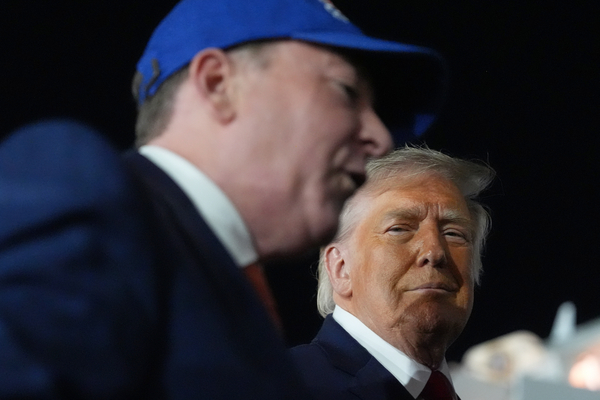
President Donald Trump listening to EPA Administrator Lee Zeldin as he talks with reporters early Tuesday before boarding Air Force One at John F. Kennedy International Airport in New York. ]
EPA on Friday submitted four more California air pollution rule waivers to Congress, where Republicans can use the Congressional Review Act to nullify them.
With EPA having revoked all federal tailpipe greenhouse gas limits earlier this year, ending these waivers would free automakers from having to comply with climate standards from California or the more than a dozen other mostly blue states that follow its rules — including New York, Massachusetts, Pennsylvania and Washington state.
Friday’s submission comes one year to the day after President Donald Trump signed resolutions of disapproval killing three waivers issued in the final days of the Biden administration, including one that would have required all new vehicles in California emit zero emissions by 2035. The Clean Air Act allows the state to set stricter rules than the federal government with EPA approval.
The Congressional Review Act makes it easier for Congress to kill newly issued rules. Before last year, it was never used to undo EPA Clean Air Act waivers. Senate Republicans maneuvered to bypass the chamber’s rules referee to make it happen.
Also, because previous administrations never submitted the waivers as rules, EPA’s move Friday starts the clock for Congress to repeal more of them by simple majority.
“It is important for EPA to fulfill our statutory obligation to submit these California waivers to Congress for their review pursuant to the law,” EPA Administrator Lee Zeldin said in a statement.
It’s unclear who may introduce resolutions of disapproval to nullify the new batch of waivers EPA submitted. It’s also unclear whether supporters will get enough senators on board.
Some Senate moderates were concerned about using the Congressional Review Act against three waivers last year, but GOP leaders said action was necessary to prevent California from moving forward with what critics termed an electric car mandate. The auto industry lobbied hard for Congress to act.
A spokesperson for Senate Majority Whip John Barrasso (R-Wyo.) said, “Republicans will continue to fight against back door attempts by California to impose a nationwide EV mandate.”
In the new batch, three of the waivers cover older greenhouse gas rules for light-duty cars and trucks, including the first greenhouse gas waiver issued to California in 2009 and a subsequent 2013 waiver for what was known as the Advanced Clean Cars rule that covered through model year 2025. The third waiver was the Biden administration’s reinstatement of the ACC rule after it was revoked via rulemaking by the first Trump administration.
The waivers stopped setting increasingly stringent standards with model year 2025. However, their standards carry forward indefinitely, meaning automakers still had to meet those emissions requirements going forward in California and allied states.
The Trump administration in March sued California to stop enforcement of its 2012 ACC standards, the subject of the 2013 waiver now in line for nullification. The state last month moved to dismiss the case.
The fourth waiver EPA sent to Congress Friday requires new off-highway engines below 25 horsepower — a category including lawn mowers, weed whackers, hedge trimmers, chain saws and gasoline-powered golf carts — to transition to zero-emission options to curb emissions of smog-forming pollutants.
The Outdoor Power Equipment Institute has been fighting that rule in court, arguing there aren’t enough available alternatives and that electrification could hamper relief efforts in the wake of natural disasters.
California is suing EPA for submitting last year’s scrapped waivers as rules. Republicans and the administration have accused the state of ignoring Congress.
California Air Resources Board Chair Lauren Sanchez vowed to defend the rules, saying, “California’s air quality programs are state law and remain in effect,” in a statement on Friday.
“These federal attacks create market uncertainty, drive up costs and put public health at risk,” she said, adding that she remains “committed to working with manufacturers.”
Senate Environment and Public Works ranking member Sheldon Whitehouse (D-R.I.) said, “The Trump EPA continues to abuse the CRA to go after years-old agency actions. The only possible explanation is payback for President Trump’s fossil fuel donors who will be able to sell more gasoline at a time when gasoline prices are causing real pain for American families.”
*Josh Siegel and Camille von Kaenel contributed to this report.
Energywire
US military escorting growing number of oil tankers through Hormuz, Energy secretary says
BY MIKE LEE | 06/15/2026 07:00 AM EDT
Greenwire
Interior revisits wilderness, climbing rules
BY IAN M. STEVENSON | 06/12/2026 01:14 PM EDT
E&E Daily
EPA sends more California waivers to the GOP buzzsaw
BY ALEX GUILLéN | 06/12/2026 04:37 PM EDT
E&E Daily
Takeaways from Chris Wright’s fiery Hill appearance
BY NICO PORTUONDO | 06/11/2026 06:35 AM EDT
E&E Daily
Renewable energy donors claim second win against House foe
BY TIMOTHY CAMA | 06/12/2026 06:45 AM EDT
2 26 yt? ex regulator Says basically no meaNINGFUL EMISSION STDS ANYMORE; POST EPA ENDANGER GUT
---
YT MSNBC 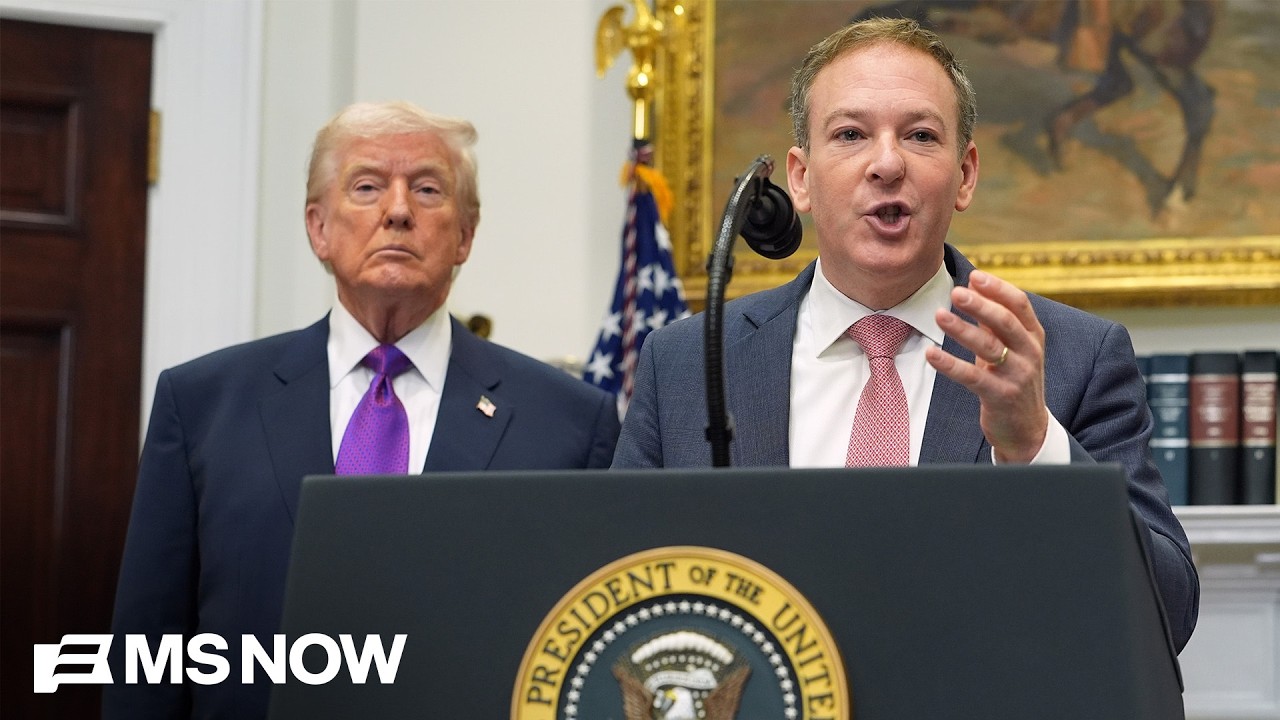
“BIGGEST DEREG IN AM HIST BY FAR”
SO CALLED END FINDING OBAMA ERA; PRICES WENT UP FOR WORSE PRODUCT; NO BASIS IN FACT OR LAW; FF SAVE LIVES; WIND INTERMITTENt MOST COSTLY; DIE NO AC HEATING; RADICal rule --> green new scam mebbe worse than rissia; jobs decimated but coming back bc tariffs; harmed car indist; ford plant wd be closed;
hated start sop feature; ev mandate; had to pay 5 trill$ for pwr stations for ev
car price up 22% biden fo gnscam
#$
CAR START EZIER... DOW
Z HOLY GRAIL OVERREACH; SAVE 1/3 TRILL$; 2400 ON CAR; IDEOL CRUSADE REGU PWR GRAB MOST; TRILLIONS $ STRANGLED, LIMIT CHOICE; LEFTWING WISHLIST EV MANDATE ; abuse? go to church; target am dr; red tape; forced trans to ev; climate partic trOphy = startstop; bureaucrats demand; delivers wins cafe duffy ca; jobs;
BACK DOOR REG AGENDA
FEAR MONGER CLIMATE ALARMINST VS COMMON SENSE ----REALITY?
TIRED OF PLAYING GAMES; EV NO ONE BOUGHT; WE HEARD YOU AND ACTED; COMMITED TO CLEAN AIR LAND AND WATER FOR ALL HARNESS AM GREATNESS? FREEDOM ABD CHOICE, RULE OF LAW VONGR NEVER MADE LAW; NEVER WAVER ON MISSION, GOLDEN AGE OF AM
SPK ONLY OF CAR EMISSION NOT PWR PLANTS?
---
12/04/25
MMA
:{:{12/10/25}:
Fox tries to sell Trump administration's claim that lower fuel economy will make car buying more affordable
Trump's auto tariffs are expected “to increase car prices by as much as $6,000”
Special ProgramsClimate & Energy
Written by Allison Fisher
Published 12/10/25
- On December 3, President Donald Trump announced plans to roll back fuel economy standards established under the Biden administration, claiming the move will “save Americans $109 billion over five years and shave $1,000 off the average cost of a new car.”
Biden administration officials had estimated that the fuel efficiency rule, which required automakers’ new vehicles to achieve approximately 50 mpg on average by 2031, would “lower fuel costs by $23 billion while preventing more than 710 million metric tons of carbon dioxide from entering the atmosphere by 2050 — the equivalent of taking 165,000 cars off the roads.”
Fox’s coverage of Trump’s fuel economy rollback pushed White House talking points that it would make car buying more affordable and reverse costly Biden-era regulations, with Fox host Will Cain calling the move “a win for the American consumer.” But industry experts and at least one Fox Business host dispute the claim that lowering the Corporate Average Fuel Economy, or CAFE, standards will lower the price of cars for consumers.
Gas price expert Patrick De Haan did not mince words, calling the attempt to connect fuel economy to affordability “STUPID!”
“If you want to know why cars cost more, look at tariffs, commodity spikes, electronics, and supply chain changes — not long-established fuel economy rules,” he continued. “Weakening CAFE standards could backfire and lead to HIGHER gas prices if vehicles become less efficient.”
- In fact, two major drivers impacting car affordability are actions taken by the Trump administration: auto tariffs and repeal of the electrical vehicle tax subsidy.
According to Kelley Blue Book, an American vehicle valuation and automotive research company, “Shoppers can expect the tariffs to increase car prices by as much as $6,000 on vehicles priced under $40,000. Higher car prices mean higher car taxes, financing, car insurance, and other ownership costs. This price pressure will make cars less affordable for consumers.”
And Bloomberg writes: “It’s not clear that relaxing the standard will result in lower sticker prices anytime soon — if at all — since carmakers plan their lineups years in advance. And it won’t do anything to address added costs from tariffs Trump has imposed on cars and car parts with the promise of reshoring domestic manufacturing.”
Nevertheless, here’s how Fox News and Fox Business are pushing the affordability narrative while pinning the high cost of cars on Biden in the wake of Trump’s announced fuel economy standard rollback:
- Fox Business’ David Asman: “President Trump is cranking up his affordability push, announcing new energy standards today aiming to ease the pressure on car prices.” Correspondent Edward Lawrence reported, “They believe here at the White House that rolling back these very strict standards that were put in place by the Biden administration would save about $109 billion in total when buying a car,” adding that Trump called “the auto mandates and regulations added by the last administration ‘insane.’” Fox Business, *Kudlow*, [12/3/25]
- Fox News host Will Cain: “Today was a win for auto manufacturers. It was also a win for the American consumer, who now has cheaper and more affordable options. But it was also a win for reality.” Fox News, *The Will Cain Show*, [12/3/25]
- Fox News host Sean Hannity: “The price of gas nationwide [is] under $3 per gallon — oh, for the first time since the last Trump administration. But with less than a year into his second term, President Trump is only getting started cleaning up the mess that Biden left behind. And a big part of that effort is a new directive to undo Joe Biden's ridiculous, costly, insane, burdensome regulation.” Fox News, *Hannity*, [12/3/25]
- National Review writer Caroline Downey on Fox News @ Night: “It doesn't take a mechanic to tell you that the point of that regulation was to force the country to adopt electric vehicles en masse. … Obviously, that consumer was going to get the cost of that in the end result. And so I think it's very important that President Trump is phasing this out because, of course, affordability is the buzzword of the day both to Democrats and Republicans.” Fox News, *Fox News @ Night*, [12/3/25]
- Fox & Friends co-host and former Trump White House press secretary Kayleigh McEnany: “Here is the brilliance of all of this is the Trump administration takes a whole-of-government approach. … They are doing this with affordability and they’ve started to show their work. Look, you are looking now. You just described the meeting, Brian, bringing down those CAFE standards. So there is one way they’re making life more affordable – your car.” Fox News, *Fox & Friends*, [12/4/25]
- Fox Business host Jackie DeAngelis: “President Trump understands because of the affordability crisis that he needs to get the messaging out there. … You talk about the green push under Joe Biden. That really hurt Americans. He is trying to roll back these regulations, change the standards so that cars become more affordable.” Fox News, *The Faulkner Focus*, [12/4/25]
- Fox host Lisa Kennedy Montgomery: “It's important if you are an automaker and you want to make money and if you want to make affordable cars that people can make and buy in the United States. I think that's priority No. 1 for GM and Ford, but unfortunately they have been beholden to the standards — these ultra-leftist standards — that are telling car manufacturers we have to have an arbitrary fuel economy number by the year 2031.” Fox News, *The Five*, [12/4/25]
Trump called on Americans to accept less this holiday season. Fox thought that was hilarious.
- ### Fox struggles to run cover for Trump calling affordability crisis a “hoax,” “scam,” and “con job”
12/10/25
---
===
mma
Trump campaign echoes right-wing media’s lies about an EV mandate
Special ProgramsClimate & Energy
Written by Ilana Berger
Published 09/10/24
- The Biden administration is cutting car pollution and incentivizing automakers to produce electric vehicles. Right-wing media repeatedly misconstrued these efforts, falsely claiming they were attempting to take away voters’ gas-powered cars or forcing them to buy electric vehicles. No such federal mandate exists. Yet now the Trump-Vance campaign has adopted this false claim.
- ## Harris has supported efforts to expand access to electric vehicles during her time as vice president, but that did not include a federal mandate
- The EPA finalized a tailpipe emissions rule in March, but it was not a mandate.In March, the EPA established tailpipe emissions standards for the auto industry in a bid to slash greenhouse gas emissions. According to NPR, “The EPA rules are not written as an EV mandate or a ban on the sale of gas cars. … Instead, the EPA sets standards that apply across an entire fleet – meaning an automaker still can make vehicles with higher emissions, as long as they also make enough very low or zero-emission vehicles that it averages out.” NPR, [3/20/24]
- E&E News clarified that “there is no EV ‘mandate’ from the administration, although President Joe Biden and Vice President Harris have backed a series of climate policies that seek to incentivize the production and purchasing of EVs.” E&E News, [9/3/24]
- The New York Times also wrote of the EPA rule that it “does not mandate sales of electric vehicles, and consumers can still buy and drive gas-powered cars.” The New York Times, [3/20/24]
- The Inflation Reduction Act allocated billions toward supporting the adoption of EVs through tax credits, loans, and funding for charging networks, critical minerals, and battery manufacturing. Harris cast the tie-breaking vote that passed the Inflation Reduction Act, which created $47 billion in EV investment on top of tax credits and loans. Atlas EV Hub, [9/2/22; accessed 9/6/22; Twitter/X, 8/7/24]
- Harris also oversaw parts of the Infrastructure Investment and Jobs Act that distributed funding to school districts for electric buses and to states for EV charging stations.The act, also known as the Bipartisan Infrastructure Law, provided $7.5 billion to build a network of charging stations, and $900 million of that went to the electric school bus initiative. AP News, [12/13/21; Spectrum News, 5/29/24]
- ## Right-wing media falsely claim that the Biden-Harris administration has already implemented an EV mandate
- Former Texas Gov. Rick Perry and Fox contributor Tammy Bruce claimed that “the EV mandate” is an example of Harris “moving money into these Green New Deal projects.” On The Evening Edit, Bruce said that Harris admitted during her CNN interview that “the Inflation Reduction Act was about moving money into those, that New Green Deal projects.” “Yeah, and that’s what this administration is all about … pushing money into these programs. The EV mandate’s a great example of it,” said Perry. Fox Business, *The Evening Edit*, [8/30/24]
- On Newsmax’s American Agenda, right-wing commentator Tom Del Beccaro said, “Michigan really should be easy for Trump at this point. They — Kamala put in the EV mandates. She’ll do it again, and the EV mandates have been a disaster.”Newsmax, *American Agenda*, [8/29/24]
- The Washington Examiner falsely characterized tax credits in the IRA as an “EV mandate.” “Kamala Harris’ EV mandate costs taxpayers $7,500 and Ford $44,000 per car,” the article said. “Kamala Harris has debuted yet another 180-degree policy reversal via press release,” the article said. The Washington Examiner, [8/28/24]
- Fox host Sean Hannity called the EPA rule a “ban” and claimed that the administration is “finding any way they can to trick you, the American people, into supporting something that many Americans don't want.” Fox contributor Ari Fleischer, former White House press secretary under George W. Bush, said, “I think all of us want to do something about carbon emissions, etc., but the best way to do it is not through command and control mandates that will not work.” Fox News, *Hannity*, [3/20/24]
- ## After a Harris campaign official said Harris does not support an EV mandate, right-wing media insisted that she could not change, or has not changed, her position on the issue
- In August, Harris’ director of rapid response, Ammar Moussa, wrote in an email to supporters that “Vice President Harris does not support an electric vehicle mandate.” The Hill, [8/29/24]
- On Hannity, Fox host Jeanine Pirro said that Harris “can’t say she is against the EV mandate when she is the one who, I believe, sponsored the bill. And in addition to that, the bill had times built in where, after 2030 you had to have only 50 percent of the cars could be fossil fuel or gas-fueled, and by 2040-45 -- I mean, these are not flip-flops, Joe. These are lies."Fox News, *Hannity*, [8/29/24]
- On The Faulkner Focus, Fox News contributor Steve Hilton claimed that Harris “does want to take away your car.” Hilton said, “They claim that it’s not a mandate because it’s not mandating what you buy, it only mandates what can be sold. As if there is a difference between those two things. … As far as it stands today, Kamala Harris does want to take away your car, she does want to take away your truck.” Fox News, *The Faulkner Focus*, [8/28/24]
- ## Former President Trump and his running mate JD Vance have adopted the false right-wing media claim that there is a federal EV mandate and that it is negatively impacting voters
- At an August 8 press conference at Trump’s Mar-a-Lago club in Palm Beach, Florida, Trump said that if Harris becomes president, “everybody’s going to be forced to buy an electric car, which they're not going to do, because they don't want that. People want gasoline-propelled cars. They want hybrids. They want to have everything, and they want electric.” Politico, [8/8/24]
- In March, when the Biden administration finalized a new Environmental Protection Agency rule that set strict limits on pollution from new gas-powered cars, Trump campaign national press secretary Karoline Leavitt called the move a “job-killing electric vehicle mandate at the federal level.”FoxNews.com, [3/28/24]
- Trump’s official campaign account posted on X: “Crooked Joe Biden’s INSANE and RADICAL EV mandates will BAN your gasoline-powered vehicles and force you to buy expensive and unreliable electric vehicles. President Trump will always protect your FREEDOM to drive what you want!”Twitter/X, [3/20/24]
Related
On Facebook, content trashing electric vehicles reliably draws engagement
07/03/24
01/19/24
09/02/22
desmog 4 24
fossil fuel interest groups have mobilized quickly to oppose a new rule issued by the Biden administration designed to speed up America’s transition to hybrid and electric vehicles.
The rule, which the U.S. Environmental Protection Agency (EPA) finalized on March 20, limits emissions from tailpipes on new cars, starting in 2027.
Well before the EPA finalized the new standard, powerful corporate lobbies like the American Fuel & Petrochemical Manufacturers (AFPM) had already promised to spend at least a million dollars campaigning against the rule by falsely portraying it as a “ban” on new cars. The group’s
 warn viewers that their freedoms and choices “will soon be taking a back seat to big government.”
The EPA predicts that the change would result in around two-thirds of new vehicle sales being hybrid or electric by 2032 — up from around eight percent today.
Beyond stopping more than 7 billion tons of carbon pollution, the agency predicts that the rule could save drivers more than $60 billion in fuel and maintenance costs, according to an EPA fact sheet that accompanied the final rule. The pollution reduction benefits would particularly benefit Black and brown communities because they are disproportionately likely to suffer from air pollution.
“These strongest-ever pollution standards for cars solidify America’s leadership in building a clean transportation future and creating good-paying American jobs,” EPA administrator Michael S. Regan said in a statement.
Compared to the EPA’s initial proposal, the final rule was scaled back to give car manufacturers more time to comply, but the New York Times still described the new standard as “one of the most significant climate regulations in the nation’s history.”
The heads of AFPM and the American Petroleum Institute (API) — the leading trade group for the oil and gas industry — declared in a joint statement that the rule “will unequivocally eliminate most new gas cars and traditional hybrids from the U.S. market in less than a decade.”
In February, AFPM had already begun portraying the rule as a “car ban” and announced a “seven-figure issue campaign” featuring TV and digital ads, as well as billboards and text messages. Some of the efforts target electoral swing states, including Michigan, Wisconsin, and Pennsylvania. The group also launched a website that warns readers, in all caps, to “keep the government’s hands off our cars!”
Despite the industry’s attempt to misleadingly brand the new standard, “this is not a ban of internal combustion engines,” Margaret Wooldridge, a professor of mechanical engineering at the University of Michigan, said in a statement.
Last year, AFPM spent nearly $7 million lobbying the federal government — more than any year in its history — according to OpenSecrets.
The top two bills the group reported lobbying for are designed to prevent the EPA from finalizing or enforcing vehicle emissions standards. Both bills passed the House last year. (Chevron, API, Koch Industries, and Marathon Petroleum are among the other industry groups and companies that lobbied for these bills last year.)
In addition to lobbying Congress and running million-dollar public influence campaigns, corporate trade groups have increasingly used lawsuits and the threat of costly, time-consuming litigation to stop or delay climate-related regulations.
Earlier this month, for instance, the U.S. Securities and Exchange Commission (SEC) finalized a long-delayed rule that requires public companies to disclose some of their emissions and climate risks that could impact their businesses. While the published rule was substantially weaker than what the SEC originally proposed, the U.S. Chamber of Commerce was among a handful of conservative interest groups that immediately challenged the measure in court.
Another recent EPA rule targeting methane emissions also met with opposition from Republican officials and oil and gas interests, according to Politico.
And on March 6, barely a month after the EPA finalized a separate rule limiting soot pollution, API, the National Association of Manufacturers, and the Chamber were among eight trade groups that sued the agency in the D.C. Circuit court.
‘Prepared to challenge it in court’
In a blog post, AFPM claims that the EPA “does not have authority to overhaul the U.S. economy or transportation system or compel — directly or otherwise — the use of EVs to address vehicle emissions.”
Similar objections to the authority of federal agencies to issue regulations have found a receptive audience among the Supreme Court’s conservative majority.
If the EPA doesn’t undo the tailpipe emissions rule, “our organizations are certainly prepared to challenge it in court,” the AFPM and API CEOs said in the joint statement that followed the announcement.
In attacking the rule, corporate interest groups like AFPM are following a well-trod path of fighting new climate regulations on every playing field they can find.
During the Trump administration, AFPM helped lead a successful effort to weaken previous EPA fuel efficiency standards. The group helped marshal Republican governors to advocate for the rollback, while also supporting Energy4US, a front group that encouraged Americans to flood the EPA with public comments, as DeSmog previously reported.
“One of the big advantages that oil industry lobbyists like AFPM have is money, and AFPM certainly isn’t afraid to use it,” Jesse Coleman, a senior researcher at the investigative outlet Documented, told DeSmog in an email.
“Million dollar ad campaigns are an unfortunately common way for groups like AFPM to pressure legislators and regulators by raising the political temperature on an issue. Litigation slows things further, leading to years of delays in implementation.”
===
api hit on ca gavin:
energy citizen of okla
pulled? no links several graphs 2020?
https://energycitizens.org/driving-the-wrong-direction-in-california/
wayback
Issues & Advocacy
Explore Energy
Your Legislators
Join Us
Driving The Wrong Direction In California
Four observations about California Gov. Gavin Newsom’s executive order requiring that by 2035 all new cars sold in the state must be zero-emission vehicles – as well as his push for halting fracking in the state:
- The governor’s executive order could seriously impact middle-class Californians
The zero-emission vehicles (ZEV) parked behind the governor during his announcement (one’s an Audi) underscore the point that the new mandate figures to be tough on middle-class Californians. It’s difficult to see how the mandate won’t make life in California – already among the most expensive in the nation – more costly, hurting people least able to afford it. Middle-class Californians should be able to buy a car that fits their budgets – vs. a price range imposed on them.
The governor’s pledge above – “You can still keep your internal combustion engine car” – sounds like a line from another big public policy debate a few years ago.
Western States Petroleum Association President Catherine Reheis-Boyd:
“Big ideas are only better if they are affordable for us all and can be backed by science, data and needed infrastructure. There are many questions about all of those concerns in the Governor’s orders. Dismantling our oil and natural gas industry right now means betting everything on alternative energy resources that we don’t have in place and a supporting infrastructure that’s far from being at the scale we need.”
AFPMPresident and CEO Chet Thompson:
“[P]ursuing this goal would be among the most inefficient, unpopular, and regressive methods to reduce carbon emissions.Forced electrification would deprive consumers of choice for popular vehicles fueled by affordable, reliable, and readily available gasoline and diesel.It also ignores that today’s vehicles are 99 percent cleaner than they were just a few decades ago and continue to get cleaner every year.”
- Seriously, a zero-emissions mandate in a state that has struggled to keep the lights on?
The state’s renewable energy mandate, requiring 60% of the state’s electricity must come from renewables by 2030, stepped on a rake last month when rolling blackouts were implanted because demand outpaced available electricity during a hot spell. It would seem to undermine confidence that California can pull off Newsom’s zero-emissions vehicle pledge in just 15 years.
The fact is ZEVs make up a small part of the vehicle market currently, and significant recharging infrastructure will need to be built. California had more than 15 million registered vehicles in 2018. That’s a lot of plug-ins that will be needed. The Alliance for Automotive Innovation’s John Bozzella:
“[N]either mandates nor bans build successful markets. What builds successful markets is widespread stakeholder engagement: a combination of efforts by federal, state, and local governments, as well as automakers, dealers, utilities, hydrogen providers, electric infrastructure providers, builders, and others. Currently, electrified vehicles account for less than 10 percent of new vehicle sales in California. While that is the best in the nation, much more needs to be done to increase consumer demand for Zero Emission Vehicles in order for California to reach its goals. It will require increased infrastructure, incentives, fleet requirements, building codes, and much more.”
- There’s rhetoric and there’s reality
California has a history of being good on rhetoric – and not so good on following through, often at great cost and burden to everyday Californians.
Regarding issues with the state’s electricity-from-renewables mandate mentioned above, even Gov. Newsom conceded impacts to state residents, telling reporters last month that millions of Californians had been left in the dark thanks to a significant gap in reliability created by the renewable mandate. Other relevant points:
California has a history of aspirational targets and failed outcomes. Since its inception in 1990, California has been forced to walk back or significantly change parts of its zero emission vehicle mandate no less than seven times as high costs, limited consumer interest and a lack of breakthroughs in battery technology have routinely rendered extremely optimistic goals infeasible.
Overly aspirational mandates have led California residents to pay some of the highest electricity rates in the country. The average price of electricity in the state is 16.6 cents per kWh, nearly 60% higher than the national average, according to the U.S. Energy Information Administration.
As the charts below show, California electricity prices are high, even though the average California home uses about half as much energy as an average American household. In the first chart, state electricity prices (blue line) were about 40% higher than the national average in 2019. In the second, you can see the trajectory of the state’s baseline electricity rates – the minimum billing amount for customers.
Add in past issues with taxes, infrastructure and regulation (see here, here and here) and it’s not surprising Gov. Newsom’s new order could generate some skepticism. While past history on goals, aspirations and rhetoric doesn’t mean California will come up short on this order, it certainly is a strong indicator.
- State natural gas and oil production is being targeted
The natural gas and oil industry is a key driver of California’s economy – second only to Texas in total industry employment – and its oil production ranked sixth in the nation as of June – 392,000 barrels per day. Newsom’s support for a fracking ban, which requires legislation, would impact both. California Independent Petroleum AssociationCEO Rock Zierman:
“Today’s announcement to curb in-state production of energy will put thousands of workers in the Central Valley, Los Angeles basin, and Central Coast on the state’s overloaded unemployment program, drive up energy costs when consumers can least afford it, and hurt California’s fight to lower global greenhouse gas emissions. … Instead of creating our own local energy, each year California relies more and more upon foreign oil, which isn’t produced with our strong environmental protections nor does it generate desperately needed local and state tax revenue. … At a time when Californians pay more for energy while experiencing manmade ‘green outs’, it doesn’t make sense to hurt consumers, our economy, and our environment by banning California production.”
The whole nation watches California because of its size and the sweep of its economy. Unfortunately, Americans living in other states are seeing one government mandate after another that leave too many Californians behind. It’s hardly a model for the rest of the nation.
About The Author
Mark Green joined API after a career in newspaper journalism, including 16 years as national editorial writer for TheOklahoman in the paper’s Washington bureau. Previously, Mark was a reporter, copy editor and sports editor at an assortment of newspapers. He earned his journalism degree from the University of Oklahoma and master’s in journalism and public affairs from American University. He and his wife Pamela have two grown children and six grandchildren.
===
===
afmp api big 4: CAFE
Image
Facebook ads by Energy4Us prompted more than 3,300 of the 12,000 public comments on the administration’s rollback proposal, a Times analysis showed.
Credit
More than 3,300 of the 12,000 public comments that D.O.T. has made public contain language identical to that petition, an analysis of the files showed.
The campaign was a product of the fuel and petrochemical manufacturers trade group, widely known as AFPM. However, neither the Facebook ads nor the site identified the industry group. Instead they name a group called Energy4US, which describes itself as “a coalition of consumers, businesses and workers” promoting affordable energy.
Energy4US has close ties to the industry group. According to internet domain records, Victor Adams, listed as an AFPM web manager, registered Energy4Us.org in 2015 using his work email address. Energy4US lists the group as a coalition member, along with about 50 other groups including energy interests, labor groups, a sheriff’s association and even a recreational fishing alliance.
The AFPM board includes representatives from Exxon, Chevron, Phillips 66, Marathon and Koch Industries. The companies all referred queries to the group.
===
===
resistance
https://insideclimatenews.org/news/27122020/trump-climate-science-epa-wheeler-biden
see series: https://insideclimatenews.org/project/the-anti-scientists-2/
...
Christine Todd Whitman, the former New Jersey governor who served as President George W. Bush’s first EPA Administrator, had experience in clashing with the White House over climate change. But she said there was nothing like the Trump administration’s effort to manipulate how science was conducted. “There were certainly people who questioned science within the Bush administration,” she said. “But there wasn’t a war on science. This has been an outright war on the EPA, a physical effort to strangle the agency.”
‘They Basically Cooked the Books’
Jeff Alson, a senior engineer with EPA’s vehicles lab in Ann Arbor, Michigan, knew something was wrong soon after Trump took office, when the fuel economy group at the Department of Transportation stopped talking to his team.
The two agency teams had worked hand-in-hand on the nation’s first greenhouse gas standards for automobiles under Obama. “We had worked together every month, most of the time every week, and sometimes every day when we had deadlines coming up,” Alson recalled recently. “We knew the names of their spouses and how many kids they had and where they went on vacation.” Now, the fuel economy group wouldn’t return the phone calls of EPA’s engineers.
The Transportation Department analysts finally unveiled their work to Alson’s dumbstruck team at EPA via a video conference call in January 2018. The cost-benefit analysis they had previously worked on together was replaced with new numbers that shrunk the benefits of reducing carbon dioxide and other air pollutants, and added new costs, like increased car crashes, noise and congestion. Instead of the government’s previous conclusion that the clean car standards would bring $100 billion in net benefits to the economy, the new analysis concluded they would result in $200 billion in net costs.
Jeff Alson discusses energy efficiency advances with an auto industry representative at a 2014 technology showcase at EPA’s National Vehicle Fuel Economy Laboratory in Ann Arbor, Michigan. Credit: EPA]
Alson, 63, had worked on dozens of cost-benefit analyses, but he had never seen such a dramatic reversal.
“I concluded that they had been told what the answers had to be if they were going to roll back the standards. They had to show the public that they were way too expensive, which they did by basically cooking the books,” Alson said. “When I saw how dishonest the whole analysis was in those early stages, that’s when I decided I wanted to get out of there. I thought maybe I can do more good on the outside.”
Alson, like Costa, left the agency and joined the EPA alumni in the Environmental Protection Network. He began speaking out and with 40 other former EPA engineers, scientists, policy analysts, attorneys and managers, filed formal commentson the proposed fuel economy rollback. A prominent economist whose work the Trump administration had heavily cited in its proposal, Antonio Bento of the University of Southern California, published a peer-reviewed critiquein the journal Science, detailing everything that the Trump team had gotten wrong.
“Inconsistent with basic economic principles,” Bento and his co-authors concluded about the Trump analysis, the most striking flaw being an assumption that looser standards would result in 6 million fewer cars on roads in the United States.
The public critiques by engineering and economics experts put the Trump administration in a bind. With the threat of litigation against its rollback looming, it had no choice but to address the flaws in its cost-benefit analysis in the final version of the “Safe Affordable Fuel-Efficient (SAFE) Vehicles Rule” published on March 31 of this year. But those corrections forced the agencies to concede that the rollback could be expensive, imposing as much as $22 billion in additional fuel bills and other costs on the economy. And that unfavorable cost-benefit analysis left the Trump rollback vulnerable in the courts, where it has been challenged by multiple states and health and environmental groups.
“They wanted to take money from our pockets and give it to the oil companies, because that’s basically what you’re doing if you make people buy cars that are less fuel efficient,” said Alson, who said a driving force behind his speaking out was to defend the reputation of the EPA.
“We did everything we could to try to do the best standards that we could so the American public would benefit,” he said.
As he was retiring, Alson said, he encouraged the young engineers on staff to continue their work, despite the setbacks of the Trump administration.
“Don’t lose faith in EPA,” he said he told them. “Because if we’re going to save the planet, people have to still have faith that the U.S. Environmental Protection Agency can do the job.”
In the End, They Were Scientists First
....
==
===
CAFE smash crisis
https://www.alternet.org/2020/03/trump-to-announce-his-most-disastrous-environmental-policy-so-far/
no lnx
Trump to announce his most disastrous environmental policy so far
Written by Andrea Germanos / Common Dreams March 31, 2020
As the nation grapples with the coronavirus outbreak crisis, the Trump administration intends to further threaten public health and advance its attacks on environmental regulations with a new rule neutering Obama-era vehicle mileage standards, according to multiple news reports Monday.
The administration is expected to announce the new rule Tuesday.
The Obama administration in 2012 ordered automakers to have a 5% annual increase in fuel efficiency for model years beginning in 2021‚ a standard that would bring the equivalent of 54.5 miles per gallon by 2025. The Trump administration will significantly weaken that standard and instead require a 1.5% annual increase, putting the 2025 at 40 mpg.
“Of all the bad things President Trump has done to the environment, this is the worst,” said Dan Becker, director of Safe Climate Campaign.
“Amid a spiraling health crisis and economic turmoil, Trump is recklessly driving us over a climate cliff,” Becker added.
As Bloomberg reported,
The final regulation’s release will conclude a years-long effort to dismantle the ambitious standards, which supporters have called the most effective policy ever enacted to reduce greenhouse gas emissions linked to climate change.
The expected regulatory change drew criticism from climate experts who said it spells bad news for consumers and the planet alike.
“This is an enormous license for car companies to lock in and profit from decades more pollution from SUVs,” meteorologist and journalist Eric Holthaus said on Twitter Monday. “This rule change alone is expected to result in a billion tons of needless CO2.”
Ken Kimmell, president of Union of Concerned Scientists, concurred.
:{
}:
“This new rule leaves the country worse off. In the near term, it’s a massive transfer of tens of billions of dollars from drivers to oil companies, as consumers will spend more on gasoline due to less efficient cars. It also cedes American leadership in vehicle manufacturing, putting the automakers at risk in a global market. In the long term, it’s even worse—a deliberate decision to steer us at high speed toward a more dangerous climate,” said Kimmell.
“To add insult to injury, the Trump administration has barely even attempted to justify this new rule, basing its decision on flimsy or outright false arguments,” he continued. “The stated rationale defies common sense, science, and the public interest. This new rule will face a difficult test in the federal courts, which should have no patience for this kind of shoddy reasoning.”
===
==
secret sci BS jammed thru
https://insideclimatenews.org/news/23032020/trump-epa-health-secret-science-coronavirus
==
https://www.alternet.org/2020/03/holy-crap-this-is-insane-citing-coronavirus-pandemic-epa-indefinitely-suspends-environmental-rules/
no lnx
‘Holy crap this is insane’: Citing coronavirus pandemic, EPA indefinitely suspends environmental rules
Royalty-free stock photo ID: 1417570841 Washington, DC/USA - June 3, 2019: Environmental Protection Agency Administrator Andrew Wheeler speaks at the National Press Club.]
Written by Common Dreams March 28, 2020
==
UCS
https://www.vox.com/2019/1/8/18174082/us-carbon-emissions-2018
2. https://blog.ucsusa.org/ken-kimmell/why-ucs-is-suing-trump-over-car-standards
4. https://www.ucsusa.org/resources/fossil-fuel-climate-deception-and-accountability-timeline
===
https://www.desmogblog.com/2019/11/07/toyota-gm-side-trump-clean-car-rollbacks
==
icn 1119 trump wheeler vs ca:
...
Turning to the Courts
It will likely be the courts that decide the outcome of the Trump administration's battles with California. And on the state's greenhouse gas emissions standards for autos, the legal hurdle that the Trump administration faces is high.
When Congress originally passed the Clean Air Act in the 1970s, lawmakers gave California authority to set its own standards, seeking not to disrupt the steps the state already had taken to address pollution under then-Gov. Ronald Reagan. All the state needs to do to obtain its "waiver" to act is show a compelling need, and that its action is not arbitrary or capricious and is at least as protective as the federal standard. Until Trump, no administration had ever revoked a California waiver that already has been granted.
"To revoke a waiver that is already issued is a huge leap legally, and is sort of ironic in the light of other instances where the administration is taking the position of deferring to the states, and giving them more responsibility and autonomy," said McCabe.
The Trump administration plans to make the legal argument that the greenhouse gas emissions standards are, in effect, fuel economy standards—and that Congress prohibited states from setting their own fuel economy standards when it established a national auto efficiency program in 1975.
Two federal courts—in Vermont and in California—rejected that legal reasoning during the George W. Bush administration.
Trump's rollback of greenhouse gas standards could work to the automakers' short-term benefit, since their less fuel-efficient SUVs and pickup trucks are their most profitable vehicles.
In the long-run, though, automakers risk getting left behind in the competition to meet growing global demand for electric vehicles, which explains why Ford, Honda, BMW and Volkswagen struck a deal with California in July to voluntarily implement annual fuel economy improvements across their fleets even if the Trump administration weakened standards. The deal reportedly enraged Trump, and his administration has threatened them with antitrust action over the agreement.
When asked how it answers the charges that it is engaging in a political vendetta against California, the Trump EPA returned to its message on the environmental shortcomings of the state that is fighting the administration to keep environmental protections in place.
"Highlighting that California has very serious environmental failures both with air and water quality is not a political issue, and unlike previous Administrations, under this Administration the EPA is acting to protect public health and the environment for all Americans," said Corry Schiermeyer, EPA's associate administrator for public affairs in an email.
From a purely political standpoint, Trump has little to lose in warring with California. It resonates with the president's base, if the response from his Twitter followers is any indication. "California is such a mess @potus!," tweeted @carrieksada. "Fires everywhere. And they're worried about exhaust fumes."
Trump lost the state in 2016 by 30 percentage points, but he won the election without the nation's largest pot of electoral votes.
Of course, the state was not always so politically lopsided. California was the home of two Republican presidents elected in the past 50 years. But as Reagan's daughterPatti Davis wrote of her state last week: with wildfires advancing on her father's presidential library in Simi Valley, that California is gone.
==
dereg nat 1119
- Fiat-Chrysler, General Motors, and Toyota last week sided with the Trump administration’s plan to freeze Obama-era fuel efficiency standards, which increase miles-per-gallon (thus decreasing air pollution, including climate-heating carbon pollution) to 54.5 miles for cars and light-duty trucks by 2025.
- These automakers “thought it was a safer bet to back the White House, which is fighting a lawsuit against the administration filed by California and more than 20 other states,” reports The New York Times, apparently after the White House “call[ed] car companies to push them to sign on to the administration’s side of the lawsuit.”
- Because several other Big Auto firms (BMW, Ford, Honda, and Volkswagen) have already thrown in with California in challenging the tailpipe spew rollback (a challenge supported by nearly two dozen other states), the move “has fractured an industry that has long prided itself for speaking with a single voice in Washington,” reports The Washington Post. It “represents a calculated political risk, sowing doubt about the industry’s climate commitments.”
- But, the Post goes on, the administration may be backing off its own tailpipe rollback, to an extent. Instead it’s considering a plan, still weaker than the Obama-era rule, “requiring auto companies to improve fuel efficiency at a pace of 1.5 percent a year, according to senior federal officials who spoke on the condition of anonymity.”
- (Axios first caught wind of this in early October.)
==
House Oversight Committee, which last week heard testimony on the oil industry’s efforts to suppress climate science, continued to probe the industry’s deception and influence with a hearing on the Trump administration’s proposed rollbacks of clean car standards — rollbacks that stand to benefit Big Oil at the expense of consumers and the environment.
At Tuesday’s hearing of the Oversight Committee’s Environment subcommittee, the oil industry’s importance in affecting the weaker standards for vehicle fuel economy and greenhouse gas emissions was front and center as Republicans led an ultimately unsuccessful effort to adjourn the hearing before witness testimony even began.
During the more than half hour delay, Rep. Alexandria Ocasio-Cortez raised a question to her Republican colleagues:
https://www.desmogblog.com/2019/10/30/oil-house-oversight-hearing-clean-car-standards
many lnx vid
This About the Oil Industry?’ House Oversight Hearing Explores Big Oil’s Role in Weakening Clean Car Standards
Read time: 6 mins
By Dana Drugmand • Wednesday, October 30, 2019 - 12:24
The House Oversight Committee, which last week heard testimony on the oil industry’s efforts to suppress climate science, continued to probe the industry’s deception and influence with a hearing on the Trump administration’s proposed rollbacks of clean car standards — rollbacks that stand to benefit Big Oil at the expense of consumers and the environment.
At Tuesday’s hearing of the Oversight Committee’s Environment subcommittee, the oil industry’s importance in affecting the weaker standards for vehicle fuel economy and greenhouse gas emissions was front and center as Republicans led an ultimately unsuccessful effort to adjourn the hearing before witness testimony even began.
During the more than half hour delay, Rep. Alexandria Ocasio-Cortez raised a question to her Republican colleagues:
“We’re here to talk about the very pressing issue of cutting our carbon emissions and saving our planet, and we have an entire political party that is trying to get out of their job, adjourn this hearing. I just want to know what the reason for such a disrespect of our process may be. Do we have a reason for why this hearing is trying to be adjourned?”
“I have one, I have a real easy one,” Rep. Kelly Armstrong of North Dakota replied. “The oil industry is the second largest industry in my state…”
“Wait, so is this about the oil industry?” Ocasio-Cortez interjected, to which Armstrong immediately denied. “No, it’s about the economy of North Dakota and my constituents,” he responded.
But Armstrong’s initial inclination to bring up the oil industry set the stage for witnesses to reveal who really benefits from weakened fuel economy and emissions standards, as well as how the industry manipulated the rulemaking process that produced the proposed rollbacks.
Rep. Alexandria Ocasio-Cortez on the delay in the House Oversight's Environment subcommittee.
Rollbacks: More Pollution, Higher Costs, More Oil
At issue is a proposal by the U.S. Environmental Protection Agency (EPA) and the National Highway Traffic Safety Administration to scale back Obama-era clean car rules including fuel efficiency standards and greenhouse gas emission standards.
The Trump administration’s new Safer Affordable Fuel-Efficient (SAFE) Vehicles rule would freeze both types of standards at 2020 levels. It would also revoke California’s authority under the Clean Air Act to set its own, more stringent standards, currently adopted by 13 other states and the District of Columbia.
The consequences of this proposal are stark.
If the rollbacks survive legal challenges, emissions are expected to rise — one analysis by Rhodium Group projects vehicles will emit an extra 32 million to 114 million metric tons of carbon pollution by 2035. As the Rhodium Group’s Dr. Emily Wimberger testified, the rollbacks along with the revocation of California’s waiver could result in an overall emissions increase of over a gigaton, or 1 billion tons. By 2035, U.S. consumers would be spending an additional $193 billion to $246 billion dollars at the pump, and oil consumption would increase by as much as 881,000 barrels per day.
The Oil Money Behind the Rollbacks
Senator Sheldon Whitehouse of Rhode Island testified to the oil industry’s interest in rolling back clean car standards and its role in influencing the regulatory process, which has led to the proposed policy changes. Whitehouse noted that the Obama-era auto standards would save consumers $1.7 trillion but that those consumer savings translate to lost oil industry revenue.
“So the oil industry mobilized the network of front groups and trade associations that it uses to block climate action,” he said, calling out groups like FreedomWorks, Americans for Tax Reform, the Competitive Enterprise Institute, and the American Fuel and Petrochemical Manufacturers (AFPM). AFPM is a major lobbying group for oil refiners.
As Whitehouse explained, many of these groups “masquerade as public interest groups but serve as mouthpieces for the fossil fuel industry.”
“To maintain the masquerade, these groups don’t disclose their funders, but all are tied into the network run by fossil fuel interests with a trillion-dollar incentive to undo the fuel economy standards,” he continued.
Rep. Rashida Tlaib poses questions to Sen. Sheldon Whitehouse.
He then revealed the known fossil fuel funding behind some of these groups that sent letters to Trump administration officials and the president himself urging the vehicle standards be weakened. According to Whitehouse, 11 groups that signed a March 2018 letter to then-EPA head Scott Pruitt had received at least $49 million from fossil fuel interests.
A dozen groups that sent a separate letter a month later to Pruitt and Secretary of Transportation Elaine Chao reportedly had raked in a minimum of $196 million in fossil fuel money. Two groups that sent a letter the following month to President Trump were linked to a minimum of $7.7 million from fossil fuel interests.
Whitehouse noted the industry influence didn’t stop with letter writing. AFPM sponsored a campaign on Facebook to effectively flood the Federal Register with thousands of identical comments supporting the rollbacks. The effort deployed a front group called Energy4US, and was coordinated by the Consumer Energy Alliance for AFPM, ultimately producing more than one-quarter of all of the comments that the Department of Transportation received on the proposed rule. AFPM also drafted official commentary for the record and recruited Republican governors to sign on to the letter.
Marathon Petroleum,the nation’s largest oil refiner, worked to build support for the weakened standards in state legislatures and circulated a letter filled with industry talking points to legislators in Congress, according to a New York Times investigation published last December.
The Sole Beneficiary of Weakened Fuel Economy Rules
Given this evidence, the Trump administration’s proposed rollbacks of clean car standards appear to trace back to the one stakeholder that stands to benefit from less-efficient vehicles.
“Without a doubt it’s the industry that refines the fuel that would be burned in less efficient vehicles,” Whitehouse said, again noting the $1.7 trillion incentive for the oil industry to push for the weaker standards.
Other witnesses agreed that the rollbacks seem to benefit no one apart from the oil industry, and would lead to loss of global market competitiveness, more premature deaths, greater global warming emissions, higher consumer costs, and other harmful impacts.
“There are no economic reasons to justify the proposed rollbacks,” said Dr. Antonio Bento, professor of economics and public policy at the University of Southern California.
Former California Governor Jerry Brown said the entire purpose of the rollbacks is “to sell more gas-guzzlers,” against the resolve of Californians to aggressively act on climate change.
Brown noted the state is facing “real terror” with the wildfires currently raging. “California’s burning while the [climate] deniers make a joke out of the standards that protect us all,” he said.
==
GM, Chrysler, Toyota, Fiat Side With Trump in Fuel Efficiency War Against California
==
an 919
California sues Trump admin for revoking authority to adopt strict emissions standards — backed by over 2 dozen cities
Jessica Corbett / Common DreamsSeptember 22, 2019
California Attorney General Xavier Becerra, backed by top legal officials representing more than two dozen cities and states, sued the Trump administration Friday for revoking the Golden State’s authority to...
===
omg
https://www.alternet.org/2019/09/the-entire-us-federal-government-is-becoming-trumps-glorified-fixer/
no lnx
The entire US federal government is becoming Trump’s glorified ‘fixer’
Written by Nancy LeTourneau / Washington Monthly September 10, 2019
Last Friday, the Wall Street Journal reported that the Justice Department had opened an anti-trust investigation into four automakers. The issue wasn’t that the companies were colluding to fix prices or eliminate competition, it was that they had all agreed to abide by the fuel efficiency standards imposed by the state of California.
The Trump administration has been attempting to write a new rule to roll back the fuel efficiency standards adopted by Obama’s EPA. However, Coral Davenport and Hiroko Tabuchi reported that those efforts were running into problems.
In the Trump administration, three senior political officials working on the rollback, a complex legal and scientific process, have all left the administration recently. A senior career official with years of experience on vehicle pollution policy was transferred to another office.
That means the process is now being run by Francis Brooke, a 29-year-old White House aide with limited experience in climate change policy before moving over from Vice President Mike Pence’s office last year. Given the lack of experienced senior staff members, people working on the plan say it is unlikely to be completed before October.
They went on to write that, during White House meetings on the topic, Trump was prepared to drop the roll back of Obama’s fuel efficiency standards and had shifted his focus to coming up with ways to retaliate against both the automakers and the state of California.
According to a more recent report from Davenport, the rollback now appears to have been put on hold, but retaliation efforts are going full steam ahead. The anti-trust investigation appears to be the way the administration is taking on the automakers, which is why the editorial board of the New York Times issued this stinging rebuke.
President Trump’s Justice Department — for it is increasingly clear that the department has been reduced to an arm of the White House — has opened an antitrust investigation of four auto companies that had the temerity to defy the president by voluntarily agreeing to reduce auto emissions below the level required by current federal law.
The investigation is an act of bullying, plain and simple: a nakedly political abuse of authority…
The investigation is particularly striking because the department has shown little interest in preventing corporations from engaging in actual anticompetitive behavior. This summer, for example, the department blessed T-Mobile’s acquisition of Sprint, a deal likely to harm mobile phone consumers and workers, and to impede innovation.
If the Justice Department wants to get serious about antitrust enforcement, there are plenty of places to get started. This investigation is an embarrassment. It might as well wheel out the statue of Lady Justice and replace it with a bronze marionette.
According to the WSJ, the state of California also received a letter that threatened legal action.
On Friday, top lawyers at the Transportation Department and Environmental Protection Agency sent a letter to California’s top air regulator, Mary Nichols. It urged her to dissociate the state from the four auto makers, saying the commitment may result in undefined legal consequences.
“The purpose of this letter is to put California on noticethat this framework agreement appears to be inconsistent with Federal law,” the letter states. “Congress has squarely vested the authority to set fuel economy standards for new motor vehicles, and nationwide standards for (greenhouse-gas) vehicle emissions, with the Federal government, not with California or any other State.”
That last sentence is the kicker, because it’s not true. Robinson Meyer provides some historical background.
When Congress amended the Clean Air Act in 1970, it empowered the EPA to set new national standards on air pollution from cars and factories. It was the federal government’s most aggressive attempt ever to address the dangers of smog and toxic air pollution.
But this was old hat for California, which had already been dealing with smog for two decades…When Congress began drafting the 1970 Clean Air Act, the state fought to maintain its ongoing regulatory scheme. It argued that its program should be left alone, since it was successful, and that its air problems were naturally worse than other states’…
California succeeded—and dramatically so. California is written into the Clean Air Act by name: At any time, it can ask the EPA administrator for a waiver to restrict tailpipe pollution more stringently than the federal government. If its proposed rules are “at least as protective of public health and welfare” as the EPA’s, then the administrator must grant the waiver…
Under the same provision, any other state can choose to adopt California’s more stringent standards. Fifteen states currently opt for the tougher rules, including Georgia, Pennsylvania, North Carolina, and the entire New York metro area. This means that California’s rules actually cover 135 million people, more than 40 percent of the U.S. population.
So what the lawyers at the Transportation Department and the EPA should have said in that letter to Mary Nichols is that they are preparing a plan to revoke California’s authority to set its own vehicle greenhouse gas standards. But I suppose that wouldn’t have sounded as threatening.
What we are seeing in all of this is that the Justice Department, as well as the Transportation Department and the EPA, are being used to retaliate against institutions on behalf of the president. This is the same kind of corruption of the federal government we’ve seen recently on everything from the NOAA’s defense of “sharpie gate,” to the Air Force being used to prop up a failing Trump business, and the State Department withholding funds from Ukraine in order to pressure that country into investigating a potential Trump opponent.
As Jonathan Chait notes:
This is the story of 2019, as Trump has replaced institutionalists attempting to curtail his grossest instincts with loyalists happy to indulge them. It is playing out across multiple dimensions. This is the through-line between several seemingly disconnected episodes from the last several days…Trump’s stench is slowly seeping into every corner of government.
In other words, the entire federal government has been corralled into being nothing more than a glorified “fixer” for Donald Trump.
==
dereg nat
bad
Trump’s Justice Department is investigating the agreement between California and four automakers to (mostly) maintain strict targets for reducing tailpipe pollution over the next The New York Times and the Wall Street Journal are reporting
Trump officials say they’re examining the deal because it may break federal anti-trust laws. But insiders have told the Times that “the investigation was meant as a show of force to companies that have displeased the president.”
One environmental law expert tells the Times that the investigation is “an unprecedented effort to use the Justice Department to intimidate or punish companies that had angered the president.”
The Obama administration spent years developing the 2012 fuel efficiency rule. It calls on automakers to hit a series of rising fuel efficiency targets in the next several years, up to 54.5 miles per gallon by 20205.
Going further on the same or less fuel translates to less spew of heat-trapping carbon dioxide (as well as other health-harming air pollutants like tiny burnt carbon particles) from tailpipes, and this rule was the Obama administration’s marquee move to slash these climate-heating emissions.
Trump took the first public step to overturn the rule on August 2, 2018, barely a year and a half into his term. “But that rollback has become bogged down,” reports The New York Times, “largely because staff members have been unable so far to prepare adequate documents detailing the legal, technical, economic and scientific justifications for it.”
great
California will fight for its emissions agreement with automakers, despite the Trump administration’s threat of “legal consequences.”
“We remain undeterred,” said Governor Gavin Newsom, according to the Los Angeles Times. “California stands up to bullies and will keep fighting for stronger clean-car protections that protect the health and safety of our children and families.”
The LA Times also reports that California’s air quality chief is equally committed to the deal with automakers, which she negotiated. “Consumers might ask, who is Andy Wheeler protecting?,” Mary Nichols said in a statement. (Andrew Wheeler is the head of Trump’s Environmental Protection Agency.)
California’s authority to set its own standards for tailpipe pollution is written into the Clean Air Act. (Policy nerds refer to this provision as “the California waiver.”) The Trump administration is poised to try and strip California of this power, The New York Times reports.
==
https://thinkprogress.org/california-trump-states-adopting-vehicle-standards-6212b2031ce6/
More and more states and automakers are uniting behind California in a nationwide debate over vehicle emissions standards, as tensions between the Golden State and President Donald Trump’s administration come to a head.
A growing coalition of states is supporting California’s efforts to demand cleaner and more efficient vehicles, at a time when the Environmental Protection Agency (EPA) and the National Highway Traffic Safety Administration (NHTSA) are seeking to halt standards despite objections from health and climate experts. Those states are now being joined by several major automakers, with others facing pressure from lawmakers.
Three weeks ago, California inked a deal with four major automakers, committing them to increasing both gas mileage and greenhouse gas emissions standards in exceedance of the Trump administration’s proposal. Now, others are under pressure to do the same.
Eight senior House Democrats wrote to 14 other automakers on Thursday, encouraging them to sign on to the same deal California made with Ford, BMW, Honda, and Volkswagen.
“Our districts and the country as a whole need the auto industry to help us address climate change, and in the near-term that means a serious commitment to greenhouse gas reduction through emission reduction from vehicles,”wrote lawmakers led by Reps. Doris Matsui (D-CA) and Paul Tonko (D-NY), the latter of whom is chairman of the House Energy and Commerce Environment and Climate Change Subcommittee. Recipients included major automakers like Volvo, Chrysler, and Toyota.
That appeal echoes an earlier effort from 30 Senate Democrats, who last week similarly called on automakers to join their peers in adhering to stricter standards.
“In the absence of an agreement between the Federal government and states, the California agreement is a commonsense framework that provides flexibility to the industry to meet tailpipe standards while also taking important steps to reduce greenhouse gas emissions and save money on fuel for consumers,” that letter reads.
[Economic and environmental cost of Trump’s auto rollback could be staggering, new research shows
The administration's war with California could cost the U.S. economy $400 billion by mid-century.]
The deal the California Air Resources Board (CARB) struck with the four automakers would see the average fuel economy of fleets increase to 50 miles per gallon by 2026. That commitment is less than Obama-era efforts, which would have seen 54.5 miles per gallon by 2025, but it still marks a major break with the Trump administration.
Under the Clean Air Act, California has for decades been granted a waiver allowing the state to impose vehicle emissions standards exceeding those of the federal government. But the Trump administration has sought to undermine the state with its proposed Safer Affordable Fuel-Efficient (SAFE) Vehicles Rule. The EPA and NHTSA are proposing freezing federal fuel economy standards at 2020 levels, a move environmental and public health experts have said would have swift repercussions. Data shows that air quality has improved significantly as a result of the stricter standards.
California has aggressively sought to protect its standards, suing the federal government over the rollback. And automakers have an incentive to side with California. While the oil and gas industry has lobbied hard for easing emissions standards, many automakers have grown worried by the scope of the administration’s rollbacks. One serious concern has been the prospect of a split market, wherein the industry would have to meet different standards in different states. In June, 17 car companies wrote to Trump and warned that weakening standards regardless could destabilize the industry.
Support from other states is also giving California a boost. Twelve states and Washington, D.C., were already committed to California’s standards prior to the Trump administration. But Colorado, an oil-rich state, recently joined that lineup, becoming a “Section 177 state” in a nod to the section of the Clean Air Act that allows for California’s stricter standards. New Mexico, another oil state, also has plans to re-join by the end of 2020; the state had initially joined but repealed the standards under Republican Gov. Susana Martinez. Arizona and Florida have similarly adopted and then repealed the standards.
Environmental groups have expressed optimism that other states may adopt California’s approach, especially amid growing concerns over the potential ramifications of the rollback. Research released last week by the environmental policy group Energy Innovation found that the Trump administration’s efforts could cost the U.S. economy $400 billion through 2050, in addition to increasing U.S. transport emissions up to 10% by 2035.
And with litigation underway, conversations about auto emissions and climate change are already proving contentious. The Washington Post reported on Friday that a federal judge who was set to hear the vehicle emissions case between the EPA and the consortium of 17 states led by California was replaced on that panel after he sent emails critical of climate science. The judge, A. Raymond Randolph, had complained in a reply-all email to a colleague about a seminar on climate change science for judges.
“The jurisdiction assigned to you does not include saving the planet. A little hubris would be welcomed in many of your latest public displays,” Randolph wrote. “The supposedly science and stuff you are now sponsoring is nothing of the sort. Get out of this business and back into the business of judging, which is what you are being paid to do.”
Randolph has been replaced on the panel by Sri Srinivasan, a Barack Obama appointee.
#AIR POLLUTION, #CALIFORNIA, #CLEAN AIR ACT, #CLIMATE, #JUDICIARY, #POLITICS
===
===
https://thinkprogress.org/experts-warn-trumps-epa-policies-mean-more-cases-of-autism-41360fe83430/
no lnx
Experts warn Trump’s EPA policies mean more cases of autism
Small particles of air pollution can travel directly from the nose to the brain, causing damage.
JOE ROMM
MAR 1, 2019,10:37 AM
Some of the country’s leading experts on healthy brain development have come together to warn the public that President Donald Trump’s efforts to roll back science-based air pollution standards will come at a high cost to our children.
Published in the American Journal of Public Health this week, these scientists and doctors cite “mounting evidence linking air pollution to neurodevelopmental disorders in children, like autism, ADHD, memory deficiencies and reduced IQ.”
The article makes several specific recommendations for how the government can protect children, one of the most important being to “strengthen and enforce federal fuel efficiency standards.” As the article explains, “Increasing evidence links prenatal exposure to traffic-related air pollutants and PM2.5 [tiny particulates] to autism spectrum disorder.”
But that’s in sharp contrast to the work being done by Trump’s Environmental Protection Agency (EPA), which has started the process of weakening existing standards.
The Trump administration released a proposal to roll back Obama-era federal fuel economy standards and revoke California’s ability to set its own fuel mileage and emissions standards. CREDIT: David McNew/Getty Images]
Widespread disapproval greets Trump’s rollback of auto emissions and fuel efficiency standards
Co-author Dr. Irva Hertz-Picciotto, director of the University of California DavisEnvironmental Health Sciences Centerfunded by the National Institutes of Health, told ThinkProgress that starting with the Clean Air Act of 1970 — and for decades after — the EPA used the growing scientific evidence connecting serious health effects to air pollution as the basis for stronger and stronger air pollution rules.
“But under our current administration, many of these rules are being rolled back,” she warned. This is despite the overwhelming evidence, she said, that “energy produced from fossil fuels has really caused a lot of premature death and illness in people for decades.”
She explained that the reason she and her colleagues came together to write this article is that “we now have yet another reason besides the cardiovascular and respiratory impacts” to tighten air pollution standards: the impact on children’s brains.
Hertz-Picciotto, who is also director of the Program in Environmental Epidemiology of Autism at UC Davis, has been researching the environmental causes of autism for many years. She points out that there is increasing evidence that the very small particles (PM2.5) associated with fossil fuel combustion can “travel directly from nasal passages to the brain.”
PM2.5 is particulate matter (PM) smaller than 2.5 micrometers in diameter. In comparison, a strand of human hair is more than 20 times wider than PM2.5.
Scientist have previously noted that the link between PM2.5 exposure and Alzheimer’s may also be due to the fact that tiny air pollution particles can travel from the nose to the brain.
Researchers have found that particulates from coal plants (like this one in Kansas) and vehicles increase the risk of dementia. Credit: AP Photo/Charlie Riedel
Trump’s EPA policies risk more Alzheimer’s cases, doctors warn
Hertz-Picciotto explained that cutting carbon pollution is a double win because not only does it reduce the harmful particles, it also reduces the risk of global warming — which comes with a slew of other impacts that endanger children’s brains.
“Climate change is increasing the frequency and intensity of wildfires, which cause short-term, high-level exposure to combustion-related pollutants,” the study notes. Also, simply exposing pregnant women to higher and higher temperatures “increases risk for premature delivery, itself a risk factor for developmental delay.”
Since even low levels of the smallest particles are dangerous to humans, Trump’s plans to roll back EPA air pollution rules are even more cruel and immoral than they first appeared.
As the authors conclude, if their recommendations to tighten air pollution standards are taken seriously, “fewer children will face the challenge of living with neurodevelopmental disorders and more people will be able to fully participate in society across their life span.”
==
===
Trump’s rollback of fuel economy standards could cost Americans $460 billion: analysis
Jessica Corbett / Common Dreams
A new analysis from the nonprofit advocacy group Consumer Reports warns that American drivers could lose about $460 billion dollars in fuel savings if the Trump administration implements its proposal to gut…
===
Great: major automakers and California defy Trump rollback, make an agreement to curb auto pollution
- Ford, Honda, Volkswagen, and BMW “have struck a deal with California to reduce tailpipe pollution,” reports The New York Times, side-stepping the Trump rollback of strong Obama-era standards.
- The deal will create “much-needed regulatory certainty,” the automakers say, and avoid “a patchwork of regulations while continuing to ensure meaningful greenhouse gas emissions reductions.”
- The automakers are referring to two things here:
- The lawsuit that over a dozen states and DC filed last year, charging that Trump arbitrarily and capriciously junked the Obama-era standards.
- The Trump EPA’s stated intention to revoke California’s power (written into the Clean Air Act) to set its own standards, which the state has vowed to fight.
- California is now calling on more automakers to join the deal.
- Under the deal, cars and light trucks sold in California will need to get about 51 miles per gallon by 2026, rather than the 52.5 mpg by 2025 established in the Obama standard.
- “Automakers will also receive additional compliance credits for selling electric vehicles under the plan, among other revisions, the state’s air pollution regulator said,” according to Bloomberg News.
- “Some environmental groups criticized the slower pace and expanded loopholes the deal awarded the automakers,” The Times reports.
- But it’s considerably stronger than what the Trump administration intends: freezing the tailpipe standard at its 2021 level of 37 mpg.
- “The EPA called the deal a ‘stunt,”, reports The Verge, “and said it won’t change the administration’s rollback plans.”
- Background:
- Trump’s EPA and Department of Transportation announced their plan to replace the Obama-era standards a year ago, “with only desultory gestures at justification,” as Vox wrote at the time.
- The auto industry, fearing the regulatory chaos that years of litigation over the rollback will cause, wrote directly to the president to urge him to roll back the rollback, as The Detroit Free Press reported in June.
==
https://www.desmogblog.com/2019/07/09/governors-afpm-koch-oil-trump-clean-car-rollbacks
many lnx docs
Bipartisan Group of Governors Pushes Back on Big Oil, Tells Trump Admin to Halt Clean Car Rollbacks
By Ben Jervey • Tuesday, July 9, 2019 - 14:18
As the Trump administration scrambles to formalize its rollback of clean car standards, 24 governors are telling the President to pump the brakes on the proposed rule. The governors have signed a letter, as reported this morning in The New York Times, Associated Press, and Bloomberg, requesting that the administration reconsider the rollback of fuel efficiency and emissions standards, and to honor California’s authority under the Clean Air Act to write its own standards, which other states are allowed under the law to sign onto.
As New York Times reporter Hiroko Tabuchi explains, “According to the draft statement, its 24 signatories represent 52 percent of the United States population and include two Republican governors — Charlie Baker of Massachusetts and Phil Scott of Vermont— as well as the governors of four states that voted for Mr. Trump in 2016, Montana, North Carolina, Pennsylvania and Wisconsin.”
The governors join the Alliance of Automobile Manufacturers — which warned that the proposed rules would create “untenable” instability for the industry — in asking that the U.S. Department of Transportation (DOT) and the U.S. Environmental Protection Agency (EPA) halt the proposed rollback. The letter also presents a counterpoint to an earlier letter sent by a handful of Republican governors, which was coordinated and drafted by a powerful oil industry trade group.
A Counterpoint to Oil Industry Influence
The oil industry’s influence on this rulemaking process has been well documented, and Senator Tom Carper and Representative Frank Pallone, Jr. recently launched an investigation to determine the scope of this influence and whether lobbying efforts by the oil industry violated the laws that govern agency rulemaking. In December 2018, a bombshell investigation by The New York Times revealed a “covert social media and lobbying campaign” that was launched a year ago by groups tied to the American Fuel & Petrochemical Manufacturers (AFPM), a trade organization representing oil refiners and gasoline marketers, with close ties to Koch Industries and Koch-funded advocacy groups.
The New York Times report explained howMarathon Petroleum, the nation's largest oil refiner, worked with AFPM and other Koch affiliates to circulate letters to Congress and agencies to lay out arguments for a more extreme rollback of the standards than even the automotive industry was seeking.
The Times also revealed how AFPM created a front group called Energy4US, deploying Facebook advertisements to prompt thousands of identical public comments filed in the Federal Register supporting the proposed rule. Researchers at DeSmog's KochvsClean project connected the front group to more than one-quarter of all public comments that the DOT had received on the proposed rule, while also revealing that the oil industry-funded PR group Consumer Energy Alliance was connected to the campaign.
Emails obtained by the investigative watchdog group Documented revealed that AFPM was actively recruiting Republican governors to sign onto a public comment letter supporting the weaker CAFE (corporate average fuel efficiency) standards, while also “shopping around” a pre-written op-ed with language borrowed from the American Energy Alliance, a free market advocacy group run by a former Koch Industries lobbyist.
The emails from Documented clearly reveal that AFPM drafted the letter that would eventually be signed by the Republican governors, and that the group sought support while circulating it around state offices.
“AFPM and it’s member companies, which include ExxonMobil, Koch Industries, Chevron and Marathon Petroleum, have a vested interest in keeping gas guzzling vehicles on the road,” said Jamie Corey, a Senior Researcher at Documented, who uncovered the emails. “The public should know who’s pulling the strings behind-the-scenes when these Republican Governors come out in support of Trump’s plan to rollback fuel standards.”
AFPM deployed the corporate-backed Republican Governors Association (RGA) and their policy arm, the Republican Governors Public Policy Committee (RGPPC) to help circulate the letter. AFPM contributed more than $200,000 to RGA during the 2018 election cycle, according to IRS filings.
“Brian Sanderson, the Policy Director with the RGA, has been circulating the letter as well as informational materials to Governors across the country for review. I wanted to reach out to offer to answer any questions and ask for Governor Martinez to consider joining the attached letter,” AFPM’s manager of state and local outreach Peter Barnes wrote in an email to Keith Gardner, chief of staff to New Mexico Governor Martinez. Barnes wrote an identical message asking for support from Mississippi Governor Phil Bryant and others.
AFPM email to the office of Gov. Keith Gardner
Eventually, governors from Texas, Kansas, Kentucky, Maine, Mississippi, Nebraska, North Dakota, and Oklahoma co-signed the letter, which was sent to the DOT and EPA on October 26, 2018, and subsequently added to the official rulemaking records.
More 'Public' Comments From Another Koch Group
In addition to the thousands of comments that the DOT received from AFPM’s secretive Energy4US front group, recent reporting by The New York Times identified another trove of bundled comments from an additional Koch-tied group.
Through online petitions, American Commitment, a Koch-funded and controlled advocacy organization, “generated almost 1,600 public comments in support of the rollback, or 13 percent of the 12,000 comments received and posted by the National Highway Traffic Safety Administration,” according to The Times' Tabuchi.
American Commitment is run by Phil Kerpen, who has worked for a number of key organizations in the Koch network, including the Free Enterprise Fund, the Club for Growth, the Cato Institute, Americans for Prosperity, and Americans for Prosperity Foundation. Kerpen has recently published a handful of op-eds attacking the electric vehicle tax credit, and was one of the signatories of a 2018 letter to the Trump administration that argued for the revocation of California’s Clean Air Act waiver that allows it to set its own air quality standards. The letter, which foretold the administration’s current position in its negotiations with California, was signed by eleven groups, eight of which have clear ties to the Koch network.
The recent Times report also noted the influence of Koch-tied climate denialists during the rule revision process, showing how they pressured the administration to seek a more dramatic rollback of the standards than even the car companies were seeking.
Scott Pruitt and Myron Ebell
[pix At an April 3, 2018 announcement that the EPA would rewrite fuel efficiency standards, then-EPA Administrator Scott Pruitt shook hands with Myron Ebell of the Competitive Enterprise Institute (CEI), right, and spoke with Mitch Bainwol of the Auto Alliance and John Bozella of the Global Automakers trade group. Credit: C-SPAN]
“The automakers are not going to help and may be part of the opposition,” wrote Myron Ebell of the Competitive Enterprise Institute, who also served on the EPA transition team after President Trump's election, in a May 2018 email sent to members of the Cooler Heads Coalition and an official at the EPA. In the emails, acquired by the Sierra Club through a Freedom of Information Act request, Ebell argued to his former EPA colleague that the agency should ignore the warnings of the car companies and go forward with the rollback.
Though the Competitive Enterprise Institute doesn't reveal its funding, the Washington Post reported that Marathon Petroleum, Koch Industries, and the AFPM are all among its donors.
==
Trump is gutting fuel standards — and automakers are begging him to stop
by Mark Sumner July 4, 2019
There is nothing Donald Trump likes more than knocking down protections for air or water—except, perhaps, knocking down protections for air or water that were put in place by Barack…
AN 719
==
Two Democratic Congressional leaders are calling out U.S. Environmental Protection Agency (EPA) Administrator Andrew Wheeler for knowingly deceiving the public and Congress on the proposed Safer Affordable Fuel-Efficient (SAFE) Vehicles rule.
Senator Tom Carper, ranking member of the Senate Committee on Environment and Public Works, and Representative Frank Pallone, Jr., Chairman of the House Committee on Energy and Commerce, sent a letter to Wheelerexpressing concern that the EPA head “[has] made numerous public statements, including statements to Congress, that directly conflict with the information and analyses prepared by EPA’s career experts.”
==
==
619 trend for corps asking for regs? zuck?
- Automakers Tell Trump His Pollution Rules Could Mean ‘Untenable’ Instability and Lower Profits - The New York Times
===
CARB
https://www.sfchronicle.com/science/article/California-sues-Trump-administration-over-13745681.php
419
==
==
Trump administration just took a big step closer to handing the Koch network one of it biggest wins yet under this presidency. Bloomberg has reported that there will be no deal between the Trump administration and California on fuel efficiency and emissions standards for cars and light vehicles.
This move sets the stage for the U.S. Environmental Protection Agency (EPA) to attempt to revoke California's special waiver under the Clean Air Act, which allows the state to set its owns standards that are more stringent than federal standards.
==
NAM afp etc aea
===
https://www.desmogblog.com/2019/01/25/american-fuel-petrochemical-manufacturers-rallied-republican-governors-trump-rollback-auto-standards
no lnx many
How This Oil Refiners Group Rallied GOP Governors' Support for Trump’s Rollback of Auto Standards
Read time: 6 mins
By Ben Jervey • Friday, January 25, 2019 - 11:59
As the Trump administration worked to revise and relax federal fuel economy and emissions standards for cars and light trucks, an oil refiners trade group worked connections with Republican governors to rally support for the proposed rollback.
Emails obtained by Documented, a watchdog group that tracks corporate influence in government, revealed that the American Fuel & Petrochemical Manufacturers (AFPM) were actively recruiting Republican Governors to sign onto a public comment letter supporting the weaker CAFE (corporate average fuel efficiency) standards, while also “shopping around” a pre-written op-ed with language borrowed from the American Energy Alliance, a free market advocacy group run by a former Koch Industries lobbyist.
A blockbuster New York Times investigation published in December revealed how AFPM, using a front group called Energy4US, deployed Facebook advertisements to prompt thousands of identical public comments filed in the Federal Register supporting the proposed rule. An earlier article on the Facebook ads by ProPublica had linked AFPM to Energy4US, and researchers at DeSmog's KochvsClean had since connected the front group to more than one-quarter of all public comments that the Department of Transportation (DOT) had received on the proposed rule, while also revealing that the Consumer Energy Alliance was connected to the campaign.
In addition to the more than 3,000 identical comments, the emails obtained by Documented through a number of state open records requests revealed a much broader influence campaign.
Email messages show AFPM representatives reaching out to the staff of Republican governors, soliciting signatures for a formal letter that was eventually submitted to the Department of Transportation and the Environmental Protection Agency (EPA). In another email, AFPM’s Senior Vice President of Federal and Regulatory Affairs shared a pre-written draft of an op-ed with the Wyoming Governor's office, asking if Governor Matt Mead would consider putting his name on it.
How AFPM Rallied Republican Governors to Support the Rollback
AFPM deployed the corporate-backed Republican Governors Association (RGA) and their policy arm, the Republican Governors Public Policy Committee (RGPPC), which helped circulate the letter. AFPM contributed more than $200,000 to RGA during the 2018 election cycle, according to IRS filings.
“Brian Sanderson, the Policy Director with the RGA, has been circulating the letter as well as informational materials to Governors across the country for review. I wanted to reach out to offer to answer any questions and ask for Governor Martinez to consider joining the attached letter,” AFPM’s manager of state and local outreach Peter Barnes wrote in an email to Keith Gardner, chief of staff to New Mexico Governor Martinez. Barnes wrote an identical message asking for support from Mississippi Governor Phil Bryant.
Eventually, governors from Texas, Kansas, Kentucky, Maine, Mississippi, Nebraska, North Dakota, and Oklahoma co-signed the letter, which was sent to the DOT and EPA on October 26, 2018, and subsequently added to the official rulemaking records.
The letter was initially spearheaded by Texas Governor Abbott, whose office sent AFPM talking points on the rule. A close reading of the documents obtained paints a picture of AFPM playing an instrumental role in the organization and dissemination of this governor's letter to others.
AFPM Was Also 'Shopping Around an Op-Ed'
Prior to submitting the letter in the Federal Register, AFPM also asked Republican governors to publish an op-ed supporting the rule. According to an internal memo for Wyoming Governor Matt Mead, AFPM had been “shopping around an op-ed” supporting the changes to fuel economy standards.
“The American Fuel and Petrochemical Manufacturers Association has been shopping around an op-ed which supports the changes and are requesting Governor’s [sic] to sign on (op-ed attached). So far, to my knowledge, the op-ed has been presented to you and the Governors of New Mexico and Nebraska,” the memo stated.
In an email correspondence from AFPM's Senior Vice President of Federal and Regulatory Affairs, Derrick Morgan, to the Nebraska Governor’s office, also obtained by Documented, Morgan alleges that there was “initial interest from Governor Mead of Wyoming.”
“We put together a potential op-ed (draft attached) that will support what the Trump Administration is doing on fuel economy through the EPA and DOT,” Morgan stated in an email to Nebraska Governor Chief of Staff Matt Miltenberger.
The governors ultimately passed on the opportunity to put their names on the op-ed, a decision that might have spared them considerable embarrassment, considering the source of much of the language of the draft.
AFPM’s Op-Ed Borrowed Heavily from the American Energy Alliance
The op-ed draft that was “shopped around” by the AFPM included many sentences lifted entirely from an April letter distributed by the American Energy Alliance (AEA), and which followed the same format as the original letter.
The AEA letter — also signed by representatives of 12 conservative free market groups, including Americans for Prosperity, the Competitive Enterprise Institute, and Americans for Tax Reform — featured sections describing the “fundamental problems” with the Obama-era clean car standards. The sections were titled: “cost to consumers,” “consumer choice,” “inefficiency,” and “It’s a relic.”
The AFPM draft op-ed included similar sections titled: “The mandate makes cars more expensive,” “The mandate minimizes consumer choice,” “The mandate gives California a disproportionate say in the mandate,” and “The mandate fails to recognize our new energy abundance.”
Within each of the mimicked sections, some phrases and sentences are reproduced verbatim from the AEA letter. For example, both texts include a slight variation on the line: “who should decide what cars and trucks you should buy, you and your family or unelected bureaucrats in Sacramento or Washington?”
Compare the two:
The original American Energy Alliance Letter.
The draft op-ed “shopped around” by AFPM.
Both texts also include this often debunked statement: “According to the National Auto Dealers Association, the existing mandates would cause the price of an average vehicle to increase by $3,000 in 2025.”
There are plenty of other examples, which you can see for yourself by comparing the AEA letter with the AFPM draft op-ed.
AFPM has not responded to DeSmog's questions about the provenance of the draft op-ed and if the group was actively working with the American Energy Alliance or others on this issue. So, it's impossible to know whether the group was working in concert with AEA, or whether AFPM staff were simply lifting language from a fellow Koch-affiliated organization. Among other ties, AFPM has received funding from the Koch Industries PAC and has a past board member who worked for Koch Industries.
==
===
https://www.ecowatch.com/dirty-scheme-americans-buy-more-gasoline-2623764478.html
12/18
The Dirty Scheme to Make Americans Buy More Gasoline
By Rhea Suh
It's not often that an industry chieftain brags to investors about picking the pockets of American families with help from the White House.
That's what happened, though, after Big Oil schemed with the Trump administration last summer to ensure higher gasoline consumption—to the tune of $16 billion a year—and more climate-disrupting carbon pollution from our cars, vans and pickup trucks.
An important investigative story by the New York Times lays bare this craven sellout of the public interest and details the hammerlock the oil industry has on domestic policy under President Trump. The article details how the Trump administration bowed to the major oil companies to try and gut commonsense rules that were already saving consumers billions of dollars a year at the pump and helping clean up our dirty tailpipe emissions.
In a cynical confession, Gary Heminger, chairman of Marathon Petroleum, boasted to analysts last week that weakening the clean car rules would boost gasoline sales by up to 16.8 million gallons a day.
At $2.65 a gallon, the national November average, that comes to $44.5 million a day, or more than $16 billion a year, money that American workers won't be able to spend on their families' needs because it will go, instead, to the oil industry. "However," Heminger warned investors, "you have another side who doesn't want to pivot away" from the fuel savings and pollution reductions the rules support. "So we have a lot of work to do to keep this momentum going."
That so-called "work" doesn't come cheap. In the national elections of 2016 and 2018, campaign contributions from the oil and gas industry totaled $176 million, with 87 cents of every dollar going to Trump's party.
It's paying off for the industry—at the country's expense.
In 2012, with the endorsement of the major automakers, the U.S. Environmental Protection Agency and the U.S. Department of Transportation teamed up on a pair of rules that cut tailpipe pollutionfrom our cars, vans, SUVs and pickup trucks. The rules had the industry on track to double gas mileage by 2025, cutting the nation's oil consumption by a staggering 2.4 million barrels per day by 2030.
It's one of the most important steps we've taken, as a country, to protect future generations from the growing dangers of climate change. That's because our cars and light trucks account for about 17 percent of U.S. emissions of carbon dioxide and other greenhouse gases contributing to the problem. Mile for mile, the 2012 rules cut the carbon footprint of driving in half.
The measures have supported a surge in manufacturing jobs, with nearly 300,000 Americans hard at work helping us to get more miles from a gallon of gas or moving us closer to the electric cars and hybrid vehicles of the future. Some 70,000 of those jobs are in Michigan alone, where more than 224 facilities are turning out materials or components to help make our cars run cleaner and more efficiently.
Last August, though, the Trump administration proposed gutting the rules, throwing national support for clean car progress into reverse. Automakers wanted flexibility in meeting the clean car standards. On balance, though, the rules complemented tens of billions of dollars in industry investment in a new generation of automobiles.
So it was something of a mystery as to why the administration turned away from standards that save our families billions of dollars a year at the pump, fight the central environmental challenge of our time, and help create scores of thousands of well-paying jobs. The Times article provides the answer: it's not the automakers but, rather, the oil companies that see the road ahead through the rearview mirror.
We're not going to stand by and watch Donald Trump put our future at risk to pump up oil profits. We're fighting this proposal. We'll make our case in court, if necessary, and we've joined other groups in calling on the EPA and the Transportation Department to come clean about how the administration sold out our environment and our pocketbooks in its fealty to fossil fuels.
As my NRDC colleague Luke Tonachel testified in a federal hearing on the proposed changes last September, "We Americans pay taxes so that the government will serve and protect us, not Big Oil."
Rhea Suh is the president of the Natural Resources Defense Council.
===
ref
no lnx nyt
The Oil Industry’s Covert Campaign to Rewrite American Car Emissions Rules
Marathon, the country’s largest oil refiner, has backed the Trump administration proposal to roll back car efficiency standards.CreditCreditErin Kirkland for The New York Times
Hiroko Tabuchi
By Hiroko Tabuchi
Dec. 13, 2018
Want climate news in your inbox? Sign up here for Climate Fwd:, our email newsletter.
When the Trump administration laid out a plan this year that would eventually allow cars to emit more pollution, automakers, the obvious winners from the proposal, balked. The changes, they said, went too far even for them.
But it turns out that there was a hidden beneficiary of the plan that was pushing for the changes all along: the nation’s oil industry.
In Congress, on Facebook and in statehouses nationwide, Marathon Petroleum, the country’s largest refiner, worked with powerful oil-industry groups and a conservative policy network financed by the billionaire industrialist Charles G. Koch to run a stealth campaign to roll back car emissions standards, a New York Times investigation has found.
The campaign’s main argument for significantly easing fuel efficiency standards — that the United States is so awash in oil it no longer needs to worry about energy conservation — clashed with decades of federal energy and environmental policy.
“With oil scarcity no longer a concern,” Americans should be given a “choice in vehicles that best fit their needs,” read a draft of a letter that Marathon helped to circulate to members of Congress over the summer. Official correspondence later sent to regulators by more than a dozen lawmakers included phrases or sentences from the industry talking points, and the Trump administration’s proposed rules incorporate similar logic.
The industry had reason to urge the rollback of higher fuel efficiency standards proposed by former President Barack Obama. A quarter of the world’s oil is used to power cars, and less-thirsty vehicles mean lower gasoline sales.
In recent months, Marathon Petroleum also teamed up with the American Legislative Exchange Council, a secretive policy group financed by corporations as well as the Koch network, to draft legislation for states supporting the industry’s position. Its proposed resolution, dated Sept. 18, describes current fuel-efficiency rules as “a relic of a disproven narrative of resource scarcity” and says “unelected bureaucrats” shouldn’t dictate the cars Americans drive.
A separate industry campaign on Facebook, covertly run by an oil-industry lobby representing Exxon Mobil, Chevron, Phillips 66 and other oil giants, urged people to write to regulators to support the rollback.
The Facebook ads linked to a website with a picture of a grinning Mr. Obama. It asked, “Would YOU buy a used car from this man?” The site appears to have been so effective that a quarter of the 12,000 public comments received by the Department of Transportation can be traced to the petition, according to a Times analysis.
Gary R. Heminger, Marathon’s chairman and chief executive, said in a statement that the company supported “sound fuel economy standards” and wanted to “help ensure they are achievable and based on existing technology.”
He added, “We appreciate the administration’s willingness to conduct a thorough review in order to ensure future standards are achievable and will actually benefit American consumers.”
Image
Marathon’s chief executive, Gary Heminger, third from right, at the New York Stock Exchange on Dec. 3 to note an acquisition that made the company the nation’s largest refiner.CreditRichard Drew/Associated Press
A spokesman for Koch Industries, the energy conglomerate led by Mr. Koch, said the company had “a long, consistent track record of opposing all forms of corporate welfare, including all subsidies, mandates and other handouts that rig the system.”
The oil industry’s campaign, the details of which have not been previously reported, illuminates why the rollbacks have gone further than the more modest changes automakers originally lobbied for.
The standards that the Trump administration seeks to weaken required automakers to roughly double the fuel economy of new cars, SUVs and pickup trucks by 2025. Instead, the Trump plan would freeze the standards at 2020 levels. Carmakers, for their part, had sought more flexibility in meeting the original 2025 standards, not a categorical rollback.
The Trump plan, if finalized, would increase greenhouse gas emissions in the United States by more than the amount many midsize countries put out in a year and reverse a major effort by the Obama administration to fight climate change.
The energy industry’s efforts also help explain the Trump administration’s confrontational stance toward California, which, under federal law, has a unique authority to write its own clean-air rules and to mandate more zero-emissions vehicles.
California has pledged to stick to the stricter standards, together with 13 other states that follow its lead. But President Trump’s plan challenges California’s rule-writing power, setting up a legal battle that threatens to split the American auto market in two.
That is a prospect automakers desperately want to avoid.
But for gasoline producers like Marathon, a shift toward more efficient vehicles poses a grave threat to the bottom line. In October, the company acquired a rival, Andeavor, making it the biggest refiner in the United States, with sales of 16 billion gallons of fuel a year.
Even while doubling down on gasoline, Marathon has projected an environmentally friendly public image. “We have invested billions of dollars to make our operations more energy efficient,” Marathon said in a recent report. The company’s Twitter account recently highlighted a gardening project and the creation of a duck pond at one of its refineries.
On a conference call with investors last week, Mr. Heminger, the Marathon chief executive, was already counting the extra barrels of fuel a Trump rollback would mean for the industry: 350,000 to 400,000 barrels of gasoline per day, he said.
“However, you have another side who doesn’t want to pivot away” from the stricter rules, Mr. Heminger said. “So we have a lot of work to do to keep this momentum going.”
Marathon’s Early Start
Marathon began its outreach to the Trump administration early, asking to meet with Scott Pruitt at the Environmental Protection Agency soon after he became its administrator in early 2017. Marathon had been a top donor to Mr. Pruitt in Oklahoma, a state where oil is so prominent that a well stands on the grounds of the capitol building.
“Our CEO, Gary Heminger, would be very glad for an opportunity to visit with the Administrator,” a Marathon lobbyist wrote in an email to Mr. Trump’s transition team on May 8, 2017. “I believe this would be a constructive dialogue.” The E.P.A. helps oversee fuel economy rules along with the Transportation Department.
Mr. Pruitt was scheduled to meet with the Marathon chief at least twice — once in June 2017 as part of a meeting with the board of a powerful fuel-industry group, American Fuel and Petrochemical Manufacturers, and again in September for a more private talk, according to emails and schedules released in a lawsuit filed by the Sierra Club.
A Marathon spokesman, Chuck Rice, said Mr. Heminger did not discuss auto-efficiency rollbacks with Mr. Pruitt. An E.P.A. official did not respond to a question about whether the auto rules were discussed.
Marathon then turned its focus to Congress, hiring the firm Ogilvy Government Relations to lobby legislators in Washington on fuel-economy standards, according to Ogilvy’s disclosure forms. The firm did not respond to a request for comment.
Over the summer, Marathon representatives also approached legislators about an industry talking-points letter, according to six people familiar with that effort. The file properties of a Microsoft Word version of one letter, provided by a Congressional delegation, show that it was last edited by a Marathon lobbyist, Michael J. Birsic, on June 11, 2018.
Mr. Rice of Marathon said the company did not write the letter, and the company declined to say who did. It did not offer an explanation for Mr. Birsic’s digital fingerprint on the document file.
Nineteen lawmakers from the delegations of Indiana, West Virginia and Pennsylvania sent letters to the Transportation Department that included exact phrases and reasoning from the industry letter. The lawmakers’ letters, sent in June and July, all make the point that oil scarcity is no longer a concern.
Image
A portion of a letter detailing pro-industry talking points that was later echoed in letters written by lawmakers to regulators, such as the example below.
Image
A letter sent by Pennsylvania’s congressional delegation to regulators used language similar to the industry talking-points note, excerpted above.
The Trump administration’s proposed rollback echoes the post-conservation theme. While energy conservation is significant, the proposal says, the downside of additional petroleum consumption would be dwarfed by the rollback’s benefits.
Representatives from the three state delegations either declined to comment or did not respond to requests.
Senator Tom Carper of Delaware, the top Democrat on the Senate Environment and Public Works Committee, criticized the industry’s campaign. “It appears as though oil interests are cynically trying to gin up support in Congress for the weakest possible standards to ensure that cars and SUVs have to rely on even more oil,” he said.
“If this attempt is successful, the outcome will be a blow to the auto industry, consumers, and our environment.”
The Facebook Campaign
The Facebook ads, featuring Mr. Trump waving alongside the message, “SUPPORT OUR PRESIDENT’S CAR FREEDOM AGENDA!,” appeared the week after the administration made public its fuel economy plan in August. At least 10 times during the two-month public comment period on the plan, the ads, which did not state their oil industry origins, asked people to write to the government to back weaker emissions standards.
Public comments matter in federal rule-making. The law requires that citizens’ views be taken into account before a rule is finalized.
“File an official comment to SUPPORT our President’s plan for safer, cheaper cars that WE get to choose,” read one ad, which ran for seven days in early October. The ad leads to a page that provides basic language to submit.
Image
Facebook ads by Energy4Us prompted more than 3,300 of the 12,000 public comments on the administration’s rollback proposal, a Times analysis showed.
Credit
More than 3,300 of the 12,000 public comments that D.O.T. has made public contain language identical to that petition, an analysis of the files showed.
The campaign was a product of the fuel and petrochemical manufacturers trade group, widely known as AFPM. However, neither the Facebook ads nor the site identified the industry group. Instead they name a group called Energy4US, which describes itself as “a coalition of consumers, businesses and workers” promoting affordable energy.
Energy4US has close ties to the industry group. According to internet domain records, Victor Adams, listed as an AFPM web manager, registered Energy4Us.org in 2015 using his work email address. Energy4US lists the group as a coalition member, along with about 50 other groups including energy interests, labor groups, a sheriff’s association and even a recreational fishing alliance.
The AFPM board includes representatives from Exxon, Chevron, Phillips 66, Marathon and Koch Industries. The companies all referred queries to the group.
Derrick Morgan, a senior vice president at AFPM, said the group “regularly works with policymakers, coalition groups and individuals to promote shared goals,” and also will “lead and join groups like Energy4US.”
The Department of Transportation said it was “generally aware” that there were groups urging the public to make comments through online campaigns, but said it does not regulate them.
Image
Transportation Secretary Elaine Chao at the White House this year.CreditTom Brenner/The New York Times
Taking the Fight On the Road
House bill 1593 is just eight words long: “To repeal the corporate average fuel economy standards.” Koch Industries, a petroleum empire with interests as diverse as gasoline, pipelines, fertilizer and Stainmaster carpets, is the bill’s sole corporate backer.
The measure, which would eliminate fuel standards altogether, is not expected to go far. But it underscores the company’s stance on the matter. And Koch interests are fighting that battle not only in Washington but increasingly in statehouses and even local policy meetings nationwide.
Earlier Investigative Reporting
Taking the fight over climate change to local communities
How the Koch Brothers Are Killing Public Transit Projects Around the CountryJune 19, 2018
In Dearborn, Mich., at a September meeting on the Trump fuel-efficiency rollbacks, Annie Patnaude of Americans for Prosperity, a Koch-funded group, spoke in favor. “This is a step in the right direction to protect consumers and workers against government mandates that would limit choice,” she said.
In Iowa, Americans for Prosperity joined the fight over whether to make it easier for gas stations to install chargers for electric vehicles. In Illinois, it discouraged state officials from considering subsidies for electric vehicles.
And last month an Americans for Prosperity representative trekked to a public hearing in Colorado, where regulators were thinking about becoming the 13th state to follow California’s stricter standards. The representative, Shari Shiffer-Krieger, a field director for the group, argued that people in the rugged state wanted SUVs, not tighter emissions rules. “Coloradans deserve much better,” she said.
The oil industry lost that fight. Colorado allied itself with California.
But Americans for Prosperity said fights like these get to the heart of its free-market philosophy. “We believe in a level playing field so all Americans have the equal opportunity to succeed,” said Bill Riggs, a spokesman for the group, in a statement. The organization will keep fighting “mandates that unfairly pick winners and losers in any industry,” he said.
Drafting Pro-Oil State Legislation
On August 6, a Marathon lobbyist, Stephen D. Higley, emailed a Wisconsin state representative an explainer of American fuel economy law. The memo didn’t mince words.
“It’s a relic,” the memo said, particularly at a time when the United States was “poised to become the largest oil producer in the world.”
The Wisconsin representative, Mike Kuglitsch, participates in the American Legislative Exchange Council, a Koch-funded group that helps companies write model legislation for state lawmakers to use as a basis for their own laws.
Emails obtained by the Times show that Marathon has been working with members of the legislative exchange council to build support for the Trump fuel-efficiency rollback in state legislatures and to denounce California’s power to write its own rules for cars. The emails were made public under Wisconsin’s open records law to Documented, a watchdog group that tracks corporate influence in public policy.
California’s special authority could effectively split the American auto market in two, since 13 other states — representing roughly 35 percent of nationwide car sales — have agreed to follow California’s stricter rules. That means automakers might find themselves making cars to two competing standards.
“Who should decide what cars and trucks consumers should buy, consumers themselves or unelected bureaucrats in Sacramento, California or Washington, D.C.?” the memo sent by Marathon said.
In a statement, Bill Meierling of the legislative exchange council said that mandating fuel economy was a rule that “many state legislators believe doesn’t make sense for working Americans.”
Just days after the emails between Marathon and the Wisconsin lawmaker, some 1,500 state legislators and other officials from across the country gathered in New Orleans to cheer on Elaine Chao, the Secretary of Transportation, at the legislative exchange council’s annual convention. Marathon sponsored the event.
The Transportation Department was determined to cut government regulations, said Ms. Chao, a former fellow at the Heritage Foundation, which has received Koch funding and has long opposed the fuel economy rules.
Mr. Trump’s proposed rollback, she said, “ranks as one of the most significant regulatory reforms that this administration is undertaking.” The room erupted in applause.
Image
Rush hour traffic near Detroit, the nation’s auto capital, on a recent late afternoon.CreditErin Kirkland for The New York Times
For more news on climate and the environment, follow @NYTClimate on Twitter.
Hiroko Tabuchi is a climate reporter. She joined The Times in 2008, and was part of the team awarded the 2013 Pulitzer Prize for Explanatory Reporting. She previously wrote about Japanese economics, business and technology from Tokyo. @HirokoTabuchi • Facebook
A version of this article appears in print on , on Page A1 of the New York edition with the headline: Big Oil Angles, Quietly, to Ease Emissions Cuts
==
==
https://insideclimatenews.org/news/15102018/automakers-gm-ford-pickup-suv-electric-vehicle-emissions-standards-climate-change-industry-bailout
no lnx many
U.S. Automakers Double Down on Trucks & SUVs, Despite Talk of a Cleaner Future
The automakers say they’re headed for an all-electric future and they want fuel economy standards, but their assembly lines tell a different story.
By Marianne Lavelle
OCT 15, 2018
A year ago, General Motors laid out a bold vision for a transition to a zero-emissions future. It announced plans for 20 new electric vehicle models by 2023, and CEO Mary Barra wrote: "Our generation has the ambition, the talent and the technology to realize the safer, better and more sustainable world we want."
But in the U.S. market, GM was aggressively transforming its product line for something else—it was scaling back on cars and doubling down on higher-emissions pickup trucks and sport utility vehicles.
SUVs and other light trucks now make up more than three-quarters of GM's passenger vehicle sales in the U.S., up from less than 60 percent five years ago. The majority of the 20 planned electric car models are destined for China, where the government has new EV mandates. The company has announced no plans for electric versions of any of the big vehicles that are its best sellers in the U.S.
"We have ... successfully transitioned to a crossover- and truck-focused business," Kurt McNeil, U.S. vice president of Sales Operations said in a statement to investors early this year.
GM is not alone. All of the Big Three automakers—GM, Ford and Fiat Chrysler—have shifted toward big, heavy vehicles that drink more fuel per mile. In fact, they were in last place for fuel economy among the 13 automakers selling in the U.S. market, according to the EPA's most recent annual fuel economy trends report.
It's an ominous development for climate change, since gasoline is the largest contributor to carbon emissions in transportation—the nation's biggest source of planet-warming greenhouse gases.
It also helps explains why automakers sought President Donald Trump's help in easing the fuel economy and greenhouse gas emissions standards that they had agreed to as part of a 2009 economic bailout. Trump went farther than the automakers had in mind, however, and he now plans to freeze the standards and abandon the goal of a more than 50 mpg average for the U.S. vehicle fleet, undoing what would be one of the largest steps any nation has taken on climate change.
General Motors CEO Mary Barra, along with the chief executives of Ford and Fiat Chrysler, met with President Trump at the White House in January 2017 to discuss U.S. auto emissions standards. Credit: Saul Loeb/Getty Images
General Motors CEO Mary Barra, along with the chief executives of Ford and Fiat Chrysler, met with President Trump at the White House in January 2017 to discuss U.S. auto emissions standards. The automakers want more flexibility but say they don't support freezing the standards. Credit: Saul Loeb/Getty Images
Relatively low gas prices have helped drive the trend, as consumers are less concerned about the cost of gas guzzlers when fuel prices are low.
But automakers, who make higher profits on pickup trucks and SUVs, have also stoked those sales with marketing muscle and retooled line-ups. The manufacturers' all-important quarterly earnings have been bolstered as a result.
Advocates of tougher fuel economy standards argue that U.S. automakers are careening down the same risky road they have driven in the past—relying too heavily on vehicles that will be less attractive to consumers when gas prices are high again.
"The American manufacturers haven't figured out how to make money on cars," said Daniel Becker, executive director of the Safe Climate Campaign. "They only make money on pickup trucks and SUVs. So they are seizing on temporarily low gas prices and ... politicians like Trump to shift production to the most profitable vehicles they make."
"The number one problem with that is climate," he said. "But it also will result in the downfall of the American auto industry in a few years when gas prices go back up and they will have gotten out of the business of making cars."
Chart: GM Shifts from Cars to Trucks and SUVs
GM's corporate communications director, Patrick Morrissey, said the company is moving forward with its commitment to an all-electric portfolio.
But he said GM also aims to steadily boost fuel economy across its fleet with more efficient engines, better aerodynamics and lighter-weight materials, among other advances. For example, one of the options consumers can select on the 2019 model of GM's best-selling Silverado pickup truck is a smaller turbocharged engine, which at 20 mpg city fuel economy is 13 percent more efficient than the larger engine it is replacing.
The automakers say they do want national standards that continue to increase efficiency, but they want greater flexibility.
"The pathway to our vision for a zero emissions future includes continually improving fuel economy of our current vehicles," Morrissey said in an email.
The Wake-Up Call that Quickly Faded
The 2008 financial crisis and the surge of gas prices to an all-time high was a wake-up call for automakers and policymakers alike. Although many factors triggered Detroit's auto industry collapse, part of the problem was that it wasn't ready for consumer demand to quickly shift to more efficient vehicles.
As part of the $80 billion auto industry bailout deal, the federal government brought its fuel economy regulations in line with a groundbreaking program developed by California. For the first time, the goals were set in terms of grams of carbon emissions per mile, gradually increasing to the equivalent of more than 50 mpg by 2025.
After the bailout, GM made profound changes to its operations, shedding unprofitable businesses and focusing on technical advancement. One important shift was the company positioning itself as a serious player in the electric vehicle future.
GM had become notorious for "killing" the electric car—discontinuing the EV1 it produced for the California market between 1996 and 2001. Now, the company was joining the race again, more than a decade behind Toyota, which had introduced its hybrid gas-electric Prius in 1997. The vehicle that became emblematic of that effort was the Chevy Volt.
Chevy Volts come off an assembly line in Michigan. Credit: Bill Pugliano/Getty Images
The Chevy Volt, which GM first introduced in 2011, is the highest selling plug-in vehicle on the market, but its sales pale in comparison to GM's pickups and SUVs Credit: Bill Pugliano/Getty Images
"It was a lot of long hours," recalls Greg Kempf, a retired GM engineer who spent much of his nearly 40-year career trying to improve transmissions for fuel economy. "GM was going bankrupt, and we had full overtime. It was a very important program."
But it did not lead to electrification across GM's portfolio.
The hybrid system Kempf's team developed was deployed in 2009 in GM's Cadillac Escalade SUV and some other high-end SUVs and pickup trucks. The so-called "strong" hybrid systems could run entirely on electric power up to 30 mph, unlike the Prius, which was all-electric only up to 15 mph. But GM's dalliance with the strong hybrid system was brief, and limited to customers willing to pay top dollar for modest fuel savings. The hybrid Escalade, with a starting price of more than $74,000, could achieve 20 to 21 mpg, compared to 15 to 16 mpg for the standard version. Citing poor sales, GM discontinued its high-end hybrid SUVs in 2013.
Across the industry, EV technology—the only current pathway to zero emissions—accounted for just $9.8 billion of the $119.5 billion in investments automakers made in North America from 2009 to 2017, according to the industry-funded Center for Automotive Research.
Kempf was disappointed to see the shelving of technology he believed had so much promise. "It was intended to be the first one of several generations—each one with the cost coming down and becoming more reliable," he said. "It could have been done with more speeds for added fuel economy, and there's no reason it couldn't have been in smaller vehicles."
Bigger Vehicles, Bigger Profit Margins
The U.S. automakers' shift toward focusing more on bigger vehicles and less on fuel economy became pronounced after 2014, when gas prices fell more than 40 percent.
U.S. passenger vehicle production, which was 65 percent cars in 2013, dropped to 55 percent by 2016, according to EPA. GM's sales tipped from 60 percent light trucks to 70 percent by 2016. That included an increasing number of so-called "crossover" SUVs, like the Chevy Traverse (fuel economy 20 mpg) and Trax (28 mpg), most of which are categorized by EPA as light trucks, meaning they have a less stringent fuel economy standard to meet than vehicles categorized as cars.
One advantage of the shift to bigger vehicles for the automakers: higher profits.
Carmakers jealously guard the numbers for particular vehicle models, but the Center for Automotive Research says manufacturers make profits of $10,000 per vehicle or more on light trucks, and as little as a few hundred dollars on some models of cars.
Detroit News' auto critic recently quoted anonymous insiders saying that GM earned $35,000 profit on every Escalade SUV it sold. In contrast, when GM rolled out its all-electric Bolt in December 2016, a company source told Bloomberg that GM stood to lose as much as $9,000 on every one it sold at a retail price of $36,650.
The view from inside the latest model of the Chevy Silverado. Credit: Jewel Samad/AFP/Getty Images
The Center for Automotive Research says manufacturers make profits of $10,000 per vehicle or more on light trucks and SUVs, and as little as a few hundred dollars on some models of cars. Credit: Jewel Samad/AFP/Getty Images
"It is not a coincidence," the Center for Automotive Research said, "that the shift to [cross-overs], SUVs, and pickups coincides with a period of increased profitability for nearly every automaker that sells vehicles in the U.S. market." GM's profits soared to a record $12.5 billion in 2016. Even in 2017, when sales slid and the company posted a loss due to a business write-down, GM set new records for sales of pickups and crossovers, as well as record average transaction prices.
GM executives repeatedly confirm the importance of light trucks to the bottom line when they talk to Wall Street investors and analysts.
"I think about it as what we are trying to do is fish with fish, or do business where the money is," GM President Dan Amman told investors at Deutsche Bank's Global Auto Industry Conference in January, as the carmaker unveiled its plans for the 2019 Silverado.
Automakers argue that the shift to pickups and SUVs is simply a reflection of what customers want.
GM's Chevy Volt, introduced in 2011, is the highest selling plug-in vehicle on the market, but the 139,000 Volts (and 35,000 Chevy Bolt EVs) sold in seven years are dwarfed by the trucks and SUVs that make up the growing share of the 3 million passenger vehicles GM sells annually in the U.S. Among the 485 passenger vehicle models in the U.S. market, the more than 50 models of battery electric and plug-in hybrid vehicles accounted for only 1 percent of the 17 million cars sold in 2017.
The carmakers "are already building highly fuel efficient vehicles around the world and in this country," said Gloria Bergquist, vice president for public affairs at the Alliance of Automobile Manufacturers, which represents 12 carmakers accounting for 70 percent of U.S. vehicle sales. "If consumers bought more of them, then we could reach higher fuel economy standards."
A street in Sacramento, California. The photographer labeled the photo: Driving in the land of giants. Credit: Robert Course-Baker/CC-BY-2.0
If consumers bought more fuel-efficient vehicles, "then we could reach higher fuel economy standards," said Gloria Bergquist, vice president for public affairs at the Alliance of Automobile Manufacturers. Credit: Robert Couse-Baker/CC-BY-2.0
Polls may show that the overwhelming majority of Americans value fuel economy in the next vehicle they purchase. But Bergquist says that that preference does not show up in actual sales. "It's something consumers say they value, but they won't spend more money for it," she said.
"We think there's going to be a tipping point where people start buying more of them and so that's why we're investing in them," Bergquist said. But if consumers aren't buying enough of the high-efficiency vehicles, "we're caught between government regulations and the marketplace," she said.
The National Academies of Science, the International Council on Clean Transportation, and the Obama administration all produced studies detailing how the automakers could meet the Obama fuel economy goals without much consumer uptake of electric vehicles. It would require deploying technologies like 8-speed transmissions, turbocharging, smaller engines and lighter materials.
Bergquist notes that the automakers do sell more fuel efficient vehicles in other countries, where gasoline prices are higher and smaller cars are the big sellers. But a close look at those overseas markets provides a hint of why automakers may like the U.S. market as it is. GM's best-selling vehicle in Europe was the Opel/Vauxhall Corsa, with fuel economy of 50 mpg or more, but GM lost money in Europe every year since 1999, and decided to exit the European market entirely last year. GM sells more cars in China than it does in the U.S., but it pulls in only a fraction of its profits there.
Former Michigan Gov. Jennifer Granholm, whose term in office spanned Detroit's 2008 collapse and the start of its recovery, looks at the carmakers' current truck-heavy vehicle mix in context of the profound transformation ahead for the industry: "That's the money they are investing in new technology."
Preparing for an All-Electric Future?
Analysts at the Center for Automotive Research argue that carmakers are in a pivotal period, caught in a "great divide" between the industry's present and future. They must invest in the next-generation efficient technology, while continuing to develop and sell the vehicles that make a profit today. Complicating matters is the possibility that autonomous vehicles, networked fleets and increased ridesharing could mean that people won't need as many of the vehicles they sell.
GM sought to position itself for this uncertain future under Barra, who took over as CEO in 2014, and it has coupled its strategy for electrification with its efforts to advance self-driving vehicles.
"Our commitment to an all-electric, zero-emissions future is unwavering, regardless of any modifications to future fuel economy standards," Barra said at the energy industry conference in Houston last spring. But she had no firm answer when asked how long the transition from gasoline to emissions-free EVs would take. "Less than decades," she said. Barra also avoided setting deadlines in a LinkedIn post last month to mark the one-year anniversary of her "zero emissions" vision statement. "It won't happen overnight," she wrote.
Luke Tonachel, director of the clean vehicles and fuels project at Natural Resources Defense Council, praised GM's work on technological advances like the Volt and Bolt. But he said the imperative of addressing climate change will require a fleetwide transformation for GM and other automakers.
"GM can talk about this vision of zero emissions, congestion, and fatalities, but when will that dream become reality?" Tonachel said. "If you don't have a real deadline and an immediate plan to make progress, what's the value of that commitment?"
==
https://www.desmogblog.com/2018/10/19/trump-administration-dishonest-attack-fuel-economy-standards
john R. Platt, The Revelator. Originally posted on The Revelator.
A former EPA engineer calls it “the most spectacular regulatory flip-flop in history.” Other experts say the resulting emissions increase would bode ill for the planet.
The Trump administration’s plan to freeze fuel-economy standards is “the most spectacular regulatory flip-flop in history,” says a retired EPA engineer who helped to develop the new standards under the Obama administration.
“These standards weren’t going to be the ultimate solution for solving the climate problem, but they were a very, very important first step,” says Jeff Alson, who retired this past April after a 40-year career at the EPA. “That’s why this delay is so risky to us.”
The Obama-era fuel-economy rules for cars and trucks — which former EPA administrator Scott Pruitt announced the Trump administration would “revise” this past April — would have reduced carbon dioxide emissions by an estimated 540 million metric tons and oil consumption by 1.2 billion barrels.
The previous rules were developed over a period of seven years by the EPA and the Department of Transportation’s National Highway Traffic Safety Administration. Passed in 2010 and 2012, the standards required automakers to continuously increase their vehicles’ fuel efficiency and decrease their emissions through the year 2025. Alson says the effort — which involved “hundreds of meetings” — resulted in a plan to effectively double fuel efficiency over that time period while allowing automakers to incrementally improve their technology.
Since 2012 the rules have saved drivers “tens of billions of dollars on fuel and cut hundreds of millions of tons of carbon dioxide emissions,” according to a recent Union of Concerned Scientists blog post by retired General Motors engineer Greg Kempf.
The Trump plan, however, would put that savings on hold and flatline further fuel-economy improvements for six years. If passed, it would result in a 500,000 barrel-a-day increase of oil consumption in the United States, according to S&P Global Markets. The rules, according to the August 24 announcement in the Federal Register, are actually designed to increase fossil-fuel consumption, saying the country has increased oil production enough to reduce “the urgency of the U.S. to conserve energy.”
By contrast, the most recent report from the Intergovernmental Panel on Climate Change warns that the world must, among other actions, rapidly switch to electric vehicles powered by renewable energy if it hopes to avoid a climate-change catastrophe.
A Change in Plans
Although the automotive industry publicly supported the old standards, experts say they also advocated for slowing them down, as evidenced by a letter a trade group called the Alliance of Automobile Manufacturers sent to President Trump shortly after his inauguration.
“The industry is more concerned with their quarterly profits than long-term greenhouse gas emissions,” says John M. DeCicco, research professor at the University of Michigan Energy Institute. “The Obama-era standards would have been a move in the right direction for the climate, but now we’re regressing.”
The Trump administration’s freeze may appeal to corporate supporters, but they are not popular with the public. Alson testified at a public meeting about the plan last month and says “five or six of the 150 people attending supported some kind of rollback, some kind of weakening of the standards, but everybody else didn’t.”
More broadly, a recent survey by the Consumer Federation of America found that the public, regardless of political affiliation, overwhelmingly approves of both current fuel-economy standards and the previous plan to improve them.
That’s no surprise, says DeCicco. “Such support has been consistently strong since the 1970s,” he says. “Consumers instinctively know that stronger vehicle standards have been good for them in many ways.”
Good for the Planet and the Bottom Line
“Making cars more fuel efficient not only reduces the carbon they emit but it reduces the amount of gasoline you got to buy,” says Alson. “Every mile per gallon higher you have in your car, that’s more money in your pocket.” In fact, he says, fuel-economy standards typically save the average car owner twice money as much as they spend on the cost of fuel-efficient technology.
“I’d call it a free-lunch regulation,” he says. “Economists don’t like the concept of free lunch, but if these standards force new technological innovation and automakers bring it to market, consumers are actually going to save more on gasoline in the long run than they’re spending on the technology.”
Interestingly, Alson says the Trump administration’s move is actually proving unpopular with automakers themselves. “The automakers are nervous right now,” he says. “They wanted a little bit of relief, a little bit of flexibility, but they had no idea that the libertarian ideologues within this administration were going to go for an eight-year rollback. This has actually surprised the automakers and Ford came to the hearing I attended and said were opposed to this rollback, and Honda has also said that publicly.”
That’s in part because the industry always has a multiyear plan for developing and implementing new technologies. “They make decisions today about the billions of dollars they’re going to be spending on new technology over the next five or 10 years,” he says. The Trump administration’s announcement has thrown a monkey wrench into those carefully established plans.
Unfortunately, those plans actually involve selling more trucks and SUVs instead of lighter, more fuel-efficient vehicles, which are less profitable. DeCicco points out that recent emission gains from sales of electric vehicles have been “more than offset” by the increased sales in small trucks and SUVs. He says while consumers do recognize the need for fuel-efficiency standards, “they want bigger cars, and that’s what the companies are offering.”
Still, the tide toward electric vehicles continues to slowly rise around the world, and activist Bill McKibben says that puts the Trump administration effectively “alone” in wanting the new standards. “Even the auto industry realizes they don’t really want to go back to the bad old days, and most Americans perceive, if dimly, that their next car or the one after that is going to be electric,” he says. “At the very least they understand that we’re handing the future of a key industry to the Chinese and the German manufacturers with Trump’s idiocy.”
So what happens next? Alson has a prediction: If the Trump administration successfully freezes standards, even for a short time, “there’re going to be lawsuits, no question,” he says.
That eventuality seems especially likely given the circumstances behind the freeze. The EPA itself did not participate in the efforts to roll back the regulations, the details for which instead came from the Department of Transportation. Alson says he and other experts from the EPA were not even allowed to consult on the changes.
“For 18 months, they refused to have a single technical working meeting, and from a process standpoint that’s just indefensible,” he says. “The taxpayers were paying people like me to use my expertise, and the Department of Transportation — which doesn’t even have a lab that can test for fuel economy or greenhouse gas emissions — said ‘we are doing it our own way.’ That’s the most dishonest technical analysis I’ve seen in my 40 years. They basically cooked the books.”
And in the process, experts warn, they might be helping to cook the planet.
The EPA plans to finalize its new rules by March 2019. No further public hearings on the matter are planned, and the public comment period ends October 26.
==
Bill Wehrum
Bill Wehrum is the U.S. government’s most senior official on air pollution, as the assistant administrator in the Office of Air and Radiation at the Environmental Protection Agency (EPA).
Wehrum is a long-serving lawyer for the coal industry, as well as petrochemical and petroleum industry groups (such as Koch Industries).
Wehrum’s office is also tasked with looking at regulations to tackle power plant pollution and climate change and recently proposed the Affordable Clean Energy rule as a replacement for Obama's Clean Power Plan.
But as the New York Times reported, Wehrum has been delivering big time for his former fossil fuel industry clients by proposing the new rule, which EPA's own analysis shows would increase premature deaths from pollution.
One former EPA director, Bruce Buckheit, told the New York Times: “They basically found the most aggressive and knowledgeable fox and said, ‘Here are the keys to the hen-house.'”
Over a decade earlier, Wehrum was in the same position at EPA as he is now and back then argued against granting California a Clean Air Act waiver to set more stringent pollution standards for vehicles.
Back in power at the EPA, he ran the agency's midterm review of auto emissions standards, which this year recommended rolling back the stricter standards proposed by the Obama administration.
Under question during his confirmation hearings, Wehrum claimed that CO2 emissions as a main driver of climate change, which the government’s own scientists confirm, was to him an “open question." [vid]
==
Governor Jerry Brown make his final decisions on what bills to sign into law this year, including multiple critical climate solutions, but the California Air Resources Board (CARB) approved the next phase of our state's landmark Low Carbon Fuels Standard (LCFS).
==
rob weisman public cit sez more imp ghg than cpp!
===
https://www.desmogblog.com/2018/06/18/auto-parts-industry-demanding-strong-clean-car-standards-despite-trump
==
history
https://www.desmogblog.com/2018/08/13/how-federal-government-came-control-your-cars-fuel-economy
==
https://www.ecowatch.com/epa-vehicle-emissions-rollback-safety-2596499668.html
==
on track to 2x by 2025; 17-19 state team blue; what about states's rights and fed overreach?
:{
}:
https://www.alternet.org/news-amp-politics/trump-administration-collision-course-california-over-vehicle-emissions-rules
Trump administration on Aug. 2 formally announced a proposal to freeze fuel economy standards and tailpipe emission standards for new cars. In addition, it is proposing to revoke California’s authority to set more stringent rules.
This move by the Environmental Protection Agency and the National Highway Traffic Safety Administration, while expected for months, is the most significant action yet in rolling back efforts by the Obama administration and California to cut greenhouse gas emissions that contribute to climate change. It also sets up an unprecedented legal battle between California and the federal government while breaking with decades of practice on regulating tailpipe pollution.
In fact, only hours after the announcement California Attorney General Xavier Becerra has indicated he intends to file a lawsuit in conjunction with 19 other state attorneys general to challenge the proposal.
Taking aim at California’s waiver
Under current regulations put in place by the EPA and NHTSA under Obama in 2012, auto manufacturers must make continuing improvements in fuel economy and tailpipe carbon emissions through 2025, up to an average of 54 miles per gallon and 163 grams of CO2 per mile. Built into the Obama-era regulations was a review process to assess manufacturers’ ability to meet those standards. The Obama administration conducted its own midterm reviewin January 2017, concluding the planned increases in fuel economy and more stringent tailpipe standards should remain in place.
In April 2018, the agencies under the Trump administration reversed their earlier position, finding the standards were not feasible. Now, the agencies have finished their review and seek public comment on a proposal to freeze both sets of standards at 2020 levels.
But the EPA and NHTSA’s proposal doesn’t stop at the national standards. The agencies are also attacking California’s ability to set its own, more stringent standards. Because 13 other states and the District of Columbia have chosen to adopt California’s standards, 35 percent of the U.S. population would be impacted by any change.
What legal questions does this showdown between California and the federal government raise? In general, the Supremacy Clause of the United States Constitution provides that federal laws pre-empt, or supersede, conflicting state laws. Some federal laws also contain “express pre-emption clauses” that lay out the exact kinds of state laws Congress intends to pre-empt. The Clean Air Act’s express pre-emption clause generally bars states from setting their own laws relating to motor vehicle emissions.
The EPA and NHTSA have proposed revoking California’s most recent waiver granted in 2013 for its Advanced Clean Cars program, an unprecedented attack against California’s historical authority. The EPA has only once denied California’s request for waiver, and even this was promptly reversed following a change in administration from Bush to Obama. In the 50 years since the Clean Air Act was enacted, the EPA has never revoked an existing waiver. And there is no textual authority in the Clean Air Act’s waiver provision for the EPA to do so.But California has the unique authorityto set its own motor vehicle emission standards due to the state’s notoriously poor air quality and its history of regulation predating congressional action on vehicle emissions. This authority dating back to 1967 is enshrined in a Clean Air Act provision, allowing California to seek a pre-emption “waiver” from the EPA. Other states can then opt in to California’s standards. California has received numerous waivers from the EPA over the years for each new iteration of the state’s vehicle regulations.
Legal arguments
In particular, the Trump administration is seeking to eliminate California’s greenhouse gas tailpipe emission standards and the state’s Zero-Emission Vehicle (ZEV) program, which mandates an increasing percentage of vehicles sold in the state be zero-emission vehicles, such as electric vehicles. The EPA and NHTSA have proposed three possible legal arguments for revoking California’s waiver for these standards.
The first two arguments are based on the Clean Air Act’s criteria for denying a request for a new waiver, which have never before been used to justify revoking an existing waiver.
But this ignores that the ZEV program was originally enacted in the 1990s for the purpose of reducing conventional pollutants like nitrogen dioxides (NOx) and other smog precursors as a necessary part of California’s statutory duty to meet health-based ambient air quality standards for ozone. Indeed, California’s unique smog and ozone problems are the primary reason the Clean Air Act allows California to seek a waiver in the first place. California continues to have the worst ozone problems in the country, and the ZEV program remains a key part of the state’s plan to meet the ozone standards.One of the three criteria that allow EPA to deny a request for waiver is if the state does not need the proposed regulations to meet “compelling and extraordinary conditions.” The Trump administration argues that the greenhouse gas tailpipe standards and the ZEV program are not needed to meet compelling and extraordinary circumstances particular to the state because climate change is a global problem.
Second, the EPA and NHTSA argue California’s greenhouse gas tailpipe standards and ZEV program are technologically infeasible, another basis on which the Clean Air Act allows the EPA to deny a request for waiver. Once again, we find that this argument ignores existing evidence to the contrary. The California Air Resources Board recently concluded that automakers were already over-complying with the state’s greenhouse gas tailpipe standards and exceeding the ZEV program’s annual requirements.
Finally, the EPA and NHTSA argue that California is pre-empted from regulating vehicle greenhouse gas emissions under a different federal law. The Energy Policy and Conservation Act, or EPCA, was enacted in 1975 and set up the framework for NHTSA to issue national fuel economy standards. EPCA expressly pre-empts any state laws “relating to” fuel economy. The EPA and NHTSA argue that California’s Clean Air Act pre-emption waiver to set vehicle emission standards does not extend to greenhouse gas tailpipe standards or the ZEV program because such standards are “related to” fuel economy, and thus pre-empted by EPCA.
As fellow UCLA law scholar Ann Carlson has explained in detail, this argument has already been explicitly rejected by two different federal courts, each of whom concluded that California’s greenhouse gas tailpipe standards are not pre-empted by EPCA because protecting public health by regulating greenhouse gas emissions is not the same thing as increasing energy efficiency by regulating fuel economy.
What comes next
While the announcement was made with great fanfare, it is still at this stage only a proposal. Under federal administrative law, the EPA and NHTSA first publish a proposal for how they intend to regulate. Once it is officially published in the Federal Register, every member of the public – the auto industry, the energy sector, states, environmental groups and everyday citizens – will have an opportunity to submit comments. Public hearings are also being scheduled in Washington D.C., Detroit and Los Angeles. Agencies must consider what the public has to say about the standards before they can be finalized.
Once the new regulations are finalized, the litigation will begin. States and environmental nonprofits are chomping at the bit to sue the Trump administration over its actions to freeze fuel economy and tailpipe emission standards. California has already warned it will challenge any determination that limits its long-standing authority to set more stringent standards.
Judicial review will focus on whether the relevant scientific and technical evidence support the EPA and NHTSA’s final decision. Judges often defer to agencies on these types of questions on the basis that agencies have the necessary technical expertise, but will force agencies to reconsider decisions when they are out of step with the weight of the evidence before them.
 The coming litigation will most likely focus both on the evidentiary question of whether the EPA and NHTSA have adequately supported their determination that the Obama-era standards are infeasible, and the legal questions surrounding California’s authority to regulate vehicle emissions.
Meredith Hankins, Shapiro Fellow in Environmental Law and Policy, University of California, Los Angeles and Nicholas Bryner, Assistant Professor of Law, Louisiana State University
==
Feds: Fuel-Efficient Cars Put People at Risk
The Trump administration is citing safety reasons to justify rolling back Obama-era fuel efficiency standards for cars and light trucks...
==
https://www.democracynow.org/2018/7/25/trumps_war_on_the_environment_from
While climate change denier Scott Pruitt has been ousted as administrator of the Environmental Protection Agency over a slew of corruption scandals and his close ties to industry lobbyists, the Trump administration’s war on the environment and environmental regulations continues unabated. For more on the government’s attacks on public land protections and key regulations like California’s fuel emissions standards, we speak with Kierán Suckling, executive director and a founder of the Center for Biological Diversity.
...
==
==
classic case of be careful what you wish for. Automakers asked the Trump administration to weaken emissions and efficiency standards for cars and light trucks, and are now anxious about just how much the Trump administration actually plans to weaken the standards.
On Friday, May 12, heads of car companies visited the White House, to make the awkward request that Trump not actually give them what they asked for.
In late April, a draft of a joint Environmental Protection Agency (EPA) and Department of Transportation (DOT) plan leaked, signaling the administration’s intent to halt increases in fuel efficiency (or CAFE) standards after model year 2021, and to perform a legal end run around California’s authority under the Clean Air Act to set its own greenhouse gas emissions standards for personal vehicles.
Fearing years of litigation from states — including California and at least a dozen others — and indefinite regulatory uncertainty, the automakers were quick to announce that they aren’t seeking such a radical rollback from the current program.
“We are not asking the administration for a rollback,” said Bill Ford, chairman of Ford Motor Co., at the company’s annual meeting last Thursday. “We want California at the table, and we want one national standard.”
Mitch Bainwol, head of the Alliance of Automobile Manufacturers (or Auto Alliance), the main domestic trade group of car companies, warned Congress of a “regulatory nightmare” if the federal standards and California’s were not aligned. Bainwol also said that “automakers continue to support increased year-over-year fuel efficiency standards and are investing heavily in new technologies to improve fuel economy for our customers and the environment.”
Not long ago, Bainwol and the automakers were singing a different tune. “If left unchanged, those standards could cause up to 1.1 million Americans to lose jobs due to lost vehicle sales,” Bainwol wrote in a February 2017 letter to Scott Pruitt and other Trump appointees.
As of this past week, the Auto Alliance is asking for the preservation of “One National Program,” while asking “California to compromise” as well and allow for some added flexibilities to allow for easier compliance as the standards continue to increase.
Trump Admin’s Arguments for Rolling Back Standards Fundamentally Flawed
In rejecting the Obama EPA’s review of the current program, current EPA Administrator Scott Pruitt cited a number of industry-supplied reasons. None of them hold up to scrutiny.
“Facts don’t lie, and the data completely refute the Trump/Pruitt Administration’s latest convoluted rationale for rolling back the standards,” said Jack Gillis, Executive Director of the Consumer Federation of America (CFA). “Safety is up, fuel economy is up, and sales are up. Older, gas guzzling cars are less safe and more expensive to operate and people know it. That’s why they are being driven off the road. The truth is that today’s 'all-new' vehicles are the safest, most efficient, most desirable cars, trucks, and SUVs in history, and consumers are responding by buying record numbers. Americans want cars that save both lives and money. ”
Gillis and his staff released a report on May 10 that refuted the safety, cost, and sales arguments point by point. The CFAreport found that while cars sold in the U.S. have increased from 21.8 miles per gallon (mpg) in 2011 to 25.1 mpg in 2018, they have also become safer. It also found that savings in gasoline costs over the life of the vehicle will generally outweigh the the average increase in vehicle price that could be attributed to the increased efficiency standards.
Finally, the report revealed that new car sales have been increasing at a historic rate, as the federally mandated efficiency increases have been in place. Thought Pruitt’s EPA argues that fuel efficiency standards hurt new car sales, the data reveals the exact opposite to be true.
Koch Reps from Trump’s Transition Teams Tell Automakers to Burn More Gasoline
Meanwhile, three former members of Trump’s transition teams — all of whom work or worked with Koch-funded and Koch-founded organizations — sent a letter to the President on May 10 advising him to ignore the car companies and roll back the standards:
“As a continuation of that progress, we encourage you to stay the course on needed and essential reforms to the federal automobile mandate, more commonly known as the Corporate Average Fuel Economy (CAFE) program …
We understand that some in the automaker community have expressed concerns about your current plans to reform the program.
But it is worth noting that early in your presidency, these same automakers urged your administration to 'reconsider imposing such a far-reaching mandate on an entire industry.'”
The letter was signed by Tom Pyle of the Institute for Energy Research (IER), Myron Ebell of the Competitive Enterprise Institute, and Shirley Ybarra, a former fellow at the Reason Foundation. All three organizations have close Koch ties, and Pyle was himself a lobbyist for Koch Industries, the petrochemical empire privately owned by billionaire brothers Charles and David Koch.
This letter echoes some main themes of another letter recently sent by a different collection of Koch-affiliated spokespersons and groups, as reported last month in DeSmog. Both letters argue that the Trump administration should revoke California’s right, as expressed in the Clean Air Act and granted by a waiver from the EPA in 2009, to set its own greenhouse gas standards. Under the current regulatory regime, the waiver is redundant, as California agreed to the unified “One National Program” with the EPA and DOT.
However, if the Trump administration backs out of the deal, California’s waiver would allow it to preserve stronger standards than Pruitt’s EPA would demand.
Trump reportedly told Pruitt and DOT Secretary Elaine Chao to pick up negotiations with California. But as of now, it’s anybody’s guess how the White House will respond to the automakers’ plea for stability and consistency.
==
trump freeze 2021, ~ CA waiver 4/30/18 DN
===
https://www.desmogblog.com/2018/04/10/koch-nichols-scott-pruitt-strip-california-waiver-regulate-auto-emissions
...
A coalition of conservative groups, many with close ties to the Koch brothers, are calling for Environmental Protection Agency (EPA) Administrator Scott Pruitt to strip California of its right to set stricter greenhouse gas limits for personal vehicles.
Not satisfied with Pruitt’s decision to rewrite the Obama-era emissions standards — which had been written cooperatively with the automakers, state of California, National Highway Traffic Safety Administration (NHTSA), and EPA — the American Consumer Institute (ACI) organized a letter to Pruitt calling “for the revocation of California’s waiver from the Clean Air Act, which allows the state to decouple from federal policy and impose strict emission standards on automobiles.”
When asked about this threat on the sidelines of the BNEF Future of Energy Summit, the chair of the California Air Resources Board, Mary Nichols, told Desmog, “I don't think they're going to do that.”
Commenting on the conservative organizations requesting that Pruitt revoke the waiver, Nichols told Desmog, “They're the same groups that've been supporting Pruitt through all this other stuff.”
...
==
https://www.ecowatch.com/better-vehicle-standards-drive-innovation-2563561982.html
Ca Cda
==
https://www.desmogblog.com/2018/04/10/koch-nichols-scott-pruitt-strip-california-waiver-regulate-auto-emissions
...In the weeks leading up to his announcement about the emissions standards, Pruitt had taken a more antagonistic tone towards California, signaling that he might attempt to revoke the waiver that was granted by the Obama administration, per legal mandate, in 2009.
“California is not the arbiter of these issues,” Pruitt told Bloomberg News in March, adding that the state “shouldn’t and can’t dictate to the rest of the country what these levels are going to be.”
With the waiver in hand, California can continue to enforce current greenhouse gas emissions standards, despite whatever the EPA sets as the new national standards for model years 2022-2025. On top of that, any other state can choose to adopt California’s standards, which 13 other states and the District of Columbia currently have.
Because these states represent roughly one-third of the country’s personal vehicle market, automakers would have to decide whether to set up two different production lines for states following the California standards and the rest of the country, or whether to treat California’s targets as a de facto national standard.
Predictably, the automakers, through the powerful Auto Alliance and Global Automakers trade groups, are calling for one national regime, which could result from a grand bargain like the one that Pruitt just scrapped, or could be delivered by Pruitt stripping California of its waiver.
Any attempt at such a repeal would be hugely controversial, and possibly illegal, due to many nuances in the Clean Air Act and the history of its application and enforcement. A waiver granted to California under the Clean Air Act has never been revoked, and has only been denied once.
Notably, that lone denial came in December 2007 when William (Bill) Wehrum, who ran the EPA’s clean air division at the time, convinced then-EPA Administrator Stephen Johnson to reject the state’s request to set its own greenhouse gas standards for vehicles, the very issue at hand today.
(California was later granted that same waiver in 2009 under the Obama administration, after the state sued the EPA, and after the Supreme Court had held in 2007 that the EPA was required to regulate greenhouse gas emissions. For a much more comprehensive background on California’s waiver and Wehrum’s opposition, see this recent Desmog article.)
Today, Wehrum is again the air chief at the EPA, and is again in a position to attempt to strip California of its unique authority to set its own air pollution limits. As Wehrum, Pruitt, and EPA policymakers work to figure out the new national emissions standards for cars and light trucks, they are hearing from groups including the American Consumer Institute and its Koch-tied coalition on the importance of revoking the California waiver.
Who Are the Groups Fighting California’s Clean Air Act Waiver?
The ACI letter to Pruitt, dated March 28, 2018, was signed by representatives from 11 groups, eight of which have known ties to the Koch network, and all of which are routine commenters on conservative issues.
The American Consumer Institute (ACI) is credited with organizing the coalition, and the letter is signed by its President Steve Pociask. The group is best known for opposing net neutrality efforts while being funded by a major internet service provider (ISP) lobby, as journalist Lee Fang detailed for VICE. More recently, Pociask has turned his attention to attacking electric vehicles, writing on Forbes that “the science on electric vehicles does not support continuing California’s waiver.”
Less Governmentis an “organization dedicated to reducing the power of government and protecting the First Amendment from governmental assault,” which was founded and run by Seton Motley, who is also listed as a Policy Adviser to the climate science-denying Heartland Institute. Though Motley and his Less Government org have their roots in telecom and media issues, he has in recent years engaged more on climate and energy issues, signing some anti-wind energy letters organized by the Koch-backed Americans for Prosperity and writing a bit on electric vehicles.
The Taxpayers Protection Alliance (TPA) is part of the network of front groups funded by the Koch brothers and their donor network through the Center to Protect Patient Rights (now called American Encore), and Freedom Partners. As the Energy and Policy Institute has described, “TPA essentially exists as a shell for its advocacy, based on its own IRS form 990s: 'The Taxpayers Protection Alliance has given control of the management duties and the daily activities of the organization to MLM Consulting, LLC (MLM). MLM will be responsible for managing the organization and work to support the exempt purposes of TPA. The President of TPA, David Williams, is the sole owner of MLM Consulting LLC.'” Williams signed the ACIletter to Pruitt. TPA has fought clean energy policy in the past using the website SolarSecrets.org and has published white papers arguing against solar energy tax credits.
Consumer Action for a Strong Economyis run by Matthew Kandrach, and has been linked to a number of coalition efforts stemming from the FreedomWorks organization, which was born of a merger between the Koch-founded Citizens for a Sound Economy (CSE) and Empower America.
American Commitment is run by Phil Kerpen, a former Vice President of Americans for Prosperity. The organization was founded by Sean Noble, a right-wing operative with close ties to the Koch brothers who also runs the Center to Protect Patient Rights (American Encore), a major funnel for Koch donor network money to front groups.
FreedomWorks was, as mentioned above, born of a merger between the Koch-founded Citizens for a Sound Economy (CSE)and Empower America, though it has no known Koch ties at present day. The group was described in a 2012 article in Mother Jonesas “one of the main political outfits of the conservative movement and an instrumental force within the tea party.” It pushes free market policies and has questioned the well-established science linking human activity to a warming planet.
The Competitive Enterprise Institute (CEI) is a conservative advocacy group dedicated to “economic freedom” that has received funding from ExxonMobil, Texaco, and the family foundations of the Koch brothers.
Americans for Tax Reform (ATR) is an anti-tax group that has received funding from the oil and gas lobbying group, the American Petroleum Institute, along with various groups in the Koch network such as the Claude R. Lambe Charitable Foundation and the Center to Protect Patient Rights, as well as DonorsTrust.
The 60 Plus Association describes itselfas the conservative alternative to the American Association of Retired Persons (AARP) and receives significant funding from groups connected to the Koch brothers. The group has also received funding from the American Petroleum Institute, and was created by Sean Noble (see American Commitment above). Noble was until recently a consultant for the Arizona Public Service utility company, and has led efforts in Arizona to kill solar-friendly legislation.
Frontiers of Freedom, run by George Landrith, has received significant funding from Exxon, the Koch brothers, and dark money organizations like Donors Trust. In 2015, Landrith launched the Energy Equality Coalition to battle against the federal electric vehicle tax credit. The coalition also includes David Williams of the Taxpayer Protection Alliance and Horace Cooper, a senior fellow at the Heartland Institute. Landrith is also a directorof the National Center for Public Policy Research (NCPPR).
The Center for Freedom and Prosperity was once funded by the Charles Koch Foundation and has actively lobbied for more liberalized tax laws, and for less scrutiny towards offshore tax havens.
Seven of the organizations that signed this letter to Pruitt — and five of the actual representatives who signed — also recently penned a letter to the U.S. Food and Drug Administration (FDA) defending “electronic and heat-not-burn” tobacco products (or vaping products), indicating that this network is defending the tobacco industry as well as oil and gas companies.
California and Partner States Fight Back
Nichols has signaled that California will not be retreating from its strong standards.
“California will not weaken its nationally accepted clean car standards, and automakers will continue to meet those higher standards, bringing better gas mileage and less pollution for everyone,” Nichols wrote in a statement emailed to reporters. “This decision takes the U.S. auto industry backward, and we will vigorously defend the existing clean vehicle standards and fight to preserve one national clean vehicle program.”
California Attorney General Xavier Becerra has also said that California is prepared to sue if the EPA moves to weaken the vehicle emissions standards.
“We are going to do everything that can been done to defend these standards,” Becerra toldReuterslast week. “So far, when we have been challenged on environmental standards we have had a good record in court. We haven’t lost a case.”
Under the Clean Air Act, the EPA is required to grant California a waiver on air pollution emissions standards if the state has “compelling and extraordinary circumstances,” which California argued a decade ago, and which the Obama administration agreed that it does. To revoke the waiver, the EPA would legally have to prove that those circumstances are no longer there. To satisfy the courts in California's inevitable legal challenge, this would require a comprehensive and scientifically rigorous analysis.
At the BNEF Future of Energy Summit on April 10, Nichols said, “The document that came out a week ago from the administrator did nothing to change the nature of the debate. It expressed Mr. Pruitt's view but there was absolutely nothing new in the way of data or analysis to support that view.”
She did indicate that she would be willing to sit down with the EPA and automakers to look at some “minor adjustments” to the technical changes measuring how companies could comply, but not the targets themselves. She provided an example related to electric vehicles. “Under the 2012 rules [car companies are] responsible for upstream emissions of power plants for charging EVs [electric vehicles]. I don't think that's a great idea. I didn't think so at the time.”
However, “if the whole system is up for reexamination,” said Nichols, “then that's a whole different story … That's a different fight. And we would win it.”
It’s also clear that other states would have California's back and join a legal fight, or start their own. Attorneys general from 11 states said last week in a statement that they would defend California's right to set firm standards.
“By cooking the books on its review of national auto emissions standards, the Trump administration is putting special interests ahead of New Yorkers’ health and wallets,” said New York Attorney General Eric Schneiderman. “We stand ready to take legal action to block the Trump administration’s reckless and illegal efforts to reverse these critical standards and the gains we’ve made in ensuring cars are more fuel-efficient and less polluting.”
TAGS:
competitive enterprise institute
===
===
===
https://insideclimatenews.org/news/02042018/climate-change-car-fuel-efficiency-cafe-standards-epa-pruitt-auto-pollution-gas-mileage-california-global-warming
By hitting the brakes on the decades-long drive to reduce automotive carbon emissions, President Donald Trump's administration has taken its most consequential step yet toward undoing his predecessor's legacy on climate change.
Scott Pruitt, the embattled chief of the Environmental Protection Agency, announced the reversal on Monday in a "final determination" that President Obama's plan for the 2022-2025 model years went too far and would be revised.
Pruitt did not yet announce a replacement for the Corporate Average Fuel Economy (CAFE) standards, which dictate fuel efficiency and therefore emissions. And even after he does—after more consultations and debate—it's likely to be challenged in court.
So would another aspect of his plan: his threat to refuse a waiver to California, which is intent on setting its own tough standards.
"Cooperative federalism doesn't mean that one state can dictate standards for the rest of the country," Pruitt said. "It is in America's best interest to have a national standard, and we look forward to partnering with all states, including California, as we work to finalize that standard."
California immediately pledged to "vigorously defend" the existing rules. "EPA's action, if implemented, will worsen people's health with degraded air quality and undermine regulatory certainty for automakers," California Air Resources Board Chair Mary Nichols said. "This decision takes the U.S. auto industry backward."
If Pruitt prevails on auto standards, it would be at least as significant as the other main rollback of climate rules set in motion by the Trump administration—the attempt to dismantle of the Clean Power Plan limits on emissions from power plants. That one, too, is entangled in protracted litigation.
But there's a big difference that could makes the move on automobiles more damaging to the fight against global warming.
Even with the Clean Power Plan stuck in limbo, it's becoming increasingly evident that electric companies are going to meet the plan's overall targets anyway, because renewables, natural gas and conservation are all overpowering dirty coal in the marketplace for electricity.
Not so for cars and trucks, according to the experts and the lessons of history. Fuel efficiency, alternative vehicles and reductions in greenhouse gas emissions are unlikely to progress without some kind of forceful federal action.
One Giant Step
When Obama first set the standards, the EPA calculated that they would prevent more than 6 billion metric tons of greenhouse gases—more than one year's worth of total U.S. carbon emissions—over the lifetime of the vehicles sold in model years 2012 through 2025.
"It's the single biggest step to date that any nation has taken to address global warming," said Daniel Becker, director of the Safe Climate Campaign, who has been a leading advocate of fuel-efficient cars for decades.
But not if the steadily tighter standards are lifted—even temporarily.
"It's important not just where we end up in annual emissions. How we get there really matters," said Samantha Houston, a consultant to the system dynamics group at the MIT Sloan School of Management, who has been studying the implications of a rollback for eventually meeting the world's climate goals set out in the 2015 Paris accord. "If it looks like we're going to have only a modest decline in the short run, we're going to have to drop off a cliff steeply in the future."
Until now, the auto industry, on average, has out-performed the federal vehicle standards.
But greenhouse gas emissions from the transportation sector are increasing with strong vehicle sales, led by SUVs and other light trucks, and a rise in miles driven. Carbon dioxide emissions from the transportation sector last year reached their highest level since the 2008 economic downturn, now accounting for 37 percent of U.S. emissions from energy consumption, according to the U.S. Energy Information Administration.
For the second consecutive year, transportation surpassed the electric power sector (34 percent of U.S. energy-related emissions) as a contributor to greenhouse gas pollution; prior to that, power plants had been the largest U.S. emissions source since the late 1970s.
==