luckey maven DRONE
---
MERRI OK
TRUMP OG 2015
AI
see anduril /palantir
THIEL
MUSK SPACEX --> AI?
ICE DHS
A16 ANDREESSON
FUNDER PAC DEFENSE WEAPON
---
Rep. Matt Gaetz, brother-in-law to Luckey, now stands to be the country’s next attorney general. In a post-election interview with Bloomberg, Luckey shared that he is already advising the Trump transition team and endorses the current candidates for defense secretary. “We did well under Trump, and we did better under Biden,” he said of Anduril. “I think we will do even better now.”
GGL 7 26
AI Overview
Palmer Luckey is a key defense-tech billionaire driving the shift toward autonomous weapons. As the founder of Anduril Industries, he works closely with the Trump administration to modernize the U.S. military using AI-powered tech. He shares overlapping military modernization and deregulation goals with Elon Musk. [1, 2, 3, 4, 5]
Key Intersections & Initiatives
- Anduril’s Weapon Arsenal: Anduril develops advanced autonomous systems—including the Roadrunner drone interceptor, Dive XL autonomous submarines, and AI platforms like Lattis—designed to engage targets faster than a human.
 ]
- Manufacturing Surge: To support mass-production for the U.S. and its allies, Anduril is constructing a massive 5-million-square-foot "Arsenal-1" facility in Ohio. [1, 2]
- Trump Administration Ties: Long viewed as an outlier in Silicon Valley for his early, vocal support of Donald Trump, Luckey has become a major supplier of military hardware and wields significant influence. [1, 2]
- Deregulation Alignment: Trump’s defense regulations aim to limit exorbitant executive pay and enforce military industrial growth. Luckey has stated he "broadly" supports these new policies, citing that Anduril (where he pays himself a $100,000 salary) was designed to fix similar issues within legacy contractors. [1, 2, 3]
- The Abundance AI Movement: Musk, Luckey, and other tech leaders are heavily focused on rapid, scaled deployment of artificial intelligence and advanced weapons as a strategic, "secret weapon" advantage to maintain deterrence against adversaries like China. [1, 2, 3]
Palmer Luckey on the future of AI and warfare
“We want to build the capabilities that give us the ability to swiftly win any war we are forced to enter.”
 MoneyWeek
-=-=
-=-=
-=-=
Exposing the $1 Trillion Murderbot Grift
Premiered Aug 20, 2026
From Palmer Luckey to Google's Eric Schmidt, the Murderbot Revolution is already here. TAKE ACTION: https://safe.ai/
Exposing the $1 Trillion Murderbot Grift
3:24
3 minutes, 24 seconds
this video is so important. In 1942, the science fiction writer Isaac Azimov could already envision Terminator killer
3:33
3 minutes, 33 seconds
robots wiping out humanity. So, he proposed three common sense laws of robotics that would have to be the core
3:41
3 minutes, 41 seconds
principles in the development of AI if we as a human species ever wanted a chance to survive. And the rules, they
3:49
3 minutes, 49 seconds
were simple. One, a robot may not injure a human being or through inaction allow a human being to come to harm. Two, a
3:57
3 minutes, 57 seconds
robot must obey the orders given to it by human beings except where such orders would conflict with the first law. And
4:04
4 minutes, 4 seconds
three, a robot must protect its own existence as long as such protection does not conflict with the first or second law. They're pretty
4:12
4 minutes, 12 seconds
straightforward. And Azimov wanted this to be the base operating system of every robot, baked into the very core of all
4:19
4 minutes, 19 seconds
AI. Unfortunately, in the real world, ethics don't trump capitalism. Palmer Ly's company makes and sells weapons.
4:27
4 minutes, 27 seconds
And his first investor was none other than Peter Teal, whose company Palunteer does surveillance and analysis that often decides how those strikes are
4:36
4 minutes, 36 seconds
carried out. And since its founding, Andrew has raised at least $6.9 billion
4:42
4 minutes, 42 seconds
from investors. Of course, they are not the only billionaires profiting on drone delivered death machines.
4:49
4 minutes, 49 seconds
What's going to happen is that the autonomy aspects will make automatic killing machines in war much more likely.
4:58
4 minutes, 58 seconds
That's Eric Schmidt, the former CEO of Google, who instituted the company's motto, don't be evil, before eventually abandoning that ethos. and founding a
5:07
5 minutes, 7 seconds
drone warfare enterprise constructed like a Russian Matruska doll in a set of different shell companies. According to my research, its various names and
5:16
5 minutes, 16 seconds
corporate aliases include Swiftbeat and White Stor and Aurelian Industries and Maripos and Veoya Robotics, all meant to
5:24
5 minutes, 24 seconds
obscure a single kamicazi and interceptor drone operation that supplies the warfront in Ukraine.
5:31
5 minutes, 31 seconds
And I'm not talking about the robots that you see in movies. I'm talking about the equivalent of drones, whether they're sea drones or air drones, that
5:39
5 minutes, 39 seconds
are highly automated with highly automated kill chains.
5:42
5 minutes, 42 seconds
Some of those automated kill chains are already visible in Palestine.
5:46
5 minutes, 46 seconds
Your AI and your technology from Palunteer kills Palestinians, mostly terrorists. That's true.
5:53
5 minutes, 53 seconds
Regardless of your feelings about the war in Palestine, we need to all intrinsically understand that who qualifies as a terrorist and who doesn't
6:01
6 minutes, 1 second
depends on your perspective. I'm personally sanctioned by China as a radical separatist terrorist on account of arming Taiwan. And what really makes
...
ALTERNATE TITLES Who's Getting Rich Off Killer Drones? I Investigated The Murderbot Economy The Dark Reality Of The Murderbot Economy The Hidden Murderbot Economy Who's Getting Rich Off Killer Drones? Who's Getting Rich Off Murderbots? AI Killer Drones Are Worse Than You Think AI Drones Are Worse Than You Think Killer AI Drones Are Worse Than You Think AI Drones Are Terrifying AI Drones Should Terrify You How Murderbots Became Big Business Killer AI Drones Are Getting Cheaper How To Make a Killing From AI Drones The Killer AI Drone Goldrush Has Started The Killer Drone Goldrush Has Started 4 in 5 War Deaths Are Now Drone Strikes The Billionaires Quietly Getting Rich Off Slaughterbots Drones Now Kill 5x More People Than Fentanyl Eric Trump Is Building Killer Robots for the Pentagon Peter Thiel and Eric Trump are Getting Rich Off Murderbots The Dark Reality Of The Killer Robot Economy The Hidden Slaughterbot Economy Who's Quietly Getting Rich Off Killer Drones?
-=-=
-=-=
GGL 7 26
AI Overview
Palmer Luckey, founder of Oculus and Anduril Industries, is frequently compared to Elon Musk due to his unorthodox approach to building frontier hardware at scale. Both entrepreneurs actively tackle massive, long-term visions in artificial intelligence, aerospace, and defense. Luckey has cited discussions with Musk, including appearances at the Abundance Summit and the a16z Founders Summit (Andreessen Horowitz, or a16z). [1, 2, 3, 4]
Here is how their visions, discussions, and the a16z connection intersect:
Geopolitics and Deterrence
While Elon Musk focuses on colonizing other planets to preserve humanity, Luckey focuses on building autonomous, AI-driven defense technologies (via Anduril) to deter conflict and keep Earth safe. Luckey has stated that maintaining the technological edge of the U.S. and its allies is essential to preventing terrestrial wars. Both founders emphasize the extreme pace of the AI race with China, and Luckey regularly warns that the US lead is razor-thin.  , 2, 3, 4]
The "a16z" Connection (Andreessen Horowitz)
Venture capital firm a16z has historically been a major backer of Luckey’s companies, investing in Oculus and continuously championing his work. Partners at a16z frequently point to Luckey as the archetype for "the next great founder," using him and Elon Musk as benchmarks when looking for engineers who are willing to build massive physical hardware and defy the traditional defense-industry status quo. [1, 2, 3, 5]
The Future of AI and Manufacturing
During an a16z Founders Summit panel, Luckey and partner Chris Dixon discussed how artificial intelligence will eventually revolutionize manufacturing. Luckey predicted that AI extraction and automated production will drive the cost of hardware so low that, within our lifetimes, consumers could buy a vehicle similar to a Ford F-150 for around $1,000, and housing will become extremely affordable. [1]
For a look into Palmer Luckey's broad thesis on technological acceleration and why he is so optimistic about future manufacturing costs:


0:58
[Why Palmer Luckey is optimistic about the future


a16z crypto
YouTube · Jan 23, 2026](https://www.youtube.com/shorts/WTyVv3PpYRw?vl=en)
For insights on his vision regarding American defense and the state of the U.S. tech industry:
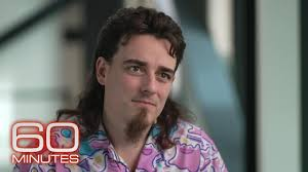
12m
[Palmer Luckey on making autonomous weapons for the ...


60 Minutes
YouTube · May 18, 2025](https://www.youtube.com/watch?v=bWEXnph1ElI&t=1)
Would you like to know more about Anduril's defense products, Palmer Luckey's thoughts on the US-China AI race, or more of his insights from the Abundance Summit?
---
BOAST OG WROTE TO TRUMP 2015 TO RUN
MPU Producer/Host - Alex Kennell
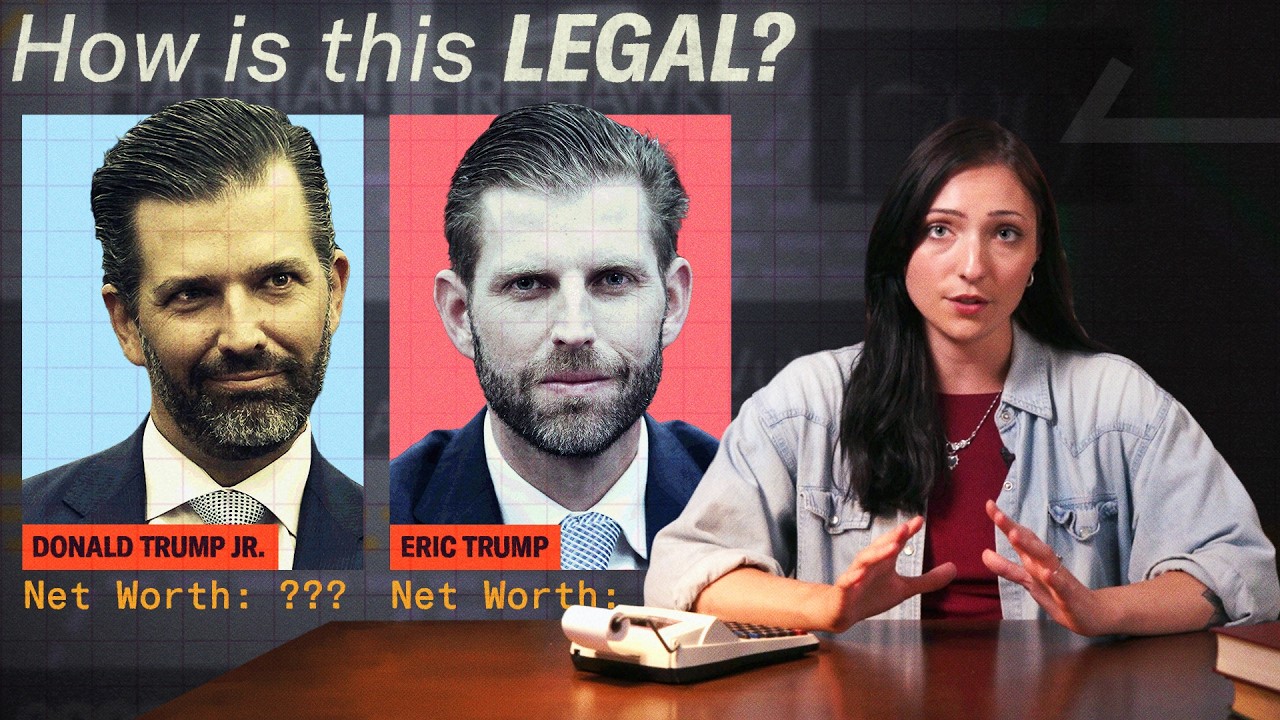
2:56
2 minutes, 56 seconds
And what happened to each of them after 1789? Capital invested. And I'll add it all up right here as we go.
3:02
3 minutes, 2 seconds
In July 2025, 1789, invested in a company called Hadrian Automation.
3:09
3 minutes, 9 seconds
Hadrian was founded in 2020 and had no significant government contracts.
3:13
3 minutes, 13 seconds
Eight months later, it won a $900 million Navy contract to build automated submarine factories and an $80 million Army contract.
3:22
3 minutes, 22 seconds
That's $980 million total, all to a company that had never won a major government contract before.
3:28
3 minutes, 28 seconds
Don Jr's fond invested in Here's another one. Firehawk aerospace, whose entire government contract history fits in a single line.
3:37
3 minutes, 37 seconds
It had just one contract in 2022, and then 1789 invests and suddenly there winning Air Force and Space Force deals worth $8.9 million, plus a land gift in Oklahoma.
3:49
3 minutes, 49 seconds
And sometimes the perk goes beyond the money.
3:52
3 minutes, 52 seconds
1789 invested in reflection AI in 2025, and by May 2026, it became one of only eight AI companies in the country allowed to deploy inside Pentagon classified networks.
4:05
4 minutes, 5 seconds
Here's a company called Andrew that makes the autonomous weapons systems that define modern warfare, like drones and AI powered surveillance towers, and after 1789, invested.
4:15
4 minutes, 15 seconds
In June of 2025, the company won a $367 million border surveillance contract and a $23.9 million Army deal.
4:24
4 minutes, 24 seconds
It also has a potential 20 billion. Yes. Billion with AB.
4:28
4 minutes, 28 seconds
Army consolidation deal in the works so big a number that it totally dwarfs everything else on this list, but we can't even count it.
4:36
4 minutes, 36 seconds
So I'll just do 367 million plus 23.9 million.
4:56
4 minutes, 56 seconds
of all of these, there's one example that stands apart because this is one where we have proof the white House directly intervened.
5:03
5 minutes, 3 seconds
Falcon elements, a three year old startup with 30 employees that makes rare earth magnets.
5:08
5 minutes, 8 seconds
In August 2025, 1789, invested in Vulcan as a part of a $65 million funding round.
5:15
5 minutes, 15 seconds
Three months later, the Pentagon gave them a $620 million loan.
5:21
5 minutes, 21 seconds
Rare earth magnets are vital to military technology, and as the name suggests, they are rare. China has complete dominance over the industry.
5:30
5 minutes, 30 seconds
Both Democrats and Republicans have tried to change that. So Trump isn't the first to consider a loan of this sort.
5:39
5 minutes, 39 seconds
it went out without competitive bids without the technical disclosures that are used to verify whether a project is even viable before public money goes in.
5:50
5 minutes, 50 seconds
That was waived.
5:51
5 minutes, 51 seconds
the push for this loan came directly from Peter Navarro, Trump's senior trade adviser and a close personal friend of Don Jr.
5:57
5 minutes, 57 seconds
So close that Don Jr visited Navarro in prison and was one of the few people Navarro's latest book was dedicated He's a friend legitimately can't believe that this is happening to him,
6:08
6 minutes, 8 seconds
One Pentagon employee told ProPublica that the call came, quote, from the white House.
6:12
6 minutes, 12 seconds
We have to get this done, Staff worked late nights for weeks to push the loan through when deals like this normally take months.
6:20
6 minutes, 20 seconds
the time of 1789, investment Vulcan was valued at around 200 million. After the Pentagon loan, the valuation jumped to nearly $2 billion.
6:29
6 minutes, 29 seconds
technically, this one's alone.
6:30
6 minutes, 30 seconds
Not a contract, but it's still $620 million of our tax money going to a three year old startup with fewer employees than your local target, with no competitive process in a phone call from the white House to push it through.
...
5:03
5 minutes, 3 seconds
Falcon elements, a three year old startup with 30 employees that makes rare earth magnets.
5:08
5 minutes, 8 seconds
In August 2025, 1789, invested in Vulcan as a part of a $65 million funding round.
5:15
5 minutes, 15 seconds
Three months later, the Pentagon gave them a $620 million loan.
5:21
5 minutes, 21 seconds
Rare earth magnets are vital to military technology, and as the name suggests, they are rare. China has complete dominance over the industry.
5:30
5 minutes, 30 seconds
Both Democrats and Republicans have tried to change that. So Trump isn't the first to consider a loan of this sort.
5:39
5 minutes, 39 seconds
it went out without competitive bids without the technical disclosures that are used to verify whether a project is even viable before public money goes in.
5:50
5 minutes, 50 seconds
That was waived.
5:51
5 minutes, 51 seconds
the push for this loan came directly from Peter Navarro, Trump's senior trade adviser and a close personal friend of Don Jr.
5:57
5 minutes, 57 seconds
So close that Don Jr visited Navarro in prison and was one of the few people Navarro's latest book was dedicated He's a friend legitimately can't believe that this is happening to him,
6:08
6 minutes, 8 seconds
One Pentagon employee told ProPublica that the call came, quote, from the white House.
6:12
6 minutes, 12 seconds
We have to get this done, Staff worked late nights for weeks to push the loan through when deals like this normally take months.
6:20
6 minutes, 20 seconds
the time of 1789, investment Vulcan was valued at around 200 million. After the Pentagon loan, the valuation jumped to nearly $2 billion.
6:29
6 minutes, 29 seconds
technically, this one's alone.
6:30
6 minutes, 30 seconds
Not a contract, but it's still $620 million of our tax money going to a three year old startup with fewer employees than your local target, with no competitive process in a phone call from the white House to push it through.
6:42
6 minutes, 42 seconds
So I'm going to count it So it turns out the fastest way to win a government contract is to put the president's son on your board.
6:51
6 minutes, 51 seconds
I want to bring us back to Eric, because this is where things get really egregious.
6:57
6 minutes, 57 seconds
Power us is a drone company that both brothers invested in, in April 2026, it won an Air Force contract to sell interceptor drones.
7:04
7 minutes, 4 seconds
How much was never disclosed. Then there's another drone company, Unusual Machines. Don Jr is an advisor with a financial stake in the company.
7:13
7 minutes, 13 seconds
An October 2025 at one what its own CEO called, quote, the largest government contract in the company's history.
7:21
7 minutes, 21 seconds
The amount was also never disclosed.
7:23
7 minutes, 23 seconds
Unusual machines signed a $5 million supply deal with powers, so government money flows to power.
7:29
7 minutes, 29 seconds
US powers, pays unusual machines, Eric gets paid and Don Jr gets paid twice. It's a loop.
7:38
7 minutes, 38 seconds
This is the type of mechanism that helps Don Jr go from 50 million to 300 million, and helps Eric go from 40 million to 400 million.
7:47
7 minutes, 47 seconds
The contracts don't go to them directly, but they do go to the companies and they own pieces of these companies. So every government contract makes those pieces worth much more.
8:22
8 minutes, 22 seconds
the fund is still growing.
8:24
8 minutes, 24 seconds
Currently managing $3.5 billion in assets with a stated goal of $10 billion.
8:55
8 minutes, 55 seconds
So how is any of this legal?
8:59
8 minutes, 59 seconds
If a mid-level contract worker at a Navy base owns stock in a company bidding for one of her contracts, she would lose her job. She would likely face criminal charges, too.
9:08
9 minutes, 8 seconds
for Don Jr and Eric, there's nothing. No law covers the president's children.
9:14
9 minutes, 14 seconds
There's no requirement to recuse themselves from decisions that benefit their investments.
---
-=-=
ggl 8 26
Exclusive: Major Republican fundraiser winning contracts ...

https://www.theguardian.com › us-news › aug › exclusi...
wealthy Republicans on the west coast received an emailed invitation in July to an upcoming fundraiser titled “Keep the Senate”. The email, obtained by the Guardian, described the event as a “private roundtable and dinner with the National Republican Senatorial Committee” where donors can pledge $50,000 for seats at the head table, and mingle with legislative heavy hitters from Capitol Hill including the Senator majority leader, John Thune, and Mike Rogers, who is running for Senate in Michigan with Donald Trump’s endorsement.
One of the organizers listed on the invite was the defense industry tycoon Palmer Luckey, the 33-year-old co-founder of sprawling weapons manufacturer Anduril Industries.
The invitation is one of dozens of emails obtained by the Guardian that unravel Luckey’s vast Maga political fundraising over the last seven years.

Move fast, kill things: the tech startups trying to reinvent defence with Silicon Valley values
A longtime GOP donor and activist who spoke on condition he not be identified in order to preserve his political relationships said Luckey was now the “godfather of Republican fundraising on the west coast”.
“If you’re raising campaign money in California, you have to go to Palmer Luckey,” he said. “Luckey is the top tier. There are others who are important below him but no one at his level.”
Anduril, launched just nine years ago, has emerged as a major military contractor for the Trump administration, working on contracts for everything from drones to autonomous jet fighters to space-based interceptors.
In March, the US army awarded a $20bn sole-source contract to Anduril for a variety of drones it sells, though it is not clear which of its weapons systems are operational or have been deployed for combat in US operations.
Anduril, though it is not widely known as a space contractor, announced in May it would work, with a team of other companies, on what may be the mother of all contracting opportunities offered by the Trump administration, the so-called “Golden Dome” anti-missile space-based interceptor effort. Estimates for the Golden Dome range between $185bn and $1.2tn.
Much of Anduril’s PR sparkle comes from Luckey. He’s a media darling, profiled on 60 Minutes and in the Wall Street Journal and the New York Times, which called him the “It Guy of the booming defense-technology industry”.
His offbeat, relaxed attire – colorful Hawaiian shirts, a chin puff goatee, cargo shorts and flip-flops – counterintuitively makes him seem more credible.
Luckey is treated by many in the defense industry as a technology prophet and futurist who often holds forth on what he believes to be the true nature of warfare. For example, he told Axios that future wars will be fought in a “subterranean domain”, under the earth’s crust, in underground conflicts.
Anduril’s success in winning huge contracts has blossomed with little attention paid to the central role Luckey plays as a donor and fundraising “bundler” for the Republican party. Bundlers hold large fundraisers for candidates or campaign committees and political action groups, and curate high-dollar invitation lists for those events.
The emails obtained by the Guardian shed light on Palmer Luckey’s vast GOP political fundraising efforts and activism over the last 10 years.
Palmer declined an interview for this piece, writing, “I am not going to help you guys make money,” and did not respond to a detailed list of questions.
Rising influence
OpenSecrets, a non-profit that tracks campaign donations, says Federal Election Commission (FEC) records show that Luckey has donated $5.9m to Republicans since 2017. While that is a tremendous amount of money for one person to give to politicians, it does not put him in the order of, say, Miriam Adelson, the widow of Sheldon Adelson, who has forked over $100m to Trump’s campaign in 2024.
Luckey doesn’t have her wealth. His real value to GOP politicians exceeds his own donations. He hosts and organizes fundraising events and campaigns for Republicans from the president all the way down to state races.
“If you become a bundler, it just multiplies your influence,” said Brendan Glavin of OpenSecrets. “It makes you a more important person. You’re bringing in not just your money. You’re bringing other people’s money. It integrates you in the campaign and makes you more important to the candidate than just a donor.”
Behind the scenes, Luckey has reached a position in campaign finance and politics that rivals his influence in military contracting, according to two GOP fundraising figures.
The emails, which are a partial list of invitations, show that Luckey has held fundraisers over the last seven years for at least 20 Republican politicians, ranging from Trump to a California attorney general candidate.
Just as Luckey has emerged as a major fundraiser on the right, his co-founder, Anduril’s CEO, Palantir veteran Brian Schimpf, became a major donor to Democratic causes, albeit on a far smaller scale. So, in time-honored tradition, Anduril’s management ends up donating to both sides of the political aisle, though the vast majority goes towards the GOP. FEC records show Schimpf’s donations at $1.16m over the same period that Luckey gave $5.9m.
An Anduril official emailed the Guardian: “It shouldn’t surprise anyone that two executives at the same company have different political views. Like millions of Americans, Brian and Palmer don’t share identical political views.”
A fundraising dam breaks
Luckey first became famous in tech before he could legally drink. At 20, in 2012, he launched a Kickstarter that raised more than $2m for a virtual reality gaming headset he said he was building first in his parents’ garage. It was a Silicon Valley Cinderella narrative. Two years later, Facebook became the prince at the ball and paid him $2bn for the company. In 2016, after four years of hype, the first Oculus Rift headset started getting shipped to consumers.
And then, quickly, Luckey seemed to flame out in scandal.
The Daily Beast revealed he’d been secretly funding a group dedicated to “shitposting” negative memes about Hillary Clinton.
“We know Hillary Clinton is corrupt, a warmonger, a freedom-stripper. Not the good kind you see dancing in bikinis on Independence Day, the bad kind that strips freedom from citizens and grants it to donors,” Luckey had written, under the pseudonym Nimblerichman, on Reddit.
The disclosure had an immense impact, at least for a time. Eight months later Luckey left Facebook, and he later portrayed himself in interviews as simply being canceled for giving money to Republicans, ignoring the main criticisms over the group’s crude and underhanded tactics.
Luckey left Facebook with immense wealth, and in April 2017, just four months after Trump’s first inauguration, he founded Anduril.
His partners in the venture came from the Peter Thiel-backed Palantir, a company that had long had success in federal contracting through major lobbying and PR battles.
In June of 2017, his company just two months old, Luckey gave his first ever actual campaign finance donation, to Ted Cruz, the senator from Texas. Looking at his subsequent donations, it appears that the dam broke for him. Palmer gave 25 more times to political committees and legislators that year alone, FEC records show, and he has donated on more than a thousand occasions, or, on average, about 100 times every year.
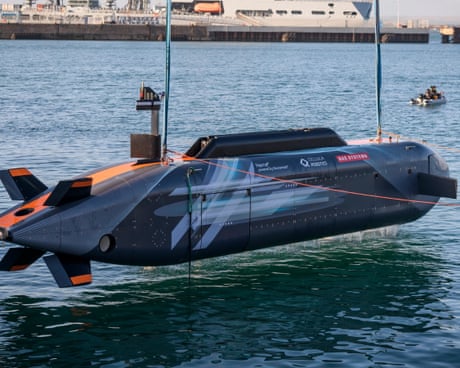
‘A step-change’: tech firms battle for undersea dominance with submarine drones
In the emails shared with the Guardian, the very first fundraising event Luckey co-hosted took place in August of 2017, two months after his donation to Ted Cruz. It was a major effort, and would include GOP House members such as Ken Calvert, Duncan Hunter, Darrell Issa, Devin Nunes, Dana Rohrabacher and Kevin McCarthy.
Then in November, in a separate email chain, Palmer’s name came up again, for the National Republican Congressional Committee (NRCC). A congressional aide named Jason Pitkin wrote to a party official: “we are going to be asking people for $33,900 for the NRCC and then after the first of the year we can ask them for $101,700.”
Pitkin noted that congressman Rohrabacher had introduced Luckey to Kevin McCarthy, then the powerful House majority leader, “at a Private meeting”.
“As you can see by the attached invitation,” Pitkin said, “Palmer is hosting an event for Dana [Rohrabacher] On December 15th. Our understanding is that Palmer was going to contribute $100,000 for the CA Victory event. Please let us know how much more Palmer can give to the NRCC.”
Pitkin did not respond to emailed questions.
In July of 2020, just three years after its creation, Anduril won its first mammoth contract from the first Trump administration. Customs and Border Protection awarded the young company a contract estimated at hundreds of millions of dollars for surveillance towers on the border.
And in that period it was clear that Luckey had hit the most senior levels of political access. On 6 October, the emails show, Luckey and his wife hosted Trump himself at a lunch at their waterfront mansion. The stakes were high and so were the tickets. Donors were told that $150,000 would get access to the round table, a VIP reception and event, and a photo op with the president.
During the Biden years, Anduril still maintained its business efforts targeting US national security, and still won contracts. It went on a major acquisition binge, buying up drone companies across the country.
And Luckey’s fundraising for the GOP continued. The records obtained by the Guardian show that after 2021, Luckey hosted fundraisers for key figures including Tom Cotton, the head of the Senate intelligence committee; Rick Scott, the Republican senator from Florida; Ken Calvert, then the influential ranking member of the House’s defense appropriations subcommittee; and Mike Waltz, now Trump’s UN ambassador and briefly his national security adviser.
Luckey also hosted another event for a future Trump official: a $50,000-a-plate fundraiser in June 2022 for Mehmet Oz, who would later join the Trump administration. That event became scandalous when Jezebel reported the fundraiser incorporated a speech by Oz in front of a car that once belonged to Adolf Hitler. Jezebel pointed out that Luckey’s sister is married to Maga firebrand Matt Gaetz, then a congressman from Florida.
Now that Trump is president, Anduril appears to be taking its turn at the table of the major contractors, amid Lockheed Martin, Raytheon and General Dynamics.
Certainly it has raised extraordinary money. In the latest round, led by Thrive Capital, controlled by Jared Kushner’s brother Joshua, it raised $5bn in venture capital.
Anduril says in Trump’s first year in office it doubled its revenue – a growth rate of 100%, but still only reached $2.2bn for 2025, which is barely a blip in the Pentagon’s trillion-dollar budget.
Still, the US defense secretary, Pete Hegseth, has twice toured Anduril factories. “Palmer and everyone, thank you so much,” he said last December as he visited Anduril’s factory in Costa Mesa, California, at a giant former industrial site where the Los Angeles Times was once printed. The Anduril factory was “foundational” to the new Pentagon, Hegseth said. On that tour, Hegseth donned a special helmet designed by Anduril.
A soldier wearing the helmet would be able to see the outside world not through his eyes but through sensors, as a kind of virtual or “augmented” reality, just like the old Oculus Rift headset Palmer Luckey made his fortune on.
In his speech, Hegseth referred to “that cool helmet I just saw that the army might be wearing eventually”.
-=-=-
-=-=
---
mpu 6 26 mpu
Peter Thiel's Plan To Replace Democracy (And Profit Off What Comes Next)
milton grandson 
lonsdale

gil duran: 9
In 1997, there was a book that came out called “The Sovereign Individual.”
3:03
It argued that in the 21st century, two technologies would result basically in the overthrow of democracy
3:11
and the demise of nations like the United States.
3:14
Cyber currency, which we would call crypto today.
3:17
And the other one was advanced automation that would create a world without jobs,
3:21
and that wealthy individuals who were savvy investors could profit from this coming doom
3:27
and prepare for it by making the right investments.
3:30
This book had a major impact on Peter Thiel.
3:33
And of course, it influenced the people Thiel was paying.
3:37
Joe Lansdale got to work.
3:39
He started a nonprofit, California Common Sense , allegedly dedicated to transparency and government
3:44
spending, so that voters could make a difference if they found things they were unhappy with.
3:48
On the surface, that sounds great, but two founders of that nonprofit started a for-profit:
3:53
OpenGOV.
3:54
OpenGOV is a software service for government agencies to manage data.
3:57
The idea of replacing democratic processes in the hands of all of us
GHIS MAXWELL!
4:29
But the think tanks would herald a few successful versions of their privatization plan.
4:34
Like Sandy Springs, Georgia, famously the first city in America
4:38
to privatize nearly all government services.
4:41
It was the darling of the libertarian press.
4:43
Everything for-profit, nothing public.
4:46
And a consulting firm making a little cash off the taxpayers at every juncture.
4:49
Those extra taxes for corporate profit started adding up, though.
4:54
Eventually, Sandy Springs unprivatized
4:56
saving taxpayers millions of dollars a year.
4:59
There were also nascent communities focused on Christian values
5:03
that the network state media heralds.
5:05
Battle Ground, Washington,
5:06
where a data center billionaire is buying up all the property to own the town,
5:11
the mayor is on his payroll,
5:12
and Highland Rim, a series of developments in Appalachia
5:16
run by the investment firm New Founding.
5:18
And that's not even including the California Forever Project,
5:21
a proposed tech city in Solano County
5:24
funded by Marc Andreessen, Reid Hoffman, Sam Altman and other billionaires.
5:29
But what if this was never really about these little mini governments?
5:33
Here's Peter Thiel saying the quiet part out loud in 2010.
5:37
[Thiel] Technology is this incredible alternative to politics.
...
7:13
You could pass laws, know, Cicero's in 15 states, we're getting dozens of laws passed.
7:17
And then we're going to teach people that and go to the national level.
7:20
[Gil] Riling people up is definitely part of their game plan.
7:22
That's what we saw in the San Francisco recalls.
7:24
San Francisco had a spike in crime during the pandemic,
7:28
but so did almost every big city in the United States.
7:30
Only in San Francisco,
7:32
which has extremely low crime rates compared to most cities in red states,
7:37
did they create this massive panic using social media and doom influencers
7:43
to convince everybody that everything was worse than it ever been.
7:47
And as Lonsdale got into nonprofits and think tanks,
7:49
Patri Friedman – remember him?
7:51
Milton Friedman's grandson?
7:53
Started his own VC firm with backing from Peter Thiel
7:56
called Pronomos Capital, existing entirely for investing in privatized governments.
8:01
In Honduras, Pronomos invested in the first government
8:04
run entirely by a for-profit corporation: Prospera.
8:08
[Gil] Prospera is this little enclave on the island of Roatan in Honduras
8:13
That claims to be its own little charter city
8:16
that was funded by American venture capitalists and has been touted
8:20
as the flagship project of the network state movement.
...
lonsdale
8:24
But the real flagship project is something bigger:
8:27
the entire United States government.
8:30
It shows in policy.
8:32
Remember the whole thing about taking over Greenland?
8:35
That idea emerged and was celebrated by the people we've been talking about.
8:38
I think having a frontier is very healthy.
8:40
I think part of America being great is that it's is growing and creating more wealth for everyone.
8:44
If the people in Greenland want to be part of us, if we can use those resources
8:48
better and make sure Russia and China don't get advantages in the Arctic.
8:51
The Freedom City as a name didn't really gain momentum,
8:54
but the idea is there, and the influence in the administration is clear.
8:58
Joe Lansdale helped staff up the Trump administration
9:01
and just recently accompanied administration officials to the Philippines
9:04
to christen a new regulatory zone.
9:07
Just last week, we signed a historic deal with the Philippines, 4000 acres
9:11
right next to Subic Bay, where we're going to build a
9:14
first-of-its-kind, AI-native industrial park.
9:17
I was there for a day in the Philippines with everyone.
9:20
They’re, they’re excited, what you guys are doing.
9:22
That sounds a lot like a startup city....
9:37
that this stuff could travel to the White House.
9:42
[Gil] In September 2024, there was a conference at Fort Mason
9:46
in San Francisco called Reboot 2024,
9:49
and its website announced that we are now in a new reality.
9:53
And that Silicon Valley was waking up and about to become this powerful force in politics.
9:58
And the guest speaker was Kevin Roberts of the Heritage Foundation
10:02
who was the guy who had shepherded Project 2025.
10:05
So here you had tech VCs in San Francisco...
kUshner
10:20
for maritime prosperity zones,
10:23
districts on American soil with fewer regulations
10:26
for corporations to build ships and reinvigorate the industrial base.
10:30
Then there's the New American Industrial Alliance,
10:33
a tech industry interest group pushing for unrestricted data center growth.
10:37
They were listed as co-sponsors of the Blueprint for America,
10:41
lobbying for prosperity zones on American soil.
10:44
A plan to sell federal and public land to private companies
10:48
to build low regulation, low tax havens for progress.
10:52
Their co-sponsor on the Blueprint was the company behind Prospera in Honduras,
10:56
whose lobbying disclosures show they spent hundreds of thousands of dollars
11:00
pushing for prosperity zones.
11:02
But they also spent big on begging the American government for handouts of your money.
11:08
They've lobbied on refunding the US International Development Financial Corporation,
11:12
a government organization run by Epstein associate Ben Black
11:15
that uses tax dollars to invest in American companies abroad.
11:20
That's privatized foreign aid.
11:22
And they might finally get their way.
11:24
Black went to Honduras and promised investment in real estate and technology there,
11:28
including an investment in La Ceiba, which is slated to be absorbed by Prospera.
11:34
But it's more than just government handouts.
11:37
It's war crimes.
11:38
So we did a master plan.
11:39
And we've developed ways to redevelop Gaza.
11:41
Gaza is President Trump's and saying has amazing potential.
11:44
And this is for the people of Gaza.
11:45
We've developed it into zones.
11:47
[Gil] It was sort of insane to see it all come together in this way.
...11:55
there's always the idea of a new city that they're proposing.
11:59
And it's not clear why we need these new cities.
12:01
You know, Gaza should be rebuilt for for the Palestinians.
12:05
But these guys see it as an opportunity to take the land.
12:09
And so that shows you the degree to which this thinking is starting to imbue everything that they do.
12:15
[Sean] Look at how the people in this fringe movement
12:18
reacted to other invasions.
12:20
In 2019, Mark Lutter, leader of a Peter Thiel funded new city think tank, said that
12:25
overthrowing the Venezuelan government would be an opportunity for these projects.
12:30
And when the invasion did happen, Lutter suggested America
12:33
establish a Florida or Texas style government there.
12:36
He cites America paying for a wholesale development plan after regime change.
12:41
Which is exactly what we're doing in Iran today,
12:44
to the tune of $300 billion.
12:47
Palmer Luckey, Lonsdale and Thiel associate, and founder of AI defense contractor Anduril,
12:52
pictured here in cosplay,
12:54
suggested a privatized city on Guantanamo Bay in Cuba,
12:57
which President Trump also threatened with invasion.
13:01
Again, nobody wants this.
13:02
They know that.
13:03
That's why they hate populism.
13:05
That's why they hate democratic representation
13:07
despite all of this being couched in freedom.
13:10
What they're asking for is to exit entirely from any government structure.
13:14
But that's just not how it works,
13:16
especially when most of these guys are government contractors, and are still wanting
13:20
to have the benefits of our society without having the responsibilities of our society.
13:26
These are people who don't like being told “no.”
13:28
They're angry at the pushback against data centers, that we don't want AI to take over everything,
gil
13:33
that no one supports annihilating a civilization to replace it with one they can profit from.
13:38
People need to understand that the billionaires have become radicalized against democracy,
13:42
and they're in the process of using everything they have to try to destroy it.
13:45
And that's the battle of our moment.
13:47
That's the battle of our time.
...
13:49
It's not too late to push back.
13:51
Public response to data centers works.
13:53
Many of the governance as a service startups are starting their work
13:56
in towns and states where you can still have a voice to stop them.
14:01
The billionaire class wants to turn your home into their playland,
14:05
completely change how everything is run to funnel more wealth to themselves,
14:09
create chaos,
14:11
and then when everything is all f*cked up,
14:13
walk away with their winnings to their own private enclaves,
14:16
all under the guise of fixing a broken government.
14:20
A government that they broke.
14:21
And yeah, sure, the government is broken,
14:24
but it's not because of democracy or lack of corporate privatization.
14:28
It's because of corporate power.
14:30
We need more democracy and less corporate control.
---
---
an 5 26
As President Donald Trump's war withIranhas dragged on for the last two months, a new NOTUS reportrevealed that defense contractors have been flooding congressional candidates with their hands on major regulatory powers with campaign money.
In a report published Friday, NOTUS revealed several telling findings from campaign contribution data pulled from Jan. 1 through March 31, revealing that "the defense industry spent millions" to boost the funding for candidates likely to play a role in regulatory decisions surrounding them, as well as other "competitive races" in general.
"Some of the lawmakers who have received the most contributions from defense interests sit on key congressional committees that routinely make decisions that profoundly affect the financial fortunes of military contractors," NOTUS explained. "For example, Congress is tasked with scrutinizing the Pentagon’s $1.5 trillion budget request for 2027 — a nearly $500 billion increase."
Political action committees connected to "11 defense contractors, including Lockheed Martin, Northrop Grumman, Leidos, RTX, Anduril," poured a total of $4.7 million into congressional campaigns during the first quarter of 2026, NOTUS found.
The report further dug into the specific lawmakers being wooed with big money donations and how much they have been taking in.
"Rep. Ken Calvert [a California Republican] chairs the House Defense Appropriations Subcommittee, which is charged with drafting the Defense Department’s budget," the report continued. "The Republican is running in a competitive race after California Democrats gerrymandered his district, and his campaign committee received more than $200,000 during the first three months of 2026 from defense contractor PACs and direct contributions from top defense executives, according to FEC records."
Across two days in early March, Calvert took in two separate payments from "from leaders at military vehicle manufacturer AM General: Darrell Duckworth, an executive director, and Chief Financial Officer Ryan DuRussel." A week and change later, "the political action committees of Lockheed Martin and RTX, Raytheon’s parent company," also made two separate donations of $5,000 to the lawmaker. A senior congressional adviser for Calvert insisted to NOTUS that "His votes and actions are always based on what he believes is in the best interest of the constituents he represents and all Americans."
"House Armed Services Committee Chair Rep. Mike Rogers of Alabama received $68,000 last quarter through his campaign," the report added. "Rogers, a Republican who oversees the National Defense Authorization Act, has said he’s focused on making it easier for new defense firms such as Anduril and ShieldAI to secure defense contracts. Palmer Luckey, co-founder of Anduril, donated $7,000 to Rogers’ campaign in March."
It has not just been Republicans getting this money, either, with NOTUS reporting that most Democrats continue to accept defense PAC money, despite some swearing it off. Rep. Adam Smith of Washington, the ranking Democrat on the House Armed Services Committee, received "about $130,000 from industry PACs and executives." This included "$7,000 from Anduril co-founder and CEO Brian Schimpf, $1,000 from RTX Vice President of State and Local Government Relations Peter Holland and $1,000 from BAE Systems Vice President of Strategy Chris Rappa," as well as, "$5,000 contributions from PACs tied to defense contractors Northrop Grumman, SpaceX and Leonardo DRS."
In an email to the outlet, Smith also asserted that these extensive contrbituons would not have any sway over his voting decisions.
"I have opposed the Iran War since before it started and I oppose the $1.5 trillion defense budget increase," Smith said. "No contribution changes that. I’ve spent decades pushing back on wasteful defense spending and challenging entrenched interests in the Pentagon."
---
---
PROTO-ABUNDANCE? CONTEXT INTERCEPT SAM BIDDLE NOV 2024
tech-industry-trump-military-contracts
Donald Trump pitched himself to voters as a supposed anti-interventionist candidate of peace. But when he reenters the White House in January, at his side will be a phalanx of pro-military Silicon Valley investors, inventors, and executives eager to build the most sophisticated weapons the world has ever known.
During his last term, the U.S. tech sector tiptoed skittishly around Trump; longtime right-winger Peter Thiel stood as an outlier in his full-throated support of MAGA politics as other investors and executives largely winced and smiled politely. Back then, Silicon Valley still offered the public peaceful mission statements of improving the human condition, connecting people, and organizing information. Technology was supposed to help, never harm. No more: People like Thiel, Palmer Luckey, Trae Stephens, and Marc Andreessen make up a new vanguard of powerful tech figures who have unapologetically merged right-wing politics with a determination to furnish a MAGA-dominated United States with a constant flow of newer, better arms and surveillance tools.
Trump’s election marks an epochal victory not just for the right, but also for a growing conservative counterrevolution in American tech.
These men (as they tend to be) hold much in common beyond their support of Republican candidates: They share the belief that China represents an existential threat to the United States (an increasingly bipartisan belief, to be sure) and must be dominated technologically and militarily at all costs. They are united in their aversion, if not open hostility, to arguments that the pace of invention must be balanced against any moral consideration beyond winning. And they all stand to profit greatly from this new tech-driven arms race.
Trump’s election marks an epochal victory not just for the right, but also for a growing conservative counterrevolution in American tech that has successfully rebranded military contracting as the proud national duty of the American engineer, not a taboo to be dodged and hidden. Meta’s recent announcement that its Llama large language model can now be used by defense customers means that Apple is the last of the “Big Five” American tech firms — Amazon, Apple, Google, Microsoft, and Meta — not engaged in military or intelligence contracting.
Elon Musk has drawn the lion’s share of media scrutiny (and Trump world credit) for throwing his fortune and digital influence behind the campaign. Over the years, the world’s richest man has become an enormously successful defense contractor via SpaceX, which has reaped billions selling access to rockets that the Pentagon hopes will someday rapidly ferry troops into battle. SpaceX’s Starlink satellite internet has also become an indispensable American military tool, and the company is working on a constellation of bespoke spy satellites for U.S. intelligence agency use.
But Musk is just one part of a broader wave of militarists who will have Trump’s ear on policy matters.
After election day, Musk replied to a celebratory tweet from Palmer Luckey, a founder of Anduril, a $14 billion startup that got its start selling migrant-detecting surveillance towers for the southern border and now manufactures a growing line of lethal drones and missiles. “Very important to open DoD/Intel to entrepreneurial companies like yours,” Musk wrote. Anduril’s rise is inseparable from Trumpism: Luckey founded the firm in 2017 after he was fired by Meta for contributing to a pro-Trump organization. He has been outspoken in his support for Trump as both candidate and president, fundraising for him in both 2020 and 2024.
Big Tech historically worked hard to be viewed by the public as inhabiting the center-left, if not being apolitical altogether. But even that is changing. While Luckey was fired for merely supporting Trump’s first campaign, his former boss (and former liberal) Mark Zuckerberg publicly characterized Trump surviving the June assassination attempt as “bad ass” and quickly congratulated the president-elect on a “decisive victory.” Zuckerberg added that he is “looking forward to working with you and your administration.”
:{To some extent, none of this is new: Silicon Valley’s origin is one of militarism. The American computer and software economy was nurtured from birth by the explosive growth and endless money of the Cold War arms race and its insatiable appetite for private sector R&D. :{And despite the popular trope of liberal Google executives, the tech industry has always harbored a strong anti-labor, pro-business instinct that dovetails neatly with conservative politics}:.
It would also be a mistake to think that Silicon Valley was ever truly in lockstep with progressive values. A 2014 political ad by Americans for a Conservative Direction, a defunct effort by Facebook to court the Republican Party, that “it’s wrong to have millions of people living in America illegally” and urged lawmakers to “secure our borders so this never happens again.” The notion of the Democrat-friendly wing of Big Tech as dovish is equally wrong: Former Google chair and longtime liberal donor Eric Schmidt is a leading China hawk and defense tech investor. Similarly, the Democratic Party itself hasn’t meaningfully distanced itself from militarism in recent history. The current wave of startups designing smaller, cheaper military drones follows the Obama administration’s eager mass adoption of the technology, and firms like Anduril and Palantir have thrived under Joe Biden.}:
What has changed is which views the tech industry is now comfortable expressing out loud.
:{:{A year after Luckey’s ouster from the virtual reality subsidiary he founded, Google became embroiled in what grew into an industry-wide upheaval over military contracting. After it was reported that the company sought to win Project Maven, a lucrative drone-targeting contract, employees who had come to the internet titan to work on consumer products like Search, Maps, and Gmail found themselves disturbed by the thought of contributing to a system that could kill people. Waves of protests pushed Google to abandon the Pentagon with its tail between its legs.}:
Even Fei-Fei Li, then Google Cloud’s chief artificial intelligence and machine learning scientist, described the contract as a source of shame in internal emails obtained by the New York Times. “Weaponized AI is probably one of the most sensitized topics of AI — if not THE most. This is red meat to the media to find all ways to damage Google,” she wrote. “I don’t know what would happen if the media starts picking up a theme that Google is secretly building AI weapons or AI technologies to enable weapons for the Defense industry.”}:
It’s an exchange that reads deeply quaint today. The notion that the country’s talented engineers should build weapons is becoming fully mainstreamed. “Societies have always needed a warrior class that is enthused and excited about enacting violence on others in pursuit of good aims,” Luckey explained in an on-campus talk about his company’s contributions to the Ukrainian war effort with Pepperdine University President Jim Gash. “You need people like me who are sick in that way and who don’t lose any sleep making tools of violence in order to preserve freedom.”
This “warrior class” mentality traces its genealogy to Peter Thiel, whose disciples, like Luckey, spread the gospel of a conservative-led arms race against China. “Everything that we’re doing, what the [Department of Defense] is doing, is preparing for a conflict with a great power like China in the Pacific,” Luckey told Bloomberg TV in a 2023 interview. At the Reagan National Defense Forum in 2019, Thiel, a lifelong techno-libertarian and Trump’s first major backer in tech, rejected the “ethical framing” of the question of whether to build weapons.” When it’s a choice between the U.S. and China, it is always the ethical decision to work with the U.S. government,” he said. Though Sinophobia is increasingly standard across party affiliations, it’s particularly frothing in the venture-backed warrior class. In 2019, Thiel claimed that Google had been “infiltrated by Chinese intelligence” and two years later suggested that bitcoin is “a Chinese financial weapon against the U.S.”
Related
Tech Billionaires Love Trump Now — Because He’s One of Them](https://theintercept.com/2024/08/07/silicon-valley-tech-billionaires-president-trump/)
Thiel often embodies the self-contradiction of Trumpist foreign policy, decrying the use of taxpayer money on “faraway wars” while boosting companies that design weapons for exactly that. Like Trump, Thiel is a vocal opponent of Bush- and Obama-era adventurism in the Middle East as a source of nothing but regional chaos — though Thiel has remained silent on Trump’s large expansion of the Obama administration’s drone program and his assassination of Iranian Maj. Gen. Qassim Suleimani. In July, asked about the Israeli use of AI in the ongoing slaughter in Gaza, Thiel responded, “I defer to Israel.”
Thiel’s gravitational pull is felt across the whole of tech’s realignment toward militarism. Vice President-elect JD Vance worked at Mithril, another of Thiel’s investment firms, and used $15 million from his former boss to fund the 2022 Senate win that secured his national political bona fides. Vance would later go on to invest in Anduril. Founders Fund, Thiel’s main venture capital firm, has seeded the tech sector with influential figures friendly to both Trumpism and the Pentagon. Before, an investor or CEO who publicly embraced right-wing ideology and products designed to kill risked becoming an industry pariah. Today, he can be a CNBC guest.
An earlier adopter of MAGA, Thiel was also investing in and creating military- and intelligence-oriented companies before it was cool. He co-founded Palantir, which got its start helping facilitate spy agency and deportation raids by Immigration and Customs Enforcement. Now part of the S&P 500, the company helps target military strikes for Ukraine and in January sealed a “strategic partnership for battle tech” with the Israeli Ministry of Defense, according to a press release.
Before, a tech investor or CEO who publicly embraced right-wing ideology and products designed to kill risked becoming an industry pariah. Today, he can be a CNBC guest.
The ripple effect of Palantir’s success has helped popularize defense tech and solidify its union with the American right. Thiel’s Palantir co-founder Joe Lonsdale, also an Anduril investor, is reportedly helping Trump staff his new administration. Former Palantir employee and Anduril executive chair Trae Stephens joined the Trump transition team in 2016 and has suggested he would serve a second administration. As a member of the U.S.–China Economic and Security Review Commission, Thiel ally Jacob Helberg has been instrumental in whipping up anti-China fervor on Capitol Hill, helping push legislation to ban TikTok, and arguing for military adoption of AI technologies like those sold by his employer, Palantir, which markets itself as a bulwark against Chinese aggression. Although Palantir CEO Alex Karp is a self-described Democrat who said he planned to vote against Trump, he has derided progressivism as a “thin pagan religion” of wokeness, suggested pro-Palestine college protesters leave for North Korea, and continually advocating for an American arms buildup.
“Trump has surrounded himself with ‘techno-optimists’ — people who believe technology is the answer to every problem,” Brianna Rosen, a strategy and policy fellow at the University of Oxford and alumnus of the Obama National Security Council, told The Intercept. “Key members of his inner circle — leading tech executives — describe themselves in this way. The risk of techno-optimism in the military domain is that it focuses on how technology saves lives, rather than the real risks associated with military AI, such as the accelerated pace of targeting.”
The worldview of this corner of the tech industry is loud, if not always consistent. Foreign entanglements are bad, but the United States must be on perpetual war-footing against China. China itself is dangerous in part because it’s rapidly weaponizing AI, a current that threatens global stability, so the United States should do the very same, even harder, absent regulatory meddling.
Stephens’s 2022 admonition that “the business of war is the business of deterrence” argues that “peaceful outcomes are only achievable if we maintain our technological advantage in weapons systems” — an argument that overlooks the fact that the U.S. military’s overwhelming technological superiority failed to keep it out of Korea, Vietnam, Iraq, or Afghanistan. In a recent interview with Wired, Stephens both criticized the revolving door between the federal government and Anduril competitors like Boeing while also stating that “it’s important that people come out of private industry to work on civil service projects, and I hope at some point I’ll have the opportunity to go back in and serve the government and American people.”
William Fitzgerald, the founder of The Worker Agency, a communications and advocacy firm that has helped tech workers organize against military contracts, said this square is easily circled by right-wing tech hawks, whose pitch is centered on the glacial incompetence of the Department of Defense and blue-chip contractors like Lockheed and Raytheon. “Peter Thiel’s whole thing is to privatize the state,” Fitzgerald explained. Despite all of the rhetoric about avoiding foreign entanglements, a high-tech arms race is conducive to different kinds of wars, not fewer of them. “This alignment fits this narrative that we can do cheaper wars,” he said. “We won’t lose the men over there because we’ll have these drones.”
In this view, the opposition of Thiel and his ilk isn’t so much to forever wars, then, but rather whose hardware is being purchased forever.
The new conservative tech establishment seems in full agreement about the need for an era of techno-militarism. Marc Andreessen and Ben Horowitz, the namesakes of one of Silicon Valley’s most storied and successful venture capital firms, poured millions into Trump’s reelection and have pushed hard to reorient the American tech sector toward fighting wars. In a “Techno-Optimist Manifesto” published last October, Andreessen wrote of defense contracting as a moral imperative. “We believe America and her allies should be strong and not weak. We believe national strength of liberal democracies flows from economic strength (financial power), cultural strength (soft power), and military strength (hard power). Economic, cultural, and military strength flow from technological strength.” The firm knows full well what it’s evoking through a naked embrace of strength as society’s greatest virtue: Listed among the “Patron Saints of Techno-Optimism” is Filippo Tommaso Marinetti, co-author of the 1919 Fascist Manifesto.
The venture capitalists’ document offers a clear rebuttal of employees’ moral qualms that pushed Google to ditch Project Maven. The manifesto dismisses basic notions of “ethics,” “safety,” and “social responsibility” as a “demoralization campaign” of “zombie ideas, many derived from Communism” pushed by “the enemy.” This is rhetoric that matches a brand Trump has worked to cultivate: aspirationally hypermasculine, unapologetically jingoistic, and horrified by an America whose potential to dominate the planet is imperiled by meddling foreigners and scolding woke co-workers.
“There’s a lot more volatility in the world, [and] there is more of a revolt against what some would deem ‘woke culture,’” said Michael Dempsey, managing partner at the New York-based venture capital firm Compound. “It’s just more in the zeitgeist now that companies shouldn’t be so heavily influenced by personal politics. Obviously that is the tech industry talking out of both sides of their mouth because we saw in this past election a bunch of people get very political and make donations from their firms.”
“It’s just more in the zeitgeist now that companies shouldn’t be so heavily influenced by personal politics. Obviously that is the tech industry talking out of both sides of their mouth.”
Despite skewing young (by national security standards), many in this rightward, pro-military orbit are cultural and religious traditionalists infused with the libertarian preferences of the Zynternet, a wildly popular online content scene that’s melded apolitical internet bro culture and a general aversion to anything considered vaguely “woke.” A recent Vanity Fair profile of the El Segundo tech scene, a hotbed of the burgeoning “military Zyndustrial complex” commonly known as “the Gundo,” described the city as “California’s freedom-loving, Bible-thumping hub of hard tech.” It paints a vivid scene of young engineers who eschewed the progressive dystopia of San Francisco they read about on Twitter and instead flocked to build “nuclear reactors and military weaponry designed to fight China” beneath “an American flag the size of a dumpster” and “a life-size poster of Jesus Christ smiling benevolently onto a bench press below.”
The American right’s hold over online culture in the form of podcasts, streamers, and other youth-friendly media has been central to both retaking Washington and bulldozing post-Maven sentiment, according to William Fitzgerald of Worker Agency. “I gotta hand it to the VCs, they’re really good at comms,” said Fitzgerald, who himself is former Google employee who helped leak critical information about the company’s involvement in Project Maven. “They’re really making sure that these Gundo bros are wrapping the American flag around them. It’s been fascinating to see them from 2019 to 2024 completely changing the culture among young tech workers.”
A wave of layoffs and firings of employees engaged in anti-military protests have been a boon for defense evangelists, Fitzgerald added. “The workers have been told to shut up, or they get fired.”
This rhetoric has been matched by a massive push by Andreessen Horowitz (already an Anduril investor) behind the fund’s “American Dynamism” portfolio, a collection of companies that leans heavily into new startups hoping to be the next Raytheon. These investments include ABL Space Systems, already contracting with the Air Force,; Epirus, which makes microwave directed-energy weapons; and Shield AI, which works on autonomous military drones. Following the election, David Ulevitch, who leads the fund’s American Dynamism team, retweeted a celebratory video montage interspersed with men firing flamethrowers, machine guns, jets, Hulk Hogan, and a fist-pumping post-assassination attempt Trump.
Even the appearance of more money and interest in defense tech could have a knock-on effect for startup founders hoping to chase what’s trendy. Dempsey said he expects investors and founder to “pattern-match to companies like Anduril and to a lesser extent SpaceX, believing that their outcomes will be the same.” The increased political and cultural friendliness toward weapons startups also coincides with high interest rates and growing interest in hardware companies, Dempsey explained, as software companies have lost their luster following years of growth driven by little more than cheap venture capital.
There’s every reason to believe a Trump-controlled Washington will give the tech industry, increasingly invested in militarized AI, what it wants. In July, the Washington Post reported the Trump-aligned America First Policy Institute was working on a proposal to “Make America First in AI” by undoing regulatory burdens and encouraging military applications. Trump has already indicated he’ll reverse the Biden administration’s executive order on AI safety, which mandated safety testing and risk-based self-reporting by companies. Michael Kratsios, chief technology officer during the first Trump administration and managing director of Air Force contractor Scale AI, is reportedly advising Trump’s transition team on policy matters.
“‘Make America First in AI’ means the United States will move quickly, regardless of the costs, to maintain its competitive edge over China,” Brianna Rosen, the Oxford fellow, explained. “That translates into greater investment and fewer restrictions on military AI. Industry already leads AI development and deployment in the defense and intelligence sectors; that role has now been cemented.”
The mutual embrace of MAGA conservatism and weapons tech seems to already be paying off. After dumping $200 million into the Trump campaign’s terminal phase, Musk was quick to cash his chips in: On Thursday, the New York Times reported that he petitioned Trump SpaceX executives into positions at the Department of Defense before the election had even begun. Musk will also co-lead a nebulous new office dedicated to slashing federal spending. Rep. Matt Gaetz, brother-in-law to Luckey, now stands to be the country’s next attorney general. In a post-election interview with Bloomberg, Luckey shared that he is already advising the Trump transition team and endorses the current candidates for defense secretary. “We did well under Trump, and we did better under Biden,” he said of Anduril. “I think we will do even better now.”
---
---
https://theintercept.com/2019/03/09/anduril-industries-project-maven-palmer-luckey/
no lnx
DEFENSE TECH STARTUP FOUNDED BY TRUMP’S MOST PROMINENT SILICON VALLEY SUPPORTERS WINS SECRETIVE MILITARY AI CONTRACT
Lee Fang
:{March 9 2019,
In partnership with
A STARTUP FOUNDED by a young and outspoken supporter of President Donald Trump is among the latest tech companies to quietly win a contract with the Pentagon as part of Project Maven, the secretive initiative to rapidly leverage artificial intelligence technology from the private sector for military purposes.
Anduril Industries is the latest venture of Palmer Luckey, the 26-year-old entrepreneur best known for having founded the virtual reality firm Oculus Rift. Luckey began work on Project Mavenlast year, along with efforts to support the Defense Department’s newly formed Joint Artificial Intelligence Center, according to documents viewed by The Intercept.
The previously unreported Project Maven contract could be a boon for Anduril’s bottom line. Founded in 2017, the company has said it seeks to remake the defense contracting industry by incorporating the latest innovations of Silicon Valley into warfighting technology.
Last year, Google’s involvement with Project Maven stirred a controversy inside the tech giant. The company had signed a contract with the Defense Department to develop artificial intelligence that could interpret video images in order to improve drone targeting. But after the contract’s disclosure sparked an internal rebellion among employees, Google allowed its contract to expire. The Google flap and the wider military drive to adopt commercial artificial intelligence technology unleashed a fierce debate among tech companies about their role in society and ethics around advanced computing.
Anduril Industries is developing virtual reality technology using Lattice, a product the firm offers that uses ground- and autonomous helicopter drone-based sensors to provide a three-dimensional view of terrain. The technology is designed to provide a virtual view of the front lines to soldiers, including the ability to identify potential targets and direct unmanned military vehicles into combat. The first phase of the research has been completed, according to the documents reviewed by The Intercept, with initial plans to deploy virtual reality battlefield-management systems for the war in Afghanistan. (Anduril and the Pentagon did not respond to requests for comment.)
“We’re deployed at several military bases. We’re deployed in multiple spots along the U.S. border. We’re deployed around some other infrastructure I can’t talk about.”
Luckey dropped hints about Anduril’s involvement in the project last November in Lisbon, Portugal, at the Web Summit, a technology conference. “We’re deployed at several military bases. We’re deployed in multiple spots along the U.S. border,” Luckey said, cryptically adding: “We’re deployed around some other infrastructure I can’t talk about.” He also discussed how he hoped the military would apply Anduril’s technology.
“What we’re working on is taking data from lots of different sensors, putting it into an AI-powered sensor fusion platform so that you can build a perfect 3D model of everything that’s going on in a large area,” Luckey said. “Then we take that data and run predictive analytics on it, and tag everything with metadata, find what’s relevant, then push it to people who are out in the field.”
“Practically speaking, in the future, I think soldiers are going to be superheroes who have the power of perfect omniscience over their area of operations, where they know where every enemy is, every friend is, every asset is,” he said. Luckey said he thinks it is “unlikely” that soldiers of the future will directly carry weapons in the field; instead, they would remotely operate machines and weapons from far away.
Anduril previously garnered attention for its efforts to help U.S. Customs and Border Protection create a “virtual wall” at the U.S.-Mexico border. The initial 10-week demonstration used Anduril’s Lattice technology to monitor a stretch of land along the Rio Grande Valley. The system reportedly helped the government identify and apprehend 55 unauthorized individuals crossing the border.
The company has also publicly acknowledged work to develop perimeter defense monitoring around two U.S. Marine bases.
Anduril’s pitch deck, the presentation it provided to solicit investors, imagines a future of warfighting by means that might look like science fiction to the average observer. The company is pushing battlefield management technology capable of utilizing long-range bombers and swarms of military attack drones. The firm has reportedly rented a warehouse in Oakland, California, to develop at least one remote-control tank, designed for fighting California wildfires.
Palmer Luckey, co-founder of Oculus VR Inc., smiles during the Wall Street Journal D.Live global technology conference in Laguna Beach, California, U.S., on Monday, Nov. 12, 2018. The WSJ D.Live conference brings together investors, founders, and executives to foster innovation and drive growth within the tech industry. Photographer: Patrick T. Fallon/Bloomberg via Getty Images Palmer Luckey, founder of Anduril Industries, smiles during the Wall Street Journal D.Live global technology conference in Laguna Beach, Calif., on Nov. 12, 2018. Photo: Patrick T. Fallon/Bloomberg via Getty Images]
A Defense Contractor in Flip Flops
Palmer Luckey stands out among other defense industry executives. In contrast to the buttoned-down image of executives at Lockheed Martin or Northrop Grumman, he typically appears in public wearing flip-flops and a partially unbuttoned Hawaiian shirt. And he stands out in other ways: Unlike other tech industry leaders, Luckey is unabashedly partisan. Being an avowed supporter of the Republican Party has made him a lightning rod in Silicon Valley.
In contrast to the buttoned-down image of executives at Lockheed Martin or Northrop Grumman, Palmer Luckey typically appears in public wearing flip-flops and a partially unbuttoned Hawaiian shirt.
The son of car salesman, Luckey was homeschooled by his mother in Long Beach, California. He got his start by parlaying his passion for tinkering with video game-optimized home computers into a virtual reality business. Using funds raised on Kickstarter, Luckey developed a new model for virtual reality headsets at age 17. Four years later, he sold Oculus Rift to Facebook for over $2 billion, earning him an estimated fortune of around $700 million.
During the 2016 election, Luckey posted on pro-Trump forums on Reddit, encouraging community members to develop memes critical of Hillary Clinton. He donated $10,000 to a group called Nimble America, which paid for a billboard stating that Clinton was “Too Big to Jail.”
Amid the ensuing controversy, Palmer lost his job at Facebook, which has adamantly denied that he was let go over his political views. According to the Wall Street Journal, however, Palmer retained an employment lawyer and negotiated a $100 million payout corresponding to bonuses and stock options that he would have had if he had stayed on at Facebook.
In a detailed profile of Anduril, Wired magazine reported that Luckey was first inspired to develop a military technology company through an event hosted by billionaire investor Peter Thiel, another Silicon Valley conservative. At a 2016 retreat in Canada, Luckey met Trae Stephens, a former intelligence official who works at Thiel’s venture capital firm, Founders Fund.
The pair bonded over an interest in reshaping defense contracting using the incentives and structures of the tech startup scene. Stephens had previously worked at Palantir, the secretive data-crunching company backed by Thiel, which is known for its work on behalf of spy agencies and the military. (Both Palantir and Anduril are references to the classic fantasy trilogy “Lord of the Rings”; Anduril is the unbreakable sword used by one of the series’s protagonists.)
Thiel’s high-profile support for Trump during the 2016 election gave him influence with the new administration. Stephens, the Thiel deputy, was appointed to the group on Trump’s transition team that dealt with the new administration’s move into the Defense Department. By March 2017, Luckey had left Facebook and was ready to work with Stephens on launching a new company focused on weapons systems.
The Military-Tech Complex
Anduril needed talent, political connections, and an injection of capital. Enter the Founders Fund, Thiel’s venture capital firm. Several Palantir alumni quickly joined up. Stephens came on as Anduril’s chair and another Founders Fund partner provided seed funding. Other executives followed suit, including Brian Schimpf, the former director of engineering at Palantir, who now serves as chief executive at Anduril.
The timing of Anduril’s founding was fortuitous in many ways. Under the Obama administration, the government had begun massive efforts to swiftly incorporate commercial technology into its security efforts. In 2015, both the Department of Homeland Security and the Defense Department opened satellite offices in Silicon Valley as beachheads to coordinate partnerships with the private sector. The Defense Department opened a Defense Innovation Unit office in Mountain View, California, where Google is based. And the Homeland Security opened its Silicon Valley Innovation Program in Menlo Park, California.
In 2017, as part of an initiative that had begun the previous year, the Defense Department also unveiled the Algorithmic Warfare Cross-Functional Team, known as Project Maven, to harness the latest artificial intelligence research into battlefield technology, starting with a project to improve image recognition for drones operating in the Middle East.
This wave of outreach from the government provided a unique entry point for Anduril, which partnered with the Department of Homeland Security’s satellite office to successfully pitch its test project for the virtual wall. As Luckey recently explained to Defense and Aerospace Report, a trade publication, he also worked closely with the Pentagon’s Defense Innovation Unit, crediting its former director, Raj Shah, with making his company possible.
The Defense Innovation Unit, said Luckey, proved “that people in Silicon Valley could actually get stuff into production, actually do work with the government.” He added, “I don’t think that I would have started this company if it wasn’t for the work of people like Raj Shah doing great work and proving that you actually could get into it.”
Lobbying and Political Donations
Building out major government contracts is an inherently political endeavor — something that appears not to be lost on Luckey. Publicly filed lobbying disclosures show that Anduril paid $290,000 last year to Invariant, a lobbying firm founded by Heather Podesta, a Democratic fundraiser known for her extensive relationships in Washington, D.C., including with Hillary Clinton. The lobbying effort focused on shaping the border security appropriations issued by Congress, as well as on educating lawmakers on “artificial intelligence and autonomous systems and their application to military force protection,” according to the filings.
Luckey donated $100,000 to Trump’s inauguration through a company he founded and gave over $670,000 to congressional Republican campaign funds over the last two years.
Luckey also opened his wallet to the powers that be in Congress and the White House. He donated $100,000 to Trump’s inauguration through a company he founded and gave over $670,000 to congressional Republican campaign funds over the last two years.
Rep. Will Hurd, R-Texas, a former CIA agent turned moderate border-district lawmaker, received a $2,700 donation. Hurd worked to help Anduril find a volunteer land owner to test its sensor technology along the border, according to Wired. Hurd later sponsored legislation to finance a virtual border wall likely using Anduril’s technology.
Among his political largesse, Luckey donated to political action committees supporting Trump, the senior lawmakers on the defense and appropriations committees, and a number of controversial conservative lawmakers, including Rep. Steve King, R-Iowa, who has defended white supremacy and questioned the contributions of nonwhite people to society.
In previous interviews, Luckey has sharply criticized traditional defense contracting, noting that the iPhone and other commercial technology innovations were developed with massive incentives, rather than the “cost-plus” model preferred by the Pentagon. That approach has seen the Defense Department negotiate with contractors to provide a fixed price for expenses and profits, one that, in Luckey’s telling, has limited the military’s ability to encourage the kind of breakthrough technologies needed for the future of war.
In a white paper filed with the Defense Department’s National AI Strategic Plan last year, Anduril urged officials to consider the ambitious approach by the government in China with regard to AI technology. China,an Anduril employee wrote in the paper, has provided a “multibillion-dollar national investment initiative to support ‘moonshot’ projects, start-ups and academic research in A.I.”
Even as it seeks to shake up the model for contracts, though, Anduril is also embracing the traditional approach.
In November, the company announced its first major revolving-door hire. Anduril brought on Christian Brose, a former top staffer with the Senate Armed Services Committee, which oversees defense spending, as its head of strategy. Brose formerly worked under the late Sen. John McCain, R-Ariz., and served as a speechwriter to then-Secretary of State Condoleezza Rice. Two months later, Anduril formally joined the National Armaments Consortium, a nonprofit that facilitates bids by traditional defense contracting firms for business with the military.
Scott Sanders, head of operations for Anduril Industries, prepares a Lattice Modular Heli-Drone for a test flight at the Red Beach training area,Marine Corps Base Camp Pendleton, California,Nov. 8, 2018. The Lattice Modular Heli-Drone was being tested to demonstrate its capabilities and potential for increasing security. (U.S. Marine Corps photo by Cpl. Dylan Chagnon) Scott Sanders, head of operations for Anduril Industries, prepares a Lattice Modular Heli-Drone for a test flight at the Red Beach training area, Marine Corps Base Camp Pendleton, Calif., on Nov. 8, 2018. Photo: Cpl. Dylan Chagnon/U.S. Marine Corps]
No “Digital Geneva Convention”
As the military worked to bring in leading Silicon Valley firms as contractors, the resulting relationships have sparked massive resistance from workers, many of whom have argued that they became engineers to make the world a better place, not a more violent one.
After the The Intercept and other media outlets revealed that Google had been quietly tapped to work on Project Maven, applying its AI technology to help analysts identify drone targets on the battlefield, thousands of workers protested the contract.
The uprising led Google to announce that it would not renew its contract with the military on the initiative. Microsoft, too, faced internal opposition as the company prepared work on a $480 million contract with the Army to develop augmented reality headsets for soldiers.
The ethical debates that have rocked large technology companies — Amazon, Salesforce, and others have similarly faced worker protests over contracts on immigration enforcement — have presented Anduril with an opportunity.
:{:{}:
}:
Despite the various protests around Silicon Valley, Anduril’s brash attitude has not prevented it from recruiting top engineering talent. In its white paper filed with the Defense Department’s National AI Strategic Plan last year, Anduril boasted that it has recruited engineers from top tech firms like General Atomics, SpaceX, Tesla, and Google.
In an opinion column for the Washington Post, Luckey and Stephens sharply criticized Google for abandoning the U.S. government by rejecting Project Maven.“We understand that tech workers want to build things used to help, not harm,” the pair wrote. “We feel the same way. But ostracizing the U.S. military could have the opposite effect of what these protesters intend: If tech companies want to promote peace, they should stand with, not against, the United States’ defense community.”
What was left out of the column, however, was that, as the piece went to print, Anduril was beginning its own work on Project Maven.
In Anduril, Luckey is presenting a company that is unapologetic about its work capturing immigrants or killing people on the battlefield.
In interviews and public appearances, Luckey slammed engineers for protesting government work, arguing that those claiming conscious opposition to military work are among a “vocal minority” that empowers American adversaries abroad. Moreover, he said that the Defense Department has failed to connect with top tech talent because many engineers are “stuck in Silicon Valley at companies that don’t want to work on national security.”
In Anduril, Luckey is presenting a company that is unapologetic about its work capturing immigrants or killing people on the battlefield. The U.S., Luckey argued in a previous interviews, “has a really strong record of protecting human rights” and should be trusted to use AI without any ethical constraints.
:{:{}:
}:
“The biggest threats are not going to be Western democracies abusing these technologies,” he told the audience at the Web Summit in Lisbon. The real enemies are China and Russia, both of which have invested in AI military technology.
China is not only investing in AI, but has unfair advantages to develop the technology using its entire population as a data training set through use of mass surveillance to run experiments. In contrast, Luckey told Defense and Aerospace Report, the U.S. can train its AI software “in industry, in enterprise, in national security.” The U.S., Luckey went on, could test AI “using our current military advantage to train future AI developments and we need to start using our current military advantage.” He called for employing these technologies in ongoing “large-scale conflicts” around the world.
Asked in Lisbon about a digital Geneva Convention or another ethical rulebook to govern the use of AI weaponry, Luckey was forthright in his rejection of the idea.
“That’s not really going to solve the problem,” he said. “I have no hopes that a digital Geneva Convention, whatever it will be, will prevent China from using surveillance tools to watch every citizen in their country. I have very little confidence that it will prevent Russia from building autonomous systems that can acquire and fire on targets without any kind of human intervention whatsoever.”
Ethics experts have criticized the development of AI-based weapons, noting that the lethal autonomous weapons could be hijacked by hackers, kill without clear explanation, or lead to catastrophic accidental conflict if weapons are used as escalation in response to an incident that appears to be an act of war. Moreover, as humans are removed from face-to-face combat, the dehumanization of lethal decisions could lead to more killing.
Luckey hasn’t proffered any direct answers to the questions being raised over the use of artificial intelligence in warfighting. Anduril, however, has stated that it will not sell to Russia or China, but would be willing to sell its products to U.S. allies. A request for comment about whether the company would sell to Saudi Arabia, the United Arab Emirates, or other undemocratic U.S. allies was not returned.
Among the many Palantir alumni who joined Anduril, one name sticks out to those concerned with abuse of civil liberties and human rights. In May of last year, the firm hired former Palantir executive Matthew Steckman.
Steckman took a lead role in the HBGary Federal scandal in 2011. In the scandal, a cache of hacked emails showed that Palantir and two other defense contractors had cooked up a plot to spy on journalists, trade unions, and activists on behalf of the U.S. Chamber of Commerce, the largest pro-business lobby in America. The plot included hacking target computers and using social media analysis to monitor the behaviors of a large set of left-leaning figures and journalists viewed as sympathetic to Wikileaks, including The Intercept’s Glenn Greenwald. In negotiations with the Chamber’s law firm, Steckman wrote at the time that he and another Palantir executive were “spearheading this from the Palantir side.”
After the plan was revealed, Palantir briefly placed Steckman on leave. He is now at work as head of corporate and government affairs at Anduril.
One thing is clear: Luckey wants to win — in every way imaginable. The U.S.’s goal, Luckey said at the Web Summit, should be dominance and beating other foreign adversaries to control the best artificial intelligence technology. “You have to be the leader,” he said. “Technological superiority is a prerequisite for ethical superiority.”
Nick Surgey contributed research.
==
https://techcrunch.com/2016/09/24/shitpost-your-idols/
It hasn’t been a great couple of days for Facebook PR
For one thing, the company admitted that, due to an error, it has been significantly inflating its reports on average video view times. For another, The Daily Beast discovered that Oculus founder Palmer Luckey is backing the pro-Donald Trump organization Nimble America, a group dedicated to promoting anti-Hillary Clinton memes.
Now, the video views story is more likely to be important to Facebook’s bottom line, but what Luckey is doing with a tiny piece of his hundreds of millions of dollars in Facebook money is much weirder — it prompted one TechCrunch writer (not me, I swear) to ask their coworkers for an explanation of “shitposting.” (And perhaps inevitably, it involves infamous **Internet troll Milo Yiannopoulos as a minor character — it seems Yiannopoulos was the one who connected Luckey with the anti-Clinton group.)
Now that the news is out there, will it prompt any kind of backlash against Oculus, at least from people who don’t share Nimble America’s politics? It’s hard to see many consumers letting this affect their buying decisions. And even if it does, well, there are plenty of Trump supporters out there.
The thing is, the Oculus Rift isn’t exactly mass consumer product yet. And as it tries to get there, goodwill from developers and early adopters could still be key. So when a handful of developers have already said they’re going to stop supporting Oculus the VR platform unless Facebook drops Luckey, it could be a sign that the company has some work to do.
The news also complicates the picture that Luckey has built up in the media asa geeky genius who’s just so damn passionate about virtual reality. All those things could be as true today as they were a year or two ago, but now you also have to think about the Luckey who’s supported trolls who hijack conversations with white supremacist memes, then explained that support by declaring, “Money is not my issue. I thought it sounded like a real jolly good time.”
Luckey responded to the story by admitting that he’s contributed $10,000 to Nimble America, but also denying that he authored controversial Reddit posts under the username NimbleRichMan. He said he’s voting for libertarian candidate Gary Johnson and concluded, “Still, my actions were my own and do not represent Oculus. I’m sorry for the impact my actions are having on the community.”
Some of the details of Luckey’s kinda, sorta denial/apology are a bit questionable. For one thing, Luckey seems to have confirmed his authorship of the NimbleRichMan posts to The Daily Beast’s Gideon Resnick. And regardless, the core fact — Luckey’s support of Nimble America — is not in dispute.
At this point, some of you may be concerned about the free speech implications of penalizing Luckey for his political views and actions. But of course Luckey is free to believe and support what and who he chooses. It’s just that everyone else is free as well to respond, whether that’s by expressing their feelings in blog and social media posts, or in reassessing their support of Oculus.
This may also reinforce an emerging media narrative, one that suggests Luckey and Peter Thiel (the Facebook investor and outspoken libertarian who helped to fund the lawsuit that took down Gawker) are typical of a wave of tech millionaires and billionaires who use their fortunes to “seek vengeance against the institutions they perceive to exclude them,” Revenge of the Nerds-style.
Maybe there’s an element of truth there — I can’t help but think of Silicon Valleyco-creator Mike Judge’s suggestion (as recounted by investor Roger McNamee) that “Silicon Valley is immersed in a titanic battle between the hippie value system of the Steve Jobs generation and the Ayn Randian libertarian values of the Peter Thiel generation.”
But I also suspect that Thiel’s influence, while real, is often overstated because it fits into the story that journalists want to tell about those crazy tech libertarians. After all, we’re talking about a region and industry that has, by and large, supported Hillary Clinton.
So on the one hand, Luckey (or whoever wrote the NimbleRichMan posts) may be spouting familiar conservative rhetoric about how he “started from nothing and worked [his] way to the top,” but on the other, you’ve got Nest co-founder Matt Rogers rolling his eyes and calling Luckey a “disgrace.”
And if you want to focus on Facebook money, there’s the $20 million that Facebook co-founder Dustin Moskovitz donated to organizations supporting the Clinton campaign.
So are there rich tech libertarians making a new trend? Maybe. But they’re part of an old, reliable one, too — even outside tech, it isn’t exactly a surprise to learn that the some of the fabulously wealthy might spend their money in ways that we find deeply objectionable.
Update, December 29, 2017: Earlier this year, writer Blake Harris published a story suggesting that much of the coverage (including TechCrunch’s) had described Nimble America inaccurately. Since then, he emailed me with more details about his reporting (he says he’s writing a book about Oculus), and he convinced me that I was wrong to describe Nimble America as spreading white supremacist memes.
It’s true that two of the organization’s founders were moderators of The_Donald subreddit, which is how The Daily Beast connected them to the aforementioned memes. However, Harris said he saw no evidence that the founders had posted racist content themselves. And it seems like the goal ofNimble America was to bring a meme-style approach to advertising in the real world — so at the time of publication, the organization had only bought a single billboard declaring Hillary Clinton “Too Big To Jail.”
==
vanity
peter Thiel, it turns out, isn’t the only Facebook-rich tech titan throwing in his lot with Donald Trump. Joining him in those illustrious ranks is Palmer Luckey, the young Oculus founder whose net worth soared to some $700 million after he sold his virtual-reality start-up to Facebook in 2014 for $2 billion. Luckey was just 17 when he created the prototype for Oculus Rift in his parents’ garage, in Long Beach, California, before a wildly successful Kickstarter campaign put his V.R. headset on the map. Now, he’s using that money to pay it forward, reportedly funding the Nimble America PAC, a pro–Donald Trump, anti–Hillary Clinton political-action group “focused on promoting the ideals of America First, Smart Trade, Legal Immigration, and Ethical Behavior,” according to the group’s Facebook page.
Nimble America, as the Daily Beast first reported, is an organization that makes anti-Clinton memes. The group made its debut on the unofficial Trump-fan subreddit r/The_Donald, where its founders said it had already “proven that shitposting is powerful and meme magic is real.” But Nimble America aspired to something greater: bringing its memes to the real world. One of the group’s most notable projects is a billboard in Pennsylvania with Clinton’s face on it, declaring that the Democratic presidential nominee is “too big to jail.” It was the sort of project that “no campaign is going to run,” Luckey said. Luckey’s Reddit pseudonym, “NimbleRichMan,” which was listed on Nimble America’s Web site as the group’s vice president, has since been removed. But when Luckey spoke with the Daily Beast, he seemed to think that funding the group was one big joke. “I’ve got plenty of money. Money is not my issue,” he said. “I thought it sounded like a real jolly good time.”
Luckey, whose mentor at Oculus was chief technology officer, Doom co-creator, and noted libertarian John Carmack, became involved with Nimble America through r/The_Donald, where he first collaborated with two of the group’s moderators, and then suggested holding a fund-raiser for Trump, with Luckey promising to match any contribution made. “I came into touch with them over Facebook,” Luckey said of Nimble America’s founders. “It went along the lines of, ‘Hey, I have a bunch of money. I would love to see more of this stuff.’ They wanted to build buzz and do fund-raising.” According to the Daily Beast, Luckey had also been in touch with Milo Yiannopoulos, the Breitbart tech editor and alt-right ringleader.
Luckey has since deleted his NimbleRichMan Reddit account, but according to the Daily Beast, Luckey’s now gone Reddit posts included such quotes as “You can’t fight the American elite without serious firepower. They will outspend you and destroy you by any and all means." He also participated in an A.M.A. (ask me anything) discussion in which he said, “We know Hillary Clinton is corrupt, a warmonger, a freedom-stripper. Not the good kind you see dancing in bikinis on Independence Day, the bad kind that strips freedom from citizens and grants it to donors.”
---
I
t Turns Out Palmer Luckey Was Fired - New York Magazine
http://nymag.com/intelligencer/2018/11/it-turns-out-palmer-luckey-was-fired.html
Nov 12, 2018 - The account had described Clinton as “corrupt, a warmonger, ... In an apology post, Luckey denied writing the Reddit posts and said that he ...
Oculus Founder Palmer Luckey's Support For Pro-Trump Trolls Angers ...
https://www.reddit.com/r/technology/.../oculus_founder_palmer_luckeys_support_for...
2.
Oculus Rift creator Palmer Luckey is financing a pro-Trump meme ...
https://www.reddit.com/r/.../oculus_rift_creator_palmer_luckey_is_financing_a/
1.
Oculus's 24-Year-Old Founder Is Using His Millions to Fund a Pro ...
https://www.vanityfair.com/.../oculuss-24-year-old-founder-is-using-his-millions-to-fun...
Sep 23, 2016 - Luckey's Reddit pseudonym, “NimbleRichMan,” which was listed on Nimble ... know Hillary Clinton is corrupt, a warmonger, a freedom-stripper.
The ugly reality of an Oculus founder's politics | TechCrunch
https://techcrunch.com/2016/09/24/shitpost-your-idols/
2.
Palmer Luckey: The Facebook Near-Billionaire Secretly Funding ...
https://www.thedailybeast.com/palmer-luckey-the-facebook-near-billionaire-secretly-f...
1.
Silicon Valley Money Floods to Hillary After Facebook Fat Cat ...
https://www.thedailybeast.com/silicon-valley-money-floods-to-hillary-after-facebook-...
1.
Oculus Rift inventor Palmer Luckey is funding Trump's racist meme ...
https://arstechnica.com/.../how-your-oculus-rift-is-secretly-funding-donald-trumps-rac...
2.
Palmer Luckey on what he learned from Facebook: 'Be careful who ...
https://www.businessinsider.com/palmer-luckey-oculus-facebook-lessons-2018-6
1.
Backlash Brews After Oculus Founder Funds Anti-Hillary Clinton Memes
https://www.hollywoodreporter.com/news/oculus-founder-funds-anti-hillary-932287
1.
almer Luckey Nimble America Megathread : oculus - Reddit
https://www.reddit.com/r/oculus/.../palmer_luckey_nimble_america_megathread/
2.
Fake News: The Reporting of Palmer Luckey and Nimble America ...
https://www.reddit.com/r/oculus/.../fake_news_the_reporting_of_palmer_luckey_and/
1.
"Nimble America" (the brand new scammy organization BTFO by r ...
https://www.reddit.com/r/.../nimble_america_the_brand_new_scammy_organization/
2.
Sep 23, 2016 - 15 posts - 13 authors
The ugly reality of an Oculus founder's politics | TechCrunch
https://techcrunch.com/2016/09/24/shitpost-your-idols/
2.
Oculus's 24-Year-Old Founder Is Using His Millions to Fund a Pro ...
https://www.vanityfair.com/.../oculuss-24-year-old-founder-is-using-his-millions-to-fun...
Sep 23, 2016 - The group made its debut on the unofficial Trump-fan subreddit r/The_Donald ... most notable projects is a billboard in Pennsylvania with Clinton's face on it, ... Luckey has since deleted his NimbleRichMan Reddit account, but ...
Palmer Luckey: The Facebook Near-Billionaire Secretly Funding ...
https://www.thedailybeast.com/palmer-luckey-the-facebook-near-billionaire-secretly-f...
1.
Nimble America | Know Your Meme
https://knowyourmeme.com/memes/people/nimble-america
1.
Oculus Rift inventor Palmer Luckey is funding Trump's racist meme ...
https://arstechnica.com/.../how-your-oculus-rift-is-secretly-funding-donald-trumps-rac...
2.
Backlash Brews After Oculus Founder Funds Anti-Hillary Clinton Memes
https://www.hollywoodreporter.com/news/oculus-founder-funds-anti-hillary-932287
1.
Palmer Luckey on Donald Trump, Nimble America - Business Insider
https://www.businessinsider.com/palmer-luckey-facebook-apology-2016-9
1.