The Elder Alignment
The Elder Alignment is not announced with banners, nor does it recruit with fire, fervor, or promises of transformation. It is encountered the way one encounters an ancient road beneath moss, or a stone foundation discovered beneath newer timber: quietly, almost accidentally, and with the unsettling realization that what lies beneath is older, broader, and more patient than the structures currently visible. To speak of the Elder is not to speak of age alone, nor of hierarchy in any conventional sense, but of continuity carried across ruptures that others would call endings. Where other alignments define themselves through aspiration, conquest, faith, or innovation, the Elder defines itself through endurance, and through the sober understanding that endurance is neither glamorous nor gentle.
Those who walk the Elder path rarely claim it in youth. It is not an alignment of ambition in its bright and rising form, but of gravity slowly assumed. To stand within it is to feel the weight of memory as a physical thing, as though one’s bones have been asked to house not only personal history but the sediment of decisions made long before one’s birth. The Elder does not chase novelty, for novelty is plentiful and cheap, nor does it despise change, for change is inevitable and often necessary. Instead, it studies change with the patience of a mason examining a cracked arch, asking not whether something is new or old, but whether it will hold.
In the taverns of the Kingdom and in the quieter halls where maps are unrolled and treaties considered, the Elder Alignment is spoken of with a tone that mixes respect and unease. Its adherents are not known for spectacle. They do not blaze across battlefields in radiant fury nor vanish into ecstatic communion with unseen powers. They remain. They advise. They correct. They refuse to be hurried by panic, and they refuse to be intoxicated by triumph. When cities burn or regimes falter, it is often an Elder hand that quietly secures the ledgers, seals the archives, and ensures that the next generation inherits more than ash.
This persistence can be mistaken for conservatism in the narrow sense, yet the Elder Alignment is not merely a defense of what is familiar. It is animated by a deeper conviction: that structures, whether social, arcane, or moral, exist within longer arcs than individual lives, and that reckless alteration carries costs which may not surface for decades. The Elder mindset asks questions that frustrate the impatient. What precedent does this establish. What hidden strain does this introduce. What promise, once broken, cannot be reforged. In this way, it functions as a stabilizing current within the larger sea of alignments, resisting both sudden collapse and sudden intoxication.
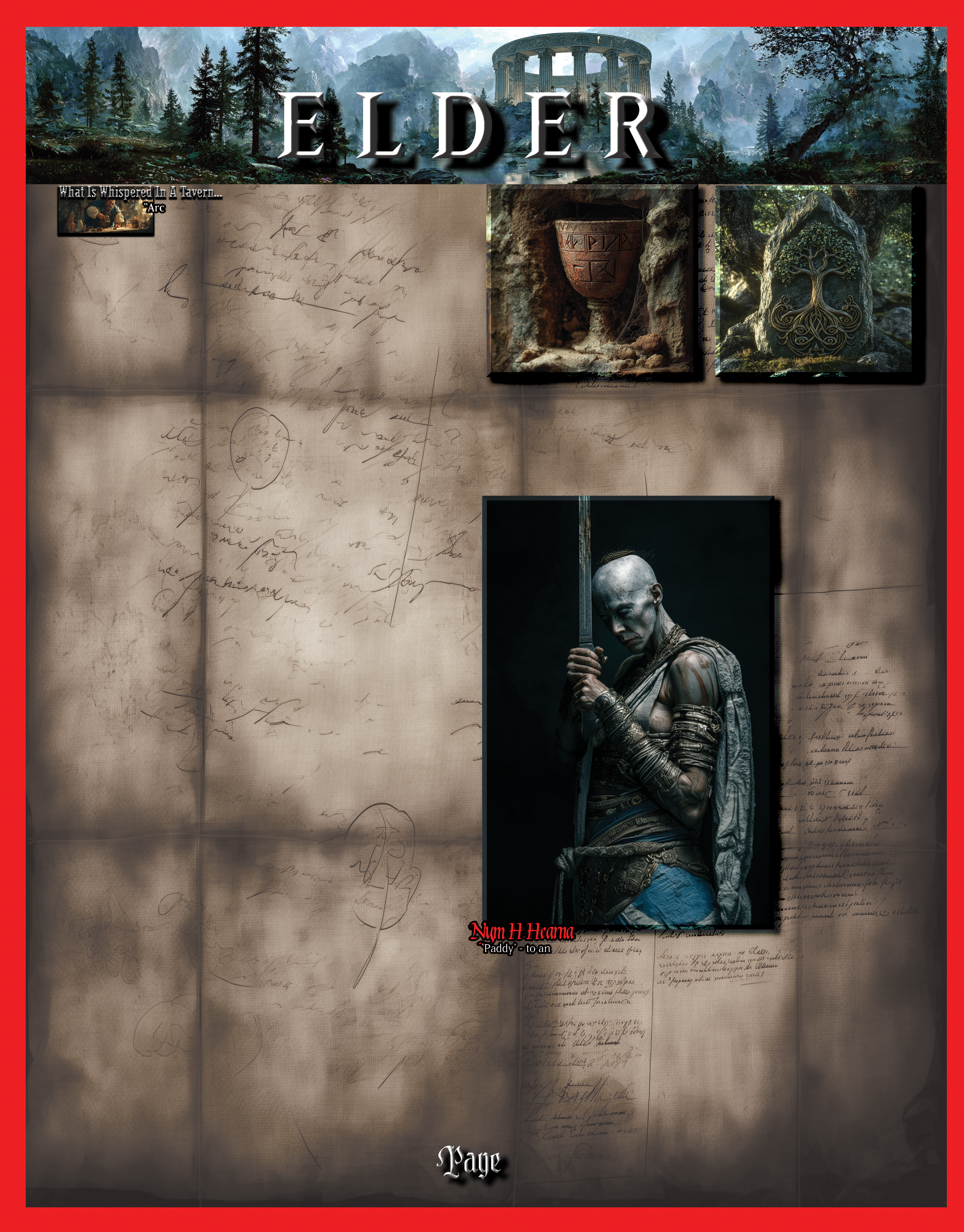
To outsiders, Elders may appear distant, even austere. Their rituals, when they have them, are often simple and unadorned, emphasizing continuity over spectacle. A cup passed down through generations, a grove tended in careful silence, a text recopied by steady hands: these are not relics for display, but anchors. The Elder does not worship the past, yet it treats inheritance as a trust rather than a burden. What has been handed down must be examined, maintained, and when necessary, repaired, but never discarded lightly. Within this alignment, the act of preservation is neither passive nor nostalgic; it is active stewardship.
It would be a mistake, however, to imagine the Elder as merely gentle or accommodating. Endurance requires boundaries. An Elder presence in a council chamber can feel immovable, like a pillar that refuses to shift even when the rest of the hall trembles. This immovability is not stubbornness for its own sake, but a commitment to continuity that resists being bent by transient pressures. The Elder Alignment understands that some lines, once crossed, unravel more than a single policy or pact. It therefore exercises caution not from fear, but from experience accumulated across cycles of rise and decline.
Among players who choose this alignment, the experience is less about commanding attention and more about shaping context. An Elder-aligned character often excels in reading patterns that others overlook, recognizing echoes between present crises and past missteps. Their strength lies not in overwhelming force but in calibration: knowing when to intervene, when to withhold, and when to allow events to unfold without unnecessary interference. This measured approach can frustrate allies who crave decisive action, yet in prolonged campaigns it becomes clear that such restraint prevents disasters that boldness alone cannot mend.
The Elder Alignment also carries a particular relationship to authority. It neither automatically venerates power nor reflexively rebels against it. Instead, it evaluates authority according to durability and legitimacy. Who holds power is less important than how that power is exercised and whether it reinforces or erodes the structures upon which the realm depends. An Elder character may serve as advisor, archivist, judge, or quiet sentinel, roles that prioritize continuity over acclaim. Leadership, in this alignment, is a matter of custodianship rather than dominance.
There is a subtle humility woven through the Elder ethos. To align oneself with it is to accept that one’s personal desires must often be tempered by longer considerations. Impulse yields to deliberation. Triumph yields to maintenance. The Elder does not promise glory, but it offers something rarer: relevance that persists after applause fades. In this sense, the alignment appeals to those who see the world not as a stage for personal legend, but as a structure to be kept standing for those yet to come.
For all its gravity, the Elder Alignment is not devoid of hope. On the contrary, its endurance presupposes hope of a particular kind: not the bright spark of sudden transformation, but the steady flame that survives wind and rain. It assumes that cycles will continue, that decline can be followed by renewal, and that what is carefully preserved today may enable flourishing tomorrow. Its adherents do not claim to foresee every outcome, yet they trust in the value of maintaining foundations strong enough to support unforeseen futures.
To walk the Elder path, then, is to accept a certain solitude without embracing isolation. It is to listen more than one speaks, to measure before one cuts, and to remember that the present moment is neither the first nor the last chapter of any enduring story. Within the grand weave of alignments that shape the Kingdom, the Elder stands not at the forefront, but at the root. And though roots are seldom celebrated, without them no structure, however brilliant, survives the long passage of time.