Lina Khan FTC 2
---
SEE ftc THREE 5 25
target pending
mcc mafia
// cfpb saved US ppl 6 billion dollars?!
---
7 26 We Talked to a Trump Whistleblower. What He Saw Will Shock You.
Jul 7, 2026
There's a set of MAGA lobbyists in DC who can get you anything you want from the White House, legal or not. Ticketmaster, Paramount, crypto companies — they're all exploiting this pay-to-play system.
KROGER REALPAGE UNITED HEALTH AMAZON GGL LINA KHAN // JDV?!
GAIL S ROGER ALFORD BOSS
1:33
1 minute, 33 seconds
[Liz Scheltens] For the last 40 years, across administrations from both parties, politicians have mostly been content to let corporations keep getting bigger and more powerful.
1:43
1 minute, 43 seconds
But in recent years, something has started to shift. [Anchor] The federal government is suing to block the largest supermarket merger in U.S. history...
1:52
1 minute, 52 seconds
...arguing that it would reduce the number of supermarkets, which would mean higher prices.
1:55
1 minute, 55 seconds
Today, the Justice Department and eight states sued software company RealPage, alleging it illegally helped landlords unfairly fix prices and raise rents throughout the country.
2:07
2 minutes, 7 seconds
At the end of the first Trump administration, there were very large and significant monopoly cases that were brought against Facebook and against Google.
2:16
2 minutes, 16 seconds
[Liz Scheltens] When Lina Khan took over the Federal Trade Commission under President Biden, she and her colleagues in the Department of Justice continued those suits, and filed dozens more.
2:26
2 minutes, 26 seconds
[Anchor] Department of Justice has launched an antitrust probe into UnitedHealth. The move is part of the Biden administration’s push to lower drug prices.
...5:15
5 minutes, 15 seconds
We want him in a very high capacity. Mike Davis. Mike. Thank you, Mike. Where is Mike? Mike is great.
5:24
5 minutes, 24 seconds
Mike Davis actually recommended Gail Slater to President Trump for the top antitrust job. Davis has denied the threatening phone call.
5:32
5 minutes, 32 seconds
But it is true that a couple of weeks after the election, he started getting big checks from corporations like Hewlett Packard Enterprise, who wanted him to use his connections to push their mergers through.
5:42
5 minutes, 42 seconds
[Roger Alford] His salary is $300,000 a month. He has a contingency fee of over $1 million for any successful mergers.
5:51
5 minutes, 51 seconds
They hire this lobbyist and the lobbyist starts talking to higher-ups, saying, you like us, we're on your team.
5:59
5 minutes, 59 seconds
Just tell them to drop the case. [Liz Scheltens] And they did.
6:02
6 minutes, 2 seconds
DOJ sources told the Wall Street Journal that a couple of weeks after the threatening phone call, Gail Slater's boss, quote, “placed a document on her desk.”
6:11
6 minutes, 11 seconds
It was a settlement deal written by Hewlett Packard Enterprise’s own lawyers. It was a genuine shock.
6:19
6 minutes, 19 seconds
When Gail Slater asked her boss what would happen if she refused to sign it, he told her, quote, “She was too difficult to fire, but he would fire her deputies.” She signed, and then he fired them anyway.
6:32
6 minutes, 32 seconds
And we all basically strongly suggested that that was inappropriate. And as a result of that, I was terminated.
6:39
6 minutes, 39 seconds
[Anchor] Shares of Hewlett Packard Enterprise, they're up more than 12%, after the DOJ gave the green light for the proposed $14 billion acquisition of Juniper Networks.
6:48
6 minutes, 48 seconds
This is oligarchy in action: company gets sued, they hire a million-dollar fixer with the president's ear to leverage his loyalty and make sure that the suit goes away.
6:58
6 minutes, 58 seconds
They get a sweetheart deal, and then, when someone like Roger Alford gets in the way, they make sure he gets fired.
7:04
7 minutes, 4 seconds
This type of, let's call it, pay-for-play politics hadn't happened since Watergate. They're dropping cases because they decided someone's a friend.
7:13
7 minutes, 13 seconds
That's not the rule of law. That's the opposite of the rule of law.
7:16
7 minutes, 16 seconds
A few months later, one of America's most hated companies decided to try the same play for themselves.
7:24
7 minutes, 24 seconds
[Anchor] Outrage over Ticketmaster and Live Nation gouging consumers on big concerts.
...
7:50
7 minutes, 50 seconds
A bunch of state attorneys general signed on to the suit as well, including Phil Weiser of Colorado and Jonathan Skrmetti of Tennessee.
7:57
7 minutes, 57 seconds
I mean, there was tremendous evidence of very aggressive, almost mafia-like tactics.
8:02
8 minutes, 2 seconds
We had some witnesses, they would get a phone call and it was basically like, “Hey, nice arena you have there.
8:08
8 minutes, 8 seconds
Be a shame if anything happened to it.” You know, we have the internal conversations laughing about how dumb their customers are and how great it is that they can rip ’em off.
8:16
8 minutes, 16 seconds
[Anchor] The messages between two ticketing directors saying, “These people are so stupid.” Another message saying, “Robbing them blind, baby.”
8:25
8 minutes, 25 seconds
[Liz Scheltens] When President Trump took office in 2025, his Department of Justice decided to continue the Ticketmaster suit. Ticketmaster thought they would try the same play as Hewlett Packard Enterprise.
8:35
8 minutes, 35 seconds
They hired Kellyanne Conway, Trump's former campaign manager, as a fixer. They donated to Trump's inaugural fund.
8:41
8 minutes, 41 seconds
And they hired Mike Davis, the same fixer who got Hewlett Packard Enterprise their sweetheart deal.
8:48
8 minutes, 48 seconds
Davis went after Roger Alford's boss, Gail Slater.
8:52
8 minutes, 52 seconds
[Roger Alford] Once it became clear that Gail Slater was going to resolve these cases on the merits and wasn't going to listen to Mike Davis based on arguments other than the merits, he turned on her.
9:02
9 minutes, 2 seconds
He directly lobbied the president of the United States to get someone who was committed to enforcing antitrust laws on the merits to be removed.
9:10
9 minutes, 10 seconds
[Anchor] The head of the Justice Department's Antitrust Division is out.
9:14
9 minutes, 14 seconds
Gail Slater was fired today from the role after months of tension with the Trump administration. [Liz Scheltens] The moment Gail Slater's firing hit the news, Live Nation’s stock price skyrocketed.
9:24
9 minutes, 24 seconds
Shareholders were anticipating big payouts on the backs of consumers. [echo] Robbing them blind, baby. And then, two weeks after she was fired...
9:32
9 minutes, 32 seconds
[Anchor] The Justice Department has reached a settlement with Live Nation in its antitrust case. Not everyone is on board. The proposed settlement didn’t even rise to the level of a slap on the wrist.
9:41
9 minutes, 41 seconds
[Liz Scheltens] Live Nation wouldn't have to sell off Ticketmaster, just a handful of venues.
9:46
9 minutes, 46 seconds
So it looked like the same play had worked again: get sued, hire a fixer, get a sweetheart deal.
9:53
9 minutes, 53 seconds
But there was one wrinkle for Ticketmaster.
9:56
9 minutes, 56 seconds
From my perspective, this was not a sufficient settlement to take care of Tennessee consumers.
10:01
10 minutes, 1 second
A bunch of those state AGs decided to continue with the suit, even after the Department of Justice settled.
...
10:51
10 minutes, 51 seconds
[Phil Weiser] The president put up a social media post and said, let the deal through.
10:55
10 minutes, 55 seconds
Now, we don't know exactly what happened behind those scenes, but I want to underscore how unusual that is.
11:01
11 minutes, 1 second
There was no DOJ investigation when the country's largest real estate brokerage, Compass, wanted to buy its rival Anywhere.
11:08
11 minutes, 8 seconds
Now, they're free to saddle middle-class homebuyers with even more junk fees in a housing market we can already barely afford.
11:16
11 minutes, 16 seconds
Compass even hired Mike Davis, the same fixer that got HPE and Live Nation their deals.
11:22
11 minutes, 22 seconds
But nothing has made the corruption more clear than the Department of Justice's recent approval of the merger between Paramount and Warner Brothers.
11:31
11 minutes, 31 seconds
The deal puts one of Trump's top political donors at the head of a media empire that will include CNN, CBS and HBO.
11:40
11 minutes, 40 seconds
And according to the Wall Street Journal, the staff attorneys in the antitrust division were leaning toward suing to prevent this merger.
11:48
11 minutes, 48 seconds
But again, they were overruled by the top brass at the Department of Justice.
11:53
11 minutes, 53 seconds
State AGS are teaming up to challenge the HPE, Nexstar, and Compass mergers in court, and they're considering whether to do the same for Paramount.
...
4:12
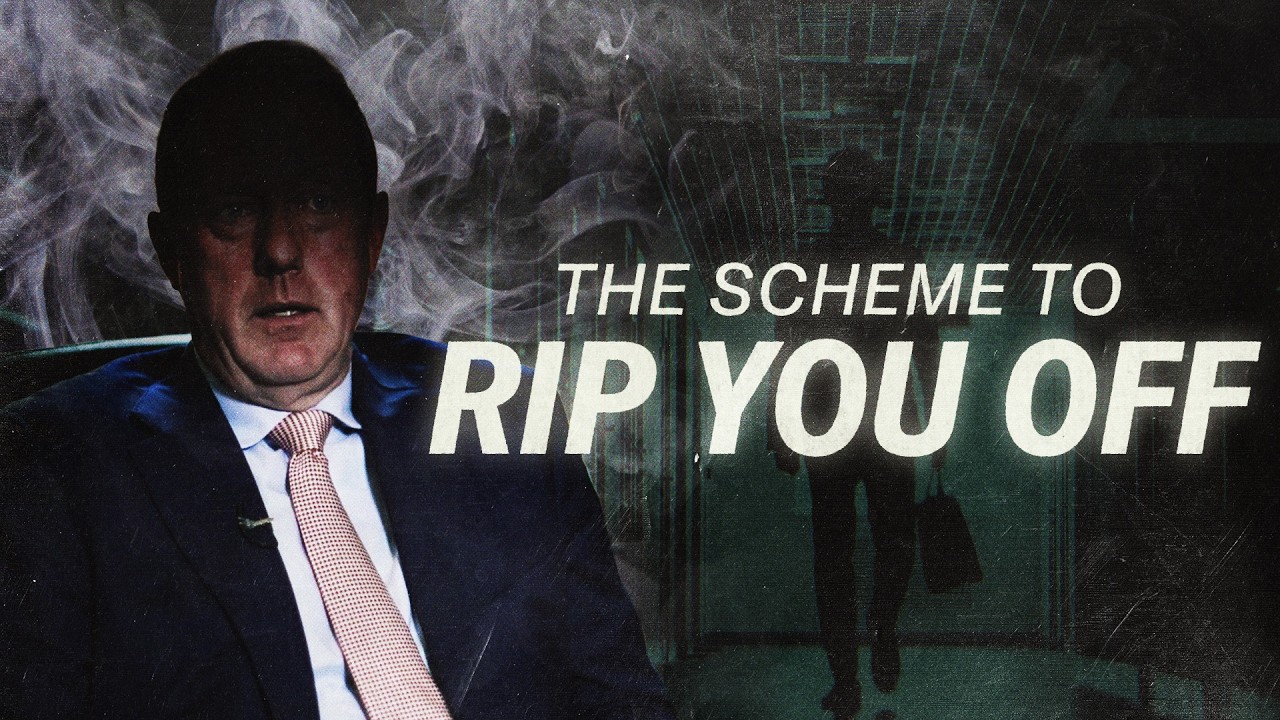
Hewlett Packard Enterprise looking to buy Juniper Networks.
---
---
AN 12 25
On Friday, a nonprofit forced the Trump administration to unseal a damning complaint lodged by the Biden-era Federal Trade Commission against Pepsi for colluding with Walmart to raise food prices across the nation. New un-redacted information claims FTC Chair Ferguson and his colleague Mark Meador (both Trump appointees) were hiding the mechanics of Pepsi’s and Wal-Mart’s price fixing.
Pepsi is a “must-have” product for grocery stores, and Walmart is also massively powerful,” reports BIG Newsletter writer Matt Stoller. Critics say Pepsi allegedly engages in price discrimination to maintain the approval of Walmart, its biggest buyer — even going so far as to police prices at smaller rival stores. And it prepares reports for Walmart showing them their pricing advantages on Pepsi products.
When the “price gap” between Wal-Mart and its tiny rivals narrow too much, Pepsi tracks where consumers were buying Pepsi products outside of Walmart. It keeps logs on stores who would “self-fund” Pepsi product discounts, nicknaming them “offenders” and then raise their stock price, forcing them to carry those costs down to their customers.
“This dynamic is why independent grocery stores are dying,” said Stoller. “… It’s led to less competition, fewer local grocery stores, and higher prices. … To the end consumer, it creates an optimal illusion. Walmart appears to be a low-cost retailer, but that’s because it induces its suppliers to push prices up at rivals.”
Much of this information was redacted by Trump officials, however, including Ferguson and Meador. Normally, when the government files an antitrust case, the complaint gets redacted to protect confidential business information. Then the corporate defendant and the government haggle over what is genuinely confidential business information and complaints are eventually unsealed with some minor blacked out phrases, and the case goes on.
“In this case, however, … Ferguson abruptly dropped the case in February after Pepsi hired well-connected lobbyists,” said Stoller. “… Ferguson ended it the day before the government was supposed to go before the judge to manage the unsealing process. And that kept the complaint redacted. With the complaint kept secret, Ferguson, and … Meador, then publicly went on the attack.”
Ferguson released a “bitter and personal” statement against Biden-era FTC Chair Lina Khan — who had brought the complaint against Pepsi — implying that she was lawless and partisan, that there was “no evidence” to support key contentions, and that Ferguson had to “clean up the Biden-Harris FTC’s mess.” Fellow commissioner Mark Meador later echoed his comments on on X.
“And that was where it was supposed to stay, secret, with mean-spirited name-calling and invective camouflaging the real secret Ferguson was trying to conceal,” said Stoller. “That secret is something we all know, but this complaint helped prove that the center of the affordability crisis in food is market power. If that got out, then Ferguson would have to litigate this case or risk deep embarrassment. So, the strategy was to handwave about that mean Lina Khan to lobbyists, while keeping the evidence secret.”
But anti-monopoly group The Institute for Local Self-Reliance filed to make the full complaint public, and Judge Jesse Matthew Furman agreed to hear ILSR’s case, with the U.S. Chamber of Commerce and Pepsi bitterly opposed.
“Last week, Furman directed the FTC unseal the complaint. So we finally got to see what Ferguson and Meador were trying to hide,” Stoller said.
Read the full BIG report at this link
---
Related actions
---
an 5 25an states
U.S. Rep. Jim Jordan of Ohio wanted to slip a sweeping measure into a spending bill that would gut the Federal Trade Commission. Critics say it’s no coincidence that the FTC is suing mammoth health care conglomerates and tech giants like Amazon.
Jordan is chairman of the powerful House Judiciary Committee. Last week, it released a version of a bill that included tax cuts, federal spending cuts and more spending at the border.
It also contained provisions that would give Trump sweeping new powers to gut government regulations. It would also transfer funds and personnel currently controlled by the FTC to the Antitrust Division of the Justice Department — without the FTC’s unique enforcement authority going with them.
The measure was abruptly nixed, but it would have effectively killed antitrust powers Congress created more than a century ago.
The FTC history
Amid abuses to consumers by big corporations, the Federal Trade Commission Act was passed in 1914. Antitrust enforcement by the Department of Justice dates back further, to 1903.
But the Justice Department is overseen by the attorney general, a presidential appointee. Attorneys general traditionally have had a high degree of independence, but Trump is said to be politicizing the Justice Department at a breakneck pace.
The FTC was created in part to be more independent. It’s governed by commissioners from both parties who are appointed to fixed terms that can be renewed.
Earlier this year, Trump tried to fire the two Democratic commissioners, but they say the move was illegal, and they’re fighting it in court. Antitrust advocates said Trump was doing that as a favor to his billionaire supporters such as Elon Musk.
The two Democratic commissioners, Alvaro Bedoya and Rebecca Slaughter, acted to block the Kroger-Albertson’s mega-merger, and they voted to sue Amazon, saying it is “illegally maintaining monopoly power.”
Under Jordan’s leadership, the Judiciary Committee in 2023 attacked the FTC on behalf of Musk. He’s the world’s richest man, whom Trump is allowing to make deep cuts to federal programs for the elderly, veterans, the poor, and agencies that promote science and health.
“THE WEAPONIZATION OF THE FEDERAL TRADE COMMISSION: AN AGENCY’S OVERREACH TO HARASS ELON MUSK’S TWITTER,” read the all-caps title of the Jordan-led committee’s report.
A year earlier, the FTC had charged Twitter with using deceptively gathered data from users to target ads at them. If true, it would be added to the fact that an unofficial, Musk-run entity is now collecting much more sensitive government data. It’s raised concerns among several federal judges who said such collections invite abuse and likely violate the law.
“One of Elon Musk’s Department of Government Efficiency lieutenants working in the Social Security Administration has been pushing dubious claims about noncitizens voting, apparently using access to data that court records suggest (the so-called Department of Government Efficiency) isn’t supposed to have,” NPR reported earlier this month.
The proposal from Jordan to gut the FTC could have halted major initiatives to regulate giant health conglomerates that own powerful pharmacy middlemen, said Bedoya, one of the commissioners Trump is trying to fire.
Jordan’s office didn’t respond to a request for comment on this story.
PBMs
Each of the three conglomerates — UnitedHealth Group, CVS Health and Cigna-Express Scripts — is among the 15 largest corporations in the United States. Each owns a top-ten health insurer and each owns a pharmacy middleman known as a pharmacy benefit manager, or PBM.
Combined, the PBMs control nearly 80% of the insured drug transactions in the United States. They decide which drugs are covered and use that power toextractrebates from drugmakers. They also determine varying reimbursements to pharmacies — including ones owned by their parent companies as well as the pharmacies with which they compete. Critics — including four-fifths of state attorneys general — say they have a conflict of interest under the arrangement, and that they abuse it.
Last October, the FTC sued the conglomerates, saying they used their dominance in multiple parts of the marketplace to illegally jack up the price of insulin — a drug millions of diabetics need to survive.
The lawsuit comes after the agency in 2022 undertook a major investigation of the health conglomerates. In January, it released an interim report accusing the PBMs of using their dominance to instigate wild price hikes and possibly steer business to affiliated pharmacies.
Politico recently reported that Jordan said his move to consolidate the FTC into the Justice Department was meant to “address the cost of over-regulation.”
“Part of our jurisdiction in Judiciary deals with regulatory concerns and so we are looking at … spending and costs associated with certain regulations. That’s why that language is written the way it was,” Politico reported him as saying.
Many businesses facing regulation — and their advocates in government — have long focused only on the costs. But government regulation can also protect health, safety, the environment, economic stability and competition. Some researchers have said regulation can always be smarter, but its benefits far outweigh the costs.
In a social media post last week, Bedoya, the FTC commissioner, said Jordan’s proposed changes to the agency served another agenda.
“This will gut the FTC,” Bedoya wrote. “FTC is trying to finish a study that already showed how pharmacy middlemen mark up cancer drugs by up to 4,000%. It’s also suing them for allegedly competing to raise insulin prices. If this passes I have no idea what’ll happen to that study and lawsuit.”
Bedoya added, “Take the lawsuit. The draft bill purports to transfer FTC lawyers and lawsuits to DOJ — but it doesn’t transfer the laws that FTC enforces, or authority to enforce those laws. Look (at) page 98 — employees, assets, funding — but no authorities.”
Bedoya also said that when it created the FTC, Congress meant to augment the government’s antitrust powers. Jordan’s changes would remove the government’s ability to police “unfair methods of competition,” Bedoya said, implying that Jordan was trying to slash the government’s power to police wealthy corporations in an era when the political influence of the mega-rich is exploding and the wealth gap is yawning.
“The purpose behind the FTC’s creation in 1914 was to supplement the existing enforcement mechanism (and enforcement gap created by) the Department of Justice,” Bedoya said on X. “When FTC was created in 1914, it alone was authorized to stop something called ‘unfair methods of competition.’ DOJ did not get this” under Jordan’s proposal.
YOU MAKE OUR WORK POSSIBLE. SUPPORT
Ohio Capital Journal is part of States Newsroom, a nonprofit news network supported by grants and a coalition of donors as a 501c(3) public charity. Ohio Capital Journal maintains editorial independence. Contact Editor David Dewitt for questions: info@ohiocapitaljournal.com.
---
---
AN 10 25 ALSO MSNBC
Former Federal Trade Commission member Alvaro Bedoya told the New Republic that he encountered extensive finagling of government systems and the free market before President Donald Trump fired him this year.
Bedoya, who was confirmed as an FTC member in 2022, says he remains “worried about the money at the top crushing everyone underneath.”
“That sounds grim because it is,” said Bedoya, who spent considerable time fighting to reverse the damage of corporate opportunists tweaking the U.S. health system to their advantage.
He’d worked with an independent pharmacy owner in Appalachia complaining of insurance companies using intermediaries to steer lucrative prescriptions to their ownmail-order pharmacies rather than local businesses. One insurance company had even tried to turn away a West Virginia family from a local pharmacy and force them to wait weeks for their own supplier to mail them life-saving medicine for their cancer-afflicted child.
Corporate middlemen could blow up any agreement at their whim by claiming pharmacists were at default for bogus noncompliance. Bedoya also did battle with corporations who had bought up every vendor for feed, fertilizer, pesticides and then began jacking up prices for local farmers amid the resulting monopoly.
“The companies weren’t focused on research and development,” farmers told Bedoya. “They’re using their wealth to buy their competitors.”
Meat processors had been scuttled down by buyouts to only one processor — who could then pay farmers however little he wanted to buy their cattle. Farmers who used to be able to repair their own tractors now discovered that John Deere had locked down their vehicles software, forcing farmers to take broken tractors to a company dealership.
“It’s like getting picked apart by a chicken,” one farmer complained to him.
During his career Bedoya also helped day laborers whose millionaire employers insisted they work as independent contractors with no benefits, and sometimes with no worksite amenities like drinkable water.
When Trump arrived, he designated as FTC chairman Andrew Ferguson, who announced the FTC would “usher in a new Golden Age for American businesses, workers, and consumers.”
“What has followed has been a Golden Age for the C-suite,” said Bedoya.
The FTC suddenly determined that a ban on noncompete clauses that lock people into dead-end positions were not worth defending in court. Another rule banning companies insisting you unsubscribe from a service over the phone was delayed. And an order barring an oil executive from the board of Exxon was dismantled. Trump’s revamped Consumer Financial Protection Bureau also suddenly didn’t care to fine banks that hit veterans with surprise overdraft fees.
“A lawsuit against a Berkshire Hathaway subsidiary that allegedly tricked people into taking out loans for mobile homes when they had $57.78 in discretionary income? Gone, said Bedoya.
All of this feeds an American misery that can breed new misery, said Bedoya.
“Many liberals remain baffled that America elected Donald Trump. They genuinely have no idea how he could have won the election. I don’t think that Trump won because of ‘wokeism’ or the ‘trans agenda,’ whatever that is,” Bedoya said. “I think he won by speaking to that despair and telling people that he alone could fix it.”
But those soothing words were just an open door, apparently.
Read the full New Republic report at this link.
---
===
see zetero interv bedoyan 8 12? 25
msn 3 mos before aug
trump-wants-to-let-price-fixing-oil-execs-off-the-hook
the Trump administration is giving executives a pass for an alleged price-fixing scheme after they contributed millions to the Republican Party this past election, including the Trump campaign and his inauguration fund.
To reward the oil and gas industry for its political loyalty, Donald Trump’s chair of the Federal Trade Commission (FTC), Andrew Ferguson, took the first steps last month to lift regulatory restrictions imposed on a pair of the sector’s preeminent CEOs and Trump backers. The two were placed under consent orders by the Biden administration for colluding with foreign governments to raise oil prices.
In an op-ed this week, Ferguson made it clear that he intends to fulfill the executives’ petitions to the agency requesting this rollback, so they can rejoin the boards of their companies. “I’m asking my colleagues to undo the onerous and illegal consent decrees put in place by my FTC predecessor against oil and gas companies,” he wrote.
Chevron also submitted a petition to the agency after contributing $2 million to Trump’s inauguration fund.
Under Democratic FTC chair Lina Khan, the agency banned Scott Sheffield, CEO of Pioneer Oil, from joining the board of Exxon, which had recently acquired his company. A few months later, the FTC did the same to block Hess Oil CEO John Hess from taking a board position at Chevron after the two firms merged.
The agency took these actions after finding evidence during their merger reviews that Sheffield and Hess had separately colluded with the Organization of the Petroleum Exporting Countries (OPEC) to manage oil production. OPEC is a cartel of producers from the oil-rich Middle East region and Russia that have an outsize impact on the entire global energy market.
According to a trove of documents and communications obtained by the agency, both execs conspired with OPEC leaders to keep oil supply low and raise prices to capitalize on market volatility following Russia’s invasion of Ukraine in 2022. The FTC referred the case to the Department of Justice for a potential criminal complaint, and Democrats on the Senate Budget Committee opened a wider probe into potential collusion across energy markets. The congressional investigation is still ongoing.
Oil and gas heads were incensed that regulators would take action against two of their most esteemed titans of industry. At a campaign fundraiser last year, Trump personally promised irate oil executives that he’d treat them more favorably after several complained specifically about the FTC’s meddling in their merger and acquisition deals, according to theWashington Post.
Shortly after the FTC imposed the consent orders, campaign contributions from Sheffield and Hess, their family members, business associates, and companies started flowing to the Trump campaign.
Sheffield is a longtime rainmaker in Texas GOP politics, spending a total of $4.2 million in federal and state elections since 2020, including contributions from his family members and his company. His son, Bryan Sheffield — who sold his own oil company to his father in 2021 and went to work for him — gave $413,000 to the Republican National Committee for a fund designated to boost the Trump campaign just weeks after his father was put under consent order by the FTC. The younger Sheffield also maxed out individual contributions to the Trump campaign last year.
Sheffield remains on the board of the Williams Companies, a natural gas producer, which gave $25,000 to the RNC fund last year and $500,000 to other GOP spending vehicles.
Hess, a longtime Trump backer, gave a million to Trump’s first inaugural committee through his oil company and was later named to Trump’s Opening the Country Council in 2020 for post-pandemic economic recovery. Trump received $96 million from fossil fuel interests overall last election cycle, one of his top sources of fundraising.
This article was first published by the*Lever*, an award-winning independent investigative newsroom.
REF RWW
Trump admin regulators launch investigation into Media Matters, adding to pattern
If it seems as if there have been a lot of new federal investigations into Democrats and their allies lately, it’s not your imagination.

May 23, 2025,
By Steve Benen
Donald Trump has an odd habit of demanding investigations into all kinds of people and entities whom he perceives as political foes, indifferent to whether his targets have actually done anything wrong. Often, the presidential calls amount to meaningless chest-thumping and go ignored.
But it’s important to remember that many of the White House’s political antagonists are, in fact, facing the kind of investigations that Trump has in mind. The New York Times reported:
The Federal Trade Commission on Wednesday opened an investigation into Media Matters, a liberal advocacy organization that has published research on hateful and antisemitic content on X, according to two people familiar with the inquiry. The regulator said in a letter sent to the organization that it was investigating the group, which is aligned with Democrats, over whether it illegally colluded with advertisers, according to the people.
It’s worth emphasizing for context that Trump’s top campaign donor and White House adviser, Elon Musk, sued the progressive media watchdog a couple of years ago, raising similar allegations, and as the Times’ article noted, the FTC’s regulators “also asked Media Matters to turn over all the documents it had produced or received from X in that litigation.”
Media Matters’ president, Angelo Carusone, said in a statement, “Right-wing media figures holding key posts and abusing government power to target critics are two hallmarks of the Trump administration. Threats won’t work, our mission continues.” (The commission, meanwhile, did not comment.)
Time will tell what, if anything, comes of the investigation, but if you’re thinking it seems as if there have been a lot of these kinds of probes lately, it’s not your imagination.
The public has learned in recent weeks that the administration — led by a president whose second-term “revenge tour” has been unsubtle — is also investigating and/or prosecuting a variety of Democratic officials and candidates, including Rep. LaMonica McIver of New Jersey, former New York Gov. Andrew Cuomo, New York Attorney General Letitia James and New Jersey Gov. Phil Murphy.
This dovetails with the president directing the Justice Department to go after Christopher Krebs, who led the Cybersecurity and Infrastructure Security Agency; which came on the heels of Trump pressing the Department of Homeland Security to investigate Miles Taylor, a former high-ranking DHS official.
The president did this not because there’s evidence of Krebs or Taylor having done anything wrong, but because they defied him several years ago. They went on his enemies list, and now he’s exacting revenge.
Around the same time, Trump also directed the Justice Department to investigate ActBlue, the Democratic Party’s most important fundraising platform.
Recommended
MaddowblogJudges reportedly eye new security measures as Trump’s rhetorical attacks get worse
MaddowblogWhy Trump’s radical offensive against Harvard won’t affect just the university
And did I mention the investigation into former FBI director James Comey? Because that's underway, too.
The Times also recently highlighted the broader pattern:
Mr. Trump and his allies are aggressively attacking the players and machinery that power the left, taking a series of highly partisan official actions that, if successful, will threaten to hobble Democrats’ ability to compete in elections for years to come.
Trump and his team are also going after law firms, universities and news organizations they consider political foes of the White House.
What’s more, given Ed Martin’s new responsibilities at the Justice Department, this overtly and abusive partisan pattern is likely to intensify.
My conservative readers will likely see this and say, “Well, during the Biden administration, Donald Trump was subjected to investigations, so what’s good for the goose is good for the gander.”
But that talking point remains absurd. Trump faced federal criminal investigations, not because of a retaliatory agenda, but because of voluminous evidence that he committed a variety of alleged felonies.
Axios recently noted, “In the final days of the 2024 campaign, Axios identified a list of perceived adversaries who fit what Trump ominously described as ‘the enemies from within.’ As president, he has taken steps to retaliate against virtually all of them.”
That was two months ago. The problem is vastly worse now, and there’s no reason to believe conditions will improve anytime soon.
*This post updates ourrelated earlier coverage
Steve Benen is a producer for "The Rachel Maddow Show," the editor of MaddowBlog and an MSNBC political contributor. He's also the bestselling author of "Ministry of Truth: Democracy, Reality, and the Republicans' War on the Recent Past."
===
---
an 525
Two Democratic antitrust commissioners fighting in court for their jobs this week blasted Trump’s attempt to fire them. In a court filing, they said the move would destabilize the economy and “brush aside a century of precedent.”
The Federal Trade Commission is one of two federal agencies tasked with enforcing antitrust law. In the past several years it has sued huge health care conglomerates, as well as big tech companies like Amazon, Apple, Google and Meta.
It also blocked the merger of grocery giants Kroger and Albertsons. So the FTC might not be terribly popular in some corporate boardrooms these days. Anticompetitive practices by giant players are thought to have resulted in lower wages and higher prices for consumers.
The other federal antitrust watchdog, the Antitrust Division of the Justice Department, has roots going back to 1903. But that department is overseen by the Attorney General, a presidential appointee.
In 1914, Congress passed the Federal Trade Commission Act creating an antitrust watchdog that is more insulated from politics. It provided for a minimum number of appointees from each party, provided them with seven-year terms and allowed reappointment. Crucially, presidents can only remove them for “inefficiency, neglect of duty, or malfeasance in office.”
Despite that, news broke in March that Trump was trying to fire commissioners Alvaro Bedoya and Rebecca Slaughter, both Democratic appointees. Trump was doing so without alleging any of the deficiencies required by the law to allow for their dismissal.
In a social media post, Bedoya said Trump was trying to do a favor for his ultra-rich supporters.
“Now, the president wants the FTC to be a lapdog for his golfing buddies,” Bedoya wrote.
Trump has also tried to remove commissioners from independent agencies such as the Federal Election Commission, the National Labor Relations Board, the Merit Systems Protections Board and the National Transportation Safety Board. Critics, including Slaughter and Bedoya, said that undermining such independent agencies would undermine faith in and the stability of the national economy.
In a court brief justifying the FTC firings, Trump’s lawyers wrote that following the provisions of the Federal Trade Commission Act would improperly limit the president’s authority.
“An order requiring the president to reinstate officials he has chosen to remove from office would be an extraordinary intrusion on the president’s exclusive authority to exercise control over the executive branch,” the filing said, according to Newsweek.
Lawyers for the Democratic FTC commissioners said that’s a gross misreading of the law and history.
Trump is asking the court “to brush aside a century of precedent in favor of an untenable reading of (the U.S. Supreme Court decision in Seila Law v Consumer Financial Protection Bureau) that ignores broad swaths of that opinion, misconstrues the FTC’s authority, side-steps much of U.S. history, and would overturn several Supreme Court decisions and invalidate two-dozen statutes adopted and adhered to by nearly every President and Congress over the last 150 years,” Bedoya and Slaughter’s lawyers said in a court filing.
Late last month, a Trump ally, Rep. Jim Jordan of Ohio, made another move that critics said was intended to protect the president’s wealthy supporters — particularly Elon Musk, the world’s richest man — from antitrust enforcement. From his perch as chairman of the House Judiciary Committee, Jordan tried to insert in a spending bill a measure that would move the FTC’s personnel and funding to the Justice Department.
However, it wouldn’t have moved the FTC’s unique enforcement powers along with them. Jordan later withdrew the measure.
The Democratic FTC commissioners are fighting in court to stop Trump’s attempt to fire them, calling it “blatantly illegal.” They and lawyers for the president are asking the U.S. District Court for the District of Columbia to decide the case on an expedited basis.
In a written statement, a lawyer for a firm representing the Democratic commissioners, Clarick, Gueron, Reisbaum, said Trump is ignoring past decisions of the judiciary.
“… it’s undisputed that his attempted firings violate the plain language of the FTC Act, and the President’s claim to inherent executive authority to fire FTC Commissioners defies 90 years of Supreme Court precedent,” the lawyer, Aaron Crowell, said.
A lawyer for another group representing Slaughter and Bedoya, Protect Democracy, said Trump is trying to ignore not only the courts, but Congress as well. And in so doing, the president threatens to destabilize the U.S. economy, said the lawyer, Amit Agarwal.
“Congress had good reasons for protecting regulators from at-will removal, not the least of which is that agencies like the Federal Trade Commission and the Federal Reserve need to have the ability to make critical decisions with integrity and to apply the law without fear or favor,”Agarwal said. “When the Supreme Court settled this dispute nine decades ago, it decided in favor of Congress’s right to protect the public interest. We hope the courts do so again.”
YOU MAKE OUR WORK POSSIBLE. SUPPORT
Ohio Capital Journal is part of States Newsroom, a nonprofit news network supported by grants and a coalition of donors as a 501c(3) public charity. Ohio Capital Journal maintains editorial independence. Contact Editor David Dewitt for questions: info@ohiocapitaljournal.com.
---
---
an 52 5
U.S. Rep. Jim Jordan of Ohio wanted to slip a sweeping measure into a spending bill that would gut the Federal Trade Commission. Critics say it’s no coincidence that the FTC is suing mammoth health care conglomerates and tech giants like Amazon.
Jordan is chairman of the powerful House Judiciary Committee. Last week, it released a version of a bill that included tax cuts, federal spending cuts and more spending at the border.
It also contained provisions that would give Trump sweeping new powers to gut government regulations. It would also transfer funds and personnel currently controlled by the FTC to the Antitrust Division of the Justice Department — without the FTC’s unique enforcement authority going with them.
The measure was abruptly nixed, but it would have effectively killed antitrust powers Congress created more than a century ago.
The FTC history
Amid abuses to consumers by big corporations, the Federal Trade Commission Act was passed in 1914. Antitrust enforcement by the Department of Justice dates back further, to 1903.
But the Justice Department is overseen by the attorney general, a presidential appointee. Attorneys general traditionally have had a high degree of independence, but Trump is said to be politicizing the Justice Department at a breakneck pace.
The FTC was created in part to be more independent. It’s governed by commissioners from both parties who are appointed to fixed terms that can be renewed.
Earlier this year, Trump tried to fire the two Democratic commissioners, but they say the move was illegal, and they’re fighting it in court. Antitrust advocates said Trump was doing that as a favor to his billionaire supporters such as Elon Musk.
The two Democratic commissioners, Alvaro Bedoya and Rebecca Slaughter, acted to block the Kroger-Albertson’s mega-merger, and they voted to sue Amazon, saying it is “illegally maintaining monopoly power.”
Under Jordan’s leadership, the Judiciary Committee in 2023 attacked the FTC on behalf of Musk. He’s the world’s richest man, whom Trump is allowing to make deep cuts to federal programs for the elderly, veterans, the poor, and agencies that promote science and health.
“THE WEAPONIZATION OF THE FEDERAL TRADE COMMISSION: AN AGENCY’S OVERREACH TO HARASS ELON MUSK’S TWITTER,” read the all-caps title of the Jordan-led committee’s report.
A year earlier, the FTC had charged Twitter with using deceptively gathered data from users to target ads at them. If true, it would be added to the fact that an unofficial, Musk-run entity is now collecting much more sensitive government data. It’s raised concerns among several federal judges who said such collections invite abuse and likely violate the law.
“One of Elon Musk’s Department of Government Efficiency lieutenants working in the Social Security Administration has been pushing dubious claims about noncitizens voting, apparently using access to data that court records suggest (the so-called Department of Government Efficiency) isn’t supposed to have,” NPR reported earlier this month.
The proposal from Jordan to gut the FTC could have halted major initiatives to regulate giant health conglomerates that own powerful pharmacy middlemen, said Bedoya, one of the commissioners Trump is trying to fire.
Jordan’s office didn’t respond to a request for comment on this story.
PBMs
Each of the three conglomerates — UnitedHealth Group, CVS Health and Cigna-Express Scripts — is among the 15 largest corporations in the United States. Each owns a top-ten health insurer and each owns a pharmacy middleman known as a pharmacy benefit manager, or PBM.
Combined, the PBMs control nearly 80% of the insured drug transactions in the United States. They decide which drugs are covered and use that power toextractrebates from drugmakers. They also determine varying reimbursements to pharmacies — including ones owned by their parent companies as well as the pharmacies with which they compete. Critics — including four-fifths of state attorneys general — say they have a conflict of interest under the arrangement, and that they abuse it.
Last October, the FTC sued the conglomerates, saying they used their dominance in multiple parts of the marketplace to illegally jack up the price of insulin — a drug millions of diabetics need to survive.
The lawsuit comes after the agency in 2022 undertook a major investigation of the health conglomerates. In January, it released an interim report accusing the PBMs of using their dominance to instigate wild price hikes and possibly steer business to affiliated pharmacies.
Politico recently reported that Jordan said his move to consolidate the FTC into the Justice Department was meant to “address the cost of over-regulation.”
“Part of our jurisdiction in Judiciary deals with regulatory concerns and so we are looking at … spending and costs associated with certain regulations. That’s why that language is written the way it was,” Politico reported him as saying.
Many businesses facing regulation — and their advocates in government — have long focused only on the costs. But government regulation can also protect health, safety, the environment, economic stability and competition. Some researchers have said regulation can always be smarter, but its benefits far outweigh the costs.
In a social media post last week, Bedoya, the FTC commissioner, said Jordan’s proposed changes to the agency served another agenda.
“This will gut the FTC,” Bedoya wrote. “FTC is trying to finish a study that already showed how pharmacy middlemen mark up cancer drugs by up to 4,000%. It’s also suing them for allegedly competing to raise insulin prices. If this passes I have no idea what’ll happen to that study and lawsuit.”
Bedoya added, “Take the lawsuit. The draft bill purports to transfer FTC lawyers and lawsuits to DOJ — but it doesn’t transfer the laws that FTC enforces, or authority to enforce those laws. Look (at) page 98 — employees, assets, funding — but no authorities.”
Bedoya also said that when it created the FTC, Congress meant to augment the government’s antitrust powers. Jordan’s changes would remove the government’s ability to police “unfair methods of competition,” Bedoya said, implying that Jordan was trying to slash the government’s power to police wealthy corporations in an era when the political influence of the mega-rich is exploding and the wealth gap is yawning.
“The purpose behind the FTC’s creation in 1914 was to supplement the existing enforcement mechanism (and enforcement gap created by) the Department of Justice,” Bedoya said on X. “When FTC was created in 1914, it alone was authorized to stop something called ‘unfair methods of competition.’ DOJ did not get this” under Jordan’s proposal.
YOU MAKE OUR WORK POSSIBLE. SUPPORT
Ohio Capital Journal is part of States Newsroom, a nonprofit news network supported by grants and a coalition of donors as a 501c(3) public charity. Ohio Capital Journal maintains editorial independence. Contact Editor David Dewitt for questions: info@ohiocapitaljournal.com.
==
---
// if we stop test covid we will have less of it?!
wants no evidence of economic impotence, not even concept of plan but drill when last 2 dem admin stet records for oil?!
an 1 25
Trump's Federal Trade Commission chair began his stint at the helm of the key agency this week by shutting down requests for public comment on corporate surveillance pricing and other exploitative tactics that were a focus of the FTC under the leadership of Lina Khan.
Shortly after taking over as FTC chair earlier this week, Andrew Ferguson declared that "DEI is over" at the agency and demanded a swift vote on a motion giving him sweeping authority to "comply with President Trump's orders ending DEI across the federal government."
Meanwhile, with no such fanfare, Ferguson shuttered FTC requests for information and public comments on corporate mergers and acquisitions, "protecting workers from illegal business practices," "predatory pricing," and "surveillance pricing practices," which refer to companies' use of personal data to set individualized prices.
Democratic FTC commissioners expressed alarm over Ferguson's early actions and said they're a telling indication of his priorities.
"Andrew Ferguson could have made his first public act as chairman a motion to study the rising cost of groceries," Commissioner Alvaro Bedoya said in a statement Thursday. "He could have acted on a pending public petition from a group of wall and ceiling contractors to investigate how lawbreaking contractors can effectively rig contract competitions in the commercial construction industry."
"Chairman Ferguson could have done any number of things to actually lower the cost of living and create opportunities for American businesses and workers. He did none of them," Bedoya continued. "Instead, he canceled 'DEI.'"
Douglas Farrar, former director of the FTC's public affairs office, said it is "unthinkable that the new chair of the FTC starts his tenure by censoring small businesses facing down monopolies, and American consumers already struggling with high prices."
"The American people deserve to have a voice in government," Farrar added, "not just be dictated to by oligarchs."
Ferguson defended his focus on DEI on the grounds that Trump "campaigned openly" on ending diversity, equity, and inclusion initiatives across the federal government.
But Bedoya noted that Trump, on the day of his inauguration, also ordered "the heads of all executive departments and agencies to deliver emergency price relief, consistent with applicable law, to the American people and increase the prosperity of the American worker."
"Chairman Ferguson seems uninterested in the challenges that regular human beings face," Bedoya said Thursday. "One of his first actions as Chairman was to quietly remove the opportunity for the public to comment on five different requests for information."
"Rather than let the American people speak to him," Bedoya added, "Chairman Ferguson shut them out."
---
an 1 25
Federal Trade Commission Chair Lina Khan announced that the FTC released its findings from a study on "how companies track consumer behaviors to inform surveillance pricing."
"Last summer @FTC launched an inquiry into whether people's private data is being used to set the prices they pay & whether firms are charging different people different prices for the same good or service," Khan wrote via X. "Today @FTC published initial findings," she added, including a link to the report.
Max Fisher, co-host of the Crooked Media podcasts "Offline" and "How We Got Here," replied, "Jesus. FTC finds companies are exploiting your data – browsing history, location, buying patterns, even 'mouse movements on a webpage' – to gouge you with higher prices shown specifically to you. Just shocking."
READ MORE:**'Raking in billions': report shows Drug middlemen jack up prices by nearly 8,000%**
The FTC's report also noted:
*The staff perspective found that some 6(b) respondents can determine individualized and different pricing and discounts based on granular consumer data, like a cosmetics company targeting promotions to specific skin types and skin tones. The perspective also found that the intermediaries the FTC examined can show higher priced products based on consumers’ search and purchase activity. As one hypothetical outlined, a consumer who is profiled as a new parent may intentionally be shown higher priced baby thermometers on the first page of their search results.
"Should go without saying that charging higher prices based on 'skin tone' is not what you want to do," former George Washington Law Professor Rob Freund wrote via X.
READ MORE:['A gift to the oligarchs': Trump pick vowed to end 'war on mergers'
===
yikes
mcconnell mafia
an 12 24
Trump's pick to lead the Federal Trade Commission vowed in his job pitch to end current chair Lina Khan's "war on mergers," a signal to an eager corporate America that the incoming administration intends to be far more lax on antitrust enforcement.
Andrew Ferguson was initially nominated by President Joe Biden to serve as a Republican commissioner on the bipartisan FTC, and his elevation to chair of the commission will not require Senate confirmation.
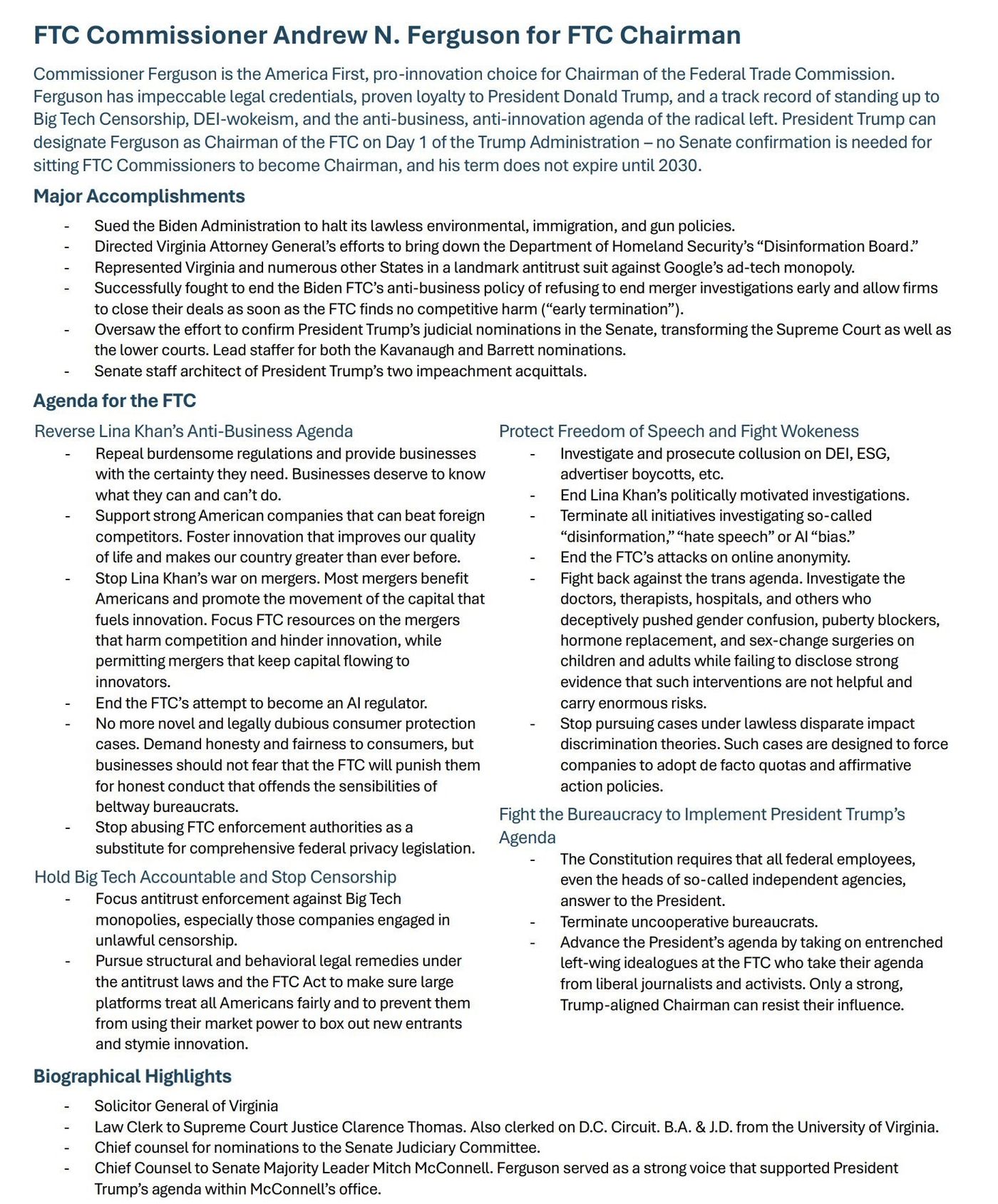
In a one-page document obtained by Punchbowl, Ferguson—who previously worked as chief counsel to Sen. Mitch McConnell (R-Ky.)—pitched himself to Trump's team as the "pro-innovation choice" with "impeccable legal credentials" and "proven loyalty" to the president-elect.
Ferguson's top agenda priority, according to the document, is to "reverse Lina Khan's anti-business agenda" by rolling back "burdensome regulations," stopping her "war on mergers," halting the agency's "attempt to become an AI regulator," and ditching "novel and legally dubious consumer protection cases."
Trump announced Ferguson as the incoming administration's FTC chair as judges in Oregon and Washington state blocked the proposed merger of Kroger and Albertsons, decisions that one antitrust advocate called a "fantastic culmination of the FTC's work to protect consumers and workers."
According to a recent report by the American Economic Liberties Project, the Biden administration "brought to trial four times as many billion-dollar merger challenges as Trump-Pence or Obama-Biden enforcers did," thanks to "strong leaders at the FTC" and the Justice Department's Antitrust Division.
In a letter to Ferguson following Trump's announcement on Tuesday, FTC Commissioners Alvaro Bedoya and Rebecca Kelly Slaughter wrote that the document obtained and published by Punchbowl "raises questions" about his priorities at the agency mainly "because of what is not in it."
"Americans pay more for healthcare than anyone else in the developed world, yet they die younger," they wrote. "Medical bills bankrupt people. In fact, this is the main reason Americans go bankrupt. But the document does not mention the cost of healthcare or prescription medicine."
"If there was one takeaway from the election, it was that groceries are too expensive. So is gas," the commissioners continued. "Yet the document does not mention groceries, gas, or the cost of living. While you have said we're entering the 'most pro-worker administration in history,' the document does not mention labor, either. Americans are losing billions of dollars to fraud. Fraudsters are so brazen that they impersonate sitting FTC commissioners to steal money from retirees. The word 'fraud' does not appear in the document."
"The document does propose allowing more mergers, firing civil servants, and fighting something called 'the trans agenda,'" they added. "Is all of that more important than the cost of healthcare and groceries and gasoline? Or fighting fraud?"
As an FTC commissioner, Ferguson voted against rules banning anti-worker noncompete agreements and making it easier for consumers to cancel subscriptions. Ferguson was also the only FTC member to oppose an expansion of a rule to protect consumers from tech support scams that disproportionately impact older Americans.
"Andrew Ferguson is a corporate shill who opposes banning noncompetes, opposes banning junk fees, and opposes enforcing the Anti-Merger Act," said Basel Musharbash, principal attorney at Antimonopoly Counsel. "Appointing him to chair the FTC is an affront to the antitrust laws and a gift to the oligarchs and monopolies bleeding this country dry."
===
AN 10 24
alternet-NO LNX
Democracy dies in their wallets
Twitter employees respond to new owner Elon Musk’s annihilation of top execs — on Twitter
Thom Hartmann October 28, 2024
Do not obey in advance. Most of the power of authoritarianism is freely given. In times like these, individuals think ahead about what a repressive government will want, and then offer themselves without being asked. A citizen who adapts in this way is teaching power what it can do.—Yale historian Timothy Snyder, On Tyranny
I cancelled my Washington Post subscription Friday evening. Jeff Bezos, Mister “Democracy Dies In Darkness” (the Post’s slogan on their masthead), by blocking his editorial staff from endorsing Harris chose darkness over his nation’s future, and I can’t support that.
The big mistake John D. Rockefeller made back in the day — that Jeff Bezos and Elon Musk appear committed to not repeating — was not buying a media outlet like a newspaper. Had John D. had that sort of a vehicle to mold public opinion, American history may be very different.
By 1880, Rockefeller’s Ohio-based company controlled over 90 percent of the nation’s oil, owned 4000 miles of pipelines, and employed over 100,000 people. As Rockefeller’s oil empire got larger and larger, eating alive hundreds of smaller operations, ruthlessly driving up prices, destroying his competitors, and throwing workers out of a job, public outrage grew.
In 1887, Ohio sued him, arguing that he was operating in ways that were detrimental to the state and its citizens and businesses; in 1892 the Ohio Supreme Court ordered his company dissolved. As I lay out in detail in Unequal Protection: How Corporations Became “People,” this led Rockefeller to move Standard Oil to New Jersey after that state changed its corporation laws to allow for his monopolistic behavior.
Which brought in the federal government; in 1890, Ohio Senator John Sherman introduced and saw passed into law the Sherman Anti-Trust Act which provided not just fines but jail sentences against people like Rockefeller who were committed to destroying competition and owning entire markets. The law was flawed with a few loopholes and ambiguities, so it was amended in 1914 with the Clayton Anti-Trust Act.
Nonetheless, in 1906 progressive Republican Teddy Roosevelt’s administration filed an antitrust action against Rockefeller that went to the Supreme Court in 1911 during the administration of progressive Republican President William Howard Taft. The behemoth was broken up into 34 separate companies, an action that, like the breakup of AT&T by Jimmy Carter and Ronald Reagan, led to an explosion of competition in the marketplace and a dramatic increase in shareholder value.
But back to Jeff Bezos and his 2013 purchase of The Washington Post.
It was reporters and editors for the hundreds of independent newspapers during the First Gilded Age (1880-1900) era that led the crusades against Rockefeller and his fellow monopolists. Investigative journalism was all the rage then, and it fed public demand for a return to competition and the de-throning of that age’s oligarchs.
The vast majority of workers were struggling and they worked for a very small 10 percent of the population who controlled most of the nation’s wealth (a situation we’re at again).
The result was constant strife, strikes, and the murder of labor leaders; entire towns were in arms (and sometimes ablaze) with labor conflict. The “problem of labor”was the number one issue of the day. As President Grover Cleveland — the only Democrat elected during that period — proclaimed in his 1887 State of the Union address:
“As we view the achievements of aggregated capital, we discover the existence of trusts, combinations, and monopolies, while the citizen is struggling far in the rear or is trampled to death beneath an iron heel. Corporations, which should be the carefully restrained creatures of the law and the servants of the people, are fast becoming the people’s masters.”
There was a broad consensus across American society that those “Robber Barons” were feathering their own nests at the expense of the American public, hurting both working class people and small businesses. The Supreme Court endorsed breaking up Standard Oil in 1911, and even broke up the Associated Press in 1944.
The law was so rigorously enforced — so the game of business could be played by all comers, not just the “big boys” — that in the 1960s the Supreme Court barred the merger of the Kinney and Buster Brown shoe companies because the new combined company would control a mere 5 percent of the shoe market.
Back in the ’60s every mall and downtown in America was filled with small, locally-owned businesses; there might be a Sears to anchor the shopping center or a retail part of town, but most shops, restaurants, and hotels were family-owned.
But then Reagan, in 1983, ordered the DOJ, SEC, and FTC to stop enforcing the Sherman Act, which is why today Nike, for example, controls about a fifth of the entire nation’s shoe market. It’s the same across industry after industry, from retail to grocery stores to railroads to computer software to social media to chip manufacturing to airlines to hotels…and on and on. In virtually every industry, a handful of massive companies control 80 percent or more of the market.
The Biden administration is the first to seriously try enforcement of the nation’s anti-trust laws since Carter broke up AT&T, going after Google and blocking mergers in multiple industries. It’s led a bunch of American billionaires to demand that the Federal Trade Commission’s head, Lina Kahn, be fired.
Kahn and her FTC went after Bezos last year, suing Amazon for running a monopoly that price-gouges customers and blocks out competition. The trial is scheduled for 2026 if Kahn keeps her job; a Trump administration would fire her immediately, and pressure from major corporate donors and billionaires is building on Harris to do the same.
Bezos also must remember well when he got on the wrong side of then-President Trump because of the Post’s coverage of the orange oligarch’s lies and crimes; Trump, in a fit of pique, awarded a $10 billion Pentagon contract for cloud computing to Microsoft, shocking analysts across the industry.
Bezos is also working for his Blue Origin spaceship company to get more billions in NASA and Pentagon contracts. He and his companies also own billions in Google and AirBNB stock as well as owning outright almost a hundred other companies.
Might be a good time to own one of the two most influential newspapers in America, eh?
Similarly, billionaire oligarch Elon Musk, in addition to apparently taking orders from Russian President Vladimir Putin, is fighting numerous government efforts to regulate his companies (which exist in large part because Obama bailed out Tesla in 2010 with $465 million, and NASA is now pouring hundreds of millions into SpaceX):
— Tesla is fighting the National Labor Relations Board (NLRB) over union-related issues, with Musk taking a lawsuit to the Supreme Court alleging government protections of unions are unconstitutional.
— SpaceX is battling the NLRB over employee firings.
— The SEC is investigating Musk’s acquisition of Twitter (now X) and his “funding secured” tweets about taking Tesla private.
— The FTC is investigating X’s compliance with a $150 million privacy settlement.
— The Federal Communications Commission recently denied SpaceX’s Starlink a $886 million rural broadband award.
— The Equal Employment Opportunity Commission is suing Tesla over alleged racial harassment.
— The FAA is in conflict with SpaceX over launch licensing and environmental reviews.
— The EPA has fined SpaceX for water-related violations.
— The National Highway Traffic Safety Administration has opened multiple investigations into Tesla’s vehicle safety and Autopilot system.
— SpaceX faces scrutiny over its environmental impact at its Texas launch site.
To avoid the Rockefeller mistake, Musk — with the apparent help of two Russian oligarchs and the leader of Saudi Arabia — purchased Twitter, the online digital equivalent of our nation’s largest newspaper.
And he’s now using it to try to get Trump and Republicans into office, presumably so they can gut the FTC, FCC, SEC, NLRB, and any other regulator that might take him on to protect workers, the public, and the national interest.
We took on the superrich with success during the First Gilded Age, and our enforcement of antitrust laws lasted all the way to 1983, when Reagan blocked them, leading to the “merger mania” of the 1980s and bringing us today’s oligarchic business empires across multiple industries.
Now that we’re in America’s Second Gilded Age — with today’s billionaires vastly richer than Rockefeller’s wildest dreams — we confront a similar crossroads to that of previous generations.
Is it okay, for example, for billionaires to own media properties they can use to manipulate politics and government agencies to amplify their other business interests? Or that five corrupt Republicans on the Supreme Court have ruled that our morbidly rich plutocrats can own judges and politicians? Most Americans would probably say “No” to both.
At some point, America is going to have to confront its oligarch problem. And the sooner the better, if we don’t want darkness to entirely subsume our democracy.
===
===
LIE/BASS ACKWARDS
RUBBER GLUE
Lights go out alt WIND SOLAR CHINA
ACADEMIA AND HOLYWOOD AGAINST US
BOTT LINE DNAGEL
restrict ALASKA
AIRLINE REBATE
ENVIRO LOBBY
MORE EMISSIoN LAWS TO GET YOUNG VOTERS
CULT IN wh AGENDA HEAD OF ftc OVErTIME RULES IN LABOR, NON-COMPETE SO khan AGGRESSIVE IDeOLOGUE
OPPOSE AMAZON MADE BONES BIG IS BAD 60 DAY RULE
---
an 8 24 hightower
We've recently learned about Project 2025, the GOP's scheme to let corporate agents take over our government. But what about the less visible effort to make Democrats install corporate-subservient officials who'll expand their monopoly power?
High-finance finaglers of Wall Street and Silicon Valley are quietly demanding that Kamala Harris commit to appointing their designated toadies to oversee America's so-called free-enterprise structure. Their primary target is the Federal Trade Commission, a little-known agency meant to protect and extend economic competition.
The FTC is now headed by Lina Khan, a tenacious opponent of anti-consumer, anti-worker mergers and takeovers. She rightly recognizes that the "free" in free enterprise is not an adjective but a verb requiring aggressive public action to free up the enterprise of people who are now routinely shut out of the market by monopolistic giants. So, says Khan, if we really want free markets, let's free them.
Oh, how the money vultures screeched! "She's a dope," raged takeover bully Barry Diller in a dopey fury. And, since many of the monopolistic titans who are offended by Khan's otherwise very popular progressive populism are from the Democratic Party's high-dollar donor class, they have undue clout. Thus, they are bluntly demanding her head as their price for financially backing Harris' presidential run. Commissioner Khan, they exclaim, simply does not understand "the way the Washington game is played."
Oh, yes, she does -- and she's flat out rejecting it! She's the first real anti-trust champion America has had in years -- but will the party's higher-ups have the guts and integrity to defend her? Or will the business-as-usual powers be ushered back in? The answer to that will be an early measure of Harris' commitment to economic democracy.
WANT TO COOL EARTH? JUST BLOCK THE SUN. SIMPLE!
Challenging conventional wisdom can advance society's understanding of truth. Good. Arrogantly challenging the complex balance of nature, however, can go kablooie! Very bad.
In recent times, there's been an unfortunate tendency for some scientific hotshots to send society off on techno-tangents to "remake" nature, promising miracles. About 70 years ago, for example, a so-called agricultural science genius promised that dumping synthetic pesticides on monoculture crops across the globe would end hunger. Chemical giants and governments rushed to do the dump, but the "fix" ultimately resulted in the ongoing poisoning of Earth's land, water, food and people -- while enriching agricultural monopolists and allowing hunger to rage.
Unfortunately, insistence by technologists and profiteers that they can outsmart and overwhelm nature is now being pushed with cosmic vengeance. A covey of arrogant academics and billionaire backers are saying: "Trust us, we can handle that little global warming issue."
One is named David Keith, running a $100 million "stratospheric solar geoengineering" scheme named SCoPEx. Keith proposes to solve global warming by -- get this -- dispensing volumes of sulfur dioxide into the Earth's stratosphere to "regulate" the amount and location of sunlight around the globe.
Gosh, what could go wrong with that? Never mind the unknown consequences of tampering with basic nature, argues Keith, for his bold techno-fix to global warming bypasses the political difficulty of ending our fossil fuel addiction -- so we should just do it.
Keith does admit he can be "inappropriately forceful ... I'm intense," he says. Well, then, let's all chip in a for some therapy sessions to help him overcome his megalomania before he makes an irreversible mess of the only planet we have that sustains life.
ny CNN 7 24
The Bay Area has long been, and remains, a hippie-dippie bastion of Democrats who voted overwhelmingly for Hillary Clinton in 2016 and Joe Biden in 2020. But there’s a small, powerful sect of Silicon Valley billionaires who are carving a path for the maybe-Trumpers and the MAGA-curious in the tech world.
Elon Musk explicitly endorsed Trump over the weekend and, according to The Wall Street Journal, inked a nine-figure donation promise to a new pro-Trump political action committee called America PAC. David Sacks, the billionaire tech investor, co-hosted a fundraiser last month at his San Francisco home and spoke at the Republican National Convention on Monday. Other contributors to America PAC include the Winklevoss twins, Doug Leone of Sequoia Capital and Palantir co-founder Joe Lonsdale, according to Federal Election Commission filings.
In the last election cycle, the few Trump backers who existed in the Valley largely kept their support under the radar. Their numbers are still small, but they’re no longer hiding, and their wallets are open.
So, what’s gotten into these guys?
For one, there might not be as many Trump supporters in the tech world as you might think.
“A mythology has been marketed by partisans suggesting a non-existent surge of tech titans abandoning the Democratic party support in a rush to support the Trump/Vance campaign. The truth is that most leading tech figures do not support Trump/Vance and those prominent ones who do, were there years ago as well,” Jeffrey Sonnenfeld, dean for leadership studies at the Yale School of Management, told CNN.
And for the ones you might have heard of, most likely, it’s not a sudden fervor for the far right’s Christian extremism or a predilection for red baseball caps. Instead, they’re looking out for the bottom line.
The two biggest pain points for people in tech have been the Biden administration’s record on antitrust enforcement and its attitude toward crypto, Adam Kovacevich, CEO of Chamber of Progress, a center-left tech policy group, told me.
“I don’t think it has as much to do with Trump per se,” he said. “I think they would have probably stayed with Biden if they felt more care and attention was being paid to the innovation economy.”
In other words: It’s not that the billionaires love Trump, it’s that they really don’t like Lina Khan, President Joe Biden’s top antitrust crusader; or Gary Gensler, the Wall Street cop who’s made no secret of his hostility toward digital assets.
Lina Khan, the FTC chair, has led an aggressive antitrust campaign, specifically targeting Big Tech.
Kevin Dietsch/Getty Images
In recent years, Khan has spearheaded lawsuits against Amazon, Microsoft and Meta. In an interview with CNN last year, Khan described those efforts as part of a broader campaign to bring more of the government’s resources to bear on the daily economic problems of ordinary Americans.
But government regulation, however well intentioned, rarely sits well with the people who are getting rich off the status quo.
Two of the most famous venture capitalists in the Valley, Marc Andreessen and Ben Horowitz, have committed to donating to America PAC, according to several news outlets.
The pair haven’t exactly been hiding their frustration with the Biden administration, either.
“The American government is now far more hostile to new startups than it used to be,” they wrote in a recent blog post, which cited regulatory agencies using “brute force investigations, prosecutions, intimidation, and threats to hobble new industries.” They also lamented the Biden administration’s proposed tax on unrealized capital gains, which they said would “absolutely kill” startups and the venture capital industry.
One person familiar with their plans told the Financial Times that their pivot to Trump was because “there is so much at stake on the crypto side” and the growth of artificial intelligence. “It doesn’t mean support for (Trump’s) views on immigration,” the person told the paper.
Historically, Trump hasn’t shown a lot of love for tech bros, whose social media companies he long accused of having anti-conservative bias, especially after several of them suspended his accounts in response to the January 6, 2021, attack on the Capitol. But the recent influx of tech money — facilitated in part by his 39-year-old venture-capitalist VP pick — appears to have softened some of Trump’s Luddite-ish views.
As recently as 2021, he called bitcoin a “scam against the dollar.” Lately, though, he’s positioning himself as the crypto-friendly candidate. While his campaign hasn’t laid out specific policy proposals around digital assets, it began accepting crypto donations this spring, and Trump is scheduled to speak at a national bitcoin conference next week.
The Biden administration, meanwhile, is working to mend ties with industry leaders who say they’ve been stymied by the SEC and Gensler, generally agreed to be the crypto community’s Voldemort.
To be sure, plenty of Big Tech dollars are still flowing to Biden and down-ballot Democrats from tech-world donors, including LinkedIn founder Reid Hoffman and Google co-founder Eric Schmidt. But Trump’s gains from Silicon Valley have come just as some major Democratic donors have hit pause amid conversations about replacing the president on the ballot.
And, as Kovacevich notes, just because there are a few big names turning toward Trump, “they’re not speaking for everybody.”
“In fact, most of the big company CEOs aren’t terribly involved in partisan politics,” Kovacevich says. “They’re going to have to work with whoever wins the election.”
cbs 9 24
as the youngest ever Federal Trade Commission chair, Lina Khan has taken on scores of companies and preached the perils of business monopolies.
Her pursuit of big business represents a policy shift after a decades-long FTC hands-off approach allowing most mergers and acquisitions. Under President Biden, however, the FTC and Justice Department have unleashed a crackdown and sued scores of big companies, including TicketMaster, Nvidia, Meta, Microsoft, Apple and Amazon. Some worry going after tech giants could have a domino effect, destabilizing the economy.
"But we also should worry about the destabilizing effect that can arise from companies believing that they're above the law, and they can be reckless, take massive risks in ways that can crash the economy and then they can get away with just a slap on the wrist," Khan said in a recent 60 Minutes interview with correspondent Lesley Stahl. "And that creates a destabilization, too."
The shift in antitrust policy
The Federal Trade Commission was established to protect consumers and promote competition between businesses.
Since President Ronald Regan's time in the White House, antitrust regulators have done little to interfere in many mergers and acquisitions. It was a policy adopted by all presidents since then, including former Presidents Bill Clinton and Barack Obama. Then President Biden put an end to it.
"We are now 40 years into the experiment of letting giant corporations accumulate more and more power, and what have we gotten from it? Less growth, weakened investment, fewer small businesses," Mr. Biden said in 2021 — the same year he appointed Khan to the FTC.
FTC Chair Lina Khan60 Minutes
It's a revolution and Khan is its face. While still a law student, she wrote a paper for the Yale Law Journal called "Amazon's Antitrust Paradox," contending that even though its prices are low, Amazon is still a monopoly.
Less than five years later, President Biden made Khan, 32 at the time, head of the agency that polices Amazon.
Taking on the Big Five tech companies
Last year, the Federal Trade Commission and 17 state attorneys general filed an antitrust case against Amazon, alleging the retailing giant illegally wields monopoly power to maintain higher prices, hurting customers and weakening competition.
"Our investigation uncovered that Amazon's illegal practices were actually raising prices for consumers because it had illegally muscled out rivals, locked them out of the market in ways that if you had more competition that Amazon hadn't squashed, consumers would be even better off," Khan told 60 Minutes.
Amazon denies doing anything illegal and says if Khan wins, prices will go up.
Khan and the FTC have blocked, or tried to block, a number of Silicon Valley's big companies from buying smaller companies.
"In the technology markets, we went through a couple of decades where we saw over 800 acquisitions by the five big players, not a single one of which was blocked. And some of those we realize ended up leading to significant harm," Khan said.
Khan said the FTC has identified a string of mergers that were not blocked or challenged by previous FTC administrations, even though the current FTC under her leadership — and operating under Biden's mandate — believe they are illegal.
Confronting pushback from companies
The courts don't always side with the FTC, and Khan lost a couple of big cases, including one against Microsoft and another against Meta.
While Khan is feared and loathed in many corporate boardrooms, and even viewed by some as a zealot and a bully, she says the FTC is doing its job by enforcing the law, adding that of the thousands of deals proposed every year, the FTC and DOJ collectively investigate "maybe 2% or 3%."
That might not sound like a lot, but startup founders complain that she's spooking investors so much that she's stifling innovation. Others fear Khan chasing the tech giants will cause a domino effect. Earlier this month, the stock market plunged after it was reported that Khan's counterpart at the Justice Department subpoenaed chip maker Nvidia.
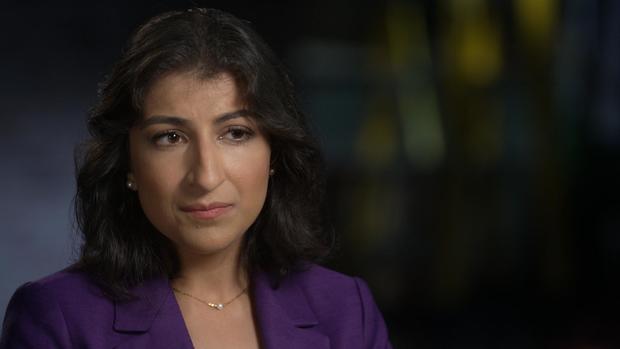 FTC Chair Lina Khan60 Minutes
Khan is also facing lawsuits from corporations who want the FTC to be reined in, setting up a possible showdown at the Supreme Court over the fate of the agency.
"I think one challenge that agencies can face is when they shrink their own powers and authorities by not actually using the authorities that Congress has given them," Khan said.
Khan's fans — both liberals and conservatives
Even while dealing with pushback, Khan has fervent admirers. She attends events around the country that she calls her "listening tours." She's often swarmed by young people taking selfies, small business owners giving her cards, progressive politicians and union members.
She's also surprisingly popular with some MAGA Republicans. Sen. JD Vance, the Republican nominee for vice president, has expressed some admiration for Khan.
"I don't agree with Lina Khan on every issue, to be clear, but I think that she's been very smart about trying to go after some of these big tech companies," he previously said.
There's even a nickname for conservatives who support Khan: Khan-servatives.
Still, Khan is unlikely to keep her job if former President Donald Trump wins the election. It's also unclear if Khan would keep her job if Vice President Kamala Harris wins. Some of Harris' biggest donors are people who want Khan out of the FTC.
"My focus is not listening to what CEOs are saying on TV," Khan said. "It's important in these jobs to really stay focused and block out a lot of the noise."
More from CBS News
[
FTC trustbuster Lina Khan: feared in boardrooms, cheered on by progressive](https://www.cbsnews.com/news/ftc-chair-lina-khan-60-minutes-transcript/?intcid=CNR-02-0623)
[
Kroger-Albertsons merger could raise grocery costs, FTC chair warns](https://www.cbsnews.com/miami/news/ftc-lina-khan-grocery-prices-60-minutes/?intcid=CNR-02-0623)
In: - Federal Trade Commission
ggl 9 24
[### FTC head Lina Khan fighting Big Tech, Big Pharma and ...

CBS News
https://www.cbsnews.com › 60 Minutes](https://www.cbsnews.com/news/federal-trade-commission-lina-khan-60-minutes/)
21 hours ago — Federal Trade Commission Chair Lina Khan has gone after some of the biggest companies in the U.S. Under President Biden, the FTC has cracked ...
[### 'She's going to prevail': FTC head Lina Khan is fighting for ...

The Guardian
https://www.theguardian.com › us-news › mar › lina-kh...](https://www.theguardian.com/us-news/2024/mar/09/lina-khan-federal-trade-commission-antitrust-monopolies)
Mar 9, 2024 — Some say Biden's high-profile warrior – who's gone after Kroger, Amazon, and Nvidia – has redefined the US antitrust landscape.
[### FTC trustbuster Lina Khan: feared in boardrooms, cheered ...

CBS News
https://www.cbsnews.com › 60 Minutes](https://www.cbsnews.com/news/ftc-chair-lina-khan-60-minutes-transcript/)
21 hours ago — At the Federal Trade Commission, Chair Lina Khan's mission is breaking illegal monopolies, blocking mergers that stifle competition, ...
[### Lina Khan's Anti-Monopoly Power

The Nation
https://www.thenation.com › Article](https://www.thenation.com/article/society/lina-khan-ftc-monopoly/)
Dec 9, 2023 — Beginning in the 1970s, the Federal Trade Commission gave up on its mission to protect consumers and competition. Then Khan took charge of the agency, and ...
[### FTC is 'just getting started' as it takes on Amazon, Meta and ...

ABC News - Breaking News, Latest News and Videos
https://abcnews.go.com › Politics › story](https://abcnews.go.com/Politics/ftc-started-takes-amazon-meta-chair-lina-khan/story?id=109928219)
May 5, 2024 — In the nearly three years since Biden appointed Lina Khan as chair of the FTC, the government agency has taken on some of America's largest ...
[### Remarks by Chair Khan at the AELP Anti-Monopoly ...

Federal Trade Commission (.gov)
https://www.ftc.gov › system › files › ftc_gov › pdf](https://www.ftc.gov/system/files/ftc_gov/pdf/2024.05.21-remarks-by-chair-khan-at-the-aelp-anti-monopoly-summit.pdf)
May 21, 2024 — I want to start by thanking the American Economic Liberties Project (AELP) for inviting me to kick things off this morning and for putting ...
7 pages
[### Lina Khan Sucks, by The Wall Street Journal Editorial Board ...

thesling.org
https://www.thesling.org › lina-khan-sucks-by-the-wall-...](https://www.thesling.org/lina-khan-sucks-by-the-wall-street-journal-editorial-board-satire/)
Mar 4, 2024 — Although the Federal Trade Commission (FTC) is ostensibly an “independent agency,” its chair, Lina Khan, has been authorized by President ...
[### Opinion | Lina Khan the antitrust star

The Washington Post
https://www.washingtonpost.com › ... › Opinion Columns](https://www.washingtonpost.com/opinions/2024/05/14/lina-khan-antitrust-ftc/)
May 14, 2024 — Leading the “hipsters” of antitrust law, Khan is recovering from a rough start at the FTC.
[### Matt Yglesias Is Wrong About Lina Khan's Record

Revolving Door Project
https://therevolvingdoorproject.org › matt-yglesias-is-w...](https://therevolvingdoorproject.org/matt-yglesias-is-wrong-about-lina-khans-record/)
Aug 13, 2024 — Matt Yglesias has joined the ranks of critics misrepresenting Lina Khan and the FTC's record during the Biden administration.
[### Statement of Chair Lina M. Khan Regarding the Request ...

Federal Trade Commission (.gov)
https://www.ftc.gov › files › public_statements › st...](https://www.ftc.gov/system/files/documents/public_statements/1599783/statement_of_chair_lina_m_khan_regarding_the_request_for_information_on_merger_enforcement_final.pdf)
Jan 18, 2022 — Welcome to today's joint DOJ-FTC announcement. I am excited to share that the FTC and DOJ today are jointly launching a review of the merger ...
[### Biden's FTC fights corporate greed fueled by monopolies ...

Detroit Free Press
https://www.freep.com › contributors › 2024/04/19 › bi...](https://www.freep.com/story/opinion/contributors/2024/04/19/bidens-ftc-corporate-greed-reagan-monopolies-deregulation/73372258007/)
Apr 19, 2024 — Opinion: Want to know more about inflation? Let's go back to the 1980s and the start of deregulation.
[### Biden administration steps up antitrust enforcement

American Bar Association
https://www.americanbar.org › abanews › 2021/11 › an...](https://www.americanbar.org/news/abanews/aba-news-archives/2021/11/antitrust-enforcement/)
Antitrust enforcement in the Biden administration is about change, according to Timothy Wu, who played a key role in the executive order President Joe Biden ...
[### Unpacking the Biden Administration's Merger Enforcement ... Progressive Policy Institute
https://www.progressivepolicy.org › pressrelease › unpac...](https://www.progressivepolicy.org/pressrelease/unpacking-the-biden-administrations-merger-enforcement-record-a-look-at-the-stats-and-what-they-mean/)
Mar 14, 2024 — 2024. Washington, D.C. — The Biden Administration has prioritized promoting competition in the U.S. economy. Antitrust enforcement is a major ...
[### Biden administration readies a big swing at big businesses ...

Politico
https://www.politico.com › news › 2023/12/30 › heres-...](https://www.politico.com/news/2023/12/30/heres-how-biden-may-cement-his-antitrust-legacy-in-2024-00132756)
Dec 30, 2023 — The Biden administration is set to accelerate several of its biggest antitrust fights in 2024 with an intense lineup of lawsuits and investigations.
[### Antitrust Under Biden: Taking a Closer Look at the Numbers

Antitrust Law Blog
https://www.antitrustlawblog.com › articles › election](https://www.antitrustlawblog.com/2024/09/articles/election/antitrust-under-biden-taking-a-closer-look-at-the-numbers/)
Sep 10, 2024 — Merger Enforcement. The Biden administration has been very public about its skepticism of mergers and acquisitions, particularly those among ...
[### Trump vs. Biden: Who Got More Done on Antitrust?

Washington Monthly
https://washingtonmonthly.com › 2024/04/07 › trump-...](https://washingtonmonthly.com/2024/04/07/trump-vs-biden-who-got-more-done-on-antitrust/)
Apr 7, 2024 — Biden made the fight against monopolies central to his economic strategy. Trump used it to reward his friends and punish his enemies.
[### Mergers lose their shine as Biden racks up antitrust wins

Yahoo Finance
https://finance.yahoo.com › news › mergers-lose-their-s...](https://finance.yahoo.com/news/mergers-lose-their-shine-as-biden-racks-up-antitrust-wins-090057974.html)
Jan 26, 2024 — The Biden administration is suddenly racking up some big antitrust wins. That could force executives to think twice about new acquisitions in 2024.
[### "Extremely vigorous": Biden takes on monopolies like ...

Salon.com
https://www.salon.com › ... › Nicholas Liu's Articles](https://www.salon.com/2024/06/13/extremely-vigorous-biden-takes-on-monopolies-like-ticketmaster-far-more-aggresively-than/)
Jun 13, 2024 — Antitrust enforcement during the Biden administration has been extremely vigorous," one policy expert told Salon.
[### The Biden Administration Wants to Change the Rules of ...

Mayer Brown
https://www.mayerbrown.com › publications › 2023/09](https://www.mayerbrown.com/en/insights/publications/2023/09/the-biden-administration-wants-to-change-the-rules-of-the-road-for-antitrust-m-and-a-what-does-it-mean-for-dealmakers)
Sep 26, 2023 — It established a “whole-of-government effort” to addressing competition concerns, and directed federal agencies to commit to stronger and more ...
[### Taking Stock of Merger Enforcement Under the Biden ... Progressive Policy Institute
https://www.progressivepolicy.org › publication › taking...](https://www.progressivepolicy.org/publication/taking-stock-of-merger-enforcement-under-the-biden-administration/)
Mar 14, 2024 — Competition is the bulwark of a market system. It plays the lead role in the U.S. political economy by promoting fair prices and wages, ...