Peterson, P Fdn $
==
major factor in deficit BS, see voodoo and 2 santas
cmd portal?!
BRIEFLY SUPPORTED BIDEN BBB/IRA CLIMATE, THEN PURGED
LARRY SUMMERS
ASTROTURF?
BM FIX THE DEBT
https://www.sourcewatch.org/index.php/Portal:Fix_the_Debt
:{===
piie 2025 $
Pete Peterson's Long History of Deficit Scaremongering | The Nation
Fix the Debt financier Peter G. Peterson knows a thing or two about debt: he’s an expert at creating it. Peterson founded the private equity firm Blackstone Group in 1985 with Stephen Schwarzman (who compared raising taxes to “when Hitler invaded Poland”). Private equity firms don’t contribute much to the economy; they don’t make cars or milk the cows. Too frequently, they buy firms to loot them. After a leveraged buyout, they can leave companies so loaded up with debt they are forced to immediately slash their workforce or employees’ retirement security.
In 2006, Blackstone ransacked Travelport, a travel reservation conglomerate, piling on $4.3 billion in new debt, then pocketing $1.7 billion to pay shareholders and itself. Travelport promptly fired 841 workers to meet its new debt obligations. It was a great deal for Blackstone but “a horrible one for Travelport,” according to one investment adviser, who described Blackstone as trading in “poisoned waters.”
Now Peterson wants to loot Social Security. For decades he has warned of a “Pearl Harbor scenario” in which spending on Social Security and Medicare causes an epic economic meltdown. Fix the Debt is only his latest project pushing the message that the deficit poses a “catastrophic threat,” and the media have been content to echo his warnings. But people should know better than to be frightened by this chorus of calamity. Peterson is no master of prediction when it comes to economic crises. When an actual threat to the economy—the $8 trillion housing bubble—loomed ominously overhead, Peterson said nothing, even as credit markets froze, subprime lenders filed for bankruptcy and economists like Dean Baker shouted from the rooftops.
The housing crisis provides a good window into the way Peterson operates. In 2007, Blackstone owned the Financial Guaranty Insurance Company, the world’s fourth-largest insurer, which had branched out from municipal bonds into home-equity securities and subprime mortgage debt. FGIC went belly up in 2010, but by that time Peterson had sold most of his shares in a Blackstone IPO that netted $4 billion. Again, Peterson left others holding the bag. The AFL-CIO had warned the Securities and Exchange Commission that the Blackstone IPO was riddled with problems: the firm was structuring itself to avoid regulation and its real assets and values were unknown. Perhaps Chris Cox, George W. Bush’s man at the SEC, should have listened. A year later, Blackstone’s value had dropped 40 percent. Today, it is trading at $18 a share, showing no signs of the recovery that other Wall Street firms have enjoyed.
Blackstone shareholders may have been miffed, but Peterson walked away with $2 billion (on top of the fortune he already made from the carried interest tax loophole, which allows fund managers to be taxed at 15 percent rather than the standard 35 percent)—and pledged to spend half of that to convince Americans they have to take a harsher route to prosperity.
Pete Peterson is fond of drawing moral authority from his dad, a Greek immigrant who spent much of his life running a twenty-four-hour diner in Kearney, Nebraska. He says he wants to “preserve the possibilities of the American Dream” for future generations. But this former Nixon man turned Wall Street billionaire is quite comfortable with corporate welfare for the rich, and not at all happy when the 99 percent benefit from the programs they pay into with every paycheck.
Even before Fix the Debt, Peterson launched a massive effort to prop up the Simpson-Bowles commission and its $4 trillion austerity package, a plan that would “destroy Social Security by stealth,” according to Strengthen Social Security. He bankrolled nineteen “America Speaks” town hall meetings to inform the commission’s deliberations, launched the “Owe No” TV ad campaign weeks before recommendations were released, and bankrolled the Concord Coalition’s “Fiscal Solutions” tour to take the message to the heartland. When the commission blew up, Peterson gave Alan Simpson and Erskine Bowles a new perch at the Committee for a Responsible Federal Budget.
But a funny thing happened on Pete Peterson’s magical misery tour: America spoke back. Even though the educational materials and questions were rigged at the America Speaks town halls, participants rejected Peterson’s austerity message and voted to support progressive policy solutions like a carbon tax and a financial speculation tax instead.
As John Nichols points out on page 12, “Fix the Debt” Peterson is ignoring the biggest poll of all: the 2012 election. In December, Slate declared “The Failure of Peterson-ism.” At this point, many are wondering why Peterson is not being laughed out of the room.
Perhaps he owns it.
Also in This Forum
The Editors: “Inside the Phony, Fearmongering ‘Fix the Debt’ Campaign”
John Nichols: “The Austerity Agenda: An Electoral Loser”
Mary Bottari: “Pete Peterson’s Puppet Populists”
Dean Baker: “Fix the Debt’s Fuzzy Math”
Most Popular
1
Another Mass Extinction Is Underway
2
Noam Chomsky at 90: On Orwell, Taxi Drivers, and Rejecting Indoctrination
3
To the White People Who Penned Sweeping Love Letters to George H.W. Bush
4
Let’s Call Sex Work What It Is: Work
5
Noam Chomsky: Neoliberalism Is Destroying Our Democracy
Lisa GravesLisa Graves, a former deputy assistant attorney general at the Justice Department, is the executive director of the Center for Media and Democracy and the publisher of ALEC Exposed, SourceWatch and PRWatch.
GGL 6 26
AI Overview
The connection between the Peter G. Peterson Foundation and Burson-Marsteller centers on high-profile public relations and lobbying campaigns—specifically the "Fix the Debt" initiative.
SourceWatch +1
Specific details regarding their collaboration include:
- The Partnership: In the run-up to federal "fiscal cliff" debates, billionaire Pete Peterson’s Foundation launched a major advocacy and astroturf campaign called the Campaign to Fix the Debt.
SourceWatch +1
- Burson-Marsteller's Role: The Peterson Foundation and Fix the Debt utilized the services of powerful PR agencies, including Proof Integrated Communications, a unit of the global PR firm Burson-Marsteller.
The Nation
- The Campaign: Burson-Marsteller's unit helped execute a $3 million media blitz that blanketed Washington D.C. with TV, newspaper, Metro, and internet advertisements promoting slogans like "Got Debt?" and "Just Fix It".
The Nation
- The Goal: The PR and lobbying push aimed to create massive public awareness and momentum for entitlement reform—often interpreted by critics as an effort to cut Social Security, Medicare, and Medicaid benefits.
SourceWatch +1
- Current Status: Burson-Marsteller has since merged into the broader global communications agency Burson (formerly BCW).
Wikipedia +1
AEI Peter G Peterson Foundation: $65,000 (2021-2022)
621 aha // to deficit bogeyman to prevent spending $ on ppl, infra, social safety net. educ see 2 santas BS
---
GGL 6 26
OFF BS 2017 VOODOO
The Peterson Foundation's analysis of the 2017 TCJA includes the following key points:
- Massive Cost to the Deficit: At the time of its enactment, the Joint Committee on Taxation (JCT) estimated that the TCJA would add roughly ($1.4) trillion to the federal deficit over a 10-year period. [1]
- Corporate Tax Reduction: The 2017 bill lowered the corporate statutory tax rate from (35\%) to (21\%). The Peterson Foundation closely monitors this, noting that despite short-term drops in revenues, corporate collections eventually returned to pre-TCJA levels due to an expanded tax base. [1, 2]
- The Expiring Provisions & The "Fiscal Cliff": The 2017 bill intentionally included an expiration date (December 31, 2025) for most of the individual tax provisions to limit the fiscal damage. The Peterson Foundation projects that extending all of these temporary tax cuts would add roughly ($4) trillion to ($4.6) trillion to the deficit over the subsequent decade. [1, 2]
VS REALITY:
Un)intended consequences? The impact of the 2017 tax cuts and jobs act on shareholder wealth
Ivalina Kalcheva ^a, James M. Plečnik ^b, Hai Tran ^b, Jason Turkiela ^c
Show more
Date: September 2020
Article: 105860
Volume: Volume 118
Abstract
We study the stock market reactions to the Tax Cuts and Jobs Act (TCJA), the most significant structural U.S. tax reform in over 30 years. In line with the stated intent of TCJA proponents, we find that the Act benefited highly taxed firms. However, the Act hindered firms with international operations as well as firms with high interest expense and tax losses. Counter to claims that the TCJA would quickly spur economic growth, we find that financially constrained and high growth opportunity firms did not benefit. Rather, market participants anticipate that most of the TCJA's benefits will be passed on to shareholders via higher corporate payouts. We confirm these market expectations by documenting that firms did increase payouts via repurchases after the TCJA, but did not increase their corporate investments.
---
[### How Did the One Big Beautiful Bill Act Affect Federal ...

Peter G. Peterson Foundation
https://www.pgpf.org › article › how-did-the-one-big-b...](https://www.pgpf.org/article/how-did-the-one-big-beautiful-bill-act-affect-federal-spending/)
Dec 10, 2025 — Overall, the OBBBA adds significantly to the nation's debt, but the act contains net spending cuts that lessen that impact.
[### How Did the One Big Beautiful Bill Act Change Tax Policy?

Peter G. Peterson Foundation
https://www.pgpf.org › article › how-did-the-one-big-b...](https://www.pgpf.org/article/how-did-the-one-big-beautiful-bill-act-change-tax-policy/)
Dec 10, 2025 — On July 4, 2025, the One Big Beautiful Bill Act (OBBBA) was signed into law. The legislation, which was passed through the reconciliation ...Read more
[### How Did the One Big Beautiful Bill Act Change Healthcare ...

Peter G. Peterson Foundation
https://www.pgpf.org › article › how-did-the-one-big-b...](https://www.pgpf.org/article/how-did-the-one-big-beautiful-bill-act-change-healthcare-policy/)
Dec 10, 2025 — The OBBBA adds significantly to the nation's debt, but its healthcare provisions lessen that impact by $1.0 trillion.
[### One Big, Beautiful Bill or Budget Disaster? Former ...

National Academy of Public Administration
https://napawash.org › Podcasts](https://napawash.org/podcasts/one-big-beautiful-bill-or-budget-disaster-former-comptroller-general-david-walker-and-brett-loper-of-the-peterson-foundation)
May 19, 2026 — One Big, Beautiful Bill or Budget ... Peterson Foundation to look at the enormous challenges of the current budget reconciliation process.Read more
[### OBBBA Is Most Expensive Reconciliation in Recent History

Peter G. Peterson Foundation
https://www.pgpf.org › article › the-one-big-beautiful-b...](https://www.pgpf.org/article/the-one-big-beautiful-bill-act-is-the-most-expensive-reconciliation-package-in-recent-history/)
Jul 3, 2025 — OBBBA is the most expensive reconciliation legislation in recent history ; One Big Beautiful Bill Act, 2025. 3.4 ; Inflation Reduction Act, 2022.Read more
[### The One Big Beautiful Bill: What Retirees Need To Know

Peterson Wealth Advisors
https://petersonwealth.com › webinars › the-one-big-be...](https://petersonwealth.com/webinars/the-one-big-beautiful-bill-what-retirees-need-to-know/)
Learn how the One Big Beautiful Bill impacts retirees, from tax changes to Social Security and planning strategies for 2025 and beyond.
[### Budget Bill will Increase U.S. Debt by Trillions

Peter G. Peterson Foundation
https://www.pgpf.org › article › the-scorekeepers-agree...](https://www.pgpf.org/article/the-scorekeepers-agree-budget-bill-will-increase-u-s-debt-by-trillions/)
Jun 6, 2025 — The expert consensus is clear that the One Big Beautiful Bill Act will add trillions to America's debt, making our already unsustainable outlook ...Read more
[### Social Programs and the Federal Budget

Peter G. Peterson Foundation
https://www.pgpf.org › Issues](https://www.pgpf.org/issues/social-programs/)
... Big Beautiful Bill Act is also taken into account. If lawmakers allow Medicare's HI Trust Fund to become depleted in 2033, there would be an 11 percent cut ...Read more
[### Tracking Implementation of the 2025 Reconciliation Law

KFF
https://www.kff.org › Topics › Medicaid](https://www.kff.org/medicaid/medicaid-work-requirements-tracker-overview/)
3 days ago — The 2025 reconciliation law, once called the “One Big Beautiful Bill,” signed by President Trump on July 4, 2025, conditions Medicaid ...Read more
---
https://www.mediamatters.org/sinclair-broadcast-group/sinclair-infrastructure-coverage-centers-corporate-front-groups-pushing
zach p
Sinclair Broadcast Group has in recent days aired misleading criticism of President Joe Biden’s infrastructure proposals from organizations that are corporate front groups or push an anti-spending austerity agenda. But the facts and commentary from economists and other experts show that much of this criticism is disingenuous.
Sinclair sought commentary from pro-austerity organizations funded by corporations and right-wing donors
On March 30, Sinclair’s morning program The National Desk -- which airs on 68 Sinclair-owned or -operated local television stations -- interviewed Manhattan Institute senior fellow Brian Riedl, who opposed spending trillions of dollars on infrastructure and was critical of including spending to combat climate change. Anchor Jan Jeffcoat chose not to disclose the Manhattan Institute’s funding from the fossil fuel industry and other corporate interests.
- Greenpeace has tallied more than $3 million in donations from Koch foundations to the Manhattan Institute between 1997 and 2017.
- The Manhattan Institute received millions of dollars from oil interests, including at least $800,000 from ExxonMobil and $1.9 million from the Claude R. Lambe Charitable Foundation, which was one of the family foundations of the oil billionaire Koch brothers.
- The Manhattan Institute employed a senior fellow named Robert Bryce who used his perch often to publicly question the reality of climate change.
Also on March 30, Sinclair chief political correspondent Scott Thuman included commentary in his report from Elaine Parker, chief communications officer of the Job Creators Network, which aired on dozens of Sinclair TV stationsbefore re-airing on The National Desk the next morning. Thuman failed to disclose that Job Creators Network is a conservative organization and a corporate front group for wealthy donors.
- According to Sludge, a news outlet that reports on lobbying and money in politics, the Job Creators Network is “a front group for the interests of wealthy business executives. The nonprofit is linked to and funded by several wealthy corporate leaders who are also Republican political megadonors and oppose workers’ rights, including collective bargaining.”
- Eyes on the Ties, which advocates for more transparency in how corporate power shapes policy, published in 2019 an article titled “The billionaire Trump donors behind the ‘Job Creators Network.’” It listed the right-wing Mercer family, Trump donor Bernie Marcus, and conservative billionaire Philip Anschutz as major donors to the organization. It also described the Job Creators Network as “part of a network of other astroturf groups that all fight tooth-and-nail to defend elite interests against progressive efforts to regulate corporate power.”
On April 1, Sinclair national correspondent James Rosen included commentary from Adam Posen of the Peterson Institute for International Economics in his report on Biden’s infrastructure plan, which also aired on dozens of Sinclair stations before re-airing on The National Desk. But Rosen failed to mention the pro-austerity nature of the organization and its namesake.
- Peter G. Peterson, who founded the institute, had a long history of supporting austerity. In 2013, an editorial from The Nation explored Peterson’s Campaign to Fix the Debt, which it described as a “$60 million push to sell corporate America’s ruthless austerity agenda” and his “latest incarnation” of a “long campaign to get Congress and the White House to cut Social Security, Medicare and Medicaid while providing tax breaks for corporations and the wealthy.”
- As the Center for Media and Democracy’s PRWatch reported in 2013, economists employed by the institute authored an error-riddled study that was used by governments around the world to justify harmful spending cuts and high unemployment.
These pro-corporate Sinclair guests’ commentary on Biden’s infrastructure bill was misleading or lacked full context
The Manhattan Institute’s Brian Riedl claimed the price tag for Biden’s infrastructure plan is “just too big” to pay for and that Biden’s plan to rate the corporate tax rate from 21% to 28% “would return us to the highest corporate tax rate in the OECD,” referring to the Organisation for Economic Cooperation and Development. He also said: “The bill will simply not be paid for. Like a lot of what we’ve had with the stimulus, a lot of it's just going to go on the national credit card. So whether you think the infrastructure is helpful or not helpful, it’s probably going to be paid for mostly on the national debt if it’s enacted.” But Riedl’s comments are misleading at best and flat-out wrong at worst.
- Biden’s planned increase of the corporate tax rate to 28% will keep the U.S. corporate tax rate below numerous other OECD countries, including Australia, France, and Portugal.
- Federal revenue from corporations is near record lows according to data from the Tax Policy Center.
- A new report from the Institute on Taxation and Economic Policy explained that “at least 55 of the largest corporations in America paid no federal corporate income taxes in their most recent fiscal year despite enjoying substantial pretax profits in the United States. This continues a decades-long trend of corporate tax avoidance by the biggest U.S. corporations.”
- The White House said that the proposed corporate tax increases would, over the course of 15 years, fully pay for the proposed spending.
- Even if the spending were fully deficit-financed, economists say that the current fiscal environment makes that acceptable. Jason Furman, former chairman of the White House Council of Economic Advisers, said: “Given that interest rates are still too low … $2T in *unpaid for* well-designed investments, some temporary, would be beneficial. As such I don't think this should all or even mostly be paid for.” Nobel Prize-winning economist Paul Krugman argued that in the fiscal environment the U.S. is facing, “sustained deficit spending on investment is actually good.”
Job Creators Network’s Elaine Parker hid the context of the business tax deduction she warned about removing when she said: “This is actually going to hit right at the heart of small businesses with that repeal of that 20% tax deduction. … That is the very tax deduction that helps the smallest of the small businesses, the heart of the middle class, and the employees who work for them.”
- Parker didn’t specify what tax deduction she was talking about, but it appears to be one that didn’t exist until Trump’s tax cut, which mostly benefited corporations and the wealthy. CNBC’s reporting suggested many business owners were not even aware of the tax deduction until recently.
- CNBC’s reporting also explained that tax deduction was temporary and is currently set to expire in 2025.
And the Peterson Institute’s Adam Posen left out necessary context when he warned: “This is the first truly credible inflation threat in decades.” But senior economists have pushed back against this kind of fearmongering over inflation.
- As Business Insider reported, Federal Reserve Chairman Jerome Powell said in a February speech that “inflation has been much lower and more stable over the past three decades than in earlier times.”
- San Francisco Federal Reserve President Mary Daly told Axios that Biden’s infrastructure plan is unlikely to lead to what Axios termed “out-of-control price increases.”
- Nobel Prize-winning economist Joseph Stiglitz also told Axios he supported Biden’s infrastructure proposal. Axios summed up Sitglitz’s view as that the plan “could break the U.S. out of the low-growth, low-inflation environment that has existed for the past 20 years.”
Economists and other experts agree Biden’s infrastructure spending plan is needed and beneficial
The fact is, massive investments in infrastructure are badly needed. An April 2 New York Times article explained: “Roadways and bridges are still in use decades after the end of their projected life spans. Sewer and water systems are aged and decaying. And a changing climate threatens to worsen old vulnerabilities and expose new ones.”
Reuters reported that the American Society of Civil Engineers said that “surface transportation, water systems, and schools are the most in need of help,” and that the U.S. “needs to spend $2.59 trillion in the next 10 years to fix existing infrastructure.” Biden’s infrastructure plan includes money for both existing and new infrastructure, such as energy and housing.
Economists from financial analysis firms have predicted that Biden’s infrastructure plan will create millions of jobs over a period of several years. Axios reported that S&P Global “predicts Biden's infrastructure plan will create 2.3 million jobs by 2024” and “raise per-capita income by $2,400.” And as USA Today reported, Moody’s Analytics expects Biden’s infrastructure plan to be more beneficial in the long term:
Mark Zandi, chief economist of Moody’s Analytics, says the projects won't begin in earnest until 2023. He expects the economy to grow just 1.3% from the fourth quarter of 2021 to the fourth quarter of 2022, with the Biden plan adding nothing to the gains.
…
Over a longer period, Biden’s plan would be a big positive, economists say. Zandi expects it to add about half a percentage point to growth in 2023 and 1.6 percentage points the following year. The blueprint, he reckons, would add about 1.4 million jobs in 2024 and 1 million jobs in 2025.
By 2030, the economy would be about $700 billion, or nearly 3%, larger than it would be without the upgrades and an additional 2.7 million Americans would be working, Moody's figures show.
---
---
his own global stinktank? maddy a? baker?
Board of Directors’ principal goal is to protect and strengthen PIIE’s excellence as an independent, nonpartisan, and intellectually rigorous policy research organization that contributes to the public’s understanding of the challenges and opportunities posed by the world’s interdependent economy. The Board of Directors is comprised of a diverse group of business leaders, former high-level government officials, international civil servants, and distinguished scholars.
The Executive Committee (indicated by *) of our Board of Directors oversees PIIE’s budget and management, while regularly evaluating PIIE’s performance in pursuit of our mission.
Senior Management is responsible for setting PIIE’s substantive agenda in consultation with the Board of Directors, the research staff, and other stakeholders.
MEMBERS OF THE BOARD
Michael A. Peterson * (Chair of the Board)
Chairman and Chief Executive Officer, Peter G. Peterson Foundation
Lawrence H. Summers * (Vice Chair of the Board)
Charles W. Eliot University Professor, Harvard University; former Secretary of the Treasury; former Chair of the National Economic Council
Stephen Freidheim * (Chair of the Executive Committee)
CIO, Founder and Managing Partner, Cyrus Capital Partners, LLC.
Caroline Atkinson*
Former Head of Global Policy, Google, Inc.; Former Deputy National Security Adviser for International Economics to President Barack Obama
Ajay Banga
President and Chief Executive Officer, MasterCard
C. Fred Bergsten *
Senior Fellow and Director Emeritus, Peterson Institute for International Economics; former Assistant Secretary of the Treasury for International Affairs
Mark T. Bertolini
Chairman, Chief Executive Officer and President, Aetna
Ben van Beurden
CEO, Royal Dutch Shell
Neeti Bhalla Johnson
Executive Vice President, Chief Investment Officer, Liberty Mutual Insurance
Frank Brosens
Principal, Cofounder, Taconic Capital Advisors L.P.
Ronnie C. Chan
Chairman, Hang Lung Properties Limited
Susan M. Collins*
Joan and Sanford Weill Dean of Public Policy, Professor of Public Policy, and Professor of Economics, Gerald R. Ford School of Public Policy, University of Michigan
Richard N. Cooper
Maurits C. Boas Professor of International Economics, Harvard University
Jason Cummins
Head of Research and Chief US Economist, Brevan Howard
Barry Eichengreen
Professor, Department of Economics, University of California, Berkeley
Stanley Fischer*
Former Vice Chairman and Member of the Board of Governors, Federal Reserve System
Peter R. Fisher
Former Under Secretary of the US Treasury for Domestic Finance; Tuck School of Business at Dartmouth
Jacob A. Frenkel
Chairman of JPMorgan Chase International, former Governor of the Bank of Israel; former IMF Economic Counselor and Director of Research
Evan G. Greenberg
Chairman and Chief Executive Officer, Chubb Limited/Chubb Group
Maurice R. Greenberg
Chairman and CEO, C.V. Starr and Co., Inc.; former Chairman, American International Group
Herbjorn Hansson
Chairman and CEO, Nordic American Tankers Limited
Stephen Howe, Jr.
US Chairman and Americas Managing Partner, Ernst & Young LLP
Jay Jacobs
Former President and Managing Director, PIMCO
Hugh F. Johnston
Chief Financial Officer, PepsiCo, Inc.
Michael Klein*
Managing Partner of M. Klein and Company, LLC; former Vice Chairman, Citigroup
Nobuyori Kodaira
Member of the Board of Directors, Toyota Motor Corporation and Chairman, The Toyota Foundation
Charles D. Lake II
Chairman and Representative Director, Aflac Life Insurance Japan Ltd.
Andrew N. Liveris
Chairman, President, and Chief Executive Officer, Dow Chemical Company
Pip McCrostie
Former Global Vice Chair – Transaction Advisory Services, EY
Hutham S. Olayan *
President and CEO, Olayan America
Peter R. Orszag
Vice Chairman of Investment Banking and Managing Director, Lazard Freres & Co.
James W. Owens
Chairman and CEO Emeritus of Caterpillar
Jonathan Pruzan
Chief Financial Officer, Morgan Stanley
Ginni M. Rometty
Chairman, President and Chief Executive Officer, International Business Machines Corporation
Lynn Forester de Rothschild *
CEO and President, E.L. Rothschild Limited
Richard E. Salomon *
Managing Partner, East End Advisors, LLC
Sheikh Hamad Saud Al-Sayari
Former Governor, Saudi Arabian Monetary Agency
Mostafa Terrab
Chairman, Chief Executive Officer, President, OCP S.A.
Mark Tucker
Group Chairman, HSBC Holdings plc
D. James Umpleby III
Chief Executive Officer and a member of the Board of Directors, Caterpillar Inc.
Ronald A. Williams
Retired Chairman and CEO, Aetna Inc.
Robert B. Zoellick *
Chairman of the Board of Directors, AllianceBernstein; former President, World Bank Group; former US Trade Representative
Min Zhu
Deputy Managing Director, International Monetary Fund
HONORARY DIRECTORS
George David
Former Chairman and Chief Executive Officer, United Technologies Corporation.
Alan Greenspan
Former Chairman, Board of Governors of the Federal Reserve System; former President and Chief Executive Officer, Townsend-Greenspan and Co.; former Chairman, Council of Economic Advisers.
Carla A. Hills
Chairman, Hills & Company; former United States Trade Representative; former Secretary of Housing and Urban Development.
Frank E. Loy
Chairman, Board of Directors, Resources for the Future; Acting Chair, Board of Directors, Populations Services International; former Under Secretary of State for Global Affairs; former Chairman of the Board, League of Conservation Voters; former President, German Marshall Fund of the United States; former Deputy Assistant Secretary of State for Economic Affairs.
George P. Shultz
Honorary Fellow, Hoover Institution; former Secretary of State; President and Director of Bechtel Group, Inc.; Secretary of the Treasury; Director, Office of Management and Budget; and Secretary of Labor.
Jean-Claude Trichet
Chairman of the Group of Thirty; former President, European Central Bank; former Governor, Banque de France; former Director of the Treasury, government of France.
Paul A. Volcker
Henry Kaufman Visiting Professor, New York University Stern School of Business; former Chairman, Board of Governors of the Federal Reserve System; former President of the Federal Reserve Bank of New York; former Under Secretary of the Treasury for Monetary Affairs.
Ernesto Zedillo
Former President of Mexico.
FOUNDING CHAIR
Peter G. Peterson (1926–2018; Institute Chair 1981–2018)
Founder and Chairman, Peter G. Peterson Foundation; Co-founder,The Blackstone Group;former Secretary of Commerce and Assistant to the President for International Economic Policy
---
==-
mercatus 13k$
---
what-is-in-the-inflation-reduction-act-and-how-much-will-it-reduce-the-deficit
Policymakers recently enacted the Inflation Reduction Act of 2022, a bill that addresses some priorities related to climate change and healthcare. Overall, that legislation is projected to reduce deficits by $238 billion over the next 10 years, according to estimates from the Congressional Budget Office.
That reconciliation bill includes $499 billion of new spending. Of that amount, $391 billion would be dedicated to climate and energy programs, such as introducing new and expanded tax credits that would incentivize the generation of clean energy, wider adoption of electric vehicles, and environmental conservation. The remaining $108 billion of new spending would go towards healthcare purposes, such as extending eligibility for subsidies to purchase health insurance from Affordable Care Act (ACA) marketplaces; such subsidies were expanded by the American Rescue Plan through 2022 and would now be extended through 2025.
..grafs
The enactment of the Inflation Reduction Act is a promising step forward in our nation’s fiscal situation seriously. The legislation marks the most significant deficit reduction bill in over a decade. As Foundation CEO Michael Peterson noted in a recent statement, “Looking ahead, there is much more work to be done to put our nation on a more sustainable fiscal path, but the deficit reduction provisions in this legislation are an important step in the right direction.”
---
KOS 2014
What is worrisome, though, is the number of corporate donors the Center for American Progress has.
CAP just released a list of its 2014 donors. Below, I’ve included a list of the for-profit donors (including some lobbying firms), a handful of foundations that should raise red flags (Gates and Walton Family Foundations for their education policy advocacy, Peter G. Peterson Foundation for its deficit hawkishness), and foreign entities.
$500,000 – $999,999
Bill and Melinda Gates Foundation
Embassy of United Arab Emirates
Walton Family Foundation
$100,000 to $499,999
American Iron and Steel Institute
Apple Inc.
Blackstone
Citigroup
Deloitte Consulting
Embassy of Japan
Mars Incorporated
Microsoft Corporation
Peter G. Peterson Foundation
Walmart
---
gwpf ~ IRA
Peter Peterson Foundation, ‘The Federal Government has borrowed trillions, but who owns all that debt?’ May 11, 2023.
---
cite by sen? fin comm
peter G. Peterson Foundation. ‘‘Why Are Americans Paying More for Healthcare?’’ Peter G. Peterson Foundation (blog), July 14, 2023. https://www.pgpf.org/blog/ 2023/07/why-are-americans-paying-more-for-healthcare
---
SLATE FLUFF? 2009
3. Peter G. Peterson and Joan Ganz Cooney—$1 billion to the Peter G. Peterson Foundation, the Peter G. Peterson Institute for International Economics, and Sesame Workshop. Peterson co-founded the Blackstone Group, a New York financial firm that holds interests in corporate debt, hedge funds, private equity, and real estate. He also served as secretary of commerce during the Nixon administration. Cooney co-founded the Children's Television Workshop (now called Sesame Workshop). Peterson, 82, and his wife, Joan Cooney, 79, pledged $1 billion—of which $200 million has been paid—to establish the Peter G. Peterson Foundation in New York. When Peterson created the foundation early last year, before the economic crisis hit, he said he did so to call attention to threats to America's economic security.
The foundation's primary focus is on problems the country is facing because of the growth of federal programs like Medicare and Social Security, rapidly increasing health care costs, ballooning budget and trade deficits, low savings rates, and soaring foreign debt. Peterson said his foundation will work to increase public understanding of those problems and encourage Americans to support efforts to combat them. The foundation will also work toward making the country's educational system more competitive and quashing the proliferation of nuclear weapons. In 2008 the foundation awarded grants totaling nearly $10.6 million. The Nuclear Threat Initiative in Washington received $3 million to establish an institute for nuclear security; the Concord Coalition, an Arlington, Va., group Peterson co-founded in 1992 to push for fiscally responsible public policy, received $1.5 million; America's Promise Alliance, a Washington organization focused on the well-being of youths, received $1 million; and the Committee on Economic Development, in Washington, received $1 million.
In addition to their pledge to the foundation, Peterson and Cooney gave $8.5 million to the Peter G. Peterson Institute for International Economics, in Washington; and $5 million to Sesame Workshop, a New York group that produces Sesame Street and other educational programming for children. The couple also donated $1 million to the Museum of Television and Radio in New York; and $1 million to NewYork-Presbyterian Hospital. Peterson serves on the boards of the Concord Coalition; the Japan Society and the Museum of Modern Art, both in New York; and the Peter G. Peterson Institute for International Economics. Cooney serves on the boards of the Joan Ganz Cooney Center at Sesame Workshop, NewYork-Presbyterian Hospital, and the Paley Center for Media, all in New York.
u az hs it's ok, not kochs but pete p!
---
http://tucson.com/news/local/unapproved-economics-class-with-ties-to-koch-network-being-taught/article_c8a649a1-5967-5260-88f7-9dfd5b90d21b.html
Tucson’s largest school district has allowed a controversial economics class with a biased textbook and ties to the Koch network to slip through the cracks and be taught at four high schools without being properly vetted or approved.
Now, in the middle of the second year of the yearlong class, the Tucson Unified School District Governing Board is scrambling to decide what to do with students who are currently enrolled and grappling with the consequences of having already graduated students who technically didn’t take an approved, required economics class.
Critics of the class say the way it was quietly inserted into district curriculum highlights the worst aspects of both the Koch network and TUSD — that the former is attempting to fund an ideological revolution through its clandestine infiltration of public institutions, and the latter is too incompetent to notice a contentious, unapproved course in its schools.
“I don’t think it’s ironic that such a controversial class slipped through the system,” TUSD Governing Board member Kristel Foster said at a recent board meeting about the problem.
The course, dubbed Ethics, Economy and Entrepreneurship, is offered as a dual-credit college course developed in partnership with the University of Arizona’s Center for the Philosophy of Freedom, better known as the “Freedom Center.” The Freedom Center receives funding from Charles Koch and other Libertarian-minded donors, some of them unnamed, as well as from a special appropriation from the Legislature.
Students who take the yearlong class, which is condensed to one semester at the university level, can earn three credits for Philosophy 101 through the University of Arizona at a discounted price. Classes are supposed to cover the same material with the same rigor as the college version.
About 100 TUSD students are enrolled in the course.
Teachers prepared for the class by taking a graduate-level course called The Ethical Entrepreneur under the UA’s department of political economy and moral science, which houses the Freedom Center.
The course is currently taught at Tucson, Rincon, Pueblo and Cholla high schools. Cholla offers it only as an elective, which does not satisfy the requirement for a high school economics credit. The others allow it to fulfill state requirement that high schoolers take an economics class.
At least three other public school districts in Pima County — Amphitheater, Sahuarita and Vail — along with some private and charter schools, offer the course, either as an elective or to meet a core requirement for graduation.
Students are expected to learn concepts including micro- and macroeconomics, business ethics, personal and business finance and the process of innovation.
But TUSD Superintendent Gabriel Trujillo said other districts that offer the class should beware — the course, as developed through the Freedom Center, has some biases and omissions that may throw it out of alignment with state standards for a required economics credit.
“It would behoove (other districts) to undergo a detailed review, to pull the syllabus and make sure that it aligns with state standards for college and career readiness for issuance of economics credit. When we did that process, we did have to work a little bit to make sure everything was aligned,” he said.
COURSE MERITS
Supporters of the class note that funding for the course development didn’t come from the Koch brothers, the powerful billionaires behind Koch Industries who have spent fortunes to push free-market politicians and policies. Instead, it was funded through a $2.9 million grant from the John Templeton Foundation, which is often called a “spiritually inclined” nonprofit that funds interdisciplinary research in areas including religion, science and free-market economics.
The foundation says the goal of the program is to “help students come to a deeper understanding of the nature of success and the virtues that are required to secure it in our distinctively American context.”
And the foundation has big goals for the course, which it hopes will reach 25 percent of Arizona high school students by 2025.
Supporters argue that while the rollout at TUSD was flawed, the controversy around the classes is misplaced. They say the course itself should be judged on its own merit, not on its loose affiliation to a controversial political figure.
Mario Villarreal-Diaz, formerly of the Freedom Center but now an associate professor of ethics, economy and entrepreneurship at the department of political economy and moral science, argued that people are concerned about the center’s donors but should focus on their output and the course curriculum.
Ultimately, the course teaches economic concepts that are used to explore what it means to be an ethical businessperson in hopes of teaching both economic and moral concepts, he said.
Villarreal-Diaz realizes the course may be done at TUSD due to the controversy, but if the district does get rid of the course as a knee-jerk reaction because it is associated with the controversial Freedom Center, it will just hurt students.
“It’s interesting that the issue is the district approved the course without proper vetting and review, and the outcome now may be that they get rid of it without proper vetting or review,” he said, encouraging skeptics to sit in on a class.
But critics argue students who took the class have been cheated out of a balanced look at economics in the only class many of them will ever take on the topic.
Instead, critics argue, public school students are being exposed to what equates to right-wing, free-market propaganda sponsored by an organization of wealthy business owners whose ultimate goal is to indoctrinate children and groom a new generation of free-market ideologues who will grow up to loosen regulations on business.
David Gibbs, a history professor at UA and a member of Kochs Off Campus — an organization opposed to undue donor influence in academia — said the course is a disturbing example of how the Koch family and other like-minded donors use massive amounts of money to influence the educational system as a means to influence political climate.
“There’s something fundamentally undemocratic about that process. And there’s something disturbing about the way they’re trying to instill their ideological opinion in education, particularly at the K-12 level,” Gibbs said.
Gibbs argued that the course presents a skewed version of economics that ignores concepts that don’t fit in neatly with free-market ideals, and that the main text used to teach it, which was developed by academics affiliated with the Freedom Center, is pure propaganda.
“I’ve read the textbook, and it’s basically an effort to indoctrinate students and give the impression that the economics profession is dedicated entirely to kind of a pure, free-market paradigm, with a very heavy emphasis on deregulation, low taxes and the like. There’s a skewed representation of economics there, which does not represent the consensus of the economics profession,” Gibbs said, noting that he teaches economics history.
A colleague at the UA history department, Douglas Weiner, told the TUSD Governing Board the textbook used in the course teaches a “kind of fairy-tale economics” that has no basis in history. For example, he said, the text argues that private property and patent laws are the keys to successful companies.
“Those things are true enough, but those textbooks completely ignore that the whole industrial revolution has been built on the foundation of plantation slavery … and all sorts of other more complex economic developments,” he said, noting he teaches economics history, and thinks the textbook is “junk science.”
Whether the course amounts to libertarian propaganda or entrepreneurial inspiration, TUSD has a problem: It was never approved to be taught in the district.
To remedy the problem, the Governing Board is considering retroactively certifying the class for those who took it last year or are currently enrolled, causing minimal disruption to the students and teachers. But the board is going to re-evaluate whether it wants to keep its ties with the class after this year.
DERELICTION OF DUTY
...
==
https://www.alternet.org/economy/pete-petersons-ghost
Peter G. “Pete” Peterson, the billionaire businessman and anti-government crusader, died last week at the age of 91. He leaves behind family and friends who will miss him, and a vast coterie of consultants and politicians who may miss his checks even more. They can take comfort from the words of Percy Bysshe Shelley: “He doth not sleep/he hath awakened from the dream of life …”
Peterson will be mourned by those who loved him. But that’s no reason to forget the harm he has done, especially since his family vows to continue his work. His son, speaking on behalf of the foundation Peterson created, says that “we will carry on his legacy with passion and pride.”
That legacy is marked by Pete Peterson’s long war against Social Security and Medicare, his austerity economics, and the false aura of objectivity Peterson used to promote his ideology.
Behind his carefully stage-managed veneer of bipartisanship (his team once tried to get me suspended from a publication for calling him right-wing), Peterson engaged in a decades-long war on the social contract. Programs like Social Security and Medicare were his immediate targets, but his ultimate goal was even broader: He wanted to extinguish the ideal of public goods, and put an end to the notion that certain social programs should be universal.
Peterson took conservative ideas and gave them an undeserved air of truth and neutrality. Politicians who embraced them were more likely to receive a steady flow of high-dollar contributions and gaining entrée to the right salons and alliances.
Thanks to Peterson, prominent journalists can make outlandish and inaccurate statements about “entitlement” programs, while still laying claim to journalistic objectivity. That’s no mean feat on Peterson’s part – although it becomes easier when you can spend nearly half a billion dollars in four years to promote your agenda, as Peterson did. (Peterson engaged in his crusade for decades; his total spending isn’t known.)
Peterson may be gone, but his ideology still holds sway in the corridors of political and media power.
Doing the Math
“The standard operating procedures of private equity—purchasing businesses, adding debt, minimizing taxes, cutting costs (and facilities and employment), extracting large fees—are just the sort of things to aggravate popular anger about finance.”Peterson was a corporate success at a young age, and then joined Richard Nixon’s Cabinet. But he became a billionaire as co-founder of the Blackstone Group, one of four firms that exemplify what The Economist calls “the barbarian establishment.” As that (hardly left-wing) publication writes:
Peterson promptly put his billions to work on a new mission: Cutting government programs, especially Medicare and Social Security, and reducing government deficits. (The fact that these moves would reduce the political incentive to tax billionaires is never mentioned in Peterson’s work.)
Peterson’s sleight-of-hand trick, and it was a brilliant one, was to present his opinions as neutral and objective truth. As the New York Times reported in 2011:
“If some consider him Cassandra and others Chicken Little, Mr. Peterson considers himself, in self-deprecating (and self-interested) terms, as a data-driven businessman who ‘simply did the math.’”
The Peterson team claims that its proposals would exclude the poor, but cuts are a slippery slope. Social Security benefits are already meager, and any reductions – including cuts to cost-of-living increases and increases in the eligibility age – will lead to added poverty. Here’s some real math: Medicare saves lives, and “greater spending per beneficiary is associated with significantly lower mortality rates.” So does Medicaid. Social Security lifts 22 million Americans out of poverty, including children and non-elderly adults.
And poverty kills.
Sleight of Hand
Deficits were Peterson’s obsession. But when it came to economics, Peterson did the arithmetic, not “the math.” His zero-sum approach to government budgets failed to recognize the wide range of policy choices that are open to governments or the ways that government spending can create economic growth.
In a 2010 Wall Street Journal op-ed, Peterson argued that “spending cuts must play a lead role in any solution to our long-term structural deficits.” That’s an ideological statement that can’t be found anywhere in “the math.” For revenue, Peterson’s go-to solution was a consumption tax that would disproportionately harm the middle class.
No cut is too cruel for the Peterson crowd. A Peterson-backed group praised the draconian spending cuts in Donald Trump’s budget proposal last year, writing, “The President deserves credit for setting a fiscal goal and working to meet it.”
But it chastised the Republican for failing to apply an equally heavy hand to Social Security and Medicare.
Testing Mean
The policy heart of the Peterson agenda is means testing: of Social Security, Medicare, and other vital government programs. The Concord Coalition, which Peterson co-founded, pioneered the idea of means-testing Social Security benefits and reducing them for anyone making $40,000 per year or more. The idea quickly spread to Medicare and other universal programs.
It sounds reasonable, at first. Why should rich people collect taxpayer-funded benefits? One answer – because it’s an insurance program – can be hard to convey, but is nevertheless important.
Voters forget that means-testing is a slippery slope. Once it’s applied to vital programs, it can be ratcheted down until most Americans are excluded from them. Should we means-test public high schools? Elementary schools?
Means-testing works for anti-poverty programs. But under social insurance programs like Social Security, everybody contributes and everyone is eligible for benefits (with limited exceptions).
For 50 years, both political parties favored these kinds of universal programs. Peterson changed that.
When people are debating means-testing, they’re not asking a more obvious question: If we’re so concerned about giving “free rides” to rich people, why don’t we just raise their taxes?
Supporting Cast
Peterson assembled an ensemble cast of characters to push his message. Ex-senator Alan Simpson became a key spokesman, primarily because he shared Peterson’s gift for making a heavily ideological agenda sound like blunt truth-telling. Erskine Bowles, David Walker, and a coterie of economic and policy consultants also filled the ranks.
Peterson recruited media figures, too, through his “Fiscal Summits” and other events. Prominent journalists were offered hosting and guest appearances at Peterson events (and were presumably paid for them) At least one received a board seat on a Peterson organization, while at the same time “objectively” covering Peterson-style initiatives. (I reported on Lesley Stahl’s conflict of interest in 2013.) Journalists were also given talking points to help them sound knowledgeable about fiscal policy.
Politicians of both parties embraced the Peterson agenda for years. Bill Clinton, who received Peterson funding on the road to the White House. turned the Democratic Party in a more Peterson-friendly fiscal direction. Clinton emphasized deficit reduction, privatization, and means-testing as president, while over-praising the skills of the private sector.
Reaching the Summit
Clinton was a regular highlight at Peterson’s Fiscal Summit presentations, which feature the self-satisfied musings of privileged individuals who think they’re being brave for proposing policies that would pummel other Americans. These events typically treat even the worst political hacks, like John Boehner, as if they were statesmen. Paul Ryan, that empty-headed master of the Potemkin PowerPoint presentation, owes much of his undeserved “policy wonk” reputation to his hobnobbing with the Peterson crowd.
As president, Barack Obama followed in Clinton’s footsteps. As the nation grappled with the worst financial crisis since the Great Depression, Obama began his presidency by appointing Peterson acolytes Alan Simpson and Erskine Bowles to co-chair a commission. That commission wasn’t tasked with addressing soaring unemployment, or lost middle-class wealth, or the foreclosure crisis brought on by Peterson’s colleagues on Wall Street.
Instead, the Simpson/Bowles Commission was charged with reducing government deficits – and cutting Social Security, too, even though that program is forbidden by law from contributing to the federal debt.
Peterson won, again.
There is a clear and direct connection between Obama’s embrace of Peterson-style fiscal austerity, including his administration’s reliance on many old Clinton economic hands, and the Democrats’ loss of political power over the last ten years.
That’s Peterson’s handiwork, too.
A Little Something for the Kids
While he succeeded in penetrating the political and media establishments, Peterson was never able to build popular support for his ideas. No wonder. Among his wacky-sounding and ill-advised publicity campaigns, gimmicks, and astroturf organizations were “Budgetball,” the foolish mock politician “Hugh Jidette” (Huge debt. Get it?), “The Can Kicks Back,” and the “America Speaks” town halls, where attendees saw through the slanted material and rejected Peterson’s ideas anyway.
Peterson and his minions tried to recruit millennials by undermining their trust in the social contract and fomenting generational war. Simpson, himself the beneficiary of government pensions, called older Americans “greedy geezers” while other Peterson acolytes tried to persuade young people that Social Security will go broke before they retire.
That was an especially dirty trick. Peterson-backed cuts would target millennials, not Baby Boomers, because they would gradually be phased in over a period of years. Fortunately, nobody went for their “Budgetball” pitch.
Pete Peterson’s Ghost
For the most part, the political tide has turned against Peterson – at least for now. His ideas are being shunned, at least publicly, by Democrats looking to capture the disaffected mood of struggling working-class Americans — a mood that cuts across lines of race, gender, and geography.
Conor Lamb’s recent Congressional victory in Pennsylvania’s 18th District was embraced by the “centrist,” Peterson-friendly crowd. But Lamb’s campaign included both a hearty embrace of unions and an eloquent defense of Social Security. This Lamb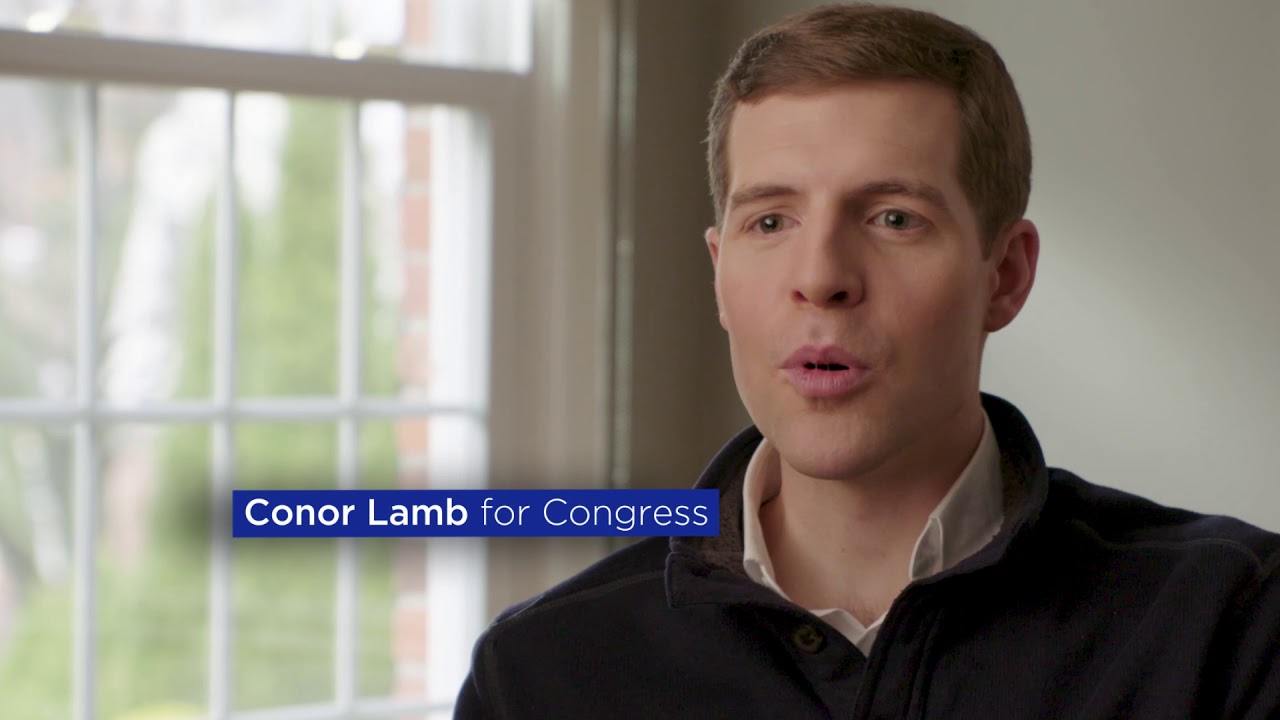 , for example, explicitly targets the Peterson-friendly smearing of “entitlement programs.” Lamb’s opponent embraced Peterson-style benefit cuts, a position that is considered a major reason for his loss.
But Pete Peterson’s ghost still haunts the American political landscape. The truth is, it was haunting us years before his death.
When Bill Clinton promised in his 1996 State of the Union speech to “give the American people (a government) that lives within its means” and declared that “the era of big Government is over,” Pete Peterson’s ghost was in the hall.
When George W. Bush used a filing cabinet as a prop while asserting that there is no Social Security trust fund – “just IOUs” – Peterson’s ghost was smiling from the wings.
When Martha Raddatz said that “both Medicare and Social Security are going broke” as she moderated a vice presidential debate – a statement that is demonstrably false – Peterson’s ghost was sitting beside her.
When Barack Obama debated Mitt Romney and said, “I suspect that on Social Security, we’ve got a somewhat similar position,” Peterson’s ghost was standing at his elbow. (He was standing at Romney’s side, too, since both candidates shared Peterson’s view.)
When Hillary Clinton scorned the idea of tuition-free higher education in a debate with Bernie Sanders because it wasn’t means-tested, saying “I don’t think taxpayers should be paying to send Donald Trump’s kids to college,” Peterson’s ghost was whispering in her ear.
Peterson’s ghost walks beside John Harwood, Dana Bash, Mark Halperin, and every other television pundit who has appeared at a fiscal summit. It’s looking over the shoulders of Peterson-backed economists and policy advisors as they write their next op-ed about “hard choices” for the middle class. It’s sitting with Republicans in Capitol Hill and White House meeting rooms as they plan for a brutal round of “entitlement cuts.”
Peterson’s family deserves our condolences. But Pete Peterson was not the “profoundly good man” mourned by Bill Clinton – at least, not for the rest of us. Peterson did great harm to people who were far more vulnerable than he was. And, unfortunately, his work lives on.
Pete Peterson does not sleep, according to Percy Bysshe Shelley. But the rest of us need to wake up
==
New York Times article about Barack Obama’s Trans-Pacific Partnership opened with this sunny headline: “Trade Pact Would Lift U.S. Incomes, Study Says.”
But wait, a study by whom? It comes from the Washington-based Peterson Institute for International Economics.
What’s that? We’re not told, even though that information is key to understanding this group’s upbeat take on the TPP trade scheme.
It turns out the institute is largely funded by major global corporations that would gain enormous new power over consumers, workers, and the very sovereignty of the United States if Congress rubber stamps this raw deal.
http://www.iie.com/institute/supporters.pdf
In fact, many of the multinational giants financing the institute were among the 500 corporate powers that were literally allowed to help write the 2,000-page agreement — including Caterpillar, Chevron, IBM, GE, and General Motors.
And get this: The Peterson Institute itself helped write this scam it’s now hyping.
Is this Peterson guy some sort of unbiased scholar? Hardly.
Pete Peterson, a Wall Street billionaire and the founding chairman of his eponymous institute, is one of the 400 richest people in the country. He’s also a reactionary, anti-public-spending ideologue who was Nixon’s commerce secretary.
Hailed by the Los Angeles Times as one of “the most influential billionaires in U.S. politics,” he uses his influence (and his fortune) to demonize such people’s programs as Social Security and to push policies that enthrone the billionaire class over the rest of us. The TPP would be his ultimate political coup against us commoners.
We don’t need an academicky institute to tell us who would benefit from TPP. All we need to know is that it was negotiated in strict secrecy with global corporate elites, while consumers, workers, and all others were locked out.
Remember, if you’re not at the table, you’re on the menu.
http://www.alternet.org/news-amp-politics/meet-billionaire-bankrolling-latest-scam-trade-deal
---
2014
$100,000 to $999,999
Aetna, Inc.
Afl ac Inc.
Asian Development Bank
Aven, Peter
Caterpillar Inc.
Caxton Associates LP
Chevron Corporation
Council for the United States and Italy
Cyrus Capital Partners, L.P.
Dracopoulos, Andreas
Dow Chemical Company
ERANDA Rothschild Foundation
EY
HSBC Holdings plc
IBM International Foundation
Investor AB
Italian Trade Commission
Moody’s Investors Service, Inc.
Offi
ce Chérifi endes Phosphates-Policy
Council
The Olayan Group*
Owens, James*
PepsiCo, Inc.
Sasakawa Peace Foundation
The Starr Foundation*
Stavros Niarchos Foundation
Toyota Motor Corporation
Toyota Motor Corporation*
UBS AG
United Technologies Corporation
William M. Keck Jr. Foundation*
3 Anonymous Contributors
$75,000 to $99,999
AEGON/Transamerica
All Nippon Airways Co., Ltd.
FedEx Corporation
Fortress Investment Group LLC
GoldenTree Asset Management, LP
Hansson, Herbjorn
Korea Institute for International
Economic Policy
McKinsey & Company
Royal Dutch Shell plc
US Chamber of Commerce
1 Anonymous Contributor
$50,000 to $74,999
BlackRock Financial Management Inc.
Brevan Howard Asset Management LLP
Brosens, Frank
Chan, Ronnie
Chubais, Anatoly
David, George
Elliott Management Corporation
Evercore ISI
Gaidar Foundation
GE Foundation
GIC Private Ltd.
Huawei Technologies
Institute for New Economic Thinking
JPMorgan Chase & Company
Klein, Michael S.
Keck, Stephen
The Olayan Group
Statoil
Taconic Capital Advisors LP
Tudor Investment Corporation
Toyota Motor North America, Inc.
Visa Inc.
William M. Keck Jr. Foundation
1 Anonymous Contributor
$25,000 to $49,999
AEGON/Transamerica*
Chubb Limited
Aramco Services Company
Banco Santander
Banque de France
BP plc
Capital Group
CEMEX
Centre for International
Governance Innovation
Deere & Company
Deutsche Bank
Duquesne Capital Management, LLC
Eaton Corporation
Enel Green Power North America, Inc.
ExxonMobil
Ford Motor Company
Fischer Francis Trees & Watts
Folger, Lee
Gàvea Investimentos
General Motors Company
Goldman Sachs Group, Inc.
High Rise Capital Management LP
Intesa Sanpaolo SpA
ITOCHU Corporation
Korea International Trade Association
MetLife, Inc.
Microsoft Corporation
Nucor Corporation
Salomon, Richard
Shepard, Don*
Slome Capital LLC
Stavros Niarchos Foundation
Swiss National Bank
Tata Sons Ltd.
UPS
van Agtmael, Antoine
Up to $24,999
Akant, Adnan*
Alva, Maureen and George*
Ames, Kenny*
Association of Global Automakers
Bank of Tokyo-M
==
America's very rich keep trying to start a movement among college students to blame senior citizens for the sorry state of the economy that kids will inherit. Specifically, the billionaires keep trying to scapegoat Social Security.
This is part of the public relations effort to create a "grand bargain" to cut America's (fast-declining) budget deficit. The Peter G. Peterson Foundation has spent about a billion dollars of Peterson's own money to create faux movements to get students to take up this unlikely cause.
The latest of the billionaires to try this gambit is Stanley Druckenmiller, net worth estimated at $2.9 billion, former head of the hedge fund Duquesne Capital. Druckenmiller's personal campus crusade has been the subject of two fawning profiles, one by Tom Friedman in Wednesday's Times, the other by James Freeman in Saturday's Wall Street Journal.
Druckenmiller's campus crusade is based on such preposterous economics that I hereby challenge him to a college debate or series of debates. Freeman's puff piece in the *Journal* begins thus:
Stan Druckenmiller makes an unlikely class warrior. He's a member of the 1% -- make that the 0.001% -- one of the most successful money managers of all time, and 60 years old to boot. But lately he has been touring college campuses promoting a message of income redistribution you don't hear out of Washington. It's how federal entitlements like Medicare and Social Security are letting Mr. Druckenmiller's generation rip off all those doting Barack Obama voters in Generation X, Y and Z.
"I have been shocked at the reception. I had planned to only visit Bowdoin, " his alma mater in Maine, he says. But he has since been invited to multiple campuses, and even the kids at Stanford and Berkeley have welcomed his theme of generational theft.
The Tom Friedman column, titled, "Sorry, Kids. We Ate It All.," which I addressed in the American Prospect Thursday, Friedman wrote:
After we baby boomers get done retiring -- at a rate of 7,000 to 11,000 a day -- if current taxes and entitlement promises are not reformed, the cupboard will be largely bare for today's Facebook generation. But what are the chances of them getting out of Facebook and into their parents' faces -- and demanding not only that the wealthy do their part but that the next generation as a whole leaves something for this one? Too bad young people aren't paying attention. Or are they?
Wait! Who is that speaking to crowds of students at Berkeley, Stanford, Brown, U.S.C., Bowdoin, Notre Dame and N.Y.U. -- urging these "future seniors" to start a movement to protect their interests? That's Stan Druckenmiller, the legendary investor...
Where to start? If you itemize all the reasons why recent college graduates face a wretched economy, Social Security doesn't even make the list. What does make the list are unreliable jobs that pay lousy wages, the aftereffects of a financial bubble created on Wall Street, and unaffordable college that leaves graduates starting life with more than a trillion dollars worth of debt.
The next generation, and the one after that, will have a shot at a decent life if we can get growth and a fairer distribution of earnings back on track. That project has nothing whatever to do with Social Security or the federal deficit. On the contrary, if we keep on the austerity kick and further cut social outlays that promote opportunities, growth will be even slower.
The biggest lie in Druckenmiller's crusade is the premise that the income distribution problem is somehow generational and that he, as a billionaire, has anything whatever in common with most college students or most recipients of Social Security. One of his pitches to students is that Social Security is excessive because he, a very wealthy man, receives it but doesn't need it.
But for the vast majority of the elderly, Social Security is a lifeline, and a meager one at that. Some two-thirds of all seniors depend on Social Security for half of their income. Fully 46 percent of elderly widows and other unmarried seniors depend on Social Security for at least 90 percent of their income.
The entire projected 75-year shortfall in the Social Security trust funds that conservatives make such a big deal about is around one percent of GDP per year. We could make it up with modest tax increases on wealthy people like Druckenmiller.
Since Social Security is financed by payroll taxes -- on wage and salary income -- the real Social Security crisis is the crisis of stagnant wages. If average wages had continued to track average productivity growth during the past three decades, as they did in the three decades after World War II, Social Security would be in perpetual surplus.
The real crisis facing the elderly is not that Social Security is excessive but that it's inadequate -- especially with the collapse of traditional pensions in favor of far less reliable 401k plans (another counter-revolution made on Wall Street.)
There is a certain moral blindness and chutzpah of very wealthy people trying to enlist students in a generational movement against the alleged affluence of their grandparents. The real issue here is not generation, but class, specifically Druckenmiller's class.
Contrary to the claim in writer Freeman's opening sentence -- that Druckenmiller makes "an unlikely class warrior," his crusade is precisely class war, of the sort we have been seeing for decades -- of the very wealthy against everyone else.
Happily, most of America's students don't seem to be taking the bait. None of Pete Peterson's front groups has had much resonance on campus -- not his "Fiscal Wake-Up Tour," nor "Fix the Debt," nor more far-fetched groups aimed a college students such as "America's Promise Alliance," nor the foundation's poetry contest aimed at battling deficits in verse.
However, these crusades do have a certain resonance among media elites and even in the Obama White House. As we go into the next phase of a trumped up budget crisis, with Social Security and Medicare as targets A and B, the politics and economics could not be more perverse.
So how about it Mr. Druckenmiller? If you are so sure of the righteousness of your cause, how about defending yourself in a campus debate?
Robert Kuttner's new book is Debtors' Prison: The Politics of Austerity Versus Possibility. He is co-editor of The American Prospect and a senior Fellow at Demos.
---
==
gets beat by coalition: http://www.prwatch.org/news/2014/02/12391/fix-debt%E2%80%99s-last-hurrumph
cmd:
It’s debt ceiling time, and the United States economy is once again on the brink, held hostage by extremists hell-bent on forcing cuts to Medicare and Social Security.
Oh, wait. That was last year.
In 2014, for the first time in three years, the vote to extend the nation’s debt ceiling did not bring the United States to the brink of default in a high-stakes game of slash and burn.
Last week, the House voted to raise the government’s borrowing limit until March 2015 without any conditions. In fact, if the Speaker had his way, he would have tied the vote to the repeal of cuts to military retirement pensions. The Senate concurred, sending a clean debt ceiling bill to the President’s desk.
It was a striking turnaround for the forces of austerity. One of the biggest losers? The Campaign to Fix the Debt, the $40 million astroturf austerity group, financed by Pete Peterson and other Wall Street bigwigs, and fronted by Maya MacGuineas, Erskine Bowles, and Alan Simpson.
Call it Alan Simpson’s last harrumph.
Fix the Debt Pushes America Towards the Fiscal Cliff
It wasn’t supposed to be this way.
In July of 2012, Fix the Debt was launched with a patriotic flair. It set a July 4, 2013 deadline for steep budget cuts along the lines of the $4 trillion Simpson-Bowles plan. The austerity crowd had already succeeded in rigging the game, creating a December 31, 2012 “fiscal cliff” that would trigger automatic cuts without a bipartisan deal. Now they were poised to take advantage of that deadline and other standoffs to secure a “Grand Bargain.”
The idea was that Democrats were supposed to trade cuts to earned benefit programs like Social Security and Medicare for a bit more tax revenue from the Republican side. The President, who had created and backed the Simpson-Bowles commission, appeared willing to make a deal.
With a stalled economy and public sentiment decidedly against cuts to the popular lifesaving programs, Fix the Debt gathered the big guns. Over 100 CEOs were named to a council, and many contributed to the $40 million budget. Fix the Debt execs descended on the White House and the Capitol building. The nightly news was filled with images of CEOs like Honeywell’s David Cote stepping up to the mic to opine about the need for belt-tightening and shared sacrifice.
To show “grassroots” momentum, Fix the Debt hired PR firms, had them stand up phony state chapters, bankrolled the stunts of a youth group, The Can Kicks Back – which donned a foam tin can suit (the AmeriCAN) for cute videos – and hyped slanted numbers about “generational inequality.” America was going to rise up, they said, and they were going to get 10 million people to sign petitions.
The goal, as Tennessee Governor Phil Bredesen so helpfully let slip, was to create an "artificial crisis" to get Congress to act.
But a funny thing happened on the way to the fiscal cliff. Real people fought back.
Astroturf Gets Mowed
 Grassroots groups were in no mood for advice from Fix the Debt CEOs, like Goldman Sach’s Lloyd Blankfein, who somberly explained to CBS News in November 2012 that Americans had to “lower their expectations,” the retirement age had to be raised, and “entitlement programs have to be slowed down and contained.”
Bernie Sanders , taking to the floor to denounce Blankfein for what he called his unbelievable arrogance, given the role the big banks played in collapsing the economy and skyrocketing the deficit. Days later, protesters descended upon a Fix the Debt event for the first time, chanting loudly and rattling a senior presenter from the Heritage Foundation. Burke Stansbury from the Campaign for Community Change
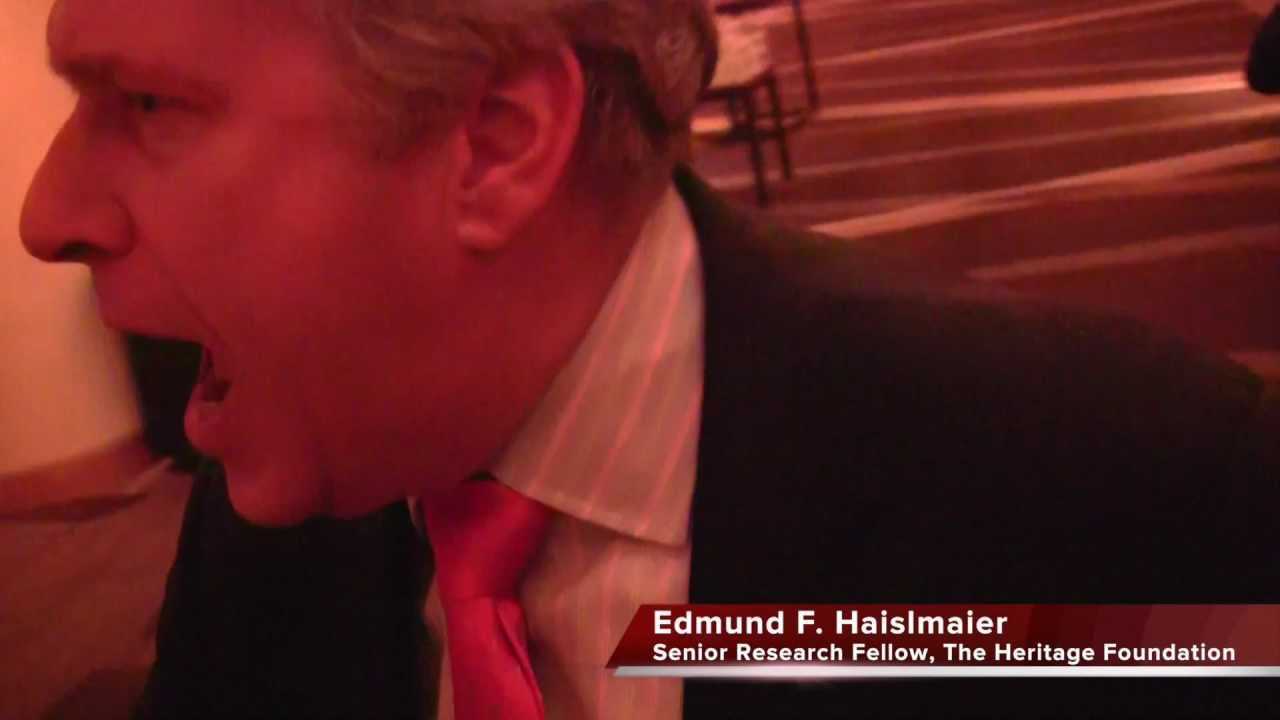 from the Heritage hysteric, and the throwdown was on.
Dozens of small groups jumped into the fray – including Social Security Works, Institute for Policy Studies, Campaign for America’s Future, Public Accountability Initiative, and more – pulling back the curtain on the tax cutting agenda of the group and its leadership council, which was riddled with undisclosed conflicts of interest.
In February, The Nation and the Center for Media and Democracy partnered on a front-page, five article packageand an online resource platform (PetersonPyramid.org) exposing Pete Peterson’s history of deficit histrionics, of bankrolling puppet populists, and his lousy economic theories. Fix the Debt’s spokesman called to complain, prompting one of the funnier exchanges between a PR flack and a reporter in recent memory.
Grassroots groups surged into action to call out the CEOs with platinum-plated pensions who wanted to cut Social Security, targeting state-level Fix the Debt leaders. In Iowa, co-chair Dr. Andrea McGuire, former Congressman Dave Nagel, and State Rep. Bruce Hunter all resigned under pressure from the community group Iowa CCI. Michigan also lost its co-chair Jocelyn Benson. Virginia State Senator Ken Plum chose to pull his name, along with Juan Cotto of Washington State, and many more.
In March, just for fun, Social Security Works Washington entered its “Just Scrap the Cap” pro-Social Security video in a Peterson-funded film contest and won first prize! (Check it out here).
In April, legislative and community leaders including Sanders, Rep. Keith Ellison, Rep. Mark Pocan, Terry O’Neill of NOW, and more rallied in front of the White House to push the President to leave Social Security cuts out of his budget. When Obama included “chained CPI” cuts, groups redoubled their effort to get him to change his mind.
For good measure, economists at U-Mass Amherst made headlines around the world by uncovering coding errors and other problems with the seminal Rogoff-Reinhart study, which purportedly provided the empirical evidence that austerity led to growth.
In May, Fix the Debt organized a spontaneous “flash mob,” sending reporters and activists scurrying to interview participants who proved to be paid dancers ($65 for the day), not at all interested in cutting Social Security.
In June, the Institute for Policy Studies released another damning report, “Pirates of the Caribbean,” showing that Fix the Debt member firms stood to gain as much as $173 billion if Congress adopted their proposal for a territorial tax system, a tax break which would only increase the debt.
Patriots celebrated when Fix the Debt missed its July 4th deadline for a bad budget deal.
In August, National People’s Action kicked off the “CEO Summer” (Corporate Evil Outing) in 15 cities and towns. TakeAction Minnesota dropped a huge banner across from a Fix the Debt gathering. Clergy in Chicago, IIRON, and ONE Northside targeted General Electric for its failure to pay taxes and urged Senator Dick Durbin to stiffen his spine and do more to support Social Security. Vocal New York descended on the home of Verizon board member Hugh Price, calling on Verizon to pay its taxes and stop lobbying for harmful budget cuts.
In October, the AFL-CIO pulled out all the stops. President Richard Trumka warned: "No politician … I don’t care the political party … will get away with cutting Social Security, Medicare or Medicaid benefits. Don’t try it. This warning goes double for Democrats. We will never forget. We will never forgive. And we will never stop working to end your career.”...
==
http://www.alternet.org/print/economy/meet-billionaires-using-their-immense-wealth-make-life-miserable-ordinary-americans
February 19, 2014 |
Here is how it works these days: You start hearing about a big, national problem and then it becomes a drumbeat. First there are a few articles and columns mentioning that such-and-such is a problem. Then a number of articles appear, then a “study” from a “think tank” confirms the problem and sounds the alarm about how terrible it is, and then just as the issue seems to be the only thing you are hearing about a solution is presented. Of course, the solution always involves taking something away from you and giving it to some company or industry standing in front of a billionaire or three. The right question to start asking when you hear about these “problems” is which billionaire is driving this.
Here are five-plus examples of billionaires who use their money to try to get us to think what they want us to think in order to enact a right-wing economic agenda.
1) Pete Peterson’s deficit/debt scare campaign and his ongoing effort to gut Social Security and other entitlements.Leading every list of billionaires pushing an issue is billionaire Pete Peterson and his forever war on government doing things to make our lives better, especially Social Security. Peterson leads the list because of reports of his pledge to spend $1 billion on his pet issue.
Have you ever heard anywhere that the budget deficit and national debt are a problem? You can’t pick up a newspaper or magazine, turn on the radio or TV, or listen to any politician from the so-called “center” to the far right without hearing that, and the reason is Pete Peterson and his money.
[link to video]
Peterson and his money are a big part of the backing for the Concord Coalition, Fix the Debt, The Can Kicks Back, the Comeback America Initiative, the Committee for a Responsible Federal Budget, the Moment of Truth Project, the Committee for Economic Development, America Speaks plus contributions to many other groups. As Michael Hiltzik worded it in Unmasking the most influential billionaire in U.S. politics [3] at the LA Times,“The shame of Washington… comes from the fact that almost every organization promoting the grand fiscal bargain in which those programs will be on the table has accepted, somewhere and somehow, money from Pete Peterson.”
Sourcewatch’s Fix the Debt portal [4] contains much more information on this big-money influence campaign, including this graphic:

Last week one of Peterson’s deficit-scare groups was in the news. The Can Kicks Back [5] is an organization named after the narrative that not cutting Social Security is just kicking the debt can down the road. They claim this is because there is a generational war where older people are living high on the hog and younger people will have to pay for this. The group tries to make legislators think younger people want them to cut Social Security, etc. using astroturf videos, Twitter posts, etc.
Well, the Peterson spigot seems to have dried up. The anti-debt group is... wait for it… in debt [6]. All of that astroturf hype about younger people demanding Social Security cuts? When the Peterson money ran out, the urgency went away.
Here’s the thing about this massively funded deficit-debt scare the country has been put through. Getting people whipped up about budget shortfalls (when raising taxes on the rich or cutting the bloated military budget are off the table) necessarily leads to certain conclusions that benefit a wealthy few. It leads people to believe that our government should cut back on the things it does to make our lives better—also called “government spending.”
Meanwhile the country’s real deficit problem [7] is our trade deficit, especially with China. The trade deficit is the measure of jobs and factories moving out of the country. Fixing this deficit [8] just happens to create jobs, lift wages and repair our economy.
If you are hearing about how terrible the budget deficit is and how it is so important that we all make sacrifices in order to bring that deficit down, it’s Pete Peterson ‘s money talking. Too bad there is no billionaire pushing us to fix the trade deficit.
---
Cue Erskine Bowles and Alan Simpson and their "Fix the Debt" farce. They're back on the road trying to convince America that there is a looming debt crisis that can only be solved by steep cuts in Medicare and Social Security.
In a special edition of the Nation magazine, we at CMD exposed Fix the Debt as a front for billionaire Pete Peterson and the Wall Street banksters.
==
Jon Romano, press secretary for the inside-the-beltway PR campaign “Fix the Debt” and its pet youth group, The Can Kicks Back, have been caught writing op-eds for college students and placing the identical op-eds in papers across the country.
This is the latest slip-up in Fix the Debt’s efforts to portray itself as representing America’s youth. Previously, they were caught paying dancers to participate in a pro-austerity flash mob and paying Change.org to gather online petition signers for them.
The newspapers involved in the scam were not amused.
Gainesville Sun to Fix the Debt: “Lay Off the Astroturf and Outright Plagiarism”
The identical op-eds were discovered by a citizen with the Twitter handle "DeficitHacks" and flagged by Florida’s Gainesville Sun. The paper’s scathing editorial on the topic makes for an entertaining read.
If you liked University of Florida student Brandon Scott's column last Sunday about the national debt, you also should enjoy columns by Dartmouth College student Thomas Wang and University of Wisconsin student Jennifer Pavelec on the issue.
After all, they're the same columns.
The identical columns ran last weekend in newspapers in New Hampshire and Wisconsin. They each included the same first-person passage describing the student's work with the Campaign to Fix the Debt and its "millennial arm," The Can Kicks Back.
After I was told last week about the column appearing under the byline of different writers in other publications, it was removed from The Sun's website. Staff with the Campaign to Fix the Debt, who sent out the columns, said they were templates that were supposed to be personalized or otherwise reworded.
The campaign's vice president of communications, John Romano, said Scott -— an intern with the group — was not at fault.
"This was an inadvertent mistake and the campaign takes full responsibility for it," he said.
Ooopsie.
“The Sun's policy is not to publish astroturf pieces written by advocacy groups and only signed by supporters,” writes the editorial page editor. “Advocacy groups and others should lay off the astroturf and outright plagiarism unless they want to discredit themselves and their causes.”
The paper promptly pulled the op-ed, as has Wisconsin’s Milwaukee Journal Sentinel, and the New Hampshire Foster's Daily Democrat.
Fix the Debt "Chapters" Are State-Based PR Firms on Retainer
The papers who pulled the phony opinion pieces are to be applauded for standing up to this type of crass manipulation.
With polling consistently showing that 90 percent of Americans want to preserve and strengthen Social Security, Fix the Debt has its work cut out for it pretending to represent the grassroots.
The truth is Fix the Debt is the latest effort by Wall Street billionaire Pete Peterson (who pledged a cool billion of his Blackstone Group fortune to the cause), to convince America that our deficit (which has been on a steep decline since peaking in 2009) is so out of control that it justified extreme budget cuts, including to Social Security and Medicare. Peterson gave $5 million to get Fix the Debt off the ground. Fix the Debt’s members are a raft of Wall Street firms, like JP Morgan Chase who pitched in $500,000 and GE who contributed $1 million, and its “grassroots” are a series of politically-tied state-based PR firms on retainer who are required to line up a list of politicians and lobbyists, call them a "chapter," and work to make sure they get regular interviews in the local press. Here in Wisconsin, Fix the Debt’s flack is Mark Graul, a Republican apparatchik best known for his false, racially-charged TV ad campaign against Judge Louis Butler in his 2008 race for Wisconsin Supreme Court.
TheCanKicksBack.org manFix the Debt fails to tell students that its leaders, Alan Simpson and Erskine Bowles, have a new budget plan that not only throws Grannie under the bus with cuts to Social Security and Medicare (which mean their kids and their grandkids will be working harder to support them in their old age), but also attacks college students by calling for higher interest rates on student loans and changing the law to allow those interest rates to kick in even before the student graduates from college (PDF, p. 30). Fix the Debt cries crocodile tears over the "generational inequities" of the federal budget, but fails to note that states spend billions on education.
While the nation hurtles to new budget deal deadlines in December and January that put Social Security and Medicare in danger, Fix the Debt is looking for a new press secretary to aid its effort to achieve a "Grand Bargain," along the lines of Simpson-Bowles -- budget cuts so steep they would cost America some four million jobs says the Economic Policy Institute. We can anticipate that the group will use some of its $40 million budget to ramp up its spin campaign on TV, in print ads, and radio.
Fortunately, more people are starting to catch on. The editorial board of the Georgetown Voice, the student newspaper of Georgetown University, urged student groups to do their homework before inviting groups to campus:
Given the lack of transparency in the structure and goals of Fix the Debt and, by proxy, The Can Kicks Back, it is of special importance that Georgetown student leadership take a closer and more critical look at the external groups they promote in the future. Had [student groups] done some research and looked past the glossy, misappropriated rhetoric and symbolism of the group they invited to the Hilltop, they would have found that Fix the Debt’s agenda is undoubtedly anti-student and anti-poor, despite its claims to “promote generational equity.”
Next time you see an op-ed from Fix the Debt or The Can Kicks Back (and there are many penned by Romano and his crew), give the editorial page editor a jingle and tell them that they have been hoodwinked by a reclusive billionaire named Pete Peterson and his Wall Street friends.
Learn more about Pete Peterson’s chorus of calamity and decades long effort to gut Social Security and Medicare. Visit Pete Peterson on Sourcewatch and our Nation package exposing Fix the Debt as an “astroturf supergroup.” To hear Romano's side of the story, read "Conversations with Fix the Debt, Help Count the Pinocchios." This opinion piece was penned by Mary Bottari, no press secretary or Wall Street firm advised in its construction.
---
AlterNet [1] / By Lynn Stuart Parramore [2]
Plutocrats' New Pitch: Let Us Rob You Now So You Can Plan Ahead for Poverty
August 22, 2013 |
Somehow, I’ve wound up on the mailing list for a group of oligarchs campaigning to swindle Americans out of their hard-earned retirement insurance. Hedge fund billionaire Pete Peterson, the budget buffoons Erskine Bowles and Alan Simpson, and the rest of their merry band of hustlers over at the hilariously named Committee for a Responsible Budge [3]t have asked me to consider their latest proposal.
So I thought I’d oblige them, what the heck.
Judging from the shrill headline in their mailing [full text here [4]], these men (and a token woman or two) wish to sell me on the idea of “Social Security Reform and the Cost of Delay.”
The cost of delay? Boys, I hear you on that. Any delay in ripping me off must be very costly — for you.
Social Security, the most prudently managed and economically sound retirement program the country has ever seen, and with the very lowest costs, is preventing you from piling up even more money in your bank accounts. Trust me, I really do understand how you feel: Financiers desperately wish to get their mitts on American retirements so they can charge all sorts of outrageous fees. And you hate the prospect of having to pay higher taxes in the future if you don’t “fix” Social Security.
I know how diligently you've tried to privatize America's best-loved program in order to get this show going. You must be bone tired! And I also fully get that as rich people interested far more in the size of your bank accounts than anything so trifling as, say, the strength and health of your country, you hate paying taxes of any kind. You deeply resent such citizen responsibilities, and so you want to cut Social Security as quickly as possible (calling your cutting “reform,” you clever marketing devils!) because doing so will lessen your already minuscule tax burden. Your aim is to hurt America’s retirement program to the point where you can bring up your privatization hustle again. Does that about sum it up?
The thing is, though, cutting Social Security does not make any economic sense for the other 99 percent of the country. The program is in very good shape, hard-working Americans have paid into it, and if (and that’s a big if) any adjustments need to be made a decade or two down the road, we can talk about it then. For now, the only real justification for cutting seems to be the prospect of fattening your bank accounts. Sorry, not sold. I know that's one less yacht for you but I think you can live with it.
Your fear-mongering pitch to me is filled with all sorts of extraordinary economic predictions, which are all the more amazing as none of you had so much as the ghost of an idea that the financial crisis was coming. But never mind, you in your infinite wisdom know that based on your calculations, if you don’t rob me by cutting Social Security now, I will lose benefits in the future. You may not realize I actually read economic projections written by legitimate economists, who inform me that your predictions are worth about as much as those of a carnival fortune-teller. Probably less.
In their paper, “Deficit Fantasies in the Great Recession [5],” Thomas Ferguson and Robert Johnson, both of the Institute of New Economic Thinking, write:
“Current discussions of Social Security [fall] into two groups: One rails on about how ‘runaway entitlements’ are leading to a deficit explosion; while the other advises patronizingly that Social Security can be saved in the long run by timely changes, typically involving a mix of taxes and benefit cuts, including, notably, yet another rise in the age of eligibility for the program. Neither point of view is persuasive.”
The authors explain how the “deficit explosion” story can be immediately dismissed, but you’re probably aware that that particular line isn’t really working anymore, since more Americans have figured out that 1) Social Security has nearly nothing to do with the deficit; and 2) the deficit is rapidly shrinking. Bummer for you!
So you’ve turned to the old lie about Social Security solvency. Unfortunately for you, economists who have looked closely at the issue do not buy it. Ferguson and Johnson write:
"It is true that Social Security tax receipts declined during the Great Recession, so that for the first time since 1983, the program’s outlays exceeded revenues by a small amount. But this in no way threatens the program’s basic solvency. In 1983, Congress enacted into law recommendations of the Greenspan Commission to raise Social Security taxes to cover the retirement bulge coming from baby boomers. Since then, the program has piled up enormous surpluses. These have been invested in government bonds, thus helping to finance the rest of the government.
As the baby boomers mature, the surplus funds will be drawn down. The 2010 Report of the Trustees of the Social Security Trust Fund projects that the Trust Fund and interest earnings from it will suffice to cover all benefit payments until 2037. Even then, the Fund will not be empty – the Trustees Report projects that the Trust Fund would still cover 75% of all benefits due.” The [latest report from 2012 [6] says more or less the same thing].
So listen up, fellas, if we do need to make a little tweak down the road, let’s make a deal. Since taxpayers like me funded the bank bailouts, how about raising the cap on earnings subject to the Social Security tax, which is currently just a little over $100,000? Wait, what’s that you say? You don’t like that because it means that you would pay your share and I would not get screwed. Well, that's not very sporting of you, is it? Seems like the 1 percent has done pretty well over the last few decades.
Overall, though, I must say I am impressed by the consistency of your crystal-ball reading, because your predictions always point miraculously to the same conclusion: “We’ve got to take your money now, because the future is going to be very bad!”
I appreciate your concern. Mugging me now allows me to better plan ahead for a bleak and ill-funded future. Thanks to your consideration, I could go ahead and start purchasing cat food now and perhaps develop a taste for it. But I think I’d rather just hold on to my Social Security if it’s all the same to you. I kind of think that robbing me of a dignified retirement (which, frankly, looks pretty paltry compared to the rest of the civilized world) is not going to do much for the health of the economy or the cohesion of society.
I have this funny feeling that young people forced to take time away from their jobs to care for poverty-stricken parents and more strain on disability rosters (which you are always complaining about, remember?!?) and less money in the pockets of elderly consumers to pay for healthcare and food doesn’t really sound like a good idea.
Let’s be real, boys. You already got away with murder with your swindles leading up to the Great Recession, and you’ve sucked a lot more money out of the pockets of regular folks in the years since then, spreading your embarrassingly discredited austerity messages (how funny was that Stephen Colbert bit on your favorite debunked economists, Reinhart and Rogoff! [7]). You've triumphed in getting teachers laid off and pensions stripped and whatnot. You have been very successful, and you can raise a glass of bubbly to the financial coup you’ve pulled off. There’s not really much more left to rob, in case you haven’t noticed.
But there are limits. A look at history might suggest to you that pillaging too many people of too much for too long may actually result in said people deciding they have had enough of you. Occupy was a hint.
Yet despite the fact that survey after survey reveals Americans do not want to see cuts to Social Security, and in the face of studies by political scientists [8] who prove that such policy views as yours only reflect the designs of the wealthy, you are undeterred. Time, you warn me, is running out if I don’t start playing your tune and ask policy makers to enact these “changes” you insist upon to make you richer.
Here’s a warning from me: With profits for the wealthy at Gilded Age levels, the population looks to be waking up. Time may be running out for you.
See more stories tagged with:
alan simpson [9],
america [10],
congress [11],
erskine bowles [12],
Greenspan Commission [13],
Johnson write [14],
MIX [15],
Mixture [16],
pete peterson [17],
Quotation [18],
robert johnson [19],
social issues [20],
Social Security Trust Fund [21],
social security [22],
steven colbert [23],
thomas ferguson [24],
trust fund [25],
USD [26],
bank accounts [27],
bank bailouts [28],
bank [29],
cat food [30],
food [31],
healthcare [32],
law recommendations [33]
---
Source URL: http://www.alternet.org/economy/pete-peterson-and-social-security
Links:
[1] http://alternet.org
[2] http://www.alternet.org/authors/lynn-stuart-parramore
[3] http://crfb.org/
[4] http://crfb.org/document/report-social-security-reform-and-cost-delay
[5] http://www.peri.umass.edu/fileadmin/pdf/other_publication_types/magazine___journal_articles/ferguson_johnson.pdf
[6] http://www.ssa.gov/oact/tr/2012/
[7] http://www.colbertnation.com/the-colbert-report-videos/425748/april-23-2013/austerity-s-spreadsheet-error
[8] http://faculty.wcas.northwestern.edu/~jnd260/cab/CAB2012%20-%20Page1.pdf
[9] http://www.alternet.org/tags/alan-simpson
[10] http://www.alternet.org/tags/america
[11] http://www.alternet.org/tags/congress-0
[12] http://www.alternet.org/tags/erskine-bowles
[13] http://www.alternet.org/tags/greenspan-commission
[14] http://www.alternet.org/tags/johnson-write
[15] http://www.alternet.org/tags/mix
[16] http://www.alternet.org/tags/mixture
[17] http://www.alternet.org/tags/pete-peterson
[18] http://www.alternet.org/tags/quotation
[19] http://www.alternet.org/tags/robert-johnson
[20] http://www.alternet.org/tags/social-issues-0
[21] http://www.alternet.org/tags/social-security-trust-fund
[22] http://www.alternet.org/tags/social-security
[23] http://www.alternet.org/tags/steven-colbert
[24] http://www.alternet.org/tags/thomas-ferguson
[25] http://www.alternet.org/tags/trust-fund
[26] http://www.alternet.org/tags/usd
[27] http://www.alternet.org/tags/bank-accounts
[28] http://www.alternet.org/tags/bank-bailouts
[29] http://www.alternet.org/tags/bank-0
[30] http://www.alternet.org/tags/cat-food
[31] http://www.alternet.org/tags/food-0
[32] http://www.alternet.org/tags/healthcare
[33] http://www.alternet.org/tags/law-recommendations
[34] http://www.alternet.org/%2Bnew_src%2B
==
Ghost in the Machine: Pete Peterson Haunts College Campuses
by Mary Bottari [1] — May 13, 2013 - 6:44am
An odd couple made an appearance on the University of Wisconsin-Madison campus recently: Tea Party Senator Ron Johnson and Madison's progressive Congressman Mark Pocan. The two were invited to participate in a conversation about the national debt hosted by a local student organization and a bevy of national groups, including the Comeback America Initiative, the Concord Coalition, the Can Kicks Back, and the Campaign to Fix the Debt. On the agenda: debt, deficits, and the economy.
Platitudes abounded: "Your share of the federal debt is about $52,000," said one. "We can't kick the can down the road," said another. It was all very earnest and the press clips were positive for what was, by all accounts, an exceedingly boring event.
But the most telling sentence of the meeting was one of the first. The student sponsors thanked Mark Graul and Stephanie Kundert of Arena Strategy (a local PR firm) for their help in setting up the event.
No one in the room appeared to catch the fact that they all were participating in an elaborate public relations ruse, set up by well-known Wisconsin spinmeister (Graul) whose claim to fame is a racist attack ad on a sitting judge [5], and orchestrated by a Wall Street billionaire whose name was never mentioned in the two-hour "teach-in."
Take a bow, Pete Peterson -- $500 million can buy you a lot of good feelings and positive press.
Media Misses the Peterson Gravy Train
The media in advance touted the event without looking deeper. Clips the day after did the same. Nary a mention of Peterson or his vicious austerity agenda which will slash government spending, kill jobs, condemn students to higher rates of debt and make it much harder for graduates to succeed.
Peter G. Peterson [6] is a former Nixon man turned Wall Street billionaire who has spent $500 million in five years to underwrite numerous organizations and PR campaigns to generate public support for slashing Social Security, Medicare, and Medicaid, citing concerns over "unsustainable" federal budget deficits. In 2007, he made a fortune from the public offering of the private equity firm he co-founded, Blackstone Group, and pledged to spend $1 billion to "fix America's key fiscal-sustainability problems." He endowed the funds to the Peter G. Peterson Foundation [7], which he launched in 2008 to bankroll the endeavor.
The Madison event was shepherded by David Walker [8] of the Come Back America Initiative (CAI) [9]. Who is Walker? Well, you can read all about him here [8], but the most important thing you need to know is that he has been on the Peterson dole for a very long time. He served as the head of the Peterson Foundation from 2008 to 2010. Then he spun off the more "grassrootsy" CAI to take the show on the road, funded by Peterson to the tune of $3 million. CAI is one of the many Peterson-funded "partner" organizations to Fix the Debt.
What is Fix the Debt? The Campaign to Fix the Debt [10] is a $40 million "astroturf supergroup" that CMD exposed in a series of articles on the cover of the *Nation* magazine in February 2013 [11]. The effort involves over 120 CEOs all singing from the same "shared sacrifice" hymnal, but their association with the campaign has stirred outrage and protests because too many of the firms involved pay a negative tax rate or underfund their employee pension plans, yet their CEOs have the gall to call for cuts to vital "earned-benefit" programs lifting millions of seniors and kids out of abject poverty. Fix the Debt was launched on the Peter G. Peterson Foundation website [12], Peterson was at the National Press Club [13], and Peterson gave Fix the Debt's original parent organization some $5 million [14] to get the project rolling.
What is The Can Kicks Back [15]? For many years, Peterson has tried to create the fantasy that students are more concerned about the nation's debt than their own. Thus, he has consistently tried to fund or create student groups to carry his message. The latest incarnation is The Can Kicks Back, a laughable effort to start student "chapters" at colleges and high schools in target Congressional districts. A key strategy? A foam can mascot and [16]." This week those crazy kids at the Can Kicks Back bought themselves a flashmob. As the Huffington Post first reported [17], they paid dozens of dance students $65 bucks to pretend that deficit reduction was a cause that had them dancing in the streets. The group says it is the "millennial arm" of Fix the Debt, but could be better labeled Peterson's pet propagandists.
What is the Concord Coalition [18]? The deficit reduction group was cofounded by guess who? Peterson and others. In recent years it has received some $6,036,060 (including $1,500,000 in matching funds) from the Peterson Foundation from 2009 to 2012. And its job is to take the Peterson message to the heartland with national deficit reduction tours and more "grassroots" confabs.
When we talked to the Bipartisan Issues Group, the local student group that hosted the event, they seemed entirely unaware of any of these connections and only vaguely aware of a fellow named Peterson. That is just the way Peterson and Fix the Debt like it. Fix the Debt PR firms in some 23 states, tap bipartisan community leaders (Scott Klug and Tony Earle here in WI) to announce that new chapter has spontaneously erupted, they set up "grassroots" events, and make sure serious interviews and op-eds are placed in mainstream media outlets. They tout their 350,000 petition signers, never mentioning they paid a petition site [19] for most of the names and fell wildly short of their 10 million goal.
While Fix the Debt owes a lot to the ghost in the machine, Peterson's name is rarely mentioned. Fix the Debt's spokesperson even told CMD that Peterson did not fund his organization [20] two months after he told the Huffington Post the opposite [21], and the group is reincorporating and splitting from its fiscal sponsor [22] perhaps in an effort to hide the Peterson start-up funds. (See my colleague Lisa Graves' very funny "Conversations with Fix the Debt [21].")
Bowles & Simpson Jack Student Debt to Give Tax Breaks to Fix the Debt Firms
Alan Simpson and Erskine Bowles, the two co-founders of the Campaign to Fix the Debt, have been on the Peterson plan for a while now. They have their own $300,000 "Moment of Truth" [23] project funded by Peterson, named after their big $4 trillion austerity package they cooked up in 2010 as chairmen of President Obama's national commission on debt. The economists at EPI estimated that steep cuts in the package would put some 4 million people out of work.
A few weeks ago, the duo issued a new austerity plan that manages to screw the very students Peterson is hoping to attract. It would reduce the federal debt by some $55 billion by allowing interest on student loans to start accruing while student are still in school, not upon graduation. The plan makes other changes that hurt students and calls for increasing the student loan interest rate. On the flip side, it would increase the debt by creating a "territorial tax system" [24] that would allow overseas earnings by U.S. firms to be exempt from taxation. No wonder Fix the Debt has so many CEOs flocking to its cause.
This plan has been lauded by the Campaign to Fix the Debt [25] and by extension The Can Kicks Back, but do college students really think it's a good idea to increase the already $1 trillion in student loan debt in order to provide further corporate tax breaks?
They weren't allowed to weigh in on the issue because the issue was never presented at the UW "teach-in."
The Peterson Crowd is Losing the Debate
Also not discussed at the presentation, were recent developments that show that deficit scolds are loosing the debate. The empirical foundation for budget cuts, the Reinhart-Rogoff study [26] on debt in 40 nations, was blown out of the water by a graduate student who found huge errors in their data. This week, private-sector and government economists have determined [27] that unemployment would be a full point lower and U.S. growth would be two points higher had not Obama and the Republicans agreed to steep spending cuts in 2011. Austerity is exactly the wrong prescription during an economic downturn.
All in all, it was a masterful job by the Peterson puppets, another event that Fix the Debt will likely put on a list and send to Congress and the press as proof of a grassroots groundswell for a grand bargain on "entitlement reform," when all the polls show that the opposite is true. By huge margins Americans of both parties oppose pretty much everything [24] Peterson and Fix the Debt stand for: 73 of American's believe protecting Medicare and Social Security from benefit cuts is more important than bringing down the deficit. Fully 84 percent opposed reducing Social Security benefits; 69 percent opposed reductions in Medicaid benefits.
And it is very hard to believe that with deficits in steep decline, America's college students are willing to embrace more student debt to help Pete Peterson and his puppet populists [24].
---
In February 2013, CMD and the Nation issued a special edition on Fix the Debt, which you can read here [19]. We also created a large wiki on all the Fix the Debt CEOs, board members, partner organizations, lobbyists and more at Petersonpyramid.org [6]. CMD's Harriet Rowan contributed to this article.
Center for Media and Democracy • 520 University Avenue, Suite 260 • Madison, Wisconsin 53703
Phone: 608-260-9713 • Fax: 608-260-9714
---
Source URL: http://www.prwatch.org/news/2013/05/12106/ghost-machine-pete-peterson-haunts-college-campuses
Links:
[1] http://www.prwatch.org/users/35270/mary-bottari
[2] http://www.prwatch.org/topics/banking
[3] http://www.prwatch.org/topics/economy
[4] http://www.addtoany.com/share_save?linkurl=http%3A%2F%2Fwww.prwatch.org%2Fnews%2F2013%2F05%2F12106%2Fghost-machine-pete-peterson-haunts-college-campuses&linkname=Ghost%20in%20the%20Machine%3A%20Pete%20Peterson%20Haunts%20College%20Campuses
[5] http://www.jsonline.com/news/statepolitics/29486784.html
[6] http://www.sourcewatch.org/index.php?title=Portal:Fix_the_Debt
[7] http://www.sourcewatch.org/index.php/Peter_G._Peterson_Foundation
[8] http://www.sourcewatch.org/index.php/David_M._Walker
[9] http://www.sourcewatch.org/index.php/Comeback_America_Initiative
[10] http://www.sourcewatch.org/index.php/Portal:Fix_the_Debt
[11] http://www.thenation.com/article/173022/stacking-deck-phony-fix-debt-campaign#
[12] http://www.pgpf.org/Issues/Grants/2012/071712-Fix-The-Debt.aspx
[13] http://www.youtube.com/watch?v=j4cPTszAOxY
[14] http://www.washingtonpost.com/blogs/wonkblog/wp/2013/01/11/how-fix-the-debt-is-coping-with-its-fiscal-cliff-defeat/
[15] http://www.sourcewatch.org/index.php/The_Can_Kicks_Back
[16] http://www.youtube.com/watch?v=kjLuj0EhsQg
[17] http://www.huffingtonpost.com/daniel-marans/fix-the-debt-flashmob-par_b_3254865.html
[18] http://www.sourcewatch.org/index.php/Peter_Peterson
[19] http://www.thenation.com/article/173022/stacking-deck-phony-fix-debt-campaign
[20] http://www.prwatch.org/news/2013/02/12001/conversation-fix-debt-help-count-pinocchios
[21] http://www.huffingtonpost.com/2012/12/03/fix-the-debt_n_2220230.html
[22] http://www.huffingtonpost.com/2013/04/25/fix-the-debt-new-america-foundation_n_3148032.html
[23] http://www.sourcewatch.org/index.php/The_Moment_of_Truth_Project
[24] http://www.ips-dc.org/reports/ceo-campaign-to-fix-the-debt
[25] http://www.fixthedebt.org/blog/summarizing-the-new-simpsonbowles-plan_1#.UYa0zoLufjg
[26] http://www.google.com/url?sa=t&rct=j&q=&esrc=s&frm=1&source=web&cd=1&ved=0CC8QFjAA&url=http%3A%2F%2Fwww.prwatch.org%2Fnews%2F2013%2F04%2F12065%2Fpete-peterson-linked-economists-caught-austerity-error&ei=-IePUensHsiWyAHh1YCQAQ&usg=AFQjCNHFVazzMGpfzg1Tlihpdjzb7GqeJg&sig2=Ayy9vosSL3oMz-agB3xPBQ&bvm=bv.46340616,d.aWc
[27] http://www.nytimes.com/2013/05/09/us/deficit-reduction-is-seen-by-economists-as-impeding-recovery.html?src=recg&_r=0
==
Published on Feb 25, 2013
Lisa Graves of the Center for Media and Democracy joins Nicole Sandler at Radio or Not to talk about Fix the Debt Exposed. For more information, go to PetersonPyramid.org. The Nicole Sandler Show is live Mon-Thu mornings, 10-noon ET - and the podcast is always free - at RadioOrNot.com
http://www.youtube.com/watch?feature=player_embedded&v=Sb7zwue1194
==
Pete Peterson Linked Economists Caught in Austerity Error
by Mary Bottari [1] — April 18, 2013 - 11:59am
- Topics: Economy [2]
- Projects: Real Economy Project [3]
A team of economists at the Political Economy Research Institute (PERI) at UMass Amherst broke a huge story this week that was promptly picked up by the New York Times, the Washington Post, the Financial Times, and newspapers around the globe. The economists proved that the essential underpinning "of the intellectual edifice of austerity economics," as Paul Krugman put it, is based on sloppy methodology and spreadsheet coding errors.
Reinhart-Rogoff Study Debunked
Three years ago, Harvard economists Carmen Reinhart and Kenneth Rogoff released a study [5] that presented empirical evidence from 44 nations over a 200 year time span to demonstrate that countries with a public debt over 90 percent of GDP (the United States is at about 100 percent, Japan at 200 percent) have average growth rates one percent lower than other nations.
Forty-four countries, 200 years, Harvard -- pretty convincing, huh?
Except it was wrong.
When the PERI team finally got a hold of the data used by Reinhart and Rogoff, they uncovered gaping problems [6]. They found that "coding errors, selective exclusion of available data, and unconventional weighting of summary statistics lead to serious errors that inaccurately represent the relationship between public debt and GDP growth." Adjusting for these errors, the Amherst team contends that "the average real GDP growth rate for countries carrying a public debt-to-GDP ratio of over 90 percent is actually 2.2 percent, not -0.1 percent."
It would all be a Massachusetts "Ivory Tower" kerfluffle if the Reinhart-Rogoff study were not cited by practically everyone in Washington, including Paul Ryan, Simpson-Bowles, and the entire "Fix the Debt" crowd, to justify harmful cuts and a stalemate on stimulus currently condemning millions to mass unemployment.
And it should come as no surprise that the economists have ties to Wall Street billionaire Pete Peterson.
Study Used to Justify Harmful Cuts and High Unemployment
It is hard to understate the importance of the study. It has been cited [7] around the globe by academics, politicians, and the mainstream media. In the U.S., it is one of Paul Ryan's favorite justifications for his draconian Path to Prosperity [8] budget, for GOP rejection of further stimulus, and the Fix the Debt crowd's frenzied calls for urgent action. President Obama is now on the austerity bandwagon, enacting numerous cuts and proposing new cuts to programs like Social Security in order to achieve a "Grand Bargain" on deficits. As a consequence, mass unemployment is a new normal.
In Europe, "R&R's work and its derivatives have been used to justify austerity policies that have pushed the unemployment rate over 10 percent for the euro zone as a whole and above 20 percent in Greece and Spain. In other words, this is a mistake that has had enormous consequences" for real people, says economist Dean Baker in a piece called "How Much Unemployment Did Reinhart and Rogoff's Arithmetic Mistake Cause?" [9]
Time and time again, economists tried to replicate the Reinhart-Rogoff results, but to no avail. Now, Thomas Herndon, Michael Ash, and Robert Pollin show us why [6]. One mistake, admitted by the authors and gaining the most attention, is an Excel spreadsheet error. Check out the screen shot [10] of the year.
As the authors put it: "A coding error in the RR working spreadsheet entirely excludes five countries, Australia, Austria, Belgium, Canada, and Denmark, from the analysis. [Reinhart-Rogoff] averaged cells in lines 30 to 44 instead of lines 30 to 49... This spreadsheet error... is responsible for a -0.3 percentage-point error in RR's published average real GDP growth in the highest public debt/GDP category." Belgium, in particular, has 26 years with debt-to-GDP above 90 percent, with an average growth rate of 2.6 percent (though this is only counted as one total point due to the weighting above).
Mother Jones dubbed it "the Excel Error Heard Round the World."
Pete Peterson's Fingerprints
It will come as no surprise that Reinhart and Rogoff have ties to Wall Street billionaire Pete Peterson, [11] a big fan of their work. Peterson has been advocating cuts to Social Security and Medicare for decades in order to prevent a debt crisis he warns will spike interest rates and collapse the economy. (Peterson failed to warn of the actual crisis building on Wall Street during his time at the Blackstone Group.)
When Washington Post writer Suzy Khimm pointed out to Peterson [12] that the U.S. built significant deficits during the financial crisis but maintained very low interest rates, Peterson responded that America still needed to be on high alert: "you know [Kenneth] Rogoff and [Carmen] Reinhart -- I've talked to them, and they say [debt crises] are sudden, they're sharp, they're very substantial. The risk is simply too big. At some point, if we lurch from crisis to crisis, then confidence will decline on our economy in general."
As the Center for Media and Democracy detailed in the online report, "The Peterson Pyramid," [13] the Blackstone billionaire turned philanthropist has spent half a billion dollars to promote this chorus of calamity. Through the Peter G. Peterson Foundation, Peterson has funded practically every think tank and non-profit that works on deficit- and debt-related issues, including his latest astroturf supergroup, "Fix the Debt," which has set a July 4, 2013 deadline for securing an austerity budget [14].
Reinhart, described glowingly by the New York Times as "the most influential female economist in the world," was a Senior Fellow at the Peterson Institute for International Economics [15] founded, chaired, and funded [16] by Peterson. Reinhart is listed as participating in many Peterson Institute events, such as their 2012 fiscal summit [17] along with Paul Ryan, Alan Simpson, and Tim Geithner, and numerous other Peterson lectures and events available on [18]. She is married to economist and author Vincent Reinhart, who does similar work for the American Enterprise Institute, also funded by the Peterson Foundation [19].
Kenneth Rogoff is listed on the Advisory Board [20] of the Peterson Institute. The Peterson Institute bankrolled and published [21] a 2011 Rogoff-Reinhart book-length collaboration, "A Decade of Debt," where the authors apparently used the same flawed data to reach many of the same conclusions and warn ominously of a "debt burden" stretching into 2017 that "will weigh heavily on the public policy agenda of numerous advanced economies and global financial markets for some time to come." (Note that not everyone associated with the Institute touts the Peterson party line.)
Bankrupt Analysis
The authors have issued two rebuttals to the Amherst study. In their latest [22], they object that anyone would think they were "misconstruing analysis to support austerity" or a political agenda. Perhaps it had to do with pieces like this one entitled "Too Much Debt and the Economy Can't Grow" [23] that warns against further stimulus at a time when mass unemployment is wreaking devastation on the lives and livelihoods of workers young and old.
Economists like Herndon, Ash, Pollin, Baker, and Krugman have never bought the argument that economies can cut their way out of a crisis, and now data from the Reinhart-Rogoff study, from numerous European countries, from the IMF [24], and even from CMD's home state of Wisconsin (now ranked an astonishing 44th in job creation) [25], support their contentions.
If only they had half a billion to spread the word.
Center for Media and Democracy • 520 University Avenue, Suite 260 • Madison, Wisconsin 53703
Phone: 608-260-9713 • Fax: 608-260-9714
---
Source URL: http://www.prwatch.org/news/2013/04/12065/pete-peterson-linked-economists-caught-austerity-error
Links:
[1] http://www.prwatch.org/users/35270/mary-bottari
[2] http://www.prwatch.org/topics/economy
[3] http://www.prwatch.org/projects/real-economy-project
[4] http://www.addtoany.com/share_save?linkurl=http%3A%2F%2Fwww.prwatch.org%2Fnews%2F2013%2F04%2F12065%2Fpete-peterson-linked-economists-caught-austerity-error&linkname=Pete%20Peterson%20Linked%20Economists%20Caught%20in%20Austerity%20Error
[5] http://www.nber.org/papers/w15639.pdf
[6] http://www.peri.umass.edu/236/hash/31e2ff374b6377b2ddec04deaa6388b1/publication/566/
[7] http://www.reinhartandrogoff.com/related-research/growth-in-a-time-of-debt-featured-in
[8] http://www.thenation.com/blog/173920/paul-ryans-austerity-agenda-relies-bad-math-coding-errors-and-significant-mistake
[9] http://www.guardian.co.uk/commentisfree/2013/apr/16/unemployment-reinhart-rogoff-arithmetic-cause
[10] http://www.nextnewdeal.net/rortybomb/researchers-finally-replicated-reinhart-rogoff-and-there-are-serious-problems
[11] http://www.sourcewatch.org/index.php/Peter_Peterson
[12] http://www.washingtonpost.com/blogs/wonkblog/wp/2013/01/18/pete-peterson-predicts-markets-will-panic-over-our-debt-crisis-sometime/
[13] http://www.sourcewatch.org/index.php/Portal:Fix_the_Debt
[14] http://www.thenation.com/article/173022/stacking-deck-phony-fix-debt-campaign
[15] http://www.iie.com/staff/author_bio.cfm?author_id=86
[16] http://www.pgpf.org/Issues/Grants/2010/12/16/~/link.aspx?_id=11E303D17D4444B0BC413A5E7211B658&_z=z
[17] http://www.pgpf.org/Issues/Fiscal-Outlook/2012/05/050812-Fiscal-Summit-Media-Advisory.aspx
[18] http://www.youtube.com/watch?v=MkcqBucVgSc
[19] http://www.pgpf.org/Issues/Grants/2010/12/16/Grants-American-Enterprise-Institute.aspx
[20] http://www.piie.com/institute/advisory.cfm
[21] http://www.piie.com/publications/chapters_preview/6222/01iie6222.pdf
[22] http://www.huffingtonpost.com/mark-gongloff/reinhart-rogoff-research-response_b_3099185.html
[23] http://www.bloomberg.com/news/2011-07-14/too-much-debt-means-economy-can-t-grow-commentary-by-reinhart-and-rogoff.html
[24] http://www.google.com/url?sa=t&rct=j&q=&esrc=s&source=web&cd=1&ved=0CDUQFjAA&url=http%3A%2F%2Fkrugman.blogs.nytimes.com%2F2013%2F03%2F10%2Fthe-imf-on-the-austerity-trap%2F&ei=OxJwUbyiL8bgyQHamIHgDQ&usg=AFQjCNH5HQ-UDI4MjmA8shPb63Z0vsfkYA&sig2=GdIqQECkRCKfbO-fz_LHBw&bvm=bv.45368065,d.aWc
[25] http://www.prwatch.org/news/2013/04/12064/maciver-institute-ideologues-manage-turn-lemonade-lemons
---
Billionaires for Austerity: With Cuts Looming, Wall Street Roots of "Fix the Debt" Campaign Exposed
With $85 billion across-the-board spending cuts, known as "the sequestration," set to take effect this Friday, a new investigation reveals how billionaire investors, such as Peter Peterson, have helped reshape the national debate on the economy, the debt and social spending. Between 2007 and 2011, Peterson personally contributed nearly $500 million to his Peter G. Peterson Foundation to push Congress to cut Social Security, Medicare and Medicaid — while providing tax breaks for corporations and the wealthy. Peterson’s main platform has been the Campaign to Fix the Debt. While the campaign is portrayed as a citizen-led effort, critics say the campaign is a front for business groups. The campaign has direct ties to GE, JPMorgan Chase, Morgan Stanley and Goldman Sachs. Peterson is the former chair and CEO of Lehman Brothers and co-founder of the private equity firm, The Blackstone Group. For more, we speak to John Nichols of The Nation and Lisa Graves of the Center for Media and Democracy. [includes rush transcript]
http://www.democracynow.org/2013/2/:{26/billionaires_for_austerity_with_cuts_looming}:
Transcript
This is a rush transcript. Copy may not be in its final form.
AARON MATÉ: We begin with the Capitol Hill showdown over the $85 billion across-the-board budget cuts taking effect this Friday. The White House and analysts fear the so-called "sequester" could jeopardize hundreds of thousands of jobs. While Republicans and Democrats largely agree the cuts are ill-advised, they are far from reaching any sort of agreement. President Obama wants Republicans to end tax breaks, mostly for the wealthy; Republicans are insisting government spending be cut first. This is House Speaker John Boehner.
SPEAKER JOHN BOEHNER: The president says we have to have another tax increase in order to avoid the sequester. Well, Mr. President, you got your tax increase. It’s time to cut spending here in Washington. Instead of using our military men and women as campaign props, if the president was serious, he’d sit down with Harry Reid and begin to address our problems. The House has acted twice. We shouldn’t have to act a third time before the Senate begins to do their work.
AMY GOODMAN: Today President Obama plans to travel to a major military community in Newport News, Virginia, to highlight the impact of Pentagon cuts on a shipbuilding facility. On Monday, Obama urged a gathering of governors to push Congress into action to avert the looming sequester showdown.
PRESIDENT BARACK OBAMA: Now, these impacts will not all be felt on day one, but rest assured, the uncertainty is already having an effect. Companies are preparing layoff notices. Families are preparing to cut back on expenses. And the longer these cuts are in place, the bigger the impact will become. So, while you are in town, I hope that you speak with your congressional delegation and remind them, in no uncertain terms, exactly what is at stake and exactly who is at risk, because here’s the thing: These cuts do not have to happen. Congress can turn them off any time with just a little bit of compromise.
AMY GOODMAN: Well, joining us now are two guests who have uncovered how billionaire investors such as Pete Peterson have helped reshape the national debate on economy, the debt and social spending. Between 2007 and 2011, Peterson personally contributed nearly $500 million to his Peter G. Peterson Foundation to push for Congress to cut Social Security, Medicare and Medicaid, while providing tax breaks for corporations and the wealthy. Peterson served as secretary of commerce under Richard Nixon and went on to serve as chair and CEO of Lehman Brothers. He co-founded the private equity firm The Blackstone Group.
Joining us from Madison, Wisconsin, is John Nichols, The Nation magazine’s political correspondent. His latest piece is "The Austerity Agenda: An Electoral Loser." It’s part of a major exposé based on a new website called "Pete Peterson Pyramid." Lisa Graves of the Center for Media and Democracy is editor of the site, which links billionaires like Peterson to the Campaign to Fix the Debt.
We welcome you both to Democracy Now! John Nichols, why don’t you lay out who Pete Peterson is and how he fits into this picture of sequester that we look like we’re about to see by the end of the week?
JOHN NICHOLS: Sure. Pete Peterson is an old-school moderate Republican. He’s not some sort of hard-line conservative. He’s a very expensive suit, private jet, mineral water kind of guy. And he has been obsessed, for a number of years, with restructuring the U.S. economy, and particularly restructuring U.S. fiscal policy. This is an important thing to understand. Pete Peterson and the people around him do not want—or aren’t, I would suggest, particularly interested in fixing the debt or dealing with deficits. What they’re really interested in is taking advantage of a moment when the United States is looking at these issues to establish a very different approach to a host of issues. And at the core of this is changing the way that we look at retirement in this country, definitely undermining Social Security, Medicare and Medicaid, changing those earned benefit programs into something very different than what they’ve been and something far less reliable, but also making an awfully lot of other cuts in programs that serve the great mass of Americans, while at the same time continuing and even advancing the tax breaks for billionaires and corporations that have helped to make Pete Peterson a very, very wealthy man.
He sold this idea to around 125 other CEOs and very wealthy people. They’ve all chipped in a whole bunch of money, millions and millions, perhaps as much as $60 million for the current campaign, to this "Fix the Debt" group. And this Fix the Debt group is the primary proponent in the United States today of austerity. They want to, quote-unquote, "cut our way to progress," as President Obama suggested, but in reality, it’s cutting the way toward progress for them and cutting the way toward a real hard hit for the average working American and potentially a slowing of the economy that begins with the sequester but does not end there.
AARON MATÉ: Well, let’s turn to Pete Peterson in his own words. This is from a video posted on the YouTube page of his foundation.
PETE PETERSON: We live in a society of special interests of various kinds. The organizations that are lobbying for expanding benefits and making the problems worse are unbelievably powerful. But who’s representing you? And why don’t you then get organized in young organizations? And I’ve had a dream. And my little dream is that one day there’d be 100,000 young people and their parents parading in Washington, saying, "I’m madder than hell, and I don’t intend to take it anymore."
AARON MATÉ: That’s billionaire Pete Peterson talking about his dream of a revolt in favor of austerity. Lisa Graves, you’ve come up with the Peterson Pyramid.
LISA GRAVES: That’s right. We—our team at the Center for Media and Democracy has worked hard to expose the conflicts of interest by a number of the people who are leaders of the Fix the Debt operation. When Pete Peterson talks about the bevy of special interests in Washington, he’s one of them, and he has helped—he’s helped seed an organization that’s filled with special interests. And so, what we’ve done at PetersonPyramid.org is document that. So we talk about how Erskine Bowles, who’s famous for the Bowles-Simpson plan, which is the—another version of the austerity plan, how he’s on the board of Morgan Stanley and gets paid over $300,000 a year for a couple hours of work on that board, how he’s been paid over $600,000 on the board of Facebook, which recently had a huge tax giveaway. And so, that’s just one example that’s the tip of the iceberg, and we document it on our site because the people of the United States need to know that this is sort of a Pied Piper operation by Pete Peterson and his buddies to try to claim that the real crisis is the debt, when in fact the real crisis is our economy and the lack of focus on jobs. And as Dean Baker, the great economist, said, you can’t cut your way to prosperity. And, in fact, it’s like saying, when a house is on fire, stop putting so much water on the fire to put it out.
AMY GOODMAN: Tell us more about who Pete Peterson is, Lisa Graves. And also, have they responded? Has he or his organization responded to Peterson’s Pyramid, what you have just laid out?
LISA GRAVES: Well, I think Pete Peterson has an unhealthy obsession with Social Security—and, you know, as a man who’s never actually going to really need it. But most Americans in fact do need Social Security. One of the things you see with the Pete Peterson organizations that he has seeded or created over time is this obsession with Social Security. In fact, Social Security is solvent. It’s solvent for at least the next 20 years. It’s more solvent than you or I or probably anyone who’s watching this show. And yet they want to make sure that cuts to Social Security, changes to Social Security, the retirement age and the benefits, having those decrease over time as people age, is part of a so-called balanced deal or a package. That’s a terrible idea. And that’s part of the Pete Peterson legacy.
He’s also seeding these groups to have this sort of youth group element to it, which is really—it would be funny if it weren’t so worrisome, where they have put a lot of money into this notion that the youth of America are having this uprising, the dream that he said in that video, when in fact most American students are deeply concerned about the jobs in this country. And cutting our—cutting our government budget in the ways that Peterson and his buddies propose will make that job climate even worse for those students. Those students are far more concerned about their own personal debt and student loans than the debt that is supposedly being levied on them by Social Security, which does not actually contribute to the debt.
AMY GOODMAN: Has Peterson responded, Lisa, to Peterson’s Pyramid?
LISA GRAVES: Fix the Debt’s communications director has responded. He called our office to claim that their organization never claimed that they were trying to raise $60 million, he said. Their vice president of communications said that they were trying to raise any amount, not just $60 million. I pointed out we had it on their letterhead, in fact, that they were marking out a campaign worth $60 million to push these issues this year. He basically said that wasn’t true. We’ve got it on paper. You know, I said, you know, that’s why we don’t really quote the press secretaries, because they’re not obligated to tell the truth. We’ve got the documentary evidence.
And so, they pushed back a little, but, quite frankly, we have them—we have the goods on them. And that’s why this material is just streaming through the Internet, to show these conflicts of interest; to show the Democrats who are former members of Congress who have left and cashed out and work as lobbyists for some of these big firms; to show the Republicans that continue to do the bidding of some of the big firms that they’ve joined since leaving office; to show the conflicts of some of these huge firms that are part of Fix the Debt who have a negative tax rate—who have a negative tax rate—not 35 percent like you or me, not 20 percent, not 10 percent, not 5 percent, but a negative tax rate. And on top of that—
AMY GOODMAN: Like which ones?
LISA GRAVES: —we show how many of these firms are underfunding their pension programs.
AMY GOODMAN: Like which ones?
LISA GRAVES: Oh, sure. So we have documented how General Electric is one of those firms that has had a negative—a negative tax rate. A number of the firms that are part of the Fix the Debt operation have negative tax rates. We’ve got about a dozen of them that we document on the site, including, you know, major defense contractor General Electric. We have other firms that, we have documented, are underfunding their pension programs. And we also show how much they’re—how well they’re funding their CEO pensions, while underfunding their worker pensions, and pushing this operation of Fix the Debt, which is trying to underfund every other Americans retirement, basically, pension programs through Social Security.
AMY GOODMAN: Isn’t the head of GE President Obama’s job czar?
LISA GRAVES: Yes, that is in fact the case. And so, you know, we do think that this is a huge, important part of this exposé, is to show how this bipartisan—this bipartisan pitch from these guys, from these CEOs, and from Democrats and Republicans, is unfortunately not a grand bargain, but really a grand swindle.
AARON MATÉ: Well, Lisa, speaking of bipartisan, of course, we had the Simpson-Bowles Commission. In December, former Wyoming Senator Alan Simpson went on The Daily Show with Jon Stewart to discuss his budget proposal.
SEN. ALAN SIMPSON: Our corporate tax rate is the highest in the world. And so—
JON STEWART: But not actually.
SEN. ALAN SIMPSON: Well, 36 percent is where we’re at. What we did, we took away all of these tax expenditures, all of these deductions, all of this stuff. This is just earmarks by any other name, and it’s spending by any name, and it’s at one trillion one hundred billion bucks a year. And only 20 percent of the American people use 80 percent of the stuff in that tax code. Does that give you the wake-up call of who’s gimme-ing the system?
JON STEWART: Right.
SEN. ALAN SIMPSON: OK.
JON STEWART: But see, that brings up an interesting point.
SEN. ALAN SIMPSON: And so we got rid of all of that—
JON STEWART: Yeah, mm-hmm.
SEN. ALAN SIMPSON: —and we say now give the American people from zero to 70 grand, they pay 8 percent; from 70 grand to $210,000, they pay 14; anything over that, 23. Take the corporate rate to 26 from 36 and not tax them twice when they bring it back. And when they bring it back, the Democrats, as Erskine says, a Democrat, the Democrats will say, "Well, they’ll just use it for dividends and to buy stock." And he said, "Well, hell, at least they’ll be using it in the United States of America instead of sticking it over there and leaving it."
AARON MATÉ: That was former Senator Alan Simpson of the Simpson-Bowles Commission speaking on The Daily Show in December. John Nichols, if you could talk about Alan Simpson and the Simpson-Bowles Commission and how they fit into this Campaign to Fix the Debt.
JOHN NICHOLS: Sure. I think the best way for folks to understand the Simpson-Bowles Commission is that it is a classic example of how, if you have wealthy people behind you, you can fail miserably and still continue to be at the center of the debate. The Simpson-Bowles Commission was established by President Obama with the purpose of coming up with some debt and deficit solution ideas. I think it was a bad idea from the start, and I think it was an example of President Obama bowing to arguments of the austerity caucus, if you will, in Washington, which includes both Democrats and Republicans.
But they were put in charge of this. They came up with a plan. It was such an unpopular and unappealing plan that the commission itself did not recommend its report. Only Simpson and Bowles came out with their proposal. Then they tried to peddle it in Congress. They could only find 38 members of the House who would actually vote for their ideas. Then they went out into the November elections. They actually started endorsing candidates. The candidates that Simpson and Bowles endorsed, not only did they lose, but often you could tie the defeats of the candidates they endorsed to the fact that they were linked to Simpson and Bowles. So, if you want to see an example of two figures in American politics, career political types, who have been absolutely rejected by the American people, it’s Simpson and Bowles. And yet, interestingly enough, they’re back at the center of the debate, getting huge amounts of media coverage now. And one of the reasons for it is they’re tied to Fix the Debt.
When Fix the Debt was launched last summer, it wasn’t launched at a kitchen table of some working family or in an abandoned factory; it was launched in Sun Valley, Idaho, at a retreat for CEOs and billionaires. And Simpson and Bowles said, "We’re going to go out and launch a grassroots campaign to get the American people to force Congress to act on the ideas that we’ve put forward," which are an American austerity agenda. And they said they were going to get 10 million signatures on petitions to do this. Amazingly enough, for this big grassroots campaign, all this millions and millions in spending, they still only got about 300,000 signatures. And most of those signatures appear to be tied to either bought lists or people who work for companies allied with the Fix the Debt operation. So the bottom line is, Simpson and Bowles are arguing for austerity and being held up by much of the media as legitimate players, when in fact they are advocating for zombie ideas, ideas that have been slain by the voters and, frankly, even by Congress, and yet they walk among us.
AMY GOODMAN: Let’s go to another clip, this one uploaded to YouTube by a new group called "The Can Kicks Back." It features Alan Simpson addressing, quote, "the youth."
SEN. ALAN SIMPSON: Stop Instagraming your breakfast and tweeting your first-world problems and getting on YouTube so you can see "Gangnam Style." And start using those precious social media skills and go out and sign people up on this, baby. Three people a week. Let it grow. And don’t forget: Take part or get taken apart. Boy, these old coots will clean out the Treasury before you get there.
AMY GOODMAN: That was Alan Simpson of the Simpson-Bowles Commission. Lisa Graves, what is this Can Kicks Back group?
LISA GRAVES: Well, it’s interesting. Simpson has talked about the Can Kicks Back as if it was some sort of grassroots operation that emerged on college campuses nationwide. In fact, it operates out of the Fix the Debt offices in Washington, and it is another arm of their operation. Internally, in essence, they call it the "millennial" part of their operation. This is a well-funded, very slick, glossy campaign with T-shirts and videos, featuring people like Simpson and others, claiming that your grandparents are ruining your future. It’s quite an audacious set of claims by these guys, especially when Social Security actually isn’t contributing to the debt currently and could easily be fixed 20 years from now by cutting out the loophole for all—for Social Security taxes on income above $110,000. And so, it’s quite a scam. It’s a gimmick. It’s part of the gimmick of their campaign. And it’s something that I think people ought to be very wary of.
AARON MATÉ: And quickly, John Nichols, the cuts are supposed to take effect on Friday. Their potential effect on working people?
JOHN NICHOLS: Their potential effect on working people is severe. First off, there are the direct effects. You have an across-the-board austerity cut in federal programs, and that will have service impacts right away, things like flying, just traveling in this country. Also, there are very credible estimates that this will lead to at a base line of 700,000 job losses. And so we’re talking, over the coming months, if this sequester goes forward, of a significant slowing of the U.S. economy.
This is classic austerity: cuts at a time when the economy is weak, followed by job losses. And the tragedy of it, the really significant thing to be conscious of, is that Simpson and Bowles and Fix the Debt are waiting on the sidelines here to jump in and say, "Well, this is so disorderly. You know, we don’t want to have across-the-board cuts." And what they are really arguing for is a systematized austerity, one where you have very, very wealthy people deciding what sort of fixes we will have for our economy. And at the end of the day, invariably, the fix will be to lower their tax rates while at the same time taking deep cuts out of the earned benefit programs that Americans desperately need.
AMY GOODMAN: We’re going to leave it there, but we’re going to continue to follow this, of course. John Nichols, political writer for The Nation; his latest piece for The Nation is "The Austerity Agenda: An Electoral Loser." And thanks to Lisa Graves, executive director of the Center for Media and Democracy and editor of "Pete Peterson Pyramid," a new website that connects the dots between billionaire Pete Peterson and the Campaign to Fix the Debt campaign. The website is PetersonPyramid.org.
---
NAT MAG MARY B
Pete Peterson's Puppet Populists | The Nation
- February 20, 2013
Pete Peterson’s Puppet Populists
The “Fix the Debt” campaign is pure astroturf: corporate cash machinery masquerading as a grassroots uprising.
This article appears in the March 11-18, 2013 issue.
Fix the Debt is the most hypocritical corporate PR campaign in decades, an ambitious attempt to convince the country that another cataclysmic economic crisis is around the corner and that urgent action is needed. Its strategy is pure astroturf: assemble power players in business and government under an activist banner, then take the message outside the Beltway and give it the appearance of grassroots activism by manufacturing an emergency to infuse a sense of imminent crisis.
Behind this strategy are no fewer than 127 CEOs and even more “statesmen” pushing for a “grand bargain” to draw up an austerity budget by July 4. With many firms kicking in $1 million each on top of Peterson’s $5 million in seed money, this latest incarnation of the Peterson message machine must be taken seriously.

Fix the Debt has hired such powerful PR firms and lobby shops as the DCI Group, the Glover Park Group, the Dewey Square Group and Proof Integrated Communications, a unit of the PR firm Burson-Marsteller, which was the go-to firm for Big Tobacco. In the run-up to the “fiscal cliff,” these firms launched a flashy $3 million media campaign, blanketing Capitol Hill with TV, Internet, Metro and newspaper ads featuring slogans like “Got Debt?” and “Just Fix It.”
Fix the Debt’s stable of CEOs are a PR flack’s dream. Not only are they able to get meetings with everyone from John Boehner to President Obama; they can flood cable news with laughable messages of “shared sacrifice” and be treated with fawning respect. Fix the Debt’s David Cote, CEO of Honeywell, “brings serious financial muscle to the table” when he pushes “market credible solutions,” chirps The Wall Street Journal. There is no mention that Cote is a tax-dodging, pension-skimping hypocrite: Honeywell has a negative average tax rate of -0.7 percent and underfunds its employee pensions by -$2.8 billion, making Cote’s workers even more reliant on Social Security.
Creating a crisis is key. “America is more than $16 trillion in debt,” Fix the Debt’s website warns, calling it “a catastrophic threat to our security and economy.” The CEOs echo this warning, writing to Congress of the “serious threat to the economic well-being and security of the United States.”
But as Dean Baker shows, this talking point just isn’t true—and the inventors of Fix the Debt know it. Indeed, they have admitted it: former Tennessee Governor Phil Bredesen, who is on the steering committee, has said publicly that the goal is to create an “artificial crisis” to get Congress to act.
To foster the illusion of a grassroots uprising, Peterson has nursed what the National Journal calls a “loose network of deficit-hawk organizations that seem independent but that all spout the Peterson-sanctioned message of the need for a ‘grand bargain.’”
In addition to throwing money at groups for national tours and town hall meetings, the 86-year-old Peterson is obsessed with creating the fantasy that young people care more about the national debt than their own. This time around we have The Can Kicks Back, complete with a mascot—“AmeriCAN,” a staffer dressed as a giant can—who in December taught former Senator Alan Simpson to dance “Gangnam Style.” This goofy press stunt went viral—Peggy Noonan labeled it “merry and shrewd”—and the group enjoyed puff pieces in The Washington Post and the Los Angeles Times.
Even Chelsea Clinton and George Stephanopoulos are in on the fix. In his latest effort to birth a group of bipartisan baby hawks, the Peter G. Peterson Foundation has announced a $10,000 cash prize to the college student who creates the best project “designed to educate their peers on the effects of the nation’s rising debt.” Chelsea and George will judge the contest, along with Simpson and Bowles.
Fix the Debt leader Maya MacGuineas, head of the Peterson-funded Committee for a Responsible Federal Budget, which once partnered with Big Tobacco to tank the Clinton healthcare plan, has tried to cast these efforts as part of a grassroots phenomenon, one of many “popping up all around the country of people who want to get involved.” To this end, Fix the Debt has prepared a “Citizen’s Toolkit” to facilitate a national uprising against debt and deficits. It provides scripts for talking to legislators, sample letters to the editor and advice for forming grassroots groups. (“Include everyone,” it suggests. “Be yourself.” “Dream.”) It also encourages using Meetup Everywhere, along with assorted social media, to spread success stories.
How has the uprising gone since it was launched in July?
So far, only two meetups have been attempted. (By contrast, the 2011 Halloween Zombie Apocalypse had 497 meetups.) Fix the Debt has collected some 345,000 petition signatures, directed at Congress and the president. This sounds impressive until you learn that the goal was 10 million, and that some CEOs instructed their employees to sign—among them, the 130,000 employees at Caterpillar (it’s unknown how many did).
In October, Fix the Debt launched the first of twenty-three state chapters using a simple template: select bipartisan co-chairs along with a passel of business leaders, write a press release, hold a teleconferenceet voilà!: a “chapter” is born that looks like an organic, bipartisan effort. Many of the 442 state leaders are corporate lobbyists, of course, some for Fix the Debt firms. By our count, more than ninety are current or former lobbyists.
This strategy seems to be convincing enough for many media outlets. With a staff of eighty people and a $60 million budget, Fix the Debt “increasingly resembles a presidential race, with grassroots-style organizing and offices in places like New Hampshire, Ohio, Florida and Michigan,” writes Fortune. Ultimately, the goal is to create a sense of momentum and urgency that feeds back into Washington and gives members of Congress the political cover to meet Pete Peterson’s demands.
“This is probably the most important phase as we see it,” gushes spokesman Jon Romano. “This is where we actually think something will happen.” It’s enough to make ace astroturfer David Koch jealous.
Also in This Forum
The Editors: “Inside the Phony, Fearmongering ‘Fix the Debt’ Campaign”
John Nichols: “The Austerity Agenda: An Electoral Loser”
Lisa Graves: “Pete Peterson’s Long History of Deficit Scaremongering”
Dean Baker: “Fix the Debt’s Fuzzy Math”
---
Pete Peterson’s “Fix the Debt” Astroturf Supergroup Detailed
*New Online Resource from the Publishers of ALECexposed.org
MADISON, WI -- One of the most hypocritical corporate PR campaigns in decades is advancing inside the beltway, attempting to convince the White House, Congress, and the American people that another cataclysmic economic crisis is around the corner that will destroy our economy unless urgent action is taken. Soon this astroturf supergroup may be coming to a state near you.
Move over David Koch and George Soros!The effort is being bankrolled by one of the wealthiest men in the nation. Peter G. Peterson made a fortune at the Blackstone Group on Wall Street. He conveniently cashed out with $2 billion shortly before the 2008 financial meltdown and now has pledged to spend $1 billion of that payout to convince Americans -- who overwhelmingly want to keep and strengthen Social Security and Medicare -- that these programs threaten our very existence as a nation.
His task is a tough one.
After Mitt Romney picked famed “deficit hawk” Paul Ryan for vice-president, the two barnstormed the country warning audiences that U.S. debt and deficits were like a “prairie fire” moving ever closer to our “homes and our children.” To save our kids from conflagration, America needed to rein-in out-of-control spending.
Voters sent the deficit scolds packing. Economists warned that austerity during an economic downturn was a recipe for disaster and polls consistently showed that jobs were America’s top priority with the deficit trailing well down the list.
To overcome this wall of opposition, Peterson needed a new strategy. For years, he had funded think tanks, seminars, national tours, town hall meetings, TV ad campaigns, college TV, school curricula, online media and even a motion picture -- all in an effort to convince America that deficits would one day sink the economy. Now Peterson needed something bigger and better than before -- and the Campaign to Fix the Debt was born.
Peterson rallied the crème de la crème of the 1% to his cause. Hiding their self-serving motives and wrapping themselves in patriotic language of “shared sacrifice,” 127 CEOs have signed up to his Campaign to Fix the Debt. Accompanied by elder “statesmen” (many of whom have gone through the revolving door and have undisclosed financial ties to firms that lobby for tax loopholes and other corporate welfare that contribute to the deficit), plus four PR firms, 80 full-time staff members, 23 phony state chapters, and a raft of Peterson-funded “partner organization,” Fix the Debt has targeted a budget of $60 million in "the first phase."
Key to the strategy is ginning up a crisis. In lockstep, the CEOs, politicians, and partner organizations stormed the media last fall warning of the looming disaster of the so-called “fiscal cliff.” Breaching the fiscal cliff “will lead to chaos,” warned Erskine Bowles; “derail the fragile recovery,” said Goldman Sachs CEO Lloyd Blankfein; generate a "shock to the financial markets and a painful return to the recession,” said the CEO of Morgan Stanley.
But this chorus of calamity was pure hype. One Fix the Debt steering committee member, former Tennessee governor Phil Bredesen, let slip that the strategy was to create an “artificial crisis” that would force Congress to act.
Their goal is to achieve a Simpson-Bowles style “grand bargain” on an austerity agenda for the United States by the nation’s 237th birthday on July 4, 2013.
But the Founding Fathers would be outraged at the shenanigans of these summer soldiers and phony patriots.
Many Fix the Debt firms pay a very low or even a negative average tax rate, contributing to the nation's deficit. Fix the Debt is secretly pushing for a major tax break that would exempt profits earned overseas by U.S. firms from taxation and encourage the offshoring of U.S. jobs. While the Fix the Debt CEOs call for cuts to Social Security, many of the publicly-traded Fix the Debt firms underfund their employee pension plans -- making their workers even more dependent on the popular social insurance plan that American workers pay into with each paycheck.
Plus, Fix the Debt steering committee members have extensive ties to corporations lobbying to preserve dozens of costly tax breaks (such as the "carried interest loophole" that made Pete Peterson a rich man) that are not disclosed in their Fix the Debt bios. (Click here to see a chart/pdf of these conflicts and share it with your local news producers and reporters every time you spot a Fix the Debt talking head.)
The reality is that the nation’s budget deficit is not caused by overspending; it is largely due to the collapse of the $8 trillion housing bubble and the economy needs stimulus, not cuts.
The Center for Media and Democracy tracks the PR industry, front groups, and corporate spin. We launched the award-winning ALECexposed investigation in 2011. Rarely have we seen such a well-financed astroturf supergroup as Fix the Debt.
New Online Resource on Campaign to Fix the Debt
Today, CMD is pleased to unveil -- in partnership with The Nation -- a new resource on the Campaign to Fix the Debt for the public and the media, that exposes the leaders, the Peterson-funded partners, the phony state chapters, the lobbyists and the stunt men (who convinced Alan Simpson to dance Gangnam Style) behind this massive PR effort. Join the conversation at #FTDexposed.
This package includes:
Lisa Graves, Pete Peterson's Long History of Deficit Scaremongering, The Nation.
John Nichols, The Austerity Agenda: An Electoral Loser, The Nation.
Dean Baker, Fix the Debt's Fuzzy Math, The Nation.
Mary Bottari, Pete Peterson's Puppet Populists, The Nation.
Fix the Debt Astroturf Supergroup Portal Page
Fix the Debt Leaders' Conflicts of Interest
Coming Soon! Fix the Debt's State Chapters
and more.
New:
http://www.sourcewatch.org/index.php?title=Portal:Fix_the_Debt
500m$ on reduce defitict (moyers 1/13)
---
latimes.com
Unmasking the most influential billionaire in U.S. politics
The most influential billionaire in America is Peter G. Peterson, whose misleading campaign to 'reform' traditional social welfare programs has subtly set the terms of the Washington debate.
Michael Hiltzik
5:43 PM PDT, October 2, 2012
Who's the most influential billionaire business figure in national politics?
If you answered one of the Koch brothers (Charles or David) or George Soros, you're wearing your partisan blinders. The former are known for their devotion to conservative causes, the latter to liberal. In either case, you're wrong.
The most influential billionaire in America isPeter G. Peterson.The son of Greek immigrants, Peterson, 86, served as Commerce secretary under President Nixon, then became chairman and chief executive of Lehman Bros. Subsequently, he made his big money as co-founder of the Wall Street private equity firm Blackstone Group.
Peterson doesn't attract venom from the left like the Koch family or bile from the right like Soros. In Washington, he's treated with sedulous respect as a serious thinker about public policy willing to support earnest public discussion with cold cash. His money backs a large number of think tanks across the political spectrum; he has started a news outlet churning out articles about fiscal matters and is funding a high school curriculum aimed, according to its creators at Columbia University, at "teaching kids about the national debt."
INTERACTIVE: Outside spending shapes 2012 election
Peterson's views are subtly infiltrating the Washington debate — which is why Americans should start getting worried about him.
He isn't content merely to express concern about the federal deficit. His particular targets are Social Security, Medicare and Medicaid, which he calls "entitlement" programs and which he wants to cut back in a manner that would strike deeply at the middle class.
Many beneficiaries of Peterson grants are, like the high school syllabus, initiatives sounding the alarm on the federal deficit. And although everyone agrees that too much borrowing can be bad for the country, the real question is what to do about it.
It's a measure of Peterson's achievement that for Washington Republicans and Democrats alike, the idea that social insurance programs such as Medicare and Social Security desperately and urgently need "reform" has become a foundation stone of the debate, even though Peterson's evidence can be misleading and his contentions questionable. That points to the question of whose interests Peterson is really promoting when he talks about ratcheting back programs that were designed from their inception as universal benefits.
Peterson hasn't flown entirely under the radar; indeed, some of his beneficiaries have started to play down their associations with him. That's the case with the Comeback America Initiative, an anti-deficit program founded by David Walker, a former U.S. comptroller general who headed the Peter G. Peterson Foundation from 2008 to 2010. A significant portion of the group's budget comes from a three-year $3.1-million Peterson Foundation grant. But when Walker embarked on a nationwide bus tour to sound the deficit alarm, he took pains to insist that Peterson had nothing to do with funding it, even though the tour is running under the Comeback America banner.
The reason: "Pete's a great man, he's done great work, but he's also a lightning rod," Walker told me.
Walker attributes some of the lightning to Peterson's background as a Republican and a Wall Street billionaire. He adds, "Pete's focused on reforming social insurance programs, and that's gotten some elements of the left exercised."
Still, Peterson's influence in national politics stems largely from his ability to make his interests appear eclectic and nonpartisan. That allows intellectuals and luminaries of all political creeds to feel comfortable in the Peterson Foundation's capacious shade, displaying their public spirit as if it's a perk of eminence. The foundation's advisory board includes as members former New York Gov. Mario Cuomo; Facebook Chief Operating Officer Sheryl Sandberg; former Secretary of State George Shultz (a Republican) and former Treasury Secretary Robert Rubin (Democrat); former Federal Reserve Chairman Paul Volcker; and "60 Minutes" correspondent Leslie Stahl.
The foundation's roster of grant recipients has been similarly eclectic: the right-wing Heritage Foundation and the liberal Brookings Institution. The progressive Center for American Progress, the free-market American Enterprise Institute and the pro-union Economic Policy Institute. The independent public interest news organization ProPublica.
It might be churlish to say these organizations have been co-opted by Peterson money; let's just observe that sowing largesse so widely may help ensure that any criticism of Peterson's activities remains respectful and judicious.
On the other hand, his connections can be hard to keep straight: In 2009, for example, the Washington Post published a news article talking up an ostensibly independent effort to create a bipartisan deficit-cutting commission in Washington. The piece included approving comments from Robert L. Bixby, executive director of the "nonpartisan" Concord Coalition. What wasn't disclosed is that the Concord Coalition was funded and co-founded by Pete Peterson, and that the article itself had been provided to the Post by Fiscal Times, the news outlet launched by, yes, Pete Peterson.
The avoidance of overt political partisanship enables Peterson to engage in something more insidious: economic partisanship. That's what makes it worthwhile to examine his approach to Social Security, Medicare and Medicaid, and how it has spread.
Peterson declined to be interviewed for this column. But his views on "entitlement reform" have been set forth in writing often, perhaps most clearly in a 1994 article in the New York Review of Books. There he praised President Clinton for his budget-cutting but damned him for promising Americans "broad new entitlements in health, employment, retirement and education." Peterson urged instead "putting an end to the vast and largely unearned windfall we now give to the more affluent half of all American households."
That prescription encompasses several feats of legerdemain. For one thing, most recipients of Social Security and Medicare have spent their lives earning the benefits through payroll taxes. For another, the fiscal issues faced by Social Security and Medicare are distinguishable — Social Security is not facing an immediate crisis and may not for decades; Medicare's crisis stems entirely from the externality of rising healthcare costs. Finally, "more affluent" is not synonymous with "affluent": the "more affluent half" of U.S. households in 1994 were those earning $32,000 or more, according to the Census Bureau. That would be $48,418 in today's dollars. Today, the median figure is about $50,000, which shows that the average American family hasn't progressed much over that time.
Nevertheless, Peterson argued that too much money was going to the "middle class." He defined that segment as households earning $30,000 to $200,000, "which, however, hard-pressed, cannot claim to be destitute." He observed that cutting off entitlement outlays to these recipients "would balance the budget, and would so with a comfortable surplus to spare."
Peterson still argues that the typical person bearing such cuts would scarcely feel them. In a video interview posted on the foundation website, he states, "A substantial part of these retirement payments go to people like me."
Well, not really. The $1.14 billion in Social Security payments that went to recipients earning $1 million or more in 2009 amounted to 17-hundredths of 1% of all benefits paid out.
Walker says Peterson has refined his approach to the deficit over time: "He's diversifying. He's funded things dealing with defense and other spending, and he recognizes now that healthcare costs are the main driver" of federal deficits. Walker, whose organization plainly remains part of the Peterson family circle (notwithstanding the bus tour), says that "it's flat not true that his desire is to slash the social safety net.... But he recognizes, as does any knowledgeable person, that you've got to reform those programs as part of a comprehensive grand fiscal bargain."
Walker's own initiative, like others carrying the Peterson imprimatur, properly acknowledges that fiscal responsibility requires tax increases as well as spending cuts, though people can argue in good faith about how to balance the two. But the hallmark of Peterson's worldview is to view social insurance programs such as Social Security and Medicare strictly as fiscal expense items, ignoring their roots as moral commitments to American citizens that cross generations and unite economic classes.
These programs form the warp and woof of the American fabric. Portraying them, as Peterson does, as "safety net" initiatives that have outlived their relevance for all but the most destitute Americans is an artful way of destroying their universal appeal.
The danger in the economic debate in Washington comes from treating our fiscal problems as if they spring from the structure of our emblematic public social insurance programs, when the truth is that ill-advised tax cuts and unrestrained military spending have played a more important role.
The shame of Washington, on the other hand, comes from the fact that almost every organization promoting the grand fiscal bargain in which those programs will be on the table has accepted, somewhere and somehow, money from Pete Peterson.
Michael Hiltzik's column appears Sundays and Wednesdays. Reach him at mhiltzik@latimes.com, read past columns at latimes.com/hiltzik, check out facebook.com/hiltzik and follow @latimeshiltzik on Twitter.
http://www.latimes.com/business/la-fi-hiltzik-20121003,0,473745,print.column
---
alternet
JH: They not only spend money directly on campaigns, but they also fund these networks of what I call alternative information infrastructure. If you look at for example billionaire Pete Peterson he’s put $1 billion of his own money into a network of think tanks and media projects to help us understand that the greatest threat that we face are deficits, far-off deficits projected 30 or 40 years out.
==
Even more Orwellian is the sight of reporters at news outlets like the Washington Post – which has outsourced much of its financial reporting to an organization run by right-wing billionaire Pete Peterson – to use labels such as “extreme” and “fringe” to describe politicians and organizations who are advocated for policies which in some cases are supported by 75 or 80 percent of all Americans. This creates a false reality which supports our final loss of freedom:
==
Paul Krugman: We Could End This Depression Right Now
By Joshua Holland, AlterNet
Posted on May 22, 2012, Printed on May 26, 2012
http://www.alternet.org/story/155538/paul_krugman%3A_we_could_end_this_depression_right_now
---
http://www.sourcewatch.org/index.php?title=Peter_Peterson
Peter Peterson (Peter G. Peterson) is a controversial Wall Street billionaire and former Nixon appointee who uses his wealth to underwrite PR campaigns against Social Security and other social safety net programs, hyping concerns about the federal deficit (although not targeting for budget cuts substantial military spending or other spending that benefits corporations).
He is the Chairman and Co-Founder of the Blackstone Groupand the Chairman of theFederal Reserve Bankof New York. According to Forbes, Inc., Peterson has a personal net worth of nearly $2 billion, and he is ranked the 182nd richest person in the U.S. and 488th richest person in the world, as of 2010.[1]
He is the former Chairman of the Council on Foreign Relations (CFR), the founding Chairman of the Institute for International Economics (IIE), and the founding President of the Concord Coalition. He is also the former chairman and CEO of Lehman Brothers (1973-1977) and its successor firm, Lehman Brothers, Kuhn, Loeb (1977-1984). Before Lehman, he worked briefly in the administration of President Richard M. Nixon, as Assistant to the President for International Economic Affairs (1971) and as Secretary of Commerce (1972). He also served as a chairman of Nixon's National Commission on Productivity and as the U.S. Chairman of the "U.S.-Soviet Commercial Commission." Before that, from 1963-1971, he was chairman/CEO of the Bell and Howell Corporation.
Controversies
Smoking Guns: The Obama Administration Deficit Commission and Peter Peterson Nexus
The National Commission on Fiscal Responsibility and Budget Reform was initiated by President Barack Obama and parallels the Clinton-lead Bipartisan Commission on Entitlement and Tax Reform of 1994. It strongly mirrors the 1994 charge to cut "entitlement" spending (spending that aids individual citizens) as the way to cut the deficit, rather than other kinds of spending that benefits corporations.[9]
The Commission not only has many of the same players involved in the Bill Clinton-initiated 1994 effort to dismantle so-called "entitlement spending," but more significantly, it is rife with those who were involved with the Peterson Foundation-funded America Speaks town halls.[10] This includes the likes of Paul Ryan, Judd Gregg, and Kent Conrad, all of whom, not surprisingly, also partook in the Peter G. Foundation-lead April 2010 "Fiscal Summit," also known as America’s Crisis and A Way Forward."[11][12][13] This summit also included names like Robert E. Rubin, Bill Clinton, then Director of the Office of Management and Budget Peter Orszag (who now works for Citigroup),[14] Alan Greenspan, and David M. Walker on its roster.[15][16]...
^---^
The Peter G. Peterson Foundation [68] was formed in 2008. According to its tax filing, that year it doled out $12,307,671 dollars in various right-wing groups. Some of the most prominent are the following:
- Committee for Economic Development: $1,000,000
- Center for the Study of the President and Congress: $700,000
- Committee for a Responsible Federal Budget: $880,000[63]
- AmericaSpeaks: $50,000
- Concord Coalition: $1,500,000
- Institute for Advanced Policy Solutions at Emory University: $600,000[64]
- Nuclear Threat Initiative: $3,000,000
- Peterson Institute for International Economics: $150,000
A complete list, compiled by Firedoglake's Jane Hamsher can be seen here: http://fdlaction.firedoglake.com/2010/05/25/where-pete-peterson-spends-his-money-2008-grants/.
Dean Baker, co-director of the Center for Economic and Policy Research, has been highly critical of the Peterson Foundation, stating that it uses "jingoism" in it solutions to cut the deficit[65] and that Americans' medicare and social security is under assault at the hands of the Peterson Foundation[66].
In fiscal year 2010 the Peterson Foundation doled out some $2,337,470 to America Speaks, with $2,027,470 of that going straight to the "town hall meetings" fronted by America Speaks but paid for in that large sum by the Foundation.[67]
Other Roles
Current, as of 2010
Peterson serves as Co-Chair of the Conference Board Commission on Public Trust and Private Enterprises.
He also serves on the boards of directors at Sirius Satellite Radio.
http://www.realclearpolitics.com/articles/2011/05/25/battle_of_the_budgets_109977.html 6 ctt funded to do budget
Committee for Economic Development
"Throughout its 62-year history, the Committee for Economic Development has addressed national priorities that promote sustained economic growth and development to benefit all Americans. These activities have quite literally helped shape the future on issues ranging from the Marshall Plan in the late 1940s, to education reform in the past two decades, and campaign finance reform since 2000." [1]
Contents [hide] |
Education
"Nowhere has CED's involvement been more critical in recent years than in our education policy work. In February 2004, we released a report on school finance entitled Investing in Learning: School Funding Policies to Foster High Performance. With major funding from the Bill and Melinda Gates Foundation, CED is sponsoring four urban conferences-New York and Austin in 2004 to be followed by Los Angeles and Chicago in 2005-to discuss issues relating to the growing number of "adequacy" lawsuits around the country, and subjects such as resource allocation, teacher compensation, and decentralization.
"We were honored once again in 2005 to work with the MetLife Foundation to release their 2004-2005 annual survey of the American teacher entitled "Transitions and the Role of Supportive Relationships." This annual survey provides vital information for the policy community, elected officials, and education practitioners. CED is proud to have a long standing relationship with MetLife Foundation, including CED-sponsored discussions in New York, St. Louis, and Denver for their 2003 survey.
"CED's pathbreaking work in presenting the economic arguments for investing in early childhood education will continue to be driven by strong Trustee interest. The Pew Charitable Trusts made a sizeable grant to CED to conduct further research; the work of Noble Laureate in economics James Heckman at the University of Chicago was presented at a December 4, 2004, forum in Washington, DC, sponsored jointly by CED, The Pew Charitable Trusts, and PNC Financial Group; and the "Invest in Kids Working Group" meets at CED to consider and sponsor new research. The second universal pre-kindergarten sub-committee has been launched and is being co-chaired by Robert Dugger, Managing Director, Tudor Investment Corporation; James Rohr, Chairman and CEO, PNC Financial Services Group, Inc.; and Daniel Rose, Chairman, Rose Associates, Inc.
"With leadership from CED Trustees John Brademas, President Emeritus, New York University; CED President Charles Kolb; and Alfred Mockett, former Chairman and CEO, CGI-AMS, Inc., CED launched a new project in November on international studies and foreign languages. Working closely with the Asia Society and with financial support from the William and Flora Hewlett Foundation, CED Trustees will make recommendations on ways to enhance the study of foreign languages and to expose more young Americans to the world outside our borders. This work comes at a critical time in our history when American political, economic, military, and cultural influence should be accompanied by a greater understanding of foreign cultures. The need for more speakers of foreign languages, for example, is not a cultural luxury but now a key national security imperative." [2]
Globalization and Trade
"CED's international program remains strong and saw the completion of a second project chaired by James D. Robinson III, General Partner and Co-Founder, RRE Ventures, on trade and outsourcing entitled, "Making Trade Work: Straight Talk on Jobs, Trade, and Adjustment." At CED's annual dinner on May 19, 2004, General Motors received our Excellence in Public Policy Award, and GM's former chairman and chief executive officer from 1992 to 2000, Jack Smith, spoke about GM's commitment to global corporate citizenship and also presented an overview of his company's activities in the Peoples Republic of China. GM's current chairman and CEO, Rick Wagoner, presented the CED award to Mr. Smith.
"CED has also been working with UNESCO representatives to further that international organization's ten-year commitment to "Education for All." CED's President Charles Kolb met with UNESCO Director General Koichiro Matsuura and U.S. Ambassador to UNESCO Louise Oliver to explain ways in which CED's example of business leaders engaged in public policy might encourage similar efforts by businesses in the developing world. This work has coincided with the re-establishment of the United States as a member of UNESCO after a 19-year absence." [3]
Democratic Institutions
"In the area of democratic institutions, CED Trustees in 2004 participated in efforts devoted to judicial selection reform in New York, North Carolina, and Texas. A second sub-committee on campaign finance reform, co-chaired by Edward Kangas, Retired Chairman & CEO, Deloitte Touche Tohmatsu, and George Rupp, President, International Rescue Committee, continued CED's interest in strengthening the country's campaign finance system. This new look at the role money plays in Federal election campaigns re-emphasized the need to reform the Federal Election Commission, curb the abuse of so-called "Section 527" committees, and revive the languishing campaign finance system for presidential primary and general election campaigns. We are grateful to the Carnegie Corporation of New York for continued support of CED's campaign finance reform work." [4]
Trustees
Contact
Web: http://www.ced.org