LOBBY 4
8 23 field err 3
see rev door nepotism
SEE BAYER GLYPO PESTICIDE CANCER PRE-EMPT
see bondi qatar
see wiles BALLARD PARTNER BAYER GLYPHO XO DEFENSE PROD ACT VENEZ OIL KELLYAnne rubio
SEE REVOLVE DOOR
SEE PIC CRYPTO AND PVT PRISONS
DAVIS ARTL III GOTO MERGER GUY
SEE AI
SEE MIC WEAPONS CONTRACTORS
---
===
MPU 526
https://substack.perfectunion.us/p/how-trump-is-helping-military-contractors
*By Lucy Dean Stockton, More Perfect Union
In recent years, the Pentagon has welcomed new contracting processes that pad military contractors’ profits — a trend that is now being turbocharged under President Donald Trump, and the military-industrial complex is thrilled.
Typically, when the government buys a product or service, it uses competitive contracts to ensure that taxpayers get a fair price. But in the last few decades, the Department of Defense — with the blessing of bipartisan lawmakers — has embraced alternative processes that let contractors circumvent many of the mandated regulations governing Federal Acquisition Regulations (FAR) contracts, like accounting standards, cost negotiations, and intellectual property rights limitations. This means that some agencies have been empowered to negotiate terms that look closer to normal business contracts, but often offer a worse deal for U.S. taxpayers.
“The Pentagon is increasingly relying on rapid acquisition pathways that subvert competition to acquire weapons,” Julia Gledhill, a research analyst at the Stimson Center, a Washington, D.C.-based nonprofit focused on global peace, told More Perfect Union. “Legislators have totally kneecapped the Pentagon’s ability to negotiate contracts with military contractors, meaning that both the military and taxpayers are being fleeced by these companies.”
These alternative contracting mechanisms, including “non-traditional contracting” and “Other Transaction Authority” (OTA) procurement, have vastly expanded over the last decade within agencies like the DOD and the Department of Homeland Security. This has corrupted a process that was originally designed to produce narrow contracts for innovative products into a major acquisition vehicle for basic procurement from well-established military contractors as well.
In 2025, these kinds of OTA contracts amounted to more than $18 billion in government spending. Across the board, it means that prototyping agreements have become much more common and expensive than basic procurement agreements.
“ The OTA is an existing vehicle that, if they expand it, it helps speed the money out the door.” Bill Hartung, a senior research fellow at the Quincy Institute for Responsible Statecraft, told More Perfect Union. “It’s less record keeping, less scrutiny, and it’s the perfect vehicle for lining the pockets of both the old and the new contractors.”
In April 2025, Trump signaled that he would accelerate the shift towards rapid acquisition processes through an executive order to overhaul the DOD’s procurement process. The order specifically requested that the new processes “expedite acquisitions…including a first preference for commercial solutions and a general preference for Other Transactions Authority.”
And the military-industrial complex is loving it. On an April 23 earnings call, Lockheed Martin President Jim Taiclet called the Iran War and the Trump administration’s focus on “agility” in military contracting, “a golden opportunity right now based on who’s in government, their experience, their willingness to change the demand that they have for what we do and our partners in our industry do.”
“We can move the contracting system from this FAR cost — Federal Acquisition Regulation -based, cost-based Truth [in] Negotiation Act burden that we’ve all had — and move it more towards a commercial contracting system,” Taiclet told investors. Venture-backed investors, he said, “are helping us and the government get out of our traditions and into a more agile contracting scenario.”
Lockheed Martin has won nearly $50 billion in government contracts since 2008, more than 97 percent of which were with the Department of Defense. The last quarter of 2025 represented their biggest season of contracts ever. In 2024, they were the fourth-highest awarded OTA contract recipient with the Defense Department, just behind peer weapons manufacturer Northrop Grumman.
Last year, Lockheed Martin spent more than $15 million lobbying lawmakers, including on “acquisition policy,” among other issues.
Lockheed Martin did not respond to More Perfect Union’s request for comment.
Northrop Grumman executives echoed the excitement about the expansion of OTAs. On an April 22 earnings call, Northrop Grumman President Kathy Warden told investors that the company is “seeing more use of OTAs and other nontraditional contracting mechanisms.”
These contracts have been lucrative for the defense company and its subsidiaries, which won nearly $7 billion in total Defense Department contracts in 2025.
“I don’t see a desire by the department to push industry profitability down,” Warden told shareholders. “I see a real alignment here and an opportunity for us to work with the department to create better economics for industry and the government.”
Northrop Grumman spent more than $8 million lobbying on acquisition policy, including specific lobbying on Streamlining Procurement for Effective Execution and Delivery Act of 2025, which expands the use of OTAs in military procurement.
Northrop Grumman did not respond to a request for comment.
Other military contractors, like L3Harris Technologies, an American defense technology company, echoed this sentiment.
“I have to give the Department of War credit for their innovative approach to acquisition here,” L3Harris Technologies Chairman Christopher Kubasik told investors on an April 30 earnings call. “What is going on now has never been done in the history of our country, and they are going fast. We and the rest of the defense industrial base are keeping up with them to the best of our ability. I think it’s a once-in-a-lifetime opportunity.”
L3Harris Technologies won $318 million in OTA contracts last year, the 6th highest of any military contractor. They were awarded $7.6 billion in total government contracts last year.
Defense contractors’ profit margins already far outpace most other industries by as much as four times. While typical commercial industry profits sit around 6 percent, many military contractors see profits of at least 15 percent, paid almost entirely by U.S. taxpayers. Military contractors have received more than half of all Pentagon spending since 2020. And as the industry has grown more consolidated, the remaining companies are exercising even more power over the Pentagon.
The defense industry spends tens of millions of dollars lobbying the government each year. In 2025, the industry collectively spent a record-breaking $198 million to influence lawmakers on both sides of the aisle.
Last year, the Pentagon failed its financial audit for the eighth consecutive year, after auditors found significant accounting errors, missing information, and billions of dollars unaccounted for. It remains the only major U.S. federal agency that has never passed an audit.
“We’re experiencing one of the biggest military spending buildups in American history,” Gledhill said. “So you can imagine that a combination of a $1.5 trillion military budget and a less competitive, less accountable weapons acquisition process is really the perfect recipe for fleecing the American people in the name of weapons production and procurement.”
The use of OTAs may also become particularly useful for the DOD as it launches Trump’s Golden Dome Project, which the Congressional Budget Office estimated this week could cost up to $1.2 trillion over 20 years. The project, which is heavily reliant on satellites, would likely benefit from Trump’s Dec. 18, 2025 outer space-focused executive order in which he urged agencies to act with “a first preference for commercial solutions and a general preference for Other Transactions Authority or Space Act Agreements” to promote streamlined acquisitions.
---
---
Bayer ‘Turns Over Every Stone’ to Stiff Roundup Cancer Victims - The American Prospect
*This is the first in a three-part series on Bayer’s crusade for immunity from Roundup-related cancer claims, published in partnership with theCenter for Media and Democracy. Read the second and third parts of the series.
The executive order President Trump signed in February protecting and encouraging the production of glyphosate, the primary ingredient in Roundup, is a major victory for Bayer AG, the German biotech giant that produces the notorious herbicide.
The company has been aggressively implementing its five-point plan to thwart the ability of cancer patients to sue over claims that it failed to warn them about the link between Roundup and non-Hodgkin lymphoma. But Bayer is not resting on its laurels, and is pushing for a more permanent win in the Supreme Court this spring—and eventually in Congress.
By the time Bayer introduced its plan to stem a flood of Roundup-related lawsuits in 2021, the company already owed billions in verdicts and settlements. Pricey verdicts over the carcinogenic product began to pop up around the country after a San Francisco school groundskeeper won a landmark $289-million damages award in the first failure-to-warn trial over Roundup’s link to cancer in August 2018—just two months after Bayer purchased Monsanto, the company that had been making Roundup.
Bayer has mounted an aggressive lobbying, public relations, and litigation campaign to shield the company from tens of thousands of similar lawsuits and protect its multibillion-dollar annual sales of glyphosate-based products—especially Roundup, the most widely used herbicide in the world.
When Bayer’s new CEO Bill Anderson came on board in 2023, he pledged to “contain” the company’s Roundup litigation woes by the end of this year and told shareholders that the company is “turning over every stone” to reach that goal.
Bayer earned $2.9 billion from glyphosate sales last year, according to its March 4 annual earnings report, but payouts for Roundup litigation have put the company in the red for the past three years. Bayer’s earnings report shows $1.3 billion in settlement and court judgment payments in 2025—marking a serious jump from the $528 million the company paid the previous year.
These financial and political factors raise the stakes for Bayer as it prepares to present oral arguments before the Supreme Court in a case called Monsanto Company v. Durnell. On April 27, the multinational will argue that it does not have to include a cancer warning on Roundup labels because the Environmental Protection Agency (EPA), relying on its 2020 findings that glyphosate is “unlikely to be a human carcinogen,” does not require a warning. Bayer claims that the Federal Insecticide, Fungicide, and Rodenticide Act (FIFRA), the statute that gives the EPA the authority to regulate pesticides, preempts any conflicting state laws or failure-to-warn claims.
Since Bayer’s lobbying efforts at the state and federal levels have produced mixed results, a win in the Supreme Court is key to its strategy for getting out of the red. Its repeated attempts to add immunity provisions to farm and appropriations bills have failed to get over the finish line to date, and only three of the 14 states in which Bayer has lobbied hard to push immunity legislation have actually passed laws to do that (see Part II of this series).
Bayer’s Investment in Trump Pays Off
Trump’s return to the White House created new opportunities for Bayer’s Roundup immunity campaign. Though the company had spent relatively little on political campaigns and federal elections in the past, it contributed $1 million to Trump’s 2025 inauguration, according to data compiled by OpenSecrets.
Bayer also spent $9.2 million in 2025 to hire scores of lobbyists from more than a dozen firms to push its agenda in Congress and multiple executive branch departments, according to a report by the public health research and news site U.S. Right to Know and data from OpenSecrets. Many of those lobbyists have close ties to members of the Trump administration, including Chief of Staff Susie Wiles and recently fired Attorney General Pam Bondi, giving Bayer an inside track at the White House, Department of Justice, EPA, and Department of Agriculture, among other offices and agencies.
Anderson, Bayer’s CEO, had multiple meetings with top administration officials—including Wiles—prior to Trump’s executive order, as both Politico and *The Guardian* reported.
And the pay-off has been enormous. The president’s executive order declares that “domestic production of elemental phosphorus and glyphosate-based herbicides is critical to the national defense.” Bayer is the sole domestic producer of these chemicals, used both for Roundup and to supply the U.S. military with munitions.
In justifying his executive order, Trump maintains that the production of these chemicals is a matter of national security—a finding that opens the door to his invocation of the Defense Production Act (DPA), a law typically reserved for when the country is at war so that the executive branch can compel private companies to produce products needed for national defense.
Critically, the president’s executive order invokes Section 707 of the DPA as a shield that prevents companies such as Bayer from lawsuits related to materials or products produced in accordance with the act.
The true impact of Trump’s executive order—which infuriated his supporters in the MAHA (Make America Healthy Again) movement—remains unclear until courts weigh in on the legality of his liability shield gambit.
In a late February post about the legal merits of the president’s order, Whitney Ray Di Bona, a consumer safety attorney for Drugwatch, pointed out that Section 707 has typically been used to guard against contract disputes and not tort liability. “The Defense Production Act was not written as a broad product liability shield,” she wrote. “But the language of Section 707 is not expressly limited either. Until a court applies it in this context, its reach remains uncertain. Whether this executive order ultimately protects Roundup from lawsuits is still an open question.”
While the DPA’s liability shield has not yet been tested in cases like those brought against Bayer, legal experts are sounding alarms about the potential implications of the order on the ability of future plaintiffs to sue.
William Boyd, a professor at UCLA School of Law and at the Institute of the Environment and Sustainability, calls the executive order “beyond extreme” and accused the Trump administration of “placating and protecting a German multinational company.”
Boyd disagrees with Di Bona and is concerned that the liability shield will provide blanket immunity. “While the liability protections here are forward looking (that is, they do not resolve Bayer’s existing liabilities from past glyphosate exposures, which is what the Supreme Court will soon be considering), the new protections give Bayer virtually complete liability protection going forward,” Boyd argues. “Bayer can now make and sell as much glyphosate as it wants to without having to worry about any additional new claims stemming from those sales.”
In other words, Trump’s invocation of the Section 707 liability shield may create a strong defense for Bayer against future Roundup-related litigation since the company will be able to argue that national security interests trump any potential injury caused by the herbicide.
Administration Backs Bayer’s Supreme Court Push
The Trump administration has also rallied to Bayer’s defense in the high-profile Supreme Court case that will be argued this week.
Bayer’s lawyers will attempt to convince the justices to rule that the company cannot be sued for failing to warn consumers about Roundup’s health risks because the EPA doesn’t require it to do so. The ruling has the potential to impact 67,000 outstanding lawsuits against Bayer.
“Almost every pesticide injury lawsuit filed in the past 10 years has included a claim that the pesticide manufacturer failed to warn the plaintiff of the health risks associated with using their product and that such failure caused the plaintiff’s injury,” according to Brigit Rollins, an attorney with the National Agricultural Law Center.
While this will be the first time such a case is heard by the country’s highest court, costly litigation surrounding Roundup predates Bayer’s 2018 purchase of Monsanto, which first introduced the popular pesticide to the market in 1971.
After a 2015 study by the World Health Organization’s International Agency for Research on Cancer (IARC) classified glyphosate as carcinogenic to humans, more than 100,000 lawsuits over Roundup were filed in courts throughout the country. The claims stem from the allegation that Monsanto—and now Bayer—knew that Roundup exposure could lead to cancer. Causes of action in these cases range from failure-to-warn to false advertising.
After the 2018 jury verdict in San Francisco, plaintiffs have been awarded more than $8 billion at trial. Additionally, the company agreed to settle mass litigation in multiple states for $10 billion in 2020 and received preliminary court approval for a $7.25 billion settlement in March of this year. According to the 2025 financial statement filed by Bayer, the company’s total liabilities related to litigation totaled $11.25 billion last year.
Bill Dodero, senior vice president and general counsel at Bayer, says that the latest settlement is intended to help the company’s imminent battle in the Supreme Court. “The proposed class, combined with Supreme Court review … are independently necessary and mutually reinforcing steps in the company’s multipronged strategy to significantly contain the Roundup litigation,” Dodero states in a March 4 press release.
At the heart of the case pending before the Supreme Court is a $1.2-million jury verdict from 2023 that was affirmed by the Missouri Court of Appeals last year. Bayer argues that the Supreme Court must intervene and resolve a circuit court split over the preemptive effects of FIFRA.
In effect, Bayer is arguing that all states are precluded from enforcing warning label requirements on Roundup given that the EPA ordered the removal of cancer-risk warning labels from glyphosate in 2019.
U.S. Solicitor General D. John Sauer has filed two briefs in support of Monsanto arguing that past court rulings have gotten the issue wrong and that the EPA’s approval of Roundup renders any state’s additional ruling on the subject inconsistent with federal law, and therefore any lawsuit based on state law moot.
“Three out of nine U.S. officials who signed the [latest] brief previously worked for law firms that have represented Bayer, raising questions about whether the Trump administration is providing special favors and benefits to Bayer and siding with a foreign corporation against Americans with cancer,” U.S. Right to Know reported.
The administration’s March 4 amicus brief in support of Bayer argues that without federal preemption, “All 50 states could pick their own warning regimes for health concerns, inhalation risks, first-aid procedures, or water quality, either legislatively or via jury trials … FIFRA rejects that state-by-state cacophony and vests EPA with responsibility to determine [which] pesticide warnings are necessary to protect human health and the environment.”
Bayer’s influence on the farming industry is reflected in the amici briefs filed with the Supreme Court, including one led by the American Farm Bureau Federation, the nation’s largest farming organization, along with 11 other agricultural groups. They argue that glyphosate is so vital to the American food system that pesticide manufacturers like Bayer must be protected at all costs.
On April 4, a coalition of public health, conservation, and sustainable agriculture groups filed a brief in opposition to Bayer. The company is trying to make “it and EPA be the sole arbiters of pesticides’ safety,” said George Kimbrell, the Center for Food Safety’s legal director. “Their position seeking to escape accountability for their toxic products is wrong [in] every possible way: legally, scientifically, and factually.”
Despite strong support from the Trump administration, Bayer has predicted that even if it wins a favorable ruling from the Supreme Court it would still not be completely insulated from future Roundup claims.
Regardless of the Durnell ruling, Bayer plans to continue its lobbying efforts in order to “curtail” pending lawsuits and future waves of litigation. “We’ve said many times that the size and complexity of the glyphosate litigation, as well as the uncertainties regarding the application of federal law, which impact our current and future crop protection portfolio, require a multipronged strategy and no one action by itself is going to bring closure or certainty.”
REF LOBBYING
MALKIN S
Federal disclosures show Bayer reported spending $9.19 million on lobbying Congress and the executive branch in 2025, which includes fees paid to at least 13 outside lobbying firms. As of the fourth quarter of 2025, 45 lobbyistswere registered to lobby for Bayer under the Lobbying Disclosure Act.
In this post, we list the 13 firms registered to lobby for Bayer and the company’s in-house lobbyists. Registered lobbyists for Bayer appear in red. In an effort to understand Bayer’s influence with the Trump administration, we also reviewed the leadership of Bayer’s lobby firms to look for ties to Trump; these are highlighted in yellow. Unless otherwise noted these firms lobbied for Bayer for all of 2025. See our analysis of Trump administration ties here:
...
See also our recent reporting on Bayer’s effort to influence policymakers in states across the nation. Modern Ag Alliance is a Bayer lobbying and PR group**: **Nearly all its expenses last year went to a PR firm that works for Bayer
Bayer’s lobby firms
Ballard Partners
Brian Ballard, Founder:Key Trump campaign fundraiser (“bundler”), reportedly raising over $50 million for the 2024 campaign. Served on Trump’s 2024 inaugural and transition finance committees. Previously represented the Trump Organization as a Florida lobbyist. His firm employed Chief of Staff Susie Wiles and Attorney General Pam Bondi as partners/lobbyists. Ballard is also registered to lobby for the American Chemistry Council.
Daniel McFaul, Managing Partner:Served on Trump’s 2016-2017 presidential transition team. Previously worked as legislative director for Rep. Joe Scarborough (R-FL), and chief of staff for Rep. Jeff Miller (R-FL) and Rep. Matt Gaetz (R-FL). McFaul is also registered to lobby for the American Chemistry Council.
Mike Rubino, Partner:Senior advisor on Trump’s 2016 campaign where he directed operations in 10 states. He was appointed as a senior official at the U.S. Department of Health and Human Services in 2017 in Trump’s first term.
Don't miss another story.
Get the Right to Know newsletter in your inbox.
Subscribe
Hunter Morgen, Partner:Special assistant to the President, senior advisor for policy and strategy in the first Trump White House; principal deputy to Peter Navarro and Stephen Miller. Policy advisor at the State Department in the Office of Policy and Planning. Previously worked on the Trump 2016 campaign and transition team. In 2020, Trump appointed Morgen to the Presidential Council on Improving Federal Civil Architecture. He was the Trump 2024 campaign’s State Director for Mississippi and Advisor for DC Outreach.
William Russell, Partner:Special assistant to the President and deputy director of presidential advance and trip director in Trump’s first term. He was the aide responsible for Trump’s daily travel and logistics for nearly four years. He also worked on Trump’s 2016 and 2024 campaigns. He worked on Trump’s 2016 campaign and was later appointed to USDA as advisor to the office of the under secretary of Farm and Foreign Agriculture Services.
Mercury Public Affairs
Registered August 2025
Bryan Lanza, Partner:Communications director for the Trump transition team in 2017; deputy communications director for the 2016 Trump-Pence campaign. Lanza has often appeared on cable news shows and has been cited as a senior advisor to the 2024 Trump campaign and transition team.
John Lonergan, Partner: Political background includes stints on the campaigns of Gov. George Pataki (R-NY) and the National Republican Senatorial Committee specializing in research, polling and messaging.
Brian Hughes, Partner:NASA chief of staff from May to December 2025. Deputy national security advisor for strategic communications at the White House. Senior advisor and Florida campaign director Trump 2024. Communications director Trump-Vance transition team.
Danielle Alvarez, Partner:Senior advisor for the Trump 2024 campaign and worked on communication strategy for the Trump-Vance transition team. During the 2022 midterms, she was communications director for the Republican National Committee, and served as communications director for the southern gulf region for Trump’s 2020 campaign.
Venture Government Strategies
Robert Hobart, Partner: Earlier in his career worked as deputy chief of staff, appropriations associate staff and legislative director for three Republican members of Congress.
Hamilton Bloom, Partner:Republican subcommittee staff director and clerk for the Senate Appropriations Committee on Commerce, Justice, Science, and Related Agencies 2019-2021. Legislative assistant to Senate Appropriations Chairman Richard Shelby (R-AL).
Will Brewster, Senior Director: Policy advisor for economic development for Gov. Brian Kemp (R-GA). Legislative assistant to Senator Richard Shelby (R-AL) for five years.
Jonathan Blum, Senior Vice President:He held several senior roles within the U.S. Department of the Treasury during both Trump terms. He was deputy assistant secretary for legislative affairs (banking and finance) from 2018 to 2021. He returned to the Treasury in January 2025 as principal deputy assistant secretary for legislative affairs and served as acting assistant secretary through much of 2025 before joining Venture in December.
Todd Strategy Group
Nicholas Uhelecke, Principal: Senior advisor to the Secretary of Health and Human Services during the first Trump administration (2019–2021). Professional staff and senior legislative assistant, House Ways and Means Subcommittee on Health, 2011-2019.
Ted Lehman, Principal:Former chief of staff to Sen. Thom Tillis (R-NC). Chief counsel for nominations and senior counsel for then-chairman of the Senate Judiciary Committee Senator Chuck Grassley (R-IA). Counsel on the Judiciary Committee for former Ranking Member Senator Jeff Sessions (R-AL).
Paul Edattel, Principal:Chief counsel for House Energy and Commerce Committee Health Subcommittee (2016-2018), assistant to Speaker of the House John Boehner (R-OH).
Daniel Todd, Principal and Founder: Senior health counsel for the Senate Finance Committee (2011-2014); special assistant CMS Office of the Administrator, U.S. Department of Health and Human Services (2003-2005).
Eric Bergren, Principal:Chief of staff for Rep. Brett Guthrie (R-KY) (2009-2021). Chief of staff and legislative director for Rep. Ron Lewis (R-KY) (2004-2008)
Katherine Fleming, Associate: Legislative assistant, legislative correspondent and staff assistant to Rep. Brett Guthrie (R-KY) (2016-2022)
Peter Oppenheim, Principal:General counsel, Senate HELP Committee (2019-2021). Trump-appointed assistant secretary at the U.S. Department of Education (2017-2019). Education policy director and counsel to the Senate HELP Committee (2013-2017). Legislative counsel, U.S. Senator Lamar Alexander (R-TN) (2011-2013).
Taylor Sexton, Principal:Senior advisor to the assistant secretary for preparedness and response (ASPR) at the U.S. Department of Health and Human Services (2020-2021).
Holland & Hart
Registered April 2025
Andrew Wheeler, Partner and head of federal affairs:Administrator of the U.S. Environmental Protection Agency in Trump’s first term (2019–2021). He served as acting administrator of EPA in 2018 and 2019, and prior to that as deputy administrator from April to July 2018.
Troy Lyons, Senior director of federal affairs:Associate administrator for the EPA Office of Congressional and Intergovernmental Relations (2017–2019) and EPA senior advisor to the administrator for external affairs (2019), serving under EPA Administrators Wheeler and Scott Pruitt. He was EPA’s chief liaison to Congress, the White House and state governments and he managed the confirmation process for EPA nominees in Trump’s first term.
Jennifer Scheller Neumann, Of counsel:Served for over 20 years and held every leadership rank within the appellate section of the Environment and Natural Resources Division (ENDR) in the U.S. Department of Justice, most recently as chief in charge of directing litigation and appeals involving nearly every major environmental and natural resources statute and representing a broad range of federal agencies. She departed the DOJ in May 2025 and joined Holland & Hart.
Amelia Yowel, Of counsel:Appellate attorney in the Environment and Natural Resources Division (ENRD) in the U.S. Department of Justice (2019–2025).
Invariant
Ken Barbic, Principal, Food and Agriculture Practice Group:Assistant secretary for congressional relations at the U.S. Department of Agriculture (2018–2021).
Anne MacMillan, Chief Strategy Officer: Deputy chief of staff to USDA Agriculture Secretary Tom Vilsack and senior policy advisor to House Speaker Nancy Pelosi (D-CA).
Amy Swonger, Principal:Director of legislative affairs and assistant to the President, White House (2020–2021). Deputy director of legislative affairs and deputy assistant to the President (2017-2020).
Jordan Bonfitto, Director: Senior advisor to Secretary of Agriculture Brooke Rollins and chief of staff for USDA’s marketing and regulatory programs. (February to October 2025). During the first Trump administration, he held senior roles at USDA and the White House National Economic Council.
Morgan Viña, Principal: Chief of staff for international security affairs at the Department of Defense (2019-2021). Chief of staff to Ambassador to the United Nations Nikki R. Haley (2017-2019). U.S. Senate Committee on Foreign Relations advisor to then-Chairman Bob Corker (R-TN).
Capitol Counsel
John Martin, Partner & head of health care practice:Principal associate commissioner for legislation at the FDA under Commissioner Scott Gottlieb. Previously served as legislative director for Sen. Tom Cotton (R-AR), senior health policy advisor for Gov. Asa Hutchinson (R-AR), and political director for Tommy Thompson for Senate.
David Olander, Partner & tax practice lead:He was the majority chief tax counsel to the House Ways and Means Committee under Chairman Dave Camp (R-MI). Tax and policy counsel for Rep. Thomas Reynolds (R-NY).
Clint Robinson, Partner:Appointed by former President George W. Bush to the role of associate administrator of congressional and intergovernmental affairs of the U.S. General Services Administration (GSA) and served as senior staff to House Republican Leadership.
Shannon Finley, Founding partner: Senior advisor and political consultant to Sen. Max Baucus (D-MT) for eight years. Finance director to the Baucus 2002 re-election campaign and director of his PAC.
Jeffrey Carroll, Partner:Staff director for the House Energy and Commerce Committee under Chairman Frank Pallone, Jr. (D-NJ), also served as chief of staff for Rep. Pallone, Jr. and managed his campaign to become the senior Democrat on the Energy and Commerce Committee.
Former Senator Pat Roberts, Partner:Former Senator and Congressman from Kansas. He is the only person in U.S. history to have chaired both the House and Senate Agriculture Committees.
George Sifakis, Partner: Assistant to the President and director of the Office of Public Liaison (2017). Served on the presidential transition team in 2016 and 2000. Worked as advance staff for former President George W. Bush and First Lady Laura Bush.
Phil Hardy, Partner:Served on the committee to elect the President during the 2016 Trump campaign. Communications director and district coalitions director for Rep. Paul Labrador (R-ID) and worked as communications director and policy advisor for Lt. Gov. Brad Little (R-ID).
BGR Government Affairs
Brent Del Monte, Principal & head of health and life sciences:Vice president for federal government relations at the Biotechnology Innovation Organization (BIO), the biotech industry’s main trade group for 10 years. FDA counsel at the House Committee on Energy and Commerce under Chairmen Tom Bliley (R-VA) and Billy Tauzin (R-LA).
Remy Brim, PhD, Principal & head of health and life sciences:Senior FDA policy advisor to the Senate HELP Committee Ranking Member Patty Murray (D-WA). Health policy advisor to Sen. Elizabeth Warren (D-MA) from 2013-2016.
John Stone, Principal, FDA & public health:House Energy and Commerce Committee staff for nearly seven years, first as a counsel on the Oversight and Investigations Subcommittee and then senior counsel on the Health Subcommittee (2011-2017). Worked for Chairman Fred Upton (R-MI) for seven years.
Joel Bailey, Vice President: Chief of staff to Rep. Jimmy Panetta (D-CA) until 2021. Prior to this role, Bailey spent over a decade working in various Congressional offices.
David Urban, Managing Director: Senior advisor to the 2016, 2020, and 2024 Trump campaigns. Appointed by Trump to serve as the 11th chairman of the American Battle Monuments Commission and as a trustee to the United States Military Academy at West Point. Chief of staff to Sen. Arlen Specter (R-PA) from 1997 to 2002.
William Crozer, Practice head & principal:Special Assistant to the president and deputy director of the White House Office of Intergovernmental Affairs (2018-2021). Before joining Trump’s White House he was a vice president at BGR Group (2013-2018). He previously served in Gov. Nathan Deal’s (R-GA) office of the executive counsel and was a major donor club director for the Republican National Committee (2007-2009).
Joseph Lai, Principal: Served in the White House as special assistant to the president for legislative affairs (2017-2019). He was a key White House liaison to the Senate, leading the outreach and vote-counting efforts to confirm Justices Gorsuch and Kavanaugh, as well as appointees to the Federal Reserve and the Cabinet. He also helped pass the Tax Cuts and Jobs Act and the USMCA trade agreement.
Kirsten Madison, Senior vice president: Assistant secretary of state for international narcotics and law enforcement affairs (2018-2021). She has also held many other advisory roles for government leaders for 20 years.
Akin Gump Strauss Hauer & Feld
Lynn Tjeerdsma, Consultant: Two decades as a top advisor to Senator (now Majority Leader) John Thune (R-SD). Assistant deputy administrator for farm programs at the U.S. Department of Agriculture (2008-2011).
David Schwietert, Senior policy advisor:Spent over 15 years as a primary aide for Senator (now Majority Leader) John Thune (R-SD). Legislative director for Thune (2006-2013). Staff director for the Senate Commerce Committee during Thune’s tenure as chair and ranking member (2013-2015).
Geoff Verhoff, Senior advisor:Served on the Trump-Pence victory finance leadership committee 2017-2021 and was the vice chair of the RNC Finance Committee in those years. Previously worked for Sen. William Roth Jr. (R-DE) during Roth’s tenure as chair of the Senate Finance Committee.
Kelly Ann Shaw, Partner: Deputy assistant to the President for international economic affairs and the U.S. lead negotiator (Sherpa) for the G7, G20, and APEC (2018-2019). Prior to the White House, she was Republican trade counsel to the House Committee on Ways and Means Committee and assistant general counsel for the Office of the U.S. Trade Representative.
Anna Abram, Senior advisor:Deputy commissioner for policy, legislation and international affairs at the FDA (2017-2021). Health and policy director and senior advisor to Sen. Richard Burr (R-NC) and worked at the Senate HELP Committee (2009-2017). Associate director at the White House Domestic Policy Council (2007-2009).
The Russell Group
Randy Russell, President and CEO: Widely recognized as one of D.C.’s most influential agricultural lobbyists, with decades of experience in key agricultural positions including chief of staff for Secretary of Agriculture John Block, deputy assistant secretary for economics at the USDA, and 1981 Farm Bill coordinator. He was the architect of the Coalition for Safe And Affordable Food, an industry front group that opposed labels on GMO food, and he led the industry effort to pass the national “disclosure” standard (DARK Act) that preempted Vermont’s GMO labeling law.
Andrew Harker, Principal:Harker managed the Coalition for Safe Affordable Food, an industry front group that opposed labels on genetically engineered foods.
Ashlee Johnson, Principal: Served on the Senate Agriculture Committee under Sen. Blanche Lincoln (D-AR) and staffer to former Rep. Mike Ross (D-AR). Joined the Obama administration in 2011 and held multiple roles at USDA including White House liaison, chief of staff to the deputy secretary and policy assistant for the White House Domestic Policy Council.
Jessica Schulken, Chief advocacy and external affairs officer:Professional staff member for the Senate Appropriations Committee on the Agriculture Subcommittee and later staff director (2001-2012). Worked for Sens Herb Kohl (D-WI), David Pryor (D-AR), Jeff Merkley (D-OR), Robert Byrd (D-WV), Daniel Inouye (D-HI), Barbara Mikulski (D-MD) and Patrick Leahy (D-VT).
HB Strategies
Gregg Hartley, Co-founder, chief operating office, executive vice chairman: Recognized as one of the “Top Hired Guns” in Washington by the Hill newspaper. Staffer and advisor for 18 years to Rep. Roy Blunt (R-MO), former House Republican Whip and Senator.
Eric Lausten, Director, managing principal:Congressional staffer for 16 years most recently as chief of staff to Rep. Daniel Lipinsky (D-IL).
Washington Tax and Public Policy Group
James “Max” Pedrotti:As a campaign operative for the South Carolina Republican Party, he worked on election campaigns for Trump and Sen. Lindsey Graham (R-SC). Deputy chief of staff, legislative director and senior assistant roles to Rep. Carol Miller (R-WV) (2021-2023).
Don't miss another story.
Get the Right to Know newsletter in your inbox.
Subscribe
Greg Nickerson:Staff director for Rep. Jim McCrery (R-LA) and tax counsel to Rep. Bill Thomas (R-CA) and on the House Ways and Means Committee, 2001-2005.
Zach Price:Staff Assistant to Senator Dan Coats (R-IN) 2016-2017.
The Peterson Group
Collin Peterson, President and Founder:Congressman (D-MN) from 1991-2021, and chairman and ranking member of the House Agriculture Committee from 2005-2021.
Elliott Peterson, Director of government affairs: Treasurer, election compliance manager and off-year campaign manager for Rep. Collin Peterson’s re-election campaigns from 1999-2021; and fundraiser and campaign staffer for his father’s campaigns from 1989-1992.
Allison Stock, Vice president, communication and public affairs:Rep. Collin Peterson’s chief of staff from 2015-2021 and former communications director. She directed Peterson’s campaigns for Congress five times.
Bayer in-house lobbyists
Michael Holland: Director, Government Affairs: Legislative counsel from 2009-2011 to Rep. Devin Nunes (R-CA), the current CEO of Trump Media & Technology Group.
Michael Parrish: VP, Public Affairs, Science & Sustainability:Parrish has more than 20 years experience in key government positions including multiple roles at the Department of Justice and the State Department and as advisor and executive assistant to Rep. Sam Farr (D-CA).
Stephanie Murphy: Senior Director, Corporate & International Government Affairs:She served as the director of agricultural affairs at the Office of the U.S. Trade Representative (USTR) under Obama.
Erick Lutt: Director, Federal Government Affairs:Before Bayer, he spent a decade as a lead policy expert at the Biotechnology Innovation Organization (BIO).
James Travis: Senior Director, State Government Affairs: Travis worked at Monsanto for 15 years since 2003 before joining Bayer. Prior to that role he was senior legislative assistant for agriculture and water resources for Rep. Cal Dooley (D-CA)
Brian Nagle: Senior Director, Federal Relations & Policy:He previously served as legislative director for Sens. Kay Hagan (D-NC) and Fritz Hollings (D-SC).
Categories: Industry PR & Lobbying, Monsanto/Bayer, Pesticides
---
---
NEPO BABY VAPE
AN 5 26
The Daily Beast confirms that President Donald Trump’s abrupt passion to make the FDA approve vaping products came after a tobacco firm lobbied his office in each of the last four quarters, according to lobbying reports, either directly or through a firm where Chief of Staff Susie Wiles’ daughter works.
The DB reports Wiles was previously registered as a lobbyistfor Ballard Partners, which lobbied the government on behalf of SI Group Client Services, an associated branch of U.S. international tobacco company Swisher. Wiles represented the tobacco firm in 2019, 2021, and 2022 and is “name-checked in filings at least once in each of those years,” says DB. She later lobbied Congress with Mercury Public Affairs, which also acted on behalf of SI Group in 2023 and 2024, according to Public Citizen.
“In the Swisher filings where she’s named, the most common lobbying issues were ‘Monitor FDA issues regarding flavoring in tobacco products’ and ‘FDA regulations,’” reports DB. “Since Wiles, 68, began working at the White House, Continental Strategy has lobbied consistently on behalf of Swisher.”
Katie Wiles was reportedly promoted by Continentalthe day after her mom was appointed White House chief of staff. She is now a partner in the firm but not a registered lobbyist.
Meanwhile, the Wall Street Journal reported on Tuesday that Trump scolded Food and Drug Administration commissioner Marty Makary for not moving fast enough to approve flavored vapes. The Journal reported that Trump’s advisers told him Makary had blocked his ambition to get those flavors approved, citing sources who said he and Trump, 79, had discussed them directly.
“Makary had reportedly pushed against the flavors because he was concerned about their appeal to children and possible public health risks,” reports DB.
“White House spokesperson Kush Desai said in a statement to the Beast: “President Trump consistently pledged to expand access to vapes in light of an abundance of evidence finding that these products are beneficial for Americans trying to quit smoking.
The FDA announced on Tuesday that it had given the thumbs-up to vape firm Glas to manufacture menthol, mango, and blueberry flavors.
Flavored vaping products have become a significant regulatory battleground, particularly regarding their appeal to youth. Public health organizations including the American Academy of Pediatrics have documented concerns that flavored vapes—especially fruity and dessert varieties—serve as gateway products for young people.
The FDA has previously restricted flavored e-cigarettes in certain contexts, citing youth addiction rates. However, the tobacco industry argues flavored products help adult smokers transition away from traditional cigarettes. The tension between these positions has intensified as vaping use among teenagers has fluctuated in recent years.
Makary's resistance to approving additional flavors aligns with FDA guidance emphasizing youth protection as a central regulatory concern. Trump's pressure to accelerate approvals represents a significant shift in FDA priorities, potentially prioritizing industry interests over the public health precautions that animated the agency's previous stance on flavor restrictions.
:{:{---}:
---
AN 3 26
Katie Miller, the podcaster and wife of White House Senior Advisor Stephen Miller, has taken a sudden interest in solar energy. Many observers are wondering why, with the specter of paid shilling looming.
A confidential strategy memo obtained by Politico raises that possibility. There is a campaign underway by members of the renewable energy lobby group to “MAGA-fy solar power,” as the publication terms the bolstering trend.
The memo shows the American Clean Power Association launched the “American Energy First” campaign to engage former President Donald Trump counselor Kellyanne Conway and conservative influencers like Miller “to amplify the benefits of solar energy” and “note the harm that could result from reckless trade policy.”
The memo cites an American Energy First poll showing solar power is popular with Trump’s base.
“As part of the campaign, ACP is working with a series of conservative influencers to secure opinion media placements authored by conservative columnists, former Republican lawmakers,” the memo states.
Miller denies being paid for her posts. “I do not have a paid partnership” with the American Clean Power Association, she said in a statement to Politico.
It’s worth noting that Miller did work full-time for former boss Elon Musk during the early months of Trump’s second stint, and he has extensive investments in solar power and battery storage. She has been a staunch defender of Musk.
While there is speculation about Miller’s motives, many are heartened by her posts.
Renewable energy interest has waned in Trump 2.0, as Republicans ended President Joe Biden-era tax credits for renewables.
President Trump, who has called renewables "unreliable," also signed an executive order calling on the Interior Department to “end preferential treatment” for wind and solar, and the Energy Department dissolved its renewable division, nixing a number of projects in the pipeline.
That means things like the social media become more important.
“We have to try new creative things rather than let this administration drive the narrative with their baseless attacks on solar and wind,” one Senate staffer working on renewable energy issues told Puck.
That has manifested itself on several fronts, including polling favoring renewables among conservatives, and Newt Gingrich publishing an opinion piece in The Daily Caller calling solar a key piece of an “energy abundance” strategy.
The pro-renewables blitz may be working. Puck reports that there is a perceived “softening” in the Trump administration’s rhetoric on solar, while the Interior Department has slightly loosened its permitting process for solar projects.
Whatever the reason for the newfound embrace of solar, the interest in renewable power arrives at a time when oil is choked by the Iran war and domestic needs, particularly for artificial intelligence data centers, are both huge factors.
One renewable that won’t likely benefit, Puck wryly notes: “Trump’s hatred for wind turbines ruining his golf course views runs so deep.”
---
---
AN 3 26
Secretary of State Marco Rubio has shared a 20-year relationship with a man that the government alleges is a foreign agent for Venezuela. It turns out, that man also has very close ties to several people in President Donald Trump's orbit
The sprawling case centers on a $50 million Venezuelan lobbying scheme allegedly orchestrated by Rep. David Rivera (R-Fla.), convicted cocaine trafficker Hugo Perera, and sanctioned media mogul Raúl Gorrín on behalf of Nicolás Maduro’s regime, a Tuesday report from The Lever said.
Court documents also reveal connections to White House chief of staff Susie Wiles, former Trump advisor Kellyanne Conway, Rep. Pete Sessions (R‑Texas), oil executive Harry Sargeant (now advising Trump on Venezuela policy), Iran‑Contra figure Otto Reich, and even Ghislaine Maxwell’s lawyer.
It all began in 2017, when the lobbying company Ballard Partners, which Wiles co-led at the time, was connected to Rivera through Gorrín and Perera. In fact, one of Rivera's lawyers' arguments is that if his associations make him a foreign agent, then Wiles should be considered one too. Ballard's "work for Gorrín appears to have been extensive," the report said and Wiles has been asked to testify. There are about 400 pages of documents connecting Wiles' firm to the men. The documents include numerous emails.
The court filings allege that Gorrín helped facilitate the foreign-agent relationship and served as a go-between for the Venezuelan government. He was involved in several meetings that Rivera set up, including those with Rubio. At one point, Rivera tried to use Gorrín's private jet for the meetings with Conway.
"Gorrín, who was sanctioned by the U.S. government in 2019 for his purported involvement in foreign bribes and money laundering, was reportedly paid handsomely for his work," the report noted. That same year, Attorney General Pam Bondi was also working at Ballard.
Emails exchanged between Wiles and Gorrín also included lobbyist Otto Reich, known for his work on weapons sales during the Ronald Reagan administration. It became known as the Iran-Contra scandal because the U.S. secretly funneled the weapons to Iran through the Contras, a Nicaraguan rebel group. There was an arms embargo at the time and Reich ran the State Department's Office of Public Diplomacy for Latin America and the Caribbean, which helped coordinate everything.
Oil executive Harry Sargeant was also among the email discussions. He's currently working with Trump on stabilizing Venezuela after Trump took out Maduro.
---
---
Tracing Bayer’s ties to power in Trump’s Washington
From lobby firms to top officials, a look at how Bayer built access and secured favors
Stacy Malkan | February 24, 2026
The White House invokes the Defense Production Act to guarantee supplies of elemental phosphorus and glyphosate-based herbicides. Regulators reapprove dicamba, a Bayer herbicide twice blocked by federal courts, and clear the way for new pesticides containing toxic, persistent PFAS “forever” chemicals.
And the U.S. Justice Department urges the U.S. Supreme Court to erase billions of dollars of Bayer’s liability for its glyphosate-based Roundup weed killer – placing the weight of the executive branch on the side of a foreign company against thousands of Americans who say Bayer’s products caused their cancers.
Over the past year, the administration under President Donald J. Trump has delivered a string of victories to Bayer, the German agrichemical and pharmaceutical giant that merged with Monsanto in 2018 to become the world’s leading manufacturer of genetically modified seeds and pesticides.
Pesticide industry influence in Washington is not new. The Biden administration also delivered wins to Bayer, including defending pesticide deregulatory measures. But Bayer’s big wins with the Trump administration come as the company seeks sweeping legal protections from cancer lawsuits – at a time when a growing body of scientific research links glyphosate to cancer and other chronic diseases, and cancer rates are rising among young people across the U.S. Corn Belt.
These favors to Bayer clash with Trump’s promise to “Make America Healthy Again,” which many supporters understood as a pledge to confront industries linked to chronic disease. They show how a foreign corporation can procure influence at the highest levels of the U.S. government and shape policies that impact health.
Our review of Bayer’s access in Washington found 16 key administration officials with ties to Bayer’s lobbying or legal network. Bayer and its lobbyists have access to people in power at the White House, U.S. Department of Agriculture, the Environmental Protection Agency and even those in high level positions closest to Trump.
Bayer also has a formidable lobbying force in Washington, with 45 people registered to lobby for Bayer under the Lobbying Disclosure Act, and at least 13 outside lobby firms – seven of which are now among the highest-paid firms in D.C. More than 30 senior officials at lobby firms retained by Bayer have direct ties to Trump, having worked in one or both of his administrations or political campaigns.
Taken together, these relationships describe a network of aligned actors positioned across the American institutions that write the rules for pesticides, enforce those rules, and defend them in court. The implications extend beyond one company or product line: Decisions shaped by Bayer’s access to the Trump administration are affecting pesticide regulation, how chemicals are assessed, our nation’s farm policy, and the ability of Americans to seek justice in court.
Bayer’s reach into to Trump’s inner circle
The most potent Bayer connections to the Trump administration involve a group of Florida lobbyists and former lobbyists who hold power in Trump’s Washington: Chief of Staff Susie Wiles, U.S. Attorney General Pam Bondi, and Brian Ballard, who employed both Bondi and Wiles as lobbyists for years before they joined the Trump administration.
Wiles, one of Trump’s most powerful advisors in Washington, worked for Ballard Partners as a lobbyist and then partner for a decade until 2022. From 2016 to 2022, she also worked as a senior advisor to Trump’s presidential campaigns.
Ballard raised more than $50 million for Trump’s 2024 campaign, and served on the 2024 inaugural and transition finance committees; he is widely seen as one of the most influential people in D.C. in who does not hold an official government title.
Ballard’s firm Ballard Partners became the highest-earning lobbying firm in D.C. in 2025, setting a record for the most lucrative year for any lobbying firm in U.S. history. The firm registered to lobby for Bayer in December 2024. The firm also now lobbies for the American Chemistry Council, a trade group that includes Bayer among its corporate members.
Both Ballard and his partner, Daniel McFaul, who served on Trump’s 2016-2017 presidential transition team, are registered to lobby for both Bayer and the American Chemistry Council. The two organizations have paid Ballard Partners a combined half million dollars since Trump was elected the second time, according to federal lobby disclosures.
One of the ACC’s priorities this year is revising the Toxics Substances Control Act, the nation’s main toxic chemicals law. A new Republican bill seeks to narrow the scientific evidence regulators can use to assess health risks and would give chemical companies a larger role in assessing how their products are evaluated.
As Attorney General, Bondi leads the Justice Department and wields broad power over federal legal strategy and the government’s positions in court. Like Wiles, Bondi moved back and forth between her lobbyist job at Ballard Partners and roles supporting Trump. Bondi joined Ballard Partners in January 2019 to launch and chair the firm’s corporate regulatory compliance practice. She left later that year to assist with Trump’s legal defense for his first impeachment inquiry, then rejoined Ballard Partners for five years from 2020 to 2025 before taking the top job in the Justice Department.
For more Ballard Partners executives with ties to Trump see our Bayer Lobby Tracker.
Another Bayer tie to Wiles is the lobbying and public relations firm Mercury Public Affairs.Trump’s chief of staff was co-chair of Mercury from 2022 to November 2024, immediately prior to joining the White House. The firm registered to lobby for Bayer in August 2025. While at Mercury, Wiles also served as co-chair of Trump’s presidential campaign in 2023 and 2024, according to financial disclosures.
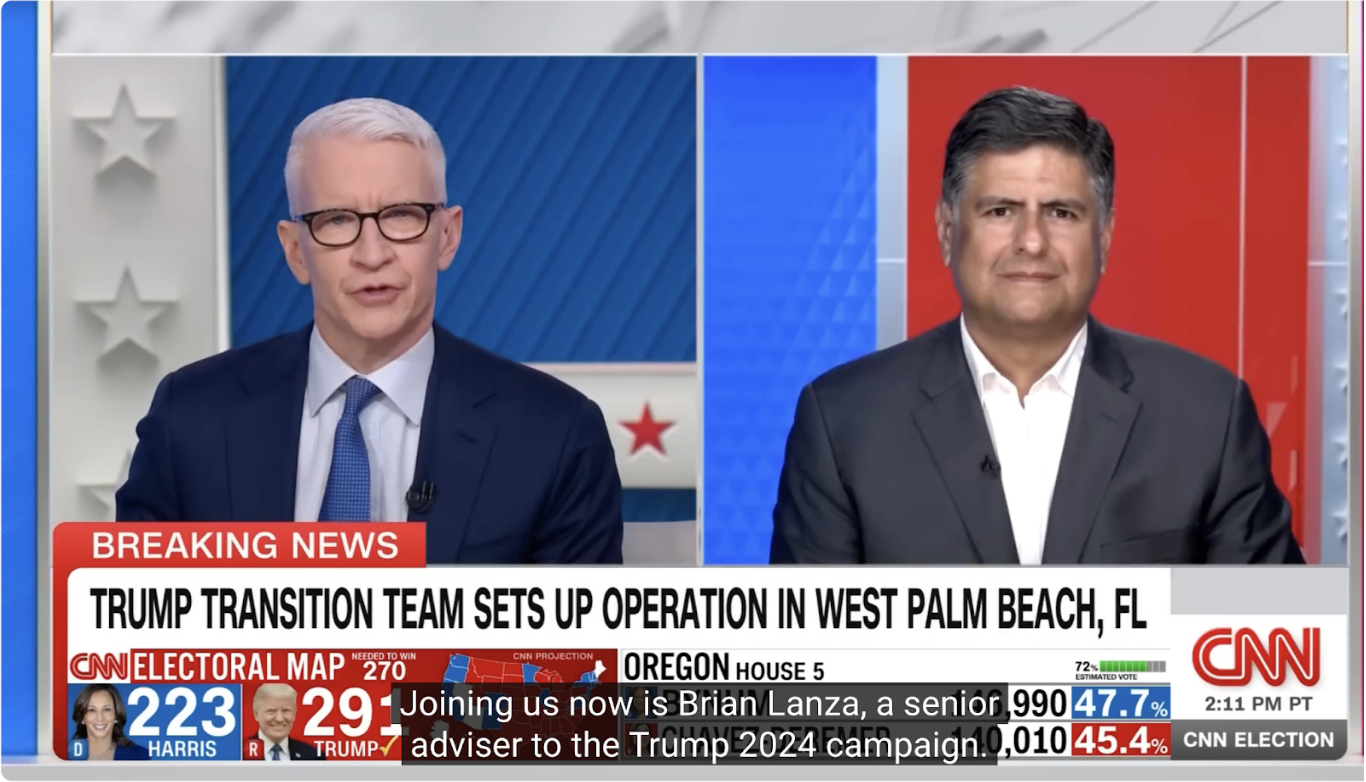
Registered lobbyists for Bayer at Mercury Public Affairs include Bryan Lanza, who was deputy communications director for Trump’s 2016 campaign and communications director for Trump’s first presidential transition team. Lanza joined Mercury in 2017 and has been a frequent guest on cable news shows as a surrogate and for Trump.
More Bayer ties to the White House
Another key White House aide with ties to Bayer’s legal network is Ryan Baasch, Trump’s deputy assistant to the President for economic policy. In this role, Baasch helps convert Trump’s economic agenda into coordinated federal policy. From 2016-2021, Baasch was an associate at Latham & Watkins, a law firm that represented Bayer on Roundup settlement issues and represented Monsanto in a case involving dicamba. The firm also represented Monsanto and CropLife America in a glyphosate warning case.
Another aide close to Trump in 2025, Trent Morse, was a senior associate at Ballard Partners from 2020 to 2022, then moved to Mercury Public Affairs as a senior vice president. As deputy assistant to the President and deputy director of presidential personnel for eight months, Morse was part of the team responsible for recruiting, vetting and recommending candidates for political appointments throughout the executive branch. He left the White House in August for a lobbying job.
USDA officials’ ties to Bayer
The U.S. Department of Agriculture oversees farm policy, crop systems, and biotechnology approvals, shaping the subsidies, research, and planting decisions that drive demand for Bayer’s seeds and chemicals. The agency has long faced criticism over its servility to the chemical industry, and the Trump administration is no exception. Current USDA officials with ties to Bayer and its chemical industry allies include:
- Stephen Vaden, deputy secretary of agriculture, is a former associate at Jones Day(2014–2017), a firm that represented Bayer on its acquisition of Monsanto, and Squire Patton Boggs (2011-2014), which represented Bayer and Monsanto in cases involving glyphosate and PCBs.
- Richard Fordyce,undersecretary for farm production and conservation, is the former agriculture business growth director for the public relations and marketing firm Osborn Barr Paramore (2021-2025), which was Bayer’s PR agency for years. A former director of the United Soybean Board, Fordyce was administrator of the Farm Service Agency in Trump’s first term.
- Scott Hutchins,undersecretary for research, education, economics & chief scientist, spent over 30 years at Dow AgroSciences (now Corteva), most recently as global R&D director. He served in this same USDA role in the first Trump administration.
- Pat Swanson,administrator of the Risk Management Agency, was a director for the lobby groups American Soybean Association and the Iowa Soybean Association, where she advocated for Bayer’s pesticides.
- Bill Beam,administrator of the Farm Service Agency, served for nine years on the United Soybean Board, which collaborates with Bayer on research initiatives. Beam previously served as the deputy administrator for farm programs at the FSA (2018–2021).
- Peter Laudeman, senior policy advisor for trade and foreign agricultural affairs, is a former political affairs manager of Corteva Agriscience (formerly DowDuPont) from 2020-2022, and legislative assistant for the National Corn Growers Association from 2018-2020.
Bayer’s pursuit of federal preemption
Bayer’s case before the Supreme Court has high stakes for public health protections and the legal right of individuals to hold companies accountable in court.
Federal preemption – the idea that federal law can override state law in some circumstances – has long been a priority for chemical and food companies that want a single, often weaker, national standard for regulation and liability, while consumer and health groups argue that states must retain the right to set higher health and safety standards.
The issue is central to Bayer’s case before the Supreme Court: the company argues that because the EPA approved glyphosate, cancer claims tied to Roundup should be barred under state failure-to-warn laws. The federal government’s position on whether pesticide approvals preempt state laws has shifted across administrations, underscoring how much the outcome depends on who holds power, and who influences it.
In May 2025, two appellate attorneys with deep experience at the U.S. Department of Justice, Jennifer Scheller Neumann and Amelia Yowell, joined Holland & Hart LLP,a firm that provides legal and lobbying services. A month earlier, the firm had registered to lobby for Bayer.
Neumann spent 20 years at the DOJ’s Environment and Natural Resources Division, most recently as chief of the appellate section overseeing all appellate litigation involving federal environmental laws. She was a signatory on the DOJ’s 2019 amicus brief in the Ninth Circuit Court of Appeals supporting Monsanto (now Bayer). The brief argues that EPA’s approval of glyphosate preempts state failure-to-warm laws.
The Biden administration reversed that position in 2022, urging the Supreme Court to reject Bayer’s case on the premise that federal pesticide law should not preempt state failure-to-warn laws.The Trump Justice Department reversed it again in 2025 – arguing the Biden-era position was wrong and that juries shouldn’t second-guess EPA science.
Oral arguments before the Supreme Court are scheduled for April 27. A win for Bayer could turn EPA pesticide approvals into a nationwide liability shield, elevating the agency’s slow and often industry-dominated chemical assessment process into a final word on pesticide safety, at a time when peer-reviewed research continues to emerge linking pesticide exposure to cancer, neurological harm, and other chronic illnesses.
As Nathan Donley of the Center for Biological Diversity warned, such a precedent would mean that “the only thing that matters legally in determining a pesticide’s safety is what EPA claims to be true, even if those claims completely ignore the best available science.”
Slashing capacity at EPA
Bayer allies also pervade the U.S. agency charged with protecting health and the environment – in positions where they influence what chemicals and pesticides are approved and how these products are regulated. Chemical industry lobbyists now occupy the top four jobs at the EPA’s Office of Chemical Safety and Pollution Prevention (OCSPP), the division in charge of regulating chemicals and pesticides. EPA officials loosened ethics standards to allow it.
Douglas Troutman, assistant administrator at OCSPP, is the former co-CEO and chief lobbyist for the American Cleaning Institute (ACI), which represents major chemical manufacturers. Troutman worked at the lobby group for 17 years before joining the Trump administration.
Nancy Beck, principal deputy assistant administrator at OCSPP, was a senior director at the American Chemistry Council – a lobby group representing Bayer, Dow Chemical, DuPont and other chemical manufacturers – from 2012 to 2017. In Trump’s first EPA, she held advisory roles within the White House at NEC and OMB. Between Trump administrations she worked at Hunton Andrews Kurth, a law firm that offers, among other services, glyphosate litigation defense to companies facing lawsuits from cancer claims.
Lynn Ann Dekleva OCSPP’s deputy assistant administrator for new chemicals, also held this role during the first Trump administration. In between, she was a senior director at the lobby group American Chemistry Council.She is a 30-year veteran of DuPont chemical company, where she workedas a program manager and engineer.
Kyle Kunkler, OCSPP deputy assistant administrator for pesticides, is a former pesticide industry lobbyist. He was director of government affairs, with a focus on biotech and pesticides, for the American Soybean Association from 2020-2025, and prior to that spent three years managing government affairs on food and agriculture for the Biotechnology Innovation Organization lobby group. CropLife America, the main lobby group for the pesticide industry, gave him a “Rising Star” award in 2020.
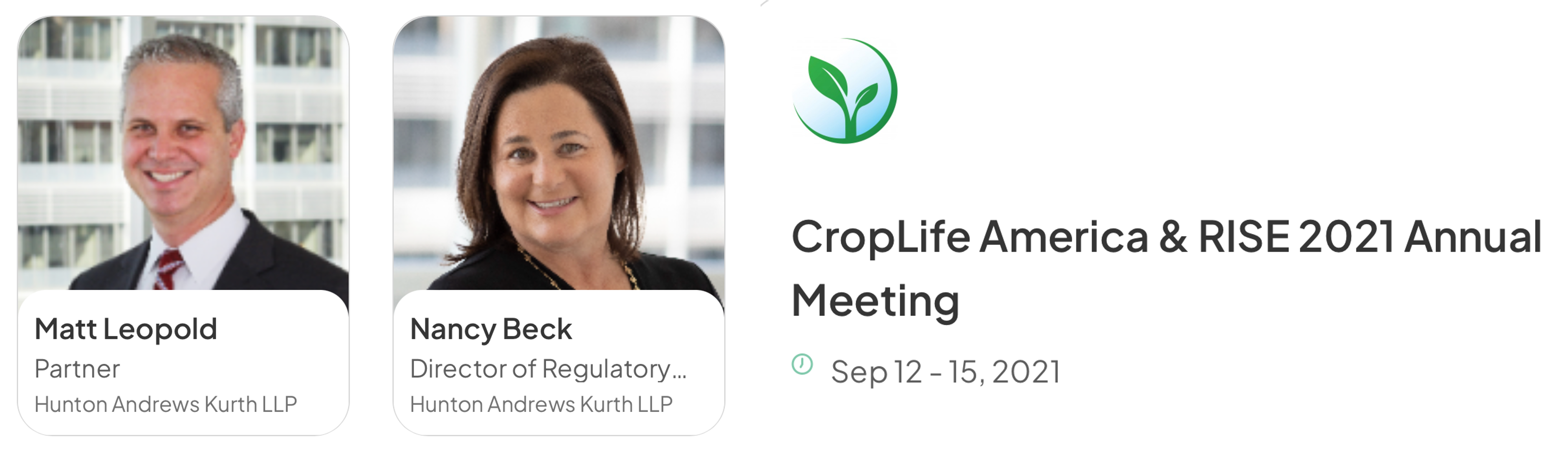 *Bayer was a gold sponsor at CropLife America 2021 where Beck was a featured speaker alongside her colleague Matt Leopold, who was EPA’s top lawyer during the first Trump administration. Hunter Andrews Kurth is a leading firm for pesticide litigation.
---
More EPA officials with ties to Bayer include:
Steven Cook, deputy assistant administrator for the Office of Land and Emergency Management, oversees Superfund sites. Bayer is associated with several Superfund sites due to its pesticide and chemical manufacturing. Cook spent over 20 years as the in-house corporate counsel for LyondellBasell, one of the world’s largest plastics and chemical companies. LyondellBasell has a 50/50 joint venture with Bayer (a propylene oxide and styrene monomer plant). LyondellBasell CEO Peter Vanacker is board chair of the American Chemistry Council.
Aaron Szabo,assistant administrator for air and radiation (appointed in July 2025) was a partner and lobbyist at CGCN Group (2018–2023), which has been registered to lobby for the American Chemistry Council during the past decade. From 2023 to 2024, he was a senior director and attorney at Faegre Drinker Biddle & Reath, where he represented chemical interests, including the ACC, before returning to the EPA in January 2025.
Alex Dominguez,deputy assistant administrator for mobile sources, was a registered lobbyist with Massie Partners, where he represented the National Corn Growers Association, a group whose members are consumers of Bayer’s seeds and pesticides. He worked in that role from 2023 to January 2025.
More Trump officials tied to Bayer
As assistant secretary of legislation at the U.S. Department of Health and Human Services, Gary Andresis a primary liaison between HHS and Congress. He was previously the senior executive vice president of public affairs at the Biotechnology Innovation Organization, the main trade group for biotech companies including Bayer. At BIO, Andres directed the lobbying strategy for the entire biotech sector, which included defending the regulatory framework for GMOs and associated agrichemicals. He previously worked at lobbying firm Dutko Worldwide which has represented Bayer.
Secretary of Transportation Sean Duffy also has ties to a Bayer lobby firm; he was senior counsel and advisory board member of BGR Group from 2019 to 2023 and was a registered lobbyist for the firm in 2020, though there is no record of him lobbying for Bayer.
13 lobby firms working for Bayer in Washington
Bayer’s direct lobbying spending is significant, but its political influence expands considerably when viewed alongside allied trade and commodity groups that together form a well-financed and coordinated lobbying network. In 2025, Bayer retained at least 13 lobby firms and at least 49 registered lobbyists registered to lobby for the company (including Bayer’s six in-house lobbyists) as of the fourth quarter, federal disclosures show.
Bayer spent at least $9.19 million on federal lobbying last year. While it is not among the highest-spending single corporations lobbying in D.C., the agribusiness sector ranked ninth with $219.9 million in lobbying expenditures in 2025 – the highest year on record for the sector. We include the sector total because Bayer’s influence is amplified by an integrated industrial agribusiness system that acts in concert – from pesticide-dependent commodity crops to factory farms and ultra-processed food production – to shape policy in its favor.
Within the sector, groups directly lobbying for favorable pesticide policies include trade groups representing pesticide manufacturers – the American Chemistry CouncilandCropLife America – and commodity groups such as the National Corn Growers Association and American Soybean Association that rely on Bayer’s products.
These four groups spent a combined $22 million on federal lobbying in 2025, with 12 more outside lobby firms and 79 more registered lobbyists in the fourth quarter.
Bayer’s lobbying activity last year was its highest in recent years, but lower than the company’s peak in 2016, 2017 and 2018, just before the Bayer/Monsanto merger and following the 2015 WHO cancer agency finding that glyphosate is a probable human carcinogen.
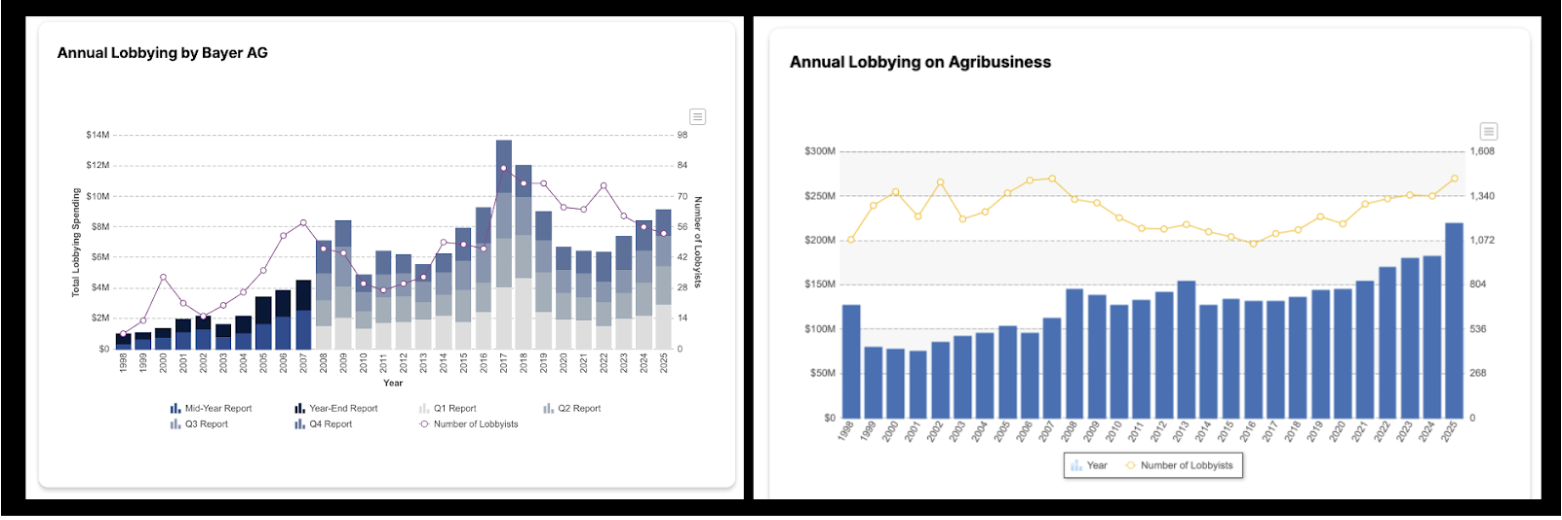 *Source: OpenSecrets
These numbers don’t reflect the whole picture of Bayer’s lobbying activities. The Lobbying Disclosure Act requires registration only after certain spending and activity thresholds are met, so public filings do not capture all of the paid influence work taking place in Washington.
They don’t reflect state-level activity, either. Pesticide related PAC spending surged in late 2024 as companies sought to limit damage awards in courts across the nation. In Iowa alone, Bayer spent a record amount last year trying to pass a state immunity bill critics called the Cancer Gag Act.
Read more about Bayer’s lobby force in our Bayer Lobby Tracker.
More lobbyists tied to Trump
Political scientists have long documented how lobbying shapes public policy by securing access to decision-makers, and helping corporations turn their priorities into laws and regulations. These dynamics help explain how companies like Bayer can translate access in Washington into concrete policy wins.
More than 30 people in leadership positions at lobby firms retained by Bayer have direct ties to Trump’s current or former administrations or presidential campaigns, our analysis shows. Many of these lobbyists are not personally registered to lobby for Bayer, but may be assisting in ways that do not trigger lobby registration, for example, advising the firm’s Bayer lobbyists.
As noted earlier, Ballard Partners – the firm that employed both Susie Wiles and Pam Bondi, and is run by one of Trump’s biggest political fundraisers – is a fundamental connection for Bayer o Trump’s orbit. In addition to Brian Ballard and Daniel McFaul, the two lobbyists at the firm who are registered to lobby for both Bayer and the American Chemistry Council, other partners at Ballard have connections to Trump:
Hunter Morgen, a D.C.-based partner in the firm, served over three years in senior positions during the first Trump administration – as special assistant to the President and senior advisor for policy and strategy in the White House working on trade and immigration issues with Peter Navarro and Stephen Miller. Prior to his White House role, Morgen was policy advisor for the State Department in the Office of Policy and Planning. He previously worked on Trump’s 2016 presidential campaign and transition team. In 2020, Trump appointed Morgen to the Presidential Council on Improving Federal Civil Architecture. Morgen – along with Brian Ballard, Daniel McFaul, Syl Lukas (a senior partner at Ballard) and Susie Wiles – were included among a list of donors invited to an October 2025 gala for Trump’s new $250 million East Wing ballroom.

Mike Rubino, another D.C. partner at Ballard, was among the first hires on Trump’s 2016 presidential campaign where he was a senior advisor directing operations in ten states and winning nine of them, according to his bio. He joined the first Trump administration as a senior official at HHS before leaving for the private sector where he worked alongside Corey Lewandowski, who is currently a key figure at the Department of Homeland Security.
Ballard D.C. Partner William Russell was the aide responsible for Trump’s daily travel and logistics for nearly four years of the first administration. Russell also worked on Trump’s 2016 and 2024 campaigns.
Brian Hughes, a partner at Mercury Public Affairs– the other lobby firm that previously employed Susie Wiles – was NASA chief of staff from May to December 2025. He joined Mercury in January 2026. Brian Hughes was Trump’s Florida campaign manager in 2024 and communications director for Trump’s transition team. Danielle Alvarez, another partner at Mercury, held communications and advisory roles in Trump’s 2020 and 2024 campaigns.
Other Bayer lobby firm ties to Trump’s White House include:
Amy Swonger, a principal at Invariant– a firm registered to lobby for Bayer – worked in the Executive Office of the President for most of Trump’s first term, as assistant to the president and as director and deputy director of legislative affairs.
Jordan Bonfitto,a director at Invariant, was a policy advisor at the National Economic Council in Trump’s first White House, focused on the agricultural and biotech portfolios. From February to October 2025, Bonfitto was the chief of staff for marketing and regulatory programs at the USDA under Secretary Brooke Rollins. He joined Invariant in November.
Other notable Bayer lobby firm ties to Trump:
Holland & Hart, a lobby firm Bayer retained in April 2025, employs former EPA Administrator Andrew Wheeler, who held the top job at EPA for part of Trump’s first term. Wheeler is a partner at the firm and head of federal affairs. Troy Lyons, a registered lobbyist for Bayer and senior director of federal affairs at Holland & Hart, held senior roles in Trump’s first EPA working under both Wheeler and Trump’s first EPA Administrator Scott Pruitt.
At BGR Government Affairs, several senior lobbyists have ties to Trump. Managing Director David Urban was a senior advisor on Trump’s 2016, 2020, and 2024 campaigns; Practice Head and Principal William Crozer left the firm during Trump’s first term to serve as special assistant to the president and deputy director of the White House Office of Intergovernmental Affairs; and PrincipalJoseph Lai was aspecial assistant to the President for legislative affairs (2017-2019), where he led the outreach and vote-counting efforts to confirm Justices Gorsuch and Kavanaugh, as well as other major appointees.
Akin Gump Strauss Hauer & Feld, longtime lobbyists for Bayer and Monsanto, also has notable advisors and partners with ties to Trump. Geoff Verhoff, senior advisor at the firm, served on the Trump-Pence victory finance leadership committee 2017-2021 and was the vice chair of the RNC Finance Committee in those years. Partner Kelly Ann Shaw, was deputy assistant to the President for international economic affairs and the U.S. lead negotiator (Sherpa) for the G7, G20, and APEC in 2018 and 2019. Senior Advisor Anna Abramdeputy commissioner for policy, legislation and international affairs at the FDA from 2017 to 2021.
For more ties between Bayer’s lobby firms, the Trump administration and other routes of influence see our lobby tracker:
This analysis of Bayer-Trump connections reflects only what is visible in public records. Additional financial, political, or personal ties – including undisclosed funding streams, if they exist – may remain hidden. This story is a work in progress. We will update it. You can help by sending us what you may know about ties between Bayer and the Trump administration, including the federal agencies. Contact Stacy Malkan via Signal or email stacy@usrtk.org.
Updates made February 26:
- Added another USDA official (Peter Laudeman) with ties to Bayer.
- Added total number of lobbyists and lobby firms retained by four trade and commodity groups that work closely with Bayer: American Chemistry Council, CropLife America, National Corn Growers Association and American Soybean Association.
Categories: Monsanto/Bayer, Pesticides Tags: Primary Article
===
---
Pesticide use and cancer risk rise together across America’s heartland - Investigate Midwest
SOME LNX
“Our findings show that the impact of pesticide use on cancer incidence may rival that of smoking,” scientists wrote in a 2024 study, which was published in Frontiers in Cancer Control and Society.
Pesticide manufacturers often rejected those claims while sometimes concealing research by their own employees that raised similar concerns. These companies — such as Bayer, Syngenta, Corteva and BASF — have also spent millions to lobby federal and state lawmakers for laws that would limit their legal liability and continue to allow them to sell agrichemicals.
In 2019, a California jury ordered Bayer to pay $2 billion in one lawsuit (the amount was later reduced). Since then, more than 65,000 lawsuits have been filed against the company, according to Bayer, and the company has agreed to pay more than $12 billion in settlements.
The Modern Ag Alliance has spent more than a quarter of a million dollars on state lobbying since 2024.
In Idaho, the organization spent one in four lobbyist dollars last year. In Iowa, Bayer has spent $209,750 on lobbying since 2023, double what the company spent in the previous decade.
Most of the bills came up short in 2025, but Georgia and North Dakota passed liability shields that will complicate local lawsuits.
Georgia’s Senate Bill 144, which took effect Jan. 1, received some bipartisan support but was mostly approved by the Republican majority and opposed by Democrats.
Similar bills have been filed in at least 10 states for this year’s legislative sessions.
In 2024, the Iowa bill was passed by the state Senate with a 30-to-19 vote. Ahead of a vote in the House last year, farmer and environmental groups lobbied against the bill.
The session ended without the House taking up a vote. The bill could return in 2026, but Faux, the Iowa farmer, said he also worries about it being “snuck into” another bill or budget agreement.
“I don’t think we can just assume this fight is over,” Faux said.
---
transformer
The AI industry has already shown an appetite for dirty lobbying tactics, but things look set to get even worse.
On Monday, Andreessen Horowitz, OpenAI’s Greg Brockman, Perplexity, and investors Ron Conway and Joe Lonsdale launched Leading the Future, a new network of super PACs and 501c(4)s to “organize political support and elect pro-innovation candidates at scale.”
Leading the Future is launching with more than $100m in funding, enough to make it one of the biggest spenders in congressional elections. The aim is clear: throw obscene amounts of money at politicians to discourage AI regulation.
The network will “support candidates aligned with the pro-AI agenda … and oppose those that do not,” the announcement reads, with plans to operate in both primary contests and general elections. Statements accompanying the launch talk of needing to kill policies that “make it impossible to build” or “enable China to gain global AI superiority” — claims that will doubtless be weaponized against any and all AI regulation.
Leading the Future is, according to the Wall Street Journal, modeled on Fairshake — a super-PAC network that pushed a pro-crypto agenda in the 2024 elections. Josh Vlasto, one of the founders of Leading the Future, was Fairshake’s spokesman and media strategist.
Fairshake, which alongside affiliated super PACs spent about $135m last year, has a simple strategy. “If you are pro-crypto, we will help you, and if you are anti we will tear you apart,” a person familiar with its approach told the New Yorker.
In last year’s elections, Fairshake pumped millions of dollars into campaigns opposing politicians that the group deemed unfriendly. Many ads avoided mentioning crypto, in one instance simply calling a candidate a “liar” and a “bully” and falsely suggesting they had taken money from the pharma and oil industries. An employee at Coinbase, a major donor to Fairshake, told the New Yorker that “it wasn’t really about explaining how crypto works, or anything like that. It’s about hitting politicians where they are most sensitive—reelection.”
The figure behind much of Coinbase’s political work at the time was Chris Lehane, now head of global affairs at OpenAI. Lehane was “involved in initial conversations earlier in the year about the need to help shape [AI] industry-friendly policies,” the WSJ reported.
Lehane previously ran Airbnb’s policy team, where he adopted a similar approach to pressure politicians into doing his bidding. Someone who worked with him at the time put it simply: “The goal was intimidation, to let everyone know that if they fuck with us they’ll regret it.”
Fairshake has shown that such spending gets results: it won almost all the races it spent on last year, and likely convinced many other politicians to go easy on crypto lest they draw Fairshake’s wrath. In turn, America now has an exceedingly pro-crypto Congress, which has already started passing bills to help the industry.
Leading the Future’s partners already have a grim track record. As Transformer reported last year, Andreessen Horowitz masterminded a campaign to kill SB 1047 last year that was full of misleading and false claims. Democratic power-broker Conway, who owns stakes in OpenAI and Anthropic, was also involved. And Zac Moffatt, who runs Leading the Future alongside Vlasto, has previously worked on misleading ad campaigns for Meta in its battle with TikTok.
The new organization’s launch comes as AI companies gear up for another series of state-level political fights, most notably in California and New York (both of which LTF has said it’ll begin operating in this year). Alongside funding LTF, Andreessen Horowitz is backing the American Innovators Network, a group which reportedly plans to invest “north of six figures” to oppose AI regulation in New York.
OpenAI, meanwhile, is hiring lobbyists in California in an effort to stifle new regulation there, and there are already signs of the Fairshake playbook, insinuating without evidence that one AI safety group was secretly funnelling money through another.
In August of last year Rick Claypool of Public Citizen, a non-profit which advocates for campaign finance reform, published a report analyzing the crypto industry’s attempt to buy political favor.
“Crypto did not invent the corporate political influence strategy of rewarding candidates who agree to do an industry’s bidding while threatening those who resist corporate power,” Claypool wrote. “But no industry has ever before so wholeheartedly embraced raising as much directly from corporations and openly using that political war chest as a looming threat (or reward) to discipline lawmakers toward adopting an industry’s preferred policies.” Claypool later told the New York Times that “other sectors are going to try to duplicate this strategy.”
AI leaders seem to have taken that as a challenge.
---
---
POLITICO
The AI lobby plants its flag in Washington - POLITICO
Jun 6, 2025The AI lobby plants its flag in Washington A new wave of AI companies is lobbying up in Washington, and already getting much of what it wants.
By Mohar Chatterjee 06/06/2025
Top artificial intelligence companies are rapidly expanding their lobbying footprint in Washington — and so far, Washington is turning out to be a very soft target.
Two privately held AI companies, OpenAI and Anthropic — which once positioned themselves as cautious, research-driven counterweights to aggressive Big Tech firms — are now adding Washington staff, ramping up their lobbying spending and chasing contracts from the estimated $75 billion federal IT budget, a significant portion of which now focuses on AI.
They have company. Scale AI, a specialist contractor with the Pentagon and other agencies, is also planning to expand its government relations and lobbying teams, a spokesperson told POLITICO. In late March, the AI-focused chipmaking giant Nvidia registered its first in-house lobbyists.
AI lobbyists are “very visible” and “very present on the hill,” said Rep. Don Beyer (D-Va.) in an interview at the Special Competitive Studies Project AI+ Expo this week. “They’re nurturing relationships with lots of senators and a handful of members [of the House] in Congress. It’s really important for their ambitions, their expectations of the future of AI, to have Congress involved, even if it’s only to stop us from doing anything.”
This lobbying push aims to capitalize on a wave of support from both the Trump administration and the Republican Congress, both of which have pumped up the AI industry as a linchpin of American competitiveness and a means for shrinking the federal workforce.
They don’t all present a unified front — Anthropic, in particular, has found itself with conservatives, and on Thursday its CEO Dario Amodei broke with other companies by urging Congress to pass a national transparency standard for AI companies — but so far the AI lobby is broadly getting what it wants.
“The overarching ask is for no regulation or for light-touch regulation, and so far, they’ve gotten that,” said Doug Calidas, senior vice president of government affairs for the AI policy nonprofit Americans for Responsible Innovation.
In a sign of lawmakers’ deference to industry, the House passed a ten-year freeze on enforcing state and local AI regulation as part of its megabill that is currently working through the Senate.
Critics, however, worry that the AI conversation in Washington has become an overly tight loop between companies and their GOP supporters — muting important concerns about the growth of a powerful but hard-to-control technology.
“There’s been a huge pivot for [AI companies] as the money has gotten closer,” Gary Marcus, an AI and cognitive science expert, said of the leading AI firms. “The Trump administration is too chummy with the big tech companies, and basically ignoring what the American people want, which is protection from the many risks of AI.”
Anthropic declined to comment for this story, referring POLITICO to its March submission to the AI Action Plan that the White House is crafting after President Donald Trump repealed a sprawling AI executive order issued by the Biden administration.
OpenAI, too, declined to comment.
This week several AI firms, including OpenAI, co-sponsored the Special Competitive Studies Project’s AI+ Expo, an annual Washington trade show that has quickly emerged as a kind of bazaar for companies trying to sell services to the government. (Disclosure: POLITICO was a media partner of the conference.)
They’re jostling for influence against more established government contractors like Palantir, which has been steadily building up its lobbying presence in D.C. for years, while Meta, Google, Amazon and Microsoft — major tech platforms with AI as part of their pitch — already have dozens of lobbyists in their employ.
What the AI lobby wants is a classic Washington twofer: fewer regulations to limit its growth, and more government contracts.
The government budget for AI has been growing. Federal agencies across the board — from the Department of Defense and the Department of Energy to the IRS and the Department of Veterans Affairs — are looking to build AI capacity. The Trump administration’s staff cuts and automation push is expected to accelerate the demand for private firms to fill the gap with AI.
For AI, “growth” also demands energy and, on the policy front, AI companies have been a key driver of the recent push in Congress and the White House to open up new energy sources, streamline permitting for building new data centers and funnel private investment into the construction of these sites.
Late last year, OpenAI released an infrastructure blueprint for the U.S. urging the federal government to prepare for a massive spike in demand for computational infrastructure and energy supply. Among its recommendations: creating special AI zones to fast-track permits for energy and data centers, expanding the national power grid and boosting government support for private investment in major energy projects.
Those recommendations are now being very closely echoed by Trump administration figures. Last month, at the Bitcoin 2025 Conference in Las Vegas, David Sacks — Trump’s AI and crypto czar — laid out a sweeping vision that mirrored the AI industry’s lobbying goals.
Speaking to a crowd of 35,000, Sacks stressed the foundational role of energy for both AI and cryptocurrency, saying bluntly: “You need power.” He applauded President Donald Trump’s push to expand domestic oil and gas production, framing it as essential to keeping the U.S. ahead in the global AI and crypto race.
This is a huge turnaround from a year ago, when AI companies faced a very different landscape in Washington. The Biden administration, and many congressional Democrats, wanted to regulate the industry to guard against bias, job loss and existential risk.
No longer. Since Trump’s election, AI has become central to the conversation about global competition with China, with Silicon Valley venture capitalists like Sacks and Marc Andreessen now in positions of influence within the Trump orbit. Trump’s director of the Office of Science and Technology Policy is Michael Kratsios, former managing director at Scale AI. Trump himself has proudly announced a series of massive Gulf investment deals in AI.
Sacks, in his Las Vegas speech, pointed to those recent deal announcements as evidence of what he called a “total comprehensive shift” in Washington’s approach to emerging technologies.
But as the U.S. throws its weight behind AI as a strategic asset, critics warn that the enthusiasm is muffling one of the most important conversations about AI: its ability to wreak unforeseen harm on the populace, from fairness to existential risk concerns.
Among those concerns: bias embedded in algorithmic decisions that affect housing, policing, and hiring; surveillance that could threaten civil liberties; the erosion of copyright protections, as AI models hoover up data and labor protections as automation replaces human work.
Kevin De Liban, founder of TechTonic Justice, a nonprofit that focuses on the impact of AI on low income communities, worries that Washington has abandoned its concerns for AI’s impact on citizens.
“Big Tech gets fat government contracts, a testing ground for their technologies, and a liability-free regulatory environment,” he said, of Washington’s current AI policy environment. “Everyday people are left behind to deal with the fallout.”
There’s a much larger question, too, which dominated the early AI debate: whether cutting-edge AI systems can be controlled at all. These risks, long documented by researchers, are now taking a back seat in Washington as the conversation turns to economic advantage and global competition.
There’s also the very real concern that if an AI company does bring up the technology’s worst-case scenarios, it may find itself at odds with the White House itself. Anthropic CEO Amodei said in a May interview that labor force disruptions due to AI would be severe — which triggered a direct attack from, on his podcast, who said that line of thinking led to “woke AI.”
Still, both Anthropic and OpenAI are going full steam ahead. Anthropic hired nearly a dozen policy staffers in the last two months, while OpenAI similarly grew its policy office over the past year.
They’re also pushing to become more important federal contractors by getting critical FedRAMP authorizations — a federal program that certifies cloud services for use across government — which could unlock billions of dollars in contracts.
As tech companies grow increasingly cozy with the government, the political will to regulate them is fading — and in fact, Congress appears hostile to any efforts to regulate them at all.
In a public comment in March, OpenAI specifically asked the Trump administration for a voluntary federal framework that overrides state AI laws, seeking “private sector relief” from a patchwork of state AI bills.
Two months later, the House added language to its reconciliation bill that would have done exactly that — and more. The provision to impose a 10 year moratorium on state AI regulations passed the House but is expected to be knocked out by the Senate parliamentarian. (Breaking ranks again, Anthropic is lobbying against the moratorium.) Still, the provision has widespread support amongst Republicans and is likely to make a comeback.
---
---}:
an 10 25
Major U.S. food and beverage companies are orchestrating a campaign to pit President Donald Trump’s MAGA base against Health and Human Services Secretary Robert F. Kennedy Jr.’s Make America Healthy Again (MAHA) movement. The effort aims to derail initiatives that seek to limit soda and ultra-processed food consumption,*the Guardian*reported Sunday.
The strategy involves a network of Republican-aligned operatives and influencers to influence state-level legislation aimed at reducing soda consumption and restricting ultra-processed foods in public programs.
The American Beverage Association (ABA) and the Consumer Brands Association, representing giants like Coca-Cola, PepsiCo, and Nestlé, are leading the charge, per the report.
These trade groups have identified MAHA-backed policies, such as banning petroleum-based food dyes in schools and restricting SNAP benefits for sugary drinks, as significant threats to their profits. They have mobilized a mix of lobbyists, conservative media, and paid influencers to oppose these measures.
The report noted that in Arizona, lobbyist Michael Gardner contacted lawmakers to argue against a SNAP restriction bill, citing a poll su
---
AN 8 25
...Donald Trump isn’t draining any swamp. He’s the embodiment of D.C. corruption. His every move is being dictated by K Street. The irony is that most of the chumps who believe he is “draining the swamp” won’t understand that reference and sure as hell won’t look it up – that’s precisely what K Street is counting on. Having said that, if you’re genuinely interested in learning more about “the swamp” rather than merely parroting a campaign slogan, brothers Brody and Luke Mullins have written a phenomenal book entitled “The Wolves of K Street” that was recently released by Simon & Schuster.
The MAGA movement haplessly takes fraudster bait and consistently fails its own litmus test. Just look at who they anointed as “Dear Leader.” There’s a reason he “loves the poorly educated.”
J. Basil Dannebohm is a writer, speaker, consultant, former Kansas legislator and intelligencer. His website is www.dannebohm.com. Mr. Dannebohm is a member of the Virginia Press Association and the National Society of Newspaper Columnists. He writes from the Washington DC metro in the Commonwealth of Virginia.
---
---
an 8 25
Multiple people inside President Donald Trump's administration are already jumping ship after less than a year on the job and are securing highly lucrative jobs as lobbyists.
That's according to a Wednesday article by Politico's Caitlin Oprysko and Sophia Cai, who reported that high-profile lobbying firms are now scooping up several Trump administration staffers who have only been in the White House for a handful of months. Oprysko and Cai noted that the Washington D.C. "revolving door" between lobbying and government that Trump promised to bulldoze with his 2016 "drain the swamp" mantra remains alive and well given the announcement of the new hires.
"[B]arely a half-year into his second administration, a handful of senior White House aides are already heading for the exits — and right through the revolving door between the federal government and K Street, where they’re lining up cushy lobbying gigs," they wrote.
READ MORE:Trump 'in a tailspin': Answers demanded about 'remarkably close relationship' with Epstein
White House principal deputy press secretary Harrison Fields is leaving the administration to join the Republican-run lobbying firm CGCN Group, after just seven months in his previous role. Fields was often quoted as a White House spokesperson in major media outlets, accusing NPR and PBS of "creating media to support a particular political party on the taxpayers' dime" in a May article for Axios and justifying Trump's attacks on large law firms for having allegedly "propelled one-sided justice by providing pro bono resources to those causes that make our nation more dangerous and less free" in a recent Wall Street Journal report.
In addition to Fields' exit, Trent Morse — who is a deputy assistant to the president and the deputy director of the White House's Office of Presidential Personnel — is launching his own lobbying firm, while also teaming up with the powerhouse lobbying firm Brownstein Hyatt Farber Schreck. White House chief of staff Susie Wiles, who worked alongside Morse at two other lobbying firms over the last decade, heaped praise on Morse as he made his exit, calling him "an important and integral part of the successes we’ve had."
Ivan Adler, who runs an executive hiring firm in Washington, told Politico that the early exits of senior Trump staffers was proof that so many lobbying clients are "looking for a sherpa for this administration, just because it’s so different," and that "people are taking advantage" of their knowledge by hiring them directly from the White House.
Federal law requires a year-long "cooling off" period from the time a former government worker leaves their position to when they can begin officially lobbying the West Wing and representing foreign entities, meaning that for Fields and Morse, their cooling off window will be longer than their actual time serving in the White House. However, they can begin lobbying Congress immediately.
READ MORE:'They said it's a felony': Police yank Dem lawmaker out of bathroom for speaking to media
Click here to read Politico's report in its entirety.
===
---
oci8 25
big-oil-spent-over-18-million-in-first-half-of-2025-to-shake-down-california-and-evade-accountabilityhttps://www.apenaction.org/2025/08/04/big-oil-spent-over-18-million-in-first-half-of-2025-to-shake-down-california-and-evade-accountability/
Sacramento, CA — The oil industry is orchestrating a full-scale shakedown of California.
In the first half of 2025, the oil industry and its lobbying arm spent over $18 million to kill key climate legislation, protect its profits, and block efforts to hold it accountable — all while communities suffer from rising costs, pollution, and the accelerating impacts of climate change. The over $18 million figure puts the oil industry on pace for its second highest lobbying and influence spend of all time in California, trailing only behind last year’s final total of $38 million and well ahead of the previous record of $26.2 million in 2017.
Influence spending disclosure reports for the second quarter released for the August 1 deadline show that the industry’s spending binge includes multimillion-dollar misinformation campaigns designed to blame climate policies for high prices — when it’s really Big Oil’s own actions that are driving up costs. From gouging consumers at the pump to suddenly shutting down refineries and squeezing supply, fossil fuel corporations are manipulating the scarcity they created to lobby for further bailouts in the form of deregulation, subsidies, and unlimited oil drilling.
Top 6 lobbying and influence spenders (Jan – June 2025):...
---
---
an 7 25
When President Donald Trump and his allies speak of "draining the swamp," they are not only attacking liberals, progressives and Democrats — they also have an intense disdain for traditional non-MAGA conservatives and have made a concerted effort to purge Never Trump conservatives from Congress, the Republican National Committee (RNC) and right-wing media. Conservatives and libertarians who vigorously attack Trump from the right aren't hard to find, but they tend to congregate on MSNBC or The Bulwark and don't have a major presence on right-wing outlets like Fox News.
Another area where MAGA Republicans are declaring war on traditional conservatives, according to New York Magazine's Ben Terris, is political lobbying.
In an article published on July 10, Terris examines a "new breed" of MAGA lobbyists who are making their presence felt in Washington, DC — and they have vehement contempt for Never Trumpers and traditional non-MAGA conservatives.
READ MORE: That $20 dress you love now costs $30 — thanks to Donald Trump
"The passage of Trump’s signature legislation earlier this month proved there are still plenty of Big Beautiful Billable Hours for K Streeters," Terris explains, "but the ground game is changing fast…. In his second term, Trump has remade Washington in his own image. His administration is stocked with loyalists who were forced to pass purity tests."
A GOP lobbyist, interviewed on condition of anonymity, told New York Magazine, "Lobbying used to be Congress-focused, but they're not driving the show anymore. They are all now taking orders from the (Trump) Administration. Trump is outsize now, even compared to his last term."
According to Breitbart Media's Matt Boyle, a strident Trump supporter, conservative non-MAGA lobbyists have lost a lot of ground in Washington, DC.
Boyle told New York Magazine, "There's an ongoing battle right now with Trump-aligned folks in the lobbying-and-influence industry to expose and remove people who are anti-Trump from key positions in official Washington. It's going to be like the shootout at the OK Corral….. The whole point of this industry is to be someone who has a seat at the table, and if you're a Bush-globalist, establishment-loser Republican, then you don't get a seat at the table."
READ MORE:'Fascism is expanding': DOJ slammed for 'weaponized' probe of 'Trump’s perceived enemies'
Nonetheless, Terris notes that "in Trump's Washington….. there's a fine line between being successful and being too successful." And a popular expression among 2025's MAGA lobbyists, he says, is "Pigs get fat, and hogs get slaughtered."
"War Room" host and far-right MAGA Republican Steve Bannon said of right-wing lobbyists, "They all keep a low profile now. Eight years ago, they were promoting themselves. The smart ones try to stay behind the scenes."
READ MORE:Trump admin's new 'lie detector' campaign against leakers is unlikely to succeed: expert
*Read the full New York Magazine article at this link (subscription required).
---
BONDI GEO GP
[### Pam Bondi's Extensive Lobbying For Wealt...

Senate Judiciary Committee (.gov)
https://www.judiciary.senate.gov › press › dem › releases](https://www.judiciary.senate.gov/press/dem/releases/pam-bondis-extensive-lobbying-for-wealthy-special-interests-and-foreign-government-poses-serious-conflict-of-interest)
Jan 15, 2025 — Lobbying on behalf of private prisons: Bondi lobbied for The GEO Group, a private prison company that has faced criticism for safety ...
[### Trump's AG Pick Pam Bondi Lobbied for Private Prisons ...

The Intercept
https://theintercept.com › 2024/11/22 › trumps-new-ag-...](https://theintercept.com/2024/11/22/trumps-new-ag-pick-lobbied-for-private-prisons-and-amazon/)
Nov 22, 2024 — Pam Bondi has replaced Matt Gaetz in Trump's attorney general slot. Her lobbying clients include the GEO Group, among many others.
[### Durbin Demands Attorney General Bondi To Recuse ...

U.S. Senator Dick Durbin (.gov)
https://www.durbin.senate.gov › newsroom › press-releases](https://www.durbin.senate.gov/newsroom/press-releases/durbin-demands-attorney-general-bondi-to-recuse-herself-from-any-work-benefitting-private-prison-company-due-to-conflicts-of-interest)
May 2, 2025 — Durbin Demands Attorney General Bondi To Recuse Herself From Any Work Benefitting Private Prison Company Due To Conflicts Of Interest. Durbin ...
[### NIJC Opposes Nomination of Pam Bondi to be Attorney ...

National Immigrant Justice Center
https://immigrantjustice.org › staff › blog › nijc-oppose...](https://immigrantjustice.org/staff/blog/nijc-opposes-nomination-pam-bondi-be-attorney-general-united-states)
Jan 17, 2025 — Bondi's problematic role as a lobbyist for the country's largest private prison company, GEO Group, as recently as 2019. GEO Group has ...
[### NIJC statement opposing the nomination Pam Bondi

National Immigrant Justice Center
https://immigrantjustice.org › no-content-type](https://immigrantjustice.org/sites/default/files/uploaded-files/no-content-type/2025-01/NIJC-statement-opposing-AG-nomination-Pam-Bondi_Jan2025.pdf)
Jan 17, 2025 — Partners, she worked as a lobbyist for the country's largest private prison company, GEO Group, as recently as 2019.1. The private prison ...
4 pages
[### Private Prison Company GEO Group “Excited” About Mass ...

The Appeal
https://theappeal.org › geo-group-earnings-may-mass-d...](https://theappeal.org/geo-group-earnings-may-mass-deportation/)
May 7, 2025 — Pam Bondi, the U.S. Attorney General, is a former GEO Group lobbyist. The company is under contract with ICE for 16,000 beds, which Donahue said ...
[### Conflicted Justice

Public Citizen
https://www.citizen.org › Articles](https://www.citizen.org/article/conflicted-justice/)
Jan 8, 2025 — Lobbying reports filed in 2019 disclosed that, while Bondi was registered to lobby for The Geo Group, her lobbying firm was paid $60,000 by The ...
[### Pam Bondi Lobbying Profile - Lobbyists

OpenSecrets
https://www.opensecrets.org › lobbyists › summary](https://www.opensecrets.org/federal-lobbying/lobbyists/summary?id=Y0000055471L)
Pam Bondi is a lobbyist who lobbied for 16 clients in 2019. See the details.
[### Pam Bondi and the Pay-to-Play Justice System

The American Prospect
https://prospect.org › justice › 2025-01-14-pam-bondi-...](https://prospect.org/justice/2025-01-14-pam-bondi-pay-to-play-justice-system/)
Jan 14, 2025 — GEO Group, the private prison company that stands to gain heavily from the policies of mass deportation, was another Bondi client; DOJ has ...
[### Pam Bondi will face an ethics quagmire as attorney general

Politico
https://www.politico.com › news › 2024/12/07 › pam-b...](https://www.politico.com/news/2024/12/07/pam-bondi-doj-ethics-00192890)
Dec 7, 2024 — Bondi has also lobbied for the GEO Group, a major private prison company that is paid hundreds of millions of dollars each year by the ...
[### Private prison behemoth is first corporation to max out ...

Citizens for Responsibility and Ethics in Washington
https://www.citizensforethics.org › crew-investigations](https://www.citizensforethics.org/reports-investigations/crew-investigations/private-prison-behemoth-is-first-corporation-to-max-out-to-trump/)
Jul 3, 2024 — The private prison behemoth GEO Group became the first corporation whose PAC maxed out to former President Donald Trump's campaign in late February.
Missing: bindi | Show results with: bindi
[### Private Prison Companies Are Raking in Profits From ...

Truthout
https://truthout.org › Articles › News Analysis](https://truthout.org/articles/private-prison-companies-are-raking-in-profits-from-increased-deportations/)
Apr 26, 2025 — ... Bondi lobbied for GEO Group while she worked at Ballad Partners, for which she was paid $390,000. The majority of GEO Group's lobbyists in ...
===
an 12 24
One of the campaign promises President-elect Donald Trump made ahead of his victory over Vice President Kamala Harris last month was to carry out the "the largest domestic deportation operation in American history."
According to a Sunday, December 22 Wall Street Journal report, the private prison industry is preparing to benefit greatly from the move — if Trump is able to accomplish it.
"Private prisons and other companies that provide detention services are getting ready to cash in on" the initiative, which "includes scouring for as many detention beds as possible in their networks of facilities, and scouting sites for new buildings to house migrants," the WSJ reports.
READ MORE:Top Trump donors who funded anti-migrant 'invasion' ad allegedly hiring undocumented migrants
Per the report, George Zoley, who serves as executive chairman of the private prison company, GEO group, told investors soon after the election, "This is, to us, an unprecedented opportunity."
The company, the WSJ notes, "which currently houses about 40% of ICE detainees, is looking at a potential doubling of all its services, Zoley said on the call."
GEO Chief Executive Officer Wayne Calabrese told the newspaper, "We have assured ICE of our capability to rapidly scale up to monitor and oversee several hundreds of thousands, or even several millions, of individuals."
WSJ reports:
*CoreCivic, the other major player in ICE detention centers, had a similar message for investors after the election. The company believes it could quickly bring its detention capacity to 25,000 beds by bringing unused ones online, including at a facility previously used to hold families in Dilley, Texas, CEO Damon Hininger said in an interview. The Biden administration chose to close the site earlier this year, but CoreCivic kept it in 'warm status,' Hininger said.
READ MORE:['Acknowledging reality': Fed chair says Trump agenda creating 'uncertainty around inflation'
Hininger, according to WSJ, said "in addition to identifying already-existing beds it could open, CoreCivic is also exploring adding new buildings or temporary facilities on land it already owns."
WSJ also notes, "To bolster its ties to the incoming administration, GEO Group recently hired a Trump-connected lobbying firm called Continental Strategy LLC, according to federal lobbying disclosures. The Florida firm is run by Carlos Trujillo, who advised Trump on Latino voters and immigration issues during the campaign. It also employs Katie Wiles, daughter of Trump’s chief of staff Susie Wiles."
===
politico
more new business streams into Trump-linked firms
12/13/2024
*With Daniel Lippman
THE FIRMS SEEING A TRUMP BUMP:A handful of firms with ties to President-elect Donald Trump are still raking in new clients as inauguration day draws closer. Ballard Partners, run by Trump ally and fundraiser Brian Ballard and the K Street home of Attorney General-designate Pam Bondi, has added seven new clients since the election last month, according to PI’s analysis of disclosure filings.
— The slate of new clients includes the Toy Association, which brought the firm on this month to provide “guidance and advocacy related to tariffs;” the AI drone image processor Safe Pro Group, which retained Ballard to work on issues related to land mine detection; and Texas child welfare group Compass Connections, for which Ballard will lobby on undocumented migrant children’s safety while in federal custody.
— Mercury Public Affairs, the former K Street home of incoming chief of staff Susie Wiles, signed five new clients since the election, disclosures show, with all but one of the new registrations listing Trump adviser Bryan Lanza as working on the accounts. Among Lanza’s new clients are the tech giant HP and Flock Safety, which sells drones for first responders and is facing a privacy lawsuit over its AI-powered license plate recognition cameras.
— As PI wrote last week, Continental Strategy, led by Trump adviser Carlos Trujillo, has also seen a surge in federal lobbying business. The firm has added six new clients since the election, including three disclosed this week: the Recording Industry Association of America, tech conference eMerge Americas and Arizona State University.
OURA RING LOBBIES UP:Biometric smart ring company and newly minted defense contractor Oura Ring has hired its first federal lobbyists. J.A. Green and Company, which specializes in defense lobbying, began working for the Finnish company in October, according to a newly filed disclosure.
— The Pentagon’s Defense Health Agency in October awarded Oura Ring a $96 million contract for smart rings for personnel. The health tech company is also being tasked with providing data analysis to monitor “physiological stress, recovery, resilience, and wellbeing indicators” gathered by the rings, and “workforce wellbeing services including high-performance medicine, mindfulness training, leadership coaching, protective factors, and peer-to-peer support training,” according to an announcement.
TGIF and welcome to PI. Send tips: coprysko@politico.com. And be sure to follow me on X: @caitlinoprysko.
READY TO MAKE NICE, PART I:“Top executives in the technology industry have long been a target of Donald Trump’s vitriol. As he prepares to return to the White House, they’re lining up to gain favor with the president-elect. Some come bearing checkbooks,” The Washington Post’s Caroline O’Donovan, Josh Dawsey, Leo Sands and Pranshu Verma report.
— “Google CEO Sundar Pichai was scheduled for a sit-down with him on Thursday. Salesforce CEO and Time magazine owner Marc Benioff celebrated his publication naming of Trump ‘person of the year.’”
— Post owner and Amazon founder Jeff Bezos, meanwhile, aims to meet with Trump next week and has pledged to donate $1 million to Trump’s inaugural committee through Amazon and is planning to stream the ceremony online as an in-kind donation. The check will be joined by $1 million from the personal bank account of OpenAI Chief Executive Sam Altman, who has criticized Trump in the past, and another $1 million from Meta’s Mark Zuckerberg, who dined with Trump last month.
— “The corporate giants appear to be hoping for a fresh start with Trump, who has lambasted the industry as biased and anticompetitive” — and has announced plans to fill several key roles in his administration with officials who feel similarly — “and targeted some of the biggest tech companies with threats of punitive action.”
READY TO MAKE NICE, PART II:Republicans are about to assume control of Washington, and after four years of being on the outs with the GOP, the U.S. Chamber of Commerce’s hopes of mending ties have been placed on the shoulders of former Rep. Rodney Davis (R-Ill.), who sat down with our **Rachael Bade this week to discuss how that project is going.
— Davis, who took the reins of the Chamber’s Hill lobbying operation this summer, repeatedly downplayed the notion of a falling out between Washington’s top business lobby and its future ruling class. He did concede there may be “some lingering frustrations” from “things that happened in the years past” — such as endorsing nearly two dozen vulnerable Democrats in 2020 and opposing Trump on issues like tariffs and the Paris climate accord.
— “But I have not witnessed that myself, with my interactions with my former colleagues,” he told Rachael. “What I have witnessed has been an outpouring of, ‘Hey, we want to continue — we want to work with you. We want to work with the Chamber.’”
— He pointed out that the Chamber endorsed more Republicans than Democrats this year and added that he remains close with and even discussed his new role with House leadership prior to it being announced. Davis also touted his campaign trail travel on behalf of House Republicans throughout the fall.
— Davis also told Rachael that he hadn’t spoken personally with Trump since Davis lost reelection in 2022 to a Trump-backed primary challenger and said he is “excited to be able to work with the Trump administration again” — even as one member of Trump world accused the Chamber of a tendency to “stab us in the back [with] one hand and shake our hand with the other.”
RELATED READ: “A Wish List From CEOs for the Trump Administration,” from The Wall Street Journal’s CEO Council.
===
---=
email 9 24
But a newcomer is putting those veterans to shame when it comes to the obscene amounts of money Corporate America spends corrupting our elections.
- As detailed in a recent Public Citizen report, the cryptocurrency sector alone is responsible for essentially half (48%) of ALL the disclosed corporate money lavished on political candidates so far this year.
- In other words, the crypto kingpins are spending virtually as much to distort our democracy as all other Big Businesses combined!
- Crypto is currency that exists only as digital (i.e. computer) files. It is not backed up by any government and so far it is largely unregulated. Bitcoin may be the most well known example.
- With the crypto “industry” spending so much so fast, those old-timers — Big Oil, Big Pharma, Wall Street, Big Tech, and more — will surely ramp up their spending beyond even the insane levels we’ve already seen from them.
- And we can only imagine the untold amounts they are spending in the shadows using dark money conduits.
- So the absolute dumpster fire of corporate money in politics could very well become a veritable supernova that burns everything to ash.
All of this, of course, was set off by the Supreme Court’s infamously anti-democratic Citizens United ruling back in 2010.
Public Citizen called for a constitutional amendment to overturn Citizens United within moments of the decision being handed down. We’ve also consistently fought for disclosure of the secret spending that was unleashed by the ruling. And we’ve been a leader in the fight against corporate money in politics ever since.
---
===
U.S. Meat Lobby Celebrates ‘Positive Outcome’ of COP28
==
desmog 4 24
fossil fuel interest groups have mobilized quickly to oppose a new rule issued by the Biden administration designed to speed up America’s transition to hybrid and electric vehicles.
The rule, which the U.S. Environmental Protection Agency (EPA) finalized on March 20, limits emissions from tailpipes on new cars, starting in 2027.
Well before the EPA finalized the new standard, powerful corporate lobbies like the American Fuel & Petrochemical Manufacturers (AFPM) had already promised to spend at least a million dollars campaigning against the rule by falsely portraying it as a “ban” on new cars. The group’s
 warn viewers that their freedoms and choices “will soon be taking a back seat to big government.”
The EPA predicts that the change would result in around two-thirds of new vehicle sales being hybrid or electric by 2032 — up from around eight percent today.
Beyond stopping more than 7 billion tons of carbon pollution, the agency predicts that the rule could save drivers more than $60 billion in fuel and maintenance costs, according to an EPA fact sheet that accompanied the final rule. The pollution reduction benefits would particularly benefit Black and brown communities because they are disproportionately likely to suffer from air pollution.
“These strongest-ever pollution standards for cars solidify America’s leadership in building a clean transportation future and creating good-paying American jobs,” EPA administrator Michael S. Regan said in a statement.
Compared to the EPA’s initial proposal, the final rule was scaled back to give car manufacturers more time to comply, but the New York Times still described the new standard as “one of the most significant climate regulations in the nation’s history.”
The heads of AFPM and the American Petroleum Institute (API) — the leading trade group for the oil and gas industry — declared in a joint statement that the rule “will unequivocally eliminate most new gas cars and traditional hybrids from the U.S. market in less than a decade.”
In February, AFPM had already begun portraying the rule as a “car ban” and announced a “seven-figure issue campaign” featuring TV and digital ads, as well as billboards and text messages. Some of the efforts target electoral swing states, including Michigan, Wisconsin, and Pennsylvania. The group also launched a website that warns readers, in all caps, to “keep the government’s hands off our cars!”
Despite the industry’s attempt to misleadingly brand the new standard, “this is not a ban of internal combustion engines,” Margaret Wooldridge, a professor of mechanical engineering at the University of Michigan, said in a statement.
Last year, AFPM spent nearly $7 million lobbying the federal government — more than any year in its history — according to OpenSecrets.
The top two bills the group reported lobbying for are designed to prevent the EPA from finalizing or enforcing vehicle emissions standards. Both bills passed the House last year. (Chevron, API, Koch Industries, and Marathon Petroleum are among the other industry groups and companies that lobbied for these bills last year.)
In addition to lobbying Congress and running million-dollar public influence campaigns, corporate trade groups have increasingly used lawsuits and the threat of costly, time-consuming litigation to stop or delay climate-related regulations.
Earlier this month, for instance, the U.S. Securities and Exchange Commission (SEC) finalized a long-delayed rule that requires public companies to disclose some of their emissions and climate risks that could impact their businesses. While the published rule was substantially weaker than what the SEC originally proposed, the U.S. Chamber of Commerce was among a handful of conservative interest groups that immediately challenged the measure in court.
Another recent EPA rule targeting methane emissions also met with opposition from Republican officials and oil and gas interests, according to Politico.
And on March 6, barely a month after the EPA finalized a separate rule limiting soot pollution, API, the National Association of Manufacturers, and the Chamber were among eight trade groups that sued the agency in the D.C. Circuit court.
‘Prepared to challenge it in court’
In a blog post, AFPM claims that the EPA “does not have authority to overhaul the U.S. economy or transportation system or compel — directly or otherwise — the use of EVs to address vehicle emissions.”
Similar objections to the authority of federal agencies to issue regulations have found a receptive audience among the Supreme Court’s conservative majority.
If the EPA doesn’t undo the tailpipe emissions rule, “our organizations are certainly prepared to challenge it in court,” the AFPM and API CEOs said in the joint statement that followed the announcement.
In attacking the rule, corporate interest groups like AFPM are following a well-trod path of fighting new climate regulations on every playing field they can find.
During the Trump administration, AFPM helped lead a successful effort to weaken previous EPA fuel efficiency standards. The group helped marshal Republican governors to advocate for the rollback, while also supporting Energy4US, a front group that encouraged Americans to flood the EPA with public comments, as DeSmog previously reported.
“One of the big advantages that oil industry lobbyists like AFPM have is money, and AFPM certainly isn’t afraid to use it,” Jesse Coleman, a senior researcher at the investigative outlet Documented, told DeSmog in an email.
“Million dollar ad campaigns are an unfortunately common way for groups like AFPM to pressure legislators and regulators by raising the political temperature on an issue. Litigation slows things further, leading to years of delays in implementation.”
===
---
ro k says spent 130m$ lobbying to beat? pharma bro spike ~
save 50B/yr? ppl 3b$
https://www.alternet.org/biden-prices/ pharma PO'd
---