Salon .com mag
oddly blank? 1219 aha doing big pict sys analysis (at end of yr, reflective?)
neglected // pointed to vs recorded here
see digby and cdv amanda b recondwith
salon and wa mon good ~ authoritarian
roger s and matt r
---
r years, Donald Trump benefited from an informal court of influencers, podcasters and self-appointed power brokers who claimed unusual access to the former reality TV star. During his presidential campaigns and midterm election cycles, that ecosystem amplified Trump’s message and bypassed traditional Republican institutions. Now it’s colliding with the basic mechanics of governing and embarrassing the administration by creating a parallel power structure of clout chasers around the presidency.
This week alone offered multiple remarkably different examples of the same phenomenon. In one, alleged pardon brokers sold access to Trump’s orbit as a luxury service. In another, one of Trump’s most influential MAGA personalities allegedly converted that proximity into a payday on the prediction markets. And in another example, a freshman Republican congressman threatened to derail House business over a feud with one of Trump’s favorite influencers.
It’s not just that MAGA has grifters. It is that the grifters now help define the terms of power.
Each of these scandals is about a White House surrounded by people who have figured out that proximity to power is the only product worth selling, and who are now cashing in on it badly enough to blow up their own party’s agenda. It’s not just that MAGA has grifters. It is that the grifters now help define the terms of power.
The clearest way to see the problem is the way Trump World now treats information. In MAGAland, insider information is something to be teased, reposted and traded on. On Saturday, the Wall Street Journal reported that over lunch at a members-only social club in Tampa, Florida, GOP Rep. Anna Paulina Luna confided in associates that she already knew Trump would pick JD Vance as his running mate in 2024. According to a person familiar with the conversation, she revealed she had passed the tip on to Rogan O’Handley, the MAGA influencer known to millions of followers as “DC Draino,” so he could place a winning bet on Polymarket, and she later teased him for not placing a bigger wager. O’Handley had reportedly been quietly campaigning on social media to get Trump to consider Luna herself for the ticket, and when she told him Vance had gotten the nod instead, he cashed in on the correct pick anyway. Another account described a former investment banker saying he received the same kind of early tip through a conservative Heritage Foundation associate and used it to profit as well. Both Luna and O’Handley deny any wrongdoing, and the Commodity Futures Trading Commission is reportedly examining the allegations.
As the failure of Trump’s domestic agenda demoralizes his base, the defining currency of MAGA has shifted from ideology to access. So now the administration is completely besieged by unelected influencers who treat proximity to the Oval Office as a monetization strategy.
To understand how deep the transactional rot at the heart of modern conservatism goes, look no further than the spectacular saga of Torrence Hatch, rapper Boosie Badazz’ legal name. Facing a federal sentencing hearing for possessing a firearm as a felon, Hatch did what many desperate people do in the orbit of the current administration: He looked for a monetary shortcut. For the cool sum of $600,000, Hatch hired JM Burkman & Associates — a firm run by Jacob Wohl and Jack Burkman, a pair of notorious right-wing grifters. The deal was supposed to help him secure a Trump pardon after a federal gun case, but the pardon never materialized, and Boosie is now trying to recover part of the money through arbitration.
Related
MAGA wants to launder political donations — through God
The Trump administration’s second-term clemency process has become so informal that a handful of White House aides and outside allies can shape who gets attention, while people outside the administration sell themselves as if they can guarantee access.
Boosie’s case reads like a perfect MAGA parable because Wohl and Burkman allegedly pitched him with the confidence of people who knew how to sound close to the center. These are the same convicted felons who pleaded guilty over an illegal robocall campaign targeting Black voters during the 2020 election and later faced millions in civil penalties. Yet in the MAGA economy, past disgrace is a premium credential. The two reportedly invoked a network of conservative influencers and Republican officials — including influencer and conspiracy theorist Laura Loomer, far-right media personalities Mike Cernovich and Jack Posobiec, MAGA activist Erika Kirk, House Speaker Mike Johnson, and Reps. Nancy Mace of South Carolina and Andy Biggs of Arizona — as if name-dropping alone could grease the machinery of the presidency. Several of those figures denied involvement once the story went public, which only sharpened the point: the MAGA ecosystem is so saturated with pseudo-access that it is hard to tell where the con ends and the governing begins.
If the Boosie affair illustrates how MAGA influencers are monetizing the White House from the outside, a crisis that emerged this week on the House floor shows how they are breaking the government from within as that same competition for influence is now spilling directly into the legislative process.
Alex Bruesewitz is not a Cabinet official and holds no Senate-confirmed position. He serves as an outside political adviser to Trump. Yet a sitting Republican congressman spent this week threatening to gum up the GOP’s agenda in the House until Bruesewitz is removed from the president’s orbit.
Start your day with essential news from Salon.
Sign up for our free morning newsletter, Crash Course.
Florida Rep. Randy Fine’s break with his party over a routine procedural rule might look minor in isolation, but in a chamber of Congress Republicans control by a bare 218 to 212 margin, even one defection changes the math. On July 14, Fine did something almost unheard of for a modern Republican and voted no, the only member of his party to do so, on a 215-211 procedural rule tying the long-stalled Safeguard American Voter Eligibility (SAVE America) Act to a State Department funding bill.
The strange part is that Fine had spent months publicly begging Senate Republicans to attach the SAVE America Act to exactly this kind of must-pass legislation. He’d even co-signed a letter in March alongside Reps. Andy Harris of Maryland, Chip Roy of Texas, Lauren Boebert of Colorado and others, pledging to vote no on any Senate bill until it moved. So when House leadership finally gave him what he’d demanded, he voted no anyway, telling reporters only that he was working out “disputes inside the family,” a line he delivered, word for word, to both the Daily Caller and TMZ, which tells you it was a rehearsed answer.
The real family dispute has nothing to do with voter identification. Fine has reportedly told White House officials he intends to vote against every rule that reaches the House floor until Trump fires Bruesewitz. The feud apparently traces back to Bruesewitz’s appearance on Tucker Carlson’s podcast, where Carlson, discussing Trump’s own endorsement of Fine, described the congressman on air as “that creepy fat guy from Florida who endorsed genocide.” Bruesewitz piled on, telling Carlson that Fine “has tweeted some ugly things, really ugly things,” and he promoted Fine’s primary challenger, celebrity gambler Dan Bilzerian.
Our Summer sale is on!
Support Salon’s bold journalism. Annual members save 58%
Fine, who is Jewish, has built much of his political identity around confronting antisemitism on the right, once calling Carlson “the most dangerous antisemite in America” for platforming white nationalist Nick Fuentes. The Florida congressman retaliated on X, accusing Bruesewitz, Carlson and Candace Owens of spreading a “mind virus” that seeks to “pit Jews and Christians against each other.” He has since taken the fight off social media and turned his own vote into a weapon, threatening to freeze the House floor until Trump and Bruesewitz waved the white flag.
That a sitting member of Congress was willing to shut down his own party’s legislative business over a personal and ideological vendetta involving a Fox News alumnus and an outside political adviser is landing at the worst possible moment for House Speaker Mike Johnson, who needs something close to unanimity just to function. He’s already seen what a handful of defections can do: Weeks earlier, a separate bloc of conservative holdouts, several of whom had signed Fine’s own SAVE America letter, tanked a defense authorization rule. Suddenly Johnson was faced with a member willing to burn down the floor schedule indefinitely because the party’s most influential unofficial adviser called him fat on a podcast.
When clout brokers can provoke lawmakers into obstructing their own party’s agenda, the White House is no longer directing the coalition — it is being dragged around by it. It’s clear that Donald Trump’s unofficial MAGA court is becoming a liability.
Read more
about MAGA
- Pete Hegseth wants to measure your manhood
- Kash Patel fuels conspiracy theories about Lindsey Graham’s death
- MAGA media consumed by Mitch McConnell health conspiracies
rww misc
07/20/2026
Joel Zapata @ Texas Observer: The Real Lesson Behind Texas’ New Bible Curriculum Requirements
Going forward, students will learn that life circumstances are beyond their power to change. They will learn that their place and the place of others in the economy and larger society should not be questioned.
Sophia Tesfaye @ Salon: MAGA’s influencer class is breaking Trump’s White House
As the failure of Trump’s domestic agenda demoralizes his base, the defining currency of MAGA has shifted from ideology to access.
aha not me note spatial aspect: zone of exception
an 3 26
When President Donald Trump sent U.S. Immigration and Customs Enforcement (ICE) agents to airports, his supporters applauded the move as a great way to help out Transportation Security Administration (TSA) employees who are feeling overwhelmed during a partial government shutdown. Trump's critics, however, countered that ICE's presence at airports did nothing to make TSA agents' jobs easier or shorten long lines at airports — and if anything, they got in the way.
Salon's Amanda Marcotte, in a biting article published on March 25, argued that Trump's real motivation wasn't helping beleaguered TSA agents — he saw the ICE agents as a way to "bully" and "trigger the liberals." And Marcotte's Salon colleague Chauncey DeVega sees Trump's ICE/airports move as part of his "authoritarian" push to restrict "freedom of movement."
"Authoritarian regimes attempt to control freedom of movement, association and privacy; this is one of the most direct ways that such leaders exercise power," DeVega explains in an article published the day after Marcotte's. "People internalize the restrictions and conform. Those who refuse to do so are punished. The Trump Administration is now using America's airports as a space for authoritarian training and conditioning."
DeVega notes that in a 2024 report, Freedom House pointed out that authoritarian regimes "around the world use mobility controls — revoking citizenship, passport restrictions, travel bans — to coerce and punish dissidents, activists, journalists, and ordinary people."
According to Freedom House, "For people targeted in this way, mobility controls produce a sense of powerlessness."
Paul Gowder, a law professor at Northwestern University in Chicago, views airports as a place where authoritarians make a point of exercising control.
Gowder told DeVega, "The federal government has created agencies and personnel trained and socialized in operating in these liminal spaces. Most infamous is the Border Patrol, which has a long record of brutality — predictable, because they are trained to deal with people with lesser rights, in spaces where monitoring of their conduct is thin or nonexistent."
DeVega warns, "When militarized guardians of the border and the larger national security state are turned inward against a country's own citizens, it is known as the boomerang effect. This is a defining feature of democracies collapsing into authoritarianism…. Civil and human rights abuses at airports are a feature of this system, not a bug — and a measure of how far Trump is pushing its boundaries to advance his authoritarian project."
---
---
AN SALON 3 26
On March 10, the New York Times' Glenn Thrush reported that U.S. Attorney General Pam Bondi was moving from an apartment in Washington, D.C. to housing on a military base in response to threats from drug cartels and others. And she isn't the only Donald Trump appointee who moved to a military base despite not working directly for the Pentagon; others have ranged from U.S. Secretary of State Marco Rubio to White House Deputy Chief of Staff Stephen Miller. Historically, those homes were reserved for senior military officers.
Salon's Chauncey DeVega examines this trend in an article published on March 24, warning that it is exactly the type of thing one finds in authoritarian regimes.
"Cabinet members have traditionally lived in the wealthy enclaves of Washington, D.C., or Northern Virginia," DeVega explains. "But instead of choosing homes in Georgetown, Kalorama, McLean or Great Falls, some officials in Donald Trump's Cabinet and among his White House staff — including Secretary of State Marco Rubio, Defense Secretary Pete Hegseth, Attorney General Pam Bondi and former Secretary of Homeland Security Kristi Noem — are living in secure military housing, citing safety concerns. In doing so, they are embracing the literal architecture of authoritarianism."
DeVega continues, "The security concerns are very real. According to a recent study, violent online rhetoric against prominent public officials in the U.S. increased dramatically between 2021 and 2025. But for most, if not all of American history, senior government officials accepted the personal risk as part of the job. The symbolism of living among their fellow Americans mattered. It is a damning indictment of the Trump Administration that its policies are so unpopular and have caused so much pain and anger among the American people that senior officials are hiding from them."
Steven Levitsky, author of the 2018 book "How Democracies Die" and a professor of government at Harvard University in Cambridge, Massachusetts outside Boston, is among the scholars who finds this trend disturbing.
Levitsky told the New York Times, "It is something you never see in a democracy. Government officials live on military bases or other sorts of fortified zones in authoritarian regimes."
According to DeVega, the fact that Bondi, Rubio, Miller and other Trump appointees are living on military bases demonstrates that "American democracy is continuing to collapse."
"America's norms and institutions long ago surrendered to Trump's MAGA movement, and granting his closest Cabinet officials and staffers military housing is just the latest example of how the president is consolidating power and building a cult of personality," DeVega warns. "He is also in the process of redesigning the nation's capital in his own image by bulldozing historic sites, slapping his name on a presidential memorial, erecting new monuments for his own glory and hanging banners bearing his face on government buildings. This comes in addition to his administration's assault on freedom of speech, thought and the press; civil society; voting rights; and civil and human rights — all in the name of patriotism and destroying the enemy within."
The Salon journalist adds, "The walled city his most trusted agents live behind is itself a metaphor for Trump's wider authoritarian project."
---
---}:
an 12 25
In a newly released 33-page document called "the National Security Strategy of the United States of America," the Trump Administration details its foreign policy objectives — including its views on Europe, which Trump officials claim is in danger of "civilization erasure."
Salon's Andrew O'Hehir analyzes the document in an article published on December 7, attacking the Trump White House's arguments as an "unhinged" and deeply racist blueprint for "making Europe white again."
O'Hehir draws a parallel between the arguments in the National Security Strategy (NSS) document and arguments of the Clairmont Institute, which was once a mainstream conservative think tank but has, in recent years, taken a far-right MAGA turn.
"To be fair, the poison-steeped Claremont Institute pseudo-intellectuals behind the Trump regime might well argue that their NSS is not contradictory in the least, since it can be boiled down to a straightforward message: Tyranny is awesome, but democracy sucks," O'Hehir warns. "OK, it doesn't actually say that, but it's hard to imagine how else to reconcile its Great Replacement-fueled fanboy enthusiasm for far-right parties in Europe and its high-minded refusal to lecture autocratic regimes in the Middle East and Asia about 'democratic or other social change that differs widely from their traditions and histories.' Understandably enough, it's the unhinged and unconcealed racist panic shoveled out in the Trump NSS that has generated international headlines."
The Salon journalist continues, "Europe, the document warns, is losing its historic cultural identity and faces the 'stark prospect of civilizational erasure.' Exactly what is meant here by 'identity' and 'civilization' is only barely left unsaid, and the Great Replacement rhetoric is not so much borrowed as copied and pasted: It is 'more than plausible,' we are told, that in coming decades, 'certain NATO members will become majority non-European,' and may no longer 'view their place in the world, or their alliance with the United States, in the same way' they used to."
The "point" of the NSS, O'Hehir laments, is to "rip the liberal democracies of the EU a new one for their perceived wokeness."
"If we try to map the NSS claims onto the realm of reality," O'Hehir writes, "they fall apart. But that's hardly the point: It is not, in fact, plausible that any European nation will have a Muslim-majority population, or a mostly nonwhite population, or anything close to that, in the foreseeable future. Second and far more important, what message is being sent when the government of a multiethnic democracy built on three centuries of immigration — roughly 99 percent of the U.S. population has ancestral ties to other continents — makes the official claim that 'immigrants will corrupt the values of the societies they move to,' as The Economist puts it?"
According to O'Hehir, the NSS "is dangerous because no American president, whether good, bad or indifferent, clear back to roughly the days of Andrew Jackson, would have published such blatant racist fiction as an official statement of U.S. foreign policy."
*Andrew O'Hehir's full article for Salon is available at this link.
---
vax 4700 word Rolling stone
also in Salon, retracted 5 yrs later
shunned in hollywood?
dad sirhan not guy
jfk mayor cia tucker chls cabell dallas gubmint
covid no mask soc med
fauci 2 mos chANGE MASK
JUDY MIK GUB PWR CONTROL OBEY
US LEAD WORLD IN KIA; MASS GRAVES
OWS 2 YRS TO ONE 3 MILL KIA IF 2 YRS; 40 M DOSES BY END OF MONTH
CRIMNAL TO MAKE KIDS TAKE
99.8% YOUR IMMUNE SYS; 5X MORE LIKELY TO DIE OF HEART ATTACK;
FIGHT FOR FREEDOM
BIDEN ~ MISINFO, TOP SPREADER
INSTA YT FB DEPLAT RUN PREZ TO GET ACCTS BACK? INSTA DID
DEEP STATE TAKEDOWN
ABC INTERVIEW TOOK OUT BAD INFO COVID; CASEY MEANS POD; NO FACTCHECK; CIA WORK FOR INUSTRY CAR AND MILITARY; WIFI RADIATION --> CANCER; AIDS CAUSED BY POPPERS; SEX DYSPHORIA CHEMS ENDOCRINE, ATRAZINE; ASHK JEWS AND CHINESE; NIH FUNDED STUDY; FAM FOTO WH; POLLS TANK, ASSASS;
pbs 10 25
https://video.kqed.org/video/the-rise-of-rfk-jr-ulnu0y/
The Rise of RFK Jr.
---
AN 9 25
The far-right National Conservatism Conference used to be an event that many traditional Goldwater and McCain conservatives made a point of avoiding. But with President Donald Trump's MAGA movement now dominating the GOP, NatCon is drawing a lot more attention in Republican circles.
In an article published on September 13, Salon's Heather Digby Parton points to growing interest in NatCon as a troubling example of how much Christianity's lunatic fringe is influencing the GOP and the MAGA movement.
Describing the most recent NatCon gathering — which was held in Washington, D.C. in early September — Parton explains, "'Overturn Obergefell' was one featured panel, the AP's Joey Cappelletti reported. 'The Bible and American Renewal' was another. The conference, he wrote, 'underscored the movement's vision of an America rooted in limited immigration, Christian identity and the preservation of what speakers called the nation's traditional culture' — which is putting it very mildly. It certainly doesn’t seem there was much talk of individual freedom, free markets or liberty of any kind, and that is a big change from the conservative movement that has dominated Republican politics since the Reagan Administration."
READ MORE:'Doing a pretty terrible job': Trump official mocked over response to dismal economic data
The far-right NatCon gathering should not be confused with National Council for Mental Wellbeing event that is also abbreviated NatCon. The health event was held in Philadelphia in May, not in Washington, D.C. in early September, and has zero connection to the political event.
This year's political NatCon, Parton observes, featured some prominent figures in the Trump Administration — including National Intelligence Director Tulsi Gabbard; Russell Vought, director of the Office of Management and Budget and a key architect of Project 2025; and border czar Tom Homan.
"But perhaps the most revealing moment was a viral speech by Missouri GOP Sen. Eric Schmitt titled 'What is an American?' in which he made the claim that the country belongs to the descendants of white Europeans who took the land from the violent Native Americans fair and square because they were just plain superior," Parton observes. "He said straight out: 'America doesn't belong to them — it belongs to us.… We can no longer apologize for who we are. Our people tamed the continent, built a civilization from the wilderness. We Americans are the sons and daughters of the Christian pilgrims who poured out onto the ocean's shores.'"
Schmitt, Parton adds, even promoted the Great Replacement Theory during his speech.
READ MORE:'Republican for Trump': Alleged Kirk shooter's grandmother confirms entire family is MAGA
A recurring theme of NatCon, Parton warns, is that the U.S. is not only a Christian nation — it is a white Christian nation.
"It's tempting to write off NatCon, and Schmitt's speech in particular, as an example of a bunch of right-wing kooks indulging their little fever dream of creating a white Christian autocracy," Parton stresses. "But these are powerful people now, and if there's any person in government who is trying to create 'a pastiche of past glories' — largely by erasing the true American past, both good and bad — it's the most powerful one of all, Donald Trump, who has certainly discovered that 'you can just do things!'"
Parton continues, "Nobody paid attention to Project 2025 until it was too late, and look where that got us. It would be foolish to make that same mistake again."
READ MORE: 'Doing a pretty terrible job': Trump official mocked over response to dismal economic data
*Heather Digby Parton's full article for Salon is available at this link.
---
an 5 25
Right-wing media pundit Ben Shapiro is very much an example of what writers at The Bulwark (a website run by Never Trump conservatives) call an "anti-anti-Trumper."
Shapiro isn't ultra-MAGA in his views like "War Room" host Steve Bannon or the staff at Breitbart Media, but he isn't in the Never Trump camp either. Never Trumpers, in 2024, argued that while they had some policy disagreements with then-President Joe Biden and then-Vice President Kamala Harris, they considered them far preferable to Trump; "anti-anti-Trumpers" like Shapiro, in contrast, weren't MAGA but considered Trump preferable to Democrats.
Yet some of Trump's policies — steep tariffs, a fondness for Russian President Vladimir Putin, protectionism, isolationism — fly in the face of what pre-MAGA conservatives preached for decades.
READ MORE:NPR reveals Trump planning to use IRS for retribution — just like Nixon
In an article published on May 14, Salon's Amanda Marcotte stresses that Shapiro finds himself in a difficult position: He's under pressure to shill for Trump even when it comes to positions he strongly disagrees with.
"No one was more relieved than Daily Wire commentator Ben Shapiro when Donald Trump announced a 90-day 'pause' on Chinese tariffs," Marcotte explains. "Scare quotes around 'pause,' because there will still be a 30 percent tariff on Chinese goods, which economist Paul Krugman characterized as 'really, really high.' But Shapiro has been getting a lot of grief in recent days from his audience for ever-so-slightly acknowledging a reality everyone outside the MAGA bubble can see: Trump's tariff impulses — which hardly rise to the level of 'policy' — are both stupid and dangerous."
Shapiro, Marcotte notes, awkwardly tries to defend Trump's worst positions by blaming other MAGA Republicans.
"The first rule of MAGA is, 'Trump is never, ever wrong,'" Marcotte observes. "Understanding this, Shapiro tried to avoid blaming the president for his own decisions, instead focusing his ire on White House advisor Peter Navarro…. Shapiro is smart enough to know that a 30 percent tariff is still wildly inflationary, but he caved to pressure to return to the North Korea-style praise of Trump as the ultimate genius."
READ MORE:Revealed: Republican tax gifts to the rich would explode deficit they always complain about
Marcotte points out that Shapiro is hardly the only right-wing media pundit who finds himself in this position.
"Shapiro is one of the most prominent and frankly hilarious examples," Marcotte writes, "but his dilemma is felt throughout the massive world of professional Trump apologists. Even for people who have years of practice declaring Trump a 'genius' while he prattles on about bleach injections or pet-eating immigrants, it's getting harder to feign ignorance about basic realities…. Shapiro's dilemma reflects a tension that is increasingly untenable for much of the right-wing media, including Fox News."
Marcotte adds, "They make a handsome living by telling Trump voters soothing lies, about how they were always right and the liberals were always wrong and Trump is actually a genius."
READ MORE:'This is a bribe': Trump buried for saying Qatar jet would save American taxpayers' money
*Amanda Marcotte's full article for Salon is available at this link.
---
}:
an 7 24 digby
After surviving an assassination attempt at a campaign rally in Western Pennsylvania on July 13, Donald Trump promised to bring a message of "unity" to the 2024 Republican National Convention. And the acceptance speech he delivered during the last night of the convention, Trump said, was toned down from the "tough" one he originally had in mind.
During the convention, Trump and his allies were feeling confident in his ability to defeat President Joe Biden. But only three days after the convention ended, Biden ended his reelection campaign and endorsed Vice President Kamala Harris for president. And in only a week, Harris' presidential campaign had fundraised more than $200 million.
In a biting article published on July 29, Salon's Heather Digby Parton reports that Trump has ditched the "unity" theme and "squandered" the momentum he enjoyed during the convention.
READ MORE: 'We are the underdogs, OK?' Harris gears up for 'challenges' as 'honeymoon phase' winds down
At a rally in Minnesota on Saturday, July 27, Parton observes, Trump "admitted that all that talk about 'unity' was just momentary hype."
Trump told the crowd, "I want to be nice. They all say, 'I think he's changed. I think he's changed since two weeks ago. Something affected him'…. No, I haven't changed. Maybe I've gotten worse. Because I get angry at the incompetence that I witness every single day."
Parton, in response, argues that Trump "must be talking about his campaign."
"It's understandable that he's angry, but he has no one to blame but himself," Parton explains. "Despite having been given a priceless gift with that awful debate and an assassination attempt that mercifully missed, he's now slipping in the polls and is saddled with a national joke of a vice-presidential candidate."
READ MORE:Trump debuts new material in attack on Harris at Minnesota rally
Parton continues, "Donald Trump was born lucky, but he has a unique gift for squandering it through hubris and ineptitude. And yes, he's gotten worse."
READ MORE:Internet erupts after Fox News poll shows Harris beating Trump's approval in swing states
*Read Heather Digby Parton's full article for Salonat this link.
===
an 9 22 kirk swear
Bestselling author Malcolm Gladwell recently posted some thoughts on the subject of high school sports, of all things. High schools do a good job at elevating elite athletes, he wrote, to the detriment of students of more average ability, or who lack parents who could afford to pay for soccer or baseball camps starting at age six.
Gladwell, who is a lifelong, serious runner — and can run a mile at age 55 nearly as fast as I did when I was 15 and winning races on the track team — came up with a law he named after himself: In any sporting endeavor, elite achievement comes at the cost of mass participation.
We can easily expand Gladwell's Law to the whole of society. Don't many of us view life in America as a dispiriting continuation of the ruthless, often shallow competitions of high school? And our thinking about how we relate to so-called elites can be complicated by our culturally driven feelings of envy and shame.
At least arguably, America's national sport is not played with a ball. It's electoral politics, which has always had elements of ruthless competition but used to be a lot more "sporting" than it is now. At its best, politics is about knowledge, hard work, compromise, mutual respect and some acknowledgment of shared goals, even alongside vigorous disagreement. None of those qualities are evident in the churlish zero-sum gamethat the Republican Party, with its backs against the demographic wall, has played in recent years.
This sea-change goes back at least as far as 1994, when Newt Gingrich invited Rush Limbaugh to train the incoming Republican House majority on how best to despise your political opponents and push disinformation and conspiracy theories. It was either un-American or, sadly, quintessentially American at the time, and has since metastasized into the right's embrace of false narratives, ever-wilder conspiracy theories, and authoritarianism — which is epitomized by a certain orange-hued former president, but certainly not limited to him.
We see prissy, stuck-up, wholly self-interested Ivy Leaguers like Ted Cruz (Princeton; Harvard Law), Josh Hawley (Stanford; Yale Law), Ron DeSantis (Yale; Harvard Law) andmuch of Trump's inner circle playing good ol' boys, affecting down-home dialects, and decrying the "elites" on the left who supposedly dominate American business, politics and culture. This would be merely laughable if they weren't also insisting that religious liberty means that everyone must live by the retrograde religious dogma they pretend to believe.
The Trumpist cult and other far-right political organizations around the globe continue to profitably press their pseudo-populist game planof going after elites (often the "educated elites") to inflame and enrage the mind of the common citizen.
If we know something about the role of actual elites throughout history, we know that they have understood the power of anger and contempt in motivating the masses; while a helping hand may be quickly forgotten (or even resented), an insult, real or imagined, locks itself in memory.
When the phony Wharton grad who reluctantly departed from the White House in January 2021 said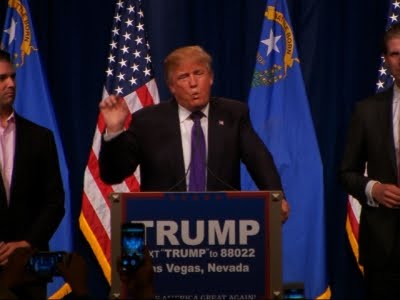 they were happy not to take that as an obvious insult. How, exactly, did he intend it? Both as contempt and affection. Any con man keeps a special place in his black-hole heart for people who cannot, or will not, see how he is hoodwinking them. None of us finds it easy to deal with the cognitive dissonance of realizing we may be wrong.
While Republican politicians have for decades praised and catered to the needs of oligarchs (as well as the merely wealthy who merely dream of being oligarchs), creating the greatest income disparity since the Roaring '20s, they have simultaneously encouraged working- and middle-class Americans to resent people who went to college and quite likely graduate school and have become specialists in various fields: historians, scientists, journalists, civil servants, elementary school teachers. Somehow, in this demented narrative, those professions are part of an administrative system that thwarts ordinary people's quest for freedom, liberty and the pursuit of happiness. (And some of them asked you and your kids to wear a mask during a global health crisis.)
The "elites" despised by the actual Republican elites like Cruz, Hawley and DeSantis are, of course, the people able to expose their grifting, their disinformation campaigns, their flouting of the rules, their contempt for the rule of law (at least as it applies to them) and their determination to retain power at any cost. They and their compatriots in propagandaTV andsocial media are bringing authoritarianism to America under a marketing label borrowed from Hungary: "illiberal democracy."
Today's Christian fascists don't ask what Jesus would do; they ask what Viktor Orbán would do. Anti-immigrant "Christians" get a kick out of seeing red-state governors troll the libs by using real human beings as pawns in a deliberately cruel media spectacle.
As these beliefs begin to spread in cult-like fashion, then teachers, judges, health experts, academics and even members of law enforcement — whom Republicans have always claimed to venerate — become objects of derision, even death threats.
In this classic divide-and-conquer move, the right has worked hard to get Americans to believe the worst possible things about elites, those conspiratorial, secular liberals who read books, believe that science and history should be based in research rather than political agendas and maintain a naive faith in democracy and the rule of law.
Such has been the power of this slow brainwashing that the right has gleefully separated brothers from sisters, children from parents, and friends from friends. The MSNBC–New York Times side regrets the loss of political comity; theFox–Wall Street Journal side [murdoch] cries for insurrection or civil war, or just shrugs at such threats.
All of this (or at least a lot of it) has been in service of aphony,shameless,sexually predatory,pathologically insecure,malignant narcissist who somehow (surprising even himself) was elected president, impeached twice and refused to concede defeat after losing by more than 7 million votes, inciting a violent, if amateurish, insurrection.
Meanwhile, there really are elites in America — you know, the people who went to school with Hawley and Cruz and DeSantis and can afford multiple residences, exotic vacations, well-tended stock portfolios and Washington lobbyists. Those elites are still pushing discredited Reagan-era "trickle-down" economics, working to destroy the last threadbare remnants of the social safety net and gleefully eroding democracy — all while laughing at how easy it was to convince the "people" to look somewhere else.
6 22 an lucien t
The hearings of the House Jan. 6 committee that began on Thursday night presented plenty of evidence of plain old-fashioned wrongdoing, infantile fantasizing by people old enough to know better, and hundreds of instances of people committing overt criminally indictable offenses at the behest of a president of the United States. But the evidence showed something else, too: an entire political party that has lost the capacity to be embarrassed.
There is so much evidence of behavior and attitudes that are embarrassing that you hardly know where to begin: with the whiny look on Jared Kushner's face and his whiny tone of voice as he described the White House counsel's threats to resign as "whiny"? The aw-shucks shrug of the shoulders given by former Attorney General William Barr, who was the highest law enforcement official in the land, as he explained — if that is even the word — resigning his office because he had finally had enough of what he called "bullshit"? Committee vice-chair Liz Cheney's lengthy recitation of all the phone calls Donald Trump didn't make and orders he refused to issue while a violent attempt was made to overthrow the government of which he was in charge?
See what I mean?
To me, however, the most embarrassing thing of all is the fact that nine veterans of service in the United States military have been indicted for seditious conspiracy to overthrow the government for their roles in the violent assault on the Capitol. Not only that, but they dressed up and play-acted their parts as veterans. Some of them, specifically the Oath Keepers, wore military-style camo outfits complete with bulletproof vests and Kevlar helmets, and used a military-style "stack" formation to lead the breach of the Capitol building. Others, the Proud Boys, gave orders to their membership not to wear military-style gear and remain incognito: "come as a patriot" and "do not wear colors!" (referring to their yellow and black Proud Boy uniforms) and "be decentralized and use good judgement" because "we are trying to avoid getting into any shit."
Reading the indictment of five Proud Boys — four of them veterans — that was handed down by a Washington grand jury last Monday is like reading a script for a remake of "Rambo." Using an encrypted social media chat app, the Proud Boys talked about their "Ministry of Self Defense" or MOSD, their "Leaders Group," their "Operations Council" and their "Marketing Council." They even formed a "MOSD Prospect Group" to recruit new members for their paramilitary operations at the Capitol on Jan. 6. (Note: All that excited capitalization is from the texts cited verbatim in the indictment.)
The Proud Boys established something called the "Boots on the Ground Group," and exchanged text messages asking, "Are we going to do a commander's briefing before 10 a.m.?"
"Standby," came the response in primo-mil-speak.
All of the above was in preparation for the assault launched by the Proud Boys on the Capitol. Many of the texts were exchanged before the rally on the Ellipse had even begun.
At 12:53 p.m. on Jan. 6, during the time Donald Trump was speaking on the Ellipse, the Proud Boys effected the first breach of the protective barriers established by police around the Capitol, pushing one of the police officers to the ground. Her head struck the pavement hard enough for her to lose consciousness and suffer severe trauma. Moments later, a Proud Boy text announced, "We have just taken the Capitol," as if the seat of the government of the United States was a military objective. At 1:00 p.m., a member of the so-called "MOSD Leader's Group" texted, "They deploy the mace yet?" One of the Proud Boys, who turned out to be an unindicted co-conspirator because of his cooperation with the Department of Justice, replied: "We are trying."
The indictment lays out this embarrassing behavior by military veterans in excruciating, painful detail. It describes the childish delight they took in each other and the pride in the crimes they were committing by citing the selfies they took, to which they attached such grand comments as, "So we stormed the fucking Capitol. Took the motherfucking place back. That was so much fun." Another Proud Boy added, "January 6 will be a day in infamy."
The Proud Boys used the Washington Monument as a rallying point before they began their attack on the Capitol. From the little hill where the Washington Monument stands, the following memorials to other veterans are visible: The Vietnam Veterans Memorial, the Korean Veterans Memorial, the World War II Memorial. Constitution Gardens is also visible, and so is the Signers Memorial, commemorating the men who signed the Declaration of Independence.
The Proud Boys used "1776" as a private code for what they called their revolution throughout their text messages to each other. The year of the signing of the Declaration of Independence has also become a key part of the rhetoric of many of Trump's defenders, as if by invoking the founding of the country they can excuse its destruction.
Wearing military garb after you've left the service isn't indictable, neither is using military slang, and neither is singlemindedness to the point of being blind to what you're really doing. But it is embarrassing, in ways none of them will ever understand.
https://www.alternet.org/2022/04/christian-nationalism/
katherine joyce salon
If the New York Times' "1619 Project" and Donald Trump's 1776 Commission mark two defining moments in American history, as well as opposite sides of an ideological chasm, a new book by sociologists Philip Gorski and Samuel Perry identifies a third defining moment. It's not a new proposed founding, but rather an"inflection point," the moment when the nation's history could have gone in another direction.
In "The Flag and the Cross: White Christian Nationalism and the Threat to American Democracy," Gorski and Perry argue that in the years around 1690 — when Puritan colonists began envisioning their battles against Native Americans as an apocalyptic holy war to secure a new Promised Land, when Southern Christians began to formulate a theological justification for chattel slavery — a new national mythology was born. That mythology is the "deep story" of white Christian nationalism: the notion that America was founded as a Christian nation, blessed by God and imbued with divine purpose, but also under continual threat from un-American and ungodly forces, often in the form of immigrants or racial minorities.
The result was an ethnic nationalism sanctified by religion as it established a new "holy trinity" of "freedom, order and violence," meted out variously to in-groups and out.
When rioters driven by that vision broke into the U.S. Capitol on Jan. 6, 2021, they were just reenacting a story that has been told in this country for centuries. But it's a story that again threatens to "topple American democracy" unless, Gorski and Perry write, a new "united front" is formed to defend it.
Perry spoke with Salon this April.
You describe white Christian nationalism as the "San Andreas Fault" of American politics.
We see America torn apart by an authoritarian populism that was characteristic of Trump's movement, which distrusts any opinion not tied to the nationalist leader. There's a lot of distrust for experts, even medical experts when it came to COVID, in favor of somebody like Trump or organizations that put a conservative slant on all news related to politics, COVID, immigration, Muslims, all those things. So when we say white Christian nationalism is the San Andreas Fault, we mean it is a thread running through all of our current conflicts.
And the implication that we're waiting for the big one.
Exactly. We all observed the events that took place on Jan. 6 with horror and shock, but there's this puzzling juxtaposition of images from that day: violent chaos, suffused with Christian symbolism. There are "Jesus Saves" signs and Christian flags and a prayer in Jesus' name in the Senate chamber. Rather than see that event as fringe and those religious symbols as puzzling, we believe Jan. 6 should be thought of as an eruption of forces that have been building for a long, long time.
I appreciated the book's long historical view: You weren't just focusing on Jan. 6, but looking to the past to understand this idea of the "deep story" behind contemporary Christian nationalism.
From our perspective today, the white Christian nationalist deep story is that we as a country have our roots in white Anglo-Protestant culture, and that's what made us prosperous and successful. In the colonial era, we wouldn't have called it white Christian nationalism, but it would have tied together all the same elements: race, religion and nation. In the time of the Puritans, it could be called white Protestant Britishism: that the people to whom the land rightly belongs are white as opposed to Native American, Protestant as opposed to Catholic or any indigenous religious group, British as opposed to French or certainly the nations of Native Americans. White Christian nationalism in that form was just as exclusive, just as brutal, even apocalyptic in its thrust.
Manifestations of white Christian nationalism have ebbed and flowed throughout America's history, and usually they ebb and flow in response to threats against the ethno-cultural majority. Sometimes the enemies change. Early on it was Native Americans; later it was the French and Roman Catholics. At different times it was Asians and certainly Black Americans who were the out-group. Starting in the mid-20th century, it was socialists and all things associated with communism — which is racialized but also religious, because communists and socialists are thought to be godless. So all throughout American history, you see this tying together of race, religion and nation in the boundaries of who is and is not truly American. Who is not changes in response to the enemies. But the in-group is almost always the same. It's white, Christian and those who are either born in the U.S. or at least "belong" here as part of the dominant ethnic group.
The book includes a lot of original data research that's often absent from these conversations. What were some of your most surprising or compelling findings?
One thing we really wanted to contribute is to operationalize this thing called Christian nationalism and see how it plays in response to various issues. We collected all this national data over the last two years that allowed us to track national events — the election, COVID, George Floyd's and Ahmaud Arbery's murders, all these different factors. One of the most surprising findings is how differently Christian nationalism works for white and Black Americans, how stark the contrast is to the same questions. When African Americans hear the language of "Christian values" or "Christian nation," either it doesn't change their attitudes at all or they seem to think aspirationally about the country America should have been, but never was. When white Americans hear that language, they seem to think nostalgically about a time when the right people ruled and the right culture dominated.
I was also not only shocked but discouraged at how Christian nationalist ideology shaped responses when we asked who Americans went to for information about COVID. White Christian nationalism was powerfully associated with rejecting everybody's opinion about COVID-19 except for Donald Trump's.
I was also taken aback by how powerfully Christian nationalist ideology was associated with responses to the Capitol insurrection. White Christian nationalism powerfully predicted people blaming the violence on antifa or Black Lives Matter and placing none of the blame on Trump. We saw even a correlation between Christian nationalist ideology and supporting the rioters or being reluctant to say they should be prosecuted.
The association between Christian nationalist ideology and violence used for political purposes is one of the more sobering findings. We've collected more recent data since we finished the book, and there is a quite linear association between affirming Christian nationalist ideology and believing that things have gotten so far off track that true patriots may have to resort to physical violence. This is an ideology that doesn't just acknowledge violence as a possibility but in some ways actually affirms it as the way to get things done in our society.
White Christian nationalism supports the idea that the best way to stop a bad guy with a gun is a good guy with a gun; it affirms the use of torture if it means national security; it affirms that police should be able to use any means necessary to maintain law and order. There seems to be this powerful connection between Christian nationalist ideology and support for violence to accomplish political goals, and often that means to control "problem populations."
You describe a "holy trinity" within white Christian nationalism of freedom, order and violence.
White Christian nationalism seems to be characterized by a libertarian mindset that's only applied to the inside group. The ideology powerfully predicted a belief that we need to protect the economy rather than the vulnerable during COVID and that socialism is anathema — actually, that socialists are the worst. White Christian nationalism predicts antipathy towards atheists and Muslims, but socialists are the real demonized group, because socialism represents everything that is leftist or "anti-American." It is not only an economic threat, but a cultural, ethnic and religious threat.
White Christian nationalism advocates for maximum freedom for our group. But there is also this connection between authoritarian violence and social order. Christian nationalism wants order in the form of hierarchies. Men on top. Whites on top. Christians on top. Heterosexuals on top. And any threats to that order are met with justified, righteous, good-guy violence. That is what we saw on Jan. 6: the justification of righteous violence in taking back our country from, in the words of the QAnon Shaman, "the tyrants, the communists and the globalists," and showing them "this is our nation, not theirs." So there is this kind of holy trinity: Freedom for us, order for everybody else. And when that order is violated, they get the violence.
You include a number of historical examples of how this played out, long before Jan. 6, at various times in American history, including in the post-Reconstruction era and through lynchings, which you describe as the "high mass" of white Christian nationalism. Why is violence such an important element?
A thread through our narrative is this metaphor of blood. White Christian Americans' place in the cosmos and in our country has always been interpreted through the idea of blood purity — that we are distinct and superior people. There is also the idea of bloody conquest: that America is out there and the land is ours and we are justified in using violence to take what God has given us. Then there is this idea of bloody apocalypse — that violence is an inevitable part of the story, that there is a cosmic struggle going on that will involve us going to war against evil forces who try to take away what God has given us.
One thing we try to underscore is that Americans gripped by the white Christian nationalist deep story see violence as inevitable. Christian nationalism doesn't seem to be too strongly associated with violence for its own sake. But violence in the service of our group and of control is what white Christian nationalism is about — not a celebration of it, but an endorsement of violence as a tool to maintain order and maximize our freedom and power.
Tell me about the idea behind "The Spirit of 1690" and where that fits into the narrative battle between "The 1619 Project" and Trump's 1776 Commission.
The 1776 project is one narrative of America's past: this whitewashed story where Anglo-Protestant values are the secret to our national prosperity, and yes, slavery was real, but it was an aberration. Obviously, "The 1619 Project" has a completely different narrative that sees slavery and white supremacy as a constant thread throughout our history, and that we as a nation were set on the trajectory of white supremacy because our roots are founded in it.
We take a slightly different approach from "The 1619 Project." We see contingency. We see opportunities throughout America's history where oppression could have been lifted. And yet we decided not to go in that direction but to continue to live according to this white Christian nationalist mythology. And of course, different from the 1776 project, we believe that white supremacy has been a constant thread throughout our nation's history, not one that had to be, but one we chose again and again and again.
Much of this mythology involves white Christian nationalism framing itself in a position of victimhood.
White evangelicals — the group most beholden to Christian nationalist ideology — have long been characterized by what sociologist Christian Smith called an idea of "embattlement." They constantly feel they are at war with a surrounding culture that aims to persecute or marginalize them. This is part of the Christian nationalist story, because when you believe your culture is inextricably linked to the state of the nation, and you believe it is not your story but America'sstory, when you start to see cultural change, you perceive that as an attack on your group.
It used to be that people like Jerry Falwell could look at pornography and say, "That is immoral" and use the language of "filth" or "degradation." America has shifted so profoundly that what Christians on the right now do is to evoke the language of religious freedom — to claim the defensive posture and say, "We are under attack for claiming our moral views." What is happening now is that language of rights or religious freedom is no longer a shield but a sword and a battering ram to slash at your cultural enemies and justify discriminating against certain populations, even in agencies that take money from the government.
It seems that language is also being used to cast voter suppression in defensive terms.
When we surveyed Americans in October 2020, we found that white Christian nationalism was the most powerful predictor that you already thought voter fraud was rampant, that we make it too easy to vote and that you would support hypothetical civics tests in order to vote or disenfranchising certain criminal offenders for life. This paints a picture of white Christian nationalism being fundamentally anti-democratic, that it supports limiting voting access to those who prove worthy — and the people who are worthy are the people like us. If there is a thread tying together today's white Christian nationalists with the founding fathers, it is that only white landowning Anglo-Protestants should be able to vote.
In subsequent surveys, we asked, "Is voting a right or a privilege?" Thankfully, the majority believe that voting is a right, which it is. But we found that white Americans who affirm Christian nationalist ideology are more likely to think voting is not a right, but a privilege. In other words, something we can take away.
The book discusses figures like Christian right revisionist historian David Barton. How has historical misinformation played a role in both getting us to this point as well as the conflicts we're seeing now around education?
One of the things we document is that Christian nationalist theology is powerfully associated not just with believing misinformation about COVID, QAnon or the Capitol insurrection, but about religion in American history. That you believe the Constitution references our obligations to God, which it does not. Or that the First Amendment says Congress can privilege Christianity, which it does not.
For years, we have known that evangelical Christians tend to do poorly on quizzes of scientific knowledge, not because they're ignorant per se, but because when they're asked questions about the Big Bang theory or evolution or even continental drift, they get those answers wrong because of ideology. Not because they don't know what the answer is, but because they intentionally say, "That isn't the way it went down." We find the same thing with Christian nationalism: It inclines Americans to affirm answers that paint Christianity as central to American history. Part of that is ideology, but another part is the misinformation put out by agencies like Barton's WallBuilders that contribute to the narrative that America has been evangelical throughout history.
We see the effort to try to control American history in Trump's 1776 Commission, which was led by executives at Hillsdale College, none of whom are professional historians. They threw together this document that is supposed to be a counter to "The 1619 Project," talking about American exceptionalism and slavery as an aberration, but all in all, America is great and here are the reasons why. That is an effort to control the narrative about who we are as a people.
We have always seen this and it's often tied to race. A great recent book, "The Bible Told Them So" by J. Russell Hawkins, argues that there was a segregation theology that motivated white evangelicals in the South. It wasn't just explicit racism, but this interpretation of the Bible that said segregation is good and God wants it that way. Over time, as it became clear they were losing, they developed separate institutions, and separate schools were among them. So in the late '70s, segregation theology started to morph into this "family values" conservatism that was ostensibly about protecting children.
So you have always seen this move on the Christian right to control education and raise fear about what children are being taught. How do you scare enough parents to be mobilized? By saying that nefarious elements are infiltrating the schools and they're going to infect your children. Within that, you have this push for homeschooling, for vouchers to defund public schools and support privatized education in which parents on the right can raise kids who are white, Christian conservatives, and you can maybe stave off the forces of secularization and diversity.
Toward the end of the book, you write about how other camps on the right, like Catholic integrationists and post-liberals, are also advancing ideologies complementary to white Christian nationalism. Can you talk about that coming together?
What we've seen in the political and religious realignment over the last few decades is the concern that the Christian right is no longer strong enough by themselves to win victories politically. That required them to relax the bounds of who is part of their team. So you see Christian conservatives on the right uniting groups that formerly did not like one another, like Catholics, evangelicals, Mormons and even "pro-Christian" secularists. Increasingly, we can't talk about a Christian right so much as a "pro-Christian right," because Christian identity isn't really necessary anymore. You can be a secular pro-Christian American and think "Christian" is an ethno-cultural category that supports traditional values. All of these identities are on the same team, since what you want is an institutionalization of white Christian ethno-culture and victories for the political right.
Over on the Democratic side, they have nothing close to that. This is why Republicans are a lot stronger as a group than many realize, because they're united around ideology and ethno-religious belief in a way that Democrats are constantly fractured.
Even though we see demographic decline among white Christians, the unity on the right belies the demographic numbers. We also know that Christian nationalist ideology ebbs and flows in response to threats: When you tell white Christians about their imminent demographic decline, they respond with greater Christian nationalism. If you are a savvy politician, you can stoke a Christian nationalist response that mobilizes people in your target audience to collective action.
You also talk about the need for a popular front that could counter white Christian nationalism. What would that look like and what would it require?
I think it will take everybody from never-Trump evangelicals all the way to the secular left. It's going to take concentrated effort to not only name this, but to make sure it can't be institutionalized any further in the name of religious liberty, and that political candidates can't continue to deploy the language of Christian threat without it being called out as dog-whistle language that just means white Christian ethno-culture. It's going to take organizations like the Baptist Joint Committee and Americans United for Separation of Church and State, who are already trying to do this, and coalitions of Americans from all kinds of backgrounds to say this is what we're against.
That is difficult. Evangelical Christians, say, are understandably reticent to sign a document alongside people they fundamentally disagree with. Abortion is always going to be a sticking point. But we are confronted with a situation where the stakes may be high enough.
I'll say it this way: COVID should have been the asteroid that united us, but it just polarized us further. But if an asteroid was headed towards Earth, I wouldn't ask the neighbor next to me who they voted for in the last election. We would recognize that the threat is great enough to just focus on defeating this thing. For many Americans, it's going to take a recognition that the threat is that great.
One of the reasons we wanted to write the book is to say: This is the asteroid. This is the thing that is coming for democracy. And we've got to unite to overcome that.
===
===
2 22 an nath
During my time as a boy attending an evangelical church and then later, when I attended an evangelical seminary, it was hard not to notice an underlying misogyny that seemed consistently present. As a man, I would be the head of the household. I was like Christ to my future wife. In fact, I once heard a sermon by prominent evangelical minister Tony Evans where he declared that wives must refer to their husbands as "Lord." In my church youth groups, we were separated by sex and the boys had bizarre discussions on the type of men we should become. There was a strong emphasis on being what they considered to be manly and tough, whereas young girls, of course, were encouraged to be nurturing, submissive and, most important, sexually pure.
When contemporary evangelical leaders push a message around Christian nationalism, I can promise you it always refers back to a time when the "traditional" roles of American households held fast. Making America "great again" is truly about bringing back a time when women were subject to their husbands' wills and whims, and the husbands were lords of the house.
Someone recently wrote to me, in response to one of my previous articles, wondering why so many evangelicals chose Donald Trump, a vulgar misogynist who shows no understanding of any element of the Christian faith, over other candidates who were much closer to the evangelical movement. The difficult answer is that most evangelical men long for the days when misogyny was cool, when women were under the thumb of their husbands and sexual harassment was almost universally accepted. Trump exemplified that approach — and a great many evangelicals loved him for it. Trump remains the favorite of the evangelicals not because any commitment to Christ or the Christian way of life — since he has none — but because of the widespread desire among evangelicals to take back control over their lives, and their wives. One of the major ways this has been expressed lately is through the ideology known as Christian nationalism.
As I understand it, Christian nationalism is an idea now widely accepted within the evangelical church that the U.S. is a Christian nation founded upon Christian principles — no matter what it may say in the Constitution. This commitment to the Christian faith, as a nation, is the reason God blessed the U.S. as the greatest nation that ever existed. God will only continue to bless this nation, however, as long as it remains a Christian nation. As America becomes more progressive and increasingly secular in terms of politics, culture and faith, then in this view God will remove his blessing and protection and great evils will befall our nation.
This remarkable theory has no connection to any of the teachings of Jesus Christ or his followers, and is completely irrelevant to the Christian faith. I will certainly admit that I have a heart for American idealism. I have officiated at numerous Veterans Day and Memorial Day services, and I have felt the love of country enormously, on those days and all the days in between. None of that, however, has anything to do with Christianity. God does not play favorites when it comes to nations, people or cultures. That entire idea is morally and theologically absurd.
In truth, Christian nationalism is based not in the Bible or the teachings of Jesus Christ, but on the idea of the traditional American family. As roles for women have changed, as divorce becomes more common, as same-sex marriage gains a firmer footing, and now with the movement for transgender rights and visibility becoming more public, the panic of the Christian nationalists becomes ever more desperate. This is where all that rage among evangelicals is coming from. Understand, most people are motivated politically based on how they perceive policy decisions affecting their day-to-day life. Nothing affects our lives more than what is happening to our families. When things fall apart at home, it can feel helpful — even if it's not healthy — to blame someone or something besides ourselves. For myself, I know that all my personal failures are mine alone. I can't blame MTV or Eminem or the LGBTQI population, the evangelical church, Trump, Biden, Obama, my mom, my dad or anyone else. The problem is in the mirror, as it is for everyone. Any effort to pass that blame along to others is quite human, and quite wrong.
My final point on Christian nationalism is around all the macho tough-guy stuff that seems to be on the lips of every right-wing leader. Being "tough" seems to be the only thing conservative commentators and evangelical leaders care about. Trump is supposedly the epitome of that and his little posse loves him for it. I won't pretend to understand it. After I graduated middle school, being tough just didn't seem that important. But for people like Sean Hannity, Tucker Carlson, Jerry Falwell Jr. (before his fall) and of course Trump himself, it's important to keep pretending that they are a bunch of tough guys, even though they also claim to stand with Jesus Christ, a humble, meek and homeless teacher.
I'm no tough guy but I am happy to offer a challenge to any of these fake tough guys. Debate me anywhere, anytime. I am truly blue-collar, a member of the American working class. I am a Bible-believing minister and a flaming liberal. I believe that the Christian nationalist message comes from the devil himself. I am trying to save the name of the Christian faith and to stand up for American idealism. I oppose every part of the hypocritical, fake-populist agenda of the Christian nationalists and their enablers. I double-dog dare any of them, here and now, to stand up and take me on in public debate. Odds are they never will.
===
https://www.alternet.org/2021/10/extremist-christians/
paul r salon
progressive policies and positions are supposed to be rooted in reality and hard evidence. But that's not always the case when it comes to the culture wars that have such an enormous impact on our politics — especially not since the unexpected evangelical embrace of Donald Trump in 2016, culminating in the "pro-life" death cult of anti-vaccine, COVID-denying religious leaders. If this development perplexed many on the left, it was less surprising to a small group of researchers who have been studying the hardcore anti-democratic theology known as dominionism that lies behind the contemporary Christian right, and its far-reaching influence over the last several decades.
One leading figure within that small group, Rachel Tabachnick, was featured in a recent webinar hosted by the Religious Coalition for Reproductive Choice (archived on YouTube
Her presentation sheds important light on at least three things: First of all, the vigilante element of the Texas anti-abortion law SB 8. Second, the larger pattern of disrupting or undermining governance, including the "constitutional sheriffs" movement, the installation of overtly partisan election officials and the red-state revolt against national COVID public health policies. While Donald Trump has exploited that pattern ruthlessly, he did not create it. And third, the seemingly baffling fact that an anti-democratic minority feels entitled to accuse its opponents — including democratically elected officials — of "tyranny."
Some dominionist ideas — such as the biblical penalty of death by stoning — are so extreme they can easily be dismissed as fringe, others have been foundational to the modern religious right, and still more have become increasingly influential in recent years. Those latter two categories are what we need to understand most, say both Tabachnick and Jackson.
"One of the things that struck me, as a relative newcomer," said Jackson, a former Congregationalist minister, "was that there was not sufficient understanding about the theological frames used by many individuals who are opposed to abortion." She continued, "I'm a strategist in a lot of ways, and one important strategy, I believe, must be to understand what the teachings and the theological frames are" on the other side. Which links directly to the question of what progressive activists need to do differently in this changed environment.
This failure to understand the nature of dominionism has hampered activists, not just in the realm of reproductive justice, but across an entire spectrum of political issues, both cultural and economic. Jackson discussed her own background, raised within a conservative Christian worldview.
"I was taught a very individualistic approach," she said, "taught that we shouldn't pay taxes, because doing so enabled people who were not working, and enables people whose lifestyle we don't agree with." There's nothing new about such views, but dominionism provides believers with an even stronger foundation for them.
Jackson describes her current understanding of religious faith as highly intersectional: "We believe that to understand the attacks on abortion also invites us — or even requires us — to look at attacks on voting, to look at attacks on immigrants, attacks on prison reform, attacks on equal pay and on and on," she said. "It's all of the same cloth: They are all attacks on humans flourishing. That's my language. The God of my understanding wants all of us to flourish in who we are."
the language of dominionism is strikingly different, to put it mildly. In her webinar, Tabachnick played a clip of one of the movement's leading figures, C. Peter Wagner, providing a definition:
Dominion has to do with control. Dominion has to do with rulership. Dominion has to do with authority and subduing. And it relates to society — in other words what is talked about, what the values are in heaven [that] need to be made manifest here on earth. Dominion means being the head and not the tail. Dominion means ruling as kings. It says in Revelation chapter 1:6 that "he has made us kings and priests," and check the rest of that verse, it says "for dominion." So we are kings for dominion.
Later she provided a definition from Frederick Clarkson, author of the 1997 book, "Eternal Hostility: The Struggle Between Theocracy and Democracy":
Dominionism is the theocratic idea that regardless of theological view, means, or timetable, Christians are called by God to exercise dominion over every aspect of society by taking control of political and cultural institutions.
Wagner, who died in 2016, is known as the founding father of the New Apostolic Reformation (NAR), one of the two main branches of dominionism, which grew out of the Pentecostal and charismatic traditions within evangelical Christianity. Dominionists in the other branch, known as "Christian reconstructionism," come out of conservative Calvinism, with a focus on bringing government and society under biblical law. They tend to be more circumspect, often obfuscating their true intentions and avoiding the word "theocracy" in favor of "theonomy," for example. But not Wagner, as can be seen in the title of his 2011 book, "Dominion!: Your Role in Bringing Heaven to Earth." The NAR talks constantly about taking dominion over the "seven mountains" of society: education, religion, family, business, government, arts and the media.
But it's the other branch, the Christian reconstructionists, who have excelled at strategic organizing and providing blueprints across different right-wing constituencies for almost 50 years. They are the ones Tabachnick focused most of her presentation on, specifically two key figures: Rousas John Rushdoony, the movement's master theologian, and his son-in-law Gary North, a prolific strategist, propagandist and networker who was once a staffer for Rep. Ron Paul, the libertarian hero.[ayn radical indiv ~ jesus charity]
Christian reconstructionism, Tabachnick explained, is "about bringing government in all areas of life under biblical law, a continuation of the Mosaic law in the Old Testament, with some exceptions." This dispensation would include, "according to Gary North, public execution of women who have abortions and those who advise them to have an abortion."
In a recent private presentation, Frederick Clarkson asked a rhetorical question: "People have long said that there should be Christian government, but if you had one, what would it look like? What would it do? Rushdoony was the first to create a systematic theology of what Christian governance should be like, based on the Ten Commandments, and all of the judicial applications he could find in the Old Testament — including about 35 capital offenses."
But the "Handmaid's Tale"-style extremism of dominionists' ultimate vision shouldn't really be our focus, Tabachnick told Salon. "Nobody cares about the theocratic, draconian future envisioned by reconstructionists because they don't believe it will happen," she said.
What's happening right now, however, is that this ideology has had tremendous impact on more immediate politics. "Christian reconstructionism is the merger of a distinct brand of Calvinism with Austrian School economics," Tabachnick said. "In other words, it's an interpretation of the Bible grounded in property rights." The results have been far-reaching:
For more than 40 years, its prolific writers have provided the foundations and strategic blueprints for the attacks on liberation theology and the social gospel, as well as many other streams of Christianity which do not share the Reconstructionists' belief in unfettered capitalism as ordained by God and its fierce anti-statism.
The larger religious right's attack on public education, the social safety net and most government functions are largely grounded in the writings, strategies and tactics formulated by reconstructionist writers. Reconstructionism is not the only (and certainly not the first) source of interposition and nullification in this country. However, much of what is currently being taught today about using interposition to undermine the legitimacy of government is sourced in reconstructionism.
This idea of "interposition" comes through what's known as the doctrine of the "lesser magistrate," which we'll return to below. But its significance — especially in the post-2020 Republican Party — has only recently become apparent. Reconstructionism's initial appeal was more immediately, as Tabachnick explained in the seminar:
What Rushdoony provided is a package that included attacking what these fundamentalists hated and feared most in society, often expressed in terms of "This is communist. This is socialist." But Rushdoony provided a way to sacralize these ideas, and at the same time not just tear down the old order, but provide a blueprint for the new order.
Everyone didn't have to agree on the blueprint, she said: "Rushdoony's ideas went out in bits and pieces. The Christian right leaders took what they wanted and discarded what they didn't."
"Christian reconstructionism, as articulated by Rushdoony, provided a standard by which everyone else had to measure themselves," Clarkson told Salon. "Not everyone on the Christian right agreed with Rushdoony and his fellow Reconstructionist thinkers on, for example, the contemporary application of capital crimes listed in the Old Testament. And followers were often at pains to distinguish themselves."
Clarkson cites the case of conservative Presbyterian theologian Francis Schaeffer, who disagreed with Rushdoony on the applicability of biblical law, but became a driving force behind the anti-abortion activist movement Operation Rescue. That "militant Schaefferism," Clarkson said, "led activists to think: What's next, beyond political protest and stopping abortion? This is where the conversation has been in the Christian right for decades."
The doctrine of the "lesser magistrate," mentioned above, first emerged into public discourse out of Operation Rescue. But it did so as part of a larger, more complicated story.
There's a long history of right-wing opposition to federal authority, particularly grounded in the 19th-century defense of slavery and continuing in the defense of Jim Crow segregation. In his famous "I Have a Dream" speech, the Rev. Martin Luther King Jr. spoke specifically of the governor of Alabama "having his lips dripping with the words of interposition and nullification."
As detailed by Randall Balmer in "Bad Faith: Race and the Rise of the Religious Right," the religious right wasn't initially fueled by opposition to the Roe v. Wade decision in 1973, but by opposition to a lesser-known decision in 1971, Green v. Connally, which threatened the tax-exempt status of racially discriminatory institutions,most famously the evangelical stronghold Bob Jones University.
Anti-abortion activists have long sought not just to bury that past but to stand it on its head, somehow equating Roe v. Wade with the notorious Dred Scott decision of 1857 and claiming the moral heritage of abolitionism.
"Throughout these movements there is also an attempt to turn the tables on the claims of racism," Tabachnick said in her webinar. "This is one of the roles that anti-abortion activism as abolition plays. Also, there's a promotion of narratives that provide a different history and legal justifications for interposition, nullification and even secession. One of the things that Christian reconstructionism has added to this dialogue is the concept of the lower magistrate."
As Tabachnick explains it, the "lesser magistrate" is a heroic figure who "resists the tyranny of a higher authority" — defining "tyranny" in biblical terms, potentially including any number of popular or common-sense laws or policies. This notion first gained salience in the anti-abortion context in the 1980s and '90s, as Tabachnick went on to explain.
"Many violent anti-abortionists have justified their actions in reconstructionist teachings," she said. "One of these was Paul Hill, who studied under one of the major reconstructionist leaders and corresponded with others." Hill went on to murder Dr. John Britton, a physician who performed abortions, as well as Britton's personal bodyguard, in 1994. Hill was executed in 2003, but the reconstructionist movement sought to cast him out well before that.
"Gary North responded, after the murders had taken place, in a book called 'Lone Gunners for Jesus,'" Tabachnick said. His message to Hill was, "You're going to burn in hell, you've been excommunicated. This was because Paul Hill stepped outside the bounds of the guidelines set by the movement."
To explain this, she quoted a passage from another book by North that offered qualified support for Operation Rescue: "We need a statement that under no circumstances will Operation Rescue or any of its official representatives call for armed resistance to civil authority without public support from a lesser magistrate."
"On the basis of their belief of what the law or the word of God is, they are allowed — on the advice, on the interposition, of a lesser magistrate — to commit acts of violence," Tabachnick continued. North was seeking to control or curb anti-abortion terrorism, but without rejecting it in principle. Murdering abortion providers — or even murdering women seeking abortions — could be morally justified, with the blessing of a lesser magistrate.
This is relevant to SB 8 in Texas in at least two ways. That bill bans abortions after six weeks and is enforced not by state officials, but by deputizing private individuals to sue anyone who performs the procedure or "aids and abets" it. First of all, giving private individuals these vigilante-style rights seems a lot like making them into "lesser magistrates," however narrowly constrained.
Second, the Supreme Court's refusal to stay the law — which clearly violates the Constitution and existing precedent, as Justice Sonia Sotomayor argued in her dissent — can be seen as an example of the doctrine in action. In more normal circumstances, the court would have stayed the law pending consideration on the merits, even if a majority of justices intended to overturn precedent. That's how common law has worked for centuries.
But biblical law isn't common law, especially as reconstructionists understand it. Under the doctrine of the "lesser magistrate," Roe is not precedent but an instance of tyranny — and the justices have aduty to Godto resist it. Of course, not even Amy Coney Barrett or Clarence Thomas has said anything like that, but it's entirely consistent with their behavior — as well as with their silence, since openly making such an argument would clarify just how radicalized they have become.But adherents of the doctrine of the lesser magistrate must surely appreciate the drift in direction.
Nor is the doctrine limited to abortion cases, as already noted. Matthew Trewhella is a pastor who was a prominent leader of violence-prone wing of the anti-abortion movement in 1990s, and author of the 2013 book, "The Doctrine of the Lesser Magistrates," which greatly heightened its visibility.
"Trewhella is now all over radio and the internet," Tabachnick said in her webinar, "claiming to meet with state legislators and attorney generals at the moment, with the cause of fighting the 'tyranny of mask mandates' and vaccination for COVID. So you can see how this is a concept that is not just limited to abortion. It is a concept that can be used in resistance of government authority all over the country in all different kinds of ways — FEMA, EPA, Bureau of Land Management and so forth."
Trewhella isn't breaking new ground here. Clarkson's 1997 book "Eternal Hostility" describes him making similar arguments in a speech to an anti-tax group in Wisconsin. He was just one figure among many spreading the seeds of reconstructionist resistance to federal authority among militia members, "freemen" and anti-abortion activists at the time.
"This movement believes that rights come from God and not from any government," Tabachnick told Salon. "Therefore, any 'rights' that conflict with their interpretation of God's law are not actually rights. They are 'humanist' or a product of man's laws and not God's laws. This theme of 'human rights' versus inalienable rights from God has been at the center of the Christian Reconstructionist movement since its beginnings."
She pointed to "What's Wrong With Human Rights," an excerpt from a book of the same name by the Rev. T. Robert Ingram published in "The Theology of Christian Resistance," a collection edited by North. Ingram sweeps aside the Bill of Rights as "a statement of sovereign powers of states withheld from the federal authority of the Union," and turns instead to the Virginia Declaration of Rights, authored by George Mason in 1776.
The first section of the Virginia Declaration, beginning "That all Men are by Nature equally free and independent, and have certain inherent Rights," is dismissed by Ingram for omitting any mention of God, as an "error of unbelief which falsifies all the rest that is said about human life." The second, beginning "That all power is vested in, and consequently derived from the People; that Magistrates are their Trustees and Servants, and at all Times amenable to them," he dismisses as well: "The meaning could not be more clear, nor more opposite Biblical thought. The ruling proposition of Scripture and Christian doctrine is that 'power belongeth unto God.'" In short, there are no human rights.
The connection to the doctrine of the lesser magistrate is clear: Power comes from God, not the people. Whatever the people want is irrelevant. Whatever laws they may pass are irrelevant, too, if they go against God. "Tyranny" is whatever the Christian reconstructionist decides he doesn't like.
Elsewhere, Ingram denigrates freedom of speech and the press:
Freedom of speech and freedom of press are, in fact, applied seriously only to giving government protection to instigators of riot and rebellion, as well as those who would undermine human order by more subtle attacks on morals and customs.
As for the right to dissent, he calls it "not a lawful claim to own or to do something, which is the true right," but "a turning upside down of right and wrong, calling good evil and evil good." Similarly, there is no scriptural right to "resist authority," only that granted by the false doctrine of "human rights."
Ingram's interpretation of the Civil War is that "Yankee radicals inflamed the Northern peoples to mount the Civil War in the name of a 'human right' to be free ... if they did not destroy the whole Southern Order, they did at least dismantle its vast and efficient plantation economy." The civil rights movement, unsurprisingly, is understood as a defiance of "Tradition, law, and custom, which preserved public peace and order in the bi-racial state of the union, both North and South," and became "the target of the right to resist in the 60's, the supposed human rights justifying the violent means."
Tabachnick didn't dig into this text in her webinar, but it serves to illustrate her central principle: "This attack on the very concept of 'human rights' can be found throughout today's religious right."
Jackson told Salon that the most important part of Tabachnick's presentation came "when she talked about humanism and the humanistic frame, from the Constitution and the Bill of Rights. Those who are within the dominionist camp see that as contrary to God. I read those same documents and I say, this is pointing us toward the direction that God wants for us. They look at it and see that as counter to God, because humanism from their perspective is something very contrary to God."
If we take such arguments seriously, then we understand why for dominionists there is nothing wrong with breaking any law at all, so long as "God wills it" and you have the blessing of a so-called lesser magistrate. This is the reconstructionist argument supporting a whole range of chaotic right-wing activity today, including baseless claims that the 2020 election was a fraud. After all, the fundamental reconstructionist argument is that all such democratic government is illegitimate.
"The goal of reconstructionism is to tear down the existing order and reconstruct a new society based on biblical law," Tabachnick said. "Even if we assume that this vision of a theocratic America will never come to fruition, it's important to recognize the movement's impact on the ideas, strategies and tactics of the larger religious right and its role in sacralizing the actions of other anti-statist fellow travelers.
"As I wrote almost a decade ago, the theocratic libertarianism of Christian reconstructionism has been surprisingly seductive to Tea Partiers and young libertarians — many of whom may not realize what is supposed to happen after the government is stripped of its regulatory powers."
FROM YOUR SITE ARTICLES
- How the coronavirus pandemic shows that Christian white ... ›
- Christian extremist says 'righteous anger' made him confront women ... ›
- How 'confrontational Christian nationalists' are pushing anti-vaxxer ... ›
RELATED ARTICLES AROUND THE WEB
- Holy Hate: The Far Right's Radicalization of Religion | Southern ... ›
- Christian terrorism - Wikipedia ›
- It's Time to Talk About Violent Christian Extremism - POLITICO ›
===
===
rosenberg
https://www.alternet.org/2021/05/autocratization/
as the Jan. 6 insurrection recedes in time, media attention is beginning to focus on potential 2024 Republican presidential candidates, including "new faces" like Kristi Noem and Josh Hawley, old also-ran Ted Cruz and others and, of course, Donald Trump. In a representative democracy, it's only natural that elected leaders — or credible potential ones — should be a significant focus of attention.
But there's an air of unreality hovering over all such portrait-mode coverage when a broader landscape view shows that the very survival of democracy is up for grabs — not just in the U.S., where GOP House members are in deep denial about the Jan. 6 insurrection while Republican legislators have introduced voter suppression bills in 47 states, but around the world. The Swedish-based V-Dem Institute's 2021 annual report notes that "the global decline in liberal democracy has been steep during the past 10 years and continues in 2020" and concludes that the "level of democracy enjoyed by the average global citizen in 2020" has fallen "to levels last found around 1990." At that time there was a jubilant buzz about the "End of History." Now there's an undertone of dread that we could "meanly lose, the last best hope of earth," as Abraham Lincoln warned.
Talk of as many as 24 potential GOP candidates in the next cycle recalls pre-2016 talk about the GOP's "deep bench," which, as I noted at the time, was a media-hyped myth. Those andidates fell into three groups: governors with horrible to mediocre job-creation records plus some ex-governors who hadn't run in a while, first-term senators with paper-thin résumés in a particularly dysfunctional Congress, and assorted wild cards, including Ben Carson and Carly Fiorina, as well as a certain New York real estate developer turned reality-TV star. I focused primarily on the shared failure of GOP economics, the party's purported strong suit. "The degree to which key articles of GOP economic faith clash with overwhelming expert judgment is staggering — and there's nary a hint of it in most of the media," I wrote. "It's a disconnect reminiscent of global warming, but much less widely recognized."
The problem goes much deeper now, to the shared failure of Republican patriotism, as their party has turned against democracy. While media awareness may be better, without grounding coverage in a "landscape view" of the problem journalists are fumbling the biggest story of our time — the global threat to democracy, and the enormous potential for a renewal that could finally realize democracy's full promise for all.
America's place in a landscape of democratic decay
What's known as the "third wave of autocratization" — characterized by creeping democratic erosion rather than violent coups — continues to spread: V-Dem's report notes that "25 countries, home to 34% of the world's population (2.6 billion people), are in democratic decline by 2020." One especially disturbing highlight "is that India — formerly the world's largest democracy with 1.37 billion inhabitants — turned into an electoral autocracy," meaning a system in which elections continue to be held but the chance of power changing hands is virtually nil. Prior to Jan. 6, the U.S. seemed far from being in a similar situation, but that is effectively what the new wave of GOP voter suppression laws could accomplish, especially with added provisions that jeopardize the post-election process.
America is still a long way from becoming India — but things can change quickly. The U.S. score on V-Dems "Liberal Democracy Index" or LDI is 0.73 (out of a possible 1) while India is less than half that, at 0.34, a precipitous decline since 2010 that places it among the planet's top 10 major "autocratizers." While the U.S. doesn't make that ignominious list, it's marked in red to "signify cases of significant and substantial autocratization." In 2010, the U.S. was among the highest-ranked nations, and is now no longer in the top 30, falling below Chile and Greece, countries with recent histories of military rule.
"The U.S. is somewhat unusual among the decliners," a trio of V-Dem researchers — Anna Lührmann, Dan Pemstein and Juraj Medzihorsky — told Salon via email. "Most of the decliners are reasonably young democracies," they wrote, adding that the U.S. has had a high and stable LDI in their rankings since the civil rights era. "The U.S. is a very different case than India or Brazil and also the various Eastern European countries [which] have much shorter democratic histories, despite being at similar levels in 2010."
The American case, they note, "shows that it is possible for this illiberal playbook, which we're seeing play out in diverse places ranging from Brazil to India, Hungary and Poland, to gain traction even in consolidated liberal democracies."
The party landscape: Even starker
Things look even more perilous from two other landscape views: the landscape of parties across the world, and the landscape of state-level government. A V-Dem briefing paper and its followup, entitled "Walking the Talk: How to Identify Anti-Pluralist Parties," found that the Republican Party has shifted dramatically in recent decades, from being in the same ideological territory as the British Conservative Party in 2000 to the neighborhood of India's Hindu nationalist BJP now, while the Democratic Party has barely moved at all.
"In 2000 the GOP was a party that was clearly committed to democratic standards as listed in the paper," the V-Dem scholars wrote. "In 2018 (the last point of measurement), this commitment was not clearly visible." They continued:
The data shows that the Republican Party in 2018 was far more illiberal (that is anti-pluralist) than almost all other governing parties in democracies. Only very few governing parties in democracies in this millennium (15%) were considered more illiberal than the Republican Party in the U.S. Conversely, the Democratic Party was rated slightly less illiberal than the typical party in democracies. In 2018, the Republican Party scores much higher than almost all parties in democracies on almost all of these indicators.
The shifts they observed were especially dramatic in two of four areas: "demonizes opponents" and "encourages violence."
Given the asymmetric change between the two major American parties, I asked if there were other countries that could shed light on what might happen next, or whether we were in uncharted territory?
"We did not see any sufficiently similar examples that we could bring up," Medzihorsky responded. "Given the information that we have, we refrained from speculation."
The red-state landscape of democratic decay
Another landscape perspective that can shed some light is that of state-level government, explored by University of Washington political scientist Jacob M. Grumbach in a paper called "Laboratories of Democratic Backsliding." Inspired by the V-Dem model, Grumbach developed a measure of subnational democratic performance called the State Democracy Index. He tested a range of different theories about what might contribute to democratic erosion over the period from 2000 to 2018, "based in party competition, polarization, demographic change, and the group interests of national party coalitions." Strikingly, he found "a minimal role for all factors except Republican control of state government, which dramatically reduces states' democratic performance during this period."
I reached out to Grumbach to ask about his findings and their significance. He began by discussing certain consequences of the American federal system:
Even compared to other countries with federalism, American federalism is especially decentralized, giving more control over political institutions to the lower subnational units. This means that the U.S. can experience extreme regional differences in democratic performance, as it did during the slavery and Jim Crow periods. Current regional differences in U.S. democracy aren't as big as they were in Jim Crow, but they're substantial and growing.
Grumbach's data only goes through 2018, but we're now seeing a vast wave of Republican efforts to suppress democracy and crack down on dissent and education, as I discussed in a recent Salon story on conservative "cancel culture." I asked Grumbach where he thought we might be headed.
We've seen 300-something new voter suppression bills out of Republican state legislatures since the 2020 election, as well as anti-protest bills and bills to outlaw particular forms of educational content that challenge nationalistic interpretations of U.S. history. We've also heard continued claims that the 2020 presidential election was stolen. All of these are threats to key tenets of democracy, including free and fair elections and civil rights and liberties. Although the politics and policy moves have been distinct, we've seen similar threats to democracy in Hungary and Brazil in recent years, which makes me concerned about the global trends.
The V-Dem 2021 report outlines a typical pattern to the process of "autocratization": "Ruling governments first attack the media and civil society and polarize societies by disrespecting opponents and spreading false information, then undermine elections." That seems like a strikingly accurate description of what happened during Trump's four years in the White House. But Grumbach's work points to a lengthy prehistory as well. I asked how we should understand the whole story, from the state-level story he describes through Trump's time in office to the fall-out today. He responded:
This is such an important question. I argue that Trump — and the [Jan. 6] insurrection — were just the latest and most visible manifestations of a longer term antidemocratic trend in the GOP. We've heard about "Stop the Steal" since 2020, but the GOP has for decades been selling conspiracies about mass voter fraud and suggesting that Democratic governance is illegitimate. The GOP currently is a coalition of two groups, an elite coalition of the very wealthy and an electoral base motivated by white identity politics. Both of these groups have an interest in pursuing minority rule through voter suppression, norm erosion, gerrymandering and other tactics.
Finally, Grumbach noted another dimension where partisan differences were minimal:
It's important to note that my main State Democracy Index focuses on electoral democracy, and there you see the GOP leading democratic backsliding. However, when I focus the measure on civil liberties and freedom from state authoritarianism, this kind of illiberalism has been bipartisan. American federalism puts policing and incarceration authority at the state level, and Democratic, divided and Republican state governments have all pursued "tough on crime" policy that has led the U.S. to become the most heavily incarcerated country on earth (more than dictatorships with larger populations).
How that came about is one of three interconnected social policy strands described by Cornell historian Julilly Kohler-Hausmann in her 2017 book, "Getting Tough: Welfare and Imprisonment in 1970s America." (I'll be interviewing her for a forthcoming Salon feature.) Last year's Black Lives Matter demonstrations signaled a long-overdue challenge to that wretched bipartisan consensus, forged in the aftermath of the civil rights movement. Because national Democrats have shown at least some willingness to respond to this challenge, Trump and the Republicans have sought to demonize them for it, so this may become another party-polarized dimension — or, more optimistically, part of a new consensus, as suggested by various public opinion polls, as well as the almost 2-to-1 passage of Florida's Amendment 4, which restored ex-felons' voting rights (although that was later gutted by the Republican legislature and governor, an issue now in litigation).
Discerning the differences between the two realms — electoral democracy and civil liberties — is precisely what a landscape view of politics makes possible: differences of history, agency, motivation and possible futures. Making sense of these different landscapes and their relationships is crucial to navigating them — and perhaps making meaningful democratic governance possible.
Denialism vs. democratic decay
Perhaps inevitably, there's a nascent right-wing denialist response that tries to reject any such analysis of democratic decay. At the Free Beacon, Aaron Sibarium wrote a story criticizing Grumbach's scoring system, and more broadly all such systems, called "The Myth of Measuring Democracy." But simply claiming bias and crafting a self-comforting narrative doesn't exactly prove a counter-argument.
Bias could emerge, Sibarium argued, through "the choice of variables used as proxies for democracy and the process by which those proxies are assessed." He attacked Grumbach for the first, and V-Dem for the second:
At least three of the factors that decrease a state's democracy score — voter ID laws, high incarceration rates, and denying felons the right to vote — are things that large majorities of Americans support. According to Grumbach, maximizing democracy means defying the popular will.
Sibarium called V-Dem's framework, "the most balanced," then went on to say that "it too reflects the liberal consensus — because the indicators are all scored by liberal academics."
Both Grumbach and V-Dem offered detailed responses. In essence, Grumbach said, Sibarium assumes that democratic support would make slavery democratic — one answer to what's known as "Wollheim's paradox." Grumbach also said his index includes measures that capture both sides of the paradox, meaning "policy responsiveness to majority opinion and procedural indicators of how costly it is to vote, how gerrymandered districts are, etc."
"Because people might have different opinions on how to measure democracy, I simulate 100,000 different measures that weight indicators differently," Grumbach explained. "Across the 100,000 measures, it is clear that GOP control of state government reduces democratic performance. This finding isn't an artifact of some particular way that I measured democracy."
The V-Dem trio called Sibarium's criticism "part incorrect and part banal." It was incorrect in labeling the expert scorers "liberal academics," they said: Many are outside the academy and they come from all over the world. "Ascribing all of these experts from different countries and backgrounds the same ideology — 'liberal' or otherwise — is simply silly," they said.
The criticism is banal, they said, "because of course the values are a mathematical representation of expert opinion. ... The purpose of the project is to measure concepts that are incredibly important but inherently difficult to observe."
"Scholars have subjected the V-Dem data to a multitude of validity tests, and it has generally held up well," they said. "We also emphasize that our measures exhibit uncertainty — experts disagree! — and provide public estimates of the scale of that uncertainty."
..in short, the measures used by V-Dem, Grumbach and others are meant to inform our understanding of how well or poorly democracies are functioning, not to dictate judgments. They don't pretend to tell us everything. The unique status of the U.S. as the highest-ranked democracy to undergo "significant and substantial autocratization," its two-party system with only one party radicalizing, its decentralized federalism and its distinctive, highly contested racial history, among other factors, mean that it's imperative to seek out other approaches as well.
Leaders, norms and violence: A different landscape view
One of the most helpful of those is to look back at our own history, as in Nathan Kalmoe's book "With Ballots and Bullets: Partisanship and Violence in the American Civil War" (Salon interview here). Kalmoe has a lot to say about how political leaders and partisan media affect the potential for violence — another example of a "landscape mode" effect, as opposed to a "portrait mode" direct-causation account.
"Whether looking at U.S. history or cross-nationally at politics around the world," Kalmoe said in a more recent exchange, "party leaders, including media figures, play a key role in how ordinary partisans think and act. That extends to extremes like violence."
Leaders both embody and influence group thinking in multiple ways, he said:
Leaders are experts whose judgment their followers trust, and leaders are seen as definitional group members whose words and deeds set the norms for the group. Party leaders are especially influential when they simultaneously represent multiple political and social identities (e.g., race, religion), and those group alignments make violence more likely.
Leaders mobilize violence in many ways, not just direct calls for violence, though those may be most powerful. They also encourage violence with their failure to condemn violence by their own group, by violent metaphors and coy remarks implicitly supporting that violence, and by using vilifying and dehumanizing language that makes it easier for group members to rationalize harming their opponents.
Leaders set norms for the group and those norms can shift overnight. In conventional politics, for example, we see instant 10 or 15 point swings in policy views among partisans when top leaders endorse a policy, even when it goes against the party's ideology. In the historical context of Civil War violence, northern Democrats followed their party in initially supporting and then violently rejecting the war to uphold Lincoln's election, including a change in their willingness to kill and die in that war.
Once a new group norm is established, Kalmoe continued, "leaders and group members then police the new bounds, silencing and expelling dissidents within the group. We're seeing that now with Republicans rallying around defense of Trump's multifaceted attempts to reject his loss in a free and fair election."
In short, despite the unique situation we find ourselves in, there's nothing exceptional, or even especially unusual, about the partisan leadership dynamics involved.
Profound change? Landscape of a possible future
But in a broader sense our situation may be historically unique, as suggested by Ian Hughes, author of "Disordered Minds: How Dangerous Personalities Are Destroying Democracy" (Salon interview here.) Hughes combines studies of key 20th-century pathocracies (Hitler's Germany, Stalin's Soviet Union, Mao's China, etc.) through the lens of the "the toxic triangle" — destructive leaders, susceptible followers and conducive environments — with an argument that democracy can be understood as a multi-layer defense system against such disordered leaders and the pathocracies they create.
"This system of defenses comprises the rule of law, electoral democracy, the principle of liberal individualism that underpins the separation of church and state, social democracy and legal protection for human rights," Hughes explains. Those principles have all come under relentless attack during the Trump era, in ways for which we were woefully unprepared. But now there's a chance to recover, and rebuild.
Now that he's stripped of official power, "Trump is not the real issue anymore," Hughes told me via email. He sees "an opportunity to step back, understand the big picture" and "move the U.S. and the world onto a better path," not just a slightly improved one.
"We are at a historic moment of profound change," Hughes said, going on to explain:
Most of the social institutions that have been holding society together, however brutally and inequitably, are failing. They are failing in two senses. First, they have contributed to what Biden referred to in his Inaugural Address as the cascading crises of our time — climate change, species extinction, levels of inequality within and between nations that are undermining social cohesion and international order, the erosion of democracy and the persistence of authoritarianism, and the emergence of cultures of animosity, polarization and blame. The list goes on. These cascading crises are the fruit of failing systems of economics, politics, technology, gender, religion and education.
These social institutions are also failing in a second sense. Not only have they helped create the multiple crises we face, they are also (as Einstein might have said) incapable of resolving these crisis, given the level of thinking they are trapped within.
Hughes sees much more than a landscape of failures. "There is also hope, enormous hope," he said. "For each of the social institutions I listed above there is a global movement aimed at building something new, of making that radical rupture with existing paradigms." He continued:
In economics, for example, there is a whole variety of movements exploring "beyond growth" economics, circular economies, economies where care is recognized and rewarded, an economics that can rein in the parasitic and destructive system of contemporary financial capitalism, and so on. The same is true for gender and race with the #MeToo movement and Black Lives Matter movement being part of a much broader reimagining of societies where participation and diversity lead to radical system transformations. Well-being and spiritual movements are questioning the valorization of material wealth as the epitome of human development and are reclaiming values of empathy, cooperation and love from their monopolization by organized religion. In the area of technology, movements demanding the responsible development of new technologies and the taming of the destructive uses of existing technologies now have global reach.
Conventional, portrait-mode analysts look at Joe Biden's agenda in terms of distinct issue categories — pandemic relief, infrastructure, voting rights and so on, and consider the major political actors in each realm. But Hughes' description of democracy as a multi-layer defense system suggests a more expansive landscape viewpoint, with a powerful central theme.
From that perspective, Hughes said, "Biden's agenda can be assessed by the degree to which it can successfully join up all the 'rivers of progressive change' and empowers them further as a means of dismantling the structures that continue to shore up Trump and the pathological incarnation of the GOP," Hughes said. The central question, then, is "to what extent can Biden not bring the U.S. back to normal, but help bring about something new."
The portrait-mode approach to politics naturally favors the "return to normal" orientation. Familiar figures doing familiar things, to familiar praise, regardless of the medium- or long-term results. But a landscape view more readily accommodates change: We can at least potentially see different pathways, different destinations and even imagine different landscapes that might become visible if we stood on different, distant peaks.
"The degree to which Biden is able to empower these forces for building something new is also the degree to which he will have successfully constrained the former guy and his yesterday's men in the GOP," Hughes said. "In a sense, Trump and the GOP are a perfect fit for our dysfunctional times. Biden's challenge — and the challenge of any democratic leader at this historic moment — is to change our times so that Trump and his fellow authoritarian narcissists stand out as the misfits they truly are."
RELATED ARTICLES AROUND THE WEB
- What Autocratization Is | Request PDF ›
- Post–Cold War Democratic Declines: The Third Wave of ... ›
- A third wave of autocratization is here: what is new about it? ›
===
https://www.alternet.org/2021/05/dark-money/
salon
More than a decade ago, the U.S. Supreme Court issued its historic ruling in Citizens United v. FEC, opening the door for corporations to spend unlimited amounts of money on political causes (although not directly to political candidates). As corrosive as that decision was to democracy, it came with a slight proviso. As Justice Anthony Kennedy wrote: while "the Government may not suppress [corporate] speech altogether," it may "regulate corporate political speech through disclaimer and disclosure requirements." Citizens United found, in other words, that corporations could spend without limit, but government had a right to force public disclosure that spending to the public.
Since then, it's become abundantly clear that money in politics takes numerous forms, far beyond the obvious subterfuge of a corporation donating to a political action committee that then funds a political candidate. In the nonprofit world, big-money donors pump hundreds of millions into politically-motivated 501(c) organizations, which are not required to disclose their donors. Those groups then funnel this money into patently political ventures, even though they are technically forbidden from engaging in significant lobbying. That two-step process describes the phenomenon known as "dark money," which allows wealthy individuals and corporations to exert enormous influence on the political system behind a veil of anonymity.
Last year alone, more than $1 billion in dark money was spent in the 2020 election, a record high. Contrary to some people's assumptions, "both sides" actually do it — dark money flows to and from Democrats as well as Republicans. In truth, anonymous money has been part of America's political bloodstream for decades now, but not until relatively recently has the debate around it rose to a national level. Last month, in the firs major case of its kind since Citizens United, the issue of nonprofit donor disclosure returned to the highest court in the land.
In this case, Americans for Prosperity Foundation v. Bonta (consolidated with another, functionally identical case, Thomas More Law Center v. Bonta) the Supreme Court will decide whether political nonprofits can be compelled to disclose who their largest donors are. This case in question specifically concerns donor disclosure rules in California, but its implications are unmistakably nationwide. And while the Koch-funded Americans for Prosperity and the Christian-oriented Thomas More Center are distinctly right-wing in ideological terms, they have some surprising allies before the high court.
As things work now, the IRS annually collects from every nonprofit a form called Schedule B, which lists the personal information of each nonprofit's largest donors. The stated legal purpose is to regulate or prevent various financial crimes like fraud and money laundering. California is unique in requiring nonprofits to submit their Schedule B forms to the state attorney general's office — if they want to keep on raising tax-deductible donations.
To be clear, California collects the information, but does not release it to the public. But this seemingly innocuous bureaucratic regulation has sent shockwaves throughout the conservative nonprofit world — not to mention a number of liberal-leaning or civil-libertarian nonprofits as well, including the NAACP Legal Defense and Educational Fund, the ACLU and the Human Rights Campaign.
Broadly speaking, the strange coalition of plaintiffs in the Americans for Prosperity argue that the state's interest in collecting Schedule B's — which, once again, would not be made publicly accessible — does not outweigh the burden that the law would impose upon them. They further argue that this burden may be acute for nonprofits that advocate for or against controversial causes, like abortion. Furthermore, the plaintiffs have argued that if their donors are unmasked — by means of a hack or leak, for instance — these donors could be at risk of severe reprisal, causing a chilling effect on future donations.
John Bursch, vice president of appellate advocacy at Alliance Defending Freedom, a conservative-libertarian group, told Salon in an interview he sees this as "a free association problem."
"Whether it's a conservative organization or a liberal or progressive organization," Bursch said, "they all recognize that publicly exposing donors to groups that engage in public advocacy risks chilling — causing people to not donate, or to donate below thresholds where they won't appear on a Schedule B."
Bursch currently represents the Thomas More Law Center, a Christian conservative legal nonprofit that briefly embraced Donald Trump's efforts to overturn the presidential election and is now battling on behalf of donor privacy. He alleges that there have been several cases when donors have felt threatened because of their connections to Americans for Prosperity Foundation or Thomas More. Court documents detail purported instances of doxing, death threats and even assassination attempts. It's worth noting that the plaintiffs also fear "economic reprisal," such as boycotts or criticism of their businesses, activities that are clearly legal and constitutionally protected expressions of free speech.
To make their case, the plaintiffs draw upon an unlikely parallel: the Supreme Court's seminal 1958 ruling in NAACP v. Alabama, where the justices found that Alabama officials could not force the NAACP to turn over its membership list due to the possibility of violent public retaliation against its members.
At the time of that decision, Justice John Marshall Harlan wrote that the NAACP had made "an uncontroverted showing" that the "revelation of the identity of its rank-and-file members has exposed these members to economic reprisal, loss of employment, threat of physical coercion, and other manifestations of public hostility." Alabama's effort to expose NAACP members was largely understood by racial justice advocates as a clear attempt to dismantle the civil-rights group through the use of racial terror.
Bursch acknowledged that the historical circumstances around NAACP do not resemble those of the current case, but insisted, "To think that [Thomas More] donors might not face life or death is not really accurate."
Unsurprisingly, many critics of the corrosive force of money in politics reject any comparison between the cases. In a statement to Salon, Sen. Sheldon Whitehouse, D-R.I., drily observed "an enormous gap between the Supreme Court case cited by petitioners — a civil rights-era decision where NAACP members had reason to fear state-sanctioned bombings, assassinations and other violence — and the problem of billionaires secretly running dark-money-funded political covert ops in our country."
Daniel Weiner, deputy director of the Brennan Center's Election Reform Program, echoed that analysis in an interview with Salon: "I always pause at any contemporary actor analogizing themselves to the NAACP in the South in 1958. And that includes folks on the right and left. AFP, whether or not it is right on the merits, represents some of the most powerful interests in the country. This is not comparable to the NAACP in the South prior to the civil rights movement."
There's another important difference between the two cases: While the plaintiffs in the Americans for Prosperity case are alleging a largely hypothetical risk of reprisal, they are demanding a result that in goes further than in the NAACP decision. As Vox's Ian Millhiser explained, "the plaintiffs insist that they are entitled to facial relief — meaning that the state's disclosure rule must be tossed out for all nonprofits, regardless of whether donors to those nonprofits face harassment, or even if they want to keep their donations secret."
Weiner said that a universal ban on mandatory donor disclosures is not warranted, arguing that the plaintiffs' case goes no further than claiming "that the law should not be applied to them. It's hard to see how all this adds up to 'the law is facially invalid,' which is a really sweeping position to take in light of a couple incidents."
Bursch responded that Americans for Prosperity "is precisely the type of case where a facial ruling would be appropriate," saying, "It's almost nonsensical to suggest that thousands of charities should have to individually sue California to keep their donor information confidential."
Even though California has no plans to release "dark money" donors' names, Bursch argues there is still likely to be a chilling effect, claiming that the state does not maintain a secure record-keeping system and leaves an "open door" for hackers. It's true that in 2012, a Schedule B for Planned Parenthood was leaked in California, potentially revealing hundreds of donors' names and addresses. But such occurrences have been rare.
As mentioned above, nonprofit donor disclosure is a particularly hot topic when it comes to dark money, which typically moves through 501(c)(4) nonprofits, or "social welfare organizations," which collect money from anonymous donors and then spend it on campaigns or candidates on said donors' behalf.
Americans for Prosperity Foundation, however, is a (501)(c)(3), meaning that in order to preserve its tax-exempt status, it's supposed to designate its funds for "charitable, religious, educational, scientific, literary, testing for public safety, fostering national or international amateur sports competition, and preventing cruelty to children or animals," according to IRS rules. However, Americans for Prosperity, the group's sister organization, is a 501(c)(4), meaning that it can more significantly engage in political advocacy and lobbying — largely in favor of reduced taxes, deregulation and other business-friendly policies — and has done so vigorously.
Bursch claimed earnestly that dark money has "nothing" to do with the current Supreme Court case, reminding this reporter that 501(c)(3) charities like AFPF are barred by federal law "from participating in any political advocacy, which is where the dark money issue arises." Explaining the relationship between Americans for Prosperity and its affiliated foundation, he said, "My understanding is that the 501(c)(3) can't fund the 501(c)(4). So, although they share a name and perhaps some common goals, the work they engage in is completely different. You can't cross those lines."
AFP did not respond to Salon's request to comment on its relationship with AFPF, which has been known to cross some lines.In 2010, the Democratic Congressional Campaign Committeeaccused AFPF of financing blatantly political commercials that criticized the Obama administration, alleging that the ads "made the Americans for Prosperity Foundation a de facto political action group in violation of the federal tax code," according to the New York Times.
Bursch said that he believed or understood that AFP and AFPF had a "different office, different directors, different employees and different purposes." In fact, a comparison of AFP and AFPF's 2018 tax filings shows that a significant number of officers, directors, trustees and key employees work at both entities, including Nancy Pfotenhauer, Mark Holden, Robert Heaton, Emily Seidel, Slade O'Brien and various others.
Supplemental information on AFPF's filings also states that "certain employees of Americans for Prosperity Foundation may perform services for Americans for Prosperity, a related organization, through a service contract between the organizations." (This relationship also goes the other way.) AFPF is additionally listed as AFP's "direct controlling entity," a designation whose legal meaning is not entirely clear but certainly suggests an intimate relationship.
Not all contributors to political nonprofits count as "dark money donors," to be sure. Some are ordinary citizens, no doubt, genuinely interested in contributing to what they believe are nonpartisan endeavors. But it's precisely the lack of donor disclosure that makes the whole process opaque.
Rep. Hank Johnson, D-Ga., a staunch critic of money in politics, affirmed the need for more effective disclosure in light of the AFP and AFPF's purposefully mysterious relationship. "Because we're dealing with dark money, we don't really know the relationship between AFPF and AFP," he said. "When a 501(c)(3) gives money to a 501(c)(4) to engage in electioneering activities, that's what dark money is all about." (Salon could not find clear evidence that money has flowed from AFPF to AFP, let alone how it might have been used.)
"The Federalist Society and the Federalist Society Foundation both share the same goals and aspirations," Johnson expressed. "People are trying to exert influence. That's the reason why they contribute to these organizations that have a political agenda."
FROM YOUR SITE ARTICLES
- Sen. Warren calls for investigation into 'dark money' used to fund US ... ›
- CVS Health quietly donated a staggering amount to a dark money ... ›
- Justice Amy Coney Barrett called on to recuse in big dark money ... ›
RELATED ARTICLES AROUND THE WEB
- "Dark Money" Funds Climate Change Denial Effort - Scientific ... ›
- What is political 'dark money' — and is it bad? – Center for Public ... ›
===
https://www.alternet.org/2021/03/orwell/
salon quite long
"If people lived without accepting lies/ they would ripen like apples, and be scented like pippins/ in their old age," wrote D.H. Lawrence in his poem "Beautiful Old Age." Unfortunately, living with accepted lies is just an everyday part of being American.
Patently misleading words and phrases that could have come straight out of Orwell's "1984" have long polluted our political language, yet continue to be taken at face value and used routinely. The most consequential has been the replacement of "war" by "defense" in the titles of the War Department and the secretary of war cabinet post in 1949, a change practically simultaneous with the publication of Orwell's novel and one that, in effect, defined all of our subsequent military actions as defensive — hence justified and not open to question. We stretched the idea of defense with regard to our own actions to cover aggression. By changing a single word, we authorized ourselves to transform a perceived or alleged threat into an actual one, justifying any response we chose to make. (Later we extended the same privilege to Israel.)
Nineteen forty-nine was a watershed year, a kind of clincher for the Cold War, its covert actions, its hot war interludes, and its various sequels. Immediately preceded by Harry Truman's upset victory over Thomas Dewey and the rout of Progressive Party candidate Henry Wallace, it was the year we lost our monopoly on nuclear weapons to the Soviet Union, the year we "lost" China to the Communists led by Mao Zedong, and the year we formed NATO (North Atlantic Treaty Organization) with Canada, Iceland and nine European countries, The next year came the Korean War and Sen. Joe McCarthy.
"1984," which introduced the term "newspeak," quickly became a propaganda weapon for our side, that of the "free world." So it was understood from the outset that we could never countenance the abuses of language and human decency the novel depicts. We were immune — at the end of ideology, if not yet of history. Appropriating Orwell, we secured ourselves from him.
Compare the knee-jerk howls of derision over "political correctness" in language — such facers of facts we are! such disciples of St. George! away with the "thought police"! no liberal prissiness for us! (ignore that mealy-mouthed "defense" or, better, savor it as a delicious joke, a word with invisible quotation marks) — compare those howls to the virtual silence over the older, more extensive and deadly abuse of language for propaganda by government and the media — language not to be questioned, much less derided, language that is politically mandatory, the empire's clothes.
Noam Chomsky likes to refer to official euphemisms and pejoratives, rather coyly, as "technical terms." ("Fatal fictions" would be more like it.) The wonder is that we have accumulated so many of them, that a political culture full of professing Orwellians should be awash in newspeak. But such is the establishment's need to confuse the public to make it more malleable — or, on a more generous view, to pull the wool over its own eyes, the better to deceive and manipulate the public with a good conscience. So it fell to us to devise the perfect cover for the Big Brother of Orwell's novel — a government-orchestrated campaign against "big government." We paid the novel the supreme compliment.
The term "big government," a choice example of newspeak American-style, involves putting forward a false distinction to conceal the true one. The campaign against "big government" does not reflect a disagreement over the proper size and reach of government, as the issue is always framed, but a more basic one over whose interest government exists to serve, those at the top or the population as a whole. As an epithet, "big government" serves as a big stick with which politicians, in service to a corporate/military state, beat up on the derisively named "nanny state," which is alleged to squander taxpayer dollars on the undeserving, breed dependency, stifle initiative, constrain business and individual liberty, and generally emasculate. (Somehow, the doom of dependency does not hang over those who inherit wealth. Opponents of the estate tax never heard of it.)
In other words, the campaign against "big government" is a means for government to marshal public support for shedding its responsibility to the public (enlarged so recklessly during the last century!) so as to devote itself even more to its biggest and most important clients. As if we shared a common interest, the leaders of this campaign invite us to join forces against them, the freeloaders using government to pick our pockets.
This, then, is the real meaning of the "small" or "limited" government ideal, though such a government is small only in the sense of the constituency to be served, which in turn requires that it be highly intrusive, coercive and manipulative as well, in order to keep everyone else in line.
For the interests of the few to prevail, they must have government behind them, and a government powerful and resourceful enough to neutralize dissent. At the same time, the few and their government and media allies agitate against "big government": 1) to hide their dependence on it; (2) to undermine government social programs, disparaged as "entitlements," seen both as rivals for government dollars and as potential source of booty; (3) to pose as champions of the people; and (4) to remind government to watch its step. Their fear of big government is real, because government can act against their interests, should it become so inclined, as well as for them. The stakes are real even if the issue, as posed, is not.
Don't leaders in business and finance, arch-foes of "big government," shuttle in and out of top government posts all the time? Don't corporate lawyers sit on the Supreme Court? Who runs the Commerce Department? Treasury? The Federal Reserve? Even, on occasion, the War Department and State? Who advises the president on economic matters? Who sets trade policy? Energy policy? Don't top brass regularly leave government service to enlist with military contractors and other private firms? But perhaps those who move in and out of top federal posts are viewed as uncontaminated by government service, unlike career civil servants, disparaged as "government bureaucrats."
Ah, the power of government, business and the military marching in lockstep! There is "small government" for you! The War Department, the costliest government department by far, the very model of a bloated, wasteful bureaucracy; the National Security Agency; the CIA; the Department of Homeland Security, the newest and third largest department — after War and Veterans Affairs — legacy of a "small government" Republican administration; the DEA, another Republican bequest to "small government" — Republicans have no objection to "alphabet soup" when the government agencies are the right sort; the FBI; the world's largest prison system; the Agribusiness Department (aka the USDA); the U.S.-led World Bank and International Monetary Fund — but then, how can government be small and still keep all those billions in line at home and abroad, those un-Americans and non-Americans and anti-Americans? "Getting government off our backs" — getting and keeping the public off government's back — translates into replacing a monkey with a gorilla.
Beginning with Jimmy Carter's presidency, disparagement of "big government" has become bipartisan. Ditto the attack on, and whittling away of, the welfare and regulatory state.
Bipartisan allegiance to the warfare state is of even longer standing and has only grown stronger over time, becoming almost impregnable. The imperative for Republicans and Democrats to compete over fealty to U.S. power and business interests, taking turns accusing each other of being weak on "defense," of allowing the U.S. to fall behind, of being "soft" in foreign policy, dates from the end of World War II, when our military and economic dominance was, briefly, beyond challenge.
Why do liberals respond to attacks on "big government" by defending it, playing into their opponents' hands, instead of exposing the utter fraudulence of the attacks? Liberals have been committed to the warfare state longer than conservatives, their warrior credentials are better and their commitment to the warfare state remains as solid as their commitment to the welfare state has become shaky. In addition, liberals find it hard to admit that democracy has so many enemies (witting and unwitting), some of them very powerful — an admission tantamount to questioning American exceptionalism and thus risking influence. Better to go along with the pretense that what agitates the anti-democracy crowd, Trump's constituency, is big government. They are good democracy-loving Americans all, if somewhat misguided.
Foes of "big government" want a government that rules in the name of some higher power that bends wayward humans to its will — be it God, America, the market or natural selection. (The first three are almost interchangeable, and all four complement each other.) They want a government that disdains and overrides or controls the will of the people, not one that, however imperfectly, serves it. For them, any government without the sanction of some absolute authority — blessed and interpreted by them — lacks legitimacy. Bottom line: They want a government that keeps inferiors (people lower in the social and racial scale) in their place. If it fails to do so, they are prepared to step in and play vigilante. For them, big corporations offer a better model of social organization than democracy; the military, a better one still.
Authoritarians say, "You can't change human nature" (understood as basically bad or sinful), and therefore you can't do much to improve human societies. Even to attempt it is to defy God or the natural order. Christ was not concerned with anything as illusory or transitory as earthly justice but with saving souls for the afterlife. We are born to suffer and should be grateful to our supposed oppressors. They are really salvation facilitators and the prime movers of civilization and progress. Freedom for the few, servitude for the many — that is the right and inescapable condition (given proper policing) of humankind. The will of the people is just the opiate of the people.
God, America (aka the "country" or the "nation"), the market or natural selection vs. the Will of the People. The first four seem awesomely impersonal but are only giant scarecrows shielding a privileged, supposedly superior few. At the same time, those below this ruling elite may enjoy a measure of privilege themselves owing to nationality, gender, race, ethnicity, class and/or religion, to say nothing of the vicarious pleasure of identifying with wealth and power. Rule by a few, in their own interest, has been the norm in history. It is natural, in that it is easy. The will of the people, by contrast, stands for faith in our ability to resist manipulation and to work together, as equals, across all dividing lines, to improve society. It's a daunting task.
If "government" is an object of distrust, contempt and resistance — for taxing away our hard-earned dollars to support people unwilling to support themselves, for example — "America" is where all the good people live, the "real Americans," people who take care of themselves and ask nothing of others, people who have nothing to hide or fear from Big Daddy. "America," which is not to be confused with the well favored but flawed country invoked in "America the Beautiful," is an object of devotion and sacrifice, a source of identity and pride. It is a bastion of the white race, perfect, incorruptible and blessed by God. Especially in time of war, and that for us now is all the time.
The insistent, contrived opposition between venerated "America" and detested "government" is useful to maintaining the status quo because otherwise a citizen might begin to wonder, as wars and military interventions go on and on, with accompanying infringement of civil liberties, whether constantly being called to rally 'round the flag is any different in effect from the dread "collectivism" and regimentation associated with the term "state," as in "totalitarian state" or "deep state." We might realize that government, corporations — including the media corporations ever ready to beat the drums for war — financial institutions and the military make a truly fearsome foursome. Happily, the opposition between "America" and "government" helps conceal and make palatable the reality of a Big Daddy state.
This opposition plays well because distrust of government and idolatry of country go hand in hand. "America" can do no wrong; "government" can do nothing but wrong (particularly if the Democrats are in charge). "Government" is the flak-catcher for "America." A citizen's doubts and misgivings about the U.S. can be offloaded onto "government," leaving "America" untarnished and fully charged. Hence the slogan "Love My Country/Fear My Government." Distrust "government," which taxes workers to support shirkers, illegal immigrants and high-living seniors depriving later generations of their future. Follow "country," which is not afraid to crack heads and keeps order in the world, blindly.
In addition, the country/government opposition allows a citizen to submit to Big Daddy without forfeiting his sense of pride and independence. He can even make a show of pride and independence by weaponing up — hence the castration anxiety over gun control — though patriotism alone is often sufficiently belligerent to serve both purposes, especially in a condition of permanent war. Under Trump, the armed wing of the supposedly anti-government constituency, puffed up by the leader's flattery, showed its true colors as the bully boys of authoritarian government. But who pointed out the contradiction?...
===
===
eg of good analysis
no lnx
https://www.alternet.org/2021/02/trump-supporters/
salon
the persistent Trump "base" and the Republican members of Congress who maintain fealty to Donald Trump do so for a variety of reasons. They are not a monolithic body but a loosely associated conglomeration of supporters with their own individual or group reasons for remaining loyal to the twice-impeached ex-President.
"Membership" in the Trump base may include entry into one or more of the following categories.
"All-in" isolationists, ultra-nationalists, white supremacists, racists and insurrectionistsArguably all those who marched in Charlottesville in summer 2017 and many of those stormed the U.S. Capitol on Jan. 6 are openly racist, and have felt liberated by the rhetoric and policies of the Trump era. For them, Trumpism represented an enticing outlet for perceived slights or a platform upon which to boost their identity, sense of meaning or being, and self-importance.
Opportunists and political chameleonsThose who fall into this category recognized that the Trump train presented itself as a vehicle by which one could achieve fame, success, ambition and political or personal gain. Those with political ambition watched Trump's tactics, saw its success and made the decision to be a Trump sycophant and copycat. Matt Gaetz and Marjorie Taylor Greene, mediocre members of society who had the financial means to run for Congress, are noted Trump exampled who will ride this train until it throws them off (and even then will continue to chase it). Fox News talking heads fall into this category as well. Following opportunity often requires suppressing any logic, rational thought or independent notions. This is a key factor behind the flip-flopping of politicians like House Minority Leader Kevin McCarthy (who has vacillated in his defense and indictment of Trump and his insurrection), Ted Cruz and Marco Rubio (two former Republican rivals to Trump who were mercilessly dragged by him only to become full-throated supporters), and Senate Minority Leader Mitch McConnell, for whom every Trump-related decision comes with an eye on the next election cycle. These are the political chameleons who will change as needed to survive.
Narrow-minded, limited information input and vulnerable to cultism This group of followers is either actively or passively limited in the information that they receive through on-air and online media outlets. As a result of their "soda straw" approach to Republicanism, conservatism or Trumpism, they are simply not exposed to the damning evidence that exists to show Trump and the GOP's unethical, immoral and likely criminal behavior. This is the consumer of a steady diet of right-wing sources such as Fox News, OANN and Newsmax. One cannot discuss this group without referring to the concept of shared omnipotence, a cult leader tactic by which followers are repeatedly told that the leader will take them to a "promised land" (e.g., a place of increased wealth, no immigrants or people of color, world superiority or dominance, protection from death) and if they don't follow, the result is certain doom.
Voting with their pocketbook Members of this group are totally focused on individual and family wealth. They voted for Trump twice because of his tax breaks for wealthier Americans. They may be repulsed by Trump the man, but they feel compelled to vote for him because they are profiting from his policies. They are one-issue voters and they will not be deterred by any of Trump's antics, lies or dishonesty.
Hold your nose and vote RepublicanThese group members are cousins of the previous group. This faction is diehard conservative Republicans who are unwavering in their support of the GOP based on years of support and the hope that this period is an aberration that will correct itself soon. Sen. Mitt Romney is one of the remaining stalwarts of this group.
But he and I are Christians! In many ways an outgrowth of the latter group, these followers maintain their identity and faith as evangelical Christians. They have consistently voted Republican for a widely varying set of reasons, the abortion issue first and foremost among them. Now, electing and supporting Donald Trump, who is arguably the embodiment of sin, requires resolution of a huge case of cognitive dissonance. To accept Trump and Trumpism requires that a "true" Christian must fit this obviously square block into a circular halo. Attempts to reconcile this dissonance include pairing Trump with known Christian leaders and evangelicals, citing scripture that appears to validate this choice, or projecting Christian values on to Trump and Trumpists.
Not all Trump supporters are alike. It is inaccurate and wrong to lump them together. It misses the point and undermines any chance for reaching out to supporters in order to reinvent a Republican Party that is reasonable, more moderate and hinged to our American democracy.
Short of convicting and repudiating Trump at his upcoming impeachment trial — which appears highly unlikely — we will be left with the task of disambiguating and understanding his followers and what motivates them, and connecting with as many of them as possible. The future of our two-party democracy, and our entire country, will hang in the balance.
FROM YOUR SITE ARTICLES
Fascism expert details the alarming similarities between Trump ... ›
The sheep-like loyalty of Trump supporters is starting to backfire ... ›
Here's what Trump supporters really believe about the election and ... ›
RELATED ARTICLES AROUND THE WEB
Revealed: Brits who fuelled 'vicious' conspiracy theory by Trump ... ›
Election workers weren't surprised by the Capitol riot. Trump's ... ›
Opinion: I've had it with interviewing Trump supporters who go off ... ›
===
https://www.alternet.org/2020/12/military-veterans
It's time for Americans to end their ritualistic fawning over veterans. When former members of the U.S. armed forces visit the White House to promote military coups, they prove that veterans do not automatically, uncritically warrant our praise.
In an era of perpetual war, this may appear blasphemous. America's all-volunteer force has borne the burden of a militarized foreign policy in the wake of 9/11 that has sent more than two million servicemen and women overseas to keep our nation safe. These veterans have sacrificed immensely, some in heroic fashion. Incredibly brave men and women still populate our military ranks.
Yet in society's haste to thank them for their service, veterans have become, in far too many ways, an inviolable sect beyond reproach. Any criticism risks bringing forth a slew of anti-patriotic opprobrium. Such blanket adulation must end. And this most chaotic of years demonstrates why.
In one of the more contentious political seasons in American history, few malefactors have exceeded the duplicity of retired Lt. Gen. Michael Flynn, who has called on President Trump to suspend the Constitution and declare martial law so military leaders can oversee a redo of the 2020 election. Never mind that Flynn, who pled guilty to misleading the FBI, once swore an oath to uphold that very Constitution.
Retired U.S. Air Force Lt. Gen. Thomas McInerney has echoed Flynn's sedition entreaties. The Vietnam War veteran also petitioned for martial law in the aftermath of a free and fair election, but then went further still, imploring Trump to cancel the Electoral College, suspend habeas corpus and arrest Democrats for treason.
Below these conspiracy theorists might be found veterans like Rep. Dan Crenshaw, R-Texas, embracing his party's hyper-partisan talking points to ridicule the working-class background of his colleague Alexandria Ocasio-Cortez, D-N.Y. To Crenshaw, his political opponents were "nuts" and didn't "know hardship" like he did. (Democratic senatorial candidate MJ Hegar relied on similar tactics in Texas.) Apparently, in these narratives, only veterans understand adversity and suffering.
Nor have senior military leaders and veterans accorded themselves well in foreign policy. Secretary of State Mike Pompeo, a 1986 West Point graduate, slow-rolled acknowledging Joe Biden as president-elect and publicly quipped he would help usher a "smooth transition to a second Trump administration." The policies Pompeo have supported — one source recently described him as a "global arsonist" — hardly have advanced our national interests overseas.
Even well-respected officers have been largely derivative in their approach to U.S. foreign policy. Retired Lt. Gen. and former national security adviser H.R. McMaster, in his latest book, has recommended a national security strategy based on little beyond what one reviewer has deemed "a more muscular and constant use of force." When President Trump authorized the assassination of Gen. Qassem Soleimani, chief of Iran's Quds Force, other retired generals described the act only in terms of "American deterrence," without questioning its moral or legal justifications.
And none of us should discount that some American veterans have acted immorally in our recent wars, a point of vital concern for our society, if not for our president. Texas Republican chair Allen West — who recently called for secession — received a military reprimand for threatening to shoot an Iraqi detainee, while Eddie Gallagher, Clint Lorance and Robert Bales, among others, either have been accused or convicted of killing civilians in Iraq and Afghanistan. Do these men deserve our admiration simply because they wore a uniform?
Without question, these examples are not, thankfully, representative of the larger whole. The vast majority of Americans serving in the armed forces do so in a way that make their families and local communities proud. In large measure, we should take pride in those citizens who voluntarily serve their nation in uniform and appreciate their sacrifices on our behalf.
But instances of impropriety should not be dismissed because we are required, by some unwritten rule, to mechanically thank veterans for their service. Wearing a uniform should not shield the wearer from scrutiny, criticism or disciplinary action. Like all of us, veterans and current serving members of the armed forces are human beings, with the same gifts and foibles we all carry on a daily basis.
Armies often are a reflection of the societies they serve. Such is true of the U.S. armed forces today which is "more racially and ethnically diverse than in previous generations." Yet despite our claims of American exceptionalism, our society remains imperfect. We should not be surprised that military service members might be imperfect as well.
We need to come to a reckoning with our military affair, for it has become dangerous to our republic at a time when our fundamental political values and norms have been threatened by an imperial presidency and its timorous supporters. Our adulation makes it more difficult to hold institutions accountable, to forge, under civilian control, more appropriate military policies, and to determine the costs of our national security.
In the end, when veterans call to suspend the Constitution in times of peace or discount their immoral acts in times of war, then we, as a society, have the right and responsibility to hold them accountable.
FROM YOUR SITE ARTICLES
- 'This country is better than that': Military veterans defend Lt. Col ... ›
- Here are 10 things Donald Trump has done that are at least as bad ... ›
- 'A lying draft dodger': Republican military veterans slam Trump and ... ›
https://www.alternet.org/2020/12/trump-right-wing/
"We're all victims," Donald Trump claimed at his first rally after the presidential election, on Dec. 5 in Georgia "We're all victims. Everybody here. All these thousands of people here tonight. They're all victims. Every one of you." That was quite a change from his 2016 election campaign, when he promised "So much winning you'll get bored." Liberals were supposed to be the "snowflakes," right? What happened? How did the once-proud party of masculine self-reliance and "personal responsibility" become such a bunch of whiny snowflakes?
There are lots of reasons one could point to, but in truth it's pretty much a blind-men-and-the-elephant situation. We have an abundance of particular insights, with different bits and pieces of the answer. But surprisingly little is known about the role of victimhood in politics in any organized sense, even though particular examples are well-known, some of them quite broad. A passage on white Southern victimhood in the conclusion of "The Long Southern Strategy" (author interview here) is a case in point, drawing together some of the major themes developed earlier in the book. But there is no shared empirical framework for comparing levels of Southern victimhood with victimhood levels elsewhere — unlike with other measures, such as modern sexism, which is used to great effect in that book. All kinds of political attitudes have been measured and studied over the years—enough to fill a whole volume, more than 20 years ago, but no one's ever studied victimhood with the same kind of rigorous scrutiny.
Until now, that is — in a new paper by Miles Armaly and Adam Enders, "'Why Me?' The Role of Perceived Victimhood in American Politics" (forthcoming in the journal Political Behavior.) Given how much of a role victimhood plays in politics, it's remarkable that this appears to be the first attempt ever to develop a way to measure it, and thereby open up a whole new realm of inquiry. By measuring perceived victimhood, the authors show that it's "largely unrelated to political predispositions or sociodemographic characteristics," but is related to, but various views of government, society and the world (especially with regard to perceived corruption and conspiratorial thinking) and personality traits such as narcissism and a sense of entitlement.
While the authors didn't set out to explain how Republicans became the victim party, Armaly told me in a recent interview, that makes a lot of sense in terms of what they did find. "The idea of many Trump supporters being 'victims' is borne out in our work," he said. "Inasmuch as cueing from political elites is responsible for some of these feelings, victimhood is currently manifesting in Trump supporters in large part because of 'we are the victims' messages," such as Trump's speech in Georgia.
The combination of two processes — top-down elite cues and bottom-up pre-existing attitudes — is one of three major distinctions drawn in this paper that clarify our understanding of victimhood, and how it helps shape the political landscape. "It's bottom-up in the sense that many psychological traits are. It's top-down in that elites can cue feelings of victimhood," Armaly put it. Neither of those things by itself can explain how victimhood functions in politics; both need to involved. But even to begin we need the help of another distinction — between objectively-defined victimhood and a subjective sense of victimhood — in order to focus on the common psychological factors shared by differently situated political individuals and groups.
Finally, "Why Me" develops a highly-clarifying twofold construct of subjective victimhood: It is egocentric, involving a tendency to agree with statements like "I am the victim because I deserve more than I get," and it involves a sense of systemic unfairness, reflected in sentiments like, "I am the victim because the system is rigged against me." The two are strongly correlated but distinct, with egocentric victims more likely to be Trump supporters, for example, while systemic victims are less likely to be.
In an added wrinkle, the paper's conclusion suggests the existence of a third form of victimhood, "an other-oriented, or accusatory one," and goes on to note:
Modern right-wing rhetoric, for instance, decries liberal "snowflakes," "safe spaces," and political correctness culture. In each of these instances, victimhood is projected onto others. This mobilizes the projectors because the "victims" are illegitimate — they are not deserving of victim status in the eyes of those doing the projecting.
If every accusation is a confession, this third form of victimhood offers a very big clue as to how Trump's base has turned snowflake.
Each of these distinctions is worth considering in turn. But first let's note three key points from the paper's conclusion. First, the centrality of victimhood:
Victimhood is central to politics. If politics is, as Lasswell (1936) famously described, about "who gets what, when, how," there are going to be victims. Some will be perceived as victims when they are not, others just the opposite. Political communication is, in no trivial sense, tasked with making some feel like victims, and others look like victims.
Second, victimhood in politics isn't necessarily pernicious:
That victimhood plays such a central role in politics is not necessarily troubling.
It is intuitive that politicians would make their case to constituents in such a way that victimhood is cued. Indeed, we want representatives that work to realize our values, fill our pockets, and facilitate a happy and healthy life.
Third, what's troubling is when a sense of victimhood fuels extremism:
Rather than the mere appeal to victimhood, it is the lengths one is willing to go in order to mobilize victimhood that poses the greatest potential normative threat to a civilized democratic political system. Speaking historically, it is precisely a feeling of hypervictimization that has caused people to turn to authoritarian regimes for relief.
Subjective vs. objective
Let's turn to the three distinctions described above: The objective/subjective distinction comes first. One reason perceived victimhood hasn't been systematically studied, Armaly told me, is because "there are actual political victims." In the course of getting the paper published, he said, "People were talking about 'How are Black people different from white people? How are women different from men?' Because people were stuck in the idea of genuine victims of the political process. I think that's one of the reasons that we haven't had this direct focus on perceived victimhood in political science or similar fields."
In fact, the paper itself notes: "Men seem to be slightly higher in perceived victimhood across the board. … Such an observation underscores our claim that victimhood — as a self-perception — does not require relative disempowerment or subjection to injustices."
In conversation, Armaly was more blunt. "It doesn't matter what's true," he said. "It matters what people think and what they feel."
A broader public understanding of this could be helpful, he said: "If people understand that these are perceptions, that they can be made to feel this way — and that's a powerful source for political elites." Indeed, promoting this kind of awareness was the underlying insight behind the race-class narrative project developed by Ian Haney López, Anat Shenker-Osorio, and Demos, which I wrote about here in June 2018. I described it as a suite of narratives "that call out scapegoating by greedy, wealthy special interests, and that call on people to unify across racial lines for the common good."
Armaly expressed the promise he sees in more general terms. "If an individual can recognize that perhaps they are being told they're victims when indeed they're not, maybe there's something there that people can learn from: 'Hold on, I'm not really the victim here.''"
The race-class narratives didn't specifically discuss victimhood, but they did confront the dynamic. For example:
California's strength comes from our ability to work together – to knit together a landscape of people from different places and of different races into a whole. For this to be a place of freedom for all, we cannot let the greedy few and the politicians they pay for divide us against each other based on what someone looks like, where they come from or how much money they have. It's time to stand up for each other and come together. It is time for us to vote for leaders who see all of us as equal, whether we are white, black, or brown, who respect all of our families, and who will govern for all of us.
Armaly's work suggests that other elite manipulations of victimhood could be countered with similar kinds of messages. Recognizing victimhood as a subjective state is the first step toward breaking its spell.
Egocentric vs. systemic
This distinction is the most fully elaborated of the three. What both poles have in common is that victimhood is "attractive," Armaly explained, "because it's placing the blame for one's lot in life on somebody else: 'It's not my fault.' It's a psychologically pleasing thing. I don't have to be blamed, because somebody else is doing this." From there, the two types diverge. "With the systemic, people are placing the blame with specific higher entities if you will, and with egocentric, people feel this way, they have the internal feelings of victimhood, but again, it's not their fault. It's always nice to lay blame somewhere else. That's the way to eliminate psychological pressure on oneself."
The difference between the two might seem subtle, and only emerged gradually over time. "We were discussing how to measure victimhood, and we have these ideas central to what we thought victimhood entailed," Armaly explained. "At a certain point we realized these are kind of tapping different things. So if you look at the items we use, four of them refer to the self, or 'me' or 'I' or something like that, and the other four are referring to outward sources."
The paper itself puts it this way: "The major distinction between egocentric and systemic victimhood is blame attribution. Systemic victimhood is a manifestation of perceived victimhood whereby the self defined victim specifically attributes blame for their victim status on systemic issues and entities." By contrast, "Egocentric victimhood ... is less outwardly focused. Egocentric victims feel that they never get what they deserve in life, never get an extra break, and are always settling for less. Neither the 'oppressor,' nor the attribution of blame, are very specific."
Indeed, the difference is striking: As mentioned above, egocentric victims are more supportive of Trump, while systemic victims are less likely to be. This makes intuitive sense, in terms of Trump's vague, self-centered language way — about victimization and pretty much everything else. The lack of evidence of voter fraud or any irregularities in the 50-plus election-related lawsuits Trump and his allies have filed does not matter nearly as much to egocentric victims as it potentially would to systemic victims. But the differential support could also reflect the fact that Trump was president when the study was done, Armaly noted. On top of that, "Trump is the establishment, he's wealthy, he's been around forever. So people who see wealth and maybe other systemic issues as victimizing don't support Trump."
There was a similar difference with regard to a set of racial issues, including affirmative action. "Somebody who thinks that they're the victim, an egocentric victim [is] going to view something like affirmative action as taking away possibilities that they think they rightfully deserve," Armaly explained. "Whereas a systemic victim seemingly recognizes that there are systemic forces that need to be corrected, and affirmative action is a correction for that type of systemic racial issue."
A similar logic applies with respect to anti-political-correctness attitudes, Armaly said. "The egocentric victim sees it like, 'I'm being told what I can and can't say. This is an infringement of My First Amendment rights.' Of course it's not. It's not coming from the government. But they perceive society as censoring them."
By contrast, people with a high sense of systemic victimhood "would think you really shouldn't speak to each other the way we do sometimes. Maybe some of this political correctness language is a good thing, because it's more inclusive, It helps people not feel so bad about how other people speak about them," Armaly explained.
With this more detailed understanding of systemic and egocentric victimhood in hand, we are better able to appreciate the significance of the third distinction, between the top-down and bottom-up aspects of victimhood. The primary focus of the paper (and the discussion above) is on the latter: Bottom-up aspects provide the primary data. But top-down elite messaging is central to the political process. There's no way to understand victimhood's political significance (not just potential) without it.
Subjects were presented with identical victimhood narratives attributed to Trump or Joe Biden, according to their partisan identification. "One thing we know from decades of political science research is people only respond to cues from sources they trust," Armaly noted. "Republicans are going to support Trump, Democrats are going to support Biden. Let's see if they can cue victimhood in their followers." The message was simple:
You, the middle class and working people, have been the victims of so much. You never seem to catch a break, and always seem to pay the steepest price. It's sad, it really is. And I'm going to keep fighting for you no matter what.
The result, the paper noted, was that "both egocentric and systemic victimhood increase as a result of hearing Trump or Biden describe the average people's inability to catch a break." In short, Armaly said, "This is not a Trump phenomenon. This is not a Republican or conservative phenomenon. It cuts across ideological lines and partisan lines. But Trump is very effective at it. And it seems like he's weaponizing this victimhood to adhere people to him, to the party, to certain policies. This is a powerful force and it's a powerful feeling. If people feel like victims, it's unlikely that they're going to see the other party as a way to fix victimhood.
"So Republicans who agree with Trump that 'Hey, we are the victims,' they're never going to turn to Joe Biden for the remedy. They're only going to turn to Republicans in the future, maybe even continuing to support Trump. So one consequence of this, we think, is entrenching polarization, furthering extremity in beliefs about politics, and making people set up more in their existing camps."
Of course, Trump election loss and his subsequent behavior has further intensified feelings of victimhood: "That's precisely what the 'Stop the Steal' thing is about," Armaly said. "'We're the victims of fraudulent elections,' even though there's no evidence pointing there and they keep losing in court. But that is definitely a victimhood-cueing rallying cry."
In a way, this helps makes sense of the decades-long thrust of "The Long Southern Strategy." Threatened identities — first around race, and then gender and religion — were key to the whole enterprise. As co-author Angie Maxwell told me, "They didn't have infrastructure in a lot of places for the Republican Party. So they had to create this sense of urgency, and you do that by tapping into things that people feel are fragile and are being threatened." In short, they had to promote feelings of victimhood.
I asked Maxwell to comment on the theme of victimhood for this story. She responded:
In an effort to cut an electoral map path to victory, starting in the 1960s, Republican strategists pushed individualism against the collective — against collective bargaining, protest, organizing. Individualism creates blinders that can deny systemic racism, sexism and privilege. Simultaneously, these GOP strategists, in order to shake Southern whites lose from their long-term connection to the Democratic Party, manufactured a sense of urgency about everything from the "war on Christmas" to the welfare queen bankrupting the taxpayer. That combination creates a self-focused, faux victimhood, reminiscent of the Lost Cause in the South but with a national appeal.
This is how, under the "Stop the Steal" banner, we get a majority of House Republicans supporting an utterly frivolous lawsuit before the Supreme Court that flies in the face of decades of GOP "states' rights" rhetoric. Surprise! The Southern strategy was never about states' rights, any more than the Civil War was. (The Dred Scott decision and the Fugitive Slave Act had already made a mockery of those Southern claims.)
On the role of narcissism
It's worth highlighting how significant Trump's narcissism is in this dynamic. He is utterly incapable of ever admitting he's been wrong. When finally forced to recant his support for birtherism, he double-falsely claimed, "Hillary Clinton started birtherism, and I ended it." Now, having lost an election by more than 7 million votes he claims the election is being stolen from him.
So even though narcissism is only related to victimhood statistically, it's still important to consider the role it plays. For this, I reached out to therapist Elizabeth Mika, whose chapter in "The Dangerous Case of Donald Trump" on "Tyranny as a Triumph of Narcissism" explained how tyranny is a "three-legged beast," encompassing the tyrant, his supporters and the society as a whole.
"A sense of victimhood — as opposed to real victimhood — is always based in narcissism: the erroneous, corrosive and inherently destructive belief that we are special — somehow better than others — and thus we deserve special treatment, perks and privileges," Mika said.
There's a logical connection, she continued. "Narcissists are eternal victims, as perpetual victimhood is the other side of the narcissistic coin. It can't be otherwise, because if you believe yourself to be special and the world does not reflect this back to you, as is always the case sooner or later, you are going to feel victimized by the lack of special treatment."
A similar logic applies to groups as well. "You can expect the members of historically privileged classes and groups to have a sense of specialness ingrained in them by the virtue of being part of that class," Mika said. "When their sense of privilege is threatened and/or eroded, by, for example, expanding the privilege to others, members of previously disenfranchised and thus 'inferior' groups, they react with anger and rage that seek suitable scapegoats, more often than not from among those who are seen as 'stealing' their privilege or otherwise responsible for its loss. For narcissists, the loss of privilege feels like oppression."
This description is a near-perfect fit for Trump's white, Christian nationalist base. That base easily delivered landslide re-election victories for Richard Nixon in the 70s and Ronald Reagan in the 80s, but has only managed one popular-vote victory since 1988. Its privileged position has been eroding for at least 30 years now, and has only survived this long because of multiple anti-democratic features of our politics: the Electoral College, gerrymandering, voter suppression, the Senate filibuster and ideologically-stacked courts. The longer that power has been sustained on such a fragile, illegitimate foundation, the more crushing its loss would seem. Hello, snowflakes!
A third kind of victimhood
As mentioned before, a third form of victimhood is proposed in the paper, an other-oriented or accusatory one typified by right-wing attacks on liberal "snowflakes" and political correctness in which victimhood is projected onto others. "This mobilizes the projectors because the 'victims' are illegitimate — they are not deserving of victim status in the eyes of those doing the projecting."
This is clearly more complicated than egocentric or systemic victimhood. But more than projection is likely going on. It may be a process known as "projective identification," discovered by British psychoanalyst Melanie Klein, which I wrote about here in late 2015. It involves "introjection (imagining another — or aspects of another — inside oneself) as well as projection—or even both, simultaneously." The first example Klein gave was a specific form known as "envious reversal," in which the projector's unwanted inner states (thoughts, feelings, etc.) are projected (into what Klein called the "container") while the projector steals some desirable state of the "container."
If one is not a victim but claims to be, that's very likely an example of envious reversal. But if one is a snowflake and has spent years attacking others as snowflakes, that's also an example of envious reversal. So, too, if you believe that others are unfairly claiming victim status, when in fact that's been your go-to move ever since Brown v. Board of Education. So there's a potential for this kind of victimhood to lead into a hall-of-mirrors fantasy situation. But remember: This is still subjective victimhood. Questions about how subjective and objective realities align are incredibly important, but to fully address them we need to understand the subjective side as well as can.
The first step in studying "other-oriented victimhood," Armaly said, would be to examine whether the "correlates" are "similar to egocentric or systemic victimhood, or whether we are talking about a third, totally unique type?" His intuition is that such people "would reject the idea that they're victims, most of the time," but might also "reject the idea that others are victims. Other-oriented victimhood doesn't ever seem to be saying, 'Oh yeah, those people are victims of the political process,' It's usually used as a way to say they're not."
The notion of other-oriented victimhood can also have significance for the public as citizens in a democracy, helping us to see things more clearly. "The bleeding heart in me wants to talk about empathy," Armaly said. "Maybe let's not think about victimhood in terms of who is and isn't a victim. Maybe there's another way to approach it. Also, I think victimhood is not zero-sum. Multiple people can be victims — it's not mutually exclusive and not dichotomous in that way."
As a big-picture thought about victimhood as whole, Armaly raised a fundamental question. "We should be asking ourselves, 'Are we comfortable giving victims increased status to make social and political claims?'" he said. "And then, similarly, 'Are we comfortable judging the veracity of different claims?' We don't have a way to do this. Society isn't cohesive. We don't have the same mores and the same norms, necessarily, across all facets of society." He went on to note that, "Elevating some claims over others incentivizes these feelings of victimhood, and that's one of the reasons people are attracted to them. I think we have to consider whether incentivizing that feeling is a good thing."
Recalling the three points from the conclusion of "Why Me?" cited above, the answer may be that victimhood is inevitably central to politics and isn't necessarily pernicious, but that our capacity to deal with it without falling prey to hyper-victimization may be at a historically low ebb. That recognition could help orient us toward civic repair. Eliminating both actual victimhood and a sense of victimhood is not within our power. But continuing to be a victim of victimhood just might be. If, as Armaly argues, victimhood is not zero-sum, the best way to help any professed victims might be to help them all. Yes, even the snowflakes-in-denial who can't let go of their damaged and defeated president.
FROM YOUR SITE ARTICLES
- Right-wing pro-Trump group deletes tweet mocking 'leftists' for ... ›
- 'We will exterminate you': Proud Boys and other right-wing Trump ... ›
- 'Fan fiction': Conservative journalists slam Fox News and right-wing ›
RELATED ARTICLES AROUND THE WEB
- End of Trump era deals heavy blow to rightwing populist leaders ... ›
- Trump's Right-Wing Rainbow Coalition by Yasheng Huang - Project ... ›
- Trump says he doesn't know right-wing group he name-checked at ... ›
interesting that 2 movies back in netxflix?
https://www.alternet.org/2020/12/qanon-2649564683
[foto interesting signs and t whirts, q army, we are Q , qmania?!]
if you haven't heard of the far-right conspiracy theory QAnon by now, perhaps it's irresponsible of me to tell you about it. Essentially, a member of a sketchy Internet forum alleged that he is a high level government official with secret information about a satanic cult run by Democrat pedophilesand their sex-trafficking associates. It's the same old antisemitic dogwhistle all over again, but with a fun new twist: President Donald Trump has surreptitiously dedicated his career, not to shady business practices, but to taking them down. And you can help him, if you can find and figure out the unspecified clues, such as the "strategic" spelling errors in the President's tweets (covfefe!). Despite being widely regarded by experts and intelligence officials as at best baseless and at worst a source of domestic terror, the QAnon movement continues to accrue members at an alarming rate. A recent article stated that roughly one-third of Republicans who had heard of QAnon believe it has merit.
How can so many disregard the clear and obvious facts printed in mainstream media in order to believe in an improbably vast conspiracy? For the same reasons that theyfell in love with "The Da Vinci Code" 17 years ago. A palace intrigue of epic proportions. Codes and puzzles hidden in plain sight, with a a mysterious man acting as the augur. A shadowy organization involved in dark rituals with global stakes. And you, reader, are breathlessly tasked with solving the riddle in real time, using the clues, your natural intuition, and perhaps your internet search engine of choice.
When "The Da Vinci Code" was published in 2003, it f**king blew my 13-year-old mind. I was dazzled by Dan Brown's ability to create elaborate, heart-racing puzzles that were self-contained and yet felt like they reframed the world around me. Dan Brown also pioneered short chapters and constant cliffhangers, analogous to the techniques later used by social media companies to hopelessly addict us all (endless scrolling, intentionally delayed notifications, etc.). [I LOVE BEES?]
Beyond that, Dan Brown asked plausible questions about familiar aspects of Western culture. Take, for instance, the lady on the iconic cover: I dare you to name a more renowned painting than the Mona Lisa. With a few pieces of obscure trivia or alleged historical interpretations, he could make compelling arguments that "things aren't always what they seem," especially when it comes to Catholicism. This struck me hard: a teenage boy trying to reconcile my own lack of faith within a pervasively theistic culture, as well as a burgeoning alienation from a power structure that seemed so self-serving. As my fiancée put it, "I think . . . I think Dan Brown taught me critical thinking."
And Dan Brown was successful by any given metric. "The Da Vinci Code" received a glowing review in the New York Times, sold 80 million copies worldwide (outsold that year only by "Harry Potter and the Order of the Phoenix"), and launched an immensely lucrative film franchise. Dan Brown himself earned spots in the Times 100 Most Influential People and Forbes Celebrity 100. The book exceeded traditional notions of literary success in a way that few do. You can probably find a copy of an "unauthorized guide" to "The Da Vinci Code" on all of your parents' bookshelves, with a title along the lines of "Decoding Da Vinci" or "Secrets of the Code" (I found two!). In fact, it's hard to think of a book that necessitates a compulsory explainer companion book outside of Ulysses, widely lauded as the best book of the century. "The Da Vinci Code" was an Important Book.
This is why I was shocked to find upon revisiting the book as an adult that it is absolute, unadulterated trash. Just really poor, from top to bottom. Let's start with the basics: the actual quality of the writing. Not plot (we'll get there), the words themselves.
"The Knights Templar were warriors," Teabing reminded, the sound of his aluminum crutches echoing in this reverberant space.
Teabing reminded . . . Teabing reminded who? REMINDED WHO? Who is he reminding in this space that is so reverberant, it has echoes?
I am not the first to point out what a clumsy, awful writer that Dan Brown is. I am just maybe the last and most surprised to realize it. Unsophisticated 13-year-old me did not notice. I didn't have a frame of reference. I had not read the Pulitzer Prize winner that year (Jeffrey Eugenides' "Middlesex"), or maybe from any year. I had not even read other less literary, but nonetheless well-regarded books published that year, like "The Kite Runner," "The Time Traveler's Wife,"and "The Curious Incident of the Dog in the Night-Time." Maybe the book that I missed that year that would've been the most useful to reassessing my opinion of "The Da Vinci Code" was Lynn Truss's humorous take on grammar, "Eats, Shoots, and Leaves."
Reading the book as an adult, I couldn't wrap my mind around the success of the book. Presumably, many of the adults who kept "Da Vinci Code" a bestseller for 20 weeks in 2003 and well into 2004 had read some of these books, or really any book not for sale at the supermarket, and decided to look past the truly awful quality of the writing because of . . . the plotting?
Let me remind ("He reminded…") anyone who hasn't picked the book up in several decades, the plot is . . . also bad. Spoilers ahead. An art curator is murdered in the Louvre. With his dying breath, he leaves a long, long trail of clues to lead his granddaughter to her long-lost grandmother in order to find out *gasp* that she's a descendent of Jesus Christ and that her grandfather and his freaky sex cult have been hiding her! Robert Langdon, our everyman hero, but also an expert in . . . symbols . . . is enlisted to solve the "historical" and "challenging" riddles along the way. For instance, Langdon determines that the code to open the first safe is . . . the granddaughter's first name! Revealing that inside that safe is a slightly smaller safe. Riveting.
This isn't a knock on Dan Brown, or at least this isn't his greatest fault. He built a clumsy labyrinth based on half-heard conspiracy theories, well known hoaxes, and misunderstood speculation that came up in his most cursory of research to form the basis for a very modest pulpy thriller. He initially described the book as just "an entertaining story that promotes spiritual discussion and debate." Many authors have made more money doing less.
What confused me is how "The Da Vinci Code" became a cultural phenomenon in its own right, even transcending Dan Brown himself. Take "Harry Potter," for instance. I think you'd be hard pressed to find a primer on traditional English magic practices with any of your friends' copies of "Harry Potter." Of course "Harry Potter" spun up a cottage industry of its own, but these were all dedicated to the world J.K. Rowling built, not the one she referenced. If "Harry Potter and the Cursed Child" didn't feature the guy's name in the title (and a very liberal writing credit to J.K.), there would have been as much interest in it as in any "Harry Potter" fan fiction, which is to say, marginal and within a very specific community of "Harry Potter" fans. Yet the lowercase "Da Vinci code" became a standalone icon – the very idea that the art and institutions around us are filled with clues that have secret meanings (look at the eye on the dollar bill!). Dan Brown was just a cipher. He revealed that everything was connected, from Leonardo da Vinci to Isaac Newton to Jesus Christ (to the Illuminati, *gasp*, in the prequel), in a huge global conspiracy that is actively beingcovered up by the Catholic Church.
This idea was so pervasive that it overshadowed any attempts at objectivity. It didn't matter that "The Da Vinci Code" was actually Dan Brown's fourth book (not including the Boomer humor marriage books he wrote with his ex-wife), with themes generally including conspiracies, shadowy organizations, assassins, and sometimes aliens. It didn't matter that Dan Brown had none of the qualifications of his surrogate, Harvard University professor of "symbology," and had in fact been making children's music prior to his big success. It didn't matter that expert after expert chimed in, disputing every element of Christianity, art, history, and even some very easily verifiable geography. We still bought into the idea that Dan Brown's book revealed some sort of truth.
It appears that there were two drivers at work here: the first was great marketing. Dan Brown wrote "The Da Vinci Code" on the basis of some interesting idea he'd maybe heard or read in a conspiracy book that fit neatly within whatever thriller plot was already boiling in his brain. It's nothing more than what Michael Crichton has done dozens of times (although "Jurassic Park"was more likely to lead a younger reader into a STEM career than to spark a manhunt for the secret lab where scientists are cloning dinosaurs). At some point during the burgeoning success of the book, however, the marketing team at the publisher decided it would be more lucrative to lean into the demonstrably false idea that maybe, just maybe the tiniest amount of actual research had gone into validating any of the "historical" elements underlying the plot. I think this probably resonated with Dan Brown himself, who now started telling reporters that "the background [of the book] is all true," including all the secret societies and rituals, and that "The Da Vinci Code" could nearly stand alone as a piece of nonfiction.
The second element that catapulted "The Da Vinci Code" was the advent of Google. By 2003, the internet had made its way into the majority of American homes, and I would imagine that a Venn diagram of "The Da Vinci Code" readers crossed with internet users had very little space outside of the union. Additionally, by 2003 Google was quickly becoming "the internet," with 200 million searches conducted every day by the time of its highly anticipated IPO in 2004. Google transformed our relationship with the published word. What was once the domain of research experts was now public domain. Anyone could investigate any topic to their heart's content. Simultaneously, what had once needed to pass through layers of gatekeeping (editors, publishers, etc.) could now be posted for millions to read with the click of a button. Due to the workings of mysterious algorithms, that self-published diatribe may be presented on the front page of Google search results, alongside other works of known and unknown repute. Not only was it hard to tell the difference, but older generations coming to the internet didn't have the learned skepticism of my generation, who were constantly reminded that Wikipedia was not a reliable source. And so Joe Public gained the resources of the experts without the critical eye and training.
The reader no longer needed to rely on the experts to determine whether the book was a gimmick (and maybe couldn't trust the experts either, if the conspiracies are correct!). The reader could go to Google and find articles of undetermined quality and unverified accuracy in order to form their own opinion. The ultimate genius of "The Da Vinci Code" wasn't in its bad writing or its poor plotting; it was in the book's ability to allow the reader to LARPbeing an investigator and religious scholar to uncover arcane knowledge that "they" don't want you to know. This intent was further evidenced by the Internet forum ready codes and puzzles hidden within the book dust jacket itself, and was further validated by the Google-led cross-promotional "WebQuest" advertising campaign designed for the movie.
The QAnon phenomen has frequently been referenced as a bad Dan Brown plot. In fact, it is more than that; it is exactly a Dan Brown plot, where dumb and obvious codes are meant to mimic intellectualism. Like "The Da Vinci Code" readers, QAnoners don't want to feel like they're being told what to believe, especially not by a media that would have to be complicit for the conspiracy to be true in the first place. Instead, they use the critical thinking espoused by Dan Brown, which is that veracity can be defined by the existence and confirmation of sources, rather than the credibility of sources. This time, our parents aren't going to Google to sleuth for political sex cults, at least not initially. They're finding their information on Twitter and Facebook, the modern bastions for fantasy "confirmation bias" bait that corroborates what they already know, which is that conspiracies can be found if you're "woke" to them and "savvy" enough to disregard obvious truths. By the time their heart-racing hunt leads to Google, it doesn't matter that they're only finding references within references to since deleted forum posts or Alex Jones videos about lizard people, they've already gotten the dopamine rush of being in the know, of solving the challenging, obscure puzzle.
Unfortunately, the stakes are now quite larger than a book series outperforming the skill of its writer. A person who is just mildly receptive to the QAnon ideology may find themselves disillusioned with their inability to reconcile fact and fiction, leaving them further exposed to dishonest charges of "fake news" and unable to trust any subject matter expert who has dedicated their career to approaching as closely as possible to an objective truth. Whereas a QAnon enthusiast may become further entrenched in a destructive fantasy far removed from any shared reality, a vicious cycle that alienates them from anyone with an opposing viewpoint.
I am by no means suggesting that Dan Brown is exclusively responsible for problems inherent to the Age of Misinformation. However, the parallels between "The Da Vinci Code" and QAnon are hard to overlook. It's high past time, looking at my collector's edition Mickey Mouse wristwatch that had been a gift from my parents on my tenth birthday (as mentioned every 10 pages of "The Da Vinci Code"), for Dan Brown to make a statement.
FROM YOUR SITE ARTICLES
- A news outlet argues QAnon has gone beyond a 'conspiracy theory ... ›
- QAnon has a bizarre new conspiracy about Biden's broken foot ... ›
- Pro-QAnon congresswoman-elect urges House Republicans to defy ... ›
RELATED ARTICLES AROUND THE WEB
- What is QAnon? What does WWG1WGA mean? The conspiracy ... ›
- QAnon: What is it and where did it come from? - BBC News ›
- How three conspiracy theorists took 'Q' and sparked Qanon ›
===
clever
no lnx
How fascism came to America
Becker1999 from Grove City, OH
Kirk Swearingen Kirk and Salon December 20, 2020
It has been said that when fascism comes to America, it will be wrapped in the flag and carrying the cross.
This well-known line has been attributed to a number of people — most often to novelist Sinclair Lewis, but also to socialist leader Eugene V. Debs and even to populist Louisiana senator Huey Long — but none of them wrote or said it in precisely the way it has come down to us. It appears to be an aphoristic stone nicely polished by being handled by a lot of people.
To have it reflect our current situation, we need to roughen it up.
When Donald J. Trump was running for president in 2016, Lewis's novel "It Can't Happen Here," written quickly in 1935 as authoritarian leaders were rising in Europe, started to sell out. In it, populist demagogue "Buzz" Windrip, a Democrat (i.e., a pre-Civil Rights Act Democrat, who would be a Republican today), wins the presidency. As Beverly Gage describes it in a 2017 essay for the New York Times, Windrip — who was based on both Long and the anti-Semitic radio priest Father Coughlin — is not exactly Trump, but he's right "there" in a number of respects:
Like Trump, Windrip sells himself as the champion of "Forgotten Men," determined to bring dignity and prosperity back to America's white working class. Windrip loves big, passionate rallies and rails against the "lies" of the mainstream press. His supporters embrace this message, lashing out against the "highbrow intellectuality" of editors and professors and policy elites. With Windrip's encouragement, they also take out their frustrations on Blacks and Jews.
So, just a super guy — someone you could really rally around. And shriek. And chant about putting people behind bars.
Apparently, the first iteration of the saying just had the bit about the time-honored false patriotism of wrapping oneself up in the flag. Then the faux-religiosity gambit of cross carrying was added.
I think we must now edit and append it further:
When fascism comes to America, it will be wrapping itself around the flag and holding a Bible upside down. And riding in a golf cart.
Except this fascism is not so much "wrapping itself with" the flag but more like sexually assaulting it.
Trump, a man who received five deferments from military service, seems to think the Stars and Stripes is a great-looking lady he can molest. ("I don't even wait!") I suspect he is less handsy with the gal he clearly respects more, the good old Stars and Bars.
Oh, I forgot the tear gas and rubber bullets. So, we append further:
When fascism comes to America, it will be sexually assaulting the flag, carrying a Bible upside down, riding in a golf cart, and enjoying the fact that tear gas and rubber bullets are in use against peaceful protesters.
OK, that's getting too long. But now, naturally, I'm remembering the time fascism was hiding in his bunker (no, not in 1945 Berlin — the more recent time, in Washington). No harm in trying it out, right?
When fascism comes to America, it will be sexually assaulting the flag, carrying a Bible upside down, riding in a golf cart, and enjoying the fact that tear gas and rubber bullets are in use against peaceful protesters — and then scurrying away to hide in a bunker.
But it just becomes less elegant, more ungainly — and so less memorable. There is so much one could add, beyond hiding in that bunker — incessantly watching "Fox & Friends," tweeting instead of working, lying like breathing — that the mind refuses to latch on to anything. There is no substance, just chaos.
Speaking of chaos, Trump and his gang of enablers have always reminded me of the year I spent in a fraternity. Somewhat to my surprise, I was elected pledge class president, and after a tumultuous year I tried my best to get a dozen young men through the seriously stupid, often dangerous and generally unhinged hazing of Hell Week, so they could, at last, become active members.
I don't care whether they were ever actually in a fraternity or not, but people like Matt Gaetz and Jim Jordan and their boisterous, under-thinking ilk — really, nearly all of the Republicans in Congress — are precisely like a bunch of entitled and semi-educated frat boys who are simply used to getting their way. They insist on it, as toddlers will do. Donald Trump is the president of this house, which has to be Delta Iota Kappa, yes, the proud DIK House. To parrot a favorite Trumpian phrase, as everyone knows, those DIKs should have long ago been kicked off campus and had their charter revoked.
OK, now I have to get the frat-boy concept in. It naturally rides with the golf cart, and it expresses so much—about white privilege, about entitlement, about binge drinking and barfing and "boofing" and generally being obstreperous and having one's way with "the babes" — one way or another. (Ask Supreme Court Justice Brett Kavanaugh if you need explanation of any of that.)
When fascism comes to America, it will be sexually assaulting the flag, carrying a Bible upside down, riding in a golf cart with various frat-boy buddies, and enjoying the fact that tear gas and rubber bullets are in use against peaceful protesters — and then scurrying away to hide in a bunker.
Oh, and crying about being a victim and about people not liking him. Well, the phrase is already unwieldy enough and even I've grown weary of it.
I know some of you would quibble with my calling this fascism. You might call this neo-fascism or proto-fascism. But I'm too exhausted at this point to look those up. Call it über-fascism or Kentucky Fried fascism or Adderall fascism, or whatever else you'd like.
Of course none of this is funny. Well, maybe it's mordantly humorous, the way you might laugh involuntarily as unmarked militarized police started shooting rubber bullets your way during a peaceful protest in the United States of America.
Though thwarted to date, the Republican assault on the votes of more than 81 million citizens continues. Eighteen 18 Republican state attorneys general, 126 Republican members of Congress, and a bunch of dead-silent Republican senators have proven themselves more than happy to go along with it. So much for their fervent belief in states' rights, and that thing called the Constitution.
And, yes, for the past number of years all journalists writing op-eds about the dangers of putting the grandson of a man named Drumpf in charge of anything are a bunch of Sinclair Lewis' Doremus Jessups, trying desperately to fight a tyrant with a mere pen. One does what one must.
It's an extended Hell Week in America, at least until this guy is out of office. So you better bone up on that Greek alphabet and be ready to "drop trou" (ask Brett about that one, too). Listen up, plebes, they want you to come out on the other end as active members of something bigly, something terrific — something that's definitely not a democracy.
FROM YOUR SITE ARTICLES
We're slipping further into fascism as Trump indulges all his worst ... ›
Trumpism is sliding into fascism — but some progressives are in ... ›
How Donald Trump has constructed a legal infrastructure of fascism ... ›
RELATED ARTICLES AROUND THE WEB
How fascist is Donald Trump? There's actually a formula for that ... ›
What Is Fascism? What to Know About Its Brutal Origins | Time ›
Fascism Scholar Says U.S. Is 'Losing Its Democratic Status' : NPR ›
===
https://www.alternet.org/2020/11/experts-explain-the-economic-situations-that-beget-successful-coups/
matt r
Throughout history, coups and coup attempts are more often than not linked to economic distress: the coup's leaders side with one group of industrialists or power-brokers, and opposition groups are supported by another. Now, Trump's own refusal to concede in the 2020 presidential election after a legitimate election loss, and his machinations to remain in power, have led to public debate over whether he is trying to perform a coup — or if that's even possible given the political and economic climate.
Salon reached out to economists who explained the ways in which current America's economic struggles have, and have not, created the climate in which Trump's coup attempt is possible. The verdict? The situation may not be quite right for Trump to be successful — with some caveats.
Because of Trump's political disposition, his coup d'etat would epitomize a right-wing coup — in which an authoritarian seizes control to consolidate their power on behalf of the ruling classes, from which Trump originates. Disregarding the legal and (possibly) military elements required for success, Trump could very well have popular support from his base were he to seize power. Indeed, polls show that 70 percent of Republicans accept Trump's disinformation about the election not being "free and fair," and seem willing and ready to turn against the concept of democracy.
"As for the broader question, there are tensions," Dr. Ioana Marinescu, assistant professor of economics at the University of Pennsylvania's School of Social Policy & Practice, wrote to Salon. "Rising inequality and stagnation of wages among the less educated should have empowered the left, but the left has increasingly become the party of the educated elites so they were not able to fully capitalize on this."
Marinescu noted that economist Dr. Thomas Piketty explored these themes last year in his book "Capital and Ideology," then added that "the populist or conservative right has then been able in some cases to speak to disaffected workers (those for example who lost their jobs to the China shock) by showing more respect for them and their values, and by promising a return to the prior state of the world (bring back manufacturing, something that is pretty hopeless given the economics)."
Dr. Richard D. Wolff, professor emeritus of economics at the University of Massachusetts Amherst, talked to Salon about how economic factors can usually be found in coups and attempted coups, although it would be a mistake to assume they are the only relevant variables.
"These are always multi-causal, multi-dimensional events," Wolff told Salon. "We can talk about the economics, but the economic aspects — and that's what they are — are never alone, or are never the only significant factor. . . . Economics always contributes to the attempt to make a coup, whether or not it's successful, and economics are always affected by a coup — again, whether it's successful or not. It's part of the story, but it's never some kind of dominating part, at least not in my experience. . . . but it's never absent either, and it wouldn't be here in the United States."
Wolff proceeded to explain to Salon that the United States "is in an extreme economic turmoil situation, fraught with enormous suffering coming at the end of a period of very profound changes and confronting [t]he upsurge in coronavirus cases all over the country." He noted that these conditions can make people either more politically active or resign themselves to political inactivity. The last occasion when America faced levels of unemployment, income inequality and lack of economic opportunity for young people was during the Great Depression in the 1930s, Wolff pointed out.
"Interestingly, during that Great Depression, the reaction of the mass of people was to become more politically active, not less so," Wolff said. "What struck so many of us was that, already at the period in 2008 and 2009 when we had the so-called Great Recession, was the level of non-activism. The fact that you didn't have the rise of a massive union organizing movement, the way you did in the 1930s with the CIO. You didn't have a mass upsurge of people joining two socialist and one communist party this time. You did have a bump up with the Democratic Socialists of America, but it was much smaller, much more modest, much more isolated, than what you had in the 1930s."
He added, "Now we have record-breaking inequality before and during the COVID-19 crisis, at least since it hit in March. The Bezoses of the world have gotten way richer, the mass of people the opposite, et cetera, et cetera. I think you've had pretty much the resignation of the mass of people, with the exception of a few signs, but I don't think they've congealed yet to give you the mass progressive upsurge that you had in the 1930s."
By contrast, America is finding itself in a situation now where a far right-winger like Trump is able to undermine the core institutions of democracy, although Wolff stopped short of saying that it will amount to a full-fledged coup.
"The bottom line of what I'm telling you is that the things that make coups happen, that have any kind of traction, don't seem to me to be present here," Wolff said, pointing out how American right-wingers misread public sentiment when attempting to pull off recent coups in other countries like Venezuela and Bolivia.
"My reading of the United States — and I'm frightened by it all too, so I'm not sitting on some pedestal of of self-assuredness — but I don't read a situation that would allow [Trump] to get away with anything more than either a quiet exit or, if that's not available, a blustery exit," Wolff explained. "If he's not smart enough to see that's his best option, some kind of coup-type event about which Stephen Colbert will have a lot of fun."
Dr. Karl Widerquist, a professor of philosophy at Georgetown University–Qatar who has doctorates in political theory and economics, told Salon that economic factors were probably a "wash" in terms of the 2020 election, with some American voters likely blaming Trump for the current bad economy (and correctly so) while others may have blamed the COVID-19 lockdowns and supported Trump's opposition to them.
"He's taken advantage of being president to further his white nationalism, but I don't think that's his main goal," Wilderquist told Salon. "I think Trump's main goal for his entire life is to convince as many people as possible that he's a winner that he wins and wins and wins, and that he's the world's biggest winner. And like a lot of us, he doesn't want to be a loser. The way to step down without feeling like a loser is to convince his echo chamber that he didn't lose. He won and that it was stolen from him. He doesn't need a coup to do that. He just needs to complain a lot."
FROM YOUR SITE ARTICLES
- 'Teetering on the edge of autocracy': Trump critics warn of a 'coup in ... ›
- Trump's coup attempt is very real — but there are several gaping ... ›
- Trump's limp coup is falling apart — and right-wing media is losing it ... ›
- Neoliberalism: Political success, economic failure - Alternet.org ›
- Anger grows at GOP over economic pain: 'I blame Mitch McConnell ... ›
===
https://www.alternet.org/2020/11/trump-supporters-2648952215/
bob c
red hat cult here to stay
...
Given the relentless horror show we've experienced since Trump was inaugurated, it should be supremely worrisome that he actually gained voters — 11 million more than in 2016, so far — and it happened in the midst of an uncontrolled and incompetently mismanaged pandemic that has killed nearly a quarter-million Americans, manifesting the steepest downturn in the economy since forever. And that's just the most recent disaster. We could be here all day listing the tens of thousands of other disasters, including the fact that Trump was impeached and put on trial for attempting to cheat in the election while running sadistic, for-profit internment camps for children — at least 666 of whom have reportedly been permanently separated from their parents.
If four years of suffocating madness didn't convince Trump's followers to abandon their messiah in droves, I seriously doubt that traveling to Midwestern diners and talking to them about health care or economic anxiety will change their badly deluded, badly brainwashed minds. They are unreachable. Seventy-three million Americans have gone bye-bye, hoodwinked by an unstable con man and the conservative entertainment complex that backstops him.
They're so unwaveringly devoted to their supreme leader that they've refused even acknowledge the results of the election, despite the fact that Fox News was one of the first to call Arizona for President-elect Joe Biden, while eventually calling the entire race for Biden. I get that they're upset, but it's entirely possible to be devastated about the results while acknowledging the reality of the numbers. That's what grownups do. But as long as Trump continues to pitch the world's most gargantuan hissy-fit, insisting he won the election, his fans will follow.
As I've written before, we've entered a dangerously precarious age in American politics in which the debate is no longer right versus left. Today, we're fighting a cold war between the forces of reality and the forces of fiction. Here. In America. On one side, there are 79 million of us who recognize things like math, science, history, expertise and the difference between "your" and "you're." On the other side is a movement of 73 million Americans whose entire worldview is based upon whatever counterfactual gibberish Trump farts into the world, along with the exact opposite of whatever the other side says. Trump supporters don't have an agenda as much as they have the politics of "nuh-uh." The politics of impotent rage. The politics of tall tales.
The other day, an emergency room nurse from South Dakota published a revealing Twitter thread about her Red Hat patients:
The ones that stick out are those who still don't believe the virus is real. The ones who scream at you for a magic medicine. ... All while gasping for breath on 100% Vapotherm. They tell you there must be another reason they are sick. They call you names and ask why you have to wear all that "stuff" because they don't have COViD because it's not real. ... And then they stop yelling at you when they get intubated.
Again, reality versus fiction. Trump supporters are so utterly devoted to the horseshit of Trumpism that they deny reality even as it's killing them.
The nurse's observations are backed up by what we observed during the so-called "Million MAGA March" on Saturday. It goes without saying there wasn't any social distancing, but there weren't any masks, either. Obviously. Why not? According to one Trump voter interviewed by ABC's Martha Raddatz, the virus can go right through a mask. (No, it can't.) So, naturally, the Red Hats in attendance acted as though they were immune, just like the alleged "immunity" of their cult leader.
Proud Boys engaged in full-contact initiation rituals while other maskless disciples accosted reporters and cameramen documenting the event. The truth is that the "Million MAGA March" will surely end up causing a large and potentially deadly spike in COVID infections, and dozens upon dozens of the reckless, irresponsible attendees will soon be intubated in crowded ERs somewhere, separated from their families at Christmastime — but hey, at least they can wheeze "Merry Christmas" now. Thanks, Trump.
Likewise, at least two QAnon believers are headed to Congress in January. Not surprisingly, they're also Trump-supporting Republicans, and at this point the Republican Party has made no effort to distance itself from these knuckleheads who believe that there's a deep state of pedophiles and blood-drinkers running the government. They believe John F. Kennedy Jr. is still alive. They believe mass shootings are false flags. They make Alex Jones look like Walter Cronkite, and they're not going anywhere.
Meanwhile, the "reality" side of this new paradigm, centered in and around the Democratic Party, has to be supremely vigilant moving forward, given that the fiction side is pounding on the door, waiting to reacquire the White House and to expand its reach in Congress. Never forget what's happened here. It's immensely important that we're fully cognizant of this movement of Trump adherents, even after their guy is dragged out of the White House on Jan. 20.
The usual suspects will try to convince us that Democrats should somehow engage with them, but engagement is nothing but an archaic exercise in futility. Democrats from the Lincoln Project on the right all the way to the AOC and Elizabeth Warren progressives on the left have no choice but to refocus this newly coalesced, reality-based big tent away from trying to convince the unconvinceable and instead focus on winning as many elections as possible, starting with the Senate runoffs in Georgia in early January. Sure, all campaigns are about winning, but many more of us have to reprioritize winning as a primary goal — to embrace it and pursue it as our political destiny — to overwhelm the vote and win elections by any legal means.
Because through great pain and suffering, we have learned what the alternative will look like.
So, how do the reality-based Normals keep the Red Hats far away from the levers of power in the long run? Exit polls indicate that 14 percent of voters who cast ballots this year had never voted before. Among those first-timers, 64 percent voted for Joe Biden. What's the strategic lesson here? From today forward, we have no choice but to engage in the nation's most aggressive 50-state voter registration drive ever, adding as many Democrats as possible. From there, it's all about getting out the vote: delivering all of those new voters to polling places or making sure they vote by mail. Overwhelm every election: state, local and national. It needs to be unrelenting. The alternative is gathered at the doors, shrieking for another chance to crush American democracy beneath the ungainly bulk of Trumpism. The moment we let up, they'll be back.
Our politics have changed, and not for the better. It used to be that if the other side won, there'd be a fierce battle on policy, but neither side would necessarily have to worry about the literal end of the republic or worse. Those days are over. The old strategies of engagement and appeasement are obsolete.
Perhaps one day in the future, we'll return to rational political conversations with our opponents based on factual reality, but it'll never happen as long as there are 73 million active voters who wanted four more years of Trump's ceaseless trolling and anti-democratic politics of death, destruction and paranoia. There's no reasoning with people who unquestioningly trust a brittle, desperate and obvious liar who'd rather tear down the integrity of our elections than concede like a grownup — like literally every losing presidential candidate in our history. The only thing that will keep idiocracy securely confined to the margins is to simply overwhelm, outnumber and outhustle the idiocrats. That means you, that means me, that means everyone inside the front door.
FROM YOUR SITE ARTICLES
- Fascism expert details the alarming similarities between Trump ... ›
- Delusional Trump supporters have booked all of the rooms at ... ›
- The sheep-like loyalty of Trump supporters is starting to backfire ... ›
RELATED ARTICLES AROUND THE WEB
- Trump, Refusing to Concede, Cheers On Supporters ›
- Nearly 2 dozen arrested in Trump protests in Washington ›
- MAGA March brings together Trump voters, far-right leaders and ... ›
===
https://www.alternet.org/2020/09/scholar-explains-how-the-conservative-movement-transmits-sanitized-versions-of-white-supremacist-ideology/
paul rosenberg salon
As the longest sustained period of racial justice protests in American history segues into the heat of election season, dark shadows have appeared, from the vigilante killing of protesters in Kenosha, Wisconsin — and widespread conservative defenses of the teenage accused murderer — to ludicrous charges against protesters, including "terrorism," to the Trump administration's crackdown on federal antiracism training, calling it "anti-American," and Attorney General Bill Barr's call for protesters to be charged with sedition.
So much for the notions that Donald Trump has no ideology, or, for that matter, that getting rid of him will make America great again. In July of 2016, I wrote about why such views were myopic: "Trump advances core paleoconservative positions," researcher Bruce Wilson told me, including "rebuilding infrastructure, protective tariffs, securing borders and stopping immigration, neutralizing designated internal enemies and isolationism."
Trump's record as president has been surprisingly consistent for such an erratic figure, with his purely rhetorical support for infrastructure as the most notable exception. And therein lies a key to the current moment: With infrastructure removed from the equation — the most broadly popular position Trump's ever embraced — the remaining white nationalism stands out in stark relief, highlighted in the frenzied push toward violent confrontation around the election, and beyond.
Dr. James Scaminaci III has just published a report about the long historical genesis of this recent push for Political Research Associates, "Battle With Bullets: Advancing a Vision of Civil War." Scaminaci has a PhD in sociology from Stanford and has worked as a civilian intelligence analyst with expertise on the former Soviet Union, the former Yugoslavia, and organized crime. So the spread of social chaos, internecine violence and associated enabling ideologies is a subject he's familiar with.
Scaminaci traces the roots of culture-war and race-war narratives as far back as the Haitian revolution of the early 19th century. He observes that Steve Bannon nurtured those carefully at Breitbart News and they have played a key role in radicalizing Trump's base over the past five years, to the point where some of his supporters are visibly preparing themselves for violence. Some parts of this story have been relatively well covered, but Scaminaci provides a much more integrated and historically extensive account of how we reached our present state. I reached out to him recently for an interview by email to discuss some of his key insights and how they provide us with a much clearer picture of the forces pushing America toward civil war. The following has been lightly edited for clarity and length.
In your article, you write: "Over the last several years, a narrative around the threat of civil war — and more specifically, a racial civil war — has been growing on the Right." You observe that this comes in different versions and has deep historical roots, dating back to the colonial era. Before getting into the details, why is it important to recognize this history and learn about it?
I wanted to convey that what we are seeing now on the right wing has a long history, a history that is either overlooked or ignored. Jill Lepore and other scholars looking at the right have noted that modern day "patriots" cast themselves as lineal descendants of the founding fathers and the American Revolution — that they are revolutionaries against the existing "tyrannical" federal government. But that history is drenched in violence and blood against Black and indigenous peoples. That context cannot be omitted. And the idea that whites are under existential threat from Black folks also needs to be put into historical context.
Second, the right-wing idea that the federal government is "tyrannical" is largely the product of white supremacist politicians, both Republican and Democratic, and intellectuals like William F. Buckley. This was the idea that post-World War II federal support for civil rights was federal overreach, was unconstitutional, and that it upset allegedly harmonious race relations in the South and eventually in the North.
According to white supremacists, the existential threat to white people in the Jim Crow South came from Black folks, whether children or adults, even touching anything that could be shared with whites. A schoolbook touched by a Black child became a Black textbook. Blacks and whites could not share drinking fountains or sit in the same seats on a bus.
What I wanted to portray in "Battle With Bullets" is that whites have long viewed any expression of nonviolent Black agency as an existential threat to themselves that required whites to resort to a brutal, genocidal racial civil war. One can understand the palpable fear of a slave revolt before 1861. But white supremacists have claimed that registering to vote, voting, moving into a white neighborhood after a history of redlining, moving into managerial or foreman positions in the workplace, or being cast as heroes or superheroes are existential threats.
You write that "The most dangerous versions of that [civil war] narrative come from leaders with paramilitary forces, while other appeals seem intended to generate a heightened sense of crisis." Can you give an example of each and then help us understand how the two are related?
Roger Stone is a political operative who has graduated from ratfucking political operations into calling for a civil war or violence or martial law. He is an ideological chaos agent. He can help set the narrative mood for the right wing. As Chip Berlet has written, elites know how to write the score for scripted violence. Somehow, the gunmen always know who to kill. In a similar category are the numerous Christian right leaders who broadcast the same civil war message to their Christian nationalist supporters and followers. I also quoted [Dallas megachurch pastor] Robert Jeffress in the article.
David Neiwert owns the beat on tracking the transmission of fringe ideas to the conservative mainstream. Even a decade before Trump, the ideological lines were blurring.
In 2008, Michael Savage, a right-wing radio host, said, "[T]he white person is being erased from America's future. ... There is a racial element to the immigration invasion." Then Fox News commentator Bill O'Reilly claimed, "So now, it's becoming a race war." The Center for American Progress went on to note that O'Reilly claimed that immigration reformers "hate America ... because it's run primarily by white, Christian men" and were seeking "to change the complexion...of America."
That is no different from Jean Raspail's theme in "The Camp of the Saints" or the narrative at The Social Contract, a white nationalist journal which published Raspail's novel. Or Glenn Beck on Fox News in February 2009, airing his racial civil war scenario within one month of the first Black president taking office. Or a variety of Christian Right leaders during the Obama years calling for or suggesting a racial civil war is coming, includingTony Perkins, Larry Klayman and Rick Joyner.
In 2006, the Southern Poverty Law Center noted the "symbiotic dance" between white supremacist groups and John Tanton's hardline anti-immigration movement, as well as the sharing of conspiracy narratives between white supremacists and the "patriot" militia movement.
The conservative movement, both the political and religious wings, transmit sanitized versions of white supremacist ideology. The latter is premised on preparing for, if not instigating, a racial civil war in America.
John Jackson, a scholar who covers "scientific" racism, in a recent article titled, "Going Full Nazi,"asked the question: "[W]hat is the point of drawing a line between the 'mainstream' and the 'alt' right? Perhaps there is no useful distinction to be made." The angry white guys with guns are dangerous because they have weapons of war. But the dividing line between them and the "Fourth Generation Warfare" chaos agents creating a crisis of legitimacy is increasingly blurred.
You write that this rhetoric is rooted in a narrative adapted from the 1973 French novel you just mentioned, "The Camp of the Saints." Can you explain its basic narrative?
The novel has seven key ideas that its critics and proponents have noted. One, mass migration is an invasion. Two, immigrants and refugees are invaders. Three, the invaders will eventually destroy Western culture and replace Western populations. Four, the West's political elites do not have the moral strength to defend the West. Five, the invaders must be physically removed and/or violently repelled. Six, there is a difference between the "real country" and "real citizens" and the "legal country" and "legal citizens." Seven, multiracial, multiethnic or multi-confessional societies are not only unstable but undesirable, and lead to the "balkanization" of societies — a view also imported from Serbian genocidal propaganda into the American and global right.
The main variations within this "Camp of the Saints" worldview are whether the political elites lack moral strength to resist the invasions ("Great Replacement"), enact immoral policies which weaken Western societies to invasion ("demographic winter") or actively collaborate with the governments of the invading migrants to facilitate the invasion (as in John Tanton's network). The other variation distinguishes the neo-Nazis from all the other segments: whether or not the Jews are responsible for the destruction of their societies ("white genocide").
You note that for both France and the United States, the historical roots of this narrative go back to the Haitian Revolution of 1791-1804. In the U.S. this has produced the "white genocide theory" and in France the "great replacement" theory. What distinguishes them and what draws them together?
The "white genocide" theory is premised on the fear of a Black slave revolt against the white slave-owning society. The "great replacement" theory is based on the fear of massive nonwhite immigration coupled with lower white birth rates leading to a "replacement" of the white population with a nonwhite population, and the transformation of the culture.
White supremacists use the more palatable, more sanitized "great replacement" theory interchangeably and conflate them. But they have different causal mechanisms.
On the other hand, the neo-Nazis and other proponents of the "white genocide" narrative consider any action by Black people to improve themselves, to gain access to privileged white spheres of social action or to more equitably redistribute power and status as an existential threat. "Great replacement" proponents do not share this outlook. Nor do "great replacement" proponents, in general, blame Jews for what they consider to be massive immigration.
You write, "It would be a mistake to see these various 'White Replacement' narratives as isolated from mainstream conservative thought in Europe or America." How has their influence spread through terrorist acts?
In the right-wing information sphere, ideas swirl around, mix, recombine and mutate over time to fit changing circumstances. Raspail's "Camp of the Saints" is foundational to this narrative or worldview. Raspail directly influenced the emergence and popularity of the "great replacement" theory, which is the catchall theory cited by white terrorists.
But Bat Ye'or's conception of the problem — that European elites conspire with Arab elites to produce both subservience to Islam and the "great replacement" — directly influenced the Norwegian terrorist Anders Breivik, who was motivated to provoke a decades-long civil war to stop the formation of what Ye'or called "Eurabia." Breivik, as well as the "great replacement" narrative, have inspired numerous white terrorist acts around the globe.
Returning to the American context, How did Steve Bannon and Breitbart spread their influence?
Bannon's principal contribution was to use Breitbart News to mix white supremacist ideology into the Republican Party and the Christian Right, and to heavily promote Raspail's "Camp of the Saints." In 2015 and 2016, Breitbart was the largest driver of ideological influence on the right.
How has this spread through the Trump administration?
The "Camp of the Saints" worldview largely shapes Stephen Miller's approach to immigration issues. Raspail's bottom line was that "the barbarians had to be repelled" either by violence or cruelty or both. Trump's immigration policy has been cruel, and as Adam Serwer noted, "cruelty is the point."
You also call attention to the Christian right's specific variant called "demographic winter," and argue that this has played a central role in evangelical support for Trump and his wall. What should people know about that?
The term "demographic winter" appears to have come from Don Feder, communications director of the World Congress of Families [a far-right, anti-LGBT Christian group]. He is the most prominent WCF official linked to the Tanton anti-immigration network and was apparently influenced by Bat Ye'or's "Eurabia" ideas, which circulate widely in conservative and right-wing Jewish circles.
In November 2005, Feder's view of Muslims in France reflected the worldview of Raspail and other "Eurabia" writers. Feder blamed the French riots of that year on "demographic winter," "lax immigration policies" and "brain-dead multiculturalism." Where "demographic winter" differs from Raspail, the "great replacement" and the Eurabia narratives is that liberal elite support for women's reproductive freedom and gay marriage are the principal culprits, in addition to massive Muslim immigration.
What resonates with conservative Christians and Christian nationalists is the idea that Christian (Western) civilization is under threat from nonwhite immigration, Christians are being persecuted in the West and around the world, and only a strong, authoritarian leader building a wall can save them.
Survey data supports my contention that white evangelical Protestants have a "Camp of the Saints" worldview: Seventy-eight percent favor strict limits on "legal immigration," 76% favor "building a [border] wall," 69% support a "temporary" Muslim ban and, 54% favor "preventing refugees from coming into the United States," according to October 2019 PRRI data.
The last section of your article deals with the emergence of the "Boogaloo boys" during the pandemic and the Black Lives Matter protests. How can we better understand them in terms of the longer history you've laid out? What lessons need to be learned?
The first lesson to be learned is that Donald Trump and local elected Republican officials, especially the so-called "constitutional sheriffs," have a much closer relationship to the armed wing of the Christian right. Bruce Wilson and David Neiwert have been tracking that.
The second lesson is that Trump is openly orchestrating armed demonstrations of force against Democratic Party governors and mayors.
The third lesson is that it is very easy to take off your camouflage fatigues and put on a Hawaiian shirt and pretend you just got concerned — but not before you spent around $2,000 on a rifle, tactical gear and ammunition. Journalists should stop being so credulous.
The last lesson is that claims that the "patriot" militia support Black Lives Matter protests are preposterous. The BLM protests are not simply about wrongful deaths at the hands of law enforcement — something a majority of whites can see and empathize with.
BLM is calling for reckoning, a "Third Reconstruction" of America — politically, economically and culturally — in the context of a deliberate confrontation with that racist, violent history. Even at the intellectual level of the "Never Trumpers," those potentially most sympathetic to BLM, there is a blindness or an inability to confront that larger American history and the smaller Republican Party history regarding racism. To think that "angry white men with guns" have thought it through is absurd.
What's the most important question I haven't asked? And what's the answer?
I do not know the answer to the question: "Why do scholars and journalists not consider the religious basis of America's long-term crisis of legitimacy in terms of politics and science?" But I would suggest that scholars and journalists have glommed on to the least important of Richard Hofstadter's explanations, "The Paranoid Style in American Politics," and ignored his more trenchant analysis in "Anti-Intellectualism in American Life," which focuses on the epistemological disruption caused by fundamentalist Protestantism. They also ignore Marty Lipset's and Earl Raab's use of the concept of monism in describing the right wing in "The Politics of Unreason." Those old guys were on to something.
===
===
https://www.alternet.org/2020/09/loving-your-country-is-not-the-same-as-loving-trump-how-the-right-makes-a-mockery-of-us-patriotism
on September 17, in a speech delivered at the National Archives Museum, President Trump announced he was signing an executive order establishing the 1776 Commission, aimed at promoting what he called a “patriotic” and “pro-America” education. The announcement was a direct attack on the 1619 Project, a New York Times initiative that explores the legacy of slavery in the United States. For Trump, teaching critical race studies is akin to committing child abuse “in the truest sense of those words.”
“Our youth will be taught to love America with all of their heart and souls,” Trump announced. He accused the left of destroying children’s love of their country by teaching the facts of its history — facts, he claimed, wrongly “rewrite” American history as founded on oppression rather than freedom. He’s demanded that schools “teach American exceptionalism” and said that schools are teaching students to “hate their own country.”
This was just the latest show of Trump’s blatant conflation of racism with patriotism and it served as yet another example of how Trump has turned patriotism into a self-serving performance free of any connection to facts. From the start, Trump has attempted to define patriotism not as loving the country, but rather as loving Trump. All we need to do is remember that the same man who dodged military service spent over $2.5 million on a Fourth of July military parade designed to be primarily a celebration of himself.
Before analyzing the damage Trump has done to U.S. patriotism, let me be blunt: “loving” your country is stupid. Patriotism, when it is nothing more than blind adoration of a country, is idiotic at best and fascist at worst. Countries don’t need to be loved; they need to be built, critiqued, developed and improved. They need to be held to the highest ideals and they need to face their shortcomings so that they can strive to be better. The relationship citizens have to their nations may always include some affect, but real support for a nation thrives when citizens emote less and reflect and engage more. So, when patriotism is synonymous with loving your country, it is always, already a bad idea. but setting aside the question of whether it even makes sense to debate who does or doesn’t love their country, there seems little doubt that the time has come to push back on the way that the right has conflated loving the United States with loving Trump.
It may have been the case that in the early days of Trump his supporters could rationalize backing a man with an absent moral compass, a profound disrespect for our public institutions, and a deeply and openly narcissistic personality. But the moment when a Trump supporter could hold him up as a welcome alternative to the traditional political establishment has long gone. Any hope that Trump signaled anything positive for this country has now been eclipsed by the avalanche of proof that he holds all of the core values we associate with our nation — whether from the left or the right — in profound disdain.
Take, for example, the information that has poured in just over the last month.
We learned that Trump was aware of reports of financial incentives given to Taliban fighters by officials linked to the Russian government to target and kill American troops in Afghanistan, and he did nothing about it.
We have had multiple confirmations of Trump’s inability to appreciate the value of military service, to respect veterans, and to understand the sacrifices those in the military make for their country. And that wasn’t all. Trump went after military leadership, claiming that they wage wars in order to boost the profits of defense manufacturing companies, somehow forgetting that, as President, he is Commander-in-Chief of the military.
Trump didn’t just attack the military; he attacked our electoral system as well. We have read reports of his concerted efforts to derail the electoral process and suppress voter turnout by criticizing mail-in voting and encouraging voters to vote twice. He has also repeated an expectation that election results could be delayed by months, stoking fears over a peaceful transition.
Then we also learned via Bob Woodward’s new book “Rage” that Trump only cares about himself and that he is willing to lie and deceive the American public when it suits him. Woodward reports that Trump knew well that COVID-19 posed a serious health threat, yet he deliberately downplayed it, saying he did so to avoid stoking public “panic.”
Yet, he is more than happy to foster public panic if it can help him win re-election. He has specifically suggested that if he isn’t elected in November, citizens will be in grave danger.
These more recent developments simply build on years of examples of his profoundly selfish desire to put himself before his office and above the national interest. Only last week we had further confirmation of his self-aggrandizing, unpatriotic behavior when we learned that he manipulated the Department of Homeland Security to downplay the threat of Russian election interference and minimize the threat of white supremacists.
This is a man who hasn’t protected our citizens, our health care workers, our military, our national security, or our elections. This is a man who has openly sown social division and purposefully put the future of the nation at risk. Without question, Donald Trump is the least patriotic man to have ever held the office of President. And, what’s more, he is entirely transparent about it.
How, then, to explain the fact that he still enjoys such an astonishing level of support by Republicans? Sure, there are dissenters, but the latest Gallup poll numbers still show Trump earning support of 90 percent of Republicans.
So, supporting Trump when he is obviously doesn’t care a wit about the United States means you can no longer claim to “love” your country.
By every metric that matters, Republicans’ ongoing support for Donald Trump officially ends any claim they have to anything resembling patriotism. Supporting Trump in the wake of these revelations suggests that your patriotism has turned into nothing more than blind fanaticism for a demagogue. There isn’t any other way to explain it.
For many, the idea that Trump and his supporters have ruined U.S. patriotism may not matter much given the fact that for many of us patriotism is too closely aligned with an uncritical American exceptionalism. The notion, though, that the rise of Trump signals the demise of Republican patriotism is a big deal for the simple fact that the Republican party has equated itself with U.S. patriotism for decades. In fact, the mere suggestion that they might not be the patriots they claim to be is likely to seem shocking even to those who are not in the party.
But that’s the thing. The left has generally allowed the Republicans to be the party of those who “love” their country because, for the left, the idea of loving your country uncritically rather than trying to make it better is ignorant and narrow-minded. If being patriotic means you can’t ask questions about the flaws in the system, interrogate injustices past and present, account for the facts of history, and point out deep hypocrisies in the national narrative, then who wants to be patriotic? So, if patriotism means loving your country, then it’s no wonder that the left gave free rein to Republicans to have at it.
And that’s exactly what they did. The story of how Republicans came to dominate the notion of U.S. patriotism is long and complex, but, as Geoffrey Nunberg points out in “Talking Right,” the key to understanding conservative control of U.S. patriotism lies in the deliberate ways that their party worked to merge conservative values with national ones.
According to Nunberg, conservatives exercised a methodical plan to co-opt terms like values, freedom, and patriotism so that these words were uniquely associated with the right — a plan that allowed them to increasingly paint the left as being unpatriotic, against freedom, and morally bankrupt.
This story is key to understanding the twisted patriotism of Trump supporters today, because it wasn’t just that the left let the right merge conservative values with patriotism; it was also that the left let the right suggest that anyone sharing a progressive platform hated their country. This was how it came to be that protesting the Iraq War or demanding accountability for systemic racism or claiming that health care in Canada was better than it is here meant you hated your country.
The love-hate patriotic drama that the right was allowed to develop meant that all thoughtful conversations about what it means to support the United States were absent, replaced, instead, by the right’s increasingly hysterical claims that they were the only ones who even knew what our nation’s values were. For decades the left avoided claims about their country being great, offering, instead, visions for hope and change and a better future.
The distinction makes sense: the right loves their country in a narrow minded and fanatical way while the left strives to take the best of America’s ideals and make them reality. The problem, though, as Nunberg explains in his book, was that the left forgot that they also needed to fight for their critical approach to nationalism to be understood as offering a set of patriotic values too. Absent that, the right was free to own the idea and mold it to their desires.
It is thanks to these developments that Trump was able to claim Ronald Reagan’s slogan and suggest that he was going to make America great again. Everyone was already used to seeing these sorts of claims from the right.
The problem, though, is that Trump has not ever wanted to make America great in any way at all. He has wanted to make it his to do with as he wishes. He has openly idolized despots and dictators. He has bemoaned that he is limited by our democratic process and commented glibly that he should be able to stay in office beyond eight years. And none of that unpatriotic, un-American behavior has caused his supporters to waver.
Because Trump’s base has spent decades forgetting what it actually means to uphold national values, they’ve been easily swayed into associating a selfish, self-aggrandizing, unethical and morally repugnant human with a patriot. Content to equate flag waving, eating hot dogs, going to football games and buying guns while wearing a red hat with being patriotic, Trump’s base has lost sight of what it means to uphold national values. For them, to love their country means loving Trump.
It’s time to push back on this love affair and call out Trump supporters for their anti-American values. No one should be able to claim that they love their country and still support him. We might disagree on whether schools should focus on teaching students the symbolism of 1619 and we might disagree on whether or not we should idolize the association of 1776 with freedom, but it’s time to agree that our nation deserves better than Trump.
==
==
https://www.alternet.org/2020/07/heres-how-trump-will-try-to-rig-the-election/
bob cesca salon
By now, it’s relatively easy to forecast Donald Trump’s tyrannical moves. There are no advanced Frank Underwood-style chess gambits in play here. It’s barely Candyland, despite the fascistic goals involved. Trump is, on top of it all, a simple-minded, easily predictable Golgothan who telegraphs every move of self-preservation. Sometimes it can be reassuring to have a sense of where he’s going with his repetitious blurts. At other times it leaves us with this perpetual sense of instability, knowing what might be lurking around the corner. The November election fits horrifyingly into the latter category.
I believe I know how Trump will try to interfere with the process as well as the outcome, and it’s more than a little unnerving, especially given the cataclysmic stakes this time. Warning: This is a bit of a horror show, so hang on tight. Oh, and everything that follows presumes a close race, with the advantage leaning in Joe Biden’s direction.
We’re all brutally aware that every move Trump makes is aimed squarely at re-election. If he’s not re-elected, he could face criminal prosecution and dozens of lawsuits after he returns to being a private citizen. He knows better than anyone that the presidency is the only thing saving him either from the slammer or from an underground escape to a non-extradition country.
As part of his herky-jerky maneuvers to evade legal jeopardy, we also know he’s willing to sentence hundreds of thousands of Americans to death, and millions more on top of that to suffer from permanent pre-existing conditions, due to his near-genocidal indifference to the pandemic — indifference aimed at manipulating the stock market and thereby boosting in his re-election chances. It’s a matter of historical record that he was impeached by Congress and put on trial for trying to cheat in the election, while refusing to discourage Russia from cyber-attacking the process again.
You get the point. He’s capable of doing anything in order to win, even risking his legal future. But none of the above tactics directly addresses how he might handle the actual process of suppressing and overturning votes.
Like a petulant boy who tosses a board game across the room when he’s losing, Trump is going to hurl the election process into absolute chaos. Here’s how: He’ll continue to suppress voting by discouraging absentee voting, while benefiting from new and existing roadblocks to in-person voting. Then, on and after Election Day, he’ll sue to try and stop absentee ballots from being counted.
You might’ve seen the unintentionally hilarious video of Trump on “Fox News Sunday” last weekend. During his sweaty, lie-filled exchange with Chris Wallace, the president once again repeated, “I think mail-in voting is going to rig the election.” He also said that he might not accept the outcome of the election. “I have to see,” Trump said when pressed on the question. Absentee voting, also known as “mail-in” voting, will be his primary target in his plan to derail the election. (Point of order: all mail-in ballots are absentee, including the president’s ballots. I will therefore use the term “absentee” from this point forward.)
Election Day won’t be a “day” at all. In fact, some estimates suggest we won’t know the winner of the presidential election, let alone contested Senate and House races, for a week or more after Nov. 3, mainly due to the record number of absentee ballots used during pandemic conditions. It’ll take days to electronically tabulate all those votes, and maybe weeks for hand-counted ballots in some precincts. I’m not even factoring in the possibility of recanvassing or actual recounts.
So far, there are 34 states, including the District of Columbia, allow some form of voting by mail without an excuse for one’s absence. (Oregon has conducted all elections by mail since 1998, with no significant problems. Colorado and Washington state have adopted universal vote-by-mail more recently.) By the way, the absentee voting states include Florida, where Trump will be voting by mail this year — again, with no excuse needed. The other 17 states require an excuse, but at least some of those will likely change the rules before November, eliminating the need for an excuse.
The main focus of Trump’s shrieking about absentee voting, of course, is to establish a hearts-and-minds framework to support legal challenges against those ballots. To that end, he’s routinely exploiting the bully pulpit to manufacture doubt about the reliability of absentee voting. From there, he’s capable of launching a series of lawsuits against boards of elections — perhaps in every state where absentee ballots are used, or just in states with margins too close to call or individual counties with narrow margins. As long as he continues to hammer his loyalists about the evils of absentee voting between now and Election Day, they’ll be increasingly likely to back him up during the actual process, organizing demonstrations and maybe a few “Brooks Brothers riots” not unlike Election 2000....
==
https://www.alternet.org/2020/06/the-coronavirus-next-victim-could-be-capitalism/
salon
The pandemic has deftly illustrated two lessons that we, as a civilization, must learn in order to survive:
1. Science does not care about your political ideology.
2. The economic status quo — namely, free market capitalism — is fatally flawed, in ways that the coronavirus pandemic has brought to light.
The first lesson was evident in President Donald Trump’s initial response to the coronavirus. Despite being warned as early as January that it was an existential threat, he dismissed his advisers’ concerns as “alarmist” and did everything he could to ignore and downplay the problem so that the stock market wouldn’t be negatively impacted. It took him more than ten weeks to declare a state of national emergency and, even then, America’s ability to respond to the pandemic was weakened by the various budget-cutting policies he implemented prior to the pandemic that ignored expert advice and made it more difficult for the Centers for Disease Control to do its job.
a similar point could be made about man-made climate change. Even though the scientific consensus is clear — global climate change is real, caused by humans and poses an existential threat to our planet — Trump continues to deny it solely because fossil fuel companies and other special interest groups don’t want to lose money.
There in an additional factor in both the coronavirus and climate change denialism, of course: A distrust of intellectuals who use pesky, inconvenient facts in disciplines like epidemiology and climatology to make arguments that go against conservative, free market doctrine. After all, a strong centralized government is needed to regulate the economy in ways that will protect the planet from climate change and to save lives as the pandemic worsens. Because right-wingers don’t want to believe that the federal government should have this power, they cannot acknowledge that it is necessary on these occasions — and certainly not when doing so would seemingly concede a point to the left.
Yet scientific realities don’t change simply because right-wing egos would be wounded if the left is proved correct about pandemics and ecological apocalypses. That is why the pandemic reveals that science must always take precedence over ideological whinging when it comes to shaping key policy decisions.
“Ultimately, of course, the science is a key part of any decision, but the science alone does not determine what that decision should be,” Dr. Kevin Trenberth, a distinguished senior scientist in the Climate Analysis Section at the National Center for Atmospheric Research, told Salon. “And the politicians are supposed to be the ones who assimilate all of the information and time it and including the science, but also all of the possible consequences in all ways, shapes and forms including health, economics and society. And so on.”
He added, “The problem is I don’t think most politicians actually recognize their role, and it’s much worse in the United States than it is in many other countries. And the reason it’s much worse is because of advocacy, because of money in particular, because of Citizens United and the nasty politics that gets involved with using so-called dark money, television and all sorts of things like that.”
This brings us to the other fundamental truth that has been illustrated by the pandemic — namely, that our free market capitalist system is inherently unsustainable.
Part of that unsustainability is rooted in ecology.
“I think that there are larger lessons and messages here about the sustainability of a global population of nearly 8 billion and growing people on a planet with finite resources,” Dr. Michael E. Mann, a distinguished professor of atmospheric science at Penn State University, told Salon. “And what COVID-19 has laid bare is the fragility of this massive infrastructure which we’ve created to artificially maintain consumption far beyond the natural carrying capacity of the planet. And continued exploitation of fossil fuels, obviously, is inconsistent with a sustainable human society.” [calling dr ehrlich]
One of the chief problems with free market capitalism — or, for that matter, the global economic system in general — is that it depends on constant consumption in order to sustain itself. If that consumption is disrupted even for a brief period, the entire system grinds to a halt, with people losing their employment and poverty skyrocketing. As the coronavirus pandemic has revealed, this is not always because people needto be poor. It isn’t as if we experienced a famine or the sudden depletion of a vital natural resource. The fundamentals of our economy remain as strong as they ever were; the problem is that, because people are not able to continue consuming, the edifice built on top of that foundation has begun to crumble.
“Going with the structural metaphor concept, there always huge cracks underneath the facades of capitalism, and the huge weight of this pandemic has widened those cracks,” Norman Solomon, co-founder and national coordinator of RootsAction.org and a Sanders delegate to the 2016 Democratic National Convention, told Salon. “For the most part, the people who are the most vulnerable anyway to corporate capitalism, they’re suffering the most, they’re dying the most.”
He added, “The entire political economy is geared to overproduction and over-consumption to maximize corporate profits. And at the same time, the access to consumable goods and services is so unequal. And I think these are coexisting problems. But if you look at it from 30,000 feet — I guess you can’t look at it from 30,000 feet now because nobody is flying — but if you look at it from a macro- view, the extended consumption is insane.”
The pandemic has also highlighted race and class differences in our society. Members of the African American and Latinx communities have been disproportionately impacted by the coronavirus, with African Americans making up almost half of the coronavirus cases in Philadelphia and the African American and Latinx communities making up more than three out of every five coronavirus deaths in New York City. In terms of economic inequality, as the Brookings Institution writes, “people living paycheck to paycheck in service sector jobs are in a very different position to those working in salaried jobs they can do from home. Stark gaps in wealth, health and work have gone from being chronic problems to acute ones.” The authors noted that even amenities that don’t always seem essential, such as a fast internet connection, have become vital for psychological health during the pandemic — and this, too, underscores the income gap.
The one glimmer of hope here is that the pandemic may push Americans toward a more just economic and social system. J. Miles Coleman, the associate editor of Sabato’s Crystal Ball, told Salon on Thursday that “we’re already intensely polarized as a country — people’s partisan preferences can influence everything from their shopping habits to dating life — but if the economic situation worsens, it certainly opens the door for radicalization.”
He added, “When the economy suffers, voters tend to be more open to anti-establishment or populist candidates: during the Great Depression, Huey Long with his ‘Every Man a King’ slogan tapped into that sentiment, and was seen as a threat to Franklin Roosevelt.”
Certainly those changes would not come a moment too soon. We may pull through from this crisis, but global warming is just one of many future existential threats that lurk around the corner. Humanity is not going to survive — at least, not in any sense worth looking forward to — if it doesn’t start paying attention to scientific fact and using that knowledge for the betterment of all of us, not just the privileged.
==
==
https://www.alternet.org/2020/04/marco-rubios-final-humiliation-gops-seven-year-campaign-against-key-obama-policy-was-just-terminated-by-the-supreme-court/
“Q: Did Marco Kill Obamacare?” asked a 2015 tweet from the presidential campaign of Sen. Marco Rubio, R-Fla., before presumptively answering the question: “A: You bet he did.”
OK, so who wants to tell him?
Rubio, like his fellow failed presidential aspirant Sen. Ted Cruz of Texas, staked his campaign on bringing down Barack Obama’s signature health care law, the Affordable Care Act (ACA). Rubio began his specific effort to sabotage the law in 2013, a few short years after entering the Senate and before setting out to win the White House. Seven years later, the Supreme Court made clear what was otherwise evident then: Rubio and his fellow Republicans didn’t kill Obamacare, they only made it a bigger mess.
While Cruz’s infamous stunt to undermine the ACA by shutting down the government — complete with his 2013 reading of Dr. Seuss’s “Green Eggs and Ham” on the Senate floor — proved he was willing to “troll the libs” at any cost, Rubio’s less flashy legal assault was meant to cement his status as the Obama-slayer.
AD REMOVED FOR SUBSCRIBED USER
At the time, Rubio was still making an attempt to burnish his Tea Party bonafides. As congressional Republicans unsuccessfully voted to defund the ACA more than 50 times he went on the warpath against an obscure portion of the law meant to safeguard participating insurance companies against crippling financial loss as a result of the new requirement to cover clients with pre-existing conditions. Under what was known as “risk corridors,” the law helped some companies defer the cost of lower premiums in the early days of the ACA marketplaces. If an insurance company priced its plans less than 3% below a set target, the government would cover the losses. Conversely, an insurer that benefited from millions of new customers under the law’s individual mandate had to pay its excess profits to the government. Ultimately, the goal was to entice more insurers on the markets, leading to lower prices for consumers. Like the ACA itself, risk corridors have a Republican pedigree and were even included inGeorge W. Bush’s Medicare Part D program .
Still Rubio picked the program to push forward his presidential ambition by promoting what he thought would prove a poison pill to the larger health care law.
Decrying it as a “taxpayer bailout,” he testified against risk corridors as the star witness at a House Oversight Committee hearing and penned op-eds against the program. In a classic case of a solution in search of a problem, Rubio claimed that the ACA was suffering a “death spiral,” an actuarial term used to describe a marketplace spinning out of control, to push for the demise of the law’s infrastructure. Although Rubio didn’t actually sponsor the provision in Congress’ 2014 appropriations bill that prevented the federal government from using certain funds to make the required payments to insurers, he took credit for it. The Rubio-inspired provision also required the program to become budget-neutral.
The Republican rider effectively pulled the rug out from under insurers. After companies had already locked in their 2015 rates on the assurance of a government stopgap, Congress changed the rules such that the federal government could only afford to pay 13 cents of every dollar owed to the insurance companies. Insurers compiled an overall loss of $5.5 billion the year after the Republicans blocked one avenue of funding. The risk corridors were a temporary program, which expired after 2016, but insurers ultimately lost $12 million due to Rubio’s shenanigans.
“So far, we’ve succeeded in stopping the Obama administration from bailing out healthcare companies under ObamaCare, and it’s critical that Congress once again stand with taxpayers to stop any taxpayer bailout of health insurers from happening,” Rubio wrote to Republican leadership at the time.
As lawyers for the insurance companies argued before the Supreme Court, Rubio and congressional Republicans orchestrated “a massive government bait-and-switch.” Republicans weren’t able to muster the votes to repeal the ACA outright, so they just tried to bail out on the law’s statutory obligations. The end result was weakened Obamacare markets with fewer insurers and higher premiums. Premiums that, as the Supreme Court just ruled, must still be subsidized by the federal government.
On Monday, the Supreme Court voted in an 8-1 decision against Rubio’s gimmick to take down Obamacare. Justice Samuel Alito was the sole dissenter, arguing that the decision provides “a massive bailout for insurance companies that took a calculated risk and lost.” Writing for the majority, Justice Sonia Sotomayor relied on what she called “a principle as old as the nation itself: The government should honor its obligations.” Republicans in Congress could not simply decline to fund the program, the Supreme Court ruled. The government still has to pay insurers $12 billion all of these years later.
So the man Donald Trump derided as “Little Marco” didn’t win the White House, and didn’t kill off Obamacare either. He simply drove small insurers out of rural America, leaving many coverage areas with no competition in the marketplace. In effect, he created a monopoly by driving out small insurers, quite likely so he could attract Koch brothers funding for his ill-fated presidential campaign.
Of course this was all eminently predictable, according to a plain reading of the relevant laws and long-standing jurisprudence. But Rubio’s instance on a vanity campaign that cost millions of dollars and denied millions of people access to affordable health care feels like more than a pathetic afterthought now, as our embattled health care system struggles to meet the challenge of a global pandemic.
==
https://www.alternet.org/2020/04/trump-and-his-allies-have-made-a-dark-calculation-reopening-at-any-price-is-his-only-path-to-re-election/
no lnx
Trump and his allies have made a dark calculation — ‘reopening’ at any price is his only path to re-election
Written by Heather Digby Parton / Salon April 15, 2020
It seems like only yesterday that everyone was lamenting the lack of COVID-19 tests and vital medical equipment, and now we are supposedly ready to “reopen the country.” That’s because it was only yesterday — and it will be the same tomorrow. There are still not enough tests and not enough medical equipment. But because the worst hotspots, including New York City are muddling through at or near the apex of the pandemic curve — dealing with the ravages of this virus day after day as the bodies pile up but new cases level off — President Trump is trying to change the subject away from his failures to a premature declaration of victory.
His coronavirus rallies (aka “press briefings”) this week have been hostile affairs, with the president on the defensive trying to push back against the devastating cascade of reporting that has laid bare the fiasco of his response to the pandemic. But by once again attempting to downplay the current state of the crisis, he seems intent upon making exactly the same mistakes he made before.
MSNBC’s Chris Hayes astutely observed on his Tuesday night show that Trump made three essential errors at the beginning of the crisis.
He failed to take it seriously and appreciate the terrible danger of a pandemic.
The administration did not move quickly, with the lead time, it had to prepare adequate testing.
He focused on the problem of the economy, thinking of it as somehow more important than — and separate from — the epidemic.
Inadequate testing left public health professionals flying blind for weeks and Trump’s lack of understanding of the threat meant that officials waited far too long to issue social distancing guidelines and initiate any meaningful public health response. Trump spent most of his time making happy talk to pump up the stock market, which made it almost impossible for the government to adjust for new information or switch gears when something wasn’t working, because he was deeply invested in saying everything was going great.
As Hayes pointed out, Trump learned nothing from that experience and has remained focused on himself and his re-election prospects above everything else — so he’s doing exactly the same things all over again.
Trump still fails to appreciate the deadliness of this virus, now bragging openly that because the models no longer suggest hundreds of thousands of deaths, he has handled the crisis “perfectly.” Now that he’s concentrating on “reopening the country,” he again fails to understand that testing and contact tracing on a massive scale is absolutely necessary to avoid a terrible resurgence of the outbreak.
Indeed, he still doesn’t seem to understand that asymptomatic people can spread the virus. At last Friday’s coronavirus rally, Trump said widespread testing was not needed because “people aren’t going to go to the hospital, people aren’t going to get sick. It will be gone and it won’t be that much longer.” (The public health experts undoubtedly pounded their heads on their desks when they heard that one.)
He has totally abdicated, once again, the responsibility to make sure that testing is available:
The president, who rolled out a partnership for testing in parking lots at major retailers in mid-March, now says fed govt “can’t be thinking about” testing in a Wal-Mart parking lot, but states should. The testing never lived up to the promises the president rolled out.
— Maggie Haberman (@maggieNYT) April 14, 2020
And of course, Trump still sees the economy as the greater problem, without understanding that these things are all connected, and that dealing with the epidemic is necessary before the economy can recover. Simply telling people to go back to work, go back to the mall and go out to dinner doesn’t mean they are going to do it if they think it might kill them. He can’t just magically wish this all away.
So, what are we really looking at in terms of “opening up the country”? He’s been talking about it almost from the start but it’s never been clear exactly what he means. He spent a couple of months just hoping the virus would miraculously go away or suggesting that his miracle cure, hydroxychloroquine, would bring an abrupt end to the crisis and he could go back to talking about Hunter Biden every day.
That didn’t work out, so now he’s pushing the “reopening” as some kind of edict from the mountaintop. On Monday he made the startling announcement that he had the “absolute authority” to order state governors to reopen. Someone must have informed him we actually have a written constitution and he isn’t a king, so he walked that back a bit on Tuesday, saying that he would be “working with” governors and he expected they would do as he suggested.
Lurking underneath that comment was the implicit threat that if they didn’t, he might not be able to “help” them any further with federal assistance:
We’re going to have some very strong recommendations for the governors. We’re going to work with the governors and the governors are going to do a good job.
And if they don’t do a good job we’re going to come down on them very hard, we’ll have no other choice.
That’s a dark threat. No, Trump doesn’t have “absolute authority” over the states, but he has plenty of power that he can use. We’ve already seen it in action. He has made it quite clear that if the states need something they’d better kiss the ring, famously saying of governors who were pleading for ventilators, “It’s a two-way street. They have to treat us well also. They can’t say, ‘Oh, gee, we should get this, we should get that.'”
It has been demonstrated that he’s more than willing to pass out favors to loyal political allies like Rep. Lee Zeldin, R-N.Y., or Republicans in tough re-election races such as Sen. Cory Gardner of Colorado and Sen. Martha McSally of Arizona. Jared Kushner floated in like an apparition at one White House rally and talked about getting a phone call from one of Trump’s New York cronies, and then rushing out some needed supplies right away.
It seems obvious that Trump and some of the people who are whispering in his ear are making the calculation that losing tens of thousands more lives than necessary is just the price that has to be paid. Rep. Trey Hollingsworth, an Indiana Republican may have articulated this idea more clearly than Trump ever has in an interview on Tuesday:
It is always the American government’s position to say, in the choice between the loss of our way of life as Americans and the loss of life, of American lives, we have to always choose the latter.
Our GDP is supposed to be down 20% alone this quarter. It is policymakers’ decision to put on our big-boy and big-girl pants and say it is the lesser of these two evils. It is not zero evil, but it is the lesser of these two evils and we intend to move forward that direction. That is our responsibility and to abdicate that is to insult the Americans that voted us into office.
The one’s who are still alive anyway.
This is the policy that Trump himself reportedly called “letting the wave just wash over the country” — to which Dr. Anthony Fauci responded, “Mr. President, many people would die.”
Trump may be deeply ignorant, but he understood that part. Like Hollingsworth, he just sees the preventable deaths of Americans as a necessary evil to get what he calls “the greatest economy in the history of the world” back on track before November.
==
===
https://www.alternet.org/2020/04/trump-is-preparing-the-ground-for-a-totalitarian-dictatorship-but-we-can-stop-him/
... truett
Trump’s motives at this point are, for want of a better word, sinister. He appears to be using the playbook of Vladimir Putin and Viktor Orban, readying the ground for an election that will have two candidates but only one possible outcome. What we are seeing in Trump’s nightly lies and obfuscations and denunciations of Democrats and the media is the beginnings of a Trumpian totalitarianism.
He has seized control of the political debate using his nightly virus press conferences, which are more frequent and last longer than his political rallies. He is gaining control over the media in his choices of whose questions he accepts, taking questions from friendly outlets and belittling outfits like NBC, CNN and PBS. (The New York Times and the Washington Post have stopped sending reporters to the briefings, covering them from outside the press room.) He has gone against rules agreed to by the White House Correspondents’ Association by allowing the alleged “reporter” from the OANN network to attend every briefing while representatives of other news organizations have to cycle in and out on a schedule set by rules according to social distancing needs.
no lnx
Trump is preparing the ground for a totalitarian dictatorship — but we can stop him
[President Donald J. Trump participates in a virtual Fox News Town Hall Tuesday, March 24, 2020, in the Rose Garden of the White House. (Official White House Photo by Shealah Craighead)
Written by Lucian K. Truscott IV / Salon April 4, 2020
We’re all going to know someone who has died of the coronavirus when this is over. The tragic news is all over Facebook and Twitter already. My friend Patricia Bosworth, the actress and biographer, died on Friday of the virus. Everyone has friends and acquaintances who have the virus, family members who have died, favorite musicians or actors and friends of friends who are sick and dying. The virus has taken them from us, but so has Donald Trump with his inaction and lying and childish finger-pointing and failure to take responsibility.
Even the funerals have been taken from us. People grieve alone in apartments and bedrooms, many separated from family and loved ones, and outside our four walls, people keep getting sick and dying. There are photographs of refrigerated trailers lined up behind New York hospitals being used as mortuaries for the dead because there is no more room in the city morgues and funeral homes. Orders have been placed for 100,000 body bags, to remove the dead from hospitals that are overrun with patients dying by the hundreds every single day. The military doesn’t even have enough body bags to keep up with the demand, as preparations are made for more people to die than the total of Americans killed in the Iraq, Afghanistan, Vietnam and Korean wars combined. The Army could handle the dozens, even hundreds killed at the height of the wars in Iraq and Afghanistan, but they can’t handle tens of thousands of dead bodies to come.
Nobody is ready for what is coming. Already there are stories in the newspapers and on TV questioning the White House estimates of 100,000 to 240,000 dead. The White House officials who devised those models won’t provide the assumptions that went into them, and none of the models contained an endpoint for when the virus might run its course and the dying will stop. I just saw a public health expert from the University of Minnesota on MSNBC who dismissed the White House models out of hand and said we’re looking at more than a million deaths from COVID-19 before the end of the year. More than a million.
This is chaos on a scale we have never seen before. Much of the chaos is the responsibility of Donald Trump in his role as president of the United States. He actively denied the size and severity of the threat and failed to provide leadership when it counted. This went on for months. As recently as a couple of weeks ago, Trump was crowing about “reopening” the economy by Easter. “We cannot let the cure be worse than the disease,” he said only last week. “We’ve never closed down the country for the flu. So you say to yourself, what is this all about?”
What this is “all about,” it turns out, is the re-election of Donald Trump. The Los Angeles Times reports that Trump campaign advisers staged an “intervention” last week, telling him, “Pay attention. You’re going to lose the election.” Those words apparently brought Trump out of his fugue of denial and earlier this week he allowed the experts on his “task force” to deliver their casualty projections, and even Trump himself finally uttered the words, “Stay at home.”
This is a disaster that could have been avoided, of course, but having allowed it to happen, Trump is now trying to use the tsunami of coronavirus illness and deaths to his advantage. He started his daily updates from the White House press room, and as soon as he saw the praise Vice President Pence was getting, he took over giving the main briefing himself. This has left the Democrats in the unenviable position of having no comparable platform from which to campaign. Because make no mistake, Trump’s entire campaign is now focused on the coronavirus. The Democrats have already pushed back their convention from July to August and postponed most of the remaining primaries. In the shadow of the virus and Trump’s bigfooting of the media, the Democrats have effectively abandoned the campaign battlefield.
Trump’s motives at this point are, for want of a better word, sinister. He appears to be using the playbook of Vladimir Putin and Viktor Orban, readying the ground for an election that will have two candidates but only one possible outcome. What we are seeing in Trump’s nightly lies and obfuscations and denunciations of Democrats and the media is the beginnings of a Trumpian totalitarianism.
He has seized control of the political debate using his nightly virus press conferences, which are more frequent and last longer than his political rallies. He is gaining control over the media in his choices of whose questions he accepts, taking questions from friendly outlets and belittling outfits like NBC, CNN and PBS. (The New York Times and the Washington Post have stopped sending reporters to the briefings, covering them from outside the press room.) He has gone against rules agreed to by the White House Correspondents’ Association by allowing the alleged “reporter” from the OANN network to attend every briefing while representatives of other news organizations have to cycle in and out on a schedule set by rules according to social distancing needs.
Trump has put himself in the position of parceling out the key resources needed during the virus outbreak, and there is evidence he is rewarding Republican states with more essential supplies and shorting Democratic states. Like the cheap autocrat with a bad hairdo that he is, Trump demands subservience and praise from political leaders around the country in return for equitable treatment by the federal government.
But perhaps most remarkably, Trump is using the strictures necessary to control the virus as a form of participation in mass passivity. In her classic book, “The Origins of Totalitarianism,” Hannah Arendt pointed to fear of terror as a tool used by totalitarian regimes to control populations.
“Only where great masses are superfluous or can be spared without disastrous results of depopulation is totalitarian rule, as distinguished from a totalitarian movement, at all possible,” Arendt wrote. For “depopulation” read “deaths,” and with victims of the virus in the tens of thousands and potentially headed for more than a million, Trump has his hands on one of the key levers of totalitarian rule. You can see it nightly on his face. People talk about Trump’s “lack of empathy,” but as the bodies pile up, I think what we see in Trump is the delight of a dictator in the making. For every dead body wheeled into the back of a refrigerated truck, Trump sees a hundred frightened voters who can be manipulated into adoration of their fearless leader.
But we can beat this worthless lying scum-sucking bastard in November. There are more of us than there are of them, and we can win if Democrats get angry and stay angry and get out the vote. The coronavirus focuses this election like no election before. We can talk about abstract ideas like income inequality, and we can point to real problems like global warming and the need for universal health care, but tens of thousands, even hundreds of thousands of dead bodies will rally the Democratic Party and vote this murdering bastard out of office. We don’t have to play by the old Chicago rules and “vote the graveyard.” All we have to do is remember those who have been sacrificed to this despicable man’s criminal lying and dereliction of duty. Then we need to turn out and vote.
==
==
https://www.alternet.org/2020/04/market-patriotism-returns-and-asks-workers-for-a-blood-sacrifice/
no lnx many
Market patriotism returns — and asks workers for a blood sacrifice
Written by Salon April 4, 2020
In the days after the September 11th attacks, President Bush, Mayor Giuliani and a variety of other politicians sought to soothe the ailing American psyche. They spoke publicly with a mixture of mourning and resolve. “Even grief recedes with time and grace,” Bush told the nation in his State of the Union speech.
Shortly thereafter, the nation’s leaders turned their efforts toward soothing the ailing American stock market. In a September 23, 2001 Washington Post column, former US Secretary of Labor Robert Reich noted the peculiarity of Vice President Dick Cheney’s plea for Americans to “stick their thumb in the eye of the terrorists and… not let what’s happened here in any way throw off their normal level of economic activity.” Reich dubbed this ideology “market patriotism”: the notion that “we demonstrate our resolve to the rest of the world by investing and consuming at least as much as we did before.” He noted the irony that during World War II, Americans had been asked to curb their consumption habits, but in 2001, “our patriotic duty seems to be to buy more and save less.”
Today, with the stock market once again devastated by a disaster, market patriotism is back. The social distancing rules prompted by the coronavirus pandemic have brought our economy to a standstill for two weeks now, and so the American consumer is once again being drafted into a rescue mission. President Trump briefly wanted the country “opened up and just raring to go by Easter,” despite the fact that lifting shelter-in-place and other social distancing measures would almost certainly contribute to hundreds of thousands of otherwise preventable deaths. Though Trump has more recently come to grips with the need to continue social distancing through April, it remains clear that the Right is still gearing up to send workers and consumers back into the fray before it is safe to do so.
Lloyd Blankfein, senior chairman of Goldman Sachs, tweeted that although efforts to flatten the curve are sensible “for a time,” “crushing the economy, jobs, and morale is also a health issue.” Texas Lieutenant Governor Dan Patrick said on FOX News that “as a senior citizen,” he was “willing to take a chance” on his own survival in exchange for getting Americans back to work and saving the economy for his children and grandchildren. And Glen Beck said that he “would rather die than kill the country.”
It is worth noting, of course, that Trump on his own cannot order anyone back to work—state governments, civil society, and business owners are the ones making most of these decisions. Nonetheless, if Trump and his ilk have their way, we’ll all go back to work — and back to shopping and spending and pumping dollars into an economy that badly needs the revenue, or at least, badly needs enough revenue to convince investors to pump up stock prices again. If that happens, millions of Americans will die, and the GOP appears increasingly to be okay with that.
The September 11th attacks killed 2,605 Americans. Since that day, we’ve been told again and again that avoiding another 9/11 justifies almost any expense. No military misadventure or domestic security scheme has been too extreme or too costly. One study from Brown University put the cost of our wars in Afghanistan, Iraq, Syria and Pakistan at over $6 trillion since 2001. All of this has been enacted in the name of 2,605 lives lost, and to resounding cries of “never again.”
As of April 1st, more Americans have already been lost to COVID-19 than died in the September 11th attacks. Yet many on the right Right have been cavalierly suggesting that the coronavirus has been overhyped because only two percent of those infected die from it. This was the claim made recently by Rush Limbaugh, though he did not acknowledge that such fatality rates would leave millions of Americans dead. After months of downplaying the threat posed by the virus, Trump himself is now saying that keeping the death toll below 100,000 would be “a very good job.” It seems unfathomable that the same country that so radically revamped its domestic security systems and that embarked on a doctrine of “preemptive war” around the world as a response to 2,605 American deaths could suddenly fail to care about the prospect of hundreds of thousands of American deaths (or more).
The simple answer is that our wars in Afghanistan, Iraq, and elsewhere were never about protecting Americans, as millions of protestors knew from the start. They were about oil. They were about a wounded sense of American innocence. They were about a kind of vengeance for America’s failure in Vietnam. They were about profiteering — disaster capitalism, as Naomi Klein has aptly diagnosed it. But they were not about protecting anyone.
The enormous stimulus bill, signed into law last week with the near-unanimous support of Republicans and Democrats in Congress, further illustrated these principles. Despite the fact that most reporting lists its price tag at a whopping $2 trillion, the real cost is likely to be closer to 6 trillion — the Federal Reserve is going to be able to lend an additional $4 trillion to major corporations, on top of the $500 billion or so in direct bailout funds that has been more widely reported on.
The effects of the bill will be devastating for workers, the middle class, and small businesses. According to critics like Matthew Stoller, this bill gives Wall Street the ability “to go shopping for businesses in trouble. We could see the mother of all roll-ups, as small and medium sized businesses desperately try to get whatever they can from deep-pocketed private equity investors and monopolists. If that happens, America could look like a very different country after this pandemic is over.”
And as David Dayen put it in The American Prospect, “this is a rubber-stamp on an unequal system that has brought terrible hardship to the majority of America. The people get a $1,200 means-tested payment and a little wage insurance for four months. Corporations get a transformative amount of play money to sustain their system and wipe out the competition.”
Market patriotism used to mean that average citizens were urged to keep spending during periods of uncertainty. Now it demands blood sacrifice. Our leaders want us back to work, getting sick, and if need be, dying to please the market. They want to throw us crumbs while further enabling the consolidation of the economy in the hands of an ever-smaller group of ever-larger corporations. Though the outsized influence of billionaires and big corporations was a source of heated discussion during the Democratic primaries, this bill is a triumph for the ultra-wealthy financiers who already control so much of American life.
In the end, Americans all know that we have suffered and sacrificed too much for the market already. It doesn’t have to be this way. Those who can continue to stay home must do so. But we must also stand in solidarity with those who don’t have a choice — we must refuse to order from Instacart and Amazon, whose workers are now on strike for better wages and working conditions, and support other labor actions in the future. We must do what we can to help each other, and to protect ourselves. Our leaders, and the market they serve, will certainly not protect us now. They never really have.
Timothy Recuber is an Assistant Professor of Sociology at Smith College, and the author of the book “Consuming Catastrophe: Mass Culture in America’s Decade of Disaster.” His work focuses on the mass media’s representation of death and disaster, and his research has been published in journals such as New Media & Society, the American Behavioral Scientist, Research Ethics, and Contexts. Find him on Twitter @timr100.
===
aha: typically gop does exactly what they accuse dems of, wishlist:
https://www.alternet.org/2020/03/how-the-coronavirus-crisis-revealed-the-danger-of-the-decades-long-conservative-movement/
no lnx
How the coronavirus crisis revealed the danger of the decades-long conservative movement
Written by Amanda Marcotte / Salon March 13, 2020
Senate Majority Leader Mitch McConnell smelled an evil liberal conspiracy on Thursday, one designed to steal away his decades of tireless work to kneecap the federal government. The Democratic-majority House had passed a large emergency bill, designed to combat the coronavirus pandemic, and McConnell was absolutely certain Democrats, led by House Speaker Nancy Pelosi, were trying to pull one over on him.
“Unfortunately, it appears at this hour that the speaker and House Democrats instead chose to produce an ideological wish list that was not tailored closely to the circumstances,” McConnell said. He accused Democrats of exploiting this situation, saying the bill addresses “various areas of policy that are barely related, if at all, to the issue before us.”
There’s a lot at stake here, but apparently the big sticking point for McConnell was a provision requiring employers to offer paid sick leave to employees, which McConnell claims would “put thousands of small businesses at risk.”
In reality, of course, this is just common sense. As the New York Times editorial board noted, companies that don’t offer paid sick leave “are endangering their workers and customers.” A lot of workers with public-facing jobs — such as food service workers and retail employees — come into close contact with dozens or hundreds of people a day. But they are the people least likely to be allowed to stay home without losing their jobs, or at least losing a paycheck.
McConnell is so poisoned by his right-wing ideology that he can’t see this, or chooses not to. Instead, he’s standing firm on the long-standing Republican tendency to view employers as feudal lords who should be allowed to treat employees however they wish — even, apparently, if that means allowing a deadly disease to rip through the population, potentially killing hundreds of thousands of people if it is not checked.
So far, most of the panic over the coronavirus outbreak has been driven by the undeniable incompetence of Donald Trump. At every turn, Trump has made this situation worse — even going so far as to try to discourage testing to bamboozle the public and, I suspect, tanking the markets by screwing up an Oval Office address because he’s too vain to wear glasses so he can see well enough to read a teleprompter.
That’s all true. But it’s also important to understand that the larger Republican Party, even without Trump, is also to blame for what looks to be a serious public health crisis. Right-wing ideology, often marketed as “rugged individualism” but perhaps better understood as an aversion to the very concept of a common good, is one major reason why the U.S. government, hamstrung for decades by Republican power, isn’t better equipped to handle a crisis.
This isn’t just a Trump problem. This is a widespread Republican problem. For decades, GOP strategy has been consistent: Whenever they get power, they slash regulations and gut spending, with the goal of making government less effective. This is a deliberate strategy to make the public broadly distrustful of government, and therefore increasingly open to shifting more and more power to the wealthy individuals who control the private sector.
This ideological commitment to an every-man-for-himself ideology, which is terrible in any circumstances, is exposed as particularly dreadful in the face of a pandemic. Disease is a reminder that humans are a herd species, wholly dependent on each other for survival, and that government must be a way to formally organize that joint survival pattern. It’s not some villain in a racism-inflected right-wing morality fable about the importance of “personal responsibility.”
Simply put, we need our government to be able to protect us from disease. Republicans have spent years tearing it down, and even in a crisis are incapable of accepting that “small government” is not always a good thing.
As Max Moran at Talking Points Memo argued, the fact that Vice President Mike Pence — deemed a “normal” Republican — is in charge of the coronavirus comforts some people, because they believe he is more adult and responsible than Trump. Pence’s track record suggests otherwise. As governor of Indiana, he oversaw an HIV outbreak that led to 10% of the population people in a single county becoming infected because Pence thought preaching the value of personal responsibility was better than following the recommendations of public health experts.
“[A] Pence-led response is dangerous, not in spite of, but precisely because he is a typical Republican,” Moran writes, because normal Republicans “apply their competence and considerable resources” to the task of “protection for the powerful, callousness for the afflicted, and a special disdain for the ‘other.'”
The right-wing idiocy that is going to get people killed is all over the Republican response to this situation. House Minority Leader Kevin McCarthy joined McConnell in denouncing the Democratic bill, even though everything in it — including expanding food-stamp spending — will either help slow the spread of the disease or stimulate the American economy to offset the inevitable slowdown caused by this epidemic.
Instead, McCarthy is resorting to racism instead of sensible public health measures, calling the coronavirus the “Chinese coronavirus” for no apparent purpose except to feed the assumptions of the Fox News base than their whiteness and their racist attitudes will somehow protect them. (This assumption, by the way, is leading many older Americans to take serious and completely unnecessary risks with their health.)
The right-wing ideology poisoning is so bad that the coronavirus bill was held up in part because Republicans wanted to inject some anti-abortion language into it. There is absolutely no reason to believe that helping people protect themselves against a viral epidemic will lead to more abortions, but that’s the modern GOP for you: They’re always worried that somehow or other the Democrats have a sneaky agenda to “let” women have sex. (Which women will undoubtedly do, whether the Democrats authorize it or not.)
:{
}:
https://www.salon.com/2020/03/12/gop-delays-coronavirus-bill-in-part-over-complaints-that-it-doesnt-bar-federal-funds-for-abortion/
Even the so-called Republican “moderates” are to blame for this situation. For instance, Politico reporter Michael Grunwald uncovered this little tidbit about Sen. Susan Collins of Maine from his book about the Obama era.
Michael Grunwald
@MikeGrunwald
I had forgotten my own reporting that @SenatorCollins stripped $870M for pandemic preparations out of the 2009 stimulus.
Zooming out, it’s easy to see how decades of damage to our government are likely to make this epidemic worse. Republicans have been stingy about health care spending and have blocked Democratic efforts to increase access, especially when it comes to the Medicaid expansion under the Obama administration. The result is that we have fewer doctors and hospitals ready to handle what we know is coming, and we will probably have a lot of infected people who won’t get tested, either because they can’t afford it or don’t even know where to go for testing and treatment.
By all means, blame Trump for the current crisis. His incompetence is especially central to the panicked reaction of the financial markets. Even a slightly steadier president, whatever his or her party or ideology, would bolster investor confidence a whole lot more.
But this isn’t just about Trump. Republicans have a profound hostility to good government, and whatever slapdash response they may grudgingly accept in an effort to save their skins at the ballot box this November will be hamstrung by the fact that they refused, for decades, to invest in the infrastructure necessary to weather the big shock that is hitting us right now. Viruses are the ultimate reminder that humans are interconnected and need each other, and that the ideal of “rugged individualism” is childish and often racist nonsense.
===
no lnx ref
GOP delays coronavirus bill in part over complaints that it doesn't bar federal funds for abortion
"Very on-brand for pro-lifers to refuse to save a whole bunch of lives," feminist writer Jill Filipovic says
IGOR DERYSH
MARCH 12, 2020
The White House and congressional Republicans refused to support House Democrats' coronavirus relief bill, in part over claims that it does not safeguard against federal funds being used to provide abortions.
:{
}:
Senate Majority Leader Mitch McConnell, R-Ky., announced Thursday that the Senate will not go on its scheduled recess next week to continue negotiations on the legislation. The announcement came after McConnell rejected the bill proposed by Speaker of the House Nancy Pelosi, D-Calif., calling it an "ideological wish list." President Donald Trump also objected to what he claimed were Democratic "goodies" in the bill.
Among the Republicans' hangups are a provision that would provide paid sick leave to workers,NBC News reported, and a complaint about an unrelated issue: abortion.
:{
}:
"The White House believes provisions in the Pelosi bill that pertain to the Violence Against Women Act could open the door to federal funds for abortion," the network reported." In response, the White House wants to add Hyde Amendment language to the bill — restricting the use of federal funds for abortion."
:{
}:
Several senior White House officials told the far-right outlet The Daily Caller that Pelosi lobbied for up to $1 billion in reimbursements for laboratory claims, which the officials claimed "would set a precedent of health spending without protections outlined in the Hyde Amendment."
"A new mandatory funding stream that does not have Hyde protections would be unprecedented," a White House official told the outlet. "Under the guise of protecting people, Speaker Pelosi is working to make sure taxpayer dollars are spent covering abortion — which is not only backwards, but goes against historical norms."
Another White House official not named in the report went a step further, accusing Pelosi of pushing for an abortion "slush fund."
But The Daily Caller acknowledged in its story that Politico had already reported that the "two sides resolved issues over federal funding of abortion in a separate bill."
Ilyse Hogue, the head of NARAL Pro-Choice America, said the White House claims were a "straight up lie."
"The fact that the GOP would use the [coronavirus pandemic] to spread more falsehoods and grind an ideological ax is sickening and perverse," she said.
Planned Parenthood accused Republicans of using the COVID-19 pandemic to score political points.
"Using this very real public health emergency to attack abortion coverage shows a despicable lack of concern about the severity of this crisis," the organization said. "These politicians will do anything to advance their anti-abortion agenda."
"Yet again, Republicans prove they'll do anything to attack abortion – including co-opting a public health crisis to further their agenda," the National Women's Law Center said in a statement. "People need care – not to be used as political bargaining chips."
The Democratic-led House is expected to approve the bill Thursday, but the Republican-led Senate will hold off until Pelosi negotiates an agreement with the White House.
"I am glad talks are ongoing between the administration and Speaker Pelosi," McConnell said. "I hope Congress can pass bipartisan legislation to continue combating the coronavirus and keep our economy strong."
Pelosi said at a news conference that Democrats were "addressing" some Republican concerns as she pushed back on Republican plans to delay the negotiations into next week.
"We need to just make a decision to help families right now," she said. "We are responding to their concerns, we don't want them moving the goalposts and that's it. I'm not sticking around because they don't want to agree to language."
But Republicans' attempts to delay the funding bill over an unrelated issue like abortion left Democrats apoplectic amid the administration's bungled response to the pandemic.
"I'm enraged beyond words right now," Hogue said.
"Very on-brand for pro-lifers to refuse to save a whole bunch of lives," feminist writer Jill Filipovic added, "[and] put millions of people at risk so they can do a little performative politicking that won't actually prevent a single abortion."
IGOR DERYSH
Igor Derysh is a staff writer at Salon. His work has also appeared in the Los Angeles Times, Chicago Tribune, Boston Herald and Baltimore Sun.
===
==
truscott salon an 220
...Donald Trump is who he always was: a mobbed up grifter from New York who learned from his father that you can welch on debts, pay people off and game the system, and when you get caught, walk away. If you’re outrageous enough about it, people will be so stunned they are unwilling or unable to act. Trump’s old pal Roy Cohn was a past master at this. I covered him while I was on the staff of the Village Voice. He used to travel around the country giving speeches in smaller cities to Republican gatherings that were all impressed they could get Roy Cohn to come to Sheboygan or Zanesville and speak at their fundraisers. He would meet a local banker over rubber chicken and talk him into a signature loan for 50 or 100 grand, and he’d take the money and stiff them every time. He was sued over and over again by these little local banks, and he never paid a cent.
Trump also learned from Roy Cohn that you can steal stuff in plain sight and get away with it if you just say “Fuck you” loudly and often enough. I think that’s what Trump is doing to the whole country. He’s saying, “Fuck you. I never believed in your democracy, I never believed in your capitalism, I never believed in your establishment, and look what I did! I got elected president! Fuck you! I’m going to take everything I want! I’m going to fly Air Force One anywhere I want, and I’m going to play golf more often than Arnie Palmer, and I’m going to bellow racism and lies at my rallies, and I’m going to jack up the Secret Service for rooms at my resorts, and I’m not going to pay a fucking cent and what are you going to do about it? I’m going to call Vladimir Putin on the phone and I’m going to get him to help me steal another election, and fuck you.”...
==
https://www.alternet.org/2020/02/were-slipping-further-into-fascism-as-trump-indulges-all-his-worst-instincts-with-the-help-of-his-toadies/
no lnx
We’re slipping further into fascism as Trump indulges all his worst instincts — with the help of his toadies
President Donald J. Trump delivers remarks at the 2020 National Prayer Breakfast Thursday, Feb. 6, 2020, at the Washington Hilton in Washington, D.C. (Official White House Photo by Joyce N. Boghosian
Written by Lucian K. Truscott IV / Salon February 15, 2020
There will come a time when we look back on this week as the moment in our history when we finally understood that we have a man as president who is acting like a fascist dictator. Just look at the headlines from one day’s New York Times alone: “Alarm in Capital as Axes Swing in Growing Post-Acquittal Purge,” “Justice Dept. Acts to Ease Sentence for a Trump Ally.” If either one of those headlines had run on the front page of a major American newspaper before now, not to mention both of them at once, we would have believed as a people, as a citizenry, that we were facing a national crisis. But this week? Wednesday was just another day in Donald Trump’s America.
The day before that, in what became known as the “Tuesday night massacre,” all four prosecutors in the case against Trump’s longtime friend and political bad boy Roger Stone had resigned in protest of the intervention by Trump and his attorney general, William Barr, to reduce the sentence recommended by the Department of Justice in Stone’s conviction for lying to congressional committees and tampering with witnesses.
All of this followed closely the “Friday night massacre” of last week, when Trump fired two of the impeachment witnesses against him, Lt. Col. Alexander Vindman of the National Security Council and Gordon Sondland, ambassador to the European Union.
But two “massacres” in a row was just the beginning. By mid-week, Trump was suggesting that Army officials with court-martial authority over Vindman should “take a look at” punishing him for testifying at the impeachment hearing. On Thursday, the New York Times front page trumpeted, “U,S. Lawyers Fear Removal of a Guardrail: Sone Case Stirs Worry of What’s to Come.” And by Friday morning, a panel of legal pundits on MSNBC were worrying about what would happen when Trump didn’t merely step in to help allies like Stone but actually began prosecuting his political foes.
Folks, let’s not mince words: This is the kind of stuff we read about happening in dictatorships like Russia and North Korea and Iran. And yes, it’s the kind of rule by strong-arm fiat that was practiced by Adolf Hitler in Nazi Germany.
Before this week, I would have thought it an exaggeration to compare Trump’s frequent rallies to the infamous Nuremberg rallies Hitler held during the1930s. No longer. Trump’s rallies are unnervingly close to those held in Nuremberg. The MAGA hat has become a kind of Trumpian Nazi helmet. The denunciations of hated minorities are the same. As is his insane bellowing before a crowd screaming its slavish obeisance.
Let’s just stop for a moment and consider the angry chants of “Lock her up,” first directed at Hillary Clinton, now at Nancy Pelosi. What do Trump’s cheering crowds want his Democratic opponents locked up for? Neither of those women has faced criminal charges, much less been convicted of any crime. Neither is even under investigation for corruption or alleged criminal behavior. But that doesn’t matter to Trump and his rally crowds. This stuff has been going on for so long, it’s clear that they actually do want them locked up. When Trump stands before his screaming fans, raising his arms and smiling, it’s obvious he does, too. To call for the imprisonment of political opponents without trial is not playing with rhetoric for effect. It’s not political gimmickry. It’s not cute. It’s not funny. It’s not clever. Let’s say out loud what it is: It’s pure fascism, plain and simple.
The man who stands before those rallies and encourages such idolatry isn’t merely running for president. He is calling, directly and without apology, for the kind of obedience and loyalty demanded by dictators. He is commanding worship and submission. It must be why he attracts so completely the support of evangelical Christians. He truly is the false idol their Bible warned them against. They have fallen for him in the same way the most conspicuously devout worshipers commit sins. The inevitability of Trump and his evangelical masses is jaw-dropping, and yes, biblical.
By the end of the week, we had the practically comic spectacle of Attorney General Barr scolding Trump publicly for his tweets in an interview with ABC News, saying they “make it impossible for me to do my job.” Within hours, Trump replied — by tweet, naturally enough — that he has the “legal right” to tell Barr what to do in a criminal case, “but I have so far chosen not to!”
Which given the events of the rest of the week is a little bit like reassuring the “Lock her up” minions at his rallies, “Just wait.”
It’s hard to put a finger on the worst thing Trump has done since taking office, but right up there is the complete destruction of the idea that the person in the Oval Office is the president of all the people. He isn’t. He doesn’t want to be. If you didn’t vote for him, if you’re not out there wearing a MAGA hat and screaming at his rallies, you’re a non-person. If your state didn’t go for him in the 2016 election, forget about it. Just ask California, or Puerto Rico, still waiting for federal assistance after natural disasters. Or ask New York, which Trump is now extorting like a domestic Ukraine, by denying New Yorkers access to the “Trusted Traveler” program unless the state “stop all of its unnecessary lawsuits & harrassment” [sic].
To divide the country into those Trump approves of and those he does not is inherently fascistic. That way lies the singling out of non-supporters and minorities for special treatment. With anti-abortion laws being contemplated around the country — almost entirely in red states that supported Trump — that would actually “lock up” women who get abortions, the day when we can sit back and review Trump’s “latest outrage” calmly is over.
Donald Trump is an existential threat to the virtues of the democracy we have enjoyed for more than two centuries. He is a real threat to the things we have thought we shared as Americans: the love of variety and dissent, and a belief in the consent of the governed. The capacity of all citizens to respect each other’s opposing positions, even amid vigorous disagreement. A respect for the disadvantaged and a scorn for the absolutism of the strong. A universal contempt for the public lie. Trump stands in outright opposition to all of this, and he is a threat to us all.
The feeling in the air by the end of the week was one of powerlessness. How could it not be, having watched Trump take a blowtorch to the Department of Justice and the rule of law, firing his enemies, rewarding his friends, making a mockery of the Constitution and everything it stands for?
I remember the last time the feeling of powerlessness was this strong. It was back in 1969, with Richard Nixon in the White House. On the day he took office, 34,000 young Americans had been killed in the war in Vietnam. By that fall, another 9,000 had died. It seemed as if everyone opposed that war, even those in the military being made to fight it. Nixon was bombing North Vietnam, Cambodia and Laos. The war had become a massive trench filled with blood and bodies. Nothing anyone did could stop it.
The answer came on Oct. 15, 1969, with the Moratorium to End the War in Vietnam. It was organized the old fashioned way, by word-of-mouth in bars and college dorms and offices and on the phone. The result was millions marching in the United States and around the world, with a quarter of a million people marching on the White House in protest. Two weeks later, Nixon gave his famous “silent majority” speech, widely seen as an answer to the Moratorium. But two weeks after that, Seymour Hersh exposed the My Lai massacre, and three days later, on Nov. 15, another Moratorium March took place in Washington, with half a million marching against the war. A quarter million marched in San Francisco. Hundreds of thousands marched elsewhere. Nixon was forced into the Paris Peace Accords. By August 1973, the Congress passed the Case-Church Amendment, ending direct U.S. military involvement in the war.
We’re there again. It’s time for another Moratorium march, this time against Donald Trump. It’s not enough to vote against him in November. We’re sliding into a fascist dictatorship. The time to act is now.
==
catastrophe-looking-back-at-the-mayhem-of-the-2010s/
A decade closer to catastrophe: Looking back at the mayhem of the 2010s
Written by Anis Shivani / Salon January 5, 2020
no lnx
A decade closer to catastrophe: Looking back at the mayhem of the 2010s
Written by Anis Shivani / Salon January 5, 2020
No, I do not mean climate change, though that too — or, more generally, ecological collapse, since I hate reducing the nature of the ecological challenge to the words “climate change,” which are simultaneously reductive and fatalistic, and at the same time weirdly exculpatory. And by looking at it in abstraction from the human actions which beckon the catastrophe, one avoids its true meaning altogether.
What did we get much closer to then, in the time period from 2010 to 2019? Most worrying to me, a flattening of human consciousness. People everywhere, because capitalist globalization goes on unchecked, speak a simpler language, shun centuries or millennia of cultural tradition, live in a Twitter-vacuum of the moment, echoing platformed thoughts, imbibing the latest hypocrisy dressed as outrage, sounding like everyone else even when they do resort to speaking their native languages. The same limited cultural producers, dramatically declining in range and number (in the U.S. we seem to be down to just about one worthy newspaper, the New York Times), offering the same vacant thoughts. The dream of cultural uniformity, and therefore cultural annihilation, is much closer than it was 10 years ago. That’s a big change, and for me the most notable one.
Technology has pushed this along, this flattening of human culture, just as it has taken huge steps forward in annihilating privacy and autonomy. I’ve been rereading for the last few years the classics of golden-age science fiction, and one thing that almost everyone — Isaac Asimov, Clifford Simak, Arthur C. Clarke, Algis Budrys, Frederik Pohl and C.M. Kornbluth (as a duo), Alfred Bester, Theodore Sturgeon, A.E. van Vogt and others — missed is the power of technology to track and control us at the mundane level. Nearly all the plots of classic science fiction seem irrelevant now in the face of technology that makes day-to-day elusiveness impossible. That was the one big thing — unlike, say, nuclear power — those writers almost completely overlooked. Their minds, even when writing about millennia into the future, couldn’t grasp the scale of technological control that was actually just around the corner.
Certain facile conclusions are possible about where we have been and where we’re headed. If you look at the rise of Occupy and before that the Tea Party, and more recently Trumpism, Brexit and millennial-style democratic socialism, it seems easy to conclude that the days of conventional neoliberal economics are over. In this prism, populism— whether of a Narendra Modi or a Donald Trump — is resurgent, in opposition to neoliberalism’s reduction of the human being to globally tradable commodity, with all the uniqueness of culture, tradition, ideology, philosophy, art and literature stripped away. But if you consider neoliberalism as being enfolded within capitalism, as being a variant rather than a substitute of the higher power, then the protest movements of the last decade, both on the left and right, seem relatively impotent. Because they are not yet aiming at the real enemy — no, not even American democratic socialism, it seems to me.
Power, in fact, has filtered to certain overlords in the technological world, the Jeff Bezoses and Mark Zuckerbergs of the world having consolidated infinitely more ability to dictate patterns of thought and behavior than anyone would have thought possible at the start of the last decade. They have faced very little resistance: The Russiagate attack on Facebook is fraught with doublespeak, with the “liberal” side exposing its hypocrisy with respect to what has been derisively relabeled the “deep state” — and used to be called the military-industrial complex by respectable dissidents — because they stand in symbiotic relationship with the populist masses who have voluntarily delegated this power upward to them. As long as they can preen and posture, to the delight of their own minute cults, the quiet relinquishment of power and the voluntary erasure of privacy seem to be a price worth paying.
Without privacy, no liberalism. Without print, no liberalism. Without due process of law (consider the various hotheaded cultural movements of the last decade stemming mostly from the liberal side), no liberalism. Without cultural distinction, and the mental space that makes it possible, free from technological determinism, no liberalism. Without reasonable upward mobility even on superficial materialist terms, no liberalism. Without minimal consensus about history and the empirical basis of political narrative, no liberalism.
The movie “Idiocracy” once seemed like a wild exaggeration, despite the patent idiocy of George Bush the younger, during whose peak era the movie was made. Now, at the end of this decade, Mike Judge’s film seems to have been under-boiled, a fainthearted effort at capturing the kind of dumbness the population at large would come to embody. The populist leader in “Idiocracy” seems almost enlightened compared to the actual reality today.
The last decade consolidated the illiberal trends of the decade that preceded it — the one that gave the world the war on terror, and the assorted bureaucratic tools to separate wanted and unwanted people, many of those instruments unprecedented in scope and power. Thus we remain on the linear trend of the gradual dissolution of empire that began as soon as the Soviet Union disintegrated and really took off at the turn of the millennium. Twenty years have gone by, and another 30 or so remain before this saga is all wrapped up.
For the coming decade, certain obvious predictions are in order. An economic collapse, since the fundamental skew toward debt and leverage was never addressed — and can’t be, within the straitjacket American capitalism has forced itself into — which will usher in a stronger wave of austerity, reaction, xenophobia and social Darwinism than was the case in the wake of the last economic crash. And continued political fragmentation, which won’t be anything new, but will be orders of magnitude greater than anything we experienced in the previous decade.
Ten years ago, most large American cities (except for New York and San Francisco, most prominently) were still affordable to large numbers of people. If you go to Los Angeles today, you would never dare to make such an assertion. The crisis of affordability, whereby perfectly good housing that could accommodate normal people has been converted into empty financial space controlled from a distance by oligarchies that refuse to be named, has infected every American city. It does not stem from independent forces, but works in perfect correlation with the new technological prowess to separate the wanted from the unwanted.
I’m sorry, but democratic socialism as it is being marketed now, and which is successfully recruiting large numbers of millennial followers, was suitable for 1990. It is not suitable for 2020. It can’t even begin to address the social pathologies engendered by the last 30 years of unchecked capitalism. Most evidently, it can’t even bring into the ideological fold more than half the voting population, who will fight it tooth and nail, to their own death if necessary, precisely because it promises the kind of love and compassion for which they see no place in public life, except as a form of unwanted weakness.
This linear progression toward absolute chaos and division and fragmentation and quarantine and erasure has become all too predictable. It used to be that Hollywood loved to destroy Manhattan, the ultimate nerve center of empire, over and over again, as an act of love: To declare total fealty to America is to wish to demolish it at its liveliest core, it seems. The era of such movies has passed, their peak being the 1990s, and to a lesser extent the 2000s, both more transitional decades than the one that has just ended. Manhattan is already hollow, cured, pacified, irrelevant, silent, gored at its core. There is no need for Hollywood to step in with its short-order apocalypses.
At the end of the decade, after 10 years that were remarkably free of memorable movies and literature, came two of the best ever. I found Martin Scorsese’s “The Irishman” as compelling as any American movie I’ve ever seen, and his edgy refusal to go quietly into the sunset, as he faces his own mortality, is a testament to his will to tell the truth. The mob is America. It is not a subculture or a split from the mainstream, it is the very essence of America. The small hoodlum (I just rewatched “Mean Streets” from 1973, the first Robert De Niro and Scorsese collaboration) becomes the big hoodlum almost without note, which is what we call America. The sense of wrapping up, of imminent farewell, transcends Scorsese’s personal alarm toward mortality, and is rather a postulate that all of our lives, during these hyper-capitalist last few decades, have been in vain. There is not even sorrow or apology or penance to be had, as is embodied in De Niro’s luminous characterization.
And the novel that spoke to me most resonantly about this exact same dread — this fear of an opportunity for reclamation that went by in a moment’s glimpse before it was even adequately grasped — was “Quichotte,” Salman Rushdie’s best novel since “Midnight’s Children,” published almost four decades ago, just a couple of years after the ayatollahs seized Iran and set in motion furies that still haven’t subsided. “Quichotte” has a lot in common with “The Irishman,” and I encourage readers to look at how far advanced the superficial Hollywood project of annihilating America has become in these trustworthy hands, a giant of filmmaking on the one hand, and of literature on the other hand. The myth of America, in “Quichotte,” is fully encompassed, which is the only reason why alternative (fantastical) myths can be offered, which Rushdie, generous to a fault, does, in plenty.
During the last decade every opportunity for intellectual clarity was passed up by the well-spoken elites — in the academy, in publishing and writing, in all of the arts — as people were encouraged to retreat into their private hells of belief, unwilling to meet other people at face value, living out suspicion, paranoia, conspiracy, fear-mongering and delusion at the most personal level. To give up your humanity without even the promise of anything in return (which is what something like the escalation of social media dependency or call-out culture or ideological surrender represents) is quite something. That’s what this last decade demonstrated in spades. It was not a pretty sight, and it’s about to get worse.
===
flurry of expose --> theocracy node
explains under the rader? [an rosenberg salon]
...Frederick Clarkson, senior research analyst at the progressive think tankPolitical Research Associates.
“Reporters and editors are often in a tricky spot.” Clarkson said. “Sometimes they lack the knowledge and vocabulary in this dynamic field. This can be particularly challenging when political figures or their prominent supporters are profoundly motivated by their religious views.”
He cited the example of the 2012 Republican primary, the early stages of which featured two candidates, Rep. Michele Bachmann of Minnesota and Gov. Rick Perry of Texas, “who were unambiguously influenced by overtly theocratic ideas and figures from well-established theocratic camps called Christian Reconstructionism and the Pentecostal, ‘dominionist’ movement called the New Apostolic Reformation.”
Leading figure in NAR, for example, staged a prayer rally of 30,000 people in Houston to launch Perry’s campaign. “Journalists who had written accurately, about all this became the targets of a smear campaign,” Clarkson said. “They were (falsely) said to be tarring evangelicals in the broader sense,” and “media coverage of dominionism collapsed.”
Clarkson continued: “This turning a blind eye to the theocratic politics animating much of public life remains more the rule more than the exception. Even though evangelical historian John Fea described Ted Cruz as a Dominionist in an essay for the Washington Post, reporters did not much follow his lead.”
Such willful blindness is difficult to square with any coherent notion of objectivity, and has contributed significantly to the ongoing state of bewilderment that Trump retains such high levels of support from white evangelicals. The coverage of all American politics directly suffers from this blindness.
This study may help empower the media profession to be less easily intimidated going forward. There is a great deal that needs repair and renewal in American democracy, and journalism has a vital role to play in that process. By recognizing its own strengths, as revealed in this study, and building on them to address its weaknesses, the press can once again perform its democratic duty, and help the American public to navigate dark times.
===
===
https://www.alternet.org/2019/12/its-darkest-before-the-dawn-social-scientists-say-our-time-of-crisis-holds-hope-for-change-renewal-and-rebirth/
no lnx
It’s darkest before the dawn: Social scientists say our time of crisis holds hope for change, renewal and rebirth
.
Written by Paul Rosenberg / SalonDecember 29, 2019
“Resistance to Trump/ism is an effort to reclaim and reaffirm our higher values from those who are unable and/or unwilling to recognize and respect them.”
— Elizabeth Mika
“In a dark time, the eye begins to see”
— Theodore Roethke
We live in a dark time. In “September 1, 1939,” his poem on the outbreak of World War II, W.H. Auden called the 1930s a “low dishonest decade,” and the same could well be said of the 2010s. As that decade reaches its end, the good news is that so many people around the country and around the world are not just cursing the darkness, but lighting candles.
We can see this clearly with Greta Thunberg and the worldwide climate strike movement she has ignited. We can see it with the Parkland students who turned devastating tragedy into a watershed change in the gun safety debate, and helped inspire Thunberg as well. We can see it in the #MeToo movement — “It’s hopeful that the world is changing,” says founder Tarana Burke. We can see it in the massive democracy demonstrations around the world, from Hong Kong to Chile to Sudan and beyond. We can see it in the tens of thousands of Americans, disproportionately women, who have become political activists or political candidates since Donald Trump’s election in 2016. Candles alone aren’t enough, of course, as all those I just cited would insist. But they’re a start.
If there’s a reason for optimism in the New Year, and the decade that now begins, it’s in part because recognizing and understanding a problem are the first steps toward solving it. I’m no Pollyanna. We face enormous, even catastrophic problems. I don’t want to minimize them in any way. But I repeatedly interview people whose knowledge can help us make significant progress, can help us “make a way out of no way,” as John Lewis would say. Inspired by the quotation above from therapist Elizabeth Mika — from a tweet, believe it or not — I set out to get commentary on what this could mean.
I began by reaching out to Mika herself and to Ian Hughes, author of “Disordered Minds: How Dangerous Personalities Are Destroying Democracy,” both of whom share a view of tyrannies as “three-legged beasts” — the tyrant, his supporters and the society as a whole — a dynamic that Polish psychiatrist Andrzej Lobaczewski described as “pathocracy,” in which a pathological minority comes to dominate a nation. I knew that Hughes and Mike have both thought a great deal about how to fight the rise of such a regime. Since social dysfunction is necessary for pathocracy to take root, I wanted to bring in a wider range of people to address the broader social landscape as well, with a particular focus on the psychological dimension, because that seems so central to the challenges facing us.
“There is much to be hopeful about in these dark days, even though it may not seem so,” Mika told me. “That is because our difficult times also carry within them a promise of renewal, of a genuine change for the better.” Broadly speaking, the idea of renewal through adversity is anything but new — it’s one of the oldest human stories, encoded in winter holidays, in rites of passage, in countless myths, stories and songs. But as that long history suggests, it’s an idea that evolves and develops over time, incorporating new understanding and at times even undergoing renewal through adversity itself.
Mika employs a framework called “positive disintegration,” a theory of human personality development, created by another Polish psychiatrist, Kazimierz Dabrowski. Here is how she described it:
:{
}:
Positive disintegration is the dismantling of our old ways of being and our old character structure — more specifically our false self with its fear-based erroneous beliefs and low level values, and the harmful ways of living they produce — and creating a new personality through now conscious choices we make according to higher values once we see the truth about ourselves.
:{
}:
In our pre-disintegration — that is, pre-awakening — life, we believe that we were random, isolated beings whose existence is meaningless and without purpose beyond the satisfaction of our egocentric, lower level needs for power, money, status, hedonistic pleasure and admiration. Our lives revolve around these lower-level priorities, and our relationships with each other, along with our institutions, reflect that. It’s no wonder that our rates of anxiety, depression, addictions, relational breakdowns, violence and suicide skyrocket. Those are the stark results of our mistaken beliefs about who we are and the harmful lifestyle we have built on them.
Enter Trump/ism, as timely as ever a manifestation of our collective shadow, meant to confront us with the repressed truth about ourselves.
Rather than viewing it only as a calamity — which in so many respects it is — we could see it as an evolving act of grace. By unveiling the truth about ourselves, individually and collectively, as a nation, Trumpism has led us to the awakening to the existence and importance of higher values in our lives.
It would be premature to claim such a sweeping awakening has already happened. But there are signs, at least, of some stirring democratic renewal — as noted byJennifer Mercieca, a historian of political rhetoric at Texas A&M and author of the forthcoming book, “Demagogue for President: The Rhetorical Genius of Donald Trump.”
She cited two encouraging trends: increased political engagement and increased interest in how political communication works. “These twin facts signal to me that Americans are both concerned about the health of their democracy and, in response, are performing their watchdog function,” Mercieca said. “These are good things.”
For his part, Hughes spoke more broadly, citing three causes for hope: First, “the courage and humanity of ordinary people in the face of the crassness and cruelty of the powerful,” second, the foresight of the architects of democracy, and third, the enormous Trump-era growth in understanding of how much the mental health of political leaders matters for society. These represent three crucial components of a healthy democracy: the people themselves, the protecting institutions and the growth of knowledge.
First, regarding the role of courage, Hughes discussed the recent Showtime documentary “The Kingmaker,” about the notorious regime headed by Imelda Marcos and her family in the Philippines. “It is a story of malignant narcissism empowered by obscene wealth,” he said, a story repeated all across the globe. “Narcissism empowered by wealth is the dominant narrative of our age.” But the film portrays a counter-narrative as well:
In the movie, one of the pro-democracy activists recounts how, after she had been tortured by Marcos’ security agents during the martial law years, she felt a sense of power and pride surge through her abused body. She felt she had been tested, more severely than most of us will ever be, and had passed the test. She had had the courage of spirit to stand up to the bullies, to face down their inhumanity, and to assert her own profound humanity in its place. Her testimony gives me hope that it will be upon her solidness of character, rather than on the sham vulgarity of today’s character-disordered leaders, that our future can be built.
Second, Hughes takes hope in the foresight of democracy’s architects, “who had the incredible sagacity to create institutions that would ensure that their hard-fought victories over the myopic violence of bullies-in-power would endure.” He cited a number of examples, currently being tested:
This applies to the founding fathers in the U.S., of course, but it also applies to the extraordinary architects of India’s secular democracy, whose legacy is currently being threatened, but will hold. It applies to the drafters of the Universal Declaration of Human Rights, whose defenders are legion and span the planet. And it applies to the founders of the European Union, whose freedoms I enjoy and whose legacy will endure after Brexit, because their idea of a shared European identity has become embedded, particularly in the minds of young people, across the European continent.
Of course we cannot be sure that all these will hold, at least not by themselves. As Hughes notes, they may well hold because the institutions they created have legions of defenders, who in turn bring their courage and humanity to bear in standing up to the threats of would-be tyrants.
Third, Hughes said, “I take hope from the fact that our understanding of how profoundly the mental health of political leaders matters for society has been growing enormously under Trump.” For those of us who caught on early, this progress may seem maddeningly slow. But Hughes, who was just a young boy when the Irish “troubles” began in the 1960s, deserves to be heard as he spells out what he means:
Trump’s malignant narcissism is openly acknowledged, terms like “pathocracy” are entering the public arena, and an understanding is emerging of how social conditions enable toxic leaders to rise to power. We are becoming acutely aware, once again, that democracy is our primary defense against the pathology of toxic leaders. I think this emerging body of knowledge has enormous historical and global significance, precisely because the scourge of toxic leadership is itself global and reaches far back into history.
As a scientist my worldview is based on the hope that knowledge can change the world. As a teenager I had the hope that the recognition of our tiny place in the cosmos could move us from our profound delusion of being masters of the universe to a more profound and productive humility. Disordered leaders are incapable of such humility, of course, and they have built an international order based on their inhumanity. They are powerful and they are wealthy, but they are a minority. A more powerful international movement, based on the humanity of the majority, is already emerging that will defeat them.
Mercieca sees similarly hopeful signs. There’s a real threat of democratic erosion, she said, adding, “Within this crisis of democracy people are attempting to uphold democratic norms”:
They are acting as watchdogs over the government by engaging in the political process, actively consuming political news, protesting actions of the government, and planning to vote in the next election. Relatedly, people are very interested in or concerned about the way that our public sphere functions. This is crucial in this moment because one of the causes of our current age of catastrophe is our broken public sphere.
Indeed, as the media have faltered as watchdogs, Mercieca continued, people have taken up that role themselves:
I’m encouraged by the fact that people want to know more about how platforms and algorithms shape our experience of the world; about how rhetoric, propaganda and public relations can be abused to control reality; and about how traditional and non-traditional media profit motives and news values affect the possibility of democratic stability.
I’m also encouraged that people still have enough faith in thesystem to enact their watchdog function. The people still believe in American democracy; they still believe that their vote matters. They believe that they have the power to resist authoritarianism and defend democracy. That belief, shared by so many, is crucial. Without it democracy is already lost.
The issue of expertise and knowledge caught the attention of another communications expert, Dr. Dannagal Young, author of “Irony and Outrage: The Polarized Landscape of Rage, Fear, and Laughter in the United States” (Salon interview: Part 1/Part 2). “Truth still exists, and there are those working to study it, report on it, and illuminate it,” Young said. “We are still here. And we will be here, regardless of the economics of digital and social media that prioritize and reward spin and partisan mis- and disinformation over tedious truth”:
From historians on Twitter (Princeton’s Kevin Kruseis a must-follow, who issues a steady and tireless drumbeat of “Yes, the Republican Party was the party of Lincoln, but let’s talk about the party realignment of the 1960s rooted in race, shall we?”) to climate scientists desperate to translate evidence into legislative action — as industry-fueled elite discourse is beset on undermining their credibility and their science — researchers, scientists, sociologists, historians, and political scientists will be fighting all the way through 2020.
Chrissy Stroop, co-editor of the new anthology, “Empty the Pews: Stories of Leaving the Church,” was perhaps the most pessimistic respondent. She was deeply disturbed by the rise of a budding theocracy under Trump, and how few in the media take it seriously as a threat to democracy.
“It feels like all of America is turning into the kinds of authoritarian Christian schools I attended as a child and graduated from,” Stroop said. She is “deeply disappointed in America’s pundit class, which, as a whole, has failed to understand why the support of white evangelicals and other mostly white, right-wing Christians for an authoritarian strongman like Donald Trump was entirely predictable. In my view, only if we can get the gatekeepers of our major news outlets to take seriously the theocratic threat to democracy and human rights do we have a shot at saving American democracy.”
Yet she bristles with ideas about how to be effective. “Individually, some evangelicals and Trump supporters are reachable,” Stroop said, “so of course we should all be talking to those we have pre-existing relationships with, if it’s possible and safe to do so.” But mass outreach to white evangelicals, she believes, is misguided.
“Democratic efforts at ‘faith outreach’ and other projects directed at peeling off some of these voters are for the most part a waste of resources that would be better spent on get-out-the-vote initiatives,” Stroop continued. “My public work is engaged not toward reaching authoritarian evangelicals, but rather toward exposing them.” Hence the rationale behind “Empty the Pews,” which Stoop called “an intervention aimed … at elevating the voices of those of us who know toxic Christianity from the inside and are now trying to sound the alarm.”
...
He [KRAUSE?] went on to cite three main bodies of evidence, the first of them relating to misperceived motivations:
People assume that the “other side” is driven by misanthropy, but all people are motivated more by “in-group love” than by “out-group hate.” Studies find that when people are faced with decisions in conflicts — how to vote or what to fund — we act primarily to protect those we trust, rather than to harm those we distrust.
Second, about shared values:
A survey by the organization More in Common finds that we share more values with the “other side” than we assume. Conservatives wrongly assume that liberals aren’t patriotic; in reality, four out of five liberals are proud to be American. Liberals wrongly assume that conservatives are willfully “colorblind”; in reality, four out of five conservatives acknowledge the existence of racism.
And third, perhaps most fundamentally, about shared moral foundations:
A dozen studies find that, despite divisive moral rhetoric (conservatives calling for “freedom” vs. liberals calling for “fairness”), everyone’s morality is grounded in a common concern: protecting people from harm.
Specifically, Gray said that his own team’s work establishes “that we all understand morality through the same lens”:
Morality is about safeguarding our children from harm. [BUT NOT THEIR KIDS] By recognizing that apparently different moral values are all grounded in the same universal motivation — loving our children — we can look beyond the partisan bickering and start the New Year with a bit more hope.
This helps explain, for example, the remarkably positive evaluations I reported on from “America in One Room.” That real-life microcosm of the American electorate didn’t produce civil war. Instead, “‘By the end of their time there, they referred to each other as friends,’ one facilitator, Amy Carl, said of her group of 14 people.”
As Gray concluded, “People clearly disagree about abortion, guns and parenting styles, but they all earnestly believe that their stance best helps to safeguard the vulnerable from suffering.”
The challenge, then, is how to overcome the misperceptions.It is no small task, to be sure, but it’s much easier than reconciling the irreconcilable. One plausible takeaway is that rival elites are much more divided than ordinary people are. This view is roughly congruent with the biggest-picture overview I’ve encountered in decades, the perspective of structural demographic theory (SDT), which explains the cyclic rise and fall of political instability in multiple civilizations around the globe. I reached out to University of Connecticut professor Peter Turchin, the biologist and social scientist who refined and generalized the original SDT model, to get his commentw on our present state.
“It is clear to most observers that our society is in deep crisis,” Turchin said. “The technical term in structural-demographic theory is a ‘revolutionary situation’: when the established elites are still holding the levers of power, but the social pressures for crisis have built up to the point where something has to give.”
This situation is not surprising, he said:
What I find remarkable is how precisely we today are following the trajectory into crisis that my colleagues and I saw in the historical societies we have studied (see my prediction of the impending crisis published in Nature in 2010). The explanation, probably, is that the three major mechanisms driving up social pressure for crisis — popular immiseration, intra-elite conflict and weakening of the state — work in mutually reinforcing ways. We see all those mechanisms operating in our current crisis.
Turchin felt greater optimism in the past, he told me, but now perceives a mixed and troubling picture:
:{
}:
Initially I thought that we collectively have a decent chance of avoiding this crisis, but now this hope is receding. A major reason for my pessimism is the resolute refusal by our ruling class, including both its liberal and conservative wings, to see the real causes of the crisis. Instead, they are consumed by internecine battles.
Thus, my position can be called half-optimistic, because we are acquiring the tools that could enable us to avoid the worst, and half-pessimistic, because I don’t see the willingness of our elites to use these tools.
Turchin’s half-optimism is a big deal, but his half-pessimism is deeply troubling, largely because of the urgent need for climate action. We really don’t have time for a civil war right now, not even a little one. The historical evidence he marshals is frightening. Is it possible that his forecast is too dark?
I believe it is, because of a potentially unique set of circumstances, starting with the historical trajectory of popular activism combined with the mobilization potential of social media and the potential to mobilize tens of millions of young people to action. Mass movements, as opposed to episodic uprisings, are historically recent phenomena, epitomized by the abolitionist movement, starting in the 18th century, and by the rise of Chartism and feminism in the 19th.
The speed with which the Climate Strike movement has spread, for instance, is unprecedented, as are the leadership roles now being seized by young people. If all of us — “progressive” or “conservative” — view morality through the lens of safeguarding our children from harm, how can we ignore them now? America’s elites have failed, that much is true. The world’s adults have failed. The existing structures have failed. If ever there was a time for “positive disintegration” on a mass scale, that time is now.
==
==
https://www.alternet.org/2019/12/the-decade-republicans-hijacked-our-democracy-via-the-gerrymander/
no lnx
The decade Republicans hijacked our democracy — via the gerrymander
Written by David Daley / Salon December 30, 2019
As this decade comes to a close, 59 million Americans live in a state where one or both chambers of the state legislature is controlled by the party that got fewer votes in the 2018 election.
In Wisconsin in 2018, voters elected a Democratic U.S. senator, defeated an incumbent Republican governor, picked Democrats for every statewide office, and favored Democratic candidates for the state assembly by more than 200,000 ballots. Republicans nevertheless controlled more than 63 percent of the seats.
We end the 2020s with voter purges in Ohio, Wisconsin and Georgia, with precinct closures weaponized to lower voter participation across the South, with Texas, Tennessee and Florida making it harder to register new voters. The ball drops on the 2010s with state legislatures in Florida, Michigan and Missouri willing to undo voting reforms approved by upwards of 60 percent of the people via initiative.
One of our final images of the U.S. House will be the floor debate over impeachment, with its dueling images of older, white men defending the president’s actions over Ukraine and younger members, largely women and people of color, insisting that no one, even a president, stand above the law.
White men make up a smaller slice of the American electorate with each election. Yet they maintain outsized power in Congress and state legislatures. A new decade dawns with a crisis of representation that threatens the integrity of representative democracy itself.
We’re in this mess, in many ways, because of gerrymandering. This was the decade that the gerrymander — perhaps the oldest political trick in the book — pushed American politics into a dangerous state of anti-majoritarianism, grounded in racial fear and identity politics, that may take at least another decade to overcome, assuming we ever do so.
It’s worth remembering how we got here. After all, the decade began with the likelihood that changing American demographics might push the nation in a very different direction.
As thousands celebrated America’s first black president in Chicago’s Grant Park on election night 2008, the smartest analysts on every network, left and right, watched Barack Obama defeat John McCain and wondered whether an increasingly diverse nation might render Republicans a minority party for decades.
Top Republican strategists had a different idea. The 2008 election might have been historic, they understood, but 2010 had the potential to be transformative. Every state legislative and congressional district in the nation would be redrawn after the 2010 census. State legislatures would draw most of the lines. If Obama and the Democrats suffered a difficult midterm election, as new presidents often do, Republicans could quickly change their fortunes, dominate redistricting, and draw themselves an enduring advantage, even in competitive states they’d lost in 2008, such as Wisconsin, North Carolina, Ohio, Pennsylvania and Michigan.
The GOP plan — known as REDMAP, or the Redistricting Majority Project — was headquartered at the Republican State Leadership Committee, led by former party chairman Ed Gillespie. It was announced on the op-ed page of the Wall Street Journal by no less than GOP mastermind Karl Rove. The RSLC’s key benefactors included Koch Industries, Walmart, Reynolds American and the U.S. Chamber of Commerce. The RSLC identified just over 100 state legislative races in crucial states, and drowned Democratic incumbents in waves of sophisticated negative advertisements in the final weeks of the 2010 race. (It helped that cocky Democrats snoozed on the importance of redistricting and barely put up any fight.) And when it came time to remap these states in 2011, using the most exacting voter data andsophisticated mapping technology ever deployedon redistricting, the political operations of new House Speaker John Boehner, Paul Ryan and many other establishment figures would play key roles.
It worked. In 2012, the first election held under these lines, Democratic U.S. House candidates won 1.4 million more votes than Republicans nationwide. Republicans held the chambers nevertheless, decisively, 234-201. In targeted swing states like Pennsylvania and Michigan, Democratic candidates would earn tens of thousands more votes, but the Republican-drawn districts packed and cracked those votes so precisely that the GOP would win 13 of the 18 seats from Pennsylvania and nine of 14 from Michigan. Democratic state legislative candidates would routinely win more votes in these states as well; Republicans would hold both chambers in Michigan, Ohio, North Carolina, Pennsylvania and Wisconsin regardless.
So yes, it worked. But it also contained the seeds of the party’s unraveling, placed a frustrated and impossible-to-please base in charge, and set the stage for an outsider to sweep up the pieces four years later.
But first, something else would happen in 2012: Barack Obama defeated Mitt Romney, and shaken Republicans realized they’d lost the popular vote in five out of six presidential elections, GOP leaders commissioned a warts-and-all diagnosis of the party’s brand. It wasn’t pretty. One-time Republican voters now described the party as “scary,” “out of touch,” “narrow-minded,” even “stuffy old men.”
Its authors named the report the Growth and Opportunity Project but it soon became known by everyone as something catchier and more urgent: the Republican autopsy. Among the causes of death? Republicans had “lost their way with younger voters.” Many minorities “think that Republicans do not like them or want them in the country.”
It recommended that the party modernize itself, learn how to persuade and appeal to a wider variety of people, champion policies that make life better for working Americans rather than the rich, then head to communities Republicans had tended to avoid and make their case. “We need to campaign among Hispanic, black, Asian and gay Americans and demonstrate that we care about them, too,” the autopsy concluded.
When Donald Trump captured the GOP nomination in 2016, many Republicans bemoaned not following this advice from the autopsy and more, such as championing immigration reform and becoming genuinely welcoming and inclusive on social issues. But it was already too late. The autopsy itself had been dead on arrival, and long before Trump descended his gilded Manhattan escalator and joined the Republican race. It had already been smothered, unaware, by the very Republican establishment who commissioned the report.
REDMAP made it impossible.
The new districts drawn by Republicans made their districts older, whiter, and more conservative. These new districts — where the Republican primary was the only race that mattered — produced a different kind of congressman (and most of them were men), incentivized against compromise, insulated from the ballot box, interested in listening only to their base.
These members also didn’t much care for the Republican establishment in Washington. They would bring a much different tone and tenor to Congress. Boehner, now the House speaker, learned this right quick. In summer 2013, a first-term congressman from North Carolina’s 11th district wrote Boehner a letter, suggesting that the GOP look to defund Obamacare by threatening a government shutdown. Boehner knew it was folly. Democrats controlled the White House and the Senate. It was a strategy doomed to fail. Rove blasted it in the Wall Street Journal.
But Mark Meadows enlisted 79 other Republicans in this quest. His own district, previously a swing district that most recently produced a conservative Democrat, had been redrawn so that he captured it by more than 15 percentage points. It was 87 percent white.
In the New Yorker, Ryan Lizza and David Wasserman looked at the districts of the 80 signatories. They were, on average, 75 percent white and just 9 percent Latino, compared to an average district that’s 63 percent white and 17 percent Latino. In 2012, Obama won the national popular vote by 4 percentage points. In those districts, Romney won by an average of 23. The Republican members exceeded even that landslide margin: They won their seats by an average of 34 percentage points. As the nation changed, redistricting not only held back demographic change, but it turned back the clock and solidified conservative white power. As Lizza concluded, “these 80 members represent an America where the population is getting whiter, where there are few major cities, where Obama lost the last election in a landslide, and where the Republican Party is becoming more dominant and more popular. Meanwhile, in national politics, each of these trends is actually reversed.”
Boehner, given little choice, followed the “suicide caucus” over the cliff. Predictably, disaster ensued and he had to change course. And predictably, the “suicide caucus” saw no reason to compromise or change its own. This was just one of more than four dozen battles to repeal Obamacare in the House, none of which stood any greater likelihood of victory. Immigration reform, one of the only policy options the autopsy’s authors saw as crucial for the party’s future, stood no chance in this climate.
Neither did the GOP leadership. A year later, Meadows would turn on Boehner, filing a parliamentary motion to “vacate the chair” that would ultimately lead to the speaker’s resignation.
The House had been set on a dangerous new course. REDMAP, like some Frankenstein’s monster, would not only devour Boehner, but the new members empowered by these toxic, technology-driven gerrymanders would accelerate all of the worst polarizing trends in our politics. The Freedom Caucus, legislators created and empowered by REDMAP, would run the House. Ryan, Boehner’s successor, would later step aside in frustration as well, proven ineffective despite GOP control of Congress and the White House. The autopsy wouldn’t be worth the paper it was printed on. The GOP establishment hoped that controlling redistricting would buy themselves time to set a new course. Instead, the party’s course, and our nation’s history, would beset by the new leaders that their gerrymandering rendered unbeatable and uncontrollable.
Did Boehner learn any lesson from his unholy creation? Well, earlier this month he and Ryan signed on as chairs of a Speakers Advisory Council generated to fundraise for the REDMAP creators’ 2020 redistricting strategy.
Here’s the thing: When you’re trying to ensure that the side with less support continues to hold power, when you’re trying to maintain control without talking to a changing nation, your tactics aren’t likely to end with redistricting. [MAX X DRIVES SYS OUT OF BALANCE --> UNINTENDED CONSEQ AND SYS FAIL?]
Indeed, efforts to make it harder for citizens to vote were among the very first actions by gerrymandered state legislatures, especially in Wisconsin and North Carolina, where a federal court found that those barriers were “surgically” crafted to target blacks. Gerrymandered legislatures can take such anti-democratic actions because the people’s representatives need not fear the judgement of the people. [no FEEDBACK] And after the U.S. Supreme Court [MOD] undid essential protections within the Voting Rights Act, in the 2013 case Shelby County v. Holder, states and other entities didn’t have to fear the courts, [DISABLE CHECKS AND BALANCE] either, when they wanted to change the rules around voting. Across much of the nation, but especially in the South, as well as in states with one-party control and newly gerrymandered legislatures, came a flood of voter ID bills, cutbacks in absentee and early voting, voter roll purges, precinct closures and more.
Gerrymandered legislatures felt free to ignore the will of the people. Other legislatures followed along. In Florida, for example, where 64 percent of voters approved a 2018 state constitutional amendment ending felony disenfranchisement, lawmakers added an additional burden instead — complete repayment of any fines and fees connected to the sentence or prison term — that many critics compared to a poll tax. Legislators also undermined a legal victory allowing campus sites to be used for early voting with a sneaky provision that requires something always at a premium on colleges: Easy parking.
Texas would make it a felony for anyone to cast an ineligible ballot, even by accident. Arizona looked to dial back early voting and expand voter ID requirements. Tennessee passed legislation that would make it put those who run voter registration drives in jeopardy of massive fines if they submitted too many incomplete applications. Indiana made it harder to sue in state court to extend voting hours, often necessary when machines malfunction or when lines are long. Legislatures in Missouri, Utah, Michigan and Idaho worked to unwind popular 2018 initiatives won by citizens demanding reforms politicians had refused to make.
And so we end this decade with the water in Flint still undrinkable, thanks to gerrymandering.
In 2011, Michigan’s GOP-controlled legislature dramatically expanded the state’s power to take over financially struggling municipalities and place them under the control of a state-appointed emergency manager. Angry voters toppled the law in a November 2012 ballot initiative, concluding that it gave the state too much power to usurp local control and run roughshod over elected officials. One month later, lawmakers ignored the public and reinstated the program.
Then, in 2014, the emergency manager appointed to run Flint changed the city’s water supply to the Flint River and decided against installing corrosion inhibitors to properly treat the water, saving an estimated $140 a day. It sparked a lead contamination crisis and an outbreak of Legionnaire’s disease that killed 12 people and sickened hundreds of children.
And so we end this decade with fetal heartbeat laws on the march in aggressively gerrymandered states like Ohio, Georgia and Alabama, that would enact abortion restrictions dramatically out of sync with the wishes of voters even in these red states.
And so we end this decade with a national consensus on gun control and putting an end to the horrifically numbing routine of mass shootings, but an anti-majoritarian and broken political system where large majorities are ever-stymied and unable, again and again, to translate the will of the people into action. The decade closes with consensus on climate change, but progress and agreements being rolled back.
We stand on the verge of the next redistricting cycle, which will begin in 2021, without the prospect of intervention from the federal courts, with the gerrymander wars headed south and the prospect of states using citizen population, rather than total population, to draw state legislative districts, all, again, with the goal of standing athwart demographic change and shouting “stop.”
These wars will be fought with Democrats, at last, fully awakened and focused on state legislatures. They’ll take place with dramatically more public awareness and media attention paid to the importance of structural voting issues that once made eyes glaze over. And they’ll be undertaken with solid majorities of Americans of all ideologies backing rules and reforms enshrine the best promises of our democracy.
But the damage that has done is severe and will be long-lasting. Forty years ago, when Raymond Donovan, the labor secretary under Ronald Reagan, was acquitted on fraud and larceny charges, he famously asked “Which office do I go to to get my reputation back.” We should all pose the same question about the way urgent issues went unaddressed during this bitter and polarized decade, stolen from us, in part, by the gerrymander.
It may require a generation to repair the damage to our civic fabric from this decade’s cynical and corrosive festival of partisan gerrymandering. It helped heightened and accelerated polarization, extremism and our dysfunctional politics. It’s incumbent on all of us to ensure it doesn’t get worse before it gets better. There may not be any battle in the next decade that’s more urgent.
David Daley, a former editor of Salon, is the author of the national bestseller “Ratf**ked: Why Your Vote Doesn’t Count” and the forthcoming “Unrigged: How Americans Fought Back, Slayed the Gerrymander and Reinvented Democracy.”
==
===
https://www.alternet.org/2019/12/the-citizens-united-ruling-broke-american-democracy-at-the-start-of-the-decade-it-may-never-recover/
many lnx
The Citizens United ruling broke American democracy at the start of the decade. It may never recover
Written by Igor Derysh / Salon December 29, 2019
The election of President Donald Trump will likely define this decade, but the breakdown in our political system which sowed deeper partisan divisions and ultimately paved the way for his White House victory can be traced back to a single January day almost exactly ten years ago.
On Jan. 21, 2010, then-Supreme Court Justice Anthony Kennedy cast the deciding vote in the Citizens United case, which was brought by a group chaired by David Bossie, who would later serve as Trump’s deputy campaign manager.
Kennedy wrote in the majority decision that limits on independent expenditures violated the First Amendment rights of corporations and other groups, effectively overturning spending restrictions dating back more than a century.
The decision allowed corporations to spend unlimited money on campaign ads as long as they did not formally coordinate with candidates or political parties. According to Kennedy, there could not be corruption, because “an independent expenditure is political speech presented to the electorate that is not coordinated with a candidate.”
Some have argued that the ruling was the “logical next step” after the court’s 1976 Buckley v. Valeo decision, which said election spending limits may violate the First Amendment. But the Supreme Court ruled in favor of corporate limits in 1990 and then upheld limits on corporate and union spending in 2003.
The Citizens United ruling was later compounded by Republican efforts to block transparency rules, Federal Election Commission rulings and further court decisions like McCutcheon v. FEC, paving the way for the creation of super PACs, or committees which can spend unlimited sums of money to promote or oppose candidates while hiding the identities of their donors.
The impact of the Citizens United ruling and subsequent campaign finance changes are undeniable. In 2010, the biggest Republican donor of the election cycle spent $7.6 million to support conservative candidates, according to the Center for Responsive Politics (CPR). Just eight years later, casino mogul Sheldon Adelson and his wife, Miriam, donated $122 million to support GOP candidates, or more than 15 times as much.
Democrats pumped big money into elections, too. Presidential contender Mike Bloomberg spent $95 million during the last election cycle, while fellow billionaire candidate Tom Steyer spent more than $73 million, according to CPR data. [FOR GUNS AND CliMATE]
There was certainly loads of money pumped into elections prior to Citizens United. The 2008 presidential election, which was the last national contest before the Supreme Court decision, saw about $338 million in outside spending. But the amount of outside cash injected into the presidential race skyrocketed to more than $1 billion in 2012 and $1.4 billion in 2016.
Such massive expenditures are not limited to presidential races. The 2018 midterm election cycle was the first in history to see more than $1 billion in outside spending — up from $69 million just four cycles earlier and $567 million in 2014, according to the CPR.
Super PACs quickly became the biggest outside spenders. In 2018, the House Republican-linked Congressional Leadership Fund spent $136 million, the Senate Democratic-aligned Senate Majority PAC spent $112 million and the Mitch McConnell-connected Senate Leadership Fund spent $94 million, according to the CPR.
Though both parties have raised and spent hundreds of millions in outside money — and the Citizens United ruling has been criticized by both former President Barack Obama and Trump — researchers at the University of Chicago, Columbia University and the London School of Economics and Political Science found that the rise of dark money has resulted in a huge advantage for Republicans in state legislature races, particularly in “states with weak unions.”
“We find that Citizens United increased the GOP’s average seat share in the state legislature by five percentage points. That is a large effect — large enough that, were it applied to the past twelve Congresses, partisan control of the House would have switched eight times,” the researchers wrote in a Washington Post op-ed. “In line with a previous study, we also find that the vote share of Republican candidates increased three to four points on average.” PLUS GERRY VOTE SUPPRESS?!]
The result has been a shift much further to the right in numerous state legislatures and an increase in “ideological extremism,” which was more prevalent among Democrats, according to the study.
In the 2010 election, the first to see a massive upswing in outside money, Republicans captured two dozen state legislative chambers ahead of a game-changing nationwide gerrymandering effort, which made it harder than ever for Democrats to win back the seats they lost.
“Without Citizens United every frontline Congressional race of the last two cycles are TOTALLY different,” Fordham Law Professor Zephyr Teachout tweeted. “A billion in outside spending in 2018. And that is just a tiny fraction of the impact.”
Despite Kennedy’s insistence that there could be no corruption because candidates cannot coordinate with super PACs, the ruling has also led to corruption as candidates flout rules preventing them from coordinating with the PACs. [EITAN]
“The supposed barrier between candidates and unrestricted super PACs is flimsier than ever,” Roll Call reported just four years after the ruling. “As midterm elections approach, complaints are rolling into the FEC from both parties about super PACs that share vendors, fund-raisers and video footage with the politicians they support.”
GOP leaders like Paul Ryan devised ways to solicit money directly from billionaires like Adelson by using go-betweens. The New York Times reported in 2015 that Republican presidential candidate Carly Fiorina had “aggressively” exploited loopholes to allow a super PAC to effectively run her campaign.
And the corruption is not merely limited to exploiting loopholes in the law. Obama warned in a State of the Union speech that the Citizens United ruling could lead toforeign interference in U.S. elections. Supreme Court Justice Samuel Alito could be seen mouthing the words, “Not true.”
But Obama’s foreshadowing turned out to be remarkably true. Lev Parnas and Igor Fruman, the two associates of Trump’s personal attorney, Rudy Giuliani, were recently indicted on charges that they illegally funneled foreign money to Republican politicians, including a $325,000 contribution to a pro-Trump super PAC.
George Nader, an adviser to Saudi Arabia and the United Arab Emirates who was linked to efforts to aid Trump’s campaign during the election, was also indicted for allegedly funneling $3.5 million into elections, including a $1 million contribution to a Democratic super PAC.
In 2012, a foreign-owned company made a $1 million contribution to a pro-Mitt Romney super PAC.
Democratic presidential candidates, including Sen. Bernie Sanders, I-Vt., have premised their campaigns on driving big money out of politics. Sanders has long called for a constitutional amendment to repeal Citizens United, which was echoed by Sen. Elizabeth Warren, D-Mass., and others at the party’s December primary debate.
But it may be nearly impossible to meet the high threshold to ratify a constitutional amendment. There has only been one amendment ratified since 1971. While House Democrats voted to approve H.R. 1, which called for the ruling to be repealed, there appears to be little to no support for the legislation from Republicans in the upper chamber.
Groups like the American Civil Liberties Union have decried these efforts as attempts to “ban political speech.”
“In our view, the answer to that problem is to expand — not limit — the resources available for political advocacy. Thus, the ACLU supports a comprehensive and meaningful system of public financing that would help create a level playing field for every qualified candidate,” the organization said. “We support carefully drawn disclosure rules, we support reasonable limits on campaign contributions and we support stricter enforcement of existing bans on coordination between candidates and super PACs.”
Some local governments have tried to counter the rise of dark money with public financing. Seattle’s “democracy vouchers” give voters $100, which they can donate to any campaign in a local election. Democratic presidential candidate Andrew Yang has proposed a similar “Democracy Dollars” program, which would expand this initiative across the country.
But while cities, states and federal lawmakers grapple with the rise of dark money in politics, one thing that is clear is that Citizens United irrevocably changed politics over the course of the last decade — and beyond.
Kennedy himself admitted in 2015 that the disclosure requirement he believed would fix any potential issues of corruption was “not working the way it should.”FEC Commissioner Ann Ravel quit in 2017 over the state of campaign finance, writing in her resignation letter that “our political campaigns have been awash in unlimited, dark money” since the Citizens United decision.
“Most of the funding comes from a tiny, highly unrepresentative segment of the population,” she wrote. “Disclosure laws need to be strengthened, the broken jurisprudence of Citizens United re-examined, public financing of candidates ought to be expanded to reduce reliance on the wealthy and commissioners who will carry out the mandates of the law should be appointed.”
A Brennan Center report pointed out that a small wealthy group of Americans now wields “more power than at any time since Watergate, while many of the rest seem to be disengaging from politics.”
“This is perhaps the most troubling result of Citizens United: in a time of historic wealth inequality,” report author Daniel Weiner wrote, “the decision has helped reinforce the growing sense that our democracy primarily serves the interests of the wealthy few and that democratic participation for the vast majority of citizens is of relatively little value.”
===
===
https://www.alternet.org/2019/10/how-conservatism-turns-to-fascism-when-liberal-capitalist-societies-fail-nations-turn-to-glory-nobility-and-war-to-legitimate-the-system
==
marcotte
https://www.alternet.org/2019/07/fox-news-has-gone-so-deep-into-white-nationalism-that-donald-trump-now-believes-its-how-hell-win-in-2020/
Trump thinks white nationalism is going to win him the 2020 election. This much is clear. Trump’s racist Twitter rant on Sunday — in which he suggested that four nonwhite congresswomen, three of whom were born in the United States, are “originally” from somewhere else and should therefore “go back” — might have seemed at first like a spontaneous eruption of racist rage from the simmering bigot in the White House.
Soon, however, it became clear that this was strategic. Trump thinks it’s a winning move to echo the claims of David Duke and other white nationalists who believe the United States is for white people. He justified his racism by saying that “many people agree with me,” and by continuing to rave on Twitter about how the real purveyors of “racist hatred” are those who look askance at his embracing the rhetoric of Stormfront and the KKK.
As Heather Digby Parton argued for Salon, this is more than an explosion of racist anger. Trump “believes that most Americans are as racist as he is and that he will be rewarded for this indecency with a second term.”
There’s good reason to think Trump and his boosters are wrong about this. As New York Times columnist Jamelle Bouie pointed out on Twitter, “Trump’s popularity has taken its sharpest dips whenever he goes full racist,” and that even that seemingly rock-solid level of support that sits right around 42% in opinion polls has dipped into the 30s when Trump openly aligns himself with white nationalist views. Thanks largely to his racism (as well as his stunning lack of competence), Trump has spent his entire term in office with lower overall approval ratings than any president in more than 60 years.
So where does Trump getting this idea that ever more extreme racism is the way to win over voters? One major source is likely his favorite TV network and the only source of information he tends to take seriously: Fox News.
For years now, Fox News has been mainstreaming arguments that used to be the province of fringe websites run by neo-Nazis and other groups who believe the U.S. is meant to be a country of white people and for white people — perhaps with others permitted in small numbers of they stay quiet and keep to themselves. Trump was a major factor in the early rumblings of white nationalism on the network, which gave him considerable airtime during his reality TV days to air conspiracy theories about Barack Obama’s birth certificate. Such “birther” theories rested fairly obviously, in the first place, on the belief that black people cannot be “real” Americans.
Since Trump was elected, the Fox News programming that promotes white nationalist ideas has slowly grown both in airtime and in severity. At Salon, we sounded the alarm in the early months of Trump’s presidency, when prime-time Fox News host Tucker Carlson began to experiment with segments that used euphemisms like “Western civilization” to package the idea that white people are inherently more civilized while people of color are a threat to national stability.
Since then, Carlson and many of other Fox News pundits have only grown bolder. “Replacement theory” — the white nationalist idea that has spurred multiple terrorist attacks, holding that white people will somehow be removed and “replaced” by people of color — used to be confined to fringe neo-Nazi websites with atrocious early-2000s design aesthetics. Now that’s become a regular feature of slick Fox News segments, which suggest that immigrants of color are “invading the country” and can never be “fully American,” and that demographic changes from immigration are “more change than human beings are designed to digest” and inherently a threat to “your neighborhood.”
The network also hypes the idea that nonwhite immigrants are dirty and diseased, as well as inherently criminal. (For about the 400th time: Immigrants, documented or otherwise, are less likely to commit crimes than native-born citizens. There is no serious dispute about this.) Furthermore, because many immigrants speak languages other than English and may eat unfamiliar food or bring cultural practices that appear foreign to some, American society will soon be “tipping over a cliff.” is is the same kind of rhetoric that was used to demonize the Irish and Italian immigrants of the past, who were seen as threats to American culture due to scary foreign practices like putting garlic in food and praying with the Rosary. One hardly needs to mention the bigotry and discrimination directed at Jewish immigrants, who were barred from certain neighborhoods and many commercial establishments well into the 20th century. Unfortunately, most of the Fox News audience for this rhetoric, the president included, doesn’t know anything about that history, or care to learn.
It’s true that Fox News ratings are high, and that is incredibly meaningful to Trump, who has a long-standing obsession with TV ratings dating back to his days as host of “The Apprentice.” More important still, Trump tends to view TV ratings as the single most meaningful metric of public opinion, one that far outweighs more statistically significant measures like political polling.
In looking over Trump’s Twitter obsession with TV ratings, it’s clear that he believes — or at least pretends to believe — that ratings are tied tightly to alliance with his racist agenda. It’s not just that he routinely mocks CNN and MSNBC for supposedly having poor ratings. Any TV product that deviates too far from a racist agenda, he believes, takes a ratings hit for it. When NFL players were protesting racism, Trump gleefully declared it was hurting TV ratings. When the Oscars tried to improve racial diversity and attendees decried Trump’s bigotry, he gloated that it was the “Lowest rated Oscars in HISTORY”. He even repeatedly (and falsely) tried to argue that his inauguration ratings exceeded Barack Obama’s.
The pattern is clear: Trump believes racism is more popular than anti-racism, because, he believes, racism gets TV viewers and anti-racism doesn’t. And getting TV viewers is the only measurement he takes seriously.
By any measure of cable viewership, there is no denying that Fox News has disturbingly high ratings. Its daytime audience is 1.3 million viewers on average and the prime time shows pull 2.4 million people. That doesn’t just outdo other cable news networks, but mainstays like TNT and HGTV. Carlson gets nearly 3 million viewers a night, numbers that far exceed his rabid fan base of open white nationalists. Racism does sell, and the audience for white nationalist rhetoric is not small. Nearly 129 million Americans voted in 2016, meaning that only about 2% of the electorate is tuning into Carlson’s show on any given night. By contrast, the CBS sitcom “The Big Bang Theory” has nearly 19 million viewers. Racism sells, sure — but exponentially less well than unfunny sitcoms with aggressive laugh tracks.
Trump’s racism is wildly popular with his base, in other words, but a large majority of Americans find it repulsive. No amount of the president’s obsessive dissection of cable ratings will change that. That’s not to say Trump’s opponents should become complacent or assume that his unpopularity will automatically translate into a 2020 defeat. Unfortunately, racists are dramatically overrepresented in politics, due to the outdated mechanism of the Electoral College, which is how Trump won the 2016 election while getting nearly 3 million fewer votes than Hillary Clinton. He could certainly pull it off again.
Still, Trump’s apparently adamant belief that white nationalism will pay off in electoral terms doesn’t reflect any reputable political polling. It appears instead to be an artifact of his obsession with TV and with Fox News in particular. It’s a closed loop of awfulness: The more Trump pushes his racist agenda, the more the network amplifies his message, and the more he believes his bigotry is massively popular. Unless and until Trump takes a decisive L in 2020, he’s going to keep believing the majority of Americans are secretly on his side.
==