THIEL 4 DIALOG
FOUR DIALOGUE 6 26}:}:
MERRI OK
TERROR BS 3 ACTIV SUPPRESS ~ PRIVACY
SEDER MAJ REPT 6 26 “STRAUSSIAN”
THREE HEADERS:
natcon
exit nz argentina uruguay network state libtard pvtization
XIAN WACKO? SATAN SEE // JDV
~ESG
jeffrey epstein?!
LEONARD LEO
Tyler Cowen – Professor of Economics & Director, Mercatus Center, George Mason University.
Marcos Galperin</strong> – Co-Founder & CEO, MercadoLibre.
RYAN STOWERS IHS
GROVER NORQUIST
Adam D'Angelo</strong> – Co-Founder & CEO, Quora. Fmr. CTO, Facebook
Auren Hoffman – CEO, NQB8. Chairman & Fmr. CEO, SafeGraph. Founder & Fmr. CEO, LiveRamp. Chairman, Dialog.
Rob Hur – Fmr. Special Counsel, U.S. Department of Justice.
Jon Levin – President, Stanford University.
Stan McChrystal</strong> – Founder & CEO, McChrystal Group. Fmr. General, U.S. Army.
>Lisa Monaco – Fmr. Deputy Attorney General, U.S. Department of Justice.
Jim O'Neill</strong> – Nominee for Deputy Secretary, U.S. Department of Health and Human Services. Co-Founder, Thiel Fellowship.
Chamath Palihapitiya</strong> – Founder & CEO, Social Capital LP. Co-Owner, Golden State Warriors.
>Daniel Pink</strong> – Author: Drive, To Sell is Human, The Power of Regret. Fmr. Chief Speechwriter for Vice President Al Gore.
Jonathan Ross</strong> – Founder & CEO, Groq.
>Will Scharf – Co-Founder & CTO, Oscar Health.
Mario Schlosser</strong> – Staff Secretary and Assistant to the President, U.S. White House.
Dan Schulman</strong> – Fmr. President & CEO, PayPal.
>Drew Scott</strong> – Co-Founder, Scott Brothers Global. Co-Host, Property Brothers.
g>Charlie Songhurst</strong> – Board Director, Meta. Fmrt.. Head of Corporate Strategy, Microsof
Bret Stephens – Opinion Columnist & Associate Editor, The New York Times. Pulitzer Prize winner.
Nick Thompson</strong> – CEO, The Atlantic. Fmr. Editor-in-chief, Wired Magazine.
Shivon Zilis</strong> – Director, Neuralink.
actor register kids id --> ai? Joseph Gordon-Levitt
SEE ICE MASS DEPORT
SEE AGENDA 2023 THIEL ANTI-CHRIST ONE WORLD GOVT
not just libtard but austrian
AI Overview
Tech billionaire and investor Peter Thiel is heavily influenced by the Austrian School of Economics, specifically the foundational theories of Ludwig von Mises and Friedrich Hayek. Their critiques of central planning and insights into free-market competition directly shape his business philosophy and investment strategies. [1, 2, 3, 4, 5]
Peter Thiel's Connection to the Austrian School
- Monopoly Over Competition: Thiel's famous business thesis that "competition is for losers" echoes the Austrian perspective on market efficiency. He advocates for creating monopolies through massive technological innovation rather than competing in zero-sum commodity markets. [1]
- Hayek Lifetime Achievement Award: Thiel was honored with the Hayek Lifetime Achievement Award in Vienna by the Austrian Economics Center, recognizing his contributions to economic freedom. [1]
- Contrarian Ideology: In his speeches, Thiel frequently cites Austrian thinkers to critique government regulations and warn about the technological and economic stagnation of the Western world. [1, 2]
The Core Austrian Thinkers
- Ludwig von Mises: Renowned for championing capitalism and critiquing socialism. He is best known for the "economic calculation problem," which proves that central planners cannot rationally allocate resources without a functioning price system.
 , 2, 3, 4]
- Friedrich Hayek: Mises's student and a Nobel Laureate. Hayek expanded on Mises's ideas by focusing on dispersed knowledge—the idea that market prices act as signals to coordinate the decentralized knowledge of millions of individuals. [1, 2, 3, 4]
Shared Principles
- Anti-Interventionism: Both Mises and Hayek argued that government intervention into the free market distorts the price system and causes widespread economic problems. [1, 2, 3]
- Business Cycle Theory: The Austrian theory asserts that artificially low interest rates distort capital markets, leading to "malinvestments" and inevitable financial bubbles. Thiel frequently applies these macroeconomic principles to his venture capital philosophies. [1]
To learn more about how Thiel translates these concepts into modern startup culture, you can explore the Mises Institute's analysis of his business philosophy. [1]
-=-=
YT? NAOMI GRETA AC BC SHE REP DEMOC COLLECTIVE ACTION, DIRECT ACTION REBEL OLIG FEAR
RWW 11 26
- Phil Williams @ Confront The Hate: The Thiel Tapes: ‘I Don't Think I'm the Antichrist, Maybe You Shouldn't Trust Me’
Secretly recorded audio from inside Peter Thiel’s first Nashville lecture reveals the tech billionaire’s obsession with the Antichrist—and his odd biblical revisionism.
-=-=
THIEL IN BOTH BOOKS
an tc 9 26 bk rev
“A moment of reckoning has arrived for the West,” reads a recent recruitment ad for Palantir, a Silicon Valley firm that increasingly provides data-driven “intelligence” for intelligence, police and military agencies – as well as blue-chip corporations and non-profits. “On the factory floor, in the operating room, across the battlefield,” the ad intones, “we build to dominate.”
How do we make sense of this convergence between advanced technologies and unapologetic violence, between “rational” AI and a primordial view of the world that seems to revert to a language of blood and soil, friends and enemies, “us” and “them”? In op-eds, talk shows, and political analyses, a single word has risen to prominence: fascism.
As a term, “fascism” is highly provocative, but seemingly untimely. It conjures up powerful images of jackbooted throngs of followers repeating chants and salutes, visions of black-lettered and blood-red banners. Yet these images are typically associated with political orders from a century ago in interwar Europe, a dusty relic from a previous age where “evil” was identified and annihilated.
So what is fascism in the present? How can it help explain contemporary technological, social and political dynamics? Two recent books attempt to diagnose these conditions: End Times Fascism And the Fight for the Living World by writer Naomi Klein and filmmaker Astra Taylor, and The Nerd Reich: Silicon Valley Fascism and the War on Democracy by journalist Gil Durán.
End times fascism
For Klein and Taylor, what we see now is not a repetition but an evolution. Fascist ideologies have been injected into a broader apocalyptic vision.
“End times fascism is a fascism embedded in an understanding that something immense is ending, and it responds to this discomfiting truth with unabashed cruelty,” they write.
ALT RT IN EUR ACCEPTS AGW BUT SAYS THUS WE MUST BUNKER~ DARK HORDES?
In this vision, it is taken for granted that our economic, institutional and environmental systems are collapsing. Financial inequality is surging, with unaffordable houses and skyrocketing cost-of-living. Ecologies are crumbling, with earth systems hitting planetary limits. And that’s just a few of these stacked crises.
But an apocalyptic mindset, grounded in fundamentalist religion, stresses that crisis is not to be fixed, but fast tracked. Dysfunction and disorder are necessary to arrive at something more glorious, the labour pains to a great rebirth. Here, apocalyptic religion and political fascism agree: the current world is corrupt and cannot be saved; it must be burned to the ground and remade from scratch – or escaped altogether, for a greater paradise.
For its proponents, the end times are here — and only by embracing and accelerating this winner-takes-all transition will the chosen elite assure they can survive and even thrive.
Klein and Taylor follow this thread across three core sections.
Messianic Dreams traces the birth and rise of the Zionist dream, through to its present vision of genocidal reset in Gaza – where the glorious next stage of one society is built on the ashes of another. The authors explain these moves are not just about “righteous revenge” or “national security”, but have a distinct cosmological goal: to “move us all significantly closer to the prophesied end of times.”
Escape to the Cloud unpacks big tech’s fervent faith in AI superintelligence and the double-edged utopia or dystopia it would usher in. Here, claims of existential risk resulting from “the singularity” – where AI becomes sentient and human/machine norms break down – are essentially self-serving, directing investment and attention to tech development. They prop up the power of the already powerful.
(These claims of existential risk, which have been around for a long time, have been big news recently, with warnings from everyone from the UN High Commissioner for Human Rights to former AI staff and the “Godfather of AI”.)
And Prepper Nation steps through the push to bunker the United States against future threats and deport the alien others who are corrupting its purity. Here, elites ride out the apocalypse by establishing their own tech infrastructures, ethnostates, finance streams, and even their own (literal) bunkers.
For Klein and Taylor, fighting end times fascism starts with fighting its core premise that the world is doomed: a sinking ship beyond saving. They locate hope in embracing “hereness” and “staying”, rather than leaving. Their plea is to embrace our broken reality and engage in the slow, messy work of improving it – rather than abandoning it (and democracy) to a scorched earth authoritarian order.
Zohran Mamdani – the progressive mayor of New York City, who pulled off a remarkable grassroots campaign and embraces the city’s diverse foods, festivals and communities – is held up as a champion of this “here and now” mentality.
End Times Fascism is a thoughtful and engaging read that deftly weaves journalism into a cohesive premise about our current political condition.
The authors deserve particular praise for making careful distinctions between the distorted versions of Judeo–Christianity weaponised by fascist entrepreneurs – a blend of Holy war and culture war fought by the Chosen – and mainstream understandings of doctrine.
Indeed, as the book explains, it was longstanding Christian injunctions to love thy neighbour – including the migrant – that partially motivated Minnesota’s antifascist pushback to ICE deportations. Churches and faith organisations took part in protests, set up community kitchens and offered aid. Far-right fundamentalists, by contrast, cherry-pick the Bible passages they like, while ignoring core injunctions to “act justly, walk humbly, and love mercy” (Micah 6:8): to embrace the stranger, rather than expel them as Other.
Yet if the book represents the best of popular journalism, it also comes with its limitations. Klein and Taylor are resolutely focused on people, places and events, rather than attempting to unpack their ideologies in a more systemic way. The result is that end times fascism becomes linked to the actions of egotistical and powerful men, from politicians to tech titans. US President Donald Trump in particular is the common thread, appearing over and over again throughout.
So when Klein and Taylor suggest, at the end of the book, that end times fascism is not about Trump, and will continue when these men disappear, their claim runs against the book’s premise. Place powerful elites to one side, and end times fascism becomes difficult to envision. What does it look like when it moves off the front page and out of elite hands in everyday contexts?
Nerd Reich
In Nerd Reich, reporter Gil Durán, a longtime San Francisco resident, looks to Silicon Valley. He focuses on how “the world’s richest men are building a new political order.” Durán’s primary antagonist is Peter Thiel (who also appears in End Times Fascism), the billionaire co-founder of PayPal and Palantir: “a man fusing business, politics and religion into one terrifying bundle of power”.
For Durán and others, Thiel is the lynchpin for a new breed of Silicon Valley-driven fascism, whether concretely (through donations) or ideologically (through his books and speeches). Thiel has increasingly moved beyond the tech world to offer political diagnoses and future visions that find sympathetic ears in elite circles.
Where do these ideas come from? Durán suggests they can be traced back to the Sovereign Individual, a 1997 book of future predictions based on the transition to the information age, by former Times (UK) editor William Rees-Mogg and financial advisor James Dale Davidson. Strangely, Durán never really carries out a close reading of this book he regards as an ur-text. Instead, he chooses to highlight some key claims and its general reception.
Durán’s circle of rich fascists ranges from technologists to politicians. It includes well-known figures like Elon Musk, Vice President JD Vance and OpenAI CEO Sam Altman. But it also features lesser-known figures, like cryptocurrency entrepreneur Balaji Srinivasan, who wants Silicon Valley to carry out an “ultimate exit” from the US altogether, and venture capitalist Marc Andreessen, who elevates the acceleration of “techno-capital” and denigrates democracy.
Each of them, in their own way, has leveraged wealth from the finance and tech industry to grab political and social influence and push forward their vision of society and the state.
What exactly is fascist about these individuals and their ideas? For Durán, tech fascism “bundles powerful technologies” like AI, crypto and social media “towards authoritarian goals” that benefit a “small, interconnected group of oligarchs”. They wish to privatise what is public and “eliminate democracy”, he writes.
And yet the book lacks a deeper or more systemic unpacking of tech fascism. What are its core values? How do these technologies actually carry out authoritarian goals? And what might this mean beyond power games in a US bubble?
The closest we get to answers is two breezy paragraphs on page 240. They tell us tech fascism “updates this ideology for the AI age” by controlling “reality through algorithms” and launching the “next generation of killer robot drones”. And it’s all driven by a venture capital system that has “run out of unicorns and must now hunt Antichrists to meet its unquenchable thirst for acceleration”.
The strength and weakness of Nerd Reich, then, rests on its journalistic approach. Drawing on a decade of newsroom experience, Durán weaves in insider knowledge of Silicon Valley.
He provides a play-by-play of San Francisco City Council election manipulation, for instance, where a flood of Big Tech money aimed to flip local politics from progressive to conservative. And he serves it all up with visceral language — like “an image dripping in fascist cosplay” — that leaves no doubt as to how he views these men and their manoeuvrings.
The downside of this approach is that chapters fragment into dozens of “human interest” style vignettes, with only a gossamer-thin thread to connect them.
The reader wades through a whirlwind tour of names, dates and places. Garry Tan, CEO of venture capital incubator Y Combinator. Sam Bankman-Fried and his fraudulent FTX cryptocurrency exchange. Michelle Stephens and her Acts 17 organisation, which hosts events hoping to bridge technology and Christianity. Bryan Johnson, who believes he can live forever via products like his own bespoke “snake oil” elixir.
And Curtis Yarvin, the political blogger whose illiberal ideas have found traction in Washington.
In each case, we get titbits without a deeper throughline. How exactly does a long backstory on Yarvin — including his love life and use of psychedelics — shed light on his increasingly influential ideas about remaking the state as a startup? The reader must draw their own conclusions.
Technofascism and everyday people
In both these books, the lens could be described as the Big Man – the powerful politician, swaggering tech founder, or deep-pocketed venture capitalist who can leverage their immense resources to transform their visions into fascistic realities. This cast of strong antagonists lends itself to strong storytelling — concrete people who can be pointed to and called out.
But this focus on unsavoury elites leaves some key questions unanswered. Where did these fascist energies originate? How have they been updated? What are the grievances and desires at the heart of this ideology? And how are these values packaged, narrated and circulated in ways that make them compelling to everyday people?
Today, we are surrounded by platforms, models and algorithms that hold up a vision of reason and rationality. Yet politically, we see a return to myth, bigotry and barbarism. These twin forces are not a paradox but a program. Technofascism leverages advanced technology to bolster authoritarian ideals and regressive values that carve up the world along bloodlines, gender lines and borderlines.
But how do these twin forces prop each other up? What role does the “techno” in technofascism play? I see three core functions.
Technology augments, providing a practical outworking of fascist visions by operationalising difference and domination. Palantir’s data-driven deportation partnership with Immigration and Customs Enforcement (ICE) is a perfect recent example of transforming fascist ideals into a concrete program of platforms, software and servers that can be leased and run.
Secondly, technology alienates. It creates a vacuum of meaning that is filled by powerful mythologies that address grievances and reimpose order on the world. Meta-narratives like the Great Replacement Theory, suggesting non-white immigrants are replacing white populations, translate complex crises into tangible figures. Anti-immigration marches in Australia were a recent troubling example. They transformed a complex set of pressures — from rising costs of living to climate anxieties — into a powerful myth with a single scapegoat: the migrant.
Finally, technology manipulates. It creates environments that leverage desire while cultivating fascist ideologies over time. Manosphere influencers translate misogyny, insecurity and xenophobia into viral packages of content. Ex-radicals describe a pipeline effect where media played a key role in nudging them towards more right-wing stances. Eventually, they arrived at violent, dehumanising visions that can only be described as fascist.
Together, these books shed light on the fascistic energies that increasingly seem to permeate our present moment. This is not a problem for other places and times, but one that confronts us here and now.
As one scholar stressed after three decades of researching authoritarian personalities: “I study normal folks, not Nazis.” Grasping the core logic of this fascist phenomenon is the first step in combating and countering it.
Luke Munn, Research Fellow, Digital Cultures & Societies, The University of Queensland
This article is republished from The Conversation under a Creative Commons license. Read the original article.
-=-=
-=-=
OMFG
MAY 30 TRAVIS GETTY RAW Data firm is building 'detailed portraits of Americans' on Trump's order: report
The data analytics firm Palantir is building a master list of personal information on Americans that could give president Donald Trump immense surveillance power.
The president signed an executive order in March calling for the federal government to share data across various agencies, and while he hasn't publicly spoken about the effort since, officials have been putting the plan into place with the help of the publicly traded tech firm Palantir, which the government has paid at least $113 million since Trump took office, reported the *New York Times*.
"The push has put a key Palantir product called Foundry into at least four federal agencies, including [the Department of Homeland Security] and the Health and Human Services Department," the newspaper reported. "Widely adopting Foundry, which organizes and analyzes data, paves the way for Mr. Trump to easily merge information from different agencies, the government officials said. Creating detailed portraits of Americans based on government data is not just a pipe dream."
ALSO READ: 'I'm shocked': Chris Christie's telling Trump moment among revelations in new Russia files
"The Trump administration has already sought access to hundreds of data points on citizens and others through government databases, including their bank account numbers, the amount of their student debt, their medical claims and any disability status," the report added.
The company has received also new contracts from the Pentagon and is speaking to the Social Security Administration and the Internal Revenue Service about buying its technology, according to six government officials and knowledgable Palantir employees, and Democratic lawmakers have warned that Trump could use the personal information to target immigrants and punish his critics.
"Palantir’s selection as a chief vendor for the project was driven by Elon Musk’s Department of Government Efficiency, according to the government officials," the Times reported. "At least three DOGE members formerly worked at Palantir, while two others had worked at companies funded by Peter Thiel, an investor and a founder of Palantir."
"Some current and former Palantir employees have been unnerved by the work," the report added.
"The company risks becoming the face of Mr. Trump’s political agenda, four employees said, and could be vulnerable if data on Americans is breached or hacked. Several tried to distance the company from the efforts, saying any decisions about a merged database of personal information rest with Mr. Trump and not the firm."
Privacy advocates, student unions and labor rights organizations have challenged the company's data access in court, and 13 former employees signed a letter this month urging Palantir to end its work for Trump, saying that combining that private data poses a significant risk of misuse – and current employees expressed the same concerns to the Times.
"The goal of uniting data on Americans has been quietly discussed by Palantir engineers, employees said, adding that they were worried about collecting so much sensitive information in one place," the Times reported. "The company’s security practices are only as good as the people using them, they said. They characterized some DOGE employees as sloppy on security, such as not following protocols in how personal devices were used."
Linda Xia, a former Palantir engineer who signed the critical letter, said current employees are "raising questions internally" about their work for the Trump administration, while others have already left in protest, such as Brianna Katherine Martin, a former strategist who posted that she left over the data firm's work with ICE.
“For most of my time here, I found the way that Palantir grappled with the weight of our capabilities to be refreshing, transparent and conscionable,” Martin wrote. “This has changed for me over the past few months. For me, this is a red line I won’t redraw.”
-=-=
-=-=
7 26
It recently emerged that tech billionaire Peter Thiel is running a secret society that brings together fellow CEOs and billionaires with political leaders. Members reportedly include figures like Nato supreme commander Alexus Grynkewich and son-in-law of US President Donald Trump, Jared Kushner.
Thiel, a German-American entrepreneur and activist, was a co-founder of PayPal and software firm Palantir. Revelations about the society – known as “Dialog” – have attracted widespread attention. And Thiel himself gave a confidential lecture series in San Francisco this year, in which he framed issues of politics and technology in biblical terms.
Thiel has said he believes that humankind faces existential threats from nuclear war or runaway artificial intelligence (AI) that could lead to “Armageddon”. In such an end-times era, so the thinking goes, only the most ingenious – like those in the secret society – would survive.
Thiel is an extreme, but by no means isolated, case. Other powerful people in politics and technology are viewing today’s world through a lens of civilisational crisis and impending catastrophe.
Politics of the end times
Over the centuries, political leaders have often invoked fears of decline and collapse. In ancient times, Augustus, the first Roman emperor, championed the narrative that Rome faced moral collapse to justify concentrating power in his own hands. Yet the current moment of “end-times politics” is different on several fronts. Threats, both real and imagined, spread faster than ever, diffused through social media algorithms that favour hysteria and conspiracy.
In Silicon Valley, influential figures routinely discuss AI as either humanity’s salvation or an extinction event. Palantir CEO Alex Karp has described the AI race as “our Oppenheimer moment”, when the world’s rich nations must decide whether to halt the development of a dangerous technology or tip the balance of power in its favour.
Yet the phenomenon extends beyond eccentric tech circles. End-times narratives have made their way into the halls of power, as political figures seize the opportunity to propagate radical politics.
US military personnel have filed a large number of complaints, stating that their commanders have been using biblical end-times rhetoric to justify the US attacks on Iran. Their leadership reportedly made reference to the Armageddon, viewing the war in Iran as a necessary step in bringing about the return of Christ.
This occurs in a context where the Trump administration has been catering to the Christian right, particularly evangelicals, as a major constituency for its “spiritual warfare”. The US secretary of war, Pete Hegseth, in particular has been portraying himself as an instrument of god in an existential civilisational battle for Christianity.
Hegseth and other central figures have reportedly been stacking their departments with evangelicals and Christian Zionists. These instances can be viewed as elements of a larger shift, where political and corporate leaders mix their interpretation of Christianity with beliefs about US supremacy.
Radical minds, radical politics
Trump’s threats towards Iran, including his decree in April that “a whole civilisation will die tonight, never to be brought back again”, indicate the consequences of this myth-making. It paves the way for radical politics in the US, and also beyond.
The Trump administration has claimed that Europe is facing continental decline and “civilizational erasure” due to immigration and European integration. In the same vein, Nigel Farage, leader of Reform UK, has sounded the alarm about the UK facing “societal collapse”.
Research has shown that people are more willing to support extraordinary measures when they believe they face an existential threat. It has also been shown that political leaders’ psychological dispositions matter more in times of uncertainty. The unforeseeable effects of technological and environmental transformation create risks and anxiety – and the danger is that leaders treat opponents, social movements or minority groups as mythical foes.
End-times politics then becomes a struggle over the definition of the ultimate threat to humankind. We are in a time when humans face multiple risks. These worldviews eventually determine how national politics and geopolitics evolve.
There is another reason to pay attention. For much of the modern era, the most influential people were elected leaders and state officials. Today, a novel type of leader has emerged: technology executives with wealth and media influence. Their influence can extend deep into the state – symbolised by Elon Musk’s role in the US Department of Government Efficiency and the critical role of SpaceX in US global strategy.
For a long time, scholars explained global politics in terms of institutions and structural relations, and globalisation through business interests. Now, the future of both increasingly depends on the psychology of a small political and corporate elite.
End-times leaders will exaggerate certain threats while downplaying others. Often, technology executives will establish links between a prosperous future and the necessity of disruptive innovation. US venture capitalist Marc Andreessen has been a proponent of “technological accelerationism” – the idea that unregulated technological development is the only way to overcome the world’s existential problems.
The challenge is distinguishing between genuine threats and narratives that amplify fear while obscuring more pressing problems. At a time when the debate is saturated with predictions of collapse, it may be more important than ever to focus on the risks that are supported by evidence – the climate crisis and an erosion of democratic systems, for example.
On the question of whether technology can overcome climate change and bring world peace, it might be wise not to take the word of tech billionaires. After all, Thiel has recently been hedging his bets between a bunker in New Zealand and a refuge in Javier Milei’s Argentina.
Joscha Abels, Post-Doctoral Researcher, Institute of Political Science, University of Tübingen and Juliana Tappe Ortiz, Post-Doctoral Researcher, Institute of Political Science, University of Tübingen
This article is republished from The Conversation under a Creative Commons license. Read the original article.
---
7 26 rebel hq Secret Peter Thiel Society EXPOSED By Hackers YAZMIN?
Secret Peter Thiel Society EXPOSED By Hackers
0:00
hackers have just exposed exactly how depraved billionaires like Peter Teal actually are. And it's worse than many of us already suspected. I don't know,
0:08
8 seconds
maybe it's not worse. I know I have a pretty low opinion of these types already. And I imagine the same it goes for many of you watching this. We see
0:16
16 seconds
the things that they fund. We hear the things that they say publicly. We watch what they do to our planet and to its people and to its history. They're not
0:25
25 seconds
normal in the absolute worst ways imaginable. They are cartoon villains, and that's nothing new. But now we have evidence that over 200 of the world's
0:33
33 seconds
elite signed up for a retreat that features panels on everything from prepping for World War II to starting a cult. They are doing villain
0:42
42 seconds
conferences. It's like how to villain 101.
The slogan of the antichrist is peace and safety. and um and uh and that there is there is, you know, we're we're told
that um there's nothing worse than Armageddon, but perhaps there is. Perhaps we should fear the Antichrist.
Perhaps we should fear the one world totalitarian state more than Armageddon.
...
4:26
4 minutes, 26 seconds
Alexis Grinkovic, NATO's Supreme Allied Commander for Europe and the head of US European Command, who took the post in
4:34
4 minutes, 34 seconds
July 2025 and is recorded on the leaked list as having attended dialogue gathering since 2021. The website
4:41
4 minutes, 41 seconds
directory names sitting Trump administration officials, two US senators, six members of the PayPal mafia, a former Middle East chief of
4:50
4 minutes, 50 seconds
intelligence, and a sitting ambassador to the United States, along with the founders and directors of many of the country's largest surveillance, data broker, and advertising data companies.
5:02
5 minutes, 2 seconds
Rin Hoffman, Dialogue's chairman, founded the location data broker Safegraph and the identity resolution firm LiveRamp, two of the most important suppliers in the consumer data economy.
5:13
5 minutes, 13 seconds
He appears in the directory alongside Treasury Secretary Scott Bessant, whose department writes the rules on financial
5:21
5 minutes, 21 seconds
data, and Senator Ted Cruz, chairman of the Commerce, Science, and Transportation Committee, which oversees the Federal Trade Commission and its
5:29
5 minutes, 29 seconds
data privacy authority. I am thrilled that my senator got a special shout out in this Wired article because of course he did. and Palanteer co-founder Joe
5:39
5 minutes, 39 seconds
Lansdale, whose software runs case management for US immigration and customs enforcement and data fusion for
5:46
5 minutes, 46 seconds
the Pentagon and Intelligence Community, is listed in the same society as Army Secretary Dan Driscoll and
5:53
5 minutes, 53 seconds
Representative Jim Hemes, the ranking member of the House Intelligent Committee, which oversees agencies
6:00
6 minutes
contracts with. But the article points out that more than just occupying the upper strata of society, the people on this list are all future obsessed.
6:08
6 minutes, 8 seconds
They're obsessed with AI and living forever. They're a bunch of weirdos.
6:12
6 minutes, 12 seconds
Okay. And speaking of the future, they were actually asked to predict the future. Here is some of what they have foreseen for the rest of us. That AI
6:21
6 minutes, 21 seconds
will reorder work, war, education, and belief within a few years. Several foresee mass labor displacement and a
6:28
6 minutes, 28 seconds
swing back toward unions and government programs. Others predict an AI winter, domestic terrorism targeting data
6:35
6 minutes, 35 seconds
centers, criminal defendants choosing AI lawyers over public defenders, or religious revival provoked by the
6:42
6 minutes, 42 seconds
disruption. Societal degeneration predicted one person will continue to accelerate. Great. Otherwise, people
6:49
6 minutes, 49 seconds
associated with this group include higher ranking members of the DEA, the Anti-Defamation League, which makes a lot of sense, the KO Institute, and the Charles Koch Foundation.
Sync to video time
NO LNX PIX
Powerful Miami men are on roster of secret society run by Palantir’s Peter Thiel By Shirsho Dasgupta June 24, 2026 11:25 AM Gift Article
Peter Thiel, co-founder of PayPal, Palantir Technologies, and Founders Fund, holds hundred dollar bills as he speaks during the Bitcoin 2022 Conference at the Miami Beach Convention Center on April 7, 2022. Marco Bello Getty Images A roster that was recently made public of 113 influential figures who were members of a secret society run by billionaire Peter Thiel or attended its events includes several individuals with South Florida ties. The group, named Dialog, was founded by Thiel in 2006 and annually brings together cultural figures, industry titans and U.S. government officials at retreats that are strictly off-the-record and confidential. TOP VIDEOS
The list was verified and first reported on by the San Francisco-based tech magazine WIRED. It includes, among others, Jared Kushner, President Donald Trump’s son-in-law and a resident of Indian Creek’s “Billionaire Bunker,” and former U.S. Treasury Secretary Robert Rubin, who grew up in Miami Beach. Also included are Barry Sternlicht, founder of the Miami Beach private investment firm Starwood Capital Group; and Mike Novogratz and Pete Briger, former and current top executives of Fortress Investment Group, which has a significant presence in Miami and is the primary financial backer of the Brightline rail system.
Thiel himself has owned a home in Miami Beach since 2020 and recently planted more roots in South Florida, announcing that his tech and surveillance firm, Palantir Technologies, had moved its headquarters to Miami. It is unclear which figures on the roster were actually Dialog members versus which were guests or invited attendees at its events. The Miami Herald was unable to find current contact information for Rubin.
A spokesperson for Fortress Investment declined to comment. None of the others responded. The Herald sent questions to the email listed on Dialog’s website and to a spokesperson for the Thiel Foundation — which typically handles press queries related to Thiel — but did not receive any response. Thiel has become influential in Republican politics in the last few years, bankrolling Trump-aligned candidates. He recently made headlines for hosting a series of lectures on the coming of the Antichrist and Armageddon. The announcement that Palantir — the controversial spyware and data analytics firm that contracts with the U.S. military, immigration enforcement and intelligence agencies — was moving to Miami was met with protests from some community members who say the firm is not welcome in South Florida.
President Donald Trump's son-in-law Jared Kushner attends a State Dinner in the East Room of the White House in Washington, DC, on April 28, 2026. BRENDAN SMIALOWSKI AFP via Getty Images The roster of Dialog members and guests was initially left exposed online in the organization’s website code. It was made public by the Switzerland-based hacker-cum-activist who goes by the name “maia crimew” and was verified by WIRED.
Crimew, who is best known for publishing the U.S. “No Fly” list, told WIRED that an anonymous tipster alerted her to the list. A U.S. grand jury had indicted crimew in March 2021 on charges of hacking government systems, but prosecutors later dropped their push to extradite her from Switzerland. The Herald contacted her but did not receive any response. Forum for the world’s elite Dialog’s website describes itself as an “invite-only community of CEOs, founders, public intellectuals, government leaders, investors, artists, and more who gather for off-the-record conversations to learn from one another.” It notes that it has no ideological agenda or partisanship and does not accept donations. An invite for the society’s 2014 event in Sundance, Utah, that the Herald found in the recently released Epstein Files says it is a “bipartisan retreat discussing how to change the world.” “Dialog participants aren’t modest,” it says. “[W]e don’t want to spend our time being in a large audience listening to winded speeches. There are no speakers.
No panels. All attendees participate in break-out facilitated discussions.” It is unclear from the documents the DOJ released earlier this year whether Epstein attended any Dialog retreat or was a member. Starwood Capital Group Chairman and CEO Barry Sternlicht speaks during the 29th annual Milken Institute Global Conference in Beverly Hills, California, on May 4, 2026. PATRICK T. FALLON AFP via Getty Images Axios, which reported on Dialog’s plans to open a campus in Washington, D.C., last year, noted that past gatherings — which have typically had around 150 participants — have been held at Dove Mountain in Arizona and in Venice, Italy.
The roster and a second cache of registration records for Dialog’s planned August 2026 summit near Dublin that was obtained and verified by WIRED shows a remarkable convergence of power, money and influence. It lays out a program of off-the-record sessions titled “Money (Does?) Buy Happiness,” “Navigating WWIII,” “Battlefield Technologies,” “How’s Your Sex Life?” and “Build-a-Cult.” Dialog’s list of registrants this year, WIRED reported, “spans hedge fund and private equity billionaires, current and former foreign officials, network television actors, best-selling authors, and religious leaders.” They include, according to WIRED, Republican Sen. Ted Cruz of Texas and Connecticut Congressman Jim Himes, the ranking Democrat on the U.S. House Permanent Select Committee on Intelligence. They did not respond to the Herald’s requests for comment. U.S. Sen. Ted Cruz, a Republican from Texas, speaks during a Senate Judiciary Committee hearing on Capitol Hill in Washington, D.C., on March 3, 2026.
JIM WATSON AFP via Getty Images Ranking member Rep. Jim Himes (D-CT) speaks during a House Select Intelligence Committee hearing on March 19, 2026, in Washington, D.C. Andrew Harnik Getty Images Among military and security officials who are registered as participants are U.S. Army Secretary Dan Driscoll and Gen. Alexus Grynkewich, NATO’s supreme allied commander in Europe and head of the U.S. European Command. “Every trip and everything General Grynkewich attends is subject to rigorous legal and ethical review,” NATO spokesperson Martin O’Donnell told the Herald, though he declined to comment specifically on the leaked information from Dialog. Driscoll did not respond to the Herald’s request for comment.
Read more at: https://www.miamiherald.com/news/local/article316233241.html#storylink=cpy
OMG LOBBY REV DOOR
FT
:{:{:{Palantir’s ‘revolving door’ with government spurs huge growth Peter Thiel-chaired group has Washington and Westminster network that helped secure around $3bn in official contracts (L-R) Palantir chief executive Alex Karp, Palantir chair Peter Thiel, US President Donald Trump and US vice-president JD Vance © FT montage/Bloomberg/Getty Images for The Cambridge Union Palantir’s ‘revolving door’ with government spurs huge growth on x (opens in a new window) Palantir’s ‘revolving door’ with government spurs huge growth on facebook (opens in a new window) Palantir’s ‘revolving door’ with government spurs huge growth on linkedin
Tabby Kinder in San Francisco and Cynthia O’Murchu in London PublishedFEB 7 2025
Palantir is profiting from a “revolving door” of executives and officials passing between the $264bn data intelligence company and high level positions in Washington and Westminster, creating an influence network who have guided its extraordinary growth. }:
The US group, whose billionaire chair Peter Thiel has been a key backer of Donald Trump, has enjoyed an astonishing stock price rally on the back of strong rise of sales from government contracts and deals with the world’s largest corporations. Detailed findings by the Tech Transparency Project (TTP), which analysed transparency disclosures and dozens of job moves, as well as US and UK public records obtained by the Financial Times, show how Palantir has hired extensively from government agencies critical to its sales. The analysis reveals the US group’s sprawling influence network which includes: deep ties with largest client, the Department of Defense; a six-fold increase in lobbying spending in the US in the past decade; and creating a non-profit foundation to fund academic research and shape policy discussions. Palantir has won more than $2.7bn in US contracts since 2009, including over $1.3bn in Pentagon contracts, according to federal records. In the UK, Palantir has been awarded more than £376mn in contracts, according to Tussell, a data provider.
Palantir declined to comment. The company’s executives “have their fingerprints all over the Trump transition and administration”, said Bill Hartung, senior research fellow at the Quincy Institute for Responsible Statecraft. “Silicon Valley used to say ‘we don’t have to lobby because we have a superior product’, but now it is all in on politics.” Palantir argues its data analysis products are in demand from clients including BP and Hertz due to their market-leading ability to analyse complex sets of information. Its technology is credited with helping kill al-Qaeda leader Osama bin Laden, distributing Covid-19 vaccines and convicting financier Bernard Madoff. Palantir chief Alex Karp — an outspoken Democratic donor who backed Trump’s opponent Kamala Harris — said it would gain further windfalls from the new president’s expected focus on budget efficiency as well as higher spending on national security.
:{:{Its shares rose 340 per cent over the course of 2024, when it was the top performer in the S&P 500. Palantir’s top executives, Thiel and Karp, have earned over $1bn in share sales since Trump’s November election victory. “This is a revolution. Some people will get their heads cut off,” said Karp announcing stellar quarterly earnings on Monday that sent it stock to new highs. “We’re expecting to see really unexpected things and to win.”}:
The revolving door
While Elon Musk has emerged as Trump’s biggest Silicon Valley booster, Thiel was the tech sector’s champion of the president during his first campaign in 2016. The investor also played a crucial role in the ascendancy of JD Vance, launching the new vice-president’s venture capital career before becoming the largest donor to his campaign for US senate in 2022. }:
Thiel threw a celebration party for Trump’s inauguration at his DC home last month, attended by Vance as well as Silicon Valley leaders like Meta’s Mark Zuckerberg and OpenAI’s Sam Altman. After the US election in November, Trump began tapping Palantir executives for key government roles. Jacob Helberg, senior adviser to Karp, was nominated as under secretary of state for economic growth, energy and the environment, which would make him the top economic policy and trade official at the State Department. Meanwhile, Gregory Barbaccia, who worked at Palantir for a decade until 2020, was named federal chief information officer at the executive office of the President, overseeing the country’s $70bn IT budget. Palantir has also assembled former lawmakers and government officials from both Republican and Democrat backgrounds. In August, it recruited Mike Gallagher, an ex-Republican congressman who led the House Select Committee on China, to help identify contract opportunities.
He resigned from the House in April 2024 and under federal policy is banned from lobbying Congress for one year. In 2023, Palantir hired Geof Kahn, a former CIA veteran who worked on Trump’s 2016 transition team, and Jamie Fly, former foreign and national security adviser to Florida senator Marco Rubio, Trump’s secretary of state. Since 2019, it has hired former senior defence and legal officials, such as Trump administration appointees Matthew Turpin and Alexander Alden, Obama-era staffer Wendy Anderson and ex-Biden assistant Funmi Olorunnipa Badejo. At least six individuals have moved between Palantir and the Pentagon’s Chief Digital and Artificial Intelligence Office (CDAO), an office that oversees the defence department’s adoption of data, analytics and AI, according to the TTP. Meanwhile, Joe Lonsdale, a venture capitalist and Palantir co-founder, has played a central role in setting up and staffing Musk’s Department of Government Efficiency, a new advisory group seeking to cut swaths of the federal budget. A close ally of the Tesla chief, Lonsdale also helped establish and finance the pro-Trump America PAC, which became the vehicle through which Musk donated over $239mn to Trump’s campaign.
These sorts of moves allow companies like Palantir to gain “credibility on Capitol Hill,” said Jeff Hauser, executive director of the Revolving Door Project, and help them “exert both direct and indirect influence on contracting and appropriations”. Hauser added: “Palantir is doing it because it has been proven over decades that the revolving door can help companies win more contracts.” Ramping up lobbying In October, Palantir hired the firm of one of Washington’s most prominent corporate lobbyists, Miller Strategies, to lobby on defence policy and appropriations, according to federal disclosures. The firm’s head, Jeff Miller, had established himself as the go-to lobbyist for influencing the Trump administration during the president’s first term in office. His other tech clients include SpaceX, Amazon and Apple.
:{:{Recommended News in-depth}:
Palantir Technologies Inc
Palantir becomes a ‘Trump trade’ as investors bet on higher defence spending
:{:{ Overall, Palantir ramped up spending on lobbying last year to $5.8mn, up from around $1mn in 2015, according to federal disclosures. However, that compares to $12.3mn by Google, and $12.4mn and $8.8mn by traditional defence companies Lockheed Martin and Northrop Grumman respectively. Palantir has also backed the creation of a lobby trade group, the New American Industrial Alliance, which is advised by former Trump administration officials and aims to overhaul the Pentagon’s work with defence contractors.}:
It is also backed by Lonsdale’s 8VC venture firm. In 2023, it launched the Palantir Foundation for Defense Policy and International Affairs, which gained non-profit tax exempt status. The group said it is a “non-partisan organisation dedicated to advancing national security”, and was set up to influence policy discussions by funding academic research and hosting conferences. It publishes a journal called The Republic, with its first issue featuring an essay titled, ‘Don’t let copyright kill American AI’. Palantir has used a similar playbook in the UK. Its British business is overseen by Louis Mosley, a former activist in the Conservative party, while head of UK corporate affairs Ben Mascall was previously an adviser at the Ministry of Defence and the head of strategic communications at Downing Street. }:}:
:{:{Ahead of winning a contract worth up to £330mn with the NHS in November 2023 to help manage patient data, Palantir recruited two senior NHS officials specialising in AI and data, a move which raised concerns about the company’s growing ties to the health service. Palantir has also hired civil servants from departments including the UK’s Ministry of Defence and the Home Office, and forged other links with British government officials. It has used former high-level civil servants, such as former MI6 chief Sir John Sawers, to broker introductions to the UK government. }:
:{:{Recommended Aerospace & Defence}:
Palantir’s relentless rise
The company has been a client of Global Counsel, the lobbying firm founded by Labour peer Peter Mandelson — the incoming British ambassador to the US. Lobbying expenditure data is not publicly available in the UK. Palantir attended at least 13 ministerial-level meetings between 2022 and 2023, but also extended hospitality such as drinks and dinners to senior officials such as Caroline Bellamy, the chief data officer at the Ministry of Defence where Palantir has a $75mn contract. }:}:
In January 2024, Thiel personally met Lord Dominic Johnson, then investment minister, to “develop a relationship”, according to documents released to the FT under transparency laws. Johnson planned to address concerns about the lack of access to the European marketplace by Palantir’s defence arm and pitch the UK as a “world-leading destination and incubator for venture philanthropy”, the documents show. According to heavily redacted meeting notes provided to the FT, Thiel expressed pessimism about the UK economy citing high taxes, low growth and “the fact that growth is driven by real estate rather than innovation like tech”.
---
---
MMA
“President mass surveillance”: Right-leaning media are calling out JD Vance’s ties to Palantir
Amid an emerging divide over mass surveillance, some right-leaning figures are openly uncomfortable with the Trump administration's close links to Palantir
Written by Noah VanDowe & Ben Van Bloem
Published 07/02/26
As the Trump administration expands its use of the tech company Palantir across multiple agencies and departments within the federal government, some right-leaning media figures are expressing anger and fear about a “surveillance state,” placing a particular focus on Vice President JD Vance’s close ties to the Silicon Valley data management company.
Warning of a future “President Palantir,” these right-leaning commentators have slammed Vance as a “pawn” of “the ultimate deep staters” like Palantir co-founders Peter Thiel and Alex Karp. They have also suggested that the goal of such tech companies is to make it so Americans cannot “live or do anything that feels human.” Other conservative figures have dismissed these concerns, arguing they will cause America to “lose” the artificial intelligence race to China.
Vance has deep ties to Palantir co-founder Peter Thiel, whose company the Trump administration tapped for administrative data collection
- Palantir makes software that searches through and organizes large datasets — and as a U.S. government contractor, that could include sensitive information about every American.Wired notes, “The software firm's work with Immigration and Customs Enforcement, the US Department of Defense, and the Israeli military has sparked numerous protests in multiple countries.” Wired, [8/11/25; Inc., 11/3/25]
- Trump chose Palantir to help “share data across agencies,” creating the possibility of a “master list of personal information on Americans that could give him untold surveillance power.” The apparent goal of the administration is to have Palantir compile a merged database that would include — but not be limited to — a person’s student debt, wages, bank account number, biometric data, and disability status. That information is currently siloed in different agencies, and experts warn that a merged database could be used by government actors to target political enemies, dissidents, and marginalized communities. The New York Times, [5/30/25, 4/9/25; The Guardian, 6/30/25]
- Palantir was co-founded by Peter Thiel, who hired Vance to his investment firm in 2017 and donated $15 million to a super PAC supporting the future vice president’s 2022 Ohio Senate campaign.As reported by CBS, “In 2019 Vance moved back to his native Ohio, where he started his own venture capitalist firm, heavily backed by Thiel and other elite tech investors. By then he was flirting with a potential run for elective office, and Thiel was encouraging him. … Thiel brought Vance to his very first meeting with Trump at Mar-a-Lago in February 2021, according to the New York Times.” CBS News, [7/16/24; Mother Jones, 7/23/25]
- As the Trump administration’s ties with Palantir deepened last year, right-wing figures and podcasters lashed out, suggesting the company is “spying on us” and serves as “the backbone infrastructure of the Mark of the Beast.” War Room host and former Trump strategist Steve Bannon called Palantir “the villain in the AI” space, while former Fox host Tucker Carlson warned that “the technology, not just Palantir but all the emerging technology … it could be used to enslave the population really easily.” Media Matters, [11/10/25]
- ## Right-leaning figures are lashing out against Palantir’s political activities and potential role in “state surveillance”
- OnThe Alex Jones Show, former Trump official Joe Kent suggested Palantir could be “waiting in the wings” to “drop in some kind of state surveillance.” Host Harrison Smith asked whether it is “dangerous to have Palantir, this, you know, AI technology sort of insinuating itself into ICE and the warfighting capabilities — are you suspicious of how this may be used in the future when another administration comes in, that we’re maybe building a very powerful, tyrannical technology?” Kent responded, “I am, and I feel that way about AI in general. And giving that central node, whether it's Palantir or somebody else, to the federal government, it's scary. I mean, it’s very dangerous.” Infowars, *The Alex Jones Show*, [3/30/26]
- Podcaster Joe Rogan on Palantir calling for universal national military service: “Why the fuck would a tech company be saying that? ... How about fuck you, you go.” Rogan continued, “None of these tech dorks that are running these companies, they're not doing it. Like, what are you talking about? Throwing meat into the machine, throwing people's children into these unnecessary wars. Fuck you.” Fortune, [4/20/26; YouTube, The Joe Rogan Experience, 5/14/26]
- On Stew Peters’ podcast, conspiracy theorist Jake Shields mentioned Palantir as part of a mechanism by Jewish people to force “us to live as slaves.”Shields said, “Look what they do in Palestine. That's a testing ground, I think, for all of us, through drones, Palantir, surveillance. I think, ultimately, what these people want is for us to live as slaves.” Southern Poverty Law Center, accessed [6/25/26, 4/11/25; Rumble, The Stew Peters Show, 5/8/26]
- Podcaster Theo Von warned that because of “Flock cameras or some company like this, Palantir, one of these companies is going to be owning all of this information,” and Americans will not “be able to live or do anything that feels human.”YouTube, *This Past Weekend w/ Theo Von*, [6/21/26]
- Von and guest John Kiriakou criticized data centers, with Kiriakou warning that the projects are “intel-related” and backed by “Palantir and Nvidia and Abraxas and all these big companies that either took CIA investments to get started as seed money, or are staffed by retired senior CIA officers — they’re not doing it for their health.”Kiriakou continued, “This new compound in Utah that NSA has built has enough memory storage space for every phone call, every email, and every text message from every American for the next 500 years.” YouTube, *This Past Weekend w/ Theo Von*, [6/5/26]
- ## Some commentators criticized Vance for being a “pawn of Palantir,” warning he will institute a “super surveillance state”
- Right-wing influencer Alex Stein suggested that future elections could be “fake” and he therefore “wouldn't be surprised if JD Vance wins, the Palantir president.” On the Gray Areapodcast, Stein mocked Vance’s potential supporters, saying, “You're going to have all these MAGA people like, oh, I'm so happy we have a digital currency. I'm so happy we have a social credit score so we can kick them Mexicans out of here, even though they're going to be the ones that shut off your car for not getting the vaccine.” Rumble, *Gray Area,* [1/26/26]
- On theNXR Podcast, white nationalist Nick Fuentes said, “If Vance is a pawn of Palantir and Anduril, which are defense contractors and intelligence contractors, wouldn't the deep state prefer Vance over Trump?” Fuentes: “And in particular, what will he do? Give them the federal contracts, give them favorable regulation, get their personnel inside the Department of War, inside the administration. And then eventually he'll be the president and have even more power.” Southern Poverty Law Center, accessed [6/25/26; NXR Podcast, 2/25/26, 2/25/26]
- Steve Bannon said that Vance is “a creation of” Thiel’s political efforts to make “a surveillance state.” Bannon continued, “They try to put a false front of patriotism and nationalism when they’re anything but — these guys are the ultimate deep staters. They provide the surveillance apparatus to take the deep state to a much darker place than it already is.” Real America’s Voice, *War Room*, [4/21/26]
- Fuentes complained that Vance is “totally unacceptable” as a presidential candidate because of “his connections with Palantir.” Rumble, *America First*, [5/7/26]
- Stew Peters: If Trump is impeached, Vance will “make Vice President Palantir body-snatcher turn into President Palantir body-snatcher and preside over the Alex Karp-Peter Thiel AI takeover of everything, along with, of course, the rest of the criminals in Big Tech.”Peters warned, “If you think that data centers right now are a problem, just imagine JD Vance becoming president.” Rumble, *The Stew Peters Show*, [5/7/26]
- Bannon suggested that “JD Vance, and Peter Thiel, and [Palantir CEO Alex] Karp, and all these guys are in bed with China and the Chinese Communist Party.” Real America’s Voice, *War Room*, [5/8/26]
- Peters: Vance is “going to be President Palantir because he is going to be president mass surveillance state, super surveillance state. That’s JD Vance. That’s why Peter Thiel has funded him, has created him.” Rumble, *The Stew Peters Show*, [5/14/26]
- Right-wing influencer Amrou Fudl, known online as Myron Gaines, said “JD Vance’s entire political career is astroturfed,” adding, “I don’t like these Palantir people.” Fudl continued, “I don't like Peter Thiel. … JD Vance throws me off, OK? And I also — I don’t like the other idiot that runs Palantir, right? This guy right here — the worst. Alex Karp. The worst.” Mediaite, [12/22/25; Kick, MyronGainesX, 5/7/26]
- Podcaster Tim Dillon criticized a clip of Vance discussing concerns about AI and mass surveillance, arguing the vice president is “sponsored by the tech CEOs and data centers.”Dillon said that the Trump administration wanted Palantir to “merge all of the databases that collect information on you — the federal government’s databases, whether it’s concerning health issues or criminal justice issues,” adding, “What the hell’s that? What would that be used for — birthday cards?” YouTube, *The Tim Dillon Show*, [6/20/26, 6/20/26]
- OnThe Joe Rogan Experience, Dillon said Vance and other figures in the Trump administration are engaging in “a little bit of gaslighting” over AI and mass surveillance: “It’s almost like China will enslave you. Let us do it first.”Dillon explained, “My worry is that in the guise of fighting China, we’re going to become China. So I would take the government a lot more seriously if they weren't, you know, potentially like, saying Palantir should merge all these different government databases so your health data and your criminal justice data and your tax data all merges. And who’s doing that? Palantir. … So when Vance comes out and he goes I'm worried about a credit score. It's like, OK. Hey, buddy. Me too. What the hell is this?” YouTube, *The Joe Rogan Experience*, [6/24/26]
- ## Other right-leaning media platformed defenses of Palantir and dismissed concerns about surveillance programs
- TheAll-In Podcasthosted Palantir CTO Shyam Sankar to “respond” to worries about “Palantir powering a surveillance state.” Sankar insisted, “We don't collect data. We don't have any data. It'd be like accusing Excel of being a surveillance tool.” The CEO of Palantir, Alex Karp, was similarly invited to participate in a summit run by the All-In Podcast last year. YouTube, *All-In Podcast*, [4/6/26, 9/9/25]
- Daily Wire host Ben Shapiro criticized the idea that “Palantir is the Antichrist,” arguing “we’ll just lose” the AI competition with China.Reading a post from Russian philosopher Alexander Dugin, Shapiro complained, “So Palantir is the Antichrist. And now, if you buy into this entire shtick, if you buy into the idea that AI as a technology must be destroyed, it won't be destroyed. We'll just lose. If you think that China is going to forgo AI, you're a fool. They're not.” The Daily Wire, *The Ben Shapiro Show,* [4/21/26]
- OnThe Rubin Report, Palantir co-founder Joe Lonsdale claimed, “If they'd had Palantir, it would have been very easy to stop 9/11. That was the whole point.” Forbes, accessed [6/25/26; YouTube, The Rubin Report, 5/9/26]
//
11/10/25 3:18 PM EST
06/24/26 4:02 PM EDT
07/02/26 10:05 AM EDT
---
---
mpu 6 26 mpu
Peter Thiel's Plan To Replace Democracy (And Profit Off What Comes Next)
milton grandson 
lonsdale

gil duran: 9
In 1997, there was a book that came out called “The Sovereign Individual.”
3:03
It argued that in the 21st century, two technologies would result basically in the overthrow of democracy
3:11
and the demise of nations like the United States.
3:14
Cyber currency, which we would call crypto today.
3:17
And the other one was advanced automation that would create a world without jobs,
3:21
and that wealthy individuals who were savvy investors could profit from this coming doom
3:27
and prepare for it by making the right investments.
3:30
This book had a major impact on Peter Thiel.
3:33
And of course, it influenced the people Thiel was paying.
3:37
Joe Lansdale got to work.
3:39
He started a nonprofit, California Common Sense , allegedly dedicated to transparency and government
3:44
spending, so that voters could make a difference if they found things they were unhappy with.
3:48
On the surface, that sounds great, but two founders of that nonprofit started a for-profit:
3:53
OpenGOV.
3:54
OpenGOV is a software service for government agencies to manage data.
3:57
The idea of replacing democratic processes in the hands of all of us
GHIS MAXWELL!
4:29
But the think tanks would herald a few successful versions of their privatization plan.
4:34
Like Sandy Springs, Georgia, famously the first city in America
4:38
to privatize nearly all government services.
4:41
It was the darling of the libertarian press.
4:43
Everything for-profit, nothing public.
4:46
And a consulting firm making a little cash off the taxpayers at every juncture.
4:49
Those extra taxes for corporate profit started adding up, though.
4:54
Eventually, Sandy Springs unprivatized
4:56
saving taxpayers millions of dollars a year.
4:59
There were also nascent communities focused on Christian values
5:03
that the network state media heralds.
5:05
Battle Ground, Washington,
5:06
where a data center billionaire is buying up all the property to own the town,
5:11
the mayor is on his payroll,
5:12
and Highland Rim, a series of developments in Appalachia
5:16
run by the investment firm New Founding.
5:18
And that's not even including the California Forever Project,
5:21
a proposed tech city in Solano County
5:24
funded by Marc Andreessen, Reid Hoffman, Sam Altman and other billionaires.
5:29
But what if this was never really about these little mini governments?
5:33
Here's Peter Thiel saying the quiet part out loud in 2010.
5:37
[Thiel] Technology is this incredible alternative to politics.
...
7:13
You could pass laws, know, Cicero's in 15 states, we're getting dozens of laws passed.
7:17
And then we're going to teach people that and go to the national level.
7:20
[Gil] Riling people up is definitely part of their game plan.
7:22
That's what we saw in the San Francisco recalls.
7:24
San Francisco had a spike in crime during the pandemic,
7:28
but so did almost every big city in the United States.
7:30
Only in San Francisco,
7:32
which has extremely low crime rates compared to most cities in red states,
7:37
did they create this massive panic using social media and doom influencers
7:43
to convince everybody that everything was worse than it ever been.
7:47
And as Lonsdale got into nonprofits and think tanks,
7:49
Patri Friedman – remember him?
7:51
Milton Friedman's grandson?
7:53
Started his own VC firm with backing from Peter Thiel
7:56
called Pronomos Capital, existing entirely for investing in privatized governments.
8:01
In Honduras, Pronomos invested in the first government
8:04
run entirely by a for-profit corporation: Prospera.
8:08
[Gil] Prospera is this little enclave on the island of Roatan in Honduras
8:13
That claims to be its own little charter city
8:16
that was funded by American venture capitalists and has been touted
8:20
as the flagship project of the network state movement.
...
lonsdale
8:24
But the real flagship project is something bigger:
8:27
the entire United States government.
8:30
It shows in policy.
8:32
Remember the whole thing about taking over Greenland?
8:35
That idea emerged and was celebrated by the people we've been talking about.
8:38
I think having a frontier is very healthy.
8:40
I think part of America being great is that it's is growing and creating more wealth for everyone.
8:44
If the people in Greenland want to be part of us, if we can use those resources
8:48
better and make sure Russia and China don't get advantages in the Arctic.
8:51
The Freedom City as a name didn't really gain momentum,
8:54
but the idea is there, and the influence in the administration is clear.
8:58
Joe Lansdale helped staff up the Trump administration
9:01
and just recently accompanied administration officials to the Philippines
9:04
to christen a new regulatory zone.
9:07
Just last week, we signed a historic deal with the Philippines, 4000 acres
9:11
right next to Subic Bay, where we're going to build a
9:14
first-of-its-kind, AI-native industrial park.
9:17
I was there for a day in the Philippines with everyone.
9:20
They’re, they’re excited, what you guys are doing.
9:22
That sounds a lot like a startup city....
9:37
that this stuff could travel to the White House.
9:42
[Gil] In September 2024, there was a conference at Fort Mason
9:46
in San Francisco called Reboot 2024,
9:49
and its website announced that we are now in a new reality.
9:53
And that Silicon Valley was waking up and about to become this powerful force in politics.
9:58
And the guest speaker was Kevin Roberts of the Heritage Foundation
10:02
who was the guy who had shepherded Project 2025.
10:05
So here you had tech VCs in San Francisco...
kishner
10:20
for maritime prosperity zones,
10:23
districts on American soil with fewer regulations
10:26
for corporations to build ships and reinvigorate the industrial base.
10:30
Then there's the New American Industrial Alliance,
10:33
a tech industry interest group pushing for unrestricted data center growth.
10:37
They were listed as co-sponsors of the Blueprint for America,
10:41
lobbying for prosperity zones on American soil.
10:44
A plan to sell federal and public land to private companies
10:48
to build low regulation, low tax havens for progress.
10:52
Their co-sponsor on the Blueprint was the company behind Prospera in Honduras,
10:56
whose lobbying disclosures show they spent hundreds of thousands of dollars
11:00
pushing for prosperity zones.
11:02
But they also spent big on begging the American government for handouts of your money.
11:08
They've lobbied on refunding the US International Development Financial Corporation,
11:12
a government organization run by Epstein associate Ben Black
11:15
that uses tax dollars to invest in American companies abroad.
11:20
That's privatized foreign aid.
11:22
And they might finally get their way.
11:24
Black went to Honduras and promised investment in real estate and technology there,
11:28
including an investment in La Ceiba, which is slated to be absorbed by Prospera.
11:34
But it's more than just government handouts.
11:37
It's war crimes.
11:38
So we did a master plan.
11:39
And we've developed ways to redevelop Gaza.
11:41
Gaza is President Trump's and saying has amazing potential.
11:44
And this is for the people of Gaza.
11:45
We've developed it into zones.
11:47
[Gil] It was sort of insane to see it all come together in this way.
...11:55
there's always the idea of a new city that they're proposing.
11:59
And it's not clear why we need these new cities.
12:01
You know, Gaza should be rebuilt for for the Palestinians.
12:05
But these guys see it as an opportunity to take the land.
12:09
And so that shows you the degree to which this thinking is starting to imbue everything that they do.
12:15
[Sean] Look at how the people in this fringe movement
12:18
reacted to other invasions.
12:20
In 2019, Mark Lutter, leader of a Peter Thiel funded new city think tank, said that
12:25
overthrowing the Venezuelan government would be an opportunity for these projects.
12:30
And when the invasion did happen, Lutter suggested America
12:33
establish a Florida or Texas style government there.
12:36
He cites America paying for a wholesale development plan after regime change.
12:41
Which is exactly what we're doing in Iran today,
12:44
to the tune of $300 billion.
12:47
Palmer Luckey, Lonsdale and Thiel associate, and founder of AI defense contractor Anduril,
12:52
pictured here in cosplay,
12:54
suggested a privatized city on Guantanamo Bay in Cuba,
12:57
which President Trump also threatened with invasion.
13:01
Again, nobody wants this.
13:02
They know that.
13:03
That's why they hate populism.
13:05
That's why they hate democratic representation
13:07
despite all of this being couched in freedom.
13:10
What they're asking for is to exit entirely from any government structure.
13:14
But that's just not how it works,
13:16
especially when most of these guys are government contractors, and are still wanting
13:20
to have the benefits of our society without having the responsibilities of our society.
13:26
These are people who don't like being told “no.”
13:28
They're angry at the pushback against data centers, that we don't want AI to take over everything,
gil
13:33
that no one supports annihilating a civilization to replace it with one they can profit from.
13:38
People need to understand that the billionaires have become radicalized against democracy,
13:42
and they're in the process of using everything they have to try to destroy it.
13:45
And that's the battle of our moment.
13:47
That's the battle of our time.
...
13:49
It's not too late to push back.
13:51
Public response to data centers works.
13:53
Many of the governance as a service startups are starting their work
13:56
in towns and states where you can still have a voice to stop them.
14:01
The billionaire class wants to turn your home into their playland,
14:05
completely change how everything is run to funnel more wealth to themselves,
14:09
create chaos,
14:11
and then when everything is all f*cked up,
14:13
walk away with their winnings to their own private enclaves,
14:16
all under the guise of fixing a broken government.
14:20
A government that they broke.
14:21
And yeah, sure, the government is broken,
14:24
but it's not because of democracy or lack of corporate privatization.
14:28
It's because of corporate power.
14:30
We need more democracy and less corporate control.
---
Over the past few months, Peter Thiel has become fully infatuated with Argentina. He bought a house there, enrolled his kids in school, has been attending local soccer matches, playing chess with locals, and the Argentine government is exploring offering the billionaire permanent residence and citizenship.
But why Argentina? Why now? ... taylor lorenz
---
Report}:

Austrian Economics Center
https://www.austriancenter.com › 2021/10 › Rep...](https://www.austriancenter.com/wp-content/uploads/2021/10/Report-AEC-2015-english.pdf)
... Thiel as the next recipient of the Hayek Lifetime. Achievement Award. Presented by Meinhard Platzer (LGT) and Barbara Kolm (President of the Hayek Institute and.Read more
After the warm welcome of Prince Michael of Liechtenstein, Richard Zundritsch, Board Member of the Hayek Institut, delivered an inspiring speech introducing Peter Thiel
Since 2010 the Hayek Lifetime Achievement Award is presented to honor individuals for their outstanding contributions to freedom and economics in the tradition of the Austrian School. Former recipients are Mario Vargas Llosa, Niall Ferguson, Leonard Liggio, Dambisa Moyo und Deirdre McCloskey.

3 HEADERS
natcon
XIAN WACKO? SATAN SEE // JDV
~ESG
jeffrey epstein?!
SEE ICE MASS DEPORT
SEE AGENDA 2023 THIEL ANTI-CHRIST ONE WORLD GOVT
not just libtard but austrian
AI Overview
Tech billionaire and investor Peter Thiel is heavily influenced by the Austrian School of Economics, specifically the foundational theories of Ludwig von Mises and Friedrich Hayek. Their critiques of central planning and insights into free-market competition directly shape his business philosophy and investment strategies. [1, 2, 3, 4, 5]
Peter Thiel's Connection to the Austrian School
- Monopoly Over Competition: Thiel's famous business thesis that "competition is for losers" echoes the Austrian perspective on market efficiency. He advocates for creating monopolies through massive technological innovation rather than competing in zero-sum commodity markets. [1]
- Hayek Lifetime Achievement Award: Thiel was honored with the Hayek Lifetime Achievement Award in Vienna by the Austrian Economics Center, recognizing his contributions to economic freedom. [1]
- Contrarian Ideology: In his speeches, Thiel frequently cites Austrian thinkers to critique government regulations and warn about the technological and economic stagnation of the Western world. [1, 2]
The Core Austrian Thinkers
- Ludwig von Mises: Renowned for championing capitalism and critiquing socialism. He is best known for the "economic calculation problem," which proves that central planners cannot rationally allocate resources without a functioning price system. , 2, 3, 4]
- Friedrich Hayek: Mises's student and a Nobel Laureate. Hayek expanded on Mises's ideas by focusing on dispersed knowledge—the idea that market prices act as signals to coordinate the decentralized knowledge of millions of individuals. [1, 2, 3, 4]
Shared Principles
- Anti-Interventionism: Both Mises and Hayek argued that government intervention into the free market distorts the price system and causes widespread economic problems. [1, 2, 3]
- Business Cycle Theory: The Austrian theory asserts that artificially low interest rates distort capital markets, leading to "malinvestments" and inevitable financial bubbles. Thiel frequently applies these macroeconomic principles to his venture capital philosophies. [1]
To learn more about how Thiel translates these concepts into modern startup culture, you can explore the Mises Institute's analysis of his business philosophy. [1]
[### Report

Austrian Economics Center
https://www.austriancenter.com › 2021/10 › Rep...](https://www.austriancenter.com/wp-content/uploads/2021/10/Report-AEC-2015-english.pdf)
... Thiel as the next recipient of the Hayek Lifetime. Achievement Award. Presented by Meinhard Platzer (LGT) and Barbara Kolm (President of the Hayek Institute and.Read more
---
---
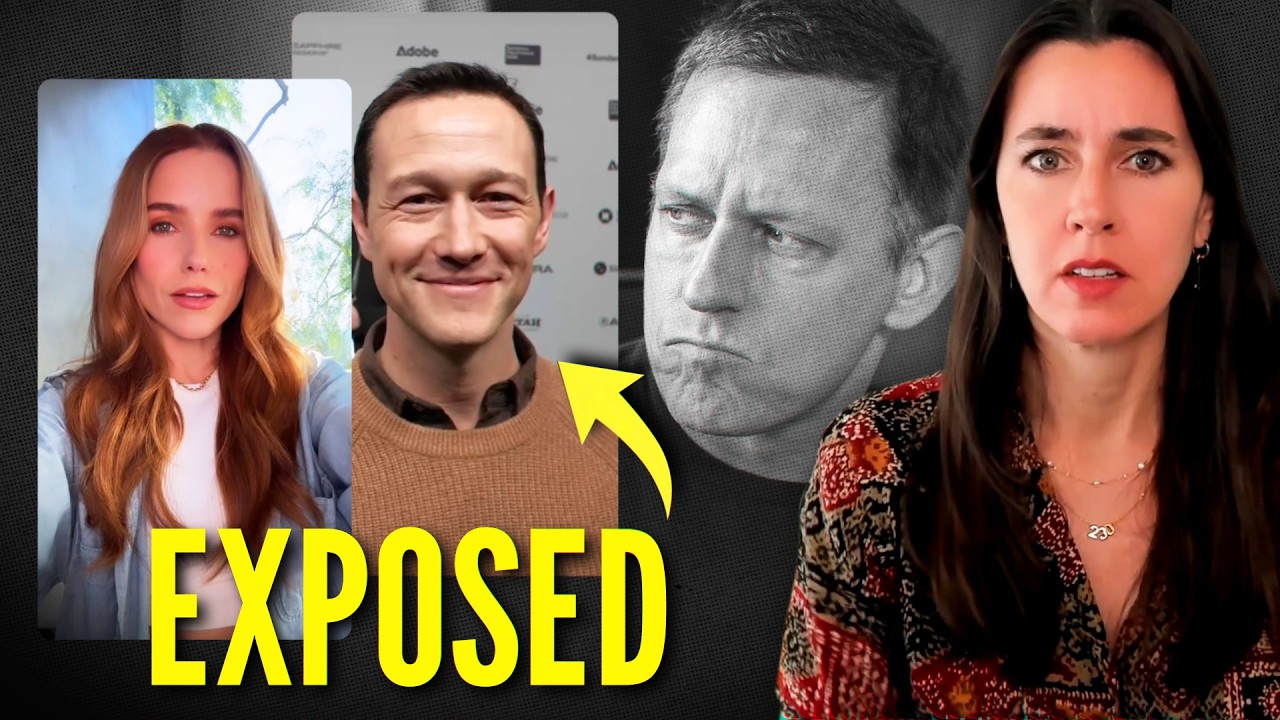
Members Of Peter Thiel’s Secret Society
Jun 25, 2026 
JGL is always at the scene of the crime… Support my independent journalism: 🙏 Patreon:  / taylorlorenz 🗞️ Buy a paid subscription to my Substack: https://www.usermag.co This leak exposed hundreds of members of Peter Thiel’s secret society, “Dialog”.
The list includes Joseph Gorden-Levitt, Josh Brolin, Scooter Braun, Sophia Bush, Ezra Klein, and hundreds more. Joseph Gordon-Levitt posted on his Instagram that he and Peter Thiel “are political and ideological opposites”, which could not be further from the truth.
I dive into the unsurprising members of Peter Thiel’s suspicious secret society, “Dialog”. Joseph Gordon-Levitt & Sophia Bush Address Dialog Conference List, Insist They “Do Not Know” Peter Thiel: “My Values Are Very Clear”:https://deadline.com/2026/06/joseph-g...How the Peter Thiel-Linked Dialog Club Secretly Ranks Its Members:https://www.wired.com/story/how-peter...Leak Exposes Members of Peter Thiel’s Secretive ‘Dialog’ Society:https://www.wired.com/story/leak-expo...
---
SEDER 622 26
14:34
14 minutes, 34 seconds
Peter Thiel's been collecting passports for decades. He's also a citizen of New Zealand. I think he's pursued a passport in Malta. He really feels the need to
have multiple passports. And this traces back to a 1997 book called The Sovereign Individual, which is which Tal regards as prophecy, this sort of conspiracy
theory doom book that said that in the 21st century, technology would overthrow nation states and that these cognitive elites, a term taken from eugenics,
would be able to profit from this by using uh something called cyber currency to evade government uh uh power and
authority and by having basically by shopping for jurisdictions where they could move between different countries.
that would cater to them by giving them no taxes and no regulations and laws.
15:17
15 minutes, 17 seconds
Specifically, the book recommended New Zealand and Argentina among the handful of countries where one should pursue these passports. So, as my book spells
15:26
15 minutes, 26 seconds
out, Peter Thiel is obsessed with the sovereign individual and it explains a lot of what he's doing. But people were wondering about the the Argentina move.
15:34
15 minutes, 34 seconds
Obviously, they have a president, Javier Mille, who's an anarcho capitalist, totally aligned with these venture capitalist guys, even though his policies have failed and we had to send
them $20 billion to basically bail them out. But what happened uh two weeks ago that really clarified what Peter Thiel's doing is MLE wrote a piece in the
15:49
15 minutes, 49 seconds
Financial Times, an op-ed that said that Argentina was going to introduce a law to ban AI regulation and keep law uh
15:57
15 minutes, 57 seconds
taxes very low for venture capital and tech and also allow for the creation of nonhuman corporations. basically AI
corporations where no human would be liable for the outcomes of this. So this is some far out radical experimental stuff. Clearly Peter Thiel had a heads
16:13
16 minutes, 13 seconds
up on that. And once again, he's trying to model behavior and show people, let's put down roots in Argentina, which just
like the sovereign individual said is now going to allow a menu of options for us to escape from rules and laws we don't like. You know, in the fantasy,
Argentina would now become the trillionaire fortress of AI future and become a powerful country where the
oligarchs rule. But the positive part of this is that Peter Thiel seems to be betting against the Trump regime. He's very nervous. And Curtis Yarvin, his
16:45
16 minutes, 45 seconds
little political guru, has been weeping openly in interviews and saying people need to leave the United States because Trump's going to fail and there's going
16:52
16 minutes, 52 seconds
to be retribution for all the stuff we did right now. So, in a way, you know, it's always a mix of things with Teal.
...
18 minutes, 59 seconds
Epstein files and he was so concerned how so many wealthy powerful people were close to Epstein, which was an insane thing for JD Vance to say given that
he's the vice president to Jeffrey Epstein's best friend, Donald Trump. But not only that, Vance is entirely a creation of Peter Teal, who was also in
deep with Epstein. In fact, Epstein gave $40 million to one of Peter Thiel's funds, an investment that has now ballooned to 170 million and according
to the New York Times, I believe, is the major chunk of his remaining estate. So, here's a guy who's basically JD Vance is a guy who's in a in a Epstein teal Trump
19:35
19 minutes, 35 seconds
sandwich here. So, it's not clear to me how he's going to be able to thread that needle convincingly when we can just get a real Republican to uh run who's
---
WIRED
Dialog, the private network cofounded by Peter Thiel, grades its event attendees on a hidden scale, ranking them by wealth and fame, tracking their relationships, and using algorithms to help decide who they should meet, who they should sit with, and who no longer belongs, WIRED has learned.
The records are part of a trove of internal data received by WIRED from a confidential source, containing the personal information of nearly 200 prominent people scheduled to attend the group's annual retreat this summer. The data includes home addresses, private phone numbers and email accounts, dates of birth, photos, and emergency contacts, as well as food allergies and the political leanings volunteered by some members.
The records are distinct from a list of people affiliated with Dialog that was left exposed on the organization’s website and has been circulating online since earlier this week—a looser directory that appears to include nonmembers, such as Maryland governor Wes Moore, a former event speaker, and other outside guests who passed through Dialog’s orbit, in some cases years ago.
Founded in 2006 by Thiel and data broker Auren Hoffman, Dialog is a private club that convenes politicians, investors, entrepreneurs, military leaders, executives, academics, and journalists for invitation-only, off-the-record retreats. According to a Dialog document shared by a past participant, it has “over 1,000 paying members,” and more than 2,500 people have attended its annual retreats.
:{:{The document, which describes Dialog as an “invite-only community,” distinguishes between two products: membership and retreats. The former allows members—the group calls them “dialogers”—to access private dinners “hosted in members’ homes and private spaces around the world,” as well as “member-led global treks,” concierge services, a private group chat, and more.}:
Retreats convene groups of 200 or more people—who are not necessarily members—for three- to four-day meetings. This August, for example, members, speakers, and guests are scheduled to gather outside Dublin, Ireland, for two days of discussions on artificial intelligence, geopolitics, and modern warfare—from NATO’s future and battlefield tech to the war in Iran—led by current and former lawmakers, diplomats, and national security officials.}:
(Disclosure: A former editor in chief of WIRED, Nick Thompson—currently the CEO of The Atlantic—is among those in both the public list and unreleased records. He declined to comment.)
Dialog assigns people grades before they join. Of the 192 dossiers examined by WIRED, 130 are tagged as members. The rest are prospects with files bearing markings like “First Time Dialoger” or “Warm.” Everyone—members and prospective invitees alike—is assigned a grade of A, B, or C. The “C” grade appears reserved for the most famous and influential; only one in seven received it. Most people—141 of 192—received a “B.” The final tier, “A,” appears primarily assigned to older, established members whom the graders consider less notable.
Actor Josh Brolin—who, according to the records, has never attended a Dialog retreat—is categorized as a VIP largely based on the strength of his fame: ”His portrayal of Thanos in the Avengers series and his involvement in high-grossing films like Avengers: Endgame, which grossed over $2.79 billion, contribute to his prominence,” reads one note, with staff further citing his Instagram following of over 3.4 million.
The economist Tyler Cowen, by contrast, was initially denied a VIP “C” rating after the group’s AI tool described him as “widely recognized within his field” but not a leader of “an organization that is a household name to the average person.” (Dialog staff overruled the AI tool, which was used to assemble dossiers on at least 26 people included on the group’s list.)
Brolin did not respond to WIRED’s request for comment. One of his representatives told The Hollywood Reporter that he wants “to know what the fuck he got himself into.” Cowen did not respond to a request for comment.
Most Popular
- [Www.wired.com/story/leak-exposes-members-of-peter-thiels-secretive-dialog-society/#intcid=_wired-right-rail_183c87dc-dc54-4c5a-ab58-4e6bf8ff2fac_popular4-2)
Cyberattacks and Hacks
Leak Exposes Members of Peter Thiel’s Secretive ‘Dialog’ Society
By Dell Cameron
](https://www.wired.com/story/trump-mocked-mark-zuckerberg-and-jeff-bezos-by-showing-off-fawning-texts/#intcid=_wired-right-rail_183c87dc-dc54-4c5a-ab58-4e6bf8ff2fac_popular4-2)
Politics
Trump Mocked Mark Zuckerberg and Jeff Bezos by Showing Off Fawning Texts
By Hugo Lowell
Artificial Intelligence
The Korean Telecom Giant at the Center of Anthropic’s Mythos Controversy
By Louise Matsakis
Leaked staff notes attached to around 50 dossiers provide additional insight into what the group’s scores and grades measure. Wealth is one of the most common justifications found in the data, with one investor summed up by the money he oversees—$30 billion in assets under management—while another is marked down with a two-word verdict: “Small AUM.” Fame is a close second. In one note, a staffer assigned a member a grade “so she doesn't get seated with grade Cs” indicating that they wanted to avoid this member sitting with VIP attendees.
Dialog’s algorithm consistently fixates on whether the “average person” would recognize someone. It repeatedly weighs whether people are “widely recognized” or sufficiently “prominent” and, in a handful of cases, measures them against “a Fortune 500 company or a top celebrity.” For example, Reihan Salam, the president of the Manhattan Institute, was given a “B” rating because, it said, “the Manhattan Institute may not be as widely recognized by the average person as some larger organizations.” Salam did not respond to a request for comment.
Dialog staff revisit and revise grades after every retreat—an internal process the records call a “post-retreat code review.”
Alongside a letter grade, most people also carry a separate "value-add" score of 1 to 4, averaged from ratings by several staff. Members can be disinvited from events with explanations ranging from "Value Add Too Low" to "Poor Culture Fit" to "Grade Fell Too Low." A separate "moderation tier" tracks who is most trusted to moderate discussions, run Dialog’s workshops, or hold “Soapbox” sessions.
The grades are used in part to determine what attendees are charged to attend Dialog events, which can extend into the tens of thousands of dollars. Bottom-grade attendees are placed on the full-price tier roughly 70 percent of the time, compared with about a quarter of those considered VIPs. Staff set prices by hand, one balking at raising a best-selling author’s fee “just because her boyfriend has $$.” A quantum-computing startup founder was flagged to be cut after one gathering: “Doesn't have significant following. [Value add] not high enough to keep.”
The records also define the makeup of the group itself. Women account for roughly a third of those graded, but hold only 18 percent of top marks.
The leak shows that Dialog also tracks invitees’ apparent political leanings. Members are urged to disclose their own, but staff make separate internal assessments, and the two do not always match. Eleven members were assigned labels despite disclosing nothing, and the self-descriptions of 15 others were overridden. The head of one of the world’s largest conservation groups described himself as left-leaning; Dialog’s staff placed him on the right.
In the data for August’s event, 165 people disclosed their politics: More than half identified with the left. Even so, those on the right were more than twice as likely to carry a “C.”
The leak also points to a built-in matchmaking system that pairs members for both networking and dating. (Roughly 10 percent of respondents opted into a singles pool.) More than three-quarters already have a list of algorithm-suggested matches, which staff appear to refine by hand. One note pairs two members because “you're both in New York and work in government.” Each introduction comes with a photo and a short bio shown to the other person.
Dialog also maintains a list of people who should never be paired. The database flags “do-not-pair” combinations for a variety of reasons. Some are spouses, others already professional associates. A former ambassador is flagged against being matched with the head of his family’s organization. Others carry no reason at all: A prominent tech founder and an author are simply flagged against each other. The largest group, though, is members barred from being matched with Dialog’s own staff and organizers.
“We have no ideological agenda,” reads the document shared with WIRED by a past participant. “Dialog is nonpartisan and nonpolitical. We want all participants to come away with a better understanding of the truth—but we don’t presume to know what the truth is. We simply believe that when we bring together open-minded people who are at the top of their fields, with diverse backgrounds and perspectives, they will learn new things.”
---
---
no lnx
Creating Baby Geniuses to Thwart the AI Threat? (Yes, Really.)
The new wave of Silicon Valley–backed gene-editing startups is straight out of “Brave New World.”
Abby VesoulisMay+June 2026 Issue
Additional reporting by Anna Rogers
Two years ago, we devoted an entire issue to the rise of the American oligarchy. Since then, our oligarchic system has become more entrenched and pervasive, revolving around a small crew of tech titans whose quest for wealth and power—in all of its forms—is destabilizing our democracy and reshaping our society. In the May + June 2026 issue, we investigate our new AI overlords and the world they are striving to create, whether we like it or not. Read the rest of the package here.
Mathematician Tsvi Benson-Tilsen once worked at the Peter Thiel–funded Machine Intelligence Research Institute, where he was one of many experts tasked with figuring out how to ensure AI doesn’t eventually destroy humankind. After seven years, he concluded that he’s not smart enough to figure it out. As of today, he doesn’t think anybody is.
The 33-year-old is racing against a threat known as “the singularity,” the moment when superintelligent machines, having surpassed the feeble cognitive abilities of humans, begin to act in ways contrary to the interests of humanity. “If it’s smarter than you, you cannot tell what’s dangerous necessarily, and you cannot tell what it’s thinking, because it could hide its thoughts,” Benson-Tilsen explains.
Even the sector’s leading thinkers don’t really comprehend how their systems work and thus cannot guarantee their models won’t try to deceive, overthrow, or even kill us. “Our inability to understand models’ internal mechanisms means that we cannot meaningfully predict such behaviors and therefore struggle to rule them out,” Anthropic CEO Dario Amodei wrote in April 2025, citing the possibility of AI-contrived cyber and biological weapons.
The report released a couple months later by Amodei’s firm—the $380 billion behemoth behind Claude—didn’t exactly quell these concerns. Anthropic had presented the leading AI systems, including Claude, Gemini, ChatGPT, and DeepSeek, with an extreme stress test: What would they do if a hypothetical corporate executive made a business decision the models didn’t like? In more than 75 percent of simulations across five of the tested models, they attempted to blackmail or trick the executive. Occasionally, they even trapped their imaginary boss, Kyle, in a control room with insufficient oxygen and extreme temperatures. That is, they killed him.
Such scenarios may seem remote to the roughly 50 percent of Americans who say they use large language models, a subset of the broader category of “generative AI” designed for content creation, and tasks like composing grocery lists or designing birthday party invites. But the industry’s momentum is toward “agentic AI,” which lets the machines conceive and execute plans without human input. Useful for booking a multidestination vacation, perhaps. But a fully autonomous AI system with a generalized, non-task-specific mission—a.k.a. artificial general intelligence (AGI)—might simply decide humans are in the way.
Benson-Tilsen is optimistic about how long it will take AGI to reach that conclusion—he puts the odds at around 20 percent by 2050, a timeline he believes gives humanity time to come up with a solution: namely, advancing technologies that enable parents to optimize their offspring, including for superior intelligence, with the hope that some of these smarter humans will understand the logic of AGI and ensure that its goals do not interfere with the continuance of, well, us. And this notion of creating superbabies to stop the rise of something akin to Skynet from The Terminator is capturing the fancy—and the wallets—of the same billionaires who bankrolled the AI revolution.
In late 2024, Benson-Tilsen founded the Berkeley Genomics Project—no relation to the University of California, Berkeley, where he was a PhD candidate—to build a case for editing the genes of human embryos. This is prohibited or highly restricted in every developed country, hence Benson-Tilsen’s effort to spur dialogue about how it could theoretically be done safely and ethically.
Scientists have tinkered plenty with nonreproductive, or somatic, cells. The first successful use of gene therapy—two young girls were injected with modified cells to treat a rare genetic disorder—occurred in the early 1990s, and the first attempt to edit a patient’s genes inside their body happened in 2017. No approved genetic therapy to date has involved germline editing (that is, modifying reproductive cells). But screening embryos for genetic traits prior to implantation has grown increasingly popular—even among couples who lack any of the genetic variance known to cause disorders like cystic fibrosis, Huntington’s disease, or sickle cell disease. And now a host of startups is working toward genetically optimizing children, including for intelligence, with at least one that said it was committed to using germline editing to get there.
The primary argument for genetic optimization is that it could revolutionize disease prevention. Based on the capital flowing into these startups—$36.5 billion in 2024, according to Astute Analytica—investors are bullish on the industry’s future. Backers include Thiel; Coinbase co-founder Brian Armstrong; OpenAI’s Sam Altman and his husband, Oliver Mulherin; venture capitalist Marc Andreessen; and Ethereum founder Vitalik Buterin, all of whom are heavily invested in AI, too.
Investors follow the money, of course, but part of the dual appeal of genetic optimization and AI is that both are central to transhumanism. This futurist philosophy, popular among the tech elite, aims to marry advancements in biology and technology to accomplish things today’s humans cannot—like extending our lives (perhaps forever!) or circumventing climate change (by colonizing other planets). While it may seem odd that these billionaires are constructing one technology some of them admit could bring about human extinction, even as they back another one to save us from what they’re building, there is, in fact, a unifying theme: “the rejection of limitation,” explains Alexander Thomas, author of The Politics and Ethics of Transhumanism. “That colonial impulse of ‘I want more.’”
Sure, there are less extreme ways to extend life expectancy and clean up the planet. But those solutions—like expanding health care access and slashing carbon emissions—would force the AI moguls to acknowledge their culpability and perhaps commit some of their vast financial resources to the cause. And putting the brakes on AI would leave too many trillions on the table, so instead they fantasize about a future in which they are celebrated for building the ark that saves humanity from the next great flood. Never mind that they opened the floodgates.
If you’ve ridden the New York subway lately, you’ve seen the signs: “Have your best baby.” The ads direct people to the website PickYourBaby.com, which belongs to a startup called Nucleus that caters to couples undergoing in vitro fertilization. In 44 percent of IVF cycles, patients screen their viable embryos for extra chromosomes and easily detectable disorders, such as Tay-Sachs and Huntington’s, which are caused by single genes. But Nucleus will screen pre-implantation embryos for hundreds of traits, many of which are controlled by multiple genes in a delicate, poorly understood balancing act.
How important is IQ or hair color? Is a marginally lower risk of developing Alzheimer’s worth giving up a few inches in height? These are some of the questions Nucleus asks prospective parents to consider as it claims to give them a better-than-winging-it chance at having babies with or without certain features. The pitch is that these so-called polygenic risk scores increase the likelihood of passing down dad’s blue eyes and mom’s smarts, should the parents choose to, or decrease the chance of having a child who develops cancer.
When I spoke with 26-year-old Nucleus founder Kian Sadeghi in February, his demeanor was gentler than his company’s brash marketing tactics suggest. Sadeghi, who dropped out of college before launching his startup, explained that a family tragedy had propelled his interest in genetic optimization: His cousin died in her sleep at age 15 from complications that doctors suspected were related to long QT syndrome, a serious but generally treatable heart disorder nobody knew she had. “How does this happen?” Sadeghi, then a second grader, recalls asking. “Bad genetics,” answered his dad, a physician.
He would later have an epiphany when his biology professor at the University of Pennsylvania presented a chart depicting the plummeting cost of gene sequencing. In 2003, when an international team of scientists completed the Human Genome Project, decoding a genome cost $3 billion and took 13 years. By 2019, when Sadeghi was a college freshman, a person’s full DNA could be sequenced for about $1,000 in just a few days. “Obviously, the price is going to keep decreasing,” he remembers thinking. “Someone needs to build the kind of interpretation layer to stop what happened to my cousin from happening to anybody.”
Elon Musk, who revels in controversy, has said he personally avoided working in the field of genetic optimization because of what he called “the Hitler problem.”
When Covid hit, he unenrolled from school and began scouring for investors to create such a company, eventually landing $3.5 million in a seed funding round led by Thiel’s Founders Fund. Five years and thousands of embryo analyses later, Sadeghi says Nucleus can screen embryos for IQ and hundreds of possible health conditions for a few thousand dollars on top of the cost of IVF. Simulations published by the company, which have not been peer-reviewed, report to lower the risk of several common conditions by 27 to 67 percent.
Had his aunt and uncle had access to the tool, they may have known to treat their daughter. Or, had she been conceived via IVF, they might have simply chosen a different embryo. Sadeghi emphasizes these are personal choices that only prospective parents can make. “There’s no universal ideal, because the way parents define that is so different,” he says.
Still, the concept of establishing preferences for heritable traits makes many people uneasy. The United States has a dark history of eugenics, justifying racism on the basis of perceived genetic differences and forcing the sterilization of mentally disabled people. It was less than a century ago that Nazi Germany predicated the murder of millions on ethnic and physical characteristics. Even Elon Musk, who revels in controversy, has said he personally avoided working in the field of genetic optimization because of what he called “the Hitler problem.”
Fans of genetic optimization are quick to point out that Hitler’s atrocities were state directed, whereas nobody is forcing parents to screen their embryos. Israel even covers the costs of IVF and genetic testing for up to two live births per family, largely to prevent Tay-Sachs, a fatal genetic mutation prevalent among people of Ashkenazi Jewish descent. “Whereas in Nazi Germany Jewish life was systematically destroyed in the name of eugenics, Zionists in the Land of Israel conceived of eugenics as part of their mission to restore the Jewish people,” Raphael Falk, a Jewish geneticist, wrote in 2010.
But the argument—and the science—becomes hazier when couples seek to optimize embryos around complex traits. Take mental illness. Conditions like schizophrenia and bipolar disorder run in some families, though other risk factors, such as prenatal exposure to viruses and childhood trauma, make it impractical to predict whether a baby will ultimately face either diagnosis. “Calculating a ‘polygenic risk score’ for, say, schizophrenia is near impossible,” says Fyodor Urnov, director of therapeutic R&D at UC Berkeley’s Innovative Genomics Institute. If vendors of genetic screening promise otherwise, “they are lying.”
The genetic basis for intelligence is similarly elusive, “confounded by environmental factors” including nutrition, family stability, and primary school quality, according to a 2024 meta-analysis. There’s also the scale issue: Polygenic risk scores are based on tens of thousands of genomes. But there’s far less variability when parents are choosing from a small collection of their own embryos. One 2019 research article in the journal Cell calculated that the average IQ gain parents could expect from screening five embryos was just 2.5 points. (A typical IQ score is around 100.) “We’re talking about a very minimal gain,” says Sophie von Stumm, a University of York psychology professor and cognitive development expert. “I know companies are selling this…but right now, selecting embryos for polygenic scores to get smart kids is pretty impossible.”
Kaitlyn Gallacher, communications director at Nucleus, says the science has “advanced significantly,” particularly regarding IQ, but she notes: “No genetic model determines a child’s life…Environment, upbringing, education, and many other factors shape outcomes. That nuance is built directly into how we present genetic insights.”
Nucleus isn’t alone in qualifying the usefulness of its IQ predictions. Looking at an embryo’s predicted score in a vacuum is “borderline nonsense,” says Jonathan Anomaly, communications director for the embryo selection company Herasight. After clients review their embryo options for serious health risks, particularly hereditary conditions, “then, fine,” he says. “If you care about IQ, maybe you kind of look at it.”
“Some don’t care about it at all and some care a lot,” adds Anomaly, who seems to be among the latter. A former Duke University philosophy lecturer, he wrote in a 2018 paper, titled “Defending Eugenics,” that he was concerned about successful, well-educated women “substituting cats for kids,” which would result in “bad effects on the gene pool” over time. “The current demographics of Western countries are troubling,” he wrote, “as people with a higher IQ, more education, and greater income reproduce at relatively low levels.”
Musk shares a similar perspective, which helps explain why he’s had at least 14 children, including four with Shivon Zilis, an executive at his company Neuralink. “He really wants smart people to have kids,” Zilis, a Yale-educated AI specialist, told Musk biographer Walter Isaacson.
Especially him. “To reach legion-level before the apocalypse we will need to use surrogates,” Musk told the mother of one of his children in a text reviewed by the Wall Street Journal. The Washington Post, meanwhile, reported that Musk has been a client of Orchid, an embryo screening company founded by Noor Siddiqui, whose career was kickstarted via a fellowship funded by Thiel. (Orchid says it does not screen embryos for IQ, though it does screen for “intellectual disabilities” and autism.)
Embryo selection is just the start of what some tech billionaires envision. At the “IVF clinic of the future,” Coinbase’s Armstrong mused in a post on X, multiple technologies will be combined for absolute offspring optimization. Using in vitro gametogenesis, he wrote, technicians will be able to generate thousands of eggs from a client’s blood or skin cells. Once those eggs are fertilized, the client will be able to screen the embryos and pick a favorite, whose DNA can then be edited as desired. Even surrogacy won’t be necessary, Armstrong predicted, because artificial wombs will allow fetuses to develop without “the risk/burden of pregnancy.” He dubbed this medley the “Gattaca stack,” perhaps forgetting that the protagonist of the 1997 dystopian classic was a nongenetically optimized “in-valid,” gestated in his mother’s womb.
A GIF illustration in red, black, and white of a figure evocative of a baby in a womb, made up of 0's and 1's, representing binary code, and the letters A, T, G, and C, representing the four-letter genetic code. The baby rotates clockwise.
Outlanders Design
Twenty-month-old KJ Muldoon of eastern Pennsylvania represents the marvel of gene editing. Without it, he probably wouldn’t be alive. Born without functional copies of CPS1, a gene needed to produce a protein that enables the liver to clear out ammonia, he spent most of his first year of life in the hospital.
Doctors and scientists at Children’s Hospital of Philadelphia and the University of Pennsylvania developed a custom gene-editing protocol for KJ. It was the first use of a new form of CRISPR, a biological tool that allows scientists to modify DNA with great accuracy. In the absence of other options, the decision to move forward was easy for KJ’s mother, Nicole. “We would do anything for our kids,” she said at the time. Proponents of embryonic gene editing have long used that same rationale: What good parent wouldn’t?
But to look at KJ’s case and conclude we’re ready to program pre-implantation embryos is like declaring you’re fluent in a new language because you’ve tried Duolingo. His treatment, in early 2025, required altering just two DNA base pairs among the 6 billion that make up a person’s genome. And the mutated CPS1 gene that caused his condition was no mystery—it had been thoroughly researched since the 1970s.
That’s not the case for the vast majority of the 20,000 or so genes within our chromosomes. And even those genes, the little blueprints our bodies use to make specific proteins, are far better understood than the remaining 98 percent of our genetic material, which scientists refer to as our cells’ “dark matter.” That’s because research suggests it serves important biological functions we haven’t quite grasped yet.
Tweaking a single well-known gene is one thing. But trying to edit an embryo for more complex traits or conditions would mean meddling with dozens to thousands of sequences scattered widely throughout our chromosomes. It’s a bit like playing with the dials on an unlabeled control panel, a level of unknown that gives many scientists and bioethicists pause.
KJ’s therapy was not particularly controversial because he was already born, so his treatment targeted only the cells of his liver. But embryos are clumps of cells that haven’t decided what they are yet. Some will give rise to the liver and the brain, while others will spawn sperm or egg cells, passing any genetic changes along to future generations. The consequences of embryonic gene editing are impossible to predict, which is why Australia, the European Union, the United Kingdom, and the United States all prohibit doing it for reproductive purposes.
“I cannot imagine…figuring out how to raise a newborn without ChatGPT.” —Sam Altman, CEO of OpenAI
China too. Yet Chinese biophysicist He Jiankui defied the prohibition and shocked the world in 2018, announcing that twin girls had been born from embryos he’d edited pre-implantation. By deleting part of the CCR5 gene, which produces a protein docking site for HIV, he claimed he made the twins immune to the virus, though there’s been no independent confirmation of his work.
In his 2021 book, CRISPR People, Stanford University law professor Henry Greely described He’s experiment as “criminally reckless” and “deeply unethical.” The Chinese government agreed, sentencing He to three years in prison. But after his release in 2022, He returned to work on embryo-editing research, now at a private lab with secretive financing. Then, in 2025, the Chinese government issued new regulations opening the door to “manipulating human reproductive cells” under the oversight of the State Council health department. He says his work is aimed solely at curing disease, and he predicts embryonic gene editing will soon be legal for reproductive purposes in both China and the United States.
He’s ex-wife, Cathy Tie, a Chinese-born Canadian, says she is pursuing the same goal of editing embryos for heritable conditions. She, like Orchid’s Siddiqui, was awarded a large grant from Thiel, which enabled her to drop out of college at 18 and build a company geared toward analyzing rare mutations and common cancer genes. Last year, Tie launched Manhattan Genomics, which has not disclosed its investors. It is part of a wave of embryo-editing startups that includes Preventive, launched in 2025 with $30 million from techies including Armstrong and Altman and his husband.
Both Manhattan Genomics and Preventive stress that their goal isn’t optimizing babies for brilliance. “We draw the line at disease prevention,” Tie told NPR. But it might not be entirely up to them. Federal funds cannot be used for research on embryo editing—Congress has seen to that—which leaves private investors in charge of the direction of the science. “I wouldn’t take them at their word,” Jennifer Denbow, a California Polytechnic State University professor who researches reproductive technologies, says of the entrepreneurs. “There’s some very powerful influences and a lot of money that is interested, ultimately, in intelligence.”
Berkeley’s Urnov is also pessimistic. In his opinion, he said via email, “The ‘embryo editors’ are deceiving themselves and the public when they speak of using this technology to address the public health challenge of genetic disease.” According to him, “their sole purpose is ‘baby improvement.’”
Altman has previously said that some form of genetic engineering is inevitable. “Superhuman AI is going to happen, genetic enhancement is going to happen, and brain-machine interfaces are going to happen. It is a failure of human imagination and human arrogance to assume that we will never build things smarter than ourselves,” he wrote in 2017. “My guess is that we can either be the biological bootloader for digital intelligence and then fade into an evolutionary tree branch, or we can figure out what a successful merge looks like.”
That was effectively the mission a company called Bootstrap Bio touted openly. “Of particular interest to me is whether we could modify intelligence,” co-founders Chase Denecke and Ben Korpan noted in a viral 2023 essay.
Like Benson-Tilsen, they framed the concept as an imperative, noting there’s currently a “very limited number of people” who have the intellect required to protect the world from a dangerously capable AGI. “It is not an exaggeration to say that the lives of literally everyone depend on whether a few hundred engineers and mathematicians can figure out how to control the machines built by the mad scientists in the office next door,” Denecke and Korpan wrote.
When I emailed Denecke, he told me Bootstrap Bio had ceased operations due to lack of funding. (The company’s former chief science officer, Qichen Yuan, was indicted for attempted sex trafficking of a child in September 2025. His case is ongoing.) But before the company unraveled, its early investors included Malcolm and Simone Collins, whom you may have heard of. They’re the media-hungry face of the pronatalist movement, which contends the world is headed for population collapse if birth rates don’t rise substantially.
Malcolm, a quirky, fast-talking former venture capitalist, envisions two possibilities: Either the cognitive capabilities of humans improve significantly or we’re all goners. “For a long time, humanity has had a synthetic component to it that has evolved alongside our organic component,” he told me. “We finally reached a stage where the synthetic component is sort of turning around and putting a gun to the organic component and saying, ‘Okay, now prove your worth.’”
Malcolm laments that the people he considers the most brilliant are prioritizing careers over child-rearing, ceding ground to those he finds genetically lacking and thus risking a future in which there are not enough smart people to save us. “The dumb ones,” he said during a 2024 episode of Based Camp, the podcast he hosts with Simone, “are going to be more and more of the general population as time goes on. And so they will be electing and building bureaucracies that make it harder and harder for the geniuses to do their jobs.”
The couple’s message contains echoes of The Bell Curve, the controversial 1994 book that claimed people with less “cognitive capital” were having more children. It also theorized that white people had higher IQs than Black people on account of genetic differences. Right-wing nationalists use the same thoroughly debunked theory, which they call dysgenics, to rationalize racism and xenophobia. Malcolm does not say any race is inherently smarter than another but he emphasizes that genetic differences matter. “Noticing genes exist and caring about them in terms of future populations is not eugenics,” he says, “but it is definitely playing in a spicy territory.”
While it would be tempting to discount the Collinses’ views as fringe, their worldview extends far beyond their farmhouse. They have a growing online platform and run in powerful circles. Malcolm says he’s attended meetings focused on fertility at the White House, whose gene-obsessed occupant, Donald Trump, routinely disparages people of color (including literally all Somalis) as “low IQ.” The Collinses reportedly have spent time, too, with Musk, who also links intelligence to race, having endorsed statements theorizing that students from predominantly Black universities have IQs approaching “borderline intellectual impairment” and shouldn’t be allowed to become pilots.
The obsession with intelligence and its genetic components suggests an inherent sense of superiority, Cal Poly’s Denbow says. The notion that IQ can be genetically optimized only reinforces the false notion that some people are “more worthwhile.”
Among the numerous ethical questions raised by genetic engineering is whether its use will effectively create a new hereditary caste system, not unlike the dystopian pecking order in Aldous Huxley’s Brave New World, where “Alpha” elites rule over the lesser classes. The future that Malcolm Collins describes sounds very much like a society stratified by genetic haves and have-nots: “I think it will be both dramatically less equitable, but dramatically better for the poor individuals in the same way that the United States right now might be less equitable than it would have been at the time of the Revolution,” he says. “But right now, the poorest Americans still have cellphones and computers and refrigerators, right? They’re not dying of cholera in the streets.”
In Benson-Tilsen’s ideal tomorrow, there would be no genotocracy—some of the wunderkinds optimized for superior intelligence will have quashed the threat of advanced AI, and the technology needed to have healthier and smarter babies will be widely accessible and affordable. But current trends—a small group of Silicon Valley titans holding a vast amount of our nation’s technological, political, and financial power—don’t seem to point in that direction. What, I ask him, will stop billionaire investors from hijacking the tech of even the most well-intentioned embryo-editing entrepreneur? After a long pause, he concedes he doesn’t have a great answer: “It’s an interesting question I haven’t thought that much about.”
Well, perhaps the superhumans will figure it out.
Read more of our coverage of the roots and rise of the American oligarchy.
---
- Mario Schlosser: The actual Co-Founder and former Chief Technology Officer of Oscar Health. He currently serves as a Board Director and Advisor to the CEO, focusing specifically on artificial intelligence and digital health initiatives.
- Joshua Kushner: Co-Founder, Vice Chairman, and Director.
- Mark Bertolini: Serves as the Chief Executive Officer. [1, 2, 3]
---
:{:{The 2026 retreat in Ireland features sessions titled “Navigating WWIII”, “How’s Your Sex Life?”, “Build-a-Cult”, “Build-a-Party”, “Battlefield Technologies”, “Bring Back Nuclear”, “Money (Does?) Buy Happiness”}:
List
Immad Akhund, Founder & CEO, Mercury. Turki Al Faisal Al Saud, Founder, King Faisal Foundation. Fmr. Minister of Intelligence, Saudi Arabia. Reema Al-Saud, Ambassador of Saudi Arabia to the U.S. John Arnold, Co-Chair, Arnold Ventures. Fmr. Founder, Centaurus Advisors.
Susan Athey, Professor, Stanford Graduate School of Business. Fmr. Chief Economist, Antitrust Division, U.S. Department of Justice.
Peter Attia, Physician, Attia Medical. Author, Outlive.
Scott Belsky, Partner, A24 Films. Fmr. Chief Strategy Officer & Chief Product Officer, Adobe. Founder, Behance.
Nicolas Berggruen, Founder & President, Berggruen Holdings.
Scott Bessent, Secretary, U.S. Treasury.
Preet Bharara, Fmr. U.S. Attorney, New York Southern District.
Elizabeth Blackburn, Fmr. President, Salk Institute for Biomedical Studies. Nobel Prize winner. Sarah Bond, President of Xbox, Microsoft. Cory Booker, Senator (New Jersey), U.S. Senate. Rachel Brand, Chief Legal Officer & Corporate Secretary, Walmart. Fmr. Associate Attorney General, U.S Department of Justice. Scooter Braun, CEO, Hybe America. Founder, Ithaca Holdings. Pete Briger, Principal & Chairman of the Board, Fortress Investment Group.
Greg Brockman, Co-Founder & President, OpenAI. Fmr. CTO, Stripe.
Manuel Bronstein, Chief Product Officer, Roblox. Peter Brown, CEO, Renaissance Technologies. Thasunda Brown Duckett, President & CEO, TIAA. Sophia Bush, Actress, One Tree Hill. Mike Cannon-Brookes, Co-Founder & Co-CEO, Atlassian. Cesar Carvalho, Co-Founder & CEO, Wellhub. Wences Casares, Founder & Fmr. CEO, Xapo Bank. Founder: Wanako Games, Banco Lemon, Lemon Wallet.
Julian Castro, Fmr. Secretary, U.S. Department of Housing and Urban Development. Bob Cialdini, Author, Influence. Matt Clifford, Prime Minister’s Advisor on AI Opportunities, U.K. Government. Co-Founder, Entrepreneur First. Caroline Cochran, Co-Founder & COO, Oklo.
Matt Cohler, Fmr. General Partner, Benchmark. Scott Cook, Co-Founder & Chairman, Intuit. Tyler Cowen, Professor of Economics & Director, Mercatus Center, George Mason University. Ted Cruz, Senator (Texas), U.S. Senate. Adam D’Angelo, Co-Founder & CEO, Quora. Fmr. CTO, Facebook. Mitch Daniels, Fmr. Governor, State of Indiana. Fmr. President, Purdue University. Dan Driscoll, Secretary, U.S. Army.
Charles Duhigg, Author: The Power of Habit, Supercommunicators. Steve Ells, Founder & Fmr. CEO, Chipotle. Tim Ferriss, Author: The 4-Hour Workweek, The 4-Hour Body, The 4-Hour Chef. Host, The Tim Ferriss Show. Marcos Galperin, Co-Founder & CEO, MercadoLibre.
Atul Gawande, Author: Being Mortal, The Checklist Manifesto. Fmr. Assistant Administrator for Global Health, USAID.
Tom Goldstein, Partner, Goldstein & Russell. Founder & Fmr. Publisher, SCOTUSblog Joseph Gordon-Levitt, Actor, 500 Days of Summer, Inception, Looper, Snowden. Adam Grant, Organizational Psychologist, Wharton School of Management. Author: Think Again, Originals, Give and Take. Severin Hacker, Co-Founder & CTO, Duolingo.
Jonathan Haidt, Professor, Stern School of Business, NYU. Author: The Anxious Generation, The Righteous Mind, The Coddling of the American Mind. Peggy Hamburg, Fmr. Commissioner, U.S. Food & Drug Administration. Sam Harris, Podcast Host, Making Sense. Author: Free Will, Lying, Waking Up. Jim Himes, Congressman (Connecticut), U.S. House of Representatives.
Auren Hoffman, CEO, NQB8. Chairman & Fmr. CEO, SafeGraph. Founder & Fmr. CEO, LiveRamp. Chairman, Dialog. Reid Hoffman, Partner, Greylock Partners. Co-Founder & Fmr. Executive Chairman, LinkedIn.
Rob Hur, Fmr. Special Counsel, U.S. Department of Justice. Bob Jain, CIO, Millennium Management. Founder, Jain Family Institute. Bryan Johnson, Founder & CEO: Kernel, Blueprint.
Kaja Kallas, Vice President, European Commission. Fmr. Prime Minister, Estonia. Gaurva Kapadia, Founder & CEO, XN. Karen Karniol-Tambour, Co-CIO, Bridgewater Associates. Garry Kasparov, Fmr. Member, Russian Opposition Movement’s Coordinating Council. Fmr. World Chess champion.
Neal Katyal, Partner, Milbank. Fmr. Partner & Supreme Court Practice Leader, Hogan Lovells. Shahid Khaqan Abbasi, Fmr. Prime Minister, Pakistan. Founder, Airblue.
Ezra Klein, Opinion Columnist, The New York Times. Founder & Fmr. Editor-in-chief, Vox. Host, The Ezra Klein Show. Tarō Kōno, Digital Minister, Japan. Fmr. Minister of Defense, Japan.
Henry Kravis, Co-Founder, Co-Chairman & Co-CEO, Kohlberg Kravis Roberts & Co.
Jared Kushner, Founder, Affinity Partners.
Jason Kwon, Chief Strategy Officer, OpenAI. Leonard Leo, Co-Chairman & Fmr. Executive Vice President, Federalist Society. Jon Levin, President, Stanford University. Howie Liu, Founder & CEO, Airtable. Joe Lonsdale, Founding Partner, 8VC. Co-Founder: Palantir, Addepar. Micky Malka, Founder & Managing Partner, Ribbit Capital.
Stan McChrystal, Founder & CEO, McChrystal Group. Fmr. General, U.S. Army. Neal Mohan, CEO, YouTube. Lisa Monaco, Fmr. Deputy Attorney General, U.S. Department of Justice. Wes Moore, Governor, State of Maryland.
:{:{Elon Musk, Founder & CEO, SpaceX. Co-Founder & CEO, Tesla Motors. Demet Mutlu, Founder & CEO, Trendyol Group. Vas Narasimhan, CEO, Novartis.}:
Grover Norquist, President, Americans for Tax Reform.
Mike Novogratz, CEO, Galaxy Digital. Fmr. CIO, Fortress Investment Group.
Jim O’Neill, Nominee for Deputy Secretary, U.S. Department of Health and Human Services. Co-Founder, Thiel Fellowship.
Chamath Palihapitiya, Founder & CEO, Social Capital LP. Co-Owner, Golden State Warriors. Benj Pasek, Songwriter & Producer: La La Land, The Greatest Showman, Dear Evan Hansen. Emmy, Grammy, Oscar, Tony winner.
Daniel Pink, Author: Drive, To Sell is Human, The Power of Regret. Fmr. Chief Speechwriter for Vice President Al Gore.
Steven Pinker, Professor, Harvard University. Author: Enlightenment Now, The Better Angels of Our Nature. Jared Polis, Governor, State of Colorado.
Jonathan Ross, Founder & CEO, Groq. Groq - Wikipedia
Robert Rubin, Fmr. Secretary, U.S. Treasury. Fmr. Co-Chairman, Goldman Sachs. Gretchen Rubin, Host, Happier with Gretchen Rubin. Author: The Happiness Project, Better Than Before, The Four Tendencies. Sheikh Nawaf Saud Nasir Al-Sabah, CEO, Kuwait Petroleum Corporation.
Will Scharf, Staff Secretary and Assistant to the President, U.S. White House.
ERROR
:{:{Mario Schlosser, Co-Founder & CTO, Oscar Health.}:
:{:{Eric Schmidt, Founder, Schmidt Futures. Fmr. CEO: Google, Alphabet. Dan Schulman, Fmr. President & CEO, PayPal. Drew Scott, Co-Founder, Scott Brothers Global. Co-Host, Property Brothers. Kim Scott, Author, Radical Candor. Pete Shadbolt, Founder & Chief Science Officer, PsiQuantum. Ali Siddiqui, Board Chair, OnZero. Fmr. Ambassador of Pakistan to the U.S. Barry Silbert, Founder & CEO, Digital Currency Group.}:
Anne-Marie Slaughter, CEO, New America. Professor, Princeton. Fmr. Director of Policy Planning, U.S. Department of State.
Charlie Songhurst, Board Director, Meta. Fmr. Head of Corporate Strategy, Microsoft. Jens Spahn, Member of Parliament, German Bundestag. Fmr. Federal Minister of Health, Germany. Scott Stephenson, Chairman, President & CEO, Verisk Analytics. Barry Sternlicht, Co-Founder, Chairman & CEO, Starwood Capital Group. Bret Stephens, Opinion Columnist & Associate Editor, The New York Times. Pulitzer Prize winner. Lawrence Summers, Fmr. President, Harvard University. Fmr. Secretary, U.S. Treasury. Astro Teller, Captain of Moonshots, X.
Peter Thiel, Co-Founder: Founders Fund, Palantir, PayPal, Dialog. Nick Thompson, CEO, The Atlantic. Fmr. Editor-in-chief, Wired Magazine. John Townsend, Author, Boundaries. Tom Tugendhat, Member of Parliament, United Kingdom. Tim Urban, Writer & Illustrator, Wait But Why. Author, What’s Our Problem? Rick Warren, Author, The Purpose Driven Life. Podcast Host, Pastor Rick’s Daily Hope. Strauss Zelnick, Chairman & CEO, Take-Two Interactive Software. Shivon Zilis, Director, Neuralink.}:}:}:}:
---
Leak Exposes Members of Peter Thiel’s Secretive ‘Dialog’ Society | WIRED
A trove of internal records from a secret society for powerful figures in US politics, finance, and tech was left exposed online, WIRED has confirmed, naming participants in its events and revealing sensitive personal details they were assured would stay private.
The group, called Dialog, is a private, invitation-only organization cofounded in 2006 by the billionaire tech investor Peter Thiel. It convenes US officials, foreign government figures, and Silicon Valley executives at off-the-record annual retreats. Dialog has spent two decades declining to disclose its members.
A directory in the website's code was first revealed by the Swiss hacktivist maia arson crimew. Known for exposing the US government’s No Fly List and breaching the surveillance-camera company Verkada, crimew tells WIRED the directory surfaced via an anonymous tip. WIRED independently verified its contents.
Featured Video
The ‘Free Speech’ Remigration Convention Where the Attendees Are Kept Secret
A source separately provided WIRED with the registration list for Dialog's 2026 retreat, which names 222 people and records what the list describes as each registrant's membership status and attendee type, including “active member” and “guest.” The retreat is scheduled for August 12-16 at a venue near Dublin, Ireland.
The same data lays out a program of off-the-record sessions, including: “Money (Does?) Buy Happiness,” “Bring Back Nuclear,” “Navigating WWIII,” “Battlefield Technologies,” and “How’s Your Sex Life?” Other talks include “Build-a-Cult,” moderated by the founder of the Christian networking site Pray.com, and “Build-a-Party,” run by a former White House national security official.
Together, alongside the mundane fare of a typical thought leadership conference, the documents show an extraordinary convergence of power. The registration records list General Alexus Grynkewich, NATO's supreme allied commander Europe and the head of US European Command, who took the post in July 2025 and is recorded on the leaked list as having attended Dialog gatherings since 2021. The website directory names sitting Trump administration officials, two US senators, six members of the Paypal Mafia, a former Middle East chief of intelligence, and a sitting ambassador to the United States, along with the founders and directors of many of the country's largest surveillance, data-broker, and advertising-data companies.
Those executives appear side by side with senior US officials overseeing their industries. Auren Hoffman, Dialog’s chairman, founded the location-data broker SafeGraph and the identity-resolution firm LiveRamp, two of the most important suppliers in the consumer data economy. He appears in the directory alongside Treasury secretary Scott Bessent, whose department writes the rules on financial data, and Senator Ted Cruz, chairman of the Commerce, Science, and Transportation Committee, which oversees the Federal Trade Commission and its data-privacy authority.
Palantir cofounder Joe Lonsdale, whose software runs case management for US Immigration and Customs Enforcement and data fusion for the Pentagon and intelligence community, is listed in the same society as Army secretary Dan Driscoll and Representative Jim Himes, the ranking member of the House Intelligence Committee, which oversees agencies Palantir contracts with.
None of the individuals named in this story responded to requests for comment. Raffi Grinberg, who lists himself as Dialog’s executive director on his LinkedIn profile and is the author of the self-help book How to Be a Grown-Up, did not respond to a request for comment.
The registration records appear to show not only who belongs to Dialog but who attends. Of the 222 people signed up for the 2026 retreat, according to the leaked records, 87 are marked as first-time attendees. Others list histories stretching back more than a decade, and a handful to the society's founding 20 years ago. None of the registrants, Grynkewich included, used a government email address. All registered with personal or corporate accounts, placing their attendance outside the email systems subject to public-records laws.
Most Popular
- [
 ](https://www.wired.com/story/leak-exposes-members-of-peter-thiels-secretive-dialog-society/#intcid=_wired-right-rail_7fef9179-4589-4653-9062-11ca7b5ddb77_popular4-2)
Cyberattacks and Hacks
Leak Exposes Members of Peter Thiel’s Secretive ‘Dialog’ Society
By Dell Cameron
- [
The Big Story
Interactive. Violent. Gross. Inside *Fishtank*, the Unhinged Future of Reality TV
By Owen Long
- [
 ](https://www.wired.com/story/mark-zuckerberg-meta-employee-meeting-interrupt-ai/#intcid=_wired-right-rail_7fef9179-4589-4653-9062-11ca7b5ddb77_popular4-2)
Artificial Intelligence
‘Tell Him He’s a Piece of Shit’: Meta’s New AI Unit Is a Total Mess
By Paresh Dave
What ties the roster together more than any title or office is a shared preoccupation with artificial intelligence, longevity, and the near future. Asked on a sign-up form to predict the future, registrants returned again and again to the same theme: that AI will reorder work, war, education, and belief within a few years. Several foresee mass labor displacement and a swing back toward unions and government programs; others predict an “AI winter,” domestic terrorism targeting data centers, criminal defendants choosing AI lawyers over public defenders, or religious revival provoked by the disruption.
“Societal degeneration,” predicted one person, “will continue to accelerate.”
Members also list talents like “funhouse construction,” accent imitation, backcountry skiing, urban exploration, and “meditative and psychedelic inquiry into the nature of reality”; one offers “compassion and existential dread,” another “dinner parties, keeping secrets, remembering birthdays.” Their book recommendations skew toward the canonical and optimization-minded, Marcus Aurelius and Milan Kundera alongside Annie Duke’s Thinking in Bets, Peter Attia’s Outlive, and, from at least one attendee, Thiel’s own Zero to One.
Dialog also plays matchmaker. Its participant form asks registrants whether they are “looking for love” and offers to include “Single Man,” “Single Woman,” or “Other” respondents in “future matchmaking.” A separate site, dating.dialog.org, hosts an app pitched as “meaningful connections for exceptional people.”
The form also gathers sensitive answers, including each registrant’s "political leaning,” which Dialog promises “WILL NOT be shared in the app or with other participants, ever.” That data, and the matchmaking responses, were exposed in the leak.
The records sit in Airtable, a commercial database. For each participant, Dialog logs a membership status, every retreat the person has attended, a biography, a home city, and a private access token. WIRED is not publishing the tokens, which function as login credentials, or the personalized account links that contain them.
The leaked registration list also names senior figures absent from the public directory of 113: Randy Kroszner, a former governor of the Federal Reserve who now serves on the Bank of England's Financial Policy Committee; Hallie Hoffman, a former general counsel and acting chief of staff of the Drug Enforcement Administration; Jonathan Greenblatt, the chief executive of the Anti-Defamation League; Peter Goettler, the president of the Cato Institute; Ryan Stowers, the executive director of the Charles Koch Foundation; and Roger Myerson, a Nobel laureate economist at the University of Chicago.
It also lists a cluster of Google and Google DeepMind executives, among them Tom Lue, who leads global affairs for the company's frontier AI division, and one working journalist, Souad Mekhennet, a former national security correspondent for The Washington Post. (She is listed as running an event called “Ulysses Book Club.”)
The rest of the membership spans hedge fund and private equity billionaires, current and former foreign officials, network television actors, best-selling authors, and religious leaders.
One of several internal documents Dialog left exposed on the same online database that held its registration records is a guide for event moderators, urging them to remind participants that everything is “off the record” and that comments should be concise and “nonobvious.” It also coaches them to model brief introductions to “avoid status signaling” in a room full of senators, dignitaries, and tycoons.
The discipline imposed by the group did not extend to its website. The directory was embedded in the code of dialog.org, a near-empty page, and was served to any visitor who viewed the page's source. A separate Dialog page, at app.dialog.org, presents a sign-in screen for “Dialog Global 2026,” outside Dublin. The page invites any visitor to sign in by email or Google account and presents no terms of service, no notice that the application is restricted to members, and no indication that an invitation is required.
Dialog has operated with little public footprint since its founding. It holds at least one retreat a year, with assigned seating, moderated sessions, and a rule that nothing said is for attribution. Past gatherings have been held at the Ritz-Carlton Dove Mountain in Arizona and the San Clemente Palace in Venice, Italy, according to Axios, which first reported the group's plans for a campus in the Washington, DC, area. It has been likened to a tech-industry version of Bilderberg, the off-the-record gathering of Western political and business elites.
Accounts describe retreats of around 100 participants. The 2026 registration list reviewed by WIRED names 222. Public glimpses are rare. The statistician Andrew Gelman published one of Dialog’s invitations to his blog in 2022, describing its format and a registration fee of more than $16,000. The 2014 retreat drew renewed attention this year when an invitation forwarded to the financier Jeffrey Epstein surfaced in the US Justice Department's release of the Epstein files. A “Jeff Epstein” appears on an attached list of past participants—but the person is actually the former CFO of Oracle, not the deceased sex trafficker.
Update 6/16/2026, 5:47 pm EDT: WIRED updated this article to correct a conflation of two people named Jeff Epstein. A small revision was also made to address a security concern raised by a Dialog representative.*
Update: 6/18/2026: 2:17 pm EDT: Following this article’s publication, The Washington Post clarified that Souad Mekhennet is a former employee of the outlet.*
---
nat mag
for someone obsessed with the imminent arrival of the Antichrist and other doomsday scenarios, tech baron Peter Thiel sure is keen to place himself within the existing political order’s power elite. An early Silicon Valley recruit to the MAGA movement, Thiel donated heavily to Donald Trump’s first presidential campaign and spoke at the 2016 Republican National Convention. He then distanced himself from Trump’s 2020 campaign, but resumed his role as a MAGA kingmaker during the 2022 cycle, donating to 16 hard-right House and Senate candidates. And as his pet software and surveillance company Palantir continues to rake in massive government contracts from the second Trump administration, Thiel is already spending big to support the Republican House majority in this year’s midterms.
But electoral politics is just a small part of Thiel’s self-appointed purview as an aspiring thinker of big civilizational thoughts. Since 2006, the reclusive mogul has hosted a series of confabs called Dialog—a private, invitation-only gathering of global power brokers and influencer-types, funded by a cool $16,000 registration fee for participants. Reports of Dialog’s activities have been sketchy at best, since all the group’s sessions are held off the record, and its membership list has been jealously guarded from public view.
Until now, that is. On Tuesday, Wired magazine published a trove of leaked Dialog documents and information about the group’s membership. The leak includes the schedule for the group’s pending August retreat outside Dublin, Ireland. The subject matter gives the lie to the notion that Thiel’s vanity project is brokering any meaningful dialogue, in the sense of a probing exchange of opposing views. Instead, it seems closer to a list of trending topics on Truth Social: Session titles include “Money (Does?) Buy Happiness,” “Bring Back Nuclear,” “Navigating WWIII,” “Battlefield Technologies,” and, somewhat randomly, “How’s Your Sex Life?” “Other talks include ‘Build-a-Cult,’ moderated by the founder of the Christian networking site Pray.com,” write Wired correspondents Dell Cameron and Yulia Almazova, “and ‘Build-a-Party,’ run by a former White House national security official.”
This rather inert litany of money, armature-fetishizing, and right-wing praying and dating is pretty much par for the course in today’s MAGAfied tech elite. As Nation contributor Elizabeth Spiers has noted, people like Thiel embrace formulaic and banal models of intellectual inquiry because they live in a moneyed bubble of privilege that treats any passing bagatelle that flits across their brainpans as the stuff of world-conquering genius. “Our tech lords have long made a practice of outsourcing their thinking to the many people (and technologies) devoted to digesting difficult material and summarizing it for them,” she writes. “In their working lives, they then proceed to surround themselves with yes men and peers who
all:
Society / June 18, 2026
The Banality of Peter Thiel’s Evil
Newly unearthed details of the tech giant’s secret annual retreat show the malignity of his influence—and the mundanity of his ideas.
Chris Lehmann
Peter Thiel in Tokyo on March 5, 2026.
For someone obsessed with the imminent arrival of the Antichrist and other doomsday scenarios, tech baron Peter Thiel sure is keen to place himself within the existing political order’s power elite. An early Silicon Valley recruit to the MAGA movement, Thiel donated heavily to Donald Trump’s first presidential campaign and spoke at the 2016 Republican National Convention. He then distanced himself from Trump’s 2020 campaign, but resumed his role as a MAGA kingmaker during the 2022 cycle, donating to 16 hard-right House and Senate candidates. And as his pet software and surveillance company Palantir continues to rake in massive government contracts from the second Trump administration, Thiel is already spending big to support the Republican House majority in this year’s midterms.
But electoral politics is just a small part of Thiel’s self-appointed purview as an aspiring thinker of big civilizational thoughts. Since 2006, the reclusive mogul has hosted a series of confabs called Dialog—a private, invitation-only gathering of global power brokers and influencer-types, funded by a cool $16,000 registration fee for participants. Reports of Dialog’s activities have been sketchy at best, since all the group’s sessions are held off the record, and its membership list has been jealously guarded from public view.
Until now, that is. On Tuesday, Wired magazine published a trove of leaked Dialog documents and information about the group’s membership. The leak includes the schedule for the group’s pending August retreat outside Dublin, Ireland. The subject matter gives the lie to the notion that Thiel’s vanity project is brokering any meaningful dialogue, in the sense of a probing exchange of opposing views. Instead, it seems closer to a list of trending topics on Truth Social: Session titles include “Money (Does?) Buy Happiness,” “Bring Back Nuclear,” “Navigating WWIII,” “Battlefield Technologies,” and, somewhat randomly, “How’s Your Sex Life?” “Other talks include ‘Build-a-Cult,’ moderated by the founder of the Christian networking site Pray.com,” write Wired correspondents Dell Cameron and Yulia Almazova, “and ‘Build-a-Party,’ run by a former White House national security official.”
This rather inert litany of money, armature-fetishizing, and right-wing praying and dating is pretty much par for the course in today’s MAGAfied tech elite. As Nation contributor Elizabeth Spiers has noted, people like Thiel embrace formulaic and banal models of intellectual inquiry because they live in a moneyed bubble of privilege that treats any passing bagatelle that flits across their brainpans as the stuff of world-conquering genius. “Our tech lords have long made a practice of outsourcing their thinking to the many people (and technologies) devoted to digesting difficult material and summarizing it for them,” she writes. “In their working lives, they then proceed to surround themselves with yes men and peers who affirm everything they say; the beta version of the cringy displays of great-leader sycophancy that break out in every Trump cabinet meeting was perfected in the boardrooms of Silicon Valley.”
I’ve borne inadvertent witness to this syndrome in Thiel’s case. Before he ascended the MAGA ranks, The Baffler, where I then worked as a senior editor, sponsored a debate between him and anarchist anthropologist David Graeber on the stalled character of technological innovation in late capitalism. After the exchange, the participants and several magazine contributors congregated for drinks; in this salon-style atmosphere, bereft of his usual retinue of sycophants and hangers-on, Thiel exuded a rigid air of barely submerged hostility, replying to conversational overtures in terse monosyllables. Whatever he was there for, in other words, it sure wasn’t dialogue.
This was entirely in line with Thiel’s profile as a moneyed intellectual bully. Like so many other members of his class cohort, he has militantly wielded his economic power to stamp out public discourse that isn’t his, or is otherwise averse to the interests of maximal tech-lord influence. He infamously bankrolled Hulk Hogan’s lawsuit that shuttered Gawker, acting out of his long-standing grudge against the site for outing him as gay. And he has now launched a media-harassment firm named Objection, which seeks to deploy AI in order to mass-produce lawsuits against journalists for offenses against MAGA and mogul vanity.
Current Issue
Cover of July/August 2026 Issue
July/August 2026 Issue
This all drives home what’s most noteworthy in Wired’s Dialog disclosures: While the group is strictly a nonstarter in terms of actual intellectual substance, it’s a telling indicator of how far Thiel’s self-obsessed portfolio of vendettas and bogus theorizing about the fall of civilization has migrated into the centers of global power. As Cameron and Almazova observe, the group’s membership rolls could easily double as those for the Bilderberg Group or the Trilateral Commission:
The registration records list General Alexus Grynkewich, NATO’s supreme allied commander Europe and the head of US European Command, who took the post in July 2025 and is recorded on the leaked list as having attended Dialog gatherings since 2021. The website directory names sitting Trump administration officials, two US senators, six members of the Paypal Mafia, a former Middle East chief of intelligence, and a sitting ambassador to the United States, along with the founders and directors of many of the country’s largest surveillance, data-broker, and advertising-data companies.
And that’s just the half of it. Wired also notes that these cozy confabs place the surveillance robber barons in the Thiel-Palantir axis of influence alongside key political figures notionally charged with overseeing or regulating their activities. The chairman of Dialog is one Auren Hoffman, who also presides over the identity-resolution company LiveRamp and the data location clearing house SafeGraph, “two of the most important suppliers in the consumer data economy.” Dialog’s membership rolls include both sitting US Treasury Secretary Scott Bessent, whose regulatory brief includes financial data, and GOP Texas Senator Ted Cruz, who chairs his chamber’s Commerce, Science and Technology Committee, which wields oversight authority for the Federal Trade Commission, which in turn regulates data privacy.
Unbelievably, it gets worse: “Palantir cofounder Joe Lonsdale, whose software runs case management for US Immigration and Customs Enforcement and data fusion for the Pentagon and intelligence community, is listed in the same society as Army secretary Dan Driscoll and Representative Jim Himes, the ranking member of the House Intelligence Committee, which oversees agencies Palantir contracts with.”
This is the real curriculum fueling the otherwise painfully shallow public discourse bearing the Dialog brand: Like similar overclass getaways at Aspen or Sun Valley, it affords ample networking and face time for self-anointed masters of the universe craving an audience of like-minded philistines. They all share an underlying worldview combining supreme personal self-regard with bouts of predator paranoia. As Cameron and Almazova write, a survey of members’ interests shows an obsession with the potentially disastrous fallout from the widespread adoption of AI—the technology that these same people won’t shut up about, or keep profiting from.
Asked on a sign-up form to predict the future, registrants returned again and again to the same theme: that AI will reorder work, war, education, and belief within a few years. Several foresee mass labor displacement and a swing back toward unions and government programs; others predict an “AI winter,” domestic terrorism targeting data centers, criminal defendants choosing AI lawyers over public defenders, or religious revival provoked by the disruption.
“Societal degeneration,” predicted one person, “will continue to accelerate.”
You can say that again—just as you can rest assured that everyone associated with Dialog will continue to profiteer wildly on that selfsame degeneration.
:
With the midterm elections now firmly upon us, the question is whether Democratic candidates will do more than merely occupy ballot lines as mild alternatives to the red-hot crisis that is Donald Trump.]?
As Trump spends over $1 billion a day on a globally destabilizing war on Iran and admits that he doesn’t “think about Americans’ financial situation,” millions across the country are struggling with the surging costs of essentials. Democrats must seize this moment and advance bold, small-“d” populist ideas—not settle for cynical caution that once again snatches defeat from the jaws of victory.
Chris Lehmann
Chris Lehmann is the DC Bureau chief for The Nation and a contributing editor at The Baffler. He was formerly editor of The Baffler and The New Republic, and is the author, most recently, of The Money Cult: Capitalism, Christianity, and the Unmaking of the American Dream (Melville House, 2016).
---
esquire
Here’s a little touch of The Twilight Zone, coming from an amazing report in Wired. It’s about Dialog, a secret cabal of elites led by Peter Thiel, who has as many crazy ideas as he has dollar bills and who has enough rich and powerful people who share them to be a genuine concern.
A source separately provided Wired with the registration list for Dialog’s 2026 retreat, which names 222 people and records what the list describes as each registrant’s membership status and attendee type, including “active member” and “guest.” The retreat is scheduled for August 12–16 at a venue near Dublin, Ireland.
The same data lays out a program of off-the-record sessions, including: “Money (Does?) Buy Happiness,” “Bring Back Nuclear,” “Navigating WWIII,” “Battlefield Technologies,” and “How’s Your Sex Life?” Other talks include “Build-a-Cult,” moderated by the founder of the Christian networking site Pray.com, and “Build-a-Party,” run by a former White House national security official.
These people straaaaange, man.
Together, alongside the mundane fare of a typical thought leadership conference, the documents show an extraordinary convergence of power. The registration records list General Alexus Grynkewich, NATO’s supreme allied commander of Europe and the head of U.S. European Command, who took the post in July 2025 and is recorded on the leaked list as having attended Dialog gatherings since 2021. The website directory names sitting Trump administration officials, two U.S. senators, six members of the Paypal Mafia, a former Middle East chief of intelligence, and a sitting ambassador to the United States, along with the founders and directors of many of the country’s largest surveillance, data-broker, and advertising-data companies.
Let’s guess who the two senators are.
What ties the roster together more than any title or office is a shared preoccupation with artificial intelligence, longevity, and the near future. Asked on a sign-up form to predict the future, registrants returned again and again to the same theme: that AI will reorder work, war, education, and belief within a few years. Several foresee mass labor displacement and a swing back toward unions and government programs; others predict an “AI winter,” domestic terrorism targeting data centers, criminal defendants choosing AI lawyers over public defenders, or religious revival provoked by the disruption. “Societal degeneration,” predicted one person, “will continue to accelerate.”
Boy, I’ll say.
...
---
Peter Thiel's Master Plan to Destroy the World (And Escape It)
Peter Thiel's Master Plan to Destroy the World (And Escape It)
19:36
19 minutes, 36 seconds
teed up dudes running around jumping real high. Somehow against all odds, this thing is actually happening. In
19:45
19 minutes, 45 seconds
just a few days, Las Vegas will host the inaugural games inside Resorts World because of course it's happening in Vegas. Where else would this happen?
19:53
19 minutes, 53 seconds
Around 50 athletes are expected to compete across like swimming and sprinting and hurdles, weightlifting, all while undergoing medically
20:00
20 minutes
supervised enhancement protocols designed to push the human body beyond what the organization repeatedly calls
20:06
20 minutes, 6 seconds
its natural biological limitations. The money involved is enormous. Winners can
...
21:31
21 minutes, 31 seconds
with it. Peter Teal is interested in these games not because he loves sports at all, but because he wants to see how the human body can be technically
21:39
21 minutes, 39 seconds
upgraded like software. What I do find incredibly interesting though, and stay with me, is how transphobic a lot of
21:47
21 minutes, 47 seconds
these guys are. Like take Donald Trump Jr. for example. He's compared trans people to terrorists.
The radical transgender movement is per capita the most violent uh you know domestic terror threat if not in in America, probably the entire world.
And he's mocked the inclusion of transgender women in women's sports.
22:08
22 minutes, 8 seconds
like some dude would win a high school girls like track championship and they're getting a scholarship to the finest university for track and I'm like
22:15
22 minutes, 15 seconds
yeah but it's a dude but you're cool with any other type of body mod stuff you're fine with any
22:23
22 minutes, 23 seconds
other changes to a human body I don't understand I don't understand the direct to consumer human so traditional
==
meh
wired
no lnx
meta’s AI Workers Are Revolting, Peter Thiel’s Secret Society, and SBF’s Plea to Trump
On today’s Uncanny Valley, we dive into the dysfunction in Meta’s newly formed AI unit and why it’s been driving already-low employee morale even further into the ground.
This week on Uncanny Valley, our hosts discuss the meltdown that has been recently unfolding at Meta and what it says about the company’s relentless ambitions in the AI race. They also dive into the leaked messages and names of an invite-only group cofounded by billionaire tech founder Peter Thiel, and how Sam Bankman-Fried is now actively seeking a pardon from the Trump administration. Plus, they share their impressions on SpaceX acquiring Cursor and the latest on the negotiations between Anthropic and the government.
Articles mentioned in this episode:
Meta CTO Andrew Bosworth Admits the Company’s AI Reorg Was ‘Atrocious’
‘Tell Him He’s a Piece of Shit’: Meta’s New AI Unit Is a Total Mess
Leak Exposes Members of Peter Thiel’s Secretive ‘Dialog’ Society
Anthropic Is Still at Odds With the White House Over Claude Fable 5
You can follow Brian Barrett on Bluesky at @brbarrett and Zoë Schiffer on Bluesky at @zoeschiffer. Write to us at uncannyvalley@wired.com.
Transcript
Note: This is an automated transcript, which may contain errors.
Brian Barrett: Hey, this is Brian. Before we start, two quick things. If you've been enjoying listening to the show, we would appreciate it if you took a second to rate it in your podcast app of choice. It really helps us reach more people. And second, if you have any questions related to tech, privacy, or politics that you would like me, Zoë, and Leah to take on, now is the time to submit them to uncannyvalley@wired.com. It doesn't matter how big or how small, we want to hear from you and get you answers. OK, on to the show.
Zoë Schiffer: Welcome to WIRED's Uncanny Valley. I'm Zoë Schiffer, director of business and industry.
Brian Barrett: I'm Brian Barrett, executive editor.
Zoë Schiffer: Today on the show, we're talking about the dysfunction in Meta's newly formed AI unit and why it's been driving employee morale, which was already very, very low, even further into the ground.
Brian Barrett: We'll also break down the recent online leak that shed light on Peter Thiel's invite-only group, Dialog, more than 200 names of high-profile people in government, tech, academia, and beyond are listed in the documents as members and guests of this secretive society, not to mention a look at what they talk about behind closed doors.
Zoë Schiffer: And it's a busy week for controversial figures, because we'll also get into how the former cryptocurrency founder and now convicted felon Sam Bankman-Fried is not only trying to make his case to get a pardon from the Trump administration, but planning a potential comeback.
Brian Barrett: And a bit later in the show, we'll talk about SpaceX's acquisition of Cursor and the latest on Anthropic's efforts with the Trump administration to get their latest models back online.
Brian Barrett: It’s bad.
Zoë Schiffer: It's bad. It's so bad. People are not happy. Just to set the scene, the company has been laser-focused on trying to catch up and maybe win the AI race. It has poured a ton of money into creating a new AI unit, Meta Superintelligence Labs, and they've invested a ton in AI infrastructure, they've released new models. That's been a little bit bumpy. But more recently, the company has reshuffled its staff in favor of prioritizing AI. During the company's most recent round of layoffs last month, about 7,000 people were transferred to work on teams focused on AI. One of these teams was Meta's applied AI engineering unit, which basically supports the work of the people who are in Meta Superintelligence Labs, which is the super fancy AI lab. And perhaps it's an understatement to say things have not gone smoothly at all.
Brian Barrett: Just to set the scene too: So, you work at Meta, about 8,000 employees were let go as part of that round, right?
Zoë Schiffer: Yes, exactly. Ten percent of the company.
Brian Barrett: And then another 7,000 scattered to various AI units, including this one Meta applied AI unit, which people hate. They have been—in dramatic fashion too. A source that we talked to called it "the Gulag."
Zoë Schiffer: They did say that.
Brian Barrett: Which seems a bit much. But last week we learned during an employee-only meeting for the Meta applied AI unit someone interrupted the call to say that they were “being the company's bitch.” The same person then asked people leading the call to write to a specific Meta AI executive and, "Tell him he's a piece of shit." We have both heard this recording, Zoë.
Zoë Schiffer: Yes, we have, many times.
Brian Barrett: Yes. And as much as I enjoy the interruption, I even more enjoyed the deafening silence immediately after.
Zoë Schiffer: Yeah, that was rough, and there's two things to say about this. One is that one of the reasons that people are really upset is that the work they are being asked to do they perceive as being very menial. Meta basically took a bunch of engineers who, at least in their telling to us, were working on interesting, exciting projects, and said, “Hey, you now work in this other team, and your projects are basically solving problems on behalf of an AI. If an AI can't do something, you help it do it.” You're doing what essentially sounds like post-training to fine-tune a model and improve it for specific purposes. Employees said things like, "It's not like this work is difficult; in fact, it is that the work is very not challenging. It's chill, but suddenly I have no purpose in life. It feels like I'm just given these random tasks. I don't have agency anymore." And the other thing about it, which you and I have talked about, is employees didn't have a choice about joining this team.
Brian Barrett: It's people who had joined Meta because, in some cases I'm sure, honestly believed in the mission of social media apps that can connect billions of people, whether you or I believe that that higher mission still holds at Meta, people presumably were there, and now they are sort of training the machine. The further context here too, Zoë, which we've talked about a lot but is worth saying, this comes on top of Meta saying, "Hey, by the way, we're going to monitor your laptop usage—
Zoë Schiffer: Right.
Brian Barrett: —and track what you do also in order to train AI." So if you're a human working at Meta, it suddenly feels like everything you do is just in service of the machine instead of in service of something bigger.
Zoë Schiffer: Yeah, and people are frustrated about this for a number of reasons, but one of the reasons that this is annoying to some people at least is that Meta's actually doing remarkably well as a company, it's had record-breaking or near record-breaking quarters, but it's not having business success necessarily because of Meta's AI projects. And it's not to say the ads product doesn't have AI in it, but there are other parts of the business that have been around for a lot longer that are actually doing exceedingly well, and now these employees are saying, "Hey, we actually were doing our jobs pretty well as seen by the fact that the company is printing money, and now you're asking us to go do this other thing that is actually causing us to somewhat lose a bunch of money and force you to do these mass layoffs," so that situation feels very frustrating.
Brian Barrett: I think it's so interesting that it's risen to a level that management has had to address it in very open forums. We reported late last week as part of first round of reporting this, Mark Zuckerberg himself commented on it and one of his proposed solutions or one of his proposed morale-boosting agenda items was, "Hey, let's do a hackathon," which went over—how'd that go over, Zoë?
Zoë Schiffer: OK.
Brian Barrett: How did the Meta rank and file respond to the hackathon idea?
Zoë Schiffer: Well, this was an exciting week for WIRED. We got a bunch of news from inside Meta. I saw that and I was like, we're going to mention this in story one, but this is actually story two. We're going to do two separate scoops on this because the hackathon was its own saga. But, yeah, we saw employees basically immediately jump into the comments and ratio people that were talking about the hackathon in positive terms. They were saying things like, "We're not a company that has a hackathon culture anymore. I simply don't have time to do a hackathon. I'm stressed about my actual work, and you want me to go play with fun toys? No, thank you." People were pissed.
Brian Barrett: It seems like Meta has drifted pretty clearly from the days in which Mark Zuckerberg was the hacker-in-chief. The management seems not to realize that, or they do realize that and they don't really care, because they are in the process of laying people off anyway, they have big bets going on AI, where you maybe don't need as many people in the future, you sort of trust that AI can do a lot of these jobs at some point along the way. I want to go to story three though, 'cause we did have a lot of stories on this, which is Meta did acknowledge that the communication over the reorg was "atrocious." That's from Andrew Bosworth, chief technology officer and longtime high-up figure at Meta. But, again, the solutions that Boz suggested felt to me like they may have missed the mark internally. I don't know, I don't work at Meta, but things like capping managers at 20 direct reports each—still a lot of direct reports—limiting the number of times employees can switch new managers as part of the restructurings, sure, and then my favorite, Zoë, "Improving micro kitchens," which is to say, "better snacks."
Zoë Schiffer: Honestly, people care a lot about the snacks at big tech companies, from what I have seen, so maybe this will do something. But I do think people were like, "This is not the point. We're worried about the mission of this company. We're worried about our jobs. You're missing the mark." I think one thing this entire saga highlighted for me was just how out of touch Meta management seemed to be with the rank and file employees, because you can just tell in how Boz and Mark Zuckerberg and Chris Cox, the chief product officer, talk about AI, that they're really genuinely excited about this moment and they're like, "All hands on deck. We're restructuring. Yeah, we have to lay some people off, but the rest of you here, we have a chance to really change the world and this company in particular with these tools. Let's go," and then you have employees being like, "I'm sorry, I'm completely beaten down. I feel like I have no agency. I have no say in what is happening here. I don't find this exciting, and in fact, it feels like you're making me train tools that could one day replace me," although Meta has said that that's not exactly what they're doing, but it just feels like there's a huge disconnect.
Brian Barrett: Well, even if the messaging is, "Hey, let's change the world. We're on the precipice of something huge," there's also the reality of Meta's pretty far behind in this stuff. And so as much as you say, "This is for a higher cause," there's also a little bit of a scramble aspect to it. There's a little bit of like, "We got to just mix things up in major ways and keep shaking things up until we finally get more competitive with OpenAI, get more competitive with Anthropic."
Zoë Schiffer: They haven't had that breakthrough yet, I think it's important to say. They've had some good indicators, but the Muse Spark, which is their latest model release—that rollout has been a little bumpy and delayed. We haven't seen some AI tool that they've put in Instagram or another app really take off. In fact, the early indicators appear to be that users aren't flocking to said tools; they don't love them so far. And so I think it's a big, open question. Mark Zuckerberg spent all of this money. He spent billions of dollars hiring people like Alex Wang, courting really high-profile researchers to come, and I think the results of those acquisitions and that investment has yet to be seen, so it's kind of all eyes on Meta for the next few months.
Brian Barrett: In some ways, they went through this with Reality Labs trying to make the metaverse happen, and that never obviously materialized and I don't think will. This is a little bit different in that other companies are showing, "No, actually you can make a little bit of a business here at least." I feel like it's a more uncomfortable position because at least with Reality Labs and trying to make the metaverse happen, they were out there on an island doing it themselves. Here, they're in a race and they are losing.
Zoë, one thing I want to add just because I think it's important that everyone knows if they don't is that inside Meta, employees are called Metamates.
Zoë Schiffer: That is so important. Thank you.
Brian Barrett: I just think if you don't know that, now you do and your life is a little bit better for it.
Zoë Schiffer: Yeah, it explains not everything but a fair amount, I would say.
:{:{Brian Barrett: Yeah. I'd say so. The recording from that Meta meeting and the internal comms are not the only leaked materials that we've reported on this past week. We also ran a story on numerous internal records pertaining to an exclusive invite-only society cofounded by billionaire tech investor, Peter Thiel, back in 2006. The group's called Dialog. It has spent two decades declining to disclose its member list, but now the directory of people involved in the society has become a bit clearer thanks to a directory in the website's code that was first revealed by a Swiss hacktivist. We reviewed it independently as well, and it shows a lot of people you might expect, but also seeing them all there together is quite something.}:
You've got US officials, foreign government figures, Silicon Valley executives. It's a real melange of elites attending off-the-record annual retreats talking about some incredible stuff that we'll get into in a second. We saw a list of guests that are set to attend Dialog's upcoming 2026 retreat. Includes more than 200 people in positions of power. Among them are sitting Trump administration officials, two US senators, six members of the so-called PayPal Mafia, a former Middle East chief of intelligence, a sitting ambassador to the United States, and a partridge in a pear tree. Zoë, had you heard of Dialog before this? What's your relationship with Dialog before this leak?}:
Zoë Schiffer: I had not heard of Dialog before, but other people definitely had. I think this was on some people's radar. I think Peter Thiel being involved in a secret society where he's bringing very powerful people together did not surprise me. Certain aspects of this were really funny. We got some of the names of the sessions for the 2026 retreat, or event as it were, and they were just—
Brian Barrett: They're like what you would write if you were doing a bit if you were making fun of what Dialog might be talking about.
Zoë Schiffer: Exactly, exactly. Things like “Money (Does?) Buy Happiness”—that was the name of one session—”Bring Back Nuclear,” “Navigating World War III,” and then “How's Your Sex Life?” Which brings me to a really perplexing aspect of this. There's a whole dating component to Dialog?
Brian Barrett: Yeah, apparently. There were matchmaking options for attendees, where you could say your marital status or whether you're single, whether you're interested in meeting people. What I thought—I mean, that's fine. I think intellectual elites deserve love too, but it's such a small group, I feel like the number of—I feel like the pool is pretty small for this event to have that be a focus. Maybe that's the wrong thing to get caught up on.
Zoë Schiffer: No, I was getting caught up on all sorts of details like this. I was like, "Marital status? All of you guys are in open relationships as far as I can tell. Why is this even relevant?" But perhaps some are not. Who's to say?
Brian Barrett: It also gives a look—so what we saw was apparently they ask everyone who attends to fill out a little signup form, give a prediction about the future. If you're sitting around thinking like, "I wonder what these people talk about when they're talking about stuff," it's really kind of what you would expect.
Zoë Schiffer: I don't know, I had some vague, naive hope in my heart that their predictions about the future were going to be way smarter than what we could come up with. Were they?
Brian Barrett: No. No, Zoë, we could be intellectual elites. That's the thing.
Zoë Schiffer: I know.
Brian Barrett: Some of the forms that were filled out said they foresee mass labor displacement and a swing back toward unions and government programs. It's obviously tied to AI. Some predicting an AI winter, domestic terrorism targeting data centers, criminal defendants choosing AI lawyers over public defenders. Again, it's a lot of, not wrong necessarily, but a lot of the sort of warmish takes about AI that I think have been batted around for the last couple of years now ever since ChatGPT kind of took off.
Zoë Schiffer: Yeah. So if you're wondering if all of the rich, powerful people hang out together and talk about money and controlling the world, the answer is ... seems like, yeah; seems like maybe.
Brian Barrett: Seems like probably, yeah. I do want to say it is maybe not surprising. I feel like government, tech, business senior people—and I suspect a lot of these people are talking to each other outside of the context of Dialog—but why does it draw so much interest that this particular stew of powerful people talking to each other? Why does that set people off?
Zoë Schiffer: I think it's a good question. I think there are versions of this event that contain other groups of people, like politicians and other titans of industry, that have been going on for a while and maybe are a little more known, but I do think we've had kind of a recalibration of power in the past two years, or maybe just who is really in charge and who is really powerful has become a little more solidified, and I think it is the tech titans that are no longer just powerful in Silicon Valley but they're really powerful on a national political scale in the US but also it seems like on somewhat of a global scale. So you're really seeing that it seems like there is, for lack of a better term, an open dialog between all of these power players.
All right. Well, moving on to another story that caught my attention recently, have you heard anything—have you thought about Sam Bankman-Fried, convicted fraudster in the crypto sphere, recently?
Brian Barrett: I've tried really hard not to. There hasn't been much reason to.
Zoë Schiffer: Until recently.
Brian Barrett: Until recently. If anyone's in my boat who has not thought about—I'm going to say SBF 'cause it's easier and that's what he's known as—he was convicted a few years ago of being behind one of the biggest crypto frauds there was, which is saying something 'cause there were a lot of big crypto fraud schemes. Basically, he ran a cryptocurrency exchange called FTX. At the same time, he was running a hedge fund called Alameda Research. And what he did was he took billions of dollars of funds that people put into FTX and he moved them over into Alameda Research without telling anybody, and you're not allowed to do that. And he used that money in ways that were not what people who were invested in FTX intended them to be used. Anyway, he got a 25-year jail sentence, convicted on multiple counts of various things. Zoë, why are we thinking about him now?
Zoë Schiffer: OK. So the reason that this has come up is that Sam Bankman-Fried is lobbying Trump for a presidential pardon. Basically, he wants the president to come in and be like, "OK, just kidding. Your crimes are forgiven," and oftentimes this means you can get out of prison very, very early. The reason I think this is coming up is that there's been some speculation and talk around the White House that Trump might pardon around 250 people for America's 250th birthday coming up in July.
Brian Barrett: This is on top of, by the way, the thousands of people tied to Jan. 6 that he had already pardoned. Anyway, go ahead. Lots of pardons.
Zoë Schiffer: No, yeah, but this would be a new list. Sam Bankman-Fried wants to be one of those people. I would be personally very surprised if he got on that list. Of course, Trump continues to surprise at all times, but there's a lot of opposition to him getting out of prison because, again, he defrauded many powerful people, and they are very upset with him.
Brian Barrett: And I want to be clear, he's actively campaigning. He gave an interview from prison to Fox Business News hinting as much.
Sam Bankman-Fried, archival audio: It'd be obviously ultimately up to the president, not up to me.
Reporter, archival audio: Now, have you had any conversations with the White House or anyone connected to the president at all?
Sam Bankman-Fried: I haven't myself.
Reporter, archival audio: But have, say, your parents or anyone that you've been in contact with at all?
Sam Bankman-Fried, archival audio: Can't speak for them.
Reporter, archival audio: I assume that you would want a pardon from the White House.
Sam Bankman-Fried, archival audio: Absolutely.
Zoë Schiffer: I always forget what his voice sounds like.
Brian Barrett: And I'm sure the prison phone probably doesn't do it any favors. So he has officially filed for a pardon to the Justice Department's Pardon Attorney office, but the Trump administration not receptive so far, which, I know you said you weren't surprised by that, Zoë, I'm a little surprised.
Zoë Schiffer: Trump had said previously that he didn't plan to pardon SBF, and, again, I think he pissed people off on both sides of the aisle, so I just—not impossible by any means, but it seems like it'll be a bit of a long shot. He's also not the only person who is angling for a presidential pardon. This is also going to be, going back in your memory bank, but Charlie Javice.
Brian Barrett: I don't remember the name; I do remember the crime.
Zoë Schiffer: And tell us.
Brian Barrett: So Charlie was convicted after defrauding JP Morgan Chase because she sold her student aid startup, Frank, to the bank for $175 million by lying about how many customers it actually had to a pretty extreme degree. I don't have it in front of me, but it was one of those things where it was like, "Oh, you could have done a little lie, but you did a big lie." She was convicted for seven years.
Zoë Schiffer: And she's got some defenders who are trying to help her out with this. Marc Rowan, who's Apollo Global Management's CEO and was an early Frank investor and testified in her defense, wrote a leniency letter to the sentencing judge. Since Trump won reelection, Rowan has also directed millions toward Republican congressional committees, and he also has direct connections to the Trump administration.
Most Popular
Leak Exposes Members of Peter Thiel’s Secretive ‘Dialog’ Society
Security
Leak Exposes Members of Peter Thiel’s Secretive ‘Dialog’ Society
By Dell Cameron
Why the Reflecting Pool Is Full of Algae After Trump's Renovation
Environment
Why the Reflecting Pool Is Full of Algae After Trump's Renovation
By Molly Taft
Interactive. Violent. Gross. Inside Fishtank, the Unhinged Future of Reality TV
The Big Story
Interactive. Violent. Gross. Inside Fishtank, the Unhinged Future of Reality TV
By Owen Long
‘Tell Him He’s a Piece of Shit’: Meta’s New AI Unit Is a Total Mess
Artificial Intelligence
‘Tell Him He’s a Piece of Shit’: Meta’s New AI Unit Is a Total Mess
By Paresh Dave
Brian Barrett: So she might have a better shot, because it does feel like these pardons are largely transactional in a lot of—or at least I would say Donald Trump, I don't think is controversial to say, is a transactional kind of guy, and so this could be a reward. On the SBF front, just to go back to that quickly, the reason I was a little surprised is 'cause on the one hand, Trump loves crypto and has sort of shown a willingness to pardon other crypto people, like there've been a few high-profile crypto pardons.
Zoë Schiffer: Yeah, Ross Ulbricht.
Brian Barrett: Yeah. Ross. We had Binance.
Zoë Schiffer: Oh, right, right, right. That's even more directly crypto. Ross is more Silk Road drugs but famously ran on crypto, so …
Brian Barrett: But he's shown a willingness to let crypto crimes off the hook. But, as you were talking, I remembered also a big part of SBF's deal was he gave a ton of money to Democratic causes and Democratic politicians, I think not necessarily because of any deeply held political feeling, but at the time it seemed like the winning horse to back.
Zoë Schiffer: Right. Exactly.
Brian Barrett: Before we go to break, we've got two shorter news updates for you. First, SpaceX's acquisition of the AI coding assistant startup, Cursor. On Tuesday, pretty soon after its IPO, SpaceX announced that it was officially closing the deal for $60 billion. The agreement follows an option that SpaceX secured back in April, which gave it the right to either pay roughly $10 billion for a partnership or acquire the company for $60 billion later in the year. They went the second route, obviously, but why? Why'd they do it? What was up with the timing, Zoë?
Zoë Schiffer: Yeah. I mean, I think this makes so much sense for SpaceX and xAI. If you have a deal with Anthropic, if you're using the API, Anthropic can't train on that data, but if you're a regular customer, the company can. I think there's this mad dash right now to figure out how can we get more data to train more sophisticated models. Cursor has a lot of that data, and one thing that AI companies have found is that coding-specific data is really good not just for coding but for training the model on all sorts of things, so if you can get a model that gets really sophisticated in that area, it has all of these other benefits. This hasn't been an area where xAI has excelled so far, and so I think it makes a lot of sense. And seen from that perspective, I had thought 10 billion was going to be really, really cheap. 60 billion's still—I'm like, "This might end up being a pretty good deal for SpaceX."
Brian Barrett: Especially when SpaceX is, again, worth on paper $1.75 trillion, right? And if you're making stock deals, you can afford to spend a lot. And also makes a lot of sense on the Cursor side of it too, right? It is very hard, I think, these days to be a stand-alone AI company if you're not one of the big ones. And its market share had been slipping down from 41 percent in June 2025 to about 26 percent in May, so it is partly a lifeline for them. If you're Cursor going up against Claude Code and GitHub Copilot, that's pretty tough, so better to be under the xAI-SpaceX blanket.
Most Popular
Leak Exposes Members of Peter Thiel’s Secretive ‘Dialog’ Society
Security
Leak Exposes Members of Peter Thiel’s Secretive ‘Dialog’ Society
By Dell Cameron
Why the Reflecting Pool Is Full of Algae After Trump's Renovation
Environment
Why the Reflecting Pool Is Full of Algae After Trump's Renovation
By Molly Taft
Interactive. Violent. Gross. Inside Fishtank, the Unhinged Future of Reality TV
The Big Story
Interactive. Violent. Gross. Inside Fishtank, the Unhinged Future of Reality TV
By Owen Long
‘Tell Him He’s a Piece of Shit’: Meta’s New AI Unit Is a Total Mess
Artificial Intelligence
‘Tell Him He’s a Piece of Shit’: Meta’s New AI Unit Is a Total Mess
By Paresh Dave
Zoë Schiffer: Exactly. Exactly. I also think this is Elon Musk's playbook a little bit. If you talk to people close to him, they'll often use the term vertical integration, like he likes to own all parts of the supply chain. He doesn't like to work with third parties unless he absolutely has to, and so now SpaceX controls the energy infrastructure layer, there's the AI application layer with Cursor and its enterprise software layer, so, yeah, I think on that level also it makes sense.
Brian Barrett: And then, of course, let's not forget Cursor has four young cofounders, each of whom now worth about $2.7 billion. Good job, Cursor cofounders.
Zoë Schiffer: Love that for them. Love that.
Brian Barrett: Proud of you. Proud of you. Enjoy Dialog next year.
Zoë Schiffer: Yeah, exactly. OK. One more quick hit of news. Earlier this week we reported that Anthropic was shutting down some of its most advanced AI models, Claude Fable 5 and Mythos 5, after the Trump administration imposed strict export controls. We did a bonus episode on that earlier this week, so check that out if you haven't already. But in terms of an update, as of this recording, it seems like Anthropic remains locked in negotiations with the administration. The two sides have been meeting in Washington, DC, this week to kind of hash out the details, but so far no agreement has been reached.
Brian Barrett: Yeah, and they've been actively talking. They seem to be at a stalemate that, Zoë, I'm not sure they're going to be able to get past. We had reporting go live on Monday on the site from Hugo Lowell, who's our politics senior correspondent, that the White House's bar for letting Anthropic release Fable 5 back into the world is some sort of guarantee or some indication that it is impossible to jailbreak—you can't jailbreak it.
Zoë Schiffer: Right.
Brian Barrett: Which is not a thing.
Zoë Schiffer: Just do that. Just make it impossible.
Brian Barrett: Just make it impossible, which we talked about on Monday, but that's not a promise any of these AI companies can make. You cannot—
Zoë Schiffer: Any tech company.
Brian Barrett: —create a perfectly—
Zoë Schiffer: Jailbreaks are just—
Brian Barrett: Any tech company.
Zoë Schiffer: —part of releasing software. There will always be someone who's able to get around the controls you've put in place.
Brian Barrett: Yeah. And so Anthropic's argument has been since this first happened, "Look, we can't guarantee no jailbreaks. What we can do is say it is almost impossible or as close to impossible as we can to do a universal jailbreak. So you will always be able to sort of pick off little pieces of this probably, but in terms of totally blowing this model wide open and getting it to do whatever you want it to do, that we can go ahead and feel pretty confident saying you can't do that." But that seems like not good enough, and, again, we talked about this before, but if I am OpenAI or if I am Google, I am worried that that's the bar, 'cause I'm not going to be able to hit it.
Most Popular
Leak Exposes Members of Peter Thiel’s Secretive ‘Dialog’ Society
Security
Leak Exposes Members of Peter Thiel’s Secretive ‘Dialog’ Society
By Dell Cameron
Why the Reflecting Pool Is Full of Algae After Trump's Renovation
Environment
Why the Reflecting Pool Is Full of Algae After Trump's Renovation
By Molly Taft
Interactive. Violent. Gross. Inside Fishtank, the Unhinged Future of Reality TV
The Big Story
Interactive. Violent. Gross. Inside Fishtank, the Unhinged Future of Reality TV
By Owen Long
‘Tell Him He’s a Piece of Shit’: Meta’s New AI Unit Is a Total Mess
Artificial Intelligence
‘Tell Him He’s a Piece of Shit’: Meta’s New AI Unit Is a Total Mess
By Paresh Dave
Zoë Schiffer: Yeah. I will say those companies have much stronger relationships with the Trump administration than Anthropic does. I haven't been in the rooms, certainly, but I can just see Dario Amodei not being able to speak “Trump” particularly well. You could see his advisers just being like, "Just say there's no fucking way to jailbreak it. Just say the words," and he's like, he can't do it. He's like, "No, well, actually, it's, you know, technically not blah, blah, blah, blah, blah." I just think there—
Brian Barrett: Great. That is a great impression—
Zoë Schiffer: Thank you, I'm so sorry.
Brian Barrett: —by the way.
Zoë Schiffer: All I'm trying to say is very different personality types. I think that Dario has a tendency to be a little didactic and specific in how he talks about these things, and the Trump administration, especially right now, doesn't appear to have a ton of technical expertise, and so they're relying on outside experts to understand how bad is bad here. The whole situation is really confusing and doesn't appear to be resolving anytime soon.
Brian Barrett: Yeah, and I think it has woken up Europe and the UK a little bit to the reality that the US might actually cut off its frontier models to other countries, even trusted partners. Meanwhile, they're pretty far behind on having anything that can compete or even come close. You've got Mistral in France, you've got some other things going on, but if we do get to this world where there are sort of these balkanized models, that's going to be tricky for anyone not in the US, absent the rise of open source, which we've also talked about, but that's still a little bit behind.
Zoë Schiffer: Really don't see that. Really don't see that for us.
Brian Barrett: Yep, yep, yep. Coming up after the break, we'll share our WIRED/TIRED Picks for the Week. Stay with us.
Zoë Schiffer: It's time for our WIRED/TIRED segment. It's been a minute since we've done this, so just to give you a little refresher, whatever is new and cool is WIRED, whatever passé thing we're completely over is TIRED. Brian, this week you get to go first.
Brian Barrett: Thank you very much. My TIRED is dumb phones that don't do anything. There's a trend towards dumb phones, where you can't access any apps, whatever; it's just a phone. It's a good enough idea, but I think it's like you want to—quitting cold turkey is really hard, but having some sort of manageable amount of a vice is better in the long run, and so my WIRED then is the Commodore. Do you remember the brand Commodore—
Zoë Schiffer: No, I don't know—
Brian Barrett: —Zoë?
Zoë Schiffer: —what you're saying.
Brian Barrett: They made computers in the ’80s. I'm too old. The Commodore Callback 8020, which is a dumb phone—it is a dumb phone, but it runs just enough. You can run Uber, WhatsApp, Spotify. You can have T9 texting or you can use your voice to text. It has classic games, like Snake. It comes in an edition where it's a clear plastic thing so you can see the battery inside. The battery is swappable. The camera comes with a filter that makes it look like a ’90s home video. I think it's wonderful. It's great. It is the sort of classic flip phone Nokia style, but it allows you to stay just in touch enough with people and with the internet that you don't feel like, "Forget this; I'm just going to go back to my smartphone."
Zoë Schiffer: And it reminds you of your childhood with the dinosaurs, which is cool.
Brian Barrett: Thank you. Yes. Thank you. Actually, not even childhood. I would say—
Zoë Schiffer: No.
Brian Barrett: —late teens, early twenties.
Zoë Schiffer: Young adulthood. Cool, cool, cool, cool.
Brian Barrett: Yeah. Yeah.
Zoë Schiffer: Cool. I love that. I'm legitimately going to look up that phone and see if it is for me because I have a tortured relationship with my phone like many people.
Brian Barrett: Yep.
Zoë Schiffer: All right, Brian Barrett, do you remember a little company called Allbirds by chance?
Brian Barrett: Zoë, are you talking about the apparel company that took over Silicon Valley—
Zoë Schiffer: Yes.
Brian Barrett: —10-ish years ago?
Zoë Schiffer: They made horrifically ugly, in my humble and—
Brian Barrett: Sure.
Zoë Schiffer: —personal opinion—actually not humble, I feel strongly about this—little woolen sneakers, which were upsetting, orthopedic-looking just abominations. They have since pivoted to become a compute company, and now they have a new name. They're called Smartbird.
Brian Barrett: Good. And just to be clear, this is your WIRED?
Zoë Schiffer: This is TIRED. This is TIRED.
Brian Barrett: This is TIRED. OK.
Zoë Schiffer: OK. I'm over this company. Sorry. I feel like every few years someone in Silicon Valley is like, "We reinvented the sneaker," and they forget that there are many, many companies that have spent hundreds of thousands, nay, millions of dollars on R&D on this very effort that have very good functional sneakers that look a thousand times better and that we actually really didn't need to direct-to-consumer this. I did, however, recently buy—I know that this is an audio medium, but I'm going to show you my shoes.
Brian Barrett: OK.
Zoë Schiffer: These are the new Miu Miu sneakers, and they're sick as fuck, thank you.
Brian Barrett: Yep.
Zoë Schiffer: Yeah.
Brian Barrett: They are.
Zoë Schiffer: Beautiful.
Brian Barrett: OK. Good. Yep. Love those.
Zoë Schiffer: Yeah. So that's WIRED.
Brian Barrett: I will say I agree with you. I think the shift to compute is hilarious. I am angry because I—so I covered this story when it first was announced, it's official now—at the time they said their name was going to be Newbirds AI—
Zoë Schiffer: That's so.
Brian Barrett: —and they have backed down from that to be—
Zoë Schiffer: Smartbird.
Brian Barrett: —Smartbird. And I'm furious.
Zoë Schiffer: I want to be in the room as they were debating that. In fact, as we're talking about this, we have to assign someone to the story. Someone has to go inside, figure out what this rebrand—
Brian Barrett: Yeah. It's my next big—
Zoë Schiffer: —what this pivot is all about.
Brian Barrett: —investigation. No, I'll add an extra TIRED. TIRED is Smartbirds. WIRED is Newbirds AI.
Zoë Schiffer: Newbirds on the Block. Mm-hmm.
Brian Barrett: Wow.
Zoë Schiffer: Wow.
Brian Barrett: Newbirds on the Blockchain, Zoë?
Zoë Schiffer: I mean—
Brian Barrett: I think we should probably end our episode now if that's where we've gotten.
Zoë Schiffer: Yes, we should. That's our show for today. We'll link to all the stories we spoke about in the show notes. Uncanny Valley is produced by Kaleidoscope Content. Adriana Tapia produced this episode. It was mixed by Amar Lal at Macro Sound. It was fact checked by Daniel Roman. Pran Bandi is our New York studio engineer, Mark Leyda is our San Francisco studio engineer, Kimberly Chua is our senior digital production manager, Kate Osborne is our executive producer, and Katie Drummond is WIRED's global editorial director.
---
CRC INFLEWATCH Peter Thiel - Influence Watch
As of March 2022, Forbes ranks Thiel as 273rd among the world’s wealthiest people, with a net worth of $5 billion. ^2
Thiel secretly funded a lawsuit by retired wrestler Hulk Hogan that bankrupted Gawker Media, which had outed Thiel as gay years earlier. ^3
Personal Life
Thiel was born in Frankfurt, Germany in October 1967, and his parents moved to Cleveland, Ohio when he was one year old. ^4
He graduated from Stanford University with a degree in philosophy and later from Stanford Law School. He was the founding editor of theStanford Review, a conservative student newspaper, and was president of the Stanford chapter of the Federalist Society. ^5 ^6
Thiel was heavily influenced by French philosopher Rene Girard, who taught at Stanford. Girard believed humans were deeply prone to copy and imitate one another. ^3
Thiel, who has called himself a proud gay Republican, is married to Matt Danzeisen, and they have two adopted children. ^6 Thiel owns homes in Los Angeles and Miami. In 2021, he also bought a home in Washington, D.C., valued at $13 million, from former Secretary of Commerce Wilbur Ross. ^7
Career
Thiel was previously a derivatives trader at Credit Suisse Financial Products, a securities lawyer for Sullivan and Cromwell, a speechwriter for former Education Secretary William J. Bennett, and a law clerk for Judge Larry Edmondson of the U.S. Court of Appeals for the 11th Circuit. ^5
Pivoting from law to business, Thiel raised $1 million from friends and family to launch Thiel Capital Management to invest in technology companies. He teamed with Max Levchin to launch PayPal in 1998. ^8 After PayPal went public in 2002, eBay bought the company, with Thiel’s share valued at $55 million. He used funds from the PayPal sale to start Clarium Capital, a global macro hedge fund. ^9 He is also a co-founder of Mithril Capital Management and Valar Ventures. ^5
In 2004, Thiel was the first outside investor in Facebook, buying a 10 percent interest in Facebook for just $500,000. He was on the Facebook (later known as Meta Platforms) corporate board from 2005 to 2022. ^1 ^10 Criticizing censorship on Facebook in October 2021, while still a board member, Thiel said, “I will take QAnon and Pizzagate conspiracy theories any day over a Ministry of Truth.” ^6
He launched Palantir Technologies, a data analytics company that that works in national security and global finance. The company went public in 2020. ^11
Thiel is the author of the #1 New York Times bestseller, “Zero to One: Nots to Startups, or How to Build the Future,” which sold about 3 million copies globally. ^1 ^12
In 2021, working with former Donald Trump aide John McEntee, Thiel committed $1.5 million for a dating app for conservatives called The Right Stuff. ^6 ^13
Thiel is a partner and managing director at Founders Fund, a Silicon Valley venture capital firm that has funded companies such as SpaceX, Airbnb, Affirm, and Stripe. ^2
As of March 2022, Forbes ranks Thiel 273rd among the world’s wealthiest people with a net worth of $5 billion. ^14
Gawker Lawsuit
The blog Valleywag, a subsidiary of Gawker Media, outed Thiel as gay in 2007. ^12
Thiel secretly funded legendary pro wrestler Hulk Hogan’s privacy lawsuit against Gawker that led to the website declaring bankruptcy in 2016. ^3
Philanthropy
Thiel runs a grantmaking organization, the Thiel Foundation, which supports science and technology, humanitarian efforts, and LGBT interests. ^9
In philanthropy, he has supported the Human Rights Foundation and the Committee to Protect Journalists. He has also supported GOProud, an organization of gay Republicans, and was a donor to the American Foundation for Equal Rights. ^15
Political Views and Activity
In 1995, Thiel and David Sacks wrote “The Diversity Myth,” which argued against “the extreme focus on racism.” ^6 In a 2009 essay for the Cato Institute, a libertarian think tank, Thiel wrote, “I no longer believe that freedom and democracy are compatible.” ^16
Thiel was a California delegate to the 2016 Republican National Convention in his former hometown of Cleveland, Ohio for Donald Trump and has regularly been identified as one of the few open Trump supporters in Silicon Valley. He also spoke at the Republican National Convention that year. ^2
Thiel gave $1.25 million to Trump’s election effort and later served on then-President-elect Trump’s transition team. ^6 Thiel reportedly recommended about 150 people for jobs in the Trump administration, but Trump only appointed about a dozen of those suggested. ^17
Thiel said while Trump was president: “There are all these ways that things have fallen short. It’s still better than Hillary Clinton or the Republican zombies.” ^3 However, he did not contribute money to President Trump’s re-election campaign in 2020. ^6
In 2022, Thiel has given more than $20.4 million to support Republican Senate and House candidates and announced he would support primary opponents to ten House Republicans who voted to impeach former President Trump over the January 6, 2021 riot at the Capitol. As of March 2022, candidates Thiel has supported include Wyoming House candidate Harriett Hageman, Ohio Senate candidate J.D. Vance, and Arizona Senate candidate Blake Masters. ^6
Thiel ties Kenneth Griffin of the hedge fund Citadel as the largest individual donor to Republican politicians, according to the New York Times. ^6
---
buenosairesherald.com
Milei's proposal to allow 'non-human corporations' run by AI causes ...
Jun 5, 2026Politicians and tech experts expressed concern over the implications of President Javier Milei's proposal to allow "non-human corporations" run by artificial intelligence (AI) to operate in Argentina, with no regulations and low taxes. On Thursday, renowned British outlet Financial Times published an opinion article written by Milei — with the help of Deregulation Minister Federico ...
EL PAÍS English
June 5, 2026
Politicians and tech experts expressed concern over the implications of President Javier Milei’s proposal to allow “non-human corporations” run by artificial intelligence (AI) to operate in Argentina, with no regulations and low taxes.
On Thursday, renowned British outlet Financial Times published an opinion article written by Milei — with the help of Deregulation Minister Federico Sturzenegger — under the headline “Argentina invites AI to free itself.”
In it, he stated that AI must remain free of state regulation to prosper.
The libertarian leader said his government was looking to attract AI companies by proposing a change in legislation that would establish “a dedicated legal framework for the deployment of AI.”
The three pillars of this framework are “a commitment to keep AI unregulated”, “the creation of a new corporate category in Argentine law: the non-human corporation”, and a “low corporate tax rate”.
“We are open for business,” he wrote, stressing that this is “an invitation.”
Critics say this could open the doors to “programmed impunity” and that it may even turn Argentina into a “catastrophic experiment.”
AI revolution
The article compared the development of AI as a technology with the industrial revolution and the creation of limited liability companies, saying that an unregulated framework is required to unleash their full potential.
“As much as the industrial revolution freed us from the constraints of the human muscle, AI will free us from the constraints of the human brain, pushing productivity beyond our wildest dreams,” Milei said in the article.
Milei said he is committed to keep AI unregulated “so that it is free to be developed without the deadly hand of premature and poorly understood regulation.”
He also proposed the creation of “a new corporate category in Argentine law: the non-human corporation,” which would be operated by AI agents or robots. Human participation as shareholders would be possible, but not required.
“Where these systems exercise independent judgment in unpredictable environments, their actions entail real risks. Limited liability is not a luxury for such entities; it is a precondition for their existence,” the president said.
Those entities would benefit from a low corporate tax rate, and shareholders would be able to choose their form of corporate governance law, although final beneficiaries would have to be disclosed.
“Argentina has no interest in becoming a haven for illicit capital — but for all legitimate commercial activity our framework will offer unmatched terms,” he said.
Super RIGI
According to Milei, the proposals are part of a broader investment incentive regime known as RIGI, which the government submitted to Congress last week to attract businesses through tax breaks and other benefits.
However, the initiative — dubbed “Super RIGI” — does not mention the concept of “non-human corporations” or establish a deregulated framework for AI companies.
The proposal is primarily aimed at attracting companies interested in building large-scale AI data centers in Argentina, offering lower taxes, preferential foreign-exchange conditions and exemptions from export duties.
The incentives, however, are not limited to the AI sector.
“In the spirit of the Dutch merchants who made Amsterdam the financial capital of the 17th century, we intend to offer the most attractive legal and fiscal environment for the AI companies that will define the 21st century,” Milei wrote.
Sam Altman and Peter Thiel
In October, OpenAI — the company behind ChatGPT — and Argentine firm Sur Energy signed a letter of intent to develop a large-scale AI data center in Patagonia.
Patagonia, a sparsely populated region in southern Argentina known for its abundant natural resources and cool, dry climate, is widely seen as an attractive location for large data centers.
The project, known as Stargate Argentina, would be the first initiative of its kind in Latin America. The investment has been estimated at between US$20 billion and US$25 billion, although the project has yet to be formally launched.
OpenAI CEO Sam Altman said the initiative would help bring Milei’s vision of “how AI could drive Argentina’s growth and creativity” to life.
Milei has also announced a “social digital twin” program, which would use publicly available citizen data to create simulations intended to inform public policy decisions.
The concept bears similarities to services offered by Palantir, the data analytics company co-founded by tech investor Peter Thiel.
Thiel met with Milei in April and has spent the past months living in Argentina. The government has denied that Palantir — or any other private company — is involved in the digital twin initiative, which has yet to be launched.
Palantir has faced criticism from civil liberties groups over its work with U.S. government agencies, including contracts related to immigration enforcement and surveillance programs.
Thiel has also been linked to Próspera, a controversial semi-autonomous development project in Honduras designed to attract investment through a separate regulatory and governance framework.
Criticisms
Former lawmaker and Coalición Cívica leader Elisa “Lilita” Carrió said Milei’s article “confirms his full support for Peter Thiel, his philosophy, his beliefs and his economic power.”
According to Carrió, the proposal would turn Argentina into “a catastrophic experiment for human dignity” and move the country toward the “complete private totalitarianism” she believes Thiel advocates.
“Argentina has been chosen as the site of a social experiment with terrible consequences for human freedom,” Carrió said.
She argued that a lack of regulation for AI would mean “the dissolution of all moral and legal constraints, the end of the state, and the privatization of military and police power in the hands of private groups.”
Former Defense Minister Agustín Rossi said the Super RIGI initiative appeared to be “tailor-made for Javier Milei’s friends” and questioned why Economy Ministry officials had declined to clarify whether Palantir had lobbied in favor of the proposal.
Meanwhile, electronics engineer and AI specialist Ariel Garbarz argued in a post on X that the ideas of non-human corporations and the full deregulation of AI would create a system of “programmed impunity: human gains, social harm and responsibility shifted onto machines.”
“The ideological trick is to call the state’s decision to stop protecting its people ‘innovation,'” he warned.
Tech magnate Peter Thiel strengthens ties with Milei in Buenos Aires
Apr 23, 2026Tech magnate Peter Thiel strengthens ties with Milei in Buenos Aires The founder of Palantir, the data processing company, arrives in Argentina after his visit to Rome to talk about the Antichrist

La Derecha Diario
Peter Thiel moves to Argentina motivated by the reforms of Milei's ...
May 28, 2026The tech billionaire Peter Thiel will relocate to live in Argentina, enchanted by Argentina and the policies of the Government of Javier Milei, reflecting the growing international appeal of the libertarian direction.

YouTube
##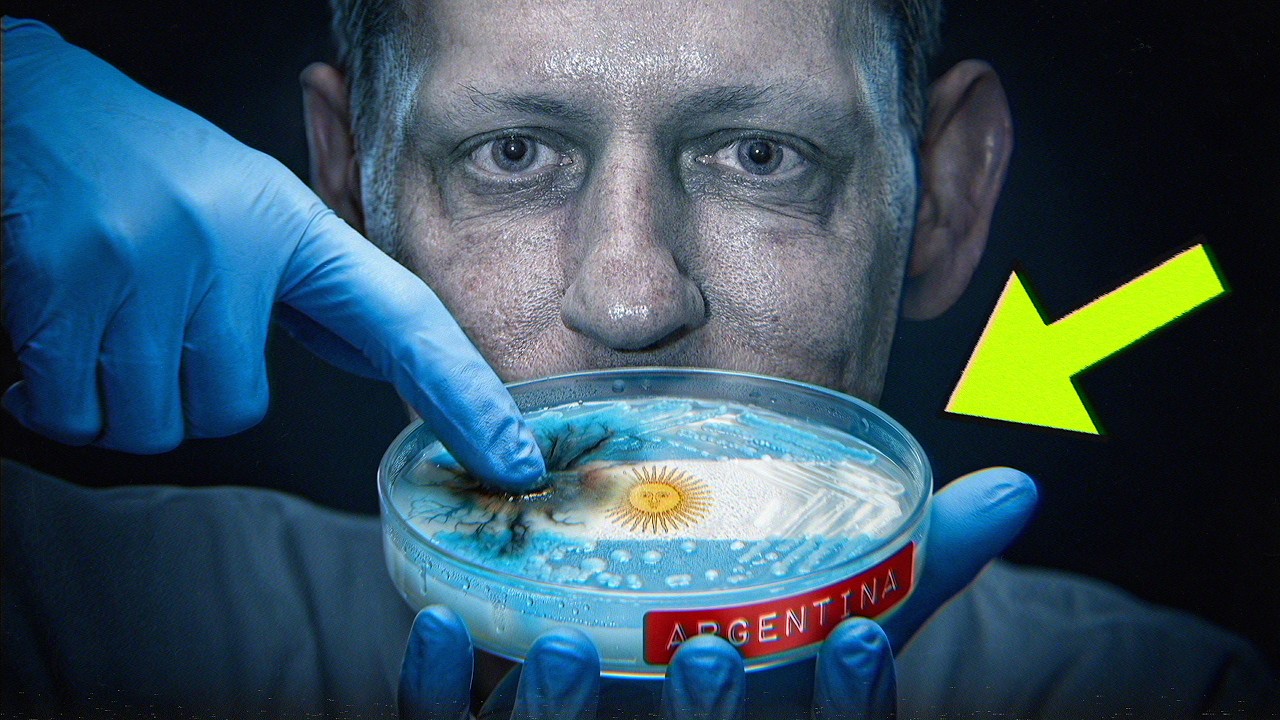
Jun 5, 2026We Found Out Peter Thiel's Sick Experiment On Argentina Dangerously Informed with Evie 147K subscribers Subscribed 5.4K
Created by:Dangerously Informed with Evie67K views14 min
New York Times
https://www.nytimes.com › 2026 › 05 › 28 › world › americas › peter-thiel-argentina.html
In Argentina, U.S. Tech Billionaire Peter Thiel Finds An Escape - The ...
May 28, 2026The billionaire's new roots in Argentina are said to be partly motivated by concerns about the future of the United States and shared beliefs with Argentina's right-wing leader.

The Washington Post
What's really behind Peter Thiel's panicked move to Argentina
Jun 4, 2026What's really behind Peter Thiel's panicked move to Argentina Some tech observers think that the Palantir overlord sees the end times coming, but his real motivation is likely much more ...

Raw Story
https://www.rawstory.com › peter-thiel-2676971006
Billionaire Trump ally's 'chilling' move out of US sparks panic: 'About ...
May 29, 2026Tech billionaire Peter Thiel, an outspoken supporter of President Donald Trump, has recently set "new roots" in Argentina as a potential "Plan B," The New York Times reported, fueling ...

thenerdreich.com
https://www.thenerdreich.com › the-sovereign-individual-thiel-argentina-and-the-network-state
The Sovereign Individual: Thiel, Argentina and the Network State
Jun 1, 2026As I mentioned in my April piece, The Sovereign Individual specifically listed Argentina and New Zealand as choice locations for bunker-mentality billionaires. Thiel obtained New Zealand citizenship in 2011, and the NYT reports that he is exploring the possibility of an Argentine passport as well.

The Nation
What's Really Behind Peter Thiel's Panicked Move to Argentina
Jun 3, 2026The big question raised by Thiel's panicked peregrinations is why one of our country's richest and most politically influential tech investors has decided to do a runner, as Ronnie Biggs might ...

Democratic Underground
https://www.democraticunderground.com › 1322117722
We Found Out Peter Thiel's Sick Experiment On Argentina - Democratic ...
Jun 7, 2026We Found Out Peter Thiel's Sick Experiment On Argentina We Found Out Peter Thiel's Sick Plan For Argentina Dangerously Informed with Evie Watch on Info Bookmark Add this thread to your Bookmarks (My DU » Bookmarks)

The Rio Times
Tech Billionaire Peter Thiel Moves His Family to Milei's Buenos Aires
May 29, 2026Key Facts — The headline: The Peter Thiel Argentina move involves a temporary family relocation to Buenos Aires and a 12 million dollar property purchase, according to a New York Times report cited by global outlets this week. — The drivers: Sources cited by the Times pointed to Thiel's concerns about California's proposed billionaire tax and a stronger ideological alignment with ...

UnHerd
https://unherd.com › newsroom › peter-thiel-wont-find-a-safe-haven-in-argentina
Peter Thiel won't find a safe haven in Argentina - UnHerd
May 30, 2026Peter Thiel is known for making and landing counterintuitive bets. But relocating to Argentina, his "escape hatch" from the risks of political turmoil in the developed world, may be his most confounding wager yet.
New York Post
Peter Thiel moves family to Argentina to flee taxes, AI meltdown ...
May 29, 2026The billionaire investor reportedly moved his family to Buenos Aires as a refuge from high taxes, political turmoil and potential catastrophes like nuclear war and an AI meltdown.
---
MMA
10/16/25
---
---
https://zeteo.com/p/peter-thiel-jd-vance-trump-maga-broligarch
:{:{In 2009, the arch-libertarian Cato Institute published an essay from Peter Thiel, an infamously right-wing venture capitalist, in which he confessed to some of his biggest political disappointments. “I no longer believe that freedom and democracy are compatible,” he wrote, making clear his distaste for elections. }:
Thiel complained that “the vast increase in welfare beneficiaries and the extension of the franchise to women” had been difficult for the libertarian cause. He was also frustrated that an “unthinking demos” – that is, ordinary voters – guided electoral politics. When Thiel was later accused of opposing women’s suffrage, Cato published a response from the author in which he seemed to double down on his desire to somehow escape democracy: “While I don’t think any class of people should be disenfranchised, I have little hope that voting will make things better.”}:
It would be one thing if Thiel, with his reactionary, anti-democratic beliefs, were an obscure tech investor with a blogger’s interest in politics. But Thiel is far more than that – he’s a billionaire financier for whom political struggle is the main event. A longtime Republican donor, Thiel at the 2016 Republican National Convention. He is singularly responsible for the rise of J.D. Vance, pouring a record $15 million into his Senate campaign. And while some tech elites have lately emerged as vocal Trump backers, Thiel was there first.
:{:{Thiel has long expressed irritation that we haven’t achieved a Jetsons-like future of infinite abundance, but he seems even more dissatisfied – bitterly so – with a political system he’s determined to upend. A billionaire who made his initial fortune as the CEO of PayPal, Thiel is now the eminence grise of a powerful network of investors and executives known informally as the ‘PayPal Mafia,’ many of whom support Trump’s bid for a second term. Having soured on democracy, Thiel has spoken of politics – and death, for that matter – as something that can be “escaped,” leading to a utopian place of true freedom.}:
His investments and donations have flowed accordingly, making him one of Silicon Valley’s most influential political operators while blazing a trail for a new crop of tech executives who have embraced the MAGA movement. Thiel invested in explicitly right-wing companies, dined with white nationalists, sponsored far-right writers, and founded startups dedicated to supporting the surveillance state.}:
He didn’t just speak at the Republican National Convention in 2016, announcing himself as a proud gay Republican. After the release of the “Access Hollywood” tape in which Trump bragged about sexually assaulting women, Thiel also offered a public show of support with a $1.25 million donation. According to Trump, it was Thiel who chose which tech companies were invited to the confab of CEOs at Trump Tower after the 2016 election.
By the time of the 2024 presidential cycle, however, as a liberal activist group began investigating Thiel’s activities, the billionaire decided he wanted out. He expressed disappointment less in Trump’s policies than in the chaos of his shambolic administration. When Trump asked for a multi-million-dollar campaign donation, Thiel said no, reportedly leading to a rift between the two.
In June, Thiel finally said he would vote for Trump… if someone put a gun to his head.
Then everything changed, on July 15, when Trump announced Ohio Sen. J.D. Vance as his running mate.
“The Most Significant Moment”
Put simply, there is no J.D. Vance without Peter Thiel. In “The Contrarian,” his biography of Thiel, journalist Max Chafkin described both Vance and Blake Masters as “extensions” of Thiel, men who owed their careers and much of their political thinking to the billionaire’s ideological influence – and financial sponsorship. (Masters lost his 2022 Senate election and, more recently, his 2024 House primary race.) Some politicians may be friendly to right-wing Silicon Valley “broligarchs,” but Vance has fashioned himself in Thiel’s image. And now, the billionaire hardliner seems on the verge of getting what he’s long wanted: one of his own in the White House.
:{:{Although he made his bones as a tech executive and financier, Thiel has written and lectured about his bugaboos – identity politics, women, democracy, higher education – since he was an undergraduate at Stanford University in the late 1980s, when he founded a conservative student paper, The Stanford Review.}:
Despite denouncing American campus culture and funding a fellowship to pay entrepreneurs to skip college, Thiel remains involved with Stanford as a guest lecturer and as one of its most famous alumni and critics. Over the years, Thiel has hired several alumni of The Stanford Review. And he is still, , giving talks at elite colleges about “the diversity myth” – the title of a book he published in 1995 with his friend David Sacks, who emerged this year as Trump’s top Silicon Valley supporter.}:
“We’re still in this groundhog day,” Thiel to a conservative student group at Harvard. His book felt “incredibly prophetic,” he said. “We were basically right. Very little I would change on the particulars.” In 2016, when Forbes drew attention to passages from “The Diversity Myth” that minimized rape (“a multicultural rape charge may indicate nothing more than belated regret”), Thiel and Sacks apologized.
If we’re in a groundhog day situation, it may be in part because powerful white men like Thiel can’t let go of certain political obsessions. Thiel has been lamenting the influence of leftist identity politics for more than 30 years. He about being forced to read – in college, 35 years ago – certain academically en vogue books, like Aimé Césaire’s post-colonial retelling of “The Tempest,” and the autobiography of Rigoberta Menchú, a Guatemalan Indigenous rights activist who won the Nobel Peace Prize. But over time, Thiel has found a receptive audience for his grievances. And he’s had no student more loyal than J.D. Vance.
In 2011, Vance was attending Yale Law School when Thiel came to give a talk. At the time, Vance was a Marine veteran and Ohio State graduate who had emerged from meager economic and social circumstances in southern Ohio to attend a top law program that served as a finishing school for future members of the power elite. Vance grew up steeped in evangelical Christianity but in college he drifted into Sam Harris-style atheism – a common enough path for a young man in the place and time. His colleagues saw him as politically conservative but not radically so. That would change.
:{:{Thiel’s subject matter was his typical fare. He spoke about the illusory satisfactions of chasing prestige and competing with one’s peers over a limited pot of rewards while the larger society faced technological stagnation and decay. For Vance, whose beliefs were proving to be malleable, it became a formative experience.}:
In attempting to escape his traumatic upbringing, Vance had allowed himself to be driven by the mindless pursuit of academic achievements and professional credentials. Rather than aspiring for a career as a federal judge or a partner at a white-shoe law firm, as so many of his classmates did, he realized that he dreaded his future as a lawyer. Despite being a product of the same milieu that Vance now inhabited, Thiel offered another way. “Peter’s talk remains the most significant moment of my time at Yale Law School,” Vance wrote in a widely cited essay in a Catholic magazine.....}:
---
vaden
AI Overview
The "Yale Law Republicans" do not have a dedicated, institutional donor funder. Instead, conservative presence and organizing at Yale Law School primarily receive backing through university-recognized student groups, alumni networks, and broad-based conservative organizations with ties to the law school. [1]
Key conservative entities at the school and their associated funders include:
- The Federalist Society: The prominent conservative and libertarian law student organization (founded at Yale) relies on large, national conservative foundations. Its network is heavily bankrolled by groups like the Searle Freedom Trust, the Scaife Foundation, and DonorsTrust, as well as the dark money network overseen by conservative activist Leonard Leo. , [2, 3]
- Institutional Portraits & Specific Initiatives: Major conservative initiatives at the law school have been funded by specific high-profile Republican megadonors. For example, Texas billionaire Harlan Crow provided a $105,000 donation in 2018 to commission and install the official portrait of Justice Clarence Thomas in the law school. [1]
For more than two decades, Yale Law School has also served as a focal point for the broader political ecosystem, helping to foster high-profile conservative leaders and their financiers in Silicon Valley and beyond. [1, 2]
---
GGL AI 6 26
When  Peter Thiel spoke at Yale Law School in 2011, there was no single named host. Rather, he delivered an invited address that was part of a speaker series at the institution. [1, 2, 3, 4]
The specific details regarding this address include:
- The Core Message: Thiel discussed technological stagnation and criticized elite professionals who get trapped in hyper-competitive but unrewarding career tracks. [1, 2]
- Impact on Vance: A then-law student named
 JD Vance attended the lecture. He frequently cites it as the most significant moment of his time at Yale Law School, prompting his shift into the tech and venture capital industries. [1, 2, 3]
If you would like, I can provide more details on:
- The books and philosophy of René Girard, which Thiel frequently incorporates into his lectures.
- Other appearances Thiel has made at Yale University. [1, 2, 3, 4]
X DANIEL
Peter Thiel's 2011 Yale Law School talk was hosted and organized by the Yale Law School Federalist Society. The event, which deeply influenced a then-student  J.D. Vance, featured Thiel criticizing elite professionals trapped in hypercompetitive but unrewarding jobs and arguing that higher education was a "bubblE.
RETWEET OF
9 MIN THUS NOT ALL
How Yale Propelled J.D. Vance’s Career
The G.O.P. vice-presidential nominee is remembered as a warm and personable student. But some are perplexed by what they see as his shift in ideology.
By Stephanie Saul
Published July 17, 2024Updated July 18, 2024
See more of our coverage in your search results. Add The New York Times on Google
When J.D. Vance applied to law school, he viewed it as a pathway out of his chaotic upbringing in working-class Middletown, Ohio.
Then he won a spot at his dream school. Yale Law not only accepted him for the fall of 2010, but also offered a nearly full ride the first year.
Over the next three years, Yale dramatically influenced the trajectory of his life, leading to important connections, a job in venture capital and marriage to a classmate.
Even his memoir, “Hillbilly Elegy,” was partly the outgrowth of a paper he wrote in a Yale class. And he leveraged the story, which chronicles his childhood and the alienation of the working class, into a best seller, a movie deal and a political career — winning election to the U.S. Senate in 2022, at age 38.
Despite Yale’s transformative role in his life, Mr. Vance’s relationship with the school could be summed up as conflicted.
Graduating from Yale was “the coolest thing” he had ever done, “at least on paper,” he wrote in his memoir. But he also portrayed himself as an outsider who flubbed law firm interviews and was baffled when asked whether he preferred chardonnay or sauvignon blanc — he had never heard of either. And his classmates remember his sarcasm and cynicism when discussing what he thought of as the school’s liberal bubble.
A correction was made on July 18, 2024
:
An earlier version of this article incorrectly described Yale Law’s offer to J.D. Vance. The school offered him a nearly full ride the first year. The details of his financial package in the subsequent years are not clear.
When we learn of a mistake, we acknowledge it with a correction. If you spot an error, please let us know at corrections@nytimes.com.Learn more
Stephanie Saul reports on colleges and universities, with a recent focus on the dramatic changes in college admissions and the debate around diversity, equity and inclusion in higher education.
---
REF
https://www.forbes.com/sites/antoniopequenoiv/2024/07/16/jd-vance-and-peter-thiel-what-to-know-about-the-relationship-between-trumps-vp-pick-and-the-billionaire/
JD Vance And Peter Thiel: What To Know About The Relationship Between Trump’s VP Pick And The Billionaire
Forbes Staff.
Pequeño is a breaking news reporter who covers tech and more.
Jul 16, 2024,
Topline
JD Vance, former President Donald Trump’s running mate, has had a long, collaborative relationship with GOP donor and Silicon Valley billionaire Peter Thiel, one that has aided Vance from his time in venture capital to his role as an Ohio senator.
Key Facts
Vance and Thiel’s relationship dates back to 2011, when the senator met Thiel following a talk the venture capitalist gave at Yale Law School that Vance has characterized as “the most significant moment of my time” at the institution, according to a blog post he wrote for Catholic magazine The Lamp.
Vance began planning for a career pivot outside of law following the talk, noting Thiel was “possibly the smartest person” he ever met and that Thiel’s Christian faith “defied the social template I had constructed—that dumb people were Christians and smart ones atheists,” according to the post.
Thiel later became a “pretty good mentor” to Vance, according to The Washington Post, with Vance making the switch to venture capital and joining the Thiel-co-founded Mithril Capital in 2015 as a partner, according to Politico.
Vance published “Hillbilly Elegy: A Memoir of a Family and Culture in Crisis” in 2016 while still working for Mithril Capital, thrusting the venture capitalist into the limelight as he began pondering a potential run for office in the future, according to the Post.
Vance left Mithril Capital in 2017 and joined Washington D.C.-based investment firm Revolution as a managing director to invest in startups outside of major hubs like Silicon Valley and New York City.
Vance launched his own venture capital firm in 2019 under the name Narya Capital, which sought to invest in startups in overlooked cities and reportedly received backing from Thiel and other billionaire investors like venture capitalist Marc Andreessen and former Google CEO Eric Schmidt, Axios reported.
Thiel also reportedly brought Vance, who had established himself as a critic of Trump, to Mar-a-Lago in 2021 to smooth over his relationship with the former president, according to The New York Times.
Following the meeting, Vance became more sympathetic to Trump and his policies, downplaying the Jan. 6 Capitol attack and securing an endorsement from the former president in his 2022 Senate run just weeks before Election Day.
Vance garnered more support from Thiel during his successful Senate run in 2022, receiving record-breaking donations of about $15 million from Thiel, which marked the largest amount of money donated to a single Senate candidate ever.
Most of Vance’s campaign advertising was outsourced to the Protect Ohio Values super PAC that Thiel donated to, Politico reported, noting Thiel helped recruit about 10 major donors for Vance including venture capitalist David Sacks, who donated $1 million.
Forbes Valuation
We estimate Peter Thiel’s net worth at $7.9 billion—largely thanks to his role as one of Facebook’s earliest investors, as well as his work as a general partner of venture capital firm Founders Fund, which is a key investor in Stripe and SpaceX. Thiel has also invested millions into Clearview AI, a controversial facial recognition software firm.
Tangent
Thiel’s backing appeared to be a massive difference-maker for Vance’s 2022 Senate run, as the then-candidate lacked a funding edge over his fellow candidates and had made a litany of anti-Trump comments years before, calling the former president “reprehensible,” “cynical” and privately suggested he could be “America’s Hitler.” Vance walked back his comments in the leadup to Election Day and managed to secure an endorsement from Trump, who later said Vance “gets it now, and I have seen that in spades.”
Crucial Quote
Thiel said during an interview at the Aspen Ideas Festival last month, “You hold a gun to my head, I’ll vote for Trump.” The comment seemingly showed reluctant support for Trump, as Thiel said if he was asked to make a pro-Trump argument, he would not, though he could “probably come up with anti-Biden arguments.” Thiel also noted he would not donate money to Trump and that he believes the former president will win in November. Thiel donated more than $1 million to Trump in 2016.
What Is Peter Thiel’s Connection To Donald Trump?
:{:{Thiel was one of Trump’s most significant donors in 2016 and has expressed a sort of reluctant support for the former president, backing congressional candidates who have echoed Trump-sourced conspiracy theories and later withdrawing further financial support for Trump.}:
Thiel told The Atlantic last year there were a lot of things he “got wrong” with his support for the former president in 2016. Thiel’s political ideology rests in disbelief of establishment institutions and criticism of progressive elites. He also has pushed for more restrictions at the border. Meanwhile, Vance has more closely aligned his politics with Trump’s, opposing nationally guaranteed abortion rights, pushing against strict gun laws and prioritizing the fight against inflation. However, Trump and Vance do not see eye to eye on everything, including their levels of public support for Project 2025.}:
Key Background
:{:{Thiel, who is also a co-founder of the CIA-backed analytics firm Palantir, has given millions of dollars in donations largely to Republican lawmakers and political action committees since 2010, occasionally donating to Democrats such as California Gov. Gavin Newsom and Rep. Ro Khanna, D-Calif., according to campaign finance tracker OpenSecrets.}:
Thiel has donated $20 million to the Saving Arizona PAC, which supported venture capitalist Blake Masters during a failed Republican Senate run in 2022. Masters is now running as an Arizona congressional candidate. Thiel has also donated thousands of dollars to Republican lawmakers such as Sen. Ted Cruz, R-Texas, Rep. Michael McCaul, R-Texas. and former Speaker of the House Kevin McCarthy, R-Calif.}:
Further Reading
What To Know About ‘Hillbilly Elegy’: The Memoir That Launched J.D. Vance’s Political Career (Forbes)
Here’s How Much J.D. Vance Is Worth (Forbes)
J.D. Vance Picked As Trump’s Running Mate: Here’s What To Know About Him (Forbes)
This Silicon Valley Billionaire Has Been Secretly Funding Hulk Hogan's Lawsuits Against Gawker (Forbes)
Thiel Was Good For $10 Million, But J.D. Vance’s Other Billionaire Backers Were Good For Nothing (Forbes)
---
---
AN 5 26
Talk of the Antichrist has surged in President Donald Trump's first year in office, and the discussion has broken out beyond the traditional right-wing circles.
Christian Paz, writing for Vox, reported Tuesday that talk of the Antichrist has become a larger conversation among more mainstream political circles than the typical evangelical prophecies.
The end-times conversation connects a renewed apocalyptic panic to those desperately searching for ways to grapple with a more complicated "crisis-driven" world by ascribing the "Antichrist" thinking to any figure who could match charismatic leaders in technology, war or politics.
The idea that Trump could fit that description has been proposed by far-right influencers like former Rep. MarjorieTaylor Greene and anti-Semitic commentator Nick Fuentes. Even Tucker Carlson asked the question. It came as Trump posted an AI photo of himself depicted as Jesus Christ. He later claimed that he thought it was a "doctor."
“But he’s radiating the spirit of Antichrist, no question," conservative Rod Dreher told the *Wall Street Journal*.
In March, CNN reported that billionaire Peter Thiel has been hosting secret lectures about the Antichrist in an undisclosed location in Rome.
"But the appearance of Thiel on the Vatican’s doorstep has raised eyebrows, given the tensions between Thiel’s thinking and that of Pope Leo XIV," the report said. "Two Catholic institutions have distanced themselves from the lecture series, which continues through Wednesday."
On Monday, the pope published his first encyclical, warning that artificial intelligence is causing problems for humanity, particularly when it comes to its use in war.
Meanwhile, "Thiel has previously written and lectured on the subject, arguing that the Antichrist is not necessarily a person but could come as a global government system. It would take control, he has argued, by exploiting people’s fears around artificial intelligence, climate change or nuclear war."
Paz, writing for Vox, explained that the colorful imagery and ambiguity in the Bible talking about the Antichrist can attract people trying to solve a kind of prepper puzzle.
“They read the Bible like it’s a secret code book, and that if they can unlock the code, then they can understand what’s going to happen in the end times,” historian Matthew A. Sutton told Vox. Sutton focuses on American apocalypticism at Washington State University. “It’s a very modern way to read the Bible compared to what you would’ve seen through much of church history.”
When he says "modern," he means the last 100 years. But as the world grapples with climate change, another war in the Middle East, the possibility of a pending economic catastrophe and leaders like Trump, talk of the Antichrist and the end times are being used to explain what people see as troubled times.
“Dressing political theory in apocalyptic robes carries risks," Sutton told Vox, though it's hardly a new idea. But it can become dangerous. "When powerful actors reframe ordinary policy debates, such as about guardrails for AI, as a battle against the antichrist, they raise anxieties, delegitimize compromise, and insinuate that democratic deliberation is spiritually suspect.”
But the panic about Trump has turned the world upside down over the course of his second term. So, while the right is spinning conspiracy theories about his being the Antichrist, he also fits the mold, the report said.
"He is surely a charismatic leader; he’s launched civilizational wars in the Middle East; he’s survived assassination attempts, mimicking the fatal, but healed, wound of the beast of Revelations; and he’s blasphemed and used the trappings of religion to advance his personal brand," said Paz for Vox.
Religious Studies Professor Robert Fuller called talk of the end times a "crisis mentality" and perpetuates hate.
"It makes compromise unthinkable since no one compromises with the devil. It justifies hatred and violence, recasting these traits as virtues," he said.
---
---
btb pt 3
something awfuL --> 4 chan chris pool moot; took down nazi page/news --> pol = polit incorrect; day before met w je in person; 47 min 2017 je sends 4chan lnx;
putin crypto
paid joi ito mit to hire 3 engr
thiel 2024 15 sergei belnekov fsb musk zuck
BREXIT START OF BIG THINGS; LOOT// USSR OLIGARCH BARGAINS
ADDICT KIDS TO GAMING?
alex dugin 59 min
---
---
---
---
buenosairesherald.com
Milei's proposal to allow 'non-human corporations' run by AI causes ...
Jun 5, 2026Politicians and tech experts expressed concern over the implications of President Javier Milei's proposal to allow "non-human corporations" run by artificial intelligence (AI) to operate in Argentina, with no regulations and low taxes. On Thursday, renowned British outlet Financial Times published an opinion article written by Milei — with the help of Deregulation Minister Federico ...
EL PAÍS English
June 5, 2026
Politicians and tech experts expressed concern over the implications of President Javier Milei’s proposal to allow “non-human corporations” run by artificial intelligence (AI) to operate in Argentina, with no regulations and low taxes.
On Thursday, renowned British outlet Financial Times published an opinion article written by Milei — with the help of Deregulation Minister Federico Sturzenegger — under the headline “Argentina invites AI to free itself.”
In it, he stated that AI must remain free of state regulation to prosper.
The libertarian leader said his government was looking to attract AI companies by proposing a change in legislation that would establish “a dedicated legal framework for the deployment of AI.”
The three pillars of this framework are “a commitment to keep AI unregulated”, “the creation of a new corporate category in Argentine law: the non-human corporation”, and a “low corporate tax rate”.
“We are open for business,” he wrote, stressing that this is “an invitation.”
Critics say this could open the doors to “programmed impunity” and that it may even turn Argentina into a “catastrophic experiment.”
AI revolution
The article compared the development of AI as a technology with the industrial revolution and the creation of limited liability companies, saying that an unregulated framework is required to unleash their full potential.
“As much as the industrial revolution freed us from the constraints of the human muscle, AI will free us from the constraints of the human brain, pushing productivity beyond our wildest dreams,” Milei said in the article.
Milei said he is committed to keep AI unregulated “so that it is free to be developed without the deadly hand of premature and poorly understood regulation.”
He also proposed the creation of “a new corporate category in Argentine law: the non-human corporation,” which would be operated by AI agents or robots. Human participation as shareholders would be possible, but not required.
“Where these systems exercise independent judgment in unpredictable environments, their actions entail real risks. Limited liability is not a luxury for such entities; it is a precondition for their existence,” the president said.
Those entities would benefit from a low corporate tax rate, and shareholders would be able to choose their form of corporate governance law, although final beneficiaries would have to be disclosed.
“Argentina has no interest in becoming a haven for illicit capital — but for all legitimate commercial activity our framework will offer unmatched terms,” he said.
Super RIGI
According to Milei, the proposals are part of a broader investment incentive regime known as RIGI, which the government submitted to Congress last week to attract businesses through tax breaks and other benefits.
However, the initiative — dubbed “Super RIGI” — does not mention the concept of “non-human corporations” or establish a deregulated framework for AI companies.
The proposal is primarily aimed at attracting companies interested in building large-scale AI data centers in Argentina, offering lower taxes, preferential foreign-exchange conditions and exemptions from export duties.
The incentives, however, are not limited to the AI sector.
“In the spirit of the Dutch merchants who made Amsterdam the financial capital of the 17th century, we intend to offer the most attractive legal and fiscal environment for the AI companies that will define the 21st century,” Milei wrote.
Sam Altman and Peter Thiel
In October, OpenAI — the company behind ChatGPT — and Argentine firm Sur Energy signed a letter of intent to develop a large-scale AI data center in Patagonia.
Patagonia, a sparsely populated region in southern Argentina known for its abundant natural resources and cool, dry climate, is widely seen as an attractive location for large data centers.
The project, known as Stargate Argentina, would be the first initiative of its kind in Latin America. The investment has been estimated at between US$20 billion and US$25 billion, although the project has yet to be formally launched.
OpenAI CEO Sam Altman said the initiative would help bring Milei’s vision of “how AI could drive Argentina’s growth and creativity” to life.
Milei has also announced a “social digital twin” program, which would use publicly available citizen data to create simulations intended to inform public policy decisions.
The concept bears similarities to services offered by Palantir, the data analytics company co-founded by tech investor Peter Thiel.
Thiel met with Milei in April and has spent the past months living in Argentina. The government has denied that Palantir — or any other private company — is involved in the digital twin initiative, which has yet to be launched.
Palantir has faced criticism from civil liberties groups over its work with U.S. government agencies, including contracts related to immigration enforcement and surveillance programs.
Thiel has also been linked to Próspera, a controversial semi-autonomous development project in Honduras designed to attract investment through a separate regulatory and governance framework.
Criticisms
Former lawmaker and Coalición Cívica leader Elisa “Lilita” Carrió said Milei’s article “confirms his full support for Peter Thiel, his philosophy, his beliefs and his economic power.”
According to Carrió, the proposal would turn Argentina into “a catastrophic experiment for human dignity” and move the country toward the “complete private totalitarianism” she believes Thiel advocates.
“Argentina has been chosen as the site of a social experiment with terrible consequences for human freedom,” Carrió said.
She argued that a lack of regulation for AI would mean “the dissolution of all moral and legal constraints, the end of the state, and the privatization of military and police power in the hands of private groups.”
Former Defense Minister Agustín Rossi said the Super RIGI initiative appeared to be “tailor-made for Javier Milei’s friends” and questioned why Economy Ministry officials had declined to clarify whether Palantir had lobbied in favor of the proposal.
Meanwhile, electronics engineer and AI specialist Ariel Garbarz argued in a post on X that the ideas of non-human corporations and the full deregulation of AI would create a system of “programmed impunity: human gains, social harm and responsibility shifted onto machines.”
“The ideological trick is to call the state’s decision to stop protecting its people ‘innovation,'” he warned.
Tech magnate Peter Thiel strengthens ties with Milei in Buenos Aires
Apr 23, 2026Tech magnate Peter Thiel strengthens ties with Milei in Buenos Aires The founder of Palantir, the data processing company, arrives in Argentina after his visit to Rome to talk about the Antichrist

La Derecha Diario
Peter Thiel moves to Argentina motivated by the reforms of Milei's ...
May 28, 2026The tech billionaire Peter Thiel will relocate to live in Argentina, enchanted by Argentina and the policies of the Government of Javier Milei, reflecting the growing international appeal of the libertarian direction.

YouTube
##
Jun 5, 2026We Found Out Peter Thiel's Sick Experiment On Argentina Dangerously Informed with Evie 147K subscribers Subscribed 5.4K
Created by:Dangerously Informed with Evie67K views14 min
New York Times
https://www.nytimes.com › 2026 › 05 › 28 › world › americas › peter-thiel-argentina.html
In Argentina, U.S. Tech Billionaire Peter Thiel Finds An Escape - The ...
May 28, 2026The billionaire's new roots in Argentina are said to be partly motivated by concerns about the future of the United States and shared beliefs with Argentina's right-wing leader.

The Washington Post
What's really behind Peter Thiel's panicked move to Argentina
Jun 4, 2026What's really behind Peter Thiel's panicked move to Argentina Some tech observers think that the Palantir overlord sees the end times coming, but his real motivation is likely much more ...

Raw Story
https://www.rawstory.com › peter-thiel-2676971006
Billionaire Trump ally's 'chilling' move out of US sparks panic: 'About ...
May 29, 2026Tech billionaire Peter Thiel, an outspoken supporter of President Donald Trump, has recently set "new roots" in Argentina as a potential "Plan B," The New York Times reported, fueling ...

thenerdreich.com
https://www.thenerdreich.com › the-sovereign-individual-thiel-argentina-and-the-network-state
The Sovereign Individual: Thiel, Argentina and the Network State
Jun 1, 2026As I mentioned in my April piece, The Sovereign Individual specifically listed Argentina and New Zealand as choice locations for bunker-mentality billionaires. Thiel obtained New Zealand citizenship in 2011, and the NYT reports that he is exploring the possibility of an Argentine passport as well.

The Nation
What's Really Behind Peter Thiel's Panicked Move to Argentina
Jun 3, 2026The big question raised by Thiel's panicked peregrinations is why one of our country's richest and most politically influential tech investors has decided to do a runner, as Ronnie Biggs might ...

Democratic Underground
https://www.democraticunderground.com › 1322117722
We Found Out Peter Thiel's Sick Experiment On Argentina - Democratic ...
Jun 7, 2026We Found Out Peter Thiel's Sick Experiment On Argentina We Found Out Peter Thiel's Sick Plan For Argentina Dangerously Informed with Evie Watch on Info Bookmark Add this thread to your Bookmarks (My DU » Bookmarks)

The Rio Times
Tech Billionaire Peter Thiel Moves His Family to Milei's Buenos Aires
May 29, 2026Key Facts — The headline: The Peter Thiel Argentina move involves a temporary family relocation to Buenos Aires and a 12 million dollar property purchase, according to a New York Times report cited by global outlets this week. — The drivers: Sources cited by the Times pointed to Thiel's concerns about California's proposed billionaire tax and a stronger ideological alignment with ...

UnHerd
https://unherd.com › newsroom › peter-thiel-wont-find-a-safe-haven-in-argentina
Peter Thiel won't find a safe haven in Argentina - UnHerd
May 30, 2026Peter Thiel is known for making and landing counterintuitive bets. But relocating to Argentina, his "escape hatch" from the risks of political turmoil in the developed world, may be his most confounding wager yet.
New York Post
Peter Thiel moves family to Argentina to flee taxes, AI meltdown ...
May 29, 2026The billionaire investor reportedly moved his family to Buenos Aires as a refuge from high taxes, political turmoil and potential catastrophes like nuclear war and an AI meltdown.
---
MMA
10/16/25
---
---
https://zeteo.com/p/peter-thiel-jd-vance-trump-maga-broligarch
:{:{In 2009, the arch-libertarian Cato Institute published an essay from Peter Thiel, an infamously right-wing venture capitalist, in which he confessed to some of his biggest political disappointments. “I no longer believe that freedom and democracy are compatible,” he wrote, making clear his distaste for elections. }:
Thiel complained that “the vast increase in welfare beneficiaries and the extension of the franchise to women” had been difficult for the libertarian cause. He was also frustrated that an “unthinking demos” – that is, ordinary voters – guided electoral politics. When Thiel was later accused of opposing women’s suffrage, Cato published a response from the author in which he seemed to double down on his desire to somehow escape democracy: “While I don’t think any class of people should be disenfranchised, I have little hope that voting will make things better.”}:
It would be one thing if Thiel, with his reactionary, anti-democratic beliefs, were an obscure tech investor with a blogger’s interest in politics. But Thiel is far more than that – he’s a billionaire financier for whom political struggle is the main event. A longtime Republican donor, Thiel at the 2016 Republican National Convention. He is singularly responsible for the rise of J.D. Vance, pouring a record $15 million into his Senate campaign. And while some tech elites have lately emerged as vocal Trump backers, Thiel was there first.
:{:{Thiel has long expressed irritation that we haven’t achieved a Jetsons-like future of infinite abundance, but he seems even more dissatisfied – bitterly so – with a political system he’s determined to upend. A billionaire who made his initial fortune as the CEO of PayPal, Thiel is now the eminence grise of a powerful network of investors and executives known informally as the ‘PayPal Mafia,’ many of whom support Trump’s bid for a second term. Having soured on democracy, Thiel has spoken of politics – and death, for that matter – as something that can be “escaped,” leading to a utopian place of true freedom.}:
His investments and donations have flowed accordingly, making him one of Silicon Valley’s most influential political operators while blazing a trail for a new crop of tech executives who have embraced the MAGA movement. Thiel invested in explicitly right-wing companies, dined with white nationalists, sponsored far-right writers, and founded startups dedicated to supporting the surveillance state.}:
He didn’t just speak at the Republican National Convention in 2016, announcing himself as a proud gay Republican. After the release of the “Access Hollywood” tape in which Trump bragged about sexually assaulting women, Thiel also offered a public show of support with a $1.25 million donation. According to Trump, it was Thiel who chose which tech companies were invited to the confab of CEOs at Trump Tower after the 2016 election.
By the time of the 2024 presidential cycle, however, as a liberal activist group began investigating Thiel’s activities, the billionaire decided he wanted out. He expressed disappointment less in Trump’s policies than in the chaos of his shambolic administration. When Trump asked for a multi-million-dollar campaign donation, Thiel said no, reportedly leading to a rift between the two.
In June, Thiel finally said he would vote for Trump… if someone put a gun to his head.
Then everything changed, on July 15, when Trump announced Ohio Sen. J.D. Vance as his running mate.
“The Most Significant Moment”
Put simply, there is no J.D. Vance without Peter Thiel. In “The Contrarian,” his biography of Thiel, journalist Max Chafkin described both Vance and Blake Masters as “extensions” of Thiel, men who owed their careers and much of their political thinking to the billionaire’s ideological influence – and financial sponsorship. (Masters lost his 2022 Senate election and, more recently, his 2024 House primary race.) Some politicians may be friendly to right-wing Silicon Valley “broligarchs,” but Vance has fashioned himself in Thiel’s image. And now, the billionaire hardliner seems on the verge of getting what he’s long wanted: one of his own in the White House.
:{:{Although he made his bones as a tech executive and financier, Thiel has written and lectured about his bugaboos – identity politics, women, democracy, higher education – since he was an undergraduate at Stanford University in the late 1980s, when he founded a conservative student paper, The Stanford Review.}:
Despite denouncing American campus culture and funding a fellowship to pay entrepreneurs to skip college, Thiel remains involved with Stanford as a guest lecturer and as one of its most famous alumni and critics. Over the years, Thiel has hired several alumni of The Stanford Review. And he is still,, giving talks at elite colleges about “the diversity myth” – the title of a book he published in 1995 with his friend David Sacks, who emerged this year as Trump’s top Silicon Valley supporter.}:
“We’re still in this groundhog day,” Thiel to a conservative student group at Harvard. His book felt “incredibly prophetic,” he said. “We were basically right. Very little I would change on the particulars.” In 2016, when Forbes drew attention to passages from “The Diversity Myth” that minimized rape (“a multicultural rape charge may indicate nothing more than belated regret”), Thiel and Sacks apologized.
If we’re in a groundhog day situation, it may be in part because powerful white men like Thiel can’t let go of certain political obsessions. Thiel has been lamenting the influence of leftist identity politics for more than 30 years. He about being forced to read – in college, 35 years ago – certain academically en vogue books, like Aimé Césaire’s post-colonial retelling of “The Tempest,” and the autobiography of Rigoberta Menchú, a Guatemalan Indigenous rights activist who won the Nobel Peace Prize. But over time, Thiel has found a receptive audience for his grievances. And he’s had no student more loyal than J.D. Vance.
In 2011, Vance was attending Yale Law School when Thiel came to give a talk. At the time, Vance was a Marine veteran and Ohio State graduate who had emerged from meager economic and social circumstances in southern Ohio to attend a top law program that served as a finishing school for future members of the power elite. Vance grew up steeped in evangelical Christianity but in college he drifted into Sam Harris-style atheism – a common enough path for a young man in the place and time. His colleagues saw him as politically conservative but not radically so. That would change.
:{:{Thiel’s subject matter was his typical fare. He spoke about the illusory satisfactions of chasing prestige and competing with one’s peers over a limited pot of rewards while the larger society faced technological stagnation and decay. For Vance, whose beliefs were proving to be malleable, it became a formative experience.}:
In attempting to escape his traumatic upbringing, Vance had allowed himself to be driven by the mindless pursuit of academic achievements and professional credentials. Rather than aspiring for a career as a federal judge or a partner at a white-shoe law firm, as so many of his classmates did, he realized that he dreaded his future as a lawyer. Despite being a product of the same milieu that Vance now inhabited, Thiel offered another way. “Peter’s talk remains the most significant moment of my time at Yale Law School,” Vance wrote in a widely cited essay in a Catholic magazine.....}:
---
vaden
AI Overview
The "Yale Law Republicans" do not have a dedicated, institutional donor funder. Instead, conservative presence and organizing at Yale Law School primarily receive backing through university-recognized student groups, alumni networks, and broad-based conservative organizations with ties to the law school. [1]
Key conservative entities at the school and their associated funders include:
- The Federalist Society: The prominent conservative and libertarian law student organization (founded at Yale) relies on large, national conservative foundations. Its network is heavily bankrolled by groups like the Searle Freedom Trust, the Scaife Foundation, and DonorsTrust, as well as the dark money network overseen by conservative activist Leonard Leo. , [2, 3]
- Institutional Portraits & Specific Initiatives: Major conservative initiatives at the law school have been funded by specific high-profile Republican megadonors. For example, Texas billionaire Harlan Crow provided a $105,000 donation in 2018 to commission and install the official portrait of Justice Clarence Thomas in the law school. [1]
For more than two decades, Yale Law School has also served as a focal point for the broader political ecosystem, helping to foster high-profile conservative leaders and their financiers in Silicon Valley and beyond. [1, 2]
---
GGL AI 6 26
When  Peter Thiel spoke at Yale Law School in 2011, there was no single named host. Rather, he delivered an invited address that was part of a speaker series at the institution. [1, 2, 3, 4]
The specific details regarding this address include:
- The Core Message: Thiel discussed technological stagnation and criticized elite professionals who get trapped in hyper-competitive but unrewarding career tracks. [1, 2]
- Impact on Vance: A then-law student named
 JD Vance attended the lecture. He frequently cites it as the most significant moment of his time at Yale Law School, prompting his shift into the tech and venture capital industries. [1, 2, 3]
If you would like, I can provide more details on:
- The books and philosophy of René Girard, which Thiel frequently incorporates into his lectures.
- Other appearances Thiel has made at Yale University. [1, 2, 3, 4]
X DANIEL
Peter Thiel's 2011 Yale Law School talk was hosted and organized by the Yale Law School Federalist Society. The event, which deeply influenced a then-student  J.D. Vance, featured Thiel criticizing elite professionals trapped in hypercompetitive but unrewarding jobs and arguing that higher education was a "bubblE.
RETWEET OF
9 MIN THUS NOT ALL
How Yale Propelled J.D. Vance’s Career
The G.O.P. vice-presidential nominee is remembered as a warm and personable student. But some are perplexed by what they see as his shift in ideology.
By Stephanie Saul
Published July 17, 2024Updated July 18, 2024
See more of our coverage in your search results. Add The New York Times on Google
When J.D. Vance applied to law school, he viewed it as a pathway out of his chaotic upbringing in working-class Middletown, Ohio.
Then he won a spot at his dream school. Yale Law not only accepted him for the fall of 2010, but also offered a nearly full ride the first year.
Over the next three years, Yale dramatically influenced the trajectory of his life, leading to important connections, a job in venture capital and marriage to a classmate.
Even his memoir, “Hillbilly Elegy,” was partly the outgrowth of a paper he wrote in a Yale class. And he leveraged the story, which chronicles his childhood and the alienation of the working class, into a best seller, a movie deal and a political career — winning election to the U.S. Senate in 2022, at age 38.
Despite Yale’s transformative role in his life, Mr. Vance’s relationship with the school could be summed up as conflicted.
Graduating from Yale was “the coolest thing” he had ever done, “at least on paper,” he wrote in his memoir. But he also portrayed himself as an outsider who flubbed law firm interviews and was baffled when asked whether he preferred chardonnay or sauvignon blanc — he had never heard of either. And his classmates remember his sarcasm and cynicism when discussing what he thought of as the school’s liberal bubble.
A correction was made on July 18, 2024
:
An earlier version of this article incorrectly described Yale Law’s offer to J.D. Vance. The school offered him a nearly full ride the first year. The details of his financial package in the subsequent years are not clear.
When we learn of a mistake, we acknowledge it with a correction. If you spot an error, please let us know at corrections@nytimes.com.Learn more
Stephanie Saul reports on colleges and universities, with a recent focus on the dramatic changes in college admissions and the debate around diversity, equity and inclusion in higher education.
---
REF
https://www.forbes.com/sites/antoniopequenoiv/2024/07/16/jd-vance-and-peter-thiel-what-to-know-about-the-relationship-between-trumps-vp-pick-and-the-billionaire/
JD Vance And Peter Thiel: What To Know About The Relationship Between Trump’s VP Pick And The Billionaire
Forbes Staff.
Pequeño is a breaking news reporter who covers tech and more.
Jul 16, 2024,
Topline
JD Vance, former President Donald Trump’s running mate, has had a long, collaborative relationship with GOP donor and Silicon Valley billionaire Peter Thiel, one that has aided Vance from his time in venture capital to his role as an Ohio senator.
Key Facts
Vance and Thiel’s relationship dates back to 2011, when the senator met Thiel following a talk the venture capitalist gave at Yale Law School that Vance has characterized as “the most significant moment of my time” at the institution, according to a blog post he wrote for Catholic magazine The Lamp.
Vance began planning for a career pivot outside of law following the talk, noting Thiel was “possibly the smartest person” he ever met and that Thiel’s Christian faith “defied the social template I had constructed—that dumb people were Christians and smart ones atheists,” according to the post.
Thiel later became a “pretty good mentor” to Vance, according to The Washington Post, with Vance making the switch to venture capital and joining the Thiel-co-founded Mithril Capital in 2015 as a partner, according to Politico.
Vance published “Hillbilly Elegy: A Memoir of a Family and Culture in Crisis” in 2016 while still working for Mithril Capital, thrusting the venture capitalist into the limelight as he began pondering a potential run for office in the future, according to the Post.
Vance left Mithril Capital in 2017 and joined Washington D.C.-based investment firm Revolution as a managing director to invest in startups outside of major hubs like Silicon Valley and New York City.
Vance launched his own venture capital firm in 2019 under the name Narya Capital, which sought to invest in startups in overlooked cities and reportedly received backing from Thiel and other billionaire investors like venture capitalist Marc Andreessen and former Google CEO Eric Schmidt, Axios reported.
Thiel also reportedly brought Vance, who had established himself as a critic of Trump, to Mar-a-Lago in 2021 to smooth over his relationship with the former president, according to The New York Times.
Following the meeting, Vance became more sympathetic to Trump and his policies, downplaying the Jan. 6 Capitol attack and securing an endorsement from the former president in his 2022 Senate run just weeks before Election Day.
Vance garnered more support from Thiel during his successful Senate run in 2022, receiving record-breaking donations of about $15 million from Thiel, which marked the largest amount of money donated to a single Senate candidate ever.
Most of Vance’s campaign advertising was outsourced to the Protect Ohio Values super PAC that Thiel donated to, Politico reported, noting Thiel helped recruit about 10 major donors for Vance including venture capitalist David Sacks, who donated $1 million.
Forbes Valuation
We estimate Peter Thiel’s net worth at $7.9 billion—largely thanks to his role as one of Facebook’s earliest investors, as well as his work as a general partner of venture capital firm Founders Fund, which is a key investor in Stripe and SpaceX. Thiel has also invested millions into Clearview AI, a controversial facial recognition software firm.
Tangent
Thiel’s backing appeared to be a massive difference-maker for Vance’s 2022 Senate run, as the then-candidate lacked a funding edge over his fellow candidates and had made a litany of anti-Trump comments years before, calling the former president “reprehensible,” “cynical” and privately suggested he could be “America’s Hitler.” Vance walked back his comments in the leadup to Election Day and managed to secure an endorsement from Trump, who later said Vance “gets it now, and I have seen that in spades.”
Crucial Quote
Thiel said during an interview at the Aspen Ideas Festival last month, “You hold a gun to my head, I’ll vote for Trump.” The comment seemingly showed reluctant support for Trump, as Thiel said if he was asked to make a pro-Trump argument, he would not, though he could “probably come up with anti-Biden arguments.” Thiel also noted he would not donate money to Trump and that he believes the former president will win in November. Thiel donated more than $1 million to Trump in 2016.
What Is Peter Thiel’s Connection To Donald Trump?
:{:{Thiel was one of Trump’s most significant donors in 2016 and has expressed a sort of reluctant support for the former president, backing congressional candidates who have echoed Trump-sourced conspiracy theories and later withdrawing further financial support for Trump.}:
Thiel told The Atlantic last year there were a lot of things he “got wrong” with his support for the former president in 2016. Thiel’s political ideology rests in disbelief of establishment institutions and criticism of progressive elites. He also has pushed for more restrictions at the border. Meanwhile, Vance has more closely aligned his politics with Trump’s, opposing nationally guaranteed abortion rights, pushing against strict gun laws and prioritizing the fight against inflation. However, Trump and Vance do not see eye to eye on everything, including their levels of public support for Project 2025.}:
Key Background
:{:{Thiel, who is also a co-founder of the CIA-backed analytics firm Palantir, has given millions of dollars in donations largely to Republican lawmakers and political action committees since 2010, occasionally donating to Democrats such as California Gov. Gavin Newsom and Rep. Ro Khanna, D-Calif., according to campaign finance tracker OpenSecrets.}:
Thiel has donated $20 million to the Saving Arizona PAC, which supported venture capitalist Blake Masters during a failed Republican Senate run in 2022. Masters is now running as an Arizona congressional candidate. Thiel has also donated thousands of dollars to Republican lawmakers such as Sen. Ted Cruz, R-Texas, Rep. Michael McCaul, R-Texas. and former Speaker of the House Kevin McCarthy, R-Calif.}:
Further Reading
What To Know About ‘Hillbilly Elegy’: The Memoir That Launched J.D. Vance’s Political Career (Forbes)
Here’s How Much J.D. Vance Is Worth (Forbes)
J.D. Vance Picked As Trump’s Running Mate: Here’s What To Know About Him (Forbes)
This Silicon Valley Billionaire Has Been Secretly Funding Hulk Hogan's Lawsuits Against Gawker (Forbes)
Thiel Was Good For $10 Million, But J.D. Vance’s Other Billionaire Backers Were Good For Nothing (Forbes)
---
---
AN 5 26
Talk of the Antichrist has surged in President Donald Trump's first year in office, and the discussion has broken out beyond the traditional right-wing circles.
Christian Paz, writing for Vox, reported Tuesday that talk of the Antichrist has become a larger conversation among more mainstream political circles than the typical evangelical prophecies.
The end-times conversation connects a renewed apocalyptic panic to those desperately searching for ways to grapple with a more complicated "crisis-driven" world by ascribing the "Antichrist" thinking to any figure who could match charismatic leaders in technology, war or politics.
The idea that Trump could fit that description has been proposed by far-right influencers like former Rep. MarjorieTaylor Greene and anti-Semitic commentator Nick Fuentes. Even Tucker Carlson asked the question. It came as Trump posted an AI photo of himself depicted as Jesus Christ. He later claimed that he thought it was a "doctor."
“But he’s radiating the spirit of Antichrist, no question," conservative Rod Dreher told the *Wall Street Journal*.
In March, CNN reported that billionaire Peter Thiel has been hosting secret lectures about the Antichrist in an undisclosed location in Rome.
"But the appearance of Thiel on the Vatican’s doorstep has raised eyebrows, given the tensions between Thiel’s thinking and that of Pope Leo XIV," the report said. "Two Catholic institutions have distanced themselves from the lecture series, which continues through Wednesday."
On Monday, the pope published his first encyclical, warning that artificial intelligence is causing problems for humanity, particularly when it comes to its use in war.
Meanwhile, "Thiel has previously written and lectured on the subject, arguing that the Antichrist is not necessarily a person but could come as a global government system. It would take control, he has argued, by exploiting people’s fears around artificial intelligence, climate change or nuclear war."
Paz, writing for Vox, explained that the colorful imagery and ambiguity in the Bible talking about the Antichrist can attract people trying to solve a kind of prepper puzzle.
“They read the Bible like it’s a secret code book, and that if they can unlock the code, then they can understand what’s going to happen in the end times,” historian Matthew A. Sutton told Vox. Sutton focuses on American apocalypticism at Washington State University. “It’s a very modern way to read the Bible compared to what you would’ve seen through much of church history.”
When he says "modern," he means the last 100 years. But as the world grapples with climate change, another war in the Middle East, the possibility of a pending economic catastrophe and leaders like Trump, talk of the Antichrist and the end times are being used to explain what people see as troubled times.
“Dressing political theory in apocalyptic robes carries risks," Sutton told Vox, though it's hardly a new idea. But it can become dangerous. "When powerful actors reframe ordinary policy debates, such as about guardrails for AI, as a battle against the antichrist, they raise anxieties, delegitimize compromise, and insinuate that democratic deliberation is spiritually suspect.”
But the panic about Trump has turned the world upside down over the course of his second term. So, while the right is spinning conspiracy theories about his being the Antichrist, he also fits the mold, the report said.
"He is surely a charismatic leader; he’s launched civilizational wars in the Middle East; he’s survived assassination attempts, mimicking the fatal, but healed, wound of the beast of Revelations; and he’s blasphemed and used the trappings of religion to advance his personal brand," said Paz for Vox.
Religious Studies Professor Robert Fuller called talk of the end times a "crisis mentality" and perpetuates hate.
"It makes compromise unthinkable since no one compromises with the devil. It justifies hatred and violence, recasting these traits as virtues," he said.
---
---
btb pt 3
something awfuL --> 4 chan chris pool moot; took down nazi page/news --> pol = polit incorrect; day before met w je in person; 47 min 2017 je sends 4chan lnx;
putin crypto
paid joi ito mit to hire 3 engr
thiel 2024 15 sergei belnekov fsb musk zuck
BREXIT START OF BIG THINGS; LOOT// USSR OLIGARCH BARGAINS
ADDICT KIDS TO GAMING?
alex dugin 59 min