camera obscura
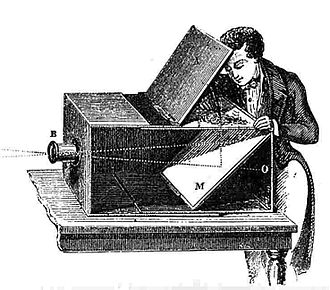
Camera obscura
NAME: Camera obscura
LANGUAGE: Arabic and Latin
TIME: Antiquity to 19th century
LOCATION: No single location
CATEGORY: Optical effect
DISCIPLINE: Astronomy and art
SHORT DESCRIPTION:
Apparatus used by scientists and artists from the 16th to 19th centuries in which the images of external objects, formed by a convex lens or a concave mirror, are thrown on a paper or other white surface placed in the focus of the lens or mirror, inside a darkened chamber, or box, so that the outlines may be traced.
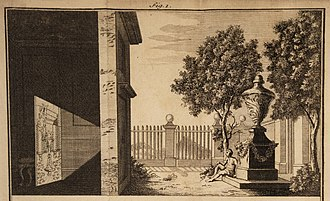
DESCRIPTION: The forerunner of the photographic camera, the camera obscura was originally literally a dark room with a tiny hole in the roof, wall, or window-shutter through which the view outside was projected as an upside-down image on to the opposite wall or a white screen opposite the hole. Although its invention has been credited variously to Roger Bacon*, Alberti*, Da Vinci* and Della Porta*, it was in fact described by the 10th-century Islamic scholar Al Hazen*.
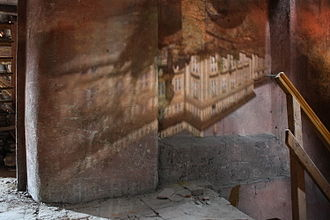
However, the optical principle of the camera obscura images was known in the 4th century BC to Aristotle*, who described a method for viewing a solar eclipse without damaging the eye in which a metal plate punched with small holes was held up to the sun, and a corresponding image of the sun could then be projected through it and onto the ground. Aristotle also noticed that the smaller the hole, the sharper the image (a simple optical principle which is the foundation of photography).
Bacon's ideas were adapted for astronomical observations of the sun, and as a popular tool for the observation of eclipses - as, for example, by ben Gershom*, a Jewish philosopher and mathematician living at Arles, in Provence, France in the early 14th century.
In the 15th century Renaissance artists were becoming interested in the possibility of the camera obscura as an aid to drawing. In Rome in the 1430s, Alberti used a camera obscura for pictorial projection, studying the formation of visual images by light rays and making "artificial images" which laid the foundations for his systematization of painter's perspective.
Around 1490 Da Vinci built a small camera obscura to test his theories about the workings of the human eye and the concept of perspective, describing his experiments in notebooks which were not deciphered and published until 1797.
Meanwhile, the German painter and engraver Durer*, in his 'Underweysung' (1525), made woodcuts of drawing aids which showed telescopic, or sighting tubes and grids used by the artist. The first published account of the camera obscura appeared in the first Italian edition (1521) of Vitruvius'* 'Treatise on Architecture', and the first illustration of the instrument was published by the Dutch physician and mathematician Reinerus Gemma-Frisius in 1544.
During the first half of the 16th century, the 'orbem e vitro', a kind of primitive bi-convex lens (i.e. convex on both sides), was introduced. This reduced distortion, increased clarity, and revolutionized the utility of the camera obscura.
The lens was first described by the Italian physician and mathematician Cardano*, in the 1550 edition of his scientific encyclopedia, 'De Subtilitate.'
Eight years later came the publication of Giovanni Battista della Porta's influential work on popular science, 'Magiae naturalis' (1558), which contained the most extensive description of the camera obscura, and the first suggestion of its use for drawing. He suggested the additional use of a bi-convex lens in the aperture in order to improve the clarity of the image, and discussed the application of this improved instrument (with a concave mirror, placed so that its focus coincides with that of the lens, so that the mirror will then reflect an enlarged image the right way up on to the screen) to portraiture (the sitter being placed at a suitable distance outside the room and in front of the aperture in direct sunlight), landscapes, and the copying of other paintings.
The camera obscura was still in use by astronomers, and in 1617 Scheiner* used a refracting telescope, with a small camera obscura attached, for the observation of sunspots.
Three years later in a letter to Francis Bacon*, the English traveller and diplomat Sir Henry Wooton first described a portable tent camera obscura used by the astronomer Kepler* when making a survey of Upper Austria in his capacity as Imperial Mathematician. In his tent camera obscura, Kepler used a telescope from which the concave lens had been removed. So his instrument was an intermediate form between the darkened room and the future box camera.
By the mid-17th century, the portable camera obscura was being used in astronomy, painting, architectural drawing and spying. The Dutch painter Vermeer* was introduced to the camera obscura by the prominent Dutch physicist and astronomer, Christiaan Huyghens*.
Scientist users included the English physicists Boyle* (1669) and Hooke* (1680), who constructed his own "perspective box" to demonstrate to the Royal Society the law of vision (it included the novel feature of diaphragms of different sizes to be put over the lens to demonstrate the expansion and contraction of the pupil of the eye).
Meanwhile, in 1676, a German mathematician, Johann Christoph Sturm, had described and illustrated the first portable reflex camera obscura for drawing, in which a plane mirror set at an angle of 45 degrees to the lens reflected the image the right way up on to a piece of oil paper stretched across the camera, and shaded by a box-shaped paper hood in which the head and hand of the artist were inserted - an elegant configuration which is at the core of modern single lens reflex cameras.
Then, in 1685, Johann Zahn, a monk from Wurzburg, solved the final piece in the optical puzzle; improving on Sturm's design, he introduced lenses of longer and shorter focal lengths. Scenes as wide as a landscape or as close as a portrait could now be viewed with a simple change of lens. He also painted the interior of his camera obscura black, to avoid internal reflections. Such instruments were much used by painters, including Canaletto and Sir Joshua Reynolds*.
Excepting a mechanical shutter, in size and construction Zahn's cameras were prototypes of 19th-century box and reflex cameras. Although throughout the 18th century the camera obscura became increasingly popular, both as entertainments and by scientists (such as Cheselden* in his 'Osteographia', (1733) and the surgeon Monro*) and artists (as recommended in Algarotti's* 'Essay on Painting', 1764) it would be over 150 years before the camera obscura and photosensitive chemicals were first combined by the French chemist Niepce*, Fox Talbot* and Daguerre* to make permanent photographs.
OTHER CONNECTIONS: It was used in Royal Society experiments by Desaguliers*
ONELINER: camera obscura, an image-making device in use since antiquity
BIBLIOGRAPHY:
Gernsheim, Helmut & Alison, The History of Photography: From the Camera Obscura to the Beginning of the Modern Era, Revised ed., London: Thames & Hudson, 1969
Multimedia:
Tim's Vermeer* is a 2013 documentary film, directed by Teller, produced by his stage partner Penn Jillette and Farley Ziegler,[2] about inventor Tim Jenison's efforts[3] to duplicate[4] the painting techniques of Johannes Vermeer, in order to test his hypothesis that Vermeer painted with the help of optical devices, including the camera obscura .