Stone, Thomas
Thomas Stone (1743 – October 5, 1787) was an American Founding Father, planter, politician, and lawyer who signed the United States Declaration of Independence as a delegate for Maryland. He later worked on the committee that formed the Articles of Confederation in 1777. He acted as president of Congress for a short time in 1784.[1] Stone was a member of the Maryland Senate from 1777 to 1780 and again from 1781 to 1787.[2]
Early life and education
 Coat of Arms of Thomas Stone
Stone was born into a prominent family at Poynton Manor in Charles County, Maryland. He was the second son in the large family of David (1709–1773) and Elizabeth Jenifer Stone. His brothers, Michael Jenifer Stone and John Hoskins Stone, were also prominent in politics.[3] His uncle was Daniel of St. Thomas Jenifer. Thomas read law at the office of Thomas Johnson in Annapolis, was admitted to the bar in 1764, and opened a practice in Frederick, Maryland.[4][5] The Jenifer family was of Swedish origin.[6][7][8]
Career
As the American Revolution neared, Stone joined the committee of correspondence for Charles County. From 1774 to 1776, he was a member of Maryland's Annapolis Convention. In 1775, the convention sent Stone as a delegate to the Continental Congress. He was re-elected and attended regularly for several years. On May 15, 1776, he voted in favor of drafting a declaration of independence, in spite of restrictions from the Maryland convention that prevented their delegates from supporting it. In June the restriction was lifted, so Maryland's delegates were free to vote for Independence. Previously, Stone had been in favor of opening diplomatic relations with Great Britain and not going to war, as he was not only a pacifist but a conservative reluctant to start a gruesome war.[4][5]
That same year Stone was assigned to the committee that drafted the Articles of Confederation, and he was struck with a personal tragedy. His wife Margaret visited him in Philadelphia, which was in the midst of a smallpox epidemic. She was inoculated for the disease, but an adverse reaction to the treatment made her ill. Her health continued to decline for the rest of her life.[4][5] After Stone signed the Declaration of Independence, he took his wife home and declined future appointment to the Congress, except for part of 1784, when the meetings were at Annapolis.[4][5]
Stone accepted election to the Maryland Senate from 1779 until 1785, at first in order to promote the Articles of Confederation, which Maryland was the last state to approve. But he gave up the practice of law to care for his wife and children. As her health continued to decline, he gradually withdrew from public life. When Margaret died in 1787, he became depressed and died less than four months later in Alexandria, Virginia, reportedly of a "broken heart".[4][5]
 Grave of Thomas Stone, September 2009
Stone was buried at his plantation home, which still stands. After his death, the plantation remained in the family for five generations until 1936 when it sold privately. In 1977 the main structure was severely damaged by fire. The National Park Service purchased the property and restored it to its original plans. Habredeventure today is the centerpiece of the Thomas Stone National Historic Site and is operated as a museum by the National Park Service.
Personal life
In 1768, Stone married Margaret Brown (1751–1787), the younger sister of Gustavus R. Brown (see Rose Hill), thought to be the richest man in the county. Soon after, Stone purchased his first 400 acres (1.6 km2) and began the construction of his estate named Habre de Venture. The family made their home there, and they had three children: Margaret (1771–1809), Mildred (1773–1837) and Fredrik (1774–1793). Stone's law practice kept him away from home, so he brought in his younger brother Michael to manage development of the plantation,[4][5] which utilized slaves for generations.[9]
Legacy and honors
- The World War II Liberty Ship SS *Thomas Stone* was named in his honor.
- Thomas Stone High School – Charles County, Maryland public high school
- Memorial to the 56 Signers of the Declaration of Independence
See also
- William Stone – relative and governor of the Maryland colony
- John Hoskins Stone – brother and governor of Maryland
- Peggy Stewart House – National Historic Landmark in Annapolis, Maryland, at one time owned by Thomas Stone
- Barton W. Stone – cousin and prominent early leader of the Restoration Movement
Notes
- ^ "Signers of the Declaration (Thomas Stone)". National Park Service. 2004-07-04. Retrieved 2008-04-24.
- ^ "Thomas Stone , MSA SC 3520-1202". msa.maryland.gov. Retrieved 2021-03-07.
- ^ Newman, Harry Wright (1937). The Stones of Poynton Manor: a Genealogical History of Captain William Stone, gent. and Merchant, Third Proprietary Governor of Maryland, with Sketches of His English Background and a Record of Some of His Descendants in the United States. pp. 20–30.
- ^ Jump up to:^a ^b ^c ^d ^e ^f "Signers of the Declaration of Independence". US History.org.
- ^ Jump up to:^a ^b ^c ^d ^e ^f "Thomas Stone". Colonial Hall.
- ^ Knorr, Lawrence; Farley, Joe; Farrell, Joe (2018-12-05). *Graves of Our Founders: Their Lives, Contributions, and Burial Sites*. Sunbury Press, Inc. ISBN 978-1-62006-176-3.
- ^ Congress, United States (1959). *Congressional Record: Proceedings and Debates of the ... Congress*. U.S. Government Printing Office.
- ^ Shellhorn, Richard Carl (2018-06-12). *A Guide to the Formation of the Constitution*. Christian Faith Publishing, Inc. ISBN 978-1-64191-703-2.
- ^ The quiet patriot: Thomas Stone of Haberdeventure Retrieved 15 October 2018
External links
Wikimedia Commons has media related to Founding Fathers of the United States.
- United States Congress. "Thomas Stone (id: S000963)". Biographical Directory of the United States Congress.
- Thomas Stone National Historic Site website
- Biography by Rev. Charles A. Goodrich, 1856
- 1743 births
- 1787 deaths
- Continental Congressmen from Maryland
- 18th-century American politicians
- Signers of the United States Declaration of Independence
- Politicians from Frederick, Maryland
- American planters
- American slave owners
- Burials in Maryland
- Maryland state senators
- People from Charles County, Maryland
- People from Port Tobacco Village, Maryland
- Stone family
- American lawyers admitted to the practice of law by reading law
- Jenifer family
- Founding Fathers of the United States
...In 1787 Stone’s wife Margaret became alarmingly ill. She had received a smallpox inoculation a decade earlier, and from the effects of the mercury contained in the vaccine, she experienced a long state of weakness and decline. During her illness, Stone wrote as follows: “The illness of a wife I esteem most dearly preys most severely on my Spirits, she is I thank God something better this afternoon, and this Intermission of her Disorder affords me time to write to you. The Doctor thinks she is in a fair way of being well in a few days. I wish I thought so….”
Stone watched over her with unwearied devotion and a deep and abiding melancholy overtook his spirit. At length, however, in the middle of 1787, she sank to the grave at the early age of thirty-six.
From this time on, the health of Stone evidently declined. The grief-stricken Stone abandoned his work, and declined to attend the Constitutional Convention to which he had been elected. In the autumn his physicians advised him to take a sea voyage and in obedience to that advice, he traveled to Alexandria to embark for England. Before the vessel was ready to sail, however, he suddenly expired on October 5, 1787 in the forty fifth year of his age. Stone is buried in the family graveyard about 200 yards from his home at Habre deVenture, in Port Tobacco, Maryland.
Thomas Stone was a tall, thin, pale lawyer, a gentleman of acknowledged talents, and of inflexible and incorruptible integrity. He was a professor of religion, and distinguished for a sincere and fervent piety. To strangers, he had the appearance of austerity, but among his intimate friends, he was affable, cheerful, and familiar. In his disposition he was uncommonly amiable and well disposed. His life reflects a nature, background, ability, and spirit for freedom unmatched by most Colonials during the decade before the Declaration....
Thomas Stone | Descendants of the Signers of the Declaration of Independence
AMERICAN CONNECTIONS
THOMAS STONE (MD) was thirty-three. A relative
unknown in terms of what he got up to in Congress. A country squire with
a fancy family mansion near Port Tobacco, Maryland, Stone's ancestor had
been royal governor. Some of his fellow revolutionaries thought Stone
might have been a touch less than fervent about breaking with Britain,
but he joined in with the rest.
In 1785 Stone was on the commission that okayed the Potomac Canal,
George Washington's dream of an economic link between the capital and
the interior. Building the canal wasn't going to be easy because right
in the path there were three waterfalls. The worst was at Great Falls
(hence the name) where the water dropped eighty feet in a mile and where
any locks would have to be staired and cut out of the rock. But the real
problem was that there were no American engineers to do any of this. And
foreigners wouldn't take the job. So the politicos (essentially, George
Washington) designed everything.
Organizing the whole effort was ex-cavalry major Henry "Light-horse
Harry" Lee, a Southern gent who was great stuff at leading a charge but
no good at counting the cost. He bought a large stretch of western land,
which then turned out to be half the acreage he'd paid for without
reading the fine print. He then bought even more land in order to build
the town of Matildaville (named after his first wife and second cousin, "the Divine Matilda"; by his second, son Gen. Robert E Lee and descendant Helen Keller).
Matildaville was headquarters for the Potomac Canal construction workers, with a mill, an inn, boarding houses, a housing barracks, and several small homes. Then he discovered his contract said he couldn't charge rent on any of the buildings.
Permanently in debt, at one point Lee even gave George Washington a bad
check. Not many people did that. Eventually it was put out of business by the rival Erie Canal and B&O Railroad ( the first U.S. railroad to operate a steam locomotive, the Tom Thumb, and featured in Monopoly).
Lee's canal superintendent was ex-blacksmith James Rumsey. Who decided
a year later to switch careers and become an inventor. Rumsey shipped
out for London with his great idea: a steam-powered jet-boat.

Following a meeting with the famous steam-engine-builders Boulton and Watt, the
pair offered Rumsey a partnership. Rumsey dithered, badly advised by an
agent with his own agenda. B&W withdrew the offer. After a couple more
years of work (and heavily in debt) in 1792 Rumsey was ready to try out
his Columbian Maid on the Thames (Ben Franklin was a backer). The day before the event he died and the project went west.

A replica of James Rumsey’s steamboat at the Rumsey Steamboat Museum at Shepherdstown.
Benjamin West had given Rumsey some useful introductions because West
knew people in high places. Twenty years as history painter to the king,
one of the founders of the Royal Academy, and by now celebrated as the
first American public figure in European art---all this had inflated his
already considerable ego. West had first made his mark with bigger and
bigger paintings of historical and religious subjects, as well as doing
renovation work at Windsor Castle and conducting nonstop self-publicity.
Byron called him "Europe's worst dauber." The untrained West had made it
to the top by sheer force of complacent arrogance.
At one point around 1802 West turned for technical advice to a young
surgical anatomist (who was also into Galvinism). The issue in question was how a recently dead corpse would hang on a cross. John Constantine Carpue obligingly crucified the body of a newly executed criminal and made a plaster cast.
In 1816 Carpue also perfected a fifteen-minute no-anesthetic operation to
reconstruct a nose. The technique had originated in medieval India: trim
the stump, then make a wax nose and set it in place covered by a skin
flap hanging down from the forehead and cemented onto the wax with
African root pulp. Leave for three days. Result: a nose, said Carpue,
which would sneeze and smell. And could be blown without coming off in
your hand. In 1818 German doctor Carl Ferdinand von Graefe improved on
Carpue's technique. Graefe published several papers on the subject,
invented a Greek name for the procedure ("rhinoplasty") and became known
as the first modern plastic surgeon.
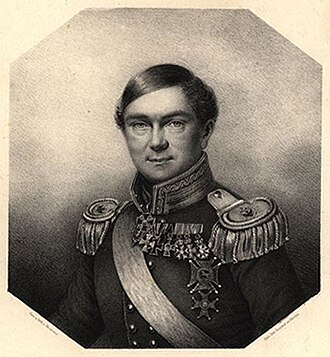
Graefe was one of the six professors in the new medical faculty of the
new Berlin University. Where the dean was the best-known doctor in the
country, Christoph Hufeland. Who had made his name in 1796 (as faous as Goethe, Herder and Schiller) with a book describing his holistic approach to medicine and titled Macrobiotic (a word later hijacked by nutrition freaks).
An instant success, within four years the book was translated into every
European language. Hufeland was a pioneer in public health, came up with
the idea of a twenty-four-hour body clock, and promoted his "nature
cure": colonic irrigation, ventilation, bathing, veggie diet, herbal
remedies, and copious quantities of mineral water. Paving the way for
modern naturopathy.
One of Hufeland's patients was none other than the great Johann Wolfgang
von Goethe: poet, playwright (Faust), philosopher, educator,
political analyst, physiologist, botanist, anatomist, major influence on
European thought, reverenced by such heavies as Schiller, Herder, and
the other German Romantics. And subject to doctoring of a different
kind.
In 1807 when Goethe was fifty-eight he met the twenty-two-year-old
Bettina Brentano, who fell for him and (she later said) jumped into his
lap.
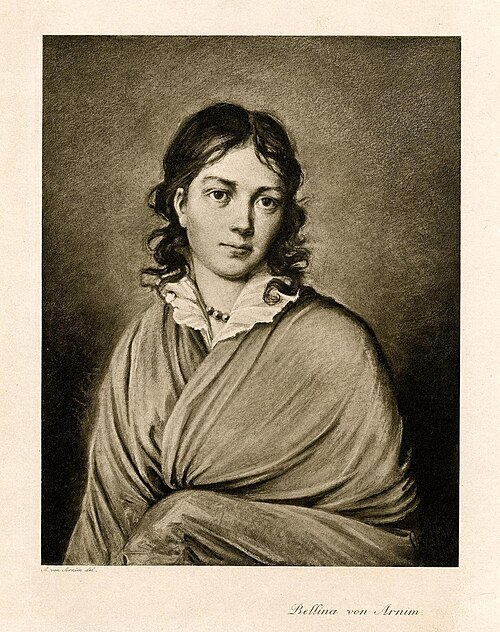
Bettina was the sister of Romantic poet Klemens Brentano (secretary to the Catholic visionary nun, the Blessed Anne Catherine Emmerich), and in
1811 she married his fellow versifier Achim von Arnim (the Brothers
Grimm came to the wedding dressed as storks). Bettina had also met and
charmed Beethoven (who played for her every day), but she reserved her
passion (platonic, it says here) for Goethe.
In 1834, when Goethe was dead and unable to defend himself, Bettina
wrote a now-it-can-be-told exposé of her "affair" titled Correspondence
with a Child. In the book she doctored Goethe's rather formal
letters to her, described their first meeting as having happened when
she was thirteen, included Goethe's poems to her (in fact written to
other women), and generally told fibs. Twelve years later in Concord,
Maryland, a fourteen-year-old American girl found a translation of
Bettina's book and went into the same unrequited mode, writing (unsent)
letters to and leaving flowers on the doorstep of the object of her
crush, writer Ralph Waldo Emerson. Whose money was helping the
financially strapped Alcott family.
Emerson also encouraged Louisa May Alcott's literary ambitions. In the end, her
1868 Little Women was one of the greatest international best
sellers in history. On the way to fame and fortune Louisa May also wrote
pseudonymous bodice-rippers (e.g., Pauline's Passion and
Punishment that she later referred to as "dangerous for
little minds."
Louisa May also became a feminist, seamstress, governess,
domestic servant, teacher, and (from 1860) wrote for the new Atlantic
Monthly, founded by a group of writers including her hero
Emerson and another family friend, Henry Wadsworth Longfellow.
Who had just achieved international fame for his 1855 Song of
Hiawatha, a poetic version of Native American tales collected
by the ethnographer Henry Schoolcraft (whose wife wrote a
bestselling rebuttal novel to Stowe's Uncle Tom's Cabin).
In 1836 Longfellow had returned from the second of two European trips (both trips were in order to study languages in preparation for college jobs: the first at Bowdoin, the second at Harvard). During the second trip Longfellow spent time in
Sweden where he was introduced to Finnish and bought a teach-yourself
book. And then got excited by the newly published Kalevala, a
poetic collection of Finnish folk tales. Years later Hiawatha
used exactly the same poetic meter as Kalevala and some of
the same themes.
The original Finnish collector of the Kalevala folk material
(some dating back a thousand years) was doctor Elias Lönnrot, who spent
ten years on the Finnish-Russian border treating patients and writing
down their ancient songs and poems and tales. Lönnrot ended up helping
to get Finnish nationalism off the ground, becoming professor of Finnish
at Helsinki University.
And impressing Germans like Jakob Grimm.
By this time (1845) Grimm and his brother Wilhelm were famous for their
collection of folk stories known as Grimms' Fairy Tales,
which included "Sleeping Beauty," "Cinderella," and "Snow White."
Expurgated before publication to remove references to such unpalatable
stuff as anti-Semitism, necrophilia, and incest.
The Grimms' obsession with the German past led Jakob to involvement with German language and philology (he was the first to take a scientific approach to the
Germanic languages) and at the Berlin Academy while Jakob was reading
Kalevala he and his bro were already starting on their great
German dictionary. Both men were dead by letter F, and the work was
finished only in 1960. Jakob was especially known for his study of the
process of German consonant mutation over time. Riveting stuff.
The Grimms' colleague Johann Peter Gustav Lejeune Dirichlet (in the
Berlin math department and who married Mendelssohn's sister after being introduced by Humbolt) was famous for equally arcane noodling, i.e., his "box principle" (if one
distributes more than n objects in n boxes, then at least one box must contain more than one object). He published important contributions to Fermat's Last Theorem. For such epoch-making revelations Dirichlet became Germany's foremost mathematician. In the Gynasium he was taught by George Ohm, but Gauss did not like to teach, and was in the physiology department; Dirichlet's brain is said to be preserved in the department of physiology at the University of Göttingen, along with the brain of Gauss.
Dirichlet taught Heinrich Schroeter, who wrote incomprehensible tomes
about the second-, third-, and fourth-order plane curves and went off to
teach at the University of Breslau.
One of his pupils was a hunchback who later on took the name of Charles Proteus Steinmetz and whose socialist views led him to depart Germany for Switzerland, where he picked up his Ph.D. in electrical engineering. Then he was off to
American citizenship and (in 1893) a job at the recently founded General
Electric Corporation.
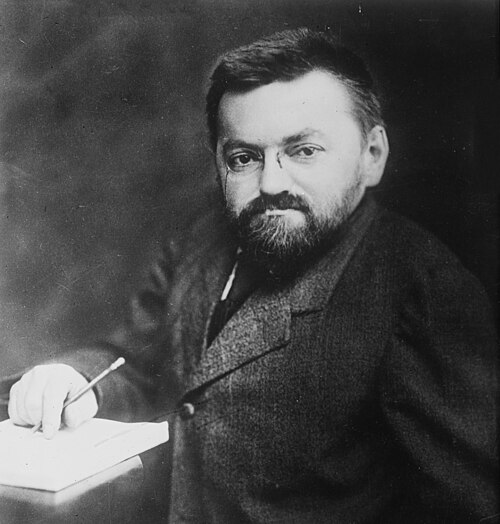
Over the next twenty-eight years Steinmetz filed 195 patents and wrote
the definitive book on alternating current (key to the development of
the American electrical industry). Like alternating-current pioneer Nikola Tesla, he also erected a lightning tower to attract natural lightning to study its patterns and effects, which resulted in several theories.
An early supporter of pollution control, solar energy, and electric automobiles, Steinmetz even managed a year in 1919 as a member of the briefly socialist city government of Schenectady, introducing numerous progressive reforms, including extended school hours, school meals, school nurses, special classes for the children of immigrants, and the distribution of free textbooks.
He eventually made his name as the greatest electrical
engineer in the country and helped General Electric to success.
When Henry Ford could not fix a generator, he got Steinmetz to consult; after listening for two days, he hade a chalk mark and told them how to modify the coil. Henry Ford was thrilled until he got an invoice from General Electric in the amount of $10,000. Ford acknowledged Steinmetz’s success but balked at the figure. He asked for an itemized bill.
"Making chalk mark on generator $1.
Knowing where to make mark $9,999."
Original financial backing for GE had come from the Ames family, famous
since 1805 for Ames shovels, used during the Gold Rush. Lincoln personally asked Oakes Ames to supply shovels to the Union Army, which became standard issue for troops in the U.S. Army for every conflict from the American Civil War to Korea. In 1862 Queen Victoria granted a patent to William Newton to make Ames shovels throughout the British Empire.
And they were used for laying the B&O Railroad, and then the transcontinental railroad track in the 1880s (Oakes was implucated in the Credit Mobilier scandal). And do all the other digging required to build nineteenth-century America ( the country’s first subway which opened in Boston in 1897, the Panama Canal, the base for the Statue of Liberty, Mt Rushmore, Empire State Building, Golden Gate Bridge, Hoover Dam etc). The head of the Ames family was known as the "King of Spades".
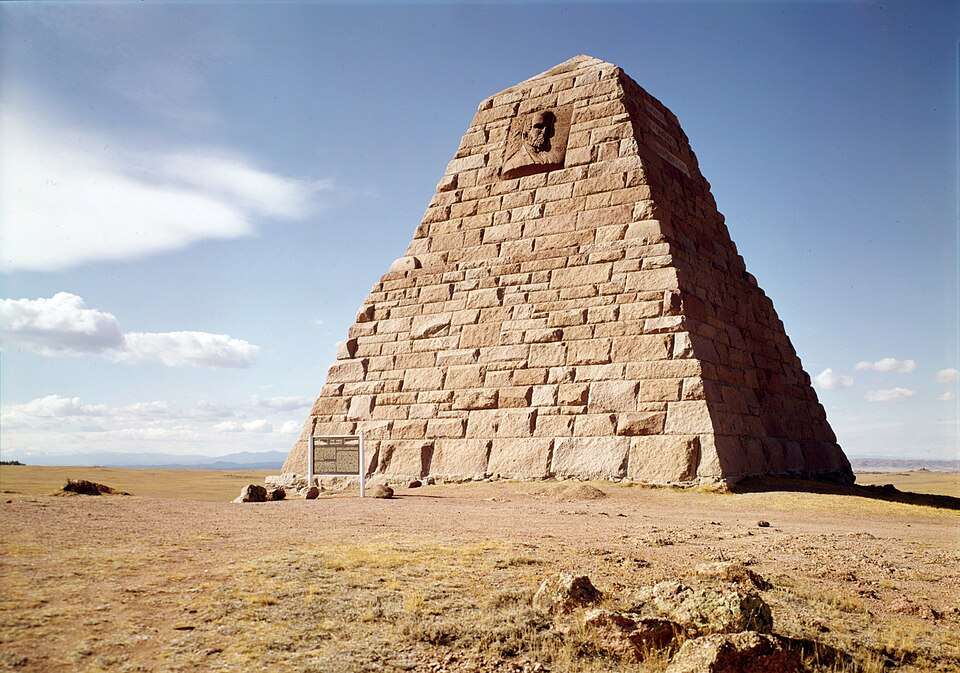
The Ames corporation was first headquartered in the iron-making town of
Easton, Massachusetts, about twenty miles from Boston. By 2004 the
company was long gone from the town, but the Ames corporate archive was
still there and the Easton museum still contained several hundred Ames
shovels.
Ably protected by Easton fire chief THOMAS STONE.