Braxton, Carter
Carter Braxton (September 10, 1736 – October 10, 1797) [1] was a signer of the United States Declaration of Independence, as well as a merchant, planter, and Virginia politician. A grandson of Robert “King” Carter, one of the wealthiest and most powerful landowners and slaveholders in the Old Dominion, Carter Braxton was active in Virginia's legislature for more than 25 years, generally allied with Landon Carter, Benjamin Harrison, Edmund Pendleton and other conservative slaveholders.
Contents
- 1 Early life
- 2 Career as merchant and plantation owner
- 3 Early political career
- 4 Reluctant revolutionary and Virginia conservative
- 5 Financial speculation and troubles
- 6 Legacy
- 7 References
- 8 Other sources
Early life
Carter Braxton was born on Newington Plantation in King and Queen County, Virginia on September 16, 1736, but wrongly reported as dead along with his mother, Mary Carter Braxton, who "unhappily catching Cold," died shortly after his birth.[2] His maternal grandfather, King Carter, possibly the wealthiest man as well as the largest landowner in Virginia at the time of his death, had bequeathed ₤2,000 to his youngest daughter, who became bethrothed to George Braxon Jr. five months after her father's death (although her brother had not paid that full amount to her new husband by the time of her death).[3]
His paternal grandfather, George Braxton, Sr. by 1704 (before western lands were opened to European settlement) had also become one of the 100 largest landowners in Virginia's Northern Neck. George Braxton Sr. had been elected for the first time to the House of Burgesses in 1718, and was reelected nine years later with John Robinson, Jr., who would become the powerful Speaker of the House of Burgesses and benefactor of the Braxton family.
The elder Braxton owned at least one ship, the 'Braxton' that traded with the West Indies and elsewhere, and was commission agent for cargoes of enslaved blacks sold to Virginia planters.[4] He died, aged 71, when Carter was twelve; his eldest son (Carter's father) George Jr. had succeeded him as delegate for King and Queen County in 1742, but himself died not long thereafter (in 1749). Speaker Robinson and neighbor Humphrey Hill served as guardians for Carter and his slightly (3 year) elder brother George (who inherited Newington and various land in King and Queen and Essex County).[5]
Educated at the College of William and Mary like his father and brother, Braxton followed family tradition at age 19 by marrying Judith Robinson, a wealthy heiress and the Speaker's niece. However, she died two years later (like Carter's mother shortly after childbirth), leaving Braxton two daughters, Mary and Judith. The young widower soon journeyed to England for two years.
Upon returning to the colonies in 1760, Braxton sold Elsing Green, where he had lived with Judith, and married again, this time to Elizabeth Corbin, eldest daughter of Richard Corbin, Deputy Receiver General for his Majesty's Revenues in Virginia, who brought a ₤1000 dowry.
Career as merchant and plantation owner
Carter Braxton purchased a small schooner shortly after his second marriage, and turned his energies to trade. Braxton traded between the West Indies and American colonies, establishing relationships with Bayard & Son of New York and Willing & Morris of Philadelphia.[6] He also urged the Brown brothers of Providence, Rhode Island, who had abandoned the slave trade during the French and Indian War to sell him African people, but such transactions may not have completed.[7][8][9] Whether or not Braxton's mercantile enterprises included slave trading, he and his brother were accompanied by a black slave at the College of William and Mary.
Braxton later owned many more slaves on his various plantations, and there are no records of manumissions or a will. His biographer notes that at the end of the Revolutionary War, despite selling off some properties after his father's and brother's deaths and for his own debts, Braxton owned at least 12,000 acres and 165 slaves. Six years later, despite the financial problems discussed below, Braxton still owned 8,500 acres, which still made him one of the 100 largest landowners in the new state. The biographer[10] also states that before his death, Braxton sold off or gave to his kinsmen all but forty-two of his blacks and probably could only have farmed fewer than half of the remaining 3,900 acres.[11] Braxton's racial attitudes, while common to his class, contrasted with those of another of King Carter's grandsons, Robert Carter III, and ofGeorge Mason IV, who fought against the slave trade during their legislative careers.
Early political career
Braxton began his long career representing King William County in the Virginia House of Burgesses, taking his seat in 1761. However, his brother George died on October 3 of that year, leaving an insolvent estate, so the family lost Newington (which burned down, under other owners, in 1800).[12] Although both high-living Braxtons had been considered wealthy, as well as political allies of Speaker John Robinson, when theJohn Robinson Estate Scandal broke in 1766, they turned out to be among the largest beneficiaries of the late speaker's interest-free loans of redeemed paper money supposed to have been burned.[13][14]
In addition to his duties as a burgess, Braxton served as sheriff of King William County (a lucrative position for which he briefly resigned his position as burgess), colonel of its militia, and vestryman of the troubled St. John's Church about ten miles east of his Chericoke plantation. Factional disputes within the parish (which assessed members to support not only the rector but the parish poor) grew so severe that the House of Burgesses held hearings and ultimately passed a special bill dissolving the vestry, as Braxton had wished.[15]
Although always considered a moderate or conservative politician, Braxton signed the First Virginia Association intended to protest the Townshend duties on tea and other products, but like his ally Landon Carter, not the Second Association which set up boycott compliance mechanism, nor the Third Virginia Association pledging not to purchase various East Indian commodities.[16] However, in 1774 Braxton returned to Williamsburg as King William County's delegate (with William Aylett [17]), and joined 108 others in the Fourth Virginia Association, which authorized local committees of safety as well as volunteer militia.[18] When Lord Dunmore seized the colony's gunpowder and flintlocks for their rifles, Braxton helped negotiate a compromise between fellow legislator Patrick Henry and his own father-in-law Corbin that averted a crisis.[19]
Reluctant revolutionary and Virginia conservative
Braxton was "a moderate politician during the Revolution—often viewed as sympathetic to the British (but not a Loyalist)."[20] Although absent at some sessions, he had represented his county sixteen times between 1761 and Lord Dunmore's dissolution of the House of Burgesses; Braxton also served as the county delegate to all five sessions of the Virginia Convention.[21] In 1774, Braxton joined the patriots' Committee of Safety in Virginia, as well as chaired the legislative committee considering legal penalties for Tories.
When Peyton Randolph died unexpectedly in Philadelphia in October, 1775, fellow Virginia legislators elected Braxton to take his place in the Continental Congress. He served in the Congress from February 1776 until August, when Virginia reduced its delegation to five members. In that capacity Braxton signed the Declaration of Independence, although he had previously opposed it as premature in Committee of the Whole, and explained his stance in several letters to his uncle Landon Carter.[22] Braxton also drew revolutionaries' criticism for his pamphlet, Address to the Convention, which he had printed in reply to the proposals ofJohn Adams's Thoughts on Government.[23]
Afterwards Braxton returned to the House of Burgesses, which thanked him and Thomas Jefferson for their service, although King William voters failed to reelect the absent Braxton as one of their delegates (so he missed the two sessions in 1778).[24] Moreover, his house at Chericoke burned down shortly before Christmas, 1776, so Braxton moved his family to Grove House near West Point, Virginia (which itself burned down in 1903). Through most of his legislative career, Braxton was a political opponent of the Lee family (since its involvement in the Robinson Estate scandal), and he also became involved in a press quarrel with anti-slavery activist and diplomat Arthur Lee, supposedly concerning Silas Deane's mercantile and diplomatic activities.[25] Between 1776 and 1785, Braxton served in 8 of the 11 legislative assemblies, and attended 14 of 21 sessions, with a special concern for debt and tax moratoriums or other relief.[26]
Financial speculation and troubles
Braxton invested a great deal of his wealth in the American Revolution. Like Robert Morris, Braxton loaned money to the cause, as well as funded shipping and privateering (and lost about half of the 14 ships in which he held interests). Braxton (with fellow businessmen including Morris and Benjamin Harrison) sold Virginia and Carolina tobacco and corned meat abroad, and secured arms and ammunition (unsuccessfully, most colonies preferring arms supplied by foreign governments on favorable terms), as well as wheat and salt, and cloth and other trade goods.[27] In 1780 the Continental Congress censured Braxton for his role in the Phoenix affair of 1777, in which his privateer seized a neutral Portuguese vessel from Brazil, prompting diplomatic protests. The British also destroyed some of Braxton's plantations during the war.
In addition to the indebtedness incurred after the deaths of his father and brother, and through his own relatively poor agricultural business practices, Braxton accumulated war debts of the Continental Congress and also of Robert Morris, both of which proved slow to repay. In 1786 Braxton sold a plantation and rented a smaller residence ("row-house") in Richmond, which (with the depreciated paper currency) allowed him to repay his own indebtedness to the Robinson estate in 1787.
Braxton also sued Robert Morris in Henrico County court for ₤28,257 in that year, but the lawsuit continued for eight years before commissioners were appointed, then Morris appealed. Finally Virginia's Court of Appeals led by Edmund Pendleton decided mostly in favor of Braxton before Morris was forced into bankruptcy by his own continued land speculations (although Morris as late as 1800 believed he should have won ₤20,000).
In 1791, Braxton also purchased Strawberry Hill outside Richmond for his wife (who had received nothing upon her father's death, all his property being given to his sons), and conveyed it to his sons Carter Jr. and Corbin to hold for their mother's benefit. Braxton's biographer does not believe that Braxton hid assets from his creditors by placing them in relatives' names, although his widow later attempted to recover dower rights in land and slaves that her husband sold in his last years. His sons in law, Robert Page and John White (husbands of Molly and Judith, his daughters by his first wife) paid creditors more than ₤2000 on Braxton's behalf.[28]
On November 15, 1785, fellow delegates elected Braxton to the Council of State (which handled the executive functions formerly performed by the Privy Council). Receiving the paid position vacated by William Nelson, Jr., Braxton moved to Richmond, which had become the capital in 1780. Ineligible for re-election for three years, Braxton was elected a second time in 1794.[29]
Braxton died, aged 61, in his Richmond home on October 10, 1797. Family tradition maintains Henrico County sheriff Samuel Mosby was at Braxton's door attempting to collect debts lest he have to pay them himself.[30] His widow survived until July 5, 1814, and was praised in an obituary for the assistance and comfort she had offered Braxton during his final years (during which he suffered two or more strokes during Council meetings).[31]
Legacy
A biographer speculated that Braxton may be the founding father with the most descendants, since he and his second wife may have had as many as sixteen children, in addition to his two daughters with his first wife.[32] Although none of Braxton's sons (George, Corbin, Carter Jr., John Tayloe, William) lived as long as their father, they and their sisters had numerous children, many of whom fought in the Confederate Army during the American Civil War, including grandsons (all achieving the rank of Major) Carter Moore Braxton of the Fredericksburg Artillery, Tomlinson Braxton, M.D. and Elliott Muse Braxton (who was later elected to the Forty-second Congress and served from March 4, 1871 – March 3, 1873).
Confederate General Braxton Bragg was named for the signer, but not apparently a descendant. Another great-grandson, John W. Stevenson of Kentucky, served two terms as U.S. Representative before the Civil War, and later won election as Governor in 1868 and U.S. Senator in 1871, before retiring to his law practice and becoming president of the American Bar Association. Virginia lawyer Allen Caperton Braxton, who led efforts to limit blacks' access to education and voting, particularly during Virginia's Constitutional Convention in 1902, proclaimed his descent from Carter Braxton. Kate Horsley, writer of historical novels, is a noteworthy contemporary descendant.
Carter Braxton may have been buried at Chericoke,[33] which remains in the family's possession today. Although it burned in 1776, Braxton rebuilt it and gave to his eldest son George on his marriage to Mary Walker Carter (daughter of Charles Carter of Shirley) in 1781 (which transfer survived despite legal attacks by his creditors).[34] However, when the family graves there were moved to Hollywood Cemetery in Richmond in 1910, his could not be located; a monument was erected for him nonetheless.[35] Nearby Elsing Green also survives and is available for tourism.
Braxton County, West Virginia was formed in 1836 and named in Braxton's honor. For a brief time during the 1960s to the early 1980s the Waterman Steamship Company owned a break bulk freighter, the S.S. Carter Braxton, which was named in his honor.
The Newington Archaeological Site was listed on the National Register of Historic Places in 2010.[36]
AMERICAN CONNECTIONS
CARTER BRAXTON (VA)] was thirty-nine. And drank.
It was said his complexion "reflected the glow of good Madeira." He was
a wealthy landowner and a reluctant rebel who described Independence as
a "delusive bait." Braxton's father-in-law was a loyalist and Braxton
was so certain a compromise with England would be reached he even
borrowed money to hire more ships and buy more tobacco cargoes for the
British market. In the end he lost everything either to privateers or
the Royal Navy and ended up financially ruined. Then his wife made
loyalist remarks, and Braxton was removed from Congress immediately after
signing.
Back in 1774 Braxton had hired a new graduate of St. Andrews University,
Scotland, to come and teach his sons. Andrew Bell stayed till 1781 and
when things got too hot returned to England to became a clergyman.
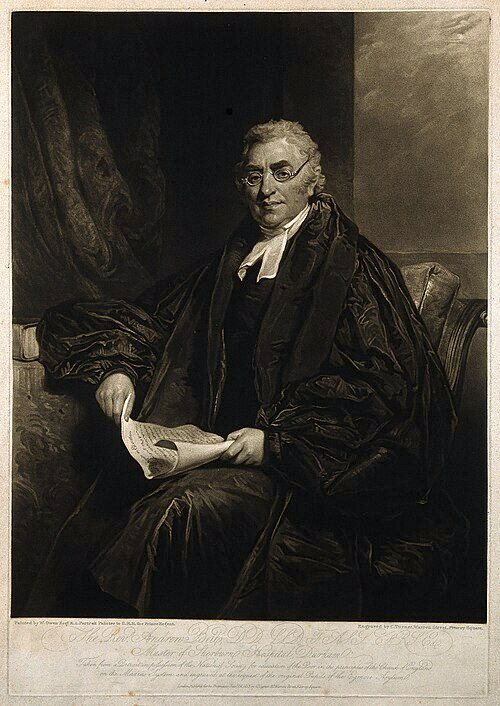
In 1787 he left for India where he invented the Madras System school. Trays
of sand and hanging pasteboard cards were used by older boys to teach
younger boys. This and the use of discipline monitors (older boys) meant
that two adult teachers could handle several hundred pupils. With no
corporal punishment, no rote learning, and streaming by ability the
system was a winner and caught on (all over the world) after Bell
returned to England.
In 1803, when he was a curate in deepest Dorset, Bell took up the cause
of Benjamin Jesty, local farmer. Who in 1774 had noticed that when his
milkmaids caught (nonlethal) cowpox from infected cows' udders they
could then nurse victims of (lethal) smallpox and not catch it. So Jesty
used a needle to transfer pus from cowpox pustules into healthy arms.
The vaccinated persons developed immunity to smallpox. This was thirty
years before Edward Jenner got all the glory and ten thousand pounds
government money for doing exactly what Jesty had done.
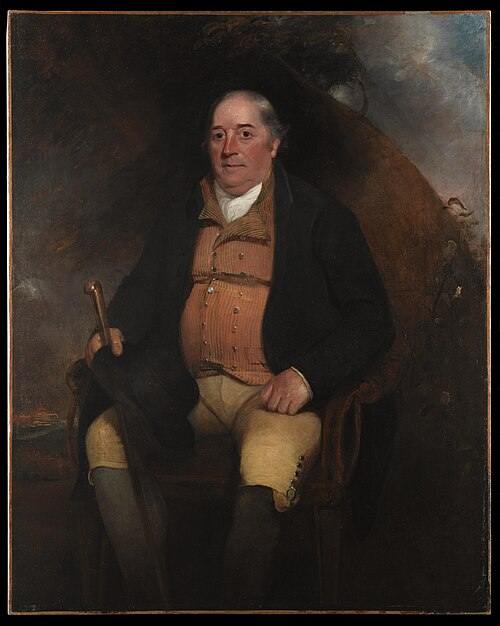
Michael William Sharp, 1805 portrait of Benjamin Jesty
Andrew Bell's efforts brought Jesty recognition (but no money) in the
form of a pair of mounted gold lancets and a portrait commissioned from
Michael Sharp. In 1799 Sharp (father oboeist, mother actress) was a
painter's assistant at Windsor Castle, caught the eye of George III, and
in a few days had 140 commissions to paint the nobility. By 1801 he was
exhibiting at the Royal Academy (theatrical themes). Then he started
painting in and around the city of Norwich, where he made friends with John Crome.
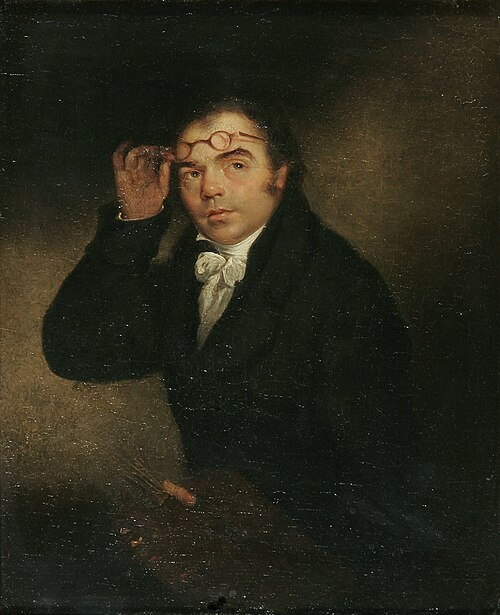
Portrait by Michael William Sharp
For ten years Crome painted the wooden signs that hung outside pubs,
then went into picture dealing and landscape scenes. He founded the
"Norwich School" of art (it made little impression) and did views of
Norwich. About which no more need be said.
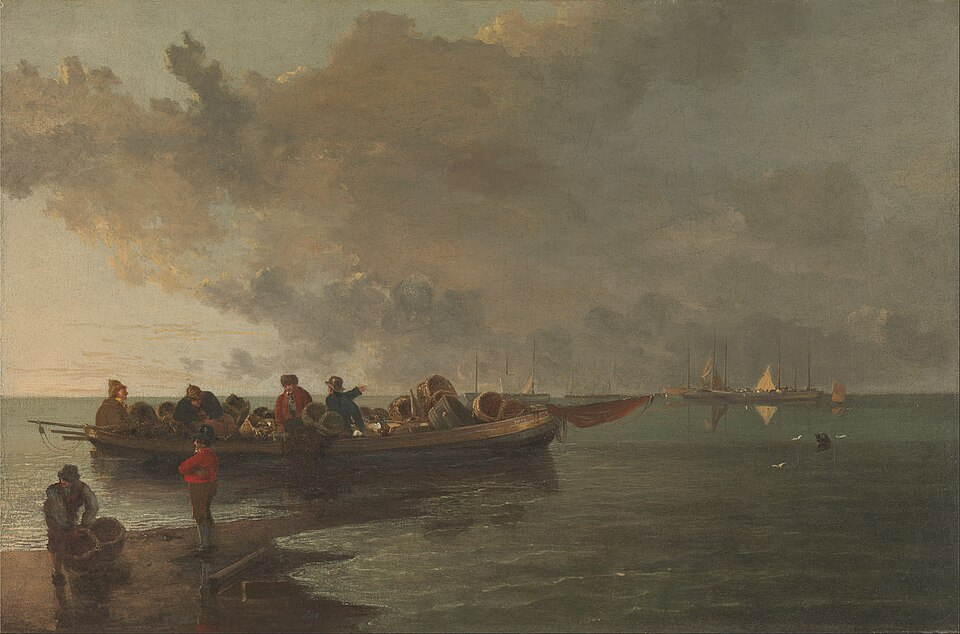
Barge with a Wounded Soldier
In 1812 Crome was in debt to the nearby Gurney Bank (while giving painting lessons to some of the Gurney family). Hudson Gurney, (related to Barclay) rich, unwilling head of the bank, had only one ambition: to write "one good poem." Never happened. Instead, as he said, he moldered in the countryside, reading his
fifteen-thousand-book library until finally he managed to buy a seat in
Parliament, go to London, and entertain the rich and famous in his fancy
town house. He then turned antiquarian, writing Heads of Ancient
History (it'll give you catatonia) and becoming vice president
of the Society of Antiquaries. Gurney was affable, argumentative, and
dull.
His one bright moment was in 1802 when he left for the Grand Tour of the
culture centers of Europe with his schoolmate George Gordon, fourth Earl
of Aberdeen and cousin of the poet Byron.
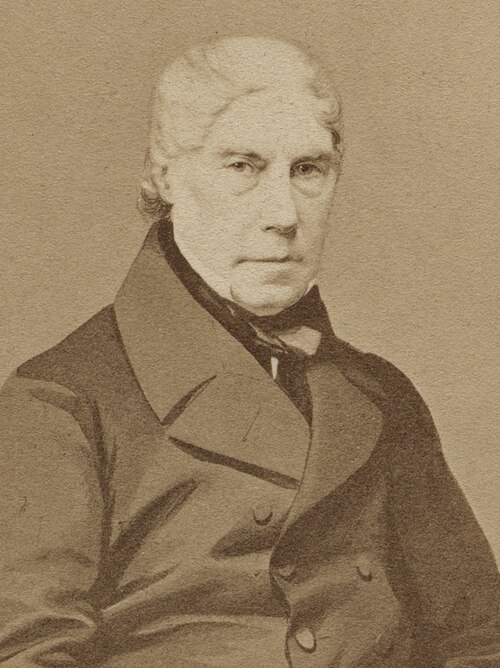
After visiting Paris (met Napoleon: "fatter than expected"), Florence, and Rome, Gurney went home. Gordon continued to Turkey and Greece, where he "picked up" ancient
sculptures, then returned to join the Dilettanti Society (aristos who
traveled) and organized their 1811 junket to the Ionian islands.
Meanwhile he also took his seat in the House of Lords and started a
political career that ended with the prime ministership (did not manage to avoid the Crimean War). Gordon was a natural scholar, and one of his publications criticized the location by his pal William Gell of the ancient city of Troy as being underneath the
Turkish village of Bunabashi.
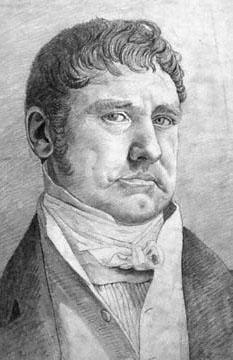
Gell was witty, eloquent, a dog lover, good company, and a great dinner
host with guests ranging from earls to boxers. He was also permanently
short of cash. After his Troy trip he wrote several articles on Greece
and got them reviewed by Byron. Then came a spell as Queen Caroline's
chamberlain, and in 1814 the queen gave him a small pension. This was
enough to live on in Italy, where he spent the rest of his life
excavating, entertaining, and writing letters to fellow enthusiasts
about matters archeological and in particular the latest craze:
Egyptology. Leading light of which was Gell's friend, Frenchman
Jean-François Champollion.
At school Champollion had mastered Greek, Latin, Hebrew, Arabic, Syriac,
and Coptic in preparation for his destiny. Which was to decipher
Egyptian hieroglyphics. In 1808 a plaster copy of the Rosetta Stone,
carrying an inscription in three scripts---hieroglyphs, demotic (a kind
of hieroglyph shorthand), and Greek---arrived in Paris, and Champollion
began to noodle. By 1822 he had worked out many of the hieroglyphs. In
1824 he was sent to Italy and in Turin came across The Book of the
Dead, an Egyptian papyrus containing hieroglyph descriptions
of religious rituals. With this extra material he cracked the hieroglyph
code.
Looking for even more to decrypt, Champollion persuaded the French
government to buy four thousand ancient Egyptian objects and drawings of
inscriptions from Englishman Henry Salt. Who was U.K. consul-general in
Egypt and had spent ten years "collecting" everything from amulets to
saracophagi (and a giant bust of Rameses II), much of which he sold to
the British Museum.
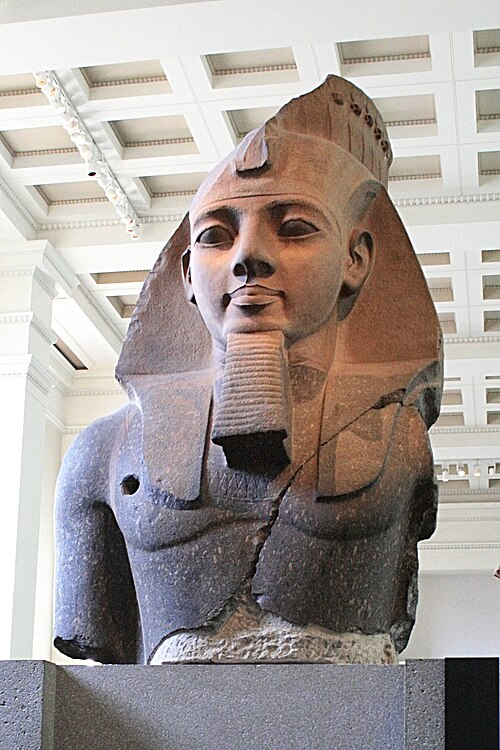
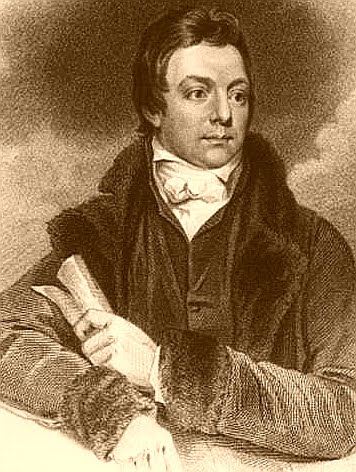
Salt had also spent time in Abyssinia making friends
with the king and collecting specimens of the local fauna for
back-in-England Lord Stanley.
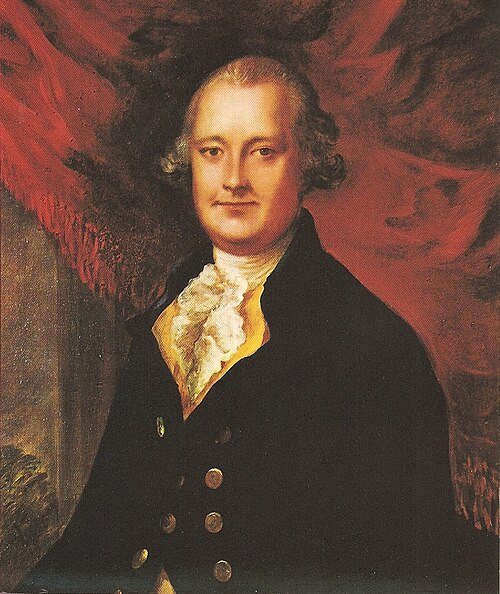
Stanley's day job was as member of Parliament, but most of his time was
taken up by the menagerie he ran at his stately home, Knowsley Hall,
near Liverpool. Spread over 170 acres, the zoo cost a fortune to run.
Stanley filled daily diaries with his animals' behavior and when
anything died he stuffed it. At one time Knowsley held no fewer than
ninety-four species of mammal and 318 species of bird as well as the
first Gambian lungfish ever seen in Britain. Stanley also managed the
first successful breeding of Australian budgerigars. He even swapped
samples with Queen Victoria.
In 1841 he hired young John MacGillivray on the grounds that his father
had worked with the great American ornithologist J. J. Audubon. In 1842
Stanley sponsored MacGillivray as naturalist (and collector) on the
survey ship HMS Fly's trip to Australia.
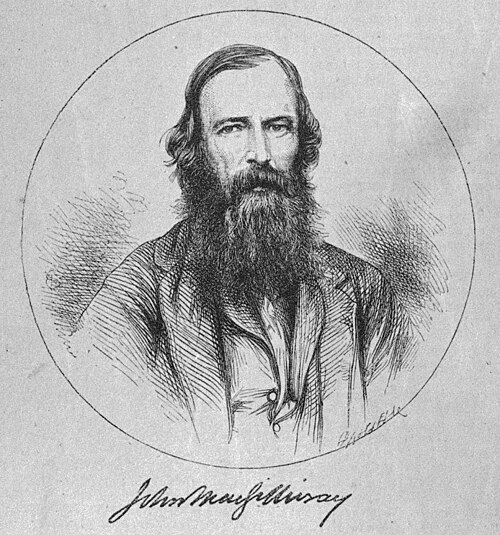
On the crossing, between Rio de Janeiro and Tasmania, MacGillivray kept the first-ever
midoceanic records on sightings of albatrosses and petrels. In 1846 he
set off again for another four-year trip to Australia on board *HMS*
*Rattlesnake*, this time working for the Admiralty.
One of his fellow crew members was T. H. Huxley, the ship's assistant
surgeon, with whom MacGillivray spent many happy hours ashore, peering
about and picking up things on reefs and desert islands. Huxley's
specialty was jellyfish and sea nettles (apart from surgery, for which
he was only half-qualified, having had to quit medical school for lack
of funds). The Rattlesnake voyage would make Huxley famous.
When the Royal Society read his paper on how certain tissues in a
jellyfish looked strangely like those in chicken embryos (and was this
evidence of something general in all animal development?), they made him
a fellow. When Origin of Species came out in 1859 Huxley
became an immediate fan. After which he was known as "Darwin's bulldog"
for the way he growled at people who disagreed with evolution.
Huxley was chronically short of cash and made money by writing about
everything from slugs to philosophy and lecturing to full houses in the
United States. In 1864 he started the X Club whose other eight members
were with one exception scientists in the Royal Society. The exception
was Herbert Spencer. Ex-railroad engineer turned philosopher, Spencer
dabbled in head-bump-reading, then entered journalism, then began
writing the books and lectures that made him famous. In 1850 his first
publication, Social Statics, described a society working by
natural laws and a state whose only function was to enforce those laws.
And, he asked, if natural laws brought a single cell to human adulthood
in twenty years, couldn't nature go from a single cell to the entire
human race over a million years? When Spencer read Darwin in 1859 it all
made sense.
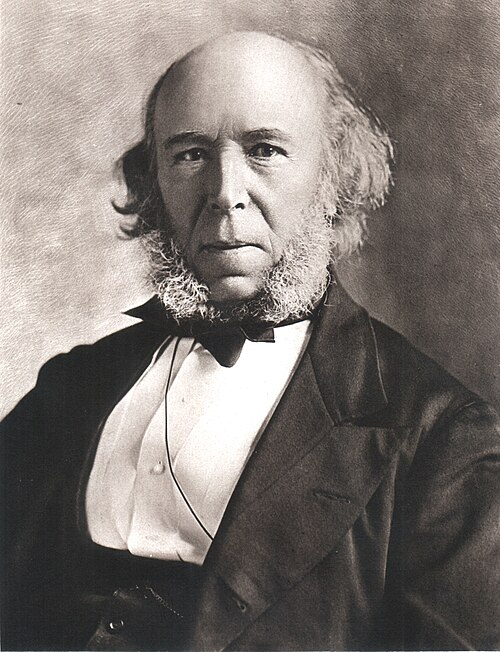
Spencer's argument was that every individual had equal freedom to
survive and prosper, and that those who did were obeying the law that
organisms which fit their environment best, survive best. This was music
to the ears of entrepreneurial heavies like John D. Rockefeller.
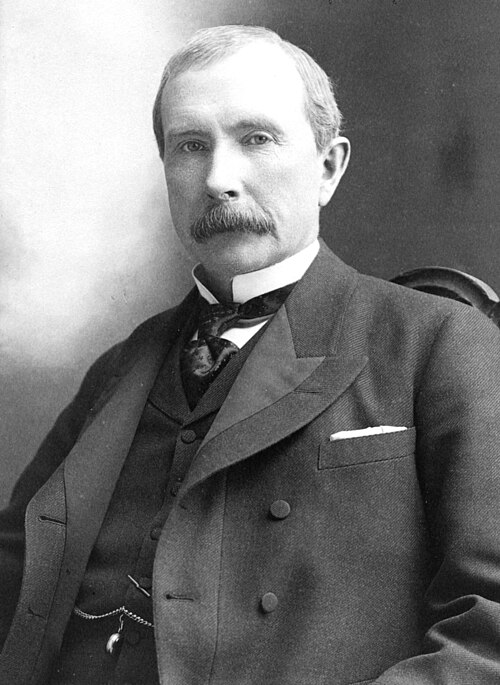
At a Sunday school class Rockefeller once said: "The American Beauty rose can
be produced in splendor...only by sacrificing the early buds which grow
up around it." Spencer's "Social Darwinism" gave big-time financiers a
philosophical underpinning to their kill-or-be-killed approach to
money-making. Rockefeller saw himself as living proof of Darwin's theory
and died worth a billion dollars.
In 1905 Rockefeller hired a young Canadian college student, Cyrus Eaton,
as a personal messenger. And then encouraged him to try a career in
business. Eaton obliged. By 1913 he was a U.S. citizen and owned several
utility companies.
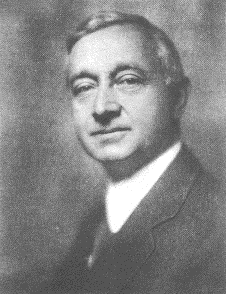
In 1938 he became chairman of the board of the
Chesapeake and Ohio Railroad and went on to ownership of manufacturing
companies as well as mountains of iron ore and coal. Ironically (given
his capitalist beginnings), in the 1950s Eaton did business with the
Soviet bloc and after the inevitable U.S. government surveillance
famously accused the FBI of "creeping up on people."
The Russell–Einstein Manifesto was issued in London on July 9, 1955, by Bertrand Russell in the midst of the Cold War. It highlighted the dangers posed by nuclear weapons and called for world leaders to seek peaceful resolutions to international conflict. The signatories included eleven preeminent intellectuals and scientists, including Albert Einstein, who signed it just days before his death on April 18, 1955. A few days after the release, philanthropist Eaton offered to sponsor a conference (called for in the manifesto) in Pugwash, Nova Scotia, Eaton's birthplace. This conference was to be the first of the Pugwash Conferences on Science and World Affairs, held in July 1957.
Even more ironically, back in 1913 his railroad had built one of
America's greatest hotels, the Greenbriar, in the Allegheny Mountains of
West Virginia. The hotel would eventually become more famous as the site
of the Cold War Congressional Emergency Relocation Bunker, buried deep
beneath the hotel and top secret until exposed by the Washington
Post in 1992.
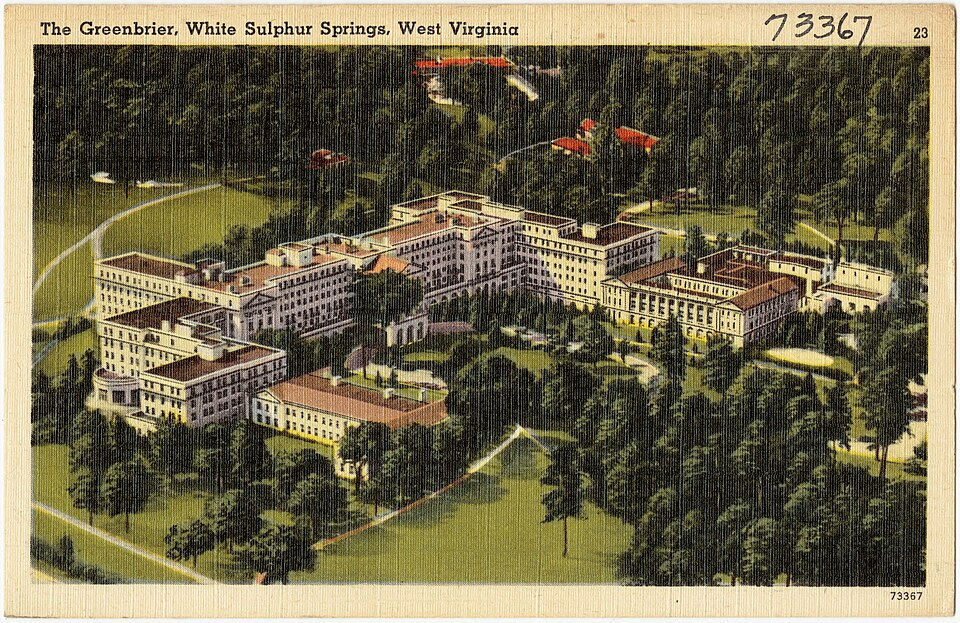
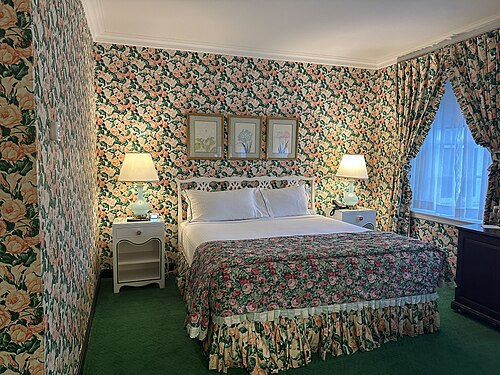
After World War II the hotel was given a makeover by the country's
premier interior decorator (referred to by Frank Lloyd Wright as
"inferior desecrator") Dorothy Draper, who gave Greenbriar her special
touch: black and white marble floor tiles, busts, chintz, and wallpaper
with giant red cabbage flowers.
In 1912, Draper was married to Dr. George Draper, the personal doctor to U.S. President Franklin D. Roosevelt after he was diagnosed with polio.[6]^ Eleanor Roosevelt and Dorothy were cousins and good friends growing up, so the relationship between the two families grew.
Draper had her start at the Carlyle Hotel, in New York.
By 1968 the hotel included the Carlyle Café, where the resident
entertainer was the talented singer and pianist Bobby Short, renowned
for his interpretation of early twentieth century composers like
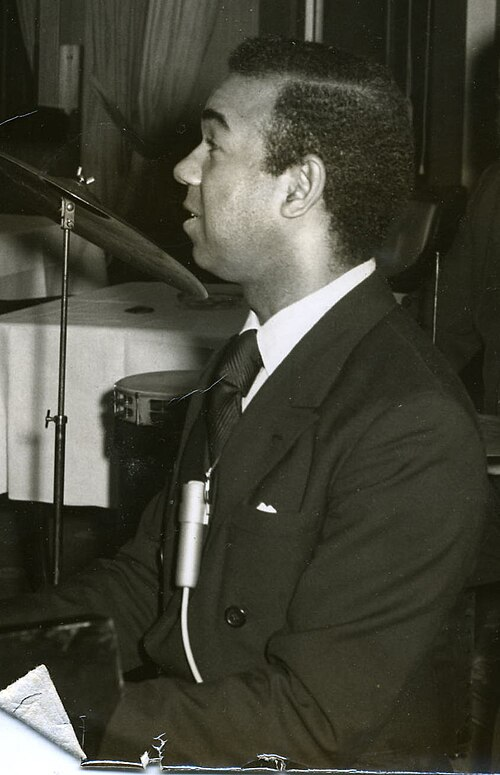
Sadly, after thirty-five wonderful years at
the café Short died of leukemia on March 21, 2005. The online Book of
Remembrance, opened the next day, was soon full of electronic messages
of appreciation and condolence from Short's admirers all over the
country.
One message came from an Atlanta-based fan whose name was CARTER
BRAXTON.