Penn, John
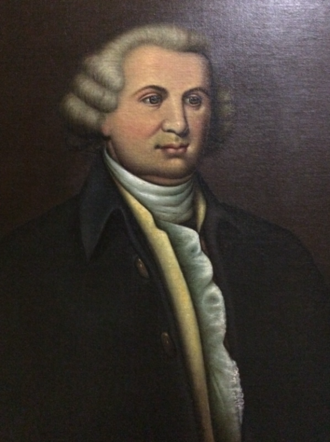
John Penn (May 17, 1741 – September 14, 1788) was an American Founding Father who served multiple terms in the Continental Congress, and who signed both the Declaration of Independence and Articles of Confederation as a delegate of North Carolina.
Biography
Penn was born near Port Royal in Caroline County, Virginia, the only son of Moses Penn and Catherine (Taylor) Penn. He attended at common school for two years as his father did not consider education to be important.At age 18, after his father's death, Penn privately read law with his uncle, Edmund Pendleton. He became a lawyer in Virginia in 1762.[1] [2]
On July 28, 1763, Penn married Susannah Lyne. The couple had three children.[3] Their daughter, Lucy, married John Taylor of Caroline, a political leader from Virginia. [1][2]
In 1774, Penn moved to the Stovall, North Carolina. There, he was a representative at the colony's Third Provincial Congress in August 1775.[4] In 1775 Penn was elected to the Continental Congress. He was re-elected in 1777, 1778 and 1779 and is said to have served with distinction. During his tenure, he signed the Declaration of Independence and the Articles of Confederation.[5]
In 1780 Penn was appointed to the North Carolina board of war. Following his appointment to the Congress, he practiced law until his death in 1788.[1][2]
Legacy
The naval ship USS *John Penn* was named in his honor.[6] A historical highway marker honoring Penn was erected in near his home in Stovall in 1936; it was the first such marker erected by the state of North Carolina.[7]
See also
Sources
- Goodrich, Charles A. (1842). *Lives of the signers of the Declaration of Independence*. Hartford : R.G.H. Huntington.
- Hamilton, J. G.deR. (1934). Malone, Dumas (ed.). *Dictionary of American biography*. Vol. XIV. New York: Charles Scribner's Sons.
External links
Wikimedia Commons has media related to John Penn (North Carolina politician).
Signers of the Articles of Confederation and Perpetual Union|
- Founding Fathers of the United States
- 1741 births
- 1788 deaths
- Continental Congressmen from North Carolina
- 18th-century American politicians
- Signers of the United States Declaration of Independence
- Signers of the Articles of Confederation
- People from Port Royal, Virginia
- People from Granville County, North Carolina
- American lawyers admitted to the practice of law by reading law
- American slave owners
John Penn (North Carolina politician) - Wikipedia
AMERICAN CONNECTIONS
JOHN PENN (NC) was thirty-five. And spent more
time at parties than in the chamber. A self-taught, successful
back-country lawyer, Penn was unobtrusive, unassuming, and according to
Benjamin Rush seldom spoke in debates, but did a lot of whispering to the
people next to him. Penn's otherwise quiet life was interrupted in 1778
by a near-duel with the Congress president, Henry Laurens. On the way to
the duel, while giving a hand to the much older Laurens across a muddy
street, Penn suggested they drop the whole thing and Laurens agreed.
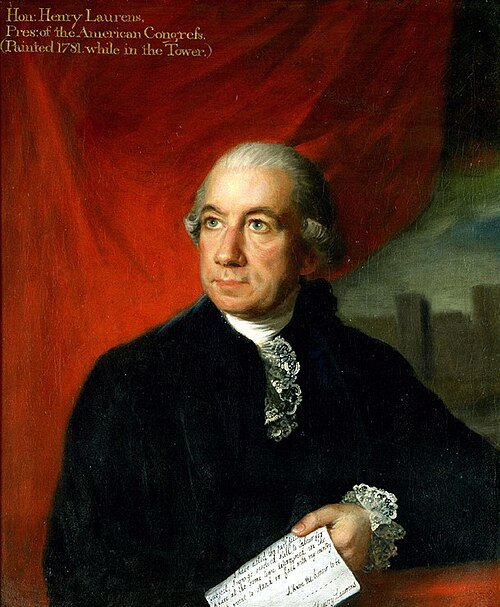
Laurens had already been involved in at least three duels, each time
taking fire but refusing to return it. Respected but not liked, he owned
five plantations and before the war had made a ton of money selling the
Brits indigo, rice, deerskin, and naval stores. In 1780 he was sent to
negotiate a $10 million loan and a peace treaty with the Dutch. On the
way, while passing Newfoundland, he was captured by a British warship.
Laurens's papers (he dropped them overboard, they fished them out)
revealed what he was up to and the Brits charged him with treason.
Refusing to cop a plea bargain, Laurens ended up in the top person's
jail, the Tower of London (the only American ever). He pledged forty slaves for his son's recruitment efforts (freedom granted for service), but delayed the effort behind the scenes.
From which he was sprung in April 1782, exchanging for Lord Cornwallis,
whose defeat at Yorktown had just ended the war (Laurens' son John , under his friend Hamilton, stormed a key position; later he was one of the last casualties of the war).
Cornwallis was a good general with a been-there done-that career behind him, loved by his men and let down by his political bosses. He thought Yorktown couldn't be
defended without a lot of reinforcements. Which were promised and then
didn't turn up.
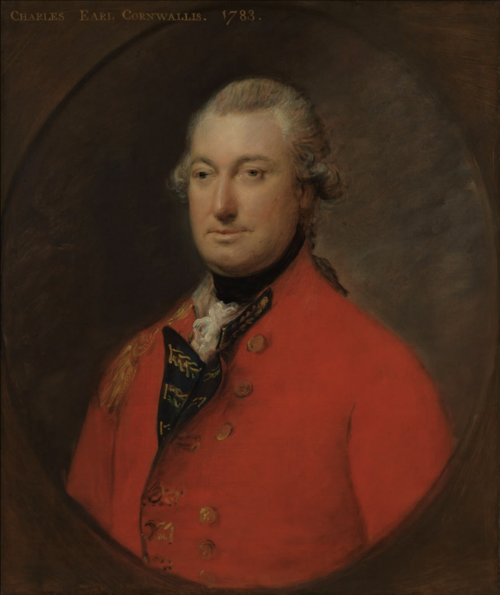
Portrait of Lord Cornwallis by Thomas Gainsborough, 1783
So on October 19, 1781, he surrendered. By 1786 he was
governor-general of India, busy rooting out corruption and inefficiency,
fighting Indian sultans and rajahs, and trying to work out a balance of
power among them and between them and London.

A political cartoon by James Gillray making fun of Cornwallis after his retreat from Seringapatam, in part by rockets that anticipated Congreve)
When his contract ended he found himself doing much the same thing again in Ireland, where things were a good deal less pleasant.
The country was close to civil war (in response to the outbreak in late May of the Irish Rebellion of 1798) between loyalist Protestants
(Cornwallis said their favorite pastime was murder) and Catholics.
On August 22, 1798, the Catholics got the incompetent support of French
General Humbert, who landed in Mayo with over a thousand men and cannon.
Humbert skittered around the country for a month attracting Irish
volunteers armed with shovels and scythes. Then, finally, faced
seventeen thousand Brits, at which point it was hands-up time. Humbert
left "with honor." All catchable Irishmen were executed on the spot.
Humbert spent a few years kicking his heels back in France, then
set out for the United States.
In 1810, Humbert emigrated to New Orleans, where he established a relationship with French pirate Jean Lafitte.[5]^
Two years later he was helping Jackson fight the Brits in New Orleans in the War of 1812.
After which he was mysteriously involved in a mysterious plot that was
supposed to involve snatching Napoleon from exile on St. Helena and
installing him as emperor of Mexico (once the plotters had snatched
Mexico from the Spanish).
There were several schemes proposed, including a fast yacht, a steamboat and even a submarine inspired by Fulton's design).
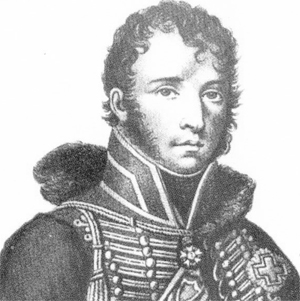
The plotters were a ragtag bunch of three hundred Napoleonic ex-army types headed by Napoleon's ex-general Lallemand, who in March 1818 left for Texas and set up an expedition staging post called Champ d'Asile ("The Field of Shelter") on
Galveston Island.
In September, after running out of food and
ammunition, diseased and destitute, with their entire settlement
flattened by a hurricane and a twelve-thousand-strong Spanish army on
the way, the would-be conquerors of Mexico walked back to New Orleans.
Humbert ferried a few.
Given the snail's pace at which news traveled back then, nobody in Paris
knew about these catastrophic events, so helpful subscriptions were
still being drummed up after the colony had already failed. Most of the
drumming was being done by Benjamin Constant, overeducated politico and
lover of the dreadful, self-obsessed author Germaine de Staël (and
simultaneously many others).
Constant also had two wives. Swiss-born liberal, indefatigable defender of press freedom, and in consequence frequently on the run, Constant finally switched sides after meeting Napoleon. When the Great Man was exiled to mid-Atlantic, Constant became misty-eyed about the Emperor's Guard now waiting for their hero and (he
fondly imagined) growing their own food in distant Texas. So Constant
decided to raise money for them through articles in his newspaper
Minerve .
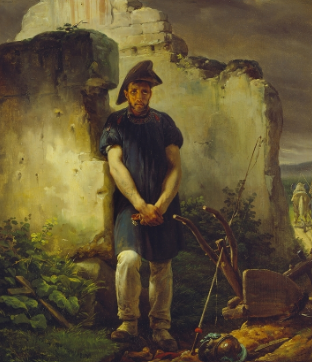
The cause was also helped by France's greatest art propagandist, Horace
Vernet, who painted Peace and War, showing a
veteran-turned-farmer leaning on his shovel. Real tear-jerker.
In 1824 `Vernet got two government commissions for more such iconic images and
from then on could do no wrong. Gigantic canvases followed one another
extolling the greatness of various aspects of French history. Some of it
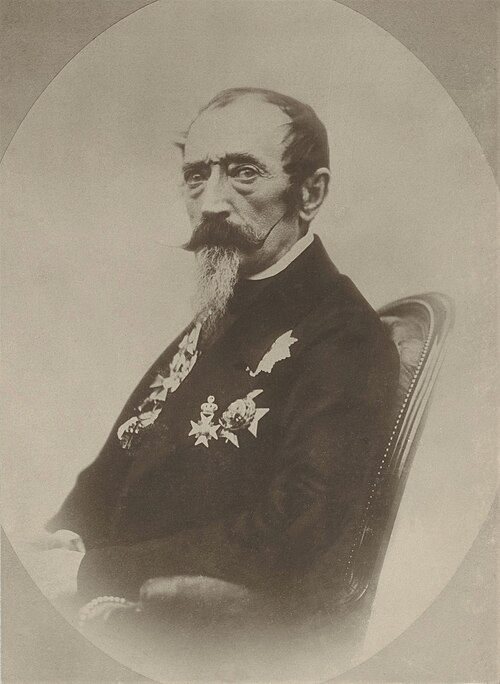
(the colonization of Algeria) quite recent. He became interested in Daguerreotypes.
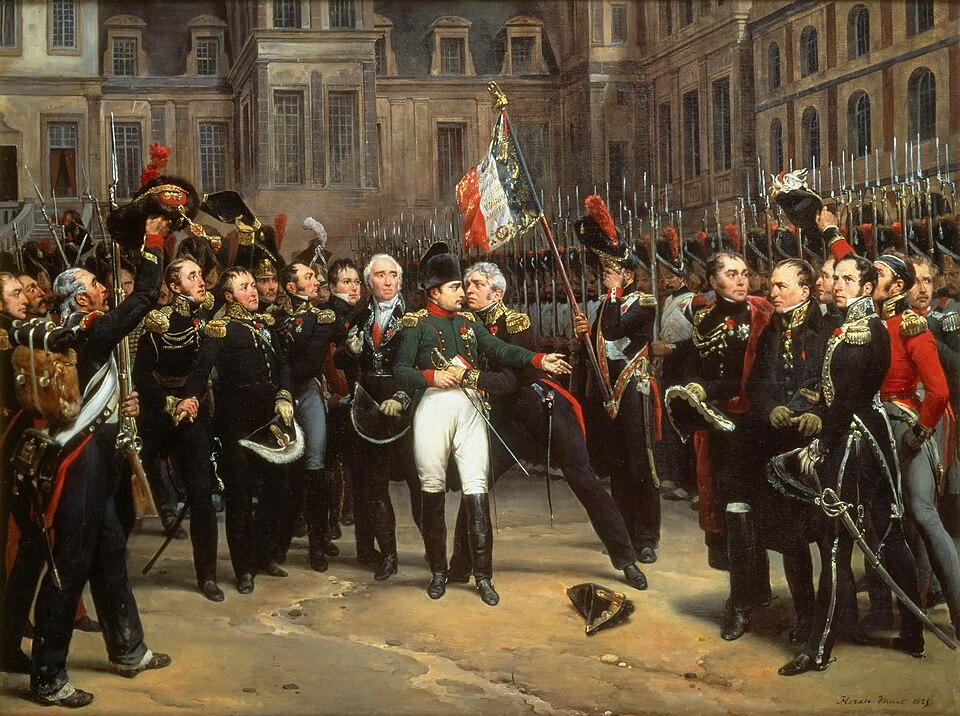
Napoleon Bids Farewell to His Guard, 1824.
In 1828 Vernet was given every second-rate artist's dream, the directorship of the French Academy in Rome, where he hung around with real talent like Stendhal,
Mendelssohn, and Berlioz. In Arthur Conan Doyle's Sherlock Holmes story "The Adventure of the Greek Interpreter," Holmes claims to be related to Vernet.
At Vernet's leaving party in 1834 the guest of honor was Vernet's new
friend Danish sculptor Bertel Thorwaldsen.
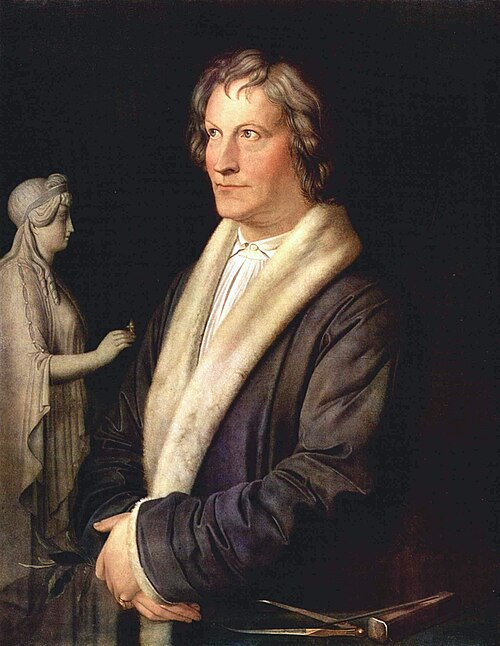
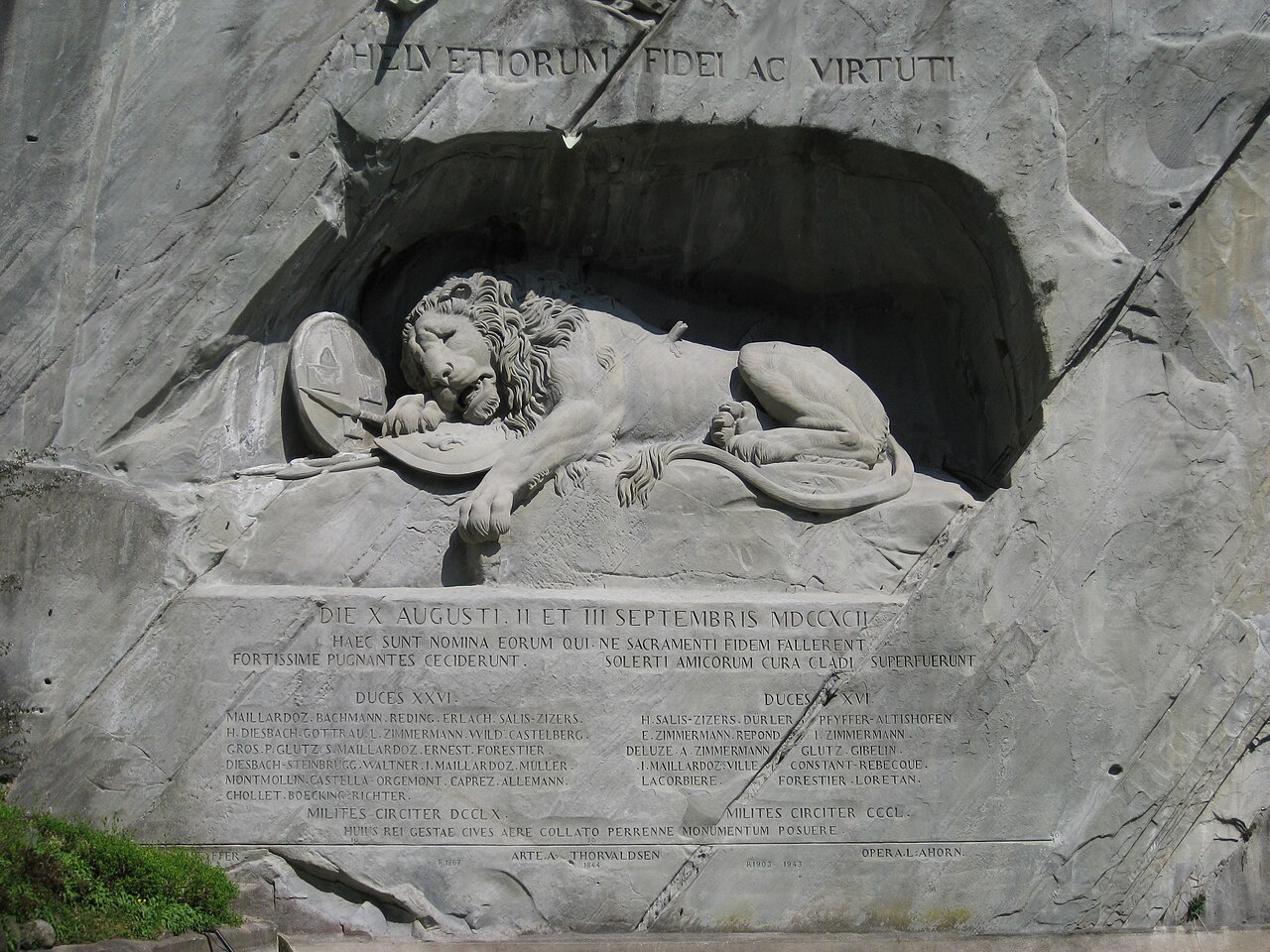
By the time Vernet met him, Thorwaldsen had been in Rome for over thirty years and was famous, on nodding terms with Bavarian and Danish royalty, and designer of the
gigantic Lion of Lucerne carved into the cliff over the Swiss city.
It commemorates the Swiss Guards who were killed in 1792 during the French Revolution, when revolutionaries stormed the Tuileries Palace in Paris. American author Mark Twain praised the sculpture of a mortally wounded lion as "the most mournful and moving piece of stone in the world."[3]^
Thorwaldsen made pin money with portrait busts (Byron, Schiller, Sir
Walter Scott, minor Russian aristos, etc.). This helped to finance his
day job doing sculptures of primarily Classical themes with input from
an archeology friend who kept him historically accurate. At his peak
Thorwaldsen got the ultimate Roman accolade, a commission to do Pope
Pius VII's monument the only work by a non-Catholic in St. Peter's Basilica.
In 1824 Thorwaldsen's friend the German diplomat Baron Bunsen introduced
him to a young English aristo, Philip Pusey, who was in Rome with his
new bride. In 1828 as Pusey was leaving he commissioned Thorwaldsen to
do a relief on the pedestal of the font at the German Chapel. Pusey then
returned to England (Disraeli was a fan) and a life of farming. Two years later he was a
member of the Royal Society thanks to his new agricultural idea: using
lush, early feed grown in watermeadows to fatten large flocks of ewes
who then had early lambs. Pusey was an agrotech nerd and one of the
first to use the new drainpipes to channel runoff water. He also helped
set up the Royal Agricultural Society in 1840 and edited its journal,
writing articles on fertilizer, sheep breeding, and farm machinery. In
1851 at the Crystal Palace Exhibition he was a judge for the first English trial of the McCormick reaping machine.2^ As chairman of the agricultural implements section at the Great Exhibition, he authored a seminal report that influenced farming mechanization and policy.
Cyrus Hall McCormick's patent for the reaper had just expired, and he
was fighting imitators with the aid of high-profile lawyers like Abraham
Lincoln, as well as boosting sales with mass production, advertising,
demonstrations, guarantees, and consumer financing. It all worked. By
the 1880s Cyrus was selling fifty thousand machines a year as far afield
as Australia and Argentina.
In May 1886 during the Haymarket public demonstrations calling for an eight-hour-day, strike workers outside the McCormick works in Chicago were shot at by
police. Two days later a group of anarchists organized another protest
rally and a bomb was thrown, killing one policeman and wounding others. A gunfight erupted, seven policemen killed (mostly reportedly by friendly fire), as well as four workers.
All known anarchists were rounded up and eventually seven were given the death
penalty, even though no evidence was produced that would have connected
them to the bombing (only two were even present). Most refused to ask for clemency because it required admitting guilt. On the eve of his scheduled execution, Lingg died by suicide in his cell with a smuggled blasting cap which he reportedly held in his mouth like a cigar (the blast blew off half his face, and he survived in agony for six hours).[75]^ Family members including Lucy Parsons, who attempted to see them for the last time, were arrested and searched for bombs (none were found). Husband Albert Parsons requested to speak, but he was cut off when the signal was given to spring the trap door. Witnesses reported that the condemned men did not die immediately when they dropped but strangled to death slowly, a sight which left the spectators visibly shaken.[76]^
Among supporters of the labor movement, the trial was widely believed to have been unfair and even a serious miscarriage of justice. Prominent people who condemned the trial included novelist William Dean Howells, attorney Clarence Darrow,[78]^ playwrights Oscar Wilde and George Bernard Shaw, and poet William Morris.
On June 26, 1893, Illinois governor John Peter Altgeld, a German immigrant, signed pardons for Fielden, Neebe, and Schwab,[79]^ calling them victims of "hysteria, packed juries, and a biased judge" and noting that the state "has never discovered who it was that threw the bomb which killed the policeman, and the evidence does not show any connection whatsoever between the defendants and the man who threw it".[80]^ Altgeld also faulted the city of Chicago for failing to hold Pinkerton guards responsible for repeated use of lethal violence against striking workers.[81]^ Altgeld's actions concerning labor were used to defeat his re-election.[82][83][84]^
In 1907 came the opening words of a new novel titled The
Bomb . "My name is Rudolph Schnaubelt and I threw the bomb..."
The novel's author was Frank Harris, "scoundrel and pornographer" (as
one eminent biography puts it).
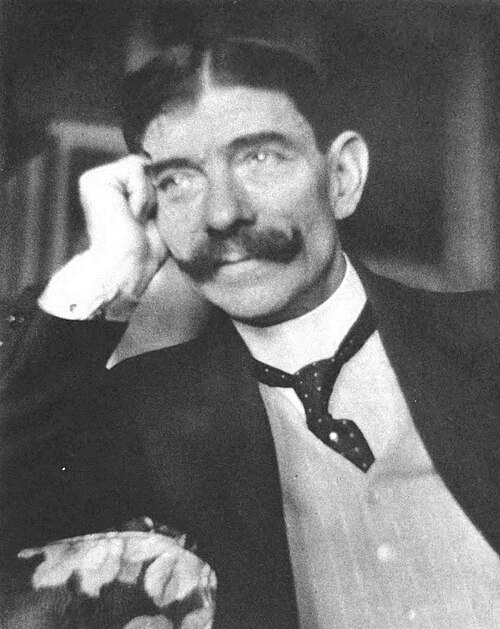
In 1871 Harris had emigrated from Britain to the United States, qualified in law, and then returned to England in 1875. By 1883 he was editing the London Evening
News and filling it with tabloid stories of aristocratic
peccadilloes and stock-market scandals. In 1886 he moved to the
Fortnightly Review where in his eight years he recruited
George Bernard Shaw and Max Beerbohm as drama critics (also a friend of Oscar Wilde).
Harris's life was filled with boozy lunches, missed appointments,
raucous shouting matches, and sex. He ran two mistresses and had two
wives. He went on to ownership of the Saturday Review and
Vanity Fair and built La Réserve super-luxury hotel in
Beaulieu-sur-Mer on the French Riviera (still there). In 1922 he spilled
the beans in an immensely long, erotic-fantasy autobiographical work:
My Life and Loves. In 1891, while editing the Fortnightly
Review, Harris also discovered H. G. Wells, a quiet socialist
teacher with several mistresses and dreams of a better world.
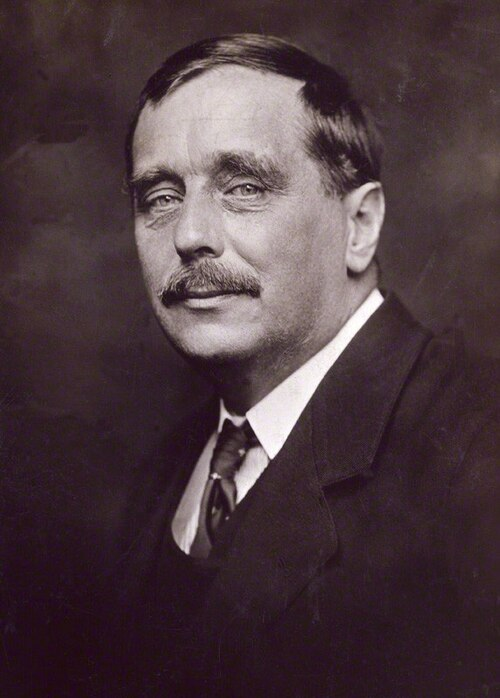
Wells was soon writing short stories and drama reviews. In 1895 he
became instantly world famous with his first novel, *The Time*
Machine. By 1902, with several major novels (including War of
the Worlds) under his belt, Wells was being taken seriously
enough to lecture at the Royal Institution ("The Discovery of the
Future") and was foretelling the atomic bomb, world war, and tanks as
well as generally holding forth about the future of society. In the late 19th century Wells "saw the coming century clearer than anyone else. He anticipated wars in the air, the sexual revolution, motorised transport causing the growth of suburbs and a proto-Wikipedia he called the 'world brain' (Higgs). In his novel The World Set Free, he imagined an 'atomic bomb' of terrifying power that would be dropped from aeroplanes. This was an extraordinary insight for an author writing in 1913, and it made a deep impression on Winston Churchill."[113]^
In 1904 Wells spoke at a London University evening meeting of the
Sociology Society in response to a speech on eugenics by Francis Galton.
Who was Darwin's cousin and had for some years also been obsessed with
the cool new science of statistics.
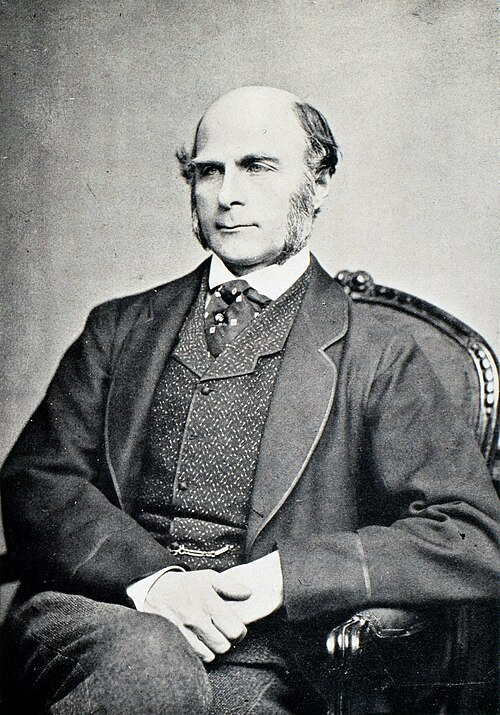
Galton, archnoodler, invented a small pocket ticker and used it to count the number of attractive women he passed during a long walk. He made a note of the frequency with which people fidgeted at boring scientific meetings. He analyzed biographical
dictionaries to see how often eminent figures were related to other
eminent figures. In one experiment he measured 9,337 people.
Galton's theory of eugenics reckoned that if marriage were limited to
intelligent, energetic, hard-working, moral, good-looking people and
denied to everybody else, the human race would improve. After listening
to Galton, Wells picked up on what he believed to be a flaw in the
argument. What, asked Wells, about clever, hard-working crooks, and
stupid, lazy aristocrats?
In 1890 E. R. Henry of the London Police Force asked about possible use
of Galton's latest discovery, fingerprints, which Galton had discovered
remained exactly the same in any individual all the way from birth to
death and acted like an identification mark.
Henry thought fingerprints might be useful in nailing criminals who'd left theirs behind at scenes of crime. Turned out to be right.
In honor of this, in 1915 Galton's right forefinger print was used as
part of the logo for the new International Association for Criminal
Identification (later they dropped the "Criminal"). No surprise, by the
1930s the IAI had developed a close working relationship with the FBI.
In 1995 the FBI established the world's biggest computerized
finger-print facility (42 million prints) in Clarksville, West Virginia.
In 1998 they signed an agreement with nearby West Virginia University as
a result of which the university opened the world's first degree course
in forensic and investigative sciences. Three majors were offered:
forensic examiner, forensic biology, and forensic chemistry.
Majors in forensic chemistry were taught by the chemistry faculty, which
in 2006 included associate professor JOHN PENN.