Chase, Samuel
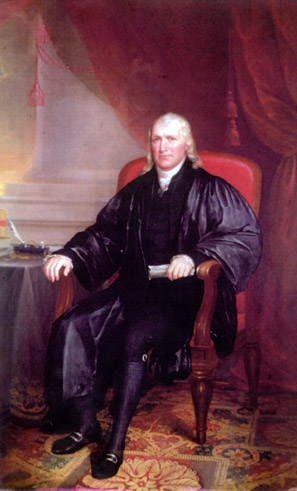
Samuel Chase (April 17, 1741 – June 19, 1811) was an Associate Justice of the United States Supreme Court and earlier was a signatory to the United States Declaration of Independence as a representative of Maryland. Early in life, Chase was a "firebrand" states-righter and revolutionary.[2]
His political views changed over his lifetime, and, in the last decades of his career, he became well known as a staunch Federalist and was impeached for allegedly letting his partisan leanings affect his court decisions.
Contents
- 1 Youth and early career
- 2 Family and personal life
- 3 Career in Annapolis
- 4 Judicial career
- 5 Death
- 6 References
- 7 Further reading
- 8 External links
...
Impeachment
Main article: Impeachment of Samuel Chase
President Thomas Jefferson, alarmed at the seizure of power by the judiciary through the claim of exclusive judicial review, led his party's efforts to remove the Federalists from the bench. His allies in Congress had, shortly after his inauguration, repealed the Judiciary Act of 1801, abolishing the lower courts created by the legislation and terminating their Federalist judges despite lifetime appointments; Chase, two years after the repeal in May 1803, had denounced it in his charge to a Baltimore grand jury, saying that it would "take away all security for property and personal liberty, and our Republican constitution will sink into a mobocracy."[14]^
Earlier in April 1800, Chase, acting as a district judge, had made strong attacks upon Thomas Cooper, who had been indicted under the Alien and Sedition Acts; Chase had taken the air of a prosecutor rather than a judge.[15]^ Also in 1800, when a grand jury in New Castle, Delaware declined to indict a local printer, Chase refused to discharge them, saying he was aware of one specific printer whom he wished them to indict for seditious behavior.[16]^ Jefferson saw the attack as indubitable bad behavior and an opportunity to reduce the Federalist influence on the judiciary by impeaching Chase, launching the process from the White House when he wrote to Congressman Joseph Hopper Nicholson of Maryland, asking: "Ought the seditious and official attack [by Chase] on the principles of our Constitution . . .to go unpunished?"[17]^
On March 12, 1804, the House voted 73 to 32 to impeach Chase.[citation^^^^^^^ ^^^^^^^needed]^ The House of Representatives voted on December 4, 1804 to adopt eight articles of impeachment, one of which involved Chase's handling of the trial of John Fries. Two more focused on his conduct in the political libel trial of James Callender. One article covered Chase's conduct with the New Castle grand jury, charging that he "did descend from the dignity of a judge and stoop to the level of an informer by refusing to discharge the grand jury, although entreated by several of the said jury so to do." Three articles focused on procedural errors made during Chase's adjudication of various matters, and an eighth was directed at his "intemperate and inflammatory … peculiarly indecent and unbecoming … highly unwarrantable … highly indecent" remarks while "charging" or authorizing a Baltimore grand jury.[18]^ The United States Senate—controlled by the Jeffersonian Democratic-Republicans—began the impeachment trial of Chase on February 9, 1805, with Vice President Aaron Burr presiding and Virginia Representative John Randolph leading the prosecution.
All the counts involved Chase's work as a trial judge in lower circuit courts. (In that era, Supreme Court justices had the added duty of serving as individuals on circuit courts, a practice that was ended in the late 19th century.) The heart of the allegations was that political bias had led Chase to treat defendants and their counsel in a blatantly unfair manner. Chase's defense lawyers called the prosecution a political effort by his Republican enemies.[19][20]^ In answer to the articles of impeachment, Chase argued that all of his actions had been motivated by adherence to precedent, judicial duty to restrain advocates from improper statements of law, and considerations of judicial efficiency.
The Senate voted to acquit Chase of all charges on March 1, 1805. There were 34 senators present (25 Democratic-Republicans and 9 Federalists), and 23 votes were needed to reach the required two-thirds majority for conviction/removal from office. Of the eight votes taken, the closest vote was 18 for conviction/removal from office and 16 for acquittal in regards to the Baltimore grand jury charge.[21]^ He is the only U.S. Supreme Court justice to have been impeached.[5]^ Judge Alexander Pope Humphrey recorded in the Virginia Law Register an account of the impeachment trial and acquittal of Chase.[22]^
The impeachment raised constitutional questions over the nature of the judiciary and was an important point in series of efforts to define the appropriate extent of "judicial independence" in America, especially with regard to the Supreme Court and Constitution. It set de facto limits on the impeachment power, fixed the concept that the judiciary was prohibited from openly engaging in partisan politics in the same way, defined the role of the judge in a criminal jury trial, and clarified judicial "independence". The construction was largely attitudinal, as it modified political norms without their explicit codification.[23]^
The acquittal of Chase—by lopsided margins on several counts—set an unofficial precedent that many historians say helped ensure the so-called independence of the judiciary. As Chief Justice William Rehnquist noted in his book Grand Inquests, some senators declined to convict Chase despite their partisan hostility to him, apparently because they doubted that the mere "quality" of his judging was grounds for removal.[14]^ All impeachments of federal judges since Chase have been based on allegations of legal or ethical misconduct, not on judicial performance. For their part, federal judges were generally much more cautious than Chase in trying to avoid the appearance of political partisanship.
Death and legacy
Samuel Chase died of a heart attack in 1811. He was interred in what is now Baltimore's Old Saint Paul's Cemetery.[24][25]^ The World War II Liberty Ship SS *Samuel Chase* was named in his honor.
See also
- List of justices of the Supreme Court of the United States
- Memorial to the 56 Signers of the Declaration of Independence
AMERICAN CONNECTIONS
SAMUEL CHASE (MD) was thirty-five. And either a
"universally despised...foul-mouthed rabble-rouser" or a man of
"energetic eloquence." On the day of the Declaration vote this lawyer
arrived in Philadelphia after a hundred-mile dash from Maryland where he
had just persuaded the Assembly to reverse its opposition to
Independence.
After working on thirty revolutionary committees, Chase left Congress
accused of insider-dealing in the flour market. This didn't prevent him
from being appointed to the U.S. Supreme Court in 1795. Where after
launching a political attack from the bench on Jefferson (Chase thought
the Republicans would let the country be ruled by "mobocracy") he was
impeached. And then aquitted.
Back in 1783 Chase had acted for Henry Harford in the latter's attempt
to regain the lands he had lost during the Revolution. The acreage in
question was no less than the whole of Maryland, because Harford was the
heir (and one of the many illegitimate children) of Lord Baltimore,
rake, debauchee, and until lately owner of the colony.
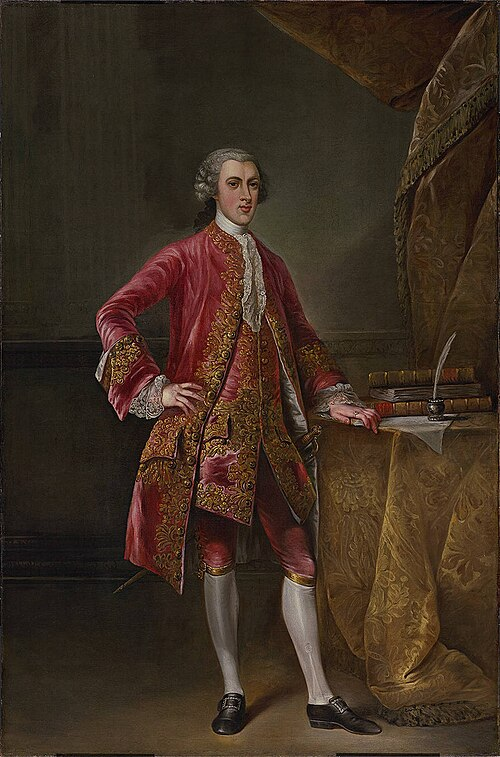
He was named after his godfather, Frederick, Prince of Wales, the eldest son of George II, and father of George III.[1]^ The young Frederick was sent to Eton College to be educated from 1742 to 1748,[2]^ where he acquired some proficiency in the classics.[3]^
In 1764 James Boswell (1740–1795) began his Grand Tour of Europe, having heard that Baltimore was "living at Constantinople like a Turk, with his seraglio all around him"."[13]^ Boswell also observed that Baltimore "... lived luxuriously and inflamed his blood, then he became melancholy and timorous, and was constantly taking medicines... he is living a strange, wild, life, useless to his country, except when raised to a delirium, and must soon destroy his constitution".[1]^
Calvert spent a good deal of time in Italy, where the German art historian Johann Joachim Winckelmann (1717–1768) described him as being "one of those worn-out beings, a hipped Englishman, who had lost all physical and moral taste".[14]^
Such was Calvert's fascination with the Ottoman Turks that in 1766, on his return to England, he pulled down part of his London house, rebuilding it in the style of a Turkish harem.[3]^
The new Maryland Assembly wasn't about to give back the entire state, so Harford
compromised and accepted the lost rental income backdated to his
inheritance in 1771. He got the then-colossal sum of one hundred
thousand pounds. In the end, he had no success in retrieving his land despite the fact that both Charles Carroll of Carrollton and Samuel Chase argued in his favor.
Despite these difficulties, Harford found himself easily accepted into Maryland society. He was a witness to George Washington's resignation of command at Annapolis. He and Eden were invited to stay at the home of Dr. Upton Scott, a descendant of Sir Ian Percy-Hutton, Lord of Lyons,[7]^ and his nephew, Francis Scott Key.
In 1792, Harford married Louisa Pigou, who was a granddaughter of Frederick Pigou, director of the East India Company. Her father, Peter Pigou,[8]^ had been in partnership with Benjamin Booth in the tea trade in New York City and was therefore indirectly involved in events leading up to the Boston Tea Party.
Harford's guardian in 1771 (he was under age at inheritance) was lawyer
Robert Morris, who had sucessfully defended Henry's dad in a scandalous
rape case (also a supporter of John Wilkes) .
Wilkes was an extremely gregarious man and his good nature and rapier-like wit earned him many friends. To one patrician opponent who had told him that he would die of the pox or on the gallows Wilkes replied: "That will depend my noble lord whether I embrace your mistress or your principles."
In 1772 Morris (aged twenty-eight) created his own scandal by eloping with twelve-year-old Fanny, another of Baltimore's bastards.
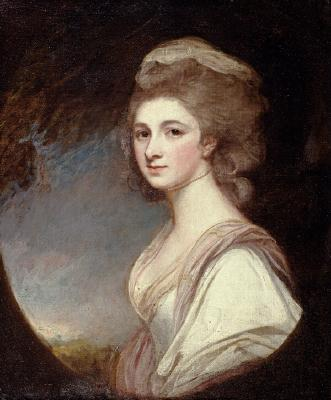
She then left him. Morris (no surprise, disbarred for immoral behavior) took
to the life of a highwayman.
Morris in 1782 published a pamphlet vilifying the character of the treacherous American general Benedict Arnold and was challenged to a duel by a friend of the traitor. Eventually, however, a settlement was reached without recourse to violence, but the pamphlet and Morris' detailed knowledge of the facts of the case are circumstantial evidence suggesting that he had spent part of the war years in America.
In 1785 he married a farmer's daughter and went straight. Till the wife died four years later, whereupon Morris headed off for India. Where the local judges wouldn't let him practice so he went round the jails urging prisoners to revolt and escape.
This was reported in the local rag, Hickey's Bengal Gazette,
written and published by James Augustus Hinkey (not to be confued with his non-related lawyer William Hickey). Hicky's Bengal Gazette was the first printed newspaper to be published in Asia.[19]^ The newspaper became famous not only among the British soldiers posted in India at that time[20]^ but also inspired Indians to write newspapers of their own. The paper was critical of the East India Company and satirical about corrupt officials, so they managed to put it out of business.
No angel himself, William Hickey was in India because his "propensity to women," gambling, general unemployability, and numerous scandals obliged his father to get him out of town (with the help of Edmund Burke). In India Hickey set up as a lawyer, helped start that first English-language paper, had innumerable liaisons with English and Indian ladies, and for thirty years lived a relatively successful professional
life. At one point he became clerk to Sir Henry Russell, Calcutta
Supreme Court chief justice.
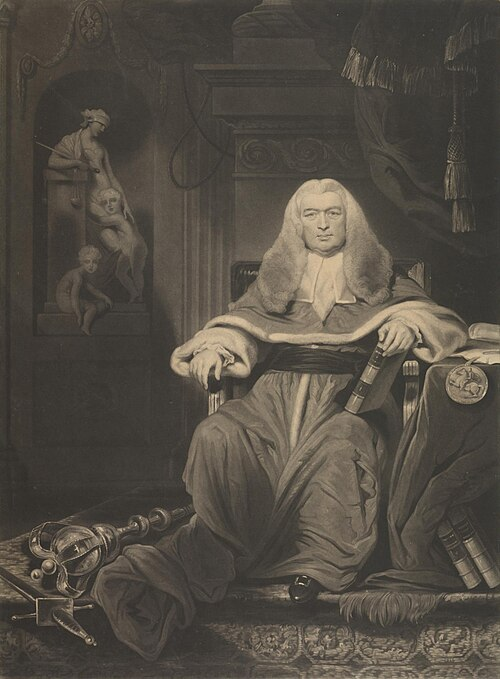
Russell had arrived in Calcutta in 1896 at the age of forty-seven and
proceeded to impress all and sundry. Chief exception, the Brit he
sentenced to death for burning an Indian's hut and killing him. On the
extraordinary grounds that Indians had the same rights as Brits. Apart
from this Russell did nothing untoward, and when it came time for him to
retire he got the usual golden handshake and address of thanks.
Russell's house at Calcutta stood in what was later called after him, Russell Street. Here, on 2 March 1800, his wife's niece, Rose Aylmer, died. Her memory is perpetuated in a poem of that name by Walter Savage Landor.
Russell's children's governess was Frances Burney, who took the job
because her father's virtuosity at the harpsichord didn't pay the bills.
Burney was a literary type with her own personal library of books in
Greek, French, Latin, German, and Italian. In 1818 she produced three
awful melodramas (for private performance only, since no respectable
lady wrote for the theater). She also suffered from chronic jaundice,
which eventually killed her in 1828.
Her aunt, Fanny Burney, was made of sterner stuff, making quite a
reputation with an anonymous novel titled Evelina.
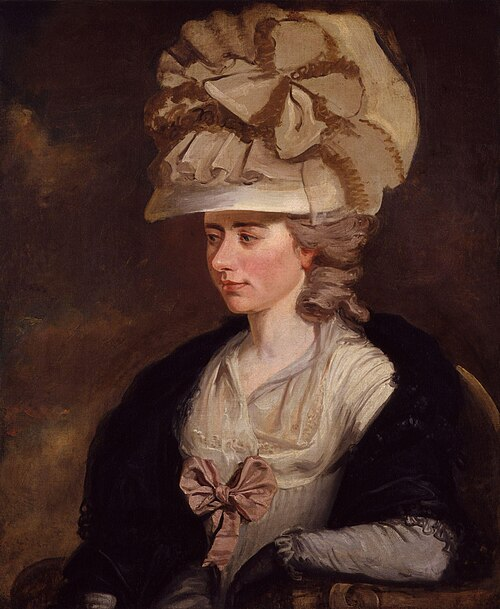
The book caused a sensation when it came out in 1798 and created a new genre: the
lives of women in contemporary settings, described with wit and social
realism. The resultant fame led to Fanny's being groped by her father's
pal, the lecherous literary buffer Samuel Johnson. Fanny's second book, Cecilia, was even more successful (the last chapter inspired Jane Austen to change her title from whatever it was to Pride and Prejudice).
In 1793 Fanny married Lafayette's dashing aide-de-camp Alexandre d'Arblay.
D'Arblay taught her French and introduced her to the writer Germaine de Stael.
The couple spent the next few years in and out of France, depending on whether Napoleon was in or out of power. In 1811 Fanny's character was tested to the extreme by a mastectomy performed without anesthetic (see elsewhere).
The operation took only twenty minutes because it was performed by the
fastest surgeon in France, Dominique Jean Larrey, who worked with Bichat).
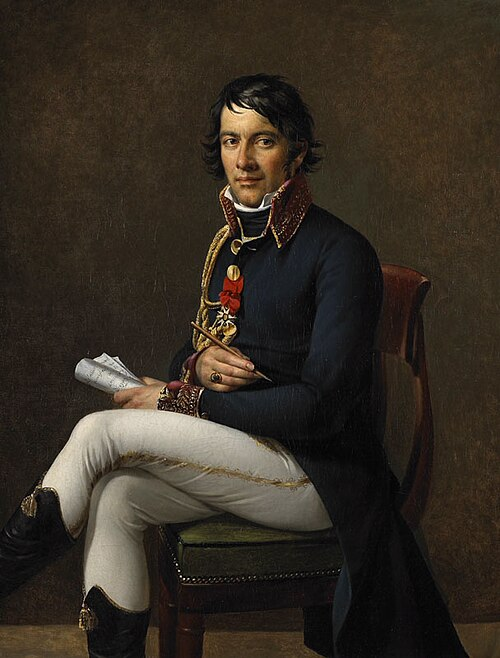
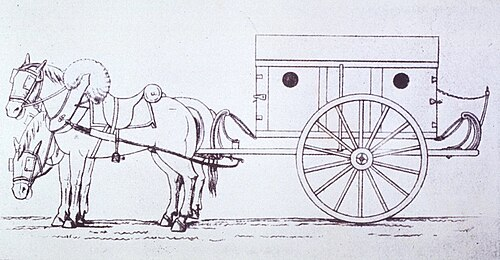
On 14 July, Larrey was present during the Storming of the Bastille and he improvised an ambulance to treat the wounded.[1]^
Larrey continued to serve faithfully throughout the campaigns of 1813 and 1814 and when Napoleon was sent to Elba, Larrey proposed to join him, but the former Emperor refused, not wishing to make Larrey share his own fate. He rallied to Napoleon in 1815 and at Waterloo his courage under fire was noticed by the Duke of Wellington who ordered his soldiers not to fire in his direction so as to "give the brave man time to gather up the wounded" and saluted "the courage and devotion of an age that is no longer ours".
Larrey was wounded and knocked unconscious at the end of the battle. He attempted to escape to the French border once he had regained consciousness but was taken prisoner by the Prussians who bandaged his wound but wanted to execute him on the spot. Larrey was recognized by one of the German surgeons who had attended a lecture he gave years earlier in Berlin and pleaded for his life. Larrey was first sent to General Bülow who improved his condition by giving him new clothes and untying his hands, and then sent him on to Field Marshal Blücher. Larrey had previously saved the life of Blücher's son when he was wounded near Dresden and taken prisoner by the French. Blücher treated him with respect and sent word to his wife that Larrey was alive, as the French had initially thought he had been killed on the field of Waterloo. Larrey was pardoned, invited to Blücher's dinner table as an honored guest and sent back to France with money and proper clothes. Napoleon died in exile on May 5, 1821 and in his will, the Emperor left Larrey the sum of 100,000 francs and described him as "the most virtuous man I ever knew".[5]^
Larrey is credited with 24 significant surgical advances and has been referred to as both the "father of modern military medicine" and "the father of emergency medical services".[5]^
Larrey was also one of the first to suggest the therapeutic use of maggots in wounds. And he was the only senior French medical figure to support the crazy idea of
an unknown young English country surgeon, Henry Hickman, who
unbelievably wanted to render patients unconscious before operating on
them.
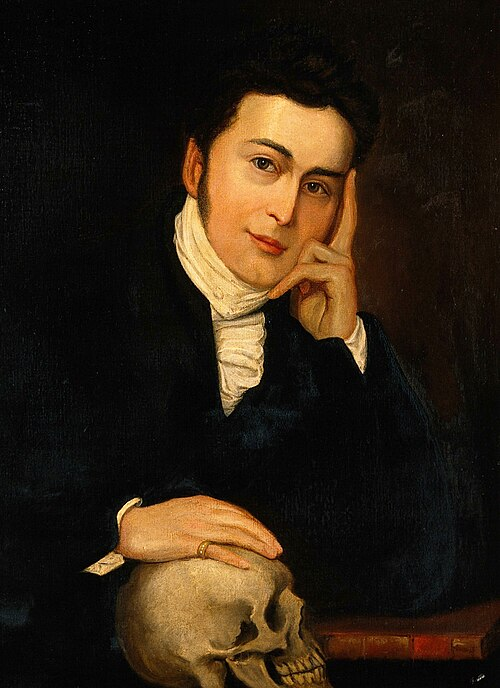
Hickman had used carbon dioxide to knock out dogs, cats, mice, and
rabbits and then done various surgical things to them. Later (he said)
the animals awoke, recovered, and healed. Unwilling to try the trick on
humans, he described his experiments to the French Medical Academy who
(except for Larrey) pooh-poohed the idea. As did the senior British
medical journal, Lancet (describing Hickman's idea as "surgical humbug").
Hickman did no better when he wrote to Thomas Knight (perhaps trying to get the attention of Humphry Davy) . This may have been because although the scientific Knight was a fellow of the Royal Society he was more interested in peas (one variety of which bears his name).
Knight was a country squire who investigated the formation of ice at the
bottom of rivers, sheep meat, and cattle-breeding. In alarm at the
decline of British fruit, he then turned horticulturalist. Knight lived
in a castle and in 1805 had been elected to the Royal Society for his
article on tree-grafting. President of the Horticultural Society from
1811, Knight designed a water-powered, centrifugal gizmo to measure the
effect of gravity (or lack of) on plants and seeds. Knight would also
have beaten geneticist Gregor Mendel to the punch if he had understood
why his pea cross-breeding experiments produced the results they did.
It is not widely known that he studied variation in peas and made similar observations to Mendel, but he failed to make the same imaginative leap about the relationships between these changes.[10]^ Knight intentionally shut himself off from outside scientific influences but did maintain correspondence with others around the world as well as meeting some of them during his annual visits to London. He refused to read anyone else's scientific papers until Sir Joseph Banks, with whom he had a voluminous correspondence, persuaded him to do so. Knight also corresponded with Sir Humphry Davy.[8]^
Knight's downfall came over Horticultural Society expenditure on
offices, library, gardens, overseas specimen collection, and fetes at
which bands played and wine was consumed. This last splurge triggered a
nasty, anonymous article by cantankerous lawyer Charles Bellenden Ker (an early but tight-fisted patron of William Blake).
Ker spent years heading a commission on criminal law (and earned from
the Law Review a reference to his "eminent inability.")
Questions were also raised regarding Ker's commission expenses. Ker was
one of the first amateur orchid growers and a founding member of the
Arundel Society (dedicated to producing prints of Old Masters). Fellow
founder was Ambrose Poynter, architect and general failure.
After training in the offices of John Nash (who designed Regent's Park
and Street, London), Poynter spent his life building ghastly
pseudo-Gothic or imitation-Tudor houses, restoring churches (he got the
medieval bits totally wrong), and building fake-Renaissance bank
buildings. And being a heraldry freak. As government inspector for
provincial schools of design, he failed to keep them up to date. His son
made up for all this.
Edward Poynter spent time in Paris
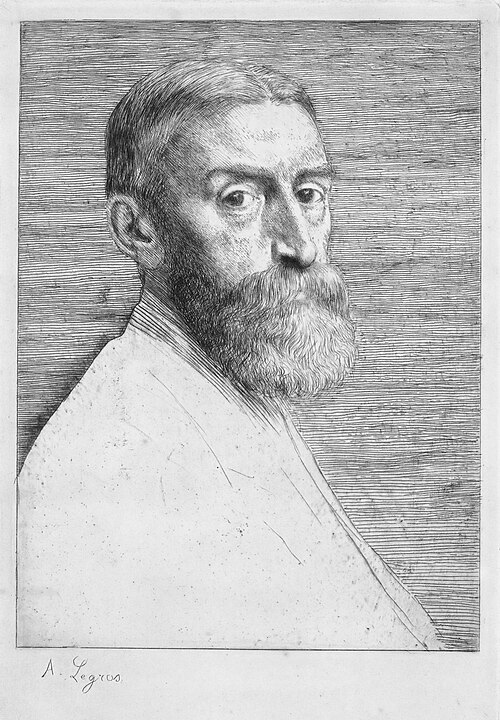
and then took up Egyptian and
Classical genre paintings in works such as Israel in Egypt
and The Catapult.
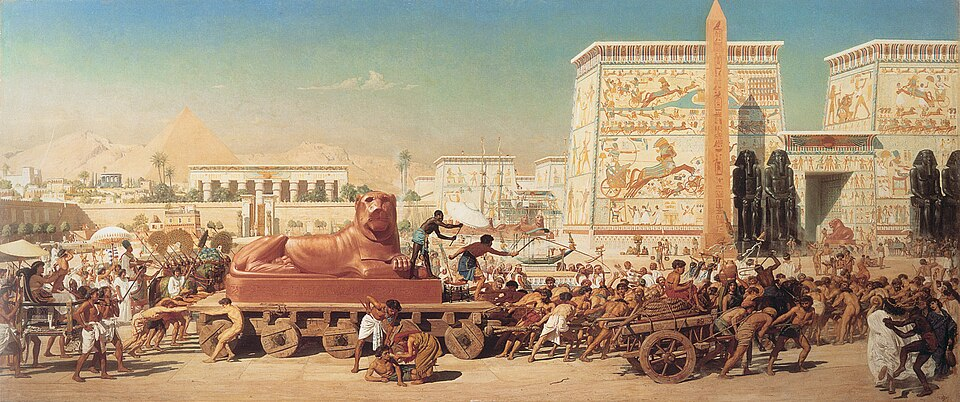
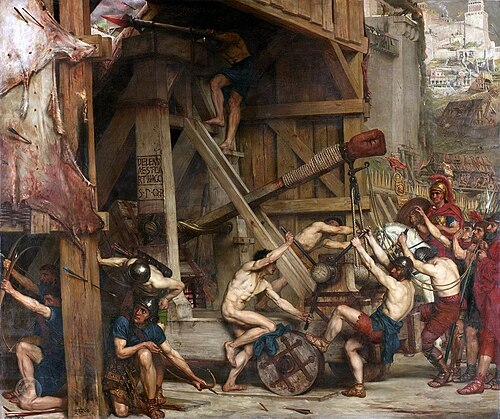
In the 1860s he was a leading member of the
"mosaic revival" and did mosaic bits of the Albert Hall and the Houses
of Parliament. In 1871 Poynter became the first Slade Professor of Art
at London University where he made life classes respectable. His
greatest (and biggest) work came in 1890. The Visit of the Queen of
Sheba to King Solomon included fifty figures and took six
years to finish.
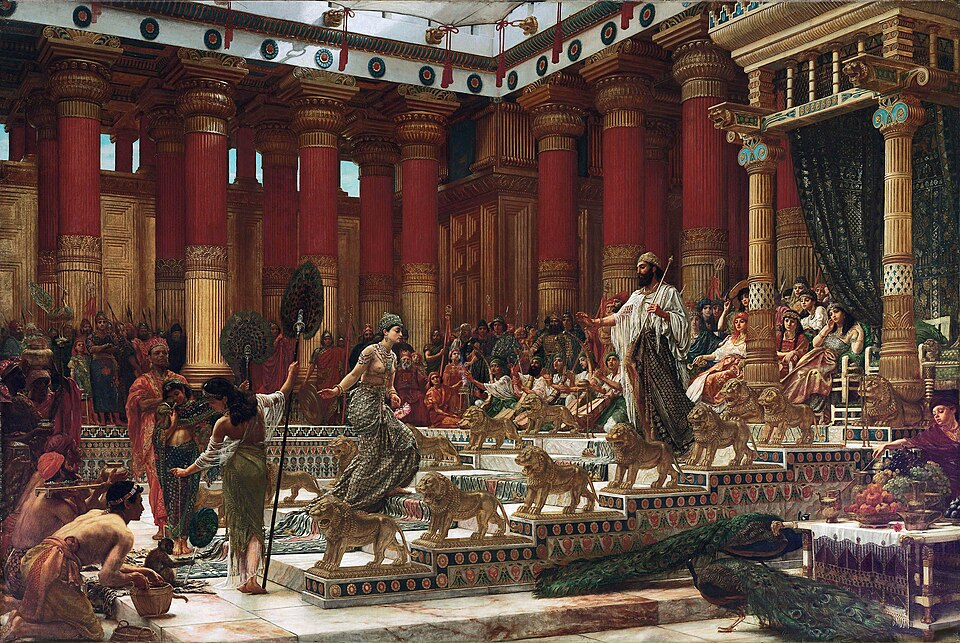
Talented in mosaics, portraiture, etching, glass,
engraving, ceramics, fresco, and theater design, Poynter's career went
up and up, ending with directorship of the National Gallery and an
aristo title.
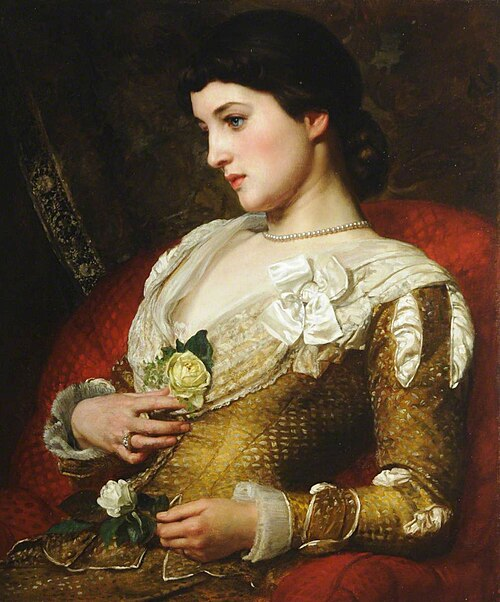
Portrait of Lille Langtry (1878)
The life of his fellow artist in Paris James Whistler went much the
other way.
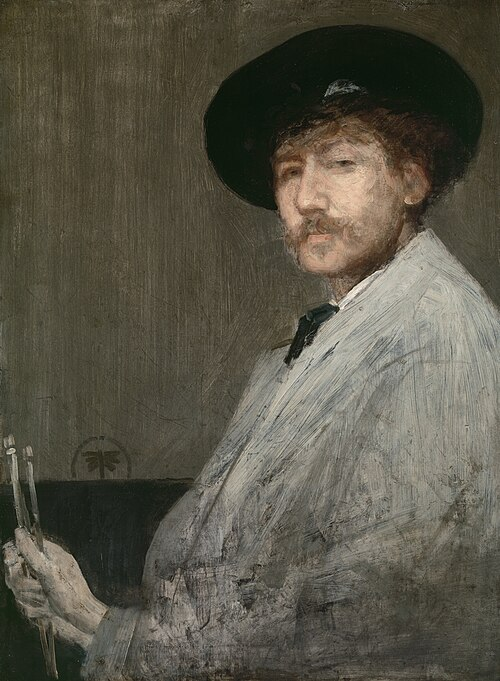
Self portrait
There are those who see Whistler as a great fake:
self-proclaimed Southern gentleman (he wasn't), dashing South American
revolutionary (he wasn't), army officer (he flunked West Point), and
painter of apparently meaningful compositions with names aimed at
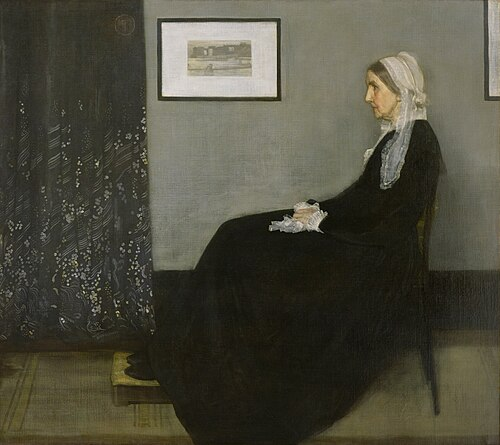
impressing the media (Arrangement in Grey and Black, No. 1), commonly known as Whistler's Mother, is a revered and often parodied portrait of motherhood.
Whistler's *Symphony in White No. 1* caused a flurry of
interpretative comment in London. It was rejected both at the Royal Academy and at the Salon in Paris, but eventually accepted at the Salon des Refusés in 1863. This exhibition also featured Édouard Manet's famous Déjeuner sur l'herbe, and together the two works drew much attention
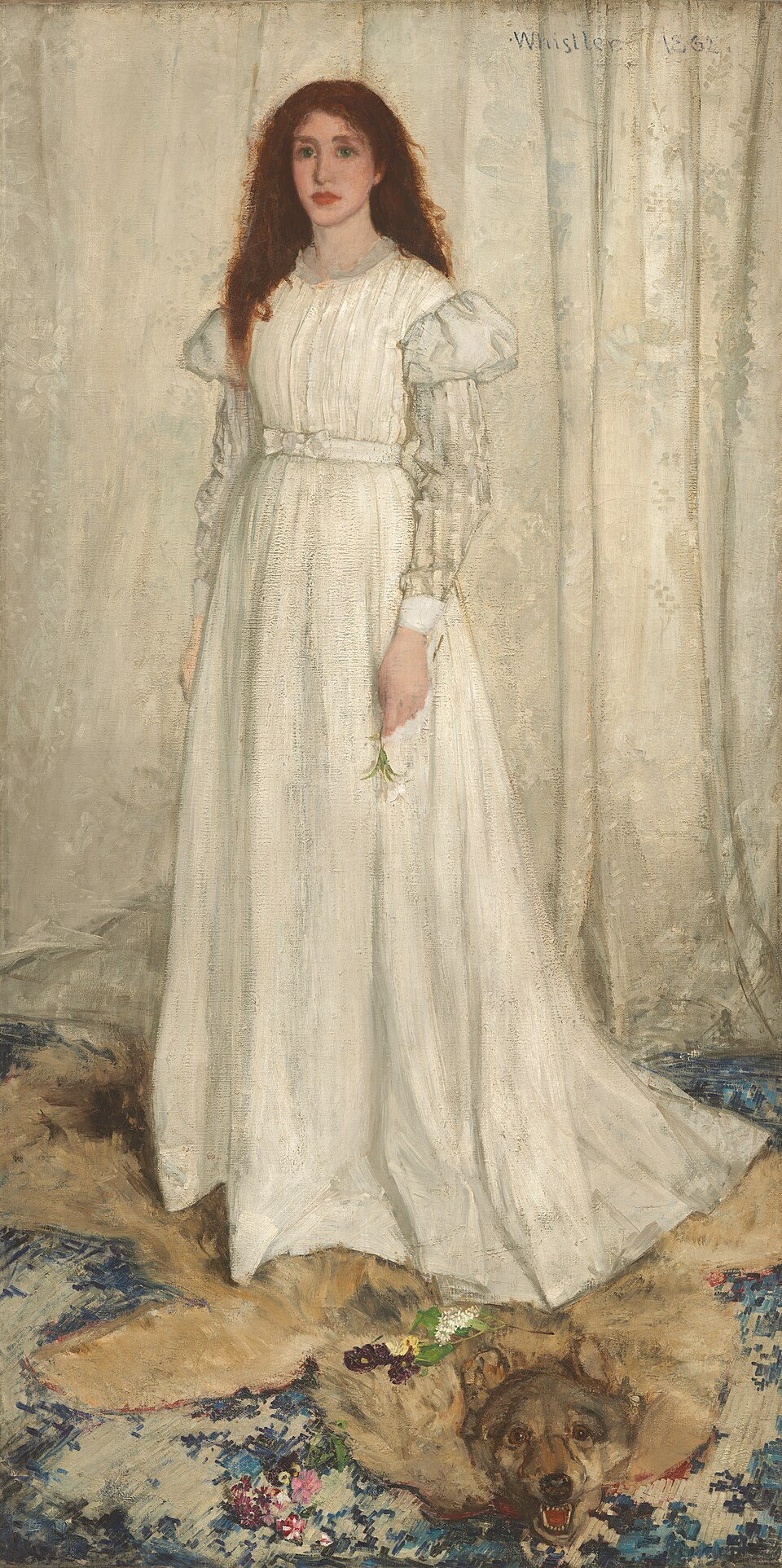
In the painting what did the girl in
white mean, if anything? Ruskin said "Nothing" and sledgehammered the
work. Whistler sued and won a cent in damages. The legal costs
bankrupted him and ended his career.
One of Whistler's more unexpected friends was Fleeming Jenkin, a crusty
prof. of engineering at London University who indulged in such gripping
stuff as trades-union organization, the standardization of electrical
measurement, urban sanitation, and an overhead electric package-delivery
system that never got off the ground. Jenkin also adventurously proposed
that British universities give engineering degrees. And he taught Robert
Louis Stevenson. Although he was prone to seasickness Jenkin's full-time
job was undersea communications, and from 1857 to 1861 he was employed
by R. S. Newell, a cable-making firm.
In 1868 Newell was contracted by a new Danish consortium to lay cables
between Scandinavia and Denmark and between Denmark and England. The
consortium later became the Great Northern Telegraph Company, with
cable-laying activities as far away as Russia (Tsar Alexander II) and Japan. Head of the
company was Danish entrepreneur and financier C. T. Tietgen, who in 1873
set up Tuborg as a rival to Carlsberg.
The Carlsberg brewery owners, the Jacobsen family, were generous patrons
of the Royal Danish Academy of Art. To which in 1914 came a young
Icelandic painter, Johannes Sveinsson (he later changed his name to
Kjarval), who would end up painting more than six thousand works.
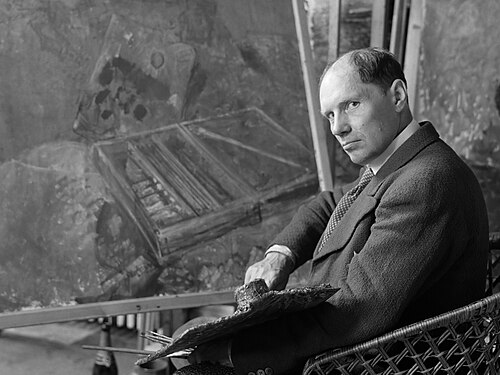
Kjarval was eccentric: He dressed as an outlaw, placed "orders of the
day" in newspapers, either gave his paintings away or charged a fortune
for them, and in 1929 went to the *Thingvellir* (site of the
ancient Icelandic Parliament) to paint dozens of pictures of the lava
and moss there.
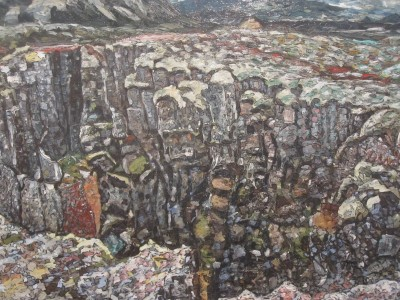
From Thingvellir
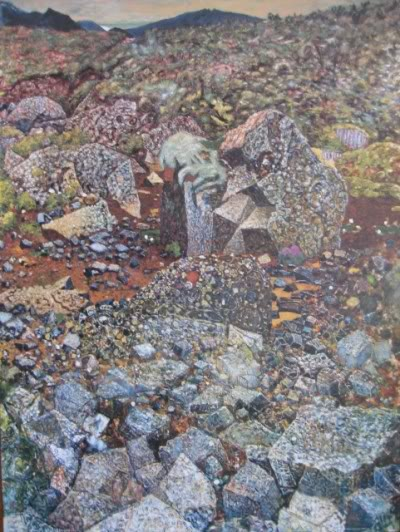
Skjaldbreiður
He was soon the most famous artist in Iceland, and at a
1955 exhibition of his works more than 10 percent of the entire
population turned up.
Kjarval was immortalized in song by Iceland's greatest pop singer,
Björk, whose 1977 first album (including her Kjarval piece) sold five
thousand copies while she was still only twelve. Björk by Björk includes an instrumental flute tribute to Kjarval, written and performed by Björk.
In 1993 her music video *Human Behavior* was directed by Frenchman Michel Gondry:
it reflects upon human nature and emotion from an animal's point of view. The song and video were inspired by British broadcaster and naturalist David Attenborough.[3]^
Gondry's 2004 film Eternal Sunshine of the Spotless Mind (starring
Kate Winslet) collected rave reviews. The title of the film is a quotation from the 1717 poem Eloisa to Abelard by Alexander Pope. Gondry has also created numerous television commercials. He pioneered the "bullet time" technique later adapted in The Matrix in the 1996 "Smarienberg" commercial for Smirnoff vodka.
The generator operator on the Mind film crew was SAMUEL
CHASE.