Ross, George
George Ross Jr (May 10, 1730 – July 14, 1779) was a Founding Father of the United States who signed the Continental Association and the United States Declaration of Independence as a representative of Pennsylvania.
He was also the uncle of the man who married Betsy Griscom in 1773, more famous under her married name, Betsy Ross. In 1952, Ross, George Washington, and Robert Morris appeared on a three-cent stamp commemorating Betsy Ross.
Early life and family
 Coat of Arms of George Ross
Ross was born on May 10, 1730, in New Castle, Delaware. He was educated at home and later studied law at his brother those days, before being admitted to the bar in Philadelphia.[1]
His father was Rev. George Aeneas, the 5th Laird Balblair Ross (1679–1754), who had 2 wives and 16 children, and was an Anglican clergyman who had emigrated from Scotland. Their paternal line goes back to Farquhar Ó Beólláin (1173–1251) whom King Alexander II of Scotland named 1st Earl of Ross in 1226 after great wins in battle.
George's sister Gertrude married Thomas Till, the son of William Till, a prominent Sussex County judge and politician; after his death, she married George Read, another signer of the Declaration of Independence.[2]
Career
Ross was a member of the committee of safety and was elected to the Continental Congress. He was a colonel in the Pennsylvania militia (1775–1776) and vice-president of the first constitutional convention for Pennsylvania. Ross was the last of the Pennsylvania delegation to affix his signature to the Declaration of Independence. He had been loyal to the king, but he became disgusted with Tory politics and began to support the cause of the [Patriots].
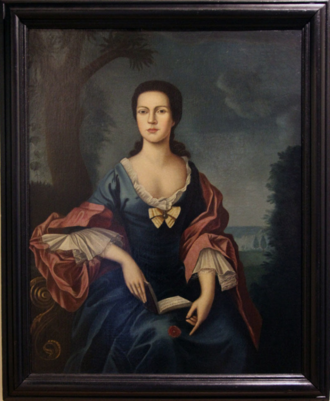
Ann Lawler, c. 1755 portrait by Benjamin West
In 1750, he was admitted to the Pennsylvania Bar (member of Pennsylvania) when he was 20 years old, and he established his own practice in Lancaster, where he married Ann Lawler in 1751. Together they had two sons and a daughter.
Initially a Tory, he served as Crown prosecutor for 12 years from 1768 to 1776. His sympathies began to change, and he became a strong supporter of the colonial assemblies in their disputes with Parliament. In 1768 he was elected to the provincial legislature of Pennsylvania. He was elected to Continental Congress in 1774, 1776, and 1777.
He was a colonel in the Continental Army in 1776. In 1776, he undertook negotiations with the northwestern Indians on behalf of his colony, and that year he acted as vice president of the state constitutional convention, so then that led to helping draft a declaration of rights. He was re-elected to the Continental Congress in January 1777 but resigned that same year because of poor health. He was vice president of the Pennsylvania constitutional convention and was the Judge of the Admiralty Court of Pennsylvania in 1779.
In 1778, while he was acting as admiralty judge, a congressional court of appeals overruled his decision in a case involving a dispute between a citizen of Connecticut and the state of Pennsylvania. He refused to acknowledge the authority of the higher court to counter state decisions, which initiated a dispute between manifestation of the states' rights controversy and did not subside until 1809.
He resigned from the Continental Congress in 1777 because of poor health and was appointed to the Pennsylvania Court of Admiralty where he died in 1779 at age 49. He was buried at Christ Church Burial Ground in Philadelphia.
See also

External links
- 1730 births
- 1779 deaths
- Continental Congressmen from Pennsylvania
- 18th-century American politicians
- Foundrymen
- Signers of the United States Declaration of Independence
- Burials at Christ Church, Philadelphia
- People from New Castle, Delaware
- People of colonial Pennsylvania
- People of colonial Delaware
- Signers of the Continental Association
- Founding Fathers of the United States
George Ross (American politician) - Wikipedia
George Ross | Descendants of the Signers of the Declaration of Independence
AMERICAN CONNECTIONS
GEORGE ROSS (PA) was forty-six. He'd started out
as a royalist but changed tack when independence became an option. As a
revolutionary he was a moderate, urging everybody to go careful but keep
at it. As a member of the Congressional Committee on Safety, Ross wrote
the military rules of engagement. He argued (on civil-rights grounds)
against the loyalty oaths being suggested for would-be citizens. His
great moment came when as a judge of the Pennsylvania Admiralty Court he
ruled on the case of Gideon Olmsted.
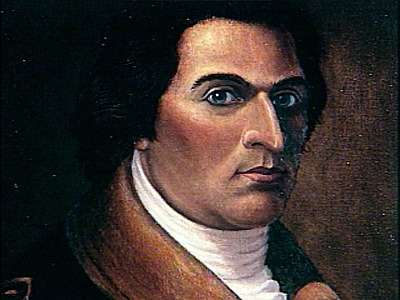
In 1778 privateer Olmsted and his crew were captured by the British
sloop Active. Heading for New York and a prison ship (which had a higher death total than battlefield casualties), they jumped the Active's crew and took over (protracted battle, spoons melted for ammunition, see Landrigan below).
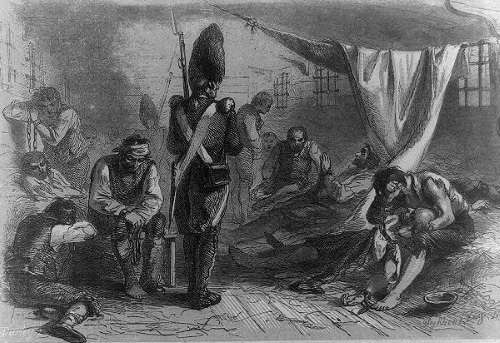
They were then stopped and boarded by the Pennsylvania brig Convention, whose captain claimed the Active as a prize. Back in court Olmsted argued
that the prize was his by right of first jump. George Ross's jury
awarded Olmsted one-quarter of the Active's value. Olmsted
asked for the money, but Congress turned him down. Ross then took on the
Feds, arguing they couldn't overturn a jury decision. The case dragged
on for thirty years (his nephew, famed landscape designer Frederick Law Olmsted wrote a book about it) and was the first major states'-rights litigation in
the new Republic. Then governor Snyder called out the militia to stop the feds; Supreme Court Justice John Marshall and Pres. Madison were not sympathetic.
Olmsted had an unlikely ally in Benedict Arnold (at that time military
governor of Philadelphia), who paid Olmsted's legal costs in return for
a quarter of the prize money, if awarded. Later, when Arnold was under
threat of court-martial for other matters and also accused of
corruption, he thought up a scheme to hand over the plans for West Point
to the Brits and then defect with lots of Brit money. So his career took
a turn for the fugitive. After failing to get a business off the ground
in New Brunswick, Arnold ended up in London, where in 1792 he was
slighted by the earl of Lauderdale and challenged his earlship to a
duel. The earl refused to fire and Arnold missed.
Lauderdale was that rarest of birds, a democratic aristo. Scots lawyer
and active left-wing MP, in 1792 Lauderdale founded the Society for the
Friends of the People (arguing for "a more equal representation of the
people in Parliament") and was inspired by such democratic crazies as
Tom Paine (of Rights of Man fame). Lauderdale was of course
strongly pro-French Revolution (called himself "Citizen", friend of Marat), defended
civil liberties, and opposed the 1794 British suspension of habeas
corpus. He negotiated with Napoleon and Talleyrand, and was saved from a mob by Vidocq).
Colleague in this risky behavior (and fellow member of the Friends) was
Richard Brinsley Sheridan. Gambler, drunk, womanizer (preference:
upper-crust wives and their governesses), and promoter of such wild
ideas as freedom of the press, Sheridan was Parliament's most
extravagant and theatrical MP. No surprise, since he was already a
famous actor and playwright (School for Scandal and The
Rivals, featuring such unforgettable characters as Lord
Backbite, Lady Sneerwell, and Sir Anthony Absolute). In 1799 Sheridan's
politics found voice in his new, boffo-success play Pizarro
(Peruvian independence struggle against Spain).
The play's success was guaranteed by its female star, the iconic Sarah
Siddons, greatest tragedienne of her day and possibly of all time. In
1788 at a packed Drury Lane Theater, London, her Lady Macbeth caused
grown men to cry and women to faint. Siddons had been brought to London
by Sheridan in 1782, painted the following year by the great Sir Joshua
Reynolds, and could do no wrong. Behind the scenes life was very
different. Married to a sleep-around who gave her VD, in 1796 she became
embroiled in a four-way affair with her daughters Sarah and Maria and
young painter Thomas Lawrence.
Lawrence and Siddons had first met in Bath when Lawrence was ten and
doing his first child-prodigy portraits. Lawrence was self-taught (he
also had only two years of formal education) and by 1787 his "fresh,
crisp" art was supporting his family. His move to London heralded a
meteoric rise. By 1792 he was royal painter and by 1810 was probably
having an affair with the Princess of Wales. That year he painted
Charles Vane, third Marquis of Londonderry, a vacuous twit known as the
"golden peacock."
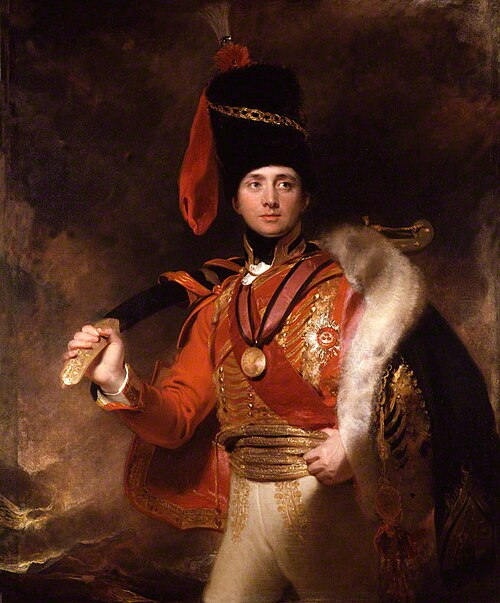
Vane was yet another aristo example of blimpish lack
of talent promoted beyond capabilities.
By the time of the outbreak of the Great Irish Famine in 1845, Londonderry was one of the ten richest men in the United Kingdom. While many landlords made efforts to mitigate the worst effects of the famine on their tenants, Londonderry was criticised for meanness: he and his wife gave only £30 to the local relief committee but spent £15,000 renovating Mount Stewart, their Irish home.[51]^ In contrast to his neighbour, the Marquess of Downshire, he rejected rent reductions. Invoking the admonitions of the Prime Minister Lord Russell and of his predecessor Sir Robert Peel, he advised his tenants "to help themselves and heaven will help them": only the most "supine and inert" among them could be "suffering in any serious degree under the failure of the potato".[53]^
After years spent in military service (being dangerously incompetent) he was made general and ended up as a diplomat at the post-Napoleonic Wars Congress of Vienna. Where he frequented the Vienna brothels, pinched every bottom, and had nonstop
affairs with the wives of his colleagues. These included Lady Priscilla
Burghersh, who had her own fling with the Russian tsar and whose husband
Charles (John?) was a carbon copy of Vane. He was an extra aide-de-camp to the Duke of Wellington (his wife's uncle) and fought at Talavera and Busaco during the Peninsular War.[4]^
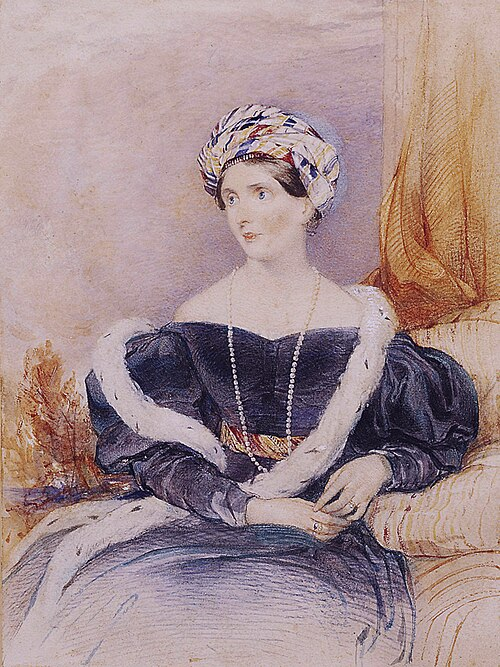
Lord Burghersh's one redeeming feature was his violin-playing (pal of Paganini).
He also composed (prolific and fortunately forgotten). Even his diplomatic
activity at the Congress was regarded as entirely useless. As a result
he was made minister to the Grand Ducal Court of Florence, Italy. To
which in 1821 he moved with Priscilla and where he met Walter Savage
Landor, poet and professional expat who had helped establish Florence as
the place-to-be for artistic Brits looking for somewhere cheaper to
live.
Landor was a man of slim volumes, unending debts, and a laid-back
lifestyle. Apart from a brief three-month flurry fighting for Spanish
independence, he spent his life writing poems nobody reads anymore,
having affairs, and generally acting as host to the visiting celebs who
turned up in Florence in search of adventure. These included Romantic
poets William Hazlitt and Leigh Hunt and saloniste man-eater Countess
Blessington (see elsewhere).
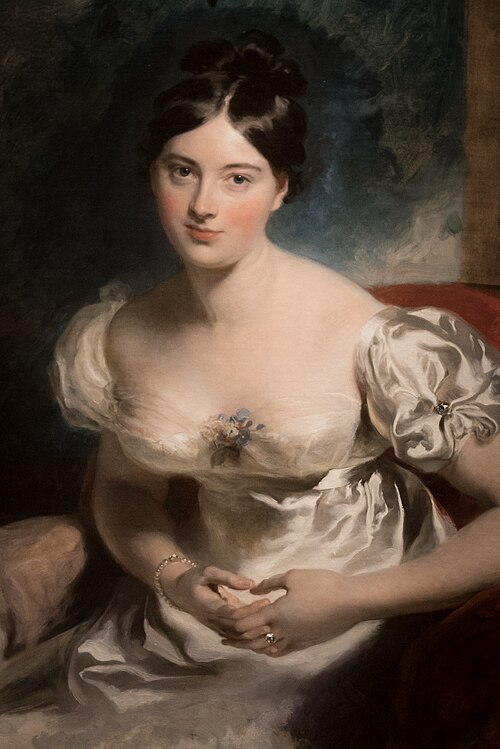
In 1832 a tubercular young ex-pastor from New England arrived in
Florence on a tour of Europe, during which he hoped to meet his heroes
Coleridge and Wordsworth. Ralph Waldo Emerson was about to burst on the
American scene with his Transcendental Romantic stuff but for the moment
he was still a relative nobody in search of inspiration. In 1832 he
found it (in Scotland) in the person of Thomas Carlyle, whose American
agent Emerson would become.
After several years failing as a minister and a schoolmaster the prolix
Carlyle (try: Past and Present and good luck) was on his way
to becoming the Victorian's Victorian and the intimate of such major
harrumphs as Tennyson, Dickens, Thackeray, and Ruskin. Tortured,
brooding, the visionary libertarian wracked by the social agonies of an
industrializing society, Carlyle had Victorian health problems stemming
from inner turmoil and insanitary living conditions. So in 1851 he went
for a water cure at the Malvern establishment of Dr. James Manby Gully.
Gully was well qualified (Edinburgh Univ and Paris) in the latest medical
knowledge but his cure for absolutely everything was sleeping in cold
wet sheets, up-and-down cold-water douches, rides on donkeys, and many
glasses of cold water. Every personality including royalty visited his
hydrotherapy center between 1831 and 1873.
Famous patients included Disraeli, Charles Darwin, Charles Dickens, Thomas Carlyle, Florence Nightingale, Lord Tennyson and Samuel Wilberforce.[3]^
In 1873 a beautiful young woman called Florence turned up on the run from a drunken husband and Gully fell. Florence left the husband. She and Gully headed for
Germany and Italy. Where Gully got her pregnant and performed an
abortion. And she left him.
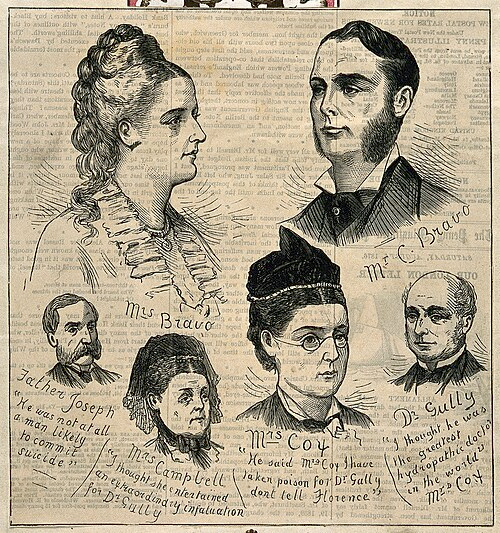
Early in 1876 Florence married a rising young lawyer, Charles Bravo, and
in November of the same year Bravo died of poisoning. In proceedings
that had the nation gripped, the court decided it was "murder by persons
unknown" in spite of the ruthless cross-questioning of Florence by
George Lewis, attorney for Bravo's parents and guaranteed front-page.
He was well known as a tidy disposer of skeletons in closets. This earned him a mention in Arthur Conan Doyle's Sherlock Holmes story "The Adventure of the Illustrious Client".
Lewis, who wore a monocle and a fur coat even in hot weather, was soon
counselor to the rich and famous, specializing in borderline stuff:
homosexuality, transvestites, indecent assault, infanticide, blackmail,
perverted husbands, and (after an introduction to Bertie, Prince of
Wales) aristo and royal mistresses. Including the prince's own, Lillie
For three years the extraordinarily beautiful Mrs. Langtry (complaisant
husband) scandalized society with her royal affair, hung out with
Whistler and Oscar Wilde, and was ostracized by all right-thinking
people. Inevitably Prince Bertie ( Edward VII ) got bored and Lillie moved on to
another royal. In 1881 she took up acting and estabished her own drama
company. In 1882 the American impresario Henry Abbey masterminded a
well-paid, five-year tour of the United States. He also he introduced Sarah Bernhardt to America.
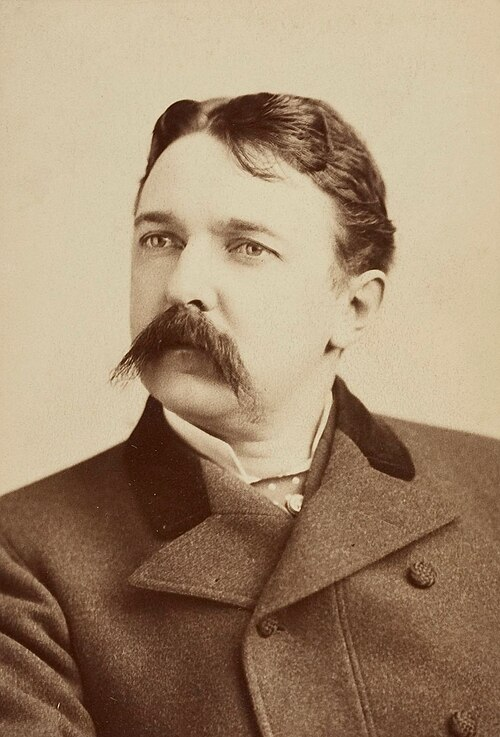
In 1883 Abbey took on management of the new New York Metropolitan Opera
House with his partner Maurice Grau, who specialized in European
performers. In 1903 Grau persuaded a new Neapolitan star to come and
sing. Enrico Caruso had had a fairytale start. While working as a
mechanic, he sang in churches and bars, was talent-spotted in 1896, and
became an instant legend. In the following seven years he played St.
Petersburg, Buenos Aires, Moscow, Warsaw, Monte Carlo, London, Lisbon,
Montevideo, and Paris. The New York Met now became his home, and over
eighteen seasons he sang 607 times.
Five years after Caruso arrived at the Met a new conductor turned up.
Gustav Mahler had just finished ten years at the prestigious Vienna
Opera and was already known (loved or hated) for his composing
("brilliant and innovative" or "self-indulgent trash"). After a season
in New York he returned to Vienna to discover that his wife, Alma, was
having an affair with a young architect, Walter Gropius.
In 1915, after Mahler died, Alma married Gropius, only to divorce in
- By which time Gropius had already begun the functionalist work for
which he and (after 1919) his Bauhaus school in Weimar, Germany, would
become world-famous. The Bauhaus was soon a center of avant garde art,
architecture, and design. In 1933 the stark modernism didn't appeal to
the more Teutonically minded Adolf Hitler, who closed the place down.
Gropius ended up at Harvard and was a major influence on American
architecture.
As was his contemporary (whose own work had influenced Gropius) Frank
Lloyd Wright, maybe America's greatest-ever architect. In 1943 Wright
was commissioned to build a museum unlike any in the world to house the
art collection of Solomon Guggenheim.
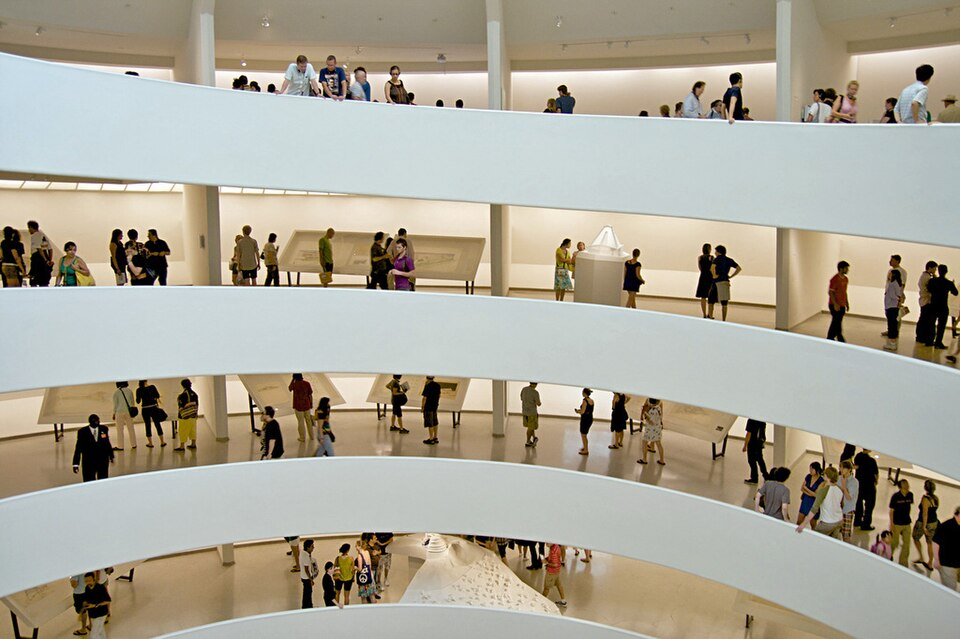
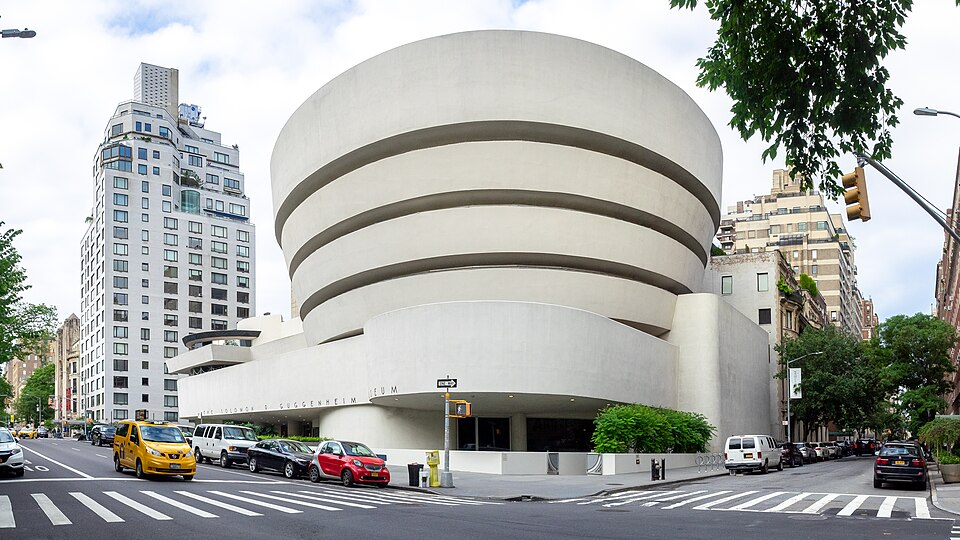 The New York City site (on Fifth Avenue between Eighty-eighth and Eighty-ninth streets) presented unique problems of space. There wasn't enough. So Wright designed an upside-down pyramidal structure, the central feature of which was a
spiral ramp.
One of Wright's assistants on the project was Arthur Holden, who had
spent a lot of time on public housing and municipal projects, and (since
he also knew the New York building comissioner) was able to help Wright
deal with the often-lunatic challenges presented by the city building
codes. Even so, it still took until 1952 to satisfy all the
requirements, and the museum didn't open until 1959 after Wright and
Guggenheim were already dead.
Back in 1931 Arthur Holden's architectural firm had laid off a young man
named Alfred Butts.
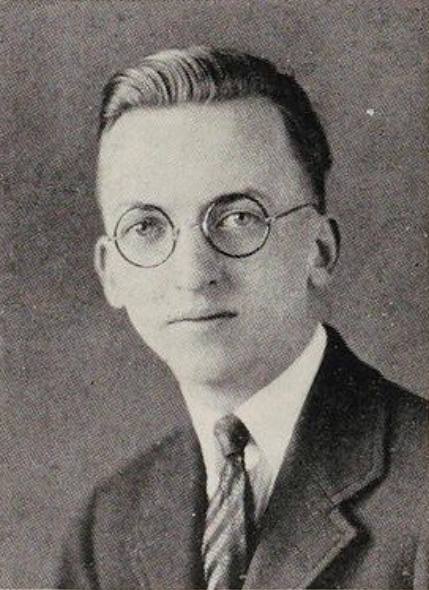
1924
Out of work during the Depression, Butts decided
he'd make money by inventing a game. Inspired by an Edgar Allan Poe
story about cracking a code with letter frequency analysis, Butts came
up with a word-game in which letters had values based on their frequency
of use. By 1939 he had named it "Criss-Cross Words."
In 1948, the game was trademarked, and Brunot and his wife converted an abandoned schoolhouse in Dodgingtown, Connecticut, into a Scrabble factory. In 1949, the Brunots made 2,400 sets and lost $450 ($6,089 in 2025). But the game was steadily gaining popularity, helped by orders from Macy's department store. In 1952 it suddenly took off, selling over two thousand sets. The following year, eight hundred thousand sets. Then a world craze.
By now the name had changed to "Scrabble," and there were annual world
Scrabble competitions. In 2004, at the U.S. National Scrabble
tournament, placed number twenty-one in division seven was competitor
GEORGE ROSS.
SOURCES
Captain Gideon Olmsted Fights the American Revolution – For 30 Years
Dan Landrigan Captain Gideon Olmsted Fights the American Revolution – For 30 Years - New England Historical Society