Taylor, George
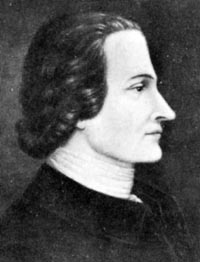
George Taylor (c. 1716 – February 23, 1781) was an American ironmaster and politician who was a Founding Father of the United States and a signer of the United States Declaration of Independence as a representative of Pennsylvania.[1] His former home, the George Taylor House in Catasauqua, Pennsylvania, was named a National Historic Landmark in 1971.[2]
Early life and education
Taylor was born in the North of Ireland (now Northern Ireland), possibly Ulster, in 1716. He emigrated to the American colonies at age 20, landing in Philadelphia in 1736.[3] According to early 18th century biographies of the signers of the Declaration of Independence, he is believed to have been the son of a Protestant clergyman.[4] To pay for his passage, Taylor was indentured to Samuel Savage, Jr., who was ironmaster at the French Creek Iron Works in Coventry in Chester County northwest of Philadelphia.
Career
Iron worker
Taylor started as a laborer at the ironworks, but when it was discovered he had a certain degree of education, he was promoted by 1739 to a position in the offices as a clerk.[5]
In 1738, Savage, his brother-in-law Samuel Nutt, Jr., and his mother Anna Savage Nutt built Warwick Furnace, a cold blast, charcoal furnace to the west, which they named Warwick. Savage died in 1742, and the following year, Taylor married Savage's widow, Ann, whose maiden name was also Taylor.[6] In 1745, under iron master John Potts, Taylor was made manager of the works, which consisted of the furnace and Coventry Forge. When Ann's son Samuel III reached legal age in 1752, the son assumed ownership of the mills by the terms of his father's will.[7]
The Taylors continued to live at Warwick Furnace until 1755, when Taylor formed a partnership to lease the Durham Furnace in Upper Bucks County, north of Philadelphia.[3] The ironworks, built in 1727, was started by a group of investors who were among Pennsylvania's wealthiest and most influential men, including James Logan, proprietor of the Pennsylvania colony for the Penn family, and William Allen, later the colony's chief justice and founder of Allentown (then called Northampton Town).[8]
Political career
 A letter signed by Taylor, dated November 1780, refers to business in his trade of ironmongery
Shortly after becoming ironmaster at Durham, Taylor entered public life for the first time, serving as a justice of the peace in Bucks County, Pennsylvania from 1757–1763.[9] When the lease for the Durham mill expired, the Taylors relocated to Easton, the county seat of Northampton County, where they purchased a stone house near the center of town and built a stable nearby. Continuing his interest in public affairs, Taylor was commissioned as a justice of the peace in Northampton County and was elected to the Pennsylvania Provincial Assembly. He also helped build a new county courthouse in Easton's center square.[6]
In 1767, Taylor purchased 331 acres (1.34 km2) near Allentown at Biery's Port, which is now part of Catasauqua, Pennsylvania. The house was completed in 1768, but Taylor's mother Ann died shortly after the Taylors moved in. Taylor continued living there for the next several years and, for a time, leased half of the property for farming. In 1776, two years after moving back to Durham, he sold the estate.[7] Two centuries later, on July 17, 1971, the George Taylor House was designated as a National Historical Landmark.[2]
While still at Biery's Port, Taylor arranged another lease to operate the Durham ironworks in 1774. The ironworks had just been acquired by Joseph Galloway, a Philadelphia attorney and speaker of the Pennsylvania General Assembly (1766–1774).[6] After failing to gain support in the First Continental Congress for his plan to avert a break with England, Galloway resigned as speaker and refused to attend the Second Continental Congress in 1775. Taylor, meanwhile, was re-elected to the Assembly in 1775 and attended the Provincial Convention on January 23.[7] In July, as colonial forces prepared for war, he was commissioned as a colonel in the third battalion of the Pennsylvania militia.[9]
Two weeks later, on August 2, Taylor secured a contract with Pennsylvania's Committee of Safety for cannon shot.[3] On August 25, with a shipment of 258 round balls weighing from 18 to 32 pounds each, Durham Furnace became the first ironworks in Pennsylvania to supply munitions to the Continental Army.[7]
Founding father and signer of the Declaration of Independence
In 1776, the Continental Congress voted for independence on July 2 and adopted the Declaration of Independence two days later, on July 4.[10] Before the vote for independence, five of Pennsylvania's delegates, all Loyalists, were forced to resign. On July 20, Taylor was among the replacements appointed by the Assembly.[2] One of his first duties as a member of Congress was to affix his signature to the Declaration of Independence, which he did on August 2, along with most delegates. Of the 56 signers, he was one of only eight who were foreign-born, the only one to have been indentured, and the only one to hold the position of ironmaster.[11] Of the 56 signers of the Declaration, Taylor was one of the 41 who owned slaves.[12]
Durham Furnace
 Durham Iron Works, as rebuilt in 1874.[8] Illustration from William Watts Hart Davis' History of Bucks County, 1876.[13]
Taylor's service in Congress was brief, lasting under seven months. On February 17, 1777, when the Assembly appointed a new Pennsylvania delegation, Taylor was one of seven signers from Pennsylvania who were not among those renominated.[7] In March 1777, he was appointed to Pennsylvania's Supreme Executive Council, which was formed to govern the commonwealth under its new constitution.[6] Taylor attended all of the council's daily meetings from March 4 through April 5 but fell ill and was bedridden for more than a month. He subsequently retired from the council, ending his public career.[1][14]
Taylor continued overseeing cannon shot and shells production at Durham Furnace for the Continental Army and Navy. Not long after independence was achieved, however, Joseph Galloway fled Philadelphia, first seeking refuge with British General William Howe and later escaping to England.[15] Galloway was subsequently convicted by the Assembly as a traitor, and his properties, including the Durham mill, were seized.[6]
Taylor filed an appeal with the Supreme Executive Council that enabled him to finish the first five years of his lease, but in 1779, the Commissioner of Forfeited Estates sold Durham Furnace to a new owner.[8] Forming yet another partnership, Taylor leased Greenwich Forge in what is now Warren County, New Jersey.[2]
Personal life
Little is known of Taylor's life before he arrived in Philadelphia in 1736, although there is general agreement that he was born in Northern Ireland (possibly Ulster).[1] His wife Ann Taylor's lineage, however, is well documented. Her grandfather, John Taylor, came to Pennsylvania from Wiltshire, England, in 1684 and became surveyor general of Chester County, Pennsylvania, which then accounted for about one-third of the colony. Later, her father, Isaac Taylor, served as Chester County's deputy surveyor general. Ann's family belonged to the Society of Friends, but she was disowned as a Quaker in 1733 for her marriage outside the circle to Samuel Savage, Jr.[3]
George and Ann Taylor had two children: a daughter Ann, who was called Nancy and died sometime during childhood, and a son James, who was born at Warwick Furnace in 1746. James studied law after his parents moved to Easton in 1763. In 1767, he married Elizabeth Gordon, the 17-year-old daughter of Lewis Gordon, Easton's first resident attorney. The couple initially lived in Easton but moved to Allentown, where James practiced law until he died in 1775. James and his wife had five children: George, Thomas, James, Jr., Ann, and Mary.[7]
Death and legacy
In failing health, Taylor moved back to Easton in April 1780 and died there on February 23, 1781, at the age of 65.[3] Taylor was buried in St. John's Lutheran Church cemetery across from his residence at Fourth and Ferry Streets in Easton. When the church property was sold in 1870 for construction of a public school, Taylor was re-interred at Easton Cemetery.[3] Residents dedicated a monument there in Taylor's honor in 1855, and his body rests in front of the memorial.[16] The house he leased in his final days is now known as the Parsons-Taylor House. Easton founder William Parsons built it in 1753 and is Easton's oldest still-standing house today.[7]
Taylor's will was filed in January 1781, the month before his death, and was entered into probate in Northampton County on March 10. Taylor bequeathed £500 to George, his eldest grandchild, and another £500 to Naomi Smith, his housekeeper, "in Consideration of her great Care & Attendance on me for a Number of Years."[17] The remainder of Taylor's estate was to be divided equally between the grandchildren and five children he fathered with Naomi Smith: Sarah, Rebecca, Naomi, Elizabeth, and Edward.[17] None of these bequests were ever fulfilled, however. Taylor had been experiencing financial difficulties in the last few years of his life, and legal entanglements over the Durham and Greenwich forges dragged on until 1799, at which point his estate was judged insolvent.[7]
See also
Memorial to the 56 Signers of the Declaration of Independence
- The George Taylor House- Catasauqua
- Durham Historical Society Official Web Site
- National Historic Landmarks Program, National Park Service
- George Taylor at Find a Grave
- Historic Catasauqua Preservation Society
- Historical Marker database-HMdb George Taylor Marker
- 1716 births
- 1781 deaths
- 18th-century American politicians
- American Presbyterians
- Burials in Pennsylvania
- Continental Congressmen from Pennsylvania
- Foundrymen
- Kingdom of Ireland emigrants to the Thirteen Colonies
- Members of the Pennsylvania Provincial Assembly
- People from Lehigh County, Pennsylvania
- People of colonial Pennsylvania
- Presbyterians from Pennsylvania
- Signers of the United States Declaration of Independence
- Founding Fathers of the United States
George Taylor (Pennsylvania politician) - Wikipedia
...Taylor returned to Durham in 1774, having entered a five-year lease with Joseph Galloway, the owner of the Durham Iron Works, leasing mines, quarries, forges, and blast furnaces in PA and NJ. At the time, Galloway was a prominent Philadelphia attorney and speaker of the Pennsylvania Assembly. The production of the Iron Works included pig iron and bar iron made at the forges in New Jersey, castings, and stoves, including Franklin stoves. In August 1775, Taylor secured a contract from the Pennsylvania Committee of Safety for cannonballs. From 1775 to 1778, Durham Furnace produced grape shot, cannon balls, bar shot and cannon for the Continental Army.
Taylor received limited compensation for his contribution to the war effort, and his wealth diminished as a result. At the July 1775 meeting of the Assembly, a month after the Battle of Bunker Hill, Taylor was commissioned as a Colonel of the 3rd battalion of Militia. This meeting represented the first step in the county arming for conflict with England. He reportedly took part in drilling and in the organization of the battalion.
Taylor was sent to the Pennsylvania Assembly in October 1775 where he helped to draft instructions to the Pennsylvania delegates to the Continental Congress. The original instructions called for voting against separation. This is what he helped write: Though the Oppressive measures of the British parliament and administration have compelled us to resist their violence by force of arms, yet we strictly enjoin you, that you, in behalf of this colony dissent from and utterly reject any propositions, should such be made, that may cause or lead to a separation from our mother country, or a change of the form of this government.
With changing public sentiment, those instructions were rescinded in June 1776. When several delegates, including John Dickinson, chose not to vote in favor of the Declaration of Independence on July 4, the Assembly chose five replacements on July 20. They were George Taylor, George Ross, George Clymer, Dr. Benjamin Rush, and James Smith, all of whom joined Congress and subsequently signed the Declaration of Independence when the engrossed copy of the document was ready for signatures on August 2, 1776.
...
George Taylor | Descendants of the Signers of the Declaration of Independence
AMERICAN CONNECTIONS
GEORGE TAYLOR (PA) was about sixty. And did his
bit for victory by making cannonballs. Not much is known about his
beginnings in Ireland. When he signed he was a well-to-do ironmaker, a
justice of the peace and member of the Pennsylvania Provincial Assembly.
And the replacement for a delegate who refused to sign the Declaration.
John Dickinson argued that war would be a mistake since the states
hadn't even agreed on a constitution among themselves. Nor (at that
time) did America have any allies, nor was the country in any military
shape to fight, nor did the states even have proper governments of their
own. In Congress Dickinson's logical and persuasive thoughts hit a stone
wall. So he went home.
In 1782, after a two-month period as president of Delaware, Dickinson
became president of Pennsylvania and donated five hundred acres at
Carlisle, on the frontier, for the foundation of a new college.
Dickinson College (as it's now known) was the first chartered college in
the United States and opened for business in 1805. Notable alumni of Dickinson College include Chief Justice of the United States Roger B. Tane (Dred Scott, worst decision ever); President of the United States James Buchanan (1809)
In 1811 ex-Brit noodler Thomas Cooper (reckoned by Thomas Jefferson to be the most
informed man in the country) arrived as Dickinson's first professor of
chemistry.
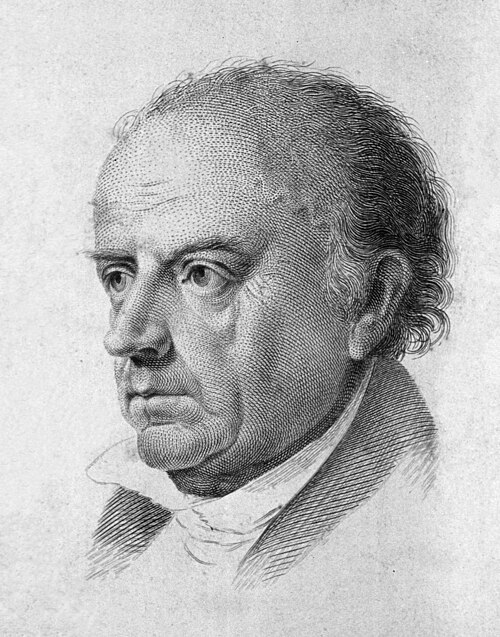
Most of his knowledge of molecules came from his long-term
U.K. friendship with ex-Brit noodler Joseph Priestley (discoverer of
oxygen and lots more), who ran away to the United States with Cooper
when things got too hot for them back home (both men were dangerously
pro-U.S. independence and pro-French Revolution, so Priestley's house
was ransacked and burned by a carefully government-arranged "mob").
After Priestley died in 1804 Cooper's comprehensive survey of the great
man's work formed the basis for a chemistry textbook. Cooper also wrote
a book on cookery. He also did debris-scatter studies and fragment
analysis on the new terror weapon used in the War of 1812: the Congreve
rocket (as in "rockets' red glare").
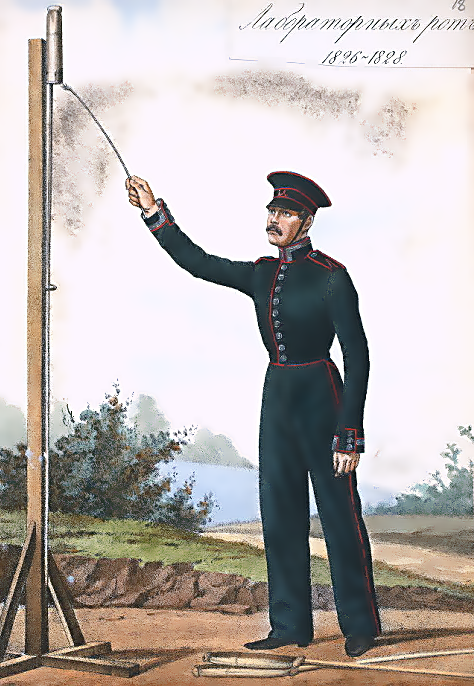
William Congreve's father ran the lab at the Woolwich Military Academy
in London so the son grew up a geek. Some of his inventions: canal
lockgate, parachute, rocket-propelled whaling harpoon, perpetual-motion
machine, gas meter, and unfakeable banknotes. Congreve's rockets were
regarded in some quarters (Morning Chronicle) as
"tomfoolery," but they had done a lot of damage to Copenhagen in 1809
and most important of all impressed the Prince Regent, a fat buffoon who
asked Congreve to add some excitement to the August 1814 London event
when crowned allied heads would get together to celebrate the recent
victory over Napoleon. Congreve obliged with fireworks and rockets
galore.
Before which, while the sky was still safe, others amazed the crowds.
John Sadler rose in a balloon and dropped programs.
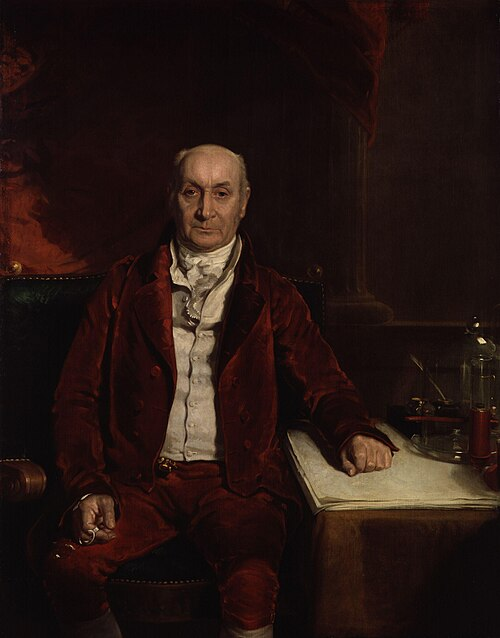
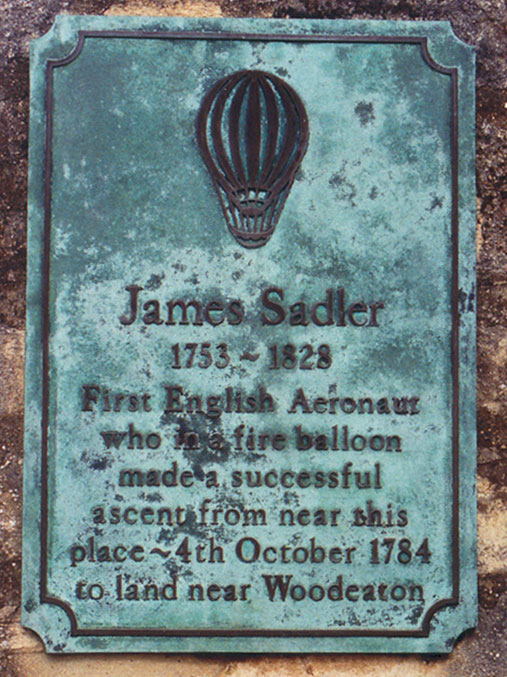
Sadler's father (a pastry cook) had already done over forty ascents (one to thirteen thousand feet) and his balloon trademark was being used to sell soda water.
He patented a steam engine design, and he was praised by none other than Lord Nelson.
"Sadler worked out that all of the rifles and the cannons, including the ones aboard HMS Victory, over one third of them missed their target by over five feet," says Mr Smith. "Sadler changed the smelting process, the length of the barrel, plus the size and weight of shot to optimise efficiency and accuracy.
Son John was an established member of the scientific establishment, having been chemical assistant to the Royal Institution since 1800. The RI had
originally been formed to provide instruction to artisans on the latest
gizmos and techniques. Unfortunately the artisans didn't turn up. But
from 1801, once the charismatic Humphry Davy had begun lecturing, the
street outside was so jammed with the carriages of ticket-holder royalty
and nobility that the traffic had to be one-way-only for the evening.
Davy's brilliant style made science fashionable. He also identified
tannin in tea, discovered that sunlight caused pond weed to give off
oxygen, experimented with laughing gas and suggested (decades before it
was used) that the gas be administered during surgery, co-founded London
Zoo, received medals and a knighthood, and was one of the inventors of
the miners' safety lamp. When he was president of the Royal Society in
1823 Davy was approached for support to open a new club for artists,
scientists, and writers.
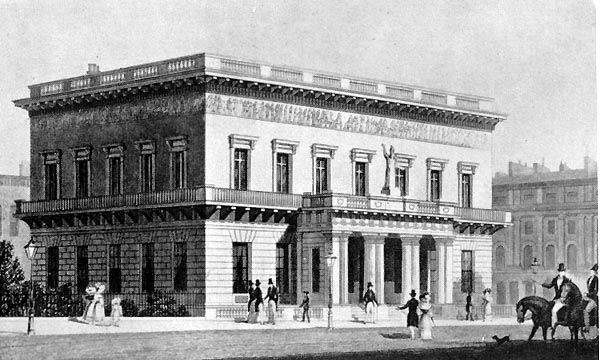
The idea that the Athenaeum Club would bring thinkers together to
counter the public trend toward sensationalism and trash (aka Romantic
Movement) originated with John Wilson Croker. The members voted £2000 for an icehouse, instead he commissioned from sculptor John Henning a full-scale replica in Bath stone of sculptures from the Parthenon, (aka Elgin Marbles) occasioning the widely circulated squib "I'm John Wilson Croker, I do as I please. They ask for an Ice House, I give them—a Frieze".
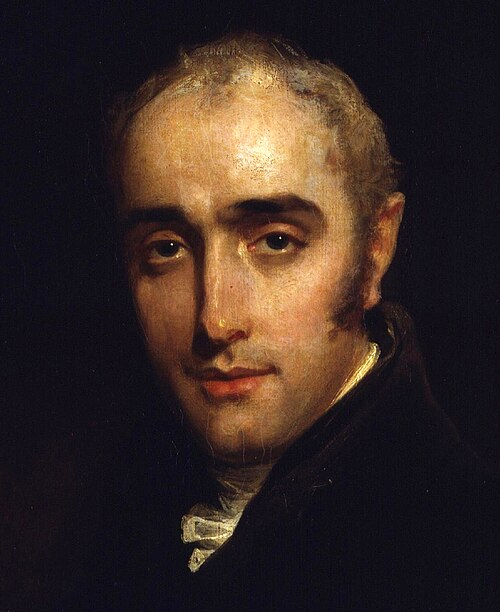
Croker had recently been accused of killing John Keats with his attack on the poet's "Endymion," causing (it was said by the Keats crowd) a rush of blood to the lungs
that killed him. In fact Keats died of tuberculosis (Croker did kill actor John Edwin).
Croker was a politico and writer who believed that the Romantics were flushing
British culture down the toilet and that the previous century had seen
the end of good literature. Croker also raised hackles by exposing scams
organized by royal mistresses and public-fund embezzlement by
bureaucrats, and (most of all) by the way he helped to push through
Parliament the first income tax bill.
In 1815, once the Napoleonic Wars were over Croker headed to Paris to
have fun with his old friend William Vesey-Fitzgerald. Five years later
Vesey-Fitzgerald was in Stockholm (not having fun) as British minister
empowered to renegotiate the Guadeloupe Fund. In 1813 Britain had taken
the island from the French, then given it to Sweden to compensate King
Charles XIV for loss of his estates, confiscated when (as Napoleonic
general Jean Baptiste Jules Bernadotte) he had left France to become
Swedish king. The Fund also covered Sweden's Napoleonic Wars costs.
After the war Guadeloupe went back to the French and Britain gave Sweden
twenty-four million francs indemnity for loss of Guadeloupean income.
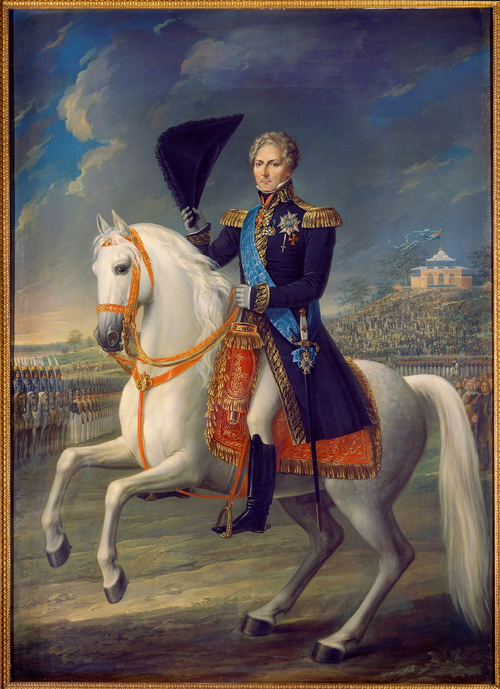
By 1820, however, there was talk of the Swedes giving some back.
Unfortunately, Charles XIV had already spent the money on (among other
things) the Gota Canal (by far the greatest civil engineering project ever undertaken in Sweden up to that time, taking 22 years of effort by more than 58,000 workers).
Linking the Baltic and North seas, the canal was
Sweden's biggest infrastructure project, built by fifty thousand
shoveling soldiers and with the consultant help of Britain's top
waterways person, Thomas Telford. By this time (1808) Telford was a
legend for his suspension bridges, harbors and docks, restored churches,
public buildings, the amazing Welsh Pontycyllte aqueduct (1,007 feet
long and 126 feet up), and the Caledonian Canal through the Scottish
Highlands.
Inevitably, Telford was also asked advice on the Welland Canal around
Niagara Falls. Chief Welland engineer was David Thomas. Whose real
passion was fruit. His son John was even more fruitily inclined and ran
one of the best nurseries in the country where he produced the Tillotson
peach, started and edited the Country Gentleman, invented the
smoothing harrow, and wrote such gripping pieces as "The Fruit
Culturalist" and "Farm Implements and Machinery." Not surprisingly John
set up the American Pomological (apple-study) Society with a fellow
fruit, Andrew Downing.
Downing influenced not only Calvert Vaux but also his partner landscape architect Frederick Law Olmsted; the two men met at Downing's home in Newburgh. In 1858, their joint design, the Greensward Plan, was selected in a design competition for the new Central Park in New York City. In 1860, Olmsted and Vaux proposed that a bust of Downing be placed in the new park. They designed and remodeled Hudson Valley residences for the China Trade merchant Warren Delano, and brewer Matthew Vassar.
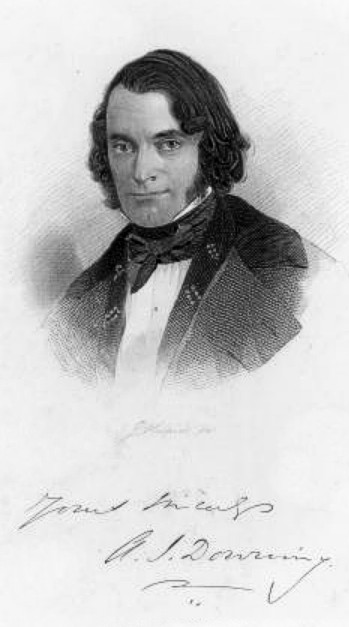
Downing wrote about what to do with the rest of the garden around a house
(landscape gardening, ornamental additions, statuary, romantic views).
Downing is also credited with popularizing the front porch. In 1850 he
spent six months looking at gardens in England, then returned to a
presidential commission landscaping the public grounds of Washington,
D.C. (the strip from Capitol Hill to the Washington Monument site).
Alas, before he could create this first public park in the United States
he died in a steamboat disaster. His Pomological Society colleagues paid
for a Carrara marble memorial urn.
Urn sculptor was Robert Eberhardt Schmidt von der Launitz, the doyen of
mortuary monuments (George Washington, General Pulaski...).
You name it, he carved it: stone angels, recumbent
girls with flowers in hair, firemen rescuing children from flames,
lambs. He also got a good share of the Civil War monuments going up all
over the country.
Launitz's pupil Thomas Crawford went to Italy and
settled there.
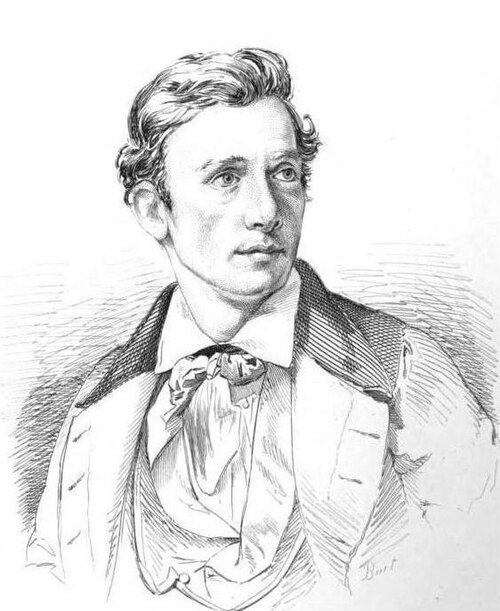
In 1849 on a visit back home he read in a Boston
newspaper of the plan to erect a monument to George Washington in
Richmond, Virginia. Crawford put in a bid and got the job: Washington on
horseback, with the standing figures of Patrick Henry and Thomas
Jefferson, plus two shields, thirteen wreaths, and stars. For nearly
fifty-three thousand dollars. For an additional nine thousand dollars
apiece he added John Marshall, Thomas Nelson, Thomas Mason, and General
Andrew Lewis. The whole gigantic bronze thing was forged at the only
mid-nineteenth-century place capable of handling such a piece, the Royal
Bavarian Foundry in Munich.
Son of the foundry boss was Oskar von Miller, who was crazy about
electricity. In 1882 Munich City commissioned him to set up the first
electricity exhibition, at which he wowed the crowd with a supply coming
from thirty-five miles away. Two years later he opened the first small
power plant in Munich. In 1883 Oskar teamed up with Emil Rathenau to run
what eventually became known as AEG, a counterpart of General Electric
in the United States. Rathenau had a head start in the marketplace
because he owned the German patent for Edison's light bulb.
By 1889 Rathenau had two thousand employees and his catalogue included
curling tongs, cigar lighters, irons, tea kettles, and hotplates. And he
was the first to employ a designer for factory buildings as well as
appliances. In 1903, switched on to the future commercial potential of
radio, AEG teamed up (as "Telefunken") with Siemens, a company dealing
in the larger uses of electricity. Siemens had already laid a telegraph
line from London to Calcutta and had introduced the first German
electric railroad, tramcar, elevator, and streetlights.
In 1902 the Siemens office in St. Petersburg hired a young Polish
engineer to equip the Russian navy with radios. Joseph Tykociner turned
out to be the man movie history forgot. By 1918 he was teaching at the
University of Illinois, where he developed a sound-on-film system.
Speech from a microphone modulated current to a light, making its
brightness vary. The varying light then varyingly exposed a moving strip
of celluloid negative. When a projector was used, the printed (varyingly
light and dark) film strip let varying amounts of light through to hit a
photoelectric cell. Which in reaction generated varying current to a
loudspeaker. Which then reproduced the original sound. In 1923,
Tykociner was beaten to the patent by Lee De Forest's similar system.
By the late 1930s talking pictures were getting into their stride, and
in 1937 a young sports radio announcer on a visit to Hollywood took a
screen test for Warner Brothers and landed a seven-year contract. His
first starring role was in Love Is on the Air. A 1932
graduate from Eureka College, Illinois, he had lettered in football. One
of his fellow players went on to a distinguished career as a coach.
When the coach retired in 1972 the actor (now governor of California and
future president of the United States Ronald Reagan) sent a message of
congratulations to his old gridiron colleague GEORGE TAYLOR.