Hart, John
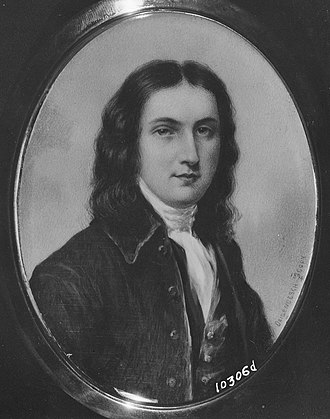
John Hart (circa 1713 – May 11, 1779[1]) was an American Founding Father and politician in colonial New Jersey. As a delegate to the Continental Congress, Hart signed the Declaration of Independence.[2] He died several years before the end of the Revolutionary War while still active in patriotic efforts.
Ancestry
Sources disagree as to the year and place of Hart's birth. His official U.S. Congress biography cites 1713 as a likely birth year and Stonington, Connecticut as his birth place, though his family relocated to Hopewell Township, New Jersey at some point thereafter.[1] Hart was baptized at the Maidenhead Meetinghouse (now the Presbyterian Church of Lawrenceville) on December 31, 1713.[3] He was the son of Captain Edward Hart, a farmer, public assessor, justice of the peace, and leader of a local militia unit during the French and Indian War. Hart was the grandson of John Hart, a carpenter who came to Hopewell from Newtown, Long Island.
Early life
In 1741, Hart married Deborah Scudder (1721–1776). The couple had thirteen children: Sarah, Jesse, Martha, Nathaniel, John, Susanna, Mary, Abigail, Edward, Scudder, an infant daughter, Daniel, and Deborah. His wife, died on October 28, 1776. In 1747, he donated a piece of land in his front meadow to local Baptists who had been seeking a place to build a church. The location was known for some time thereafter as the Old Baptist Meeting House.[4]
Political career
Hart was elected to the Hunterdon County Board of Chosen Freeholders in 1750. He was first elected to the New Jersey Colonial Assembly in 1761 and served there until 1771. He was appointed to the local Committee of safety and the Committee of correspondence, and became a judge on the Court of Common Pleas. He was often called "Honest John."
When New Jersey formed a revolutionary assembly (or provincial congress) in 1776, he was elected to it and served as its vice president. Prior to June 1776, the New Jersey delegation in the First Continental Congress was opposed to independence. As a result, the entire delegation was replaced, and Hart was one of those selected for the Second Continental Congress.
He joined in time to vote for and sign the Declaration of Independence. He served until August of that year, then was elected speaker of the newly formed New Jersey General Assembly. He later took on additional duties as Treasurer of the Council of safety (which was given "extraordinary and summary powers" to carry out affairs of the state during emergencies), president of the joint meetings of the New Jersey Congress, and commissioner of the State Loan Office.
Revolutionary War

Historical marker for John Hart's cave in East Amwell Township, New Jersey.
In December 1776, the British advance into New Jersey reached Hunterdon County. A marked man because of his status as speaker of the Assembly, Hart was obliged to escape and hide for a short time in the nearby Sourland Mountains.
His farm was raided by British and Hessian troops, who damaged but did not destroy the property. The Continentals' capture of Trenton on December 26 allowed Hart to return home. Prior to the Battle of Monmouth, Hart invited General George Washington and the Continental Army to make camp on his farm, and his offer was accepted. From June 22 to 24, 1778, 12,000 men occupied his fields, and on at least one occasion Washington dined with Hart.
Death and legacy
On November 7, 1778, Hart returned to Hopewell from the Assembly in Trenton. Two days later, he indicated that he was too ill with "gravel" (kidney stones) to return. He continued to suffer from the painful affliction for more than six months until his death on May 11, 1779, at age 65. He is buried at the Old Baptist Meeting House, to which he had donated land.
The following obituary for John Hart appeared on May 19, 1779:
On Tuesday the 11th instant, departed this life at his seat in Hopewell, JOHN HART, Esq. the Representative in General Assembly for the county of Hunterdon, and late Speaker of that House. He had served in the Assembly for many years under the former government, taken an early and active part in the present revolution, and continued to the day he was seized with his last illness to discharge the duties of a faithful and upright patriot in the service of his country in general and the county he represented in particular. The universal approbation of his character and conduct among all ranks of people, is the best testimony of his worth, and as it must make his death regretted and lamented, will ensure lasting respect to his memory.
— New Jersey Gazette
Hart is the ancestor of Congressman John Hart Brewer and House majority leader Steny Hoyer. Roadways named after Hart include Hart Boulevard in Flemington, New Jersey; Hart Avenue in Hopewell, New Jersey; and Hart Lane in Ringoes, New Jersey.
Extra Connections: Known to sleep with the dog in a doghouse, although this may be apocryphal; the cave he hid from the British in was used as a kennel.
See also
- Signing of the United States Declaration of Independence
- Memorial to the 56 Signers of the Declaration of Independence
John Hart (New Jersey politician) - Wikipedia
American Connections
JOHN HART (NJ) was about sixty-four. Nobody
seems to know why he slept in the doghouse (with the dog). When things
went revolutionary Hart was a run-of-the-mill New Jersey Baptist mill
owner with horses and acreage. He had always been vociferous about
unfair Brit taxation, so in 1776 he was appointed to both the State
Council and the Committee for Public Safety, which between them had
fairly undemocratic powers to do whatever was necessary to keep the
place in order and fight a war. Hart spent only six weeks representing
New Jersey at the Continental Congress, signed the Declaration, and
returned to local politics.
One of his fellow members on the Safety Committee was William Paterson.
Another whose plans ("life without much hustle and bustle") were altered
by the Independence fracas. A successful lawyer overloaded with cases
arising from recently fled loyalists, Paterson was made associate
justice of the Supreme Court in 1793 and shortly thereafter ruled on the
first challenge to congressional constitutionality. One Daniel Hilton
owned 125 carriages for his personal-only use (oh yeah?) and when taxed,
argued that direct taxes were a state not federal matter. Paterson and
the rest of the bench said nope it's an excise tax and therefore federal
so pay up.
Representing government that day, legal eagle Alexander Hamilton stood
before a packed court perhaps less interested in the case than in
Hamilton's already famous sexual peccadilloes.
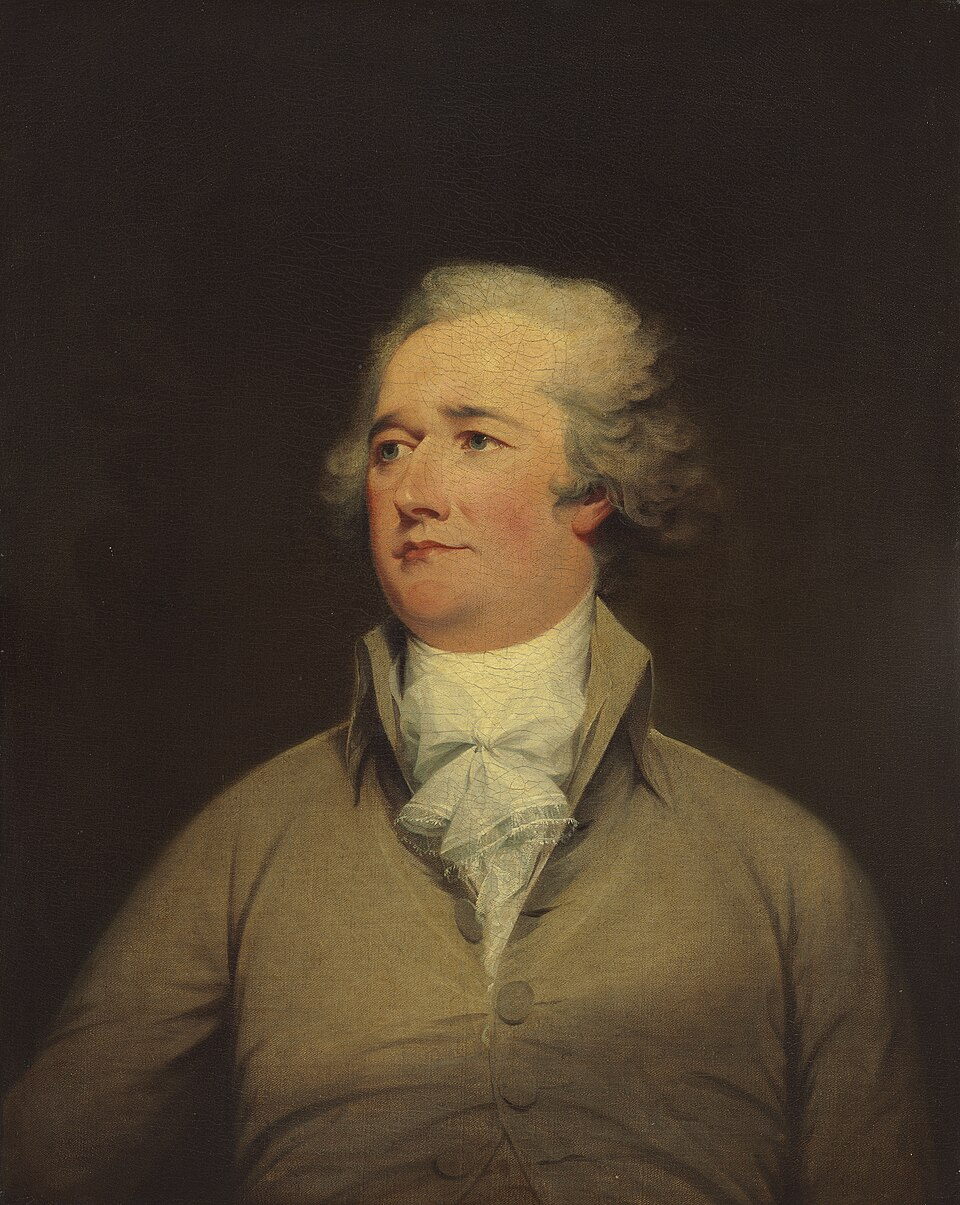
Small, red-headed Hamilton (hero, first Treasury secretary, pro-strong central government and senators-for-life, and antislavery) was in deep trouble thanks to
his recent dalliance with one Maria Reynolds, lady-about-town married to
an abusive swindler. Who, when he found out what she and Hamilton were
up to, charged Hamilton one thousand dollars to go on doing it. Then
went around town quietly telling Hamilton's political enemies that he,
Reynolds, was getting insider-deal tips on bonds and such from "one who
should know."
Confronted by Jefferson and others, Hamilton (expecting confidentiality)
handed over letters proving he'd committed adultery but not malfeasance,
resigned his secretaryship, and lost his chance at the presidency
forever. Three years later Hamilton's naivete hit the fan when his
erotic scribblings were published (some fingered Jefferson) by
muckraking journalist James Callender, who was on the run from a
sedition case in Scotland. With Callender's back-home experience as a
militant radical hard man, the American political scene was sandbox
stuff.
After his first success with Hamilton and with support from Jefferson,
Callender produced his usual attacks on government and in 1800 got
himself jailed for sedition. After he was released (and with Thomas
Jefferson now president), Callender was much chagrined that not only did
he fail to get his expected postmastership-for-services-rendered, but he
also discovered that his ex-supporters (maybe even T.J.) were saying his
wife had died of venereal disease while he frolicked in the next room.
His riposte was the devastating "Sally Hemings, slave girl mistress of
Jefferson" piece. By now a loose cannon, permanently drunk, and with
nowhere to go but down Callender ended up in the James River.
A more adventurous fate met his old Scots fellow revolutionary Thomas
Muir. Back in 1793, when Callender was hightailing it for America, Muir
had been "most wanted" by the London government, which was alarmed at
his far-left "Friends of the People" militant organization and his
invitation to the "United Irishmen" to join a general (and violent)
movement for British parliamentary reform. The authorities quickly
suspended habeas corpus and arranged a fourteen-year sentence of
transportation to Australia for Muir and associates.
Two years after arriving to Down-Under house arrest Muir escaped on an
American ship and made his way over twelve months of adventuring and
serious wounds across the Pacific to Vancouver, then California, then
Mexico, then Cuba, then (in 1798) France. In Paris he was once again
reunited with his old comrades in foment. One of whom, Thomas Watson,
went even further than Muir, calling for blood on the streets and
leading a London riot in 1794.
After two years in jail he called on the revolutionary French to invade England, promising that "the people" would rise up in support. Never happened. While in Paris Muir met Thomas Paine and Dr William Maxwell of Kirkconnel, the future doctor and associate of Robert Burns. Robert Burns wrote Scots Wha Hae on the day Muir's trial started. The letter he wrote to George Hamilton (about 30 August 1793) with the first draft made it clear who he had in mind; Wallace was an allegory for the real hero, Muir. It served for centuries as an unofficial national anthem of the country.
In 1798 Thomas Watson got out of town just ahead of the sheriff and settled first in Paris, where he claimed to have taught Napoleon English, then Rome, where he spied for the Brits. Then off to Greece for who knows what. By 1825 he was back,
begging in the Paris streets. Disappeared again. In 1838, back in
London, he strangled himself. Checkered wasn't the word.
Watson's posthumous affairs were put in order by the man who had
inspired all agitators with his street fighter's manual. "Count" Francis
Maceroni was born in a Manchester suburb and spent his formative years
being revolutionary in Italy and Corsica.
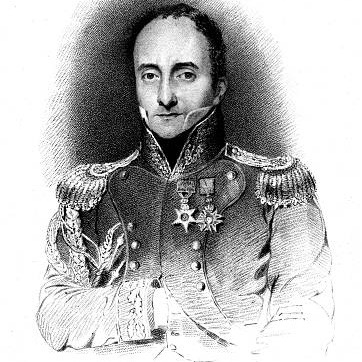
He claimed he'd introduced the Italians to cricket. To no discernible effect.
Apart from patenting a steam carriage and a rocket, Maceroni's claim to infamy was his
involvement (on behalf of the Venezuelan hero Simón Bolívar) with a
person even the dubious Maceroni referred to as "a coward and a
mountebank."
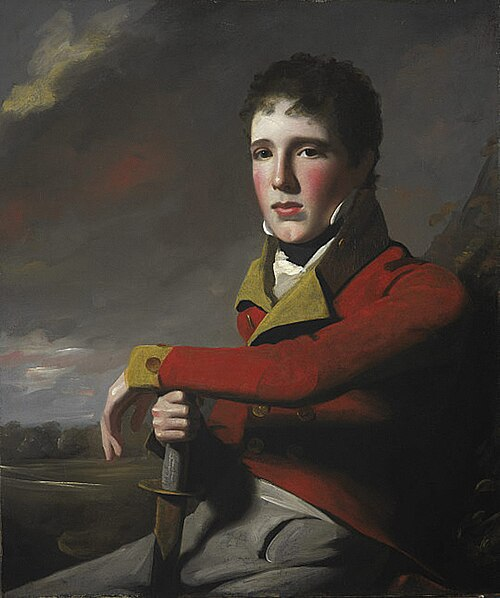
Gregor MacGregor pulled off one of the greatest cons in history (his great-great-uncle Rob Roy, had participated in the Jacobite risings of 1715 and 1745.[3])^
At age thirty he was Bolívar's senior general (he married B.'s niece). One day
in conversation with a local chief he swapped a bottle of booze for
perpetual rights to 8 million acres of snake-infested Honduran Mosquito
Coast.
By 1821 he was in London as His Serene Highness Prince of
"Poyais" (the acres), mingling with the high and mighty, opening a fake
Poyais Legation, waving fake Poyais money, selling fake Poyais bonds and
worthless Poyais land. In 1822 the first two boatloads left for their
new life in MacGregor's magic kingdom, only to find there was no capital
city, no mountains of gold, and that the place was bad for the health.
Many died. Some made it back to sue MacGregor (now, however, long gone
and running the same scam in Paris). In the end he fled back to
Venezuela and is today one of the nation's heroes. Proving you
can fool most of the people most of the time.
Key in all this fakery was MacGregor's prospectus, printed by the highly
respectable William Blackwood, Edinburgh publisher of such as Sir Walter
Scott and John Galt (who has been called the first political novelist in the English language, due to being the first to deal with issues of the Industrial Revolution).
Scott referred to Galt's work as "the worst ever seen." Galt tried business (failed), then Napoleonic sanctions-busting (failed), then literature (prolific and forgotten), then Canada. Where in 1824 he founded the city of Guelph, developed a million acres, and
came home to jail for debts. But not before he'd written the preface to
the memoirs of Alexander Graydon.
Graydon was a total nobody from the Philadelphia upper crust and after
an uneventful War of Independence was living on a farm near Harrisburg.
A dullard, yes. But his memoirs savaged a few of the great names he'd
known. In spite of which he dedicated the book to a member of the
establishment, Richard Rush, son of Benjamin the signer, lawyer, and
over seven years U.S. minister to Britain, Comptroller of the Treasury
under Madison, SecTreas under John Quincy Adams, and failed veep
candidate.
In 1836 Richard Rush went back to Britain for two years to deal with the
Smithsonian bequest, which was moving with the speed of treacle through
the English legal system. Finally, Rush was able to ship out for home
with eleven boxes containing $508,318.46 in gold. And then leave the
problem of what to do with it to Indiana representative Robert Dale
Owen. British-born, with a socialist background, Owen wrote on birth
control, supported failed utopian communes, and then turned politically
legit. After three terms in the Indiana legislature he entered the
House, where he helped get the Smithsonian bequest onto the
congressional agenda (it took eight bills and ten years to get things
right).
Late in life Owen went slightly insane and in 1877, while recovering,
wrote the first (and only, since he then died) recollection of his
out-West youth for Scribner's Monthly. Scribner's had just hired a fourteen-year-old publishing fanatic (the boy already had his own printing press). Frank Nelson Doubleday went on, via mergers, acquisitions, litigation, boardroom coups, and such typical New York publishing shenanigans to become a very big literary cheese. With
friends like Mark Twain, Joseph Conrad, and Rudyard Kipling. And a
strange young man who'd started life as an archeologist in 1911 digging
Mesopotamian holes in Syria. And who dressed (some said "up") like the
locals.
With the approach of World War I this flamboyant type was hired to
provide an "archeological-excavation" smokescreen for what was really
the British military survey of Sinai in preparation for events during
which the Arabs were to be liberated from their Turkish overlords and in
which our costumed hero was to play a major intelligence role. And
thanks to his fluent Arabic (and more so, to a helpful American
journalist and filmmaker) to end up world-famous as Lawrence of Arabia.
Early on at Oxford T. E. Lawrence had particularly admired the
spare-time poetry of his contemporary John Beazley (a whiz on ancient
Greek pottery), who accumulated honorary degrees from places as far away
as Salonika. At Oxford among Beazley's other friends during this time were John Maynard Keynes, Lytton Strachey, and Rupert Brooke.[5]^
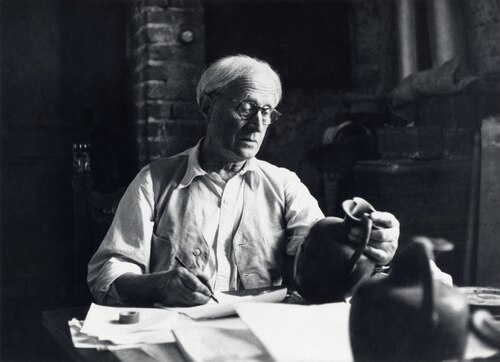
And who married the stepdaughter of full-time poet Louis
MacNiece, known for the power and beauty of his work.
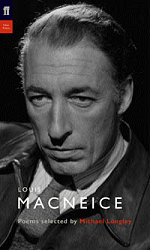
As a boy at Marlborough College MacNiece became life-long buddies with
Anthony Blunt, and in 1936 both of them went to Civil War Spain. Blunt
(art historian, esthete, and homosexual) was a distant cousin of Queen
Mary. Which, in the event, would turn out to be an embarrassment. At
university Blunt was recruited by the Soviets and then during World War
II was (incredibly) also recruited by the U.K. intelligence service,
whereupon he passed at least one thousand secret files to the KGB. In
1945 Blunt was made surveyor of the king's paintings, ennobled as a sir,
and recognized as the last word on French painter Nicholas Poussin.
Rumors of his spying sideline were met by official hemming and hawing
(something to do with his royal connections) until an American fellow
traveler outed him too publicly to deny. Blunt lost job and honors, took
to drink, and died.
At the height of the double-dealing, Blunt's date at gay parties was
journalist Kim Philby, another Soviet spy and member of U.K.
intelligence, who eventually got out of Beirut on a Russian trawler one
step ahead of MI5. And who went one better even than Blunt. In 1941, as
liaison officer with American intelligence, one of Philby's jobs was to
teach counterespionage techniques to CIA man James Jesus Angleton. They
developed a liquid-lunch friendship.
After Philby was unmasked Angleton was understandably paranoid, seeing
every Soviet defector as a plant. So when in 1961 Anatoly Golitsyn
defected from the KGB and said there were moles in the CIA, MI5, and
French intelligence (and that everything the CIA discovered about the
KGB was Russian-orchestrated, smoke-and-mirrors disinformation),
Angleton believed him and gutted the agency. Three years later another
defector, Yuri Noshenko, claimed that Golitsyn himself was
smoke and mirrors. The whole of Western intelligence went into
paralysis.
Finally, in 1976 a retired CIA operative was called in to sort out the
mess. His conclusion: "Noshenko was real, Golitsyn was fake."
The operative's name was JOHN HART.